Al Gore….determined to prove….that he is a moron!
Month: January 2015
Plans for Cape Wind, are Blowing Away, As We Speak!
Wind Energy’s Bluster Peters Out
 Touted as “America’s first offshore wind project,” Cape Wind became one of America’s most high-profile and most controversial wind-energy projects. Fourteen years in the making, estimated at $2.6 billion for 130 turbines, covering 25 square miles in Nantucket Sound off the coast of Massachusetts, the Cape Wind project has yet toinstall one turbine—let alone produce anyelectricity. Now, it may be “dead in the water.”
On January 6, the two power companies, National Grid and Northeast Utilities, that had agreed to purchase most of the electricity Cape Wind was to generate, terminated their contracts with the developers due to missed milestones. Under the terms of the contracts, Cape Wind had to secure financing and give notices to proceed to its suppliers to start work by December 31, 2014. Neither happened and both companies filed to cancel power purchase agreements. “The project is in cardiac arrest,” according to Amy Grace, a wind-industry analyst with Bloomberg New Energy Finance.
Cape Wind has faced stiff opposition since it was first proposed in 2001. Senator Edward Kennedy’s efforts, and those of his wealthy friends, to fight Cape Wind have been the most publicized, but Native Americans, fishermen, and local communities have also battled the industrialization of Nantucket Sound. The town of Barnstable has been particularly active in the fight. The Cape Cod Times reports that Charles McLaughlin, Barnstable’s assistant town attorney, said: “The town’s concerns include the possibility that a collision between a boat and the large electric service platform the project requires could spill thousands of gallons of oil into the sound.”
Massachusetts Governor Deval Patrick (D) positioned Cape Wind as the centerpiece of his renewable energy goals and invested significant political capital backing the proposal—including tying the NStar power purchase agreement to approval of the NStar and Northeast Utilities merger (given the unfavorable terms of the agreements, the companies may have been looking for any exit ramp). Yet, Ian Bowles, Patrick’s first energy and environment chief who, according to the Boston Globe, “helped shepherd the offshore project,” acknowledgesthat the loss of the power purchase agreements “may have spelled the end for Cape Wind.”
The announcement came two days before Patrick left office. While he claims: “We’ve done everything as a state government to get them over the regulatory lines,” Patrick concedes it is now “up to the market.” According to the Cape Cod Times, the former governor doesn’t know “if the project could survive without the contracts in place.”
Even the Department of Energy (DOE), which seems to indiscriminately throw money at any politically favored green-energy project, was tepid in its support for Cape Wind. DOE’s loan guarantees generally average about 60 percent of the project’s costs, but the $150 million offered to Cape Wind made up a mere 6 percent—and that, only after the project received commitments for about half of its financing. In most cases, the government guarantee comes before the private financing and signals a go-ahead for investors.
While both supporters and detractors believe the project is in jeopardy, environmentalists and Cape Wind Associates LLC have not yet waved the white flag. According to Kit Kennedy, director of the energy and transportation program at the Natural Resources research : “Cape Wind may be down, but it is not out.” The Boston Globe reports that Cape Wind’s president, James Gordon, believes the perpetual litigation “triggered a clause in the contracts that allows for more latitude in Cape Wind’s ability to meet the deadlines.” However, after the company already spent $50 to $70 million on the project, the fact that Gordon opted not to pay the utilities the mere $2 million needed for a six-month extension signals that he doesn’t have confidence that they can continue.
Additionally, the political winds have shifted. While Governor Patrick championed Cape Wind, Massachusetts’ new governor, Charlie Baker (R) is on record as being staunchly opposed to it—even calling it Patrick’s “personal pet project.” While campaigning, Baker “dropped his opposition to Cape Wind” because he believed it was a “done deal.” Now that the deal may well be undone, Baker says he “will not try to influence the outcome of the legal process surrounding the Cape Wind project.”
The cancellation of the contracts is “a near fatal blow” to Cape Wind according to Audra Parker, president of the Alliance to Protect Nantucket Sound, a Cape Cod based group which has led the fight against cape wind.
Wind energy’s future faces problems beyond Massachusetts.
While Massachusetts’ utility companies filed to cancel power purchase agreements, two Minnesota wind farms, operating as Minwind Companies, were filed for bankruptcy because the eleven turbines needed extensive repairs and the 360 farmers and landowners who invested in the projects can’t afford the maintenance. Minwind CEO Mark Willers explained: “Minwind Companies have enjoyed relative prosperity in recent years, but the April ice storm last year took a toll on equipment—and on the budget.” At a December 17 meeting, hetold shareholders: “We were 200 to 300 percent over budget to make those repairs.”
Minwind’s nine separate limited-liability companies allowed investors to take advantage of federal wind-energy credits, USDA grants, and the now-discontinued state assistance program for small wind projects. The Star Tribune reports: “The owners stand to lose their investment, and the wind farms eventually may have to shut down.”
On the national level, the American Wind Energy Association (AWEA) has continued to lobby for a retroactive extension of the Production Tax Credit (PTC) for wind energy that expired at the end of 2013. Disappointing AWEA, the lame-duck Congress did approve a ninth extension—but just through the end of 2014. AWEA’s CEO Tim Kiernan groused: “Unfortunately, the extension to the end of 2014 will only allow minimal new wind development and it will have expired again by the time the new Congress convenes.” In response to the “bare-minimum extension,” Luke Lewandowsi, Make Consulting research manager, said it “casts doubt on the willingness or ability of Congress to revisit the PTC in 2015.”
Adding insult to industrial wind’s injury, wind turbine installation placed number three in the list of 10 dying U.S. industries—following only computer and recordable media manufacturing.
All of this news doesn’t bode well for the wind energy business, but for ratepayers and those who believe in the free market and who believe that government shouldn’t pick winners and losers, current wind conditions are a breath of fresh air. Governments, both state and federal, have given wind energy every advantage, to quote Governor Patrick: “It’s now up to the market”—and even Warren Buffet admits the tax credits are the only reason to build wind farms.
Monte McNaughton offers Hope, for Wind Victims, and Ratepayers!
McNaughton: I will end the failed Liberal wind energy experiment
January 12, 2015
(London, ON) – Today Monte McNaughton, MPP for Lambton-Kent-Middlesex and candidate for the Ontario PC Leadership, pledged to end the failed Liberal wind energy experiment.
“I will end the Wynne Liberals’ wind energy ripoff of Ontario consumers,” said McNaughton. “As Premier, I would propose specific legislation to repeal and decommission wind turbines in Ontario.”
Wind power is not needed in Ontario – in each of 2013 and 2014, Ontario dumped more than double the amount of power generated by wind turbines into other jurisdictions at money-losing rates: less than 3 cents /KWh, representing a 75% discount of the money wind generators are paid to produce the wind power in the first place. In 2013, 13.4TWh of excess electricitycapacity was dumped, followed in 2014 by another 13.1TWh. This loss on excess electricity – paid for by the Ontario consumer — is just another way Ontario loses money with wind power.
“The only winners under the Liberals’ wind-power scheme are the wind industry and developers, while the losers are Ontario consumers who are forced to pay for expensive electricity even when it isn’t needed,” said McNaughton.
In 2013, Ontario consumers paid over $600 million for a mere 5.2TWh of wind power. This accounted for only 3.4% of Ontario’s total electricity generating capacity, but represented 20% of the total commodity cost of electricity in the province.
In 2015, it is projected that Ontario consumers will be forced to pay out a startling $1 billion on their hydro bills for a mere 9TWh of expensive wind power at 12 cents / KWh. This figure is expected to continue to rise year after year.
“Ontario consumers simply cannot afford to be gouged to the tune of billions of dollars a year for the next 20 years,” said McNaughton. “If we do not take action, this failed experiment will cost Ontario consumers between $20 billion and $60 billion over the next 20 years.”
Under McNaughton’s plan, all wind turbines would be decommissioned but some compensation would be offered to contract holders using a formula developed by experts to mitigate any losses. Independent analysis has shown that such compensation would represent only a fraction of the wind-power costs currently forced on consumers by the Liberals’ wind power scheme.
“Wind energy is not only extremely expensive, but it was built in many cases over the opposition of local residents and municipalities. Under my leadership a PC government will introduce specific legislation to end the wind energy contracts and begin the decommissioning of existing turbines,” said McNaughton.
The Ontario legislature has the ability to enact specific legislation to repeal the wind-power program and decommission the wind turbines, saving Ontario consumers from unnecessary costs on their electricity rates for power they do not use.
Visit www.Monte.ca to learn more about McNaughton’s plan to end Ontario’s wind energy experiment, and other issues that are part of his plan for Ontario.
Lawrence Solomon: Fantasies about global warming and other delusions will fare poorly in 2015
Good riddance to the Global warming/climate change scam!
Monte McNaughton Has the Best Suggestion, Yet! Tear ’em Down!
GREEN ENERGY
Monte McNaughton says he would get rid of all wind turbines

By Debora Van Brenk, The London Free Press
Monday, January 12, 2015

Ontario PC MPP Monte McNaughton
Ontario wind turbines would stop spinning for good — saving money in the long run, despite up-front cancellation costs — if he became premier, says the Tory leadership candidate from Southwestern Ontario.
“It’s time to end this ripoff,” said MPP Monte McNaughton, one of five candidates for the Ontario Progressive Conservative leadership and the only one from thesouthwest, where many of wind farms are located.
“Wind power is going to cost between $20 billion and $60 billion over the next 20 years,” said McNaughton, a second-term MPP from Lambton-Kent-Middlesex.
Tearing up existing contracts would cost less than what turbines are costing Ontarians now, he said, but he had no estimates of the cost to cancel contracts and raze turbines.
“We’ve got to cut our losses now,” he told The Free Press on Sunday, ahead of rolling out his plan Monday.
McNaughton said he’d repeal legislation that allows turbines to be built and would decommission ones already on the grid.
Lightning rods for opposition in many areas, giant wind turbines were pushed by the Liberal government with hefty subsidies paid for the electricity they generate as the province phased out its dirty, coal-fired power plants.
But as Ontarians saw when the Liberals cancelled two natural gas-fired power plants in the Toronto area, moving them to the east and west at a cost of more than $1 billion, scrapping energy contracts doesn’t come cheap.
McNaughton is the first PC leadership candidate to come out against one of the most contentious rural issues. But while turbines are a hot issue in the countryside, with many residents saying they pose health concerns for humans and animals, they haven’t been so for urbanites.
McNaughton hopes to draw support by pointing out electricity prices have soared for all Ontarians, which he says affects home affordability and business viability.
Making electricity more affordable “is the single biggest thing” that can restore Ontario’s prosperity, McNaughton said.
Wind companies have built or plan to build more than 6,700 wind turbines in Ontario. They’re paid a premium for the energy they produce.
McNaughton said most of that energy is surplus to Ontario’s needs, and is sold at a discount to other jurisdictions so that, he said, wind represents 4% of Ontario’s production and 20% of its energy costs. “It’s a complete failure and it will never be economical,” he said.
Former Tory leader Tim Hudak, who resigned after the Liberals won a majority government in June, had vowed to repeal the Liberals’ Green Energy Act, but stopped short of saying he’d tear up existing wind turbine contracts.
Other candidates chasing Hudak’s old job are MPPs Christine Elliott, Vic Fedeli and Lisa MacLeod and MP Patrick Brown. Conservatives will choose their leader in voting set for May 3 and 7. The next leadership debate is scheduled Jan 26 in London.
Wind Weasels Go Out of Their Way, to Dodge Responsibility!
“Unscheduled” Wind Farm Shut-Down Shows Low-Frequency Noise Impact at Waterloo, SA
January 12, 2015 by

One of the major obstacles faced by acoustic experts when trying to do meaningful wind turbine ‘noise’ testing is the dogged refusal of wind farm operators to provide wind speed and operational data.
Moreover, wind power outfits have resisted, with granite-like tenacity, quite reasonable calls by noise experts to shut down their turbines (ie “on-off testing”) during the process; a step that would show – unequivocally – what noise is attributable to the turbines’ operation (as complained of by victims) and what might be put down to “wind in the trees”, the source wind industry spin-masters routinely scape-goat as the reason for the neighbours’ complaints.

STT champion, Mary Morris changed all that when she provoked the South Australian Environmental Protection Agency (EPA) to conduct on-off testing at the Waterloo wind farm in SA’s mid-north.
Mary hit them with an absolute cracker of a letter (see our post here) and went on to badger SA’s rotten little EPA into reluctant action (see our post here).
Mary’s efforts set up a unique opportunity, which attracted several of Australia’s top research acousticians to the neighbouring farm houses – in the hope of finally getting a meaningful data set, with the turbines shut-off for periods long enough to separate out turbine noise from the rest. Those that lined up at Waterloo included top-flight noise and vibration experts, like Professor Colin Hansen (see our posts here andhere).
However, the operator – Energy Australia – fighting all the way – ‘offered’ to do no more than shut down its turbines for trifling intervals of 40-50 minutes – and to do so at times when complaints don’t normally occur (ie during the day-time). Hmmm…
But – to the noise experts’ delight – where decent and reasonable corporate conduct failed them – mechanical serendipity intervened: acable fault in the line that feeds power from the wind farm to the substation nearby saw the whole operation shut down for 54 hours straight. The ‘lucky’ break occurred at a time when the independent noise experts had the surrounding homes bristling with state-of-the-art kit.
The results gathered, didn’t disappoint: a top-team from Adelaide University, headed up by Professor Hansen, were able to separate out the ‘environmental’ noise (wind in the trees, etc) from the low-frequency noise generated by turbines at distances out to 8.7km.
The length of the unscheduled shut down allowed the team (Kristy Hansen, Branko Zajamšek, and Professor Hansen) to identify the turbine noise ‘signature’ within and external to three neighbouring homes.
Their results were presented at the Internoise Conference (43rd International Congress on Noise Control Engineering November 16-19, 2014 in Melbourne, Australia) in a paper titled “Comparison of the noise levels measured in the vicinity of a wind farm for shutdown and operational conditions” – which can be accessed here as a PDF.

The team – using narrow band spectra analysis – were easily able to contrast ‘environmental’ noise from the turbine ‘signature’ – as depicted in the graphs below: the blue lines showing noise levels with the turbines off; and the red lines showing noise levels with the turbines on (to enlarge it, click on the graph, it will pop up in a new window and you can use your magnifier from there).

So far, so obvious.
When even Blind Freddy can spot the difference, it’s little wonder that wind power outfits have fought tooth-and-nail to avoid meaningful on-off noise testing.
Thanks to their ‘lucky’ break, the researchers conclusions in their paper were:
There is a significant difference in the unweighted third-octave spectra when the Waterloo wind farm is shut down compared to when it is operational for each of the three residences investigated in this study.
The most prominent difference occurs in the 50 Hz third-octave band and it has been shown that operational levels can be as much as 30 dB higher than shutdown levels.
The peak in this third-octave band is also higher than the audibility threshold defined in ISO 389-7 (12) by as much as 10 dB for the outdoor measurements.
This peak was also measured indoors when the wind farm was operational but the magnitude is slightly lower and the rms level averaged over 10 minutes is at the same level as the audibility threshold defined in ISO 389-7 (12), although the variability in the noise results in the peak levels being much higher than the rms audibility threshold.
Outdoor infrasonic noise levels associated with wind farm operation vary depending on the local wind speed at the microphone. During periods of negligible wind at the microphone, distinct peaks corresponding to blade-pass harmonic frequencies are clearly distinguishable.
The outdoor results presented for House 3, where the wind speed at the microphone was zero, showed the most distinct peaks in the infrasonic frequency range out of the three residences investigated. For Houses 1 and 2, these peaks in the outdoor spectra were evidently masked by wind-induced noise and this is further confirmed by their presence in the indoor spectra for measurements at these locations, as shown in Section 3.1.1 and 3.1.2.
The wind-induced noise is caused by pressure fluctuations and vortex shedding, which are sensed by the microphone but bear no relation to acoustic disturbances. Therefore, to adequately portray the levels of infrasound outdoors, it is imperative that there is negligible wind in the vicinity of the microphone.
The shutdown times selected by the wind farm operator gave few opportunities to record such conditions. Hence, it is suggested that in future studies, times between 12 am and 5 am with negligible wind at the measurement locations are selected for shutdown/operational comparisons.
The narrow-band spectra associated with wind farm operation show a consistent occurrence of peaks at specific frequencies in the infrasonic and low frequency ranges.
The frequencies of these peaks are the same at each residence and they are not present when the wind farm is shut down, which indicates that they are the result of wind farm noise.
The low frequency peaks at 23.3 Hz, 28 Hz, 46.6 Hz and 56 Hz are surrounded by side-bands spaced at the blade-pass frequency of 0.8 Hz. Results obtained by increasing the frequency resolution indicate that it is quite feasible that the low frequency peaks are harmonics of the blade-pass frequency.
Thus their presence can either be attributed to selected amplification of blade-pass frequency harmonics or amplitude modulation of a turbine associated noise source at the blade-pass frequency. Further investigation into the source of the noise is currently being undertaken.
Kristy Hansen, Branko Zajamšek, and Professor Hansen (2014)
Nice work team!
But results like that shouldn’t require ‘lucky’ breaks and serendipitous shut-downs. Meaningful, independent wind turbine noise testing should be available to neighbouring victims, as a matter of course.
The terms and times at which turbines should be shut down for that purpose should be a matter for the experts engaged – not the wind industry, its parasites or the pet acoustic consultants that it employs tofluff and obfuscate on its behalf (the ones that wrote the noise standards for the wind industry on a ‘made-to-not-measure’ and ‘avoid-scrutiny-at-all-costs’ basis and – who, for no other reason than benefiting their wind industry paymasters, upped the noise limits from 35dB(A) to 40dB(A) – as Mary Morris points out in her brilliant letter to the EPA).
No, ‘luck’ should only be a matter of concern to horse punters and cardsharks, not independent acoustic experts trying to help wind farm victims get control of a noise source that destroys their ability to sleep, and otherwise drives them mad in their homes; if it hasn’t already driven their owners out of them.
Fortunately, it’s wind industry shenanigans – like that outlined above (that requires good fortune – rather than common sense and science to get to the proper result) that is squarely in the sights of the Senate Select Committee, it’s terms of reference including the following:
(1) That a select committee, to be known as the Select Committee on Wind Turbines be established to inquire into and report on the application of regulatory governance and economic impact of wind turbines by 24 June 2015, with particular reference to:
…
(d) the implementation of planning processes in relation to wind farms, including the level of information available to prospective wind farm hosts;
(e) the adequacy of monitoring and compliance governance of wind farms;
For those suffering from or threatened by turbine generated low-frequency noise and infrasound, now is you chance to hammer the so-called ‘standards’ and planning ‘controls’ that mean proper noise testing is a matter of ‘luck’ and not good measure.
Why not drop a submission to the Senate Inquiry along those lines? Note that the opportunity to make submissions to the Committee ends on 27 February 2015. See the link here.

“Smart Meters”, Not Such a Great Idea!
<img src=”http://www.jonesoil.ie/blog/wp-content/uploads/2014/12/How-a-Smart-Meter-Can-Shut-Off-Your-Home’s-Power4.jpg” alt=”” width=”540″ /></p>
<p>How A Smart Meter Can Shut Off Your Home’s Power [Infographic] – By the team at <a href=”http://www.jonesoil.ie/” >Jones Oil</a>
Click on “Jones Oil Blog”, when you get to the linked page….
Britain 3421 Wind Turbines Installed, 1500 Accidents In 5 Years
The Useless Wind Turbines Have NO Redeeming Qualities!

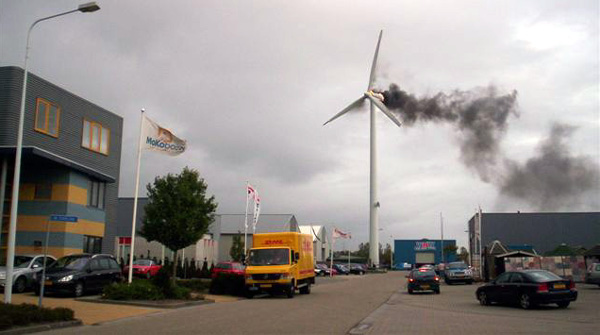
Chris Huhne and the renewables industry have long been playing the nothing to see here game whenever there is a wind turbine collapse, fire or accident.
By their own admission the renewables industry is very cagey about the sacred bird chopper, the recent disintegration of a wind turbine in a mere 50 mph wind earlier this month highlighted the problem that these useless blots on the landscape have, their gearboxes and lubricant are not fit for purpose.
One nation, the Dutch who really know about windmills have abandoned wind power for all the usual reasons expense and reliability, yet in Britain the madness of Chris Huhne continues unabated with plans for 30,000 additional bird choppers costing £2 million each, a total cost of £60,000,000,000 that will require 100% backup from existing power stations using fossil fuels.
£60 billion for something that works at just 25% efficiency, it gets…
View original post 551 more words
German Citizens are “Fed Up” With the Useless Wind Turbines!
German Citizens Have Had Enough…”Conflict Over Wind Turbines Escalating” …Against “Horror Landscapes”!
In Germany protests over a broad range of issues have been heightening.
In Dresden citizens have been turning out by the thousands in “Monday demonstrations” to protest the perceived threat of the Islamification of Europe and the so-called “liar media”, which they no longer trust. Since the Paris attacks by radical Islamic terrorists, the protesters have only become more emboldened.
Citizens are also clearly beginning to feel they are being misled by the “liar media” and politicians regarding wind energy. The glaring difference between what was promised and what is actually being delivered can no longer be ignored. Enough is enough!
Germany’s online SVZ.de writes that the “conflict over wind turbines is escalating” and that “criticism and fears are becoming louder” and that “citizen protest groups are forming at many locations“.
What does it mean? It means that wind and solar power are nothing like they were once cracked up to be. They are poor performers, costly, and are creating a nationwide blight that risks permanently scarring Germany’s once idyllic landscape and natural heritage.
Everything and anything can now be sacrificed at the alter of climate protection. Recently Die Welt published a scathing commentary on the “immensely dangerous power of the eco-cartel“, writing that “totalitarian undercurrents are plainly visible” and that the movement is all about power and money, and less so about environmental protection. Germany’s green movement has been corrupted to the bone.
In the state of Mecklenburg-Pomerania the SVZ.de site writes how an organization called Freier Horizont was established last November and serves as the umbrella for 40 citizens initiatives. “They are protesting against what they see as the uncontrolled expansion of wind energy and speak of horror landscapes.”
Freier Horizont Chairman Norbert Schumacher worries that wind energy will have negative impacts on the region’s coastal tourism. Citizens are concerned that Germany’s cherished Baltic Sea coast will be “blighted” and believe political leaders and wind energy developers are not taking their concerns seriously.
They aren’t, of course. It’s all about money. Even the most self-professed Greens are selling out to the big money of wind energy. For example Die Welt writes of German Green Party honcho Boris Palmer, someone “who grew up protesting the installation of power transmission towers is – no joke – demanding that natural parks and reserves be opened for the 200-meter tall rotating monsters, even if they are located right next World Heritage Sites.”
Greens like Palmer no longer have qualms about that, and so it should not surprise us that they are ready to trample and permanently damage heritage locations – e.g. like the Nazca Lines in Peru. It’s all in the name of the Green Allah: Climate Protection. Green madness has taken over in Germany, but citizens are waking up.
=======================
Memo to Gov. Baker: Stop New Wind Projects
Wind Pushers Ruining Lives, Wherever they are Imposed on People!

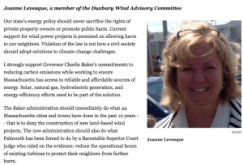
In response to the Globe South’s question “Should the Baker administration support wind energy?” Joanne Levesque argued that
Our state’s energy policy should never sacrifice the rights of private property owners or promote public harm. Current support for wind power projects is premised on allowing harm to our neighbors. Violation of the law is not how a civil society should adopt solutions to climate-change challenges.
A resident of Duxbury, Levesque serves on the Wind Advisory Committee. She urged the Baker administration to
immediately do what 44 Massachusetts cities and towns have done in the past 10 years — that is to deny the construction of new land-based wind projects. The new administration should also do what Falmouth has been forced to do by a Barnstable Superior Court judge who ruled on the evidence: reduce the operational hours of existing turbines to protect their neighbors from further harm.
The pro/con…
View original post 13 more words
 "Mothers Against Wind Turbines™" Phoenix Rising...
