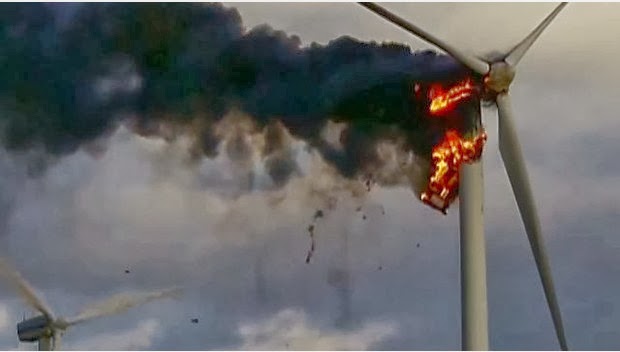
Of Course Wind Turbines Affect House Values, It’s Common Sense!

Industry criticizes wind turbine reportHomeNews
by Jennifer Paterson18 Dec 2014

Is a $78,000 gingerbread house worth the investment?
The Christmas season is well underway: lights strung up outside the house, stockings hanging over the fireplace and the shopping (almost) done. It’s the time of year to take a break from your real estate investments – unless you are investing in the one house with building materials undoubtedly tastier than bricks and mortar: the gingerbread house.
Daily Market Update
Calgary resales market is ‘balanced’ says Conference Board… TD Economics forecasts slowdown in new Alberta jobs… Police uncover mortgage fraud… Employment insurance stable…
A recent study by the University of Guelph, which found wind turbines do not have an impact on nearby property values, might have earned a big sigh of relief from investors – but the study’s results have been strongly criticized by members of the real estate industry.

“I have had several deals fall apart in this area because, in the appraisal report, it has been mentioned that there are windmills visible or adjacent to the property and, once a lender gets wind of that (forgive the pun), they will not fund a mortgage,” said Angela Jenkins, a mortgage agent at Dominion Lending Centres, who lives and works in the Melancthon region, where the study was conducted.

“If a person cannot get financing due to windmills, then how can this be a positive thing?”

The study, which was published this month in the Canadian Journal of Agricultural Economics, analyzed more than 7,000 home and farm sales in the area, and found that at least 1,000 of these were sold more than once, some several times.

John Leonard Goodwin, who has been a real estate broker for more than 10 years in the Grand Bend, Ont. market, asserted that wind turbines absolutely do affect property values. “Turbines complicate your property enjoyment, period,” he said. “That alone spells depreciated value(s).

“Turbines should be in remote, unpopulated locations. To all the folks who have turbines on their property: Enjoy your $18,000 per turbine per year, because you will be giving most of the lease payments back (in much lower property value) when you sell.

“These monsters are very bad for Ontario,” he continued. “We all pay to subsidize the electricity they produce and they will also cause a significant loss of real estate value.”

Lynn Stein, a sales representative at Hartford and Stein Real Estate, lives and sells real estate in Prince Edward County, where a large-scale wind turbine project is slated to begin.

“The turbines that are proposed here are quite large,” she said. “The majority of the population here very clearly doesn’t want them.

“Put simply, if you were to buy your future home, given the choice, would you buy where you would have noise, shadow flicker, an industrial view, potential health issues caused by the turbines, and the possibility of a very difficult resale, or would you spend your money elsewhere?”

Wind Weasels Determined to Continue Scamming the Ratepayers….

The Wind Industry’s Need for Massive Subsidies: The Never Ending Story

never ending story

Wind Power Is Intermittent, But Subsidies Are Eternal
Wall Street Journal
Tim Phillips
1 December 2014

“Tax credits have been essential to the economic viability of wind farms so far, but will not be needed within a few years.” So said Christopher Flavin, now president emeritus of the Worldwatch Institute – in 1984.

Thirty years and billions of dollars later, the wind industry is still saying it needs taxpayer support. Congress is currently hearing this argument as it debates whether to extend the 22-year-old “production tax credit” in the lame-duck session.

The PTC, which gives wind producers a 2.3-cent tax credit for each kilowatt-hour of electricity produced over 10 years, expired at the end of 2013. Now wind-industry lobbyists are roaming the halls of Congress, asking legislators to renew it as part of a tax-extenders package before adjourning on Dec. 15.

The industry’s arguments are bluster. Wind-power capacity has increased by nearly 5,000% since the PTC was created and the industry now makes billions of dollars in annual revenue. Meanwhile, the credit has devolved into another example of corporate welfare.

Over the past seven years, the PTC has cost taxpayers $7.3 billion, and it is expected to pay out $2.4 billion more in 2015. Combined with other subsidies and programs, wind generators received $56.29 in government subsidies per megawatt-hour in 2010, according to a 2012 report from the Institute for Energy Research. That’s compared with 64 cents in subsidies for natural gas and $3.14 for nuclear power.

The program operates as one of America’s least-known wealth-redistribution schemes, forcing taxpayers to pick up the tab for wind farms beyond their borders. In 2012 more than 30 states paid more in subsidies than wind farms in those states received in tax credits. Citizens in five states paid more than $100 million more in federal taxes than they received from the PTC: California ($196 million), New York ($163 million), Florida ($138 million), New Jersey ($126 million) and Ohio ($104 million). Eleven states paid into the PTC even though they have no qualifying wind production. The unlucky losers included Florida, Virginia and North Carolina.

The credit also encourages abuse — both of the electricity grid and the taxpayer. Instead of paying wind producers based on how much of their electricity is used, the PTC pays them based on how much electricity they generate. Companies that invest in wind power thus receive tax credits to produce something that consumers may not actually want. In fact, producers often pay electricity-grid operators to take their product. This phenomenon is known as “negative pricing.”

Wall Street has figured out that it can use this system to its advantage. The PTC offers major corporations a chance to lower their tax rates by investing in wind energy. But investors also realize that wind farms make little financial sense if the taxpayer isn’t picking up the tab.

Wind power’s fluctuating growth patterns bear this out. In 1992 wind installations produced about 2.8 million megawatt hours of electricity; in 2013 wind installations produced 167.6 million megawatt hours. Yet when the PTC expired temporarily in 2000, wind installations plummeted 92% the next year. The same thing happened in 2002 and 2004, when new installations fell 76% after two temporary expirations.

But the past few years deserve special mention. For most of 2012, wind producers weren’t sure if the PTC would be renewed at the end of the year. As a result, producers didn’t break ground on new projects, with only 1,100 new megawatts brought online the following year – a more than 90% drop.

Yet Congress caved and gave the PTC a one-year extension in January 2013, throwing in a bonus: Wind projects under construction by the end of the year would still be eligible for the PTC, even if they wouldn’t come online until after the credit expired.

Corporations and wind producers promptly rushed to cash in the taxpayer’s generosity. The industry broke ground on 12,000 megawatts of new wind farms before the PTC finally expired on Dec. 31. Thanks to the credit’s 10-year payout guarantee, taxpayers still have another decade of subsidizing wind.

It would be a mistake for Congress to renew the PTC again, and it is time to let the wind industry compete with other energy industries in a fair market. Congress should ignore the hot air surrounding the PTC and let it flutter away forever.

Mr. Phillips is the president of Americans for Prosperity.
Wall Street Journal

More than just a few parallels to be drawn from that great little piece and the wind industry’s current efforts to keep the scam rolling here.

No matter where they ply their trade, the wind industry, its parasites and spruikers will never be accused of running a consistent theme when it comes to wind power’s (supposed) ability to compete with conventional generation sources.

Whenever the political brains trust start challenging the true and hidden costs of wind power to their constituents, these boys start babbling about the wonders of wind being “free”; their costs coming down all the time; and – in their more fantasy-filled moments – making the wildest claim of all: that wind power is already truly competitive with coal and gas fired generation (see our posts here and here).

That drivel lasts for just as long as it takes for the political conversation to turn to chopping the massive stream of subsidies directed by government mandate to wind power outfits. At which point, they sober up really fast – and start whining like spoilt brats about threats to investment and jobs (read their “own investments and their own jobs”).

In this recent post, we threw down the gauntlet – challenging the Australian wind industry’s spruikers to pin their colours to the mast.

Is wind power REALLY competitive with conventional generators?

Or is it just a perpetual infant, that would die a natural death in a heartbeat in the absence of massive subsidies filched from power consumers, under the threat of whopping fines that get levied against retailers that fail or refuse to play ball?

While that story will shift like the desert sands – and continue to be delivered with the all the persuasion of Little Britain’s vacillating Queen of Darkley Noone, Vicky Pollard, whenever she’s put on the spot – the one constant is that the “future” of the wind industry will be just as it always has been: one entirely wedded to corporate welfare on a mammoth scale.

Vicky-Pollard-2136549

More Professionals Coming Forward to Protect wind Turbine Victims.

Wind Syndrome: Public Health Crisis

By H. Sterling Burnett, Ph.D  —  The Heartland Institute — December 12, 2014
Wind farms are a “human health hazard,” or so concludes Wisconsin’s Brown County Health Board (BCHB) with regard to the Shirley Wind Project, owned by Duke Energy (DE).
The board’s action has put Duke Energy on the defensive; the power company now has to prove its turbines are not making people sick or face a shutdown order.
This should also serve as a shot across the bow of other wind power operators, a warning to take health complaints seriously, because other towns and counties across the nation could follow BCHB’s example.
BCHB acted with cause. Its decision was based on a year-long study documenting infrasound in homes within a six-mile radius of the Shirley Wind turbines. In addition, BCHB examined peer-reviewed medical research and the complaints of people living around DE’s Shirley Wind Project, which included dozens of sworn affidavits attesting to chronic health problems they have suffered since the turbines began operation in 2010.
In repeated doctor visits, residents near the wind turbines reported experiencing unexplained chronic pain, inability to sleep, ear and head pressure, anxiety, and depression while at their homes, symptoms that disappear after a time away from the turbines. It’s become so bad some families living close to the wind farm have actually left their homes and are renting elsewhere while still paying their mortgages.
After examining all the evidence, BCHB declared “the Industrial Wind Turbines in the Town of Glenmore, Brown County, WI [are] a Human Health Hazard for all who are exposed to Infrasound/Low Frequency Noise and other emissions potentially harmful to human health.”
I have written extensively debunking various phantom health scares hyped by environmental lobbyists. From fears that chemicals in everyday use are causing unusual rates of cancer to unfounded assertions that biotech foods will cause unspecified catastrophic harms to human health or the environment, I’ve refuted them all.
However, there are big differences between the faux scares noted above and the claims wind farms may be making people sick.
First, biotech foods and medicines, as well as most chemicals in everyday use, have gone through extensive testing, and the evidence shows they are safe. With “wind turbine syndrome,” research is just beginning, and, as BCHB pointed out, studies have found evidence linking wind farms and health problems.
Second, genetically modified foods and medicines and modern synthetic chemicals provide myriad benefits other products can’t match, whereas wind power requires huge subsidies, is still inordinately expensive, and is unreliable, and the public has numerous better options for electric power.
Third, the government does not require consumers to purchase or use any GM products or synthetic chemicals about which any particular customer may have concerns. Thus, with a little research and studious shopping, one can avoid any product containing those foods or chemicals.
That is not true for wind power. Many states, including Wisconsin, mandate the use of wind farms and subsidize them; rate payers are captive purchasers. Worse, many states, such as Wisconsin, preempt localities’ authority to set conditions for turbine siting. Residents who don’t want turbines near their homes, who may indeed be made sick by their operations, have to live with the problems or move. If the health complaints prove true, the state government has put those people at risk.
At this point, we don’t know whether wind farms pose substantial health risks to those residing near them, but evidence is mounting they might, and now a public health authority has said they do. Why are major media outlets silent on the possible link between wind power and chronic health problems? I can’t imagine this kind of silence would exist if coal-fired power plants or oil terminals were linked to chronic health concerns.
Certainly, based on the current research and the numerous public complaints from California to New York, and internationally from Australia, Japan, and the United Kingdom, one might think a good investigative journalist would consider wind-turbine syndrome worth investigating, if only to try to disprove it. Consider the challenge laid down.
H. Sterling Burnett (hburnett@heartland.org) is a research fellow with The Heartland Institute, a nonpartisan, nonprofit research institute based in Chicago, Illinois.

Wynne & the Liberals, Determined to Destroy Ontario’s Future!

Underfunded Pension Liabilities. More Wynne Incompetence.

[ 0 ] December 12, 2014 |

liablitiesWhen the Huff Post takes swipes at Wynne and her Liberals, you know things are bad.

In a piece by the Huffington Post which is reporting on the Auditor General’s findings, it is clear that the Ontario Pension Liability coffers are insufficient by some 75 billion dollars.  That means that you and I, Joe and Jane Nobody are on the hook for it.  Why?  Well because much of those plans are promised to contracted union employees of the Ontario government.  So as long as there is one tax payer available from which to draw a “revenue stream”, it means that their pensions MUST be paid, even if the province doesn’t have a red penny left in the coffer pot to pay them.

Since the government doesn’t actually generate its own money, where do you suppose Wynne is looking to find that 75 Billion bucks?   Might that 75 Billion get diverted from the cash that will be coming in from her new “Pension Plan”?

So keep in mind that public employees get free dental, eye glasses, eye laser surgery, chiropractor and physio services, added health care benefits for short and long term disability, gold plated pension benefits and even life insurance benefits, whereas – we the people who have to continue to pay for it all and are on the hook for it, more often than not, usually do without any and all of those same benefits.   Not because we don’t think dental plans and life insurance plans for our loved ones aren’t important – on the contrary, they are.  The fact is, that there just simply isn’t enough money left in our jeans to provide that for ourselves once the various levels of government extract their cut and we busy ourselves with simply trying to stay afloat on what’s left.

I’ll spare you the math, and instead I urge you to read the whole Huff article, which shows how this whole new boondoggle in waiting, – equates to essentially a $200,000 to $350,000 lifetime cash grab from each Ontario employee.  Of course all benefitting the revenue starved Liberal Government.  They are asking you to pay into a fund, where they hold the purse strings and they will keep ALL the money paid in, to spend as they see fit.   As the Huff points out, if you put that money in your own savings plan, you’d be ahead of the game by some $350,000.  You would be getting paid interest per month on your own money PLUS you would still own the 350K, not the government.

What many also still do not understand is that anyone who runs a small business, or is self employed, stands to get hit with not only the employee contribution, but you must pay your employer portion as well.  For many, this cap of 1600 per year, will actually equate to DOUBLE the stated premium to a total maximum of 3400 bucks per year to Windmill Katie’s Government!

While it is still unclear how some of this Plan will be administered something about this whole idea simply stinks.  The fine points are not forthcoming as of yet, as I suspect it is in part because there hasn’t been enough fiddling with needed loopholes in order to send endless streams of that newly incoming cash into general revenues, other barren budgetary areas and other Liberal pet projects.

Unless Wynne and her gang can figure out all the ways to get their hands on that new revenue stream, and spend it as they wish, (instead of locking it in legally to be maintained for its sole purpose which is: a FUND that could not be drawn against or pillaged for other government spending sprees.) – Unless Wynne and her gang can solidify their ability to divert that new cash to other areas whenever they please, HOWEVER they please, there really isn’t much of a reason to implement the plan at all.

In any case, the amount of times we hear about missing billions with this bunch is simply staggering.  I do think there is a direct correlation between the fact that there is a 75 billion dollar Union Sector Pension liability short fall and this latest tactic to generate new money.   They are going to have to find a way to drum up this 75 Billion bucks from somewhere, or more accurately, from someone.  That  someone is you and me.

This of course is where Liberals truly excel – they are pros at selling a shiny “Pension Fund” bait and switch shell game.  Let’s face it,  is far more palatable to sell something shiny and pretty to the unsuspecting Ontarian, than to simply tell them the truth – which is: Hey, our Pension funding is 75 Billion in the hole, with no way to make up that money and with no way to divert that money from other general coffers either…. and so we need gobs of money from each and every one of you so that we can make sure we have enough cash to pay our union employees their pensions.

I wouldn’t count on Joe Average ever seeing a red cent of this new pension money getting back into his jeans.  I’m betting that Wynne and her Government will have long since spent it on other things.

Ohio Citizens Band Together to Fight The Industrial Wind Scourge!

Ohio Joins Global Effort to Slam the Door on Big Wind

Broken_Door_Lock

Around the world, rural communities are fighting back hard against the great wind power fraud.

Wherever wind farms have appeared – or have been threatened – big numbers of locals take a set against the monsters being speared into their previously peaceful – and often idyllic – rural communities. Their anger extends to the goons that lied their way to development approval – and the bent officials that rubber-stamped their applications and who, thereafter, help the operators ride roughshod over locals’ rights to live in and enjoy the peace and comfort of their own homes and properties.

Australians are in there fighting hard – with the numbers solidly against wind power outfits that cause nothing more than community division and open hostility where ever they go (see our posts here and here and here)

The Irish have already hit the streets to bring an end to the fraud: some 10,000 stormed Dublin back in April. The sense of anger in Ireland – as elsewhere – is palpable (see our post here).

Rural Ontario is seething, with locals taking the law into their own hands – sabotaging turbines and construction equipment in order to defend their (once) peaceful and prosperous communities (see our post here).

And the Scots have joined in – tearing down MET masts in order to prevent wind power outfits from gaining a foothold and, thereafter, violating their right to live free from turbine terror (see our post here).

The back-lash against wind power outfits has been mirrored in the US – with communities rallying to shut down projects before they begin; and a raft of litigation launched by neighbours (see our post here).

In the US, even turbine hosts – who we’re repeatedly told by the wind industry’s pseudo-scientist advocates NEVER complain about turbine noise impacts on their homes and health – have issued civil actions against the companies that pay them handsomely to let them plant their giant fans in the top paddock. In Texas, 23 of them are suing 2 wind power outfits for damages caused by excessive noise – which has led to health problems and homes being abandoned – true to form, the companies involved had lied to the farmers concerned about the noise their turbines would generate from the very beginning (see our post here).

Now, farmers in Ohio have taken up the battle to defend their homes, properties and families from turbine tyranny.

Fighting Big Wind
Telegraph-Forum
Todd Hill
7 November 2014

“Stop the wind turbines!” “Say no to wind turbines!” “Wind turbines, go away!”

Drive around rural Ohio long enough, particularly the parts of the state that are flat and dominated by large, agricultural fields, and you’re bound to see signs voicing these sentiments in the front yards of property owners.

Fifteen miles north of Mansfield, just north of the Richland County line near the Huron County village of Greenwich, red and white anti-wind farm signs have sprouted like weeds. A subsidiary of Windlab Developments USA Ltd. wants to build a 25-turbine wind farm on 4,600 acres of leased land just south and east of the village.

The Greenwich Wind Park was approved by the Ohio Power Siting Board in late August.

“We first identified the site and approached landowners to discuss the project concept in 2010. Since that time, the project has benefited from significant community support throughout an extensive development and OPSB process,” Monica Jensen, vice president of Windlab Developments USA, said.

“Now that the project has been approved, Windlab looks forward to completing this project for the benefit of both involved landowners and the neighboring community.”

Well, not so fast.

Kevin and Marcia Ledet live on Omega Road, square in the middle of where the Greenwich Wind Park is supposed to go. They, along with about 27 other local residents, have formed Greenwich Neighbors United, and they’re not taking this wind park lying down. They have their reasons.

“My parents aren’t in their home anymore and we were going to sell their home,” Marcia Ledet said. “The guy called up and said, ‘Well, what about the wind situation?’ He’s backed out, he doesn’t want to buy it now because he doesn’t think it will be a good selling thing to have turbines in the neighborhood.”

The Ledets’ home sits less than a mile north of a busy CSX railroad track, with two even busier CSX tracks a couple miles south of that, typical for northern Ohio. And a variety of pungent smells waft on the breeze.

“They’ll say the railroads make noise and you have all these chicken and hog farms. Hey, this is agriculture,” Kevin Ledet said.

Dennis Alvert and Marcia and Kevin Ledet of Greenwich, Ohio, are unhappy with the environmental effects of a wind turbine farm proposed for their area.

“I love that they call this a wind farm, because what are you farming here? You’re making an industrial power-generating facility superimposed on a community, and it will alter it forever. Our property rights are being infringed upon.”

Ledet said he’s not against wind turbines, although like most opposed to these projects, he certainly sounds as if he is. He complains about federal subsidies “throwing a lot of good tax money” at wind farms, although a federal tax credit for turbines expired last year, with no signs that Congress intends to rejuvenate it any time soon.

Still, the Ledets probably wouldn’t be opposed to wind energy if it were coming from Texas or Oklahoma, where the wind power industry has really taken off. Here in Ohio, only two wind farms are in operation, in Van Wert and Paulding counties. Several more have been either approved by the OPSB or are in pre-application status with the state agency, including two in Richland and Crawford counties, the much larger Black Fork Wind Farm west of the city of Shelby and near the village of Tiro, and the Honey Creek Wind Farm in Crawford and Seneca counties.

Within just the past year, the legislative environment for wind energy in Ohio has grown progressively more unfavorable.

Gov. John Kasich has frozen the state’s renewable portfolio standard, which had stipulated that 25 percent of the electricity sold in Ohio must be generated from alternative energy sources, such as wind, located here by 2025. That mandate is now stuck at a much lower 2014 level, although the freeze is temporary.

Dennis Alvert discusses the environmental effects of a wind turbine farm that is proposed for the Greenwich, Ohio, community.

“It’s not a freeze at all, because if they don’t give us something that works we go back to the old rules, the old standards, which I don’t think fit the state,” Kasich said.

“The numbers that got set were pulled out of thin air. You don’t want to put burdens on companies in this state where they can’t possibly meet the rules, and we don’t want to burden the consumers where we’re costing them a fortune, so we’re going to do a reset.”

In addition, the governor signed over the summer legislation, which never received any public testimony, revising the setback provisions for wind farms from the outer wall of the nearest habitable structure to the edge of a property line, essentially rendering these projects impossible in a heavily populated state like Ohio.

“Look, here’s the issue. Private property rights are important. People choose to live somewhere, and you don’t just go in there and disrupt their life. The idea that you have a setback from your property line rather than your personal home I think makes a lot of sense,” Kasich said.

Will the new setbacks be the death knell for wind projects like Greenwich and Black Fork?

“That question is up in the air,” Dayna Baird Payne, a Columbus-based lobbyist for the American Wind Energy Association, said.

“There is language in the statute, House Bill 483, that projects certified as of early September (again, Greenwich Wind Park was approved in late August) will be grandfathered in. But some of the language in the statute suggests that if a project files an amendment, that kicks it out of grandfathering. There may be a rule coming soon from the OPSB explaining a little about the process.”

“There are not any immediate plans to do that,” Matt Butler, public outreach manager for the OPSB, said.

“The setback change has a number of legal issues that are subject to further interpretation before we can issue any additional clarification on that in a case that comes before the board.”

Kevin and Marcia Ledet of Greenwich, Ohio, discuss the negative effects not often addressed by the wind turbine farm advocates.

The energy marketplace also is challenging for the wind industry right now, given the abundance of natural gas being extracted from the Marcellus and Utica shale plays, along with a general decline in energy demand that’s persisted since the 2007-09 recession.

Still, the members of Greenwich Neighbors United aren’t taking any chances. They’re hoping to litigate the wind park to death before it gets off the ground, a strategy that’s so far been working for the opponents of the Black Fork Wind Farm.

“Windlab had an informational meeting, and just prior to that they took out a big, color advertisement in the newspapers that says how marvelous this is. It shows a little girl with these pinwheels on a prairie with some turbines,” Kevin Ledet said.

“It was an amicable meeting, but I told them we would fight them tooth and nail, take them all the way to the Supreme Court, whatever we have to do.”

Dennis Alvert, another opponent, questioned why Windlab has chosen Huron County, where the wind can be calm for days on end during the summer. There are, however, several power transmission lines stretched across the Buckeye State.

“The alarm for us is the way they have done business so covertly. They spend three to four years in an area getting their ducks in a row before they make an announcement,” he said.

Indeed, a flow chart showing the approval process for a wind project, provided by Windlab, has the first public mention (a legal notice in a local newspaper) more than halfway down the page.

“These people, they know the game we’re playing, and we don’t. By the time we got on board with this, the bus was already over the hill, we never even saw the taillights,” Ledet said.

“Everyone we talked to, they thought it was a done deal, there’s no sense in fighting, forget about it. And half didn’t even know what was going on,” Marcia Ledet said, adding Greenwich Neighbors United is $30,000 in debt.

The group is having its first fundraiser, a community chili rally, Friday from 5 to 8 p.m. at the South Central K-8 School, 3305 Greenwich Angling Road.

“And we’re selling hats,” she said. “Five dollars if you wear them, $10 if you don’t. If you think they’re ugly, you should see the wind turbines.”
Telegraph-Forum

Industrialisation

Wind Turbines, and The Problems Caused by Their Nasty Habit of Burning Up!

BUSHFIRE RED ALERT: Wind Power Really Is Setting the World on FIRE

vestas_turbine_chabanet_burns

As the Australian countryside turns to the golden hues of summer, the attentions of its farming and rural communities also turn: hundreds of eager eyes become fixed on the horizon for tell-tale signs of the smoke that heralds the bushfires that cast fear amongst those that live and work in the bush.

Rules are set to avoid bushfires on high fire danger days – when a Total Fire Ban is called:

You cannot light, maintain or use a fire in the open, or to carry out any activity in the open that causes, or is likely to cause, a fire. No general purpose hot works such as using tractors, slashers and/or welding, grinding or gas cutting can be done in the open either, and this includes incinerators and barbecues which burn solid fuel, eg. wood or charcoal.

Farmers engaged in crop harvesting operations think twice about operating harvesters when the northerly winds pick up and send temperatures into the 40s – the safety conscious leave their headers parked in the shed or the corner of the paddock and spend the day in front of the A/C enjoying the cricket on TV – ready to respond in a heartbeat to the call if a fire does break out. Better to miss a day’s reaping than set the country ablaze.

grain_harvesting_06

All sensible stuff.

But such is the seriousness with which country people take the ever-present threat of a bushfire, that can turn a swathe of country black; destroy homes, sheds, equipment, livestock, fences, generations of hard work; and, most savage of all – lives.

bushfires

The approach taken to the threat of the savagery of an Australian bushfire is about the common sense management of RISK – and, wherever possible, taking steps to minimise or prevent that risk altogether.

But one massive – and utterly unjustified – RISK is the one created by the roll-out of hundreds of giant fans across WA, SA, NSW, Tasmania and Victoria – all in areas highly prone to bushfires.

Turbines represent the perfect bushfire incendiary: around the world, hundreds have blown up in balls of flame – in the process – each one raining molten metal and hundreds of litres of flaming hydraulic oil and burning plastic earthwards. Here’s a few pics showing these plucky ‘green’ fire-starters in action:

turbine fire 1

turbine fire Trent-Wind-Farm

turbine fire 6

windturbine-exploding

Vestas turbine on fire

wind_turbine_fire

Feuer in Windkraftanlage

turbine fire 3

turbine fire 4.jpeg

turbine fire 5

turbine fire 7

Wind turbine fires are ten times more common than the wind industry and its parasites claim (see our post here and check out this website:http://turbinesonfire.org).

Here’s a report on, yet more, turbines bursting into fireballs.

One Suzlon turbine destroyed and two badly damaged
Wind Power Monthly
Mike McGovern
8 December 2014

wind turbine suzlon s88 amayo

NICARAGUA: A Suzlon 2.1MW turbine nacelle caught fire and later crashed to the ground on Sunday in an incident involving three damaged turbines at the 63MW Amayo complex in Nicaragua, the country’s first wind project.

“There were no injuries and the site has been secured,” Suzlon told Windpower Monthly in a written statement, confirming the affected turbines to be S88-2.1MW machines.

Suzlon declined to comment on the possible cause, pending further investigation. Nobody at the US-based owner company, AEI Energy, was available for comment.

Local press reports, citing ground staff and fire fighters, said all three machines at the 23MW Amayo II plant — in service since 2010 — suffered failure in their emergency braking systems, leaving them helpless against high gusts of wind. No other turbines were affected, claimed Suzlon.

The turbines caught ablaze at 5.15am, just under an hour after a blackout hit the Rivas municipality, where the wind farm is located.

All three machines reportedly spun uncontrollably. Turbine 28 finally fell and all three blades of turbine 25 were flung off. A blade on turbine 29 was left broken.
Wind Power Monthly

If the story has an upside, it’s the successful bid for “freedom” made by the blades during yet another “component liberation” event (see our posts here and here and here and here and here).

And glad to see our favourite Indian fan maker, Suzlon making the news! But they weren’t overly keen to let much slip – its spin-masters quickly switching to “radio silence” when quizzed about the cause. And – in typical wind weasel fashion – the wind power outfit concerned went into complete media lock-down. No surprises there.

Suzlon – aka Suzlon REPower, aka Senvion – have planted hundreds of its S88s all over the Australian countryside: near-bankrupt wind power outfit, Infigen operate a stack of them in NSW; Trustpower planted 47 at Snowtown, in South Australia’s Mid-North; and AGL speared a hundred or so into SA’s Mid-North, around Jamestown and Hallett.

Senvion are the crowd behind the ridiculous CERES project – which aims to spear 197 of its whirling, pryro-technic devices into SA’s agricultural Heartland, the Yorke Peninsula. Thankfully for farmers and fire-fighters, the chances of that debacle eventuating are slimmer than a German supermodel.

There have been at least 4 bushfires started by wind turbines in Australia, so far:

  • Ten Mile Lagoon in Western Australia in the mid-1990s;
  • Lake Bonney, Millicent (SA) in January 2006 (see the photo below);
  • Cathedral Rocks Wind Farm, Port Lincoln (SA) in February 2009 (see The Advertiser article below); and
  • Starfish Hill (SA) in November 2010 (see this link for more detail).

wind turbine fire Lake_Bonney_windfarm

When it comes to talking about the exceedingly “hot” topic of bushfires started by turbines, Australian wind power outfits exhibit the same well-drilled, reticence shown by American outfit, AEI Energy in the article above, about its flaming little Suzlon beauties.

As a result, the media rarely report on the bushfires that are started by turbines. On the rare occasions that the media do – as in this Advertiser article – wind power outfits never comment, keep their heads well below the PR parapet and hope that the flames die down quickly.

Cathedral Rocks Wind Farm turbine fire
The Advertiser
2 February 2009

A $6 MILLION wind turbine has caught fire near Port Lincoln, starting blazes on the ground as embers fall.

The fire, at the Cathedral Rocks Wind Farm about 30km southwest of the town, was first noticed by a boat about 1am.

The turbine is alight halfway up its 60m structure, making it difficult for the 14 Country Fire Service firefighters trying to deal with it to extinguish the blaze.

They are also busy controlling the spotfires, but consider the situation to be safe.

The cause of the blaze is as yet unknown.
The Advertiser

water bombing

Not only do wind turbines act as the perfect bushfire-starters, their presence precludes the best and safest method of fire-fighting from controlling them: aerial water bombers won’t fly within cooee of these things – experienced pilots have declared that they won’t fly within 3km of a wind turbine, even without the country around them on fire. For a rundown on pilots’ attitudes to flying anywhere near wind farms – see our posts here and here and here.

water bombing elvis

Aircraft and wind turbines – standing 160m tall, with a whirling wing-span of over 100m – don’t mix at the best of times (see our post here). Add billowing smoke, 50m flames and scorching heat and no-one could blame fire-fighting pilots for giving wind farms a very wide berth when the country around them is ablaze.

Fitting it is then, that the Senate Select Committee has the clearly obvious fire risk created by giant fans, and the ability to fight those fires, squarely in its sights – its terms of reference include scrutiny of: “the effect that wind towers have on fauna and aerial operations around turbines, including firefighting and crop management” (see our post here).

For those in the country keen to avoid the very real threat of incineration that comes hand-in-glove with having wind turbines speared all over it – note that the opportunity to make submissions to the Committee ends on 27 February 2015. See the link here.

It’s high time our political betters brought this insanity under control.

bushfire aftermath 2

Wind Turbines DO Destroy Property Values….

Wind farm property value study should not have been published: Queens prof

by ottawawindconcerns

You may have seen the Canadian Press story that surfaced on Sunday and Mondayabout a study done by a University of Guelph agricultural economics teacher, which was published in the Journal of Agricultural Economics. While the headlines said wind turbines caused NO effect on property value, the real study said otherwise: the co-authors noted that they had very little data, that expired listings (houses listed for sale that never sold) were not included, and neither were sales not on the open market, such as the properties purchased by wind power developers.

So the situation was: very few sales, houses not selling at all, and some houses that did sell changed hands many times. What’s wrong with that picture?

Well, plenty. Here’s a letter to the editor of the journal that published the study, released today. Too bad the damage has been done by the headline writers.

Letter to the Editors of Canadian Journal of Agricultural Economics:

The paper by Vyn and McCullough (2014) should not have been published in its current form as the results are being misinterpreted and highly publicized in the press and in radio broadcasts. The core issue is the lack of power in the statistical tests, a problem partially acknowledged by the authors but then dismissed by their focusing attention on tests for the sensitivity of their model specification. The article appears to encourage the misinterpretation of its statistical findings.

Out of the 5414 sales, only 79 post-turbine sales are of properties within a 5 kilometer radius and the rest are within a 50 kilometer radius. The diversity of the houses in the sample is very large as indicated by their price range of ten thousand to two million dollars and by the relatively low R-squares (0.57) in the hedonic regressions. Given the small number of properties that may have been adversely affected and the great diversity of properties in the sample, it is not at all surprising that the regressions yield no ‘statistically significant’ results. The shortage of observations on properties close to the turbines cannot be overcome by extensive sensitivity testing of model form. The problem is with the lack of data not with model form and focusing on the form tends to obfuscate the issue.

The authors do recognize the data problem: “Unfortunately, there are relatively few observations in the post-turbine periods that are in close proximity to turbines” (p 375) and “Hence, these numbers of observations are likely too few to detect significant effects, which represents a major limitation of this analysis” (p 387). But there are three problems that should have been picked up and corrected through the peer review and editorial decision process.

First, the authors conclude:

“The empirical results generated by the hedonic models, using three different measures to account for disamenity effects, suggest that these turbines have not impacted the value of surrounding properties” (p 388). This is wrong for two reasons. First they could not discern an impact which is different from not having an impact. Second, they misuse the term ‘value’. If you have a choice between two identical properties, identical in all respects except that one is close to a turbine while the other is not and if you choose the far one, then the turbine has an effect on the value of the property. This hypothetical example tests the paper’s hypothesis using common sense rather than a statistical measure.

Second, the authors claim:

“The findings of this paper will provide evidence that may help to resolve the controversy that exists in Ontario regarding the impacts of wind turbines on property values” (p 369) and then proceed to do all they can to make a non-finding appear important and repeat the general statement that they found no significant impact. They correctly said in the CBC interview this morning that their study did not find a statistically significant price effect but the public and reporters, not being familiar with statistical terms interpret this as saying that there was no price effect. Not finding a statistically significant impact due to a data shortage does not mean that there was no significant (i.e. important) impact. This distinction was not made clear enough in the paper nor in the follow up interviews and newspaper articles.

Third, the reviewers and finally the editors should have insisted on the power of the statistical tests to be calculated and reported. I understand that editors in the major health science journals insist on this as their readers, doctors and other clinicians, are not always aware of statistical fine-points but they need to be fully aware of the qualifications before using the results to change their practice. Given the potential impact a misinterpretation of the findings could generate, the test of the power should be reported even in the abstract. The reader should be told how big an impact would have to be before it can be detected by a statistical test with this number of observations. Had the price of properties near the turbines been 10 percent lower than they actually were, would the model have yielded a statistically significant finding of a price decrease at say the 0.05 probability level? What about a 20 percent decrease, would it have been ‘statistically significant’? Answers to this type of question would have been easy to produce and far more relevant that sensitivity tests of the model form.

The paper deals with an important issue that can have serious policy implications affecting the wellbeing of many people. The results can affect the location of wind turbine farms and the compensation claims of affected parties. Incorrect information or interpretations can be very hard to correct. In such cases, it is the journal editors’ responsibility to ensure that results are presented in a manner that, at the very least, does not encourage the misinterpretation of the findings.

Sincerely,

Andrejs Skaburskis, Professor Emeritus

North American Editor: Urban Studies,

School of Urban and Regional Planning,

Queen’s University,

Kingston Ontario, Canada

Aussies Determined to Expose the Great Wind Power Fraud! Go Senator Leyonhjelm!

Alan Jones interviews David Leyonhjelm on the Senate’s Inquiry Into the Great Wind Power Fraud & Cross-Bench LRET Plan

263977-alan-jones

The wind industry in Australia is in full-scale panic because the Senate’s cross-benchers (who hold the balance of power in the Upper House) have won Coalition support for their Inquiry into the great wind power fraud: which will turn a (long-overdue) blowtorch on the biggest rort in Australian history (see our post here).

Adding to the wind industry’s mounting woes is the fact that the cross-benchers have also put together a plan that will put the wind industry out of its misery, by elevating the place of “old” hydro power and small-scale solar – especially “stand alone solar” in remote locations – under the Large-Scale Renewable Energy Target (LRET): both “old” hydro and small-scale solar are perversely excluded from the LRET  (the plan is available here).

The vast bulk of hydro capacity was built pre-1998 and is, therefore, ineligible to participate – a matter that has Tasmanian Senator, Jacqui Lambie seeing red (see our posts here and here). For a run down on the Inquiry and the cross-benchers’ plan see our post here.

STT hears that the cross-bench plan is with Tony Abbott’s office and has already won the PM’s tick of approval.

The Inquiry and the plan has been pushed along by cross-bench Senator, David Leyonhelm, who appears in this recent interview with Alan Jones on 2GB.

Alan has a little radio show that more than just a few Australians tune into each morning. Syndicated through over 77 Stations and with close to 2 million listeners Countrywide – AJ as he’s known – is one of those people that leads the political charge on many issues that really affect ordinary Australians and which the rest of the press ignore.

Alan Jones AO: A couple of weeks ago I interviewed Dr Jay Tibbetts – you might recall is an American. A medicical adviser to the Brown County Health Department in Wisconsin. He attacked the Australian Medical Association, who quite disgracefully, but not surprisingly given that the leadership of that mob now is hopelessly of the left. And the AMA virtually arguing that there was no problem with these sub-audibleinfra-sound emitted by wind turbines. And Doctor Tibbetts cited endless international evidence in relation to the health risks posed by the low-frequency noise that wind turbines generate.

Well that interview lead to an email that I received this week from eastern Europe.  Amazingly they had heard my interview, on the Internet with Doctor Tibbetts in relation to what I call the lunacy of wind farms and the sleep deprivation that they cause and my email correspondent said “I just wanted to tell you how much we appreciated your excellent interview and your courage to do it. I know how risky this is.  My emailer said he posted the interview on his website and it went ballistic. And I’m told, he says it’s spreading from Austria to Germany, and Finland and Ireland and Poland and many other countries. My emailer said ‘I can guarantee you that all people in Europe, especially in Germany were like crazy and spread your interview like crazy when they got it on my Facebook page.

Well people are waking up to the lies and deceit peddled by governments and renewable energy companies all over the world. There is a report this week by AGL energy of all outfits who found that non-solar households are paying hidden subsidies and more than $200 million a year, here in Australia to households who have solar roofing panels.  Now we know that this wind power-solar power are driving up the cost of what you pay for electricity and what business pays. And the AGL Chief economist Paul Simshauser, said the problem of wealth transfers to renewable energy sources was increasing. In other words to prop up renewable energy, you the taxpayer have money taken out of your pocket and that, in billions of dollars, goes to renewable energy companies. Most of them foreign companies.

Now people increasingly can’t hack this. We’re told 650 electricity customers are complaining to their retailer every day about electricity prices. The Australian Energy Regulator’s annual report found disconnections have surged and more than 237,000 New South Wales households, one in seven customers, has complained to their provider about pricing in the financial year ended 30 June this year.

Now we are spending billions of dollars on wind energy. It accounts for less than 2% of power generation in China, 3% in America. And this whole renewable energy thing is completely out of control. Wind power costs up to $214 per megawatt hour, coal $78 to $91. If the renewable energy mob want a set of rules that would be simple – then go ahead with your wind farm but don’t ask for taxpayers’ money. How can wind turbine companies buy off a farmer for $10,000 a turbine and then that same company be subsidised by the taxpayers? Who are you.

I have spoken to so many people, but one of them is Andrew Gardiner in Napthine’s electorate. He’s running for election this Saturday, the Premier of Victoria. Next to 140 turbines, 150 metres high, 56m blades – the biggest monsters in the southern hemisphere, some are 90 m from his property. Eight of them, 1.7 km from his home. And he’s been bullied and intimidated by AGL. I repeat – coal-fired power $78-91 a megawatt hour wind power, up to $214 per megawatt hour and solar power, over $400 a megawatt hour.

And here you’ve got this Gullen Range wind farm near Goulburn, which breaks nearly every rule that governed its application to operate. But don’t worry, it’s foreign owned. Would you believe Canberra, were meant to be spending 17,000 million dollars (17 billion), erecting between 7000 and 10,000 of these wind turbines. Yet Germany are pushing ahead with new coal-fired electricity plants because political and public concern there is increasing over the cost of energy. China is building a new coal fired power station every 10 days every year. And remember when I spoke to Angus Taylor, the new member for Hume, turbines in his electorate enjoys subsidies to $500,000,000 to a $billion a year.

Well David Leyonhjelm is a New South Wales Senator, representing the Liberal Democrats and along with Senators Madigan, Day, Xenophon and Back, David Leyonhjelm succeeded in establishing, has succeeded in establishing – and this will put a few noses out of joint – a Senate inquiry into wind turbines. This will blow the whole show open. It was a narrow vote. Because you see people like Mcfarlane, the Energy Minister, they’re in bed with wind companies. 33 to 32. The inquiry will be known as The Select Committee on Wind Turbines. It will investigate regulatory governance, or lack of it, over wind turbines, their economic impact, which can only be negative. It will examine on household power prices of wind power, we know that. The implementation of planning processes which as you can see with Gullen Range, are ignored. The integrity of national wind farm guidelines – they have none. The impact of wind turbines on firefighting – that’s another story altogether – and crop management. And the committee will have the power to send for and examine people and documents. And it will report its proceedings from time to time and make interim recommendations and it will report by June 24 next year. This is a very pioneering and important initiative and not before time.

Senator David Leyonhjelm is on the line. Senator, good morning.

Senator David Leyonhjelm: Good morning Alan.

Alan Jones AO:  Just before we go down to the guts of this, I note the notice paper and it tells us that the inquiry will look into ‘the role and capacity of the National Health & Medical Research Council in providing guidance to state and territory authorities’ and ‘the effect that wind towers have on fauna and aerial operations around wind turbines’. I couldn’t find any where in the terms of reference of the inquiry an investigation into the health impact of these wind turbines. Is that on your agenda?

Senator David Leyonhjelm:  It’s on our agenda and there is another item there that says ‘Any related matter’. So it certainly we’ll be taking that into account. The only thing is we – the emphasis of this inquiry is towards the other matters, more than health, because there have been two inquiries into health already. The problem with it is they’ve been ignored pretty much.

Alan Jones AO:   Absolutely.

Senator David Leyonhjelm:   We didn’t think – we will be going over that ground, we will be looking at that again – but there are a lot of additional complaints about wind farms. They are, I don’t know where they all are, all but certainly some of them are extremely noxious neighbours. And we are receiving just so many complaints about them.

Alan Jones AO:   Absolutely, I am to. I have a file that I couldn’t jump over here too. Incidentally, as you would be aware there is an election here on Saturday, this opposition leader, fellow, Andrews, the Labor leader, is promising to reduce the mandatory buffer zone between properties and wind farms if he wins the election. I mean it is currently 2 km the exclusion zone, which is not enough, he’s promised to reduce it to 1 km.

Senator David Leyonhjelm:   It’s amazing. And, you know that reflects the way we did this committee. We knew that there’s significant support for wind farms on both sides of the house. And what we did was a little bit sneaky to be quite frank. We’ve called it a ‘select committee’, so it’s not a reference to an existing standing committee, which are dominated by Labor and the government, so this is basically a cross-bench inquiry. There are seven official members of the committee, plus we can co-opt more, other participating members. It’s only two from the government one from Labor, one from the Greens, and three from the cross-bench. And plus, we can bring in other participating cross-bench members if if we wish to.

Alan Jones AO:  But see you’re raising a very valid point here because the public feel that they’ve got nowhere to turn because both Labor and the Coalition are in bed with this mob.

Senator David Leyonhjelm:   Yes, well that’s the point. That’s why we said this that it’s not going to be appropriate for it to go to an existing committee, because the cross-bench doesn’t have much say on those.

Alan Jones AO:   Absolutely. You see I have said many times – I am talking to Senator David Leyonhjelm from New South Wales – I’ve said many times David, that you can’t release a drug onto the market unless all the likely consequences from the drug are subjected to rigourous scrutiny. So how could you build wind farmers, or approve coal seam gas extraction, without providing the answers to the very legitimate questions about health and the impact on individuals that these things have.

Senator David Leyonhjelm:   Yes. You can never answer every single question and science is an endless pursuit, but there are some just glaring questions why, for example, does the Gullen Range wind farm, where they have put these things almost 200m away from where they’re supposed to be, and then said ‘well, we’re a renewable energy company we can do whatever we like’. And then the Clean Energy Regulator hands over money to them with no accounting.

Alan Jones AO:   Thank God for you. Thank God for you. They should be stopped in their tracks now. They are in breach of the consent application, they should be stopped, shouldn’t they?

Senator David Leyonhjelm:  We hear lots of stories, where because they are renewable energy, they think they’re above the law. They don’t think they have to comply with planning guidelines and directions and so forth.

Alan Jones AO:   This bloke’s a breath of fresh air.

Senator David Leyonhjelm:   We are not even satisfied those guidelines are particularly comprehensive and thorough anyway.

Alan Jones AO:   Or stringent, no. You have said, just for the benefit of my listeners, and I’ll just get you to comment on some of the quotes that you’re on the record as having uttered. “The dramatic surge in power bills has been major factor in the decline of our manufacturing sector and the loss of thousands of jobs. In little more than 10 years, the Renewable Energy Target has rocketed Australia from almost the cheapest to the most expensive electricity in the world”. They are your words.

Senator David Leyonhjelm:   Yes. Well in fact that brings me to another subject where also the cross-bench is also are trying to do something constructive with the government on this Renewable Energy Target. As you probably know, Labor and the government stopped negotiating a week or so back and now, it’s in our court. We are working on a plan – there’s been some media reports on it in the last couple of days. We are working on a plan in whcih we will address this issue of high prices of electricity, unachievable energy target, the penalty rates kicking in, all that sort of nonsense.

Alan Jones AO:  Well you said in August, ‘The latest figures from the Australian Bureau of Statistics show in the five years to June 2012, Australian retail electricity prices rose by 72%, with even higher increases in Melbourne and Sydney’. You said, ‘Senators and MPs, however, don’t need to worry about whether staying warm in chilly Canberra may send them broke. Perhaps if they had to pay for their own heating and air-conditioning in Parliament House it would concentrate their minds on the important discussion we need to have about the future of the Renewable Energy Target’. Good on you.

Senator David Leyonhjelm:   Well, it’s tragic. You know there are people who are suffering, genuinely suffering from energy poverty. They cannot turn on their heaters during the winter. They suffer in the cold just because they cannot afford their electricity bills. So they’re frightened of receiving a bill that they can’t afford to pay.

Alan Jones AO:  Absolutely. You … yes it is tragic. You quote a report from the accounting firm Deloittes, showing the Renewable Energy Target will “stifle the economy, cost jobs, and drive up prices and is a very inefficient means of reducing greenhouse gas emissions”. Now Terry McCrann years ago told me David, on this program, if you want to decarbonise the Australian economy, you’re writing a national suicide note. And I mean that you’re the only people focusing on this issue.

Senator David Leyonhjelm:   Yes, well somebody has to. I’m really encouraged, that the government acknowledges the problem, I just don’t like the solution, or the politics of the solution. The renewable energy industry has an awful lot of supporters. And it’s a nice warm thing motherhood type stuff to support renewable energy.

Alan Jones AO:  And have you ever noticed, when any of the MPs retires from Parliament they go and get jobs with them. Hey hey? Oh, Mr Mcfarlane will be lining one up right now. He won’t be standing at the next election don’t worry. I mean you said, and this is true, ‘the net effect of this subsidy, renewable energy subsidies, is to hand an additional 17 billion dollars of our money to these companies over 15 years for no measurable environmental benefit.

Senator David Leyonhjelm:   Yes that’s right. And it’s worse than that, I mean it’s having negative effects. In fact one of the aspects of the inquiry is to actually determine what is the energy and emission output – input and output from a whole of life. So, from the point when these turbines are made and they run, through to the other end when they are dismantled and thrown on the scrap heap – what’s the net energy and emission output.

Alan Jones AO:  Absolutely

Senator David Leyonhjelm:   I have a sneaky suspicion that a bit like the Prius car it’s not the right direction.

Alan Jones AO:  Absolutely. Finally – and we could go on forever on the things that you’ve said. And it’s very encouraging that someone at least is taking this cause up. But you’ve said, “It is undisputed that the wind generation industry is not viable anywhere in the world without government or customer subsidies”, you said “It’s just government-mandated corporate welfare”.

Senator David Leyonhjelm:   That’s exactly right – they’re just not viable without subsidies.

Alan Jones AO:  Keep at it – keep at it my friend. Keep at it. You’re the hope of the side.

Senator David Leyonhjelm:   Alright – thanks Alan.

Alan Jones AO:   Well done, there he is. Senator David Leyonhjelm. A major senate inquiry into this whole rubbish of renewable energy and wind power.
2GB

david leyonhjelm

Big wind Pressing Congress, For More Money! $$$$$$$$ It’s a money-pit!

Via. Greenie Watch    30 November 2014

Big Wind is pressing Congress for yet another bailout

By Mary Kay Barton

Taxpayers beware! While you were sleeping, enjoying your family and eating turkey,

Congress has been busy.

Congressional Republicans are negotiating with Senate Democrats to extend the infamous wind energy Production Tax Credit through to

2017, after which it will supposedly be phased out, just as was supposed to happen in the past. This sneaky, dark-of-night “lame duck”

session tactic should be flatly rejected.

While you’ve been busy just trying to make ends meet, wondering why the cost of everything is going up, and agonizing over how your

children and grandchildren will ever pay the mounting $18 TRILLION dollar national debt – the wind industry lobbyists’ group, the

American Wind Energy Association (AWEA), just sent Congress a letter seeking to extend the federal, taxpayer-funded wind Production Tax

Credit (PTC).

The list of signers to AWEA’s letter include rent-seeking industries and “green” groups who’ve all benefitted by tapping into

taxpayers’ wallets via the Big Wind PTC (aka: Pork-To-Cronies). It certainly isn’t hard to figure out why these corporations pay many

millions of dollars to hire lobbyists and run national TV advertising campaigns geared at convincing crony-politicians to vote to

continue these TAXES and higher energy prices on American citizens.

AWEA’a letter is typical of wind industry propaganda. It makes specious claims about creating jobs and reducing pollution, without

providing a shred of evidence to PROVE any of their claims. AWEA apparently hopes Congressional officials are “too stupid” to

understand what energy-literate citizens nationwide know: Industrial wind can NEVER provide reliable power. It raises electricity

costs, even after subsidies are factored in. It kills more jobs than it creates. It defiles wildlife habitats and kills eagles, hawks,

other birds and bats – with no penalties to Big Wind operators.

Here’s the reality: After 22+ years of picking U.S. taxpayers’ and ratepayers’ pockets, industrial wind has NOT significantly reduced

carbon dioxide emissions. It has not replaced any conventional power plants, anywhere. However, the $Trillions spent on these “green”

boondoggles to date have significantly added to the $18+ TRILLION dollar debt that our children and grandchildren will have to bear.

AWEA’s own statements from years and decades past can be used against them. To cite just one example, 31 years ago, a study coauthored

by the AWEA stated:

The private sector can be expected to develop improved solar and wind technologies which will begin to become competitive and self-

supporting on a national level by the end of the decade if assisted by tax credits and augmented by federally sponsored R&D.

[American Wind Energy Association, et al. Quoted in Renewable Energy Industry, Joint Hearing before the Subcommittees of the Committee

on Energy and Commerce et al., House of Representatives, 98th Cong., 1st sess. Washington, DC: Government Printing Office, 1983, p.

52.]

In other words, the PTC should have ended 20 years ago, because wind energy would be self-sustaining by then. It wasn’t. It still

isn’t. It never will be. We need to pull the PTC plug now!

Here are some details about the bill that is currently being negotiated during the lame duck session –before the newly elected,

Republican majority Senate takes office and can do much about it.

In 2016, wind developers would be eligible for 80% percent of the PTC’s value. They could also claim 60% of its value through the first

nine months of 2017, after which it would supposedly expire.

The proposed congressional deal also seems to continue basing PTC eligibility on when project construction project begins. That opens

huge doors for abuse.

The last time Congress extended the PTC, as part of its “fiscal cliff” deal in 2013, it said “eligibility” for taxpayer largesse

covered projects “under construction,” rather than requiring that they be “placed in service” by a certain date. In practice, this

means just a shovelful of dirt has to be moved by that date.

Remember too that the Production Tax Credit supposedly expired last year. But this clever language has allowed construction and

expansion in the meantime. Meanwhile, Lois Lerner’s Internal Revenue Service has helpfully said projects that were started or “safe-

harbored” prior to the PTC’s most recent pseudo-expiration can claim tax credits if they are in service by 2015. And then they can

claim the $23-per-MWh credit for ten more years!

What a wonderful holiday gift for Big Wind and its political sponsors – at your expense.

Our government should NOT be in the business of picking and choosing the winners and losers in the energy marketplace – while

assaulting and harming the very citizens they are forcing to pay for this “green” energy scam. It’s time for government to get out of

the way and let the markets work!

The best solutions will rise to the top of their own accord because they will provide modern power at the best prices – thereby

maintaining the reliable, affordable power that has made America great.

Citizens nation-wide have awakened to this massive “green” energy scam. Many have sent letters to Congress like the one below. You can

join the fight by contacting your representatives and urging them to do the right thing: Protect American consumers, taxpayers and

ratepayers. END Wind Welfare (#EndWindWelfare)!

Please help the citizens of Brown County! We Are All In This Together!

Shirley Wind Human Health Hazard Declaration — Request for Words of Support

At the October 14, 2014, Brown County (Wisconsin, USA) Board of Health meeting a motion was made to declare the Shirley Wind turbines a Human Health Hazard. The motion was unanimously approved by the Board:

“To declare the Industrial Wind Turbines at Shirley Wind Project in the Town of Glenmore, Brown County, Wisconsin, a Human Health Hazard for all people (residents, workers, visitors, and sensitive passersby) who are exposed to Infrasound/Low-Frequency Noise and other emissions potentially harmful to human health.”

Brown County Citizens for Responsible Wind Energy (BCCRWE) has issued a press release regarding this Human Health Hazard declaration, which can be seen at:http://bccrwe.com/index.php/8-news/16-duke-energy-s-shirley-wind-declared-human-health-hazard. BCCRWE is requesting your words of support for this action.

Research indicates that industrial wind turbines can negatively affect the physical, mental and social well-being of individuals if placed too close to homes. BCCRWE has been working intensively for the past 5 years with professional researchers, physicians, acousticians, and legislators to protect citizens of Brown County, the state of Wisconsin, the United States, and those in other countries from the negative health impacts resulting from industrial wind turbines being built too close to people.

BCCRWE welcomes and encourages individuals, organizations, and governmental agencies from around the world to send their words of support regarding the Board of Health’s action. BCCRWE will pass your emails on to the Brown County Board of Health as support for their courage, integrity, responsibility, intellectual honesty, and care in declaring the industrial wind turbines at Shirley Wind to be human health hazards.

If you or others you know have experienced negative health impacts from living in close proximity to industrial wind turbines and would like to share that experience along with your words of support with the Brown County Board of Health, please do so.

Send your words of support, and if applicable your experiences, to: BOHsupport/bccrwe.      Thank you!