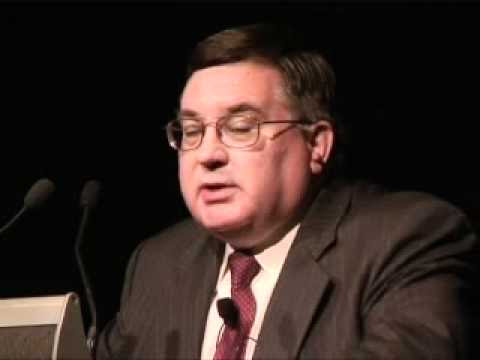
Dr. Bruce Rapley Tells Inquiry, that “Nocebo effect”, Just More Wind Industry Lies!

Dr Bruce Rapley tells Senate: Wind Farm Nocebo Story “Nefarious Pseudoscience” & an “Insult to Intelligence”

senate review

****

Australia is blessed with a former tobacco advertising guru who is paid a packet by wind power outfits – like near-bankrupt Infigen – to pedal a story that the adverse health impacts caused by incessant turbine generated low-frequency noise and infrasound (such as sleep deprivation) are the product of “scare-mongering” – which, on his story, affects only English-speaking “climate deniers”; and that never, ever affects those farmers paid to host turbines.

This grab bag of nonsense is pitched up under the tagline “nocebo”. Now, that doesn’t sound altogether scientific, but nor does the term “anti-wind farm wing-nut”, used by the guru as part of his efforts to diagnose (without clinical consultation, mind you) those said to be suffering from “nocebo”. We think he uses a magic stethoscope mounted in an orbiting satellite to reach his long-distance, infallible medical diagnoses.

More fortunate, however, is the fact that the Senate Inquiry into the great wind power fraud got to hear from a relevantly qualified health and acoustic expert. Dr Bruce Rapley gave this blistering evidence to the Inquiry – which makes a complete mockery of the arguments pitched up by the chancers and showboats paid by the wind industry to downplay, diminish and deny the obvious impacts that incessant low-frequency noise and infrasound has on human health.

Senate Select Committee on Wind Turbines – 19 June 2015

RAPLEY, Dr Bruce Ian, Principal Consultant, Acoustics and Human Health, Atkinson & Rapley Consulting Ltd

CHAIR: Welcome. Can you please confirm that information on parliamentary privilege and the protection of witnesses and evidence has been provided to you?

Dr Rapley: I can confirm and I have read the document.

CHAIR: The committee has your submission. I now invite you to make a brief opening statement and, at the conclusions of your remarks, I will invite members of the committee to put questions to you.

Dr Rapley: I understand that time is of the essence, so I have provided a full opening statement in writing to you but I will read a brief opening statement, if that is alright with you. Good morning, ladies and gentlemen. Thank you for this opportunity to address your Senate inquiry on this very important topic.

There are two main problems with the way the sound from wind turbines is measured and controlled. Firstly, by use of the A-weighting and, secondly, by the averaging over time. A-weighting is an anachronistic attempt to describe human hearing, initially conceived and averaged on the reception of pure sounds heard through earphones by 23 laboratory workers at the Western Electric Laboratories of the AT&T Telephone Company in the late 1920s.

The salient point is that the human organism is a frequency modulated difference engine. That is why we react to differences between instantaneous sound pressure levels—that is, the peaks. Averages are a human, anthropomorphic, construct used to generate a single descriptive value to describe a complex dataset. In creating such a statistic, much of the variance of the data is necessarily lost. The 10-minutes averages, used in almost all environmental noise controls, have little value in terms of human or animal response.

The reason that animals, including humans, respond to instantaneous sound pressure levels is a simple matter of evolutionary adaptation. Single, often sudden, or pulsating, acoustic events are very descriptive of the environment in that they frequently contain information that is indicative of a threat and therefore essential for survival. While averages have some uses, hence their invention, the danger is not in what they reveal; rather it is in what they conceal. The use of the 10-minute average so commonly used in environmental noise monitoring is designed to smooth out the peaks, thereby missing the most important part of the soundscape: sudden loud noise events, or in the case of wind turbines, pulsating peaks of low-frequency sound.

This methodology favours the wind industry. Thus, in one fell swoop, they have managed to hide the very sound effects that are causing much of the adverse biological response. The wind industry can and does hide behind the statistics, much to the detriment of public health. With the ever-increasing size of these industrial generators comes a significant overhead: noise pollution.

It is my understanding that one such mitigation strategy that has been suggested to this commission: phase desynchronisation. This is in fact not only impractical but deeply flawed on basic principles of physics. It is my intention to correct this misunderstanding so that no precious time is wasted on an idea that is without merit.

Further, the wind industry’s strategies of denial, obfuscation, sustained personal attacks on professionals advising of the problems, and ridicule of those who are suffering, followed by buy-outs with gagging clauses must be exposed for the ruse that it is. That the wind industry and its supporters continue to fly the flag of the nocebo principle must also be shown for the misapplication of science that it is. The nocebo principle cannot be applied to a palpable phenomenon by definition. To continue to fly this particular flag is to insult the intelligence of genuinely impacted people and to bring the scientific method and science into disrepute. It is a staggering misuse of the scientific method and does nothing to advance the understanding of this complex problem.

In the future, I believe that the adverse health effects of wind turbines will eclipse the asbestos problem in the annals of history. In my opinion, the greed and scientific half-truths from the wind industry will be seen by history as one of the worst corporate and government abuses of democracy in the 21st century. I look forward to answering your questions, Senators. Thank you.

CHAIR: Thank you, Dr Rapley. In your submission, why do you think the A-weighting is inappropriate for the measuring for the acoustic output for wind turbines?

Dr Rapley: The A-weighting was a good idea 80 years ago but it is not a good idea now. It is an average, it is predicated on averaged hearing of a small number of people using very poor equipment, using pure tones, occluded headphones, in 1928. The equipment was very poor in those times.

The A-weighting has been revised a number of times as equipment has got better over the years. The problem is that it progressively discounts frequencies below 1,000 hertz, and it totally ignores everything below 20 hertz. It is not a good indicator of what is in the acoustic environment.

A very important point here is that human hearing sensitivities are continually changing. In much of this debate, I see a lot of talk about acoustics, physics and measurements. What I do not see is a good understanding of the basic science of human biology and hearing—and that is not just dealing with the human apparatus of the ear; it is also dealing with the processing by the human brain and the auditory cortex, and the filtering systems therein. It is a complex problem. The A-weighting is a poor indication of average hearing, badly implemented. It does not describe the frequency region, where most of the biological effects, we believe, are being initiated. It averages out the very values we need to look for and it cannot find the values that are actually causing the problem. Why this continues to be used is beyond my understanding. It is a complete scientific anachronism; it is inappropriate.

CHAIR: Dr Rapley, could you explain to us what are heightened noise zones?

Dr Rapley: Okay. Can I ask you: have you seen the second submission of mine: Elements of Wind Turbines Sound Synchronicity Phase and Heightened Noise Zones?

CHAIR: Yes, some of us have.

Dr Rapley: I think its best described there, but let me describe this, if I can, in a simple manner. Sound is an energy form which we describe as a wave. The way to look at this is let us imagine that we are looking at the surface of a still pond. Onto that pond we drop a stone. We all know what happens: the ripples will spread out. If you were to drop two stones into the pool at the same time, both would create ripples, and the ripples would interfere with one another. We call this superposition theory—the addition of wave energy as a vector quantity in space.

What happens is that, when one wave exactly coincides with another wave from another pebble, the two waves add together. It is a simple matter of algebraic addition; it is very simple. You get large waves and large troughs, but as the waves move out you will see that a crest and a trough will hit. They will cancel each other out. That is what we call a node in physics. That is an area which is not moving; it is a null spot. The null spots are a necessary creation of interacting waves in a three-dimensional environment. Heightened noise zones are simply zones where several or many crests and troughs of waves interact in such a way that you get a supercrest, supertrough.

The simple way to look at it is this. Stones dropped into a pond cause ripples. The ripples interact. Where the ripples cause double-height waves, that is a heightened noise zone. The one thing that you know is that, wherever there is a heightened noise zone, one of these antinodes, in close proximity—within half a wave length—there will be a node, the null spot. Simply waves hitting one another, combining, causes this problem. Phase, I am afraid, is not the question; it is not the issue.

CHAIR: Thank you, Dr Rapley. Senator Day?

Senator DAY: What sort of research do you think should be undertaken in the short term to better understand the science of this phenomenon?

Dr Rapley: I think that is one of the most important questions that you have to consider. Observational studies are urgently needed to study the low-frequency and infrasound emissions. It is of those people affected inside their homes—that is the priority. I have to stress this: laboratory studies cannot replicate the situation experienced by those people in close proximity to large wind turbines, and they cannot provide the study data we need.

What we have to do, now that we are in a crisis situation in terms of public health and regulation, is do the first studies on sensitised individuals. We should not be looking at large cross-sectional population studies of non-exposed people, laboratory studies. No longer are a few A-weighted sound levels and wind speeds of any use in correlating environmental conditions to subjects’ experiences.

We need to look at sensitised individuals first, because that is where the most rich data can be obtained. Research that relates to full-spectrum and also narrow-band analysis with an objective physiological measure in the people that you are investigating, who are suffering the worst impacts in their homes and workplaces, is the only strategy that can produce the results that we urgently need. We cannot afford as a country to waste time on other issues.

We must address those who are severely impacted in their homes, use the full-spectrum narrow-band analysis, and that needs to be combined not just with diaries of their experience but with real physiological measures. I have the technology to be able to do that; the technology has been invented. We can do this, but it has never ever been done. The technology is now available. Time is of the essence.

Senator URQUHART: In your submission you said the acoustic emissions from wind turbines are unique. Can you outline what makes wind farm infrasound unique?

Dr Rapley: Yes, I can. The wind farms produce wave forms which are unlike any other naturally occurring forms of infrasound. This is well documented in the scientific literature. The fact that they are different, by definition, means they are unique, and the unique character is that they are like impulsive sounds. But there is a complexity here that few understand. I will try to explain it.

We are not just dealing with a single low frequency like one hertz, two hertz or whatever it happens to be. What we are looking at is a combined effect of the infrasound in addition to all of the other sounds emitted plus all of the sounds in the environment. When you look at the environment you see a range of frequencies, which includes the hiss of the wind in the trees and the wind going through the turbines and their structures. All of that white noise, plus the acoustic noise that wind turbines produce by nature of their gears and the air flowing over the nacelle, the tower and the blades, gives you a complex sound packet.

The wind turbines are unique because the low frequency, because the rotation of the blades, essentially throws you packets of sound. It is likened to amplitude modulation of the existing sound. That is not just a physical phenomenon. That is also a phenomenon within the human organism, and that would take a lot more time to explain. But what we hear is a facsimile of what is in the environment, in the same way that a fax machine does not send your words; it sends dots and dashes which are reconstructed. The human brain reconstructs the sound.

With wind turbines, the unique combination of pulsing low-frequency bursts not only causes amplitude modulation effects in the atmosphere—the physical molecules of the air itself—but actually confuses the ear so the biological mechanism is tricked. It is not used to hearing this combination of sound. It is a very unique sound. I know of nothing in the natural soundscape that is even within cooee of this type of sound. So when that sound—this complex series of packets of pulsated noise—hits your ear, it affects the muscles that hold the ossicles and therefore determine the status position of the oval window in the cochlea but it also affects the outer hair cells, which have the main role of controlling the volume or the sensitivity of all of the cochlea in little tiny individual pieces.

When you inject infrasound pulsations what you are doing is introducing low-frequency pulses below the normal human hearing, which interferes directly with the afferent and efferent control systems of the sensitivity of the cochlea. What this does is magnify and amplify the amplitude modulation. It is kind of like listening to your stereo and turning the knob up and down so you get this changing volume. The sound does that, but the ear makes it far worse because of the physiology of how it works.

The brain is not designed, as far as we understand it, to deal with low frequencies being imposed on the control circuitry of the gain or the feedback control of sensitivity. That sound is doing something that nothing else in the world does. That is why it has such an important effect on humans—because it actually confounds the control circuitry that allows us to hear. I hope that gives you some explanation. It is exceedingly complicated.

Senator URQUHART: Thank you for that. You also mentioned in your submission that thousands of people living in close proximity to wind farms report similar adverse health effects. The committee has heard that there are many countries where health impacts of wind farms are rarely raised as a concern, particularly in non-English-speaking countries. What factors do you think could account for these geographic differences?

Dr Rapley: There are undoubtedly going to be geographic differences, but this is the problem with data collection. The same thing occurs when you start to look at the incidence of diseases in a population or the incidence of crime in a community. It is the reporting which is largely at fault. The fact is that people are affected by this, and the numbers are in the thousands. I only have to look at the emails that cross my desk from all over the world. I get bombarded from the UK, Ireland, France, Canada, the United States, Australia, Germany.

There are tonnes of these things out there but, because the system does not understand the problem, nor does it have a strategy, many of those complaints go unlisted. If I were to look, for example, at the list of complaints for the wind farm which is in my territory, in the Manawatu, in New Zealand, we are talking hundreds upon hundreds of complaints. They were all logged but never actioned. Nothing happens about them; they just get lost. Unless you go looking for them, you will not find the data. You have to burrow down into the data to find it. You cannot just rely on the simple reporting. That is highly erroneous and a very bad way to do science.

Senator URQUHART: The Health Canada study, which looked at 1,200 residents, found that there was no correlation between wind farms and self-reported sleep problems, illnesses, perceived stress or quality of life. If wind farms are causing the health impacts, why do you think they are not showing up in large-scale epidemiological research such as the Health Canada study?

Dr Rapley: There is an old biblical reference, ‘Seek, and ye shall find.’ If you deliberately set out not to find something, there is a very good chance you will not find it. I think that study is flawed on so many levels it is not even worth considering.

Senator URQUHART: In which areas do you believe that that study is flawed?

Dr Rapley: The way I think they collected the data is a problem. The questions that they asked to collect that data were flawed. But it is such a huge issue we would need several hours for me to sit down and explain it. I am happy to do that in writing, but if we are short of time—there are so many things wrong with that study. It is too big a topic to do in a couple of minutes. I see I have nine minutes remaining.

Senator URQUHART: Okay.

Dr Rapley: I am happy to answer that in writing later.

Senator URQUHART: Thank you.

Senator BACK: Dr Rapley, you made the comment with regard to the nocebo effect and you said, ‘It can’t be applied to a palpable’—I did not get the last word.

Dr Rapley: Phenomenon.

Senator BACK: Could you expand on that for us, please? Obviously it is a topic of quite intense interest in this inquiry.

Dr Rapley: Yes, it is. Firstly, quite bluntly, on first scientific principles it is the wrong terminology.

It is a piece of very poor academic science to even invoke the term. The definition of nocebo, in medicine, is—from the Latin ‘I shall harm’—an inert substance or form of therapy that creates harmful effects in a patient. Therefore, the nocebo effect is the adverse reaction experienced by a patient who receives such a therapy. Wind turbines are not a therapy. Sound is not an inert substance devoid of biological perception or effect.

Nocebo is the wrong word. It is very simply a bastardisation of a term invented for nefarious purposes to attempt to invoke some sort of pseudoscientific authenticity. The term that should be used is psychogenic or psychosomatic.

It just stuns me that people continue to use this. It is the wrong term to begin with and it does not explain the effects that we see. It is simply a ruse. It is a red herring that is put out and promoted by certain academics and the industry to explain a phenomenon. It fails on first principles. But it fails because it cannot account for those who were pro-turbine prior to commissioning only to experience adverse health effects post-commissioning that they were later able to relate back to turbine emissions. I think Dr Swinbanks will be talking on this.

We have animals affected by this. Normally we would believe that animals are not really susceptible to media hype, so the fact that animals are doing this is showing that that cannot work. We also have physiological mechanisms of action now that have been proposed—and this is years ago. The nocebo effect is akin to a self-fulfilling prophecy. It is akin to what I call ‘the magician’s dilemma’—are you familiar with that concept?

Senator BACK: No, I do not think I am. But I am about to be!

Dr Rapley: The magician’s dilemma is this: suppose you watch a magician performing a trick, perhaps sawing a lady in half. We know that you cannot actually saw a person in half, because they are going to die. That happens every day in surgery. But you think about this and you say: ‘Gee, I think I’ve worked this out. I know how he’s making this appear to happen.’ You have come up with the answer: this is how magicians cut a woman in half; it is a complete ruse; it is a trick.

That is true, but the fallacy in the logic is that just because you have proposed one theory to explain the phenomenon, that does not mean that all magicians use the same tricks to do the same bit of magic. They may have a completely different method that you have not thought of, and this is why you cannot latch on to any one single explanation, because of multiple causation. The magician’s dilemma is that you think that you have found the answer and that it is the only answer. There are many ways to skin a roo, as I think you say over there—or a cat in New Zealand—and there are many ways to do a trick.

There are many reasons why there are health effects of wind turbines. We now know that there are good physiological mechanisms to explain this. We have known for 30 or 40 years that the effects are there. Science is an empirical art form. First it involves observation, and after observation we then start to think, ‘How did that happen?’ We create a hypothesis, we find a way of testing that and we carry out those tests to see if it agrees with our theory of how the woman was cut in half. That is what science is about. We have the observations over decades. We have a new situation with larger wind turbines—

Senator BACK: We have only got seconds left, and I know another colleague wants to ask a question. So I do thank you for that very extensive explanation.

Senator LEYONHJELM: Can you just keep your comments brief please; we are running out of time. You do not think very much of the A-weighting. What measure would you use if you wanted to monitor compliance with a standard? What standard would use and what process would you use for determining an appropriate sound level?

Dr Rapley: I would use unweighted sound levels. I would use no weighting at all. It would be unweighted and it would be the equivalent of what you may understand by ‘narrow band’.

Senator LEYONHJELM: We asked one witness that question and he just said straight 30 dB, unweighted. Would you agree?

Dr Rapley: Not at all. Not with a 30 dB, because the one thing that you are missing from the equation is the biology and the human response. You must not look at this purely as a physical phenomenon. That is where the mistakes are made. You need to understand the response of the biological organism and the fact that human hearing is changing. There is no one magic decibel level; it depends on environments.

Senator LEYONHJELM: That presents a regulatory issue. How do you set a standard? In your submission you went to great lengths to criticise the New Zealand standard. But governments and regulators like standards. If there was to be a standard, what should it have in it?

Dr Rapley: That standard can only be proposed after the research that I am saying is vitally important and urgent is done. When we understand what you would call in general terms the dose-response relationship, then I can give you the standard. I cannot do that in the absence of that science. That must be completed first. I am happy to answer it when the science has been done.

Senator LEYONHJELM: Just to clarify, you also talked about nodes, and what you are suggesting is that there is no way of replicating those nodes in a laboratory environment. Is that right?

Dr Rapley: I think you are confusing two answers there. The point is that nodes exist with complex waveforms—complex sound in a complex environment. Therefore, what I am saying is, forget the nodes; the fact is you cannot replicate in a sealed room, a little laboratory room, what is happening in the real world for people living in a house near wind turbines.

Senator LEYONHJELM: I am also working on an assumption—correct me if I am wrong—that, with respect to ordinary emissions from a wind farm, you could be in reasonable proximity to a wind farm and not be affected, but if you move to another area that is a similar distance from a wind farm, where the sound is exaggerated, amplified or whatever, that is more likely to adversely affect you. I am assuming that that might be a node. Am I wrong there?

Dr Rapley: The node is in fact the quiet part. It is the antinode that is noisier. I know it is a funny piece of terminology. I first discovered it some years ago. I walked down a country road at quarter past 10 in the evening. It was a still night. There were no stars. It was totally black. I really had to feel the road. I had never heard wind turbine sounds. What I heard was what to me sounded like a didgeridoo. It occurred very suddenly. I took two steps forward and it disappeared. I took two steps back—that is about two metres—it came back.

Nodes and antinodes are sometimes very small in area, sometimes large, but they are forever moving. As they are forever moving, you cannot use phase cancellation to make all of the houses in an area get no sound. It is an absolute impossibility. Wherever there is a node there is an antinode. You just cannot make that happen.

Senator LEYONHJELM: We have had anecdotal evidence presented to the committee about adverse effects on animals, but others have said that there have not been any at all. Are you aware of any published work on the effect of turbines on animals?

Dr Rapley: Yes, I am. I would have to go and look those references up. They certainly do exist. It is interesting that in the veterinary medicine textbook of diseases of cattle, sheep, pigs and horses by Blood, Henderson and Radostits—

Senator LEYONHJELM: I know it well.

Dr Rapley: they tell you in chapter 30 of the importance of sound effects on animals. It is a brilliant textbook. It is obviously still in use today. There are papers and references I could find for you and send to you. But can I bring you back to one more important point. The scientific method is predicated first on observation. Much needs to be looked into in the grey literature, the anecdotes, to find that data. Once we have that, then the papers will come. There are papers in the literature, but I would have to go and dig those up. I do not have them in front of me.

Senator LEYONHJELM: We get the impression that if the wind farms made available their data on their operating hours, their wind speed, their own sound measurements, their energy emissions and that sort of stuff they could be analysed in conjunction with separate sound monitoring in order to improve our scientific understanding of this. Would you agree?

Dr Rapley: Absolutely. That is not a question. That is rhetorical. It is a no-brainer. Of course it would. The problem that we have been beset with for many years is that the wind turbine people will not release their data. They say it is commercially sensitive. They are absolutely inhibiting us from getting that data. They are hiding. We cannot get it.

I can give you, on another occasion, chapter and verse of trying to get that data where I myself have monitoring stations set up. The wind industry is deliberately hiding that data so that we cannot use it. This means that, as scientists, we have to get it for ourselves. We have to duplicate that effort, which is a waste of time and resources and doggy in the manger. Public health is what is suffering here.

CHAIR: Dr Rapley, are you happy for us to send you questions on notice?

Dr Rapley: Absolutely. I would be more than happy to respond to questions in a timely manner.

CHAIR: Thank you for your appearance before the committee today, Dr Rapley.

Dr Rapley: Thank you for your time.

Hansard 19, June 2015

Dr Rapley’s evidence is available from the Parliament’s website here.

bruce rapley

It’s Happening All Over the World. Electricity is Becoming a “Luxury Item”! Energy poverty!

EPA’s war on the poor

Friend,

What happens when government regulations cause more harm than they prevent?

In an important new research article at CFACT.org, senior policy advisor Paul Driessen joins with energy analyst Roger Bezdek to consider EPA’s “Clean Power Plan” and ask, “what effect will the regulation itself have on poor and minority communities?”

The answer is shocking.

“The plan will result in higher electricity costs for businesses and families, lost jobs, lower incomes, higher poverty rates, reduced living standards, and diminished health and welfare, our exhaustive recent study found. This damage will be inflicted at the national level and in all 50 states. The CPP will impact all low-income groups, but hit America’s 128 million Blacks and Hispanics especially hard.”

Obama Administration bureaucrats want to dramatically increase the cost of electricity, despite the fact that these painfully expensive rules will provide little or no meaningful benefit to the climate or the environment.

“The EPA regulations will significantly increase the minority family ‘energy burden’ – the percentage of annual household incomes they must pay for residential energy bills – and thus the number of families driven into energy poverty. Inability to pay energy bills is second only to inability to pay rent as the leading cause of homelessness, so increasing numbers of poor and minority families will become homeless.”

Over the weekend we shared a Hoover Institution piece on Facebook, “When Bureaucrats Get Way With Murder,” which calculates that every $7 to $10 million in regulatory costs induces one fatality through what is called the “income effect.”  The author concludes that excessive regulation is tantamount to “statistical murder.”
When bureaucratic ideologues over-regulate, the law of unintended consequences will take its toll.

Unfortunately, the poorest and most vulnerable among us will find that toll hardest to pay.

For nature and people too,

Craig Rucker
Executive Director

Obama and EPA imperil minority welfare

By Paul Driessen

& Roger Bezdek

More Proof That Infrasound From Wind Turbines is a Serious Threat!

Stationary wind turbine infrasound emissions and propagation loss measurements

Author:  <rel=author value=”Huson, Les”>Huson, Les

Summary.

Microbarometers have been used to quantify the infrasonic emissions (0.05Hz to 20Hz) from five wind farms in Victoria, Australia. The wind farms measured include; Macarthur wind farm (140 turbines type Vestas V112 3MW); Cape Bridgewater (29 turbines type MM82 2MW); Leonards Hill (2 turbines type MM82 2MW); Mount Mercer (64 turbines type MM92 2MW), and; Waubra (128 turbines 3 types of Acciona Windpower 2MW).

Upwind indoor measurements at the Macarthur wind farm during an unplanned shutdown from full power and subsequent startup to 30% load has shown that stationary turbines subject to high winds emit infrasound pressure below 8 Hz at levels similar to the infrasound emissions at blade pass frequencies and harmonics.

The stationary V112 turbine infrasound emissions are caused primarily by blade and tower resonances excited by the wind. It is apparent from the mismatch of resonances and blade pass frequency components that Vestas have carefully designed this unit to minimise fatigue of the wind turbine.

Short range (up to 2km) measurements from the Leonards Hill wind farm have shown the determination of attenuation rate with distance to be problematic due to interference between the two turbines. A model to explain the unexpected attenuation results at Leonards Hill has demonstrated that the commonly observed amplitude modulation of blade pass tones is the result of changing phase between turbine rotor speed and changes in wind speed.

Long range measurements from two different wind farms over a distance of 80km have shown that infrasound below 6Hz has a propagation loss approximating 3dB per doubling of distance.

Les Huson, L Huson & Associates, Woodend, Victoria, Australia
6th International Conference on Wind Turbine Noise, Glasgow, 20-23 April 2015

Download original document: “Stationary wind turbine infrasound emissions and propagation loss measurements”

How Climate Alarmism Hurts All of Us! Stop Government-Induced “Climaphobia!”

Absolutely Wonderful News, for the Brits!

Deliverance for Brits: David Cameron Empties Subsidy Trough & 250 Wind Farms Get Scrapped

Piglets-Snout-2270058

****

The wind industry isn’t powered by wind; it’s fuelled by massive and endless subsidies. If ever that proposition needed support, then events in the UK since David Cameron’s election win provide plenty.

250 onshore windfarms will be scrapped as taxpayer subsidies are axed
Daily Express
John Ingham
22 June 2015

LARGE swathes of the British countryside are to be spared the blight of windfarms by the axing of taxpayer subsidies, Energy Secretary Amber Rudd has revealed.

She said about 2,500 proposed turbines in 250 projects are now “unlikely to be built”.

The Renewables Obligation subsidy for new onshore wind farms is being scrapped a year early from April next year.

Ms Rudd said this would save consumers cash by avoiding a surplus of state-funded windfarms and by helping newer green technologies compete.

Ms Rudd, who has also announced plans to give local communities the final say over windfarms, said: “We are reaching the limits of what is affordable, and what the public is prepared to accept.”

But critics said taxpayers still face a soaring bill for subsidies to costly offshore windfarms.

Benny Peiser of the Global Warming Policy Forum, which argues that many anti-climate change measures are too costly, said: “This announcement is a move in the right direction but it is a bit schizophrenic.

Tory Chris Heaton-Harris said many of his Daventry constituents had been so alienated by backers of windfarms who had “destroyed people’s faith in renewable energies as a whole”.

But Shadow Energy Secretary Caroline Flint accused Ms Rudd of causing “confusion and concern”.

She said: “Despite the Prime Minister’s warm words on tackling climate change in this most important year of global negotiations, this Parliament has hardly begun but already the cheapest form of renewable energy is under attack and other renewable investors are worried that they are next.”

Earlier Ms Rudd had explained that Britain is on course to exceed its 2020 target of 30 per cent of the UK’s electricity from renewables.

She said Britain is also on course to meet its targets for electricity from windpower which means the impact of subsidies on domestic bills will grow.

She said that Britain currently has about 8.3GigaWatts of electricity from onshore wind – enough to power the equivalent of over 4.5 million homes.

But the ending of subsidies means another 7.1GW will not now go ahead.

She said: “Consumer bills will not rise because of this change. Indeed, those onshore wind projects unlikely now to go ahead would have cost hundreds of millions of pounds.”

RenewableUK’s Deputy Chief Executive Maf Smith disputed Ms Rudd’s figures.

He said: “She is wrong to say that we have enough onshore wind in the pipeline to meet our legally-binding 2020 renewable energy target.

“Government has today put us on a trajectory to undershoot this target because renewable heat and renewable transport fuel are behind on their own targets, which means renewable electricity is expected to make up the shortfall.”

He added: “It’s unfortunate that the Energy Secretary has again failed to grasp the importance of onshore wind. It’s our best option for keeping the lights on and keeping our bills down. It already costs less than nuclear and other renewables, and by 2020 will be competitive with new gas. It’s a mystery why she’s chosen to disregard the high level of public support for this technology, which remains consistently at two-thirds of the population; much higher than for alternatives being championed by Government.”

“The Government is phasing out subsidies for onshore wind but they are still subsiding offshore turbines which are twice as expensive.

“This will not reduce the overall cost for renewables because that was agreed by the coalition Government a year ago.

“Under the Levy Control Framework subsidies for renewables will double from £4billion now to about £8billion in 2020.

“So while many rural communities will celebrate the scrapping of onshore wind subsidies, offshore farms will continue because there are no voters to object.”

The axing for onshore support was welcomed by some Tory MPs including John Redwood who said his party was the only one that cared about the consumer and sought to get energy bills down.
Daily Express

amberrudd

****

The guff about wind power “powering” 4.5 million homes and providing an “answer” to “climate change” (the apparently apocalyptic threat, formerly known as “global warming”) is, of course, patent nonsense:

Wind Industry’s Bogus Claims about “Powering” Millions of Homes Scorched

There’s Only One Problem with Claims that Wind Power ‘Kills Coal’: and that’s the Wind

Why Coal Miners, Oil and Gas Producers Simply Love Wind Power

But it’s the fact that wind industry shill, Caroline Flint is accusing Amber Rudd of causing “confusion and concern” that has STT grinning.

You see, the propaganda parrots that spruik the “wonders” of wind power have been telling us for years now that it’s a “product” with all the admirable characteristics of the REAL stuff, that’s so cheap it should be jumping off the shelves. Those from the wind industry’s more deluded fringes even run the ludicrous claim that wind power is (now) actually cheaper than coal-fired power – see this piece of twaddle from ruin-economy, for example.

RenewableUK’s head spruiker, Maf Smith – like his equivalents elsewhere – ties himself in knots, trying to turn fantasy into reality. He’s not alone – the same pitch has been run all over the globe.

Here, the wind industry, its parasites and spruikers – like The Climate Speculator’s, Tristan Edis (see our post here) – keep telling us, over and over again, how cheap wind power is by comparison with conventional power sources – a story pitched up in order to counter the recent challenge to the Large-Scale Renewable Energy Target and its insane cost to power consumers.

Having boasted about the wonders of their product – and its ability to “compete” with the big boys – in the very next breath, these subsidy leeches start wailing – like crazed little brats – at the prospect of there being so much as the slightest interference with a stream of subsidies, so massive that their scale makes Croesus look like a penny-pinching pauper.

Either wind power is economically viable, or it isn’t? If the former, then there’s no need for mandated subsidies and/or massive penalties, at all.

Trouble is, the conduct of the actors – as is usually the case – reveals the teensy, weensy flaw in their ‘case’.

If, as Maf Smith claims, onshore wind “already costs less than nuclear and other renewables, and by 2020 will be competitive with new gas” then wind power outfits have no need for subsidies, mandated targets, or guaranteed, fixed-price government contracts at all.

In which event, instead of developers pulling the plug on 250 threatened wind farms, they’d be spearing those 2,500 turbines all over Ol’ Blighty as fast as they could – wouldn’t they? So what’s all the fuss about?

STT thinks it all boils down to the quality of the “product” on offer. Break down the terms on which wind power is “supplied”, and the “deal” reduces to this:

  • we (“the wind power generator”) will supply and you (“the hopeful punter at the end of the line”) will take every single watt we produce, whenever that might be;
  • except that this will occur less than 30% of the time; and, no, we can’t tell you when that might be – although it will probably be in the middle of the night when you don’t need it;
  • around 70% of the time – when the wind stops blowing altogether – we won’t be supplying anything at all;
  • in which event, it’s a case of “tough luck” sucker, you’re on your own, but you can try your luck with dreaded coal or gas-fired generators, they’re burning mountains of coal and gas anyway to cover our little daily output “hiccups” – so they’ll probably help you keep your home and business running; and
  • the price for the pleasure of our chaotic, unpredictable power “supply” will be fixed for 25 years at 4 times the price charged by those “evil” fossil fuel generators.

It’s little wonder that – in the absence of fines and penalties that force retailers to sign up to take wind power (see our post here) and/or massive subsidies (see our post here) – no retailer would ever bother to purchase wind power on the standard “irresistible” terms above.

There is NO market for electricity that cannot be delivered on demand – wind power has NO commercial value for that very obvious reason. The “demand” that exists is nothing more than legislated policy artifice – in the absence of mandated fines, penalties and/or endless subsidies the wind industry would have never got going at all.

Any policy that is unsustainable will either fail under its own steam; or its creators will eventually be forced to scrap it. Endless streams of massive subsidies for a meaningless power source fits the “unsustainable” tag to a T.

The wind industry has been telling the world it’s almost ready to stand on its own two feet for over 30 years (see our post here).

To the horror of the wind industry, its parasites and spruikers, David Cameron, Amber Rudd & Co have offered it the chance to stand shoulder-to-shoulder with the big boys. We wish it the best of luck.

turbine impsaCollapse

Those Wonderful Aussies are at it again!~ Love them! Fighting the Wind Scam!

Senator Bob Day Aims the Blowtorch at the Great Wind Power Fraud

blow-torch_01

****

Bob Day is the Family First Senator for South Australia. He’s one of the good Senators sitting on the Senate’s Inquiry into the great wind power fraud; and he gets it.

Here’s a recent press release from Bob which requires no further introduction or comment from us.

WIND TURBINES NOW FACE OVERDUE SCRUTINY
Wednesday 24 June 2015

Family First Senator for South Australia Bob Day marked the end of the contentious Renewable Energy Target (RET) debate by welcoming new government commitments on wind turbines: “For a long time Family First has been receiving complaints about wind turbines.

When I was elected to the Senate in 2013 it became apparent that something needed to be done about this, so together with a number of Senate crossbenchers, I moved to establish a Senate inquiry. I have been deputy chair of this inquiry which has held hearings all over Australia,” he said.

“In at least fifteen (15) countries around the world, people from all walks of life have come forward complaining about the health impacts of wind turbines – nausea, blurred vision, vertigo, tachycardia, high blood pressure, ear pressure, tinnitus, headache, exacerbated migraine disorders, sleep deprivation, motion sensitivity and inner ear damage.

Many of these people initially welcomed turbines into their area. It has been found that the principal cause of these symptoms is ‘infrasound’ or low frequency noise which is emitted by wind turbines.

People living up to 10 kilometres from turbines have been affected. Acoustics experts, biologists, engineers, farmers, doctors, nurses, sleep experts, pharmacists and others have all come forward from throughout Australia and the world testifying about the impact that wind turbines have had on people’s lives.

Only now are non-English speaking countries finding voice about the impact of turbines in their backyards. Yet the wind turbine industry and its environmental supporters all claim this is either a conspiracy driven by anti-wind activists or it’s all psychological and have at times treated these victims in an offensive, dismissive and uncompassionate fashion.

To add insult to injury, wind turbines have had negative impacts on property values, have driven up power prices, compromised local shire councils and divided what were once friendly & harmonious communities.”

“After receiving evidence from well over 500 people all over the nation so far, the inquiry tabled an interim report which made several recommendations. Key among these were to:

  1. Improve scientific knowledge about the health impacts of wind turbines;
  1. Appoint a wind farm commissioner to provide independent assistance with complaints about wind turbines; and
  1. Ensure the government finance corporation responsible for funding renewable energy will stick to its charter of supporting new technologies rather than established technology like wind.

These measures put the brakes on the out-of-control wind turbine juggernaut so, at last, some oversight, scrutiny and accountability can be imposed on this damaging mass-scale energy experiment.”

“South Australians have been asking for these reforms on wind turbines. I have endeavoured to secure them.”

Senator Bob Day
24 June 2015

Senator Bob Day: determined to bring an end to the madness.

****

Now, while STT feels no need to add to Bob’s solid presentation of plain, old common sense, we’re moved to allow STT Champion, Annie Gardner to respond in terms that can only turn up the heat. As soon as it hit the network, Annie forwarded Bob’s Press Statement to all and sundry among our political betters and journos, along with this pointed missive.

Dear All,

I am forwarding to you all, Senator Bob Day’s recent Press Release, which outlines what the Senators have learnt since the Senate Inquiry into wind farms began hearings on 30th March 2015, in Portland.

To date, I am aware at least seven hearings have been held, with another in Sydney next week, with no doubt more disturbing revelations which have till now been denied, and swept under the carpet.

We thank Senator Day and his Senate Inquiry colleagues very much, for listening to so many rural Australians impacted by acoustic emissions from wind turbines, and for issuing, to begin with, the Interim Report from the Senate Inquiry, and for this Press Release, which really tells the TRUTH about what’s happening to thousands of innocent, hard-working rural Australians, the backbone of this country.

No matter what the outcome of the Senate Inquiry, whether it is acted upon, or deliberately ignored due to close association or direct pressure from the wind industry, the evidence is “out there” that there definitely are health impacts caused by the acoustic emissions from wind turbines.

We seize on Senator Day’s description of wind power as an energy “experiment”.  We have heard wind power described in this manner on several occasions previously, and the impacted families here at Macarthur align this description as an “experiment,” side by side with the Nuremberg code.

We are of the opinion we have been the “guinea pigs” with the “experiment” of AGL’s Macarthur wind energy facility, as have so many other rural Australians been used, in similar situations. Seehttp://waubrafoundation.org.au/resources/video-health-windfarms-experimentation-people/

Googling the Nuremberg Code Section 1, I read as follows –

“The voluntary consent of the human subject is absolutely essential. This means that the person involved should have legal capacity to give consent, should be so situated as to be able to exercise free power of choice, without the intervention of any element of force, fraud, deceit …..”

Section 4 reads –

“The experiment should be so conducted as to avoid all unnecessary physical and mental suffering and injury.”

However, we DID NOT GIVE OUR INFORMED CONSENT to this energy “experiment” at the Macarthur Wind Factory. We had NO CHOICE in the matter.

We request that this experiment ceases IMMEDIATELY and that in particular, as we have requested of AGL hundreds of times to no avail, the wind turbines are TURNED OFF AT NIGHT, so we can sleep, just as Justice Muse ordered in the Falmouth Court case in the USA:

http://waubrafoundation.org.au/resources/falmouth-mass-judge-muse-decision-shut-down-wind-turbines-causing-irreparable-harm/

The Amended Renewable Energy Target passed in the Senate last week will ensure possibly double the amount of wind turbines constructed during the next four years, in order to reach this new target. As a result of this, thousands more rural Australians will be sentenced to a life of pain and suffering (without their consent) particularly as these new turbines will be considerably higher than the monsters here at Macarthur, and have far greater generating capacity, emitting far greater infrasound.

Those persons impacted as a result of this “energy experiment” will suffer ongoing sleep deprivation, as our families suffer constantly. Our sleep deprivation is most likely to increase with the most probable construction (thanks to the new RET deal) of yet another enormous wind farm to the north and east of our properties (Penshurst), literally surrounding our homes and farming properties with 365 monster turbines of at least 3, and possibly 4 megawatts (4 mw turbines never having been used in Australia before).

Sleep deprivation is recognised as TORTURE, by the UN Committee against Torture.

“The Committee against Torture (CAT) has noted that sleep deprivation used for prolonged periods constitutes a breach of the CAT, and is primarily used to break down the will of the detainee. Sleep deprivation can cause impaired memory and cognitive functioning, decreased short term memory, speech impairment, hallucinations, psychosis, lowered immunity, headaches, high blood pressure, cardiovascular disease, stress, anxiety and depression.”

The truth is emerging ….. countries such as the United Kingdom and Germany realise this and are taking action, whilst Australia is foolishly forging ahead with the very damaging Amended Renewable Energy Target, despite being warned ….. the consequences will be disastrous, both physically and financially, opening the door for what would appear to be, inevitable litigation.

Ann Gardner

Annie Gardner

Government Wants Our Land. We Must Fight Back!!!

Why is US Senator Harry Reid so concerned with a local Nevada rancher?

I live in Las Vegas. I live and breath Nevada politics. Something is very wrong. Something smells rotten in the Nevada desert. And Senator Harry Reid’s fingerprints are all over it.

I am of course referring to the Bundy Ranch siege. This was a dispute between a Nevada ranching family with rights to the land in question for 140 years and the BLM (Bureayu of Land Management).

The government claims they haven’t paid grazing fees for 20 years. The result was a government assault on the ranch- including snipers with assault rifles, SUV’s, helicopters, airplanes and over 200 heavily armed troops. No matter whether you come down on the side of the government or the ranch family, I think all of us can agree this was excessive force.

[pullquote]

But forget all that. I believe the more important question is, why is this case so important to United States Senate Majority Leader Harry Reid? And what was his involvement in this controversial assault?

Let’s start with Harry Reid’s obsession with the case. Just on Monday evening heweighed in again, promising, “This isn’t over.”

Doesn’t it strike anyone as strange that the U.S. Senate Majority Leader is so obsessed with a small rancher who hasn’t paid grazing fees? Does New York Senator Chuck Schumer get involved publicly when a New York company is late paying rent to the U.S. government?

Doesn’t the Senate Majority Leader have anything more important to think about?

There are almost 100 million working-age Americans no longer working. More Americans are today on entitlements than working in the private sector. More Americans are on food stamps than the number of women working in America. Iran is building a nuclear bomb. Russian jet fighters are threatening American ships. Yet Harry Reid obsesses about a rancher late on his rent? Something smells fishy folks.

There are other questions raised about Reid’s involvement. Why did this assault become the #1 priority of government only days after a senior political advisor to Nevada Senator Harry Reid took over BLM? Coincidence?

Government appeared completely uninterested in backing down for days on end…and completely unconcerned with instigating a deadly confrontation like Waco or Ruby Ridge. Then suddenly Senator Reid’s involvement was brought up by conservative web sites across the Internet. INSTANTLY, out of the blue, within hours of Reid’s name being attached to the raid, the BLM decided to back down, pack up and walk away. Don’t you think that this timing was a tad too coincidental?

It has been pointed out by journalists intent on covering for Reid that a $5 billion Chinese solar project backed by Reid was recently shelved. But what they forgot to mention is Reid’s involvement in multiple solar and wind projects across the Nevada desert. Only days ago, Senator Reid was featured in a photo at a groundbreaking ceremony for a new solar project. Where is that project located?Just 35 miles from the Bundy ranch in Bunkerville, Nevada.

Senator Reid’s fingers are in virtually every solar and wind project in the Nevada desert. Green energy is his obsession. Green energy is his baby. His vision is turning the Nevada desert into the “Green Energy Capital of America.”

Who benefits from that vision? Democratic donors who run green energy companies. Who stands in the way of that vision- Nevada’s ranchers, farmers and property owners- almost all of whom are diehard Tea Party conservatives and patriots who despise Reid.

Reid and the BLM needed a “cover story” to take the land away from the ranchers. So they claim it’s about protecting the “endangered” desert tortoise.

But if the protection of the desert tortoise was so important to the BLM, why did the same BLM kill hundreds of desert tortoises last fall?

If protecting the tortoises was so important, why has the BLM constantly waived rules protecting the desert tortoise for multiple solar and wind projects? If cattle are a danger to tortoises, why are solar panels and wind turbines not a danger?

There’s much more to this story folks. My educated guess is that someone in the government already has big plans lined up for the Bundy Ranch. Someone is going to make a financial killing with this forceful land grab. Someone powerful in government wants the Bundy family off their land (after 140 years).

What’s good for the goose is good for the gander. It was U.S. Senator Harry Reid who famously made a guess about Mitt Romney’s taxes. He guessed wrong. No one seemed to mind. So now it’s time for all of us to ask questions about Senator Reid’s involvement in this scandal and government land grab. It’s time for the media to investigate.

I’m only guessing…but something smells very rotten in Nevada.

Aussies Have Windweasels in Panic Mode!

Wind Farm Senate Inquiry Fallout Continues

atomic-bomb-e1355417893840

****

When the Senate Inquiry into the great wind power fraud kicked off in Portland, Victoria on 30 March, STT predicted that the wind industry was headed for a world of pain, misery and woe (see our post here). Well, not to say we told you so, but things are going from disastrous to catastrophic. Oh dear, how sad, never mind.

To say the wind industry is in a state of panic-filled hysteria is to put it mildly: this week has its parasites and spruikers turning up the dial to apoplectic.

The Senate Inquiry has just issued its Interim Report (available here) – which hasn’t helped calm their thread-bare nerves.

And the shenanigans in Canberra over moves by the Cross-Bench Senators (which includes Senators Madigan, Leyonhjelm, Day and Xenophon who sit on the Inquiry) to extract concessions from the Coalition on a better deal for all Australians – especially those currently affected and/or threatened by the incessant turbine generated low-frequency noise and infrasound – has the usual bunch of Twitter jockeys working over-time, ranting about coal-fuelled conspiracies.

Added to which is fact that two South Australian turbine hosts – who – despite pocketing over $1 million for hosting 19 turbines – gave evidence to the Senate that the “unbearable” noise has ruined their ability to sleep in their own home; so much so that they would never do it again; and that they wouldn’t live within 20km of a wind farm.

That set of damning facts has completely up-ended the rubbish about “nocebo” effects; and all the other drivel pedaled by former tobacco advertising gurus and the like.

While STT had the scoop on that story, it didn’t take long for Australia’s National Daily to pick it up. Over to STT Champion, Graham Lloyd.

Tougher scrutiny on wind farming after crossbench talks
The Australian
Graham Lloyd
18 June 2015

mary-morris

****

Mary Morris, at the Waterloo windfarm north of Adelaide, conducted one of the only studies accepted by the National Health and Medical Research Council.

Wind farms could face greater federal government scrutiny after a last-minute intervention by Tony Abbott ahead of the Senate vote on the revised ­renewable energy target today.

Yesterday, the Prime Minister met four crossbench senators concerned about the cost and possible health impacts of the renewable energy technology.

After the meeting, Environment Minister Greg Hunt was asked to write to senators David Leyonhjelm, John Madigan, Bob Day and Jacqui Lambie setting out the new protections.

A spokesman for Mr Hunt confirmed last night that a letter was being prepared.

The government is hoping a written pledge will avoid amendments to the RET legislation, which is expected to be voted on in the Senate today.

The crossbench senators have raised concerns about a range of issues regarding wind-farm developments and the fact that the revised RET will strongly favour wind.

Mr Abbott has said the reduced RET was designed to limit the number of wind farms built.

A Senate inquiry into wind farms will today release an inte­rim report into its hearings, which have taken evidence from the wind industry, acoustics experts and residents who claim to have been affected.

The wind industry maintains claims that the technology is inefficient or poten­tially harmful to nearby residents have been thoroughly investigated and discounted. But one farm couple who has been paid $1 million to host 19 wind turbines over five years told the Senate inquiry that the noise had been unbearable.

South Australian cattle grazier Clive Gare told a hearing in Adelaide he was initially excited about hosting renewable energy, but now believed “towers should not be any closer than 5km to a dwelling”.

“If we had to buy another property it would not be within a 20km distance to a wind farm. I think that says it all,” Mr Gare said.

The wind industry has said complaints about noise impacts had not been made by people who received lucrative contracts to host them. Wind farm company AGL has paid thousands to insulate the Gare property from the noise of the wind turbines, which are as close as 800m from the house, but Mr Gare and his wife, Trina, told the inquiry they were still impacted.

Mary Morris, who conducted one of the only studies accepted by the National Health and Medical Research Council, said she would welcome any undertakings by the federal government to increase supervision.

Ms Morris became involved in the wind farms initially to support people who claimed to be affected by the Waterloo wind farm in South Australia.

In a speech to the Senate on the federal government’s compromise RET bill, Senator Leyonhjelm said the revised RET would be “no more than a wind industry support fund”.

Jacqui Lambie received support from Coalition senators for a speech in which she criticised reliance on renewable energy.

“Apart from hydro, the only way to de-carbonise energy is to move very quickly to nuclear,” she said. “And it’s about time we move to that option.”
The Australian

graham-lloyd

Australian Senate Committee Recommends More Research on Infrasound, Produced by Wind Turbines!

18/06/15AustraliaAustralia

Interim Report from the Australian Senate inquiry

“This report records the committee’s concern with the issue of infrasound and low frequency noise emitted from wind turbines and the possible impact on human health.
Independent, multi-disciplinary and high quality research into this field is an urgent priority.”

Senate Committee reports

Interim report

1.1 The Senate Select Committee on Wind Turbines was established in December 2014. To date, it has received 464 submissions from a wide range of stakeholders. It has conducted public hearings in Portland in south-west Victoria on 30 March, in Cairns on 18 May, in Canberra on 19 May, in Melbourne on 9 June and in Adelaide on 10 June 2015. Further public hearings are planned in Canberra on 19 June and 23 June and in Sydney on 29 June 2015.

1.2 This represents a considerable volume of evidence relating directly to the committee’s terms of reference. The committee has received written and verbal evidence from State Governments, local councils, various federal government agencies, wind farm operators and manufacturers, country fire authorities, acousticians, medical experts and representatives from various associations and institutes. In addition, many private citizens have had the opportunity to voice their concerns with the planning, consultation, approval, development and operation of wind farms in Australia.

1.3 Access to all public submissions and public hearing transcripts can be found on the committee’s website.

The committee’s headline recommendations

1.4 This report presents seven headline recommendations. The committee believes that these recommendations are important and urgent given that legislation on the renewable energy target is due to be debated in the Senate shortly. The final report in August this year will provide supporting evidence and supporting recommendations. It will also address other terms of reference, including the merit of subsidies for wind farm operators and the effect of wind power on household power prices.

Recommendation 1

1.5 The committee recommends the Commonwealth Government create anIndependent Expert Scientific Committee on Industrial Sound responsible for providing research and advice to the Minister for the Environment on the impact on human health of audible noise (including low frequency) and infrasound from wind turbines. The IESC should be established under the Renewable Energy (Electricity) Act 2000.

Recommendation 2

1.6 The committee recommends that the National Environment Protection Council establish a National Environment Protection (Wind Turbine Infrasound and Low Frequency Noise) Measure (NEPM). This NEPM must be developed through the findings of the Independent Expert Scientific Committee on Industrial Sound. The Commonwealth Government should insist that the ongoing accreditation of wind turbine facilities under the Renewable Energy (Electricity) Act 2000 in a State or Territory is dependent on the NEPM becoming valid law in that State or Territory.

Recommendation 3

1.7 The committee recommends that the Commonwealth Government introduceNational Wind Farm Guidelines which each Australian State and Territory Government should reflect in their relevant planning and environmental statutes. The committee proposes these guidelines be finalized within 12 months and that the Commonwealth Government periodically assess the Guidelines with a view to codifying at least some of them.

Recommendation 4

1.8 The committee recommends that eligibility to receive Renewable Energy Certificates should be made subject to general compliance with the National Wind Farm Guidelines and specific compliance with the NEPM. This should apply immediately to new developments, while existing and approved wind farms should be given a period of no more than five years in which to comply.

Recommendation 5

1.9 The committee recommends that the Commonwealth Government establish aNational Wind Farm Ombudsman to handle complaints from concerned community residents about the operations of wind turbine facilities accredited to receive renewable energy certificates. The Ombudsman will be a one-stop-shop to refer complaints to relevant state authorities and help ensure that complaints are satisfactorily addressed.

Recommendation 6

1.10 The committee recommends that the Commonwealth Government impose a levy on wind turbine operators accredited to receive renewable energy certificates to fund the costs of the Independent Expert Scientific Committee on Wind Turbines—including the funding of additional research—and the costs of a National Wind Farm Ombudsman.

Recommendation 7

1.11 The committee recommends that the data collected by wind turbine operators relating to wind speed, basic operation statistics including operating hours and noise monitoring should be made freely and publicly available on a regular basis. The proposed Independent Expert Scientific Committee should consult with scientific researchers and the wind industry to establish what data can be reasonably made freely and publicly available from all wind turbine operations accredited to receive renewable energy certificates.

Wind farms and human health

1.12 Why are there so many people who live in close proximity to wind turbines complaining of similar physiological and psychological symptoms? As with previous Senate inquiries, this committee has gathered evidence from many submitters attributing symptoms of dizziness, nausea, migraines, high blood pressure, tinnitus, chronic sleep deprivation and depression to the operation of nearby wind turbines. The committee invites the public to read and consider the evidence of people who have experienced these symptoms and who attribute their anxiety and ill health to the operation of turbines.

1.13 These health affects should not be trivialised or ignored. The committee was particularly distressed by renewable energy advocates, wind farm developers and operators, public officials and academics who publicly derided and sometimes lampooned local residents who were genuinely attempting to make known the adverse health effects they were suffering.

1.14 The committee is aware of people complaining of these impacts who have since left their family home. Some now live a nomadic and uncertain existence. In one case, the now deserted home had been in the family for five generations—since the 1840s. These are not decisions taken lightly. Having left the turbine vicinity, several witnesses noted that the symptoms had faded if not disappeared.

1.15 Some submitters attribute these illnesses to a ‘nocebo effect’—a result of expectations of harm rather than exposure to turbine activity. This claim has been made by Professor Simon Chapman, a sociologist by training and a professor of Public Health at Sydney University. He has labelled wind turbine syndrome ‘a communicated disease’, claiming that it ‘spreads by…being talked about and is therefore a strong candidate for being defined as a psychogenic condition’.

1.16 However, most people recognise that noise including low frequency noise could cause these impacts and emphasise that noise standards, properly enforced, are crucial to ensuring public safety. This view acknowledges that the noise from wind turbines creates annoyances which can manifest in sleep disruption. The clear remedy is to set noise standards (such as the New Zealand Standard) and enforce these standards. This is essentially the public position of the relevant authorities in Australia.

The need to investigate infrasound and low frequency noise from turbines and its effect on human health

1.17 The committee highlights the need for more research into the impact of low frequency noise and infrasound (0–20 hertz) from wind turbines on human health. A 2014 pilot study conducted by acoustician Mr Steven Cooper found a correlation between infrasound emitting from turbines at Cape Bridgewater in Victoria and ‘sensations’ felt, and diarised, by six residents of three nearby homes. By identifying a unique infrasound ‘wind turbine signature’, recording it as present in the homes, and linking it to ‘sensations’ felt by the residents, Mr Cooper’s research has received international attention.

1.18 It is clear that the extent and nature of wind turbines’ impact on human health is a contested issue. The nocebo effect, the existing standards for measuring audible noise and the NHMRC’s 2011 literature review have all been criticised by submitters and witnesses to this inquiry. The criticisms relate both to flaws in methodology and to inaccurate and incomplete findings.

1.19 Fundamentally, the lack of detailed, reliable data does not allow for a proper scientific conclusion to be drawn. The committee is struck by the considerable gaps in understanding about the impact of wind turbines on human health. These gaps have widely acknowledged key issues, both explicitly and implicitly:

  • the NHMRC found in February 2014 that ‘there is currently no consistent evidence that wind farms cause adverse health effects in humans’. While maintaining this stance, in February 2015, the NHMRC recognised that the body of direct evidence on wind farms and human health is ‘small and of poor quality’. It concluded that ‘high quality research into possible health effects of windfarms, particularly within 1,500 metres, is warranted’;
  • In June 2015, the German Medical Assembly forwarded a motion to the board of the German Medical Association for further research into the possible side effects of wind turbines. The committee has received advice from the German Medical Association that this motion proposes that the German Government provide the necessary funding to research potential adverse effects to health. The motion also argues that wind turbines should not be erected in the vicinity of residential areas until this research has yielded results. The Board of the German Medical Association has advised the committee that it will revisit the motion in July 2015;
  • the position of several well-informed submitters that more research is needed, including;
    • criticism of the composition of the NHMRC Reference Group, and in particular the lack of acoustical expertise. One witness, who was a formal observer of the Reference Group process, noted that only one member of the panel was an acoustician, adding: ‘No-one else on the panel had any idea of acoustics. They could not tell when they were being misled or information was being withheld’;
    • criticism of the 2010 and 2015 NHMRC reviews which ignored studies in situ of people reporting serious adverse effects and the nature of the exposures to which they are subject. A submitter noted: ‘The NHMRC did examine some of these types of study but it was done as a secondary activity rather than the main focus and allowed it to base its conclusions predominantly on research settings that inevitably have weak power to detect material effects’;
    • the importance of research that has a rigorous methodology, a level of independence and the outcomes of which are peer reviewed;
    • the claim of one eminent acoustician that wind farm entities have stifled some genuine research into the possible effects of wind farms. A prominent international organisation well equipped to evaluate infrasound data and analysis declined his invitation to examine his own research into wind farm infrasound; and
    • a submitter’s proposal for a thorough noise audit of all existing wind farms, using the methodology of Mr Steven Cooper, and incorporating the objective measurement of health effects (sleep quality, blood pressure, heart rate, stress hormones, etc) on neighbours, out to 10 kilometres from turbines.

1.20 Independent scientific research is needed into acoustic matters—such as whether each wind turbine has unique ‘signature’ and the effect of that signature on neighbouring turbines—and into health matters.

Frauds, Crooks and Criminals

Demonstrating daily that diversity is not strength!

Family Hype

All Things Related To The Family

DeFrock

defrock.org's principal concern is the environmental and human damage of industrial wind turbines on rural communities

Gerold's Blog

The truth shall set you free but first it will make you miserable

Politisite

Breaking Political News, Election Results, Commentary and Analysis

Canadian Common Sense

Canadian Common Sense - A Unique Perspective from Grassroots Canadians

Falmouth's Firetower Wind

a wind energy debacle

The Law is my Oyster

The Law and its Place in Society

Illinois Leaks

Edgar County Watchdogs

stubbornlyme.

My thoughts...my life...my own way.

Oppose! Swanton Wind

Proposed Wind Project on Rocky Ridge

Climate Audit

by Steve McIntyre

4TimesAYear's Blog

Trying to stop climate change is like trying to stop the seasons from changing. We don't control the climate; IT controls US.

Wolsten

Wandering Words

Patti Kellar

WIND WARRIOR

John Coleman's Blog

Global Warming/Climate Change is not a problem

diaryofawindtravesty

bearing witness to the gov't sanctioned abuse of vulnerable children by wind developers