Climate Change Fraud is Much Bigger Than it Seems!

The Great Wind Power Fraud: Just the Tip of the Climate Change Hysteria Spending Iceberg

turbine fire 6

****

The tip of the climate spending iceberg
CFACT
Paul Driessen
31 March 2015

Lockheed Martin, a recent Washington Post article notes, is getting into renewable energy, nuclear fusion, “sustainability” and even fish farming projects, to augment its reduced defense profits. The company plans to forge new ties with Defense Department and other Obama initiatives, based on a shared belief in manmade climate change as a critical security and planetary threat.

It is charging ahead where other defense contractors have failed, confident that its expertise, lobbying skills and “socially responsible” commitment to preventing climate chaos will land it plentiful contracts and subsidies.

As with its polar counterparts, 90% of the titanic climate funding iceberg is invisible to most citizens, businessmen and politicians. The Lockheed action is the mere tip of the icy mountaintop.

The multi-billion-dollar agenda reflects the Obama Administration’s commitment to using climate change to radically transform America. It reflects a determination to make the climate crisis industry so enormous that no one will be able to tear it down, even as computer models and disaster claims become less and less credible – and even if Republicans control Congress and the White House after 2016. Lockheed is merely the latest in a long list of regulators, researchers, universities, businesses, manufacturers, pressure groups, journalists and politicians with such strong monetary, reputational and authority interests in alarmism that they will defend its tenets and largesse tooth and nail.

Above all, it reflects a conviction that alarmists have a right to control our energy use, lives, livelihoods and living standards, with no transparency and no accountability for mistakes they make or damage they inflict on disfavored industries and families.

And they are pursuing this agenda despite global warming again beingdead last in the latest Gallup poll of 15 issues of greatest concern to Americans: only 25% say they worry about it “a great deal,” despite steady hysteria; 24% are “not at all” worried about the climate. By comparison, 46% percent worry a great deal about the size and power of the federal government.

But Climate Crisis, Inc. is using our tax and consumer dollars to advance six simultaneous strategies.

1) Climate research. The US government spends $2.5 billion per year on research that focuses on carbon dioxide, ignores powerful natural forces that have always driven climate change, and generates numerous reports and press releases warning of record high temperatures, melting icecaps, rising seas, stronger storms, more droughts and other “unprecedented” crises. The claims are erroneous and deceitful.

They are consistently contradicted by actual climate and weather records, and so alarmists increasingly emphasize computer models that reinvent and substitute for reality. Penn State modeler Michael Mann has collected millions for headline-grabbing work like his latest assertion that the Gulf Stream is slowing – contrary to 20 years of actual measurements that show no change. Former NASA astronomer James Hansen received a questionable $250,000 Heinz Award from Secretary of State John Kerry’s wife, for his climate crisis and anti-coal advocacy. Al Gore and350.org also rake in millions. Alarmist scientists and institutions seek billions more, while virtually no government money goes to research into natural forces.

2) Renewable energy research and implementation grants, loans, subsidies and mandates drive projects to replace hydrocarbons that are still abundant and still 82% of all US energy consumed. Many recipientswent bankrupt despite huge taxpayer grants and loan guarantees. Wind turbine installations butcher millions of birds and bats annually, but are exempt from Endangered Species Act fines and penalties.

Tesla Motors received $256 million to produce electric cars for wealthy elites who receive $2,500 to $7,500 in tax credits, plus free charging and express lane access. From 2007 to 2013, corn ethanol interests spent$158 million lobbying for more “green” mandates and subsidies – and $6 million in campaign contributions – for a fuel that reduces mileage, damages engines, requires enormous amounts of land, water and fertilizer, and from stalk to tailpipe emits more carbon dioxide than gasoline.

General Electric spends tens of millions lobbying for more taxpayer renewable energy dollars; so do many other companies. The payoffs add up to tens of billions of dollars, from taxpayers and consumers.

3) Regulatory fiats increasingly substitute for laws and carbon taxes thatCongress refuses to enact, due to concerns about economic and employment impacts, and because China, India and other countries’ CO2 emissions dwarf America’s. EPA’s war on coal has already claimed thousands of jobs, raised electricity costs for millions of businesses and families, and adversely affected living standards, health and welfare for millions of families. The White House and EPA are also targeting oil and gas drilling and fracking.

Now the Obama Administration is unleashing a host of new mandates and standards, based on arbitrary “social cost of carbon” calculations that assume fossil fuel use imposes numerous climate and other costs, but brings minimal or no economic or societal benefits. The rules will require onerous new energy efficiency and CO2 emission reduction standards that will send consumer costs skyrocketing, while channeling billions of dollars to retailers, installers, banks and mostly overseas manufacturers.

As analyst Roger Bezdek explains, water heaters that now cost $675-1,500 will soon cost $1,200-2,450 – with newfangled exhaust fans, vent pipes and condensate removal systems. Pickup trucks with more fuel efficiency and less power will nearly double in price. Microwaves, cell phones, vacuum cleaners, hair dryers, toasters, coffee pots, lawn mowers, photocopiers, televisions and almost everything else will cost far more. Poor and middle class families will get clobbered, to prevent perhaps 5% of the USA’s 15% of all human CO2 emissions toward 0.04% of atmospheric CO2, and maybe 0.00001 degrees of warming.

4) A new UN climate treaty would limit fossil fuel use by developed countries, place no binding limits or timetables on developing nations, and redistribute hundreds of billions of dollars to poor countries that claim they have been harmed by emissions and warming due to rich country hydrocarbon use. Even IPCC officials now openly brag that climate policy has “almost nothing” to do with protecting the environment – and everything to do with intentionally transforming the global economy and redistributing its wealth.

5) Vicious personal attacks continue on scientists, businessmen, politicians and others who disagree publicly with the catechism of climate cataclysm. Alarmist pressure groups and Democrat members of Congress are out to destroy the studies, funding, reputations and careers of all who dare challenge climate disaster tautologies. At President Obama’s behest, even disaster aid agencies are piling on.

New FEMA rules require that any state seeking disaster preparedness funds from the Federal Emergency Management Agency must first assess how climate change threatens their communities. This will mean relying on discredited, worthless alarmist models that routinely spew out predictions unrelated to reality. It likely means no federal funds will go to states that include or focus on natural causes, historical records or models that have better track records than those employed by the IPCC, EPA and President.

6) Thought control. In addition to vilifying climate chaos skeptics, alarmists are determined to control all thinking on the subject. They are terrified that people will find realist analyses and explanations far more persuasive. They refuse to debate skeptics, respond to NIPCC and other studies examining natural climate change and carbon dioxide benefits to wildlife and agriculture, or even admit there is no consensus.

They want the news media to ignore us but cannot put the internet genie back in the bottle. The White House is trying, though. It even sent picketers to FCC Chairman Tom Wheeler’s home, to demand that he knuckle under and apply 1930s’ telephone laws to the internet, as a first step in content control States must refuse to play the climate crisis game.

Through lawsuits, hearings, investigations and other actions, governors, legislators, AGs and other officials can delay EPA diktats, educate citizens about solar and other natural forces, and explain the huge costs and trifling benefits of these draconian regulations.

Congress should hold hearings, demand an accounting of agency expenditures, require solid evidence for every climate claim and regulation, and cross-examine Administration officials on details. It should slash EPA and other agency budgets, so they cannot keep giving billions to pressure groups, propagandists and attack dogs. Honesty, transparency, accountability and a much shorter leash are long overdue.
CFACT

Tip of the iceberg

EU’s Green Policies. An Example That No One Should Follow!

EU’s green energy debacle shows the futility of climate change policies

A wind turbine spins at a wind farm on February 19, 2015 near Zaragoza, Spain.

David Ramos/Getty ImagesA wind turbine spins at a wind farm on February 19, 2015 near Zaragoza, Spain.

Ontario will follow the EU at its peril — power rates will soar while industries depart

As the Ontario government announces new unilateral climate policies, Canadian policymakers would be well advised to heed the lessons of Europe’s self-defeating green energy debacle.

The European Union has long been committed to unilateral efforts to tackle climate change. For the last 20 years, Europe has felt a duty to set an example through radical climate policy-making at home. Political leaders were convinced that the development of a low-carbon economy based on renewables would give Europe a competitive advantage.

European governments have advanced the most expensive forms of energy generation at the expense of the least expensive kinds. No other major emitter has followed the EU’s aggressive climate policy and targets. As a result, electricity prices in Europe are now more than double those in North America and Europe’s remaining and struggling manufacturers are rapidly losing ground to international competition. European companies and investors are pouring money into the U.S., where energy prices have fallen to less than half those in the EU, thanks to the shale gas revolution.

Although EU policy has managed to reduce CO2 emissions domestically, this was only achieved by shifting energy-intensive industries to overseas locations without stringent emission limits, where energy and labour is cheap and which are now growing much faster than the EU.

Most products consumed in the EU today are imported from countries without binding CO2 targets. While the EU’s domestic CO2 emissions have fallen, if you factor in CO2 emissions embedded in goods imported into EU, the figure remains substantially higher.

Of all the unintended consequences of EU climate policy perhaps the most bizarre is the detrimental effect of wind and solar schemes on the price of electricity generated by natural gas. Many gas power plants can no longer operate enough hours. They incur big costs as they have to be switched on and off to back-up renewables.

Most products consumed in the EU today are imported from countries without binding CO2 targets

This week, Germany’s energy industry association warned that more than half of all power plants in planning are about to fold: Even the most efficient gas-fired power plants can no longer be operated profitably.

Every 10 new units worth of wind power installation has to be backed up with some eight units worth of fossil fuel generation. This is because fossil fuel plants have to power up suddenly to meet the deficiencies of intermittent renewables. In short, renewables do not provide an escape route from fossil fuel use without which they are unsustainable.

Gas-fired power generation has become uneconomic in the EU, even for some of the most efficient and least carbon-intensive plants. At the end of 2013, 14 per cent of the EU’s installed gas-fired plants stood still, had closed or were at risk of closure. If all gas plants currently under review were to close, this would amount to 28 per cent of current capacity by 2016. Almost 20 per cent of gas power plants in Germany have already become unprofitable and face shutdown as renewables flood the electricity grid with preferential energy.

To avoid blackouts, the government has to subsidize uneconomic gas and coal power plants. Already half of the 28 EU countries have in place or are planning to subsidize fossil fuel power plants to keep the lights on.

Germany’s renewable energy levy, which subsidizes green energy production, rose from 14 billion euros to 20 billion euros in just one year as a result of the fierce expansion of wind and solar power projects. Since the introduction of the levy in 2000, the electricity bill of the typical German consumer has doubled.

As wealthy homeowners and business owners install wind turbines on their land and solar panels on their homes and commercial buildings, low-income families all over Europe have had to foot the skyrocketing electric bills. Many can no longer afford to pay, so the utilities are cutting off their power. The German Association of Energy Consumers estimates that up to 800,000 Germans have had their power cut off because they were unable to pay the country’s rising electricity bills.

The EU’s unilateral climate policy is absurd. First consumers are forced to pay ever increasing subsidies for wind and solar energy; secondly they are asked to subsidize nuclear energy too; thirdly, they are forced to pay for increasingly uneconomic coal and gas plants to back up power needed by intermittent wind and solar energy; fourthly, consumers are additionally hit by multi-billion subsidies that become necessary to upgrade the national grids; fifthly, the cost of power is made even more expensive by adding a unilateral Emissions Trading Scheme. Finally, because Europe has created such a foolish scheme that is crippling its heavy industries, consumers are forced to pay even more billions in subsidizing almost the entire manufacturing sector.

In the last few years, major economies such as Canada, Australia and Japan have begun to realize the futility of going it alone and have retreated from unilateral policies and targets. Now even the EU has decided to walk away and has adopted a conditional climate pledge. It has burdened European taxpayers and businesses with astronomical costs while shifting its heavy industry and CO2 emissions to other parts of the world. Europe’s climate policy failure demonstrates beyond doubt that its unilateralism has been a complete fiasco. The lessons of this self-defeating debacle are clear: Don’t make the same mistakes or you will face the same fiasco.

Benny Peiser is the director of the London-based Global Warming Policy Forum. The text is based on written evidence he gave to the Committee on Environment and Public Works of the U.S. Senate.

More on the Climate Change Scam, From a Real Climate Scientist!

Judith Curry on Mark Levin–I think she’s pissed

Who am I, but a man of experience and intelligence, to consider the reason why Judith Curry, climate scientist and Chair of Enviro Science at Georgia Tech would go on the Mark Levin Radio Show at 6:30 pm on 4-15-15 to talk about her testimony before congress in the previous 24 hours, condemning the warmer hype?

I think that Raul (the wart hog) Grijalva’s inquiries into her travel and funding and the general problem of an inquisition Boxer and others on the left in congress, have raised the lady’s hackles.

I like that. My hackles are perpetually raised because of the lies of the EPA funded junk scientists and their running dog allies in the press and the congress.

So today Dr. Curry showed up to talk to Mark Levin, not a shrinking violet as a conservative, and she told the story of why she is where she is on the warming battle.

May I remind you of what she did in testimony the past 24 hours and what she has done in the past.

It’s not like we have not noticed her courage and integrity before.

today before the Levin show:

http://junkscience.com/2015/04/15/judith-curry-moves-to-becoming-a-pariah-in-the-house-that-green-built/

In the past you might have thought I was considering sainthood for Curry–take a look:

http://junkscience.com/?s=judith+curry

Huron County – Trouble in Paradise, for Wind Pushers…

Huron County Pushes Stop Button on Wind Development

With more than 300 wind turbines, officials say they’ve had enough!

Local officials at Michigan’s ground zero for wind energy are telling wind developers “enough is enough.” Huron County has 328 wind turbines, more than all of the other Michigan counties combined. But it has just enacted a moratorium on any additional ones until stricter regulations for industrial wind turbines can be put in place.

“What this means is no turbines for people who don’t want them,” Huron County Commissioner John Nugent said. “The people who want them can still have them as long as it doesn’t adversely affect their neighbors.”

At its final March meeting the Huron County Commission voted 4-3 to adopt the moratorium, which will last 90 days, or until the county zoning ordinance is updated with changes recommended by the county’s wind energy zoning committee. If the changes aren’t enacted within 90 days the moratorium could be extended until they are.

Nugent said there is no secret about what the new regulations will be like. They will include increasing the setback distance for the turbines, creating tighter noise restrictions, eliminating turbine flicker for the homes of nonparticipating residents, and a ban on wind development within three miles of the Lake Huron shoreline. This three-mile no-windmill zone was recommended by the U.S. Fish and Wildlife Service.

The county’s wind energy zoning committee has been working on revisions for more than a year, and a possible moratorium has been under discussion by the board of commissioners for months. On Dec. 30, 2014, the board voted to seek legal assistance for drafting a moratorium. In addition to the moratorium, the board has also taken action to assure it covers wind developers that had already submitted site plan review requests to the planning commission.

Complaints that living near industrial wind turbines causes adverse health impacts have been voiced worldwide. They include symptoms such as headaches and dizziness allegedly caused by exposure to low-frequency noise, infrasound emitted by the turbines and visual problems allegedly caused by the flicker effect of the turbine blades.

“This is a big deal,” said Kevon Martis director of the Interstate Informed Citizens Coalition (IICC), a nonprofit organization that is concerned about the construction of wind turbines in the region. “The moratorium in Huron County is a significant blow to Michigan wind development. Wind developers will no doubt continue to whistle past the tombstones and claim that most people do not mind having entire townships and counties turned into 50-story-tall power plants. But as wind development has increased in Michigan, people’s voices of protest have also increased. And most communities hosting wind turbines are now using every legal and regulatory means at their disposal to stop the bleeding.”

Minnesota-based Geronimo Wind Energy, arguably the wind developer most immediately affected by the moratorium, did not respond to a phone call offering the opportunity to comment.

~~~~~

Huron County Looks at Wind Turbine Moratorium

Wisconsin Wind Turbines Declared Health Hazard

Utility Appeals Wind Turbine Noise Ruling

Court Backs Finding of Wind Turbine Noise Problem

Utility Asks Court To Slap Down Excessive Wind Turbine Noise Finding

Michigan’s Renewable Energy Mandate Causing Harm, Probably Unconstitutional

Energy Company At Odds With County Over Safety of Wind Turbines

Lawsuit Alleges Wind Power A Threat To Health and Safety

Most of Michigan Is ‘Poor’ or ‘Marginal’ For Wind Energy

Effort In Lansing To Override Voters’ Rebuke of Higher-Cost Energy Mandate

Australian Senate Inquiry Drags Wind Industry’s “Dirty Secrets” Into Light if Day!

Senate Inquiry: Hamish Cumming & Ors tip a bucket on the Great Wind Power Fraud

senate review

****

The Australian Senate Inquiry into the great wind power fraud kicked off on 30 March.

And, fitting it was, that this band of merry men – Queensland National Senator, Matthew Canavan, WA Liberal, Chris Back, independents Nick Xenophon and John Madigan, Liberal Democrat, David Leyonhjelm, Family First Senator, Bob Day (and one, not-so-happy, Labor women, and wind power fraud apologist), Tasmanian ALP Senator, Anne Urquhart – set to work taking the lid off the wind industry’s “stinky pot”, at Portland, Victoria: the town next door to Pacific Hydro’s Cape Bridgewater disaster.

The hall was packed with people from threatened communities from all over Victoria and South Australia; and long-suffering wind farm neighbours from there – and from elsewhere – keen to hear Steven Cooper’s exposition on the findings of his groundbreaking study (see our posts here and here and here). And see our last few posts for Cooper’s evidence to the Inquiry; and the ripping report from Today Tonight’s Rodney Lohse.

Beyond that it was also an opportunity for witnesses to tip a bucket on the great wind power fraud, and the state-sanctioned malfeasance of wind power outfits, more generally.

On that score, set out below is the Hansard (transcript) of the evidence given by a number of STT Champions, like Hamish Cumming, Annie Gardner and Keith Staff.

The way that their evidence played out and was received speaks volumes about the calibre of the witnesses. It also points to the very obvious fact that the Senators on the Inquiry, all bar one, are out to help the wind industry’s countless and unnecessary victims. Whereas, on the other hand, the wind industry and its apologists, like Anne Urquhaut, are hell-bent on preventing that from ever happening.

Senate Select Committee on Wind Turbines
Application of regulatory governance and economic impact of wind turbines
Private Capacity
HANSARD
30 March 2015

CUMMING, Mr Hamish, Private capacity
EZARD, Ms Catherine, Private capacity
GARDNER, Mrs Ann, Private capacity
HETHERINGTON, Mrs Janet, Private capacity
POLLARD, Mrs Robin, Private capacity
POLLARD, Mr John, Private capacity
ROGERSON, Mr Bill, Private capacity
ROGERSON, Mrs Sandy, Private capacity
STAFF, Mr Keith, President, Southern Grampians Landscape Guardians
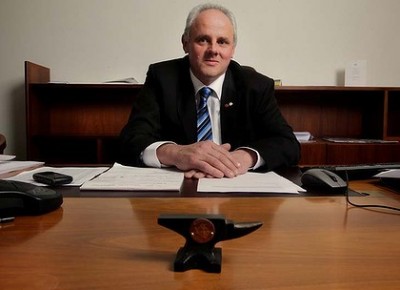
John Madigan

****

CHAIR: I welcome Mr Bill and Mrs Sandy Rogerson, Mr John and Mrs Robin Pollard, Mr Keith Staff, Mrs Jan Hetherington, Mr Hamish Cumming, Ms Cathy Ezard and Mrs Ann Gardner to the hearing. Thank you for your submissions. The committee has a copy of these before them. Before we begin, can I again remind everyone that, in giving evidence to a parliamentary committee, witnesses are protected by parliamentary privilege. It is a contempt of the Senate for a witness to be threatened or disadvantaged on the basis of their evidence to a parliamentary committee. Privilege resolutions 6.11 and 6.12 clearly state that interference with or molestation of witnesses may constitute a criminal offence under section 12 of the Parliamentary Privileges Act.

I want to repeat the following advice from the Clerk of the Senate that was provided to this Senate Community Affairs References Committee inquiry into wind farms in 2011:

If a person who is covered by a confidentiality provision in an agreement gave evidence to a parliamentary committee about the contents of that agreement, they could not be sued for breaching that confidentiality agreement.

I also remind everyone here today that a person who is adversely named in evidence to a parliamentary committee has a right of reply. A right of reply has been afforded to those people who have been adversely named in written submissions to this inquiry. For the purposes of the public hearings, where a witness adversely reflects on another person, I will interrupt the witness and may suspend proceedings. It is the committee’s intention to gather evidence that is directly relevant to the terms of reference for this inquiry. While adverse reflections on third parties may be a matter of related interest, they do not assist the committee in responding directly and objectively to the terms of reference.

Information on parliamentary privilege and the protection of witnesses and evidence has been provided to you and copies are available from the secretariat. I now invite you to make a short opening presentation, and at the conclusion of your remarks I will invite members of the committee to put questions to you. Who would like to make a brief opening statement?

Mr Rogerson: Good afternoon, Senator Madigan and panel members. My wife and I are third-generation farmers and live adjacent to the 32-turbine Oaklands Hill Wind Farm at Glenthompson, Victoria, operated by AGL. Our home is 2.5 kilometres and our woolshed, where we work almost every day, is 1.7 kilometres from the nearest turbine, in an area deemed as an extreme fire risk through its location relative to the Grampians National Park. The Oaklands Hill Wind Farm, which is sited over the ridge lines of rolling hills in a saline, tunnel-erodible area, on a breached volcano, began operating in August 2011.

By September 2011, one of our sheepdogs became severely affected. Soon after, we both started to experience physical changes. I began to wake suddenly at night with heart palpitations, and my wife started to experience humming and vibration in her ears and waking up frequently at night. We notified AGL, and they conducted noise testing at our woolshed and home. AGL identified what they termed a tonality problem at three to five minutes per second wind speed. They replicated our dog kennels at the woolshed, moving the dogs to the house. By 14 March 2012, nine turbines west of the Caramut-Glenthompson road were turned off between 8 pm and 7 am Australian Eastern Standard Time. In April 2012, we found deformed lambs, something we had never seen before in all our years of farming. By marketing time, we found the mob closest to the turbines had lambed at the rate of only 37 per cent, down from a normal average of 85 per cent for our merinos.

AGL told us: ‘We are going to fit dampeners to the gearboxes of the turbines to fix the tonality problem and return operations to full capacity by November 2013.’ However, this did not happen at that time. But last Wednesday night, 25 March 2015, the turbines were all turned back on at night, after being off for three years. With the turbines off at night, we had been able to survive and work our farm. Whilst my wife’s ear problems persist, my palpitations have subsided. Our sheepdogs, however, have never fully recovered; there is a marked alteration in their personalities and their ability to work. And, despite our best efforts to reduce the effects by moving our lambing ewes from the paddocks closest to the wind farm, there are still deformities evident.

There is a huge problem between wind farms and life. The effects are debilitating. The National Health and Medical Research Council must investigate our concerns and do something about the problems we have to endure. In fact, there is a real need for all wind turbines, Australia wide, to be turned off at night to ensure life’s essential—sleep. The current guidelines for wind farms are based on outdated and inappropriate standards, with measurement of infra-sound, low-frequency noise and vibration non-existent. The siting of wind farms is incomprehensible where human and animal detriment, geological and environmental affliction—including fire risk—are precariously reconciled as net gain. Thank you.

CHAIR: Is there anybody else who wishes to make a brief statement? Just so that people are clear: the committee does want to ask questions of all of you, and it is very easy for us to chew up the time allocated for your presentations. That is just so you are conscious of it. So you are welcome to make a statement, but can we just keep them condensed so that we can get time to ask questions of you.

Mrs Pollard: Good afternoon. My message is short. Most aspects will be covered by others and are already in our submission. I did not believe for one moment that I would be affected by low-frequency infra-sound. Three to four months after the wind farm commenced, I realised I was badly affected. It was still extremely difficult but I managed to cope when the turbines were turned off at night. It varies with climatic conditions and is worst when the wind drops in the late afternoon but there is still wind turning the turbines on the hill. Infra-sound is more severe in various parts of the house. I could only cope because I knew I had a few more hours before they ceased for the night. The turbines were off for three years but were turned on again five days ago, and for two nights since it has been impossible to sleep. I appeal again to the Senate for help. Thank you.

CHAIR: Thank you.

Gardners

****

Mrs Gardner: Thank you very much to all the senators for instigating this inquiry and allowing me the opportunity to speak. The suffering at Cape Bridgewater has been appalling. Steven Cooper has done a great job with his studies, and the residents must be commended for their cooperation during this groundbreaking investigation.

It is well known that the larger the turbines the larger the noise emissions. I would like to point out to the committee that at Macarthur we are forced to live with 140 three-megawatt turbines as close as 90 metres from our fence. In August 2013, a preliminary health survey was conducted around the wind farm. Sixty-six per cent of responding households reported acoustic impact; 96 per cent of those reported disturbance during the day; 100 per cent reported disturbance from turbines at night. Twenty-three households were affected, with 62 people being affected—out to eight to nine kilometres.

In January 2014 Piper Alderman acted on behalf of 42 residents, issuing Moyne Shire with a claim of nuisance under the Victorian Public Health and Wellbeing Act. This was denied, with reference to the NHMRC statement: ‘No consistent or reliable evidence of health impacts.’ My family have made nearly 200 health complaints to AGL and government agencies, and AGL has received hundreds more complaints from other impacted residents. AGL denies responsibility for our health symptoms. They refer to the NHMRC statement, the AMA and Victoria health department’s two reports, and then recommend we visit our doctor—the same district doctors who had received AGL’s letter mischievously informing them that there is no infra-sound from turbines. AGL breached the doctor-patient relationship with this action. I received a letter from AGL asking permission for them to contact my doctor, no doubt to inform him that my complaints of infrasound were not due to their turbines. AGL has treated us very shabbily.

We were offered turbines in 2005. We refused. Several years later we were offered a relocation package by Meridian Energy, which we also refused. Not long after being awarded second prize in the Zegna of Italy prize for the finest fleece in the world, our ultrafine sheep enterprise was destroyed by dust inundation, contaminating drinking water over months and poisoning the sheep. We were one of only 10 producers in the world producing this wool. We lost a projected income of several million over the next 10 to 20 years. This business was 80 per cent of our farm income.

Despite ongoing complaints to AGL, they denied responsibility even though we were forced to clean our house several times. We had fraudulent compliance noise testing carried on at our property not according to the New Zealand standard. Moyne Shire and the Victorian department of planning ignored this and deemed the Macarthur Wind Farm compliant. We have comprehensive acoustic evidence proving noncompliance all around the wind farm. AGL wrote to us saying that, if infrasound testing takes place at our home, I must make a public statement claiming the Macarthur Wind Farm is compliant.

Nobody has ever visited our property to investigate our complaints of pain and suffering. My husband and I are forced to leave our farm for two nights every week to get some sleep. We cannot see or necessarily hear the turbines from our home, but we are being hammered with infrasound low-frequency noise. There is every indication that the New Zealand standard does not protect sleep as it does not measure the infrasound low-frequency noise inside homes. Thirty years ago, NASA research confirmed wind turbine infrasound and low-frequency noise directly cause sleep disturbance. Why is this crucial evidence from the US Department of Energy and NASA led by Dr Neil Kelley still being ignored, in particular by the NHMRC?

My husband experienced bolts of pressure which tallied up with pressure peaks measured by Les Houston 86 per cent of the time while my husband was blind to the acoustic measurements of the time. Refer to his recap statement. I suffer day and night from headaches, nose and ear pressure, nausea, heart palpitations and chest burning from vibrations through the floor, couch, chair and in bed all night.

Lack of accountability for all health authorities is a scandal. We cannot guarantee a safe working place for employees. I can no longer work in the paddocks. The current standards are just a joke. The New Zealand standard does not protect sleep as it does not measure infrasound inside homes. Infrasound is a real problem, and Steven Cooper’s results have demonstrated what Dr Neil Kelley’s study discovered 30 years ago. There are real safety issues on our farms.

Ongoing sleep deprivation is particularly dangerous when driving or operating farm machinery. I refer the committee to the case of Mr Peter Jelbart who has a huge problem driving his truck. He is exhausted. He has discovered he cannot continue his trucking business and live at his home at the same time due to severe sleep deprivation. Moyne Shire has refused to accept our peer reviewed assessment report by Les Houston. The shire has failed to protect us from noise nuisance despite hundreds of complaints. One councillor even suggested that residents may have tampered with noise-testing equipment. At a meeting in 2014, I along with one other neighbour was verbally abused by a representative of the Ararat Shire Council when we attempted to discuss health issues. Needless to say, we left that meeting in tears. There is no transparency in the authorship of the two Victorian department of health reports released in May 2013. Many peer reviewed reports were ignored, and my FOI request for information regarding authors and correspondence was refused. My appeal was upheld and now this case has been going on for nearly two years already. What does the Victorian department of health have to hide?

This is not about money, as you will have realised from our refusal of AGL’s offer to us. We just want to be able to live in our own home and work on our property the way we had for 32 years before the Macarthur Wind Farm began to create a nuisance and to trespass on our property rights with acoustic emissions from turbines 1.7 kilometres from our home. Please do not ignore our pain and suffering. These same symptoms were reported in 2004 by Dr David Iser at the Toora wind farm.

We need thorough compliance investigation and proper enforcement. We need thorough multidisciplinary health research in the field. Infrasound measurements must take place both inside and outside people’s homes. It is essential that Steven Cooper is employed at the Macarthur Wind Farm, as the symptoms are exactly the same to those in Cape Bridgewater. We need the turbines turned off at night so we can sleep in our own homes, which is our common law right.

Instead of moving to rectify this public health disaster, all levels of government and the wind industry are hiding behind the smokescreen of the NHMRC’s statements when in fact Professor Anderson recently admitted at, I believe, a Senate estimates hearing that there are health effects from turbines. To continue to ignore our pain and suffering is pure wilful blindness. Once again, I invite the committee to visit the Macarthur Wind Farm to speak to the impacted residents. Thank you very much.

Mrs Hetherington: My name is Jan Hetherington. I am an artist, I am a widow, I live three kilometres from the Macarthur wind facility and I am heavily impacted on by the low-frequency and infrasound emitted by the 140 three-megawatt turbines. The Macarthur wind facility was accredited in September 2012 before it was fully operational. In late January 2013 AGL was receiving recs for the wind facility which was not necessarily compliant and was not deemed compliant until the Moyne Shire voted in September 2014, ignoring residents’ pleas for council to view their independent acoustic report showing ample evidence that the Macarthur wind facility was not compliant. Residents have done independent noise testing for two years at their own expense where they have proved that there is infrasound, but no-one seems to want to listen to the truth. There is no-one looking out for us. The Victorian planning department and the Victorian health department take no responsibility for us. The system is broken. It has failed us, all because money and profits are the priority.

My business has suffered as I find it hard to work solidly in my studio for any length of time because of a vibration which feels like an electrical charge running through my body and noise nuisance. My ability to earn a living has diminished. My family no longer enjoy lengthy holidays with me on the farm for fear for their health and their children’s health from the damaging infrasound and noise nuisance. I have now become sensitised. After a recent procedure in hospital in Melbourne I experienced the same sensations of vibration, palpitation and tinnitus as I experience at home. I have become permanently damaged through the exposure to infrasound from the Macarthur wind facility.

At my farm, I experience severe adverse health effects such as vibration, heart palpitations, tinnitus, head pressure, headaches, sleep deprivation, anxiety, night sweats, nausea, itchy skin, cramps, and ear, nose and throat pain. Twice now I have experienced horrendous pain in my chest stabbing through to my backbone in between my shoulder blades. I contemplated calling an ambulance both times but could not move to do so because of the severity of the pain. Ten minutes later it had dissipated, leaving me with great stress and anxiety and feeling washed out. All these sensations leave me drained in the morning. I find it very hard to start work that day.

When I make a formal complaint to AGL they respond in the most contemptuous manner, with references from the NHMRC statement saying there is no reliable or consistent evidence that proximity to wind farms or wind farm noise directly causes health effects. The wind industry uses this statement to deny claims of health impacts; therefore, they refuse to do anything about it. Warwick Anderson from the NHMRC admitted in a Senate estimates hearing that there are health impacts from wind farms. What is going on?

AGL’s objectionable letter to the doctors at 12 medical clinics in the western district made my blood boil. I had a perfectly healthy, happy and trusting relationship with my doctor before AGL started meddling with my doctor-patient relationship. Many times I spoke to him about my health complaints due to the Macarthur wind facility and he was caring and wanted to help me. But one day during a consultation he turned to me and told me that infrasound will not hurt me and that I will just have to get used to it. I was gobsmacked and could not believe my ears. I asked him where he got his information from. He rifled through some paperwork on his desk and, as he did so, I noticed a letter with an AGL letterhead. I asked him to explain himself. That is when he told me that this information came from AGL, asking doctors to refer patients to the AGL website if they presented themselves with complaints due to the wind farm. This interference is outrageous. AGL have no medical expertise and have no right to interfere in a doctor-patient relationship. In my opinion, it should be a criminal offence to interfere in a doctor’s medical assessment of a patient.

We need comprehensive, multidisciplinary research into the health impacts from this noise nuisance. This research has to be carried out in the field and not behind a desk in downtown Melbourne. We need to have the same research carried out at Macarthur wind farm by Stephen Cooper as he did with Cape Bridgewater wind farm, where he found ground-breaking evidence that there is infrasound. I have pleaded with AGL to turn the turbines off at night between 7 pm and 7 am so I can get a good night’s sleep, but they simply ignore my pleas and refer me to the NHMRC statement. What a crock! AGL’s Glenthompson wind farm is turned off at night because of the health impacts and noise nuisance on residents. Why can AGL not do the same at Macarthur? Lord knows we continually request that, and the answer is still no.

Mr Pollard: My name is John Pollard. I am a retired station manager and we live on a lifestyle property of approximately 80 acres. Firstly, I would to say that Robin and I find it very difficult to appear here today as a number of our friends have turbines on their land. It is such a serious problem for us and many others that we felt compelled to be heard. Too many people have had to leave their homes. One family near us left their home almost 3½ years ago, and they are here today—Adrian and Helen Lyon.

The wind farm guidelines on health issues of this very serious problem have to be assessed. They will not acknowledge infrasound. I will relate one incident that happened in our home one night. My wife was sleeping in the chair beside me and I was watching television. This is after they had turned the turbines off. She was dead to the world and I was just watching the television. All of a sudden she woke up, completely startled and disorientated, and I was really worried about her because I thought she had had a stroke or something. Eventually she came to her senses and she said the turbines must be on. I said, ‘No, they’re not. It’s 10.30. They turn off at nine o’clock.’ I went outside and they were still running. So I thought that next day I would ring AGL. When I was about to ring, they rang me and said, ‘I’m sorry, John. We forgot to turn the turbines off last night.’ This is before it was computerised.

It really is a problem, and there are people further away from the turbines than us who are badly affected. One property is 3.5 kilometres away and she has got exactly the same symptoms that Rob has. Our property is on the bottom of a volcanic breach and it is the end of the lava flow and the turbines are well above us. Whether there is a seismic effect I would not know, and there have been queries about that. Dr Mosley in New Zealand said that they are tuning forks on hills. I do not know whether that applies to us, but we are certainly suffering from infrasound very badly.

Mr Cumming: I have tabled my opening statement in lieu of time. It just talks about the destructive impact of wind farms on brolgas and raptors and how greenhouse gases are not being abated. If you are happy with that, I would prefer to take the time in questions.

Keith staff

****

Mr Staff: I have lived in Penshurst for the last seven years plus. My wife and myself, after 30 years of living and working in Melbourne, decided that it was time for retirement, and what better part of the world could we retire to but the Southern Grampians. It was beautiful, quiet and rural. Were we wrong! After two years or so of making the big move, or tree change, we found out by accident about a proposal for an industrial wind energy facility of 223 turbines 175 metres tall to be located three kilometres from the edge of our historic property and the Penshurst township. This proposal would adjoin the Macarthur facility. The implications are horrendous.

If I could backtrack, at first I had an open mind about wind farms when we found out about this proposal. However, being a fairly independent minded sort of person, I decided that I would do some of my own research into the whole topic and question. This included visiting some impacted residents at Waubra. I had heard of Waubra but I had never visited. People said to me, ‘If you want to find out a little bit about this wind farm, visit these people.’ So we did. I was horrified. For the first time, I got up close and personal to a gigantic wind turbine—several of them. I heard the noise. These people were badly impacted—their health. That was the first indication to me that all is not what the proponents say. Secondly, we visited people at Glenthompson—and you have just heard some comments. There were the same repercussions, the same problems, the same impact. Then there was Macarthur. We visited Macarthur and we know people at Macarthur. To all of our quiet questions, our inquiries, the same message came back. Cape Bridgewater was the same. I visited the residents. I know how badly they are impacted. So we packed away a lot of personal experience and meeting people over a period of maybe two years.

So then I decided to get active. I changed from being non-committal and open minded to being anti industrial wind farms—and I am proud to use the word ‘anti’. Rather than just complain, I did one or two things. I formed a group. I am president of the Southern Grampians Landscape Guardians. Also I am an active member of the Australian Industrial Wind Turbine Awareness Network—a bit of a mouthful but there is such a group. We estimate that we have over 3,000 members in that network nationally. So it is not just a few people complaining in a few isolated rural areas; this is happening nationally. I am a committee member of the recently formed group in Victoria called Wind Industry Reform Victoria. Also I am a committee member of the Brolga Recovery Group—and that is a whole different situation. The brolga is a threatened species and an iconic bird in the south-west. Wind farms are the natural enemy of brolgas—they leave.

I sometimes have to justify my position to people. Locally, the town is bitterly divided. Families are divided. I do not have to justify my position—I am perfectly comfortable with my position and my knowledge—but I sometimes have to state the obvious facts. When people—and maybe the media—infer that I have connections I have to tell them that I do not receive any funding from the fossil fuel industry, I do not belong to any political party and I do not belong to a religious organisation; all of this is formed from my own contacts, knowledge and travel, including to the previous Senate inquiry in Canberra two or three years ago.

I will not go into the detail of my submission but it is based on my informed view that the whole industrial wind power business is a catastrophe on every level—environmental, social, fiscal and economic. The whole industry is characterised by exaggerated claims and false propaganda put out by the wind industry. I will finish with some comments about planning issues, the full text of which is in my submission. The planning issues are many and varied, and there is a strong case of fraud to be levelled at wind proponents and their paid consultants. If anybody wants clarification about what fraud means, it is easy. Fraud is an individual, a company, an organisation or a business supplying incorrect and misleading information in the pursuit of making a financial gain—and that is the wind industry.

Proponents’ consultants are paid large amounts of money to produce reports and assessments with one aim in mind, and that is to ensure that their clients gain a planning permit approval. These same consultants are then retained to make expert witness submissions at planning hearings, such as the VCAT scheme in Victoria. Individual community members making submissions at the panel hearings—and we have attended some in Melbourne—are effectively closed down by lawyers and barristers acting on behalf of the proponents. The common phrase is that you are not regarded as an expert witness. These are people who have lived and worked on their properties in rural areas for ages, and they are told: ‘You really don’t know what you are talking about; you are not an expert witness.’

Finally, the same misleading and inaccurate assessments by the consultants are then presented to planning and environment ministers and shire councils, with no independent experts appointed to check on the assessments. Shire councils, I believe, sometimes act with vested interests. Their first priority should be the health and wellbeing of their residents and their ratepayers, not to make it easy for wind proponents to gain planning permit approvals. Shire councils can be accused of wilful blindness; you have already heard some comments. Openness, honesty and transparency are a joke, as are shire councils’ community consultation processes. They are simply a ‘tick the box’ exercise run by slick city-based PR organisations acting on behalf of proponents. Thank you.

Ms Ezard: My statement is very short. I wish to thank the committee for taking on this important debate. The wind turbines at Cape Bridgewater have impacted on my enjoyment of my area. We are currently trying to sell our property so we can relocate away from the turbines in retirement. At the time the turbines were proposed for the Portland area, there was talk of 5,000 turbines for Victoria, a very small state. Where do you relocate to in order to get away from the impact of turbines? Some people have relocated, only to find another proposal for a wind factory in their new area.

Climate change is spruiked as the reason for the necessity of wind factories; it is said that, if we do not act, we leave a burden on future generations. Wind turbines will also cause a burden, with compromised landscapes even when turbines are decommissioned. Many companies, or wind factories, may no longer exist in 20 to 25 years, so who will be responsible for removing these monstrosities and rehabilitating the landscapes? Advances in technology will also cause the wind industry to become obsolete. Thank you.

Senator LEYONHJELM: I have a question for Ann Gardner. I think you said AGL has written to you, saying that you are not to say anything about infrasound.

Mrs Gardner: No. I had been complaining about the infrasound and wanting them to carry out testing on our property, because we have our own evidence anyway. They wrote to me—and I have a copy of the letter in my submission—informing me that, should the infrasound testing take place at our property, if this resulted in not breaking the rules or whatever, I had to make a public statement claiming the Macarthur Wind Farm is compliant. Compliance has nothing to do with infrasound anyway. I have the letter.

Senator LEYONHJELM: That is in your submission?

Mrs Gardner: Yes.

Senator BACK: We would like you to table that letter, if you would.

Senator LEYONHJELM: You put it in your submission, did you?

Mrs Gardner: It is in my submission.

Senator LEYONHJELM: I have not got to that bit. There are 330 pages to read for today, and so I haven’t got to that.

Mrs Gardner: I am sorry about that, but it is in there.

Senator LEYONHJELM: It is page 201, is it?

Mrs Gardner: It is a copy of the email.

Senator LEYONHJELM: Thank you. I have a couple more questions, and then I will give someone else a go. Mr Cumming, in your submission you say that the Loy Yang A power station annual report shows a rising carbon intensity, which is increasing proportionally to the increase in wind turbine output. Why is this so?

hamish-cumming

****

Mr Cumming: If you look through the annual reports from 2005 report through to about 2013 you will see that carbon intensity has continued to rise. Off the top of my head, it was something like 1.14 tonnes of carbon per megawatt and it is currently running at about 1.35. If you look at all the power stations, you will see where you can get the information—it is very hard to get some of it—and you will see that it is happening across the board, even in Queensland. The Queensland power stations are the same. It is all to do with backing up wind farms and making the grid safe so that it will not blackout. The more wind farms that come on, the higher the backup has to be. In 2005, it was something like 600 megawatts and now it is over 1,000. Nothing has changed in the grid. In fact, demand is less. The reasons for having it should be less. Industry is less. And it is all in line with wind farms coming on line.

Senator LEYONHJELM: So you think Loy Yang, Yallourn and Hazelwood burn more coal now than prior to the penetration of wind energy capacity into the grid?

Mr Cumming : Very much so. The data for Loy Yang is very clear and very public—much to their horror when I point it out to them. Now they have even changed the way they do their carbon intensity calculation. They have removed a third of the input data to try and make it look smaller, but it is very public for Loy Yang. If you look at the savings that they have made in thermal efficiency and other in-house savings of performance of the plant and then you look at the coal-led burning, there is a gap for Loy Yang of six million tonnes of coal a year today versus 2005.

Senator LEYONHJELM: Did you hear the evidence of Pacific Hydro this morning?

Mr Cumming: No. I was not here for that, sorry.

Senator LEYONHJELM: They basically put a completely alternative point of view to us on that.

Mr Cumming: Did he use Loy Yang’s annual reports and public data?

Senator LEYONHJELM: He did not provide any data. The view was simply that there was no increase in spinning capacity.

Mr Cumming: That is incorrect. You have to look at the documents that the industry runs on. There is a guy called Hugh Saddler, who works for Pitt & Sherry. He does what are called CEDEX reports, ACIL Tasman reports. That is what the industry is always based on. All the emissions, all the RECs—everything—is based on that. It is all reverse calculated. It is all calculated from what power is sold through theoretical thermal efficiency and data. It has a number of errors in it, including a seven per cent error for the Yallourn power station. When I highlighted this to them, they said, yes, they know. It is the closest thing they have got, whereas carbon intensity is actual fuel burnt. You cannot get away from it.

Senator LEYONHJELM: Do you think the Clean Energy Regulator’s reports of emissions reductions are accurate?

Mr Cumming: No, not at all.

Senator LEYONHJELM: Why is that?

Mr Cumming: Because they are relying on the CEDEX reports and the ACIL Tasman reports and those are all based on reverse calculation. None of it is based on fact. The fact has to come from the actual carbon, the actual fuel burnt—

Senator LEYONHJELM: The actual fuel burnt?

Mr Cumming: The actual fuel burnt. If you have actual fuel burnt for a half-hour period and then you use the AEMO data for the same half-hour period, you can see exactly what is happening. And this was highlighted in my submission on 4 July 2013, when McArthur, Lake Bonney and another one went off line at the same time. The power was instantly picked up, without a flicker of a light bulb, without down time of any industry. It was picked up by New South Wales and Queensland coal-fired power stations—450 megawatts. That is a massive amount of power. It is bigger than the largest Victorian single generating plant, and it was picked up instantly. The only way they can do that is if they are burning the coal already and venting for steam as backup. None of that is covered in the reports that are used officially by government.

Senator LEYONHJELM: Do you have a view on how effectively the Clean Energy Regulator is performing its legislated responsibilities?

Mr Cumming: My personal belief is that they cannot perform their responsibilities if they are not using facts. If they are using reverse calculated data estimates, they cannot perform their responsibilities. They have got to get the facts.

Senator LEYONHJELM: What would you do? Would you broaden their responsibilities or change the way they calculate what they are supposed to calculate already?

Mr Cumming: I would change the rules so that they have to use base data from the entire power industry. That will force the generators to provide the hourly coal feed, gas feed, fuel feed data. At the moment there is no regulation to enforce those companies to provide the data—and it is not in their interests to because it affects how they get paid. If they tell the truth about what they are doing then the investors are not going to allow AGL to buy more wind farms or build more wind farms when AGL owns Loy Yang A. It is the same with the other power stations. They all own wind farms, power stations and coal seam gas. It is in none of their interests to tell the truth.

Senator LEYONHJELM: Do you have some data on raptors and brolgas in relation to turbines?

Mr Cumming: Yes.

Senator LEYONHJELM: Could you quickly summarise that for us?

Mr Cumming: Raptors are being killed at an alarming rate by wind turbines. At one of the first Portland plants to start up at Codrington one turbine was killing 11 falcons every two weeks. Turbines in Woolnorth in Tasmania were killing at such an alarming rate that they were stopped. They come in from outside areas to feed on the dead birds and get killed themselves. AGL Macarthur employed consultants to look at it and they are estimating that the Macarthur wind farm is killing 10 birds per turbine per year, 30 per cent of which are raptors. That is 10 times what their planning permit has said they would do, yet the responsible authorities have done nothing about stopping it, limiting it or making them abide by their permit conditions.

With brolgas you have a separate issue. You have got displacement. Studies have been done in America and Australia that show that the turbines are displacing cranes—and brolgas are a crane—for a distance of up to 14 kilometres but regularly a distance of six kilometres. Since the Macarthur wind farm started—and I try to use all these people’s own reports; they are the best thing to use—their reports have said that 45 wetlands were abandoned in the first 12 months, and 25 of them were potential breeding wetlands, and no brolgas have successfully nested within six kilometres of turbines.

Three attempts at nesting were made during the first year of operation when the wind turbines were stopped. I have the whole year’s data from the AEMO from Macarthur and from other means through DSE. There were three attempts at nesting and as soon as the turbines hit 30 per cent capacity they abandoned their nests. On the first attempt they stuck it out for a few days, on the second attempt they stuck it out for one day and on the third attempt they did not stick it out—they just took off. That is what the American studies have found. The problem is getting worse over time. The displacement is greater and the time is shorter. They are a disaster for brolgas and raptors.

Senator LEYONHJELM: It is the equivalent of habitat loss, is it?

Mr Cumming: Yes, it is forcing them out of habitat. For brolgas there is very little habitat left. I am trying to stop RES at Penshurst and Trustpower at Dundonnell. Half of the remaining brolga habitat is going to be destroyed by those two wind farms if they are allowed to go ahead. They have to be stopped.

Senator CANAVAN: What would happen if you went out into the backyard and shot a few raptors in Victoria? Are you allowed to do that?

Mr Cumming: If you shot a raptor in Victoria it would be a $5,000 fine and potentially two years in jail. Macarthur’s own estimates is they killed 500 in the first year of operation. That is their own estimate and there was no penalty. They are not even told to try to prevent it.

Senator DAY: I know we have a veterinarian on our committee here.

CHAIR: Two of them.

Senator DAY: Are there any veterinarian studies you are aware of into the effects on animals of these wind turbines?

Mr Rogerson: None that I am aware of. We actually had one sent to the Werribee research place just out of Melbourne. They did not find any results. They could not pin down what caused anything to the lamb we sent down. He was badly deformed. Like I said in my thing this is the first time we have had deformities and I have been on the farm all of my life.

Senator DAY: You are not aware of any studies that have been undertaken?

Mr Rogerson: No, none whatsoever.

Senator BACK: No chemicals used?

Mr Rogerson: No.

Mr Cumming: If I can just very briefly jump in there. When touring Gippsland there was a dairy farmer who lost 30 per cent of his dairy calves that were born. When he moved them a distance away from the turbines the following year there were no losses. That is just a very strange possible coincidence.

Senator LEYONHJELM: Not exactly strange. I can understand the conception, the low fertility, but it is very hard to equate that with what Mr Rogerson is arguing about with deformities. I cannot think of any reason.

Senator URQUHART: Was there any evidence, any veterinary studies, on that one?

Mr Cumming: They based it on a study on goats that was done in Thailand, where half of a goat herd died.

Senator URQUHART: No, particular to the farm you were talking about.

Mr Cumming: No. They based their study on the Thailand one. There was no direct study on it. The Thailand one was a proper study.

Senator URQUHART: You were talking about studies in relation to the raptors and cranes.

Mr Cumming: In America, it was done by a person called—

Senator URQUHART: What about here, in relation to the comments you made about AGL?

Mr Cumming: The AGL one was done by consultants paid for by AGL. It was their own report and their own consultant.

Senator URQUHART: Can you direct us to that? Maybe not now, if you can provide it on notice.

Mr Cumming: I think I sent it as an attachment, and I attached my own analysis of it. Also, there was another study done, for Codrington-Yambuk by Biosis, again paid for by Pacific Hydro, that said the same thing: within five kilometres half of the native bird population had disappeared in the first year and it got worse in the second year and in the third year.

Senator URQUHART: Senator Leyonhjelm was asking about your claims that wind farms result in an increase rather than a decrease in greenhouse gas emissions. I think you have also claimed that coal is burnt without generating power as a result of wind turbines, so it is all sort of wrapped up.

Mr Cumming: As backup spinning reserve, yes.

Senator URQUHART: I understand that you sent a letter recently which was printed in the Mortlake Dispatch, the local paper.

Mr Cumming: Yes.

Senator URQUHART: Is that a regular daily?

Mr Cumming: It is a weekly.

Senator URQUHART: Is that all around this region?

Mr Cumming: It would be Mortlake, Camperdown, that sort of area.

Senator URQUHART: So it has a fairly broad reach. I have a letter from AGL who are the owners of Loy Yang A power station, on which you based your claims. It was sent to the Mortlake Dispatch. AGL sent this letter to the editor of the newspaper last Friday, as I understand. I am happy to table the letter for the committee. I will take you through it. Referring to the letter you had published in the paper, it says, ‘In a letter dated 19th March, Hamish Cumming claimed that wind farms operating in the electricity grid have resulted in an increase rather than a decrease in greenhouse gas emissions from the electricity sector.’ That was what was in your letter. Their comment then goes on to say, ‘This is completely untrue.’ It also states: ‘On average, the amount of emissions produced per unit of electricity sold into the network has gone down by over eight per cent since 2006, according to the national greenhouse accounts.’ The letter goes on to say that you also claimed: ‘Over this period the emissions intensities of coal power stations, including AGL’s Loy Yang A power station, have increased substantially because they necessarily burn a lot of coal without generating power so that they can be on standby to back up the intermittent power generated by wind farms.’ AGL say in their letter that this also is untrue: ‘Over the past six years the emissions intensity of AGL’s Loy Yang A power station has not substantially changed. In financial year 2009 it was 1.27 tonnes of greenhouse gas emissions per megawatt-hour of electricity sent into the network. In financial year 2014 it was 1.28 tonnes and the average tonnes of coal burnt to produce each unit of electricity sold also has not changed significantly. Over the same period, wind generation in the network has increased dramatically, with numerous wind farms built in Victoria and other states. If Mr Cumming’s claims were true both the emissions intensity and the tonnes of coal burnt per megawatt-hour of power sold would have increased during this period as additional wind power came into the market, but this has simply not occurred.’ In light of that information from AGL, would you agree that your arguments have been revealed as being incorrect?

Mr Cumming: No, not at all. What AGL are saying there is totally incorrect. I can prove that very easily, and have provided you—

Senator URQUHART: Just to clarify, you have put the letter in and they have responded to the paper, and you are saying that what they are saying is wrong—

Mr Cumming: Correct.

Senator URQUHART: that they are actually lying.

Mr Cumming: Correct, as they did when we put in the paper their report that they refused to give us for several weeks about the brolgas and raptors. They said that I was wrong as well, but it was their report I was quoting. It is the same now. I am quoting AGL’s annual report and Loy Yang A’s annual reports for 10 years. The data I am quoting is out of their annual reports. They have not said there that for last year’s figure, which has gone from 1.35 down to 1.29, they have changed the calculation of carbon intensity to reflect that. They have not gone back and changed the calculation for the last 10 years to show that the graph has gone up. In my submission there is a graph, which I did not create. It is their graph out of their own annual report that they put on the Australian Stock Exchange. They cannot argue with that.

Senator URQUHART: I am not arguing; I am just trying to get the facts, that is all.

Mr Cumming: The facts are that they are lying through their teeth.

Senator URQUHART: So, basically, what you are saying is that they are lying.

Senator BACK: To assist the committee—this is very important point—was that a letter to you, Senator Urquhart?

Senator URQUHART: It was a letter to the editor.

Senator BACK: I ask, through the chair, Mr Cumming if you would be kind enough, when you have seen the text of the AGL letter, to respond to the secretariat and explain to the committee through the secretariat where you believe AGL’s response to your correspondence is wrong so that the committee can understand completely.

Mr Cumming: I will not see that until Thursday unless you give it to me.

Senator URQUHART: The secretariat might be able to get copies. I will table it with the secretariat.

Mr Cumming: It will not be published in the paper until Thursday.

Senator BACK: We do not need it in five minutes; we just need to get your response to it.

Mr Cumming: And the community will also get my response in next week’s paper!

Senator URQUHART: Mr Staff, you said you are anti-wind and proud of it. I think those were your words.

Mr Staff: I said ‘industrial wind’.

Senator URQUHART: Industrial wind, sorry. I understand that one of the most prominent anti-wind campaigns in Australia seems to be the website stopthesethings.com, which proudly states:

We’re not here to debate the wind industry – we’re here to destroy it.

The site has also been known to use abusive language and to attack individuals who support wind. I could not find any contact information from the owners of the site on any of its pages. The contact details were also removed from a domain name own research. Did know about the site are referring to?

Mr Staff: STT? No. There must be some very committed, knowledgeable people who put that together. I am not involved with it and do not do not know of anybody who is, but they have access to a lot of factual information, including from overseas. They tend to put over their point of view in a tongue-in-cheek, rather cynical way in order to make a point. It is very well researched. I have no idea who is behind STT.

Senator URQUHART: In 2013, there was an anti-wind rally at Parliament House. You were interviewed by the ABC is the co-organiser of the stopthesethings anti-wind rally.

Mr Staff: Excuse me? The ABC said I was the co-author?

Senator URQUHART: You were interviewed by the ABC as the co-organiser of the stopthesethings anti-wind rally. That is not correct?

Mr Staff: Wrong! I never said that. They never asked me that. It is completely wrong.

Senator URQUHART: Were you interviewed by the ABC at that stage about the rally?

Mr Staff: I was asked some questions, but not whether I was an organiser.

Senator URQUHART: But you were interviewed by the ABC at the time?

Mr Staff: Can I tell you what the ABC said?

Senator URQUHART: Certainly.

Mr Staff: They said, ‘Mr Staff, it appears to us that you,’ meaning the large group of protesters who were there in front of Parliament House, ‘have reached critical mass,’ which in media speak means you can no longer be ignored—your group, supporters, the people. It was nothing to do with STT.

Senator URQUHART: I am happy to throw this open to anybody else who feels like they want to have a say: some of you have mentioned in your statements, and in your submissions as well, that you are genuinely concerned about the health impacts of wind farms, and I think we have heard from a number of you today outlining that. A 2011 article in the Medical Journal of Australia, by four Australian doctors, cited studies showing that the risk of premature death for people living within 30 miles of coal-burning power plants is three to four times that of people living at a greater distance. In that context, I would be interested in whether you would be more concerned about living near a coal plant than a wind plant.

Mr Cumming: What about solar? What is wrong with solar? We do not need to do wind turbines. What is wrong with thermal molten salt solar, which is baseload, does work, does not displace brolgas, does reduce greenhouse gas and does not make people sick? Why not use that? Why are we entertaining the idea of trying to keep something supported and alive that has so many things against when there are technologies there that do work and do not have these issues?

Senator URQUHART: Anybody else?

Mr Staff: Could I just add that all of the pictures and the visuals that ABC in particular like to throw up on their news items showing coal fired power stations have cooling towers—everybody knows the cooling towers—and all the apparent smoke and pollution billowing out. It is not pollution; it is water vapour. But there are certain people—political parties and others—with vested interests in trying to indicate that that is actual pollution coming out of those cooling towers. It is not; it is water vapour.

Senator URQUHART: I just want to go the issue of birds and bats. I think, Mr Cumming, you outlined this in some of your answers. There was a 2007 study by the government of South Australia—I am not sure whether you are aware of that—that showed that one domestic cat kills more birds in a year than one wind turbine.

Mr Cumming: Next time I see a cat take down an eagle or a brolga, I will let you know.

Senator URQUHART: That is a very good point. I am just wondering whether you are aware of that report.

Mr Cumming: I am also aware of a report that says more birds fly into windows in Melbourne as well, but they are talking about sparrows, starlings and other small birds, not iconic birds that are protected and carry a $5,000 fine; if you killed one, you would be charged $5,000.

Senator URQUHART: Yes, that is what the 2007 report is referring to, not the bigger birds. I am just trying to get to the bottom of what you are referencing in terms of the big birds versus the other birds.

Mr Cumming: It is not relevant to wind turbines.

Senator URQUHART: I think I will leave mine there and give someone else a go. I might come back if I have some time.

brolga112

****

Senator BACK: Mrs Gardner, we cannot find the correspondence, so would you be kind enough to provide the correspondence.

Senator CANAVAN: Sorry, we have. It is being sent through.

Senator BACK: No worries. Okay. Mr Rogerson, I will be interested—and Senator Leyonhjelm might also be interested—in whether we can actually see some records going back over time of lambing percentages et cetera in different paddocks. We cannot advance it here, but I would be interested to have a look at that.

Mr Rogerson: Yes, no worries.

Senator BACK: I have actually never spoken at all publicly about any issues associated with animals but, because I am a veterinarian, I suppose advice has come to me over time from France, Italy and other places of foetal abnormalities in different species, including a well-documented case in thoroughbred foals. I do not want to spend the time here, but I am just saying to you I am interested, and I am sure other colleagues would be.

Mr Cumming, the net greenhouse gas beneficial effect of industrial wind turbines has often been discussed, when you take into account the manufacturing of the steel and obviously the engineering work associated with the fabrication of the steel, the concrete that is poured et cetera. Do you have any advice for the committee as to what length of time—in terms of days, weeks, months or years—an industrial turbine would have to operate for before you would reverse that greenhouse gas negative from its construction and actually start seeing some benefit to the environment? Are these figures, or estimates, available?

Mr Cumming: I did a study some years ago now for a planning panel regarding this sort of thing. I used as much information as I could glean for the construction, maintenance and other associated greenhouse gas costs for the wind farm. I then used their manufacturer’s up time of the 30 per cent generation. I was then very conservative in favour of the wind farm company’s backup requirements. I used gas fired power stations. I used open cycle power stations, the most cost effective for the wind farm, making it look good for them as much as I could, so to speak. It came out with a 20-year life return payback of greenhouse gas.

Senator BACK: Could you explain what you mean by 20-year return?

Mr Cumming: It would mean it would take the wind farm 20 years running 30 per cent of its time generating into the grid to pay back those emissions.

Senator BACK: Before it would get back to equality.

Mr Cumming: That is right.

Senator BACK: Before it would start making a beneficial effect.

Mr Cumming: Yes. Without any major catastrophic bearing failure or anything like that, it would take 20 years. The industry claims four or five months, and I question those numbers quite seriously.

Senator BACK: You have also been quoted at different times—and even in today’s discussion you have been giving us the benefit of your advice—in terms of calculations, real versus apparent, et cetera. Can you tell us what data is needed from power stations to accurately determine what greenhouse gas impact wind farms are having on the grid? I am only talking about grid based industrial wind turbines now. I am not talking about those standing apart from the grid.

Mr Cumming: If they were genuine in wanting to show how good they were they would have provided this already. What you need to do it accurately is at least hourly actual fuel feed generation data—and preferably five minute, because AEMO data is every five minutes for generation and sales—from each of the power stations. Then you could crossmatch that against the AEMO’s data and you would see instantly who is burning coal and not producing power, if they are venting steam to the atmosphere waiting to back up, if they are spinning in reserve, if they are shut down, You will see that instantly. At the moment, the companies are not willing to give that willingly because it highlights too many problems on their side.

Senator BACK: A core concern of this committee, given the fact that we represent, at the federal level, expenditure by taxpayers, is that all these other issues, as I said earlier in the day, are interesting, but they are constitutionally the role of the states and territories and, through them, local government. But where this body—and where the Senate—has a direct involvement is in defending and justifying to taxpayers where their money is being spent. In view of the Clean Energy Regulator and renewable energy certificates, which the Clean Energy Regulator has responsibility for, what is the basis upon which the companies running industrial wind turbines should be, in your view, paid the renewable energy certificates?

Mr Cumming: In my view, if you have a transparent view of the entire grid and the inputs to the grid, the wind farm companies should only be paid for a net reduction of greenhouse gas. At the moment they have got open slather. Whatever they put into the grid is accepted, and coal is put offline. There is no saving in that. If it was a net saving then companies like AGL would think twice about burning an extra 6 million tonnes of coal to back it up, because there is no net gain for them between their wind farms and their power station if they have to declare that.

Senator BACK: If I am wrong my committee member colleagues will tell me, but I understood Mr Richards to say that the Australian Energy Market Operator, the AEMO, can predict out, with a high degree of accuracy—as in the high 90s percentage accuracy—some time into the future what the contribution will be from a wind farm. Therefore, the AEMO can make adjustments. In your view, is that correct?

Mr Cumming: In my view, it is bordering on some correctness. Yes, they can say, ‘We expect the demand to be this. We expect the power stations to do that. We expect the wind to be available for this period of time.’ But it cannot predict accurately enough how much capacity the turbines are going to generate, because they will not generate under 40 kilometres per hour and they will not generate over 90 kilometres per hour. Do not quote me on that, but there is a band where their generation is not efficient. They are relying on Bureau of Meteorology weather forecasts, wind directions and other things to come up with that number. If that was the case and it was able to predicted, on 4 July 2013, when Macarthur and so on went off line, it was a fault. When they went off line, there should have been a blackout because, if they were predicting and running the grid in such a finetuned way as was claimed—

Senator BACK: It was a sudden fault, was it?

Mr Cumming: It was an unplanned fall off the line. They lost an interconnector—

Senator BACK: Without advance notice?

Mr Cumming: Yes, 450 megawatts fell off the line and was picked up from Queensland and New South Wales. If that was, supposedly, such a super finetuned grid and they were predicting all this, you would have had a blackout then, and we did not have a blackout. For those power stations to be able to deliver, you are talking coal fired power stations that take eight hours to ramp up from zero to full capacity. They can do about 10 to 15 per cent in half an hour; they cannot instantly respond in less than a second unless that power was available—

Senator BACK: Whereas, by contrast, would it be your argument that solar—and certainly those who promote wave energy can say that they can tell with a high degree of accuracy 48 to 72 hours out what the wave action is going to be and the amplitude of the waves—is an equivalent? Can people predict with a high degree of accuracy what it is going to be like on Wednesday afternoon in the peak demand time on the Melbourne-Sydney-Hobart-Brisbane grid?

Mr Cumming: You are talking about two different sorts of solar here: one is the household—

Senator BACK: I am talking about the large-scale; not the household.

Mr Cumming: With large-scale molten salt solar, yes, you can predict it well because their ability to store molten salt means that they can have a capacity of X megawatts up their sleeve ready to flash water onto the heat exchanger to produce steam. So the prediction ability is great, but the responsibility is even greater. It is almost like having your own little nuclear power plant running off the sun.

Senator BACK: And hydroelectricity, again, has the same degree of predictive accuracy.

Mr Cumming: Yes. I have been arguing with the Victorian government for 10 years now that we should be using the backup coal that is being wasted and the wind off-peak that is being sold for 1c a megawatt hour because no-one wants it in the middle of the night. We should be pumping the water back up the mountain—the hydro. We have the technology and the ability; they do it in other countries. The Victorian government will not entertain that at all.

Mr Staff: If I could make one comment which I think is really pertinent with Mr Cumming’s comments, these are our official figures. I think behind many of the questions and comments today is: just how efficient are industrial wind farms? These official figures are produced from the National Electricity Market board. Figures as of Saturday in Victoria for electricity generation in Victoria by category are very pertinent. For brown coal, which is obviously in the Latrobe Valley, Yallourn, capacity produced generation for Saturday was 5,714 megawatts. This is one day: Saturday just passed. Next is gas, which was 30 megawatts. Hydro was 245 megawatts. Wind was 29 megawatts. These are official figures. Large solar capacity was zero. The smaller solar capacity, which is obviously rooftop panels, was 194 megawatts. That is the total electricity generated in Victoria last Saturday.

Senator BACK: Large solar was zero?

Mr Staff: Large solar was zero.

Senator CANAVAN: Ms Ezard, I believe in your submission you raise the issue of the impact on land values or your ability to sell your property. Would you expand a little on your experience of the impact of wind turbines in that regard.

Ms Ezard: We have had the property on the market for four years. A lot more people have come in. Not long ago one came all the way from Western Australia to have a look at the property, and she was very upset when she got there and saw the wind turbines and with the fact that we had not mentioned that there were wind turbines in the area. It was just a wasted trip, as far as she was concerned. We also had the issue of using an agent in Melbourne. He was trying to sell the property for us and he brought the issue up with a client. He said: ‘There are wind turbines in that area. If the client is prepared to drop the price down, we’ll negotiate from a lower figure’—which means downwards again. So it is definitely having an impact.

Mr Pollard: We are in a similar position. We have 80 acres and we have wind turbines beside us. We have been devalued. If anybody wanted to buy our place, we would have to say, ‘You could be impacted by the turbines.’ Some people are affected and some are not—you know, Rob is badly affected but I am not so badly affected. You just have to explain to them that there could be an impact.

Senator CANAVAN: You are not going to know until you live there, of course, and it is too late then. Have you estimated a figure for the devaluation?

Mr Pollard: It has been quoted as 30 to 40 per cent. I do not know whether that is a figure that has been bandied around a lot and how true it would be.

Senator CANAVAN: Is anyone aware of sales that have occurred post wind turbine construction that might give a market valuation?

Mr Pollard: Not really, no.

Senator CANAVAN: You can’t properly say?

Mr Pollard: No.

Senator URQUHART: Has there been any valuation doe since then?

Mr Staff: A study is being done at the moment by the University of Melbourne. Two or three people visited the Penshurst-Macarthur area 18 months ago and they were specifically studying the possible impact on rural property values—related obviously to wind turbine facilities. I have not heard the result of that report. It was sponsored by the University of Melbourne.

Senator CANAVAN: It was done by the University of Melbourne or by some researchers there?

Mr Staff: Researchers from the University of Melbourne.

Senator CANAVAN: If you can provide any more detail on that to the committee it might be worthwhile.

Senator URQUHART: Do you know who the researchers were?

Mr Staff: I have the names and I can supply them.

Senator URQUHART: That would be great. Ms Ezard, you spoke about the real estate agent. Have you had a property valuation done?

Ms Ezard: Not personally, but the council has had one done. According to the council, our property value has actually gone up.

Senator URQUHART: I do not know how it works in Victoria. Is that a government valuation? Government valuers come around every couple of years and do that. Is that what they are basing that on?

Ms Ezard: Yes.

Senator CANAVAN: Presumably those valuations are for a broad area, not for individual properties.

Ms Ezard: They apparently drive around and value each individual property.

Senator CANAVAN: I have a couple more questions for the Rogersons. Senator Day was asking about the lambing percentages. Senator Back, you have already asked for more detail on that.

Senator BACK: I have.

Senator CANAVAN: Mr Rogerson, have you had any more discussions with AGL? Is that the company you are impacted by?

Mr Rogerson: Yes.

Mrs Rogerson: They took videos of the lambs.

Senator CANAVAN: Have you broached the topic of compensation for the impact on your business?

Mr Rogerson: No.

Senator CANAVAN: You have not had any discussions about it at all? They do not accept there is a direct link between the turbines and the lambing percentage?

Mrs Rogerson: No, they do not. But they still have the video; they actually took it themselves.

Senator CANAVAN: What is it a video of?

Mrs Rogerson: Of the deformed lambs.

Senator CANAVAN: Can I just clarify this. In your view, there is an impact on percentages as well as the deformities?

Mr Rogerson: Yes.

Senator CANAVAN: Can you give us a ballpark figure on the percentages? Is that lambing percentage just straight births regardless of whether they are deformed?

Mrs Rogerson: Regardless of deformities.

Senator CANAVAN: That has reduced? And after you have taken account of that reduction there is also the impact on lambs not being able to live?

Mr Rogerson: We take our percentages from when we mark the lamb.

Senator BACK: And these are paddocks that you have used over the years?

Mr Rogerson: Yes, that is right.

Senator BACK: You have not suddenly changed and put the lambing ewe flock over there under the wind turbines?

Mr Rogerson: No, that is right. What we have to do now is: we have to take our flock, our lambing ewes, away from that area and put them in another part of the property. And that is what we have tried to do.

Senator CANAVAN: And Mrs Gardner, you had a similar—

Mrs Gardner: We have had the same experience. In the paddock of ours, which is 90 metres from a turbine, where we had always lambed 85 per cent, we had between five per cent and seven per cent the first year of operation. Needless to say, we do not lamb in that paddock anymore.

Senator BACK: Down by five or seven?

Mrs Gardner: No, no; it was only five per cent.

Senator BACK: Lambs marked?

Mrs Gardner: Absolutely. I was talking to a neighbour on the other side of the wind farm and he said, ‘Hey—that’s exactly the same as happened to me.’ He had less than 10 per cent. But of course there is no control. We are not going to keep lambing in that paddock, because it was such an enormous financial loss that we have just abandoned that paddock for lambing.

Senator CANAVAN: I think you are saying you have moved your lambing operation.

Mrs Gardner: Yes.

Senator CANAVAN: What sort of buffer zone do you think that it has an impact over?

Mrs Gardner: I do not know. It is a bit hard to tell, because we do not know. There are other factors for our other lambing or whatever.

Senator CANAVAN: So you have moved the lambs. Where are they now? How far away are they now—the lambing ewes?

Mrs Gardner: One or two paddocks over, and there is nowhere near the impact of that. That was just unbelievable.

Senator CANAVAN: So you are getting good lambing percentages—

Mrs Gardner: Yes—the same as normal; up and down 10 per cent a year.

Senator CANAVAN: So a couple of paddocks over, but you were saying that 90 metres was the proximity?

Mrs Gardner: Yes. I cannot even go into that paddock; the noise, the vibration—just the roar—

Senator CANAVAN: But you were not hosting the turbines then at 90 metres; they were just that close, on someone else’s property?

Mrs Gardner: They are right next to our fence. If they fell over they would fall into our property. We were told by AGL that the closest turbine to our fence would be 130 metres and now it is 90, if not fewer, metres.

Senator CANAVAN: And likewise, Mrs Gardner, you are not offered compensation at all for that impact?

Mrs Gardner: No. AGL denied anything, totally.

Senator CANAVAN: Can I ask a broader question that is related to that. Has anyone here spoken to lawyers or legal firms about the impact? I would be interested to hear. Anyone can comment, but I will go to Mr Staff to start with.

Mr Staff: Our group, the Southern Grampians Landscape Guardians group, and its supporters retained the services of a lawyer and barrister some two years ago. They sent—can I call it this—a warning letter to landholders south of us where the proposed turbines would go—’proposed’—and essentially it was a warning letter to say that there was a danger that they could be sued under that small but very important word ‘nuisance’ if they caused noise and problems to a neighbour who has not signed up. That is law. That is legal. Every person has a legal right to live in peace and quiet in their own home.

Mrs Gardner: Thirty families around the Macarthur wind farm also employed, several years ago, a barrister and solicitor to represent them.

Senator CANAVAN: Can I ask what the status of these engagements is at the moment? Is there court action that you—

Mrs Gardner: Not as yet, because none of us can afford it. And we are fighting AGL, probably the most powerful and wealthy power company in Australia. Everything we say they deny. The media will not put our case over. It is David and Goliath, and Goliath at this stage, particularly with the media, has precedence over the people, who are literally just collateral damage. It is ongoing.

Mr Rogerson: Just going back to the bit in this paper that I read out to you about our dogs: we have been compensated for the dogs. They did shift our dog kennels from our woolshed—they were up there all the time—to our house. As I said, the woolshed is 1.7 kilometres away and the house is 2.5 kilometres away. That cost AGL $20,000.

Senator CANAVAN: What did they do? Was it compensation or was it being paid for something?

Mr Rogerson: No, it paid for something—to shift the dog kennels. They relocated the dog kennels, for 20 grand.

Senator CANAVAN: Have there been other examples where AGL have, if you like, admitted an issue?

Mr Rogerson: There is a house being done not far from us, on the northern edge of the wind farm at Oaklands Hill. That was double-glazed.

Senator CANAVAN: In the same vein, I was interested in the operation at night. I think, Mrs Pollard, you might have mentioned they had switched them off at night. Why did they do that? Did they accept at the time that there were issues with running them at night?

Mrs Pollard: We just found it impossible, and we appealed to them.

Senator CANAVAN: Did they accept that there was an issue?

Mrs Pollard: Yes, they did.

Mr Pollard: They did testing out in our paddock, and they said there was a tonality problem. They were blaming the gearboxes and, as we said, they put dampeners on the gearboxes. They did that over at Hallett with no effect at all. They came one Sunday morning with their computer and showed us what was happening on the thing. I think they did realise there was a problem there, but they could not put their finger on it, so they kindly turned the turbines off each night for us. That lasted for three years, which we were very grateful for. Otherwise it would have been absolute hell to stay there.

Senator CANAVAN: But they are back on now.

Mr Pollard: They are on now. When there is wind on the hill and it is calm where we are, that is when we get the worst effect. If it is blowing a gale, it does not worry you so much, but, if the turbines are turning on the hill and it is calm where our house is, that is when the infrasound is at its worst. They are east of us, so an easterly wind would make it worse, but with other directions you feel it. Rob feels it too. If there is a gale blowing, it does not affect us all that much.

Senator LEYONHJELM: Could I ask a follow-up to that. On this issue about the tonality, were you able to identify yourself what they thought was a tonality issue?

Mr Pollard: No, we could not. They had it on the computer, and I could not identify it.

Senator LEYONHJELM: Did you try to compare what you felt with what they were finding?

Mrs Pollard: There was no correlation.

Mr Pollard: No correlation. Robin is affected badly. I can hear them, but I do not feel them. Rob feels them but cannot hear them, but I can hear it; it sounds like a train coming over the hill.

Mrs Pollard: It is pressure to the body, the temples and the ears and down my spine. But we were tested three years ago by Steven Cooper.

Mr Pollard: Steven Cooper tested our house three years ago, yes.

Senator LEYONHJELM: Has there been any attempt to compare what he found with what AGL conceded was a tonality issue?

Mr Pollard: I do not know. I do not think so.

Mrs Pollard: No.

Senator LEYONHJELM: You are not aware of anything? Okay, thank you.

Senator URQUHART: Mrs Pollard, have you sought medical treatment and advice about what is happening with you?

Mrs Pollard: Absolutely, with an ENT specialist. Yes.

Senator URQUHART: What are they saying is the cause of your problem?

Mrs Pollard: They agree that there is a problem with infrasound and it is very serious.

Senator URQUHART: So that is your ear, nose and throat specialist?

Mrs Pollard: Yes.

Senator URQUHART: Do you have a report or something that verifies that?

Mrs Pollard: No, I have not.

CHAIR: Mrs Gardner, I was just going through this letter from AGL that you tabled with the committee, where they say, in response to your comments on infrasound, that there have been multiple scientific, thorough, peer-reviewed studies on wind farm noise that have found that infrasound from wind farms is not problematic. It goes on to say, ‘AGL will soon be publishing the results of its own infrasound studies at the Macarthur Wind Farm, which we will send to you.’ This letter is dated 20 June 2013. Have you received a copy of the infrasound studies that they said here that they would be sending to you?

Mrs Gardner: I am not sure, actually. I possibly have. I would have to check on that.

CHAIR: Would it be possible for you to take on notice and, if you have received a copy of this infrasound study that AGL claimed to be doing, for you to provide the committee with a copy of that infrasound report?

Mrs Gardner: I am sure it was just their general infrasound report that was released.

Senator LEYONHJELM: It says that is a result of its own infrasound studies at Macarthur Wind Farm. I was thinking that it was probably another thing in the submission which I had missed. But, if you cannot think of it, then perhaps it was not. If you have it, that would be interesting to see.

Mrs Gardner: I will see. Whether I was sent it personally, I am not sure.

Senator LEYONHJELM: Yes, exactly.

Mrs Gardner: I am sorry. I cannot quite remember that one.

CHAIR: Ladies and gentlemen, with your experience with the wind farm operators in your areas and the complaints procedure that you are asked to follow with them, how would you rate that and the wind farm proponents’ response to you?

Mrs Gardner: I would say it is absolutely appalling. It is total denial, as I said in my statement. All they do is respond to us giving that one particular pet phrase, which I think the whole wind industry uses, of the NHMRC statement saying there is no consistent and reliable evidence of health impacts due to proximity of wind turbines. Then they quote—and I could read this to you:

Thank you for your email recorded on our database. Your reference number is … The health and wellbeing of the communities in which we operate remains a priority for AGL. To date we have carried out extensive noise monitoring at various locations around the wind farm. Over 40,000 hours of data has been captured, well above our permit obligations. All the information from our noise monitoring program shows that the wind farm remains compliant with the noise levels outlined in the planning permit. Independent infrasound monitoring also confirms that there has been no change in infrasound levels from before the turbines started to current operations today. In February 2014 Australia’s medical and scientific research body, the National Health and Medical Research Council, published a study titled—

And this is in blue—

Evidence on Wind Farms and Human Health, which concludes ‘there is no reliable or consistent evidence that proximity to wind farms or wind farm noise directly causes health effects.’

Again in blue—

The Australian Medical Association has concluded that ‘the infrasound and low-frequency sound generated by modern wind farms in Australia is well below the level where known health effects occur.’ The Victorian department of health have also released a report on wind turbines and infrasound which can be found here…. The South Australian Environmental Protection Agency has also released a report on wind turbines and infrasound which can be found here…. We encourage you to seek medical attention for any health-related matters.

Regards

Community Engagement Manager.

That is the response we receive every single time we put in a report, a complaint, as from 2014 when the NHMRC report came out. Prior to that, they were a little different, depending on what studies were out, but this is what we get every single time.

CHAIR: The monitoring that AGL referred you to that they say they are continuing—I think you said it was 40,000 hours.

Mrs Gardner: Yes, at two homes. Two homes apparently, neither of whom had complained of any health impacts as far as I am aware.

CHAIR: Do you know if the research that they have conducted is publicly available for public scrutiny?

Mrs Hetherington: I asked them to send me that report, and they declined.

Senator BACK: Perhaps the committee might ask for it. As a follow on, Mrs Gardner, I refer to the letter from Ms Frances Duffy of June 2013. Did you comply with the requirements that AGL had?

Mrs Gardner: No, we did not.

Senator BACK: I imagine you did not.

Mrs Gardner: We did not proceed at all. That was just appalling.

Senator CANAVAN: That was just to clarify and put on the record that that request was to require a public statement from yourself to say that AGL were compliant with existing standards.

Mrs Gardner: Yes, because I am the one who has been complaining. I had to get out there and make it.

Senator BACK: Had it gone ahead, regardless of what the outcome of the infrasound testing would have been, this document still required you to make a public statement to acknowledge that compliance with the standards required by the permit have been established?

Mrs Gardner: Correct.

Senator BACK: Regardless of what the outcome of the infrasound might have been, because the infrasound did not form part of the original compliance requirement.

Mrs Gardner: It is not part of the planning permit obligations.

Mr Staff: On the point of complaints, I attended in Canberra the Senate Community Affairs References Committee on the Social and Economic Impacts of Rural Wind Farms. Recommendation 2 was:

The Committee recommends that the responsible authorities should ensure that complaints are dealt with expeditiously and that the complaints processes should involve an independent arbitrator. State and local government agencies responsible for ensuring compliance with planning permissions should be adequately resourced for this activity

My comment is: I do not believe anything is happened.

Mr Pollard: Your previous question was about AGL; we had numerous meetings with AGL. They have come to see us. We have always been polite to them but we have had quite a few aggressive meetings. The second last meeting we had with them, she was very rude to Rob and upset Rob for about a month afterwards. The next time she came she apologised. I am in my 80s. We are too old for that sort of treatment. We are past that. We just want to live quietly on our block and do not need that sort of thing.

Ms Ezard: Can I table this for the committee? It is the latest response from Pacific Hydro when we requested a guarantee that wind farms do not cause health impacts, a guarantee that there is no devaluation of property as a result of the wind farm and a response to Pacific Hydro regarding trees that were removed from our property.

CHAIR: Thank you for your submissions today.

Mr Cummings: Cranes and brolgas do not have any land values to worry about. They are not nimbys and have no vested interests but they cannot live next to a wind farm. In America the crane studies showed that within two kilometres of a wind farm, when they fed cranes to see the reaction, they could not eat enough food as was needed to offset the stress they were under. They lost weight and in some cases were deemed to be about to die. A crane has no vested interests. When these people say they cannot live there, I would tend to believe them—when you see what the cranes do.

CHAIR: Thank you for appearing today.

Hansard, 30 March 2015

stinky pot

Wind Industry Fights To Deny Accountability, at the Expense of the Victims…

Health Impacts of Waterloo Wind Farm

Wind farm amplitude-modulation

****

In the recent review (not study) of the health impacts of wind farms, the NH&MRC renewed their call for a precautionary approach and emphasised the need for more research. This recommendation echoed their earlier Rapid review, as well as the Senate enquiry in 2011 – that more research was needed as there was a paucity of  high quality studies available.

This most recent review from the NH&MRC  contained only one Australian study – where a farmer’s wife, STT pin-up girl, Mary Morris, put in the hard yards and got something  decent done to survey the residents around the Waterloo Wind farm in South Australia (see our posts here,here and here).

The South Australian EPA promised big, but delivered a pitiful effort in their study of the noise impact on the Waterloo wind farm (see our posthere).

They put their microphones in places that violated their own guidelines  – such as near trees and reflective surfaces – to hide the low frequency noise and infrasound from the turbines.

epa gear under tree at Quast place

****

But once bitten – twice shy – the Waterloo residents also brought in acousticians from the University of Adelaide to run the sound studies at Waterloo in parallel with the disgraceful EPA work. This Channel Seven news story covers it.

Transcript

JOHN RIDDELL: Locals in the Mid-North are banking on independent research to confirm their claims about the health impacts of living near wind farms. They want to stop future projects in the area. Earlier results back their concerns.

MARIJA JOVANOVIC: Waterloo residents have long complained of health effects from constant noise and vibration.

COLIN SCHAEFER: We spend days and hours trying to fight these wind farms and we’ll continue to.

KRISTY HANSEN: The complaints are world wide so it’s hard to believe that these complaints don’t have some element of truth to them.

MARIJA JOVANOVIC: Adelaide Uni researchers are using microphones to analyse low frequency noise from turbines up to 10 km away. Early results show rumbling sounds at 46 Hz which are just audible to the human ear.

KRISTY HANSEN: When the wind farm is shut down those peaks just don’t exist.
A two month investigation by the State’s environmental watchdog found no evidence linking wind farms to adverse health impacts. But critics say that study was flawed as just one microphone was used instead of several to average out sound in different parts of a room. Microphones close to trees outside also skewed the data.
KRISTY HANSEN: This can cause the noise levels to be higher than they actually are when the wind farm is shut down.

MARIJA JOVANOVIC: For the locals it is acknowledgement at long last of their complaints. And while it may be too late for those living near existing turbines, it is hoped that the findings will stop those proposed elsewhere. Marija Jovanovic, Seven News.
Channel 7

Cape Bridgewater Wind Facility- Acoustic Engineering Investigation

Acoustic Engineering Investigation at Cape Bridgewater Wind Facility

Acoustic Engineering Investigation into Airborne and Ground-Borne Pressure Pulses from Pacific Hydro’s Wind Turbines at Cape Bridgewater

Waubra Foundation Definitive Document
1 February, 2015

A Simplified Explanation of the Findings, Previous Research, and the Consequences

1. Background

  • Turbines create “waste energy” in the form of airborne pressure waves (sound) and ground-borne pressure waves (vibration).
  • Noise is that part of the sound frequency spectrum which is audible, but “noise” is also defined by psychoacousticians as “unwanted sound”.
  • The strength (sometimes expressed as a loudness in the case of noise) of the sound is measured in decibels (“dB”).
  • The wavelength of individual sound waves is a measure of the distance between the peaks of the pressure waves. The speed of sound divided by the wavelength gives the frequency of the sound and is expressed in hertz (Hz).
  • Where the frequency of the sound waves is below 20 Hz, the distance between the waves is relatively long, and the general term for this portion of the frequency spectrum is known as infrasound. Infrasound is only audible at very high levels (dB). However it can be damaging to the human body at levels well below audibility.
  • Impulsive infrasound from a variety of industrial sources has long been known to have the potential to be harmful to humans, especially with chronic exposure. For example, human and animal studies have shown infrasound directly causes both physiological stress, and collagen thickening in a variety of tissues including cardiac valves, arteries, and pericardium which themselves lead to a variety of cardiovascular diseases.
  • Infrasound persists for much greater distances than audible sound and, unlike audible sound, penetrates well insulated building structures (including double glazing) with ease; and often increases the impact by resonating within the house, like a drum. This occurs, regardless of the source of sound & vibration energy. Penetration of buildings and amplification via resonance can also occur from sound and vibration from natural sources such as earthquakes and thunder.
  • Standards for wind turbine noise pollution in Australia are set in audible decibels (“dBA”) outside houses. Use of dBA excludes accurate measurement of frequencies below 200 Hz, including both infrasound (0 – 20 Hz) and low frequency noise (20 – 200 Hz). These Standards do not require infrasound (either within or outside homes) to be predicted in planning submissions nor to be measured in the required compliance testing to the planning permit noise conditions. Most jurisdictions do not require wind turbine generated low frequency noise to be predicted or measured either (unlike other sources of industrial noise). In fact most noise measuring instruments and microphones are unable to measure accurately in the infrasound range, especially below 8 Hz., and some Standards explicitly specify the use of equipment which cannot measure infrasound.
  • Wind turbines produce infrasound along with audible noise. The more powerful the wind turbine the greater the proportion of infrasound and low frequency noise emitted, which then increases significantly if the turbines are sited too close together, now common practice in Australia. Most newer wind turbines are now 3 MW or 3.5 MW, compared to2MW at Cape Bridgewater.
  • By the use of different sound meters and microphones, and in narrow (frequency) bands it is quite possible to identify and measure infrasound specifically from wind turbines, in the field. This unique “wind turbine signature” has now been demonstrated by the acoustic consultants involved in the Health Canada Study, and by Professor Colin Hansen’s team at Waterloo, in addition to Mr Cooper’s measurements at a number of locations in Australia prior to, and including, the Cape Bridgewater Acoustic Investigation.
  • Increasing numbers of residents living within 10km of wind turbines have suffered, and are still suffering, severe adverse health impacts since the wind turbines started operating. Many have left their homes repeatedly, and eventually permanently, to live in greatly diminished financial circumstances, as their homes are no longer habitable or saleable. Some residents become too unwell to work. Wind turbines are not the only source of impulsive infrasound and low frequency noise causing severe health damage. The same pattern of identical serious adverse health effects, sleep deprivation and home abandonments, sometimes out to similar distances are being reported by neighbours to other known sources of infrasound and low frequency noise, at open cut coal mining (e.g. Hunter Valley in New South Wales), underground mines with large extractor fans (eg Lithgow, in New South Wales), gas turbine power stations (e.g. Uranquinty, in New South Wales, Port Campbell in Victoria) and numerous other sources (eg Tara gas field in Queensland).
  • Wind power projects and other energy generating noise polluting industrial developments involve very large sums of money in construction, in revenues and in the case of industrial wind turbines — public subsidies. It is not uncommon to find companies with large investments and large cash flows going to great and improper lengths to maintain their cash flows.
  • The wind industry has never been asked to prove that their machines are safe, unlike other products on the market. When queries are raised about impacts on neighbours, the industry and its supporters trigger the “Four Ds” of denial, dissemble, delay and destroy the messenger, despite the wind industry being well aware of the seminal research by Dr Neil Kelley and NASA which established direct causation of symptoms from impulsive infrasound and low frequency noise from wind turbines and other sources in the 1980s, by both field and laboratory research.

2. The Purpose of the Cape Bridgewater Acoustic Investigation

The purpose of the investigation was simply to find out what was causing the symptoms and sensations, resulting in sleep disturbance and health damage, reported to Pacific Hydro between 2009 and 2014 by the residents of three homes sited between 600 – 1600 metres from wind turbines sited at the Cape Bridgewater Wind Project in Victoria, Australia.

3. What Are the Key Findings of the Cooper Acoustic Investigation?

The findings include:

  • By using sound meters and microphones that can accurately measure infrasound and recording the infrasound levels in narrow frequency bands (rather than dBA or 1/3 octave bands) it was clear that infrasound generated specifically by the wind turbines was present in the three homes.
  • Wind turbines emit a recognisable and repeatable sound “signature” (or profile), being the relationship between the blade pass frequency and multiple harmonics of that frequency. At times the acoustic signature included audible characteristics and modulation across the full frequency spectrum. Further, this signature, whilst it contains significant energy in the infrasound range, is in no way comparable to other sources of infrasound such as waves on the beach, other fast rotating machinery, i.e. refrigerators, trains, road traffic, as claimed by wind industry “experts” and supporters.

This discovered profile ”wind turbine signature” does not need further research, and has been independently documented by other acousticians and researchers around the world.

  • Wind turbine infrasound is present inside each of the three homes investigated (when the turbines are operating), at levels known thirty years ago to directly cause the same symptoms and sensations including sleep disturbance and body vibrations. The intensity of the infrasound levels inside the houses varied between and within rooms (probably due to resonances and different outlooks to the wind farm).

A potentially causative energy problem was identified in each of the three houses.

  • It was determined from early testing by Steven Cooper and the residents that recording of impacts solely by the previously used parameters of noise and vibration was not enough. A third impact being “sensation” was added to cover, as it transpired, the reaction of the body to infrasound.

Diaries used by the SA EPA at the Waterloo project were not designed to investigate the reported impacts from “sensations”. The SA EPA’s conclusions in that study were wrong, and are therefore now irrelevant.

  • The residents’ impact diaries (based on the South Australian EPA Waterloo Acoustic Survey diary format) were substantially modified to improve their ease of use, reliability and differentiation between perceptions of noise, vibration (external to the body), and “sensations” (determined in this study to be reactions to infrasound).

The form of these diaries must be the minimum standard for future multidisciplinary investigations.

  • Since measurements and predictive noise models for wind turbines being expressed in dBA exclude accurate measurement of infrasound and low frequency noise, it follows that dBA is useless as a proxy for predicting damage to neighbours, or for setting Standards to protect them from harm. Even before Steven Cooper’s investigation, the wind turbine noise Standards were known to be dangerously inadequate. Responsible authorities should have altered the Standards to include sound as a whole and infrasound in particular, especially after Dr Neil Kelley’s work establishing direct causation from infrasound and low frequency noise resurfaced in mid 2013. Steven Cooper’s work at Cape Bridgewater reinforces the need for urgent revision of existing Australian standards and regulations, and to develop a standard for “sensation”.

These current Standards are now known to be dangerous, clearly do not protect people, and must not ever be used again.

  • Methods of measuring sound must: utilise instruments able to monitor the whole spectrum of sound; be conducted inside as well as outside homes; produce results in narrow bands not one third octaves or dBA as is currently standard, and must continue over sufficient periods of time, to cover most if not all environmental conditions (wind speed and direction etc.).

No other acoustic investigations have been so inclusive of a range of environmental conditions, apart from Dr Neil Kelley and NASA’s work, funded by the US Department of Energy in the 1980’s which originally identified the direct causal relationship between symptoms and sensations and impulsive ILFN from the various sound sources which included wind turbines, gas turbines and military aircraft.

  • Changes in wind speed, wind direction, turbine start up, and operating at near shutdown speed coincided with sensations being at the highest level (characterised as equivalent to a compulsive need to flee the house).

Causality of intolerable symptoms and sensations from infrasound has been established, repeatedly and predictably. This means it is now indefensible for any public authority or official to rely on the nocebo nonsense to explain residents’ symptoms and sensations.

  • Without any argument the investigation showed that the six residents in the three houses were regularly subject to wind turbine derived infrasound, inside their homes particularly in the 4 to 5 hertz range of infrasound frequencies, at levels known thirty years ago to be dangerous to health. The residents’ own diaries and personal health histories demonstrate that all of the residents have been severely impacted.

4. Commentary

With better instruments, more reliable and useful diaries, plus eight weeks of data and the opportunity to measure sound and vibration when the turbines were shut down, this thorough acoustic investigation by a highly regarded, ethical acoustic engineer was established to find the truth whatever it may be.

A number of lesser studies previously conducted by other acousticians, show signs of intellectual corruption and/or ineptitude, and of being designed to find no problems; thereby shielding the flow of cash to wind project owners; whilst holding off the liability for supposedly expert but incorrect opinions delivered by a group of acousticians on behalf of project operators and of companies seeking planning permits.

Predictably, the wind turbine product defence team are still trying to fault the Cooper investigation.

A guide to understanding the key claims follows.

a) Misrepresenting an Engineering Investigation as an all embracing academic research project, and then criticizing it because it was not.

The brief was very specific — to determine whether certain wind speeds and certain sound levels related to disturbances related to specific local residents. This was a thorough, independent, acoustic investigation into why these three houses were virtually uninhabitable. The answer was found and the cause established. Evidence of court quality has been established. It was not a generously funded academic research project.

b) No Peer Review

It is correct that this report was not peer reviewed prior to public release.

Pacific Hydro did not allow peer review to occur, prior to its publication. However, peer reviews by acoustic consultants are occurring now, and preliminary peer reviews from acousticians with first hand knowledge of the reported health problems and the challenges of conducting research inside the homes of impacted residents have acknowledged the quality and usefulness of this acoustic investigation.

Engineers seek a repeatable result. The way a repeatable result is sought includes checking the suitability and location of the instruments, then painstakingly calibrating them before measurements start. The calibration and measurement processes are repeated ad nauseumuntil it is clear, without out any doubt, that the results are repeatable. This is precisely what Steven Cooper has done. It is also of great value that the methodology of the study, and the problems he encountered, have been so clearly described in detail in the report, for the benefit of future researchers.

c) No Control Group

Some non epidemiologists and wind industry employees and supporters who have commented publicly on this research have said it is meaningless because there is no “control” group for comparison. The brief from Pacific Hydro prohibited a separate control group of separate non exposed “controls”. In fact, the residents were their own controls in this acoustic investigation, which in epidemiological terms is a “prospective case (series) crossover” design, also used in pharmacological research to assess the individual responses to differing doses of drugs over time.

In other words this particular study design gives detailed information about a number of individuals’ responses to specific doses (in this instance “exposure doses at specific sound frequencies”) over time, and also the human responses when no drug (wind turbine infrasound) is present. Prospective case (series) crossover studies are well known to epidemiologists as a powerful epidemiological study design, and help to establish causation, as well as therapeutic and safety thresholds, depending on those varied individual responses.

d) Small Sample Size

This was a detailed investigation into three houses, over eight weeks, with six residents who had reported serious adverse health impacts for many years. The sample size limits were established by Pacific Hydro, who commissioned the study, and are to be commended for doing so. This level of detailed direct investigation of acoustic exposures and human impacts has not been seen for thirty years, since the US Department of Energy funded acoustic field research conducted by Dr Neil Kelley and NASA in 1985.

The results are consistent with Kelley’s research, which established direct causation between infrasound and low frequency noise emissions and reported sensations. Predictably the wind industry and its supporters have denied the current relevance of the Kelley research, despite it being instrumental in forcing a significant design change of wind turbines to reduce the generation of impulsive infrasound and low frequency noise, in order to prevent health damage.

e) Can the Results be Extrapolated to Other Locations?

To answer this question it is necessary to consider probabilities. The relevant inputs are:

  • modern wind turbines produce impulsive infrasound, in increasing proportions as the turbine power increases;
  • impulsive infrasound can and does cause serious impacts on humans, known for thirty years;
  • impulsive infrasound from wind turbines penetrates homes, and the characteristic symptoms are being reported by residents at distances of at least 8km –10km from wind turbines, and correlate directly with exposure to operating wind turbines;
  • multiple home abandonments at multiple wind projects have taken place because the owners are suffering symptoms associated with turbine proximity, and their medical practitioners are increasingly advising them to move, in order to prevent further serious health damage;
  • in Australia nearly every wind project with turbines of 1.5MW or more has generated public complaints from residents who live nearby, unless those residents have been silenced with non disclosure clauses in various agreements – the use of which have been denied by the industry despite documented evidence to the contrary.

The answer to the question posed is:

“where there are or have been multiple complaints of the characteristic symptoms and “sensations” by residents, there is a very high probability of infrasound at health damaging levels being present inside those homes, and that being the cause of the complaints and serious adverse health effects reported by residents.”

The research protocol and tools developed by Steven Cooper and the residents are easily reproducible at other locations where similar adverse health impacts are being reported, regardless of the source of the sound and vibration.

This study can be easily extended to include concurrent physiological data collection with the full spectrum acoustic measurements inside and outside homes. There is no reason why information about specific indicators of health status cannot also be collected from study participants, such as those used by Dr Bob Thorne , Dr Daniel Shepherd and Dr Michael Nissenbaum in their respective studies, which have established adverse health effects in different wind turbine noise affected study populations previously.

The realization that this acoustic investigation study design is also a prospective case (series) cross over design increases the power of this specific study design to provide important answers as to causation and safety thresholds, when replicated at any site where these characteristic symptom and sensation complaints have been reported by residents living within ten km. As one of the acoustic peer reviewers said, “may the medical testing begin”.

5. Finally – the Consequences

The operator at Cape Bridgewater and the responsible authorities now have to deal fairly and equitably with these three families.

More broadly, the various public authorities involved in regulating the wind industry (and indeed noise pollution regulation in Australia from any source) need to take notice.

Steven Cooper’s study design can now be used to investigate the acoustic impacts at any wind power or other noise emitting development where the characteristic health problems have been reported by nearby residents. When combined with the concurrent physiological data collection (e.g. heart rate, sleep EEG, non invasive blood pressure, and stress hormones) the results will demonstrate both direct causation of the physiological impacts the residents are clearly describing, and also reliable and consistent thresholds of perception for those chronically exposed, from which new and much safer “noise” pollution guidelines can be implemented and properly enforced, to prevent further serious harm to physical and mental health.

The relevant politicians, public authorities and officials need to ensure that the requisite research is adequately funded, and properly conducted, as a matter of urgency. Research directly investigating the sound frequencies inside people’s homes was recommended “as a priority” in June 2011, by the Senate Committee Report into the Social and Economic Impacts of Rural Wind Farms, chaired by Greens Senator Rachel Siewert and has since been endorsed by both houses of Australian Federal Parliament. This multidisciplinary research was also a pre election promise of the current Federal Government.

The conduct of such research must be undertaken in a transparent manner adhering to the highest ethical standards and must involve the community in such investigations and vetting the investigation team. It cannot be conducted in laboratories but must use operational wind farms and existing residents (for both affected and control groups). The wind development operators and owners must be required to provide all necessary operational data, and to cooperate without restriction with “on off testing”.

If this Cape Bridgewater research, commissioned by a wind developer, conducted by an ethical independent acoustician with the cooperation of both the wind developer and the affected residents, is not acted upon immediately to prevent further harm, the public authorities and politicians who choose not to act are then in a position of knowingly allowing the serious damage to physical and mental health from impulsive infrasound and low frequency noise from wind turbines to continue.

Given that the most serious and common complaint around the world from neighbours to industrial wind turbines and other sources of impulsive infrasound and low frequency noise is repeatedly disturbed and interrupted sleep, (resulting in prolonged and chronic sleep deprivation, which itself is acknowledged as a method of torture by the UN Committee against Torture ), the individual public officials are risking future charges against them of either committing or acquiescing to torture, which if proven could lead to custodial sentences. The maximum penalty under the Criminal Code Act 1995 as amended in 2010 for torture or acquiescence to torture is a twenty year jail sentence.

Immediate action is required from public officials at every level of government who are responsible for the current situation. This is not only to prevent further serious damage to human health, but also to reduce officials’ personal risk of future successful prosecution against them by severely impacted rural residents, for torture or acquiescence to torture, or for ignoring ongoing cruel, inhuman and degrading treatment, about which officials have been repeatedly personally advised.

—————————————-

[i] For example the 1985 study from the University of Toronto by Nussbaum and Reinishttps://www.wind-watch.org/documents/some-individual-differences-in-human-response-to-infrasound/ , the Chinese study from 2004 http://waubrafoundation.org.au/resources/an-investigation-physiological-and-psychological-effects-infrasound-persons/ , the work cited in the National Institute of Environmental Health Sciences Literature Review in 2001http://waubrafoundation.org.au/resources/infrasound-brief-review-toxicological-literature/

[ii] the extensive body of work by the Portuguese research team into Vibroacoustic disease and collagen thickening is summarised in this review article:http://waubrafoundation.org.au/resources/vibroacoustic-disease-biological-effects-infrasound-alves-periera-castelo-branco/

[iii] see for example the Falmouth acoustic survey by Rand and Ambrose, December 2012http://waubrafoundation.org.au/resources/bruce-mcpherson-infrasound-low-frequency-noise-study/

[iv] Also Mr William Palmer’s research measuring infrasound from wind turbines inside rural farmhouses in Ontario https://www.wind-watch.org/documents/wind-turbine-annoyance-a-clue-from-acoustic-room-modes/

[v] for a discussion about the origins of the various Australian Standards by two acousticians who helped write the South Australian Wind Turbine Noise guidelines see Chris Turnbull and Jason Turner’s paper delivered in Denver, Colorado in 2013http://waubrafoundation.org.au/resources/turnbull-c-turner-j-recent-developments-wind-farm-noise-australia/

[vi] The Danish research which established this was by Professors Moller and Pedersen in 2011http://waubrafoundation.org.au/resources/moller-pedersen-low-frequency-noise-from-large-wind-turbines/

[vii] see the exchanges between Dr Malcolm Swinbanks and Mr Les Huson about the distances between wind turbines at AGL’s Macarthur Wind Development in Western Victoria, at the end of the Waubra Foundation submission to the RET reviewhttp://waubrafoundation.org.au/resources/renewable-energy-target-review-waubra-foundation-submission-2014/

[viii] MG Acoustics, Ottowa and Ontario, Canada, “Wind Turbine Noise Propagation” report for Health Canada Study, 2014, Figure 3 https://www.wind-watch.org/documents/wind-turbine-noise-propagation-below-100-hz/

[ix] https://www.wind-watch.org/documents/comparison-of-the-noise-levels-measured-in-the-vicinity-of-a-wind-farm-for-shutdown-and-operational-conditions/

[x] Please see the noise impact surveys on the Waubra Foundation website for further details of the systematically gathered data by Morris (2012, Waterloo, South Australia), Schneider (2012 &2013, Cullerin, New South Wales) and Schafer (2013, Macarthur, Victoria) which concur with what the Waubra Foundation has been told directly by individuals living near wind developments in Australia, out to distances of ten km and in some locations even further under some weather (temperature inversion) and wind (downwind) conditions:http://waubrafoundation.org.au/library/community-noise-impact-surveys/

[xi] For adverse health effects confirmed in residents at Waubra and Cape Bridgewater wind developments, see Dr Bob Thorne’s study from 2012, reissued in 2014http://waubrafoundation.org.au/resources/thorne-r-victorian-wind-farm-review-updated-june-2014/

[xii] For other details see the references at the bottom of the document “Environmental Noise, Sleep Deprivation, and Torture” http://waubrafoundation.org.au/resources/environmental-noise-sleep-deprivation-torture-september-2014/

[xiii] Dr Neil Kelley’s research is summarised in the Waubra Foundation’s Explicit Warning Notice, November 2013. http://waubrafoundation.org.au/2013/explicit-warning-notice/

[xiv] the Cape Bridgewater Acoustic Survey can be accessed on the Pacific Hydro website:http://www.pacifichydro.com.au/english/our-communities/communities/cape-bridgewater-acoustic-study-report/?language=en and the resident’s statement can be found here:http://waubrafoundation.org.au/2015/steven-coopers-cape-bridgewater-acoustic-research-commissioned-by-pacific-hydro-released/

[xv] Further information about the SA EPA Acoustic survey is here:http://waubrafoundation.org.au/resources/open-letter-premier-south-australia-clean-energy-regulator-concerning-sa-epa-acoustic-survey-2/ and Professor Colin Hansen’s team’s report of their acoustic survey (concurrent with the SA EPA is here:http://waubrafoundation.org.au/resources/hansen-zajamsek-hansen-noise-monitoring-waterloo-wind-farm/

[xvi] The pro forma of the diaries used by the residents can be downloaded here (scroll down to the bottom of the webpage): http://waubrafoundation.org.au/information/residents/journals/

[xvii] The research in the USA into military aircraft noise perception by Harvey Hubbard in 1982 is here: http://waubrafoundation.org.au/resources/hubbard-h-1982-noise-induced-house-vibrations-human-perception/ , and the early research into gas and wind turbines from 1982 is here:http://waubrafoundation.org.au/resources/kelley-et-al-methodology-for-assessment-wind-turbine-noise-generation-1982/

[xviii] For a simple explanation of a case cross over designed study, see this description:https://onlinecourses.science.psu.edu/stat507/node/51 and for an example of how it can be used in pharmaceutical and clinical epidemiological research please seehttp://smm.sagepub.com/content/18/1/53.abstract

[xix] The 1985 Kelley / NASA acoustic field research report:http://waubrafoundation.org.au/resources/kelley-et-al-1985-acoustic-noise-associated-with-mod-1-wind-turbine/

[xx] Senator Chris Back’s speech to Federal Parliament in October 2012 contains extracts from a number of contracts which contain non disclosure clauses (also known as “gag” clauses)http://waubrafoundation.org.au/resources/senator-back-reveals-gag-clauses-wind-developer-contracts/

[xxi] Thorne’s research at Cape Bridgewater and Waubra in Victoria, Australia, first submitted to the Senate Inquiry in 2012, and reissued in 2014 :http://waubrafoundation.org.au/resources/thorne-r-victorian-wind-farm-review-updated-june-2014/

[xxii] Shepherd et al’s research at Makara in New Zealand, published in Noise and Health in 2011http://waubrafoundation.org.au/resources/evaluating-impact-wind-turbine-noise-health-related-quality-life/

[xiii] Nissenbaum et al’s research at Maine and Vinalhaven, USA, published in Noise and Health in October 2012 http://waubrafoundation.org.au/resources/effects-industrial-wind-turbine-noise-sleep-and-health/

[xxiv] Mr Rob Rand, acoustician from the USA http://waubrafoundation.org.au/resources/rand-r-congratulations-cape-bridgewater-acoustic-study-report/

[xxv] other acoustic peer reviewers include Mr Steven Ambrosehttp://waubrafoundation.org.au/resources/ambrose-se-congratulations-steven-cooper-cape-bridgewater-report/ and Dr Bob Thorne http://waubrafoundation.org.au/resources/thorne-r-congratulation-cape-bridgewater-investigation/

[xxvi] Justice Muse, in Falmouth USA issued an injunction in December 2013 to prevent wind turbines operating at night time in order to “prevent irreparable harm to physical and psychological health” http://waubrafoundation.org.au/resources/falmouth-mass-judge-muse-decision-shut-down-wind-turbines-causing-irreparable-harm/

[xxvii] The Australian Senate inquiry recommendations from 2011 are here:http://waubrafoundation.org.au/resources/australian-federal-senate-inquiry-into-wind-farms-health-report/

[xxviii] the text of the UN Convention, and the words of the UN Committee Against Torture concerning sleep deprivation are here: http://waubrafoundation.org.au/resources/un-convention-against-torture/

[xxix] More detailed information about “Environmental Noise, Sleep Deprivation and Torture” is here: http://waubrafoundation.org.au/resources/environmental-noise-sleep-deprivation-torture-september-2014/ , and the risks for public officials who acquiesce to acts of torture is here:http://waubrafoundation.org.au/resources/public-officials-at-risk-criminal-charges-for-torture-public-statement/

Download the Definitive Document, including all references →

Funny that Wind Proponents refuse to Study REAL PEOPLE! Obvious they know the truth!

FOR IMMEDIATE RELEASE  

                                                                                                                          April 8, 2015

Toronto ON/ On April 9 the Council of Canadian Academies (CCA) will release a report in Canada evaluating the literature on the impacts of wind turbine noise on human health called Understanding the Evidence: Wind Turbine Noise.

The group Canadians for Radiation Emissions Enforcement (CFREE) wants the endless reviewing of the literature on wind turbines and health to cease.

“The people of rural Canada don’t want any more expert reviewers reviewing other expert reviewers year after year”, says Shawn Drennan spokesperson for CFREE. “We are at a crossroads with the wind industry. We want action. The government of Ontario is plowing ahead with the planned 6000 industrial scale wind turbines while communities are desperate to be heard and protected.  Why is the Radiation Emitting Devices Act – a Law created to protect Canadians from acoustical waves such as those emitted by wind turbines – being ignored?”

“How many people in rural Canada need to complain and suffer from the operation of wind turbines before justice takes hold?” Drennan added.

“Added to this is the fact that the CCA panel of experts, supported by the federal government and including a member of the wind industry lobby, has no mandate to  investigate any individuals reporting health effects for this report. Where do we the public fit in?” adds Drennan.

It is prescribed in the REDA that if an importer or operator of a device such as a wind turbine is made aware of risk of personal injury or  impairment of health they must “forthwith notify the Minister” [of Health for Canada]. CFREE asks why wind developers did not follow this law seven years ago when people first reported problems to them about the impacts of the noise emitted from turbines operating in their vicinity.

“If developers had complied with the law and reported the complaints to Health Canada, investigations would have been carried out back then before the Green Energy Act. This could have advanced the understanding a long time ago and avoided risk of harm to those living close to these facilities” said Joan Morris, an epidemiologist and Chair of CFREE.

Drennan adds, “So here we are seven years later- more reviews of the reviews while the problems have not gone away but have become more grievous for the people suffering in rural Canada.”

For more information:

Joan Morris

Oxford County ON

519 851-2092   morrisj99@gmail.com

Shawn Drennan

Ashfield-Colborne-Wawanosh Township in Huron County

www.CFREE.info

Legislators Finally Realizing That Wind Power is Useless! Pull the Subsidy Plug!

US “Wind Power States” Pull the Plug on Massive Wind Power Subsidy Schemes

plug LifeSupportSlider

****

This time last year, we took a look at the States in the US where $billions filched from power consumers and taxpayers have been thrown at wind power outfits, as a massive, and seemingly endless, stream of subsidies; and the skyrocketing power prices that have been the result:

Want skyrocketing power prices? Just add Wind Power

In that post, James M Taylor laid out the wind power driven blowout in power prices, noting that:

Skyrocketing Costs in Wind Power States

The 11 states that AWEA identifies as deriving more than 7 percent of their electricity from wind power are Colorado, Idaho, Iowa, Kansas, Minnesota, North Dakota, Oklahoma, Oregon, South Dakota, Texas, and Wyoming. AWEA says these 11 states have had slightly falling electricity prices since 2008, but official U.S. Energy Information Administration (EIA) data show nine of the 11 have dramatically rising prices. Here are EIA’s data on changes in electricity prices for each of the 11 states since 2008:

Colorado – up 14%

Idaho – up 33%

Iowa – up 17%

Kansas – up 29%

Minnesota – up 22%

North Dakota – up 24%

Oklahoma – down 1%

Oregon – up 15%

South Dakota – up 26%

Texas – down 19%

Wyoming – up 33%

The objective U.S. Energy Information Administration data show nine of the 11 largest wind power states are experiencing skyrocketing electricity prices, rising more than four times the national average. Moreover, prices in eight of the 11 states are rising more than twice as fast as in the 39 states with less than 7 percent wind power generation.

James goes on to explain the two outliers, Texas and Oklahoma:

The Two Outliers Explained

Other important factors further rebut AWEA’s claims in the two heavy wind power states where electricity prices are not skyrocketing.

In Oklahoma, where electricity prices remained essentially flat, there is no renewable power mandate. To the extent wind power is produced in Oklahoma, market forces, rather than state government, determine its generation. AWEA curiously argues relatively stable electricity prices in a state without renewable power mandates justify AWEA’s call for renewable power mandates.

In Texas, economists agree, electricity prices have been falling in recent years as a result of the state’s deregulation efforts during the past decade. Texas coal power, natural gas power, nuclear power, and wind power are all experiencing declining prices due to deregulation. Yet AWEA falsely ascribes the state’s declining electricity prices to wind power.

AWEA’s self-serving formula uses Texas’ deregulation to hide the cumulatively skyrocketing electricity prices in the 10 other states that generate the most wind power.

Now, in a cry of “enough is enough”, numerous States, including Ohio, Kansas, New Mexico and West Virginia have either pulled the plug on their “Renewable Energy Mandates” (State based subsidy schemes) or are set on the path to do so. What’s spooked them into action is the fact that:

“Electricity prices in states with mandates are 40 percent higher than in non-REM states.”

Remember, as Ross McKitrick puts it: “wind turbines don’t run on wind, they run on subsidies” (see our post here).

With States chopping the massive and endless subsidies on which the wind industry critically depends, the wind industry will finally be put to proof on its wild claims about about being “competitive” with conventional generators (see this nonsense from ruin-economy and our post here). As the Americans say to the foolish and/or brave: “well, good luck with that!”

Here’s the Washington Times on the beginning of the end for BIG WIND in the US.

Pulling the plug on renewable energy: States with mandates suffer exploding electricity prices
The Washington Times
Sterling Burnett
29 March 2015

There is never a good time for bad public policy. For few policies is this more evident than renewable energy mandates (REM), variously known as renewable portfolio standards, alternative energy standards and renewable energy standards.

The first renewable energy mandate was adopted in 1983, but most states did not impose these mandates until the 2000s. Though the details vary from state to state, in general, renewable energy mandates require utilities to provide a certain percentage of the electric power they supply from “renewable” sources, notably wind and solar, with the required percentages rising over time.

At the height of the renewable-energy mania, 30 states and the District of Columbia had imposed REMs and another seven had established voluntary standards.

Renewable energy mandate proponents included environmental lobbyists with a hatred for capitalism and fossil fuels that make modern society possible, crony socialists who saw the mandates as way of strong-arming exorbitant payments from government and ratepayers alike, and paternalistic politicians who look down on people’s choices in the marketplace, believing they know best what sources of energy people ought to choose.

Green-energy advocates, crony socialists and government elitists have seen their fortunes wax and wane over five decades. Government subsidies for unreliable, expensive renewable fuels had risen, fallen, been scrapped and begun anew since the 1970s. The existence and amount of subsidies tended to rise in fall with various energy crises — crises often created by the same government that then proposed subsidies for renewable energy as the solution for the problems it created.

For 50 years, green-energy gurus in industry and the environmental movement have sold the snake oil that renewable power would soon be as cheap and reliable as coal, oil, nuclear and natural gas. The nation has been told the turning point has always been just around the corner, always requiring a little more public funding and tax breaks before we have abundant, cheap, clean, reliable energy materializing from thin air.

All these promises were false, and the public and more-honest politicians have seen through the sales pitch. Now, support for renewables is as unreliable as the energy it provides.

To guarantee a market for renewables, green lobbyists fought successfully for mandates ensuring green-energy producers a slice of the electricity market regardless of the price and quality of the energy they produced.

Energy prices skyrocketed, as predicted by numerous energy analysts.

Though cost is an important concern, it is not the only problem with renewable power sources.

Renewable energy is not environmentally friendly. Renewable energy mandates have turned millions of acres of wild lands and wildlife habitats into a vast wasteland of wind and solar industrial energy facilities. In the process, renewable energy facilities have condemned to death hundreds of thousands of animals, including endangered birds, bats and tortoises. Finally, the construction and maintenance of these facilities have polluted the air and water. There is nothing green about all this. Still, continuing high costs, not environmental concerns, may finally spell doom for the mandates.

Citing high costs, Ohio became the first state to freeze its renewable energy mandate. Under Ohio’s mandate, utilities would have been required to provide 25 percent of the state’s electricity from qualified renewable sources by 2025. Under a law signed by Republican Gov. John Kasich in June 2014, Ohio froze its mandate at the current level of 12.5 percent, halving the mandated level.

In January, West Virginia repealed its renewable energy mandate entirely, and the New Mexico House of Representatives passed a bill freezing the state’s renewable standards in March.

Kansas has also recently held hearings on repealing its renewable energy mandate, spurred on in part by a new report from Utah State University reporting Kansas ratepayers are paying $171 million more than they would without the mandate. These additional costs have resulted in a loss of $4,367 each year in household disposable income.

What’s true for Kansas is true for other states with renewable energy mandates. States with mandates experienced 10 percent greater unemployment, due to higher energy prices resulting from the REM, than states without mandates. In addition, the U.S. Department of Energy has found electricity prices in states with renewable energy mandates have risen twice as fast as in states with no renewable requirement. Electricity prices in states with mandates are 40 percent higher than in non-REM states.

With these facts, it is little wonder that states are doing a slow walk back from their previous support of costly, environmentally harmful renewable energy mandates. It’s a classic case of legislate in haste, repent in leisure.

H. Sterling Burnett is a research fellow on energy and the environment at the Heartland Institute.
The Washington Times

subsidies

If any further proof were needed for Ross McKitrick’s “wind turbines don’t run on wind, they run on subsidies” adage, this little piece from Associated Press should do the trick.

Plans pulled for 223-turbine wind farm in Central Oregon
The Associated Press
27 March 2015

BEND — Plans for a big wind farm in north-central Oregon have been scrapped, state regulators say.

The Brush Canyon Wind Power Facility would have had as many as 223 turbines in Sherman and Wasco counties, The Bend Bulletin reported Friday.

It would have been in an area of 76,000 acres, or 119 square miles.

The turbines that have spread across the windy Columbia plateau in recent decades have benefited from two government initiatives: requirements by West Coast states that utilities include alternative energy among their energy sources and a federal tax credit based on turbine production.

But in December, Congress let lapse the federal tax break enacted in 1992 to nurture the fledgling wind industry.

The Brush Canyon proposal had its origin like many in the Northwest, proposed by the North American arm of a European or Scandinavian utility company, in this case the German firm E.ON (EE’-ahn) AG.

“We don’t know why they pulled out, but it’s not unusual,” said spokesman Rachel Wray of the state Department of Energy. “We’ve had a number of projects pulled over the last couple of years. Some that had gone a ways through the process . and others that were a lot less far along. It really varies.”

Calls and messages from The Associated Press to the company’s Chicago office and German headquarters were not immediately returned.

In Central Oregon, some were happy and relieved at the decision, saying the project was far too big and disruptive.

Residents of the high-desert town Antelope were anticipating that construction traffic would increase traffic by 600 percent, Mayor John Silvertooth said.

“It’s like a doctor telling a patient he’s in remission, or waking up from brain surgery and hearing everything was a success,” he said.

Antelope’s population is now about 50. It was larger in the 1980s, and got a lot of attention, when thousands of followers of the Indian guru Bhagwan Shree Rajneesh tried to establish a political power base on a commune that was eventually forced out.
The Associated Press

dirtyrottenscoundrelsoriginal

Sign a Wind Turbine Contract in Haste? Repent at Your Leisure!

Turbine Hosts’ Lament: Hammered by Wind Power Outfits; Hated by Former Friends, Relatives & Neighbours

She's had a few

****

After years of being shunned by former friends and neighbours for introducing turbines into their communities (or signing up for that to happen in future), many turbine hosts are keen to wind the clock back and make amends. Community division, angry former friends and hostile neighbours are just one aspect of what’s causing actual and potential turbine hosts to regret their decisions; and, in Australia, encouraging them to present their cases to the Senate Inquiry:

Unwilling Turbine Hosts Set to Revolt, as NSW Planning Minister – Pru Goward – Slams Spanish Fan Plans at Yass

Turbine Hosts Line Up to Tip a Bucket on Wind Power Outfits, as Senate Submissions Deadline Extended to 4 May 2015

For Australian turbine hosts, the Senate Inquiry into the great wind power fraud provides a golden opportunity to take the lid off the wind industry’s ‘stinky pot’, by exposing the goons and hucksters employed by wind power outfits for what they are: a bunch of liars and chancers. Your chance to tip a bucket by making submissions; to present documents; and to make it known that you’d like to give evidence, has been extended to 4 May. For details on what to do and who to contact see the posts above.

In the posts above we covered the grab-bag of lies and subterfuge used by the goons that stitch up land holder contracts for their masters.

One of the well-worn favourites was to convince a potential target farming family that they were the ONLY farmers who had NOT signed a contract to host turbines for the project concerned.

The development being scoped out might involve a dozen separate farming properties, say; all of which needed to be stitched up in contracts to make the project stack-up in terms of REC subsidies and/or infrastructure layout and associated engineering costs.

The developer’s goons would lob up at each and every one of them – on a one-on-one basis – telling them the very same story: “that all of their neighbours had already signed up”. These words were usually uttered at a point in time when the developer had not signed ANY contracts in relation to its proposed development at all. Pressure was often added by telling the targets that they needed to sign up quickly, because if they didn’t they would be holding up hundreds of $millions in investment, hundreds of jobs etc, etc.

Working on the adage of “loose lips sink ships”, on each occasion, the farmers being targeted were told that they mustn’t breathe a word about the contract being offered to any living soul: so much easier to perpetuate a lie when it can’t be tested by your target with a quick phone call to their neighbours.

In order to add a little more pressure to their targets – and to get their monikers on the contract being offered – the developer’s goons would tell the target farming family that, because everyone else had signed up, they would end up with turbines right up to the boundaries of their properties (sometimes within a few hundred metres of their homes); so they “may as well sign up anyway”, because that way they would at least get paid for hosting some turbines on their own property.

The thrust of the developer’s pitch being that: your life is going to be ruined by dozens of turbines on your neighbour’s property, so you may as well receive a few grand a year for your pending troubles.

The same set of lies would be told repeatedly; until such time as ink appeared on all of the contracts needed to get the wind farm project off the ground, and on its way to a dodgy-development approval.

So far, so insidious. And that particular ruse is one that’s been used around the world, as is made plain from the stories below, one of which reports a turbine host from Wisconsin saying that:

[W]e were also told that we were the ones holding up the project. That all of our neighbors had signed, and we were the last hold-outs. It persuaded us.

What we didn’t know then was the developer was not being truthful. We were not the ‘last hold-out’ at all. In later discussions with our neighbors we found out that in fact we were the very first farmers to sign up. I have since found out this kind of falsehood is a common tactic of wind developers.

But, it’s not just being duped that has turbine hosts wringing their hands.

Oh no.

It’s the fact that wind power outfits couldn’t care less about their farming operations; and being the subjects of social ostracism from former friends, relatives and neighbours that has really hit home.

Over the years, STT has been in contact with a number of disgruntled turbine hosts, from all over the country; and more of them have come forward in the last few months; particularly those who are in contracts where the turbines planned are yet to go up.

One of the facts that tends to rub salt into the turbine hosts’ wounds is just how derisory is the “compensation” they receive in exchange for their personal grief and the hatred of former friends and neighbours.

wind turbine host

In Australia, turbine hosts receive a piddling $10,000-$15,000 a year, for a turbine that will receive upwards of $800,000 a year in REC subsidies, alone.

A REC is issued for each MWh of wind power delivered to the grid. A 3 MW turbine – if it operated 24 hours a day, 365 days a year – would receive 26,280 RECs (24 x 365 x 3). Assuming, generously, a capacity factor of 35% (the cowboys from wind power outfits often wildly claim more than that) that single turbine will receive 9,198 RECs annually.

At $94 – the expected price for RECs once the shortfall penalty bites this year – that single turbine will rake in $864,612 in Commonwealth mandated subsidy, which is drawn from all Australian power consumers as a tax on their power bills. But wait, there’s more: that subsidy doesn’t last for a single year.

A turbine operating now will continue to receive the REC subsidy for 16 years, until 2031 – such that a single 3 MW turbine can pocket a further $13,833,792 over the remaining life of the LRET.

In the meantime, the host gets a nominal $160,000 over the same period (with no index for inflation, the real value falling over time) and will end up with a pile of rusting turbines that they will have to pay to remove when the things fall apart, fling their blades to the four-winds, burst into flame or the subsidy scam inevitably gets scrapped – whichever occurs first.

Hawaii rusting turbines

****

The themes outlined above and detailed below are common, tragic and perfectly avoidable.

The pieces below dealing with the laments of turbine hosts popped up in Wisconsin, but the narratives could have come from anywhere.

“By signing that contract, I signed away the control of the family farm, and it’s the biggest regret I have ever experienced and will ever experience.”

Gary Steinich, Cambria, Wisconsin. June 2011.

Here’s the tale of Gary’s great regret from Better Plan, Wisconsin.

Sometime in late 2001 or early 2002, a wind developer working for Florida Power and Light showed up near the Wisconsin Town of Cambria looking to get in touch with someone at the Steinich family farm.

He wanted to talk to the landowner about leasing a bit of land for the installation of a met tower. He needed to measure the winds in the area for a possible windfarm and Walter Steinich’s land looked like a good place to do it.

The wind developer seemed like a good guy to Mr. Steinich who was in his early 70’s at the time. The money seemed good. A met tower didn’t seem like a big deal. It was just a tall pole with some guy wires, and it was temporary. Mr. Steinich signed the contract.

That was nearly ten years ago. Mr. Steinich has since passed away and now his son, Gary, runs the farm. He’s written an open letter to Wisconsin farmers about his experience with the wind company since then.

From One Wisconsin Farmer to Another:

This is an open letter to Wisconsin farmers who are considering signing a wind lease to host turbines on your land. Before you sign, I’d like to tell you about what happened to our family farm after we signed a contract with a wind developer.

glacier hills aerial 2

In 2002, a wind developer approached my father about signing a lease agreement to place a MET tower on our land. My father was in his 70’s at the time. The developer did a good job of befriending him and gaining his trust.

He assured my father that the project wasn’t a done deal and was a long way off. They first had to put up the MET tower to measure the wind for awhile.

He told my father that if the project went forward there would be plenty of time to decide if we wanted to host turbines on our farm. There would be lots of details to work out and paperwork to sign well before the turbines would be built. The developer said my father could decide later on if he wanted to stay in the contract.

glacier hills aerial 1

In 2003 the developer contacted us again. This time he wanted us to sign a contract to host turbines on our land. We were unsure about it, so we visited the closest wind project we knew of at the time. It was in Montfort, WI.

The Monfort project consists of 20 turbines that are about 300 feet tall and arranged in a straight line, taking up very little farmland with the turbine bases and access roads. The landowners seemed very satisfied with the turbines. But we were still unsure about making the commitment.

glacier hills detail 3

We were soon contacted again by the developer, and we told him we were undecided. Then he really started to put pressure on us to sign.

This was in March of 2004, a time of $1.60 corn and $1200 an acre land. It seemed worth it have to work around a couple of turbines for the extra cash. We were told the turbines would be in a straight line and only take up a little bit of land like the ones in Monfort.

And we were also told that we were the ones holding up the project. That all of our neighbors had signed, and we were the last hold-outs. It persuaded us.

What we didn’t know then was the developer was not being truthful. We were not the ‘last hold-out’ at all. In later discussions with our neighbors we found out that in fact we were the very first farmers to sign up. I have since found out this kind of falsehood is a common tactic of wind developers.

My father read through the contract. He said he thought it was ok. I briefly skimmed through it, found the language confusing, but trusted my father’s judgment. We didn’t hire a lawyer to read it through with us. We didn’t feel the need to. The developer had explained what was in it.

The wind contract and easement on our farm was for 20 years. By then my dad was 75. He figured time was against him for dealing with this contract in the future so we agreed I should sign it. A few months later, my father died suddenly on Father’s Day, June 20th, 2004

After that, we didn’t hear a whole lot about the wind farm for a couple years. There was talk that the project was dead. And then in 2007 we were told the developer sold the rights to the project. A Wisconsin utility bought it.

After that everything changed. The contract I signed had an option that allowed it to be extended for an additional 10 years. The utility used it.

The turbines planned for the project wouldn’t be like the ones in Monfort. They were going to be much larger, 400 feet tall. And there were going to be 90 of them.

They weren’t going to be in a straight row. They’d be sited in the spots the developer felt were best for his needs, including in middle of fields, with access roads sometimes cutting diagonally across good farm land. Landowners could have an opinion about turbine placement but they would not have final say as to where the turbines and access roads would be placed. It was all in the contract.

Nothing was the way we thought it was going to be. We didn’t know how much land would be taken out of production by the access roads alone. And we didn’t understand how much the wind company could do to our land because of what was in the contract.

In 2008 I had the first of many disputes with the utility, and soon realized that according to the contract I had little to no say about anything. This became painfully clear to me once the actual construction phase began in 2010 and the trucks and equipment came to our farm and started tearing up the field.

In October of 2010 a representative of the utility contacted me to ask if a pile of soil could be removed from my farm. It was near the base of one of the turbines they were putting on my land. I said no, that no soil is to be removed from my farm.

The rep said that the pile was actually my neighbor’s soil, that the company was storing it on my land with plans to move it to another property.

Shortly afterwards I noticed the pile of subsoil was gone.

In November of 2011 I saw several trucks loading up a second pile of soil on my land and watched them exiting down the road. I followed them and then called the Columbia County Sheriff. Reps from the company were called out. I wanted my soil back.

A few days later the rep admitted they couldn’t give it back to me because my soil was gone. It had been taken and already dispersed on someone else’s land. I was offered 32 truck loads of soil from a stockpile they had. I was not guaranteed that the soil would be of the same quality and composition as the truck loads of soil they took from my farm.

I was informed by the lawyer for the utility that I had until April 30, 2011 to decide to take the soil. There would be no other offer. Take it or leave it.

I contacted the Public Service Commission for help. The PSC approved the terms of project and I believed the utility was violating those terms. The PSC responded by telling me they could do nothing because the issue involved a private contract between myself and the utility.

They told me my only option was to sue the utility.

My father and I both worked those fields. Watching the way they’ve been ripped apart would sicken any farmer. But what farmer has the time and money it would take to sue a Wisconsin utility?

By signing that contract I signed away the control of the family farm, and it’s the biggest regret I have ever experienced and will ever experience. I have only myself to blame for not paying close enough attention to what I was signing.

We had a peaceful community here before the developer showed up, but no more. Now it’s neighbor against neighbor, family members not speaking to one another and there is no ease in conversation like in the old days. Everyone is afraid to talk for fear the subject of the wind turbines will come up. The kind of life we enjoyed in our community is gone forever.

I spend a lot of sleepless nights wishing I could turn back the clock and apply what I’ve learned from this experience. Now corn and bean prices are up. The money from the turbines doesn’t balance out our crop loss from land taken out of production. The kind of life we enjoyed on our family farm is gone forever too.

I would not sign that contract today. As I write this, the utility is putting up the towers all around us. In a few months the turbines will be turned on and we’ll have noise and shadow flicker to deal with. If I have trouble with these things, too bad. I’ve signed away my right to complain. These are some of the many problems I knew nothing about when I signed onto the project.

If you are considering signing a wind lease, take the contract to a lawyer. Go over every detail. Find out exactly what can happen to your fields, find out all the developer will be allowed to do to your land. Go through that contract completely, and think hard before make your decision.

I can tell you from first hand experience, once you sign that contract, you will not have a chance to turn back.

Gary Steinich
Steinich Farms, Inc.
Cambria, WI
June, 2011

head slap

A Fond Du Lac Farmer has regrets about agreeing to host a wind turbine – Why can’t he speak openly about it?

When you sign a 20 to 30 year contract to host a wind turbine on your property you may be signing away many rights you’re unaware of. A confidentiality agreement in the contract may mean legal action can be taken against you if you complain publicly about the project. A Fond Du Lac farmer signed away his rights. He was interviewed by Don Bangart who wrote the following on behalf of the farmer, whose contract with the wind company prevents him from speaking openly about any problems.

WHAT HAVE I DONE?

Now each morning when I awake, I pray and then ask myself, “What have I done?”

I am involved with the BlueSky/Greenfield wind turbine project in N.E. Fond du Lac County. I am also a successful farmer who cherishes his land. My father taught me how to farm, to be a steward of my fields, and by doing so, produce far better crop production. As I view this year’s crops, my eyes feast on a most bountiful supply of corn and soybeans. And then my eyes focus again on the trenches and road scars leading to the turbine foundations. What have I done?

In 2003, the wind energy company made their first contacts with us. A $2,000 “incentive” started the process of winning us over, a few of us at a time. The city salesmen would throw out their nets, like fishermen trawling for fish. Their incentive “gift” first lured some of us in. Then the salesmen would leave and let us talk with other farmers. When the corporate salesmen returned, there would be more of us ready to sign up; farmers had heard about the money to be made. Perhaps because we were successful farmers, we were the leaders and their best salesmen.

Sometime in 2004 or 2005, we signed $4,000 turbine contracts allowing them to “lease” our land for their needs. Our leases favored the company, but what did we know back then? Nobody knew what we were doing. Nobody realized all the changes that would occur, over which we would have no control. How often my friends and I have made that statement: What have I done?!

I watched stakes being driven in the fields and men using GPS monitors to place markers here and there. When the cats and graders started tearing 22-foot-wide roads into my fields, the physical changes started to impact not only me and my family, but, unfortunately, also my dear friends and neighbors. Later, a 4-foot-deep by 2-foot-wide trench was started diagonally across my field. A field already divided by their road was now being divided again by the cables running to a substation. It was now making one large field into 4 smaller irregularly shaped plots. Other turbine hosts also complained about their fields being subdivided or multiple cable trenches requiring more of their land. Roads were cut in using anywhere from 1,000 feet to over half a mile of land to connect the locations. We soon realized that the company places roads and trenches where they will benefit the company most, not the landowner. One neighbor’s access road is right next to some of his outbuildings. Another’s is right next to his fence line.

At a wind company dinner presented for the farmers hosting the turbines, we were repeatedly told — nicely and indirectly — to stay away from the company work sites once they start. I watched as my friends faces showed the same concern I had, but none of us spoke out. Months later, when I approached a crew putting in lines where they promised me they definitely would not go, a representative told me I could not be there. He insisted that I leave. The line went in. The company had the right. I had signed the lease.

Grumbling started almost immediately after we agreed to 2% yearly increases on our 30-year lease contracts. Some felt we should have held out for 10%. What farmer would lock in the price of corn over the next 5 years, yet alone lock one in at 2% yearly for 30 years? Then rumors emerged that other farmers had received higher yearly rates, so now contracts varied. The fast-talking city sales folk had successfully delivered their plan. Without regard for our land, we were allowing them to come in and spoil it. All of the rocks we labored so hard to pick in our youth were replaced in a few hours by miles of roads packed hard with 10 inches of large breaker rock. Costly tiling that we installed to improve drainage had now been cut into pieces by company trenching machines.

Each night, a security team rides down our roads checking the foundation sites. They are checking for vandals and thieves. Once, when I had ventured with guests to show them foundation work, security stopped us and asked me, standing on my own property, what I was doing there. What have I done?

Now, at social functions, we can clearly see the huge division this has created among community members. Suddenly, there are strong-sided discussions and heated words between friends and, yes, between relatives about wind turbines. Perhaps this is a greater consequence than the harm caused to my land — life is short, and friendships are precious.

I tried, as did some of the other farmers, to get out of our contracts, but we had signed a binding contract. If you are considering placing wind turbines on your property, I strongly recommend that you please reconsider. Study the issues. Think of all the harm to your land, and, in the future, to your children’s land, versus the benefits from allowing companies to lease your land for turbines.

WHAT HAVE I DONE?

PLEASE DO NOT DO WHAT I HAVE DONE!

whathaveidone-350

This was printed as a full page ad in the Chilton, Wisc., Times-Journal, October 25, 2007.

Why A Wisconsin Farmer is Having Regrets

As told in a recent ad, a Johnsburg farmer who will host wind turbines now has many regrets.

He regrets having been the “lure” to draw in other unsuspecting landowners. He regrets that he has allowed fields to be subdivided, road base to be spread on land once picked bare of rocks, costly tiling to be cut up. He regrets that he’s no longer the person who controls his own land and is now told where to go by security guards. He regrets the divide he has created between friends, between neighbors and between family members.

He regrets not having looked into all the ramifications first. That farmer is now locked in to a binding contract. But there are many landowners who have not yet suffered this fate.

Calumet County Citizens for Responsible Energy asks that landowners considering a contract first step back and study the issues. As with any financial transaction, don’t put a lot of trust in those who stand to gain financially.

Look for Web sites and information from those experiencing the effects of this worldwide “gold” rush for wind power. People across world are rebelling. They’re finding that they’ve lost control of their land and their lives. And they’re in danger of financial hardship if these companies dissolve.

Our irresponsible government representatives are forcing this “windfall” for wind investors on us. Their knee-jerk reaction to the global climate change alarms will cause billions of dollars to be wasted, lives to be ruined, and environments degraded for what is, in actuality, a very inefficient energy source.

With a declining tax base and state and U.S. legislators driving us further into massive debt, taxpayer subsidies for wind will be impossible to maintain.

And with the subsidies gone, what will you be left hosting?

Don Bangert,
Chilton, Wisconsin

Ashamed head-in-hands