Novelty Energy is Not Reducing CO2. No Bang for our Billions of Bucks!

Why Squander $Billions on Wind Power? If CO2 is the Threat, Nukes is the Answer


How to squander ₤4 billion of other peoples’ money.

****

If policy is driven by petulant, infantile ideology, instead of cool-headed economics, the result is, without exception, an unmitigated disaster. Here’s a nice little wrap-up based on the latter policy approach, that unpicks the falsehoods of the former.

(Guaranteed) power to the people
Scientific Alliance
12 February 2016

This week saw the opening of a massive energy project centred on Shetland. A consortium led by the French energy company Total has invested £3.5bn in extracting gas from deep undersea over 100 km west of the islands, receiving it onshore at a new complex adjacent to the existing Sullom Voe oil terminal, and then feeding it into the UK mainland gas grid. According to the report “the Shetland Gas Plant is said by its operator Total to be capable of supplying energy to two million homes”(Total turns on gas from west of Shetland Laggan and Tormore fields).

By coincidence, an article last week reported that Hornsea takes the world lead in offshore wind. Hornsea is a project which has two things in common with the Shetland gas terminal: it is offshore (120 kilometres off Yorkshire) and big (with a peak capacity of 1.2 gigawatts, nearly twice the size as the London Array, currently the world’s largest such installation). The big difference, though, is that gas supplies are guaranteed, barring a system failure, while the output of any wind farm varies uncontrollably.

The ‘peak capacity’ quoted for Hornsea would give a theoretical energy output of nearly 10.5 terrawatt-hours. If we take 80% as the actual capacity factor, comparable to an efficient conventional station, this would generate sufficient electricity to power about half a million homes (using the 2011 ONS figure of 16 MWh for total annual household consumption of energy as electricity and gas), if it was available on demand. But in reality, the capacity factor would be half that, so the figure for homes supplied would come down to 250,000.

For more background information, it’s interesting to look at the London Array, as the Engineer journal did in 2013 (Your questions answered: the London Array). This wind farm occupies 100 square kilometres in the Thames estuary. The current 630MW peak output arrangement was intended to be added to in a second phase, but this has now been dropped because of concerns about the impact on overwintering Red Throated Divers.

In response to a question about expected output, the engineering team answered “We expect a load factor of c.40%, giving output of c.2,200,000MWh – enough to meet the electricity needs of around 500,000 households.” On that basis, we can expect the claim for the planned Hornsea project to be for a million homes to be supplied with electricity. However, if we take overall household energy consumption, the output of this giant wind farm will supply only a quarter of that number over a year.

The important point is that this quarter of a million is simply the expected output of the wind array divided by the average household energy consumption. It should not be confused with a real figure; it is by no means a guarantee that this number of houses could be supplied with energy at any one time.

To continue the comparison, Hornsea is said to cover an area more than five times the size of Hull, which would make it at least 350 km2. The developers will not reveal the cost, but the London Array cost £1.9bn, so let’s assume around £4bn. The Shetland gas terminal, on the other hand, is reported to be part of an overall £3.5bn investment by Total and its partners and the biggest construction project in the UK since the London Olympics. However, it has a footprint of only about half a square kilometre (this and other facts from Building the Shetland Gas Plant on the Petrofac website).

Gas will, of course, be sold at market prices, although in practice often on long-term contract. Some will go directly to homes and commercial premises for heating, and some to power stations, which will provide electricity also at market prices. On the other hand, we read that World’s biggest offshore wind farm to add £4.2 billion to energy bills.

Under a contract agreed in 2014 with Ed Davey, Energy Secretary in the then coalition government, electricity from Hornsea will cost £140/MWh – four times the current market price – for a guaranteed 15 year period. It is estimated that this will cost domestic and commercial consumers £4.2bn in total, or an average of £280 million each year.

The National Audit Office was critical of the deal, and with good cause. In 2015, a competition for available subsidies for existing wind farms resulted in prices as low as £115/MWh being agreed. By way of comparison, the troubled Hinkley C nuclear project would attract a price of £92.50/MWh, which has been widely condemned as being unnecessarily expensive. Against the price for offshore wind, it begins to look like a real bargain.

So, what we have in the case of Laggan/Tormore and Hornsea can be summed up as follows. One is a plant with capital costs of £3.5bn, which should not increase energy bills (and may help to keep them down) and will not cost taxpayers anything over its lifetime, capable of supplying the entire energy needs of two million homes reliably (that’s 8% of national energy demand).

The other has much the same capital costs and will add an estimated £4.2bn to energy costs over 15 years (and more if it lasts longer). On a straight comparative basis, it is theoretically capable of supplying the energy needs of a quarter of a million houses, or about 1% of total UK energy use. Not factored into this are the additional costs of accommodating the fluctuating output into the grid and the need to have conventional backup to maintain a stable supply.

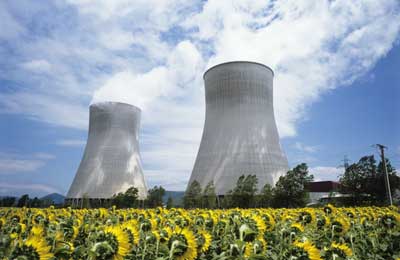
The simple question to ask is why a government would support a project with at best one-eighth of the output of Laggan/Tormore and costing the country at least twice as much over its (almost certainly shorter) lifetime? The answer would of course be to meet emissions reduction targets. But there is a much more reliable way of doing that, which is to build nuclear stations.

The fact that we are still so far from doing this is down to problems with finance and lengthy design approval as well as the arbitrary inclusion of targets for renewable energy to emissions reduction goals. To have a secure, affordable, low carbon energy system, we need more nuclear and gas use rather than more massive wind farms. Unfortunately, in the case of offshore wind, it seems to be a question of out of sight, out of mind, at least until the bills start ratcheting up.
Scientific Alliance

Australia’s Federal Government is, under its Large-Scale RET, set up torob power consumers of $45 billion, designed to be thrown at wind power outfits; the ‘bottom line’ of which will be laid out a decade or so from now, as thousands of these things rusting in some dimwit’s top paddock, the end of energy hungry businesses – like mineral processors – and thousands of households rubbing along with candles and kero fridges.

If a fraction of that colossal sum was directed to a couple of nuclear plants  – starting now – Australia could avoid an unmitigated energy disaster, retain a manufacturing industry, keep mineral processors operating on Australian soil; and see future generations able to enjoy lasting employment, not least in the high-end work that comes with nuclear power generation.

As an added bonus, there would still be more than $25 billion of REC Tax/Subsidy leftover in change – who know’s Greg Hunt, Patrick Gibbons & Co might even stick it in an envelope marked ‘Return to Sender’?

Oh, and if CO2 gas is really the serious threat that we’re constantly harangued about, then those plants ought to satisfy the global warming catastrophists, too.

After cold beer (with a lasting job to generate the thirst for it), hot showers and, instead of random wind power blackouts, 24 x 365 reliable power – that’s affordable and satisfies the CAGW crowd? Then it’s nukes or nothing.
nuclear-power-a

Liberated Wind Turbine Blades…..”Tourist Attraction”?

Wind Industry Claims Flying Blades & Crashing Turbines a ‘Landmark & Tourist Attraction’

BladeFailure_Spain

****

The number of cases involving collapsing turbines and flying blades (aka “component liberation”) has become so common that, if we were a tad cynical, we would go so far to suggest the possibility of some kind of pattern, along the lines proffered by Mr Bond’s nemesis, Goldfinger: “Once is happenstance. Twice is coincidence. Three times it’s enemy action”.

Turbines keep crashing back to earth in frightening numbers – from Brazilto KansasPennsylvaniaGermany and ScotlandDevon and everywhere in between: Ireland has been ‘luckier’ than most (see our posts here and here) and their luck is being enjoyed in Sweden too (see our post here).

A month or so back, Swedes had the pleasure of waking up to the sound of a vertically-challenged 290 tonne, whirling Danish Dervish splattering itself across a country road, fortunately free of Volvos at the time:

vestas v112

****

Then there’s the wild habit of these little ‘eco-friendlies’ unshackling their 10 tonne blades, and chucking them for miles in all directions – see our posts here and here and here and here and here.

Adding to the list of unscheduled component ‘liberation’ events is this tale from Madison County, New York.

***

from WKTV

***

113-foot blade falls off windmill that previously toppled in Madison County
Syracuse
Elizabeth Doran
11 February 2016

blade fail

FENNER, NY – A 113-foot blade fell off a wind turbine at the Fenner wind farm off Bellinger Road in the town of Fenner in Madison County, according to Fenner town officials.

The blade appears to have fallen off at about 9:30 a.m. today, and town officials think it may have been caused by a bolt failure, said Paula Douglas, Fenner town clerk.

Town officials didn’t think the wind had anything to do with the incident.

Fenner town officials said it’s the same 187-ton windmill – No. 18 of 20 –that collapsed in December 2009. It was replaced with a new wind turbine, Douglas said.

Enel Green Power-North America officials said they are working with the turbine supplier to investigate what happened, but said it’s too early to determine the cause. EGP-NA also said there is no threat to the community, and asked that residents keep a safe distance away from the site to allow workers to conduct their assessments.

The 200-foot-plus structure is one of 20 windmills that generate electricity at the Fenner Wind Farm operated by EGP-NA.

The windmills were erected in 2001 atop a hill at a cost of $34 million. At the time, it was the largest wind-energy facility in the Eastern United States, but that’s no longer the case.

The wind farm, a landmark and tourist attraction to some, provide enough electricity for 10,000 homes.
Syracuse

blackout

****

The usual infantile ‘analysis’ from Elizabeth Doran there – with bunkum about “20 windmills powering 10,000 homes”. Unless those households are prepared to sit freezing or boiling in the dark around 70% of the time, they will, in fact, be ‘powered’ by conventional sources such as coal, gas, hydro and nuclear.

That journalists are still pushing that kind of wind industry propaganda in 2016 is not just dumb, it’s lazy. A quick glance at performance sites like,Aneroid Energy makes a nonsense of the “this wind farm powers XX homes” furphy.

And the line about these being a ‘landmark’ and providing a ‘tourist attraction’ had us giggling too; given that fact that the turbines in question seem to let loose with the regularity of Yellowstone’s Old Faithful: this is not the first time blades have busted loose or turbines have tumbled at Fenner. No, Fenner’s local wonders regularly turn-on ‘action/adventure’ shows that, no doubt, thrill visitors.

blaid fail ny pick up

****

Turbine blade falls at 30-MW wind farm in New York
SeeNews Renewables
Ivan Shumkov
12 February 2016

One of the blades of a Goldwind (HKG:2208) turbine at the 30-MW Fenner wind farm in Madison County, New York, fell off on Thursday, the Post-Standard of Syracuse reported.

Fenner town officials told the newspaper it was unlikely that the incident was caused by the wind, but rather by a bolt failure.

The North American unit of Italy’s Enel Green Power SpA (BIT:EGPW) is the operator of the wind park, which has been generating power since 2001. According to the officials, the turbine is in the same location as one that had to be replaced after crashing down in December 2009.

Representatives of Enel Green Power North America told the newspaper that they are investigating the incident in collaboration with the turbine supplier. The Fenner wind farm consists of 19 pieces of 1.5-MW turbines made by General Electric (GE) and one 1.5-MW Goldwind machine.
SeeNews Renewables

turbine collapse fenner NY

Turn off the Money Tap, and the Wind Scam will “Dry UP”!

Doomed & Desperate: UK Wind Industry Attempts to Engineer Backdoor Subsidies

panic-disorder-971

David Cameron’s Conservatives strode to outright power on the back of a ‘crystal clear’ manifesto to cut subsidies to wind power and to give locals the right to veto wind farm projects at the planning stage.

But, in a ‘never-say-die’ last ditch attempt to obtain ‘backdoor’ access to the perpetual subsidies that are the only reason it exists at all (see our posts here and here), the wind industry – along with its plants in the Department of Energy and Climate Change – have hatched a plan to get around Cameron’s pledge to permanently cut its lifeline.

Humpty Dumpty was famously (and rightly) challenged by a scornful and quizzical Alice for haughtily claiming that he – as ‘Master’ in a ‘Looking Glass’ World – could make words mean whatever he chose them to mean.

Taking its cue from that pompous and brittle egg, the wind industry – in pitching a panicked salvation package – has primed its DECC’s puppets to call a “government guaranteed fixed price for wind power” a “subsidy-free contract”, in what can be fairly described as very scrambled logic.

Revealed: the great wind farm tax ‘con’
The Telegraph
Emily Gosden
13 February 2016

Ministers may break pledge to stop funding onshore turbines with consumer subsidies

Ministers have been accused of planning a U-turn that would see consumersFUND new onshore wind farms through green levies.

The Government confirmed it was “looking carefully” at a wind industry proposal to continue public financial support for new turbines, despite a manifesto pledge to halt expansion.

Critics described the proposal as a con, and said the Conservatives’ policy had been “crystal clear” that the subsidies would stop.

Under the plan, households would still be forced to pay millions of pounds on their energy bills to fund new wind farms – but the payments would no longer be defined as subsidies.

The wind industry’s plan hinges on the fact that no new power plants are commercially viable to build at the moment without extra financial support from bill-payers.

If wind farms can be built at lower cost to consumers than alternatives, such as new gas plants, then payments toFUND them should no longer be classed as “subsidy”, the industry argues.

Andrea Leadsom, the energy minister, admitted that the proposal for so-called “subsidy-free” contracts would not in fact be “cost free” for bill-payers, but said the Government was “listening carefully to industry on how it can be delivered”.

Opponents called the plan “outrageous” and said that the proposals under consideration would still constitute subsidies.

Owen Paterson, the Tory MP and former environment secretary, said: “Hard-working energy consumers will not be conned by a change in name. The Conservative manifesto was crystal clear that public subsidies for onshore wind will stop.

“There is absolutely no place for subsidising wind – a failed medieval technology which during the coldest day of the year so far produced only 0.75 per cent of the electricity load.”

The Conservatives pledged in their 2015 manifesto to “halt the spread of onshore wind farms” and vowed to “end any new public subsidy” for the turbines.

More than 5,000 wind turbines have so far been built onshore in the UK under efforts to hit renewable energy and climate change targets.

Consumers are already estimated to pay in excess of £800 million a year in subsidies for the turbines, adding about £10 to an annual household energy bill.

David Cameron has said that Britain does not “need to have more of these subsidised onshore”.

But the proposal being considered by the Department of Energy and Climate Change (DECC) would see onshore wind farms continue to qualify for an existing subsidy scheme that guarantees developers a fixed price for electricity generated.

The most recent onshore wind farm contracts awarded under the scheme, early last year, were at prices of about £80 per megawatt hour (MWh) – more than double current market prices of about £35/MWh. Consumers willFUND the difference through green levies on their energy bills.

Under the proposals being looked at by DECC, prices of between £60/MWh and £80/MWh would be regarded as “subsidy-free” by 2020.

John Constable, of the Renewable Energy Foundation, a group critical of renewable energy costs, said it would be “outrageous” to regard the proposal DECC was considering as “subsidy free”. “It is justSPIN doctor stuff, it’s playing with words,” he said.

Glyn Davies, the Tory MP, a member of the energy select committee, said: “I don’t think we should be introducing mechanisms that continue with subsidy – just to say there’s no subsidy when there actually is.”

He said he would be “very concerned” if ministers continued payouts to new onshore wind farms.

Fellow Tory Peter Lilley said the wind industry’s proposal “wouldn’t be subsidy-free” and that wind farms should not receive the same support as gas plants, because the power they produced was not reliable and was therefore worth less.

Mr Paterson added: “If we must support energy, we should help develop combined heat and power which increases efficiency from 50 per cent to 80 per cent or we should develop new technologies which actually work.”

A DECC source insisted energy secretary Amber Rudd was “crystal clear that the manifesto commitment to end new public subsidies for onshore wind and give local people the final say is delivered to the letter”.

“Any idea that doesn’t do this is simply not going to get the green light,” the source said.

The influential think-tank Policy Exchange has said that “subsidy-free” contracts should be offered to support the construction of new onshore wind farms in Scotland and Wales, as well as replacing old turbines with new, far bigger ones.

Maf Smith, deputy chief executive of Renewable UK, said it would be “anti-competitive” to bar any technology from competing for the financial support being offered for new power plants.

A DECC spokesman said: “There is no change to our commitment to end new onshore wind subsidies. Our actions have shown that we will be tough on subsidies, in order to keep bills down for our families and businesses.”
The Telegraph

Maf-Smith

****

Maf Smith has a somewhat confused take on ‘competition’. It’s precisely what David Cameron has given the wind industry a chance to finally experience; with an opportunity toBACK UP its endless (but empty) claims about being cheaper than gas and coal-fired power. Well, Maf? What are you and your paymasters waiting for?

The only reason the UK has to offer any financial support to conventional generators is thanks to the perverse policy that, until now, has guaranteed prices 3-4 times the price of conventional power, for the chaotic, weather-driven delivery of a source that – but for the subsidies it attracts – has NO commercial value.

A rebranded wind farm subsidy is still a subsidy
The Telegraph
Telegraph View
24 February 2016

The public aren’t fools. If the Government wants them to pay for the construction of inefficient wind farms, let it admit to it

The 2015 Conservative Party manifesto took a clear and sensible stance on the issue of wind farms. It stated that while they can form part of the “energy mix”, they are “unable by themselves to provide the firm capacity that a stable energySYSTEM REQUIRES”. The manifesto pledged to “end any new public subsidy for them”. So it is more than a surprise and a disappointment to discover that the Government is considering a reversal – keeping the subsidies and simply rebranding them.

Popular opposition to wind farms is practical, not ideological. Most people recognise that we need to develop sustainable technologies and reduce pollution. But Britain also needs cheap, plentiful energy – to fuel its economic growth and provide a highQUALITY OF LIFE for all its citizens.

Wind farms often fail to meet these criteria. Some people complain that they despoil the environment by being ugly, loud and deadly to birds. Others point out that they can be desperately inefficient. Britain demands energy most in the winter, to heat our homes. But at this time of the year it is often windless, despite recent storms. The turbines stand still and useless – a complete waste of the generous subsidies that come from levies on consumers’ energy bills. To make matters worse, when the wind blows too hard, the Government actually pays the industry to turn the turbines off. Strong wind conditions in late January threatened to overwhelmTHE GRID with more power than was needed – so the National Grid offered lucrative payouts of between £58 and £115 per MWh to shut down the supply.

If the Government believes there is a case to be made for continuing to subsidise the industry then it should make it openly and honestly. What the public does not want to hear isSPIN – which is what the proposal of redefining a subsidy amounts to. Lobbyists say that any new onshore wind farms will cost less to build than the old, non-renewable plants they are replacing, so they are a fair deal. Yet not only will the new turbines be less efficient than gas or coal, but there is also no escaping the conclusion that hard-pressed consumers will still be bank-rolling the expansion of a controversial energy source through their domestic bills. We sincerely hope that the Government rejects any advice to rebrand this arrangement as subsidy-free. The public deserves transparency in this debate.
The Telegraph

SWITZERLAND-WEF-DAVOS-CAMERON

Wind Turbine Projects Suck the Life Out of Another Economy!

South Australia’s Economy the Victim of a Wind Power ‘Suicide Pact’

suicide-note

****

South Australia – Australia’s ‘Wind Power Capital’ – is like the cooking show moment where – through the magic of clever editing – a perfect soufflé is slid in front of the camera and the grinning, self-satisfied cook announces ‘here’s one I prepared earlier’.

Except that, in SA’s case, what’s been plated up is an unmitigated energy disaster; that no amount of post-production cutting and splicing can salvage. In SA, its wind power soufflé failed to rise and, once failed, has no hope of rising again.

The recipe for the disaster in SA was drawn up by the boys from Babcock & Brown (aka Infigen) and a disgraced American lawyer and convicted con-man, Tim Flato (who robbed his clients of close to US$400,000, got struck-off, and scuttled off to set up the wind industry in SA and elsewhere) – with plenty of eager help from Greg Hunt’s staffer, Patrick Gibbons and his best mate, Vesta’s Ken McAlpine (back when they both worked as advisers to a Labor Minister in Victoria, Theo Theophanous) (see our post here).

STT operatives have been feverishly digging up more dirt on Tim Flato and his fellow travelers. Turns out Tim was, at various critical times, a director of Babcock & Brown and several of its subsidiaries. But, we digress.

Back to South Australia and its costly wind power flop, with a short and sharp piece from Alan Moran.

South Australian electricity – the state’s suicide mission
Catallaxy Files
Alan Moran
19 February 2016

Here is an object lesson of the effects of winner picking by governments. South Australia’s electricity industry is now threatening to seriously undermine the state’s economy.

Back in October 2014, the electricity market manager, AEMO together with the South Australian state based transmission business, ElectraNet, made some ostensibly soothing comments that the wind dominated South Australia system could continue to operate securely.

Wind is inherently unreliable as well as costing two and a half times as much as coal. But the 2014 report said that this reliability depended upon transmission support that allowed increasing amounts of reliable coal generated electricity to be imported from Victoria and NSW.

South Australia is able to boost wind only because of the subsidy which the Commonwealth’s renewable program and the state’s own measures force consumers of other fuels to transfer to the renewables.

Wind and solar account for 40 per cent (p.5) of South Australia’s generation.

By October of last year the officials’ balm was being used less sparingly.The head of AEMO, following a series of high priced events in South Australia as a result of the wind stopping – as it does – was warning of increasing blackouts in South Australia unless the transmission system was augmented. And the effectiveness of such a patch up would diminish if subsidies cause the share of wind to increase in other states – in this respect the ALP has an “aspirational” goal of 50 per cent renewable share.

South Australia’s problems are about to become more acute with the closure next month of the coal fired 550 MW Northern Power station, a measure brought about by the increasing amount of subsidised wind becoming available.

The latest report [press release here and the full report here: Joint AEMO ElectraNet Report_19 February 2016] again addresses the issue in technical language but is foreshadowing major new investment being required – $1 billion to duplicate the existing transmission links plus other expenditures to allow for coverage of short term drops in generation.

All this spending is necessary in order to facilitate a shift from a low cost traditional electricity supply to high cost rent-seeker sponsored and trendy wind. These measures hammer additional nails in the state’s coffin.

Perhaps the ultimate solution for South Australia, where coal costs are quite high, is nuclear.

The ALP has shifted to support a waste dump but a nuclear generator is a long way off. And in the interim, the government is opening the door to the coal seam and shale exploration that has been rejected by green influenced politicians in NSW and Victoria but again South Australia may have less promising reserves.
Catallaxy Files

Here’s one STT prepared earlier, with a little help from Aneroid Energy – the chaotic ‘output’ from SA’s 17 wind farms during May 2015:

May 2015 SA

Winweasels Will Say Anything, To Try To Protect Their Scam!

Orwellian Eco-Fascist Ideology Ramming Wind Turbines Into Everyone Else’s Backyards

200355536-002

****

Those that accuse community defenders of being nothing more than self-interested ‘NIMBYs’ are hardly what you’d call ‘disinterested observers’.

No, it’s their willful ignorance and lack of human empathy that gives them away – that and the fact that they will never, themselves, have to tolerate a ‘life’, suffering incessant turbine generated low-frequency noise and infrasound.

Reminiscent of the porcine ‘elite’ that ran Orwell’s Animal Farm (with one of its central themes the promised construction of a windmill that was said by its piggy-proponents to offer ‘free electricity’, a life of leisure and wealth for the lower orders) in his obsession to carpet your patch of paradise with hundreds of whirling Danish-Dervishes, the eco-fascist is always ready to line you up to make the sacrifices that they themselveswouldn’t tolerate for a second.

Some might call it ‘green hypocrisy’: STT calls it an inexcusable form of malevolence of the very worst kind – one, long on sanctimony, and short on either scientific or economic logic. Precisely the attributes exhibited by Orwell’s selfish and mean-spirited barnyard overlords.

These days, the characters drawn by George don’t grunt, they rant – and use self-affixed titles such as “Friends of Mother Earth”. Here’s a run-down on how these characters roll, from Virgina.

Van Velzer: Botetourt ignores the hazards of wind energy
The Roanoke Times
Bill Van Velzer
15 February 2016

On Jan. 26, Botetourt County’s Board of Supervisors gave its unanimous blessing to the construction of 25, 550-foot tall wind turbines on North Mountain.

This decision has brought cheers from local environmentalists who identify themselves as “friends of Mother Earth.” As with the siting of any industrial facility, the proposed Rocky Forge project is replete with enough technical minutiae that any complete understanding of its true environmental and human impact requires tremendous attention to hours of intense study.

For this reason, Rockbridge County’s Board of Supervisors requested of Botetourt County a reasonable 90-day delay period. This delay was denied while the project was allowed to proceed.

Wind does not respect arbitrary political boundaries; neither do the impacts that industrial wind facilities have on nearby residents and wildlife. So when one of the speakers referred to a need to push wind turbines into the view sheds of “the wealthy Rockbridge elites,” one wonders if there is another agenda at work that has little to do with the facts of this issue. Unfortunately, this seems to be the world we live in nowadays.

Indeed, it seems that discussions of wind energy fit into a larger political matrix. We must avoid this. This issue — when properly vetted — should transcend political ideology and rest on factual evidence. Each of us has a right to define our own quality of life. When someone insists that their emotionally-driven opinion is more important than my factual analysis, I have to begin wondering if I’m getting too close to a larger ideological vulnerability.

Having said this, there are legitimate issues concerning both Botetourt County’s rush to judgement and the larger assumptions about wind energy. From local to global, here is where we are:

First is the issue of “unconstitutional taking of private property.” In short, your right to enjoy your private property cannot trump my right to the enjoy mine. This is an essential ingredient of American jurisprudence, originating in English common law. It is at the heart of how we define fairness. Yet the precedent set by the Botetourt Board of Supervisors allows 550’-tall wind turbines 605 feet from a neighboring property line, and 820 feet a from a neighbor’s home.

Moreover, the 60dBA noise limit “restriction” is commensurate with sound at a busy urban intersection. North Mountain is clearly a rural environment with an ambient noise level at exactly half of this figure. Will these allowances not impact neighboring property values?

Of course, these issues have everything to do with whether or not prospective purchasers of your property — should you decide to sell — would want to hear this cacophony of noise, and see spinning blades from your deck or picture window at all hours and days of the year.

Infrasound belongs to the above argument, but really deserves space of its own. The wind industry denies its existence like tobacco companies used to deny any link between smoking and lung cancer.

Not surprisingly, Botetourt County doesn’t recognize infrasound, either. This cannot and will not continue, due to the rapidly accumulating evidence that infrasound’s wave pulses are a much greater health concern than is audible sound.

Infrasound deprives people of sleep, causes irritability and loss of concentration, and general anxiety. Don’t take my word for it — scores of YouTube videos have documented the abandonment of homes due to this unforgivable negligence on the part of local government officials.

Impact on wildlife is the flip side of human impact. Infrasound impacts animals in the same way that it impacts humans; the difference is that wildlife simply leaves impacted areas.

sleep with turbines

However for avian populations, the destruction is more graphic. For this reason, wind turbines have been called “Cuisinarts of the air.”

“Windustry” denies this, while claiming that cats, windows and cars take far more birds and bats than do wind turbines. This is beyond disingenuous. How many house cats kill an eagle, a hawk, an owl annually? None other than the American Bird Conservancy documents bird and bat deaths in the U.S. as 573,000 and 888,000 respectively, as of 2012.

dead_eagle_at_base_of_turbine

The “kicker” here is that Botetourt County doesn’t require independent monitoring of bird and bat kills — even for resident eagle populations. Ditto for threatened and endangered bats. Is this prudent?

So while Rocky Forge supporters congratulate themselves, more deliberative minds ponder the future. Unbeknownst to most valley residents, Botetourt County’s master wind resource map identifies 11 ridges and mountains as potential industrial wind energy sites. I’ll leave the last assumption to you.
The Roanoke Times

lake winds

Wind Contracts….Dancing with the Devil!

The Anatomy of a Wind Farm Contract – Part 2

noisy turbines


In my previous blog I explained how a typical wind farm contract consists of two divisible parts, an Option and a Lease. When looking at an Option, I came to the inescapable conclusion that by selling the wind farm developer an Option, the landowner essentially gave up any control over his own land for extended (potentially endless) periods, in return for often trifling sums of money.

.

In this blog I want to start looking at the second part of the contract – the Lease. This part forms the majority of the contract document, and we may need more than one blog to cover it all.

.

These contracts are about money, and clearly we need to know just how much a landowner can make, how quickly he or she can make it, and whether on a purely monetary basis it is a worthwhile exercise for a landowner to consider.

.

So let’s get down to the nitty-gritty. Once the wind farm is up and generating, what sort of money can a landowner make? Remember that as this is now a lease; the landowner is now the “Landlord”, and the wind farm developer is now the “Tenant”:

.

“… the Tenant from the Commencement Date for the Term YIELDING AND PAYING therefore to the Landlord during the first ten years of the Term the Rent of three per cent (3.0 %) of the Gross Operating Proceeds per annum and after the first ten years the Rent of three and a half per cent (3.5%) of the Gross Operating Proceeds subject to the provisions for review as hereinafter contained or €5,000.00 per Megawatt of capacityINSTALLED on the Premises or proportionately in respect of any part of a Megawatt of capacity so installed whichever of (i) or (ii) shall be the higher;

.

The first thing to realise is that the payments made by the developer (the Tenant) to the landowner (the Landlord) are now called ‘Rent’. As the term of contract in my contract is 25 years, what the landowner receives in cold cash is three percent of the Gross Operating Proceeds for ten years, and thereafter three-and-a-half percent of the Gross Operating Proceeds for fifteen years. However, 25 years is actually one of the shorter periods you will find on one of these contracts, so look very carefully at the definition of “Operating Period” when faced with one of these contracts.

.
The first question obviously is: what is meant by ‘Gross Operating Proceeds’? Well, I am not a bookkeeper but I do remember my lessons which told me that “Gross” means all your money as you make it, whilst “Nett” means the money you have left after you have paid what you owe (your “take home”).
.

Wind developers clearly speak a different language compared with the rest of us. Their definition of “Gross Operating Proceeds” is this:

“x-y:
Where x = the gross receipts (excluding VAT or any substituted or similar tax) from electricity sold by the Tenant and generated by the Wind Turbine(s) on the Premises excluding any together with the receipts if any that may arise from the sale of green credits or other similar environmental scheme and;
y = such costs as the Tenant may have to pay in respect of the electricity generated by the Wind Turbine(s) on the Premises but limited to (i) the costs and charges to join and remain a member of the Pooling and Settlement System, if any and; (ii) any non-capital costs or charges associated with the purchase from the Electricity Supply Board or any third party purchaser of electricity for the provision of auxiliary power to the Accommodation Works or the Wind Turbine(s) as certified from time to time by the Auditors Certificate and; (iii) any transmission, metering or distribution costs.”

.

Now that is a different meaning to the “gross” as ordinary people understand it.

“Gross = x-y”.     What?

.

And then when looking at “x”, which is the amount of the so-called “gross receipts”, that is the money received by the developer for electricity actually sold by the developer. If the developer does not sell any electricity, or is forced to dump electricity, that means there is no receipt. And even these ‘receipts’ have deductions made from them, namely tax, green credits, and subsidy payments.

.

And once we reach the nett value of the “gross receipts”, we now have to subtract “y” from those. The value of “y” is essentially all and any operating costs, including the IWEA membership fees, and the cost of electricity to run the back-up power when the wind turbines are not generating their own electricity, which in winter is most of the time as the wind blows too hard and the turbines are shut down, whilst in summer there is little wind.

.

As there is no electricity sold, the landowner loses out. Of course, the developer does not lose out, as it is getting the subsidies (money paid by electricity customers in the form of the PSO Levy) and curtailment payments (money paid to the developer by the taxpayer for not generating). However, as these payments are not for electricity sold, the developer does not have to share that with the landowner. No wonder IWEA are always asking for increased subsidies, and no wonder, in countries other than Ireland, when the subsidies have been withdrawn, the “green” developers have vanished into thin air.

.

Wow! Is there anything left of this “gross” after that? And the landowner gets a measly 3% for the first ten years, at which stage the turbines are probably burnt out and need to be replaced (given what we now know about the life cycle of these giant turbines – you are lucky if you get ten years out of them – more likely three to six years), which in turn means massive operating costs = more money taken off the so-called “gross” amount.

.

I would guess that because of this creative bookkeeping, most landowners will be plumping for the €5000.00 per MWINSTALLED option.

.

Interestingly enough, the word INSTALLED” is not defined in the contract. If something is not specifically defined in a contract, it is given its ordinary meaning. I would suggest thatINSTALLED means up and running and connected to the grid (as opposed to ‘erected’), which might mean more delays before the landowner actually sees some of that cold hard cash.

.
“… and where no turbines are installed on the Premises the following payments will be made:
10,000EURO per annum for a site sub-station and ancillary equipment;
5,000EURO per annum for a Grant of Deed of Right of Way and Wayleave;
2,500EURO per annum for a consent to erect turbines on neighbouring premises and where such consent is needed because of reduced distance to neighbouring boundaries only;
all of which payments shall be exclusive of any Value Added Tax which may from time to time be properly chargeable and charged thereon by the Landlord clear of all deductions save those required by law.”

.

This clause confused me. If these payment options do apply to the landowner that is actually hosting the wind farm, one would think that the host-landowner wouldMAKE MORE MONEY by not having the turbines built, as the Gross Operating Proceeds don’t seem to be enough to feed the dog, let alone make a nice living without all the hard work that constitutes farming (assuming that most landowners that host wind farms will be farmers or at least owners of rural land / farm land).

.
However, It is doubtful that the wind developer is going to enter into the Lease before the wind farm is up and running – that is what the Option is for, and the developer will rather pay you your tenEURO (a year, hopefully) for the Option for as long as the developer can stretch that Option out.

.

One would imagine that the developer will only enter into the Lease with the landowner who is accommodating the actual wind farm when the wind farm is definitely going up, and the Option is exhausted. Otherwise the landowner will be strung along, essentially at the mercy of the developer.

.

I am therefore guessing that these other forms of payment are for landowners with land adjoining the wind farm premises. This might be the landowner hosting the wind farm, where their land is big enough to also take a sub-station, or where the wind farm is situated in the middle of the property, in which case a right of way might be necessary. I am guessing that this contract is a ‘one-size-fits-all’, and can accommodate those landowners who agree to have a wind farm built on their land, but can also be used to bind those landowners that own land adjoining the host property, assuming that they are willing to contract. Of course they might have no choice if their opposition to planning permission was fruitless, and the wind farm is now destroying their health and their livelihood. These secondary payments will only need to occur once the wind farm is built and operating, and not before.

.

€2500.00 per year as compensation for being driven crazy by the noise and flicker from the neighbouring wind farm? Count me out.

.

print money

The final sting in the tail concerning payment?

.

Well, going back to the assumption that theVAST majority of landowners that host wind farms will be farmers or owners of agricultural land, there is the issue of the effect on the zoning of that land.

.

After waiting for ten years, the Option is exhausted and the farmer is now looking to cash in on these larger payments of €5000.00 perINSTALLED MW.

.

Firstly, these payments are fully taxable as rental income, which cannot be set off against ordinary agricultural costs.

.

Secondly, there is the question of agricultural land tax-reliefs. Some lease agreements do say that the wind-farm company will compensate farmers for the loss of certain farm reliefs. These are usually written in such a way that they cover the farm reliefs that exist at the time of signing. They do not cover subsequent or amended farm reliefs that may be introduced in the future. Again, when we consider that I have seen wind farm lease agreements lasting 60 years, many farmers that have entered into these agreements with wind developers must now accept that the loss of future farm reliefs and payments, coupled with the fully taxable nature of the wind-farm payments that they will receive, will mean that they will be in a financially worse position than they are at the moment. Many struggling farmers grabbed the wind farm option with both hands (encouraged all the way by the IFA). Some of these stories might have very sad endings.

.

Thirdly, Revenue has made it clear that farmers may no longer qualify for the significant agricultural tax-relief on their lands should they wish to transfer their lands by gift or inheritance. A wind farm turns your land into an industrial site, which means that you are no longer a ‘farmer’ as defined byTAX LAW, and your lands may fail to satisfy the definition of ‘agricultural land’ under the capital acquisitions tax legislation.

.

While you might getTAX RELIEF as a business, this is a more restricted capital acquisitions tax relief, as the family home does not qualify for business relief. When we consider that most farms and homes are passed through generations of farming families, using the vehicle of the substantial agricultural reliefs available, farmers face a scary future prospect of not being able to afford to remain on their farms if these taxation reliefs are jeopardised. That means that unless the wind developer is paying you more money than you were getting when you qualified for all the agricultural tax relief that is currently available, you are making a nett loss. When the wind farm leaves, it will be a long time before you can have your land rezoned as agricultural land so as to restore those tax reliefs.

.

It is for that reason that I would plead with farmers to obtain good and sound legal advice before entering into one of these wind farm contracts.

.

All that glitters is most definitely not gold.

the Harsh Reality Of Wind Turbines, as an Electricity Source….

SA’s Wind Farm Fiasco: $Millions in Subsidies Thrown at GDF Suez to Reopen Mothballed Gas-Fired Power Plant

May 2015 SA

South Australia has the dubious honour of being referred to as “Australia’s wind farm capital”. That ‘accolade’ has brought with itrocketing power prices, an unstable grid and routine blackouts.

As to the latter, South Australians are learning to live with daily ‘load-shedding’, that even its premier academic institutions have to suffer, along with thousands of other businesses and households.

This telling little email from UniSA’s management was flicked to us by one of our SA operatives (who just happens to be an engineer):

email ML

The source of the “failure to the incoming electricity supply” is, as our engineer contact informs us, all about ‘grid instability’, caused by SA’s chaotic, intermittent and unreliable wind power supply.

Our contact also tells us that UniSA’s Mawson Lakes campus (located north of Adelaide and south of Salisbury) has been experiencing frequent supply ‘interruptions’ and wholesale blackouts for months now. Air-conditioners no longer function; lectures get cancelled; the campus goes into “lock-down”; and the power surges and erratic supply have damaged electrical equipment and appliances, as well as distribution systems on campus.

The cost of repairing or replacing appliances, equipment or electrical systems – due to erratic wind power supplies (and the power surges, grid instability and consequent grid management chaos that comes with intermittent wind power) – is just another cost that gets brushed aside by one-eyed wind-worshippers. Wind power blackouts are, of course, a little harder for the wind-cultist to hide.

On 1 November last year, a sudden and total collapse in SA’s wind power output saw almost the entire State plunged into Stone Age darkness:110,000 homes and businesses were left without power for hours, with their owners in the dark and operators fuming.

SA 1 Nov 15

Business operators, like Port Pirie’s Nyrstar smelter went on the war path and dragged Labor’s Energy Minister, Tom Koutsantonis into a crisis meeting about average spot power prices that are now double those of neighbouring Victoria; and the fact that, no matter how much generators chisel out of householders and businesses, SA’s power supply will never again be called reliable or secure.

Having given up on the idea of ever having affordable power again, SA’s hapless Labor government has been reduced to throwing $millions of taxpayers dollars at the French owner of a mothballed Combined Cycle Gas Turbine (CCGT) power plant in an effort to ensure the lights stay on (at least for now).

Here’s the AFR’s Ben Potter (who’s fast gaining a grip on the scale and scope of the wind power fraud) detailing Labor’s costly, panicked – throw $millions of taxpayers’ money at it – response to SA’s wind farm fiasco.

Gas-fired power station bids for SA ‘low carbon’ contract
Australian Financial Review
Ben Potter
10 February 2016

Adelaide wants to become the world’s first carbon-free city, but the South Australian government is open to giving a gas-fired power station a “low carbon”ELECTRICITY CONTRACT.

The bid by GDF Suez, French owner of the partly mothballed Pelican Point gas power station, angered renewable energy advocates. The contract is worth about $50 million a year.

“If the government was serious about limiting carbon dioxide emissions, the tender would be limited to renewable energy projects only,” said Mark Parnell, Greens energy spokesman and leader in the SA Parliament.

GDF Suez confirmed Pelican Point was a bidder for the contract to supply up to 481 megawatt hours of low-carbon electricity a year to the government. Gas-fired power stations have roughly half the carbon dioxide emissions of coal-fired power stations, while wind and solar power have virtually zero emissions.

The SA Labor government sought expressions of interest for the contract in November as industry alarm mounted at soaring electricity prices in the struggling state.

Treasurer and Energy Minister Tom Koutsantonis this week emailed industry participants at a December 15 crisis meeting on the electricity market, saying the government aimed to ensure a smooth transition to a low-energy future by inviting a broad range of energy technologies to bid for the contract, and stipulating that bids should not harm energy security or push up prices.

Price spikes

The SA government has celebrated the state’s nation-leading penetration of wind and solar power. But large industrial energy users blame its spasmodic weather-dependent supply patterns for sharp spikes inSPOT MARKET prices and contract prices to levels far above neighbouring Victoria and NSW.

Although described as a “low-carbon electricity supply” contract, the document specified that electricity with an average CO2 emissions intensity of up to 400 kilograms per megawatt hour would be considered.

This is just above the level of a relatively efficient gas-fired power station like Pelican Point. GDF Suez withdrew half of Pelican Point’s 479-megawatt capacity two years ago as SA’s rapidly increasing share of renewable power pushed more costly “mid-market” suppliers to the sidelines.

This and other withdrawals left the stateVULNERABLE to sharp electricity price spikes to more than $2000 an hour when the wind didn’t blow and the sun didn’t shine, and heavily reliant on Victorian brown coal power delivered via high-transmission interconnectors.

“The state is primarily interested in wholesale electricity supply solutions which reduce the emissions associated with the state’s energy use. In the past, the state has sought proposals for GreenPower to achieve this objective,” the document says.

“In this process, however, the state is focused on solutions which maximise economic benefits for South Australia.”

Mr Parnell said Mr Koutsantonis “is very wedded to the future of gas, so it doesn’t surprise me that they are trying to place a gas-fired power station in the low-carbon category”.
Australian Financial Review

How delicious! The SA Green’s Muppet-in-Chief, Mark Parnell accusing Tom Koutsantonis of being “very wedded to the future of gas”, whereas Parnell is simply “wedded” to the delusion that a wholly weather dependent power source – that requires 100% of its capacity to beBACKED UP 100% of the time by conventional generation sources – provides for a reliable and secure electricity supply, delivered at an affordable price.

Always keen to express his sweaty-palmed, adolescent love of these things, Parnell has been known to bunk up in a tent underneath one of these things with SA’s other high-priest of the dwindling wind-worship cult, Crystal Brook’s favourite ‘fan-tasist’, Dave Clarke.

Throwing $50 million a year of South Australian taxpayers’ money at GDF Suez to keep its Pelican Point CCGT plant running around the clock, is like a dog chasing its tail.

GDF Suez stopped operating its Pelican Point plant as a direct consequence of the market perversion caused by the Federal Government’s Large-Scale RET.

Wind power is already heavily subsidised under the LRET, which, as we detail below, allows wind power outfits to flood the market when the wind is blowing, literally payingTHE GRID manager to take it – which knocks conventional generators out of the market, leaving them burning coal or gas (and incurring constant expense), but with little revenue (or no revenue whatsoever) to offset that cost (let alone turn a profit).

In short, wind power outfits collect the same amount of revenue, irrespective of theSPOT PRICE. However, conventional generators receive the prevailing price – and, unlike wind power outfits, do not receive any form of subsidy for what they dispatch: the market perversion driven by the LRET and subsidies for wind power is what has caused SA’s conventional generators to become unprofitable; and it’s that lack of profitability that led to Alinta’s decision to close its Port Augusta plant; and led to GDF Suez mothballing half of its Pelican Point CCGT plant 2 years ago (until now, due to the market distortions caused by wind power subsidies, its working half still only gets a return when wind power isn’t being given away).

The Power Purchase Agreements (PPAs) struck between wind power outfits and retailers (which you’ll never see the likes of Infigen or Trustpower talk about publicly) are built around the massive stream of subsidies established by the Large-Scale Renewable Energy Target (LRET) – which is directed to wind power generators in the form ofRENEWABLE ENERGY CERTIFICATES (RECs aka LGCs).

Under PPAs, the prices set guarantee a return to the generator of between $90 to $120 per MWh for every MWh delivered toTHE GRID.

In a company report last year, AGL (in its capacity as a wind power retailer) complained about the fact that it is bound to pay $112 per MWh under PPAs with wind power generators: these PPAs run for at least 15 years and many run for 25 years.

Wind power generators can and do (happily) dispatch power toTHE GRID at prices approaching zero – when the wind is blowing and wind power output is high; at night-time, when demand is low, wind power generators will even payTHE GRID manager to take their power (ie the dispatch price becomes negative)(see our post here). In recent times, wind power outfits in SA have been paying the grid operator up to $20 per MWh to take power with, quite obviously, no commercial value.

However, the retailer still pays the wind power generator the same guaranteed price under their PPA – irrespective of the dispatch price: in AGL’s case, $112 per MWh.

PPA prices are 3-4 times the cost that retailers pay to conventional generators; retailers can purchase coal-fired power from Victoria’s Latrobe Valley for around $25-35 per MWh.

Underlying the PPA is the value of the RECs that are issued to wind power generators and handed to retailers as part of the deal.

The issue and transfer of RECs under the LRET sets up the greatest government mandated wealth transfer seen in Australian history: the LRET is – without a shadow of a doubt – the largest industry subsidy scheme in the history of the Commonwealth. That transfer – which comes at the expense of the poorest and mostVULNERABLE; struggling businesses; and cash-strapped families – is effected by the issue, sale and surrender of RECs. As Origin Energy chief executive Grant King correctly puts it:

“[T]he subsidy is the REC, and the REC certificate is acquitted at the retail level and is included in the retail price of electricity”.

It’s power consumers that get lumped with the “retail price of electricity” and, therefore, the cost of the REC Subsidy paid to wind power outfits. The REC Tax/Subsidy has already added $9 billion to Australian power bills, so far.

Between 2015 and 2031, the mandatory LRET requires power consumers to pay the cost of issuing 490 million RECs to wind power generators. With the REC price currently $82 – and tipped toTRADE around $93 as retailers get hit with the shortfall penalty set by the LRET – the wealth transfer from power consumers to the Federal Government (as retailer penalties) and/or to the wind industry (as REC Subsidy) will be somewhere between $40 billion and $50 billion, over the next 16 years:

What Kills the Australian Wind Industry: A $45 Billion Federal Power Tax

With more wind power capacity per head than any other State, South Australians are going to be lumbered with a disproportionate share of the ludicrous cost of the REC Tax/Subsidy, set by the LRET.

A cost that is already forcing major employers like Nyrstar to consider shutting up shop – with the immediate loss of 750 jobs in economically depressed Port Pirie. And that has already led to more than 50,000 SA households suffering along without any power at all (see our post here).

Now, adding State-subsidy-insult to Federal-subsidy-injury, South Australians are about to be Royally screwed twice: once by being forced to throw $93 per MWh (in REC Tax/Subsidy) at wind power outfits (whenever the wind blows); and, on top of that, being forced to stump up $50 million a year to cover the fact that the former will never amount to a meaningful power source. And then there is all of the commercial and domestic electrical repairs required as a result of such a high penetration of intermittent power sources.

South Australians have Premier Jay Weatherill and his merry band of Labor lunatics to thank for, what can only be described as, an ‘energy debacle’.

Notwithstanding the scale and scope of SA’s brewing economic disaster – and its latest move to subsidise its way out of trouble – Labor still seems wedded to pushing the wind industry’s barrow.

Having directed planning panels all over the State to keeprubberstamping wind farm applications – and otherwise encouraging more of these things to be speared into the heart of thriving rural communities; like those situated in the Eastern Mount Lofty Ranges and on Yorke Peninsula – Labor seems simply incapable of retreating from the brink.

Albert Einstein’s definition of “insanity” springs to mind: “doing the same thing over and over again and expecting different results”.

Backing the likes of New Zealand’s Trustpower or the cowboys behindSenvion (aka REPower, aka Suzlon) in their bids to carpet South Australia’s most agriculturally productive regions with hundreds more of these whirling wonders beggars belief.

What South Australians need is reliable, secure and affordable power – of the kind to be delivered by GDF Suez’s Pelican Point CCGT plant, that – but for the power market perversion caused by the LRET’s massive REC Tax/Subsidy for wind power – would have been happily delivered without costing SA’s taxpayers a red cent.

The very last thing South Australians need is any more of the same.

Not that Weatherill, Koutsantonis & Co will admit it publicly, but the deal done with GDF Suez (using other peoples’ money) to guarantee the 24/365 availability of 479MW of dispatchable (ie ‘controllable’) power, is a monumental concession that SA’s too-long held dream of being powered by the wind has just gone up in smoke.

turbine fire 6

Novelty Energy, Like Wind & Solar, will NOT Keep the Lights ON!

India’s Quest for ‘24/7 Reliable Power’ Means Munching More Coal, Not Praying for the Wind to Blow

poverty india

****

Among the selfish conceits peddled by the wind industry, its parasites and spruikers is the notion that a wholly weather dependent power source – which is 4 times the cost of coal-fired power and which will always require 100% of its capacity to be backed up, 100% of the time by conventional generation sources – represents the ‘salvation’ of nations like India, where some 250 million people have no power at all; and, accordingly, live in Stone Age poverty, cooking on twigs and dung and otherwise living a life of misery.

The pontificators that assembled in Paris, and sought to impose what Indians quite rightly regard as “fake electricity”, couldn’t care less about the world’s huddled masses and are, instead, happy to destine them to a world of eternal darkness and poverty. However, thankfully, India’s Power Minister, Piyush Goyal has other ideas.

India’s challenge is 24/7 electricity for all
The Australian
Greg Sheridan
13 February 2016

Piyush Goyal is a name you haven’t heard. But this week he has made one of the most important interventions of any foreign politician in an Australian political debate.

He is India’s Minister for Power, Coal and Renewable Energy. He is a big success politically and in line for more promotion.

I’ll give you his direct quotes in a moment. But let’s cut to the chase. Here are the important things he said in a lengthy interview with The Australian.

India will increase coal imports from Australia. Quite independently from that, if the Adani mine in Queensland goes ahead it is an integrated project and will be its own main customer, so India’s efforts to increase its coal production would not reduce the viability of the Adani project.

India is passionately committed to caring for the environment but also to economic development. That means a huge increase in coal-fired power stations as well as coal’s role in making steel.

The Indian government wants 24/7 reliable energy for all its people. Some 300 million Indians will move from rural to urban living in the next couple of decades. They will be on proper power grids. India’s baseload power will be provided by coal.

India will expand its renewable energy sector but, as the minister says, renewables have never provided baseload power for anyone.

India also will expand nuclear power and keep its gas power stations at roughly their current level.

The massive urbanisation in India means a surging demand for steel. Goyal says coking coal exports from Australia will increase particularly strongly. (Thermal coal goes to power stations, coking coal makes steel). Already nearly a third of India’s coal imports are coking coal.

Goyal’s remarks could not be more clear. Every Greens spokesman and climate-change jihadist who argues on the ABC that India is turning away from coal is inverting reality. Far from coal being a “dying industry”, as Geoff Cousins argued in a ludicrous article, the International Energy Agency forecasts Indian coal imports more than doubling by 2040.

Goyal does want to crank up India’s domestic production of coal but its coastal power stations are geared to take imported coal and that will continue, he tells me.

Now, dear reader, if you ever again hear anyone on the ABC claim that India is moving away from coal, or that Australian coal is not essential to get hundreds of millions of Indians out of poverty, you will know they are talking pure moonshine.

No one more consistently misrepresents what is happening all over Asia than the green lobby. The general ignorance of Asia among journalists allows these claims to be aired uncritically, especially on the ABC.

So let’s take up the Indian story in Goyal’s own words: “The first challenge of our government is to make sure that all Indians get 24/7 reliable power. We will expand the total energy output significantly.

“We are a very environmentally friendly country. We have been for generations. India is one country that has respected and even worshipped nature. So we will give renewed thrust to our renewable energy program. We are scaling it up massively, from 34 giga­watts to 175GW over the next six years. This is the world’s largest renewable energy rollout in the history of mankind.”

It is statements like this that green propagandists sometimes misuse to pretend renewable will replace coal in India. Nothing could be less true.

Gas power, Goyal says, will remain roughly where it is. But: “We will be expanding our coal-based thermal power. That is our baseload power. All renewables are intermittent. Renewables have not provided baseload power for anyone in the world.

“After all, solar works when the sun is shining, wind works when the wind is blowing, hydro works when there is water in the rivers. You must have coal.” Goyal says India will expand its nuclear power but this is a slow process and although nuclear will increase in absolute terms and as a percentage of India’s power overall, he continually comes back to the expansion of coal and its irreducible part in development.

“India does have certain development imperatives which we expect the world to accept. All ourINVESTMENT in coal is either supercritical power stations or ultra-super critical.” These produce about half the greenhouse emissions per unit of power as do older coal-fired power stations.

He refuses to accept lecturing from the West on India’s environmental responsibilities: “The people of India want a certain way of life. They want jobs for their children, schools and colleges, hospitals with uninterrupted power. This needs a very large amount of baseload power and this can only come from coal.

“I do wish people would reflect on the justice of the situation. Europe and America and Australia have messed up the world and the planet, and they’re saying to us, we’re sorry but you Indians can only have power for eight hours a day. The rest of the time you must live in darkness.

“We are fortunate that countries like Australia and Canada enter into serious agreements and we can rely on an uninterrupted flow of fuel.”

India is the fastest growing substantial economy, with a growth rate above 7 per cent in an anaemic global economy. This growth will be central to global economics. Goyal believes India will hit double-digit growth next year or the year after and stay there for a decade. If he is right, the development, and the economic opportunity this offers for Australia, is enormous, beyond anything that has yet entered the Australian imagination.

He says: “In the next couple of decades, imagine 300 million people moving from rural to urban centres. As we improve productivity in agriculture, the population will shift to manufacturing and services. Energy consumption will go up in agriculture itself with greater use of technology. There will be increased energy use in infrastructure. The government wants decent homes for every Indian by 2022; that means millions of homes will be built.” He points out that India’s per capita energy consumption is still below that of the US in the middle of the 19th century and says it will increase for decades.

India will not commit to a year when its greenhouse emissions will peak. This is “immaterial”, he says. On China’s commitment to such a year, his polite scepticism is robust: “We’ve all seen the reliability of that data. It’s up to you to judge what is optical and what is real.”

He is pro-Australian and wants the warmest relationship, but is utterly unimpressed with lectures from Australians about global warming: “Australia’s power consumption is coming down now anyway. Its economy is not growing, manufacturing is moving overseas, your economy is moving to services. You have jobs for everyone and a society satiated with energy. It’s easy for you to nominate a peak year. We have 250 million Indians without energy now. We have years and decades of growth ahead.”

Every word he says is true. It would be good if Australians listened.
The Australian

piyush goyal

Wind Turbine Scam Destroys Power Supplies in Britain!

UK’s Wind Power Gamble Ends in Power Supply Bankruptcy

roulette-table-2

Until David Cameron’s Conservatives took full control of the UK Parliament, Britain had lumped every last chip on wind power: apparently hoping that a wholly weather dependent power source, that requires 100% of its capacity to beBACKED UP 100% of the time by conventional (dispatchable) power sources, would come up trumps and lead to oodles of secure, reliable and affordable electricity.

After more than just a fewSPINS of the energy wheel, it seems that Britain is blessed with the punter’s curse: a dwindling bag of cash and no hope of better ‘luck’ anywhere in sight.

Government energy policy will hike bills and lead to power supply gap
The Northern Echo
Sandy Richardson
26 January 2016

DAVID Cameron’s decision to close coal-fired electricity stations and scale back nuclearINVESTMENT will lead to massive power shortages and hike energy bills over the next decade, industry leaders have warned.

Growing electricity demand will leave the UK facing a 40 per cent to 55 per cent electricity supply gap, according to a new report by the Institution of Mechanical Engineers.

It says plans to plug the gap by building Combined Cycle Gas Turbine (CCGT) plants are unrealistic, as the UK would need to build about 30 such plants in less than 10 years.

The UK has built just four CCGTs in the last 10 years, closed one as well as eight other power stations. In 2005 twenty nuclear sites were listed for decommissioning, leaving a significant gap to be filled.

According to the report, the country has neither the resources nor enough people with the right skills to build this many power stations in time. It is already too late for any other nuclear reactors to be planned and built by the coal shut-off target of 2025, other than Hinkley Point C.

The report also highlights that a greater reliance on imported electricity from Scandinavia and the Continent is likely to lead to higher electricity costs and leave Britain at the mercy of foreign suppliers.

Dr Jenifer Baxter, Head of Energy and Environment at the Institution of Mechanical Engineers, and Lead Author of the report said:

“The UK is facing an electricity supply crisis. As the UK population rises and with the greater use of electricity use in transport and heating it looks almost certain that electricity demand is going to rise.

“However with little or no focus on reducing electricity demand, the retirement of the majority of the country’s ageing nuclear fleet, recent proposals to phase out coal-fired power by 2025 and the cut in renewable energy subsidies, the UK is on course to produce even less electricity than it does at the moment.

“Currently there are insufficient incentives for companies toINVEST in any sort of electricity infrastructure or innovation and worryingly even the Government’s own energy calculator does not allow for the scenarios that new energy policy points towards. Under current policy, it is almost impossible for UK electricity demand to be met by 2025.

“Government needs to take urgent action to work with industry to create a clear pathway with time frames and milestones for new electricity infrastructure to be built including fossil fuel plants, nuclear power, energy storage and combined heat and power. With CCS now out of the picture, new low carbon innovations must be supported over the course of the next 10 years.”
The Northern Echo

consequences

Spain First to Eliminate the Wind Pushers.

Spain’s Subsidy Cut sees Wind Industry Collapse: NO Capacity Installed Since 2014

Bullfighter

****

The Spanish wind industry faces its coup de grâce for the very same reason that the wind industry is on the ropes in the UK, Germany, the US, here and elsewhere: either the massive subsidies that have driven the greatest fraud of all time have actually been cut; or there’s the inevitable prospect that they will be, very soon.

In Spain’s case, its government worked out long-ago that pouring never ending €billions into a meaningless power source – that has no commercial value – was never going to end well, on any level – political, social or economic.

While the wind industry – wherever it plies its subsidy soakedTRADE – deludes itself that the principles of economics are suspended in relation to it, once the massive (and seemingly endless) subsidies go, so does the interest of power retailers, bankers and investors. Funny about that …

SpainINSTALLED No Wind Power for First Time Since 80s in 2015
Bloomberg
Alex Morales
26 January 2016

Spain didn’tINSTALL a single megawatt of wind power capacity in 2015, the first time the industry has had a dead year since the 1980s.

TotalINSTALLED capacity stalled at 22,988 megawatts, with wind covering 19 percent of power demand in Spain last year, the Spanish Wind Energy Association, known by its Spanish initials AEE, said Tuesday in a statement. Just 27 megawatts of new capacity has beenINSTALLEDsince 2013, when a new payments system was introduced.

Spanish renewable energy companies that once reaped Europe’s biggest subsidies have looked abroad for projects since the domesticMARKETstagnated following a moratorium on support for new wind farms and solar parks in 2012. The standstill has left Spain needing an additional 6,400 megawatts of wind energy capacity by 2020 in order to meet binding European renewables targets, according to the association.

“TheINSTALLATION of more than 6,000 megawatts of wind power in four years has been done in Spain before thanks to regulations that favored it,” the association said. “If certain aspects of the regulations were modified to give confidence back to investors and ease access to financing, it could be attempted again.”

The industry group called on the government to consult with the wind sector on changes to auctioning arrangements, after an initial 500-megawatt auction yielded no subsidy for the technology. It said that was an “unexpected result that brought even more uncertainty to the already complicated situation of the wind sector.”

The association called for an end to provisions in rules that allow the government to change the reasonable returns for projects every six years. It also said the government should hold auctions for the remaining 5,900 megawatts of wind power it needs as soon as possible.
Bloomberg

Remember all that wind industry guff about the world hungering for wind power; how it’s free and getting cheaper all the time; and how it’s the ‘plug and play’ solution to our future electricity needs?

No? It seems Spaniards have forgotten it too.

spain_bullfighting_2