DIRECT Health Effects Caused by Wind Turbines!

Wind turbines fall over in strong winds!!
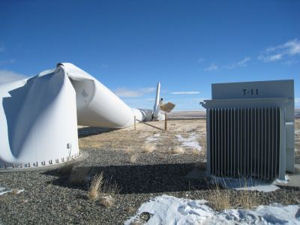
Collapse in strong winds is one of the more amusing modes of failure for the notorious wind turbine.  Other forms such as blade throw are also hazardous.  You need to be 3000 feet away to be safe.  Yet noise, and shadow flicker require them to be kept even further away than that from habitations.  Many are being injured and some are dying.  The cost of wind power is higher than we thought.

By Miriam Raftery
April 4, 2012 (San Diego’s East County) – Today marks the “International Protest Day Against Wind Power” with 765 websites participating.
A dark side of the wind industry that many media outlets have failed to report on is the thousands of documented cases of serious accidents. These include numerous documented cases of turbines falling over, blades flying off, injuries to workers and the public, and at least 99 reported fatality accidents.
Of the deaths, 67 were wind industry and direct supporters workers or small turbine operators and 32 were public fatalities.Wind turbine fire

How many tragedies have occurred worldwide is a well-kept secret within the wind industry. In the United Kingdom alone, however, Renewables UK, an industry trade association, has admitted to 1,500 wind turbine accidents/incidents in the UK alone during the past five years, the London Telegraph reportedhttp://www.telegraph.co.uk/news/uknews/8948363/1500-accidents-and-incidents-on-UK-wind-farms.html. Those included 300 injuries and four deaths—in just one small part of the world.
A partial database of accidents , injuries and deaths through December 2011 has been compiled at the Caithness Wind Farm Information Forum:http://www.caithnesswindfarms.co.uk/page4.htm
According to the Caithness database, which estimates it represents only 9% of actual accidents (based on the RenewablesUK figures), an average of 128 accidents per year have occurred from 2007-2011, up from just 6 a year back in 1992-1996 due to the growing number of wind turbine installations.
Among the most grisly tragedies was that of John Donnelly, a worker killed in Oregon in 1989 when a lanyard that as supposed to prevent falls for turbine workers became entangled, dragging him into the spinning machinery.  According to Paul Gipe, an advocate of wind power who authored an article on fatalities, the medical examiner described Donnelly’s demise as death by “multiple amputations”, witnessed by a horrified coworker.
Another Oregon worker, Chadd Mitchell,  young father of two, was killed when a wind turbine tower he was in collapsed to the ground in Sherman County after the turbine’s rotor went into “overspeed,” the Oregonian reported on February 6, 2010. Siemens Power was fined for safety violations, and the family filed a lawsuit.
Other deaths have included electrocutions, falls, crush injuries, construction accidents, and a Minnesota man who was nearly cut in half by a chunk of ice knocked off a turbine tower in 1994. Three suicides have also been linked to turbines, including a worker who hanged himself, a parachutist, and a farmer who killed himself after neighbors protested a turbine he put on his property.
Caithness also has documented 221 separate incidences of blade failure, with pieces of blades documented to have flown over 1,300 meters—or 4,266 feet (4/5 of a mile). Blade pieces have gone through roofs and walls of nearby buildings.
At least 121 structural failures have been recorded too, including entire wind turbines that have crashed to the ground. The website www.windaction.org documents many of these. Turbines have crashed to the ground in school yards, near homes, roads and walking paths where only by sheer luck was no one underneath when the multi-ton structures collapsed. In the Palm Springs area, a turbine spinning out of control forced closure of a major highway. There are also concerns about many turbines still standing –where failures such as cracked foundations and sinkage have been observed.
Wind turbine fire, Australia, WindWatchAround 168 wind turbine fires have been documented. Some sparked brush fires and left some fire departments helpless to watch as oil in turbine components burned hundreds of feet in the air—out of reach of hoses—whirling burning debris across the landscape.
There are also many instances of ice throws hurling chunks of ice off blades—94 times in 2005 alone. Another 93 transport accidents involving turbines have been reported, including one turbine section that rammed through a house and another that knocked a utility pole through a restaurant.
Disturbingly, EnergyBiz Magazine reported in its March/April 2011 edition that “More troubling for wind fleet owners and operators is that many turbines are coming off warranty. The end of last year marked the first time in U.S. history that more wind turbines were operating out of warranty than were covered, according to Wind Systems magazine, while many more are approaching the end of their warranties. Hidden costs of maintenance have climbed sharply, though some promising technologies may help reduce those costs, Energy Biz noted.
Still the issues raise troubling questions: who will be responsible for catastrophic failures when warranties have run out? Are local boards making decisions regarding turbine placement sufficiently educated on the risks?  Farm surrounded-IllinoisHow far away from a wind turbine is a safe setback distance? Locally, some proposed industrial wind projects would place turbines within a half mile of homes, on up to three sides of the dwellings, in Ocotillo. In McCain Valley, Iberdrola’s Tule Wind proposes setbacks from roads of only 1.1 times the height of the turbine – or around 455 feet maximum.
In Kansas, Rose Bacon, a member of the Governor’s Energy Task Force, became so concerned about lack of teeth in regulations and vulnerability of inexperienced local officials in small towns facing proposals from international wind companies that she likened the scenario to the “wildcatter days in the oil business,” the McPherson Sentinel reported in 2005.
Below are some specific examples of serious incidents  documented through the above websites, where many more incidents can also be found.
A wind turbine crashed to the ground at a wind farm near The Dalles, Oregon in August 2007, killing one worker and injuring another, Associated Press reported.
  • A blade from a wind turbine at Lister Hospital in the United Kingdom flew off and hit a car just one month after becoming fully operational in September 2011, the Comet reported.
  • California Highway Patrol shut down Highway 58 for several hours to protect motorists from a runaway wind turbine in the Tehachapi area.  “The runaway wind turbine, when it deteriorates or explodes, can send scrap metal and steel up to a mile away,” CHP Officer Ed Smith said, the Tehachapi News reported.
  • A wind turbine plunged nearly 200 feet to the ground near I-10 in North Palm Springs after going into “overspeed”,  KPSP news reported on May 1, 2009.
  • An Iberdrola wind turbine caught fire on May 14, 2009 at Locust Ridge wind farm in Pennsylvania; the fire was blamed on a gear box problem.
  • A 187-ton wind turbine crashed to the ground at the Fenner wind farm in  New York after breaking off at its base. Enel shut down the entire 20-turbine wind farm in Madison, County New York in June 2010 for at least six months, the Oneida Daily Dispatch and other newspapers reported.
  • Large chunks of seven turbine blades broke off at the Allegheny Ridge Wind Farm in Pennsylvania, with pieces flying over 500 feet, the Patriot News reported in May 2007.  Spanish wind-energy company Gamesa blamed insufficient glue for the failures.
  • In Dolfor, United Kingdom, a turbine exploded and fell to the ground near walking tracks, leading the Shropshire Star to conclude In January 2012, “Turbines should be nowhere near public footpaths.”
  • At Perkins High School in Ohio, blades on a month-old turbine broke apart while spinning, sending fiberglass pieces up to 40 yards (120 feet) away in February 2009. In December 2010 a blade again detached; fortunately school was not in session.
  • A wind turbine crashed down near Western Reserve High School in Berlin Center in April 2011 in Ohio, WKBN news reported.
  • At Fakenham High School in the United Kingdom, students witnessed a 40-foot wind turbine crash onto the school’s playing field and crush a contractor’s van in December 2009, Windaction.org reported.
  • Redriven Power recalled blades after turbines therw blades onto an Ohio high school and an organic fig farm in northern California, Eastern AgriNews reported in May 2009.
  • A General Electric turbine collapsed at an Altona, New York wind farm, the Press-Republican reported, after neighbors heard explosions and the turbine caught fire.
  • In Norway, a blade from a Suez Energy North American V-90 wind turbine was hurled about 1,600 feet, landing near a home’s back door, the Journal Pioneer reported in December 2008.
  • A turbine blade crashed through the roof of a neighbor’s home in Wallaceburg, Canada, the Chatham Daily News reported in February 2009.
  • In November 2009, the Press & Journal reported that a wind turbine collapsed at Rasssay Primary School, forcing children to be sent home after it landed in their playground.
  • A damaged transformer leaked 491 gallons of mineral oil in 2007 at the Maple Ridge Wind Farm’s substation in New York; in 2009 a transformer at the same site was destroyed by fire, the Watertown Daily News reported.
  • A turbine near a highway twice lost blades, the Huron Daily Tribune reported in December 2010.
  • Offshore wind farms in the North Sea are in danger of tumbling down, Wind Energy Update reported on March 18, 2011, noting that dissolved grout had shifted turbines within their foundations at around 600 of Europe’s 948 offshore turbines.
  • Renewables UK has warned that hundreds of offshore wind turbines could be suffering from a design that makes them sink into the sea, the Times Online reported on April 13, 2010.
  • Two men were injured while constructing a wind turbine tower in Rochester, Minnesota, the Post-Bulletin reported on January 14, 2011.
  • Proven Energy told owners of over 600 smaller turbines to shut them down due to fears of catstrophic mechanical failure, the Press and Journal reported in September 2011; the manufacturer suspended sales.
  • Five U.S. wind projects owned by Australia’s Infigen Energy have been engaged in legal actions with turbine manufacturer Gamesa over repair costs and lost production due to various warranty-related disputes, Recharge News reported in December 2011. The largest of those cases involves the Kumeyaay Wind Farm in Campo, where all 75 turbine blades had to be replaced due to storm damage at a cost of over $34.5 million.  Kumeyaay has “vigorously” contested a Gemsa claim and was pursuing warranty-related claims of $10 million against Gamesa, the story added. [Note: This project is listed by Pattern Energy as a “success” story in its application to the California Public Utility Commission for the Ocotillo Wind Express project)
  • Texas state representative Susan King had a wind turbine on her ranch that caught fire and burned two acres. She described it “throwing fire balls on my property”; KTXS found that despite pledges by Next Era Energy t o support volunteer fire departments, no funds had been provided in the past four years.
  • In Hokkaido, Japan, firefighters found hoses were too short to extinguish a fire in a 66-meter-high wind turbine, which took four hours to burn itself out.
  • Huge blades from three turbines in Huddersfield, England “were blown across a busy road and could have hurt wildlife or caused damage to property as well as endangering life,” theLondon Telegraph reported in January 2012.  Gale force winds were blamed.
  • In Western Illinois in 2008, a 6.5 ton blade sailed about 150 feet away, the Associated Press reported.
  • One month earlier, a 330 foot turbine “burst into flame in Ayrshire” during a 165-mph storm on the Scottish border and crashed to the ground near a road, the Telegraph reported.Oil stains, Campo-Andy Degroot
  • A Sheffield, Vermont wind turbine spilled 55-60 gallons of gear oil, spraying it out 200 yards; each turbine generator holds about 110 gallons of hydraulic and lubricating oils, the Burlington Free Press reported.
  • An Abilene, Texas wind turbine erupted into flames and spread to grass around the tower, KTXS News reported on August 26, 2011. The turbine was owned by NextEra Energy.
  • Iberdrola, the Spanish wind energy producer, blamed falling Suzlon Energy turbine blades on a one-tie accident, the Bloomberg News in North Dakota reported in May 18, 2011, suspending operations at its wind farm in North Rugby, North Dakota. The same model, however, suffered cracked blades starting in 2007, prompting a $100 million global retrofit.
  • Three blades came off a turbine at a residence and farm in Forked River, New Jersey, causing the state to shut down its entire onshore wind turbine program in March 25, 2011, the NJ Spotlight reported.
  • A lightning fire at a wind turbine in Peterson, Iowa in August 2010 was  the “third or fourth” turbine fire that the Peterson Fire Department had put out in a dozen years, the Sioux Cit Journal reported.
  • In White Deer Texas, News Channel 10 reported oil seeping down the sides of multiple turbines.
  • In Iga Mie Prefecture, Japan, the Asahi Shimbun reported in January 2008, “malfunctions and accidents involving wind turbines have occurred repeatedly across the country, leading to suspended services and even the scrapping of one facility…Slipshod surveys of wind, flawed designs or sheer incompetence have dealt a blow to the reputatin of wind turbines…”
  • Hundreds of motorists near Sunderland in the UK witnessed a turbine fire that caused rotor blades to break off; two more turbines by Vestas later fell over in high winds in Scotland, the JournalLive reported in 2008.
  • Clipper Windpower had to spend $300 million to fix faulty blades after cracks appeared at multiple facilities, Enviornmental Finance reported in May 2009.
  • A $6 million wind turbine caught fire at the Cathedral Rocks Wind Farm, starting blazes on the ground from falling embers the Adelaide Now newspaper covering Australia/New Zealand reported in February 2009.
  • In Florida, the Desert Valley Star reported in January 2009 that FPL/NER operates 60 wind turbines—and reportedly 40% were “malfunctioning, in disrepair, or need maintenance.”
  • Windtech International reported that a survey of 75 wind farm operators in the U.S. in 2008 found that 60% of turbines may be behind in critical maintenance due largely to a shortage of qualified turbine technicians.
While there are certainly many wind turbines that have never malfunctioned, the dangers cited above are real and have led many municipalities to adopt setback requirements from homes, roads, campgrounds, walkways, playgrounds and any inhabited buildings.
The wind industry has resisted setbacks, however. In Wind Energy Comes of Age, published in 1995, wind energy advocate Paul Gipe contends that setbacks of 500-1000 feet from residences are “more than adequate to protect public safety” and notes that in Europe, windmills have often been installed in places frequented by the public. Gipe insists that despite many accidents, the odds of being injured by a wind turbine remain less than that chance of being struck by lightning.
Setback distances vary widely. Some California communities use a multiple of size, such as three times the height of the turbine. Other areas have larger setback requirements. For instance, in Victoria Precinct, Australia, the government has adopted a 2 meter (1.24 mile) setback requirement for wind turbines to protect residents from risks of mechanical collapses.
In Brown County, Wisconsin, the Board of Health in January passed a resolution seeking emergency financial aid for residents near wind turbines who suffered serious health impacts including some families who abandoned their homes due to health concerns.
The Board called for adoption of the Wisconsin Citizens Safe Wind Siting Guidelines which would require setbacks of at least 2,640 feet from property lines, with further restrictions on shadow flicker, noise and other factors. Developers would also be required to submit a report with blade and debris throw calculations to protect public safety.

http://eastcountymagazine.org/node/9238

Wind Turbines Destroy the Fabric of Rural Communities!

Wind Farms & “Community Division”: Tales

from Rye Park (NSW) & Northumberland (UK)

Money Wasted

Naked greed, institutional corruption and State-sanctioned corporate bullying and thuggery are part and parcel of the wind industry, wherever you go. We recount below a tale from Northumberland that could have been written anywhere giant fans have been slung up anywhere in the world.

In tales like these the phrase “community division” often appears. However, the term appears to suggest the rural communities concerned are equally divided – in the same way that 18 players line up against each other in the AFL. Nothing could be further from the truth. Communities set upon by wind industry goons divide roughly (and unequally) into three groups.

The first is the tiny minority who hope to profit directly: farmers in contracts with the developer paid to host the turbines; gullible local business people who (foolishly) believe that they’ll snaffle work surrounding the project (construction and engineering work is almost exclusively the preserve of large, well-oiled outfits like Transfield or Leighton – the fans are built in China, India or Denmark); the local volunteer firefighters (CFA/CFS) promised a brand-new fire-truck by the developer (never mind that the fire unit will be reserved to look after the developer’s fans ahead of local properties); and the local footy club, promised a little cash and brand-new footy jumpers (featuring the developer’s “stylish” logo, of course).

The second group is by far and away the majority and includes those whose lives will be the all worse for the short-sighted greed of the few mentioned above. This group obviously includes the many who will end up as neighbours, whose homes will become sonic torture traps: hard-working people who will be driven mad by shadow flicker and the incessant turbine generated low-frequency noise, night after merciless night. As part of the so-called “green” energy “bargain”, the value of their properties will be smashed, if it were even possible to find a buyer for their (soon to be uninhabitable) homes (see our post here).

A pretty fair example of the division outlined above was given a week or so ago at a “community consultation” held by Epuron – an outfit hoping to develop what it calls the “Rye Park” wind farm (north of Yass and east of Boorowa, NSW).

Epuron sent a “pretty young thing” equipped with not much more than a Marketing Degree and the developer’s “spin sheet”. This young lass found herself way out of her depth, as locals grilled her on the wild and unsubstantiated claims she made about her bosses planned giant fans. You know, the usual stuff about “powering” 100,000 homes; reducing CO2 emissions; creating thousands of wonderful “green” jobs; and, best of all, lowering retail power prices. Locals hammered her on all of these classic furphies: in trying to defend the indefensible, she didn’t get off to a great start – it quickly became evident that she had no idea what a Renewable Energy Certificate was, let alone the cost impact of RECs on retail power prices or the (critical) benefit of that subsidy to her employer. Oops!

On a show of hands, the 32 present “divided” as follows: 23 locals, firmly against; and 9 in favour – 4 of whom were employed by Epuron, 2 were contracted as turbine hosts and 3 were “unknowns” (check out this video of the count).

And that brings us to the third group. Quite often a few “unknowns” turn up at “community consultations” to voice their loving support for giant fans. These aren’t “locals” and, even if they live in the vicinity, will never actually live anywhere near that (or any other) wind farm. They’re pretty easy to spot: beards are essential, as are socks and sandals. They turn up to the meeting, rant about the mortal perils of “climate change” and disappear into the ether, never to be seen again. Think Dave Clarke of delusional “ramblings” fame. You know, the type that says having a couple of hundred giant fans speared into YOUR backyard is a sacrifice that THEY’RE willing to make.

Take out rent seekers (like the developer and hopeful turbine hosts) – and rent-a-crowd ideologues – and the “division” in communities set upon by plans for giant fans soon disappears.

Remember, that it’s only ever been about the money.

Chop the fat pile of taxpayer and power consumer subsidies directed to wind power outfits and “community division” will soon resolve. The developers will disappear in a heartbeat; the prospective hosts will go back to doing what they were doing before they entered contracts they neither read nor understood; and the locals will return to the peaceful and untroubled lives they deserve.

Here’s The Daily Mail on how mountains of pointless subsidies fuel the utterly rotten and corrupt wind industry; and sustains its parasites.

Dirty tricks, greed and a ruined idyll that proves the wind turbine plague ISN’T over after all: ROBERT HARDMAN on the stormy issue of green subsidies
The Daily Mail
Robert Hardman
24 May 2014

The last time tempers were this high around here was almost exactly 500 years ago at the Battle of Flodden — the biggest Anglo-Scottish punch-up in history. And not much has changed in this stunning corner of Northumberland since then.

The big house is still Ford Castle, where James IV of Scotland spent his last night alive, carousing on the eve of battle. A couple of miles down the road is Etal Castle, where the English army celebrated victory.

Going back further still, there are 60 sites of prehistoric interest in a three-mile radius — including the Geordie answer to Stonehenge.

The views are much the same, across to the Cheviots, the Scottish borders and what is now Northumberland National Park.

But, this week, all that has changed. The diggers and pile drivers have just arrived, along with a lot of heavies in hi-viz jackets.

By Christmas, a great swathe of this ancient and enchanting border country, including the Holy Island of Lindisfarne, will be overshadowed by the Barmoor Wind Farm — six wind turbines, each 360ft tall and with a blade span the size of a Boeing 747.

Thought we’d heard the last of the onshore wind farm? Remember last year’s ministerial pledges to ‘roll back’ those barmy green subsidies for landowners and companies which desecrate the countryside?

As this week’s scenes in wildest Northumberland testify, it’s business as usual.

This racket, which already adds £3billion a year to all our fuel bills, is as lucrative as ever. The planning applications are pouring in, even though Britain has comfortably met its wind energy targets for 2020.

Oh for the days when the worst to fear was a wall of leylandii. It’s a story familiar to rural communities all over Britain. And, with just six turbines, Barmoor is actually at the smaller end of the wind farm spectrum.

But it’s important for several reasons. First, it shows that nowhere, however beautiful, is safe from the predations of developers masquerading as environmentalists.

Second, even the energy company now building these things acknowledges that ‘amazing’ tactics were used to ram through this development in the face of overwhelming local opposition.

Third, the bulldozers have started tearing up the soil here in the very week that Britain’s only overtly anti-wind farm party — UKIP — has made giant strides across the political landscape.

Down on the edge of Brackenside Farm, I find a building site, a digger and several men in hi-viz jackets scratching their chins. It’s the new site for EDF Energy’s Barmoor sub-station. A security guard becomes rather aggressive the moment we start taking photographs, even when I point to the public footpath sign next to me.

‘It’s a hard-hat area and it’s dangerous,’ he shouts.

Three EDF officials appear and say the same, though two must be in mortal danger for they are without hard hats, too.

Eventually, they concede that they have no powers to shut down a public right of way and choose not to engage in further conversation. We go about our business.

A mile further on, I meet another digger ripping up a field to create a new access road from the B6525 to the wind turbines. The sight of our cameras prompts two men to jump in to a van and race over the field to confront us as we stand on the public road.

‘Can I help?’ asks one, in tones presaging the answer ‘no’. He marches off when I explain I am from a newspaper.

As soon as I start exploring the background to this project, I begin to understand why these EDF contractors are so jumpy.

It has taken 11 years of legal battles, bad blood and festering anger to create a hideous eyesore which will, ultimately, generate just 12 megawatts — on a windy day.

That’s enough electricity to power a few villages in the right weather. Yet, as I shall explain, it will pay out a £50 million jackpot over 20 years.

The Barmoor saga began when wind farm developers Force 9 Energy and Catamount persuaded three local farmers to sign up to a deal, which was all sorted before the public had any inkling of what was going on.

The locals, as locals do, formed an action group called Save Our Unspoiled Landscape (SOUL) and produced a few leaflets.

To their astonishment, Force 9 hired a swanky London PR firm and then made a formal complaint to the Advertising Standards Authority arguing that the locals had exaggerated the threat from the turbines.

Quite why it was the ASA’s business to adjudicate on a planning dispute is anyone’s guess, but the judges ruled in favour of the developer.

Meanwhile, the action group bought a bright orange helium-filled blimp which they tethered at the proposed site to show people across the region just how visible the turbines would be.

Soon after it was raised aloft, its moorings were mysteriously cut and the local authorities spent several days warning North Sea air traffic to be aware of a large orange UFO with ‘NO!’ written on it.

The local council threw out the project after receiving more objections to this plan than any it could recall.

But, shortly before the 2010 election, the Labour government ruled in favour of the development on the grounds that ‘it involved proposals of major significance for the delivery of the government’s climate change programme’.

Job done, Force 9/Catamount started looking for a buyer and sold the project for an undisclosed sum (thought to be around £10million), via Duke Energy, to EDF Energy Renewables in March. And now work begins.

Politicians love to bang on about ‘vibrant communities’, but this one has just been torn in half. How can the footling energy output from a minor get-rich-quick scheme justify the long-term pain felt by so many?

People who wouldn’t get planning permission for a garage extension must now see their views desecrated and the value of their homes slashed in order to enrich a handful of their neighbours.

Based on the projected output of the plant, the highly respected think tank, the Renewable Energy Foundation, expects the wind plant (how can anyone call this thing a ‘farm’?) to receive a £1.15million annual subsidy on top of £1.4million a year for electricity generated over a 20-year contract.

How is it shared out? The terms are always confidential, but the going rate for a landowner in this situation is £10,000-£20,000 per turbine per year, plus a slice of the pie every time the site is resold.

The locals now realise that there is nothing more they can do.

Nick Maycock smiles grimly outside his comfortable guest house, the Friendly Hound, which overlooks the site. He doesn’t even want to contemplate the effect on his trade.

‘Those farmers have been offered a goldmine. How can they turn it down?’ he asks.

I find only one of the farmers today. Sandy Rievely will have two turbines on his land, but will only say he is not allowed to discuss it under the terms of the contract. So what do his neighbours think?

‘I’d prefer not to say,’ replies Dr John Ferguson, 73, a former GP whose retirement has been consumed by the 11-year battle to stop his cottage being dwarfed by these monstrosities.

‘Well, I will then,’ says his wife, Ann. ‘It’s just completely wrong that a handful of landowners can do this to all their neighbours. I avoid even talking to them now because I’ll lose my temper . . .’

Her voice cracks, the conversation halts and we all look awkwardly out of the kitchen window across the sheep and the fields to the distant treeline. In a matter of months, six giant fans on six masts many times the height of the trees, will look back at her.

Now is probably not the moment to remind Ann of the immortal words of the former Energy Secretary who inflicted much of this unhappiness on the countryside in the name of fluffy Polar bears and saving the planet. ‘It is socially unacceptable to be against wind turbines in your area,’ declared Ed Miliband the last time Labour was in power, ‘like not wearing your seat belt.’

The very man who now attacks grasping energy bosses for fleecing the poor is none other than the Minister who thought it would be a wise and noble idea to make the rest of us pay dukes and developers an overall £200,000 annual bonus for every single skyscraper-sized windmill they planted in the middle of the countryside.

For these things really are the size of skyscrapers. Each one of the wind turbines going up by the Fergusons’ home near Flodden Field is going to be the height of a 30-storey office block — taller indeed than anything in, say, Edinburgh.

If they were buildings, they would automatically enter the list of Britain’s top 50 highest.

After more than a decade of sleepless nights and legal battles costing hundreds of thousands of pounds, the residents are well-used to the arguments: that they are simply Nimbys, that it is our duty as human beings to place the greater needs of the environment ahead of selfish local considerations.

They’ve heard all this stuff. And they know it’s tosh. These landowners and EDF wouldn’t be doing any of this if it wasn’t for the staggering inducements.

I go for a drive with local farmer Andrew Joicey, 58, whose elder brother runs the family estate covering 15,000 acres in this area, including mighty Ford Castle (now leased to the local council).

He points out that the estate was offered the usual big bucks to sign up for the scheme, but rejected it. And Andrew has devoted a large part of the past 11 years to fighting local wind farm proposals, seeing off three others — but not this one.

‘What is particularly galling is the way these things are just bought and sold without any regard for local feelings,’ he tells me.

Just this week, he had a long meeting with a senior EDF ‘director of construction’ as part of the company policy of ‘engaging’ with the community.

To his astonishment, the executive admitted that he had heard how the developers had persuaded local farm workers to sign meaningless contracts for a few hundred pounds (wind farm noise restrictions do not apply to people deemed to be ‘financially involved’). Force 9/Catamount was unavailable for comment yesterday.

The EDF executive also agreed that it was ‘incredible’ that the local action group had been reported to the ASA.

As for the Government’s claim that this 12 megawatt site was of ‘major significance’ to Britain’s climate change programme, he shook his head and admitted: ‘It doesn’t even feature.’

So there we have it. Lives and livelihoods are being blighted by a project which even the owners concede is of little consequence.

An EDF spokesman points out that it will give £60,000-a-year to community schemes as a gesture of goodwill.

But it’s a gesture which impresses no one, any more than the latest Tory promise, four weeks ago, to cut wind subsidies after the next election.

For these locals are already having to fund yet another legal battle to stop yet another wind project. In January, a government inspector approved a scheme to put a turbine in front of Northumberland’s ancient Duddo Stone Circle.

Next month, they are taking the Government and the farmer concerned to the High Court in a bid to overturn the decision.

As UKIP — with its clear anti-wind farm agenda — toasts its council successes and looks forward to tomorrow’s Euro election results, there is a clear message here for the eco-zealots in all the main parties.

But is anyone listening?
The Daily Mail

dirtyrottenscoundrelsoriginal


The Government is Knowingly Harming Residents that Live Near Wind Turbines!

Wind Turbine Noise & Adverse Health Effects, June 2014


What Was Known in the 1980’s About Wind Turbine IFLN and Turbulence


Constructively addressing the current conundrum about precisely what is causing the reported symptoms, sensations, sleep disruption and deteriorating mental and physical health of residents living near industrial wind turbines around the world, and trying to prevent such damage to health in future, has not been helped by ignoring important research findings of the past, particularly those of Dr Neil Kelley and his co researchers, and other NASA researchers during the 1980’s. 1,2,3

For those who are not aware, Dr Kelley and his co researchers at the Solar Energy Research Institute (“SERI”) identified in 1985 that the cause of the symptoms euphemistically called “annoyance” for the residents living near a single downwind-bladed turbine was impulsive infrasound and low frequency noise (ILFN) from that wind turbine, which then resonated within some building structures. 4 The effects were consistently reported to be worst in small rooms facing the noise source. 5 Sensitisation or “conditioning” was also acknowledged 6 – in simple terms people did not habituate to the sound energy but became sensitised to it. What was also clearly established was that perception of the sound energy was well below the audibility thresholds for hearing in the infrasound range. 7

Subsequent laboratory experiments using volunteers working for SERI (rather than wind turbine noise sensitised residents) reproduced the sound energy and the variable effects on those exposed. 8 In other words, direct causation of the reported “annoyance” effects from the impulsive reproduced sound energy identical to “wind turbine noise” was clearly established. This research was presented to the international wind industry at the American Wind Energy Association Windpower conference in 1987, sponsored by the US Department of Energy. 9

Subsequent NASA research in Hawaii by Shepherd and Hubbard in 1989 showed that modern upwind-bladed wind turbines could also generate higher than expected infrasound and low frequency noise, especially when the inflow air was turbulent. 10 This occurs when wind developers site wind turbines too close together. More recent work by Laratro et al 11 has confirmed that tip vortices have only just broken down at 7 rotor diameters (using free stream speed of 10m/s), providing empirical support for a minimum of 7 rotor diameter separation distance.

Despite the scientific acoustic knowledge from the 1980’s that infrasound and low frequency noise could be generated by both downwind-bladed and upwind-bladed wind turbines, and that these frequencies could directly cause symptoms including sleep disturbance, the global wind industry, and noise pollution regulatory authorities have not measured the full acoustic spectrum, and in particular have ensured that accurate measurement of both infrasound and low frequency noise inside homes is not included in wind turbine noise pollution regulations. It is clear that these regulations, developed with wind industry assistance, have favoured the expansion of the wind industry, at the expense of public health. 12

The following photo shows the wake turbulence generated by wind turbines, from a maritime wind development in the Atlantic called Horns Rev. 13 The turbulence extends to a significant distance many kilometres away, and increases significantly when subsequent turbines are downwind and receive the turbulent inflow of air. These are the precise conditions which Shepherd and Hubbard 14 demonstrated in 1989 markedly increase the generation of ILFN from upwind-bladed wind turbines.

Acousticians

Acousticians as a profession are far more knowledgeable about the range of symptoms and sensations directly caused by exposure to infrasound, low frequency noise, audible noise, and vibration than most health professionals, with the exception of some occupational physicians 15,16 and some ear nose and throat specialists. 17,18,19,20 These symptoms are commonly called “annoyance”.

Rural Health Practitioners

Rural health practitioners 21,22,23,24,25,26,27.28,29 have been at the forefront of trying to raise the alarm with health authorities and their colleagues about the severity of the impacts and clinical consequences they are seeing, particularly over the last ten years. So far, those concerns have not resulted in any multidisciplinary concurrent acoustic and health research, despite the Australian Federal Senate Inquiry’s recommendation for research “as a priority” in June 2011. 30

Flawed Literature Reviews, Studies, Research Proposals and Reports

Some of these and their critiques are available on our website, 31 and include:

• AWEA CANWEA 2009 Literature Review by Colby et al 32

• Australia’s National Health and Medical Research Council’s 2010 “Rapid Review” 33

• Health Canada Study, proposed 2012, and currently underway 34

• the Victorian Department of Health, April 2013.35

• the South Australian Environmental Protection Agency’s Waterloo Wind Development acoustic survey 36,

• the Australian National Health and Medical Research Council’s commissioned Systematic Literature Review released in 2014 37

• the Australian Medical Association position paper, March 2014 38

The only explanation for these flawed studies/reports/position statements is that the issuers/authors wished to promote and protect the wind industry, at the expense of the health of the rural neighbours to these wind projects. These rural residents are sometimes openly referred to as “collateral damage” or “policy roadkill” by wind developers and some of the public servants who promote the business interests of the wind industry.

Others Who Deny the Existence and Severity of the Adverse Health Effects

There are others who continue to deny or ignore the existing peer reviewed published evidence of consistent distress and harm to health from wind turbine noise, recently catalogued by Drs Lynn and Dr Arra from the Grey Bruce Health Unit in Ontario, whose literature review has now been peer reviewed and published. 39

In Australia, the most outspoken “denier” of harm to health from exposure to wind turbine noise is a sociologist and public health Professor 40 at Sydney University, whose PhD examined aspects of cigarette advertising. Professor Simon Chapman recently assisted VESTAS with the launch of their “Act on Facts” campaign. 41

Professor Chapman has been invoking the “nocebo” hypothesis for some time prior to conducting his own research, 42, 43 but more recently he has cited new research from New Zealand by PhD candidate, Fiona Crichton 44 to support his frequent assertions that scaremongering is itself causing the symptoms.

Crichton et al’s research used unrepresentative frequencies, exposure levels and durations unrelated to the varying impulsive characteristics of wind turbine noise. Exposure duration was only 10 minutes during the day, with subjects who were fit young adults. Crichton’s research has been strongly criticised by experts in audiology 45 and acoustics. 46

In contrast, rural residents are exposed to wind turbine noise day and night when the wind is blowing, for up to 25 years, and are reporting their sleep is regularly and repeatedly disturbed in addition to a range of other effects which directly correlate with exposure to operating wind turbines. Rural residents are often not young, and may have chronic pre-existing physical and mental illnesses, which make them more vulnerable to the adverse consequences of chronic sleep disturbance and stress.

No Research Evidence for Nocebo Effect in Wind Turbine Neighbours

Inconveniently for Crichton and Chapman, whilst there is no doubt that a nocebo effect exists in the general research literature, there is no such evidence of a “nocebo effect” collected directly from wind turbine affected residents in the peer reviewed research, nor is it consistent with the clinical, acoustic and psychoacoustic findings of health practitioners and researchers from the UK, 47 Australia,48 Scandinavia,49 the United States,50 Canada,51 & New Zealand. 52 Interestingly, the “nocebo effect” is never used by Chapman with respect to identical symptoms occurring in residents exposed to and affected by ILFN from coal mining or gas fired power stations.

The final word on the nocebo nonsense currently being peddled by some is from Dr Michael Nissenbaum, who had this to say about non physicians invoking the use of a diagnosis of “the nocebo effect” in his final response to the Australian Federal Senate Inquiry in November, 2012. 53

… suggesting a diagnosis of ‘nocebo’ without investigating, ‘boots on the ground’, for more plausible, better understood, or more logical causes of a medical condition would normally constitute medical malpractice in most Western-based medical systems, including Australia. Individuals who are not physicians are not limited by this professional mandate or even necessarily this conceptual framework.

Sleep Deprivation and Physiological and Psychological Stress

There is extensive clinical experience and a body of peer reviewed research evidence, which supports clinical concerns about the adverse health consequences of both chronic sleep deprivation, and chronic stress, regardless of the specific cause of that sleep deprivation or stress. 54,55,56,57 Dr William Hallstein, a psychiatrist from Falmouth, USA stated the following in a recent letter to the Falmouth Board of Health 58:

In the world of medicine illnesses of all varieties are destabilized by fatigue secondary to inadequate sleep. Diabetic blood sugars become labile, cardiac rhythms become irregular, migraines erupt and increase in intensity, tissue healing is retarded, and so forth, across the entire field of physical medicine. Psychiatric problems intensify and people decompensate. Mood disorders become more extreme and psychotic disorders more severe.”

Those who are young and fit report taking longer to be adversely impacted by exposure to wind turbine noise, unless they have underlying physical and mental health conditions or acknowledged risk factors such as a history of migraines, inner ear pathology or motion sickness, which make them more vulnerable or susceptible.

Dr Hallstein goes on to state the following 59:

People with no previously identified psychiatric illness are destabilized by sleep deprivation. Sleep deprivation experiments have repeatedly been terminated because test subjects become psychotic; they begin to hallucinate auditory and visual phenomena. They develop paranoid delusions. This all happens in the “normal” brain. Sleep deprivation has been used as an effective means of torture and a technique for extracting confessions.”

There are many clinical clues and some animal and human research which strongly suggest that disturbance of the vestibular sensory system, and the consequent sleep disturbance and physiological stress are integrally related and that the direct causal link is sound and vibration energy, whether it is frequencies above 200 Hz, or frequencies in the infrasound or low frequency noise spectra below 200 Hz. This research, 60,61,62,63 together with the clinical and research evidence of Vibro Acoustic Disease 64.65 resulting from chronic exposure to infrasound and low frequency noise, can no longer be ignored.

Behaviour of Acousticians

It is long overdue for all acousticians to act according to their professional codes of ethics 66, 67 and to put the interests of the health and safety of the community first, and to work collegiately with health professionals who are trained in accurate diagnosis of specific clinical conditions. To date, acousticians working as paid consultants with the noise polluting industries have unfortunately all too often chosen to ignore the reported adverse impacts and “shoot the messengers” namely the concerned health practitioners, fellow acousticians or other researchers. That approach will not solve the current problems with respect to wind turbine siting and noise pollution regulation, or the serious damage to health being caused by other sources of infrasound and low frequency noise.

The Kelley research from nearly 30 years ago established a baseline of operating parameters to help prevent annoyance and consequent deterioration in health from chronic exposure to infrasound and low frequency noise,68 yet these parameters have never been implemented.

The ethical responsibilities of these members of the various acoustical societies who have assisted with writing the noise guidelines for government are clear – it is a primary responsibility of acousticians to protect the health of the public. 69 The ethical responsibilities of the medical profession similarly would appear to have been neglected in the case of wind turbine noise.

The health of rural residents has clearly not been protected, and nor has this been the priority of public officials, both elected and public servants who are responsible for public health, noise pollution regulation, planning or siting of wind turbines.

Concerns are being raised internationally about breaches of human rights, resulting from both breaches of professional ethics and statutory duties of care. 70

Abuses of Human Rights

Australia is a signatory to the UN Convention against Torture. 71

Sleep deprivation is acknowledged as a method of torture. 72 Sensory bombardment from noise and light have also been used as methods of torture, documented in the report by Physicians for Human Rights called “Leave No Marks”. 73

Australia ratified the treaty of the Convention of the Rights of the Child in December 1990, which the UN adopted in 1989, and therefore Australian governments have a responsibility to ensure that all children in Australia have the rights set out in the Convention. 74 In Australia some children and their families have been unable to continue to live in their homes because of serious adverse health impacts, which have affected children’s health, and affected their schooling. Others report their children’s sleep and health is regularly adversely affected.

It would therefore appear that serious breaches of human rights and breaches of a number of UNConventions are occurring as a result of this systemic regulatory failure on the part of State and Federal responsible authorities, whose wind turbine noise guidelines and planning regulations and guidelines are clearly not protecting the health of the public, including WHO acknowledged vulnerable groups such as children and the elderly. 75

The Victorian Government was first warned of serious adverse health effects resulting from exposure to wind turbine noise in 2004 by Dr David Iser. 76

Justice Muse in Falmouth USA issued an injunction in December 2013 to prevent two wind turbines from operating overnight, in order to prevent “irreparable harm to physical and psychological health” of residents in Falmouth USA. 77

The lack of effective action at all levels of government in Australia to prevent the ongoing irreparable harm to physical and psychological health to Australian rural residents is unacceptable, and must be urgently addressed.

There is no reason that similar injunctions to prevent wind turbines from operating overnight could not be immediately imposed and enforced at those wind developments where noise nuisance and adverse health effects are occurring. Daytime exposure limits to infrasound and low frequency noise according to the Kelley 1985 criteria could be immediately implemented. 78 Turbine separation distances could and should be immediately mandated at a minimum of 7 rotor diameters, in order to prevent future avoidable planning disasters.

The harm to human health is serious, and preventable.

We know enough now, to act immediately, to prevent further irreparable and serious harm to physical and psychological health at existing wind developments.

Waubra Foundation 1st June, 2014

References:

1. Kelley, N et al, 1985 “Acoustic Noise associated with Mod 1 Turbine; its source, impact and control” http://waubrafoundation.org.au/resources/kelley-et-al-1985-acoustic-noise-associated-with-mod-1-wind-turbine/

2. Kelley, N 1987 “A Proposed Metric for Assessing the Potential of Community Annoyance from Wind Turbine Low-Frequency Noise Emissions” http://waubrafoundation.org.au/resources/1987-problem-with-low-frequency-noise-from-wind-turbines-scientifically-identified/

3. Hubbard, H 1982 “Noise Induced House Vibrations and Human Perception” (1982) 19:2 Noise Control Engineering Journal 49 http://waubrafoundation.org.au/resources/hubbard-h-1982-noise-induced-house-vibrations-human-perception/

4. Kelley, N et al, 1985 op cit

5. Kelley, N et al, 1985 op cit

6. Kelley, N et al, 1985 op cit p 190

7. Kelley, N et al, 1985 op cit

8. Kelley, N1987 op cit

9. Kelley, N 1987 op cit

10. Shepherd, K & Hubbard H “Noise Radiation Characteristics – Westinghouse WWG 0600 Wind Turbine Generator” NASA Langley Research Centre, 1989 http://waubrafoundation.org.au/resources/shepherd-k-hubbard-h-noise-radiation-characteristics-westinghouse-wwg-0600-wind-turbine-generator/

11. Laratro, A et al “A discussion of wind turbine interaction and stall contributions to wind turbine noise” Journal of Wind Engineering and Industrial Aerodynamics 127 (2014) 1–10. https://www.wind-watch.org/documents/a-discussion-of-wind-turbine-interaction-and-stall-contributions-to-wind-farm-noise/

12. Cox, R, Unwin, D & Sherwin, T “Wind Turbine Noise Impact Assessment – Where ETSU is Silent” July, 2012 http://waubrafoundation.org.au/resources/cox-unwin-sherwin-where-etsu-silent-wind-turbine-noise/ and Turnbull, C & Turner J “Recent Developments in Wind Farm Noise in Australia” presented at the Denver Conference in 2013 discusses how ETSU 97 from the UK was the basis for the SA EPA Wind farm Noise Guidelines in Australia http://waubrafoundation.org.au/resources/turnbull-c-turner-j-recent-developments-wind-farm-noise-australia/

13. Horns Rev – further details about the meteorological conditions when that photo was taken are here, by S Emeis, from the Institute for Meteorology and Climate Research, Institute of Karlsruhe, August 2010: http://www.dewi.de/dewi/fileadmin/pdf/publications/Magazin_37/07.pdf

14. Shepherd, K & Hubbard, H op cit

15. Johansson, Dr Mauri 2013 Open Letter “Big Wind Turbines, Health and Disease, a Danish Perspective” http://waubrafoundation.org.au/2013/big-wind-turbines-health-disease-danish-perspective/

16. Hopkins, Dr Gary, Letter to the Australian Medical Association March 2014 http://waubrafoundation.org.au/resources/dr-gary-d-hopkins-letter-re-amas-wind-farms-health-statement/

17. Black, Dr Owen 2009 Statement to Planning Hearing, Illinois, http://waubrafoundation.org.au/resources/dr-owen-f-black-md-neuro-otologist-re-wind-turbine-syndrome/

18. Farboud, R. Crunkhorn and A. Trinidade, “Wind Turbine Syndrome: Fact or Fiction” (2013) Journal of Laryngology & Otology, 1 of 5 http://waubrafoundation.org.au/resources/wind-turbine-syndrome-fact-or-fiction-farboud-et-al/

19. Enbom & Enbom, Review article in a Swedish Medical Journal, and letter to the Australian Medical Association, March 2014 http://waubrafoundation.org.au/resources/enbom-h-infrasound-from-wind-turbines-can-trigger-migraine-and-related-symptoms/

20. Bernier, Dr Linda http://www.windturbinesyndrome.com/2011/40-doctors-sign-wind-turbine-syndrome-petition-quebec/

21. Harry, Dr A http://waubrafoundation.org.au/resources/dr-amanda-harry-groundbreaking-survey-sick-residents/

22. Iser, Dr D http://waubrafoundation.org.au/resources/dr-david-iser-2004-conducts-first-survey-patients-living-near-wind-project/

23. Pierpont, Dr N http://waubrafoundation.org.au/resources/dr-nina-pierpont-submission-australian-senate-inquiry/

24. McMurtry, Dr R http://waubrafoundation.org.au/resources/mcmurtry-evidence-known-adverse-health-effects-industrial-wind-turbines/

25. Reider, Dr S http://waubrafoundation.org.au/resources/dr-sandy-reider-testimony-calls-for-moratorium-wind-farms/ and letter to the Australian Medical Association http://waubrafoundation.org.au/resources/reider-dr-sandy-md-rural-primary-care-physician-questions-ama-statement/

26. Tibbetts, Dr J letter to AMA, March 2014 http://waubrafoundation.org.au/resources/tibbetts-dr-jay-j-md-appalled-at-ama-statement/

27. Mitric-Andjic, Dr A submission to the Australian Federal Senate inquiry into wind turbine noise: http://waubrafoundation.org.au/resources/rural-gp-forced-abandon-her-home-speaks-out/

28. Spring, Dr Wayne submission to the Australian Federal Senate Inquiry into wind turbine noise: http://waubrafoundation.org.au/resources/sleep-physician-dr-wayne-j-spring-calls-for-noise-assessment/

Rural Ontarians Treated Despicably, by the Liberals, and it Was Condoned by the NDP!

JERRY AGAR - Callous Ontario Liberals ignore wind power’s victims

SOUTH KENT WIND FARM NEAR LONDON, ONTARIO

Credits: Mike Hensen/The London Free Press/QMI Agency

JERRY AGAR | SUN NEWS NETWORK

http://bcove.me/txilhh0p

It is heart wrenching to see and feel the pain of fellow Ontarians breaking down in tears as they explain how the Liberal government drove them from their homes.

But to understand how cold and callous our current political leadership is in this province, you need to experience it.

Rebecca Thompson’s documentary, Down Wind: How Ontario’s Green Dream Turned into a Nightmare (Surge Media Productions), airs on Sun News Wednesday at 8 p.m. and 11 p.m.

It is a story of reckless, agenda-driven politics resulting in shattered lives.

The Ontario Liberal government’s Green Energy Act isn’t just an economic failure; it is an act of brutal indifference to the human cost of politics.

A cost ignored by people living far from the thump of the giant wind turbines, secure in their downtown Toronto homes and politically correct theories; a safe distance from places like Ripley, Clear Creek and Lucknow, Ontario.

Many may not care – worshiping as they do at the altar of so-called green energy – that the jobs promised by the Liberals through their Green Energy Act were never delivered, while the cost of hydro skyrocketed.

But the human cost should matter to us all.

Giant wind turbines, as high as 50 storeys, with blades the size of a 747, were foisted on communities in rural Ontario with no consultation or agreement from the residents, their municipal governments having been stripped of their planning powers by the Green Energy Act.

Unlike politicians who pay lip service to “serving others” while stomping all over people’s lives and looking after themselves, Norma Schmidt spent her life in Underwood, Ontario in the actual service of others as a nurse and instructor of future nurses.

She and her husband spent their lives in the home they lovingly restored over the years; a place they had hoped to share with their grandchildren.

But Norma has been forced out of her home by severe migraines and depression, brought on by the relentless noise and vibration from the industrial wind turbines erected practically in her back yard.

She left both the job and the home she loved, escaping to a room in her daughter’s house.

It is not the life she worked all these years to achieve, and it is not what she deserves.

Do Norma’s tears, and those of others similarly affected, fall to no effect at the feet of Premier Kathleen Wynne?

Norma’s story is one among many, some of them told in Down Wind.

This is the same Dalton McGuinty/Wynne Liberal government that used public money to reward violent aboriginal protesters who seized private property and terrorized people in Caledonia.

That “occupation” continues today and the government, knowing that their voting base in Toronto couldn’t care less about some rubes in the country, keeps the issue quiet by caving into thugs, rather than protecting law-abiding citizens.

Would the government be as forgiving to people across rural Ontario if some were to blow up a few of the industrial wind turbines that have made their lives hell? Of course not.

There are no turbines thumping the night away in Don Valley West or Toronto-Centre.

It remains to be seen whether the people in such ridings, who overwhelmingly voted Liberal in 2011, will care more for their fellow citizens in rural Ontario this time around.

There are any number of political parties to support other than the Liberals.

Susan Smith talks about the Pre-Screening of DownWind! It was wonderful!!

Tonight I had the opportunity to watch a pre-screening of “Down Wind”….a documentary thoroughly explaining the influx of industrial wind turbines throughout Ontario during the Liberal regime. It was an amazing revelation!!! A brilliant production!!!
I was so excited to attend this show in Toronto produced by Canada’s Sun News.
I was invited to go because I have been involved with the fantastic work initiated by Shellie Correia (the original Mothers Against Wind Turbines TM.). Her persistent goal, as many of you are aware, has been to protect her son against 3MW Industrial Wind Turbines proposed around 550 meters from her home in West Lincoln. In protecting her own son, Shellie has extended her concern to protect all children within Ontario against the negative impact from IWTs. Her influence has been acknowledged worldwide and is now of significant interest to all levels of government.
Needless to say, the opportunity to support the production of “Down Wind” was significant to Shellie and all of us who have joined her work for the original Mothers Against Wind Turbines TM group.
The show itself describes the negative impact of IWTs on many communities across Ontario where over 6736 IWTs have been installed, approved or proposed and 1915 are along beautiful Lake Huron alone. www.windpower.ca.
Many of the people we have met at rallies were involved in the movie…..everything was mentioned…Mike Crawley’s influence,  how animals react, the loss of municipal control, the depreciation of real estate, illnesses that prevail,  including cancer which comes from lack of sleep, and impaired immune systems, due to infra sound and low frequency emissions. So much was included in the movie…even the plight of the tundra swans and the disappearance of earth worms, from around the wind turbines!
DownWind will be shown on Wednesday at 8 pm, on Sun News (channel 506 on Bell Expressview.)  There will be a second showing at 11 pm.
We have been invited to attend the leadership debate in Toronto tomorrow evening. It’s a busy time for all conscientious voters to get the facts.  We’ll keep you posted!    Susan


DownWind….The story of the Failed Green Energy Experiment, in Ontario

Sun News Network documentary Down Wind exposes

the Wynne-McGuinty green energy disaster

BY  ,TORONTO SUN

FIRST POSTED: SATURDAY, MAY 31, 2014 07:00 PM EDT | UPDATED: SATURDAY, MAY 31, 2014 04:36 PM EDT

wind-turbines
Wind turbines near Watford Ontario, February 7, 2013. (HEATHER WRIGHT/QMI Agency)

How billions of taxpayers’ and hydro customers’ dollars are being wasted, and will continue to be wasted for decades to come, because of former Liberal premier Dalton McGuinty’s naive blunder into wind energy, now fully supported by Premier Kathleen Wynne.

How it has contributed to skyrocketing hydro bills and to the loss of 300,000 manufacturing jobs in Ontario.

A 2011 report by then auditor general Jim McCarter documented how the government rushed into wind energy without any business plan, ignoring even the advice of its own experts that could have substantially reduced costs.

As a result, Ontarians are now locked into 20 years of paying absurdly inflated prices for inefficient and unreliable wind power, which, ironically, still has to be backed up by fossil fuel energy, meaning natural gas.

That means the Liberals’ gas plants scandal, costing taxpayers and hydro ratepayers up to $1.1 billion — according to reports by McCarter and current Auditor General Bonnie Lysyk — is also part of the Liberals’ legacy of wind power waste.

Indeed, while the Liberals were telling us they were replacing coal power with wind and solar energy, they were actually doing it with nuclear power and natural gas.

Wind can’t replace coal because it can’t provide base load power to the electricity grid on demand.

That’s why the Liberals were frantically building new natural gas plants, even as they were imposing, and continue to impose, unwanted wind turbines on rural communities across Ontario.

McGuinty cancelled the locally unpopular Mississauga and Oakville gas plants to save five Liberal seats in the 2011 election, which we now know could cost up to $220 million per bought riding in public money.

A new documentary, Down Wind: How Ontario’s Green Dream Turned into a Nightmare, by Sun News Network’s Rebecca Thompson — airing Wednesday, June 4 at 8 p.m. and 11 p.m. — powerfully and succinctly explains the enormity of the Liberals’ wind power catastrophe.

The Surge Media production explains we are wasting and will continue to waste, billions of public dollars for a non-existent environmental benefit — the Liberal myth that wind and solar power replaced polluting coal-fired electricity in Ontario.

Nonsense. As one of Thompson’s interviewees accurately puts it in Down Wind, turbines “don’t run on wind, they run on subsidies.”

Thompson compellingly tells the story of how an unholy alliance of Liberal government insiders, wind industry developers, so-called environmentalists and Bay Street investors worked hand-in-glove to impose wind turbines on unsuspecting farming and rural communities across Ontario.

How those who tried to fight back were and are being crushed by the Liberals’ dictatorial Green Energy Act, which took away the planning rights of local municipalities.

How we don’t need the tiny amount of expensive and unreliable power wind supplies, both because Ontario has a huge energy surplus and because wind developers have to be paid for their energy first, while we dump or export inexpensive and green hydro power at a loss.

How the reported health concerns hundreds of affected residents have experienced because of the sound, vibration, low-frequency noise and shadow flicker from wind turbines — up to 50-storeys high, many located just 550 metres from homes — have been suppressed by the government.

Those symptoms include sleeplessness, nausea, migraines, heart palpitations, all dismissed by the Ontario government, even as Ottawa conducts a major study into what has become known as “wind turbine syndrome.”

The most powerful footage in Down Wind comes from ordinary Ontarians — some forced to leave their homes — telling their stories, often reduced to tears, bitterness and anger.

How on one day they were living peaceful lives in rural Ontario and how, almost overnight, were plunged into a nightmare, as wind companies turned neighbour against neighbour by leasing the land of some property owners to erect turbines, while running roughshod over the concerns of everyone else.

To me, Ontario’s wind power disaster has always been a story of urban greed, ignorance, arrogance and phony environmentalism overpowering rural interests.

Of smug, trendy, hypocritical Toronto downtowners — Wynne’s core constituency — whose experience with wind turbines is limited to one at the CNE — ignorantly accusing rural communities of NIMBYISM (as did McGuinty).

Down Wind exposes all this along with the scariest reality of all.

That the Liberals have gone too far to ever admit they were wrong, and that if we re-elect them, they’ll double down on their wind energy disaster.


Energy Dept. decision knocks wind out of

proposed Lake Erie wind farm: Brent Larkin

LEEDCo-wind-turbine-barge.JPG
The Lake Erie Energy Development Corporation (LEEDCo) in May 2013 analyzed samples of the Lake Erie lake bed where the nonprofit company plans to build six 3-megawatt wind turbines. LEEDCo suffered a setback in early May when the U.S. Department of Energy awarded major development grants to three coastal offshore wind projects and gave the Cleveland project $3 million for additional development work. (Howard Tucker, Grossi Public Relations, File, 2013)

Brent Larkin, Northeast Ohio Media GroupBy Brent Larkin, Northeast Ohio Media Group 
on May 30, 2014 at 5:43 AM

There may come a time when it’s a good idea to produce electricity by putting windmills in Lake Erie a few miles northwest of downtown.

But the U.S. government has concluded that time is not now.

Nor may it ever be. At least not in the lifetime of anyone reading this piece.

Using our abundance of fresh water in ways that secure Greater Cleveland’s economic survival should always be at or near the top of the region’s list of priorities. As should exploring ways for a cleaner, greener Cleveland.

But read the next three paragraphs very carefully.

There are 534,899 households in Cuyahoga County. Installing five or six wind turbines seven miles out would generate enough power to light a maximum of 6,100 of those households.

The cost is pegged at about $150 million. In Cleveland dollars, that means overruns would push the final figure past the $200 million mark. That doesn’t include annual maintenance costs of about $5 million.

Because businesses and manufacturers always use between 30 percent and 40 percent of the power produced, the wind turbine pilot project would produce about 0.5 percent of the county’s required electricity.

Given the enormity of the region’s problems, it’s tough to justify that expenditure – even taking the long view.

Nevertheless, windmill supporters haven’t given up the chase. Even as business leaders who know how to read a bottom line have quietly backed away, proponents – led by the Cleveland Foundation – have refused to follow the lead of other Great Lakes citiesand scale back their grandiose plans.

So, on May 7, the U.S. Department of Energy did it for them.

In a stinging rebuke, the government rejected Cleveland’s application for a huge pot of federal money essential to help pay for the wildly expensive idea. Instead, the Energy Department awarded up to $47 million each to three projects off the coasts of New Jersey, Oregon and Virginia.

Cleveland received a booby prize of about $3 million for more design work.

When the wind turbine planning turned serious nearly a decade ago, the initial goal was to have them up and spinning by the end of 2011. But the warning signs about this project have been out there for years – signs many of the project’s boosters conveniently chose to ignore.

A $1 million feasibility study released five years ago this month and paid for, in part, by local taxpayers, warned that the high capital and operating costs of offshore wind would require significant funding from the Energy Department and philanthropic organizations. Former County Prosecutor Bill Mason, a prominent proponent of the idea at the time, admitted being staggered by the cost estimates.

The study, conducted by Juwi GmbH, a German company that develops wind energy projects, also warned, “In general the ice coverage on Lake Erie has a significant influence on the ability to perform major corrective maintenance. . . . Limited accessibility by service vessels during the ice season reduces turbine availability to produce electricity.”

There’s no way to spin the Energy Department’s decision not to fund the Cleveland project as anything less than a gigantic setback. And Lorry Wagner, president of theLake Erie Energy Development Corp., the nonprofit charged with making this project a reality, doesn’t mask his “disappointment” over the Energy Department’s decision.

Nevertheless, in an interview, Wagner repeatedly warned against interpreting that decision as an insurmountable setback, framing the issue as an effort to build an industry around wind turbines that creates jobs in a city that’s lost two-thirds of its population.

“So I would ask you to make sure your readers understand that, while this is challenging, we are not going away. It’s just too important for the entire region. It’s too important for our future to see if we can create jobs in the area and clean up the environment.

“We are moving forward. We’re looking at other options. We are driven by leaving this place a better place than when we came in and making a difference.”

Make no mistake. The wind turbine project is a much closer call than former Gov. Ted Strickland’s snail-speed rail plan that would have spent billions in tax money for a Cleveland-to-Cincinnati train that averaged 39 miles an hour. That boondoggle died a merciful death on Election Night 2010.

But it’s time for the folks at LEEDCo to be a lot more forthcoming about their timetable, and provide the public with a whole lot more details about how they might find the quarter of a billion dollars needed to pay for it.

Absent that, they should pull the plug.

Larkin was The Plain Dealer’s editorial director from 1991 until his retirement in 2009.


The Wind Scam is Sucking Billions of Dollars out of our Economies…..All for Naught!

Big Wind’s Totally Bogus Subsidy Adventure

bill and ted

If time-travelling teens from the future (a world where wind farms had long since been cut up for scrap) lobbed into 2014, they’d be “totally bummed out” at what must have happened to our collective intelligence to end up with giant fans at centre-stage of today’s “modern” energy policy.

They’d think the idea of trying to run first world economies on wind power “a most heinous error”.

And they would, quite rightly, regard the idea of pouring $billions of tax payers’ and power consumers’ money at these things to be “totally bogus, dude”.

Here’s the US News on “Big Wind’s Totally Bogus Subsidy Adventure”.

Big Wind’s Bogus Subsidies
US News
Nancy Pfotenhauer
12 May 2014

Giving tax credits to the wind energy industry is a waste of time and money.

Despite being famous for touting the idea that the rich don’t pay their fair share of taxes, investor Warren Buffet seems to be perfectly fine with receiving tax breaks for making investments in Big Wind. “I will do anything that is basically covered by the law to reduce Berkshire’s tax rate,” Buffet told an audience in Omaha, Nebraska recently. “For example, on wind energy, we get a tax credit if we build a lot of wind farms. That’s the only reason to build them. They don’t make sense without the tax credit.”

But while the wind production tax credit may be great for Buffet’s bottom line, it’s harmful for American taxpayers and energy consumers.

The credit’s proponents say that tax breaks for green energy technologies will encourage innovation, but they fail to acknowledge that Washington’s history on these handouts and tax breaks for green energy have consistently failed. For example, we cannot control when or how much the wind blows, and it just so happens that it tends to blow when we need it least. On average, wind energy facilities operate at just 30 percent of their capacity and must be backed up by more reliable forms of energy such as natural gas. Instead of producing energy solutions that can survive and thrive in the marketplace, we’re left with botched green energy projects that have brought us no closer to our energy goals.

If private companies like Berkshire Hathaway are not willing to jump in without government incentives, it is a sign that the energy technology is a bad investment. It simply does not make sense for the government to subsidize energy technologies that are economically unviable, while attempting to restrict other options that provide reliable and affordable energy for everyday Americans.

We’ve all heard the saying, “there is no such thing as a free lunch,” and the very same adage applies to government subsidies. By arguing that that tax credits are needed to create jobs, proponents overlook what the rest of the economy gives up in exchange.

When lawmakers give special tax breaks to their friends and favorite industries, they shift the burden onto everybody left in the tax base. While subsidies may allow wind turbine makers to pump up their payrolls, the rest of the economy suffers as a result. The subsidy diverts labor and capital away from productive areas of the economy, which slows overall economic growth. With only a 0.1 percent GDP growth rate in the first quarter of 2014, slowing down is not a viable option.

Despite the statements of subsidy supporters, artificially propping up industries has a very real cost.

Not only are federal wind subsidies a colossal waste of money and detrimental to the economy, but they subsidize an industry that is actually harmful to the environment. The alleged goal of incentivizing “green energy” industries is to help protect the environment, but with wind energy comes a slew of environmental problems. For example, it is estimated that wind turbines in the U.S. kill up to 328,000 birds annually, and, last year alone, wind turbines killed 600,000 bats. What’s more, the amount of land needed for wind farms to be effective is staggering. For New York City to be powered by wind alone, every square meter of Connecticut would need to become a wind farm.

After expiring at the end of last year, Big Wind’s bread and butter subsidy – the production tax credit – is moving through Congress again. The Senate Finance Committee recently agreed to a measure that would retroactively extend it, which is likely to pass on the Senate floor. On the other side of Capitol Hill, the House Ways and Means Committee is poised to consider similar legislation later this summer – a package that extends the expired tax breaks. Unlike their colleagues in the Senate, representatives on the committee should hold firm and ensure that this handout for the wind energy industry stays out of the package.

Outside the Beltway, people are starting to notice the tax credit’s negative effects. Led by groups like Americans for Prosperity and the American Energy Alliance, there is an overwhelming opposition to wind subsidies at the grassroots level. (Full disclosure: I sit on AFP’s Board of Directors.) Leading up to the tax credit’s scheduled expiration last November, a diverse coalition of more than 100 organizations sent a letter to Congress, asking them to let the credit expire. American families are increasingly upset that subsidies for wind energy make them pay more and more when their energy bills come due each month.

Congress should stand up to special interests in the wind energy industry and oppose efforts to resurrect expired wind subsidies. Their constituents didn’t send them to Washington to enact policies that cost jobs, distort the energy market, and drive up energy bills – but by repeatedly extending the tax credit, that’s exactly what they’re doing.

At the end of the day, competition and free markets should shape U.S. energy policy, not handouts or favors for special interests like Big Wind.

Despite being famous for touting the idea that the rich don’t pay their fair share of taxes, investor Warren Buffet seems to be perfectly fine with receiving tax breaks for making investments in Big Wind. “I will do anything that is basically covered by the law to reduce Berkshire’s tax rate,” Buffet told an audience in Omaha, Nebraska recently. “For example, on wind energy, we get a tax credit if we build a lot of wind farms. That’s the only reason to build them. They don’t make sense without the tax credit.”

But while the wind production tax credit may be great for Buffet’s bottom line, it’s harmful for American taxpayers and energy consumers.
US News

Bill and Ted_3_bogus

Rural Ontario Fights Back Against Wind Turbine Fiasco!

Agricultural issues take centre stage at all-candidates forum in Listowel

By Mike Beitz, The Beacon Herald

Perth-Middlesex candidates, from left, Irma DeVries (Family Coalition), Matthew Murphy (independent), Romayne Smith Fullerton (NDP), Chris Desjardins (Green), Randy Pettapiece (Progressive Conservative), Robby Smink (Freedom) and Stewart Skinner (Liberal), participate in a forum in Listowel Wednesday night hosted by the Perth and Middlesex federations of agriculture. (MIKE BEITZ, The Beacon Herald)

Perth-Middlesex candidates, from left, Irma DeVries (Family Coalition), Matthew Murphy (independent), Romayne Smith Fullerton (NDP), Chris Desjardins (Green), Randy Pettapiece (Progressive Conservative), Robby Smink (Freedom) and Stewart Skinner (Liberal), participate in a forum in Listowel Wednesday night.
A small group of protesters with “Stop the Turbines” and “Not a Willing Host” signs standing outside of the St. Joseph’s Parish Centre in Listowel Wednesday night foreshadowed a key issue that would be discussed inside. Industrial wind turbine projects were raised several times during a well-attended all-candidates forum hosted by the Perth and Wellington federations of agriculture. But it wasn’t until well into the evening that the seven participating provincial candidates – Irma DeVries (Family Coalition Party), Matthew Murphy (independent), Romayne Smith Fullerton (NDP), Chris Desjardins (Green Party), Randy Pettapiece (Progressive Conservative Party), Robby Smink (Freedom Party) and Stewart Skinner (Liberal Party), were asked directly if they support them. Predictably, none of them gave an outright yes. Murphy suggested several times that turbines belong offshore, where their impact on communities would be minimized, and also advocated for more local control over where they’re located. “I think you have a right to say, ‘We don’t want them nearby. We don’t want them here,'” he said. Smith Fullerton agreed with the need for more local control, and suggested that the issue has been “devastating” for rural Ontario. The NDP would consult with the auditor general to determine if contracts could be opened up again, she added. Desjardin argued that wind turbine projects should be “community owned,” with the community deciding where they’re placed. When told by someone in the audience that 70 Ontario communities have declared themselves unwilling hosts for wind turbines, he looked shocked. “We do want the community to say where they’re going, and if you’re an unwilling host, I guess they’re not going in your community,” said Desjardins. Pettapiece said it was unfortunate that wind turbine opponents in rural Ontario are given the NIMBY (not in my backyard) label. “We would cancel the FIT program that deals with these projects,” he said, “and we would certainly investigate the contracts that have been handed out on anything that’s not hooked up to the grid.” Smink, who prefaced most of his responses with a criticism of government interference, did the same when describing his stance on the “windmill idiocy.” “This is exactly the type of problems that you have when you have big government basically telling you how to run your life,” he said. DeVries, who repeated a similar “smaller government” mantra throughout the evening, said the Family Coalition Party would introduce legislation to restore the rights of municipalities to refuse turbines. Even Skinner, whose Liberal Party implemented the Green Energy Act, said that changes are in order, particularly when it comes to protecting fertile soil like those found in Perth-Wellington. “Going forward, I’m going to advocate for protection for prime farmland, that we’re not placing turbines on good Class 1 and Class 2 lands,” he said, adding that he would push for minimum distance separation between turbines and livestock operations. His suggestion that neither he nor any of the other candidates could stop the controversial wind turbine projects planned just outside of Listowel, and that “it’s done,” prompted a sharp response from the crowd. “It’s not done,” several people called out loudly. The wind turbine issues was just one of a number of rural-focused topics on which the candidates were quizzed at the forum Wednesday. Preserving prime agricultural land, extending natural gas lines to rural areas, keeping electricity rates affordable, protecting front-line health care workers and supporting agriculture education in schools were just a few of the issues on which there was general – but not total – agreement. The candidates are expected to square off again tonight in Stratford at a forum organized by the Stratford and District Chamber of Commerce. mike.beitz@sunmedia.ca ​