Wind Industry Knows They’re Harming People….

Call for moratorium on future wind farm developments

Independent Senator for Victoria John Madigan has welcomed the announcement of a study into the effects of wind farms on human health, while calling for a moratorium on all future windfarm developments pending its outcome.

Senator John Madigan

This NHMRC’s announcement is in line with its 2014 recommendations, made following a review of the literature, which found that while it was clear that some people who live in close proximity to wind farms complain that the turbines make them sick, to date there has not been research of the kind needed to properly test these claims.

Senator Madigan said: “This is a very simple issue. We have a new industry operating infrastructure that some people say is making them sick. There is insufficient research of the type needed to determine the validity of these claims. Therefore, the NHRMC has commissioned a study that will do this. In the circumstances, it is the only sensible course of action.

“In the meantime, the precautionary principle requires that all future wind farm development should be put on hold, pending the outcome of the study.

“Criticism of the cost of the study is so misconceived it is difficult to take seriously. Are critics seriously suggesting the government should not spend the $3.3 million necessary to fund a sophisticated epidemiological study that will resolve an issue concerning a threat to national health and conversely, the future of a billiondollar industry that is the beneficiary of hundreds of millions of dollars in government issued subsidies?

“I was initially surprised by the hostile reaction of activist groups and sections of the media to this announcement. These people dispute the claims of those living under wind turbines that this makes them sick. That’s fine: It’s these claims the proposed study is designed to test. Why on earth would they oppose settling the issue through rigorous scientific research? Presumably they expect to be vindicated. Why would they so vehemently oppose this?

“The uncomfortable truth is that many of these activists are passionate about their cause to the point of zealotry. Like all zealots, their excessive passion to advance their cause at any cost has seen them lose perspective when it comes to a broader moral compass. At the end of the day these people don’t care if wind farms make people sick. They just want them built due to their obsession with climate change.

“How else to explain the deeply shameful attacks by Greens politicians and other activists on the people who say they are getting sick. Throughout the inquiry I chaired these people were relentlessly mocked, labelled ‘flat earthers’ and alien abductees, by the Greens, their activist supporters and sections of the media. They justified this on the basis their symptoms were all in their minds, rather than having a genuine physical basis. Yet, even if it turns out to be a psychological issue that made these people sick, how on earth does this justify attacking them.”

Infrasound from Wind Turbines, Much Worse than Thought….

German Doctors Spell Out the Serious Harm Caused by Wind Turbine Infrasound

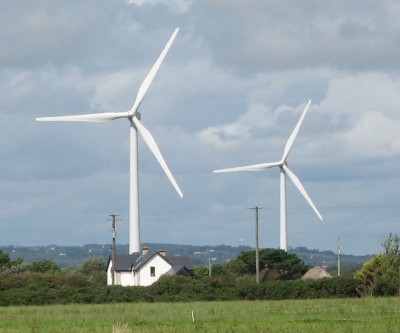
wind-turbine-and-house-in-Finland

****

The wind industry has know about, attempted to cover up and lied about the adverse health effects caused by incessant turbine generated low-frequency noise and infrasound for over 30 years; and knowing full-well that the dB(A) weighting is irrelevant to measuring the low-frequency noise spectrum, wrote their own ‘rules’ that even make the risible claim wind turbines don’t generate infrasound at all.

The noise emissions from these things are, for thousands of unfortunate neighbours, a constant form of sonic torture that, ofcourse, can’t be hidden.

Slowly, but surely, methodical Medicos are gathering the evidence that proves what victims have known all along: constant exposure to low-frequency noise infrasound is human health hazard.

And the efforts to protect people from further, and utterly unnecessary harm, include those from German Doctors, like Johannes Mayer.  Dr Mayer appears in the video below (which unfortunately hasn’t been subtitled in English); however, the thrust of his findings are laid out by NoTricksZone.

German Medical Doctors Warn Hazards Of Wind Turbine Infrasound Are Very Real, Worse Than First Thought!
NoTricksZone
Pierre Gosselin
4 March 2016

Dr. med Johannes Mayer made a presentation on the serious hazards of infrasound (1 – 20 Hz) from wind turbines saying: “It is unbelievable the flood of international scientific publications that has appeared over the last one and half years.”

****

****

In the presentation Mayer cites “120 scientific papers” confirming the hazardous impacts of infrasound on human health.

Bogus claims infrasound is safe

Mayer blasts the lobby-backed claims (based on measurements taken by unsuitable instruments) that infrasound generated by wind turbines is harmless to humans and wildlife and presents a number of studies showing how the very opposite is true.

At 7:35 Mayer tells the audience that 5 years ago he also used to believe that infrasound was not a real factor for anyone a kilometer or further away from the source. But after having researched the new literature on the topic he concluded that infrasound is a serious factor on the health of humans even at far greater distances.

At the 8:20 mark Mayer explains how infrasound acts on the human inner ear and interacts with the brain, and the serious effects it can have on the human organs, citing a study from medical journal Lancet. “It’s confirmed by numerous scientific papers,” Mayer tells the audience. At 9:15 Mayer presents:

The short term effects on infrasound

– pressure in the ears

– anxiety feelings

– dizziness

– exhaustion

– tiredness in the morning

– respiration disturbance

Also experiments have been done on animals, and results show profound impacts on their physiology and health, ranging from changes in hormone levels and immunological parameters to damage to lung tissue, Mayer shows. At 10:08 he presents:

The long term impacts of infrasound:

– chronic respiratory disorders

– chronic stress and sleep disorders from higher stress hormone levels

– emotional disorder, depression, burnout

– high blood pressure, heart disease

And the symptoms of infrasound illness:

– depression

– irritability

– tension

– headache

– mental and physical exhaustion

– concentration and sleep disorders

– noise sensitization

All of this is caused the constant low pressure waves acting on the inner ear and fooling the body into thinking it is in motion when in fact it is not. Infrasound interferes with the body’s natural biorhythms. Mayer concludes this results in infrasound from wind turbines being “a problem to be taken very seriously”.

Especially dangerous for pregnant women

At the 15:50 mark Mayer reminds the audience that even European officials issued directives regulating infrasound and pregnant women, writing that “they should not perform activities that could generate strong low frequency vibrations because they could increase the risk of a miscarriage or premature birth.”

Mayer emphasizes that the effects of infrasound are not something imagined in people’s heads, but are in fact very real. It is even diagnosed as an illness by doctors.

“Turbines should not even be in sight”

Mayer blasts wind-turbine German government agencies for their refusal to acknowledge the very real health facts and for blindly following everything the wind lobby tells them. He cites medical expert Dr. Reinhard Bartsch of the Friedrich Schiller University in Jena (20:35):

“From today’s level of knowledge wind turbines should be placed only far away from residential areas, and better: they should not even be in sight.”

At the 21-minute mark Mayer presents major publications on infrasound. Studies by Thorne and Salt show that up to 40% of people are sensitive to infrasound and that the health of these people who live near wind parks is “considerably and seriously affected (injured) by this noise”.

Finally, a Canadian review of 62 scientific publications appearing in the Canadian Journal of Rural Medicine concluded that industrial wind turbines have “negative health impacts” on people who live in their vicinity.

Mayer praises regulations on distances from homes in Canada and New Zealand, which restrict the construction of wind turbines to 4 and 3 km away respectively.
NoTricksZone

Wind Turbine Infrasound… The Silent Offender!

Analysis of Low Frequency and Infrasound at the Shirley Wind Farm

A Cooperative Measurement Survey and Analysis of Low Frequency and Infrasound at the Shirley Wind Farm in Brown County, Wisconsin

Picture

“What you can’t hear, can hurt you”

The purpose was to determine whether infrasound was present in the homes of three families in the footprint of the Shirley Wind project (owned by Duke Energy).  These families have reported adverse health effects since the wind turbine utility commenced operation. Two have been forced out of their homes. They report experiencing symptoms of the type associated with wind turbine syndrome.  These families are my clients and they offered to act as intervener’s in another Wisconsin case, Highland Wind which is in the application hearing phase.  50 affidavits were filed by them and other residents near the utility describing adverse health effects and home abandonment for the eight turbine Shirley Wind project (click here for video) using Nordex N100 2.5 MW wind turbines.

The above graph shows that wind turbine noise is present outside and inside the residence. The SPL – dB (Sound Pressure Level – decibel) scale on the left hand side of the graph shows low frequency noise levels approaching 80. This is considered a noise level similar to an alarm clock or hair dryer.

Initially the PSC was going to have the study conducted by George and Dave Hessler.  This posed a major problem for credibility with the interveners and others who know their position from other projects.  The Wis. PSC staffers have a long relationship with them because they have done numerous studies for wind utilities in the state and have always given the utilities’ a clean bill of health claiming that sound levels at complainant’s homes met the state limits and that infrasound and low frequency sound was not a problem.  The attorneys for the citizen’s group, Anne Bensky and Peter McKeever for Forest Voice, and Glenn Reynolds, the attorney for the Town of Forest which also opposes the project, wanted the tests to be conducted but were concerned that the Hessler’s would produce a biased study.  It was decided that they would push for a study that included four acoustics experts, some on the wind industry side (Hesslers), independents (Schomer and Walker) and one who has demonstrated the ability to find infrasound inside homes (Rob Rand).  I was not available on the proposed test dates so I could not participate but Rob Rand was a very good alternative.  This also leaves me free to do my own evaluation of the study and collected data and audio files.  The participation of the Hesslers and Clean Wisconsin make it much harder for the wind industry trade associations to claim that this work is biased.

The four investigating firms are of the opinion that enough evidence and hypotheses have been given herein to classify LFN and infrasound as a serious issue, possibly affecting the future of the industry. It should be addressed beyond the present practice of showing that wind turbine levels are magnitudes below the threshold of hearing at low frequencies.

That infra and low frequency sound is a primary characteristic of wind turbine acoustic emissions was established by the team.  The argument that infrasound produced by modern upwind wind turbines does not have sufficient amplitude to reach the threshold of hearing (set for steady pure tones, not the complex mix of tones emitted by wind turbines) raised by the wind industry through its experts like Dr. Leventhall and the many acousticians and others who parrot his opinion is now discredited.  View full report here, pdf file


Paul Schomer, PHD, P.E. letter to Public Service Commission of Wisconsin

Picture

        First, the Wind Industry has continually denied that wind turbines produce any LFN. This study showed that it does. At R-2 it was measured as clearly as if the turbine had left a fingerprint on the inside of the house.

        Second, the Shirley study fully and completely corroborates Falmouth and fills the knowledge gap suggested by the MA study which was a literature review, not a hands-on field study. There is no reason to corroborate it again.

        Third, the measurement of ultra low frequencies produced by mega turbines such as those at Shirley and proposed for Highland are the key to avoiding significant impacts to human health from wind turbines. As the Minnesota study concludes, the low frequencies must be studied further as part of the project planning. In the case of Forest, this study of the low frequency isopleths must be a part of an in-depth EIS, or the project must be redesigned with smaller turbines that are not likely to precipitate such severe health problems that people have no choice but to abandon their homes. These are precisely the studies that we recommended in our Shirley report and the EIS is a perfect way to obtain the information before the project is built; and

        Fourth, the record as a whole in this case as well as the literature and case studies all over the world have suggested that people are leaving their homes because they are being exposed to significant levels of pulsating ultra low frequency sound produced by wind turbines.

        Sincerely, Paul Schomer, PHD, P.E. Member; Board Certified, Institute of
        Noise Control
                                                  download full document

Australian Researchers To Study Health Effects from Wind Turbines.

NHMRC awards funding into wind farms and human health

The National Health and Medical Research Council (NHMRC) has awarded two grants totalling $3.3 million to enrich the evidence-based understanding of the effects of wind farms on human health.

Anne Kelso
NHMRC CEO Professor Anne Kelso

NHMRC CEO Professor Anne Kelso noted that further research is needed to explore the relationships between wind farms and human health.

“Existing research in this area is of poor quality and targeted funding is warranted to support high quality, independent research on this issue.

“To address this, we need well designed studies conducted by excellent researchers in Australian conditions.

“These grants directly support the Australian Government’s commitment to determine any actual or potential effects of wind farms,” Professor Kelso said.

NHMRC funded research at the Flinders University of South Australia will explore relationships between noise from wind farms and effects such as annoyances and reduced sleep and quality of life.

Research at the University of New South Wales will investigate the broader social and environmental circumstances that may influence the health of people living near wind farms.

The outcomes of this research will assist in developing policy and public health recommendations regarding wind turbine development and operations in Australia.

Professor Kelso said it was important to note that the funding will support only high quality, well designed research proposals.

“NHMRC supports only the most outstanding research. Each application for this funding underwent the same stringent independent review process we apply to all NHMRC grant applications,” Professor Kelso said.

These grants are awarded in response to the 2015 Targeted Call for Research into Wind Farms and Human Health, following the release of the NHMRC Statement: Evidence on Wind Farms and Human Health.

Information relating to the individual grants is available on the NHMRC website –nhmrc.gov.au

Contact: NHMRC Media Team (0422 008 512 or media@nhmrc.gov.au)

Grant highlights

Associate Professor Peter Catcheside, Flinders University of South Australia
$1,357,652

Good sleep is essential for normal daytime functioning and health. Wind farm noise includes audible and unusually low frequency sound components, including infrasound, which could potentially disturb sleep through chronic sleep disruption and/or insomnia. This project will, for the first time, directly evaluate the sleep and physiological disturbance characteristics of wind farm noise compared to traffic noise reproduced in a specialised and carefully controlled laboratory environment.

Professor Guy Marks, University of New South Wales
$1,943,934

The human health impact of infrasound that comes from wind turbines has not been well researched. This project will assemble a team of researchers with a broad range of expertise to run a short term and longer term study to investigate whether exposure to infrasound causes health problems. The short term study will be laboratory-based and run for three one week periods. The longer term study will be community based and run for six months. Sleep quality, balance, mood, and cardiovascular health will all be measured.

Download the media release

WindWeasels Hate to be Fair to Nearby Residents of Wind Projects….

Wind Industry Howls ‘Wolf’ as Poles Finally Get a Few Half-Decent Wind Farm Rules

brat

****

A week or so back we covered a Bloomberg article on new rules set to be imposed in Poland, with the predictable – we’re “doomed” – response from the wind industry, its parasites and spruikers.

Here’s an analysis of what the new rules really mean.

Polish Wind Industry ‘Cries Wolf’ at First Attempt of Proper Regulation
Stopwiatrakom
Editors’ comment
8 March 2016

The Wind industry in Poland has had 15 years to become a responsible partner for rural communities. Now it cries wolf at first attempt of proper regulation.

The Polish and European wind industry lobby are railing against the draft law providing for setbacks of giant wind turbines from people’s homes.

A clear example is a report published by the influential international business news provider, Bloomberg.com (see:  Jessica Shankleman, “Wind farms now come with the threat of jail”, http://www.bloomberg.com, 3.03.2016 – http://www.bloomberg.com/news/articles/2016-03-03/jail-and-new-fees-threaten-key-european-market-for-wind-turbines).

Their aim is to discredit the Polish draft law as motivated by an unreasonable, ideological bias against industrial wind power.

Keep in mind that the Polish chapter of European wind industry lobby, or the Polish Wind Power Association (PSEW), has been a vigorous player in the country since 1999.

That is plenty of wasted opportunities to demonstrate the industry’s commitment to being responsible partners in the sustainable development of Polish rural areas. Perhaps PSEW  should have been a little less single-minded in “overcoming barriers to wind energy development”, that is to say in its focus on securing remarkably generous, by European standards, public subsidies and privileged treatment in the Polish electrical energy system.

A more socially responsible and inclusive approach would induce an honest pursuit of fair negotiations with real hosts of their gigantic industrial installations. These are not primarily mayors and local council members, who according to the 2015 report of the National Audit Office (NIK) are disturbingly frequently beneficiaries of land leases for wind farms, but rather actual rural communities.

Stretching their comfort zone beyond expansion & profits issues would have helped the wind industry to focus on being good neighbours of residents living next to their industrial turbines.

Was it wise to defend the option of planning procedures that exclude any meaningful participation of local communities, to be applied when the local authority is sufficiently amendable?

With hindsight, making wind turbines exempt from any technical inspections or supervision, as has been the case to date, might have eased the imports of used German and Danish wind turbines into Poland but reflects badly on the wind industry’s regard for the country’s long-term interests.

Today the lobby is trying to scuttle the setback legislation. True to form, its arguments are based on half-truths or outright distortions.

1. The proposed legislation does not prevent the wind industry from carrying on its business or limit their freedom to undertake economic activity, but simply takes into account the social context (social externalities) of its expansion, in accordance with requirements of the Polish Constitution (protection of human health, proper spatial governance).

The legislation lays down a transparent criterion for siting wind turbines. It allows for the construction of new wind turbines on hundreds of thousands of hectares, in addition to the existing c. 3000 turbines. However, the proposed setback of 10 x turbine height does indeed foreclose the option of turning rural areas in Poland into an industrial zone for the wind industry – which is what the “European power house”, mentioned in the Bloomberg article, really amounts to.

The European wind lobby’s apparent hope for tens of thousands of giant wind turbines to be built in our country cannot be realised for the simple reason that it entails no protection for the constitutionally guaranteed rights of rural residents.

2. Contrary to what the title of the Bloomberg article implies (jail terms for wind farm developers!), the proposed law does not threaten wind industry with any special sanctions. This title is a sad testimony to an unbalanced reporting on an issue of great public importance.

The draft legislation includes ordinary enforcement provisions, in particular with respect to the technical inspection of giant machinery. In fact, the law would close the period when the wind industry enjoyed an extensive de facto legal immunity in Poland.  This applies in particular to the lack of any technical supervision whatsoever.

The status quo was documented in detail by the National Audit Office in its 2014 report on “Siting and Construction of Onshore Wind Farms”. The fact that European wind lobby spokesmen believe such legal changes to be prejudicial reveals the mindset of an industry claiming special legal privileges, unavailable to other economic operators.

The loopholes in the Polish legal system effectively deprive Polish citizens of their right to effective remedy, including before administrative courts, in cases relating to the functioning of industrial wind power installations.

The Polish wind power lobby should not criticize the costs attendant on the transition to a sound regulatory environment, considering that it has opposed the introduction of such legal regulations in the past. The scale and seriousness of existing irregularities was amply demonstrated by the cited report of the National Audit Office, produced under the previous government of the Civic Platform and Polish Peasant Party, that is before the recent political changes in Poland, and without any involvement or inspiration of the then parliamentary opposition.

3. Increased costs of pursuing industrial wind business are largely due to the expected rise in taxes payable to the local authority’s budget, resulting from the elimination of a legal fiction that has existed in this area to date.

The draft legislation simply provides that local taxes would be assessed in relation to the wind turbine as a whole, and not only to some parts, as was the case so far.  This means that wind turbines will be taxed just like any other commercial structures. In fact, the current practice constitutes yet another form of public aid or a de facto transfer from local budgets to the industry.

4. The “mitigation measures” to limit the negative impacts of wind turbines on residents that are proposed in the cited article by Bloomberg’s own analyst–as an alternative to the setback regulation–have proved not helpful in countless instances both in Poland and worldwide.

The power that local wind farm operators can exert on local communities, and in particular in their dealing with affected residents, makes any solution involving temporary shutdown of wind turbines to limit their noise emissions a largely theoretical possibility. This is because such measures would reduce the operator’s profits.  As a matter of fact, wind projects that exceed acceptable noise levels, for example during night-time, should not have been approved in the first place.

The failure of such remedies is evidenced by hundreds of families who have fled their homes worldwide and many thousands of people reporting health problems across the world.

Two Polish Commissioners for Human Rights have formally requested the Polish government on two different occasions to regulate the distance between wind turbines and people’s homes (in 2014 and again in February 2016).

The official website of the Commissioner’s Office explains that they receive “more and more letters from citizens complaining about a deterioration of their health due to the wind turbines’ influence”. This raises the risk of violation of the Constitution of Poland, namely of Article 38 (“The Republic of Poland shall ensure the legal protection of the life of every human being”) and Article 68 (“Everyone shall have the right to have his health protected”) .

Greenpeace Polska is well-known for its commitment to renewable energy. Nevertheless, their own investigation into the practices relating the siting of wind farms in Poland induced Greenpeace Polska to issue already in 2012 a statement “regarding the protests related to the construction of wind farms in Poland”. “Greenpeace takes the view that wind farms should be built where they do not disturb people or endanger the environment, and in particular at locations where construction of them serves the Planet without becoming yet another source of division among people”.

That 2012 statement described a number of needed reforms in wind farm project planning.  Practically none of these recommendations have been implemented since 2012.

5. To win assent of rural residents to a life overshadowed by giant turbines, Bloomberg’s in-house analyst suggests that local people should be encouraged to be become shareholders in wind farms–in Poland, such schemes come under the catch-all slogan  of “(green) energy grassroots democracy”.  For neighbours of giant turbines, this is a window dressing exercise, with serious social and financial consequences for rural communities.

How big a share in a multi-million euro wind farm can be acquired by a typical inhabitant of  Polish countryside? How much would have to come from a bank loan? Who would then be the actual stakeholder – the bank or residents? What will happen if the farm goes bust or fails to generate profits sufficient to guarantee any return on investment or even to cover monthly payments on the bank loan?

This is no scare-mongering, all of this we can see in Germany. Would the State step in with additional aid to keep the wind farm in operation and rescue local shareholders? There is plenty of evidence that shareholders of “citizen” or “community farms” are hardly kinder than big outside companies to complaining neighbours or pesky raptors when their dividends are at stake.

Currently, communities in Poland, just as worldwide, are split between land owners (who in Poland, as in Germany, France and elsewhere are frequently the very municipality officers who approved the local wind farm in the first place) benefitting from leases to wind companies  and the rest of nearby residents. Dividing the village between wind farm shareholders and the rest is not likely to improve community ties, either.

Back in the 1990s we had plenty of first-hand experience with employee share ownership schemes during the drive to privatise  state-owned companies in Poland. The lesson learned is that small minority stakeholders have no say in how the companies are operated, who gets elected to the board or in the choice of corporate policy.

The proper venue for local democracy, including “energy democracy”,  to flourish is the local  community meeting during which residents can make decisions about their common future in a free debate and on the basis of reliable information about the impacts and benefits of any proposed large-scale industrial projects.

6. Comparisons between the costs of wind energy or wind power sector as a whole and other forms of power generation, as presented in the lobby-inspired publications, are misleading. This is because a whole array of costs that are intrinsic to the expansion of wind power industry (especially on the scale hoped for by the wind lobby) are conveniently overlooked.

Wind lobby accounts exclude the cost of disorganisation of existing stable energy systems based on the supply of dispachable energy.  Such costs are visible wherever wind power is able to  “realise its potential”. Not mentioned are the costs, including those to the environment, of experiments in converting existing power generators into the spinning reserve for unpredictable wind turbines. Missing from such calculations are the costs of hundreds of kilometres of additional power lines and systems to manage suddenly unpredictable energy production and markets.

No consideration is given to the expense of setting up and operating programmes for exceptional emergency measures to prevent generalised blackouts when there is too little or too much wind, as are currently being introduced in Germany.  And what about the cost of building gigantic energy storage facilities, using technology that is yet to be invented, of which there has been no need before.

7. In the light of independent research on wind conditions in Poland, wind lobbyists’’ belief that the country represents excellent potential for the growth of wind power appears somewhat farfetched.

According to the data from Barometre Eolien – Eurobserver (February 2015), the capacity factor for Polish wind farms is 21.4%. This figure is among the lowest in Europe. When in summer of 2015 a heat wave raised the prospect of temporary shutdowns or even blackouts, the wind power industry made things worse, not better. “Of the circa 4000 MW of installed wind power capacity, the production of electrical energy from these sources was less than 10% of that figure, and in some hours it barely exceeded 100 MW”, according to the Polish network operator, PSE S.A.

Moreover, “the sections of Poland that are allegedly favourable to industrial wind power developments are mostly high nature value areas under the Green Lungs of Poland conservation programme [the North- East region containing 2500 lakes and largely forested], including buffer zones of several national parks, and also recreational highland areas and the Baltic coast; however, even there the wind conditions are not conducive to achieving capacity factors above  20%” (Prof. Marek Lebiedowski, “The Potential for Rational Use of Wind  as Energy Source in Poland”, 2016 –  http://kdepot.eu/lib/1146552) (in Polish).

8. And finally, the proposed legislation is not a product of ideological bias of politicians of the party in power, but rather a response to clear, long-standing demands of social stakeholders. The same demands impelled two different national Ombudsmen, both of whom were nominated by the previous government, to intervene in defence of residents living in the proximity of wind farms. In February this year, the current Ombudsman, dr. Bodnar asked the minister of the environment: “How can we help people who have wind turbines above their homes?”

Stopwiatrakom.eu

Press Release, from Denmark, WI – Brown County Residents for Responsible Wind Energy

FOR IMMEDIATE RELEASE*** March 20, 2016

County Health Officer Admits Feeling Ill When Near Duke’s Shirley Wind Turbines DENMARK, WI – Brown County appears to be digging a deeper and deeper hole for itself as more facts come to light surrounding Duke Energy’s Shirley Windpower. After an unusually long almost 3 month delay in satisfying a resident’s open records request, the records ultimately provided expose that former Brown County Health Officer Chua Xiong feels ill when visiting the Shirley Wind facility. In an email to her intern Carolyn Harvey she states: “Carolyn the times I have been out there by the Wind Turbines, l get such migraine headaches. I think I should take some preventative Tylenol before I head out there.” Despite this admission, approximately one month later Ms. Xiong went on to make her declaration that “Currently there is insufficient scientific evidence-based research to support the relationship between wind turbines and health concerns.” She then went further in saying that this was her “final decision” and that she would only monitor the situation “on an annual basis”. In this decision she completely ignored the real world health impact of Duke Energy’s wind turbines on Brown County families as evidenced through their sworn affidavits and their documentation of past and continued suffering, not to mention her own repeated migraines when in proximity to Duke’s turbines. So what has happened between Ms. Xiong’s declaration and the March 18th release of the open records showing that Brown County’s Health Officer Chua Xiong suffers migraines when she is by the Shirley Wind turbines? On March 4th, Ms. Xiong submitted her resignation to County Executive Troy Streckenbach. He did not share this with County department heads until just two days prior to March 18th, Ms. Xiong’s last day. This date also coincides with Executive Streckenbach’s announcement of Brown County Corporation Counsel Juliana Ruenzel’s resignation. It is high time that Brown County and its Health Director follow the lead of its own Board of Health who unanimously declared Duke’s wind turbines in Glenmore a “Human Health Hazard”. They need to recognize that residents are sick, homes have been abandoned, that outsiders (even the County’s own Health Director) feel ill while in the project area, and FINALLY do whatever is necessary to protect the health and safety of southern Brown County residents. Brown County does not need Shirley Wind to become its Flint, Michigan. Until the County does the right thing and takes action, families will continue to suffer, the County’s inaction will escalate their legal liability, and this issue will not go away.

Denmark, WI   54208                                                                                                        www.BCCRWE.com

Residents of Huron County, Living Near Wind Turbines, Must Read This!

Patti Kellar, from Huron County, shares news about an investigation into health complaints, regarding the noise and vibrations from wind turbines.
Dear Members of the Community,
Your descriptions of the impact on your health and the loss of quality of life for you and your family from the wind turbine project have finally been heard.
Dr. Owen, the Medical Officer of Health for Huron County has authorized an investigation into determining if the source of the health concerns can be considered a health hazard.  Dr. Erica Clark, the Epidemiologist, is the person who will be organizing and conducting the survey to gather evidence, the first step in the investigation.  
Dr. Clark has described this investigation in the following way:
 “We’re treating it as a potential health hazard investigation… exactly as if it were a food disease outbreak or a cancer cluster” .
We can’t stress enough what a breakthrough this is for the Huron County Health Unit, the first one in Ontario, to pursue an investigation but it requires the involvement of all of you who have been impacted. 
If you or your family members are experiencing any of the impacts associated with the wind turbines, you are asked, even strongly encouraged, to register with the Huron County Health Unit. Information on how to do this is contained in the email below. 
Your personal experience of living with wind turbine noise, vibration, body sensations etc, needs to be collected in a systematic way. This systematic approach is the only way that a conclusion to this investigation can be called  “evidence based’ and thus the only way, based on this evidence for any action to be taken.
 Your contribution is vitally important.
There will be a commitment of time (the researcher recognizes the time must be short to accommodate people’s active lives) to record on a daily basis using a paper or online survey. So people who don’t choose computer access, may use the paper form.
To register at the Health Unit, the process is described below. Then, within our own community, we would arrange a meeting of registrants, sometime mid to later April, to discuss what will be involved and to clarify the process.
Providing a response to this email would let us know how to contact you when that meeting is arranged. 
We ask that you register with the Health Unit, as early as possible. The survey will not be launched until May but they need to register the participants to be ready for this time.
Our local meeting of participants will be after your registration, mid to later April and before May launch. Just to remind you that to know who to contact to let you know of date and place of the local meeting, you would need to reply to this email.
Be assured that your information is confidential within the health unit.
We recognize that this is a sensitive topic for our community. It will take courage and perseverance on your part to be involved but it is a means to take back your control over what is important to all of us, our health and the health of our families and friends. 
Thank you for your participation.
On behalf of the Group of Concerned Citizens in Huron County
Jeanne Melady
Gerry Ryan 
Following is the email from the Huron County Health Unit:
Thank you for your interest in the Huron County Health Unit wind turbine investigation.


Registration for the investigation will be available on the Huron County Health Unit website, www.huronhealthunit.ca.


We will not be contacting anyone about the investigation until after the online complaint tracking form is launched in May 2016.


Huron County residents who do not have internet access will be able to register for the paper version of the survey by calling the Huron County Health Unit at 519-482-3416.


Please note that only Huron County residents will be able to participate in the wind turbine investigation.


Thank you again for your interest in this survey.


Sincerely,


Angela Sturdy
Executive Assistant
Huron County Health Unit
77722B London Rd, RR #5
Clinton, ON  N0M 1L0
Toll-free 1.877.837.6143

People Fighting Harm from Windweasels, All Over the World

Polish Ombudsman Fights to Secure Human Rights for Wind Farm Victims

polish wind farm

****

One of the myths pedalled by Australia’s self-appointed wind farm noise, sleep and health ‘expert’ (a former tobacco advertising guru) is that the known and obvious adverse health impacts from incessant turbine generated low-frequency noise and infrasound are a cooked-up “phenomenon”, exclusive to the English speaking world. Trouble with that little tale is that’s been scotched by the Danes:

How can we help people who have wind turbines above their homes?

Earlier this month Poland’s Commissioner for Human Rights (CHR) addressed this question to three competent Ministers, for the Environment, Infrastructure and Construction, and Health, demanding that the rights of people residing in the vicinity of wind farms be adequately protected.

The official website of Poland’s CHR explains (in English) that:

The Commissioner’s Office receives more and more letters from citizens complaining about a deterioration of their health due to the wind turbines’ influence, as well as about the wind farm locating and building procedures. During a meeting with dr. Bodnar, the residents of the Suwałki Region also expressed their concern about the safe placement of wind farms. The Commissioner has contacted the Minister of Environment, the Minister of Health and the Minister of Infrastructure and Construction on that matter. (https://www.rpo.gov.pl/en/content/rights-residents-living-near-wind-farms).

The page also includes links to a report on dr. Bodnar’s meeting with residents of the Suwalki region and to the three official intervention letters addressed to the Ministers for the Environment, Infrastructure and Construction, and Health.

Importantly, this is the second time that a Polish Ombudsman has intervened on behalf of the people affected by the untrammelled construction of wind farms in Poland.

In August 2014 the then Commissioner for Human Rights, professor Irena Lipowicz, wrote a letter to Polish Prime Minister demanding the introduction of proper setbacks from residences.

The letter stated that “since the current legislation does not provide for the minimum distances from residential areas to be observed in the siting of wind farms, there exists a risk of violation of the constitutional rights to the protection of health and to the legal protection of human life (Articles 68 and 38, respectively of the Constitution of Poland)”.

The 2014 letter further pointed out that:

As numerous scientific publications demonstrate, wind turbines unquestionably impact human health by emitting low frequency noise, infrasound, acoustic and optical impacts or pulsation […]

[Therefore,] the Commissioner for Human Rights asks for immediate action to be taken with a view to developing andSYSTEMATIZINGtechnical norms that may afford an adequate level of protection to the health of residents living in the area adjacent to wind farms.

This letter in Polish can be found here:http://www.brpo.gov.pl/pl/content/do-prezesa-rady-ministrow-ws- uregulowania-minimalnych-odleglosci-farm-wiatrowych-od-zabudowy

That letter sent to the Prime Minister Donald Tusk by Ombudsman Lipowicz in mid-2014 did not prompt the then coalition government of the Civic Platform and the Polish Peasant Party to take any significant steps to comprehensively address the regulation of siting wind farms in Poland. As a result, in early 2016 wind farms are still being built as close as 300 metres from human dwellings.

It is important to note that both Polish Ombudsmen, prof. Lipowicz in 2014 and dr. Bodnar at present, are appointees of the ruling coalition that lost power in the Fall 2015 to the Law and Justice Party.

Moreover, the Law and Justice Party opposed the appointment of Dr Bodnar in 2015 on the grounds that his leftist views are not representative of the Polish public opinion. This shows that the issue of wind farm regulations transcends any political or ideological divides in Poland.

It is also worth recalling that former Prime Minister Tusk is the current President-in-Office of the Council of the European Union.

Regional newspaper Współczesna.pl interviewed some of the residents whose plight prompted Ombudsman Bodnar to intervene with the government ministers.

One local resident, Elzbieta Pietrolaj, whose farm is surrounded by five wind turbines, one of which is located 450 metres from her home, said: “With the slightest breeze you can’t sleep a wink because of the booming noise.”

The newspaper explains that Ms Pietrolaj is ailing. “I am constantly nervous. In these conditions it is difficult to get better.” (source:http://www.wspolczesna.pl/wiadomosci/suwalki/art/9414563,wiatraki-na-suwalszczyznie-mieszkancy- wiatraki-zabraly-cisze-marzenia-i-spokoj,id,t.html).

We encourage international media to contact the office of Commissioner for Human Rights for further information:

Office of the Commissioner for Human Rights
Aleja Solidarności 77
00-090 Warszawa
Poland
phone (+ 48 22) 55 17 700
fax (+ 48 22) 827 64 53
biurorzecznika@brpo.gov.pl
Article authored by: stopwiatrakom.eu kontakt@stopwiatrakom.eu

insomnia

Dr. Sarah Laurie’s Speech to Citizens in Falmouth, Fighting Back, Against the Windpushers!

Thank you for the opportunity to contribute to your rally. I first wish to pay tribute to the long suffering residents of Falmouth USA, who lived or are still living near the wind turbines owned by the town. These people have made an incredible contribution to our knowledge of wind turbine acoustics, wind turbine adverse health impacts, and have shown true human courage and compassion for others in a similar situation – both in their own country and further afield.

We owe them, their acoustics and health professionals, and their supporters, a great debt of gratitude. Their lived experiences, which are now very much in the public domain, in part because of their determination to fight for their legal and human rights, are a window on the incredible suffering which excessive intrusive wind turbine noise can cause. These people are just like you and me but have had to suffer intolerably and disgracefully because of gross government regulatory failure and corporate bastardry, deceit and greed. They are simply trying to live their lives, free from the devastating adverse health effects resulting from what can only be described as an invasion of their home, resulting in acoustic trespass and noise nuisance, from pulsing infrasound and low frequency noise.

These frequencies have been known to be harmful for over thirty years since the seminal research work by Dr Neil Kelley and his team from NASA and other research organisations. Wind turbines are of course not the only source of this damaging sound energy, their body and brain don’t care what the source of the pulsing sound is – it is going to react anyway, at ever decreasing doses, until or unless they can remove themselves from that exposure. The only two options are turn off the noise OR move away. It is not humanly possible to go for long without good quality sleep and remain unharmed and as you all probably know, sleep deprivation from repeated sleep disturbance is the commonest problem reported by most residents living near industrial wind power facilities. This inevitably results in exhaustion, and consequently serious and predictable adverse physical and mental health effects. The Centre for Disease Control in America has recently stated the obvious – that insufficient sleep is a public health problem. Their website states the following: “Sleep is increasingly recognized as important to public health, with sleep insufficiency linked to motor vehicle crashes, industrial disasters, and medical and other occupational errors.1 Unintentionally falling asleep, nodding off while driving, and having difficulty performing daily tasks because of sleepiness all may contribute to these hazardous outcomes. Persons experiencing sleep insufficiency are also more likely to suffer from chronic diseases such as hypertension, diabetes, depression, and obesity, as well as from cancer, increased mortality, and reduced quality of life and productivity.”

So why are the most commonly reported symptoms of wind turbine neighbours, ignored by the American Health Authorities? Where are the public health physicians? Why has there not yet been even one detailed case study of one person, anywhere in the world, examining the full spectrum of acoustic exposures overnight, together with concurrent sleep study EEG and continuous heart rate monitoring? The Waubra Foundation has been calling for this precise research for the last five years. As you all no doubt know, US Acousticians Rob Rand and Steve Ambrose conducted the wonderful initial acoustic investigation in Falmouth, USA funded by the generosity of Bruce McPherson, which provided vitally important clues about the causes of the symptoms. This study is still of global importance, and is something which Falmouth residents should be very proud of.

Other acoustic investigators have followed, and made other significant contributions. But where are the medical and public health investigators? They seem to be in hiding; either ignoring important research evidence in the case of Australia’s National Health and Medical Research Council “expert panel” with members who had documented conflicts of interest, or in the case of Health Canada, deliberately choosing study designs which do not directly investigate the problems in the best possible way. For example any doctor knows that you do not make clinical judgements about someone’s blood pressure with a single once off measurement, yet that is what this Health Canada team did – with no concurrent measurement of the acoustic exposure at the time. You must repeat the measurement. This is junk science, and Health Canada know it, and are trying to hide it by dribbling the study results out slowly and in small “bites”, restricting access to the raw data and other results, making it very difficult for others to critically evaluate their results. I applaud Falmouth Psychiatrist Dr William Hallstein for his professional integrity, courage, and honesty – advocating so strongly for his patients, to whom he owes a professional and ethical duty of care, which he clearly takes seriously. Others need to follow his example. I also applaud Dr Nina Pierpont for her research, and her courage and integrity, and her work with Falmouth residents, helping them expose their stories to the public. But where are their colleagues? Why the silence? 1 http://www.cdc.gov/features/dssleep/ The silence of too many professionals, or indeed even active collusion with noise polluters to hide or ignore the evidence of serious harm, has allowed this serious abuse of the legal and human rights of residents in Falmouth, and indeed all over the world, to occur, and to continue.

But why are the public servants responsible for environmental health, planning and noise pollution regulation, seemingly so complicit with the harmful abuse of the rights of citizens? Is it ignorance or incompetence? Is it pure corruption? Is it regulatory capture? Is it ideological zealotry – an attitude that leads to the concept that people who are noise impacted from wind turbine noise are somehow acceptable “collateral damage”. Is it fear of being ridiculed or ostracized by colleagues?

I am very glad that you are showing such open and public support for the impacted Falmouth residents today, and I join with you in demanding immediate change before any more damage is done to vulnerable citizens. There must be full spectrum acoustic measurements inside and outside people’s homes, with the complete cooperation of the wind turbine operators so that on off testing can be performed to determine the true contribution of the wind turbines to the soundscape, and so the symptom triggers can be properly identified. If the turbines are disturbing sleep, they must be turned off at night. If health is being adversely impacted, there needs to be a resolution – two alternatives being property buy outs with compensation for nuisance, or wind turbines being deconstructed and removed. There are precedents for both. Planning regulations and siting decisions must in future taken notice of empirical acoustic and health data and ensure there is sufficient buffer zone in order to protect people. It’s time people’s health, and their human rights are properly protected – in particular the right to attain the best possible physical and mental health. That fundamental human right to the best possible health specified in most United Nations Human Rights instruments, is not possible if people cannot sleep.

Sarah Laurie, CEO Waubra Foundation

Looking Forward to WindPushers being Held Accountable!

Governments Lying About Wind Turbine Noise: Ignorance No Defence to Claims Worth $Millions

200355536-002

****

As the number of cases launched against wind power outfits and the landholders who ‘host’ these things takes off, the government agencies that continue to run the wind industry line that the incessant turbine generated low-frequency noise and infrasound and the sleep deprivation it causes is all in the victims’ heads (a former tobacco advertising gurusaid so) – are setting themselves up for liability in the hundreds of $millions. And the kind of ignorance displayed in this little piece is no defence.

Ignoring harm of noise
Rutland Herald
Sandy Reider
24 January 2016

The Vermont Health Department and the Vermont Department of Public Service persist in reassuring us that there are no significant health effects related to industrial wind turbines under Vermont’s current noise standards.

Such a blanket statement is not only incorrect, it is a disservice to the Vermonters who are already experiencing adverse health effects, such as headaches, vertigo, nausea, anxiety, ringing in the ears and, most importantly, chronic repetitive sleep disruption. There is an ongoing academic debate about the mechanisms behind these effects (direct vs. indirect, the nocebo “its all in your head” effect, audible vs. inaudible infrasound), but little disagreement that some persons living too close to these large wind turbines are suffering, whatever the mechanism.

Critical methodological shortcomings plague many of the large-scale industry or government-sponsored studies that state agencies rely upon to establish protective sound levels:

  • Failure to measure the full sound spectrum, in particular ignoring the very low frequencies that are likely responsible for many of the reported adverse health effects.
  • They assume a constant sound pressure and tone, not at all like the impulsive sound produced by large turbines, which has its own distinct signature that differs from other environmental sources (planes, trains, automobiles, wind, leaves rustling).
  • Sound levels are often averaged over an hour, or longer, making it possible for periods of very loud intrusive sound to fall within an “acceptable” calculated level.
  • Measurements are usually not taken indoors, where the sound may be more intrusive due to the well-established resonance effects of low frequency sound.
  • Most importantly, the large studies fail to focus their investigations on those households that are most severely affected.

In spite of these research design limitations, a recently released large Health Canada study found that at wind turbine sound pressure levels greater than 35 dB(A), health-related complaints will increase, and at levels greater than 40 dB(A) a significant number of persons will be “highly annoyed” (meaning adverse health effects, especially sleep disturbance).

The current Public Service Board threshold of 45 dB(A) of audible sound through an open window, averaged over an hour, has actually never been proven safe or protective. Some studies recommend that audible sound should not exceed 35 dB(A), or 5 dB(A) above normal background sound levels. (This is crucial in rural areas where background noise is minimal, particularly at night). The level should be a maximum, not an hourly average. Above 35 dB(A) there are likely to be significantly more complaints, particularly difficulty sleeping.

Several recent small, well-designed, independent clinical studies (Ambrose & Rand, Nissenbaum, Pierpont, Schomer, Cooper, Thorne) that do take the aforementioned factors into consideration, all conclude that lower, more protective noise limits for these huge industrial wind installations are needed (for more details: docs.wind-watch.org/DRSANDYREIDER_042413.pdf).

To the benefit of the wind industry, and apparently to those agencies promoting large wind installations on our ridgelines here in Vermont, the issue of infrasound has thus far been successfully suppressed and ignored. Space does not permit a detailed discussion, but consider the following:

  • The World Health Organization has definitively established (2009) that inaudible very-low-frequency infrasound is a human health hazard, that it can disturb sleep, and increase heart rate and blood pressure, leading in susceptible individuals, to permanent effects such as hypertension and cardiovascular disease, even at sound levels below 30 dB(A).
  • In the mid 1980s, Neil Kelley and his team thoroughly documented significant adverse health effects resulting from inaudible, very-low-frequency sound produced by a large wind turbine in Boone, N.C. This scientifically rigorous NASA and Department of Energy-sponsored study, in cooperation with MIT and four other prestigious universities, as well as the wind industry, has been conveniently dismissed as irrelevant by current wind developers, even though the study’s conclusions have never been disputed, and even though we now know that the large turbines being installed today do indeed generate clinically significant amounts of infrasound.
  • Three more recent preliminary studies (Ambrose & Rand’s Falmouth, Mass., 2011; Schomer, Rand, et. al., Shirley project, Brown County, Wisconsin, 2012; Cooper, Bridgewater, Australia, 2014) of projects with large modern upwind turbines have replicated and confirmed Kelley’s findings; i.e., infrasound, not audible sound, is a major contributor to the health fallout from today’s industrial wind projects.

Taken together with the thousands of case reports from around the world (I personally have seen three families here in the Northeast Kingdom that have been forced to abandon their homes due to adverse health effects from nearby wind turbines), stricter full-spectrum noise standards for these large wind projects are urgently needed. However, Vermonters should not expect meaningful change until the governor, as well as his appointees in the Health and Public Service departments, recognize the importance of being more inclusive in their selection of scientific data, and until they demonstrate a genuine willingness to take the health complaints of the neighbors of these turbines seriously.

Dr. Sandy Reider is a physician who lives in Lyndonville.
Rutland Herald

The wind industry and its pet acoustic consultants are acutely aware of the true facts – viz, that the noise ‘rules’ they wrote together are meaningless (that was the objective, after all) and, in order to spear ever larger turbines ever closer to homes – and thereafter to operate with perceived impunity – have convinced the useful idiots in planning and health departments to the contrary.

But, as with most things in life, the facts have a funny way of bubbling to the surface. Any government that continues to run with the wind industry will find itself in the dock with the principal offenders in the not too distant future.

Jury-being-sworn-in-006