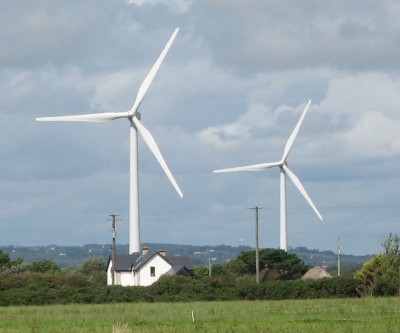
Windscam Fighters Achieve Success!

If You’re Going through Wind Farm Hell, Then Keep Going

west pinchbeck

****

What impresses STT most is the tenacity and perseverance of community defenders, all over the Globe.

Pro-farming (REAL farming, that is), pro-community and pro-real power groups are better informed and organised, and more vocal and hostile, than ever before.

Hard-working, decent, rural people throughout the world are fighting back – to obtain sensible energy policies that support growth, development and vibrant, prosperous rural communities – against an industry with all the natural respect for property rights of Genghis Khan; and the moral fibre of Judas Iscariot.

These are entirely reasonable people who have tumbled to the fact that they have been lined up as “road-kill” by their political betters to suffer the consequences of a policy built around an insanely expensive, utterly unreliable, intermittent power source – that can only survive on a raft of massive subsidies; kills millions of birds and bats; destroys communities;drives people from their homes; and otherwise makes life misery for thousands around the world.

These people are out to smash a “policy” that – in a few years time, when it all inevitably collapses – will be revealed for what it is: an enormous government-backed Ponzi scheme, the foundations for which are greed and stupidity; and the “justification” for which can only be described as a circus of the bizarre.

STT would like to think that we’ve helped these dedicated individuals and groups a little, by providing them with the kind of factual ammunition that cuts directly across the treachery, lies and deceit – which are the tools-in-trade for the wind industry, its goons and parasites.

But, whatever the source of information, pro-community groups are in earnest when it comes to protecting all that they’ve toiled for.

These days, whenever a wind farm is proposed; or the developer is out in the field – literally ‘thumping’ its message home (see our post here) – the term most employed to cover the community’s response is ‘OUTRAGE’.

However, occupying the opposite end of the emotional spectrum, is the infectious, fun-filled term: ‘REJOICE’ – which is the only word powerful enough to capture the sense of victory and relief, for those who have spent thousands of relentless, unpaid hours dedicated to the defence of their communities, their homes, their farms, their businesses and their families.

In Britain, dogged community defenders are winning the Battle for Britain; skirmish by skirmish; village by village; town by town.

The wind industry is being pummelled by an environment in which the massive and endless subsidies upon which the scam essentially depends have been slashed – never to return.

And in which community defenders have been finally (and quite rightly) given a say about the protection and preservation of their common law rights – little rights, like the right to own and enjoy property; free from the unlawful interference of sleep-killing, incessant turbine generated low-frequency noise and infrasound.

Here’s yet another example of how perseverance and tenacity trumps the subsidy-soaked malice exhibited by an industry peopled with career criminals, chancers and second-hand car salesman.

West Pinchbeck campaigners win four-year campaign to defeat wind farm
Spalding Guardian
17 March 2016

Campaigners have won their four-year battle to stop a wind farm being built at West Pinchbeck.

The words “We Have Won!” next to a picture of two filled champagne glasses appeared on the Stop West Pinchbeck Wind Farm website after South Holland District Council (SHDC) ruled the Wind Ventures Ltd application had run out of time for an appeal against non-determination.

“I think the fact that our overwhelming emotion is relief is probably an indication of how much we have been affected just by the threat of this terrible development, and over a prolonged period.”
Campaigner Sue Blake

This means the application is dead in the water.

Leading campaigner Tony Fear said: “We are of course delighted even though it does feel a little bit odd that it just fizzled out in this way.

“The real good news is that there can be no appeal so it is genuine closure.”

The wind farm, with its nine turbines measuring 126m to the tip, would have been sited on Fen Farm, South Fen – a site known as The Delph – and sandwiched between two nature reserves.

Sue Blake, from the campaign group, said: “I think the fact that our overwhelming emotion is relief is probably an indication of how much we have been affected just by the threat of this terrible development, and over a prolonged period.”

South Holland and The Deepings MP John Hayes joined the battle at West Pinchbeck and in April, 2014 he said the Conservatives were devising a policy to scrap subsidies for onshore wind farms.

The former energy minister said then that “the threat of onshore wind will be removed with the subsidies”.

Mr Hayes also said residents would get the final say on wind farm applications.

Wind farm victim Jane Davis, who was forced to quit her Deeping St Nicholas home through turbine noise, this week highlighted the timing of the news on The Delph application as the Bill honouring the pledges to end public subsidies and to give residents the final say had its third reading in the House of Commons.

Mrs Davis said: “The end of this application removes a severe threat to residential amenity, health and wildlife in the surrounding area.

“My husband (Julian) and I are very pleased with the decision by SHDC to ‘time out’ the application.

“This was a correct decision given the wishes of the local people in the area, and the emerging knowledge of the significant ways that noise pollution, particularly low frequency industrial noise pollution can impact on people’s health.

“From a personal perspective we ran a very high risk of having a relative’s home significantly impacted upon, something we were dreading, and it would also have impacted on many friends as well. There is perhaps an irony that this application has been terminated ten years exactly after Deeping St Nicholas Wind farm started construction.

“Given the proximity to Willow Tree Fen nature reserve this application would have caused immeasurable harm to birdlife in particular.

“Visually the development would have further impacted on the locality which already has windfarms visible at Bicker, Deeping St Nicholas, Thorney and other small projects, with the likelihood of ever larger turbines being placed at Heckington Fen in the foreseeable future. The area is known for its cloudscapes and wide skies and this would have been damaged irreparably.

“Finally the proposed project was insignificant in terms of national energy production and would not have helped keep the lights on.”

By 2014, Stop West Pinchbeck Wind Farm campaigners had already spent £5,000 fighting the proposal for The Delph.

One strand of the fight involved demanding Wind Ventures carry out a new birdsurvey after the campaigners’ expert found flaws in the way data was collected.

Sue Blake said this week it is more than four years since residents heard of the proposal.

She said: “Believe it or not the developer failed to identify that the proposed site was adjacent to two nature reserves and therefore wholly inappropriate for an industrial scale wind farm, which is why it received vehement objections from Lincolnshire Wildlife Trust.

“At a ‘standing room only’ community meeting in July 2012 the developer was faced with unanimous objections from the local community. They chose to ignore all of this opposition, refusing to see that the there was no way to satisfactorily address the negative impacts, not least the impact of things like noise on nearby residents.

“We are delighted that recent changes in Government policy means that it is now much more difficult for developers to get planning permission for onshore wind farms not least because the concerns of the local community must be taken seriously, something which Wind Ventures failed to do from the outset. If they had they could have saved everyone, including themselves, a huge amount of needless stress, time and money.”
Spalding Guardian

Julian and Jane Davis, referred to above, successfully obtained a £2million out of court settlement from a wind farm operator, for noise nuisance; and the resultant loss of property value (the home became uninhabitable due to low-frequency noise, infrasound and vibration).

The Particulars of Julian and Jane Davis’ Claim are available here: Davis Complaint Particulars of Claim

And Jane Davis’ Statement (detailing their unsettling experiences and entirely unnecessary suffering) is available here: davis-noise-statement

The Davis claim was made under the common law tort of nuisance: for more on the law of nuisance, and the ability to launch a pre-emptive strike to stop these things from being built: Injunction Sought to Protect Neighbours’ Health from Wind Farm Noise

Don’t let the task daunt; don’t give up; and never give in.

winston-churchill-quotes

Wind Industry Knows They’re Harming People….

Call for moratorium on future wind farm developments

Independent Senator for Victoria John Madigan has welcomed the announcement of a study into the effects of wind farms on human health, while calling for a moratorium on all future windfarm developments pending its outcome.

Senator John Madigan

This NHMRC’s announcement is in line with its 2014 recommendations, made following a review of the literature, which found that while it was clear that some people who live in close proximity to wind farms complain that the turbines make them sick, to date there has not been research of the kind needed to properly test these claims.

Senator Madigan said: “This is a very simple issue. We have a new industry operating infrastructure that some people say is making them sick. There is insufficient research of the type needed to determine the validity of these claims. Therefore, the NHRMC has commissioned a study that will do this. In the circumstances, it is the only sensible course of action.

“In the meantime, the precautionary principle requires that all future wind farm development should be put on hold, pending the outcome of the study.

“Criticism of the cost of the study is so misconceived it is difficult to take seriously. Are critics seriously suggesting the government should not spend the $3.3 million necessary to fund a sophisticated epidemiological study that will resolve an issue concerning a threat to national health and conversely, the future of a billiondollar industry that is the beneficiary of hundreds of millions of dollars in government issued subsidies?

“I was initially surprised by the hostile reaction of activist groups and sections of the media to this announcement. These people dispute the claims of those living under wind turbines that this makes them sick. That’s fine: It’s these claims the proposed study is designed to test. Why on earth would they oppose settling the issue through rigorous scientific research? Presumably they expect to be vindicated. Why would they so vehemently oppose this?

“The uncomfortable truth is that many of these activists are passionate about their cause to the point of zealotry. Like all zealots, their excessive passion to advance their cause at any cost has seen them lose perspective when it comes to a broader moral compass. At the end of the day these people don’t care if wind farms make people sick. They just want them built due to their obsession with climate change.

“How else to explain the deeply shameful attacks by Greens politicians and other activists on the people who say they are getting sick. Throughout the inquiry I chaired these people were relentlessly mocked, labelled ‘flat earthers’ and alien abductees, by the Greens, their activist supporters and sections of the media. They justified this on the basis their symptoms were all in their minds, rather than having a genuine physical basis. Yet, even if it turns out to be a psychological issue that made these people sick, how on earth does this justify attacking them.”

Infrasound from Wind Turbines, Much Worse than Thought….

German Doctors Spell Out the Serious Harm Caused by Wind Turbine Infrasound

wind-turbine-and-house-in-Finland

****

The wind industry has know about, attempted to cover up and lied about the adverse health effects caused by incessant turbine generated low-frequency noise and infrasound for over 30 years; and knowing full-well that the dB(A) weighting is irrelevant to measuring the low-frequency noise spectrum, wrote their own ‘rules’ that even make the risible claim wind turbines don’t generate infrasound at all.

The noise emissions from these things are, for thousands of unfortunate neighbours, a constant form of sonic torture that, ofcourse, can’t be hidden.

Slowly, but surely, methodical Medicos are gathering the evidence that proves what victims have known all along: constant exposure to low-frequency noise infrasound is human health hazard.

And the efforts to protect people from further, and utterly unnecessary harm, include those from German Doctors, like Johannes Mayer.  Dr Mayer appears in the video below (which unfortunately hasn’t been subtitled in English); however, the thrust of his findings are laid out by NoTricksZone.

German Medical Doctors Warn Hazards Of Wind Turbine Infrasound Are Very Real, Worse Than First Thought!
NoTricksZone
Pierre Gosselin
4 March 2016

Dr. med Johannes Mayer made a presentation on the serious hazards of infrasound (1 – 20 Hz) from wind turbines saying: “It is unbelievable the flood of international scientific publications that has appeared over the last one and half years.”

****

****

In the presentation Mayer cites “120 scientific papers” confirming the hazardous impacts of infrasound on human health.

Bogus claims infrasound is safe

Mayer blasts the lobby-backed claims (based on measurements taken by unsuitable instruments) that infrasound generated by wind turbines is harmless to humans and wildlife and presents a number of studies showing how the very opposite is true.

At 7:35 Mayer tells the audience that 5 years ago he also used to believe that infrasound was not a real factor for anyone a kilometer or further away from the source. But after having researched the new literature on the topic he concluded that infrasound is a serious factor on the health of humans even at far greater distances.

At the 8:20 mark Mayer explains how infrasound acts on the human inner ear and interacts with the brain, and the serious effects it can have on the human organs, citing a study from medical journal Lancet. “It’s confirmed by numerous scientific papers,” Mayer tells the audience. At 9:15 Mayer presents:

The short term effects on infrasound

– pressure in the ears

– anxiety feelings

– dizziness

– exhaustion

– tiredness in the morning

– respiration disturbance

Also experiments have been done on animals, and results show profound impacts on their physiology and health, ranging from changes in hormone levels and immunological parameters to damage to lung tissue, Mayer shows. At 10:08 he presents:

The long term impacts of infrasound:

– chronic respiratory disorders

– chronic stress and sleep disorders from higher stress hormone levels

– emotional disorder, depression, burnout

– high blood pressure, heart disease

And the symptoms of infrasound illness:

– depression

– irritability

– tension

– headache

– mental and physical exhaustion

– concentration and sleep disorders

– noise sensitization

All of this is caused the constant low pressure waves acting on the inner ear and fooling the body into thinking it is in motion when in fact it is not. Infrasound interferes with the body’s natural biorhythms. Mayer concludes this results in infrasound from wind turbines being “a problem to be taken very seriously”.

Especially dangerous for pregnant women

At the 15:50 mark Mayer reminds the audience that even European officials issued directives regulating infrasound and pregnant women, writing that “they should not perform activities that could generate strong low frequency vibrations because they could increase the risk of a miscarriage or premature birth.”

Mayer emphasizes that the effects of infrasound are not something imagined in people’s heads, but are in fact very real. It is even diagnosed as an illness by doctors.

“Turbines should not even be in sight”

Mayer blasts wind-turbine German government agencies for their refusal to acknowledge the very real health facts and for blindly following everything the wind lobby tells them. He cites medical expert Dr. Reinhard Bartsch of the Friedrich Schiller University in Jena (20:35):

“From today’s level of knowledge wind turbines should be placed only far away from residential areas, and better: they should not even be in sight.”

At the 21-minute mark Mayer presents major publications on infrasound. Studies by Thorne and Salt show that up to 40% of people are sensitive to infrasound and that the health of these people who live near wind parks is “considerably and seriously affected (injured) by this noise”.

Finally, a Canadian review of 62 scientific publications appearing in the Canadian Journal of Rural Medicine concluded that industrial wind turbines have “negative health impacts” on people who live in their vicinity.

Mayer praises regulations on distances from homes in Canada and New Zealand, which restrict the construction of wind turbines to 4 and 3 km away respectively.
NoTricksZone

Wind Turbine Infrasound… The Silent Offender!

Analysis of Low Frequency and Infrasound at the Shirley Wind Farm

A Cooperative Measurement Survey and Analysis of Low Frequency and Infrasound at the Shirley Wind Farm in Brown County, Wisconsin

Picture

“What you can’t hear, can hurt you”

The purpose was to determine whether infrasound was present in the homes of three families in the footprint of the Shirley Wind project (owned by Duke Energy).  These families have reported adverse health effects since the wind turbine utility commenced operation. Two have been forced out of their homes. They report experiencing symptoms of the type associated with wind turbine syndrome.  These families are my clients and they offered to act as intervener’s in another Wisconsin case, Highland Wind which is in the application hearing phase.  50 affidavits were filed by them and other residents near the utility describing adverse health effects and home abandonment for the eight turbine Shirley Wind project (click here for video) using Nordex N100 2.5 MW wind turbines.

The above graph shows that wind turbine noise is present outside and inside the residence. The SPL – dB (Sound Pressure Level – decibel) scale on the left hand side of the graph shows low frequency noise levels approaching 80. This is considered a noise level similar to an alarm clock or hair dryer.

Initially the PSC was going to have the study conducted by George and Dave Hessler.  This posed a major problem for credibility with the interveners and others who know their position from other projects.  The Wis. PSC staffers have a long relationship with them because they have done numerous studies for wind utilities in the state and have always given the utilities’ a clean bill of health claiming that sound levels at complainant’s homes met the state limits and that infrasound and low frequency sound was not a problem.  The attorneys for the citizen’s group, Anne Bensky and Peter McKeever for Forest Voice, and Glenn Reynolds, the attorney for the Town of Forest which also opposes the project, wanted the tests to be conducted but were concerned that the Hessler’s would produce a biased study.  It was decided that they would push for a study that included four acoustics experts, some on the wind industry side (Hesslers), independents (Schomer and Walker) and one who has demonstrated the ability to find infrasound inside homes (Rob Rand).  I was not available on the proposed test dates so I could not participate but Rob Rand was a very good alternative.  This also leaves me free to do my own evaluation of the study and collected data and audio files.  The participation of the Hesslers and Clean Wisconsin make it much harder for the wind industry trade associations to claim that this work is biased.

The four investigating firms are of the opinion that enough evidence and hypotheses have been given herein to classify LFN and infrasound as a serious issue, possibly affecting the future of the industry. It should be addressed beyond the present practice of showing that wind turbine levels are magnitudes below the threshold of hearing at low frequencies.

That infra and low frequency sound is a primary characteristic of wind turbine acoustic emissions was established by the team.  The argument that infrasound produced by modern upwind wind turbines does not have sufficient amplitude to reach the threshold of hearing (set for steady pure tones, not the complex mix of tones emitted by wind turbines) raised by the wind industry through its experts like Dr. Leventhall and the many acousticians and others who parrot his opinion is now discredited.  View full report here, pdf file


Paul Schomer, PHD, P.E. letter to Public Service Commission of Wisconsin

Picture

        First, the Wind Industry has continually denied that wind turbines produce any LFN. This study showed that it does. At R-2 it was measured as clearly as if the turbine had left a fingerprint on the inside of the house.

        Second, the Shirley study fully and completely corroborates Falmouth and fills the knowledge gap suggested by the MA study which was a literature review, not a hands-on field study. There is no reason to corroborate it again.

        Third, the measurement of ultra low frequencies produced by mega turbines such as those at Shirley and proposed for Highland are the key to avoiding significant impacts to human health from wind turbines. As the Minnesota study concludes, the low frequencies must be studied further as part of the project planning. In the case of Forest, this study of the low frequency isopleths must be a part of an in-depth EIS, or the project must be redesigned with smaller turbines that are not likely to precipitate such severe health problems that people have no choice but to abandon their homes. These are precisely the studies that we recommended in our Shirley report and the EIS is a perfect way to obtain the information before the project is built; and

        Fourth, the record as a whole in this case as well as the literature and case studies all over the world have suggested that people are leaving their homes because they are being exposed to significant levels of pulsating ultra low frequency sound produced by wind turbines.

        Sincerely, Paul Schomer, PHD, P.E. Member; Board Certified, Institute of
        Noise Control
                                                  download full document

Australian Researchers To Study Health Effects from Wind Turbines.

NHMRC awards funding into wind farms and human health

The National Health and Medical Research Council (NHMRC) has awarded two grants totalling $3.3 million to enrich the evidence-based understanding of the effects of wind farms on human health.

Anne Kelso
NHMRC CEO Professor Anne Kelso

NHMRC CEO Professor Anne Kelso noted that further research is needed to explore the relationships between wind farms and human health.

“Existing research in this area is of poor quality and targeted funding is warranted to support high quality, independent research on this issue.

“To address this, we need well designed studies conducted by excellent researchers in Australian conditions.

“These grants directly support the Australian Government’s commitment to determine any actual or potential effects of wind farms,” Professor Kelso said.

NHMRC funded research at the Flinders University of South Australia will explore relationships between noise from wind farms and effects such as annoyances and reduced sleep and quality of life.

Research at the University of New South Wales will investigate the broader social and environmental circumstances that may influence the health of people living near wind farms.

The outcomes of this research will assist in developing policy and public health recommendations regarding wind turbine development and operations in Australia.

Professor Kelso said it was important to note that the funding will support only high quality, well designed research proposals.

“NHMRC supports only the most outstanding research. Each application for this funding underwent the same stringent independent review process we apply to all NHMRC grant applications,” Professor Kelso said.

These grants are awarded in response to the 2015 Targeted Call for Research into Wind Farms and Human Health, following the release of the NHMRC Statement: Evidence on Wind Farms and Human Health.

Information relating to the individual grants is available on the NHMRC website –nhmrc.gov.au

Contact: NHMRC Media Team (0422 008 512 or media@nhmrc.gov.au)

Grant highlights

Associate Professor Peter Catcheside, Flinders University of South Australia
$1,357,652

Good sleep is essential for normal daytime functioning and health. Wind farm noise includes audible and unusually low frequency sound components, including infrasound, which could potentially disturb sleep through chronic sleep disruption and/or insomnia. This project will, for the first time, directly evaluate the sleep and physiological disturbance characteristics of wind farm noise compared to traffic noise reproduced in a specialised and carefully controlled laboratory environment.

Professor Guy Marks, University of New South Wales
$1,943,934

The human health impact of infrasound that comes from wind turbines has not been well researched. This project will assemble a team of researchers with a broad range of expertise to run a short term and longer term study to investigate whether exposure to infrasound causes health problems. The short term study will be laboratory-based and run for three one week periods. The longer term study will be community based and run for six months. Sleep quality, balance, mood, and cardiovascular health will all be measured.

Download the media release

Windpushers Destroying Economies World-Wide…Energy Poverty!

How Massively Subsidised Wind Power Destroys Power Markets & Economies

economics101

Wind and solar have destroyed the ability of the market to signal price
The Telegraph
Rupert Darwall
7 March 2016

Before the election, high electricity prices made the Big Six energy companies everyone’s favourite whipping boys. A report by the competition watchdog exonerated them. Government-driven social, environmental and network costs were the main drivers of rising electricity bills, the Competition and Markets Authority found. Now the Big Six have put themselves squarely back in the frame.

A 125-page report by the electricity industry lobby group, Energy UK, supports phasing out cheap coal power and demands more subsidies for wind and solar.

It is a high-risk strategy. In capitulating to “Big wind” and solar, the Big Six energy companies have no one to blame but themselves for the heightened political risk caused by rising electricity prices and theinevitable consumer backlash.

Weather-dependent wind and solar power is inherently unreliable and high cost. In addition to subsidies, wind and solar need more grid infrastructure. When the wind blows and the sun shines, they swamp the grid with zero marginal cost electricity, forcing gas, coal and nuclear to reduce their output.

Lower prices and lower output demolish the investment case for building the gas-fired power stations the Government says are vital. These hidden costs are the real killer.

As Amber Rudd, the energy and climate secretary, observed in her “smell the coffee speech” last November, “we now have an electricity system where no form of power generation, not even gas-fired power stations, can be built without government intervention”.

Advocates of wind and solar claim falling costs mean renewables will soon reach “grid parity”. Anyone who knows anything about electricity understands this is highly misleading.

To its great discredit, the Big Six report peddles the grid-parity fib, which ignores the hidden costs imposed on the rest of the system. Rather lamely, the report calls for government and industry to conduct further analysis on the whole-system costs of weather-dependent renewables, something it very well could have done itself.

While the Government insulates wind and solar investors from the damaging effect their output has on the market, the report admits that wind and solar have destroyed the ability of the wholesale market to provide price signals to guide investment decisions.

It envisages more wind and solar on the grid, leading to more electricity priced as garbage that consumers are forced to pay someone else to take away during periods of negative prices.

Since last summer, almost 8.5 gigawatts of conventional capacity has closed or faces closure. In 2014, the Big Six made £556m from renewables and lost £1,615m on their gas and coal-fired power stations.

Without cheap electrical storage, wind and solar can’t keep the lights on. The report foresees storage as the “single most important technological breakthrough” likely in the next 15 years. One thing’s for sure. It hasn’t happened yet.

Thanks to government policies deliberately distorting the market, wehave over-invested in wind and solar. It has blighted investment in reliable capacity that can keep the lights on.

This is the crux of Britain’s energy crunch. Clearly it was a colossal mistake to have embarked on renewables with storage unsolved.

The Big Six could have drawn attention to a situation where, in a world awash with hydrocarbons, Britain has an increasing shortage of generating capacity. There is no shortage of energy in the world. Oil prices have been falling. Last month, the US started exporting natural gas for the first time. In the first decade of electricity privatisation, around half Britain’s generating capacity was renewed. The market worked.

Now that the market has been destroyed, the real choice is between finding a path back to the market or accepting the Government is running the show. Private ownership and state control is the worst of all worlds.

Political risk is borne by the private sector, which in turn means higher electricity bills. Financial efficiency would see new investment being funded off the Government’s balance sheet and reinstating the Central Electricity Generating Board. Instead, the Big Six report calls for more honesty about the impact of more renewables on electricity bills without providing any itself. For the industry, higher bills are primarily a PR problem to be solved by better communication.

Energy UK’s chief, Lawrence Slade, goes out on a limb in advocating a British equivalent of Germany’s disastrous Energiewende (Energy Transition). In 2004, the Green energy minister, Jürgen Trittin, claimed that the extra cost of renewable energy on monthly bills was equivalent to the cost of a scoop of ice cream.

Nine years later, CDU minister Peter Altmaier said Energiewende could cost around €1 trillion by the end of the 2030s. The cost of feed-in tariffs and other subsidies is currently €21.8bn a year; €20bn is being spent on a new north-south high voltage line and investment in other grid infrastructure is likely to double that number.

Thanks to the high volatility of wind and solar output, 25pc of Germany’s green energy is dumped on other countries at low or negative prices, destabilising the grid of Germany’s neighbours. At home, the situation is just as serious.

In 2013, 345,000 households could not pay their electricity bills. In January 2014, Deutsche Bank warned that Germany’s energy cost penalty was already eroding its industrial base.

In a 2013 survey by the German Chambers of Commerce, over half of industrial companies reported that Energiewende was having a negative or very negative impact on their competitiveness.

To see a successful energy transformation, you have to look across the Atlantic. In the most telling indication of the Big Six surrender to the green lobby, there is not a single mention of fracking and the US shale revolution. But, as the report states, it is assumed that the UK remains part of the European Union and continues to try to meet its legally binding renewable energy targets for 2020 under the 2009 renewable energy directive. The underlying message from the Big Six is clear: if you want lower electricity bills, vote leave.

Rupert Darwall is the author of The Age of Global Warming: A History (Quartet, 2013)
The Telegraph

Rupert Darwall

WindWeasels Hate to be Fair to Nearby Residents of Wind Projects….

Wind Industry Howls ‘Wolf’ as Poles Finally Get a Few Half-Decent Wind Farm Rules

brat

****

A week or so back we covered a Bloomberg article on new rules set to be imposed in Poland, with the predictable – we’re “doomed” – response from the wind industry, its parasites and spruikers.

Here’s an analysis of what the new rules really mean.

Polish Wind Industry ‘Cries Wolf’ at First Attempt of Proper Regulation
Stopwiatrakom
Editors’ comment
8 March 2016

The Wind industry in Poland has had 15 years to become a responsible partner for rural communities. Now it cries wolf at first attempt of proper regulation.

The Polish and European wind industry lobby are railing against the draft law providing for setbacks of giant wind turbines from people’s homes.

A clear example is a report published by the influential international business news provider, Bloomberg.com (see:  Jessica Shankleman, “Wind farms now come with the threat of jail”, http://www.bloomberg.com, 3.03.2016 – http://www.bloomberg.com/news/articles/2016-03-03/jail-and-new-fees-threaten-key-european-market-for-wind-turbines).

Their aim is to discredit the Polish draft law as motivated by an unreasonable, ideological bias against industrial wind power.

Keep in mind that the Polish chapter of European wind industry lobby, or the Polish Wind Power Association (PSEW), has been a vigorous player in the country since 1999.

That is plenty of wasted opportunities to demonstrate the industry’s commitment to being responsible partners in the sustainable development of Polish rural areas. Perhaps PSEW  should have been a little less single-minded in “overcoming barriers to wind energy development”, that is to say in its focus on securing remarkably generous, by European standards, public subsidies and privileged treatment in the Polish electrical energy system.

A more socially responsible and inclusive approach would induce an honest pursuit of fair negotiations with real hosts of their gigantic industrial installations. These are not primarily mayors and local council members, who according to the 2015 report of the National Audit Office (NIK) are disturbingly frequently beneficiaries of land leases for wind farms, but rather actual rural communities.

Stretching their comfort zone beyond expansion & profits issues would have helped the wind industry to focus on being good neighbours of residents living next to their industrial turbines.

Was it wise to defend the option of planning procedures that exclude any meaningful participation of local communities, to be applied when the local authority is sufficiently amendable?

With hindsight, making wind turbines exempt from any technical inspections or supervision, as has been the case to date, might have eased the imports of used German and Danish wind turbines into Poland but reflects badly on the wind industry’s regard for the country’s long-term interests.

Today the lobby is trying to scuttle the setback legislation. True to form, its arguments are based on half-truths or outright distortions.

1. The proposed legislation does not prevent the wind industry from carrying on its business or limit their freedom to undertake economic activity, but simply takes into account the social context (social externalities) of its expansion, in accordance with requirements of the Polish Constitution (protection of human health, proper spatial governance).

The legislation lays down a transparent criterion for siting wind turbines. It allows for the construction of new wind turbines on hundreds of thousands of hectares, in addition to the existing c. 3000 turbines. However, the proposed setback of 10 x turbine height does indeed foreclose the option of turning rural areas in Poland into an industrial zone for the wind industry – which is what the “European power house”, mentioned in the Bloomberg article, really amounts to.

The European wind lobby’s apparent hope for tens of thousands of giant wind turbines to be built in our country cannot be realised for the simple reason that it entails no protection for the constitutionally guaranteed rights of rural residents.

2. Contrary to what the title of the Bloomberg article implies (jail terms for wind farm developers!), the proposed law does not threaten wind industry with any special sanctions. This title is a sad testimony to an unbalanced reporting on an issue of great public importance.

The draft legislation includes ordinary enforcement provisions, in particular with respect to the technical inspection of giant machinery. In fact, the law would close the period when the wind industry enjoyed an extensive de facto legal immunity in Poland.  This applies in particular to the lack of any technical supervision whatsoever.

The status quo was documented in detail by the National Audit Office in its 2014 report on “Siting and Construction of Onshore Wind Farms”. The fact that European wind lobby spokesmen believe such legal changes to be prejudicial reveals the mindset of an industry claiming special legal privileges, unavailable to other economic operators.

The loopholes in the Polish legal system effectively deprive Polish citizens of their right to effective remedy, including before administrative courts, in cases relating to the functioning of industrial wind power installations.

The Polish wind power lobby should not criticize the costs attendant on the transition to a sound regulatory environment, considering that it has opposed the introduction of such legal regulations in the past. The scale and seriousness of existing irregularities was amply demonstrated by the cited report of the National Audit Office, produced under the previous government of the Civic Platform and Polish Peasant Party, that is before the recent political changes in Poland, and without any involvement or inspiration of the then parliamentary opposition.

3. Increased costs of pursuing industrial wind business are largely due to the expected rise in taxes payable to the local authority’s budget, resulting from the elimination of a legal fiction that has existed in this area to date.

The draft legislation simply provides that local taxes would be assessed in relation to the wind turbine as a whole, and not only to some parts, as was the case so far.  This means that wind turbines will be taxed just like any other commercial structures. In fact, the current practice constitutes yet another form of public aid or a de facto transfer from local budgets to the industry.

4. The “mitigation measures” to limit the negative impacts of wind turbines on residents that are proposed in the cited article by Bloomberg’s own analyst–as an alternative to the setback regulation–have proved not helpful in countless instances both in Poland and worldwide.

The power that local wind farm operators can exert on local communities, and in particular in their dealing with affected residents, makes any solution involving temporary shutdown of wind turbines to limit their noise emissions a largely theoretical possibility. This is because such measures would reduce the operator’s profits.  As a matter of fact, wind projects that exceed acceptable noise levels, for example during night-time, should not have been approved in the first place.

The failure of such remedies is evidenced by hundreds of families who have fled their homes worldwide and many thousands of people reporting health problems across the world.

Two Polish Commissioners for Human Rights have formally requested the Polish government on two different occasions to regulate the distance between wind turbines and people’s homes (in 2014 and again in February 2016).

The official website of the Commissioner’s Office explains that they receive “more and more letters from citizens complaining about a deterioration of their health due to the wind turbines’ influence”. This raises the risk of violation of the Constitution of Poland, namely of Article 38 (“The Republic of Poland shall ensure the legal protection of the life of every human being”) and Article 68 (“Everyone shall have the right to have his health protected”) .

Greenpeace Polska is well-known for its commitment to renewable energy. Nevertheless, their own investigation into the practices relating the siting of wind farms in Poland induced Greenpeace Polska to issue already in 2012 a statement “regarding the protests related to the construction of wind farms in Poland”. “Greenpeace takes the view that wind farms should be built where they do not disturb people or endanger the environment, and in particular at locations where construction of them serves the Planet without becoming yet another source of division among people”.

That 2012 statement described a number of needed reforms in wind farm project planning.  Practically none of these recommendations have been implemented since 2012.

5. To win assent of rural residents to a life overshadowed by giant turbines, Bloomberg’s in-house analyst suggests that local people should be encouraged to be become shareholders in wind farms–in Poland, such schemes come under the catch-all slogan  of “(green) energy grassroots democracy”.  For neighbours of giant turbines, this is a window dressing exercise, with serious social and financial consequences for rural communities.

How big a share in a multi-million euro wind farm can be acquired by a typical inhabitant of  Polish countryside? How much would have to come from a bank loan? Who would then be the actual stakeholder – the bank or residents? What will happen if the farm goes bust or fails to generate profits sufficient to guarantee any return on investment or even to cover monthly payments on the bank loan?

This is no scare-mongering, all of this we can see in Germany. Would the State step in with additional aid to keep the wind farm in operation and rescue local shareholders? There is plenty of evidence that shareholders of “citizen” or “community farms” are hardly kinder than big outside companies to complaining neighbours or pesky raptors when their dividends are at stake.

Currently, communities in Poland, just as worldwide, are split between land owners (who in Poland, as in Germany, France and elsewhere are frequently the very municipality officers who approved the local wind farm in the first place) benefitting from leases to wind companies  and the rest of nearby residents. Dividing the village between wind farm shareholders and the rest is not likely to improve community ties, either.

Back in the 1990s we had plenty of first-hand experience with employee share ownership schemes during the drive to privatise  state-owned companies in Poland. The lesson learned is that small minority stakeholders have no say in how the companies are operated, who gets elected to the board or in the choice of corporate policy.

The proper venue for local democracy, including “energy democracy”,  to flourish is the local  community meeting during which residents can make decisions about their common future in a free debate and on the basis of reliable information about the impacts and benefits of any proposed large-scale industrial projects.

6. Comparisons between the costs of wind energy or wind power sector as a whole and other forms of power generation, as presented in the lobby-inspired publications, are misleading. This is because a whole array of costs that are intrinsic to the expansion of wind power industry (especially on the scale hoped for by the wind lobby) are conveniently overlooked.

Wind lobby accounts exclude the cost of disorganisation of existing stable energy systems based on the supply of dispachable energy.  Such costs are visible wherever wind power is able to  “realise its potential”. Not mentioned are the costs, including those to the environment, of experiments in converting existing power generators into the spinning reserve for unpredictable wind turbines. Missing from such calculations are the costs of hundreds of kilometres of additional power lines and systems to manage suddenly unpredictable energy production and markets.

No consideration is given to the expense of setting up and operating programmes for exceptional emergency measures to prevent generalised blackouts when there is too little or too much wind, as are currently being introduced in Germany.  And what about the cost of building gigantic energy storage facilities, using technology that is yet to be invented, of which there has been no need before.

7. In the light of independent research on wind conditions in Poland, wind lobbyists’’ belief that the country represents excellent potential for the growth of wind power appears somewhat farfetched.

According to the data from Barometre Eolien – Eurobserver (February 2015), the capacity factor for Polish wind farms is 21.4%. This figure is among the lowest in Europe. When in summer of 2015 a heat wave raised the prospect of temporary shutdowns or even blackouts, the wind power industry made things worse, not better. “Of the circa 4000 MW of installed wind power capacity, the production of electrical energy from these sources was less than 10% of that figure, and in some hours it barely exceeded 100 MW”, according to the Polish network operator, PSE S.A.

Moreover, “the sections of Poland that are allegedly favourable to industrial wind power developments are mostly high nature value areas under the Green Lungs of Poland conservation programme [the North- East region containing 2500 lakes and largely forested], including buffer zones of several national parks, and also recreational highland areas and the Baltic coast; however, even there the wind conditions are not conducive to achieving capacity factors above  20%” (Prof. Marek Lebiedowski, “The Potential for Rational Use of Wind  as Energy Source in Poland”, 2016 –  http://kdepot.eu/lib/1146552) (in Polish).

8. And finally, the proposed legislation is not a product of ideological bias of politicians of the party in power, but rather a response to clear, long-standing demands of social stakeholders. The same demands impelled two different national Ombudsmen, both of whom were nominated by the previous government, to intervene in defence of residents living in the proximity of wind farms. In February this year, the current Ombudsman, dr. Bodnar asked the minister of the environment: “How can we help people who have wind turbines above their homes?”

Stopwiatrakom.eu

Residents of Huron County, Living Near Wind Turbines, Must Read This!

Patti Kellar, from Huron County, shares news about an investigation into health complaints, regarding the noise and vibrations from wind turbines.
Dear Members of the Community,
Your descriptions of the impact on your health and the loss of quality of life for you and your family from the wind turbine project have finally been heard.
Dr. Owen, the Medical Officer of Health for Huron County has authorized an investigation into determining if the source of the health concerns can be considered a health hazard.  Dr. Erica Clark, the Epidemiologist, is the person who will be organizing and conducting the survey to gather evidence, the first step in the investigation.  
Dr. Clark has described this investigation in the following way:
 “We’re treating it as a potential health hazard investigation… exactly as if it were a food disease outbreak or a cancer cluster” .
We can’t stress enough what a breakthrough this is for the Huron County Health Unit, the first one in Ontario, to pursue an investigation but it requires the involvement of all of you who have been impacted. 
If you or your family members are experiencing any of the impacts associated with the wind turbines, you are asked, even strongly encouraged, to register with the Huron County Health Unit. Information on how to do this is contained in the email below. 
Your personal experience of living with wind turbine noise, vibration, body sensations etc, needs to be collected in a systematic way. This systematic approach is the only way that a conclusion to this investigation can be called  “evidence based’ and thus the only way, based on this evidence for any action to be taken.
 Your contribution is vitally important.
There will be a commitment of time (the researcher recognizes the time must be short to accommodate people’s active lives) to record on a daily basis using a paper or online survey. So people who don’t choose computer access, may use the paper form.
To register at the Health Unit, the process is described below. Then, within our own community, we would arrange a meeting of registrants, sometime mid to later April, to discuss what will be involved and to clarify the process.
Providing a response to this email would let us know how to contact you when that meeting is arranged. 
We ask that you register with the Health Unit, as early as possible. The survey will not be launched until May but they need to register the participants to be ready for this time.
Our local meeting of participants will be after your registration, mid to later April and before May launch. Just to remind you that to know who to contact to let you know of date and place of the local meeting, you would need to reply to this email.
Be assured that your information is confidential within the health unit.
We recognize that this is a sensitive topic for our community. It will take courage and perseverance on your part to be involved but it is a means to take back your control over what is important to all of us, our health and the health of our families and friends. 
Thank you for your participation.
On behalf of the Group of Concerned Citizens in Huron County
Jeanne Melady
Gerry Ryan 
Following is the email from the Huron County Health Unit:
Thank you for your interest in the Huron County Health Unit wind turbine investigation.


Registration for the investigation will be available on the Huron County Health Unit website, www.huronhealthunit.ca.


We will not be contacting anyone about the investigation until after the online complaint tracking form is launched in May 2016.


Huron County residents who do not have internet access will be able to register for the paper version of the survey by calling the Huron County Health Unit at 519-482-3416.


Please note that only Huron County residents will be able to participate in the wind turbine investigation.


Thank you again for your interest in this survey.


Sincerely,


Angela Sturdy
Executive Assistant
Huron County Health Unit
77722B London Rd, RR #5
Clinton, ON  N0M 1L0
Toll-free 1.877.837.6143

Faux-green crowd making a Killing from Carbon/Climate Scams!

Canada may already be carbon neutral, so why are we keeping it a secret?

Not all CO2 emitted by people stays in the atmosphere. Much of it returns to the earth, mainly through the carbon absorption and sequestration power of plants, soil, and trees.

Clement Sabourin/AFP/Getty Images
Not all CO2 emitted by people stays in the atmosphere. Much of it returns to the earth, mainly through the carbon absorption and sequestration power of plants, soil, and trees.

Here’s a seemingly simple question: Is Canada a net carbon dioxide emitter? You would think so from reading news headlines. We’ve earned the scorn of environmentalists, NGOs, and media outlets galore, labelled with such juvenile epithets as “fossil of the year” or “corrupt petro-state.”

Sadly, lost in all the hyperbole is the actual science. There is nothing quantitative about the vague idea that, as a “progressive nation,” Canada should be expected to “do more” to fight climate change.

But therein lies the rub; Canada is poised to immediately do more to combat climate change than almost every other country in the world. How, you ask? Well, by doing more of the same. If that sounds ludicrous, let me explain.

Most Canadians would agree that our response to climate change needs to be scientifically sound, environmentally sustainable and financially realistic, as well as global, comprehensive, and holistic. Right now, our approach is none of those things; the public discourse is driven by a myopic, ideological obsession with carbon emissions alone. What else is there, you ask?

The answer comes from the most recent report (2014) of the Global Carbon Project, which states that global human-induced CO2 emissions were 36 billion tonnes. Of that, 36 per cent stayed in the atmosphere, 27 per cent was absorbed by water, and 37 per cent was absorbed by land.

That’s right — absorbed by land! Not all CO2 emitted by people stays in the atmosphere. Much of it returns to the earth, mainly through the carbon absorption and sequestration power of plants, soil, and trees.

Enough Trees Cut Down in Niagara Region , to Do Damage, Irreparable for Decades…

Niagara Region Wind won’t say how many trees they are cutting down

Niagara Region Wind Farm project co-ordinator Shiloh Berriman wouldn’t say how many trees would be cut on along the 45 km route laid out for the transmission lines.


“That’s not public information that we’re willing to give out. We haven’t finished out tree clearing yet, so I don’t actually have a number. And it’s not something public that we would like to give out,” she said.

1297813168809_ORIGINALBy Allan Benner, The Tribune
Andy Koopal frowned as he looked down at the freshly cut metre-wide tree trunk, recalling the majestic oak that it once supported. “That tree was over 150 years old,” he said. “It was a perfect healthy tree. There was no need for it.”

He said the tree – likely a sapling when Canada became a country – was one of eight old growth oaks that border his 10 hectares of farmland on Concession 6 in Wellandport, near Side Road 42. When the Fort Erie resident drove into Wainfleet recently, he said he was shocked to see that all of the trees were cut down and removed. “I came by here Saturday. Then I saw the damage they did,” he said.

Along with Koopal’s trees, likely hundreds more were cut throughout rural west Niagara to make room for transmission lines feeding into new industrial wind turbines being built near by Niagara Region Wind Farm, said Wainfleet’s engineering manager Richard Nan. The company is building a 230 Megawatt industrial wind farm, with wind turbines located in Wainfleet, West Lincoln and Lincoln. Read article