Novelty Energy is Not Reducing CO2. No Bang for our Billions of Bucks!

Why Squander $Billions on Wind Power? If CO2 is the Threat, Nukes is the Answer


How to squander ₤4 billion of other peoples’ money.

****

If policy is driven by petulant, infantile ideology, instead of cool-headed economics, the result is, without exception, an unmitigated disaster. Here’s a nice little wrap-up based on the latter policy approach, that unpicks the falsehoods of the former.

(Guaranteed) power to the people
Scientific Alliance
12 February 2016

This week saw the opening of a massive energy project centred on Shetland. A consortium led by the French energy company Total has invested £3.5bn in extracting gas from deep undersea over 100 km west of the islands, receiving it onshore at a new complex adjacent to the existing Sullom Voe oil terminal, and then feeding it into the UK mainland gas grid. According to the report “the Shetland Gas Plant is said by its operator Total to be capable of supplying energy to two million homes”(Total turns on gas from west of Shetland Laggan and Tormore fields).

By coincidence, an article last week reported that Hornsea takes the world lead in offshore wind. Hornsea is a project which has two things in common with the Shetland gas terminal: it is offshore (120 kilometres off Yorkshire) and big (with a peak capacity of 1.2 gigawatts, nearly twice the size as the London Array, currently the world’s largest such installation). The big difference, though, is that gas supplies are guaranteed, barring a system failure, while the output of any wind farm varies uncontrollably.

The ‘peak capacity’ quoted for Hornsea would give a theoretical energy output of nearly 10.5 terrawatt-hours. If we take 80% as the actual capacity factor, comparable to an efficient conventional station, this would generate sufficient electricity to power about half a million homes (using the 2011 ONS figure of 16 MWh for total annual household consumption of energy as electricity and gas), if it was available on demand. But in reality, the capacity factor would be half that, so the figure for homes supplied would come down to 250,000.

For more background information, it’s interesting to look at the London Array, as the Engineer journal did in 2013 (Your questions answered: the London Array). This wind farm occupies 100 square kilometres in the Thames estuary. The current 630MW peak output arrangement was intended to be added to in a second phase, but this has now been dropped because of concerns about the impact on overwintering Red Throated Divers.

In response to a question about expected output, the engineering team answered “We expect a load factor of c.40%, giving output of c.2,200,000MWh – enough to meet the electricity needs of around 500,000 households.” On that basis, we can expect the claim for the planned Hornsea project to be for a million homes to be supplied with electricity. However, if we take overall household energy consumption, the output of this giant wind farm will supply only a quarter of that number over a year.

The important point is that this quarter of a million is simply the expected output of the wind array divided by the average household energy consumption. It should not be confused with a real figure; it is by no means a guarantee that this number of houses could be supplied with energy at any one time.

To continue the comparison, Hornsea is said to cover an area more than five times the size of Hull, which would make it at least 350 km2. The developers will not reveal the cost, but the London Array cost £1.9bn, so let’s assume around £4bn. The Shetland gas terminal, on the other hand, is reported to be part of an overall £3.5bn investment by Total and its partners and the biggest construction project in the UK since the London Olympics. However, it has a footprint of only about half a square kilometre (this and other facts from Building the Shetland Gas Plant on the Petrofac website).

Gas will, of course, be sold at market prices, although in practice often on long-term contract. Some will go directly to homes and commercial premises for heating, and some to power stations, which will provide electricity also at market prices. On the other hand, we read that World’s biggest offshore wind farm to add £4.2 billion to energy bills.

Under a contract agreed in 2014 with Ed Davey, Energy Secretary in the then coalition government, electricity from Hornsea will cost £140/MWh – four times the current market price – for a guaranteed 15 year period. It is estimated that this will cost domestic and commercial consumers £4.2bn in total, or an average of £280 million each year.

The National Audit Office was critical of the deal, and with good cause. In 2015, a competition for available subsidies for existing wind farms resulted in prices as low as £115/MWh being agreed. By way of comparison, the troubled Hinkley C nuclear project would attract a price of £92.50/MWh, which has been widely condemned as being unnecessarily expensive. Against the price for offshore wind, it begins to look like a real bargain.

So, what we have in the case of Laggan/Tormore and Hornsea can be summed up as follows. One is a plant with capital costs of £3.5bn, which should not increase energy bills (and may help to keep them down) and will not cost taxpayers anything over its lifetime, capable of supplying the entire energy needs of two million homes reliably (that’s 8% of national energy demand).

The other has much the same capital costs and will add an estimated £4.2bn to energy costs over 15 years (and more if it lasts longer). On a straight comparative basis, it is theoretically capable of supplying the energy needs of a quarter of a million houses, or about 1% of total UK energy use. Not factored into this are the additional costs of accommodating the fluctuating output into the grid and the need to have conventional backup to maintain a stable supply.

The simple question to ask is why a government would support a project with at best one-eighth of the output of Laggan/Tormore and costing the country at least twice as much over its (almost certainly shorter) lifetime? The answer would of course be to meet emissions reduction targets. But there is a much more reliable way of doing that, which is to build nuclear stations.

The fact that we are still so far from doing this is down to problems with finance and lengthy design approval as well as the arbitrary inclusion of targets for renewable energy to emissions reduction goals. To have a secure, affordable, low carbon energy system, we need more nuclear and gas use rather than more massive wind farms. Unfortunately, in the case of offshore wind, it seems to be a question of out of sight, out of mind, at least until the bills start ratcheting up.
Scientific Alliance

Australia’s Federal Government is, under its Large-Scale RET, set up torob power consumers of $45 billion, designed to be thrown at wind power outfits; the ‘bottom line’ of which will be laid out a decade or so from now, as thousands of these things rusting in some dimwit’s top paddock, the end of energy hungry businesses – like mineral processors – and thousands of households rubbing along with candles and kero fridges.

If a fraction of that colossal sum was directed to a couple of nuclear plants  – starting now – Australia could avoid an unmitigated energy disaster, retain a manufacturing industry, keep mineral processors operating on Australian soil; and see future generations able to enjoy lasting employment, not least in the high-end work that comes with nuclear power generation.

As an added bonus, there would still be more than $25 billion of REC Tax/Subsidy leftover in change – who know’s Greg Hunt, Patrick Gibbons & Co might even stick it in an envelope marked ‘Return to Sender’?

Oh, and if CO2 gas is really the serious threat that we’re constantly harangued about, then those plants ought to satisfy the global warming catastrophists, too.

After cold beer (with a lasting job to generate the thirst for it), hot showers and, instead of random wind power blackouts, 24 x 365 reliable power – that’s affordable and satisfies the CAGW crowd? Then it’s nukes or nothing.

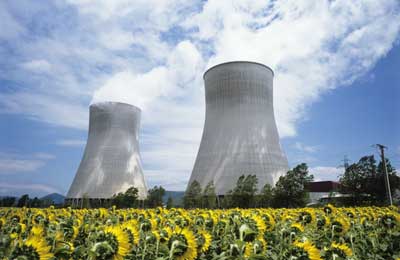
nuclear-power-a

Liberated Wind Turbine Blades…..”Tourist Attraction”?

Wind Industry Claims Flying Blades & Crashing Turbines a ‘Landmark & Tourist Attraction’

BladeFailure_Spain

****

The number of cases involving collapsing turbines and flying blades (aka “component liberation”) has become so common that, if we were a tad cynical, we would go so far to suggest the possibility of some kind of pattern, along the lines proffered by Mr Bond’s nemesis, Goldfinger: “Once is happenstance. Twice is coincidence. Three times it’s enemy action”.

Turbines keep crashing back to earth in frightening numbers – from Brazilto KansasPennsylvaniaGermany and ScotlandDevon and everywhere in between: Ireland has been ‘luckier’ than most (see our posts here and here) and their luck is being enjoyed in Sweden too (see our post here).

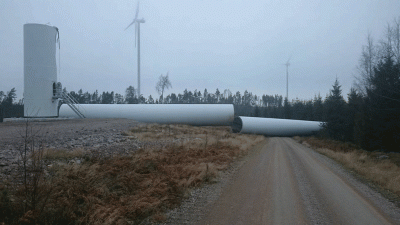
A month or so back, Swedes had the pleasure of waking up to the sound of a vertically-challenged 290 tonne, whirling Danish Dervish splattering itself across a country road, fortunately free of Volvos at the time:

vestas v112

****

Then there’s the wild habit of these little ‘eco-friendlies’ unshackling their 10 tonne blades, and chucking them for miles in all directions – see our posts here and here and here and here and here.

Adding to the list of unscheduled component ‘liberation’ events is this tale from Madison County, New York.

***

from WKTV

***

113-foot blade falls off windmill that previously toppled in Madison County
Syracuse
Elizabeth Doran
11 February 2016

blade fail

FENNER, NY – A 113-foot blade fell off a wind turbine at the Fenner wind farm off Bellinger Road in the town of Fenner in Madison County, according to Fenner town officials.

The blade appears to have fallen off at about 9:30 a.m. today, and town officials think it may have been caused by a bolt failure, said Paula Douglas, Fenner town clerk.

Town officials didn’t think the wind had anything to do with the incident.

Fenner town officials said it’s the same 187-ton windmill – No. 18 of 20 –that collapsed in December 2009. It was replaced with a new wind turbine, Douglas said.

Enel Green Power-North America officials said they are working with the turbine supplier to investigate what happened, but said it’s too early to determine the cause. EGP-NA also said there is no threat to the community, and asked that residents keep a safe distance away from the site to allow workers to conduct their assessments.

The 200-foot-plus structure is one of 20 windmills that generate electricity at the Fenner Wind Farm operated by EGP-NA.

The windmills were erected in 2001 atop a hill at a cost of $34 million. At the time, it was the largest wind-energy facility in the Eastern United States, but that’s no longer the case.

The wind farm, a landmark and tourist attraction to some, provide enough electricity for 10,000 homes.
Syracuse

blackout

****

The usual infantile ‘analysis’ from Elizabeth Doran there – with bunkum about “20 windmills powering 10,000 homes”. Unless those households are prepared to sit freezing or boiling in the dark around 70% of the time, they will, in fact, be ‘powered’ by conventional sources such as coal, gas, hydro and nuclear.

That journalists are still pushing that kind of wind industry propaganda in 2016 is not just dumb, it’s lazy. A quick glance at performance sites like,Aneroid Energy makes a nonsense of the “this wind farm powers XX homes” furphy.

And the line about these being a ‘landmark’ and providing a ‘tourist attraction’ had us giggling too; given that fact that the turbines in question seem to let loose with the regularity of Yellowstone’s Old Faithful: this is not the first time blades have busted loose or turbines have tumbled at Fenner. No, Fenner’s local wonders regularly turn-on ‘action/adventure’ shows that, no doubt, thrill visitors.

blaid fail ny pick up

****

Turbine blade falls at 30-MW wind farm in New York
SeeNews Renewables
Ivan Shumkov
12 February 2016

One of the blades of a Goldwind (HKG:2208) turbine at the 30-MW Fenner wind farm in Madison County, New York, fell off on Thursday, the Post-Standard of Syracuse reported.

Fenner town officials told the newspaper it was unlikely that the incident was caused by the wind, but rather by a bolt failure.

The North American unit of Italy’s Enel Green Power SpA (BIT:EGPW) is the operator of the wind park, which has been generating power since 2001. According to the officials, the turbine is in the same location as one that had to be replaced after crashing down in December 2009.

Representatives of Enel Green Power North America told the newspaper that they are investigating the incident in collaboration with the turbine supplier. The Fenner wind farm consists of 19 pieces of 1.5-MW turbines made by General Electric (GE) and one 1.5-MW Goldwind machine.
SeeNews Renewables

turbine collapse fenner NY

Turn off the Money Tap, and the Wind Scam will “Dry UP”!

Doomed & Desperate: UK Wind Industry Attempts to Engineer Backdoor Subsidies

panic-disorder-971

David Cameron’s Conservatives strode to outright power on the back of a ‘crystal clear’ manifesto to cut subsidies to wind power and to give locals the right to veto wind farm projects at the planning stage.

But, in a ‘never-say-die’ last ditch attempt to obtain ‘backdoor’ access to the perpetual subsidies that are the only reason it exists at all (see our posts here and here), the wind industry – along with its plants in the Department of Energy and Climate Change – have hatched a plan to get around Cameron’s pledge to permanently cut its lifeline.

Humpty Dumpty was famously (and rightly) challenged by a scornful and quizzical Alice for haughtily claiming that he – as ‘Master’ in a ‘Looking Glass’ World – could make words mean whatever he chose them to mean.

Taking its cue from that pompous and brittle egg, the wind industry – in pitching a panicked salvation package – has primed its DECC’s puppets to call a “government guaranteed fixed price for wind power” a “subsidy-free contract”, in what can be fairly described as very scrambled logic.

Revealed: the great wind farm tax ‘con’
The Telegraph
Emily Gosden
13 February 2016

Ministers may break pledge to stop funding onshore turbines with consumer subsidies

Ministers have been accused of planning a U-turn that would see consumersFUND new onshore wind farms through green levies.

The Government confirmed it was “looking carefully” at a wind industry proposal to continue public financial support for new turbines, despite a manifesto pledge to halt expansion.

Critics described the proposal as a con, and said the Conservatives’ policy had been “crystal clear” that the subsidies would stop.

Under the plan, households would still be forced to pay millions of pounds on their energy bills to fund new wind farms – but the payments would no longer be defined as subsidies.

The wind industry’s plan hinges on the fact that no new power plants are commercially viable to build at the moment without extra financial support from bill-payers.

If wind farms can be built at lower cost to consumers than alternatives, such as new gas plants, then payments toFUND them should no longer be classed as “subsidy”, the industry argues.

Andrea Leadsom, the energy minister, admitted that the proposal for so-called “subsidy-free” contracts would not in fact be “cost free” for bill-payers, but said the Government was “listening carefully to industry on how it can be delivered”.

Opponents called the plan “outrageous” and said that the proposals under consideration would still constitute subsidies.

Owen Paterson, the Tory MP and former environment secretary, said: “Hard-working energy consumers will not be conned by a change in name. The Conservative manifesto was crystal clear that public subsidies for onshore wind will stop.

“There is absolutely no place for subsidising wind – a failed medieval technology which during the coldest day of the year so far produced only 0.75 per cent of the electricity load.”

The Conservatives pledged in their 2015 manifesto to “halt the spread of onshore wind farms” and vowed to “end any new public subsidy” for the turbines.

More than 5,000 wind turbines have so far been built onshore in the UK under efforts to hit renewable energy and climate change targets.

Consumers are already estimated to pay in excess of £800 million a year in subsidies for the turbines, adding about £10 to an annual household energy bill.

David Cameron has said that Britain does not “need to have more of these subsidised onshore”.

But the proposal being considered by the Department of Energy and Climate Change (DECC) would see onshore wind farms continue to qualify for an existing subsidy scheme that guarantees developers a fixed price for electricity generated.

The most recent onshore wind farm contracts awarded under the scheme, early last year, were at prices of about £80 per megawatt hour (MWh) – more than double current market prices of about £35/MWh. Consumers willFUND the difference through green levies on their energy bills.

Under the proposals being looked at by DECC, prices of between £60/MWh and £80/MWh would be regarded as “subsidy-free” by 2020.

John Constable, of the Renewable Energy Foundation, a group critical of renewable energy costs, said it would be “outrageous” to regard the proposal DECC was considering as “subsidy free”. “It is justSPIN doctor stuff, it’s playing with words,” he said.

Glyn Davies, the Tory MP, a member of the energy select committee, said: “I don’t think we should be introducing mechanisms that continue with subsidy – just to say there’s no subsidy when there actually is.”

He said he would be “very concerned” if ministers continued payouts to new onshore wind farms.

Fellow Tory Peter Lilley said the wind industry’s proposal “wouldn’t be subsidy-free” and that wind farms should not receive the same support as gas plants, because the power they produced was not reliable and was therefore worth less.

Mr Paterson added: “If we must support energy, we should help develop combined heat and power which increases efficiency from 50 per cent to 80 per cent or we should develop new technologies which actually work.”

A DECC source insisted energy secretary Amber Rudd was “crystal clear that the manifesto commitment to end new public subsidies for onshore wind and give local people the final say is delivered to the letter”.

“Any idea that doesn’t do this is simply not going to get the green light,” the source said.

The influential think-tank Policy Exchange has said that “subsidy-free” contracts should be offered to support the construction of new onshore wind farms in Scotland and Wales, as well as replacing old turbines with new, far bigger ones.

Maf Smith, deputy chief executive of Renewable UK, said it would be “anti-competitive” to bar any technology from competing for the financial support being offered for new power plants.

A DECC spokesman said: “There is no change to our commitment to end new onshore wind subsidies. Our actions have shown that we will be tough on subsidies, in order to keep bills down for our families and businesses.”
The Telegraph

Maf-Smith

****

Maf Smith has a somewhat confused take on ‘competition’. It’s precisely what David Cameron has given the wind industry a chance to finally experience; with an opportunity toBACK UP its endless (but empty) claims about being cheaper than gas and coal-fired power. Well, Maf? What are you and your paymasters waiting for?

The only reason the UK has to offer any financial support to conventional generators is thanks to the perverse policy that, until now, has guaranteed prices 3-4 times the price of conventional power, for the chaotic, weather-driven delivery of a source that – but for the subsidies it attracts – has NO commercial value.

A rebranded wind farm subsidy is still a subsidy
The Telegraph
Telegraph View
24 February 2016

The public aren’t fools. If the Government wants them to pay for the construction of inefficient wind farms, let it admit to it

The 2015 Conservative Party manifesto took a clear and sensible stance on the issue of wind farms. It stated that while they can form part of the “energy mix”, they are “unable by themselves to provide the firm capacity that a stable energySYSTEM REQUIRES”. The manifesto pledged to “end any new public subsidy for them”. So it is more than a surprise and a disappointment to discover that the Government is considering a reversal – keeping the subsidies and simply rebranding them.

Popular opposition to wind farms is practical, not ideological. Most people recognise that we need to develop sustainable technologies and reduce pollution. But Britain also needs cheap, plentiful energy – to fuel its economic growth and provide a highQUALITY OF LIFE for all its citizens.

Wind farms often fail to meet these criteria. Some people complain that they despoil the environment by being ugly, loud and deadly to birds. Others point out that they can be desperately inefficient. Britain demands energy most in the winter, to heat our homes. But at this time of the year it is often windless, despite recent storms. The turbines stand still and useless – a complete waste of the generous subsidies that come from levies on consumers’ energy bills. To make matters worse, when the wind blows too hard, the Government actually pays the industry to turn the turbines off. Strong wind conditions in late January threatened to overwhelmTHE GRID with more power than was needed – so the National Grid offered lucrative payouts of between £58 and £115 per MWh to shut down the supply.

If the Government believes there is a case to be made for continuing to subsidise the industry then it should make it openly and honestly. What the public does not want to hear isSPIN – which is what the proposal of redefining a subsidy amounts to. Lobbyists say that any new onshore wind farms will cost less to build than the old, non-renewable plants they are replacing, so they are a fair deal. Yet not only will the new turbines be less efficient than gas or coal, but there is also no escaping the conclusion that hard-pressed consumers will still be bank-rolling the expansion of a controversial energy source through their domestic bills. We sincerely hope that the Government rejects any advice to rebrand this arrangement as subsidy-free. The public deserves transparency in this debate.
The Telegraph

SWITZERLAND-WEF-DAVOS-CAMERON

Wind Turbine Projects Suck the Life Out of Another Economy!

South Australia’s Economy the Victim of a Wind Power ‘Suicide Pact’

suicide-note

****

South Australia – Australia’s ‘Wind Power Capital’ – is like the cooking show moment where – through the magic of clever editing – a perfect soufflé is slid in front of the camera and the grinning, self-satisfied cook announces ‘here’s one I prepared earlier’.

Except that, in SA’s case, what’s been plated up is an unmitigated energy disaster; that no amount of post-production cutting and splicing can salvage. In SA, its wind power soufflé failed to rise and, once failed, has no hope of rising again.

The recipe for the disaster in SA was drawn up by the boys from Babcock & Brown (aka Infigen) and a disgraced American lawyer and convicted con-man, Tim Flato (who robbed his clients of close to US$400,000, got struck-off, and scuttled off to set up the wind industry in SA and elsewhere) – with plenty of eager help from Greg Hunt’s staffer, Patrick Gibbons and his best mate, Vesta’s Ken McAlpine (back when they both worked as advisers to a Labor Minister in Victoria, Theo Theophanous) (see our post here).

STT operatives have been feverishly digging up more dirt on Tim Flato and his fellow travelers. Turns out Tim was, at various critical times, a director of Babcock & Brown and several of its subsidiaries. But, we digress.

Back to South Australia and its costly wind power flop, with a short and sharp piece from Alan Moran.

South Australian electricity – the state’s suicide mission
Catallaxy Files
Alan Moran
19 February 2016

Here is an object lesson of the effects of winner picking by governments. South Australia’s electricity industry is now threatening to seriously undermine the state’s economy.

Back in October 2014, the electricity market manager, AEMO together with the South Australian state based transmission business, ElectraNet, made some ostensibly soothing comments that the wind dominated South Australia system could continue to operate securely.

Wind is inherently unreliable as well as costing two and a half times as much as coal. But the 2014 report said that this reliability depended upon transmission support that allowed increasing amounts of reliable coal generated electricity to be imported from Victoria and NSW.

South Australia is able to boost wind only because of the subsidy which the Commonwealth’s renewable program and the state’s own measures force consumers of other fuels to transfer to the renewables.

Wind and solar account for 40 per cent (p.5) of South Australia’s generation.

By October of last year the officials’ balm was being used less sparingly.The head of AEMO, following a series of high priced events in South Australia as a result of the wind stopping – as it does – was warning of increasing blackouts in South Australia unless the transmission system was augmented. And the effectiveness of such a patch up would diminish if subsidies cause the share of wind to increase in other states – in this respect the ALP has an “aspirational” goal of 50 per cent renewable share.

South Australia’s problems are about to become more acute with the closure next month of the coal fired 550 MW Northern Power station, a measure brought about by the increasing amount of subsidised wind becoming available.

The latest report [press release here and the full report here: Joint AEMO ElectraNet Report_19 February 2016] again addresses the issue in technical language but is foreshadowing major new investment being required – $1 billion to duplicate the existing transmission links plus other expenditures to allow for coverage of short term drops in generation.

All this spending is necessary in order to facilitate a shift from a low cost traditional electricity supply to high cost rent-seeker sponsored and trendy wind. These measures hammer additional nails in the state’s coffin.

Perhaps the ultimate solution for South Australia, where coal costs are quite high, is nuclear.

The ALP has shifted to support a waste dump but a nuclear generator is a long way off. And in the interim, the government is opening the door to the coal seam and shale exploration that has been rejected by green influenced politicians in NSW and Victoria but again South Australia may have less promising reserves.
Catallaxy Files

Here’s one STT prepared earlier, with a little help from Aneroid Energy – the chaotic ‘output’ from SA’s 17 wind farms during May 2015:

May 2015 SA

Winweasels Will Say Anything, To Try To Protect Their Scam!

Orwellian Eco-Fascist Ideology Ramming Wind Turbines Into Everyone Else’s Backyards

200355536-002

****

Those that accuse community defenders of being nothing more than self-interested ‘NIMBYs’ are hardly what you’d call ‘disinterested observers’.

No, it’s their willful ignorance and lack of human empathy that gives them away – that and the fact that they will never, themselves, have to tolerate a ‘life’, suffering incessant turbine generated low-frequency noise and infrasound.

Reminiscent of the porcine ‘elite’ that ran Orwell’s Animal Farm (with one of its central themes the promised construction of a windmill that was said by its piggy-proponents to offer ‘free electricity’, a life of leisure and wealth for the lower orders) in his obsession to carpet your patch of paradise with hundreds of whirling Danish-Dervishes, the eco-fascist is always ready to line you up to make the sacrifices that they themselveswouldn’t tolerate for a second.

Some might call it ‘green hypocrisy’: STT calls it an inexcusable form of malevolence of the very worst kind – one, long on sanctimony, and short on either scientific or economic logic. Precisely the attributes exhibited by Orwell’s selfish and mean-spirited barnyard overlords.

These days, the characters drawn by George don’t grunt, they rant – and use self-affixed titles such as “Friends of Mother Earth”. Here’s a run-down on how these characters roll, from Virgina.

Van Velzer: Botetourt ignores the hazards of wind energy
The Roanoke Times
Bill Van Velzer
15 February 2016

On Jan. 26, Botetourt County’s Board of Supervisors gave its unanimous blessing to the construction of 25, 550-foot tall wind turbines on North Mountain.

This decision has brought cheers from local environmentalists who identify themselves as “friends of Mother Earth.” As with the siting of any industrial facility, the proposed Rocky Forge project is replete with enough technical minutiae that any complete understanding of its true environmental and human impact requires tremendous attention to hours of intense study.

For this reason, Rockbridge County’s Board of Supervisors requested of Botetourt County a reasonable 90-day delay period. This delay was denied while the project was allowed to proceed.

Wind does not respect arbitrary political boundaries; neither do the impacts that industrial wind facilities have on nearby residents and wildlife. So when one of the speakers referred to a need to push wind turbines into the view sheds of “the wealthy Rockbridge elites,” one wonders if there is another agenda at work that has little to do with the facts of this issue. Unfortunately, this seems to be the world we live in nowadays.

Indeed, it seems that discussions of wind energy fit into a larger political matrix. We must avoid this. This issue — when properly vetted — should transcend political ideology and rest on factual evidence. Each of us has a right to define our own quality of life. When someone insists that their emotionally-driven opinion is more important than my factual analysis, I have to begin wondering if I’m getting too close to a larger ideological vulnerability.

Having said this, there are legitimate issues concerning both Botetourt County’s rush to judgement and the larger assumptions about wind energy. From local to global, here is where we are:

First is the issue of “unconstitutional taking of private property.” In short, your right to enjoy your private property cannot trump my right to the enjoy mine. This is an essential ingredient of American jurisprudence, originating in English common law. It is at the heart of how we define fairness. Yet the precedent set by the Botetourt Board of Supervisors allows 550’-tall wind turbines 605 feet from a neighboring property line, and 820 feet a from a neighbor’s home.

Moreover, the 60dBA noise limit “restriction” is commensurate with sound at a busy urban intersection. North Mountain is clearly a rural environment with an ambient noise level at exactly half of this figure. Will these allowances not impact neighboring property values?

Of course, these issues have everything to do with whether or not prospective purchasers of your property — should you decide to sell — would want to hear this cacophony of noise, and see spinning blades from your deck or picture window at all hours and days of the year.

Infrasound belongs to the above argument, but really deserves space of its own. The wind industry denies its existence like tobacco companies used to deny any link between smoking and lung cancer.

Not surprisingly, Botetourt County doesn’t recognize infrasound, either. This cannot and will not continue, due to the rapidly accumulating evidence that infrasound’s wave pulses are a much greater health concern than is audible sound.

Infrasound deprives people of sleep, causes irritability and loss of concentration, and general anxiety. Don’t take my word for it — scores of YouTube videos have documented the abandonment of homes due to this unforgivable negligence on the part of local government officials.

Impact on wildlife is the flip side of human impact. Infrasound impacts animals in the same way that it impacts humans; the difference is that wildlife simply leaves impacted areas.

sleep with turbines

However for avian populations, the destruction is more graphic. For this reason, wind turbines have been called “Cuisinarts of the air.”

“Windustry” denies this, while claiming that cats, windows and cars take far more birds and bats than do wind turbines. This is beyond disingenuous. How many house cats kill an eagle, a hawk, an owl annually? None other than the American Bird Conservancy documents bird and bat deaths in the U.S. as 573,000 and 888,000 respectively, as of 2012.

dead_eagle_at_base_of_turbine

The “kicker” here is that Botetourt County doesn’t require independent monitoring of bird and bat kills — even for resident eagle populations. Ditto for threatened and endangered bats. Is this prudent?

So while Rocky Forge supporters congratulate themselves, more deliberative minds ponder the future. Unbeknownst to most valley residents, Botetourt County’s master wind resource map identifies 11 ridges and mountains as potential industrial wind energy sites. I’ll leave the last assumption to you.
The Roanoke Times

lake winds

One Billion Dollars to “Fix” Mistakes that Should NOT Have Been Made!

‘Saving’ South Australia from its Self-Inflicted Wind Power Disaster Needs $1 Billion Right NOW!

head slap

****

Wind and solar create headaches for energy market operator
Australian Financial Review
Mark Ludlow
19 February 2016

State governments may have to spend billions of dollars to duplicate the electricity network to cope with the unreliability of renewable energy sources such as wind and solar, according to the national energy forecaster.

As the Australian Energy Market Operator released a report [press release here and the full report here: Joint AEMO ElectraNet Report_19 February 2016] that found there could be reliability issues for the South Australian market, which has embraced renewable technology, its chief executive, Matt Zema, said the rise of wind and solar could also create problems throughout the country.

“It is becoming more and more of a challenge. We might need to build another interconnector to the South Australian market to improve reliability and in the longer term another bigger loop across the nation to be a back-up,” Mr Zema told The Australian Financial Review.

Electricity prices spiked in South Australia late last year after problems with the Heywood interconnector to Victoria, effectively cutting off South Australia from the NEM. South Australia did not have enough of its own locally generated power to cope with demand, which significantly pushed up prices.

A joint report between AEMO and South Australia’s electricity transmission company Electranet found there will be ongoing issues with controlling reliability in the state’s power network either during or following any future loss of the Heywood interconnector and the closure of coal-fired power stations.

Interconnectors are high-voltage transmission cables connecting electricity markets.

“Measures can be taken in the short term to address some of the immediate operational effects, but as the power system continues to evolve, in the longer term there could be an increasing need for changes to market arrangements or infrastructure to continue to meet security and reliability expectations, particularly at times when SA is synchronously islanded [separated] from the remainder of the NEM,” the report found.

AEMO is conducting further studies to maintain power system security in South Australia if it becomes isolated from the NEM.

Grappling with implications

Mr Zema said state governments were still grappling with the implications of moving away from the more reliable coal and gas-fired generation. He said they may have toINVEST billions of dollars in a back-up “loop” of interconnectors to ensure there are not reliability issues which could lead to blackouts.

“South Australia is at the front end of this [renewable] curve, Tasmania is not far behind as they are finding out with Basslink connection to the mainland,” Mr Zema said.

“If you build another interconnector to Victoria you may well extend it from Victoria to NSW.”

A new interconnector between South Australia and Victoria which would cost about $1 billion.

Mr Zema said the only alternative to building back-up interconnectors or more gas-fired power stations to cover for wind and solar – when the sun isn’t shining or the wind is not blowing – would be to dismantle the NEM.

“You either strengthenTHE GRID and have more reliability and more paths or you break it up and its gets smaller and smaller and each state becomes an island,” he said.

“You either become better connected toTHE GRID or you become your own grid which would result in huge price fluctuations.”

South Australia is leading the charge towards renewable energy, especially with the closure of coal-fired power stations, including Alinta Energy’s coal-fired power stations at Port Augusta.

South Australian Premier Jay Weatherill last year said the price fluctuations would not last and the state would benefit from leading the adoption of wind and solar power.

The precarious nature of the electricity network was further demonstrated by Tasmania also being isolated due to problems with the Bass Strait undersea power cable.

Victoria’s energy market could also be facing an overhaul with Alcoa’s Portland smelter – a large energy users – close to closure. It is negotiating with AEMO about an energy subsidy for its poles and wires.
Australian Financial Review

jay weatherill

****

SA’s vapid Premier – a former worker’s compensation solicitor – wouldn’t be STT’s first pick when it came to sorting out a power market in absolute crisis and a grid on the brink of total collapse. His ‘belief’ that betting his beleaguered State’s failing ‘fortunes’ on more of the same smacks of child-like delusion, but, given more sensible (but costly) moves made recently (albeit under pressure) politically driven deception.

Contrary to Jay’s let’s all ‘hold-hands-around-a-turbine’ chanting Kumbaya – and Matt Zema’s line about “moving away from the more reliable coal and gas-fired generation” – SA’s Labor government has just signed their constituents up to throw $50 million a year in subsidies at the French owner of a mothballed CCGT plant at Pelican Point.

That panicked move is all about ensuring something like a reliable power flow (for the time being); and, at the political triage level, is an attempt to avoid any more ‘unhelpful’ wind power blackouts: like the one that plunged almost the entire State into Stone Age darkness last November; and that has businesses, like Uni SA coping with power supply ‘interruptions’ and total blackouts on a regular basis.

email ML

Once upon a time, thanks to the pragmatic vision of its longest-ever-serving Premier, Sir Tom Playford, South Australians enjoyed both energy autonomy and the cheapest and most reliable power in the Country – if not the world; and, with it, unparalleled growth in population, employment and incomes. Now, the reverse is true on all counts.

Always the mendicant State, SA’s Labor government – having willingly signed up to an economic suicide pact – will do what it does best: beg like fury for the Federal Government to bail it out, which means its neighbours will end up footing the bill for the most ridiculous power ‘policy’ ever devised.

tom playford-anzac-parade

Spain First to Eliminate the Wind Pushers.

Spain’s Subsidy Cut sees Wind Industry Collapse: NO Capacity Installed Since 2014

Bullfighter

****

The Spanish wind industry faces its coup de grâce for the very same reason that the wind industry is on the ropes in the UK, Germany, the US, here and elsewhere: either the massive subsidies that have driven the greatest fraud of all time have actually been cut; or there’s the inevitable prospect that they will be, very soon.

In Spain’s case, its government worked out long-ago that pouring never ending €billions into a meaningless power source – that has no commercial value – was never going to end well, on any level – political, social or economic.

While the wind industry – wherever it plies its subsidy soakedTRADE – deludes itself that the principles of economics are suspended in relation to it, once the massive (and seemingly endless) subsidies go, so does the interest of power retailers, bankers and investors. Funny about that …

SpainINSTALLED No Wind Power for First Time Since 80s in 2015
Bloomberg
Alex Morales
26 January 2016

Spain didn’tINSTALL a single megawatt of wind power capacity in 2015, the first time the industry has had a dead year since the 1980s.

TotalINSTALLED capacity stalled at 22,988 megawatts, with wind covering 19 percent of power demand in Spain last year, the Spanish Wind Energy Association, known by its Spanish initials AEE, said Tuesday in a statement. Just 27 megawatts of new capacity has beenINSTALLEDsince 2013, when a new payments system was introduced.

Spanish renewable energy companies that once reaped Europe’s biggest subsidies have looked abroad for projects since the domesticMARKETstagnated following a moratorium on support for new wind farms and solar parks in 2012. The standstill has left Spain needing an additional 6,400 megawatts of wind energy capacity by 2020 in order to meet binding European renewables targets, according to the association.

“TheINSTALLATION of more than 6,000 megawatts of wind power in four years has been done in Spain before thanks to regulations that favored it,” the association said. “If certain aspects of the regulations were modified to give confidence back to investors and ease access to financing, it could be attempted again.”

The industry group called on the government to consult with the wind sector on changes to auctioning arrangements, after an initial 500-megawatt auction yielded no subsidy for the technology. It said that was an “unexpected result that brought even more uncertainty to the already complicated situation of the wind sector.”

The association called for an end to provisions in rules that allow the government to change the reasonable returns for projects every six years. It also said the government should hold auctions for the remaining 5,900 megawatts of wind power it needs as soon as possible.
Bloomberg

Remember all that wind industry guff about the world hungering for wind power; how it’s free and getting cheaper all the time; and how it’s the ‘plug and play’ solution to our future electricity needs?

No? It seems Spaniards have forgotten it too.

spain_bullfighting_2

Wind Pushers Losing Popularity!

Wind Industry Still Wailing About ‘Uncertainty’ as Construction Finance ‘Drought’ Hits

banshee

Wind power outfits have now cottoned on to the fact (slow learners that they are) that Australia’s big power retailers have turned their backs on the wind to face the Sun, instead.

The former second-hand car salesmen that front the wind industry are still coming to grips with the recalcitrance of commercial retailers (we don’t count the ACT Government) who continue to refuse entering Power Purchase Agreements with wind power outfits (holding that stance since November 2012).

The big operators have absolutely no interest in wind power; and every interest in killing off the Large-Scale RET that created, and for the time being sustains, the wind industry.

As pointed out previously, the retailers’ switch to large-scale solar is a canny, but fleeting move – designed to avoid the shortfall penalty for the few years it takes for the LRET to collapse; as the political and economic toxicity of the policy escalates over the next year or two.

It is, after all, a pointless $3 billion a year power tax that runs until 2031 – for no other reason than to subsidise the production of insanely expensive and wholly unreliable wind power; at a time when Australia’s grid is swamped with oodles of the reliable, secure and affordable stuff.

Without PPAs with retailers, wind power outfits haven’t a hope in hell of obtaining bank finance to build any new wind farm capacity, as this ‘sackcloth and ashes’ piece from the SMH confirms.

Yass Valley Wind Farm recommended for approval, but retailer’s strike persists
Sydney Morning Herald
Lucy Cormack
4 February 2016

Financiers are yet to gain confidence that the legislative underpinning for renewable energy projects is going to be stable.

The state government has recommended approval for what could be one of Australia’s biggest wind farms, but continued uncertainty in the renewables sector may see the project added to the 6000 megawatt-strong “pile of wind farms” currently approved, but stalled, industry figures say.

The recommendation for approval of the Epuron Yass Valley Wind Farm by the NSW Department of Planning and Environment clears the way for the Planning and Assessment Commission to make its final decision on the wind farm.

While industry figures say the news is positive, it does not mean the wind farm will be built.

“This approval just adds to the 6000-megawatt pile of wind farms currently stalled:” Ric Brazzale, managing director …

“This approval just adds to the 6000-megawatt pile of wind farms currently stalled:” Ric Brazzale, managing director Green Energy Trading said of the Yass Valley Wind Farm.

“We’ve lost count of these announcements,” said Ric Brazzale, managing director of Green Energy Trading.

“It’s an important part of the process, but this approval just adds to the 6000-megawatt pile of wind farms currently stalled.”

The battle for new projects is obtaining finance and power purchase agreements: contracts with energy companies to sell electricity and large-scale generation certificates (LGCs).

Large-scale generation certificates are used by Renewable Energy Target-liable entities to meet compliance obligations based on the volume of electricity they purchase each year.

Mr Brazzale said the difficulty in sealing power purchase agreements is tied to the long-embattled context of renewable energy in Australia.

“They can’t raise finance because banks and financiers don’t want to go anywhere near these contracts unless they are contracted with energy retailers,” he said.

“So, why don’t financiers do it? The reason is, they are yet to gain confidence that the legislative underpinning is going to be stable,” he said. “We’ve heard from Greg Hunt and that helps, but if you want retailers and financiers to change, you need the Prime Minister to come out and say unequivocally, ‘We are not going to reduce the target.’”

Solar Council chief executive John Grimes agreed that any “drought” in renewables investment will only be reversed with increased positive sentiment from the government.

“Large scale projects are all built on policy, stability and confidence, but the entire renewable energy market has been massively disrupted by the federal government’s review and slashing of the Renewable Energy Target.”

Mr Grimes’ concern is that, despite having a new Prime Minister, “nothing has changed”.

“No moves have been made by the federal government to ensure that certainty and policy stability is returned to the sector,” he said. “It’s a double-edged sword. If power companies don’t build projects they will be slugged with a charge equivalent, which has a real post-tax value of $93 per large-scale generation certificate.”

Mr Grimes said liable entities are using that fact to go back to the government and say they cannot build the projects to meet the target in the time permitted.

“Their argument will be, if the federal government doesn’t slash the Renewable Energy Target again, then that price will be passed through to consumers and everyone will be paying for capacity that was never built,” he said.

At its proposed capacity of 124 turbines, the Yass Valley Wind Farm would have the capacity to power more than 130,000 homes each year, however the government’s recommendation suggests a significant reduction in the project’s scale, down to 79 turbines.

Epuron executive director Martin Poole said despite the recommended reduction “attitudes everywhere have improved” towards wind energy, since Prime Minister Malcolm Turnbull took the leadership.

“It is important that NSW demonstrates its commitment to maximising the local jobs and expertise that flow from the transition to a cleaner electricity sector.”

Mr Brazzale estimates that processes contracting for large-scale generation certificates in the ACT, Western Australia, South Australia and Victoria suggest “there are probably more than 1000 megawatts of projects that could be committed over the next year or so.”

Despite being enough to power around 430,000 homes annually, Mr Brazzale said that figure is nowhere near enough to meet the large-scale renewable energy target by 2018.

“We need four times that level to ensure we meet the 2018 target, which obviously we’re not going to achieve. That’s why the LGC price is high, because it’s reflecting that the market is not going to meet the target.”
Sydney Morning Herald

The usual fawning starry-eyed ‘analysis’ from Fairfax there – with bunkum about a pie-in-the-sky wind farm one day “powering more than 130,000 homes”. Unless those households are prepared to sit freezing or boiling in the dark around 70% of the time, they will, in fact, be ‘powered’ by coal, gas and hydro (in that order).

That journalists are still pushing that kind of wind industry propaganda in 2016 is not just dumb, it’s lazy. A quick glance at Aneroid Energy debunks that myth. Here’s SA’s 17 wind farms (notional capacity of 1,477MW) ‘powering’ not so much as a kettle on 3 May 2015:

3 May 2015 SA

The other line that escapes any sensible criticism from Fairfax is what John Grimes says about the looming and massive cost of the LRET

“It’s a double-edged sword. If power companies don’t build projects they will be slugged with a charge equivalent, which has a real post-tax value of $93 per large-scale generation certificate.” …

“Their argument will be, if the federal government doesn’t slash the Renewable Energy Target again, then that price will be passed through to consumers and everyone will be paying for capacity that was never built,”

The cost of the LRET to power consumers will actually be lower if further wind power capacity is NOT built, than if it is. Retailers will get hit with the shortfall penalty (what Grimes calls ‘a charge equivalent’) and the cost of the REC – from here, the combined cost of which will exceed $3 billion a year, all recovered as a Federal Tax on all power consumers:

What Kills the Australian Wind Industry: A $45 Billion Federal Power Tax

What Grimes leaves out, of course, is that the wind power capacity that Epuron, Infigen & Co are so desperate to build (in order to keep their Ponzi scheme from collapsing, as it has with Pacific Hydro) – will cost at least a further $80-100 billion, in terms of extra turbines and the duplicated network costs needed to hook them up to the grid: all requiring fat returns to investors; costs and returns that can only be recouped through escalating power bills:

Ian Macfarlane, Greg Hunt & Australia’s Wind Power Debacle: is it Dumb and Dumber 2, or Liar Liar?

In the post above we looked at the additional costs of building the wind power capacity needed to avoid the shortfall penalty – including the $30 billion or so needed to build a duplicated transmission grid.

That is, a network largely, if not exclusively, devoted to sending wind power output from remote, rural locations to urban population centres (where the demand is) that will only ever carry meaningful output 30-35% of the time, at best. The balance of the time, networks devoted to carrying wind power will carry nothing – for lengthy periods there will be no return on the capital cost – the lines will simply lay idle until the wind picks up.

The fact that there is no grid capacity available to take wind power from remote locations was pointed to by GE boss, Peter Cowling in this article, as one of the key reasons that there will be no new wind farms built in Australia (see our post here).

But let’s return to wailing about the requirement for policy ‘certainty’. What that wailing is really about, is a plea for the Federal government (read ‘taxpayer and power consumer’) to underwrite a politically toxic policy, that has already been slashed from an ultimate annual target of 41,000GWh to 33,000GWh, for precisely that reason.

In 2015, faced with the fact that the target could never be met, both Labor and the Coalition were forced to cut the target before the shortfall penalty inevitably took effect. But that was simply to stall the LRET’s ultimate collapse: the same factors Epuron moan about above are still in play. There will be no increase in wind power capacity; the shortfall penalty will apply; and the Federal government will be forced to cut the target, once again.

It’s the fact it was cut once that has bankers and retailers refusing to lend or sign PPAs. And, as with any ‘business’ that relies for its very existence on a piece of policy, what the government once did, can be just as easily undone – in full.

What kills the LRET – and the wind industry with it – is the same set of forces that led to the demise of the Australian wool industry. The lessons and parallels drawn from the implosion of its Federally mandated subsidy scheme during the 1990s – all but killing the industry and costing growers and taxpayers tens of billions of dollars – are worth repeating.

The wool industry’s “cause of death” was the Federally backed Reserve Price Support scheme (RPS), which set a guaranteed minimum price for all Australian wool.

A little background on the RPS

For over 150 years, Australia happily rode on the sheep’s back: until the 1970s the wool industry was, for the Australian economy, the “goose that laid the golden egg”; textile manufacturers from all over the world clamoured for the fibre; which was, for most of that time, the largest single commodity export by value; Australia produces over 80% of the world’s apparel wool. However, as fashions changed (the three-piece wool suit became, well, so “yesterday”) and new synthetics began to eat into its market share, the dominance of Australian apparel wool was no longer a certainty.

Against the backdrop of increasing competition, for the wool industry there was always the perennial issue, not only of fluctuating demand, but also of wildly fluctuating swings in production. Dorothea McKellar’s land of “droughts and flooding rains” meant that a few years of meagre production (and favourable, and even phenomenal, wool prices) would be soon eclipsed by sheds and wool stores overflowing with fibre ready for market (sending prices and woolgrower profits plummeting).

The response to these (often climate driven) marketing “swings and roundabouts”, was the establishment of the Australian Wool Corporation (AWC) and the RPS in 1973.

The RPS would set a minimum price for all types of wool, guaranteeing woolgrowers a minimum return; such that if supply exceeded demand, the AWC would purchase any wool being offered, if it failed to reach the minimum price set (referred to as the “floor price”).

Wool being offered at auction that failed to meet the floor price was purchased by the AWC and “stockpiled” (ie stored), until such time as either supply fell or demand conditions improved; at which point the AWC would offer stockpiled wool to the trade. The aim being the smooth and more orderly marketing of wool over the supply and demand cycle; with higher average returns to growers; and less risk for buyers and sellers along the way.

The scheme worked swimmingly (as designed and intended) until the late 1980s.

The reserve price set under the RPS was fixed in Australian dollar terms. However, with the float of the Australian dollar in 1983 (resulting in a massive 40% depreciation of the dollar between February 1985 and August 1986), maintaining the reserve price without reference to the terms of trade and fluctuations in trading currencies (particularly the US dollar) set the scheme up for a spectacular failure; simply because what goes down can just as easily go up.

During the 1980s, there was a solid increase in demand for wool, driven by demand from the USSR, a then fast growing Japan, buoyant Europeans, and a newly emergent China, as a textile manufacturer and consumer. However, that surge in demand occurred in the context of an Australian dollar trading in a range around US$0.55-75.

During the 1980s, under pressure from wool grower lobby groups, the floor price was continually increased: from 1986 to July 1988 the floor price jumped 71% to 870 cents per kilogram.

That did not, in itself, create any problems: a general surge in demand, relatively low production and a plummeting Australian dollar generated auction room sale prices well above the rising floor price, which reached their zenith in April 1988: the market indicator peaked at 1269 cents per kg, and the market continued its bull run for most of that year, well above the 870 floor price set in July.

However, as international economic conditions worsened, Australian interest rates soared (the consequence of Paul Keating’s “recession that we had to have”) and the value of the Australian dollar with it (hitting US$0.80 by early 1990), the market indicator headed south and, over the next few years, the AWC was forced to purchase over 80% of the Australian wool clip at the 870 cent per kg floor price. Adding to the AWC’s difficulties was a massive surge in production; driven by growers responding to the high and “guaranteed” floor price; and a run of exceptional growing seasons (1989 being a standout across Australia). Production went from 727 million kg in 1983/84 to over 1 billion kg in 1990/91.

Despite worsening market conditions, the AWC, under pressure from wool grower lobby groups, was forced to maintain the 870 cent per kilogram floor price.

However, from around August 1989, international wool buyers simply sat on their hands in auction sale rooms (in May 1990 the AWC bought 87.5% of the offering); and waited for the RPS to implode.

Knowing that the system was unsustainable, the last thing that buyers wanted was to be caught with wool purchased at prices above the floor price which, when the floor price was cut or collapsed, would immediately be worth less than what they had paid for it. Moreover, traders were dumping stock as fast as they could to avoid the risk of a collapse in the RPS and, therefore, a collapse in the price of any wool they happened to hold.

The RPS was ultimately backed by the Federal government. With the buying trade sitting on their hands, those responsible for maintaining the floor price ended up in a staring competition, the only question was, who would blink first: the AWC (or, rather, the government underwriting the RPS); or the buyers?

With the AWC purchasing millions of bales of wool at the floor price the cost of supporting the RPS was running into the billions of dollars: primarily the support came from a grower levy on sales, but, at the point which that soon became insufficient to support the RPS (despite upping the levy from 8% to 25%), support came from $billions in mounting government debt; the buyers had no reason to blink.

Instead, in May 1990, the government announced its decision to retreat to a new floor price of 700 cents per kilogram, and directed the AWC to fight on in support of the reduced floor price. The Minister for Primary Industry, John Kerin boldly asserting that the 700 cent floor price was “immutable, the floor price will not be reduced”.

But, having blinked once, the buyers largely continued to sit on their hands and simply waited for the government to blink again. The stockpile continued to balloon; and with it government debt: by February 1991 the stockpile reached 4.77 million bales (equivalent to a full year’s production); the accrued government debt stood at $2.8 billion; and the cost of storing the stockpile was over $1 million a day.

Faced with the inevitable, the government blinked, again: John Kerin was forced to eat his words about the floor price being “immutable”; on 11 February 1991, announcing the suspension of the floor price. The RPS had totally collapsed; the buyers had won.

The wool industry’s saga is beautifully, if tragically, told by Charles Massy in “Breaking the Sheep’s Back” (2011, UQP), which should be required reading for any of our political betters pretending to know more than the market (eg, the power market).

Which brings us to the lessons and parallels.

The LRET effectively sets the price for RECs: the minimum price is meant to be set by the shortfall charge of $65 per MWh (rising to $93 when account is given to the tax benefit), as the penalty begins to apply on the shortfall (as detailed above). That equation is based on an ultimate 33,000 GWh target.

In the event that the cost of the shortfall charge was reduced, there would be a commensurate fall in the REC price. Likewise, if the LRET target was further reduced: the total number of MWhs which would then attract the shortfall charge if RECs were not purchased would fall too; also resulting in a fall in the REC price.

In addition, any reduction in the LRET would simply result in a reduction in the demand for RECs overall: fewer RECs would need to be purchased and surrendered during the life of the LRET; again, resulting in a fall in the REC price. Of course, were the LRET to be scrapped in its entirety, RECs would become utterly worthless.

The retailers, are alive to all of this, hence their reluctance to enter PPAs for the purpose of purchasing RECs; agreements which run for a minimum of 15 years.

In December 2014, Ian “Macca” Macfarlane and his youthful ward, Greg Hunt started running around pushing for a target of 27,000 GWh; and their boss, Tony Abbott made clear that he wanted to kill it outright. There followed overtures from the Labor opposition pitching for a target around 35,000 GWh.

Whether they knew it or not – with their public debate on what an amended target should be – in the staring competition with retailers – these boys blinked.

Faced with the inevitable political furore that will erupt when power consumers (ie, voters) realise they are being whacked with the full cost (and some) of the shortfall charge (being nothing more than a “stealth tax” to be recovered by retailers via their power bills), the pressure will mount on both sides of politics to slash the LRET – once again.

That both Labor and the Coalition have already blinked (in obvious recognition of the brewing political storm in power punter land over the inevitable imposition of the shortfall charge) is not lost on the likes of Grant King from Origin, and all of Australia’s other electricity retailers.

And for retail power buyers the choice of sticking with permanent recalcitrance has been made even easier: with the previous PM Tony Abbot making it plain that he would have cut the LRET even harder, were it not for a hostile Senate; and Labor’s Bill Shorten pushing for an entirely ludicrous 50% LRET – that would require a further 10,000 of these things to be speared all over Australia’s rural heartland. Where there was once ‘bipartisan’ support for these things, the major parties are diametrically opposed.

Grant King

****

With the politics of the LRET already on the nose, like wool buyers sitting on their hands in sale rooms during 1990, waiting for the floor price to collapse, electricity retailers need only sit back and wait for the whole LRET scheme to implode.

Like wool buyers refusing to buy above the floor price and carry stock with the risk of the RPS collapsing, why would electricity retailers sign up for 15 year long PPAs with wind power outfits in order to purchase a stream of RECs over that period, knowing the value of those certificates depends entirely upon a scheme which is both economically and politically unsustainable?

However, the similarities between the wool market and the market for wind power end right about there.

There is, and always was, a natural market for Australian wool; the only issue during the late 80s and early 90s was the price that had to be paid by buyers to beat the floor price, set artificially under the RPS.

Wind power has no such market.

Available only in fits and spurts, and at crazy, random intervals, at a price which is 3-4 times that of conventional generation, retailers have no incentive to purchase it.

In the absence of the threat of the $65 per MWh fine (the stick), coupled with the promise of pocketing $93 as a subsidy in the form of a REC (the carrot), electricity retailers would not touch wind power with a barge pole: it simply has no commercial value.

Moreover, with an abundance of conventional generation capacity in Australia at present, retailers are very much in a “buyers’ market”.

Overcapacity, coupled with shrinking demand (thanks to policies like the LRET that are killing mineral processors, manufacturing and industry) means that retailers can expect to see wholesale prices decline over the next few years, at least. And, for the first time in almost 20 years, a sharply declining Australian economy is a fast looming reality: unemployed households have an even tougher time paying rocketing power bills.

With those fundamentals in mind, electricity retailers will simply opt to pay the shortfall charge and recover it from power consumers, knowing that that situation will not last for very long.

Sooner or later, the Federal government (whichever side is in power) will have to face an electorate furious at the fact that their power bills have gone through the roof, as a result of a policy that achieved absolutely nothing.

Current PM, Malcolm Turnbull might mouth platitudes about ‘renewables’ and ‘innovation’, but his chances of leading the Coalition to a second term in power are tied to fundamental ‘mum and dad’ policies like electricity costs.

Power prices matter; and in a battle between Australia’s Big 3 Retailers and the LRET, STT’s money is firmly on commercial self-interest.

STT hears that the big retailers plan to exhaust the pile of RECs that they’re sitting on at present, while building a few large-scale solar power facilities, in order to obtain the RECs needed to avoid the shortfall charge; and to wait for the politics to turn gangrenous. As soon as the LRET gets scrapped, the plan is to sell the panels back into the residential roof-top market.

The cost of the LRET – and all that comes with it – to retail customers is at the heart of what’s driving retailers’ efforts to crush the LRET; and the wind industry with it.

This might sound obvious, if not a little silly: electricity retailers are NOT in the business of NOT selling power.

Adding a $45 billion electricity tax to retail power bills can only make power even less affordable to tens of thousands of households and struggling businesses, indeed whole industries, meaning fewer and fewer customers for retailers like Origin, AGL and EnergyAustralia.

The strategy adopted by retailers of refusing to ‘play ball’ by signing up for PPAs will, ultimately, kill the LRET; it’s a strategy aimed at being able to sell more power, at affordable prices, to more households and businesses.

And it’s working a treat, so far.

The wind industry’s incessant daily whining about “uncertainty”, is simply a signal that the retailers have already won. Once upon a time, the wind industry and its parasites used to cling to the idea that the RET “has bi-partisan support“, as a self-comforting mantra: but not anymore. And it’s the retailers’ refusal to sign PPAs that’s thrown the spanner in the wind industry’s works.

While the likes of Epuron and Infigen will continue to work themselves into a lather about their inevitable fate, in the meantime, retailers, like Origin, AGL and EnergyAustralia, can simply sit back, watch the political fireworks, and wait for the inevitable and complete collapse of the LRET; and, with it, the Australian wind industry.

In this ‘drought’ only the retailers have the capacity to survive.

drought-2004

Germans Gear Up to Fight the Windweasels, Politically!

German Opposition to Wind Farms Spawns New Political Party

German wind farm

Remember all the guff about Germans loving wind power to bits?

And stories about how Germany is the wind power pioneer, and that its cheerful rural volk are 100% behind having thousands of these things speared all over their bucolic homeland?

No? We’ve forgotten them too.

German wind farm neighbours suffer from incessant turbine generated low-frequency noise and infrasound – just as they do all around the World:

Germans Driven from their Homes by Wind Turbine Generated Infrasound

So, it’s no surprise that there are more than 500 well-organised groups fighting back against ‘green’/left lunancy – in an effort to protect their homes, their health and their families.

What, to date, has been a reactionary force sprouting up in regions set upon by the wind industry, has now coalesced into a full-blown system of political opposition; and has just given rise to a political party aimed at bringing the great German wind power fraud to an end. Here’s another story you won’t see in the mainstream press from NoTricksZone.

Rapidly Evolving Protest: German Wind Energy Opponents Form Political Party In Response To A Deaf System
NoTricksZone
Pierre L. Gosselin
25 January 2016

Not a single one of Germany’s established political parties officially opposes the construction of wind parks despite all the proof of their inefficiency, hazard to health and wildlife, ugliness, and lack of economy.

As a consequence, a growing number of citizens are becoming fed up with a political system that has become deaf to the concerns of citizens. Some 10 years ago what once began as a huge welcome of “green and clean” wind energy, has since turned into fierce protest – and is now developing into organized political opposition.

North Germany’s online daily nordkurier.de here reports how in the state of Mecklenburg Western Pomerania citizen initiative groups against ugly wind parks are taking their protest activity to a whole new level: the formation of a political party to be on the ballot in September’s state elections. In summary environmentalist citizens have had it with the green-preaching parties who refuse to listen and have allowed themselves to be corrupted by Big Wind.

The name of the citizens’ initiative, which comprises some 50 smaller initiatives statewide, is called “Freier Horizont” (Free Horizon) and it plans to be on the ballot under the same name in this fall’s election.

Deaf political system

The reason the Freier Horizont is forming a political party? The nordkurier.de quotes initiative’s chairman Norbert Schumacher:

Currently there is no democratic party which rejects the uncontrolled expansion of wind power that people can elect.”

The hardest hit of course will be the region’s Green Party as disenchanted environmentalist realize that the Greens have long sold out to profiteering wind energy opportunists. The movement led by the Freier Horizont is taking on formidable dimensions. The nordkurier.de writes:

“Schumacher sees voter potential foremost in the countryside. At many places citizens have had the experience that there voices against wind turbines carry no weight with the deciding committees. Last year the protest group gathered more than 22,000 signatures in a short time in support of a citizens’ initiative calling for greater distances between turbines and homes and coastlines. The state parliament rejected the initiative.”

Initiative leaders tell the nordkurier.de that it was never their intention to form a party. However, elected officials simply just don’t listen anymore.
NoTricksZone

angry german kid

Finally….The Truth is Catching Up with the Wind Industry…

Wind Industry Loses Support of Lunatic Fringe: Green-Left Blog ‘New Matilda’ Turns Against the Wind Power Fraud

turbine-collapse-germany1

****

When the following piece crossed STT’s inbox, the editor thought it to be some kind of April fool’s joke, delivered a few months early.

But, no. Knock us down with a feather, the article that follows did, in fact, appear on ‘New Matilda’ – a politically correct, hard-‘green’-left bastion for all things cuddly and fuzzy (mostly its logic) – and, until now, a safe-haven for the dwindling wind-worship-cult.

But, not any more. The article was penned by Geoff Russell – who would blend in perfectly with the mung bean and tofu crowd, as his PC, CV attests:

Geoff Russell qualified in mathematics and has written software all of his working life. But in the past decade has devoted increasing time to writing non-fiction with a simple goal … make the world a better place. A three decade vegan and member of the Animal Justice Party, his first book in 2009 was “CSIRO Perfidy” a critique of the high-red-meat CSIRO “Total Wellbeing diet”; the most environmentally destructive diet on the planet. His concerns about climate change and the ineffectiveness of renewables led to a reexamination of his lifelong opposition to nuclear power. After considerable research he realised that the reasons people fear nuclear are built on obsolete knowledge about DNA and cancer. His second book “GreenJacked! Derailing environmental action on climate change” is an e-book available on Amazon. He has been a regular contributor to BraveNewClimate.com since 2008 and has had pieces published in “The Monthly”, “Australasian Science” and a number of Australian newspapers.

Now, pinch yourself and enjoy what must have had New Matilda regulars choking on their organic Pinot Gris. Oh, and to help Geoff get his point across we’ve added a few pics, courtesy of the boys over at Aneroid Energy.

Capacity Factors And Coffee Shops: A Beginner’s Guide To Understanding The Challenges Facing Wind Farms
New Matilda
Geoff Russell
13 January 2016

It’s still ‘all about the baseload’, writes Geoff Russell, in this simple guide to understanding the limitations of energy sources like wind farms.

Renewable-only advocates claim that we can build a reliable, clean electricity system using mostly unreliable sources; like wind and solar power. And of course we can; the theory is simple, just build enough of them.

Coffee shops operate rather like our current electricity system; there are a few permanent staff who are analogous to what are called baseloadpower stations. Additional staff are hired to cover the busy period(s) and correspond typically to gas fired generators.

The renewable alternative is like running a coffee shop with a crew of footloose narcoleptics who arrive if and when they feel like it and who can nod off with little notice. Would this work? Of course; just hire enough of them.

Any criticisms of renewable plans is typically subjected to execution by slogan: That’s soooo last millennium; baseload is a myth!

I’ve used something like this coffee shop analogy elsewhere, but it doesn’t capture other critical features of electricity sources … let’s begin with the capacity factor.

Capacity factor

When someone talks about a “100 megawatt” wind farm, this refers to its maximum power output when the wind is blowing hard. Energy is powermultiplied by time, so if it’s windy for 24 hours you’ll get 24 x 100 = 2400 megawatt-hours (MWh) of electrical energy. But actual output over the course of a year is obviously only a percentage of the maximum possible and that percentage is measured and called the capacity factor; typically about 33 percent for wind.

A rooftop solar system is also labelled according to its maximum output and also has a capacity factor… averaging 14 percent in Australia but only 9 or 10 percent in the UK or Germany.

Nuclear plants also have capacity factors because they usually need to be taken off line every year or two for refuelling. Typical percentages are 90 in the US and 96 in South Korea.

You can’t compare electricity sources without understanding capacity factors. Since the capacity factor of a nuclear plant is about 90 percent and that of rooftop solar is about 14 percent and because 90/14 = 6.429, then you’d need to install 9,000 megawatts worth of solar panels to match the amount of electricity you’d get from a 1400 megawatt South Korean APR1400 nuclear reactor over a year (6.429 x 1400 = 9,000).

Which is more than double the 4041 megawatts installed in Australia between 2007 and the end of 2014.

Matching supply and demand

But 9,000 megawatts of solar panels is still very different to 1,400 megawatts of nuclear, even if both produce the same amount of electricity annually. With 9,000 megawatts of PV panels, you don’t control the output and on any day it will range from nothing at night through to 9,000 megawatts if it’s hot, cloudless and the right time of day.

In contrast, 1,400 megawatts of nuclear power can be adjusted to match demand; turn it down, turn it up.

Below is a picture of the output of some German nuclear plants. Note that the output of one plant, KKI 1 (Isar), is pretty constant. That plant began operation in 1979, which is about the vintage of the seemingly immortal but obviously false anti-nuclear claim that nuclear plants can’t follow load; see Margaret Beavis’s recent NM article for a 2015 misstatement.

Brokdorf, on the other hand, is a little newer and has been operating since 1986 and has no trouble ramping up and down. Not only can most nuclear plants load-follow (this is the technical term), it’s increasingly necessary in Germany because of the growth of wind and solar; it’s a thankless task but somebody has to do it!

Nuclear-load-follow-graph

Now you understand why it’s silly to do what non-technical journalists like Bernard Keane have done, and compare costs per kilowatt of solar with those of nuclear without understanding the capacity factor; let alone grid costs or load-following.

But the capacity factor is also important for another deeper reason and it will take us back to that coffee shop.

First, imagine a small city with a constant electrical demand of 1,000 megawatts and a wind farm supplying, on average, 333 megawatts. Assume the rest is supplied by gas. Given the capacity factor of wind, we can infer that the peak output of that wind farm is about 1,000 megawatts.

What happens to excess electricity?

Now consider what happens if you triple the size of your wind farm.

Since you now have (a maximum of) 3,000 megawatts of wind power, you’ll be averaging 0.33 x 3,000 x 24 megawatt-hours (of energy) per day; which is 100 percent of demand; excellent.

But what happens when it’s really windy? The output is then triple the demand; so, without storage, that electricity gets dumped.

Dumping electricity on your neighbours isn’t a nice thing to do if they don’t need it at the time.

Wind farms, like any low capacity factor unreliable electricity source, are fine when they are a small contributor to a large grid, but not so fine when their surges are large relative to the demand on the grid; then they become a veritable bull in a china shop.

June 2015 National

[total output from all wind farms connected to the Eastern Grid, June 2015]

How does this look in coffee shop terms? If you run your coffee shop with a large bunch of narcoleptic staff, then some of the time they’ll all be awake and rearing to go, but there’ll be few customers and your staff will be twiddling their thumbs at best and getting in each others way at worst.

But perhaps the analogy is broken? Instead of a single wind farm, we could have multiple farms spread over a huge area and interconnected so that the wind must surely even out; never blowing hard (nor totally calm) at all sites. Certainly this sounds plausible… but what actually happens?

John Morgan looked at the Australian data on wind power in an article a couple of months ago on bravenewclimate.com.

In the 12 months to September 2015, Australia had 3,753 megawatts of wind power across the National Electricity Market (which excludes WA which isn’t connected) and the daily average output ranged from 2.7 percent (101 megawatts for 24 hours) to 86 percent (3,227 megawatts for 24 hours).

This isn’t so different from what would happen with a single 3,753 megawatt wind farm. So despite expectations, there were times when it was pretty windy almost everywhere and other times, including runs of multiple days, when it was pretty damn still almost everywhere.

The overall capacity factor was measured at 29 percent. So despite expectations, many wind farms, even in a big country like Australia, aren’t that much different to one very big one. And you really do have to worry about being becalmed.

JULY22

[total output from all wind farms connected to the Eastern Grid, 22 July 2014]

I argued in my last New Matilda article that wasting battery capacity papering over the deficiencies of wind and solar will reduce our ability to solve our clean transportation problems.

Copper plates and real networks

Clearly if many wind farms are intended to even out supply, then they need to be interconnected.

A study commonly cited in Australia supporting the feasibility of a 100 percent renewable system is that of Elliston, Diesendorf and MacGill.

One assumption of that study was that electricity can flow freely from where-ever it is generated to where-ever it is needed.

This is called the “copper plate” assumption; it assumes the continent is just one massive copper plate conducting electricity everywhere at high speed.

But real interconnectors have to be built, and how much connectivity do low capacity factor sources need? A European study found that the grid capacity to transfer electricity under a 100 percent renewable scenario needs to be ramped up by between 5.7 and 11.5 times; depending on the quality of service required.

The “flow freely” assumption occupied just one sentence of the Australian study but conceals a wealth of problems and complexity. The EU goal is that member countries provide interconnection capacity equal to just 10 percent of installed capacity… by 2020.

The need for extra national interconnections is mirrored internally within the larger countries by the need for extra internal interconnections. In Germany this is being implemented under the Power Grid Expansion Act (EnLAG) involving 3,800 kilometers of new extra-high voltage lines.

These lines aren’t being built without protest. The path of least resistance will be wildlife habitat; to avoid concerns both real and imagined over reducing property prices and health risks.

To extend the coffee shop analogy to cover distributed wind farms, we move from a single shop to a WindyBucks Chain of shops spread over the country.

The European study implies that making this work will require not just extra staff but a fleet of lightening fast taxis to shunt the staff around from shop to shop. This is so that when we have too many baristas in Cairns, we can shunt them down to cover for those having a kip in Hobart.

Again, the theory is simple; just add another layer of duct tape until it holds together.

Markets, profits and planning

There’s one not so obvious way in which the coffee shop analogy breaks down. Coffee shop staff get paid by the hour, not by the number of coffees they make; but users of electricity pay for what they use, not for what is generated.

Does anybody want to pay 10 times the going rate for a coffee just because there happen to be 10 grinning baristas twiddling their thumbs behind the Espresso machine?

If not, then consider what happens to electricity prices during our imagined tripling of wind capacity. Remember, we started by assuming wind provided about 30 percent of electrical energy, so when we triple the number of farms and the wind is blowing pretty strongly everywhere, they’ll be generating about triple what we want.

In a free electricity market where suppliers bid for electricity, the price will dive. So while it’s very profitable to build a wind farm when total wind energy is less than the capacity factor, it soon becomes very unprofitable because nobody wants your product; you also create a mess that somebody has to clean up by building extra grid magic to handle power surges.

Why didn’t people see this coming a decade ago? Probably somebody did, but they were “Sooo last millennium”!

This market failure gets worse and worse as wind penetration exceeds the capacity factor. Our whole climate mess can be viewed as one massive market failure; which is part of why I’m not a fan of using markets to solve problems of consequence.

People who build solar farms, hospitals, nuclear plants, bridges, aeroplanes, submarines, battery factories and any other bloody thing are unanimous in their use of planning; in contrast, people who love markets are people like politicians, lawyers and market traders who rarely build anything that doesn’t come in an Ikea box.

This article has tried to explain as non-technically as possible some of the problems that arise as penetration rates of intermittent electricity sources rise. I’ve used wind as a concrete example, but the same problems occur with any low capacity factor sources.

It may help people understand why Germany is burning half of her forestry output for electricity to provide some level of baseload power amid the renewable chaos. She could be, and should be, maximally expanding forests to draw down carbon, but instead, her logging and fuel crop industries are booming.

But the German use of baseload biomass to paper over renewable deficiencies isn’t just a love of lumberjacks and hatred for wildlife – when AEMO (Australian Electricity Market Operator) reported in 2013 on the feasibility of 100 percent renewable electricity, both her scenarios were “Sooo Last Millenium” and postulated a baseload system underneath the wind and solar components; either biomass (Log, Slash, Truck and Burn) like the Germans, or geothermal (ironically driven by heat from radioactive decay within the earth).

Technical readers should consult John Morgan’s articles here and here in addition to the various papers and studies he mentions.
New Matilda

What the wind industry hates most is facts: and what a bitter dish they must make, when plated up by the crowd that once loved them so dearly…

Facts