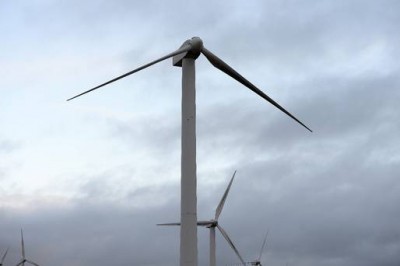
Wind Weasels Don’t Care Who They Destroy!!

Mexican Wind Farm Madness: Wind Industry Crime & Corruption Crush an Ancient Culture

2016_0129energyIstmus-Celestino-1

***

Renata Bessi is a freelance journalist and contributor the Americas Program and Desinformémonos. She has published articles in Brazilian media: The Trecheiro newspaper magazine, Página 22, Repórter Brasil, Rede Brasil Atual, Brasil de Fato, Outras Palavras.

Santiago Navarro is an economist, a freelance journalist, photographer and contributor to the Americas Program, Desinformémonos and SubVersiones.

Together they have determined to expose the wind industry in Mexico for precisely what it is: despicable.

The dark side of clean energy in Mexico
Truthout
Santiago Navarro F. and Renata Bessi
29 January 2016

A palm hat worn down by time covers the face of Celestino Bortolo Teran, a 60-year-old Indigenous Zapotec man. He walks behind his ox team as they open furrows in the earth. A 17-year-old youth trails behind, sowing white, red and black corn, engaging in a ritual of ancient knowledge shared between local people and the earth.

Neither of the two notices the sound of our car as we arrive “because of the wind turbines,” Teran says. Just 50 meters away, a wind farm has been installed by the Spanish company Gas Natural Fenosa. It will generate, at least for the next three decades, what governments and energy companies have declared “clean energy.”

Along with this farm, 20 others have been set up, forming what has come to be known as the wind corridor of the Isthmus of Tehuantepec, located in the southern Mexican state of Oaxaca. The corridor occupies a surface area of 17,867.8 hectares, across which 1,608 wind turbines have been installed. The secretary of tourism and economic development of Oaxaca claims that they will collectively generate 2,267.43 megawatts of energy.

The Tehuantepec Isthmus stretches just 200 kilometers from the Pacific to the Atlantic Ocean, making it the third narrowest strip of land connecting the Americas, after isthmuses in Nicaragua and Panama. In this area, mountains converge to create a geological tunnel, which funnels extremely high-speed winds between the two oceans. Energy investors have focused on the region after the government of Oaxaca claimed that it’s capable of producing 10,000 megawatts of wind energy in an area of 100,000 hectares.

“Before, I could hear all the animals living in the areas. Through their songs and sounds, I knew when it was going to rain or when it was the best time to plant,” Teran said with sadness and rage in his voice. “Now though, it seems the animals have left due to the wind turbines.”

What Teran does not know is whether the turbines, built in accordance with the Clean Development Mechanism (CDM), as defined in the Kyoto Protocol, are generating alternative energy that will actually help to reduce the greenhouse gas emissions of large corporations and industrialized countries. The main objective of these polluters is to prevent global temperatures from rising 2 degrees Celsius before 2100, according to the 21st Session of the Conference of the Parties to the UN Framework Convention on Climate Change (UNFCCC), better known as the COP21, which concluded in December 2015. “I don’t know what climate change is and neither do I know about the COP. I only know that our ancestral lands are being covered by these turbines,” Teran said.

At the Earth Summit held in Rio de Janeiro, Brazil, in 1992, participating countries passed the UNFCCC in response to climate change. With this accord, states set out to maintain their greenhouse gas emissions at the levels reached in 1990. At the third Conference of the Parties (COP3), held in Japan in 1997, the Kyoto Protocol was approved by industrialized countries, with the aim of reducing national emissions to an average of 5 percent below the 1990 levels, between 2008 and 2012. In order to help reduce the costs of this reduction, three “flexibility mechanisms” were designed: emissions trading, joint implementation and the aforementioned Clean Development Mechanism (CDM), under which a large number of the wind farms in the Tehuantepec Isthmus have been constructed.

According to the Kyoto Protocol, these mechanisms are meant to permit industrialized countries and private companies to reduce their emissions by developing clean energy projects in other parts of the world where it is more economically viable, and later include these reductions into national quotas. The second period of engagement of the Protocol is 2013-2020. In this period, countries in the European Union (excluding Iceland) have agreed to a collective emission reduction of 20 percent with respect to 1990 emission levels.

The Clean Energy Extraction and Energy Transition Financing Law statesthat Mexico will install technology to generate 25,000 megawatts of clean energy by 2024. “Mexico has an obligation to limit the electrical energy generated by fossil fuels to sixty-five percent (from the current eighty percent) by 2024,” the law states.

Teran continues sowing his corn while we ask him about the benefits he’s gained from the wind corridor and, a bit irritated, he responds: “They have not provided me or anyone in my family a job, and I don’t want anything to do with these companies or the government; I just want them to leave me in peace on my land. To let me live as I did beforehand.”

Wind Farms for Sale

2016_0129energyIstmus-Corredor-2

***

The US Department of Energy and the US Agency for International Development (USAID), with the justification to help accelerate the use of wind energy technologies in the state of Oaxaca, developed an atlas published in 2003, which mapped the wind potential in the state of Oaxaca. The mapping confirms that the isthmus is the region with the largest wind potential.

“This wind resource atlas is an important element of the Mexican strategy to ensure availability of the necessary information and to define specific renewable energy projects as well as tools access to financing and development support,” according to the atlas document.

The paper organizers say they will not share specific maps related to the respective areas of wind potential due to the confidentiality required in possible contracts signed between companies and the government of Mexico. Although more than a decade later, with the arrival of more parks in this territory, it has become clear which of these sites are mainly located on the shores of Laguna Superior.

For all the good intentions the United States had to cooperate with Mexico to invest in renewable energy, USAID made another document in 2009, called “Study of Export Potential Wind Energy of Mexico to the United States,” which confirms that the greatest potential of this energy is concentrated in the states of Oaxaca (2,600 megawatts) and Baja California (1,400 megawatts). In August 2015, the government of Mexico officially announced that the wind farm “Energía Sierra Juárez” in Baja California, the first wind project between Mexico and the United States, will export energy to California. And they are waiting for an interconnection to export the energy produced in the Isthmus of Tehuantepec.

“This mapping is only one part of a series of mega-projects that are designed for this area,” said biologist and coastal ecology and fishery sciences professor and researcher Patricia Mora, of the Interdisciplinary Research Center for Integral Regional Development of Oaxaca (CIIDIR Oaxaca) based at the Instituto Politécnico Nacional.”Not only is it wind energy, but also oil and gas, and also mining, an infrastructure for the movement of goods. Therefore, this wind mapping is only a pretext to map the full potential of this whole geostrategic area, which functions as a type of catalog to offer it to businesses.”

The wind corridor was designed from the North American Free Trade Agreement (NAFTA), signed in 1994 by Mexico, the United States and Canada, subsequently given continuity with the international agreement, Plan Puebla Panama (PPP), and now remade into Proyecto Mesoamerica. The project’s main objective was to “create favorable conditions for the flow of goods, oil, minerals and energy.”

“Clean energy is part of this context. It’s part of the continuity of the exponential economic growth of capital; it is not something alternative to it. It’s another link that is painted green,” Mora said.

Not-So-Clean Energy

Two-hundred kilometers connect the Pacific Ocean with the Atlantic. Photo archive of the first consultation that occurred in the Isthmus, specifically regarding Southern wind farm.

To set the turbines, hundreds of tons of cement that interrupt water flows are used. “It is worth mentioning that they are using the cement company Cemex, who also has a wind farm in the Isthmus,” Mora said.

The population of Venta, where the first wind farm was built, was literally surrounded by turbines. Insufficient with the already installed complex, under the argument of self-sufficiency and with a capacity of 250 megawatts, the park called Eurus, built in 2009, was auctioned off with capital from the Spanish company Acciona and transnational construction materials company Cemex.

It seems that Cemex is the role model of the CDM, a clean and responsible company that has registered several projects this way. In its 2013 report, Cemex boasts of expanding their projects with the CDM model. “Six new initiatives were registered as CDM in 2013, which include four alternative fuel projects in Mexico and Panama and two wind farms located in Mexico, among those Eurus and Ventika.”

In 2015, the Eurus wind farm won the prize awarded by the Inter-American Development Bank (IDB Infrastructure 360​​°) in the category of “Impact on Population and Leadership,” which recognizes outstanding sustainability practices in infrastructure investments in Latin America and Caribbean.

In February 2015, community activists from the organization Defenders of the Earth and Sea announced, “about 150 wind turbines owned by Acciona and located in the Eurus wind farm and Oaxaca III, have spilt oil, from the blades and main coil, which has polluted the ground and the water, affecting several farmers and ranches surrounding the area.”Both wind farms have 1,500-megawatt turbines, which need 400 liters of synthetic oil, while the 800-megawatt turbines only need 200 liters of oil per turbine per year.

The Costs of Clean Energy

Archaeological remains found by farmers on their land.

***

The dominant development model in the production of electricity from wind power in the Tehuantepec Isthmus is stated as a formula in which everyone wins – the government, developers and industry. The model has been of self-supply, in which a private developer of wind power generates energy production contracts for a wide portfolio of industrial customers (Coca-Cola, Cemex, Walmart and Bimbo, for example) for a certain period. In this way, companies can set prices lower than the market for the long term, and separately they enjoy the financial benefits of carbon trading, which on one hand, allows them to continue polluting and, secondly, to speculate on the sale of these pollution permits to other companies. Developers can access financing schemes for “green” projects through organizations like the Inter-American Development Bank and the Clean Development Mechanism (CDM) of the UN.

The communities are also presented as winners in these projects for the development of self-sufficiency and the income they receive from the lease of their land.

Why the Resistance?

Community women demonstrate against the wind projects on their ancestral land.

***

In November of 2012, the consortium Mareña Renovables set out to build the largest wind farm in Latin America in the Barra de Santa Teresa, in San Dionisio del Mar, Oaxaca. The Barra is a strip of land between two lagoons that connects to the sea in the Isthmus of Tehuantepec. Here the Indigenous community of Binni Záa (Zapotec) and Ikojts (Huave), together with the community of Alvaro Obregon, opposed and blocked all access to this strip of land. In response, the state sent about 500 troops from the state police to unblock access, acting with extreme violence. The Indigenous community resisted until the government suspended construction of the wind park. In response to constant harassment and persecution,the Alvaro Obregon community created a community police force called “Binni Guiapa Guidxi” on February 9, 2013.

What was known as Mareña Renovables has changed its name and its form several times. The Spanish energy company, the Preneal Group, which had signed exploration contracts and obtained permits from the state government, sold the rights to the project for $89 million to FEMSA, a subsidiary of the Coca-Cola Company and the Macquarie Group, the largest investment bank in Australia. These companies quickly sold part of their stakes to Mitsubishi Corporation and Dutch pension fund PGGM, signing at the same time a power purchase agreement with FEMSA-Heineken for 20 years.

They also sought to speculate with the reduction of 825,707 tons of carbon dioxide a year, equivalent to the emissions of 161,903 cars.

“Mother Earth is sick; the disease is global warming. They want to profit with the same disease that they have caused to Mother Earth,” said Carlos Sanchez, a Zapotec activistwho participated in the resistance against the installation of the wind farm in Barra de Santa Teresa Park and the installation of a park by Gas Natural Fenosa in Juchitan de Zaragoza.”Under the pretext of reducing global warming, they come to our territories to control our forests, mountains, our sacred places and our water.”

Sanchez is also founder and member of the community radio station Totopo, created to report on mega-projects in the region of the Isthmus of Tehuantepec. During an intermission of his radio programming, we asked Sanchez about what the Zapotec people know about the CDM. “It is a discourse between businessmen. They are labels exchanged between companies to justify their pollution and do not explain anything to Indigenous peoples,” he said.

“Could we, with our forests, also sell carbon credits, bypassing these companies? Who will buy?” Sanchez asked. “It is no coincidence that only those who understand these mechanisms are the only ones who benefit as employers and the state.”

He added, “We do not even benefit from the energy produced. If you walk by the communities you will notice what the clean development they have brought consists of, and I challenge one of the owners of the companies to see if they want to live in the midst of these turbines.”

Following the demonstrations made by Indigenous peoples on May 8, 2013, the secretary of tourism of the state of Oaxaca, José Zorrilla Diego, announced the cancellation of the proposed Renewable Mareña in the Barra de Santa Teresa. Shortly after the announcement of the cancellation, the state government said the project would continue in other areas of the isthmus.

Human Rights Violations and Perspectives

Community organization against the wind farm in the Barra de Santa Teresa was the first major resistance against the ways in which these companies are developing their projects on the Isthmus of Tehuantepec. Sanchez reports that, not coincidentally, it is in this period that the companies began hiring hit men, with the backing of the state.”We see gunmen escorted to the state police. Some of us have been persecuted with absurd lawsuits, accusing us of kidnapping, attacks on the roads, and damage to other people’s private property. The radio station has undergone several attempts at closing, with the invasion of the federal police and Navy,” Sanchez said.

Sanchez reports that since 2013, he does not go to public places. His mobility is restricted to the community. “We endorse the protection mechanism of the Ministry of Interior. But we have realized that their task of protection has been given to the state police, the same people who attacked us. I do not know whether they have come to protect me or arrest me. So I rejected this protection mechanism and started a small personal protection protocol,” Sanchez said. “The state supports the wind companies,” he added.

The Committee for the Integral Defense of Human Rights Gobixha (CódigoDH) Oaxaca demanded the immediate intervention of the federal and state governments to stop the wave of violence against supporters of the Popular Assembly of the People of Juchitan who have been victims of threats, harassment, persecution and attacks, including the murder of one of its members. This followed the conflict rooted in the construction of the Bii Hioxo wind farm, according to CódigoDH. But there was no response.

The company Gas Natural Fenosa rejects the accusations, ensuring, “While certain groups have filed several allegations regarding violations of human rights of communities affected by the project, Gas Natural Fenosa says they are unfounded, that they lack objective justification, and are incompatible with the commitments made by the company’s Human Rights Policy.”

New Strategy, New Park, Old Problems

Many homes have been surrounded by wind farms across the Isthmus of Tehuantepec.

***

It did not take long for the government’s 2013 promise – to relocate the project from the Barra de Santa Teresa toward another zone in the Isthmus of Tehuantepec – to take shape. In 2014, the company Mareña Renovables, now called Eolica del Sur (Southern Wind), found a new place to develop clean energy and contribute to the goals of reducing greenhouse gases in Laguna Superior.

In 2016, the project foresees the installation of 132 wind turbines of three megawatts each in an area of ​​5,332 hectares, avoiding the emission of 879,000 tons of greenhouse gases per year, according to the company.

An independent report released by researchers from different fields and universities points out various inconsistencies in the environmental impact study submitted by the company and approved by the Secretariat of Environmental and Natural Resources (SEMANART).

The first contradiction is in regards to the company that made the study. The company responsible is Especialistas Ambientales (Environmental Specialists). And according to the constitutive act of the company, it was possible to determine that the founding partner is the engineer Rodolfo Lacy Tamayo, current undersecretary of planning and environmental policy of the SEMANART.

The document warned that there are many inconsistencies with respect to the surface of Baja Espinoza Forest (Selva Baja Espinosa), which is to be cleared for the construction of this project. Evaluating the information available on the environmental impact statement’s (EIS) own field research, “our analysis shows that the developer intends to cut 100% of the tree surface without proposing any measure of compensation.”

“This is particularly worrying,” according to the document. “The Selva Baja Espinoza connecting the Priority Marine Regions: Continental Shelf Gulf of Tehuantepec, and Upper and Lower Laguna; and Terrestrial Priority Regions: Northern Sierras of Oaxaca Mixe and Zoque-La Selva Sepultura.”

According to Eduardo Centeno, director of the Eolica del Sur company, the EIS is submitted in accordance with Mexican law and contains mitigation measures and preventive measures for the environment, including reforestation.

Another concern of communities is in relation to water pollution in the lagoon and sea area as a result of the oil that will drain on the beaches – 300 liters per wind turbine. Biologist Genoveva Bernal of SEMANART explains that the institution responsible for approving the EIS says the park will not affect Laguna Superior at 3.9 kilometers. “With this distance, it will not have an impact,” Bernal said.

***

***

Alejandro Castaneira, professor and researcher at the National School of Anthropology and History, who participated in the creation of the report, says the SEMANART authorized an environmental impact study that was wrongly produced. “It is announced that parks are generating clean energy. Are we going to use clean energy to produce Coca-Cola and Lay’s chips while poverty continues?” Castaneira said.

A Far From Participatory Process

There is currently no established wind farm that respects biodiversity. (Photo: Renata Bessi) There is currently no established wind farm that respects biodiversity.

***

After the events of 2013, Eolica del Sur and the state convened for the first free, prior and informed consultation, under Convention 169 of the International Labor Organization for Indigenous peoples, 22 years since the arrival of the first wind farm in Isthmus of Tehuantepec. This consultation was initiated in November 2014, and completed in July 2015, and is regarded as an essential element for the project to become effective.

On the one hand, both the federal and state governments (as well as the company) claim that the consultation fulfilled its role, which justifies the project, since most of the participants approved. On the other hand, there is enormous pressure for the cancellation of the same consultation because of the irregularities.

At a press conference, Bettina Cruz Velázquez, a member of the Assembly of Indigenous Peoples of the Isthmus of Tehuantepec in Defense of Land and Territory, said that the consultation was carried out after local and federal permits and approvals of land use had already been given by authorities. This shows the federal government’s decision to strip Binni Záa(Zapotec) of its territory. “The consultation is a simulation. They do not respect international standards,” Cruz Velázquez said.

A petition for relief was filed for the 1,166 Indigenous Binni Záa in order to protect Indigenous rights and defend their territory against the wind project. On September 30, 2015, the judge issued an order to suspend all licenses, permits, goods, approvals, licenses and land use changes granted by federal and local authorities, until the final judgment is issued.

“The state allows these projects on the one hand, allowing all the state and federal agencies to expedite permits,” said lawyer Ricardo Lagines Garsa, adviser to the community. “Yet Indigenous peoples are not aware of these legal proceedings, so that they can actually participate in decisions. The whole isthmus territory has been divided between companies [due to] the lack of awareness of the peasant and Indigenous communities who live here.”

Who Benefits From “Clean” Energy?

According to documents from the Commission for Dialogue with the Indigenous Peoples of Mexico, international experience has shown that remuneration paid by energy companies erecting wind farms on leased land oscillates between 1 and 5 percent of the gross income of the energy produced by the turbines. “However, the case of Mexico is drastically different if you take into account the much lower value compared to international standards: here, remuneration is between .025 and 1.53% [of gross income].”

The Tepeyac Human Rights Center states that “because there is no organization that regulates the value of land in Mexico, energy companies pay landowners far less than the actual value, which can provoke tension in communities in which wind farms are set up.”

The criteria that have been used to justify the implementation of wind parks in Mexico as a means of reducing greenhouse gas emissions, as well as total energy production, are insufficient to determine the benefits, risks and broader implications of wind energy production, according to the Commission for Dialogue with the Indigenous Peoples of Mexico. “The criteria ignore or underestimate the complexity and cognitivist and ethical uncertainty of the risks and impacts created by wind parks on a large scale,” the commission stated. “They cannot be seen as a viable energy alternative if they continue to reproduce and deepen socioeconomic and environmental inequalities between countries and between social groups within individual countries.”
Truthout

***

A Worthy Opponent, for the Wind-Pushers!

SA Wind Farm War: AFL CEO – Gillon McLachlan – Launches Litigation Against NZ’s Trustpower

gillon mclachlan

****

New Zealand’s Trustpower love throwing their weight around – provided the targets of their violence and thuggery are 79 Year Old Pensioners and Disabled Farmers.

Now, these delightful characters have a real fight on their hands.

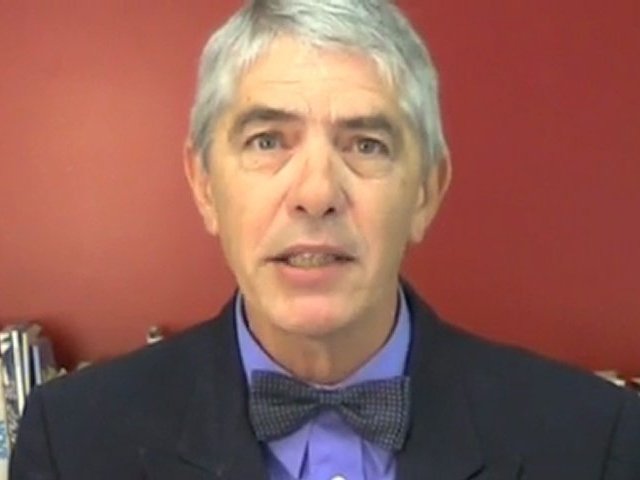
Gillon McLachlan is as well-heeled as he is passionate about his beloved property, Rosebank – the magnificent range of Hills in which it nestles, and the thriving communities that surround and support it.

Back in December, Gillon pitched in with a well-delivered plea to the Mid-Murray DAP to knock back Trustpower’s ludicrous proposal to carpet 114 of these things all over the Eastern Mount Lofty Ranges:

AFL’s CEO – Gillon McLachlan Hammers the ‘Desecration of his Country’ & the ‘Extreme Community Division’ Caused by Wind Farms

With the stinky little DAP predictably rubber-stamping the application, Gillon has now thrown his considerable resources into the battle, along with a hundred or so others, with an Appeal launched in South Australia’s planning appeal court, the Environment, Resources & Development Court. Here’s SA’s local Sunday rag’s take on the unfolding war against the threatened destruction of SA’s iconic Mount Lofty Ranges and the dozen of communities that those fertile hills sustain.

AFL boss’s bid to ban wind turbines near his farm
Sunday Mail
Ben Hyde
31 January 2016

AFL chief executive Gillon McLachlan has launched court action over the approval of a massive wind farm on the doorstep of his family’s historic Rosebank property, near Mt Pleasant.

Mr McLachlan has appealed against the approval of the $700 million wind farm, to feature 114 turbines standing up to 165m high dotted along the ranges between Palmer, Tungkillo and Sanderston.

The appeal is listed against wind farm developers Trustpower, the Mid Murray Council, Environment Protection Agency, the Planning Department and the Environment Minister.

A preliminary conference is scheduled to be heard in the Environment, Resources and Development Court by Commissioner Lolita Mohyla at 3.30pm tomorrow.

Mr McLachlan’s is one of four appeals filed against the wind farm, which was approved by the Mid Murray Council’s development assessment panel on December 18. He yesterday declined to comment about the appeal.

In December, he submitted a video message to the development assessment panel opposing the wind farm being built.

“Even if it were to be conclusively established wind farms do not produce health problems, it’s annoying and affects quality of life,” he said.

“I was frankly heartbroken that this land will be forever marred by enormous man-made structures.”

Mr McLachlan also said any wind farm would cause significant damage to the land, would hinder potential tourism opportunities and “cause extreme division in the community”.

Rosebank, a prominent and historic sheep station east of Mt Pleasant, was pioneered in 1843 by Scottish-born landowner George Melrose, whose descendants include the McLachlan family.

The Eastern Mount Lofty Ranges Landscape Guardians, on behalf of up to 90 residents in the region, have also appealed against the development. They are scheduled for a preliminary conference in the ERD Court in mid-February.

During an ERD Court preliminary conference, the parties discuss how they would like the court proceedings to occur. This could include through continued negotiations, mediation or by trial or hearing.

Eastern Mount Lofty Ranges Landscape Guardians chair Tony Walker said opponents felt the approval process was unjust. “We believe that the whole process failed to give any weight to the objectors,” he said. “There is a lot of opposition — from the little man on the ground and from people with more resources.”

Numerous people living near wind farms have claimed they cause health problems, including severe headaches and disrupted sleep patterns.

However, the National Health and Medical Research Council issued a report last year that found there was “currently no consistent evidence that wind farms cause adverse health effects in humans” — but said there was a need for more in-depth research.

Mr Walker said those opposed to the development were prepared for a fight. “We’ve been fighting for almost five years (and) it’s a fight that could go on for years, depending on who blinks first,” he said. “(But) it’s worth fighting for.”
Sunday Mail

If Ben Hyde truly believes there’s nothing to complaints about living with incessant turbine generated low-frequency noise and infrasound, he should get out more.

Starting with a look at the Federal Senate Inquiry Report, that excoriatedthe corruption and bias of the NHMRC-  an outfit peopled by wind industry plants, that ignores almost every relevant piece of wind turbine acoustic research and, instead, relies on the musings of a former tobacco advertising guru, who claims noise induced sleep deprivation suffered by wind farm neighbours is all in their heads:

NHMRC Fails Science 101 in Continued Wind Farm Health Cover Up

Ben might also jump in a set of wheels and head for Jamestown, where he can meet with Clive and Trina Gare, cattle graziers in SA’s Mid-North.

Since October 2010, the Gares have played host to 19, 2.1MW Suzlon S88 turbines, which sit on a range of hills to the West of their stately homestead. Under their contract with AGL they receive around $200,000 a year; and have pocketed over $1 million since the deal began.

In a remarkable move, the Gares gave evidence to the Senate Inquiry into the great wind power fraud during its Adelaide hearing, in June 2015. Any journalist worth their salt would start by taking a look at what they told a Federal Senate Committee about ‘the worst decision of their lives’:

SA Farmers Paid $1 Million to Host 19 Turbines Tell Senate they “Would Never Do it Again” due to “Unbearable” Sleep-Destroying Noise

When farmers being paid $200,000 a year to host these things complain bitterly about sleep deprivation as a regular event, then STT is pretty much satisfied that the noise and vibration generated by turbines is causing what the World Health Organisation has considered to be an adverse health effect in and of itself (for over 60 years).

What Gillon McLachlan is about to tackle is willful ignorance and institutional corruption – of precisely the kind that resulted in the decision to approve the construction of 114 of these things, shoe-horned into hundreds of backyards, all over the prettiest and most productive part of the Adelaide Hills.

What makes the DAP’s decision all the more ridiculous is that South Australians are already paying the highest power prices in Australia (if not the World on a purchasing power parity basis) with a grid on the brink of collapse.

It’s been almost a decade since SA’s Labor Party shackled itself to wind power: a wholly weather dependent power source; that’s intermittent and unreliable, requiring 100% of it’s capacity to be backed-up 100% of the time by conventional power generators; that, accordingly, has NO commercial value (save the massive power consumer and/or taxpayer subsidies it attracts); kills millions of birds and bats; and, with the incessant low-frequency noise and infrasound it generates, drives people mad in their homes, or drives them out of them altogether.

It takes a certain kind of fool to believe that SA’s energy disaster can be improved by backing more of the same. But SA’s public institutions are drenched in deluded Labor (green/left) ideology; and peopled by lunatics who wouldn’t know the first thing about power generation (or much else, really).

Gillon McLachlan and his compatriots are about to hit them with a solid dose of common sense and a mountain of facts. The Battle has begun.

Rosebank

Wind Weasel Wants To Attack Innocent Victims…

Wind Industry Peopled by Career Criminals: Convicted Felon Launches Ludicrous Defamation Claim Against Opponents

Definition of fraud

The wind industry seems to attract a particular class of bloke, in much the same way that the Prohibition era drew lots of heavy-set Italians to the Mob.

Maybe that seemingly endless stream of massive subsidies filched from taxpayers and power consumers generates the same allure as festering dung does for swarms of flies?

Whatever it is, the whiff that surrounds the wind industry has attracted (and continues to attract) a class that has no hesitation lying, cheating, stealing and even bonking their way to the easy loot on offer.

The Italian Mob were in on the wind power fraud from the get-go: applying their considerable (and perfectly applicable) skills – leading the European wind power fraud, with what economists call “first-mover-advantage” (see our post here).

We’ve reported on just how rotten the wind industry is – from top to bottom – and whether it’s bribery and fraud; vote rigging scandals; tax fraud; investor fraud or REC fraud – wind weasels set a uniform standard that would make most businessmen blush.

Now, here’s another story detailing not only the fact that the wind industry is peopled by career criminals, but also that their audacity knows no bounds.

Wind farm developer sues project opponents for defamation
Arkansas Online
Dan Holtmeyer
16 January 2016

The CEO of the company hoping to build the state’s first wind farm west of Springdale has sued two of the project’s opponents for defamation.

Jody Davis, head of Texas-based Dragonfly Industries International, claims several disparaging posts made by Jonathon and Vivian Hamby on the “Stop the Elm Springs Wind Farm” Facebook page aren’t true and have damaged his and his company’s reputation. Davis filed the lawsuit in Washington County Circuit Court and asks for a judge to order the married couple to remove the posts, compensate Davis for the damage done and pay punitive damages.

The lawsuit cites five examples of the posts, including one in November asking of Davis and another man involved in the project, “Do these look like ‘experts’ in wind energy to you, or do they look like career criminals who scam people out of their hard-earned money?” Davis claims the Hambys knew the statements were false or were published with reckless disregard of the truth.

That post referred to Davis’s history of crimes involving money. Davis pleaded guilty in 2009 to embezzling about $785,000 from three organizations in Oklahoma and served 17 months in prison, according to federal court documents. He was also sentenced to probation in Arkansas for a hot-check violation in 1999.

The Hambys’ attorney, Travis Story, dismissed the complaint in a statement as an attempt to intimidate the Hambys. The truth is “an absolute defense” in defamation cases, Story wrote.

“This is a pathetic and desperate move by Jody Davis,” Jonathon Hamby said Friday evening. “His criminal history is what is causing him problems, not some Facebook post.”

Davis didn’t return an email or phone message requesting comment Friday evening. Last year he said he had paid for and had grown past his mistakes.

“It is really sad that the press and the community wish to put more emphasis on tearing a person down who has truly changed their life and worked hard to build a life and future for their family that is structured around Godly relationships,” Davis wrote in an email last month.

Davis and other Dragonfly representatives have said they plan to build dozens of turbines on a 300-acre site on the western edge of Elm Springs, a town of about 1,700 people. They have said they intend to use a unique turbine design that’s quieter, safer for wildlife and more efficient than the standard design.

The Hambys live next to the land. They and other neighbors worried about the project’s impact on their health and property value and said the turbine design was untested and unproven. After the City Council approved the land’s annexation into Elm Springs last fall, the Hambys were involved with the successful petition drive to put the annexation up for a public vote. The vote’s scheduled for March 1.

Elite Energy, a related company that owns the site, tried to get the land rezoned from residential-agricultural use for the project but dropped the request in December. Hamby said he believed the project could still go forward, because residential-agricultural zoning allows utility facilities under city code.

At the Planning Commission’s meeting Monday, chairman Matt Casey said he agreed the 150-foot turbines could be built on the land as zoned, according to a recording of the meeting. The project would still need building permits and perhaps other permitting before going forward, Casey said. The commission didn’t take any formal action.

Jonathon Hamby attended the meeting and said neighbors’ concerns must be addressed.

“It seems like you’re trying to find a way around this,” he told the commission.

Mayor Harold Douthit said Hamby and others had several public opportunities to speak their minds. Hamby and Douthit argued for a moment before Casey ended public comment and adjourned the meeting.
Arkansas Online

As attorney, Travis Story, correctly points out, “the truth is “an absolute defense” in defamation cases”. Indeed it is.

Now, here’s the unvarnished truth about Jody Davis

Wind Farm Company CEO Responds To Past Embezzlement Conviction
5 News KFSM
Zuzanna Sitek
19 November 2015

ELM SPRINGS (KFSM) — The chief executive officer of a Texas-based company that has proposed building a wind farm on 300 acres in Elm Springs addressed his past embezzling conviction Thursday (Nov. 19).

Jody Douglas Davis is the CEO of Dragonfly Industries International, LLC. On Aug. 10, 2009 he pleaded guilty to 18 counts of wire fraud and 64 counts of money laundering in the U.S. District Court for the Northern District of Oklahoma. Upon sentencing 46 counts of money laundering were dropped and Davis was sentenced to a little over three years in federal prison. Davis was released July 18, 2011 and was put on supervised release until July 17, 2014, according to records from the Federal Bureau of Prisons.

On Thursday, he released the following statement to 5NEWS:

“I made some mistakes in my past. I paid a high price for these mistakes, including a debt to society. The experience transformed me. Since that time, I have tried to live my life as an example, so others might understand how they can be transformed.   I hope and believe my business and personal achievements in recent years reflect that example.”

The Board of Directors of Dragonfly Industries also sent 5NEWS at statement:

“The Board of Directors of Dragonfly Industries International, LLC are completely behind Mr. Davis as our Chief Executive Officer. As a company, we believe that there are such things as second chances when a person does not just modify their behavior but one goes through complete heart change. Mr. Jody Davis has our full support and we eagerly look forward to the future in all our business endeavors.”

Davis embezzled $1,153,627 from Windsong Marketing, LLC, Newsong Assembly and Buyers Assistance, LLC, according to a federal indictment. All three companies were involved in home-buying assistance and Davis was employed as an account executive from about August 2003 to February 2005, the indictment states.

Windsong, Newsong and Buyers would advance money to help home buyers in meeting their financial obligations for their home purchases. When the home purchase was completed, the seller of the home would send Windsong, Newsong and Buyers an amount that equaled or exceeded that which had been advanced to the home buyer. If the sale failed completely, then the home buyer would be obligated to return the amount which had been advanced to him or her to purchase the home.

From January 2004 to February 2005, Davis would contact home buyers and sellers and instruct them to wire transfer the money that was supposed to be returned to Newsong, Windsong and Buyers to a bank account he had set up at First Pryority Bank in Pryor, Oklahoma instead of wiring the money into bank accounts belonging to Newsong, Windsong and Buyers, according to the indictment. Davis had listed the account at First Pryority Bank as belonging to Autos, Inc. even though Davis was not in the business of vehicle sales or servicing, the indictment states.

Davis used the money sent to the Auto, Inc. account to settle prior debts, as well as to purchase vehicles, real estate, building and property improvements, boats, personal water craft, all-terrain vehicles, tractors and jewelry, including a diamond ring and earrings, according to the indictment.

As part of his plea agreement Davis must make restitution to his victims. Newsong, Windsong and Buyers were owned by Gayle Towry before the companies were dissolved, according to court documents. Upon Towry’s death in December 2009, just months after Davis’ guilty plea, restitution payments were transferred to one of his children, Kenneth Towry.

Kenneth Towry spoke with 5NEWS about the case and identified the Jody Davis pictured in the photograph on the Dragonfly Industries website as the same man who embezzled money from his father. Towry said of the amount Davis has been order to pay back, he has seen about $1,000 so far.

Towry’s attorney also confirmed the CEO of Dragonfly Industries and the man who defrauded his client were the same person.

Federal court documents show jurisdiction over Davis’ 2009 case was transferred from the U.S. District Court for the Northern District of Oklahoma to the U.S. District Court for the Eastern District of Arkansas in August 2012.

Documents filed with the Texas Secretary of State’s office show Dragonfly Industries International, LLC filed its certificate of formation Sept. 5, 2014. The registered agent on the formation form is listed as Nadine R. King-Mays, an attorney based out of Dallas, Texas.

On a Texas Franchise Tax Public Information Report filed in 2015 Jody Davis is listed as a governing member of the company. His address on the form is listed as being in Farmington, Arkansas. The other governing members listed on the report are Phillip Ridings and Craig Cook. Both of their addresses are listed as being in Jupiter, Florida. According to the Dragonfly Industries website, Ridings is listed as the inventor of the wind turbine that the company has proposed to use in Elm Springs and Cook is listed as the chief operating officer.

5NEWS contacted the address where Dragonfly Industries has its office and was told the suite is undergoing renovation.

The wind farm project proposed in Elm Springs would be Dragonfly Industries’ first wind farm, according to the company’s website. Mayor Harold Douthit said he didn’t know about Davis’ criminal history, and said it wasn’t his place to ask.

“We give every business that wants to operate in Elm Springs no matter what they are, the same level of scrutiny,” Douthit said. “If they’re approved we welcome them, and we wish them well, but the scope of what we can do is limited to the proposal that’s in front of us.”

The Elm Springs City Council tabled a motion Monday (Nov. 16) to rezone the property for the wind farm to give council members more time to look into Dragonfly Industries and to address residents’ concerns.

Stop the Elm Springs Wind Farm, which opposes the project, issued the following statement Thursday:

“We were surprised to learn of Jody Davis’ criminal history this morning when the news story aired. Needless to say, we have been suspicious of this operation from the beginning. The individuals involved with Dragonfly have no wind energy experience, they have never built one of their “experimental” turbines, and they don’t have a buyer for their energy. In addition, they wanted to build a wind farm in an area that does not have the wind speeds necessary to sustain a wind farm. Mr. Davis is supposed to be present at the Elm Springs Planning Commission meeting on Dec. 14 to answer all of the public’s questions. We look forward to hearing what he has to say on Dec. 14.”

A court records search shows Jody Davis also has a criminal record in Arkansas.

In April 1999, Davis was accused of violating the Arkansas hot check law, according to records filed in Washington County Circuit Court. In January 1999 Davis wrote himself a check in the sum of $10,000 on an account at McIlroy Bank (now Arvest Bank) based on a deposit from Peoples Bank in Westville, Oklahoma which would later deny payment because of insufficient funds on deposit, the documents state.

In June 1999, Davis pleaded guilty and was sentenced to six years probation, according to court records. He was also ordered to pay $10,096 in restitution. Davis satisfied the conditions of his judgement in September 2002, records show.

Records show Davis was also arrested in May 2007 in Faulkner County on possession of a controlled substance. He later pleaded guilty and was sentenced to five years of probation. In 2009, just months before he pleaded guilty to federal embezzlement charges, he was arrested on a probation violation, according to court records.

In a letter from 2009 to a federal judge, Davis asks the court to let him voluntarily surrender to serve his time in federal prison. In the letter, Davis writes he developed a drug problem four years earlier because of a series of tragic events. He also asks the court to give him time to make sure his ill mother is taken care of and to see his children before beginning his federal prison sentence.

As part of his federal prison sentence, the court recommended Davis be put in a facility where he will have the opportunity to participate in the Bureau of Prisons’ Residential Drug Abuse Treatment Program. The court also recommended Davis be placed in a facility as close to Searcy, Arkansas as possible. The closest federal facility to Searcy is in Forrest City.

A search of the Arkansas Secretary of State website also shows Davis had three companies in Northwest Arkansas registered in his name: Global Growth Investments, Inc in Fayetteville in 2001, J.D. Davis, Inc in Springdale in 1998 and Star City Collision Center, LLC in Star City in 2009. The licenses for all three were revoked.
5 News KFSM

jody-davis-mug-shot

****

And it seems that Jody Davis wasn’t the only felon attracted by the wind industry’s impeccable record for probity and integrity ….

Records show proposed wind farm representative has history of financial trouble
5 News KFSM
Zuzanna Sitek and Dillon Thomas
24 November 2015

ELM SPRINGS (KFSM) – Another key player involved in the proposal to build a wind farm in Elm Springs has a history of criminal and civil cases involving his finances.

Court documents obtained by 5NEWS show Cody Fell has a history of financial issues in Arkansas and Oklahoma. According to city council meeting minutes, Fell and two others represented Dragonfly Industries International at initial meetings with Elm Spring city leaders in December 2014. However, Fell’s official role in the company is unclear and he is not listed on the company’s website.

Court documents that go back to May 2003 show Fell has a history of failure to appear, failure to pay for services and a conviction for violating Arkansas’ hot check law.

In 2003, Fell was ordered to pay $5,357 in Washington County when he didn’t appear for a case involving one of his companies, Creative Home Designs, after he failed to pay his account with Smith Tile Company.

Later in March 2004, court records show Fell pleaded guilty to a misdemeanor violation of Arkansas’ hot check law after he knowingly made out a check to Air Control Corporation for $2,462 that wouldn’t clear. Fell was sentenced to 12 months of probation with minimal supervision.

Also in 2004, documents show Fell faced foreclosure on a property in Tontitown after owing Arkansas National Bank more than $316,000.

In 2005, after failing to respond to another court case, Fell and another one of his companies, Builder Services of Northwest Arkansas, were ordered to pay nearly $5,400 to United Bank of Springdale.

Then in 2009, First State Bank of Northwest Arkansas took Fell to court after he failed to make payments on a loan and again didn’t respond to a summons. Fell was ordered to pay nearly $29,000.

Fell also has a record of financial cases in Oklahoma.

In 2007, in Adair County, Fell was order to pay more than $40,500 to the Theodore R. Murray Living Trust after defaulting on a promissory note and mortgage.

That same year, Fell and one of his companies in Oklahoma, Custom Structures, was summoned to court by Tulsa Casting and ordered to pay nearly $3,500. Records show a bench warrant was issued for Fell in 2009, but was returned several months later after Fell couldn’t be located.

In 2008, Fell and another one of his companies, Eagle Management, were summoned to court for breach of contract, although the sum sought in the case was not available in online records. The records show a judge issued several bench warrants for Fell after he failed to appear in court. Fell and his wife filed for bankruptcy, but their case was dismissed “because of various misrepresentations of the defendants,” according to a citation for contempt.

And as recently as 2012, Fell and Eagle Management were once again brought to court for breach of contract after failing to pay a $55,000 contract. Again, the judgment was by default because records show Fell never showed up for court or responded to any summons.

Records show Fell has also been a defendant in several cases in Delaware County. In two of the civil cases the sought monetary relief exceeded $10,000.

Dragonfly Industry’s CEO, Jody Davis, released a statement last week regarding an embezzlement conviction from 2009 for which he served time in federal prison.

5NEWS contacted Davis regarding Fell’s background, but didn’t receive a response.

Elm Springs Mayor Harold Douthit sent the following statement to 5NEWS Tuesday (Nov. 14):

The information brought to light recently surrounding Dragonfly personnel no doubt has put a cloud on the future of the wind farm project. I am confident the Planning Commission and City Council will make the right decisions for the citizens of Elm Springs. I respectfully support those decisions.

According to Washington County real estate records, the plot of land for the proposed wind farm project is located at Tally Gate Road and Kenneth Price Road and was annexed into Elm Springs by the city council in October.

Records indicate the land is owned by Elite Energy, LLC, a company that’s registered to Brandon Smith, and was purchased in February 2015 from Chambers Bank. City council meeting minutes show Smith was also present to discuss the wind farm project with city leaders in December 2014. Fell, Smith and Ron Filbeck are listed in the minutes are representing Dragonfly Industries. None of the three men are listed on the company’s website.

Arkansas Secretary of State records show Fell, Smith and Filbeck listed as managing members of CBR Investments, also Auto Solutions Used Cars, in Springdale.

Documents from the Arkansas Department of Environmental Quality indicate the Arkansas One Elite Energy Wind Facility has been granted a stormwater construction general permit. The permit correspondence was addressed to Arkansas Wind Power, LLC and Jody Davis. Arkansas Secretary of State records indicate Arkansas Wind Power is registered to Phillip Ridings, who is listed as the inventor of the wind turbine technology that will be used in Elm Springs, according to the Dragonfly Industries webpage.
5 News KFSM

cody-fell-mugshot

Australian Power Retailers Deliver Fatal Blow to Wind Industry with Mass Solar Roll-Out

Wind is Novelty Energy. Not for Prime Time!

stopthesethings's avatarSTOP THESE THINGS

solar-panels-at-Nyngan Collecting RECs for the time being …

****

STT has been pointing out for sometime now, the fact that Australia’s big 3 power retailers have been refusing to ‘play ball’ with beleaguered wind power cowboys, like near-bankrupt, Infigen and the union super fund backed disaster, Pacific Hydro.

Commercial retailers have not entered any power purchase agreements with wind power outfits, since about November 2012; and have made it very clear that they have no intention of doing so, any time soon.

As we noted back in September last year – Let the Sun Shine In: Australia’s BIGGEST Power Retailer Determined to Kill Wind Power – Australia’s big retailers had created a strategy that would kill 2 birds with one well-aimed stone. The first victim on their radar being the wind industry in Australia; and the second glittering prize, the completely unsustainable Large-Scale Renewable Energy Target.

Here’s how the strategy…

View original post 2,279 more words

Wind Turbine Torture….Denied, and Ignored by Authorities!

Group says wind farm causing health issues

Credit:  Sharon Roznik, USA TODAY NETWORK-Wisconsin | January 24, 2016 | www.fdlreporter.com/ ~~

Joan Lagerman likens the sound to “shoes in a clothes dryer,” or “someone shutting a dumpster lid over and over.”

The Malone woman is among a group of residents who are suffering from a variety of ailments they believe are caused from living in the shadow of wind turbines.

On certain days, when the blades are coated in ice, the noise is so bad it shakes the walls of her home.

Calling themselves Concerned Citizens of Fond du Lac County, the group plans to attend the next meeting of the Fond du Lac County Health Department at 6:30 p.m. on Feb. 2 to voice health concerns they say are caused by the whirl of the seven-ton blades.

Their main goal is to shut down the turbines at night so residents can get some sleep.

Blue Sky Green Field is a WE Energies, 88-turbine wind farm set on 10,600 acres, spread between the townships of Calumet and Marshfield in Fond du Lac County, not far from the east shore of Lake Winnebago. Lagerman and her neighbors are surrounded by the 44 towering turbines spinning in Marshfield.

The wind farm generates energy for the southeastern Wisconsin power grid, producing enough for service to 35,000 homes, according to WE Energies.

Choking back tears, Lagerman, 55, said Thursday she can’t take it anymore – the constant headaches, insomnia, hypertension and anxiety that came on after the wind farm was erected in 2008.

“Doctors can’t find what is causing my health problems, but I can tell you when I leave home, they all go away,” Lagerman said.

Just down the road, Elizabeth Ebertz, 73, lives in quiet agony in her home. From her west window, six turbines are visible, and from a south window five can be seen.

She said sleep is the biggest problem, and uses phrases like low frequency noise and infrared sound – both associated with wind turbines and sleep disturbance, according to a report by the World Health Organization.

“Most of the time when I wake up, I am nauseous with a severe headache and pain in my ears,” Ebertz said, hardly able to get the words out. “I have lived here all my life and it has turned into a living hell.”

But Brian Manthey, a spokesperson for WE Energies, said that, over the years, they have been getting complaints from the same handful of people. The rest of the citizens living among 88 turbines seem to be content. Some, he said, are even asking for waivers to build closer to the turbines than setback requirements of 1,000 feet allow. (More recent updates now require a distance of 1,250 feet from a residence).

The company sees no need to shut down the turbines, he said. A sound study completed in 2008 indicates the noise output is at or below permitted levels. As for studies on wind turbines and health problems, there have not been any peer-reviewed science studies that show any link, Manthey said.

“For the most part, we have very successful relationships with neighbors in the area,” he said. “And if there is a problem, ice build-up or a lightning strike, we address the issue.”

But resident Larry Lamont, 75, said WE Energies doesn’t consider that, when trees are leafless in winter, or there is heavy moisture content, the noise is overbearing. The hum from transformers is constant, and it’s compounded by the dozens of turbines in the area.

“They don’t take into consideration that while they may be monitoring noise output, they aren’t adding them all up together,” he said.

The group has appeared before town boards and state legislators to voice their concerns. Back in 2008, some farmers in the area requested that there be a citizen vote, but the town board went ahead and approved the wind farm, Lamont said.

When WE Energies first approached families living in the area in 2008, Bernie and Rose Petrie, like most people, thought green energy would be a good thing. About 55 landowners leased land or easements to the energy company to erect wind turbines, with one turbine taking up about a half an acre and co-existing with crop production and dairy farming.

Looking back, allowing wind farms to the area was a huge mistake, said 55-year-old Rose Petrie.

The couple is living on a family farm that dates back to 1928. Moving is not an option for them and for others annoyed by the whoosh of turbines.

“Roots run deep around here,” Rose Petrie said, “and before the wind turbines came, our lives were peace and quiet.”

How to Attend

Concerned Citizens of Fond du Lac County is asking residents concerned about the health impact of wind turbines to attend the next meeting of the Fond du Lac County Board of Health at 6:30 p.m. on Tuesday, Feb. 2 in Room H at the City County Government Center, 160 S. Macy St.

Source:  Sharon Roznik, USA TODAY NETWORK-Wisconsin | January 24, 2016 | www.fdlreporter.com/

2016 Australian of the Year Awards, by STT

STT’s Australian of the Year Awards 2016

****

Australians are a weird mob – as demonstrated by that, somewhat militaristic, culinary mash up; detailing ‘Operation Boomerang’ – a top-level mission to extract expats from far-flung, lamb-free-zones and return them to mouth-watering, succulent barbecued delights.

The fact that Aussies love our lamb, and frown on vegans, upsets the PC Police, but then we’ve never had much time for priggish authority: whether defending France in the Great War;  or ourselves from fire and flood, we’re a bunch that tends to get on with the job, without much fuss or fanfare. And, quite rightly, treat the presumed elite and pompous with a mixture of suspicion and derision.

Mildly hedonistic, and hard-wired with a sense of fair-play, Australians, on the whole, are slow to anger, but quick to jump in to a stoush when the bullies of the world start throwing their weight around.

Australian soldiers afghanistan

****

And, despite ingrained and healthy irreverence, Australians pull together as a pretty decent, civil society – built around protection for the weak and the vulnerable among our number – whether it be one or hundreds.

When faced with the unarguable suffering of human beings, arguments pitched along the lines of “it’s all for the greater good” don’t cut it with STT – and they tend not to cut it with Australians, either.

Last time we looked, Australians were gifted with a few fundamental precepts in their treatment of their fellow Australians.

First, don’t annoy your neighbours – and, if one of them is in trouble, don’t hang back and wait to be asked – get in there and help them.

queensland flood clean up

****

Whether it’s bushfires or floods – Australians know how to pitch in and save their neighbours’ lives and property.  Why?  Because it is the right thing to do.

As Operation Boomerang suggests, 26 January is the day when Australians hit the beach, haul-out the barbie and wash down paddocks full (or, rather emptied) of Aussie lamb, with frosty cold beer and humongous Australian reds. Mmmmm

And, on Australia Day, the country turns to reflect on the achievements of those who fight with honour and courage, in a whole range of human endeavours, for the betterment of our collective lot.

In Australia, the fight to bring the great wind power fraud to a shuddering halt is being won: the wind industry is on its knees, investment is at a standstill and the financial collapse of wind power outfits – like the near-bankrupt Infigen – is a case of when, not if.

The talk has turned from consideration of the wind industry’s “future”, to the timing of its inevitable demise.

But that switch in fortune has come thanks to the blood sweat and tears of hundreds of well-informed and dedicated individuals around this country.

As with any public gong, it’s impossible to mention them all, so we’ll stick to those who STT thinks have made outstanding contributions in their respective fields.

Once again, following the style of Australia’s national daily, The Australian, STT throws up a list of notables as nominees for “STT’s Australians of the Year”.

It’s not necessarily a beauty contest, so feel free to vote according to your heads and not your hearts. And, because our little list is obviously cursory and incomplete, you have absolute liberty to nominate and vote for all of those unsung heroes in your communities who have made the kind of contributions that are worthy of recognition and praise.

We gratefully recognise and thank our perennials, whose tireless devotion to either destroying the wind industry, or saving those who suffer at the hands of that callous industry and those paid handsomely to supposedly protect them, earned them awards for remarkable efforts in our 2015 Australia Day Honours:

Starting with the Tireless Community Defenders:

With this award, STT hopes to recognise the tireless and dedicated work of the people who have rallied to promote the interests of farmers and rural communities around the Country.

Where the wind industry and its parasites attack these people as “anti-wind” (a strange and meaningless epithet, if ever there was one – STT thinks it impossible to find a human being with antipathy towards a gentle summer’s breeze) – STT says the proper characterisation is of a group of people who are positively fearless in advocating in favour of sensible energy policy and, therefore, are better described as “pro-Australian”, “pro-farming” and “pro-community” leaders and advocates.

We again note and thank:

South Australia’s Mary Morris – who continues to impress and inspire with efforts to ensure communities get relevant noise rules and that they get enforced. Her relentless efforts to get the facts before the Senate Inquiry were super-human: Wind Farm Senate Inquiry Fallout Continues19 June 2015.

Victoria’s Annie Gardner – who is leading the charge with the new wind farm commissioner, Andrew Dyer – hammering him with the kind of facts that he’ll never get from AGL, Greg Hunt or any of the other puppets controlled by the wind industry; and calling out her heartless neighbours for setting up hundreds of these things on their properties, destroying her community and leaving them all for dead: Macarthur Turbine Hosts Destroy Local Community & Bolt, as Hammering the Wind Industry becomes the “New Black” 27 June 2015.

Victoria’s Keith Staff  – who continues to use his awesome email contact list to great effect, bombarding our political betters and journalists with every “inconvenient” fact that scuttles the endlessly repeated lies, upon which the great wind power fraud depends. As we’ve come to expect, Keith gave them hell in his evidence to the Senate Inquiry, too: Senate Inquiry: Hamish Cumming & Ors tip a bucket on the Great Wind Power Fraud 15 April 2015.

New South Wale’s Patina Schneider – is the NSW’s Tablelands answer to the Celtic warrior queen, Boadicea. Patina is the brains and muscle behind the Australian Industrial Wind Turbine Awareness Network – a group dedicated to smashing the wind industry and exposing the corruption that it exploits to its advantage; and she just keeps giving them hell: Time to Tune-In Tony: Coalition’s $46 Billion Wind Industry Rescue Package has Liberal Voters Seething 9 June 2015.

Then there are the experts and their immeasurable Contributions to Science and Public Health:

South Australia’s Professor Colin Hansen – is one of nature’s true gentleman; and Australia’s leading academic authority on noise and vibration. Colin’s work on identifying the precise nature of the noise generated by industrial wind turbines, and its relationship to the health effects suffered by neighbours, has been going on quietly in the background for almost 7 years now. His evidence before the Senate Committee was as compelling as it was impressive. He continues to press for a set of noise rules that actually protect people, instead of the wind industry: Top Acoustics Professor Calls for Full Compensation for Wind Farm Victims, as Council Calls for “National Noise Cops” 29 March 2015.

New South Wales’ Steven Cooper – was another who impressed the Senators during the Inquiry into the great wind power fraud. Quiet and methodical, Steven Cooper is the acoustican’s acoustician. Motivated by the ethical responsibilities that are attached to acousticians, requiring them to put public health and safety first and foremost; Steve laid out that, and much more, before the Senate Inquiry: Senate’s Wind Farm Inquiry: Steven Cooper’s Evidence on his Groundbreaking Study 14 April 2015.

South Australia’s Dr Sarah Laurie – defines fortitude, resilience, stoicism, fearlessness, and an overall desire to let right be done: terms that only begin to capture the essence of a remarkable women. Sarah continues in her efforts to win an Australian ‘fair go’ for all: Senate Wind Farm Inquiry – Dr Sarah Laurie says: “Kill the Noise & give Neighbours a Fair Go” 17 July 2015.

There are the gifted and inspired leaders and their Contributions to Political Reform:

Victorian Senator, John Madigan – holds that “justice” and “right” are not just fancy concepts to chatter about – they are the pillars of decent, civil society. Dogged and determined, John, as Chair, provided the teeth needed to put last year’s Senate Inquiry on track and ensured a cracking set of recommendations hit the press; and he continued to expose the insane cost of the most pointless policy ever devised: Wind Power Fraud Finally Exposed: Senator John Madigan Details LRET’s Astronomical 45 Billion Dollar Cost to Power Consumers 20 June 2015.

South Australian Senator, Nick Xenophon – SA’s favourite Greek, has rallied behind South Australian communities set upon by wind power outfits from the very beginning; and he gets it. Nick’s efforts on the Senate Inquiry were as remarkable as they were breathless. Appearing, often by phone hook-up and with time stolen from the most punishing schedule in politics, his cross-examination of pompous, obnoxious and arrogant wind industry spruiker, Vesta’s Ken McAlpine – later forced to apologise for spreading malicious falsehoods about Dr Sarah Laurie – was well-worth the admission price: Vesta’s Ken McAlpine Forced to Apologise to Dr Sarah Laurie for …. well, just being ‘Ken’ 20 September 2015.

New South Wales Senator, David Leyonhjelm – doesn’t hide his light under a bushel – and is always on the front foot in his efforts to educate and inform Australians about the nature, scale and scope of the greatest rort of all time. David sat on the Senate Inquiry – the existence of which was due in no small part to his powers of influence and persuasion – needling the shills that lined up to protect what’s left of the wind industry; and otherwise giving them hell: NSW Senator – David Leyonhjelm – Hammers the “Smug Untouchability” of the wind industry14 June 2015.

Western Australian Senator, Chris Back – has been an STT Champion from the very beginning. Despite plenty of bitter opposition from the wind industry plants in Environment Minister Greg Hunt’s office, and a few rabid wind-cultists working as staffers on the Senate Committee, Chris manged to steer the Senate Inquiry in precisely the right direction. Not content with impressing his mark on the thumping Senate Report, Chris came out pressing for an immediate end to the madness: Liberal Senator – Chris Back – Demands Moratorium on New Wind Farms 17 October 2015.

Queensland Senator, Matt Canavan – is an economist by trade, having worked for the Productivity Commission, he’s got a head for facts and figures; and he gets it. Matt’s well-reasoned musings have graced the pages of STT more than just a couple of times. Matt slipped onto the Senate Committee and made a very solid contribution to the Inquiry, grilling wind industry hacks about the true (insane) cost of wind power; and he continued his offensive in the Senate, with his attack on ‘Green’ hypocrisy and the nonsense of wind power: Australian Senator – Matt Canavan – Slams “Greens” Hypocrisy & Skewers the Great Wind Power Fraud 31 March 2015.

Federal MP, Angus Taylor – aka “the Enforcer” – has been smashing into the great wind power fraud, even before he was elected in a landslide to the New South Wales seat of Hume in September 2013. Angus, a Rhodes scholar in economics and law, has been on the front foot ever since. Recent Liberal party shenanigans aimed at shunting Angus out his electorate have only stiffened his resolve; expect to see him on the front bench soon; and in a position to finally put to death the ludicrously costly and thoroughly pointless LRET. Meanwhile, the Enforcer’s relentless work to protect Australian rural communities continues: Angus Taylor MP: Retailer Boycott – Wind Farms will NOT be Built where there is ‘Negative Community Reaction’ 27 October 2015.

There are the journos noted For Excellence in (Proper) Journalism:

Alan Jones AO – took more than just a passing “interest” in the great wind power fraud, its consequences and victims; starting with his appearance as the MC at the great wind power fraud rally in Canberra, June 2013 (seeour post here). Ever since, Alan has been very much the ‘voice’ of the people; and continues to torment the gullible and corrupt among our political betters, with powerful pieces that expose the rottenness of the wind industry and those behind it: Three Magnificent Women Take On Australia’s Monstrous Wind Power Outfits & their Pathetic Political Backers 12 August 2015.

Graham Lloyd – is The Australian’s Environmental Editor and, among his journalistic peers who claim that tag, is unique. Where Graham differs, is that he lives up to the ethical responsibilities, which were once central to journalism as a profession: he equips himself with the facts. Once armed, he’s positively dangerous – uncovering the fraudsters and charlatans that parade as ‘Friends of the Earth’, with pointed pieces that get the ‘troublesome’ truth out: Pacific Hydro & Acciona’s Acoustic ‘Consultant’ Fakes ‘Compliance’ Reports for Non-Compliant Wind Farms 19 September 2015.

For more on our perennial contenders check out last year’s: STT’s Australian of the Year Awards.

Now, we introduce our new contenders for 2016.

And the categories and nominees are:

Tireless Community Defenders

Martin Hayles

Martin Hayles

****

Martin Hayles skips the nomination process and takes a prize, without contest. But, tragically, this gong is delivered posthumously: Martin died suddenly, at an all too young 51, a fortnight ago.

STT followers will know of Martin through the variety of characters he adopted on our comments boards: The Goat of Greenhill Road; and Jeff’s Last Goodbye (a nod to his favourite artist, the seminal Jeff Buckley), to name a few. Whichever of these characters he adopted, his comments were erudite, insightful, full of passion and always entertaining.

Martin was the attack dog for the Heartland Farmers – a group of equally dogged community defenders – dedicated to saving South Australia’s premier grain growing region, Yorke Peninsula from the ludicrous Ceres wind farm proposal; a proposal which SA’s favourite Greek, Senator Nick Xenophon, quite rightly, described as an “economic kick in the guts for South Australians”.

Martin took it up to the handful of Judas Iscariot types – heartless land-owners, who were prepared to destroy their community for a measly 30 pieces of silver.

And he hounded, without mercy, the former second-hand car salesmen that fronted Suzlon aka RePower aka Senvion – who tried – with the seemingly indestructible tenacity of cockroaches – to sleaze (and when that failed), lie, threaten, bully and deceive the crème de la crème of South Australia’s grain growers, in an effort to spear almost 200 of these things into the most productive barley growing region in the Country.

But that’s Martin the warrior. Martin, the man, touched so many lives, and his death will affect so many, many people. Martin was gifted with great care and compassion for others; and always found time in his heart for people set upon by the tyranny and inequity of this stinking industry. His tenacity, strength and drive was something to behold and inspire.

As his spirit soars further and beyond us, in the words of another great who passed this month, to Martin we say ‘Check ignition and may God’s love be with you.’

For Excellence in (Proper) Journalism

Hendrik Gout

hendrik gout2

****

Channel Seven’s Today Tonight is the must-watch current affairs show for South Australia’s aspiring working class – when an issue becomes the top story on Today Tonight, you can guarantee you’ve reached not only a substantial audience by number; but that you’ve also hit political dead-centre – in terms of reaching voters capable of deciding elections; and policies on the way to them.

The Today Tonight viewer mightn’t be a Twitter jockey, but he or she is a first-class talker; whether it’s at work or backyard barbecues, whatever they’ve seen soon becomes the topic of the day (or the week).

When the topic is their spiralling power bills and, despite paying through the nose for the stuff, suffering statewide blackouts to boot, you can guarantee plenty of fist-waving fury being added to tea room and backyard debates on just who, or what’s to blame.

Leading Today Tonight’s charge against SA’s wind power driven energy and economic crisis is Hendrik Gout. Laid back, with a laconic flair, Hendrik has earned his stripes as an STT Champion in recent months, with brilliant pieces detailing SA’s unfolding, ‘double-whammy’ nightmare of rocketing power prices (already double the rates of the ACT, and set to double again) and a grid on the brink of collapse.

Here’s a taste of Hendrik’s dry wit and insight:

STT’s Special Award for True Courage & Real Compassion

Clive and Trina Gare

gare1

****

Clive and Trina Gare are cattle graziers from South Australia’s Mid-North with their home property situated between Hallett and Jamestown.

Since October 2010, the Gares have played host to 19, 2.1MW Suzlon S88 turbines, which sit on a range of hills to the West of their stately homestead. Under their contract with AGL they receive around $200,000 a year; and have pocketed over $1 million since the deal began.

In a truly noble and remarkable move, the Gares gave evidence to the Senate Inquiry into the great wind power fraud during its Adelaide hearing, in June 2015:

SA Farmers Paid $1 Million to Host 19 Turbines Tell Senate they “Would Never Do it Again” due to “Unbearable” Sleep-Destroying Noise

In their evidence, the Gares made it very clear that it was the worst decision of their lives; describing the noise from the turbines on their property as “unbearable”; requiring earplugs and the noise from the radio to help them get to sleep at night; and the situation when the turbines first started operating in October 2010 as “Crap, to put it honestly” – entirely consistent with, and properly vindicating, the types of complaints made routinely by wind farm neighbours who don’t get paid, in Australia and around the world.

The Senators on the Inquiry were moved no end by the daily misery laid bare by people who’ve had to live up close and personal with these things for over five years, and all the more so knowing that over that period they’ve pocketed over $1 million for doing so. Trina Gare candidly observing, in the same terms as Clive, that:

In my opinion, towers should not be any closer than five kilometres to a dwelling. If we had to buy another property, it would not be within a 20-kilometre distance to a wind farm. I think that says it all.

The Gares – along with plenty of others in the same position – were played by wind power outfits for dupes; as their evidence to the Senate attests.

Admitting to a mistake takes honesty and personal integrity; admitting to a colossal mistake, even more so. However, to not only do so in public, but to your Parliament, exhibits moral decency – especially given the potential of that admission to operate as a sobering warning to others who have made, or who are likely to make, the very same error.

What the Gares did is both remarkable and noble: these fine and decent people deserve the gratitude and sympathy of all; from those in their community, and well-beyond.

What they also deserve is that our political betters admit their mistakes; and immediately correct the errors that have led to the single greatest policy disaster in the history of the Commonwealth. After what the Gares have done, anything less is a monstrous insult.

On careful and considered reflection, Clive and Trina Gare take STT’s Special Award for True Courage & Real Compassion; and earn our undying respect and gratitude, as well.

So, as you wash down your rack of lamb with a thumping Barossa Valley shiraz, we think it only fitting to spare a thought for the efforts outlined above. Australia is all the better for people like these and the tireless contributions that they make.  STT thanks them all.

STTAustralianof the year

What I want.

What we want, and what we really need…

nickatnight53's avatarCanadian Common Sense

While I was in church today doing my best to pay attention to the homily, I couldn’t keep my mind from bringing up an image that has haunted me for three days now. It was a short video on face book of a three year old boy crying in fear as an adult male tormented him with a pellet gun. It was a clip from some third world middle eastern pot hole, and the guy was laughing thinking the whole thing funny. the poor kid was terrorized. He was standing in a corner while the man made moves as if he was going to shoot him. I wanted so badly to fly to that little boy’s defense that I ached as I watched it. There was of course nothing I could do, but my heart broke for the little lad. As I sat there in my pew, I began to…

View original post 544 more words

The More People Learn About Wind Power – The More They Hate It!

Wind Turbines….A Scourge on Rural Areas, and a Burden on All of Us!

stopthesethings's avatarSTOP THESE THINGS

Ontario april-28-protest-rally-3 It doesn’t take long ….

****

Remember all those glowing stories about wind power outfits being welcomed into rural communities with open arms? You know, tales about how farmers are dying to have turbines lined up all over their properties? How locals can’t wait to pick up some of the thousands of permanent, high paying jobs on offer? How developers are viewed with the kind of reverence reserved for Royalty?

No?

We’ve forgotten them too.

It’s ‘outrage’ that’s become the order of the day. With the wind industry facing growing and increasingly hostile hordes, their teams of community ‘liaison’ officers have taken to literally thumping their message home, setting the muscle on to old-age pensioners and disabled farmers:

Wind Industry Belting its ‘Message’ Home: Trustpower’s Thugs Assault 79-Year-Old Pensioner & Disabled Farmer

And middle-aged women:

Wind Industry Goons Beating Up On Women, as Furious Community Defenders Shoot…

View original post 1,210 more words

Wind Turbine Terror: Spanish Home Hit by Flying Blade – Just 1 of 3,800 Blade ‘Fails’ Every Year

turbine blade germany

****

The number of cases involving collapsing turbines and flying blades (aka “component liberation”) has become so common that, if we were a tad cynical, we would go so far to suggest the possibility of some kind of pattern, along the lines proffered by Mr Bond’s nemesis, Goldfinger: “Once is happenstance. Twice is coincidence. Three times it’s enemy action”.

turbinedutchbladeaccident

****

Turbines have been crashing back to earth in frightening numbers – from Brazilto KansasPennsylvaniaGermany and ScotlandDevon and everywhere in between: Ireland has been ‘luckier’ than most (see our posts here and here) and their luck is being enjoyed in Sweden too (see our posts here and here).

Then there’s the wild habit of these little ‘eco-friendlies’ unshackling their 10 tonne blades, and chucking them for miles in all directions – as seen in the video below – and see our posts here and here and here and hereand here.

turbine blade donegal

****

Fire (spontaneous combustion), wind and gravity have taken their toll on these things all over the Globe – with fatal results, snuffing out over 160 lives, so far; a fair bit sooner than the victims expected. For a breakdown on wind power fatalities: 290 Tonne Vestas Wind Turbines Dropping Like Giant Wounded Flies

Blade failure is the most common ‘accident’ on the wind industry’s list of death and destruction. For a taste of the chaos, let’s head to Spain

House hit by debris following blade failure
Windpower Monthly
Michael McGovern
5 January 2016

BladeFailure_Spain

SPAIN: A house has been hit by pieces of a turbine blade that fell from a 300kW turbine in Spain following high winds, several local press are reporting.

Two 15-metre blades from the turbine disintegrated in the early morning of 3 January, striking an occupied house 280-metres away.

The blade failure occurred on one of 61 Desa A300 turbines at the 18.3MW Corme wind plant in the Ponteceso district of Spain’s northernmost province of Coruna.

The project is owned and operated by EDP Renovavais and has been online since 2000. Desa once belonged to Spanish turbine pioneer Abengoa and is now partly owned by EDP.

The owner of the house affected reported to local media that the turbine had been making “unbearable noises” for a few days before the incident, following high winds in the area.

On the eve of national holidays in Spain, EDP failed to comment to Windpower Monthly on the incident. But the company had issued a provisional statement to the local press saying it was “too early” to pinpoint the causes.

Its statement firmly denied that an explosion had occurred in the turbine, as reported by some local witnesses.

It also confirmed the turbine was operating at the time of the incident, as wind speeds at the time were within safe operational limits, at 90km/h (25m/s). Turbines had been halted in recent weeks due to higher winds, the statement said.
Windpower Monthly

turbine001 kerry

****

Now, if the 50m plus blades of giant industrial turbines were engaging in just the odd burst for component liberation neighbours’ anxiety levels might settle around the mild-edginess level.

However, those bunking down within less than 2km of these things can be forgiven for feeling a state of constant panic in the knowledge that close to 4,000 blades are busting free from their moorings every year.

In one serious scientific study into the distances blades are likely to travel during “component liberation” – covering over 37 “component liberation” events – blade throw distances of up to 1,600 m were recorded: that study was completed in 2007 – there have been many more bids for blade “freedom” since then (up to 2014 there have been 309 ‘incidents’, as detailed here).

In Australia, for “planning” purposes, the various states have a variety of “set-back” distances between wind turbines and residential homes – said (laughably) to avoid noise impacts: in South Australia it’s 1km.

For a few years the Victorians set it at 2km – but, before 2007 there was no set-back required and plenty of homes ended up with turbines within 600m. However, there is no such limit placed on the distance between roads and turbines.

So drivers, too, might be excused for being more than just a little nervous  – with whole (50m) blades travelling up to 200m, bigger heavier chunks likely to travel well over 300m and the smaller pieces (referred to in the study linked above as “10% blade fragments”) flying out to distances of up to 1,600m (for a 10% blade fragment – think 5m long blade chunks weighing a tonne or so) – and hundreds of turbines planted within 100m of roads at places like Cullerin, Waterloo and Macarthur.

And, from the reported numbers of blade ‘failures’, for very good reason.

Annual blade failures estimated at around 3,800
Windpower Monthly
Shaun Campbell
14 May 2015

WORLDWIDE: Wind turbine rotor blades are failing at a rate of around 3,800 a year, 0.54% of the 700,000 or so blades that are in operation worldwide.

The figures, from research carried out by renewable energy undewriter GCube, were delivered by Andrew Bellamy, former head of Areva’s 8MW blade programme, in his opening address to Windpower Monthly’s blade manufacturing and composites conference in London on 12 May.

Bellamy, co-founder of renewables advisory firm Aarufield, pointed out that blade failures are the primary cause of insurance claims in the US onshore market. They account for over 40% of claims, ahead of gearboxes (35%) and generators (10%).

The wind industry also faces a struggle to secure the carbon fibre materials it needs for lighter and stronger blade designs, warned Bellamy.

“There’s growing competition for these materials from the automotive and aerospace industries,” he said. “And they are willing, and able, to pay more than we are.”

Recent examples of blade failures include a blade from a Vestas V90 3MW turbine that snapped on a wind farm in the north of Denmark last year. At the time, Vestas said the winds were not particularly high.

In another case last year, GE was forced to replace 33 blade on its turbines at a Michigan wind farm after a blade broke on the project.

GE put the failure down to a “spar cap anomaly”. It was the second such incident involving the 1.6-100 model, and was followed by a third at the 94MW Orangeville wind farm in New York State, also in November.

Possibly the biggest blade issue was faced by Siemens in 2013 when it was forced to curtail around 700 turbines worldwide. This was caused by a bonding failure in its B53 blade.
Windpower Monthly

bladethrow-shredding-ocotillo

****

Good to know that when these whirling Danish Dervishes were throwing their 10 tonne spears to all points of the compass when “wind speeds at the time were within safe operational limits”; and when “the winds were not particularly high”….

One can only wonder at the chaos and carnage when the wind really picks up. Although this video of one of Vesta’s ‘eco-friendlies’ letting loose gives a bit of a clue.

****