The wind industry in Australia – as elsewhere – is in its death throes.
STT has likened it to the great corporate Ponzi schemes, pointing out, just once or twice, that the wind industry is little more than the most recent and elaborate effort to fleece gullible investors, in a list that dates back to “corporate investment classics”, like the South-Sea Bubble and Dutch tulip mania.
In the wind industry, the scam is all about pitching bogus projected returns (based on overblown wind “forecasts”) (see our posts here andhere and here and here); claiming that wind turbines will run for 25 years, without the need for so much as an oil change (see our posts hereand here and here); and telling investors that massive government mandated subsidy schemes will outlast religion (see our posts here andhere and here).
In Australia, one of the wind industry’s BIG players – Pacific Hydro – managed to rack up an annual loss of $700 million, last year; in circumstances where the subsidy scheme – on which its profits depend – hadn’t changed at all (see our post here).
But – if you needed any more convincing that wind power outfits are taking their cues from Charles Ponzi and Bernie Madoff – then this little tale from Britain should do the trick.
Savers asked to wait three months for interest due on windfarm bonds that promised 7.5% annual return
Daily Mail
Tania Jefferies
29 July 2015
Wind firm blames Tory green subsidy revamp for interest delay
Business to be restructured in response to ‘attack’ on wind projects
Savers bought four-year bonds for minimum investment of £500 each
Wind Prospect Group plans to delay interest payments to its mini-bond holders for three months, blaming a ‘sustained attack by the Conservative Government’ on onshore wind projects following the election.
Savers who lent money to the renewable energy company in 2011 via its four-year mini-bonds were promised 7.5 per cent annual interest, to be paid out in January and July every year, in return for a minimum investment of £500.
But bondholders wanting their capital returned this month are also set to wait an extra three months for the cash, as the company restructures its business in response to the Tories’ planned overhaul of green subsidies.
Unlike retail bonds, which are tradeable on the London Stock Exchange’s Orb markets, mini-bonds must be held to maturity meaning there is no exit route for investors who want to get out.
Savers are routinely warned to tread with care when buying any company bonds, because if you lend money to firms this way the money you make back depends on their financial strength – and ultimately on them staying in business.
Unlike with a savings account, you are not protected by the UK’s Financial Services Compensation Scheme, which guards against losses of up to £85,000 at present and up to £75,000 from next January.
The varying interest rates on retail bonds and mini-bonds reflect the amount of risk attached to them – generally speaking, the higher the rate on offer, the higher the risk.
There are fears that people who do not invest into a number of bonds may be putting too many eggs in one basket, as their investment is dependent solely on one company’s solvency.
But mini-bonds and retail bonds have proved hugely popular in recent years as the annual returns on offer attract savers struggling to generate a decent income from their nest eggs in an era of low interest rates.
These bonds are routinely oversubscribed, with offer periods often ending early because the fundraising target has been easily met or beaten.
Wind Prospect said that like most renewable energy companies in the UK, it had ‘reviewed its options’ following the election and the Tory ‘attack’ on onshore wind.
It further explained its actions in a statement that said: ‘In order to minimise the impact of government announcements for its ReBond holders, the business is proposing to separate its services business and development assets.
‘The existing UK and overseas development assets will then be ring fenced so that the proceeds from these are directly and contractually available to pay interest and repay capital going forward.
‘To achieve this, Wind Prospect has asked its bondholders to agree to a three-month moratorium on payments of interest and capital while the details are confirmed and a productive consultation can take place.’
Wind Prospect reportedly also delayed its January 2014 interest payment for a few days, but the company was unavailable to confirm this.
The spokeswoman who released its statement said: ‘We do not have any further comment to make at this time.’
People who invested in Wind Prospect’s four-year bonds in 2011 had to give notice last January if they wanted their capital returned to them this month, instead of just being given it back automatically.
Wind Prospect boss Euan Cameron said: ‘We are confident that the plan we deliver will be in the best interests of our bondholders and that these assets, many of which are projects outside the UK, have sufficient value to enable us to meet our commitments to bondholders in full.
‘This measure will significantly increase bond security as well as improve the strength of our service business and the services we provide to our clients. It will also ensure that our services business is robust and clearly defined as we embark on diversifying into new technologies and markets.
‘It is business as usual for the Wind Prospect team and we look forward to fruitful discussions with our bondholders over the next three months to reach the most positive outcome for all parties.’ Daily Mail
The economics of Germany’s “Energiewende” are so bizarre, that you’d think it had been put together by the GDR’s ‘brains trust’, before the Berlin Wall took its tumble in 1989.
In Germany, around €100 billion has already been burnt on renewable subsidies; currently the green energy levy costs €56 million every day. And, the level of subsidy for wind and solar sees Germans paying €20 billion a year for power that gets sold on the power exchange for around €2 billion.
Squandering €18 billion a year on power – which Germans have in abundance from meaningful sources – has them asking the fair and reasonable question: just how much power are they getting for the €billions that they’ve thrown – and continue to throw at wind and solar?
But that’s merely to focus on the insane cost to German power consumers and taxpayers – and the meagre returns for their hundreds of €billions in subsidies – of what can only be described as an energy market fiasco.
At a more practical – and to power punters more significant – level chaotic unpredictable surges in wind power output have brought the German grid to the brink of collapse:
Unable to build any further transmission capacity of its own – principally because Germans are fed up with having their bucolic homeland turned into an industrial wasteland – not to mention the colossal and wholly unnecessary cost of building a duplicated network simply to take occasional bursts of wind power output – Germany is dumping power into its neighbours’ grids.
The result is that their Czech, Polish, Dutch, Belgian and French neighbours’ grids are being swamped with excess power – whenever the wind picks up in Germany’s North – resulting in grid instability and blackouts.
Germany has – from time to time – been a somewhat boisterous neighbour. With Germany dumping excess wind power on an unscheduled basis – into grids which are simply not designed to take rapid increases in volume – neighbours are fuming again about German arrogance and the cost of accommodating it.
Here’s a couple of takes on yet another aspect of Germany’s wind power disaster.
Germany’s Neighbors Rankled by Its Energiewende
The American Interest
4 August 2015
The German energy mix has been radically changed in recent years, predominantly driven by two forces: a desire to expand renewables’ market share (a task accomplished by generous state subsidies called feed-in tariffs), and an aversion to nuclear power following the 2011 Fukushima disaster. Within Germany these changes have had a number of perhaps unforeseen and certainly unfortunate consequences, including jacked-up power bills for businesses and households and, somewhat bizarrely, an increased reliance on the particularly dirty type of coal called lignite. But the ripple effects of Berlin’s energiewende are expanding past national boundaries, and, as Politico reports, Germany’s neighbors are finding their own grids strained by intermittent solar and wind production:
The country’s move away from nuclear power and increase in production of wind or solar energy has pushed it to the point where its existing power grids can’t always cope. And it’s the Czech Republic, Poland, the Netherlands, Belgium and France that have taken the brunt.
“If there is a strong blow of the wind in the North, we get it, we have the blackout,” Martin Povejšil, the Permanent Representative of the Czech Republic to the EU said at a briefing in Brussels recently.
Germany has failed to beef up its energy transmission infrastructure at the same pace as its burgeoning solar and wind industries, that is, and on especially sunny and windy days it relies on the hospitality of its neighbors to distribute those supplies. Poland and the Czech Republic have been forced to pony up $180 million “to protect their systems from German power surges”, while within Germany itself NIMBY-ism is preventing the construction of some key transmission lines.
When examining the costs of boosting renewables, it’s a big mistake to leave out the expense of building out the grids needed to handle production. Germany seems to have made just that error with its energiewende, and central Europe is struggling to cope. The American Interest
German winds make Central Europe shiver: Junking nuclear power is creating problems for Germany’s neighbors.
Politico
Kalina Oroschakoff
3 August 2015
Germany’s shift to renewable energy has been hailed as an historic policy move — but its neighbors don’t like it.
The country’s move away from nuclear power and increase in production of wind or solar energy has pushed it to the point where its existing power grids can’t always cope. And it’s the Czech Republic, Poland, the Netherlands, Belgium and France that have taken the brunt.
“If there is a strong blow of the wind in the North, we get it, we have the blackout,” Martin Povejšil, the Permanent Representative of the Czech Republic to the EU said at a briefing in Brussels recently.
Germany’s north-south power lines have too limited a capacity to carry all the power that is produced from wind turbines along the North Sea to industrial states like Bavaria or Baden-Württemberg and onto Austria. That means the extra electricity is shunted through the Czech Republic and Poland.
To put an end to the often unexpected power flows from Germany — so-called loop flows — the countries are taking the matter into their own hands. Concerned about the stability of their own grids, additional costs and the ability to export their own power, the Czechs, for example, are installing devices to block the power from 2016 onwards.
Poland is also working on the devices, known as phase shifters, and expects to have some operating this year. To the west, the Netherlands, Belgium and France have also installed phase shifters to deal with the flows.
These separate moves come as Brussels pushes for integration of Europe’s energy markets. The struggle shows how the drive toward more renewables, combined with outdated infrastructure and inconsistent cooperation within the EU, is having unintended consequences.
“In the past, with coal and nuclear power plants, the power system was extremely predictable. Now, with ever more renewable energy coming online, the system isn’t as predictable anymore, which can cause challenges also for the single market debate,” said Joanna Maćkowiak Pandera, a senior associate with German think tank Agora Energiewende.
“We have been telling that to the Germans, ‘Increase your transmission system, or we will shut you off’,” an EU diplomat said at a briefing in Brussels recently.
Power loop flows occur when a country’s power grid infrastructure isn’t sufficient to handle new production, so the electricity is automatically diverted through neighboring countries on its way to its destination in the producing country.
“This also leads to congestion in neighboring systems,” said Georg Zachmann of the Brussels-based Bruegel think tank, adding that to deal with the situation countries can also reduce their own electricity exports to South Germany to make space for the German power. That, however, means that Germany’s energy transition is affecting the export potential of countries like the Czech Republic and France.
Pressure is building on Germany to expand its north-south connection. But the idea has aroused local opposition in Bavaria, with residents unwilling to see their picturesque countryside spoiled by unsightly transmission towers.
“If we want to have a growing share of renewables, we must build the grids,” Walter Boltz, vice chair of the regulators board of the EU’s Agency for the Cooperation of Energy Regulators (ACER), told POLITICO.
The simplest solution, he said, would be for Germany to build up the necessary links. But that will take time. Alternatively, Germany could simply shut down wind power on highly productive days. But the country’s current policy stands in the way.
“It’s an uncomfortable problem and has to do with Germany’s irrational priority dispatch policy under which you cannot shut down renewables,” Boltz said.
Germany’s neighbors aren’t immune from criticism on the issue.
Poland, for instance, could also consume the power it imports from Germany, something it resists to shield its own industry, Boltz said. Further, Poland’s grids needed expansion, he said.
More cooperation
Germany, for its part, has stepped up cooperation with its neighbors to remedy the issue.
Energy Secretary Rainer Baake recently addressed criticism that Germany’s energy transition was an unilateral policy move, Germanmedia reported, saying, “People in this country and also outside of Germany who believe this must be some kind of act of re-nationalization of energy policy […] could not be more wrong.”
In 2014, German transmission operators agreed with the Czechs to regulate cross-border power flows to protect the Czech grid from overloading and reduce the danger of blackouts. A similar agreement was struck between the Polish and German sides.
On a political level in June, Germany signed a pact with 11 “electrical” neighbors, including France, Poland and the Czech Republic, to promote the integration of the respective power markets, counter overcapacity and let the market determine power prices.
Still, Poland’s regulator last year sent a letter to the ACER, asking it to come forward with an opinion on the loop flows from Germany. The response is expected in September.
In 2013, the agency issued an opinion on unscheduled loop flows, concluding that “in most cases these flows are a threat to a secure and efficient functioning of the Internal Electricity Market.”
Energy mix is a national policy
The situation is delicate for the Czech Republic and Poland, which have long insisted that choosing whether power should be generated by solar, wind, coal, nuclear or other ways remains a national issue, not one for Brussels.
So Germany is free to make decisions about how to generate electricity, in this case to shut down its nuclear plants.
Brussels has stepped up efforts to connect the bloc’s energy markets, with the European Commission in a policy paper in February stressing “the interconnection of the electricity markets must be a political priority.”
The Commission released an initial plan in mid-July about how to build a borderless power market that can deal with the rise in renewables. Draft legislation is expected in 2016.
“We haven’t developed the grids,” the EU bloc’s energy chief Miguel Arias Cañete told POLITICO last month, adding that while there has been a lot of investment in renewables, grids aren’t up to standard. That’s also why Brussels is keen on increasing cross-border power interconnections.
It’s making political and financial efforts to finally link up at least 10 percent of the EU’s installed electricity production capacity by 2020.
But it’s a long slog to connect the bloc: EU countries had originally pledged that target in 2002. Politico
The Germans are rueing the day the bought into the great wind power fraud.
The Germans went into wind power harder and faster than anyone else – and the cost of doing so is catching up with a vengeance. The subsidies have been colossal, the impacts on the electricity market chaotic and – contrary to the environmental purpose of the policy – CO2 emissions are rising fast: if “saving” the planet is – as we are repeatedly told – all about reducing man-made emissions of an odourless, colourless, naturally occurring trace gas, essential for all life on earth – then German energy/environmental policy has manifestly failed (see our post here).
Some 800,000 German homes have been disconnected from the grid – victims of what is euphemistically called “fuel poverty”. In response, Germans have picked up their axes and have headed to their forests in order to improve their sense of energy security – although foresters apparently take the view that this self-help measure is nothing more than blatant timber theft (see our post here).
German manufacturers – and other energy intensive industries – faced with escalating power bills are packing up and heading to the USA – where power prices are 1/3 of Germany’s (see our posts here and hereand here). And the “green” dream of creating thousands of jobs in the wind industry has turned out to be just that: a dream (see our post here).
The ‘gloss’ has well and truly worn off Germany’s wind power ‘Supermodel’ status – as communities fight back against having thousands of these things speared into their backyards – and for all the same reasons communities are fighting back all over the world; those with a head for numbers have called the fraud for what it is; and medicos have called for a complete moratorium on the construction of new wind farms in an effort to protect their patients and quarantine their professional liability:
And, on a practical level, those in charge of Germany’s power grid have stepped up calls for an end to the lunacy of trying to absorb a wholly weather dependent generation source into what was never designed to deal with the chaos presented on a daily basis:
And the economics are so bizarre, that you’d think its “Energiewende” policy had been put together by the GDR’s ‘brains trust’, before the Berlin Wall took its tumble in 1989.
In Germany, around €100 billion has already been burnt on renewable subsidies; currently the green energy levy costs €56 million every day. And, the level of subsidy for wind and solar sees Germans paying €20 billion a year for power that gets sold on the power exchange for around €2 billion.
Squandering €18 billion on power – which Germans have in abundance from meaningful sources – has them asking the fair and reasonable question: just how much power are they getting for the €billions that they’ve thrown – and continue to throw at wind and solar?
The answer is: NOT MUCH.
Germany gets only 3.3% of its energy consumption from wind and solar. Ignore the headlines Carbon Counter
Robert Wilson
31 July 2015
“Give a man a reputation as an early riser and he can sleep til noon” – Mark Twain.
There is apparently no greater leader on climate change than Germany. Here is some evidence. This country will build almost 11 GW of new coal power plants this decade, and is in the process of licensing new lignite coal mines. It prematurely shut down 8 zero-carbon nuclear power plants in 2011, closed another one this year, and will prematurely close all remaining nuclear power plants by 2022. Germans have reassured themselves by turning from the disturbing vision of the split atom to the nostalgia of coal fires.
But where does Germany’s climate change reputation come from? It certainly does not come from achievements in reducing greenhouse gas emissions. This decade Germany’s emissions have been essentially flat, and Germany is on course to come a long way short of meeting its 2020 national targets for emissions reductions.
This planet saving reputation instead comes from what Germany has supposedly achieved with renewables. The German renewables revolution is apparently in full gear. If you want to understand what is happening in the world it is better to ignore adjectives and instead count.
Counting is instructive about the realities of renewables in Germany. According to the most recent data, Germany got only 3.3% of its final energy consumption from wind and solar installation (Eurostat data for 2013 available here and here).
Does that sound like a revolution? Obviously not.
The 3.3% figure above tells us that renewables are in fact marginal to Germany’s energy system. So where does this idea that there is a renewables revolution in Germany come from?
The answer is easy to find by googling and searching social media. This will immediately lead you to the following type of headline:
Germany Just Got 78 Percent Of Its Electricity From Renewable Sources
Another popular variant are headlines about German solar output exceeding 50% of electricity demand. The obvious problem with these headlines is that many people come to the mistaken conclusion that these record highs are somehow representative of what goes on the rest of the time. They are not.
Let’s quantify this. The record high renewables output (which included biomass and hydro, a fact rarely pointed out) occurred on the 25th July. Total wind and solar output was around about 39 GW according toFraunhofer ISE data.
How often does this happen? This is relatively easy to find out. All we need to do is add up all hourly wind and solar output and see how it is distributed throughout the year.
I have done this in the graph below. Hourly output was rounded to the nearest gigawatt. I have then added up the number of hours when total wind and solar output fell under each GW bracket. Each bracket covers the average output over an individual hour, in GW.
In total we have about 40 brackets, starting at 0 GW. Yes, German wind and solar falls to zero gigawatts, rounded to the nearest gigawatt. Resist that temptation to write “German wind and solar now meeting 0.1% of Germany energy needs” headlines.
Mean hourly output of German wind and solar was 9.6 GW in 2014, while the median output was 8 GW. The maximum output was almost 39 GW; four times greater than the average, no matter how you define the average.
Furthermore, total wind and solar output was above 30 GW only 2.1% of the time. It was above 25 GW only 9.6% of the time.
The heavily skewed distribution shown above has clearly lead to heavily skewed perceptions about German renewables.
So each time you see headlines about record high renewables output remember this: average output of combined German wind and solar is roughly one quarter of these record highs, and German wind and solar is still just over 3% of final energy consumption in Germany. Carbon Counter
After almost 6 months, 8 hearings in 4 States and the ACT, dozens of witnesses and almost 500 submissions, the Senate Inquiry into the great wind power fraud has delivered its ‘doorstop’ final report, which runs to some 350 pages – available here: Senate Report
Predictably, Labor’s dissenting report is filled with fantasy, fallacy and fiction – pumping up the ‘wonders’ of wind; completely ignoring the cost of the single greatest subsidy rort in the history of the Commonwealth; and treating the wind industry’s hundreds of unnecessary victims – of incessant turbine generated low-frequency noise and infrasound – with the kind of malice, usually reserved for sworn and bitter foreign enemies.
Labor receives $millions in operational and election funding from Union Super Funds – which its members (both past and present) run as political slush funds – funds which are handled with wanton disregard for the working class mum and dads – who unwittingly end up ‘investing’ their hard earned savings in disasters like Pacific Hydro – a wind power outfit that torched $700 million of mum and dad super savings in a single year:
So, with their snouts wedged deep in the wind industry subsidy trough – and with everything to lose, it’s no surprise that Labor’s dissenting report is full of self-serving lies, omissions and half truths.
Fortunately, however, the majority of Senators on the Committee worked overtime to get the truth out – and made a suite of recommendations based on facts and evidence; and driven by those truly human attributes – common sense and compassion.
STT notes and thanks Coalition Members, Senators Chris Back and Matt Canavan – and Senators, John Madigan, David Leyonhjelm, Bob Day and SA’s Favourite Greek, Nick Xenophon for their tireless efforts throughout: efforts which have done more than any other Parliamentary Inquiry – anywhere on Earth – to expose the insane cost and utter pointlessness of the greatest economic and environmental fraud of all time.
Here’s a succinct little wrap-up on the Senate’s recommendations from Senator David Leyonhjelm.
Wind turbine report vindicates Senate scrutiny
Liberal Democratic Party
Monday August 3, 2015
Liberal Democrat Senator for NSW, David Leyonhjelm has hailed the findings of the Select Committee Inquiry on Wind Turbines as vindication of his motion to establish the inquiry and confirmation that regulation of the wind industry needs to change.
“It is abundantly clear from the evidence of regulators, the community, local councils and wind farm operators that the status quo is untenable,” Senator Leyonhjelm said.
“Only the wind industry and its cheer squad disagree. There are glaring planning and compliance deficiencies plus growing evidence, domestic and international, that infrasound and low frequency sound from wind turbines is having an adverse health impact on some people who live in the vicinity of wind farms. This is not something a responsible government can ignore.”
The report is critical of the work previously undertaken by the National Health and Medical Research Council on wind farm noise emissions, which many have relied upon to declare wind farms have no adverse health effects.
The committee is also concerned about “the lack of rigour” behind the position statement of the Australian Medical Association on wind turbine operations. The inquiry report criticised the AMA for refusing to give evidence before the inquiry, describing their position statement as “irresponsible and harmful”.
The final report, tabled in the Senate today, retains the recommendations of the interim report (which the government has accepted) but expands on these and adds more.
Among them is a requirement for wind farms to comply with national noise standards in order to be eligible for consumer funded Renewable Energy Certificates (RECs), that eligibility for RECs cease after five years to lessen the financial burden on consumers, that state EPAs have jurisdiction over wind farms rather than local councils, that the Clean Energy Regulator be subject to a performance audit by the ANAO, and that the Productivity Commission be required to examine the impact of wind power generation on retail electricity prices.
“Senators involved in this inquiry have been attacked by the Big Wind lobby and those who see it is an assault on all renewable energy. The Labor representative on the Committee, Senator Anne Urquhart, joined this criticism following the interim report.
“However, the report shows there is a problem with the wind industry, not renewables such as solar, hydro, geothermal and biomass. There are potentially just as many jobs in these and nobody living close to them is getting sick. Labor’s enthusiasm for renewables needs to incorporate some compassion for those being hurt.”
Senator David Leyonhjelm
****
A fair call David – but, then again, common sense rarely needs an advocate.
Meanwhile, Committee Chair, Senator John Madigan went on the offensive in his home state of Victoria – where wind industry front man, Labor Premier, Daniel Andrews has adopted an approach to his constituents that would have made his pin-up boy, Generalissimo Stalin, glow with pride.
Senator Madigan warns Premier Andrews: ‘Don’t gamble with the health of Victorians’
Senator John Madigan
Independent Senator for Victoria
July 16, 2015
Independent Senator for Victoria John Madigan has warned Victorian Premier Daniel Andrews the Victorian Government’s unshakeable commitment to wind energy is putting the health of Victorians at risk, while potentially exposing the state to future legal liabilities.
“There is growing evidence living near wind turbines can be detrimental to health,” Senator Madigan said.
“While for a long time this evidence mainly came from the reports of affected individuals, more recently a number of studies have lent scientific weight to their concerns, such as the German and Japanese studies recently reported on,” Senator Madigan said.
“Yet, in the face of this, we have the Premier telling us his government is ‘unashamedly pro-wind power’ and indicating plans to boost investment in the sector.
“Beyond the detrimental health impacts, this could leave the state liable to future claims by those who suffer ill-health as a result. Where there is a reasonably foreseeable risk of harm the law requires us to act prudently to avoid that harm. If we fail to do so we are expected to compensate those impacted. The Andrew’s government is confronted with just this type of situation.”
Senator Madigan said the Premier had been aware of the potential health impacts of wind turbines since at least June 2010 when, as Health Minister, he attended a community cabinet meeting in Bendigo and was handed a file containing approximately twenty statutory declarations made by people living near Waubra wind farm. Each statutory declaration detailed negative health impacts residents attributed to noise from the wind turbines.
Senator Madigan said: “Given the Premier has known about this for some time, it is completely irresponsible for him to be promoting the construction of more wind farms around the state.
“With peoples’ health at risk, the state government should exercise the precautionary principle and delay the approval of any further wind farms until their health impacts are properly understood. This is the only responsible position under the circumstances.”
Senator Madigan said he would write to the Premier to request a moratorium on the development of further wind farms until their health impacts are properly understood.
The tale below is fictional, but every one of its elements and issues has been or will be experienced somewhere in the process of switching electrical power production from fossil fuels to renewable wind and solar. Hopefully this tale will illustrate in a non-technical way some of these complications and potential issues that can and often will arise. My reference to “city” and “government” and “city fathers” are generic and could apply to different entities and scales.
Visualize a medium-size city with two very functional electrical power plants, each producing 500 Mega-watts of electricity, with one fueled by coal and one by natural gas. (About 2/3 of U.S. power is produced from these two sources.) The government decrees that this city must reduce its CO2 emissions. The city fathers decide to retire their coal-fired plant because it generates more CO2 and replace it with 350, General Electric (G.E.) 1.5 Mega-watt wind towers (total rated capacity 525 M-watt). The entire city celebrates over their good fortune in moving into a modern era of green energy. The mood is jovial.
The city planning begins. Each of these G.E. wind towers consists of 116-ft blades atop a 212-ft tower for a total height of 328 feet, and the blades sweep an area just under an acre. Each tower weighs 164 tons and is mounted on 1,000 tons of concrete and steel rebar and must be outfitted with flashing red lights.
City Problem #1. These 350 wind towers are expensive, about $2 million each. Luckily the government will subsidize most of the cost (paid by taxpayers elsewhere).
City Problem #2. Whereas the coal plant occupies fewer than 20 acres, each GE 1.5-megawatt turbine requires a minimum of 32 acres and needs 82 unobstructed acres in order to optimally utilize wind from any direction. This is a total of 28,700 acres, or about 45 square miles of land. That much space is way too expensive to purchase, so the city fathers convince the county and state to fund subsidizes to surrounding farms to host such towers, or decree eminent domain to force their location on unwilling farmers.
City problem #3. The coal plant was located close to town. To service these new wind towers new expensive access roads and power transmission lines must be funded and constructed.
Some grumbling begins, mainly among those whose farms were forced to accept the towers, among coal plant workers who are soon to be fired, and among those long range planners of future city budgets.
The wind towers are finally constructed and tied into the city power grid.
City Problem #4. Before the coal plant is retired, which operated 24/7/365, the city planners realize that the wind does not always blow. Further, even when it does blow, it often does not blow enough, and at these times the wind towers generate less than their rated electrical output. Often some towers will be out for maintenance.
The city fathers decide to keep the coal power plant in operation (after all, it was paid for) and only use it as back-up power for when the wind does not blow.
City Problem #5. It is discovered that when the coal plant must be fired up to replace wind power that has suddenly diminished, it cannot come to power quickly enough to prevent brown-outs (voltage drops), even an occasional black-out (no power). Further, these times of rapid cooling and heating of the boilers are degrading them much faster than when they operated continuously.
Citizen grumbling increases over the power issues they individually are experiencing.
The city fathers decide to build another gas-fired plant to replace the coal plant.
Grumbling increases among city dwellers over the increased taxes and electricity costs required to pay for the second gas plant. For the first time in many years, serious challengers arise in the upcoming city council election.
The second gas plant is constructed. One gas plant operates continuously, and the second plant operates in a near idle mode (but still burning some gas and producing CO2) so that it can be rapidly fired up when the wind dies. Keeping both gas plants operating, even at lower level for one, is more expensive than expected, but now they offer adequate back-up for when the wind-towers generate too little power.
Some city citizens forget that they are now paying sizably higher electricity bills and are happy that their CO2 production is now somewhat lower than originally. But many other citizens grumble and discuss recall elections.
Time passes. The city grows and needs more power. Further, the government gives a new decree to lower CO2 emissions even more. The city fathers decide to construct more wind towers. The reasoning is threefold: a) adequate power would still be available when the wind blew only lightly; b) extra power generated by wind could be sold to the surrounding cities; and c) the city’s gas plants would not have to operate as often, thus lowering CO2 generation. The plan sounded reasonable to city council.
City Problem #6. Large citizen protests erupt. The city mayor and two city council members are recalled. Yet under demands from the government, the new city government barely convinces the annoyed citizens to proceed. Active animosity develops between those who support this rapid move to renewable energy and those who do not.
City Problem #7. With the prospect of large flows of energy among various cities, extra and expensive long-distance transmission lines must be constructed.
The city goes even much more heavily into debt and several hundred extra wind towers are constructed. Counting total power capability from two gas plants and many hundreds of wind towers, the total potential power production is much more than twice what the original power capability was, although the city has only grown by 20%.
City Problem #8. The city is now sharply divided over this issue. The “green” citizens emphasize the good that wind power is doing in reducing CO2 emission and think that good justifies the many extra costs. Financially practical citizens complain that city electricity costs are now much higher than before, that much more open land is being compromised, and that the wind towers are noisy and unsightly, whereas CO2 emissions have only modestly been reduced.
The city fathers argue than the extra wind power produced by the new turbines can be sold to ally some of their costs.
City Problem #9. However, when the wind blows hard and extra wind power is produced, the city fathers discover that surrounding cities, which by now also have converted heavily to wind power, often also have too much wind power and are not in the market for any more. The city cannot sell its unused power, and having no way to store the extra power, must simply “dump” it unused. City fathers also realize that sometimes the wind quits blowing not just over a local region, but over a very widespread one. In these cases most or all of the local cities produce too little total power, and regional brown-outs develop.
The city fathers have a new idea — develop solar energy. Often the Sun shines when the wind does not blow and the wind often blows at night. But the city citizens would never permit a huge central solar power facility, and there is no suitable place to locate such a facility. But, the city fathers learn that the government heavily subsidizes PV-solar equipment for individual homes and businesses. The city fathers again decide to utilize government subsidizes paid for by others elsewhere. The city fathers appeal to the “green” citizens to use some of their funds along with the government subsidies to install PV-solar systems on their roofs. To give further enticements, the city fathers decree that the city electrical power company must purchase at full retail prices all excess solar power than these “green” citizens may produce. Many “green” citizens comply and a few hundred extra M-watts of solar power becomes available.
City Problem #10. However, the city fathers soon discover that when the Sun is brightly shinning, these PV-solar panels feed so much solar power into the grid that sometimes either the gas-fired plants or some wind towers must be curtailed in their power production. This produces further complications in keeping power fed into the local grid precisely in balance with the local and total power demand, as it must be if equipment damages are to be avoided. The city power company strongly complains about the new problems it has been handed.
City Problem #11. Further, the city power company discovers that on sunny days, it is buying so much solar power at retail prices, that it must raise power rates to those customers who do not have PV-solar grids.
Citizen complaints about power costs increase. Some prospective new industries with sizeable power demands decide to locate elsewhere.
Surrounding cities, which have also encouraged rooftop PV systems, find themselves with similar problems.
The city finds itself in a catch-22 situation. Both producing too much power and too little power, both at significantly increased prices, have negative and unintended consequences.
MORAL OF THE TALE. Conversion of electrical power generation from fossil fuels to renewable wind and solar is a process that can readily be both quite expensive and filled with unexpected negative consequences. For governments to rush into such a transfer too quickly or without a fully thought out a plan may be a recipe for higher electricity costs, customer dissatisfaction, social disruption, and ultimate political consequences.
The wind industry was built on lies, half-truths and critical omissions – and it prays on misconception, ignorance and downright stupidity.
The standard tactics are to go on the offensive, with well-oiled spin from the wind industry’s “play-book”. However, as time marches on, the myths and lies are being called for what they are.
The result has the wind industry’s spruikers floundering around with nonsensical and nasty attacks: attacks not just against the opinions and the conclusions of those who challenge the fraud; and personal attacks on those that express them – but – most desperately of all – they’ve been reduced to lying about the black-and-white facts upon which those opinions and conclusions are based.
This insidious feature of the wind industry – and the parasites that dine at its table – is no more evident in their efforts to downplay the insane costs of seeking to rely upon a meaningless power source, which was abandoned in the 18th century, for obvious reasons:
Here’s America’s Institute for Energy Research responding to a raft of rubbish pitched up by the American Wind Energy Association – the equivalent of Australia’s Clean Energy Council.
Wind Lobby’s Critique of IER Study Fails on All Fronts Institute for Energy Research
24 July 2015
IER recently released a first-of-its-kind study on the cost of electricity from the existing generation fleet, titled “The Levelized Cost of Electricity from Existing Generation Resources.” A major takeaway from the study is that the cost of electricity from new wind resources is three times more expensive than electricity from existing nuclear, hydroelectric, and coal power plants. Power from new combined cycle natural gas plants—the lowest-cost new source of electricity—is about twice as expensive as existing coal-fired electricity.
The bottom line: shutting down existing power plants before the end of their economic lives and replacing them with new generation resources will increase electricity rates.
The American Wind Energy Association (AWEA), the lobbying arm of the wind industry, wrote a response to the IER study. AWEA referred to our study as “a new attack piece” against the wind industry, despite the fact that the study was general in nature and reported on all major sources of electricity including natural gas, coal, nuclear, and hydroelectric power. The central theme in AWEA’s argument is that wind energy “is one of the lowest cost sources of electricity, particularly among low- and zero-emission energy sources.”
AWEA may not like our finding that existing nuclear power plants provide electricity at a levelized cost of $29.60 compared to new wind’s Levelized Cost of Electricity (LCOE) of $106.80. But AWEA’s vitriol towards data-driven reports by IER is nothing new—in the past AWEA has reacted withname-calling when IER publishes facts about the wind industry. Below, we go point-by-point through AWEA’s claims and show that our study stands up to AWEA’s scrutiny.
AWEA Claim #1: the “first trick in their paper The Levelized Cost of Electricity from Existing Generation Sources is using obsolete wind cost assumptions.”
This claim is false,unless data that was current until June 2015 is considered “obsolete” for a study released in the same month. Our study was finalized in June 2015—the same month the Energy Information Administration (EIA) came out with new LCOE data for new sources of electricity. We used EIA’s 2014 data, which was the most recent available at the time. Updating to 2015 data does not change the result of the analysis, as the table below shows.
The LCOE 2015 update from EIA reduces the cost of wind by about $7 per megawatt-hour (MWh) from $80.30 to $73.60. Crucially, even that lower estimate (which excludes some categories of the cost of wind) shows that wind electricity is twice as expensive as existing nuclear ($29.60), hydroelectric ($34.20), and coal-fired power ($38.4).
AWEA Claim #2: “[M]arket data indicate the actual average purchase price for wind energy was $25.59/MWh in 2013, or well under $50/MWh if the impact of the Production Tax Credit (PTC) on long-term wind purchase prices is removed.”
This claim is wildly misleading. It may be true that the average price of recent power purchase agreements (PPAs) is only $25/MWh, but that says little about the true cost of wind power. AWEA lobbyists know better than anyone how many subsidies and mandates are built into PPA prices for wind power. Wind is the beneficiary of dozens of subsidies and other government support, yet AWEA only recognizes one of the largest sources—the wind production tax credit (PTC).
The reality is that AWEA’s own made-up numbers actually show that wind is not competitive with existing sources of generation—and calculating the cost of existing sources of generation was the point of our report. Taking AWEA’s figure above ($50/MWh) indicates that building new wind is already an unattractive option relative to existing resources like nuclear power ($29.60). By failing to recognize this simple math, AWEA seems to miss the point of our study.
However, the PTC is not the only subsidy distorting the PPA price for wind power. Wind is the beneficiary of at least five major subsidies:
Federal Production Tax Credit (PTC)
Accelerated depreciation rules
Federal loan guarantees
Renewable Energy Certificates
State and local utility property tax rebates
But don’t take our word for it. These subsidies are well known. In 2010, a White House report written by Larry Summers, Ron Klain, and Carol Browner explained that the subsidies for wind projects are massive. They explained that total government subsidies for the Shepherds Flats wind project totaled $1.2 billion. The total project cost $1.9 billion. When government subsidies cover nearly 60 percent of the value of a project, the sale price loses meaning as a true measure of cost.
And as we highlighted in our report titled The Case Against the Wind Production Tax Credit, which AWEA did not challenge, the Government Accountability Office counted 82 initiatives across nine federal agencies that supported the wind industry. It is disingenuous for AWEA to point to one subsidy and pretend it tells a complete story about the federal support enjoyed by wind power.
Because of the many subsides artificially lowering the PPA price for wind power, PPA prices do not tell an accurate story of the real cost of electricity from wind facilities. EIA estimates of the LCOE of wind power are much more defensible.
EIA notes that “The LCOE values for dispatchable and nondispatchable technologies are listed separately in the tables, because caution should be used when comparing them to one another.” This is because wind is, by its nature, not reliable. The wind doesn’t always blow. In order to make more apples-to-apples comparisons with other sources of generation, we needed to make some adjustments to EIA’s estimates to reflect wind’s unreliability and need for back up when the wind isn’t blowing.
To EIA’s baseline data, we added in the costs imposed by unreliable wind electricity on other resources—we call these “imposed costs.” Because wind is unreliable, it imposes very real and significant costs on other sources of electricity generation and the power grid. With a more complete picture of the cost of wind power, we estimate that the LCOE for wind is $106.80.
AWEA Claim #3: “Imposed Costs are actually ‘sunk costs.’”
False. By definition, sunk costs are already incurred and hence unavoidable. In contrast to sunk costs, the imposed costs we calculate in our study not only apply to existing generation resources but also new resources. The costs are ongoing and avoidable. In fact, the way we calculated imposed costs ties directly to the most relevant comparison of ongoing—not sunk!—costs in the electricity industry: the pairing of new wind facilities with new combined cycle gas plants. On this point, AWEA fails basic economics.
What are the “imposed costs” of wind? Notably, wind is the only intermittent resource in our study. One implication of wind power’s intermittency is that it has a parasitic effect on the rest of the generation fleet, which has to back down its output—which is controllable or “dispatchable”—in lockstep with any increase in wind generation. By displacing the energy from other generation resources without replacing their capacity to the same extent, wind imposes costs on the dispatchable fleet and raises the LCOE for dispatchable resources.
In the chart below, the dark blue areas represent the “cutting in” effect of wind power on the power grid. The gas plant’s output (light blue) represents the non-wind resources on the power grid, which are forced to back down in order to accommodate the unreliable wind output (dark blue). Our estimate of “imposed costs” shows how this parasitic effect increases the LCOE for non-wind resources using natural gas plants as a proxy.
In our calculation of the imposed cost of wind, we used new combined cycle natural gas output as a proxy for the mix of generation wind might displace. Specifically, we applied the fixed costs of new combined cycle gas at two different capacity factors—best case and fleet average—to estimate the effect on each of intermittent wind generation. This is a reasonable and fair choice for the example because: 1) new combined cycle gas is the most common dispatchable technology being built today, and 2) new combined cycle gas units have the lowest fixed cost per MWh of all new dispatchable generation technologies. If wind displaced resources with higher fixed cost, imposed cost would be higher.
Using conservative estimates, we find that the “imposed cost” of wind power on the dispatchable fleet is between $15.87 and $29.94 per MWh. These costs are in no way “sunk.”
AWEA Claim #4: “EIA’s method shows that a MWh of wind energy has an average economic value of $64.60/MWh, much higher than the current cost of wind energy of under $50/MWh, indicating wind energy provides net benefits for consumers.”
False. Just dead wrong. At this point in the “critique,” AWEA’s sleight of hand reaches new levels.
Even if you agree that the EIA estimate above ($64.60/MWh) reflects the real economic value of wind to the power grid, AWEA’s claim that electricity from wind only costs $50/MWh has no basis in reality. As we explained above, AWEA’s estimate ignores the dozens of subsidies that wind receives in addition to the wind production tax credit.
If AWEA had used EIA data to calculate the “net benefits” of wind power, it would have subtracted EIA’s cost estimate of $73.60/MWh from EIA’s “benefit” estimate of $64.60/MWh to come up with negative $9/MWh. The results only get worse when we adjust the EIA estimates to reflect the imposed costs highlighted above. Using our own updated cost estimate of $106.80/MWh for wind and EIA’s “benefit” estimate, we would have to conclude that wind power falls woefully short in a cost-benefit test—net benefits would be negative $42.20/MWh.
Conclusion
Our study on the cost of electricity from the existing generation fleet is a data-driven analysis of the economics of the power grid. AWEA’s characterization of the study as “a new attack piece” against the wind industry is unfounded—unless AWEA perceives reality as an attack on the wind industry. The fact is, shutting down existing power plants before the end of their economic lives is an incredibly expensive thing to do and, as a result, will increase the cost of electricity. That is true whether the replacement technology is wind, natural gas, or any other new resource.
AWEA’s misinformation surrounding IER’s work is nothing new. As with previous critiques of IER reports, AWEA’s rebuttal to “The Levelized Cost of Electricity from Existing Generation Resources” fails to identify any problems with our paper while exposing AWEA’s own flawed analysis. Institute for Energy Research
The ‘arguments’ pitched up by the greentard about these things ‘saving the planet’; and being the ‘answer’ to ‘cataclysmic’ global warming (or ‘climate change’, whichever is your poison) require the suspension of our good friends – ‘logic’ and ‘reason’.
To make it plain – wind power generation has NOTHING to do with the CLIMATE – one way or the other.
STT seeks to completely disconnect claims for and against man-made ‘global warming’, and wind power generation (see our post here).
As laid out in the posts linked above the simple FACT is that wind power can only ever be delivered (if at all) at crazy, random intervals.
It doesn’t matter how many turbines are planted – or how far apart they’re spread – wind power will NEVER amount to a meaningful power source.
It will always require 100% of its capacity to be backed up 100% of the time with fossil fuel generation sources; in Australia, principally coal-fired plant. As a result, wind power generation will never “displace”, let alone “replace” fossil fuel generation sources.
Contrary to the anti-fossil fuel squad’s ranting, there isn’t a ‘choice’ between wind power and fossil fuel power generation: there’s a ‘choice’ between wind power (with fossil fuel powered back-up equal to 100% of its capacity) and relying on wind power alone. If you’re ready to ‘pick’ the latter, expect to be sitting freezing (or boiling) in the dark more than 60% of the time.
Wind power isn’t a ‘system’, it’s ‘chaos’ – the pictures we’ve thrown up time and time again, tell the story.
When Labor came out to announce its ludicrous 50% renewable energy target (even more ludicrous than the current $45 billion monster) a week or so back (see our post here) – we predicted that the attentions of journos and politicians would be drawn to the great wind power fraud, in much the same way multiple car pile ups draw a crowd.
Much to STT’s delight, what’s occurred is a flurry of mainstream-press-pieces, that are starting to sound a whole lot like the authors have been perusing these very pages: articles that start with facts, instead of fantasy – and which end with the obvious conclusion – that these things will NEVER WORK.
And so it is with the claims being run by the intellectually compromised, who steadfastly “believe” that wind power will ‘kill coal’ and ‘gas’; and everything else their puny little minds have taken a set against.
As we’ve pointed out, diggers and drillers simply love these things, as they provide no threat to their opportunity to sell their wares – on the contrary – coal miners and oil and gas producers would profit very handsomely if the wind power fraud was taken to its illogical ‘conclusion’:
Here’s former Labor man, Gary Johns picking precisely the same theme.
Wind farms use fossil fuels, too … lots
The Australian
Gary Johns
28 July 2015
Bill Shorten should have asked a couple of questions before committing Australia to a 50 per cent renewable target. Can you build a wind turbine, or start a wind turbine, without fossil fuels?
The answer is no and no, you cannot. So what is the point of saddling Australia with an increasing load of wind turbines? (Much is also true for solar.)
Whatever one’s beliefs on the veracity and level of threat from climate change, what is the point in spending hard-earned dollars on expensive and inadequate-for-purpose technology?
The energy density of wind power is a little over one watt a square metre. As Smaller, Faster, Lighter, Denser, Cheaper author Robert Bryce tells, if all the coal-fired generation capacity in the US were to be replaced by wind, it would need to set aside land the size of Italy. Hydrocarbons are denser energy sources than wind. There is nothing that can overcome that fact.
James Hansen, the former NASA climate scientist, wrote in 2011: “Suggesting that renewables will let us phase out rapidly fossil fuels is almost the equivalent of believing in the Easter bunny.”
The other thing about renewables is that they cannot produce the intensity of heat required to not only build turbines but just about anything else that makes the modern world modern.
The material requirements of a modern wind turbine have been reviewed by the US Geological Survey (Wind Energy in the United States and Materials Required for the Land-Based Turbine Industry From 2010 Through 2030). On average, 1 megawatt of wind capacity requires 103 tonnes of stainless steel, 402 tonnes of concrete, 6.8 tonnes of fibreglass, three tonnes of copper and 20 tonnes of cast iron. The blades are made of fibreglass, the tower of steel and the base of concrete.
Robert Wilson at Carbon Counter takes us through the science. Fibreglass is produced from petrochemicals, which means that a wind turbine cannot be made without the extraction of oil and natural gas. Steel is made from iron ore. To mine ore requires high energy density fuels, such as diesel. Transporting ore to steel mills requires diesel.
Converting iron ore into steel requires a blast furnace, which requires large amounts of coal or natural gas. The blast furnace is used for most steel production.
Coal is essential, not simply a result of the energy requirements of steel production but of the chemical requirements of iron ore smelting.
Cement is made in a kiln, using kiln fuel such as coal, natural gas or used tyres. About 50 per cent of emissions from cement production comes from chemical reactions in its production.
Then there is the problem of priming windmills. Large wind turbines require a large amount of energy to operate. Wind plants must use electricity from the grid, which is powered by coal, gas or nuclear power.
A host of the wind turbine functions use electricity that the turbine cannot be relied on to generate — functions such as blade-pitch control, lights, controllers, communication, sensors, metering, data collection, oil heater, pump, cooler, filtering system in gearboxes, and much more.
Wind turbines cannot be built and cannot operate on a large scale without fossil fuels.
As important, wind and solar do not have the energy densities to create an economy. Forget trains, planes and automobiles; your humble iPhones, laptops and other digital devices consume huge amounts of electricity and cannot be made with renewables. That most modern of new economy inventions, the computing cloud, requires massive amounts of electricity.
As Mark Mills wrote: ‘‘The cloud begins with coal.’’ The greenies who got into the ears of Labor leaders to convince them that the era of fossil fuels is over should think again.
Reservoirs of methane hydrates — icy deposits in which methane molecules are trapped in a lattice of water — are thought to hold more energy than all other fossil fuels combined.
The Japanese, among others, hope that the reservoirs will become a crucial part of the country’s energy profile, as Nature reported in April 2013. A pilot project 80km off the country’s shores has produced tens of thousands of cubic metres of gas.
As with any new resources there are risks and much work is to be done for safe extraction, but the UN Environmental Program report in March, Frozen Heat: A Global Outlook on Methane Gas Hydrates, was very keen to ‘‘explore the potential impact of this untapped natural gas source on the future global energy mix’’.
Bill, you are suffering from Big Wind. You have let down the party and the nation. The Australian
Wind turbine syndrome is not confined to English-speaking countries!
Lilli-Ann Green gives evidence that wind turbines cause adverse health impacts for some people who live nearby in France, Germany, Holland, Denmark and Sweden.
SENATE SELECT COMMITTEE ON WIND TURBINES
Monday, 29 June 2015
Extract from Official Committee Hansard (page 1 to 6):
Lilli-Ann Green
(Cape Cod Times/Ron Schloerb)
Ms Green: I am CEO of a healthcare consulting firm with a national reach in the United States. My company works in all sectors of the healthcare industry. One of the core competencies of the firm is to develop educational programs to help doctors, nurses and other healthcare workers better communicate with their patients around various disease states. Currently, as a volunteer in my town, I am secretary of our energy committee and a delegate to the Cape Cod National Seashore Advisory Commission as an alternate. Cape Cod National Seashore is part of the United States National Park Service. In the late 1970s, I built a passive solar superinsulated home. I directed an environmental education school for several years. I work seasonally as a naturalist interpretive ranger for the National Park Service. I have been interested and active in the environmental movement since the early seventies. Today, I speak as a private citizen.
CHAIR (Senator Madigan): Thank you. Could you please confirm that information on parliamentary privilege and the protection of witnesses and evidence has been provided to you?
Ms Green: It has.
CHAIR: Thank you. The committee has your submission and we now invite you to make a brief opening statement and at the conclusion of your remarks, I will invite members of the committee to put questions to you.
Ms Green: Thank you. Until the beginning of 2010, I believed wind turbines were good and green. My town was interested in constructing wind turbines and a friend visited my office in early March 2010 to provide my husband and business partner and me with new information. Following the visit, I spent the next 10 hours researching wind turbines. That very day, after concluding my research, I was saddened but I became convinced there was credible evidence that wind turbines cause adverse health impacts for some people who live nearby. In the past, over five years, I have learned it is a global phenomenon that wind turbines make some people who live nearby sick and it is a dose response so these people become more ill over time.
My husband, who is now deceased, and I travelled to Australia and New Zealand in 2010-11 and subsequently created a film called Pandora’s Pinwheels: The Reality of Living with Wind Turbines. We then travelled around the world in 2012 and conducted interviews in 15 different countries. Most of the people we interviewed expressed that they were in favour of wind energy prior to wind turbine construction nearby. There are some common symptoms people the world over report who live and work too close to wind turbines. A good summary is found in the book Wind Turbine Syndrome: A Report on a Natural Experiment by Nina Pierpont, MD, PhD.
It does not matter whether people live in English-speaking countries or in countries where people do not speak English. People reported to us they are made sick when they live too close to wind turbines, no matter what country they live in. We interviewed people in both English-speaking countries and non-English-speaking countries alike who reported to us they were not ill prior to wind turbine construction nearby and after the wind turbines were operational nearby they were made sick.
We interviewed people in five countries—France, Germany, Holland, Denmark and Sweden—who either needed an interpreter to speak with us or who spoke broken English. Some locations were quite rural with little or no internet connection. Still, the people we interviewed through interpreters expressed the same symptoms, others the world over described to us. These people with no or limited internet connection even used similar phrases, analogies and gestures, as others did globally to describe their symptoms. What we actually found is most people are reluctant to speak about their health problems.
In the United States, there are privacy laws regarding medical information. Culturally, people do not openly discuss their health problems with strangers. We found this to be the case in the countries we visited around the world. It was a brave person who opened up to us about their health problems. Usually, the people we interviewed expressed they wanted to help others. If anything, people tended to minimise their symptoms or try to attribute the symptoms to other circumstances. Even when they acknowledged a common symptom such as sleep deprivation, many people who experienced additional common symptoms were reluctant to attribute these other symptoms to the wind turbines nearby. Furthermore, people the world over reported that they and their healthcare providers puzzled over health problems that appeared after wind turbines were constructed near their homes.
Many endured a huge battery of medical tests to try to determine what the cause of their health problems were. The medical tests, at a huge cost to the healthcare system, only ruled out various diseases. Typically, the cause of their sickness was not diagnosed by their healthcare professional. Frequently, we heard that the patients would be in a social situation with others in their neighbourhood and eventually people they knew well confided they had similar health problems that recently appeared, or after research online about a different topic these people reported stumbling upon the cause of their health problems, which were the wind turbines constructed nearby.
We even interviewed people who lived for 11 years near wind turbines in a non-English speaking country—and that was in 2012. Several people came to an interview to talk about their property devaluation. It was only during the interviews when they heard others speak about health problems that the people realised they had been suffering because they lived too close to wind turbines. One man in his 80s sobbed during his interview. He had been visiting his doctor for 11 years trying to figure out what was wrong with his health.
The woman who invited us to interview her and her neighbours learned about health problems from wind turbines when she saw the film I produced Pandora’s Pinwheels, with interviews conducted in Australia and New Zealand, that was translated into her language. These people needed an interpreter; they did not speak English. She told me that her husband had passed away in the not too distant past due to heart problems. Before he died, he had complained quite frequently of common health symptoms people living near wind turbines experience. Although they visited their doctor frequently, no-one could figure out why he was so sick. She thanked us because, in seeing our film, it helped her to understand what her husband had been going through and why. It gave her closure that she did not have prior to viewing our film.
Another person at the interview told us she had to hold on to the walls of her house some days in order to walk from room to room and felt nauseous frequently. She knew she was unwell in her home and abandoned it. She did not know why until she saw our film. She came back to the area for the interview because she wanted to tell the world that wind turbines made her so ill that she sold her home at a huge loss.
One of the people I have known for the past five years lives in Falmouth, Massachusetts, which is very close to where I live—it is an hour and a half away. In 2010, he had recently retired to his dream home of many years. He was in great physical health, very fit and has over a 20-year record of normal to low to blood pressure. Since the wind turbines have been constructed in Falmouth, Massachusetts, he has reported that his blood pressure skyrockets to heart attack and stroke levels when the wind is coming in the wrong direction for him.
In Falmouth there are three wind turbines that are 1.65 megawatts near this person’s home. This person’s doctor, whom he has seen over the past 20 years, is in the Boston area and his doctor has been quite blunt. The doctor has told the patient that his life is in danger and he must move. Unfortunately, the Falmouth resident is crushed and cannot bear to leave his dream home at this point in time. He goes to other locations when the wind is predicted to be coming from the wrong direction. Others we interviewed in many different countries told us similar stories. Many reported they have abandoned their homes, sold their homes at a huge loss, purchased other homes to live in when the wind is coming from the wrong direction or in order to sleep in, and others spend time away from their homes at a huge and unexpected expense. People considered their homes as sanctuaries prior to the construction of wind turbines nearby. Now their opinion is not the same.
We have interviewed people on three continents who live more than five miles from the nearest wind turbine and are sick since wind turbine construction. I contend that we need honest research to determine how far wind turbines need to be sited from people in order to do no harm. People report to us that over time their symptoms become more severe. Many report not experiencing ill effects for some time following wind turbine construction, meanwhile their spouse became ill the day the wind turbines nearby became operational. They speak of thinking they were one of the lucky ones at first, but after a number of months or years they become as ill as their spouse. Not one person who stayed near wind turbines reported to us that they got used to it or got better; they all became more ill over time.
Since we are dealing with a dose response, we do not know over the projected lifetime of a wind turbine—say, 20 to 25 years—how far from people it is necessary to site wind turbines. To me, it is just wrong to knowingly harm the health and safety of people. There are responsible solutions to environmental issues that do not impact the health and safety of people nearby. Our humanity is in question when we continue to knowingly harm others. I thank you for your time today. I sincerely hope that you do take active steps to help the people in your country who are suffering due to living and working too close to wind turbines, and I am glad to answer questions you may have.
CHAIR: Thank you.
Senator LEYONHJELM: Good morning, Ms Green—I suppose it is not morning there. Thank you for your submission—
Ms Green: No, it is Sunday evening here.
Senator LEYONHJELM: Sunday evening? I am sorry to being interrupting your evening.
Ms Green: I am glad to speak with you.
Senator LEYONHJELM: You have interviewed people in 15 countries, I think you said, under all different circumstances and so on. I appreciate we are not pretending this is a gold-plated, statistical survey, but I am interested in your impressions because I think you have more experience of this than any other witness we have heard from. What do you think, based on your experience, are the common factors in the people you have interviewed in different communities living near wind turbines? What are the common factors to all of them?
Ms Green: I think we seriously do not have enough research to understand this problem fully. We saw the same symptoms. Slide 17 that I submitted has a listing of the common symptoms that Dr Pierpont lists in her book. I really believe that we just do not have enough information yet. But throughout the interviews, country by country, people described the same symptoms. Many times they used the same phrases to describe them and the same gestures—even if they were not speaking English. There is a common thread here.
Senator LEYONHJELM: Do you get the impression that not everybody exposed to wind turbines is affected the same? Have you seen evidence of substantial individual variation?
Ms Green: I have, indeed. Just as some people are more prone to asthma and some people are more prone to lung cancer, let’s say, or any disease, we did see a variation. It appeared that if there were people who were, say, prone to migraine headaches, they were severely affected. But, again, there were people who did not seem to have the symptoms who were living either in the same house or nearby. I do not know whether it is a question of time, if over 20 years people become more sensitised and they will become sick. Very frequently we did hear the same theme running through the stories of the people we interviewed, where, say, the husband thought he was one of the lucky ones and six months later he could not sleep, he was experiencing ear pressure, ear pain and severe headaches or other symptoms.
Senator LEYONHJELM: We are aware of community groups in English-speaking countries who have expressed opposition to wind turbines, but we are not aware of that sort of phenomenon in non-English speaking countries. Have you encountered that?
Ms Green: Yes, indeed. We travelled around the world. It was a 10-year goal. We had it very well planned out and we thought it was for pleasure. But people kept emailing us and asking us to come and interview them. So we met people in a lot of non-English speaking countries, and they were such nice people, I have to say. They had just about any profession you would like to mention. They just wanted to tell their story. Many times these people wanted to talk to us for other reasons such as their house had been devalued because the wind turbines were nearby. As they were listening to other people in the room talking about their health problems, these people realised that they had been struggling with the same illness since the wind turbines were constructed nearby. They had never made that correlation before; in fact, they were quite frustrated. They told us that they would go back and back continually to their healthcare provider and talk about these symptoms, and they could not find a resolution or a reason. As I said, there is one man I recall quite vividly just sobbing—and that was in 2012; he was in his 80s. He had realised that since the wind turbines had been constructed nearby he was experiencing these symptoms that were the common symptoms.
Senator LEYONHJELM: Some witnesses have suggested to us that there is a relationship between not only the distance their residence is from the turbine but also the power of the turbine, the size of the turbine. Have you been able to come to any conclusions on that or is that outside your interest area?
Ms Green: No, it is not outside my interest area. In fact, it is quite alarming to me, because I have interviewed people who live near wind turbines that you in Australia would probably consider to be quite small and solitary—wind turbines that are 100 kilowatts, even—and they are experiencing health problems, even people living near a 10-kilowatt wind turbine. Frankly, it is the nearest wind turbine to where I live, and a number of neighbours are having problems, and not just with the audible noise but with the infrasound and low-frequency noise, based upon the symptoms they are reporting to me. It really is quite alarming. In my state, Massachusetts, there is a woman who has told me she lives more than five miles from the nearest wind turbine and she is quite ill. The onset of her symptoms was when the wind turbine was constructed. When she went on trips she was fine; when she came back she was ill, and it has only become worse over time. That wind turbine is not as powerful as wind turbines in Australia, and it is a solitary wind turbine.
Again, we travelled quite a distance in France—mid-south-eastern France—over a number of days at the invitation of the people in the area and visited several different communities where there were wind turbines. One of the situations is that the wind turbine is 10 kilometres from one of the neighbours who is very ill and 12 kilometres from the other neighbour. The person who lives 12 kilometres away reported to us that she had been very supportive of the wind turbines. She is very well known as an environmentalist in the area, has quite a reputation as an environmentalist and is highly regarded. But she is quite ill, and it was very difficult for her to speak with us.
The other person related a story of trying to detect what the problem was because he could not sleep and was becoming so frustrated that he would go in his car to try to find the source of what was keeping him awake. He talked about going night after night until he went into the wilderness. He could not imagine what was there, and then he found the wind turbines. They were creating a humming noise in his head at that point. He could actually hear this frequency. In our discussions with researchers, medical professionals and scientists, one of the scientists told us that what people hear is mostly a bell curve—that is the way it was described to us. Most people hear audible noise within a certain range, but there are people who are more sensitive to noise, and they hear sounds that most people would consider inaudible.
Senator URQUHART: I have a lot of questions. I am not going to get through them all, so I am wondering whether you are able to take some on notice at the end.
Ms Green: I will try. I am very busy, but I will try.
Senator URQUHART: In your submission you say you run a healthcare consultancy. Do you have any qualifications in health care or medicine?
Ms Green: I have a background in education.
Senator URQUHART: What is the name of your company?
Ms Green: I do not want that on the record.
Senator URQUHART: Can I ask why?
Ms Green: I am speaking today as a private citizen. I would be glad to give you that information if it is held as in-confidence.
Senator URQUHART: Okay. How many employees do you have?
Ms Green: My husband has passed away. He was my business partner, and I have scaled back the business. I am the only employee at this point in time. However, I will tell you that I have created in our company, with teams of people, educational programs that have been implemented throughout the United States. One of the oncology programs that was created by my team, which was quite a large team, interviewed over 100 oncology patients throughout the United States and numerous doctors and nurses and was mandatory for all of the oncology nurses in the Kaiser health system in California.
Senator URQUHART: In your submission you say that 300,000 physicians and healthcare professionals have undertaken training through your company.
Ms Green: That is correct.
Senator URQUHART: What are the products or services? Is it communication? What is it that you actually sell?
Ms Green: There is a number of different core competencies in our company. One is developing educational programs around different disease states, such as oncology, diabetes, heart disease and various other disease states. Another path we have taken is to develop a service quality initiative. My husband was an extraordinary speaker and was often the keynote speaker for national conferences in all sectors of the healthcare industry.
Senator URQUHART: In your opening statement you talked about how you had interviewed many people from various countries. I could not find any of the transcripts, either in your submission or online. I am sorry if I have missed them.
Ms Green: You have not missed them. In the company we are still in the process of editing the films. It was a huge undertaking of many months, at huge expense. There is a lot of information that is still being edited.
Senator URQUHART: Are you able to provide copies of the transcripts and the full names of the people you interviewed?
Ms Green: No. It is on film; it is videotaped interviews, and the film is being edited.
Senator URQUHART: You talked about how you undertook the research after you had new information from people within your area who were concerned about wind farms. Was that the purpose of the interviews?
Ms Green: No. In my town, one month after we learned that our energy committee wanted to put one 1.65 wind turbine in our town—and we had conducted the research and people in our town were quite concerned—our board of selectmen, which is like your town councils, decided to not move forward with the project. I am now on my energy committee, as secretary, and we are devising a plan to become 100 per cent electrical energy efficient without wind energy but using other alternative methods. Are you asking me what propels me to do the interviews?
Senator URQUHART: Yes. I guess my real reasoning was whether the purpose of the interviews was to inform the body of research on international attitudes to wind farms. Is that why—
Ms Green: No. It is not an attitude; it is to understand the realities of living near wind turbines—living, working, attending school, being incarcerated near wind turbines.
What happened was that my stepson was living in Australia and we went to Australia at the end of 2010. I knew there was a location called Waubra and I had seen the Dean report that had been recently published. I put out one little email asking ‘We will be in the Melbourne area and is it possible to meet some of the people that are living near the wind turbines at Waubra? Is it possible to see the Waubra area?’
It was amazing that I was connected with the people in that area of Australia. My husband and I drove to the area and we interviewed over 17 people in one day. They welcomed us into their homes. We did not know what to expect. We turned the camera on and we asked them questions, and they told us their story. We had no idea what we were going to find. We went to New Zealand and people emailed us after they had heard we had been to Waubra. They asked us if we would come and visit them and interview them. We did that in two different locations in New Zealand. When we came home we put together this film called Pandora’s Pinwheels—
Senator URQUHART: You interviewed people—
Ms Green: During our 2012 travels we just thought we would go back to Waubra and talk to the people at Waubra because we had been emailing them over the year. But people around the world kept on emailing us and asking us to come and interview them.
Senator URQUHART: So you conducted interviews in 15 countries, as I understand it from your submission. Is that how you got the contact information on the people you interviewed?
Ms Green: I do not understand your question. Everywhere we were travelling people kept on emailing us and contacting us and asking if we would come and interview them and talk with them. They wanted to go on camera and tell their story. We had no agenda; we had no plan. We work in the healthcare industry; we talk about various illnesses and disease states, and we educate doctors and nurses about disease states. I am sorry; I want to retract that: we find a cross-section where patients are having issues with the communication around their disease state, and the doctors and nurses are having issues around communicating with their patients. We find those intersections and help doctors and nurses better communicate with the patients. So we are trying to improve patient care. That is what we do as one of the core competencies of our business.
When we found the health problems with the wind turbines and when we saw in every country we visited that people were saying the same thing, we wanted to get that word out to people like you who are hearing from your constituents that they are having health problems. That is all I want to do—to provide you with the truth.
Senator DAY: Ms Green, as you might imagine, we have received submissions from hundreds of people who have reported adverse health impacts and yet we are being accused of trying to destroy the wind industry. We are being accused of rigging this inquiry and of being engaged in a political stitch up. What has been your experience with such hostility towards genuine inquiry?
Ms Green: I really do not have a response for you, Senator. I have heard a lot of stories from people and I have experiences myself, but I really do not have a response on that topic.
Senator DAY: Okay. I will follow up then: you say that a number of governments around the world are realising there is a need for more or better regulation surrounding the wind energy industry. Which governments are doing better in this area, in your opinion?
Ms Green: I know that in my state, I have a new governor and my governor has a background in health care, and I am expecting that my governor understands that people do have health problems when they live and work too close to wind turbines in my state.
Senator BACK: Ms Green, I have just one quick question; I know that we are over time. In Australia, we are proceeding to have independent medical research undertaken for the first time. One of the proposals put to us is that they try and simulate this effect of either noise or infrasound, and do so in a one-off exposure in a clinically sterile circumstance for exposure times of somewhere between 10 to 30 minutes and an hour. From what you have learned and heard—and from interviewing people—do you think there would be anything to be learned in exposing somebody for a very limited period of time, and once only, in a sort of laboratory-type circumstance? Do you believe that is likely to lead to any reasonable outcome or result that we might be able to use?
Ms Green: Senator, I am not a researcher or a doctor. But given what I have heard from people and what people have reported to me, I find it highly unlikely that that would have any results that would have any validity.
Senator BACK: Thank you.
CHAIR: Thank you for evidence today to the committee, Ms Green. You will receive questions on notice and if you are able to come back to us with answers to those, that would be appreciated.
Ms Green: Absolutely. I would like to thank the committee; the chair, Senator Madigan, and the members of the committee, and also to thank you, Graham.
The lunatics that push wind power are being forced to face up to the fact that it is – and will always be – meaningless as a power generation source. Which to the sane and rational is no surprise: a ‘system’ that relies on the vagaries of the weather isn’t a ‘system’ – it’s ‘chaos’. Here’s a tale from Britain on just where that chaos is heading.
Britain could face blackouts if the wind doesn’t blow
Emily Gosden
17 July 2015
The Telegraph
National Grid proposes bringing in emergency measures to bolster electricity supplies as new analysis shows power crunch worsening
Britain could face blackouts if the wind doesn’t blow in winter 2016-17, unless emergency measures are brought in to bolster electricity supplies, official analysis suggests.
Output from Britain’s power plants would not be enough to meet peak demand if there was “low wind” meaning the thousands of wind turbines across the country would generate very little electricity, forecasts show.
Old mothballed power plants are now likely to be paid millions of pounds to fire back up or factories paid to switch off at peak times, under proposed emergency measures to ensure the lights stay on.
Normally, the UK’s electricity grid has a spare capacity “margin” meaning more power is available than is expected to be needed to meet peak demand.
The margin ensures that “consumers are not affected” if demand for electricity increases unexpectedly – such as in a cold snap – or power plants break down, Ofgem says.
But the margin has eroded in recent years as environmental regulations force the closure of old coal-fired power plants.
Emergency measures to keep the lights on were first introduced last winter, when the margin fell to 4.1 per cent, and are also in place for this winter, when the margin is expected to fall to 1.2 per cent.
The measures had not been expected to be needed in winter 2016-17, but officials now believe the situation could worsen significantly as more plants may be closed, meaning the margin could fall to zero .
With unusually low wind, the margin could fall to minus 1.1 per cent – meaning peak demand exceeds the amount of power typically available.
National Grid has now proposed extending the emergency measures for two more winters.
An Ofgem spokesman said: “In a small minority of scenarios there is the possibility of negative margins. But the likelihood of these sorts of circumstances is very low.
“Even if this were to occur, National Grid already has a range of tools at its disposal to balance supply and demand without having to resort to controlled disconnections.”
A National Grid spokesman said: “While we want an adequate safety cushion to manage unforeseen events on the network, negative margins do not mean blackouts.”
Peter Atherton, analyst at Jefferies, said the UK was heading into “uncharted territory, where the underlying situation on the system is becoming very unstable and therefore National Grid is having to deploy more and more emergency measures to compensate”.
“These emergency measures should work, but there is clearly a greater risk of a security of supply incident than we have been used to,” he said.
Telegraph analysis earlier this year showed that peak demand coincided with the lowest wind output of the winter just gone.
In its security of supply report, Ofgem said: “There is a widespread belief that the wind stops blowing when there is a severe cold spell, resulting in lower wind availability at times of high demand for electricity. We have considered the possibility that a relationship does exist, and have assessed its impact.”
Energy Minister Andrea Leadsom said: “Our number one priority is to ensure that hardworking families and businesses have access to secure, affordable energy supplies they can rely on.
“In the short term, we have put measures in place to meet sudden increases in demand. In the longer term, we are investing in infrastructure and sensible policies to improve energy security.” The Telegraph


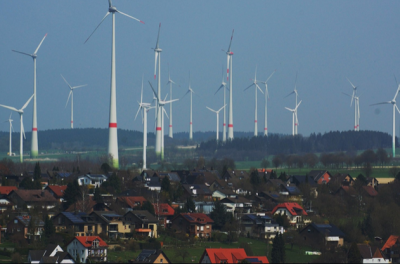

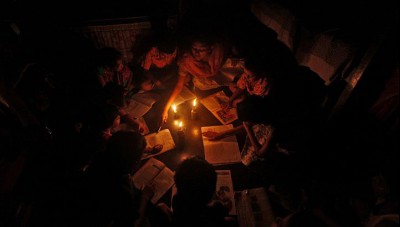


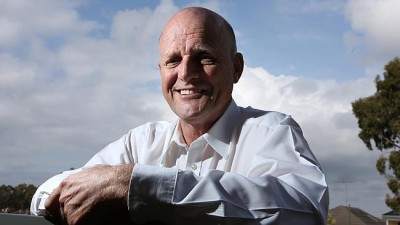


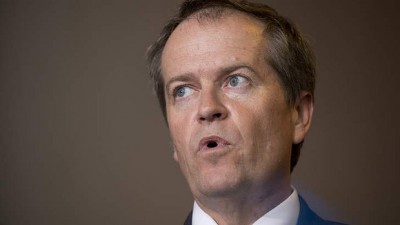


 "Mothers Against Wind Turbines™" Phoenix Rising...