Wind Turbine Host, “Tells All” at Australian Government Inquiry! Brilliant!

Farmer Knocks Back ‘Offers’ of $100,000 a Year to Host Turbines & Tells Senate: “These Things Shouldn’t Be In Anyone’s Backyard”

senate review

****

Remember all those glowing stories about wind power outfits being welcomed into rural communities with open arms? You know, tales about how farmers are dying to have turbines lined up all over their properties? How locals can’t wait to pick up some of the thousands of permanent,high paying jobs on offer? How developers are viewed with the kind of reverence reserved for Royalty?

No?

We’ve forgotten them too.

The wind industry routinely trots out 4 or 5 year old community surveys (where the respondents don’t and will never live within driving distance from these things) that purport to show the ‘love’. But, when the question is put fair and square to people that know they’ll end up as wind industry “road-kill”, the results tend to come out a little differently:

1,000 Sign Petition Against Mt Emerald Wind Farm: Survey says 92% Opposed

After years of being lied to, bullied, berated and treated like fools (at best) and “road-kill” (at worst), for most, the ‘gloss’ comprising wind industry PR efforts to ‘win hearts and minds’ has well and truly worn off.

These days, the communities aren’t so gullible; they aren’t so welcoming; and they aren’t willing to take it lying down. Despite having the skills of the best spin doctors in the business at its disposal, it’s “outrage” that’s become the word synonymous with the wind industry, wherever it goes. In short, rural communities have had enough – and they’re fighting back, by fair means and foul:

Angry Wind Farm Victims Pull the Trigger: Turbines Shot-Up in Montana and Victoria

These days, the PR outfits that are paid a packet to ‘shape the debate’ – like the Clean Energy Council and the Australian Wind Alliance – are probably just stealing from their wind industry clients.

Most of their recent efforts are just plain silly, and plenty seem to backfire. The case of Hamish and Anna Officer from Macarthur is only just the latest example. The industry’s case on wind turbine noise sleep and health; corporate social responsibility and relations with its contracted hosts has taken a hammering in the last few months:

SA Farmers Paid $1 Million to Host 19 Turbines Tell Senate they “Would Never Do it Again” due to “Unbearable” Sleep-Destroying Noise

Unwilling Turbine Hosts Tell Senate: Australia’s Most Notorious Wind Power Outfit – Infigen – a Team of Bullies, Liars & Thugs

In an effort to hose down the utterly damning evidence given to the Senate Inquiry by Clive and Trina Gare, and the group of unwilling turbine hosts from Flyers Creek in NSW, who have been repeatedly bullied and threatened by near-bankrupt Infigen, the wind industry’s spruikers trotted out the Officers to parrot from a well-oiled script about how much they love living cheek-by-jowl with the 48 Vestas V112s they host on their property at Macarthur in western Victoria. The Officers telling the SMH that they “live a good deal closer to wind turbines than most people” and simply love the look of the things; and that the noise is as soothing as a well-written symphony (the wind industry’s cooked-up propaganda piece about the Officers is available here).

There’s only one minor problem with the Officer’s story. And that’s the fact that the Officers are spending something in the order of $2million on a dream home 30km away from the public health disaster they helped create. The apparent aim of the Officer’s pricey building program is to leave their current home, and the sweet “music” created by their fleet of “beautiful, majestic, landscape improvers” – it must pain them so, to have to leave them so far behind:

Macarthur Turbine Hosts Destroy Community & Bolt as Hammering the Wind Industry becomes the “New Black”

When people with real honour and integrity – like the Gares – tell the story of their self-inflected misery, there’s a ring of honesty that gels with country people. Not so, with hypocrites that run in lockstep with the wind industry; and who seem happy to pocket the loot and leave their neighbours for dead. Which brings to mind the ol’ chestnut that you can fool some of the people, some of the time, but you can’t fool all the people, all the time.

Now, back to the evidence before the Senate Inquiry. David Brooks, Dr Michael Crawford and Mark Tomlinson gave a very solid wrap up on the institutional corruption that pervades State Planning departments and the Clean Energy Regulator. But we think the stand-out testimony was that given by Michael Lyons – a farmer from Bodangora in NSW – who was repeatedly offered a deal to host 10 turbines on his property in exchange for over $100,000 a year.  STT thinks Michael’s response as to why he knocked back that kind of money says it all really:

Mr Lyons: The first time I knocked it back, I did not know anything about them, to be quite honest. The proponent was quite insistent that I host turbines, but I said no. I said, ‘I am going to find out a little bit more about them first before I say yes or no.’ At that stage I was pretty open minded. Another contact of mine had done a lot more research into them and through that person I then formed the opinion that these things were not something that should be inflicted on anybody. Call me a nimby if you like but I do not think that these things should be in anyone’s backyard, let alone mine.

Here’s the rest of their evidence.

Senate Select Committee on Wind Turbines – 29 May 2015

BROOKS, Mr David, Chairman, Parkesbourne/Mummel Landscape Guardians Inc.

CRAWFORD, Dr Michael Arthur, Private capacity

LYONS, Mr Michael David, Coordinator, Bodangora Wind Turbine Awareness Group

TOMLINSON, Mr Mark, Member, Residents against Jupiter Wind Turbines Noise Committee

CHAIR: Welcome. Could you please confirm that information on parliamentary privilege and the protection of witnesses and evidence has been provided to you?

Dr Crawford: Yes, it has.

Mr Brooks: Yes.

Mr Tomlinson: Yes.

Mr Lyons: Yes.

CHAIR: Thank you. The committee has your submissions and I now invite you to make a brief opening statement and at the conclusion of your remarks, I will invite members of the committee to put questions to you.

Dr Crawford: Thank you for the invitation to appear here today. I am speaking as a private individual, though I am also a board member of the Waubra Foundation and a member of the local group, Residents against Jupiter Wind Turbines. Members of that group have had extensive dealings with the New South Wales planning department as well as other New South Wales agencies in relation to Jupiter and other wind farms. While I am critical of the way the system currently operates, I acknowledge that the current New South Wales Minister for Planning, Rob Stokes, and his predecessor Pru Goward, as well as the secretary of the department, appear to be trying to improve the process. But institutional inertia is powerful and the changes are slow, meanwhile innocent people are being badly harmed and that will continue under current arrangements.

I have worked for more than 30 years as a management consultant to private and public sector organisations, normally advising the CEO and other senior executives on matters of corporate strategy and organisation design. While my first degree was in physics and maths, my PhD relates specifically to organisation design and my subsequent research was in corporate change. I also taught on executive programs at the Australian Graduate School of Management. That is by way of background.

It is clear to me that the current processes for approving and regulating wind farms in New South Wales are excessively complex and neither economically efficient nor socially just. They are essentially a tick-the-box planning exercise with little integrity, conducted at large public and private expense, to produce an outcome favourable to developers. As you have already discovered, conditions imposed by wind farm approvals are quite deficient and, unlike some industries such as coalmining in New South Wales, compliance testing and enforcement is virtually non-existent. Without effective compliance and enforcement in any field, conditions will be regularly breached.

It is possible to add some integrity to the current approvals system in various ways such as relying only on data provided by parties with no association with the proponent, not accepting judgements made by consultants hired by the developer to support their case and imposing decommissioning funding conditions guaranteed to not leave the taxpayer or the local community on the hook.

Alternatively, it is possible to remove most of the inefficiency, subjectivity and injustice by replacing the current regulatory process by a standards-based one that forces developers to absorb externalities through fair commercial transactions and imposes genuinely rigorous ongoing noise monitoring with material costs for breaches. Such an approach would be far more transparent and much less exposed to the risks of corruption than the current process. Our local group provided the previous New South Wales planning minister with advice on how that could be done but have heard nothing further. Hopefully this committee will have more success. Thank you.

Mr Tomlinson: Thank you for giving me the opportunity to speak here today. Residents against Jupiter Wind Turbines is a community group established in the Tarago area of New South Wales opposing the proposed Jupiter wind farm. A subcommittee was formed, now known as the noise committee, and members of this committee are tasked with investigating various aspects of wind turbine noise. Some of these areas are noise propagation and the effects of topography and geographical spread, the relationship between multiple turbines and wind shear relating to international standards—just to mention a few.

My role as a member of the noise committee is to investigate the background noise monitoring process as outlined in the various wind farm guidelines used in New South Wales. This role involves monitoring equipment set-up, data collection, data analysis and preliminary findings reports. This has also led into the investigation into wind turbine infrasound. The committee purchased industry standard class 1 noise monitoring equipment and use the current New South Wales draft wind farm guidelines and the 2003 South Australia wind farm guidelines as guiding documents, as used by the Department of Planning and Infrastructure.

In January 2015, we commenced a monitoring program to ascertain the ambient environmental background noise at six properties around the proposed wind farm. We have currently completed five and, as a result, have discovered numerous deficiencies within the guidelines used for wind farm approvals. The major deficiencies include removal of extraneous noise; wind over microphone; position of monitoring equipment; checks and balances as to the accuracy of noise monitoring reports submitted by developer-paid acousticians; ongoing compliance monitoring; and others listed in our submission.

In our monitoring program, we employed a Svantek 977 class 1 noise data logger, a wind data logger positioned at microphone height, a wind data logger on a portable 10-metre tower and a TASCAM DR-40 digital sound recorder to achieve full 24/7 sound recordings for the purpose of extraneous noise removal. We have also purchased three microbarometers, which are capable of recording infrasound levels from 0.05 hertz to 20 hertz, with which we have recorded wind turbine infrasound out to 14 kilometres.

I must stress at this point that we are not acousticians and we do not purport to be such; we are simply a community group putting forward our views and observations after conducting background noise monitoring, according to the relevant wind farm guidelines used in New South Wales. We believe the current wind farm guidelines are in no way adequate and must be amended as a matter of urgency. Thank you.

Mr Lyons: In the interests of time, I think you will find you already have a copy of my opening address. I am quite happy to pass on making opening remarks, so that we can get on with more questions.

Mr Brooks: Before I begin my presentation, I would like to thank you for all the work that you have done on the issues of this inquiry, especially for your interim report. If all its recommendations are implemented then there will be some hope that wind farm neighbours will find some relief at last. Today, I will limit myself to three topics that concern planning and regulation. I will deal with each topic briefly and then draw some conclusions from them, taken together. For evidence in detail for what I shall say, I must refer you to my submissions.

Topic No. 1: first, I wish to summarise the situation relating to the unauthorised turbine relocations of the Gullen Range wind farm because this matter illustrates the unreliability, incompetence, negligence and impropriety of the planning and assessment of wind farms in New South Wales. I realise that you cannot directly affect state planning issues, but it is important that you should be aware of them if you are to make recommendations for the federal government’s negotiations with the states through COAG, and for new measures regarding federal agencies. It is not an exaggeration to say that the suffering of wind farm neighbours is almost entirely due to inadequate planning and assessment at state level.

The project approval for the Gullen Range wind farm prohibits the proponent from moving turbines up to 250 metres from their approved positions without seeking permission from the Minister for Planning—that is condition 1.5. Moreover, section 75W(2) of the Environmental Planning and Assessment Act 1979 of New South Wales insists that modifications that are not ‘consistent with the existing approval require the permission of the Minister for Planning’. The proponent ignored these conditions and built the infrastructure of the wind farm with 69 of the 73 turbine footings in the wrong place without seeking the permission of the minister. This was a clear violation of both the project approval and the EPA Act. Nonetheless the department of planning has allowed the proponent to submit a modification application in order to get retrospective approval for all these violations, and the department has consistently recommended that such retrospective approval be granted by the Planning Assessment Commission.

I cannot go into all the twists and turns by which the department has justified its response to this violation. You may wish to ask questions about that presently. Here, I only wish to point out that a project approval and a clause in a law, which have perfectly clear and intelligible meanings, are being deliberately disregarded by the department and that the department’s only justification for this is sophistry. This makes a mockery of the idea of regulation. That is topic one.

Topic 2, much more briefly: the Gullen Range has been approved under the completely inadequate South Australian noise guidelines 2003. When neighbours have asked for the approval to be reviewed because of the deficiencies of the noise guidelines, they have been told that this cannot happen because the EPA Act allows a developer to sue the minister for compensation if the minister revokes or modifies an approval. The planning law in this way gives certainty to the developer but excludes any possibility of relief to neighbours.

Topic 3: under the Renewable Energy (Electricity) Act, the federal act, the Clean Energy Regulator can consider suspending the accreditation of a wind farm if the regulator ‘believes on reasonable grounds that the power station is being operated in contravention of a law of the Commonwealth, a state or a territory’—that is subsection 30E(3). However, the regulator seems to have unlimited discretion to avoid forming a reasonable belief. There is abundant evidence in the public domain that the Gullen Range wind farm is in breach of New South Wales law, but the New South Wales department of planning refuses to say so and the Clean Energy Regulator refuses to consider all the evidence. Moreover, the Clean Energy Regulator has adopted the preposterous position that it can only test whether a wind farm is in breach of law in the present. It cannot, so it thinks, test whether a wind farm has been in breach in the past.

If the New South Wales Planning Assessment Commission gives retrospective approval to all the violations of the project approval of the Gullen Range wind farm, the Clean Energy Regulator will refuse to consider whether the wind farm has been in breach of New South Wales law and the wind farm will keep over a year’s worth of renewable energy certificates, worth somewhere in the region of several million dollars to which, arguably, it is not entitled. Those are the three topics; two quick conclusions.

Firstly, a law or a project approval can be quite clear and unambiguous, yet a government agency will arrogate to itself the discretionary power to disregard the clear meaning of that law or that approval, and to render it meaningless. There is no check or balance to prevent such an abuse of power by that government agency. Both the New South Wales department of planning and the Clean Energy Regulator are guilty of this abuse of power. Secondly, when the law protects the rights and capital of a developer then the law is hard and firm and solid, and will be respected by government agencies. But when a law is likely to make difficulties for a developer, a regulatory agency will use sophistry to disregard the law and to avoid enforcing the law against the developer. This gives the developers a privileged position in the face of the law, offends against the principle of equality before the law and subverts any possibility of serious regulation.

Finally, in view of these facts, there needs to be a royal commission into wind farm development in Australia. Such a commission is necessary if the corrupt nature of planning, assessment and regulation is to be addressed and overcome. Thank you.

Senator DAY: Dr Crawford, I am drawing on your experience with organisation and corporate culture. Can you explain why, in the face of such overwhelming evidence regarding the adverse health effects of wind turbines, there is such a denial, which seems to defy all logic, by so many operators, regulators, commentators and others? It is a phenomenon which really intrigues me. You have got a PhD in this, so please enlighten me.

Dr Crawford: Without actually going to the PhD, I believe that it was Upton Sinclair who said something like, ‘It’s extremely difficult to get someone to understand something when their salary depends on not understanding that.’ Basically, if you look at not just the wind industry but regulatory agencies in this area, and given the commitment of government to introduce renewable energy in this country, everyone’s incentives are actually aligned with pretending there is no problem. To recognise a problem would put people in the situation where they then have to overtly recognise to themselves that they are behaving in a way which certainly some people would describe as evil—they are inflicting harm on others simply for their personal benefit in terms of ongoing salary and other acceptances.

Senator DAY: Thank you.

Senator LEYONHJELM: I have a question for Mr Lyons. You are part of the group opposed to the Bodangora wind energy facility in central New South Wales. I understand it will have 33 turbines. Can you tell us what is the level of opposition locally to that facility?

Mr Lyons: The community opposition was overwhelming—and still is. I think it has probably grown because people have got themselves a lot more educated as to the negative impacts of wind farms. When we did the submissions to the department of planning and infrastructure, it worked out, I think, that it was 94, 96 per cent opposed within the community. Of those that were not opposed, there were 163 total submissions. I think it was 152 opposed and, of the remainder, I think there were a mixture of government agencies, of which most of them had issues—still unresolved to this day. Of the individual ones, they were from host farms, host families. There were two anonymous and, of those two anonymous, one came from a distance of 50 kilometres outside the project area.

Senator LEYONHJELM: The facility has not been built yet—is that right?

Mr Lyons: That is correct.

Senator LEYONHJELM: When will it be built?

Mr Lyons: As soon as they get finance, and they cannot get finance until they get a power purchase agreement.

Senator LEYONHJELM: They have been waiting for the RET agreement, presumably.

Mr Lyons: That is correct.

Senator LEYONHJELM: How many host properties are there?

Mr Lyons: I am going on memory. This submission went into the department of planning a couple of years ago. I may be a couple out, but I think there were eight host families.

Senator LEYONHJELM: What is their view of it? Have you had any contact with them?

Mr Lyons: I have had very limited contact because a lot of them are my neighbours. I am the largest single non-host neighbour on the southern side of the project area.

Senator LEYONHJELM: Were you offered the opportunity to become a host?

Mr Lyons: Several times.

Senator LEYONHJELM: And you knocked it back?

Mr Lyons: Correct, yes.

Senator LEYONHJELM: Why was that?

Mr Lyons: The first time I knocked it back, I did not know anything about them, to be quite honest. The proponent was quite insistent that I host turbines, but I said no. I said, ‘I am going to find out a little bit more about them first before I say yes or no.’ At that stage I was pretty open minded. Another contact of mine had done a lot more research into them and through that person I then formed the opinion that these things were not something that should be inflicted on anybody. Call me a nimby if you like but I do not think that these things should be in anyone’s backyard, let alone mine.

Senator LEYONHJELM: How much money do you think you turned down?

Mr Lyons: We are talking tens of thousands here. The situation is that Mount Bodangora, which is the name of the property, is the highest point across Australia on the latitude that it sits so it is reasonably high up, it is fairly well exposed to wind and there are quite a few ridges around. I think I could probably put up 10 turbines at least without any worries.

Senator LEYONHJELM: On the basis of $10,000 a year?

Mr Lyons: The contract, which you would have a copy of, is an original contract that I have. It is not something that we made up; it was actually handed to me by a potential host farmer, who eventually knocked the whole project back as well. I understand, from memory, that it was $11,000 for the first turbine and $10,000 per turbine per year after that.

Senator LEYONHJELM: So you are not the only local who knocked back hosting turbines?

Mr Lyons: That is a good question. I would have to get back you on to that.

Senator LEYONHJELM: I thought you said you got a copy of the contract from somebody who knocked it back?

Mr Lyons: Yes, you are quite right. There were several others. I was just trying to think how many, not whether I was the only one.

Senator LEYONHJELM: So was there more than one?

Mr Lyons: There was certainly more than one.

Senator LEYONHJELM: The department of planning and infrastructure, I gather, has told you that they do not have the resources to adequately check on this facility. Is that correct? Can you explain what they said?

Mr Lyons: Yes, they verbally told me that over the phone. They certainly were not prepared to put it in writing.

Senator LEYONHJELM: What exactly did they say?

Mr Lyons: Essentially they said that the department did not have either the financial resources or the manpower resources to check on whether or not the proponent had actually completed what they were supposed to do. As long as the proponent had made what looked like a an attempt to fulfil the director-general’s requirements, that was good enough for the department.

Senator LEYONHJELM: We have been unable so far to get the relevant New South Wales authorities to come along and tell us how the process for approving wind farms in New South Wales operates. We do not know whether that is deliberate or not but we hope that we can resolve that before too much longer. In the absence of that information, can you tell us who approves them and then who checks compliance with the planning approvals subsequently?

Mr Brooks: One fact that may be of interest to you in relation to this is my association went to the Land and Environment Court back in 2009. For that purpose, we subpoenaed all the correspondence between the department and the developer—the original developer. We got two volumes of correspondence. It was quite obvious from that correspondence that the department was indeed helping the developer to put the proposal in a form where it could get approval.

For my world—I used to be an academic—it was rather like a supervisor helping a postgraduate to write a thesis; so the supervisor will say you need more of an argument here, you need more evidence for this bit, this bit of you argument needs clarification and so on. The officials in the department of planning were doing that for the developer for months and months. Whether or not the people who then go on to recommend the proposal for approval are the same officials, I cannot tell you—you would have to ask the department of planning. But certainly the department of planning itself would seem to have a conflict of interest because if a supervisor helps a postgraduate to write a thesis, they do not then examine the thesis.

Senator LEYONHJELM: What contribution does the local council have to that process?

Mr Brooks: They can make a submission just like anybody else but they do not have any authoritative power of decision.

Senator LEYONHJELM: Once it is built and operating, what is your understanding of checking compliance with planning conditions?

Mr Brooks: This goes back to the developer, who will use the same noise consultant who did the original noise projections. That noise consultant will put in a report and then that, presumably, will be accepted by the department of planning. I do not think there is any compulsory obligation on the department of planning to do any independent checking.

Senator LEYONHJELM: Does the council have any role at all in verifying compliance?

Mr Brooks: No, because all of this is done at the level of the state government.

Senator URQUHART: Mr Tomlinson, can you tell me about your organisation, the Residents Against Jupiter Wind Turbines Noise Committee. How many members do you have?

Mr Tomlinson: On the noise committee, we have three members. The Residents Against Jupiter community group has in the vicinity of about 140-odd members.

Senator URQUHART: Is this like a subcommittee of that committee?

Mr Tomlinson: This is a subcommittee, yes.

Senator URQUHART: Are you funded at all?

Mr Tomlinson: No, we are not funded. We have had members donate some money to purchase equipment.

Senator URQUHART: Is this the equipment that you talked about earlier?

Mr Tomlinson: That is correct.

Senator URQUHART: What was the cost of all that equipment?

Mr Tomlinson: The cost was around $8,000 for the equipment we have.

Senator URQUHART: You said in your opening statement that you are not acousticians. Is there anybody in there that is qualified to actually run that equipment?

Mr Tomlinson: No, there is not although we have been in contact with some acousticians who have given us some guidance, one of those being Steven Cooper.

Senator URQUHART: Mr Lyons, can I ask you how many members you have in your awareness group?

Mr Lyons: We are a fairly loose-knit organisation, comprising every neighbour surrounding the turbines area. It is probably around about 30.

Senator URQUHART: What would be the area that you are looking at? What would be the radius of it?

Mr Lyons: Of the project area, I think it would be about 28,000 hectares.

Senator URQUHART: Are the 30 people within that area?

Mr Lyons: No, outside of that area. I may stand corrected on the 28,000 but I think that is what hectare area is of the project itself. We are outside that area.

Senator URQUHART: You said you called for submissions and I did not quite understand your numbers there so if I could just go back through them. I think you said you received 163 submissions. What was the process that you went through?

Mr Lyons: The project was put on public display for 60 days.

Senator URQUHART: Whereabouts?

Mr Lyons: It was at the local council. I think it was also online on the department of planning website, I believe, although I got my copy from the council, a digital copy.

Senator URQUHART: Was this the planning project?

Mr Lyons: This was for the Bodangora wind farm. It was on display for 60 days. I think the general public had about six weeks to put submissions in. We put in a submission of over 900 pages detailing what was wrong with the project. Basically, I think, we were totally ignored.

Senator URQUHART: So those 163 submissions went in to the local council?

Mr Lyons: No, this was a state significant development so it went into the department of planning.

Senator URQUHART: That was what I wanted to clear up. As the wind turbine awareness group for the area that you talk about, have you undertaken any research to determine the community attitudes to wind farms?

Mr Lyons: Very much so.

Senator URQUHART: Has it been formal or informal? How have you done that?

Mr Lyons: We held a community meeting which we funded ourselves within Wellington. I think we had about 200 or 250 people show up. We invited different speakers including Ms Sarah Laurie, who spoke here earlier today. We also invited the proponent and several other wind farm companies who were proposing to put wind farms in the Wellington area. Infigen were the only ones that actually showed up, which was the proponent for the Bodangora wind farm.

Senator URQUHART: Was that a question-and-answer type community meeting?

Mr Lyons: Yes, pretty much. Guest speakers would speak for a while and then it was open to questions and answers, a bit like this is today. It was very much overwhelmingly against the proposal. The research that we did as part of our response to the department of planning for our response to the EA was very much against the project. The community just does not want this project.

Senator URQUHART: The 200 to 250 people that came along, how big a radius do those people live in? Are they part of this group of 30 that are part of your awareness group or how was that made up? Do you know?

Mr Lyons: I do not quite get where your group of 30 fits in. Are you talking about that the Bodangora Wind Turbine Awareness Group? Probably about half of us were able to come that particular day.

Senator URQUHART: So the rest of the 200 to 250 people were from within that community?

Mr Lyons: They were from as far away as South Australia really. Dr Laurie came from South Australia. We had a couple of speakers from South Australia because that was where most of the wind farms that we knew of at the time were located, so we wanted to get some information from there. By far the vast majority of people were locals. By local I mean I would say within 30 kilometres probably.

Senator URQUHART: Mr Brooks, your organisation, the landscape guardians, how many members do you have?

Mr Brooks: Back in 2009 when we went to court, we had a maximum membership I think of 173. Since then, and especially since the wind farm has been built, people have got demoralised and so on so our official paid-up membership now is actually somewhere around 20. We are not the only organisation. There is also Crookwell District Landscape Guardians. I believe they have a membership of about 100, which is quite strong. The other thing which is relevant is that even though people do not pay their subscriptions and continue their membership, they still object to the wind farm. The whole community still knows each other. We still see each other.

Senator URQUHART: As part of your group, do you undertake research to determine community attitudes? How do you get your information?

Mr Brooks: We have not done that. We have had meetings. I might cite the Planning Assessment Commission meeting that took place in September last year, which was held in Crookwell in the RSL. About 200 people turned up to that. It was obvious just being in the room that the overwhelming majority were against the wind farm. I have never had any doubt from all our meetings over the years that certainly the overwhelming majority of people who are going to be affected by the wind farm are solidly opposed to it.

Senator URQUHART: Dr Crawford, you indicated at the start that you were also a director—I think that was the right terminology—of the Waubra Foundation and you are also part of the Residents Against Jupiter Wind Turbines Noise. Are you just on the committee or are you part of the larger group?

Dr Crawford: I am certainly part of the larger group. When we had a community meeting, I was elected as chairman. We had a community meeting in February last year with 200 people and that group elected me as chairman to chair that and pass the motions which went to the New South Wales government. I also happen to be a member of the noise committee.

Senator URQUHART: So you wear a few hats?

Dr Crawford: Yes.

Senator URQUHART: Mr Tomlinson, are you a member of other organisations or just the Residents Against Jupiter?

Mr Tomlinson: No, just Residents Against Jupiter.

Senator URQUHART: Mr Lyons, is your only membership of Bodangora Wind Turbine Awareness Group? Are you a member of other groups?

Mr Lyons: No.

Senator URQUHART: And Mr Brooks?

Mr Brooks: I am vice-president of New South Wales Landscape Guardians, which is a sort of umbrella organisation for—I will have to check the number. I cannot remember whether the number of our affiliated associations is eight or whether it has gone down to five, because again you have the problem of people not always renewing their subscriptions. But it is somewhere in that region.

Mr Lyons: I would just like to correct the record with you, Senator. Dr Laurie did not attend the Wellington public meeting; she attended the Planning Assessment Commission meeting in Wellington. She only did a teleconference presentation at the public meeting.

Senator URQUHART: Okay. Thank you.

CHAIR: Mr Brooks, in your previous evidence you mentioned that, in the planning process, the acousticians who were engaged by the proponents were the same acousticians who then later corrected, shall we say, their own work. Have you seen this in any other field in your professional career?

Mr Brooks: I used to teach English literature, so this sort of issue would not have come up except, as I said, in the case of examiners. Usually, you have to have quite a separation of powers between people who are helping the student and people who are doing the examination. In the case of a PhD, for example, the examiners cannot even belong to the same university; they have to be from a different university.

To come back to the noise compliance monitoring business, it is the same company that does the compliance monitoring. For example, in the case of Gullen Range, it was Marshall Day Acoustics. Whether they literally used the same individuals, I have no idea; but it was certainly the same company.

The other thing that is a bit dubious about the compliance monitoring is that it is to be done only at the same residences where the original background noise monitoring was done. In the case of Gullen Range, at the time there were 63 noninvolved residences within two kilometres, and Marshall Day Acoustics chose, I think, 17 at which to do the original background noise monitoring. So the compliance noise monitoring, now that the wind farm is built, is going to be done at those same 17 residences. It will not be done at all 63. It certainly will not be done anywhere outside two kilometres.

The other thing—and I think this is really the crucial point—is that both the original background noise monitoring and the compliance noise monitoring, and any additional noise audits that the Minister for Planning might order, are all going to be done in terms of the noise limits and the conditions of consent which are based on the South Australian noise guidelines. I had the asset manager from the wind farm come to my house. He sat down in my lounge room. He was going through this spiel about how concerned they were, how they wanted to help people and so on, and I said to him quite plainly, ‘Look, you’re not going to do anything you’re not legally obliged to do, are you,’ and he said no. I said, ‘You’re not going to test for infrasound, are you,’ and he said no. I said, ‘You’re not going to test for low-frequency noise, are you,’ and he said no. So we know, even before the compliance noise monitoring happens, that it is going to be inadequate.

CHAIR: Thank you, Mr Brooks.

Senator LEYONHJELM: Dr Crawford, I have a question similar to what Senator Day asked you before. You have done a lot of consulting to business. It occurs to me that if this were any other industry about which accusations were being made, assuming that it felt that those accusations were unfounded, it would want to do everything it could to put them to bed, disprove them—say, ‘We don’t think there’s any credibility to these accusations but let’s do something to stamp them out.’ I cannot think of any other industry that would not take that approach. The wind industry does not take that approach. Have you seen anything similar in any other sector?

Dr Crawford: Sure. All industries want ultimately to be seen to be good citizens. Sometimes they do it by actually being good citizens and sometimes they do it by suppressing any contrary evidence. I think we have seen at least two other examples: the tobacco industry, whose history is essentially the same as this; and the asbestos industry in Australia, where the companies involved tried first to hide the involvement of asbestos in the harm it was causing and then to arrange their assets in such a way that they protected shareholders against those who might have claims on them. We are in a society where directors of companies typically believe that their responsibility is primarily to maximise value for their shareholders. They do that within the bounds of the law. If the law allows them to behave in ways, as it does in this case, that harm other people, then they typically believe that it is their obligation to do so. We have seen that certainly in the tobacco industry and in the asbestos industry in Australia.

Senator LEYONHJELM: I have speculated that one day there may be a class action similar to those that have occurred in the tobacco industry and the asbestos industry in which the wind industry is found liable in tort. Do you anticipate that possibility as well?

Dr Crawford: I certainly think it is likely that a number of parties will eventually go that route. Obviously as the industry grows it brings more people into harm and grows the number of people who will do so. One of the issues, of course, is which of those companies will still be alive when that occurs. Whilst there are some major companies that have probably a long life ahead of them, there are also a number of other companies in the industry that will have passed off their responsibilities to someone else. If there is a claim down the track, they will not be the ones who have to field it.

CHAIR: Thank you all for appearing here to today and for your evidence.

Hansard, 29 May June 2015

Mr Brooks, Dr Crawford, Mr Lyons and Mr Tominson’s evidence is available from the Parliament’s website here.

Lyons

Vale: The Faultless Member for Hume: Alby Schultz

Sad When Such an Honest, Honourable Man, is lost. Rest in Peace, Alby Schultz.

stopthesethings's avatarSTOP THESE THINGS

STT regrets to inform the world of the passing of the Faultless Former Member for Hume, Alby Schultz. What we wrote about him two years ago gives some idea of the courage and nobility of a Great Australian. His Country will miss him.

This post was originally posted on 26 June 2013

STT readers – please take time and enjoy the Valedictory Speech delivered yesterday by STT’s Champion of Champions – Alby Schultz.

Alby served his great State of NSW and the Country with grace and honour for over 25 years – and – true to form – gives the wind industry one last burst on the way out of the Big House on the Hill.

PHC-Home-941-441 Alby Schultz farewells the Big House on the Hill.

****

But read on and learn a whole lot more about a truly remarkable man – in what is a truly remarkable Country – made…

View original post 4,364 more words

Wind Turbines….Useless, Inefficient, Unreliable. Just Giant “Bird Blenders”.

Wind Power: ‘Shredding Birds and Mincing Logic’

eagle 1

****

Shredding Birds and Mincing Logic
Quadrant Online
Peter O’Brien
1 July 2015

That wind farms are ugly is the least of the problems their heavily subsidised, rent-seeking promoters are inflicting on the rest of us. Quite apart from their damage to avian populations, the very process of manufacturing them generates a vast tonnage of toxic waste.

Recently, Tony Abbott caused a stir with his entirely rational and reasonable observation that wind turbines are ugly — an opinion that further disturbed Fairfax opinion-page fixture Elizabeth Farelly, who countered that she likes ‘their whiteness and grandeur, and how they catch the morning light like so many celestial beings beamed across the landscape’.  The obvious response, once one has recovered from exposure to such fly-blown prose, is that, while beauty will always be in the eye of the beholder, the bottom-line cost of extracting volts from zephyrs presents an irredeemably ugly mess of red ink.

Simply put, when the outrageously expensive hilltop turbines are judged against the cost of electricity from coal- and gas-fired power plants they make no economic sense whatsoever. As to their alleged environmental benefits, no amount of ‘whiteness and grandeur’ can blind the rational observer — a category which would not, on almost any topic, include Farrelly –  to turbines’ disastrous environmental and ecological impacts.

Let’s have a look at one of the largest wind farms in the world, Roscoe in Texas.  It is rated at 782MW, but its actual output is closer to 230MW.  It cost $1 billion to construct.  It requires a back-up capacity that is not included in this cost.

But these wind turbines, which so many environmentalists find charming, are very resource-intensive creations.  Each turbine requires about 250 to 350 tonnes of raw materials to construct, not including the thousand-or-so tonnes of reinforced concrete that form the base of each tower. At Roscoe, there are 782 turbines spread over 400 square miles and, generally, they’re spaced about 300 metres apart.

So we’re talking about 200,000 tonnes of raw materials, mainly metal, and 782,000 tonnes of concrete.  The CO2 emissions from the manufacture of the concrete bases alone is in the order of 800,000 tonnes.  To that must be added the CO2 emissions from the back-up generator.  Suddenly, the CO2 abatement provided by Roscoe doesn’t look like a very significant number.

Australia currently has an installed power generation capacity of just over 40,000MW.  A Roscoe equivalent could provide, say, 200MW.  Therefore, to replace all our existing power with wind would require 200 Roscoes.  That is 80,000 square miles of Australian landscape, roughly the area of Victoria, covered with 150,000 towers at a cost of $200 billion.  Add to that the cost of back-up generation, thousands of kilometres of new roads, transmission lines, substations and so on.  A simplistic comparison, I grant you, because we would, of course, add solar to the mix as well.  Less raw materials and land coverage,  but at a much higher price per megawatt.

But it doesn’t end there.   We haven’t talked about the human factor.  The effect that wind power on this scale has on land values, scenic beauty or people’s health.  Or on wildlife.

dead_white-tailed_eagle-500

The Spanish Ornithological Society estimates that Spain’s 18,000 wind turbines kill between six million and 18 million birds and bats per year.  That estimate may be on the high side, but even the lower estimatereported by the Smithsonian Institution for avian casualties in the US alone — between 140,000 and 328,000 birds every year — is deeply shocking.

****

****

As an example closer to home, the endangered Tasmanian wedgetail eagle is one species identified as being impacted by the Woolnorth wind farm, operating a grand total of just 62 turbines. Worth noting is that, in 2005, a report based on models and conjecture noted that eagles are intelligent birds and, therefore, would be unlikely to be brought down in significant numbers by whirling rotors. Ten years later, according to the World Council for Nature,  casualties have been such that Tasmania wedgetails’ survival as a sub-species is in grave doubt.

****

****

But wait.  There’s more!

The heart of any wind turbines, the permanent magnet, is made from rare earth minerals, most of which are mined in China.  (As an aside, is it any wonder that China is promoting wind power?)

To put it bluntly, mining and refining of rare earth minerals is far from an environmentally friendly process.  Here are some figures that might will more likely horrify.  Each ton of refined rare earth products produces about 10,000 cubic metres of gas contaminated with flue dust, hydrochloric and sulphuric acid and sulphur dioxide.  There are also 75 cubic metres of acidic waste water,  one ton of radioactive waste residue and, finally, 2,000 tons of tailings, which also contain radioactive elements.

Each modern wind turbine requires two tons of refined rare earth elements, so for each turbine we double the amount of these contaminants.  To put that in perspective, there are currently 200,000 wind turbines worldwide.  That is 400,000 tons of rare earths.  A simple mathematical calculation shows us that, worldwide, the production of these machines has resulted in 400,000 tons of radioactive waste residue, 4,000,000 cubic metres of contaminated gas and 40,000,000 tons of radioactive tailings.  All this environmental damage to produce a mere 1% of the world’s electricity, and that piddling amount not even a reliable supply.

Ninety-five per cent of these rare earth minerals are produced in China and a large percentage of these waste products find their way into the environment.  The Chinese government has estimated that production of rare earths in Baotou region alone results in 10,000,000 tons of contaminated waste water every year, most of which is discharged, untreated, into waterways.

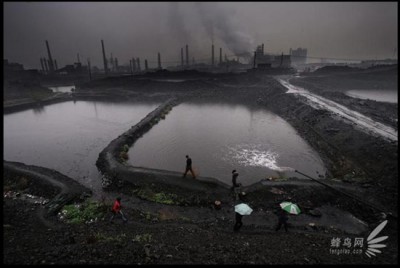
china rare earth toxic lake

All of this leads me to put a question to Ms Farelly: Suppose, just for a minute, that CO2 were not the villain you’ve been told it is.  If that were the case, would wind power seem like a proposition that a passionate environmentalist like yourself would rush to embrace?
Quadrant Online

eagle 2

Global Warming Alarmists….Government-induced climaphobia…The Grand Hoax!

JULY 2015 RELEASE — NOBEL LAUREATE SMASHES THE GLOBAL WARMING HOAX

Nobel laureate Ivar Giaever’s speech at the Nobel Laureates meeting 1st July 2015.  In the video, he points out not-well known facts about the climate.

Copyright is owned by 2015 Council for the Lindau Nobel Laureate Meetings.

(From Donna — Just as a side note, the next time you’re in a debate with one of the faithful members of the Church of Global Warming, see if they can answer all of these questions.  Find out how well they truly ‘know’ the science.  I’ve been asking people these questions for a while now, and they never have the answer.  I found it funny that this gentleman asks one of the same questions.  You’ll notice which one it is.)

So to all of those devout members of the Church of Global Warming, answer these questions for me.
What is the optimum temperature, for all species, including man, to thrive?
What is the maximum population of humans that is acceptable?
What is the perfect combination of GHGs in the atmosphere??
What is the perfect level of humidity?
What is the optimum amount of annual rainfall, globally? For extra bonus points,
break it down by continent.
What is the perfect size for both polar ice caps?
What’s the optimum size for a glacier….at what point should it stop growing or shrinking?
What is the perfect ph level for every ocean, for all marine life, for all coral, for all marine algae and plant life to flourish?
What’s the optimum perfect sea level?
What is the maximum amount of volcanic ash and soot that can be shot into the atmosphere before it starts to affect the climate?
What is the maximum number of severe storms — hurricanes, typhoons, tornadoes — that you feel are acceptable? What’s the highest category allowed?
Tell all of us deniers what the absolute perfect climate is, so that no species ever goes extinct again, so that all flora and fauna flourish, so that we can tell the earth to stop changing her climate….something she’s done naturally for billions of years…..and stay at exactly the levels that you have decreed to be perfect for all life on planet earth.)

Windweasels Take a Much-Deserved Beating, At The Hands of the Wonderful Aussies!!

ARREA Spears Wind Industry’s Parasites During Thumping Senate Appearance

senate review

****

The mandatory RET has seen the cost of around $9 billion worth of Renewable Energy Certificates added to retail power prices and recovered from all Australian power consumers.

Under the Large-Scale Renewable Energy Target, a further $45 billion is designed to be transferred from power consumers to wind power outfits via the REC Tax/Subsidy over the next 17 years:

Wind Power Fraud Finally Exposed: Senator John Madigan Details LRET’s Astronomical 45 Billion Dollar Cost to Power Consumers

The latest LRET deal was struck by the Coalition’s wind industry front men, Ian “Macca” Macfarlane and his youthful ward, Gregory Hunt for no other purpose than saving their mates at Infigen, Vestas & Co – and is doomed to fail, in any event (see our posts here and here).

With that phenomenal cost being added to already spiralling power bills – there will be many more households who will be unable to afford power; adding to the tens of thousands of homes already deprived of what was once a basic necessity of (a decent) life. And thousands more destined to suffer “energy poverty” as they find themselves forced to choose between heating (or cooling) and eating:

Victoria’s Wind Rush sees 34,000 Households Chopped from the Power Grid

Casualties of South Australia’s Wind Power Debacle Mount: Thousands Can’t Afford Power

If our political betters in Canberra don’t get a grip and line up to kill the LRET very soon – in less than a decade – Australia will have created an entrenched energy underclass, dividing Australian society into energy “haves” and “have-nots”.

For a taste of an escalating social welfare disaster, here are articles from Queensland (click here); Victoria (click here); South Australia (click here); and New South Wales (click here).

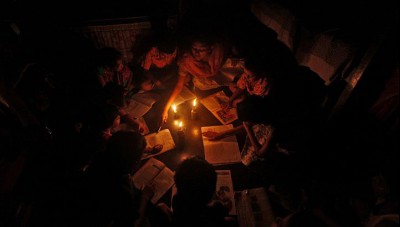
There’s something deeply troubling about thousands of Australian households descending into gloom after dark – unable to afford the power needed for electric lighting; or troubling, at least, for those with a social conscience.

The ONLY justification for the massive stream of subsidies filched from power consumers and directed to wind power outfits is the claim that wind power reduces CO2 emissions in the electricity sector and, therefore, provides a solution to climate change (or what used to be called “global warming”). The former proposition is a proven fallacy (seeour post here). And, because the planet hasn’t reached boiling point (in bitter defiance of the IPCC’s models), the once concrete relationship between CO2 emissions and increasing global temperature now seems murky, at best.

Claiming the “global warming” moral high ground, wind power proponents continue to blindly chant the mantra that wind power reduces CO2 emissions – although they rarely, if ever, talk about the actual cost of the claimed reductions.  Probably because there are, in fact, no reductions.

STT has focused on the fact that industrial scale wind power does not – and will never – reduce CO2 emissions simply because it is intermittent; being delivered at crazy, random intervals, such that 100% of its capacity must be backed up 100% of the time by fossil fuel generation sources (see our post here).  Accordingly, we call it an environmental fraud.

Because wind power fails to deliver on its primary claim (and the wind industry’s only reason for existence) the $billions in subsidies purloined from taxpayers and power consumers have been received on an utterly false premise. Accordingly, we call it an economic fraud. Wind power, whichever way you slice it, is not, and will never be, a meaningful power generation source.

May 2015 National

With that in mind, power consumers and taxpayers are clearly entitled to ask whether the subsidies received by wind power generators represent a cost-effective means of reducing CO2 emissions; if, indeed, there is any such reduction at all.

One such group is the Association for Research of Renewable Energy in Australia (ARREA): a band of hard-hitting, pro-farming and pro-community advocates, with a mission to ensure Australia gets the sensible energy policy it needs. Rather than the present policy fiasco, foisted on power consumers and rural communities by eco-fascist nutjobs – that wouldn’t know the first thing about markets and/or power generation – and the rent-seekers from the wind industry and its parasites that profit from the useful idiots they pay handsomely to run cover on their behalf: like yes2-ruining-us, GetUp!, the Climate Speculator and ruin-economy.

On that score, ARREA went hell-for-leather in an effort to put some of the real facts before the Senate Inquiry into the great wind power fraud.

ARREA lobbed a cracking submission before the Committee – available here: sub372_ARREA

In its submission ARREA has a very solid crack at the most colossal industry subsidy scheme in the history of the Commonwealth; and the fact that, despite the ridiculous cost of the LRET (originally set up as a $3.8 billion a year subsidy for wind power – but – under the latest 33,000 GWh target – a mere ‘snip’ at $3 billion annually), there has never been any cost/benefit analysis of the policy in its 15 years of operation.

ARREA also takes a well-aimed swipe at the ludicrous claims by the wind industry that each and every MWh of wind power dispatched to the grid results in the abatement (or reduction) of 1 tonne of CO2 gas in the electricity generation sector.

It’s that relationship that is said to justify – what Greg Hunt calls – the “massive $93 per tonne carbon tax” imposed on all Australian power consumers under the LRET (see our post here).

Under the LRET, a REC is issued for each MWh of wind power dispatched to the grid, on the assumption that it in fact reduces or abates 1 tonne of CO2, that would otherwise be emitted by a conventional generator. The figure of $93 talked about by Hunt as a 1 “tonne carbon tax” is the full cost of a REC, that will be reached when the shortfall penalty starts to apply: the full cost of the REC is added to retail power bills.

STT hears that young Greg has taken to arguing that there is no such assumption: his argument appears to be that a REC is issued for a MWh of wind power, irrespective of whether any CO2 is abated elsewhere in the electricity sector; which simply begs the question as to what Australians are getting for their $93 per MWh electricity tax? Hmmm …

ARREA’s submission also picks up on the work done by Dr Joseph Wheatley, a graduate of Trinity College Dublin with a PhD in condensed matter physics from Princeton University:

Wind Industry’s CO2 Abatement Claims Smashed by Top Physics Professor – Dr Joseph Wheatley

ARREA’s top operatives, Doug Bucknell, Mark Glover and Sam McGuiness fronted up to the Inquiry to continue their attack on the greatest economic and environmental fraud of all time.

Senate Select Committee on Wind Turbines – 29 May 2015

BUCKNELL, Mr Lionel Douglas Wentworth (Douglas), Member, Association for Research of Renewable Energy in Australia Ltd

GLOVER, Mr Mark Berry, Member, Association for Research of Renewable Energy in Australia Ltd

McGUINESS, Mr Sam, Member, Association for Research of Renewable Energy in Australia Ltd

CHAIR: Welcome. Could you please confirm that the information on parliamentary privilege and the protection of witnesses and evidence has been provided to you?

Mr Bucknell: Yes.

Mr Glover: Yes.

Mr McGuiness: Yes.

CHAIR: The committee has your submission. I invite you to make a brief opening statement. At the conclusion of your remarks, I will invite members of the committee to put questions to you.

Mr Bucknell: Thank you. First I congratulate you on the conduct of this inquiry. We have been engaged observers at public hearings and have intently followed your progress, including the interim report and the wind turbine commissioner proposal. Your work here will last on the public record and be proven over time to have added a great deal to the public understanding around wind turbines and their relative value or otherwise. In our view, you have covered the detail and the terms of reference items with one major exception, and that is why we are here today.

The ARREA submission directly addresses that missing point, which is the economic impact of wind turbines, including the associated matters on how effective the Clean Energy Regulator has been, the adequacy of monitoring, the energy and emission input and output equations and related matters. This issue is fundamental. It goes to the very heart of what the Renewable Energy (Electricity) Act 2000, the act, is supposed to be doing. Specifically, if the second object of the act, reducing greenhouse gas emissions, and the third object being ecologically sustainable are to be met, the encouragement of additional generation, which is the first object, must be achieved by displacing thermal production. In order to assess the economic impact, historical performance data is crucial and a fundamental benchmark. Under the current regime adopted by the CER, it appears that no real effort has been made to verify the claims by the wind industry as to the actual performance of wind turbines as they relate to the fundamental task of reducing greenhouse gases in the electricity sector.

This is why we, ARREA, commissioned the Wheatley study to independently investigate the effectiveness of wind power in reducing greenhouse gas emissions from electricity generation in Australia during 2014, using actual empirical five-minute data from each of the grid-connected generators. We were at the Joe Wheatley teleconference you held in Canberra. We are not here to revisit the technical detail. That is why we and you got the expert in. However, we are here to focus on the outcome, to connect the dots, to explain why this is important to the terms of reference and your final report recommendations.

As a headline reminder, analysis of the actual data in the NEM in 2014 shows that wind power production has overstated the emission reductions by 22 per cent—that is, 100 per cent minus 78. It is 22 per cent overstated. This percentage will continue to increase as the percentage of wind power entering the NEM increases. The current lack of performance measurement is just not acceptable. It would not be tolerated in any other industry, let alone one reliant on mandated subsidies. It should not be up to entities like ARREA to commission this independent research. Performance measurement should be a fundamental and first step in any oversight regime, particularly where taxpayers’ funds and electricity consumers are involved. The CER should have independently commissioned this research, or the Senate, or perhaps in the future the wind turbine commissioner. The CER should be admonished for this failure to properly monitor the true impact of an industry which comes at a high cost to the nation’s economy and electricity consumers in particular.

Many are asking: is this regulator asleep at the wheel? Do we have another HIH royal commission occurring here? Or do they already have the information but are not releasing it? Senators should be concerned about the impact that this lack of measurement has on the CER fulfilling its responsibilities under the act and regulation. There are financial flow-on impacts to electricity consumers and in respect of public moneys received by inappropriately issued RECs. The issue of CER’s effectiveness exists regardless of your political views, regardless of whether you like or dislike wind turbines and regardless of the environmental and social impact issues. This is a public accountability issue. We are urging all to make a joint recommendation on this matter, and that involves an audit of the CER.

In 2014 electricity consumers effectively paid wind farms $100 for emissions reduction and they got only $78 worth of value. The dollar value of these certificates that did not lead to a reduction in emissions was estimated at $70 million in 2014 alone. What is more, it will get worse year by year as more turbines are installed. This 22 per cent or $70 million in ineffective wind production is not ecologically sustainable as defined by the act. The act’s definition of ‘ecologically sustainable’ includes ‘promoting improved valuation, pricing and incentive mechanisms’. That is the act’s definition. Including the 22 per cent ineffective wind production is clearly not consistent with this principle. In particular, it clearly distorts valuation and pricing and creates unjustified incentives. Under regulation 15A(a) electricity omitted from this calculation includes ‘electricity that was generated by using an eligible renewable energy source that is not ecologically sustainable’. Let me restate that: electricity produced by a wind turbine that is not ecologically sustainable cannot be counted. They cannot issue RECs for it.

The approach taken above is what parliament intended for regulation 15A(a). The issue was also the core of the amending act—the Renewable Energy (Electricity) Amendment Act 2006—with the explanatory statement saying that it would:

… enhance market transparency and improve business certainty, provide increased opportunities for solar and bioenergy technologies, and improve the operational effectiveness and efficiency of the Act.

The Wheatley research has now clearly established using the actual empirical 2014 data that 22 per cent of the electricity generated by wind as the eligible renewable energy source in 2014 was not ecologically sustainable and should not have received RECs.

No-one likes being ripped off, but what is worse is when the gatekeeper, the regulator, the CER, is complicit or is turning a blind eye. Please do not add insult to injury to your electors by ignoring this problem, which is only set to get worse. Senator Back has repeatedly asked the CER for details on regulation 15A(a). The CER has responded to those questions, including on notice, with answers relating to other regulations, including regulation 15A and 15A(b). They have tried to answer using ineligible energy sources, which is regulation 15 and not relevant to the question asked. It appears as though the CER is avoiding answering the question or making up its own legislative rules.

ARREA believes renewable energy is very important for the sustainability of Australia’s future. However, the current policy settings in regard to wind turbines are flawed. Their implementation has led to systemic failure. The simple production of electricity from wind, subsidised or otherwise, to the extent that it does not effectively offset thermal production does not serve any material economic purpose. It duplicates electricity production, distorts market signals, especially compared to other renewable energy sources such as solar, and leads to inappropriate public perceptions about the value of wind power, to the detriment of the long-term sustainability of our nation.

Our recommendations as per our report stand, and those recommendations are that this committee:

  1. Receive the full Phase 1 report—CO2 Emissions Savings from Wind Power in the National Electricity Market (NEM), by Dr Joseph Wheatley, Biospherica Risk Ltd, Ireland.
  2. Obtain an assurance from the CER that nominated persons—the wind energy companies—will be advised of the need to apply, consistent with the Act and its regulations, a 0.78:1 relationship when issuing certificates.
  3. Confirm that the Regulator will use its powers under the Act, including Part 15A Civil Penalty Orders and/or Enforceable Undertaking under S15B, to uphold the purposes of the Act.
  4. Seek that the Australian National Audit Office (ANAO), conduct a performance audit on the CER’s compliance with its role under the legislation. In particular:
    1. What information did the CER hold on wind effectiveness in offsetting CO2 emissions at both 30 June 2014 (end of financial year) and 3 May 2015?
    2. What Risk Management and Fraud Mitigation practices and processes are in place, have they been appropriate? If not, who should be held responsible and what rectification actions is required.
    3. If all public monies collected in respect of the Act are appropriate.
    4. If there are financial or other incentives, including but not limited to, the collection of public monies under the Act that are distorting the CER’s role in achieving the Objects of the Act.
    5. If the expenditure of public monies by the CER has been appropriately focused on achieving the Acts objects.

CHAIR: Thank you, Mr Bucknell.

Senator LEYONHJELM: I read your report yesterday, at the end of 550 other pages.

Mr Bucknell: Thank you, Senator.

Senator LEYONHJELM: If my questions were answered in your submission, that is the reason: it has gone in one eye and out the other. I assume the 0.78 ratio which I think you mentioned is attributable to spinning reserve. Is it?

Mr Glover: Can I just answer that one. The Wheatley report basically showed that wind power supplied 4½ per cent of system demand in 2014 but only reduced CO2 emissions by 3½ per cent. Wind power generation is intermittent; in fact, in Australia it fails completely over 100 times a year. The grid must supply sufficient power at all times, and therefore, when the wind is blowing, backup power must be available at all times. In practice, a significant fraction of South Australia’s wind power displaces low-emissions gas generation within South Australia, and in fact in New South Wales we are importing power from South Australia and it is displacing black coal. The dirtiest power of all is brown coal. That is not being displaced at all by wind power generation.

Senator LEYONHJELM: Yes, but the explanation for the 0.78 is this backup that you are referring to?

Mr Glover: He did not measure spinning reserves or cycling. That is not even included in that. In fact, if we go forward, if we can get more data—in the back of Wheatley’s report he lists his requirements—I think that 22 per cent inefficiency will actually become greater, because that was not measured.

Mr Bucknell: If your direct question is in relation to 0.78, 0.45 production by wind only offsets 0.35 in emissions. If you divide one by the other, you get 0.78.

Senator LEYONHJELM: Have you compared that to solar, geothermal and hydro?

Mr Glover: We have not done the studies there. To an extent, what solar is actually doing is reducing demand on the grid. Households that are running on solar reduce the total demand on the grid, so it is a lot harder to measure, because we do not know how much solar is being produced at any one point in time.

Senator LEYONHJELM: I was talking about large-scale solar.

Mr Glover: No, we have not scoped that.

Senator LEYONHJELM: Are you confident that the ANAO is the appropriate organisation to investigate the performance of the Clean Energy Regulator? My impression is that it is primarily concerned with accuracy of financial accounts.

Mr Bucknell: That is correct. There are two types of audits: there are financial accounts audits and there are performance audits. The audit that we are asking for is an audit of the correspondence that is held within the CER, particularly in relation to regulation 15A(a). Why have we got to the point we have got to? Why is this 22 per cent currently being counted? Why is it currently a one to one relationship? When RECs are issued, there are public moneys that are received by the CER, so it is a financial and a performance issue. We think the ANAO is set up to do those types of audits. This is not an unusual request; it is simply a request for an audit.

Senator URQUHART: Thanks very much, Mr Bucknell. How many members does ARREA have?

Mr Bucknell: Seven.

Senator URQUHART: How do you go about becoming a member? I have looked for you on the internet. I cannot find a street address, a website or a Facebook page, so how do you—

Mr Bucknell: We are a public company that has been registered for a number of years. In fact, I can give you some details on that. You are offered membership by the organisation, and we are on the public record.

Senator URQUHART: Okay, but you do not have a website, a street address or a Facebook page? I have not been able to find any.

Mr Bucknell: No.

Senator URQUHART: Can you describe the structure of your organisation. Who are the key personnel?

Mr Bucknell: The three directors are on the public record. We have seven members, as we have described. We are an organisation who are most concerned about ensuring that renewable energy in Australia and the decarbonisation of the Australian economy are done in the most efficient and effective way. That is why we have raised funds to have the Wheatley research done.

Senator URQUHART: I understand that spokespeople for your organisation are Tony Hodgson and Rod Pahl—is that correct? And they were also spokespeople for an opponent wind group called Friends of Collector—is that right?

Mr Bucknell: I understand that to be correct.

Senator URQUHART: You said that you have not received any research grants and that you raised that money yourselves through your organisation.

Mr Bucknell: That is correct. These are privately raised funds. As I said in my opening statement, we think this is research that should have been done independently by the CER or by the Senate. Public moneys should have been used and, in our view, they should be admonished for the fact that they have not done that research, because it is required in order for them to be able to know how many certificates should be issued underneath the act.

Senator URQUHART: Do any of the key office holders within your association have any research qualifications?

Mr Glover: No, I do not think so. We have a number of people in the organisation with a number of different skills. I am actually a qualified geologist, so I have a scientific background. Mr Bucknell used to work for APRA, so he knows how the regulators work. I was also the Australian country treasurer for the Bank of America Merrill Lynch for over 10 years, so I have a strong background in banking. We have backgrounds in PR, economists and stuff like that who are all members. It is a broad background.

Mr McGuiness: I have been a farmer for 29 years and I have dealt with parasites most of that time, so I am pretty well qualified in this area too.

Senator URQUHART: I presume you mean parasites on the backs of sheep or cattle.

Mr McGuiness: Just all parasites. There are an awful lot.

Senator URQUHART: Aside from the work that you commissioned Joseph Wheatley to do, what other research have ARREA undertaken? Have you undertaken any other research or is it just the work that you commissioned Joe Wheatley to do?

Mr McGuiness: That is the only commissioned work that we have done so far. There are other works to do with waste to energy. Part of our group is looking into stand-alone solar as well, especially in regional areas.

Senator URQUHART: You are looking at doing some research into that?

Mr McGuiness: Absolutely.

Mr Bucknell: And we made a submission in relation to the review of the renewable energy target.

Senator URQUHART: Thank you very much.

CHAIR: Gentlemen, in order to accurately measure CO2 abatement going forward and the concerns that you have raised, what additional data and resources are required, do you believe?

Mr Glover: The Wheatley report, as I said earlier, omitted start-up and power plant cycling. CO2 emissions were not calculated for power stations not despatching electricity to the grid. Most coal fired power stations are at their most efficient when running at 100 per cent capacity. As this capacity is reduced, CO2 emissions per megawatt hour rise. If this reduction in capacity is due to wind power generation entering the grid, this increase in CO2 inefficiency needs to be measured. The input data needs to be improved with actual fuel use data by individual generators at short time intervals, preferably five-minute time intervals. An emissions parameter for individual generators is required to include zero load energy consumption data, that is when they are not producing, incremental heat rate slopes—this is starting to get into the engineering side—start-up energy costs and thermal relaxation times. Obviously, if you shut a power station down because wind power comes on, the coal is still burning, the heat has to dissipate out of that power station and CO2 is still being produced.

This data will help measure efficiency of generators at different capacity points, as well as measure CO2 emissions when these generators are not supplying electricity. In many cases these coal fired power stations are on standby, where they are burning coal but not supplying electricity—in essence, waiting for the wind to drop. As we have stated, there have been other reports done that I think show the whole wind power fleet in Australia switches off 130 times a year. The other thing required is: both ‘sent out’ data and ‘as generated’ data are needed for each generator. ‘As generated’ data basically includes the power used in the generation process, whereas ‘sent out’ is the actual power delivered to the grid. Obviously, there is a certain amount of electricity used within the plant; that needs to be picked up as well.

We are proposing that a detailed multi-year CO2 abatement study is needed to reduce the statistical uncertainty and provide clear information about the variability of wind power effectiveness. I suppose really what we are suggesting is that the Clean Energy Regulator would probably need to create a full-time position to properly calculate these CO2 emissions. The computing power is there to do it on a five-minute basis, if we can get the real fuel feed in data and all the other engineering data for each generator. I think it is probably a full-time job for one person.

Mr McGuiness: What happens is: to start a coal fired power station, they might use up to 35,000 or 40,000 litres of diesel to get it up to an operating temperature. This is a small one—say, a 150 megawatt one. When you get it up to temperature—and I will use an example of one that I know a little bit about in the Hunter—that consumes 80 tonnes per hour of coal to keep it ticking along. It might not be generating any electricity, but you cannot stop feeding it coal. They have to have a thermal efficiency where they do not crack and heat and cool down; otherwise they break. Then it gets a bit complicated. You have thermal reserve, where it is hot and generating a small amount of steam. It uses a thermal generator. Then you have spinning reserve, where it is spinning, and then you have spinning reserve that is synchronised to the grid. Basically you just dump the clutch and she is jamming sparks into the grid. All of those have to stay warm the whole time. You only shut a big thermal generator down if you have a breakdown or a maintenance schedule. These people are scheduled generators. They schedule into the grid to supply electricity 12 to 18 months ahead of when they actually generate. When wind comes into the system, they pull down—but only for a very short period of time. They have to be sitting there so, if something happens, that spinning reserve is ready to drop into the grid.

So there are thermal reserves and spinning reserves. The emissions on those, because they are not generating into the grid at the time, are not necessarily calculated. If we got the correct data and the government did the correct job and got their legislation so it worked, rather than nice and fluffy at the moment, you would get some real evidence of what is going on—and then you would be fair dinkum about getting results.

Mr Glover: Interestingly, under the last carbon tax regime, you only paid a carbon tax when you were supplying electricity to the grid. There was no carbon tax charged if you just happened to be burning coal and not supplying electricity.

Senator DAY: Could you just elaborate further, Mr Bucknell, on the difference between ecologically sustainable wind turbines and non-ecologically sustainable ones?

Mr Bucknell: Absolutely. I think this does go to the heart of a number of questions asked in relation to regulation 15 and regulation 15A. Regulation 15, which is how the CER answered the question on 15AA, relates to eligible and not eligible energy sources. For the record, wind farms do only use eligible renewable energy sources under the act, by definition, but it is not relevant to the question. They do not use any ineligible energy sources, but it is not relevant to the question of reg 15AA. Reg 15AA excludes electricity produced by a wind farm that is not ecologically sustainable. That is why the 22 per cent in 2014, and an increasing percentage in future years to probably 30-plus per cent, is not ecologically sustainable.

Perhaps I could just run through that a bit more clearly for you, if I can. ‘Ecologically sustainable’ is defined in the act. It means an action that is consistent with the following principles of ecologically sustainable development:

Decision-making processes should effectively integrate both long-term and short-term economic, environmental, social and equitable considerations.

That is point a). And then it goes on to b), which is irreversible environmental damage—not relevant. It goes on to intergenerational equity, which is not particularly relevant, and the conservation of biological diversity, which is not particularly relevant. But point e) is:

improved valuation, pricing and incentive mechanisms should be promoted.

Actions that improve valuation, pricing and incentive mechanisms are ecologically sustainable. Excluding the 22 per cent is ecologically sustainable. It is defined in the act. We just want them to do it.

CHAIR: There being no further questions, we thank you for your appearance here today before the committee.

Hansard, 29 May June 2015

Mr Bucknell’s, Mr Glover’s and Mr McGuiness’ evidence is available from the Parliament’s website here.

mosquito-7192_lores

Silly German Windpushing Politicians….They can’t Say We Didn’t Warn Them!

Germany’s Wind Power Debacle Escalates: Nation’s Grid on the Brink of Collapse

German wind farm

Calamitous Planning: German Wind Parks Overload Power Grid … “At Its Limits” … Record 50,000 Grid Interventions In May!
NoTricksZone
Pierre Gosselin
1 July 2015

Online German NDR public radio here wrote last week how northern Germany’s power grid had suffered a major bottleneck that led to the overload of the Flensburg-Niebüll power transmission line in Schleswig Holstein last week.

Transformer

North German transformer stations constantly overloaded by wind power. Photo image cropped here (not a German station, for illustration only).

The overload resulted from a power surge from North Sea wind parks when winds picked up a bit. What is unusual in this case, however, is that there was no storm present and the overload was caused by normal wind fluctuations. Thus the incident illustrates the increasing volatility of wind as a power supply, even under regular weather conditions.

At its limits

It turns out that intervening in power grids to avert a widespread power supply breakdown is nothing new in Germany. NDR writes that nowadays power engineer Stefan Hackbusch at the grid’s control center in Northern German increasingly has to intervene even when there are even moderate breezes. The north German public radio media outlet writes: “Because of the strong growth in wind park installations, the power grid up north is at its limits.”

Intervened 50,000 times in May

As winds pick up with little warning, engineers at control centers constantly have to keep a close eye out and be ready to act at a minute’s notice and intervene if the power surges (or drops) to dangerous limits. To prevent overloading of the grid, control centers often have to shut down wind parks until the power supply moves into a safe range. These unplanned wind park shutdowns are occurring more and more often, NDR writes. “Switching off has become much more frequent the workers at the control center confirm. Transformer stations in Schleswig-Holstein had to have their output reduced 50,000 times in May – a record.

“Waste electricity” skyrocketing

Not only is grid stability a problem, but “waste power” is also growing astronomically, NDR writes, citing the Bundesnetzagentur (German Network Agency), that 555 gigawatt-hrs of renewable power went unused in 2013 because of overloading and the surplus had to be discarded. The trend of “waste electricity” is skyrocketing, NDR writes.

According to the provisions of Germany’s EEG renewable energy feed-in act, waste electricity still needs to be paid for, which means that consumers foot a bill for something that is never delivered. Consumers are also required to pay for the electricity that doesn’t get produced when a wind park gets shut down. Wind park operators get paid whether they feed in or not.

Grid bottleneck dampens new installations

One solution for the German grid overloading from the uncontrollable wind and sun sources would be to vastly expand the German national power grid so that wind power produced near the North and Baltic seas power could get transmitted to the industrial south, where demand is big.

But here too the costs of building the such transmission power lines are astronomical and permitting entails a bureaucratic mess.

Moreover political opposition against these lines is mounting rapidly. Experts say that the earliest, most optimistic completion date for a major power transmission expansion is 2022. This however is now looking totally unrealistic, as pie in the sky.

With the German grid often becoming hopelessly overloaded and with no real expansion in sight, the future looks bleak for wind and solar power systems suppliers.

With no place to send the power, there’s no need for new installations. Orders and contracts for new projects have been drying up and wind and solar companies are now being hit hard.
NoTricksZone

studying candle

What appears above isn’t exclusive to Germany, it’s part and parcel of trying to integrate an entirely weather dependent generation “system” into electricity grids designed to operate in a steady, stable state; and that includes Australia.

In the video that follows, an electrical engineer, Andrew Dodson explains – in somewhat technical terms – the lunacy of trying to distribute wind power via a grid deliberately designed around on-demand generation sources. STT recommends it to anyone with even the vaguest interest in how our electrical grid works.

At the simplest level, think of our distribution grid as akin to a mains water distribution system. In order to function, the pipes in such a system need to be filled at all times with a volume of water equal to their capacity and, in order to flow in the direction of a user, the water within the pipes needs to be maintained at a constant pressure.

Where a household turns on a tap, water flows out of the tap (in electrical terms “the load”); at the other end an equal volume of water is fed into the system and pumps fire up to maintain the pressure within it (although gravity often does the work).

In a similar fashion, an electricity grid can only function with the required volume of electricity within it; maintained at a constant pressure (voltage) and frequency (hertz) – all of which fluctuate, depending on the load and the input.

What Andrew Dodson makes crystal clear is that these essential certainties (essential, that is, to maintaining a stable and functioning electricity grid) have been tipped on their head by the chaos that is wind power.

What Andrew has to say about wind power, in general, has special pertinence to Australians; given the fact that our Coalition government has just locked in a $45 billion electricity tax – which is to be directed at wind power outfits; and for no other purpose than to help them spear another 2,500 of these things all over the country.

****

Australian Senate Hears Wind Turbine Noise

Windweasels exposing people to serious harm!

windwisema's avatarWind Wise ~ Massachusetts

July marks a turning point in Australia’s pursuit of wind plant expansion. On the 11th, The Age reported that the Prime Minister ordered the Clean Energy Finance Corporation not to finance any new wind development. In his piece “Tony Abbott has escalated his war on wind  power,” correspondent Adam Gartrell said the corporation has a $10 billion dollar budget and invests 21 per cent in wind.

In June the Senate reduced Australia’s Renewable Energy Target (but did not exclude wind investments), according to The Guardian “Renewable Energy Target.”

Throughout June the Australian Senate Select Committee on Wind Turbines heard testimony about turbine noise. Among those testifying was Dr. Malcolm Swinbanks, whose remarks are transcribed at the Parliament website and also presented by the Australian blog Stop These Things.  His opening comments and responses to the committee’s questions are worth reading in full. He brings up research done 30-plus years ago for NASA…

View original post 334 more words

Aussies Have Smartened Up….Will our Government Follow Suit?

Abbott bans more wind power funding: report

Updated: 6:26 am, Sunday, 12 July 2015

Prime Miniser Tony Abbott has reportedly ordered the $10 billion Clean Energy Finance Corporation not to finance new wind power projects.

According to Fairfax Media, Treasurer Joe Hockey and Finance Minister Matthias Corman have issued a directive to the so-called ‘green bank’, prohibiting new wind power funding.

Environment Minister Greg Hunt was reportedly angered at being left out of the decision making process.

The corporation, set up by the former Gillard government, seeks to make investments in different types of renewable energy.

The government has twice failed to abolish the corporation in the Senate.

– See more at: http://www.skynews.com.au/news/politics/national/2015/07/12/abbott-bans-more-wind-power-funding–report.html#sthash.GXkeim4X.j8foG04M.dpuf

Under the category….”We Told You So!”….Wind Turbine Noise is Harmful!

Can YOU hear wind farms? Researchers prove human hearing is better than thought and ‘turbine phenomenon’ is real
German study found humans hear sounds from around 8 hertz
This is a whole octave lower than had previously been assumed
Wind farms produce something known as infrasound at 16HZ
Wind energy sector has previously claimed noise was inaudible
By ELLIE ZOLFAGHARIFARD FOR DAILYMAIL

Wind farms are not only a blight on the landscape, the noise of these giant structures can make you ill.
This is the controversial claim of some turbine opponents who infrasound from the rotor blades and wind flow is damaging our health.
To settle the debate, scientists have taken a closer look at the frequency range of human hearing – and revealed that humans can hear lower sounds than have been previously assumed.
Infrasound describes very low sounds, below what is thought to be the limit of hearing, which is around 16 hertz. But scientists say humans can hear far more than previously thought. This image shows how the auditory cortex lights up when someone hears infrasound

Infrasound describes very low sounds, below what is thought to be the limit of hearing, which is around 16 hertz. But scientists say humans can hear far more than previously thought. This image shows how the auditory cortex lights up when someone hears infrasound
The project, which is part of the European Metrology Research Programme (EMRP), was coordinated by the German National Metrology Institute (PTB).
Infrasound describes very low sounds, below what is thought to be the limit of hearing, which is around 16 hertz.
It’s not just generated by the ‘turbine phenomenon’ of wind farms, but sometimes when a truck thunders past a house, or
The wind energy sector has previously claimed that infrasound generated by wind farms are inaudible and much too weak to be the source of health problems.
‘Neither scaremongering nor refuting everything is of any help in this situation,’ said PTB researcher Christian Koch.
‘Instead, we must try to find out more about how sounds in the limit range of hearing are perceived.’
To do this, the team generated an infrasonic source which is able to create sounds that are completely free from harmonics.
The researchers didn’t go as far as to say wind farms were damaging health. But their research did find that humans hear lower sounds from around 8 hertz on – a whole octave lower than had been assumed
+2
The researchers didn’t go as far as to say wind farms were damaging health. But their research did find that humans hear lower sounds from around 8 hertz on – a whole octave lower than had been assumed
Volunteers were asked about their hearing experience, and these statements were then compared by to their brain scans.
The results revealed that humans hear lower sounds from around 8 hertz on – a whole octave lower than had previously been assumed.
The study also revealed a reaction in certain parts of the brain which play a role in emotions.
‘This means that a human being has a rather diffuse perception, saying that something is there and that this might involve danger,’ Christian Koch says.
The researchers, however, didn’t go as far as to say wind farms were damaging health.
‘We’re actually at the very beginning of our investigations,’ said Koch. ‘Further research is urgently needed.’
WIND TURBINES ARE NOT MAKING YOU SICK, CLAIMS REPORT
Sickness caused by wind turbines is not a real illness, a controversial report claimed last year.
Instead, symptoms such as nausea, dizziness and migraines are simply imagined by those living nearby, say US scientists.
Compiled by the Energy and Policy Institute in Washington DC, the report says ill-health blamed on turbines is merely the result of the ‘nocebo’ effect.
This is a term for something that creates a negative reaction in a person, despite there actually being nothing to affect their health or well-being.
The new US report reveals how court cases against wind turbines in five Western countries have been regularly dismissed.
In 49 cases brought to court in the US, Canada, New Zealand, Australia and the UK, 48 were dismissed as having no basis to their claims.
And the only winning case, in Falmouth, Massachusetts, related to noise caused early in a turbine’s operation that apparently caused grievance to some nearby residents.
‘These claims about wind turbines causing health impacts are not being upheld, which means there isn’t sufficient evidence to prove that wind turbines cause any problems with human health,’ said Gabe Elsner, the nonprofit’s executive director, according to Climate Central.

Read more: http://www.dailymail.co.uk/sciencetech/article-3156778/Can-hear-wind-farms-hum-electricity-Researchers-claims-human-hearing-better-thought.html#ixzz3fbzfclCb
Follow us: @MailOnline on Twitter | DailyMail on Facebook

Climate Alarmism as an Excuse for Useless Wind Turbines….

STT’s Take on the ‘Global Warming’ Story

earth-globe

****

Now and again, STT gets a comment that seeks to pin us down as “anti-wind”, “climate deniers”. Here’s one from Enough Already:

I agree with your specific arguments against wind turbines, but even hosting AGW-denial articles puts me off. It perpetuates stereotypes of dumb bogans when we need all possible intelligence on this side!

I consider the wind turbine industry as greedy environmentalism armed with slick propaganda. You can’t effectively fight articulate propaganda with conspiracy theories like AGW-denial. We anti-wind folk need to stick to science.

CO2 is well understood as the main source of radiative forcing; it moderates the more powerful water vapor that cycles in and out. The Earth would be mostly frozen without that “trace gas,” CO2, but most denial arguments dumb that down by saying there’s just not enough CO2 to matter (sip a glass of water with “just” 400 ppm of cyanide and see how it goes). Denying AGW is like denying the whole CO2 greenhouse effect.

While Enough Already doesn’t appear to level that charge fairly and squarely against STT, his or her comment is worthy of dissection and defence on our part.

Dear Enough Already,

We apologise if some of those who appear on our pages with views contrary to your own concerning “AGW”, as you put it, offend your sensibilities.

We agree that “intelligence” is a useful weapon in any public or political discourse; hence our own particular choice of language. For example we do not claim to be “anti-wind folk”; nor do we accept such a tag.

The guff about STT (or any other repository of common sense, for that matter) being “anti-wind” is … well … just plain silly.

yacht

****

STT loves a summer breeze just as much as the next family sweating on the beach – we’re partial to a ‘winter-stormy’ when jumping into the surf for a little ‘board action’ – and we’re pretty fond of the howl of wind, mixed with heavy rain drumming on an iron roof in June. And sailing just wouldn’t be the same without a little puff of the stuff, to fill the jib.

No, it’s the nonsense that is wind power that’s the target for STT – for obvious reasons:

There’s Only One Problem with Claims that Wind Power ‘Kills Coal’: and that’s the Wind

Language matters.

As George Orwell – a bloke who knew a thing or two about the way words are employed by the powerful and corrupt – put it:

If thought corrupts language, language can also corrupt thought. A bad usage can spread by tradition and imitation even among people who should and do know better.

The use of words and phrases such as “anti-wind”, “denier”, “denial”, “belief” and “believer” have no place in science, politics or economics. The latest hysterical abuse of our mother tongue is the phrase “climate denier”.

No one at STT, well actually no one anywhere, denies that there is such a thing as the “climate”.

That word, by definition, incorporates within it the concept of “change”; for if the climate had not changed over the 4.6 billion years that our Earth has been lapping around the Sun, it would have probably remained a solid frozen lump of ice; and we would not be here arguing the toss about a few degrees, one way or the other.

ice age earth

****

The nonsense peddled by climate hysterics is premised on some ‘Goldilocks fantasy’ that, at some point in the recent past (we can’t quite pin down when) the climate was “just right”. Ever since, apparently, we’ve been lurching towards a man-made climate catastrophe. STT grew up in the 1970s and was terrorised in school with forecasts of a looming ice age. 20 years on and the reign of terror was reversed: global incineration was next on the menu.

While we note your use of the term AGW, we understand that to incorporate “global warming” as an irrefutable fact. It is, however, a theory with which there is only one problem: and that’s the evidence. Even the most hysterical have been forced to accept the fact that global surface temperatures have not budged for 18 years, despite human generated CO2 emissions increasing at a rollicking rate: generally referred to as “the pause”. The last piece STT read on the topic takes us back to our childhood with warnings about, wait for it, another looming ice age:

http://www.theaustralian.com.au/national-affairs/climate/chances-of-little-ice-age-on-rise/story-e6frg6xf-1227415254811

And it’s the lack of evidence for global warming that appears to have shifted the terminology to “climate change”: a tautology if ever there was one.

Of course, the climate “changes” – change is endogenous to the model. Whether that change is significant or “dangerous”, as the most strident hysterics would have us believe, is yet to be seen. Humans have tolerated severe ice ages and, somehow, miraculously managed to survive. If the planet warms, as we’ve been lately warned, STT is pretty confident we will survive that too: it’s called “adaptation” – a feature of humanity, oft referred to as “ingenuity”.

However, in the main, we leave the topic of global warming or climate change (whichever is your poison) to others.

STT takes the position that man-made emissions of CO2 may increase atmospheric temperatures. But we don’t concede that wind power has made – or is even capable of making – one jot of difference to CO2 emissions in the electricity sector; principally because it is NOT – and will never be – an ‘alternative’ to conventional generation systems, which are always and everywhere available on demand:

South Australia – Australia’s ‘Wind Power Capital’ – Pays the Highest Power Prices in the World and Wonders Why it’s an Economic Basket Case

Let’s assume, as we do, that man-made CO2 emissions in the electricity sector are a problem. Then the only presently available solution is nuclear power; unless, of course, you’re prepared to live in Stone Age darkness.

Our attack is directed at a meaningless power source; that is insanely expensive, and utterly pointless, on every level. For those on both sides of the argument (including “AGW deniers” as you refer to them) that foolishly connect industrial wind turbines with global warming (or climate change) they, in effect, box themselves into a logical corner.

On the one hand, if the AGW hysterics are wrong (and icebergs start turning up in Port Phillip Bay), then, applying their (by then failed) man-made CO2/warming argument, we should scrap every last (planet cooling) wind turbine and start burning coal and gas as fast as humanly possible to warm the joint up, in order to prevent the ‘big freeze’.

chris turney stuck in ice

****

On the other hand, if the AGW “deniers” are wrong, temperatures start to rise, and Australia looks set to become a boiling desert devoid of all life forms (save card-carrying “Greens”, of course), then the hysterics will claim absolute licence (if not high moral imperative) to carpet this, and every other country, in an endless sea of giant industrial wind turbines. Having pinned their arguments against wind power on the basis that CO2 caused AGW is a furphy, the “deniers” would be forced to logically concede their opponents’ case; and, with it, to also concede the need for a completely wind powered electricity system.

Hence, STT seeks to completely disconnect claims for and against global warming, and wind power generation.

As wind power can only ever be delivered (if at all) at crazy, random intervals it will never amount to a meaningful power source and will always require 100% of its capacity to be backed up 100% of the time with fossil fuel generation sources; in Australia, principally coal-fired plant. As a result, wind power generation will never “displace”, let alone “replace” fossil fuel generation sources.

Contrary to the anti-fossil fuel squad’s ranting, there isn’t a ‘choice’ between wind power and fossil fuel power generation: there’s a ‘choice’ between wind power (with fossil fuel powered back-up equal to 100% of its capacity) and relying on wind power alone. If you’re ready to ‘pick’ the latter, expect to be sitting freezing (or boiling) in the dark more than 60% of the time.

Wind power isn’t a ‘system’, it’s ‘chaos’ – the pictures tell the story: this is the ‘output’ from every wind farm connected to the Eastern Grid (based in NSW, VIC, TAS & SA – and with a combined installed capacity of 3,669MW) during May.

May 2015 National

Consider a country where its electricity supply was exclusively based on wind power generation; a place where businesses would attempt to run around the vagaries of the wind; where houses would be well-stocked with candles and their occupants left to keep food cold with kero-fridges or iceboxes – and those homes otherwise run on wood, sticks or dung, used for cooking or heating. Sounds like fun, doesn’t it?

As soon as that country had the chance (due to the availability of technology and/or as a process of economic development) it would build a system based on power generation sources available “on-demand” (ie coal, gas, hydro, nuclear, geo-thermal).

Its people would then be able to enjoy around the clock illumination; factories could run to the clock, and not the weather; homes would be heated and cooled according their occupants’ needs, making life safer and more comfortable (no-one need be frozen to death or expire from the heat because the wind stopped blowing); economic development and prosperity would follow, as night follows day.

Placed in the practical context of the needs of a functioning society, wind power can be seen as the patent nonsense that it clearly is. If a country didn’t have a conventional power system (as we have), it would build one, anyway.

Once people grasp that fact, the rest of the wind industry’s ‘case’ falls away.

Talk about “wind farms being in the right place” just sounds silly; ergo, with arguments about distances from homes; separation from bird nesting sites or migration routes etc, etc.

All of these other considerations – while legitimate – simply jump to the periphery and dilute the strength of the key argument.

Keep hitting our political betters with the pointlessness of wind power as a generation source and the rest falls away.

What reasonable decision maker would back policies that favour something that has no economic benefit? Moreover, as the central claim that wind power reduces CO2 emissions in the electricity is a complete falsehood, the justification for the hundreds of $billions in subsidies directed to wind power looks like pure lunacy, at best; or graft and corruption (aka ‘crony’ capitalism), at worst.

What the wind industry hates most are facts.

STT dishes them up on a daily basis. The facts outlined above – and which we’ve detailed many times before – are unassailable.

Wind power is a fraud, pure and simple.

Australia has just locked in a $45 billion electricity tax which will be directed as subsidies to wind power outfits to generate power which has NO commercial value.

Were that same amount to be applied to building state-of-the-art nuclear power plants, Australia would enjoy cheap, dependable power for a century to come. Moreover, anyone concerned about AGW, as you clearly are, should be pleased as Punch knowing that the power being generated will not add a single gram of the CO2 gas to the atmosphere. And, who knows? Maybe, just maybe, the Earth’s climate will remain constant – forevermore fixed in a “just right” Goldilocks state.

goldilocks_1393092c

Frauds, Crooks and Criminals

Demonstrating daily that diversity is not strength!

Family Hype

All Things Related To The Family

DeFrock

defrock.org's principal concern is the environmental and human damage of industrial wind turbines on rural communities

Gerold's Blog

The truth shall set you free but first it will make you miserable

Politisite

Breaking Political News, Election Results, Commentary and Analysis

Canadian Common Sense

Canadian Common Sense - A Unique Perspective from Grassroots Canadians

Falmouth's Firetower Wind

a wind energy debacle

The Law is my Oyster

The Law and its Place in Society

Illinois Leaks

Edgar County Watchdogs

stubbornlyme.

My thoughts...my life...my own way.

Oppose! Swanton Wind

Proposed Wind Project on Rocky Ridge

Climate Audit

by Steve McIntyre

4TimesAYear's Blog

Trying to stop climate change is like trying to stop the seasons from changing. We don't control the climate; IT controls US.

Wolsten

Wandering Words

Patti Kellar

WIND WARRIOR

John Coleman's Blog

Global Warming/Climate Change is not a problem