Infrasound Can Cause Physical Distress, But Authorities Refuse to Monitor It!

Wind Turbine ‘Infrasound’ May Be Making Thousands Sick In UK, US

The windswept Scottish highlands are increasingly becoming home to thousands of wind turbines due to government policies seeking to boost green energy production and fight global warming.

But such well-intentioned policies may be having an unintended side effect: They could be making people sick.

The Scottish Express reported Sunday that the Scottish government has commissioned a study into the “potential ill effects of turbines at 10 sites across the country.” There are more than 33,500 families living within two miles of these turbines, meaning thousands could be getting sick.

Activists warn that “infrasound” emanating from nearby wind turbines are causing people to feel sick. Infrasound is noise that is at such a low frequency, it can’t be heard but can be felt by those nearby.

Former U.K. army Capt. Andrew Vivers has been looking into the issue and was surprised that local authorities were unwilling to accept that infrasound could make people sick, even though it’s a “known military interrogation aid and weapon.”

“When white noise was disallowed they went on to infrasound,” Vivers told the Express. “If it is directed at you, you can feel your brain or your body vibrating.”

“It is bonkers that infrasound low frequency noise monitoring is not included in any environmental assessments. It should be mandatory before and after turbine erection,” Vivers added.

Vivers also noted that there has been an “acknowledged and unexplained increase of insomnia, dizziness and headaches” in the town of Dundee, which is where two wind turbines been in service since 2006.

The Scottish government study has been welcomed by communities that have complained about infrasound sickness, but anti-wind farm campaigners say it doesn’t go far enough.

“On the face of it, it does look like a step in the right direction, but can we really trust it? My issue is that it is not independent enough,” Susan Croswaithe, U.K. spokeswoman for the European Platform Against Windfarms, told the Express.

“Our website is full of examples of people not being listened to,” Croswaithe said. “We have two very large wind farms near us in Ayrshire, Arecleoch and Mark Hill – 60 turbines and 28 turbines.”

“If people in my area have noticed they are feeling better at the moment but do not understand why, it may be because the turbines have been switched off while they do maintenance on the grid,”she added.

But complaints about nearby wind turbines causing sickness have not been isolated to Scotland. U.S. residents have also complained of “wind turbine syndrome” causing headaches and nausea.

A Falmouth, Massachusetts woman was diagnosed with “wind turbine syndrome” by a Harvard Medical School doctor in 2011, after complaining about “headaches, ringing in her ears, insomnia and dizziness,” ABC News reported last year.

Sue Hobart didn’t immediately blame the three wind turbines that were installed 1,600 feet from her home in 2010, but after finding her symptoms went away when she left for vacation, it all started to fall into place.

But Hobar wasn’t the only Falmouth resident to supposedly become sick from wind turbines. Dozens of residents have filed lawsuits, arguing that three 400-foot tall wind turbines have been causing them to get sick.

Before Hobart was diagnosed with wind turbine syndrome, New Jersey state lawmakers proposed legislation outlawing the construction of wind turbines within 2,000 feet of residential-zoned land. The bill was championed by some coastal communities, but derided by environmentalists who want to see more green energy generation.

State Sen. Sean Kean introduced the bill after hundreds in his district turned out to protest a “proposed 325-foot windmill by Department of Military and Veterans Affairs at the National Guard training center in Sea Girt,” which residents said could “threaten birds, cause noise, pose health risks and decrease property values,” reports NJ.com.

So can wind turbines really make people sick? Wind turbine syndrome is not recognized by the Centers for Disease Control and Prevention. An expert Medical panel in Massachusetts was reported to have found “insufficient evidence that noise from wind turbines is directly… causing health problems or disease.” However, research shows that “human response to wind turbines relates to self-reported ‘annoyance,’ and this response appears to be a function of some combination of the sound itself, the sight of the turbine, and attitude towards the wind turbine project.”

Other state health departments and medical review panels have also concluded that there are no direct health impacts from wind turbines.

But complaints of sickness from wind turbines keep cropping up across the world as government policies cause wind farms to sprout up in places where they previously were not.

SSE and Centrica have Cancelled Economically Unfeasible Big Wind Projects! Check this out!

Funding boost will help fuel SSE joint venture


A JOINT venture between energy giant SSE and Intelligent Energy which is developing technology to change the way domestic energy is generated and consumed has received £800,000 in fresh funding.


Bellshill-based IE-CHP will use the latest funds from its backers, which also include the Scottish Investment Bank, to develop its mini power station or smart power unit prototype.

It says the fuel cell technology, which works alongside existing heating systems, has the potential to reduce the fuel bills of millions of home owners.

The technology takes mains gas and converts it into hydrogen, which is then fed into a hydrogen fuel cell stack. The cell then acts like a mini power station by converting the hydrogen into low-cost electrical power and heat, which can be used in the home.

IE-CHP technical director Mark Bugler, who hopes to start rolling out the technology in 18 months, said the latest funds will allow it “to finish some of the development work we are doing”.

He noted: “We’ve got some political lobbying to do to get a fuller understanding really of the potential for fuel cells. Certainly on the technology side, it [the funding] helps.

“This is really the start of the journey to get the whole of the UK excited about the potential for what ultimately is the best form of using a gas in a chemical process, rather than burning it.”

The funding boost, which takes the total raised by IE-CHP to £5 million, coincides with research suggesting the installation of millions of mini power stations could transform the UK power market.

A report by Ecuity, the energy analyst, claimed the roll out of five million fuel cell smart power units across the UK by 2030 would generate annual energy bill savings of £1000 for five million consumers.

It is understood smart units are significantly more efficient than power stations, where energy is lost through production and transmission. More than 80,000 smart power units have been installed in Japan, which plans to roll out 5.3 million by 2030 as it replaces nuclear power with fuel cells.

Mr Bugler said: “We see this as part of the UK energy mix for the future. At the moment you have got centralised power stations, which generate electricity at less than 50 per cent efficiency.

“By decentralising power and putting power stations at the homes, rather than centrally in the country, you avoid all the emissions plus all the losses and extra cost of upgrading and maintaining the network.”

He added: “SSE and Centrica have announced cancellation of their big wind farms because the economics don’t stack up. There will have to be some other low carbon technology which replaces that. We think fuel cells is probably that technology.”

Industrial Wind Projects are Falling Out of Favour, and for Good Reasons!

As the tide turns on wind farms in Northumberland, we look at what is causing the wind of change

A growing number of wind farm proposals in Northumberland are being refused amid an apparent turning of the tide…

 
Wingates in Northumberland where a wind farm community fund has not been set up as agreed with wind farm developers.

You don’t have to go back too far to a time when you couldn’t open The Journal without reading about residents Northumberland begging for mercy from an onslaught of wind turbines.

People in the county adopted a siege mentality as figures time and again proved that they were being made to live with more wind farms than elsewhere in the country. Planning application after planning application seemed to be nodded through despite their desperate pleas.

Indeed new figures from Northumberland County Council show that the authority has approved 80 out of 98 wind related proposals in the last three years.

In 2012, Dr James Lunn, who was involved in a fight to halt plans for generators near his Fenrother home, not far from Morpeth, said: “We need both a national and Northumberland policy to protect settlements, because we can’t rely on the county council planning department to protect us.

“They seem to believe there is no upper limit for the number of wind farms that can be considered.”

Back to the present and the wind of change seems to have blown through the whole vexed issue on onshore wind.

Only recently proposals for wind turbines at Dr Lunn’s village, at a site close to the Duddo Stone Circle and Flodden battlefield have been rejected or approvals quashed.

And the brakes are being applied by the Government, namely the Department of Communities and Local Government.

Another scheme at Rayburn Lake has also been recommended for refusal by council officers although a decision has been deferred.

But what is behind the turning tide? Is it a recognition that Northumberland has had enough as residents would argue?

Or is it as a growing number of commentators in the industry believe, politics at play?

Many believe that the DCLG and its boss Eric Pickles is acting out of a desire to appease rank and file Conservative voters, who rightly or wrongly are associated with an anti-wind stance.

The minister created the new planning guidance, so sought by Dr Lunn, which decreed that the importance of renewable energy should not automatically override the views of communities.

Mr Pickles himself issued the final say on appeal decisions – including Fenrother and the Flodden scheme – in order to ensure that guidance was being followed.

Those behind the wind farms are becoming used to disappointment.

Jennifer Webber, spokesman for RenewableUK, the self proclaimed voice of wind energy, said: “The vast majority of people in the North East support more onshore wind with polling last year finding that three quarters of people in the North East would support more wind farms in the area they live.

“Polling consistently shows that people are in favour of onshore wind, so it’s unfortunate that the secretary of state for communities and local government is trying to block schemes, based on a misguided belief that such an approach will be popular with voters.

“Each megawatt of installed onshore wind brings in £100,000 of income to the local community over its lifetime, and it’s a shame communities are missing out on this.”

The organisation’s claims about the popularity of wind will no doubt surprise its opponents in the wide open spaces of the North East.

The claim that Mr Pickles is seeking to appease his voters is disputed by one Conservative in Northumberland.

Longhorsley Councillor Glen Sanderson at Wingates in Northumberland where a wind farm community fund has not been set up as agreed
Longhorsley Councillor Glen Sanderson at Wingates in Northumberland


County councillor for Longhorsley Glen Sanderson, who was a vocal opponent of the Fenrother scheme, said: “I think that would be far from the truth, it is not just Conservative voters who feel strongly about the impact that wind farms have on our very sensitive parts of the country.

“It is not just Conservatives, it is visitors to our county and people who enjoy the beauty around them.

“It is not a political point at all.”

The councillor believes, not unsurprisingly, that his minister, has accepted the argument often made in Northumberland that the perceived desecration of the countryside must stop.

“It is a question of getting to grips with reality and understanding we only have one beautiful countryside and that government has a duty of ensuring that natural beauty is preserved.

“The government have listened to the people, not just Conservative voters.”

Dr Lunn feels the government is partially motivated by the desire to “win votes.” Yet he also believes the wind of change is inspired by acknowledgement that turbines are not benefiting the environment or the economy.

“I think there is a current nail in the coffin for large scale onshore wind farms both at local level and at national level.

“Both for political reasons in winning votes but also for the sheer fact is it not helping the country’s economy.

“Wind power was sold on the fact it was sustainable for the environment but it does not provide sustainable communities if not everyone likes it.

“It does not provide a sustainable economy if not everyone can afford it.

“It is no longer a sustainable green form of energy. Regardless of which political party is in power they can not argue it is a sustainable way to take the country forward.”

Dr Lunn does not fear a revival in the wind industry under a different government.

“I am not particularly concerned, it is seen as a vote winning policy. These things take five years from start to finish, regardless of who wins the next election you have got to look five years into the future.”

The Labour party has indicated it would allow decisions on planning applications to be made at local level if elected, hitting out at the Conservatives for allowing so many decisions to be made by the government.

The party believes this “reverse localism” could come back to bite Northumberland in the fracking debate.

Councillor Scott Dickinson, the new County Council Business Chair for Northumberland, at County Hall, Morpeth


Scott Dickinson, a party county councillor in Northumberland and parliamentary candidate for Berwick, said: “I’m uncomfortable that a Conservative secretary of state is making decisions about what’s best for North Northumberland rather than local people.

“Northumberland Conservatives seem to be happy to allow ‘reverse localism’ but I’m worried that this is a precursor to the ‘fracking debate.’

“If a secretary of state is intervening to halt planning applications for wind farms then what happens when communities want to stop ‘fracking’ in their backyard when its government policy to support ‘fracking’?

“Will he intervene to overrule local concerns.”

Coun Sanderson however argued the government has shown it will listen to local people on wind and would similarly do so with fracking.

Villagers from Fenrother, near Morpeth, celebrate plans for a Wind Farm at the village being refused


“You just need to go back to a recent one in Fenrother where thousands of people were prepared to put their names against that proposal.

“If the same thing happened in Northumberland about fracking, I think the government would be forced to consider their position on that as well.

“I am absolutely convinced that localism has a part to play in all planning matters and I think the government has shown they have listened in their change of line on onshore wind farms.

“Otherwise they can not be a directly responsible government.”

In addition to the potential for fracking, Dr Lunn believes the loss of momentum could see an increase in applications for solar power, with a preliminary application for 160 acres at Bellingham already lodged.

Yet he believes wind will remain in the mix through small projects of one or two generators and domestic farm turbines, which he feels will became even more prevalent as doubts grow among landowners over large schemes.

Aussies Determined to Scrap the Renewable Energy Targets to Save the Poor!

Senator David Leyonhjelm: “Wake Up Clive!” – It’s Time to Kill the RET & Save the Poor

clive palmer sleeping

STT hears that Tony Abbott is hard at work on his mission to kill off the mandatory RET – with the aim of bringing an end to the most expensive and pointless policy of all time. One of the cross-bench Senators the PM needs to help demolish it during this parliament is David Leyonhjelm – the Liberal Democrats Senator for NSW – and he gets it.

David has come out with a cracking piece published by The Australian – which is pitched squarely at Clive Palmer and his PUPs. The Palmer United Party’s 3 Senators – Glenn Lazarus (QLD), Dio Wang (WA) and Jacqui Lambie (Tasmania) – are the only obstacle that stands in the way of scrapping the mandatory RET during the life of this parliament. Big Clive and his Senators should consider David’s article a timely “wake up” call.

Ditch RET to set economy free
The Australian
David Leyonhjelm
27 August 2014

If Labor and Clive Palmer care about the poor they will stop subsidies for windmills.

ELECTRICITY bills are a huge worry for many Australians. In coming months a lot of people will receive the biggest household utility bills they have seen.

The latest figures from the Australian Bureau of Statistics show that in the five years to June 2012, Australia’s retail electricity prices rose by 72 per cent with even higher increases in Melbourne and Sydney.

The Queensland Competition Authority’s annual report revealed recently that 344 households were disconnected every week in the Sunshine State because of non-payment of electricity bills.

Senators and MPs, however, don’t need to worry about whether staying warm in chilly Canberra may send them broke. Perhaps if they had to pay for their own heating and airconditioning in Parliament House, it would concentrate their minds on the important discussion we need to have on the future of the renewable energy target.

The repeal of the carbon tax will help, but studies show that the RET has an even greater impact on the bottom line, reducing our living standards and the competitiveness of our entire economy.

The dramatic surge in power bills has been a major factor in the decline of our manufacturing sector and the loss of thousands of jobs. In a little more than 10 years the RET has rocketed Australia from almost the cheapest to almost the most expensive electricity in the world: Australian states occupy four of the top six spots beaten only by Denmark and Germany. These countries also are sapped pointlessly with punishing renewable energy policies producing small amounts of extremely expensive, intermittent power that has to be backed up by fossil fuel power anyway.

Contrary to claims by industry lobby groups and consultants representing Big Wind producers and merchant bankers, it is no coincidence that power prices went up so steeply when mandatory renewable energy targets were introduced. A report from the accounting firm Deloitte shows the RET will stifle the economy, cost jobs and drive up prices, and is a very inefficient means of reducing greenhouse gas emissions. It concludes that abolishing the RET would increase real GDP by $29 billion in net present terms relative to the RET continuation.

The chief beneficiary of the RET is the wind industry, which receives Renewable Energy Certificates worth about $30 for every megawatt of electricity it produces, on top of the price paid to it for electricity generated by wind turbines. The certificates are funded by electricity customers as a hidden charge on their bills. The net effect of this subsidy is to hand an additional $17bn of our money to these companies over 15 years for no measurable environmental benefit.

It is undisputed that despite being a mature technology the wind generation industry is not viable anywhere in the world without government or customer subsidies. It is just government mandated corporate welfare.

Grant King, chief executive of Origin Energy, one of Australia’s largest electricity retailers with extensive interests in gas and wind energy generation, has said that the RET would be the main driver of electricity price rises by 2020 and that renewable energy costs now accounted for 14 per cent of electricity bills, up from 2 per cent five years ago; for larger users it is 30 per cent of their bills.

If Labor, the Greens and Clive Palmer really care for social justice they will not allow working families, pensioners and the disadvantaged to be ripped off by wealthy wind generators and will back the abolition of the RET.

David Leyonhjelm is the Liberal Democrats senator for NSW.
The Australian

david leyonhjelm

When David talks about handing wind power outfits “$17bn of our money … over 15 years for no measurable environmental benefit”, he bases that figure on a REC price of $30.

While RECs are currently trading at $30, from 2017 – when the annual figure for the RET starts to increase dramatically – RECs will be worth at least as much as the mandated shortfall charge of $65 per MWh.

The total renewable energy target between 2014 and 2031 is 603,100 GWh, which converts to 603.1 million MWh (1 GW = 1,000 MW). In order for the target to be met, 603.1 million RECs have be purchased and surrendered over the next 17 years: 1 REC is issued for every MWh of renewable energy dispatched to the grid. The REC is a Federal Tax on all Australian electricity consumers.

The cost of subsiding the wind industry through the REC Tax is born entirely by Australian power consumers. As Origin Energy chief executive Grant King correctly put it earlier this week:

“[T]he subsidy is the REC, and the REC certificate is acquitted at the retail level and is included in the retail price of electricity”.

It’s power consumers that get lumped with the “retail price of electricity” and, therefore, the cost of the REC subsidy to wind power outfits.

Even at the current REC price of $30, the amount to be added to power consumers’ bills will hit $18 billion (David gets pretty close with his figure of $17 billion). However, beyond 2017 (when the target ratchets up from 27.2 million MWh to 41 million MWh and the $65 per MWh shortfall charge starts to bite) the REC price will almost certainly reach $65 and, due to the tax benefit attached to RECs, is likely to exceed $90.

Between 2014 and 2031, with a REC price of $65, the cost of the REC Tax to power consumers (and the value of the subsidy to wind power outfits) will approach $40 billion – with RECs at $90, the cost of the REC Tax/Subsidy balloons to over $54 billion (see our post here).

This massive stream of subsidies for wind power stands as the greatest wealth transfer in the history of the Commonwealth.

That transfer comes at the expense of the poorest and most vulnerable; struggling businesses; and cash-strapped families.

If Clive Palmer is serious when he says he is out to represent the poorest in society, he has a golden opportunity to put his money where his mouth is.

With thousands of Australian households living without power – having been chopped from the grid simply because they can no longer afford what used to be a basic necessity of life – and thousands more suffering “energy poverty” as they find themselves forced to choose between heating (or cooling) and eating – Australia risks the creation of an entrenched energy underclass, dividing Australian society into energy “haves” and “have-nots”.

For a taste of the scale (so far) of a – perfectly avoidable – social welfare disaster, here are articles from Queensland (click here); Victoria (click here); South Australia (click here); and New South Wales (click here).

Slapping a further $50 billion on top of already spiralling Australian power bills over the next 17 years can only add to household misery. So Clive, if you really do care about the poor? – then it’s time to muscle up and help kill the mandatory RET now.

Beyond the RET’s perverse impact on the poorest and most vulnerable is its wealth and job destroying impact on the economy as a whole.

The Australian Chamber of Commerce and Industry (ACCI) – the top body representing Australian business – came out with this press release in full support of the position taken by David Leyonhjelm – calling for the mandatory RET to be scrapped outright.

Australian Chamber of Commerce and Industry
MEDIA RELEASE
WEDNESDAY, August 27, 2014

BUSINESS WELCOMES LEADERSHIP ON RENEWABLE ENERGY TARGET

The Australian Chamber of Commerce and Industry (ACCI), Australia’s largest and most representative business organisation, welcomes the leadership of Independent Senator David Leyonhjelm in calling for the abolition of the Renewable Energy Target (RET).

The RET is a major policy failure that drives up electricity prices and is a highly inefficient means of emissions abatement. Economic modelling by Deloitte Access Economics commissioned by ACCI makes a powerful policy case for the abolition of the RET. The modelling shows that persisting with the policy in its current form will cost the economy $29bn in lost economic output and more than 5,000 jobs.

“It is a matter of deep regret that a policy with such appalling economic foundations has remained uncontested for so long”, remarked Chief Economist Burchell Wilson.

“This insidious tax needs to be taken off energy users and is important step toward restoring the competitiveness of Australian industry.”

“The business community remains hopeful that the Palmer United Party after examining the findings of the Deloitte Access Economics modelling will reconsider their support for a policy that is driving up electricity prices, sending businesses to the wall and destroying jobs”.

While options for appropriate compensation for sunk investment under the scheme will need to be considered, it is clear that abolition of the RET is the best outcome for energy users and the economy.

At the very least the target should be wound back to a level consistent with 20 per cent of demand in the wake of the collapse in actual and projected electricity consumption over the past five years.

A robust Parliamentary debate in which all the facts are on the table is the first step in achieving that objective.
Australian Chamber of Commerce and Industry
27 August 2014

kate carnell

It will be Interesting to see if Student’s Results Match up with those of the Wind Industry.

Luther College studying wind turbine’s impact on local bats

 
Tuesday, August 26, 2014 8:07 AM
Luther students Mariah Crotty and Andrea Malek are working with Dawn Reding, Luther visiting assistant professor in biology, using several methods to survey bat populations and estimate bat mortality caused by the sweeping rotor blades. (Submitted photo)
 

Wind energy is becoming a prominent feature of both economic and visual landscapes across the United States. Wind turbines, like the one here in Decorah, are a sustainable energy resource, and help keep our air clean by reducing greenhouse gas emissions. But what effects do they have on the local wildlife, and how can any threats be minimized?

This summer, the Luther College Biology Department is investigating the Luther College wind turbine’s impact on bats. Dawn Reding, Luther visiting assistant professor in biology, and students Mariah Crotty and Andrea Malek are using several methods to survey bat populations and estimate bat mortality caused by the sweeping rotor blades.

Three acoustic monitoring sites have been set up around Decorah to learn more about species presence and abundance, and the researchers are conducting daily searches around the turbine to look for bat carcasses. Eight species have been detected in the area, and each detector has recorded from 50 to 600 bat calls per night this summer. Although a few carcasses have been found beneath the wind turbine, additional monitoring and analysis will be necessary to better estimate the turbine’s impact.

Bats are a very important part of the environment, and eat annoying insects, with some species eating 500 to 1,000 mosquitoes in a single hour.
With their work, the researchers aim to learn more about the bats in northeastern Iowa and provide information needed to lessen human impact on the area’s wildlife.

For more information on their research or to follow their results contact Professor Reding, redida01@luther.edu.


Climate Alarmists Never Let the Truth Stand in Their Way!

Nothing To See Here – Move Along

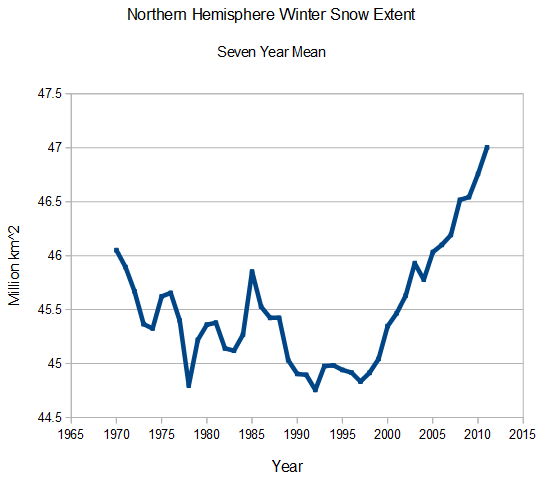
Northern Hemisphere winter snow extent is going through the roof, due to Arctic air pushing further south.

BvElMTCCAAAfGr6Rutgers University Climate Lab :: Global Snow Lab

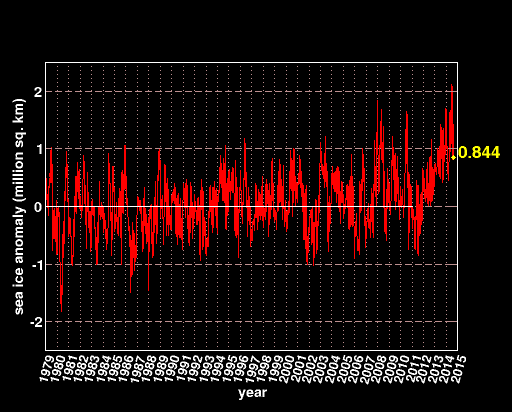
Antarctic sea ice extent is going through the roof

iphone.anomaly.antarctic (1)

iphone.anomaly.antarctic.png (512×412)

US summer temperatures are plummeting

ScreenHunter_2311 Aug. 26 05.44

Pay no attention to all this. Just keep believing the mindless propaganda being spewed by the White House and their minions.

Residents File a “Class-Action” lawsuit, to Block Wind Turbines!

Residents File Class-Action Lawsuit to Block

Wind Turbines Near Kingfisher


p. 17


p. 18


Seven landowners filed a class-action lawsuit this week to prevent wind turbines from being built near their homes in Canadian and Kingfisher counties.

In the complaint, which is embedded above, the landowners claim that planned wind farm projects controlled by Virginia-based Apex Clean Energy would create a nuisance, devalue their property and adversely affect their health.

The landowners who brought the lawsuit all live within three miles of the planned wind farm, and, in many cases, own property within the “no-build” zone of the planned locations of the 500-foot-tall turbines. From the complaint, with bullets added for readability:An organization that opposes wind projects in the two counties, the Oklahoma Wind Action Association, brought the lawsuit on behalf of the landowners. The suit was filed Aug. 27 in the U.S. District Court for the Western District of Oklahoma.

  • … Industrial Wind Turbine manufacturers recommend a minimum setback or safety zone of three (3) times turbine height—in this case fifteen hundred (1500) feet—between any home and an Industrial Wind Turbine for safety purposes in case of catastrophic failure of one or more components, not to protect against adverse effects resulting from noise.
  • As a result, Industrial Wind Turbines, by their own safety standards, create a de facto “no-build” zone in a fifteen hundred (1500) radius surrounding the Turbine. In many instances, this “no-build” zone overlaps with the property of landowners who have no agreement with Defendants.
  • This invasion of Plaintiffs’ right to use and enjoy their property requires Defendants to obtain an easement from the landowner that restricts their ability to construct upon any property within the fifteen hundred (1500) feet of the Industrial Wind Turbine. Otherwise, Defendants’ Industrial Wind Turbines will interfere with Plaintiffs’ ability to use their property as they wish safely.
  • Defendants have undertaken no effort to obtain such easements and Plaintiffs will be left with a cloud upon their titles.

The wind energy industry is booming in Oklahoma, which was the country’s fourth-largest wind-power producer in 2013. But there has been consierable resistance to some wind farm projects, including the Apex projects planned for Canadian and Kingfisher counties.

In December 2013, officials in the nearby city of Piedmont approved an agreement with Apex to settle a heated, year-long fight to block wind farm construction near the city. Officials in Kingfisher, too, are negotioating with Apex on a similar setback agreement, according to the lawsuit.

On Sept. 11, the Oklahoma Corporation will hold its first public meeting to discuss potential statewide rules for the wind energy industry, an action requested by Sen. President Pro Tempore Brian Bingman, R-Sapulpa, which was spurred by vocal opposition to proposed wind farm projects in Osage and Craig counties.


Climate Alarmists Try to Go For the Heart….Cause our Brains Just Ain’t Buying It! LOL!

Gallery of Morose Moonbats Sulking About Collapse of Global Warming Hoax

Ever more desperate to get someone other than socialist journalists and bureaucrats to take the collapsing global warming hoax seriously, academics who make their living on it have resorted to releasing photographs of themselves wearing doleful expressions as they contemplate the hurt allegedly being inflicted on the earth by the highly beneficial CO2 that is produced by literally all human activity. The following is not a joke:

Photographer Nick Bowers, Art Director Celine Faledam and Copy Writer Rachel Guest have teamed up to bring attention to the issue of climate change in a completely novel and frankly terrifying way with their portrait/interview projectScared Scientists. …

Bowers takes moody, dark, black-and-white portraits of the scientists and those portraits are then put up on the Scares [sic] Scientists websitealongside a short interview with each of these climate experts — an interview headlined by their credentials and their greatest climate change fear.

Prominent among the woeful warmists on display is Tim Flannery:

tim-flannery_sad-moonbat

Readers may remember Flannery as the malevolent lunatic who called for fighting the nonexistent global warming menace by filling the sky with sulfur. Linking global warming to adecline in circumcision may be his most noteworthy scientific achievement.

Flannery was rattled by ClimateGate, which caused the wheels to start coming off the global warming hoax by proving that “scientific” research on the topic consists largely not just of extremely bad, politicized science, but of deliberate lies.

The triumph in his home country of Tony Abbott, who rose to Prime Minister largely on his promise to undo the damage to the economy inflicted by global warming zealots, must have hit Flannery even harder. No wonder he looks so blue.

Global warming propagandists who can foresee the end of the line for the government grant gravy train don’t just express their sadness with forlorn expressions. They also write sad notes:

Australian National University student Joe Duggan contacted scientists and asked them to write the letters about how they felt about climate change.

“What follows are the words of real scientists. Researchers that understand climate change,” states the Is This How You Feel website, where Duggan is publishing the letters.

This one from “climate change ecologist” Anthony Richardson of the University of Queensland tugs on the heartstrings when you consider the angst he must be enduring:

anthony-richardson-climate-moonbat-letter

Not to mention that he is fretful about people figuring out that climate change ecologists are about as useful as ice cubes in the arctic, and distraught about the possibility of having to find constructive employment.

Climate Alarmists Try to Go For the Heart….Cause our Brains Just Ain’t Buying It! LOL!

Gallery of Morose Moonbats Sulking About Collapse of Global Warming Hoax

Ever more desperate to get someone other than socialist journalists and bureaucrats to take the collapsing global warming hoax seriously, academics who make their living on it have resorted to releasing photographs of themselves wearing doleful expressions as they contemplate the hurt allegedly being inflicted on the earth by the highly beneficial CO2 that is produced by literally all human activity. The following is not a joke:

Photographer Nick Bowers, Art Director Celine Faledam and Copy Writer Rachel Guest have teamed up to bring attention to the issue of climate change in a completely novel and frankly terrifying way with their portrait/interview projectScared Scientists. …

Bowers takes moody, dark, black-and-white portraits of the scientists and those portraits are then put up on the Scares [sic] Scientists websitealongside a short interview with each of these climate experts — an interview headlined by their credentials and their greatest climate change fear.

Prominent among the woeful warmists on display is Tim Flannery:

tim-flannery_sad-moonbat

Readers may remember Flannery as the malevolent lunatic who called for fighting the nonexistent global warming menace by filling the sky with sulfur. Linking global warming to adecline in circumcision may be his most noteworthy scientific achievement.

Flannery was rattled by ClimateGate, which caused the wheels to start coming off the global warming hoax by proving that “scientific” research on the topic consists largely not just of extremely bad, politicized science, but of deliberate lies.

The triumph in his home country of Tony Abbott, who rose to Prime Minister largely on his promise to undo the damage to the economy inflicted by global warming zealots, must have hit Flannery even harder. No wonder he looks so blue.

Global warming propagandists who can foresee the end of the line for the government grant gravy train don’t just express their sadness with forlorn expressions. They also write sad notes:

Australian National University student Joe Duggan contacted scientists and asked them to write the letters about how they felt about climate change.

“What follows are the words of real scientists. Researchers that understand climate change,” states the Is This How You Feel website, where Duggan is publishing the letters.

This one from “climate change ecologist” Anthony Richardson of the University of Queensland tugs on the heartstrings when you consider the angst he must be enduring:

anthony-richardson-climate-moonbat-letter

Not to mention that he is fretful about people figuring out that climate change ecologists are about as useful as ice cubes in the arctic, and distraught about the possibility of having to find constructive employment.

Spain’s Failed Green Energy Experiment….Another Case Study from Institute for Energy Research

Spain’s Green Energy Experiment

AUGUST 27, 2014

The Institute for Energy Research released today a case study on Spain’s failed green energy policies. This is the second entry in a series of case studies on Europe’s green energy disaster (click here to read IER’s case study on Germany).

For years, President Obama has pointed to Europe’s energy policies as an example that the United States should follow. However, those policies have been disastrous for countries like Spain, where electricity prices have skyrocketed, unemployment is over 25 percent, and youth unemployment is over 50 percent

IER’s study found:

  • In 2000, Spain began a new program to subsidize renewable energy with the passage of its “Promotion Plan for Renewable Energies.”
  • Spain’s feed-in tariffs have created a “rate deficit” amounting to $41 billion (about $850 per person).
  • In 2011, Spain’s domestic electricity prices (including taxes) amounted to 29.46 U.S. ¢/kilowatt-hour (kWh), nearly 2.5 times more than U.S. prices.
  • Spain’s electricity prices increased by 92 percent from 2005 to 2011.
  • Rising energy costs hit low-income Spaniards the hardest–driving them into energy poverty
  • Despite myriad renewable subsidies and mandates, Spain’s CO2 emissions increased by 34.5% from 1994-2011.

Click here to read the full case study.

Click here to read IER’s previous study on Spain by Dr. Gabriel Calzada Alvarez.

Frauds, Crooks and Criminals

Demonstrating daily that diversity is not strength!

Family Hype

All Things Related To The Family

DeFrock

defrock.org's principal concern is the environmental and human damage of industrial wind turbines on rural communities

Gerold's Blog

The truth shall set you free but first it will make you miserable

Politisite

Breaking Political News, Election Results, Commentary and Analysis

Canadian Common Sense

Canadian Common Sense - A Unique Perspective from Grassroots Canadians

Falmouth's Firetower Wind

a wind energy debacle

The Law is my Oyster

The Law and its Place in Society

Illinois Leaks

Edgar County Watchdogs

stubbornlyme.

My thoughts...my life...my own way.

Oppose! Swanton Wind

Proposed Wind Project on Rocky Ridge

Climate Audit

by Steve McIntyre

4TimesAYear's Blog

Trying to stop climate change is like trying to stop the seasons from changing. We don't control the climate; IT controls US.

Wolsten

Wandering Words

Patti Kellar

WIND WARRIOR

John Coleman's Blog

Global Warming/Climate Change is not a problem