100% Wind Powered Future? = 100% Fan-Tasy

Wind power will never be anything more than “novelty energy”…

stopthesethings's avatarSTOP THESE THINGS

alice_in_wonderland17 Lewis Carroll was a realist, by comparison …

****

At STT we love scotching wind power myths – and all the more so when it can be done with pictures:

The Wind Power Fraud (in pictures): Part 1 – the South Australian Wind Farm Fiasco

The Wind Power Fraud (in pictures): Part 2 – The Whole Eastern Grid Debacle

The ‘arguments’ pitched up by the beleaguered, and dwindling, band of modern wind-worshippers about these things ‘saving the planet’; and being the ‘answer’ to ‘cataclysmic’ global warming (or ‘climate change’, whichever is your poison) require the suspension of our good friends – ‘logic’ and ‘reason’.

To make it plain – wind power generation has NOTHING to do with the CLIMATE – one way or the other.

STT seeks to completely disconnect claims for and against man-made ‘global warming’, and wind power generation (see our post here).

As laid out in…

View original post 1,393 more words

Wind Power Investment Collapses in Sweden, Denmark, Finland & Norway

You Just Can’t Depend on the Wind….

stopthesethings's avatarSTOP THESE THINGS

Vestas turbine on fire Vesta’s Scandinavian marketing plan, goes up in smoke …

****

When the wind industry and its worshippers start chanting their mantras about the ‘wonders’ of wind, it isn’t long before they start preaching about the examples purportedly set by the Europeans; and, in particular the Nordic nations.

That the wind power fraud was driven by Denmark’s struggling turbine maker, Vestas probably has a fair bit to do with the worshippers’ fanatic-cult-like veneration of Scandinavia.

But, hold the phone?

It seems that economics works in precisely the same fashion in Denmark, Sweden, Finland and Norway, as just about everywhere else (save Cuba and North Korea, say?).

When you’re trying to sell a ‘product’ with no commercial value, the ‘business’ – for want of a better word – can only be about what you can extract from gullible/compliant governments (and unwitting power consumers), in the form of massive and endless subsidies.

In…

View original post 935 more words

RAF’s Top Guns Call Wind Farms a ‘Disaster in the Making’ for Flyers

Wind Pushers Do NOT Care Who they Hurt!!

stopthesethings's avatarSTOP THESE THINGS

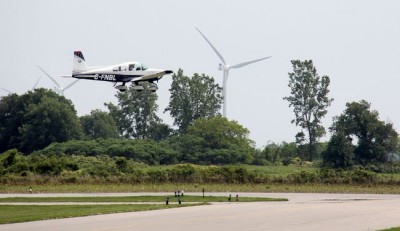
plane turbines Flyers have even more to worry about these days ….

****

There are at least 2 critical dangers for flyers created by these things:

1) air turbulence – generated by a sea of 50-60m blades with their outer tips travelling at around 350-400km/h – interfering with the ability of the pilot to control their kite (see our post here); and

2) slamming into them – with reasonably predictable results.

As to 1) here’s a report submitted in 2013 to the Civil Aviation Safety Authority by Ted McIntosh (a highly experienced agricultural pilot from NSW):

Date: 18-03-2013
Local time: 0730
State: NSW
Location: 9kms WNW of Gunning Wind Farm, Gunning NSW. Damage to aircraft: nil Most serious injury: nil
Summary:

Whilst on descent to my operating airstrip near Biala NSW, I suddenly experienced severe turbulence at about 500-600ft AGL. The wind at this time had been approx. 5-8 knots…

View original post 1,318 more words

Rural Dweller Want to Run the Windpushers out of Town!!

Democracy in Action: Vermonters Vent Fury at Planned Wind Power Project

hay-wagon-team

****

Remember all those glowing stories about wind power outfits being welcomed into rural communities with open arms? You know, tales about how farmers are dying to have turbines lined up all over their properties? How locals can’t wait to pick up some of the thousands of permanent,high paying jobs on offer? How developers are viewed with the kind of reverence reserved for Royalty?

No?

We’ve forgotten them too.

It’s ‘outrage’ that’s become the order of the day. With the wind industry facing growing and increasingly hostile hordes, their teams of community ‘liaison’ officers have taken to literally thumping their message home, setting the muscle on to old-age pensioners and disabled farmers:

Wind Industry Belting its ‘Message’ Home: Trustpower’s Thugs Assault 79-Year-Old Pensioner & Disabled Farmer

It’s a sure sign that the wind industry’s ‘game’ is lost.

Pro-(real)farming, pro-family, pro-community and pro-(real)power groups have an air of ascendancy now; they’re angry, they’re organised, and they aren’t about to be taken for fools any longer. Here’s another example of people fighting back against the greatest economic and environmental fraud of all time.

Vermont town set for protest vote against wind turbines
Vermont Watchdog
Bruce Parker
1 October 2015

IRASBURG, Vt. — The ongoing clash between Vermonters and Big Wind is set for a slugfest Thursday night as Irasburg residents will attempt a protest vote against two 500-foot wind turbines to be sited atop the ridgeline of nearby Kidder Hill.

In a special Selectboard meeting at 6:30 p.m. at Irasburg’s Town Hall, voters will cast ballots to answer the following question: “Shall Kidder Hill, or any other ridgelines of the town of Irasburg, Vermont, be used for development by industrial wind turbine projects?”

A no vote would be a setback for David Blittersdorf, whose Kidder Hill Community Wind company plans to construct the 5-megawatt electricity-generating towers to provide power for approximately 2,100 homes in the area.

“We have 421 signatures opposing this project,” said Ron Holland, a local resident, and member of the Irasburg Ridgeline Alliance, which led a petition drive against the turbines.

Holland, who helped expose broad opposition to the project, said a no vote would launch a sustained revolt by residents who are determined to protect local ridgelines.

“It will send a very clear message to the administration of the state of Vermont, and to Mr. Blittersdorf, that he can expect total noncooperation from the citizens of Irasburg.”

While Blittersdorf has yet to present his plan to regulators at the Public Service Board, the green energy mogul told a meeting of Addison County Democrats in June that Vermonters can expect wind turbines on one-third of Vermont’s ridgelines as part of the state’s goal to become 90 percent renewable-powered by 2050. A YouTube video of the meeting went viral across Vermont.

Residents who oppose the project say unsightly turbines would negatively affect property values and generate unhealthy amounts of noise in the community. Holland said he’s equally concerned by the sale of Vermont’s ridgelines to developers whose biggest supporters are well-funded politicians.

“This is an alliance between state interests and business interests that excludes towns in the decision-making process. This is being foisted on us and we have no say,” Holland said, referring to the town’s lack of authority to block energy projects.

“The policies that have been developed are a textbook example of crony capitalism. There are far less expensive, far less polluting, far less destructive options available that don’t make money for the people that control Vermont utilities. But they haven’t been considered.”

Asked for evidence of a state-business alliance, Holland said Blittersdorf is a major donor to Gov. Peter Shumlin, House Speaker Shap Smith and Joint Energy Committee Chair Rep. Tony Klein.

Blittersdorf did not return Watchdog’s request for comment. However, the green energy CEO is scheduled to give a speech defending Kidder Hill Community Wind prior to the vote.

Wind turbine opponents also have politicians in the fight.

State Sen. John Rodgers, D-Essex/Orleans, who represents Irasburg and other towns in the Northeast Kingdom, is a vocal critic of unregulated siting of renewable energy projects.

“The Northeast Kingdom has become the dumping ground for every ill-conceived, poorly sited renewable energy project the developers can dream up,” Rodgers said in a news release. “Environmental and energy issues are real, but we know that there are far more effective ways to address them without ruining the quality of life that defines us as Vermonters.”

Rodgers is a rare Democrat. Given that the state’s Democratic legislative majority overwhelmingly supports industrial scale renewables, blocking controversial wind turbines rests with local citizens.

For Irasburg residents like Rebecca Boulanger, it’s the feeling of powerlessness that has stoked the flames of anger in the small town.

“Here in Vermont, where we’re known worldwide for our town-meeting democracy, it is inconceivable that a decision with so many irreversible consequences for our citizens would be made without regard for the democratic process,” she said.

But for Holland, who said he expects a win Thursday night, protecting Vermont’s pristine ridgelines is simply about being a good neighbor.

“If your neighbor’s house is on fire, you go and help put it out. These people’s homes are going to be destroyed in terms of what happens in the environment around there, and so the neighbors are coming to the rescue.”
Vermont Watchdog

turbine fire 6

What was forecast by the community defenders themselves was realised at the meeting that took place a few nights later; where 96% of voters made plain their outright hostility to the great wind power fraud. No surprises there!

What was surprising is how the Editor of the local rag reported on the community’s clear expression of outrage.

Over the last few years, the media’s attitude and approach to the wind industry has ranged from fawning acquiescence to foaming eco-fascism.

In the former guise, journos would simply parrot the propaganda handed to them by wind power outfits, their parasites and spruikers: recounting complete fictions such as this project “will power 200,000 homes, save gazillions of tonnes of CO2 and all for free”. The resultant gushing drivel, arising from the combination of the scribes’ inherent laziness and infantile gullibility.

At the extreme end of the spectrum were journalists that attacked anyone with the temerity to challenge the Wind Gods; and the infallibility of the high priests that faithfully serve them.

Now, however, journalists too, have worked out the fickle nature of the Wind Gods; and that the wind industry’s high priests have all the credibility and moral fibre you’d expect from deranged cult leaders – of the same class as Jim Jones and David Koresh:

Vesta’s Ken McAlpine Forced to Apoligise to Dr Sarah Laurie for …. well, just being ‘Ken’

Wind Industry’s Propaganda King – Simon Chapman Forced to Apologise to Dr Sarah Laurie for False & Malicious Taunts

In the early days, newspaper editors took the deluded and warm and fuzzy view that everyone simply loves wind power to bits.

Now that community defenders – in places like Vermont and Rye Park in New South Wales – have joined forces and shown that the great majority would, rather than hugging them, simply love to blow these things to bits, newspapers have, for obvious commercial reasons, sided with the great majority. It’s pretty hard to sell newspapers thumping wind industry propaganda to a population, where 90% have worked out that the wind power pitch is utter bunkum.

Instead, newspapers are calling the wind industry for what it is: the greatest economic and environmental fraud of all time.

Here’s an example from The Caledonian Record, as it recounts the backlash against wind power and Vermont and slaughters the developer’s high-handed arrogance, lies, treachery and deceit.

Editorial: Blowing Blittersdorff Away
The Caledonian Record
3 October 2015

On Thursday night hundreds of people packed into the Irasburg Town Hall to tell renewable energy developer David Blittersdorf they don’t want his industrial wind towers in their town. Out of 285 voters, 274 said “NO” to wind development in town.

Dr. Ron Holland, the town’s moderator, also presented a folder of petitions to the select board, signed by 481 voters, asking the select board to take a formal stand against wind development. Dr. Holland also spoke about a formal organization formed to challenge Blittersdorf’s plan — the Irasburg Ridgeline Alliance — and reasons for their opposition. Among them: the health effects of living near towers, the effect on property values, aesthetics, and their utter failure to reduce carbon emissions.

Blittersdorf didn’t attend the meeting but sent a strongly worded email that we translated to say — “I believe in renewable energy, I know what my property rights are, and I don’t care what Irasburg thinks.”

Blittersdorf has gotten filthy rich on renewable energy subsidies and mandates. In fact, he’s had a hand in writing many of the rules and laws that benefit his companies directly. Nobody in Vermont, that we know of, has gotten richer from gaming the rigged system than Blittersdorf. He knows how to cash in both as a developer and as a manufacturer of renewable energy systems.

He says he’s on a crusade to save the world. But anyone as involved in green energy as Blittersdorf is knows that the small benefit of wind energy can’t ever justify their overall inefficiency or heavily subsidized expense.

He knows wind projects are a bad fit for Vermont’s climate, make no sense economically, and yield zero impact on net carbon footprint.

He knows, because of well-known and understood transmission and infrastructure limitations, the New England grid operator has to limit the amount of power it can absorb from Vermont’s boutique projects.

He knows that taxpayers and ratepayers are getting fleeced at every turn of the turbine.

He knows that there aren’t “green jobs” associated with power generation.

He knows that after a quarter decade, and billions of tax subsidies through the wind Production Tax Credit, that wind farms aren’t competitive anywhere in the United States.

He knows that his developments are irreconcilable with the spirit, and the letter, of Act 250 land protections.

He knows wind tax credits (as one critic explained) “are nothing more than a cost imposed on all taxpayers in order to accommodate development of a politically well-connected, high-priced, low-value resource that cannot meet our electric capacity needs.”

He knows most of the state’s carbon footprint derives from vehicles and heating our homes in winter. As such, expensive and inefficient wind projects yield no meaningful effect on aggregate carbon emissions.

He knows wind energy is notoriously intermittent and unreliable, requiring fossil-fuel powered backup plants when the wind doesn’t blow.

He knows Shumlin’s grand plan that calls for Vermont’s energy use to come from 90 percent renewable sources by 2050 is not only unachievable, but the tax subsidies that it will require in the intervening failed effort to reach it will cost Vermont taxpayers an unforgivable and unsustainable fortune.

He knows wind is only a winner for developers – earning tax credits, naked subsidies, and guaranteed (fixed) consumption by ratepayers.

He knows wind projects distort energy markets and require such intensive energy to develop that nobody believes them to actually be “green.”

He knows, despite his invocation of property rights, that wind development is the ultimate zoning issue and has enormous impact on surrounding communities.

He knows that those communities are being torn apart by bad public policy, big government subsidies and a misguided pursuit of “green energy.”

Of course Blittersdorf knows all of this. What he might not know is that Northeast Kingdom residents won’t suffer fools. And they’ve gotten better over the years, and from hard experience, at protecting themselves from predatory developers.

Everyone now understands that this isn’t about the environment or global warming. It’s a naked money grab.

And we all stand with Irasburg in saying bureaucrats, investors and hotshot energy lobbyists shouldn’t have more say about what happens in our communities than the people actually living here.
The Caledonian Record

winston-churchill-quotes

Winning this war involves winning skirmishes and battles: house by house, village by village and town by town.

Education is the key; facts the key weapon.

The endless lies tossed up by the wind industry and its parasites just don’t wash anymore: these days, people are switched on to the fraud; and angry for having been taken for gullible country bumpkins.

Once reasonable people are introduced to the facts about the insane costs of intermittent and unreliable wind power they cease to support it.

When they learn of the senseless slaughter of millions of birds and bats, and the tragic suffering caused to hard working rural people by giant fans, reasonable people start to bristle.

But when they learn that – contrary to the ONLY “justification” for the $billions filched from power consumer and taxpayers and directed as perpetual subsidies to wind power outfits – wind power INCREASES CO2 emissions in the electricity sector – rather than decreasing them, as claimed – their attitude stiffens to the point of hostility to those behind the fraud and those hell-bent on sustaining it.

In our travels we’ve met plenty of people that started out in favour of wind power and turned against it. But we’ve yet to meet anyone who started out opposed to wind power, who later became a supporter. Funny about that.

turbines giant

Present the facts to reasonable people – and they’ll want to know how the scam got started in the first place and why it hasn’t been stopped in its tracks already?

Once communities and their newspapers turn against the great wind power fraud, they’ll never turn back.

Get angry, get organised and make some noise. These are your homes, your families and your communities. Fight them; and they will flee.

storming_the_bastille1-e1318690559144

Harm From Wind Turbines Will Dwarf that of Asbestos…..

June 2015                                                                                     New ZealandNew Zealand

Wind turbines worse than asbestos?

“In the future, I believe that the adverse health effects of wind turbines will eclipse the asbestos problem in the annals of history.”

The views of Dr Bruce Rapley given to the Australian senate select committee on wind turbines in June 2015.Video also available on our YouTube channel

Dr. Bruce Rapley is a consulting scientist with Atkinson & Rapley Consulting Ltd., New Zealand, specialising in acoustics and human health.

He has three degrees from Massey University in New Zealand. A BSc in biological systems, an MPhil in technology (System Design and Testing of a Medical Biostimulator) and a PhD in acoustics and human health (Sound in the Military Environment: Detection, Measurement and Perception – undertaken in collaboration with the New Zealand Defence Force).

Dr. Bruce Rapley’s submissions to the Australian senate select committee on wind turbines:

Submission 1 – 27 February 2015

Appendices

Submission 2 – 1 June 2015

Dr. Bruce Rapley – June 2015

Ready for this? “Climate scientists never claimed that CO2 is the only thing that is controlling the changes in global temperature.”

Climate Scam Unravels….

Donna Quixote's avatarQuixotes Last Stand

We called this.  We called this a long long time ago.  As soon as the warming paused and kept pausing and they had to change the name of their religion from Global Warming to Climate Change, we KNEW they would eventually backpeddle on CO2 and here it is.

While he continues to push the global warming theory, Dr. Kevin Cowtan acknowledges many things that so called “deniers” have been pointing out right from the beginning.

First in this video, this gentleman acknowledges the pause, (which they’ve denied for so many years), then he goes on to explain there are other factors which control our climate (again, exactly what all of us skeptics have been saying the entire time), he also admits that the computer models failed to take into account other factors and then, he makes the astounding statement that climate scientists never claimed that CO2 is the only thing that is…

View original post 237 more words

Rye Park Rumble: 91% of Locals Hostile to Trustpower’s Planned Wind Farm Disaster

Another Community Fights for Survival Against the Wind….

stopthesethings's avatarSTOP THESE THINGS

angry-mob

A week or so back we covered the antics of another foreign owned wind power outfit struggling to come to grips with the fact that Australian rural communities have had – as they say – ‘a gutful’ of the wind industry’s lies, treachery and deceit. And they’ve especially had enough of the bully-boy, stand-over tactics adopted by the thugs employed by the likes of Trustpower and Epuron:

Wind Industry Belting its ‘Message’ Home: Trustpower’s Thugs Assault 79-Year-Old Pensioner & Disabled Farmer

The vast majority of rural Australians – living with or faced the threat of these things – have worked out the scale and scope of the economic fraud behind it all.

They’re hip to the fact that the $45 billion in subsidies designed to be siphoned off to these characters over the remaining life of the LRET is being used to literally steal their homes from under them:

Potential…

View original post 2,652 more words

Brits Beginning to Hold Wind Pushers Accountable!

Brits to Force £2 Wind Power Outfits to Hold £Millions in Reserve to Pay Damages to Victims & for Decommissioning

David_Davis_2181020a

***

In a stunningly brilliant legislative move, David Davis MP recently introduced a Bill in UK’s Parliament which will allow Britons to enforce judgments against wind power outfits; and which will ensure the removal of these things when they grind to an inevitable halt within the next decade or so – whether because the massive subsidies they run on are chopped; or because they have flamed out; rusted out; thrown their blades to the four winds; or have simply collapsed in heaps.

The standard corporate structures used by wind power outfits involve a parent company – like Infigen, say – usually as a holding company, with a subsidiary, which usually takes on the name of the wind farm (threatened or realised), such as Cherry Tree Wind Farm Pty Ltd (a wholly owned subsidiary of Infigen – going nowhere, thanks to its inability to obtain a Power Purchase Agreement).

The subsidiary is lumbered with all the current debts and other liabilities, which are loaded up in such a way as to exceed its assets (as long as the wind farm is operating, the parent sees that sufficient cash flushes through the subsidiary for it to remain technically solvent, at least in the short term).

In the event that a creditor pursues the subsidiary for any substantial claim, the parent (or related holding company) simply sits back and watches its subsidiary wind up in insolvency; leaving the creditor(s) without so much as a penny to pinch. Infigen has done it all before, back when it was called “Babcock and Brown”.

Among the class of creditors seeking to recover, are wind farm neighbours who successfully sue the windfarm operator (ie the subsidiary company) and who obtain a substantial award of damages for nuisance.

In David Davis’s speech below, he refers to the case of Julian and Jane Davis who successfully obtained a £2 million out of court settlement from a wind farm operator, for noise nuisance; and the resultant loss of property value (the home became uninhabitable due to low-frequency noise, infrasound and vibration).

The Particulars of Julian and Jane Davis’ Claim are available here: Davis Complaint Particulars of Claim

And Jane Davis’ Statement (detailing their unsettling experiences and entirely unnecessary suffering) is available here: davis-noise-statement

So, the next time you’ve got some wind industry parasite mouthing off that there has never been a successful claim against a wind power outfit, simply flick them a link to this post.

The other reason for setting up £2 subsidiary companies (in Australia referred to as $2 companies) of little or no real value, is to avoid (by winding up in insolvency) liability to clean up the mess after the rort is all over and done with.

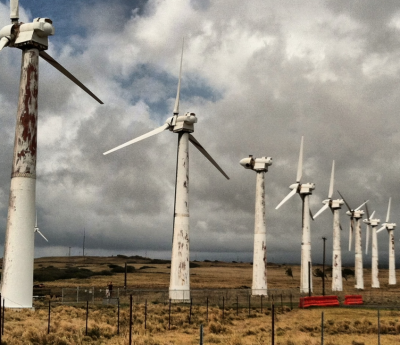
Hawaii rusting turbines

***

While planning authorities often talk about obtaining what are called “decommissioning bonds”, whatever promises are made, are given by the subsidiary (not the parent), which is designed to have no assets available to cover the cost of decommissioning; whenever that inevitable event takes place. Hence, the thousands of wind turbines scattered all over California and Hawaii, left rusting as monuments to our political betters’ collective stupidity (see our post here).

To avoid that event, David Davis introduced the “Public Nuisance from Wind Farms (Mandatory Liability Cover) Bill”, which is to be voted on sometime next month. Here’s David’s speech as he introduces the Bill  – video and then audio (Hansard – Transcript follows).

***

****

Audio Player

00:00
00:00

Public Nuisance from Wind Farms (Mandatory Liability Cover) Bill
David Davis
21 July 2015
House of Commons Hansard

Mr David Davis (Haltemprice and Howden) (Con): I beg to move,

That leave be given to bring a Bill to require the Secretary of State to make provision about obligations on wind farm operators in respect of financial cover for potential liabilities arising from cause of public nuisance; and for connected purposes.

Wind farms are contentious. Some argue passionately that they are a great public good and the solution to global warming while others equally passionately believe they are a waste of money. This Bill takes no side in that debate. It is narrowly defined to one aspect of public interest; it requires the operators of wind farms, who are in receipt of £797 million of public subsidy a year, to organise their affairs so that they are able to meet the costs of any nuisance imposed on people living near them.

In 1995 the World Health Organisation recommended that to prevent sleep interruption low frequency noise should not exceed 30 decibels. However, in 1996 the Government’s Energy Technology Support Unit—ETSU—set the noise limit for wind turbines at 43 decibels. That is an enormous difference; on the logarithmic decibel scale it is approximately double the WHO limit. We still use those standards today.

In the last five years no planning application was refused on noise-related grounds, but there have been 600 noise-related incidents arising from wind farm operations. The majority of complaints arise as a result of amplitude modulation, which is the loud, continuous thumping or swishing noise regularly described by those living near wind farms.

Numerous studies have identified that sleep is disturbed on a regular basis even at distances over 1 km away from turbines, yet under the ETSU standards turbines can be installed just 600 metres away from residential property. The wind farm companies are acutely aware of this, and all the more so since a member of the public, Jane Davis, sued a wind farm near her home for noise nuisance. The matter was settled out of court, and there is a gagging order preventing us from knowing the details, but the settlement is rumoured to have been in the region of £2 million.

Since this case, some dubious measures have been taken by the industry to obstruct perfectly legitimate claims for nuisance. The use of shell companies in the wind industry seems to be the commonest trick. The parent company provides a loan to a specially created subsidiary to set up the wind farm, then leaves it in control of operations. The subsidiary’s balance sheet typically comprises the wind farm physical assets, but they are more than offset by a very large loan from the parent company, with a resulting net liability. Profits from energy generation and large amounts of public subsidy are siphoned off to the parent company. The subsidiary is left as a financial shell, with very few liquid assets and total liabilities greater than total assets. That makes it impossible to bring litigation against a wind farm, simply because there is nothing to win from them. As such companies have negative net assets, even liquidating them would generate no cash to pay either damages or a legal bill.

One of my constituents bought his house in my constituency to enjoy a quiet retirement with his wife. After living there for more than a decade a 10-turbine wind farm was built near the house. The closest windmill is just over 600 metres from his home. He was assured at the planning stage that the wind farm would not trouble him, yet he has suffered the misery of regular noise and turbine blade flicker which has rendered his home almost unliveable. The low frequency noise from the turbines easily penetrates the double glazing. The couple have had to change bedrooms in order to sleep, but even so the persistent noise from the wind farm has taken its toll on his wife’s health; she now suffers heart palpitations and is prescribed anti-depressants on a permanent basis by her doctor.

My constituent, fearing his retirement has been ruined and his home thoroughly devalued, attempted to use his legal insurance to claim for nuisance from the wind farm operators. While there was a good chance of success in court, the company’s finances were organised so that there was no realistic prospect of recovering either damages or the legal costs of bringing the case. That being so, his insurers would, quite understandably, not cover his legal costs. That is despite the fact that the eventual owner of the wind farm is AES, a multibillion dollar international company involved partly in renewables but largely in coal and gas, that paid its chief executive $8.4 million last year. It laughably claims in its annual report to be a “World’s Most Ethical Company”.

It is not alone in its hypocrisy. In March I raised this disreputable practice with Falck Renewables, prospective operators of a wind farm near my own village in my constituency. I asked it whether it was going to do the same. It did not reply.

My constituents have no way to recover the tranquillity of the lives that they thought they were going to enjoy when they first moved to rural Yorkshire. They can neither sell their house nor get any financial recompense to enable them to afford to move, so they are trapped in this misery.

My point is a simple one. My constituents are just individual representatives of a situation that is repeated up and down the country. Wind farm companies must be adequately capitalised so that there can be a reasonable prospect of financial success for prospective litigants whose way of life they have damaged.

It is not only the noise that is a nuisance, of course. When the sun is low in the sky behind a turbine it creates a “strobe effect” which can be harmful to health and wellbeing, and there are also now concerns that some wind farms could be abandoned at the end of their operational lifespan, creating another sort of visual blight, this time in perpetuity.

The simple solution that I propose in this Bill is to require wind farm-operating companies to hold enough cash in hand to manage a legal case at any time, and in addition a financial bond—a guarantee, or insurance policy—as a security against potential liabilities, including all public nuisance and final decommissioning costs.

Any wind farm that fails to do that should lose its right to subsidy—which, as I said, amounted to £797 million in one year for the industry.

This would ensure that citizens could reasonably sue when they suffer damage, but, just as importantly, it would be a strong incentive for the companies to operate wind farms in such a way as to avoid public nuisance, which is causing great distress in some cases, and would mean that when the turbines are decommissioned there is money or insurance to cover the cost of clearing the wind farm, avoiding a situation whereby the local council has to pick up the bill.

Whatever our stance on onshore wind, companies in receipt of public subsidy should be required to meet their public responsibilities. This measure seeks to ensure that the big wind farm companies can truly be held liable when they are at fault and gives families the protection they deserve. I beg to move.

Question put and agreed to.

Ordered,

That Mr David Davis, supported by Chris Heaton-Harris, Tom Pursglove, John Mann and Jim Shannon, present the Bill

Mr David Davis accordingly presented the Bill

Bill read the First time; to be read a Second time on Friday 11 September, and to be presented (Bill 62).

Public Nuisance from Wind Farms (Mandatory Liability Cover) Bill

tehachapi-wind-turbines-p1

Corruption in the Wind Industry, is NO secret!

US Justice Dept Takes on Wind Power Outfits’ Bribery & Corruption

judges-gavel

****

Lies, treachery and deceit are the hallmarks of the wind industry – fraud of all manner of descriptions is de rigueur for wind power outfits; and whether it’s bribery and fraud; vote rigging scandals; tax fraud; investor fraud or REC fraudcrooks and corruption rule.

These boys are the grand masters of fleecing customers andshareholders; and hood-winking rural communities alike – see our postshere and here and here.

Bribery is standard practice; deployed to get unwilling locals and venal council members on-side:

UK Wind Industry Turns to Bribery as it Fails to “Win Brit’s Hearts & Minds”

However, as anger turns to fury, not only are rural communities refusing to be bought off with trinkets and blankets, they’ve called the wind industry’s efforts to ‘grease’ the wheels of ‘democracy’ for precisely what it is: corruption. Much to the wind industry’s horror.

Wind energy projects opponents try new tactic
The Whig: Kingston Whig-Standard
Elliot Ferguson
20 September 2015

DENBIGH — A group fighting proposed wind energy projects in Lennox and Addington County filed a complaint with the United States Justice Department against the project’s American parent companies.

The complaint was filed earlier this month by John Laforet of the public relations firm Broadview Strategy Group Inc. and supported by the group Bon Echo Area Residents Against Wind Turbines (BEARAT).

The complaint alleged that Florida-based NextEra Energy and Colorado-based Renewable Energy Systems Americas violated the United States’ Foreign Corrupt Practices Act when their Canadian subsidiaries offered financial compensation in exchange for resolutions of municipal support.

“I was taken fairly aback by the money-for-votes approach that both NextEra and RES Canada took when dealing with councils,” said Laforet, who was president of Wind Concerns Ontario from 2000 to 2011.

“Unlike community benefit or vibrancy agreements that exist elsewhere in Ontario, these are being negotiated as a condition of a support resolution which will then benefit the proponent in receiving a contract from the provincial government.

“It’s no longer a goodwill measure, its a transaction. Money for support.”

The U.S. Department of Justice declined to comment about Laforet’s complaint.

Steve Stengel, a spokesperson for NextEra Energy Canada, said in an email to the Whig-Standard that the Justice Department complaint will not stand up to scrutiny.

“The claims of Mr. Carruthers and Mr. Laforet are completely without merit,” Stengel said. “NextEra Energy, Inc. and its affiliates work tirelessly to ensure that all contracts with local municipalities, entities, and individuals fully adhere to all Canadian and U.S. laws.”

Peter Clibbon, senior vice-president with RES Canada, said in an email that the company has not received a copy of the complaint.

“As a matter of policy, the company does not comment on pending litigation,” he said.

Provisions of the Foreign Corrupt Practices Act prohibit officials with American companies from making “payments to foreign government officials to assist in obtaining or retaining business.”

Laforet said that law should apply to American companies’ Canadian subsidiaries.

Protests and petitions by community groups across Ontario have failed to prevent wind energy projects from being built, said Ashby Lake resident Dan Carruthers, co-chair of the Bon Echo Area Residents Against Wind Turbines.

The Justice Department complaint is an effort to try something that hadn’t been tried before, he said.

“What we wanted to do was stay on step ahead of the proponents,” he said.

“We need to have a very novel approach to this problem, something that hasn’t been tried, something that will put these proponents off guard but is going to be effective.”

Carruthers said the complaint is meant to make the projects too unattractive for the Independent Electricity System Operator to approve.

“We want to make the North Frontenac-Addington Highlands proposals stink so much, just so toxic from a political and public relations point of view, that they are just going to say ‘We don’t want to touch this, we’re just going to stick it to the bottom of the pile. There are easier ones to pick,’” Carruthers said.

A community benefits package are fairly common with large renewable energy projects like these, said Queen’s University geography professor Warren Mabee, and are a good way to compensate the community and give residents a sense of ownership.

But Mabee said the justice department complaint is a tactic that he has never seen from an anti-turbine group.

“It could get very sticky,” said Mabee, director of Queen’s University’s Institute for Energy and Environmental Policy. “In all likelihood this is totally innocent and it is just a strategy by the companies to drive these projects forward with as few bumps as possible but it may backfire on them.”

Ontario’s Independent Electricity System Operator in the coming months is to award about 565 megawatts of new renewable energy contracts, including 300 megawatts of wind energy.

IESO spokesperson Alexandra Campbell said there are certain mandatory requirements that companies must meet in order for an application to be considered, including holding a public meeting and making sure local residents are informed about the project.

Community benefit agreements are not considered part of the mandatory process, she said.

“In terms of the project proponents’ discussions or engagements with either individuals or the municipality, we don’t have rules or are involved in those,” Campbell said.

“If a proponent and a municipality have met, talked about needs or there have been agreements, that is not something we are a part of. We sort of say ‘Do you have community support? Show us the documentation.’ And that is kind of the end of our role.”

NextEra and RES-Canada are among more than 40 companies approved to bid for the renewable energy contracts from the Ontario government.

RES-Canada is proposing to build 170-megawatt Denbigh Wind LP and NextEra Energy Canada is proposing its 200-megawatt Northpoint II project in Addington Highlands Township.

According to the minutes of the June 15 township council meeting, Stephen Cookson of RES-Canada told councillors the company would provide $25,000 in bursaries, $30,000 a year during development and an ongoing community benefit fund of $2,000 per megawatt in the project.

In a June 5 presentation to council, a delegation from NextEra Energy Canada told councillors the company would offer annually $1,750 per megawatt produced.

Both companies asked for a resolution of support from council, which would strengthen their applications to the Independent Electricity System Operator.

Addington Highlands Township council voted 3-2 in favour of supporting both projects on July 20.
The Whig

dirtyrottenscoundrelsoriginal