Investors Getting “Cold Feet”, When it Comes to Financing Wind Projects…

Banks Baulk at Lending to Wind Power Outfits as Brits Slash Subsidies & Communities Fight Back

ASWAR-Town-Hall.400

****

Our British counter-parts are on a roll.

Since David Cameron’s thumping election win, wind power outfits in the UK have been copping a belting on all fronts. And the same is true across the ditch in the Emerald Isle.

Furious communities from Armagh to Kerry; and John O’Groats to Cornwall are gathering strength and fighting back, like never before:

Forces Marshall in International Revolt Against the Great Wind Power Fraud

Communities Fight Back & Set the Wind Industry on Fire

In the post above the comment from Stop the Chislet Windfarm committee chairman Dr Ashley Lupin says it all really:

“We are determined this is not going to happen. We local people are not the handful of country bumpkins that you were expecting to walk all over. We are passionate, we are angry and we are organised”.

It’s that kind of ‘in-your-face’ community outrage that will bring the wind power fraud to a screaming halt. Fight; and they will flea.

The weakest links for the wind industry and its parasites are those with real ‘skin-in-the-game’; and that’s the Banks.

The slightest of hint of trouble for actual or would be lenders – be it the looming (or already realised) threat of governments forced by power consumers battling with escalating bills to slash subsidies – or the threat that their developer/customers will be sued for $millions in damages in nuisance and rendered insolvent (see our post here) – has the finance sector worried; VERY WORRIED, as this BBC lament shows.

Wind farm subsidy cut putting off lenders, research suggests
BBC News
14 September 2015

Investment in onshore wind energy is already being hit by the early withdrawal of government subsidies, according to a survey of lenders.

In June, UK ministers said new onshore wind farms would be excluded from a subsidy scheme from 1 April 2016.

Research for industry body Scottish Renewables suggests investors are now less willing to lend to projects.

The UK government said it was taking urgent action to address the projected overspend on subsidies.

It has previously said there are already enough subsidised wind energy projects in the pipeline.

The announcement that the Renewables Obligation (RO) – funded by levies added to household bills – would be withdrawn a year earlier than expected has been criticised by Scottish Renewables.

A survey, carried out on its behalf by EY, asked 10 major lenders about their willingness to provide investment.

Of the seven who responded, more than half said they were not prepared to lend until the UK Energy Bill had received Royal Assent, which is not expected until next year.

The political and regulatory risk concerning the RO was one of the key factors cited.

Michael Rieley, senior policy manager at Scottish Renewables, said the expected loss of the subsidy “had a clear and negative impact on the ability of developers to attract finance to their projects”.

The UK government says there are already enough subsidised wind farms in the pipeline.

“Our members have already expressed concern that they were entering an investment hiatus and this survey of lenders would indicate their suspicions are well founded,” he said.

Mr Rieley added: “With the decision to end support a year earlier than planned, around 2GW of onshore wind projects in Scotland have been put at risk.

Matthew Yard, assistant director at EY, said: “The results of the survey indicate that raising project finance for UK onshore wind RO projects has become more complex, more expensive and increasingly difficult since the announcement of the early closure of the RO.

“Those banks that have indicated they are considering lending to UK onshore wind RO projects are now seeking better terms and some form of mitigation against a situation with no RO revenue.”
BBC News

no-deal-button-feature

****

At the risk of sounding like a broken record, we’ve said it before, and we’ll keep saying it – the wind industry exists – and ONLY exists – for one single purpose: to wallow in a massive subsidy stream that – in order to keep this monstrous Ponzi scheme alive – will need to outlast religion:

The Wind Industry: Always and Everywhere the Result of Massive & Endless Subsidies (Part 1)

The Wind Industry: Always and Everywhere the Result of Massive & Endless Subsidies (Part 2)

The ‘product’ has no commercial value, apart from the subsidies that it generates – hence British Bankers baulking at lending to wind power outfits there.

Then there’s the growing problem of communities fighting back to take control of their rights and futures.

People power blows away bid for Sturton wind farm scheme
Retford Times
13 September 2015

Sturton-le-Steeple villagers are celebrating after the wind was taken out of the sails of plans for a towering turbine farm.

EDF Energy Renewables has abandoned plans for its Maumhill project, to the delight of residents nearby.

It made the move after the Government announced onshore wind farms will be left out of a subsidy scheme.

Villagers have fought the proposals for nine huge turbines for more than five years.

Dave Langmead, clerk to Sturton-le-Steeple Parish Council, said the rural location already “does its bit” for energy production.

“On behalf of the Association of Trentside Parish Councils and Wheatley Energy Forum, it is a huge relief,” he said.

“We’ve got to thank all the people who have put in so much work to ensure this didn’t go ahead.

“This area produces around 10 per cent of the country’s energy with two power stations.

“Coupled with a 7.5 million tonne sand and gravel quarry about to come on line, I think we’re doing our bit!

“It’s not nimbyism – our backyard is already full.”

Despite the news being celebrated, campaigners are not resting on their laurels.

“You can never relax with these things,” said Mr Langmead.

“Even though it was the reduction of a subsidy scheme that was the death knell for this site, without the community getting together and fighting it, it could have gone through sooner.”

EDF Energy Renewables explained its decision.

“After reviewing the scheme in the light of recent government announcements on onshore wind, the company has informed Bassetlaw District Council that it does not intend to develop its plans for the project any further,” a spokesman said.

“EDF Energy Renewables’ original application for a nine turbine wind farm on the Maumhill site was refused by the council’s planning committee in February 2013.

“A subsequent appeal by the company against this decision had to be withdrawn when the Planning Inspectorate refused to consider a number of proposed changes to the scheme, prompting work to be undertaken on an intended new planning application for a reduced number of turbines on the site.

“Proposals for a revised seven turbine development were publicised last year at a series of local public exhibitions, but those plans will now not be taken any further.”
Retford Times

It’s “outrage” when they’re proposed and “delight” when they’re scrapped: that says it all really ….

john anderson

Wonderful Video Showing How they Fight the Windscam, in France!

French Revolt Against the Great Wind Power Fraud

storming_the_bastille1-e1318690559144

****

The French have treated revolution as a National pastime, for much of their history: storming the Bastille in 1789; and the streets of Paris in 1969, to name a couple of people-power-hits.

Today, the target of the seething masses is these things; or to the French: éoliennes.

And – with a burning desire to Stop These Things – the French follow events here, with a keen interest. See this story, for example (you’ll need High School French or better): Les effets néfastes de fermes éoliennes sur la santé sont réels –  STT followers will recognise STT Champions, Dr Sarah Laurie and Senator John Madigan, as the stars of that post.

The wind industry in France is equipped with same snake-like ‘charm’, as elsewhere. As we reported earlier this year, French wind power outfits are hell-bent on destroying the final resting places of thousands of Australian soldiers, who perished defending French soil a Century ago:

The Wind Industry Knows No Shame: Turbines to Desecrate the Unknown Graves of Thousands of Australian Soldiers in France

Now to a tale of a French farmer fighting to regain the health of his previously happy herd.

French farmer sues energy giant after wind turbines ‘make cows sick’
The Telegraph
Rory Mulholland
18 September 2015

Yann Joly is suing CSO Energy for €356,900 (£260,000) over wind turbines which he alleges have led to a dramatic fall in cows’ milk output

A French dairy farmer is suing a wind energy company whose turbines have allegedly made his cows sick and led to a dramatic fall in their milk output.

An expert brought in to provide evidence to a Paris court confirmed that the 120 animals had been drinking much less water since the turbines were installed in early 2011.

This had led to a large drop in milk production, as cows need to drink at least three litres of water for every litre of milk they produce, and has damaged the cows’ general health, the expert said.

“The farmer is ruined,” Philippe Bodereau, his lawyer, told The Telegraph. His client, Yann Joly, is suing CSO Energy, which operates wind farms in France and Germany, for €356,900 (£260,000). Mr Joly wants the firm to remove its turbines.

He says he is being forced to sell his cows and will grow crops on his land instead.

“I am now in the process of selling the cows because it is not profitable to keep them,” he told The Telegraph. “I had an employee on the farm and am having to let him go. I will have to get a job outside the farm in order to try and keep it. I will also use my fields to grow crops instead: beetroot, wheat and colza.”

Mr Bodereau said: “This is the first time in the world that there is a document from an expert concluding that there is no other reason but wind turbines that could be to blame for animals being sick.”

Christiane Nansot, an agricultural expert, who wrote the report, said the drop in milk production began when the 24 turbines were installed next to the family farm, in Le Boisle district, near the Abbeville, northern France.

“The geologist said that a geographical fault in the underlying rock could be leading to an amplification in the waves emanating from the turbines,” she said.

But she cautioned that other farms where turbines are installed near faults would have to be studied before it could be definitively concluded that the turbines were making the Le Boisle animals sick.

The report says that the cows are also prone to mastitis – udder inflammation.

It does not decisively lay the blame on the turbines for the milk yield drop or the symptoms, but says all other possible causes have been ruled out.

A ruling is expected next spring.

CSO Energy did not respond to requests for comment.

Wind turbines have been blamed for killing large numbers of wild birds and bats but there have been few other claims of them damaging animals’ health.

Critics insist they are damaging to human health because they create infrasound – sound at such low frequency that it cannot be picked up by the human ear, but can carry through the atmosphere for great distances.
The Telegraph

That incessant turbine generated low-frequency noise and infrasound causes adverse health effects – such as sleep deprivation – is a FACT – and it’s been known by the wind industry (lied about and covered up) for 30 years:

Three Decades of Wind Industry Deception: A Chronology of a Global Conspiracy of Silence and Subterfuge

That dairy cows set upon by the same forces of noise and vibration should also react unfavourably should – to those gifted with our good friends ‘logic’ and ‘reason’ – not come as any great surprise.

STT has reported on the impact of turbine noise on horses and dogs once or twice:

Farmers Tell Wind Farm Developer to Stick its Turbines Where the Sun Don’t Shine

As to the impact on humans and dogs, AGL operates a non-compliant wind farm called Oaklands Hill, near Glenthompson in Victoria – where the neighbours began complaining about excessive turbine noise the moment it kicked into operation in August 2011.

Complaints from neighbouring farmers, Bill and Sandy Rogerson, included the impact of turbine noise on their hard working sheepdogs.

The Rogersons – whose prized paddock dog goes ballistic every time AGL’s Suzlon s88s kick into action – complained bitterly about the noise impacts on them and their 5 working dogs: one of them became disobedient and extremely timid, hiding in her kennel whenever the turbines were operating.

In an effort to provide a little respite to the affected Kelpies, AGL stumped up $20,000 for a deluxe, soundproof dog kennel. AGL doesn’t give money away without a reason, so you’d tend to think there was something in it.

The Rogersons gave evidence to the Australian Senate earlier this year about the noise impacts on them and their prized working dogs, covered in this post:

Senate Inquiry: Hamish Cumming & Ors tip a bucket on the Great Wind Power Fraud

In France, it’s not just a bovine revolt that’s brewing; French men, women and children are fighting back too. As this clever – and very French – little video details.

****

More About Wind Travesty in Falmouth – Wind Proponents Ignored Harm to Citizens

Mandatory Reading Wind Turbines & Human Rights Abuse

Resident Should Hang Their Head In Shame For What They Have Done To Their Neighbors
Mandatory Reading Wind Turbines & Human Rights Abuse

Falmouth Mandatory Reading Wind Turbines & Human Rights Abuse

Below are three links it should be mandatory that everyone in Falmout watch these two videos and read the power point presentation by Attorney Chris Senie

What citizens should find interesting is the interaction between Attorney Chris Senie and the Zoning Board of Appeals just prior to the power point presentation in the Part 1 video about 35 minutes into the video.

Falmouth Zoning Board of Appeals Orderer Ceast & Desist Falmouth Wind Turbine #1

Zoning Board Of Appeals September 17, 2015 Part 1

http://www.fctv.org/v3/vod/zoning-board-appeals-september-17-2015-part-1

Zoning Board Of Appeals September 17, 2015 Part 2

http://www.fctv.org/v3/vod/zoning-board-appeals-september-17-2015-part-2

Zoning Board of Appeals September 17, 2015 Senie & Associates, P.C. Representing Impacted Neighbors

https://windwisema.files.wordpress.com/2015/09/senie-to-zba-ceasedesist-2015-09-17.pdf

Warning from Vestas Wind Company Falmouth Wind ll

Before the supply contract for Wind 2 was signed with the manufacturer, Vestas, the Town was asked by Vestas and its general contractor on the project (Lumus) to sign a letter taking full responsibility for the siting of Wind 2 in light of Vestas’ articulated concerns about the sound pressures this turbine is capable of creating in this location.

This request came in the form of a letter from Lumus dated August 3, 2010 (the “LumusLetter”).

Click here to read letter hidden for 5 years : August 3, 2010
Mr. Gerald Potamis
WasteWater Superintendent
Town of Falmouth Public Works
59 Town Hall Square
Falmouth, MA 02540

Lumus Letter :
http://www.windaction.org/posts/41357-vestas-raises-concerns-about-turbine-noise-letter#.Vfy4Y99Viko

The Town had its Wastewater Superintendent Gerald Potamis respond (the same day the Lumus letter was received), by sending a separate letter directly to Vestas. In that letter the Wastewater Superintendent assumed, for the Town, all such siting responsibility and liability (the “Potamis Letter”). An earlier draft of the Potamis letter, dated July 1, 2010 (so more than a month before the Potamis letter was sent to Vestas), called for the signature of the Falmouth
Town Manager.

The Town Manager was to Sign

During this month of discussion of what to do about the Vestas refusal to sell Wind 2 because of sound pressure concerns:
(1) it appears that no-one on the staff brought this to the attention of the Board of Selectmen (based on BOS meeting minutes); and (2) the signer was switched from the Town Manager to the Wastewater Superintendent (who apparently signed this letter assuming responsibility without authority).

The Distress Was Well Known (1)

As of August 3, 2010 Lumus warning letter, and the Potamis assumption of liability letter sent the same day (the “Warning Date”), The Town was well aware of the distress being caused by Wind 1.
By the Warning Date, the Town had received numerous complaints from neighbors. Brian and Kathryn Elder had sent the Town a registered letter (dated May 5, 2010), and met with the Assistant Town Manager and Building Commissioner at their property to show the degree of distress to Town officials. By the Warning Date the Town Planner had sent an email to neighbor Barry Funfar (dated June 3, 2010) regarding the turbine distress. Also by the Warning Date, the ZBA and the Falmouth Planning Board had held a joint meeting to discuss the problems with Wind 1 (that meeting took place on June 4, 2010

By the August 3, 2010 Warning Date the Town had held a meeting to discuss the scope of a sound study (to be done by an engineering firm known as HMMH) of Wind 1 (actual) and Wind 2 (projected) sound pressures (that meeting held on June 10, 2010).
Also a letter had been sent from Assistant Town Manager, Heather Harper, to neighbor Barry Funfar (dated June 15, 2010) discussing measures being taken by the Town in response to complaints. In her letter to Mr. Funfar, she indicates that the Town has instituted a mitigation measure which turns off Wind 1 in certain wind conditions, which had, by the date of that letter, been utilized 39 times, and had a “positive impact”.

Vestas Asked Weston & Sampson for an “updated study” for Wind 2
Fri 5/28/2010 1:48 PM
Brian Hopkins brhop@vestas.com
RE: Sound / Feasibility Studies
TO: Wiehe, Stephen, cc Duijvesteijn, Olle; Yanuskiewicz, Francis

“Steve, I don’t believe I saw a feasibility study for Falmouth other than Site Plans. Was a sound study updated with the additional turbine?

Does the information I provided in the octave band data support the conclusions that you are conservatvely within MA state sound regulations?
The table highlights the fact that V82 produces greater decibels when it reaches its stall regime beyond the IEC design standard at 95% capacity. The table also helps recognize the effects of shear on the sound levels experienced at receptors which should also be considering with the sound study.

My email was lost from the time we did the first turbine so I don’t have a great record of information but do you have this decibel mapping for Falmouth?”

There never was a reponse to this above email in town records –

It was assumed due to the lack of an email response in town records no noise decibel mapping was done for both Falmouth 1 & 2 together.

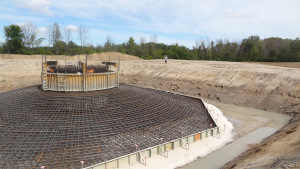
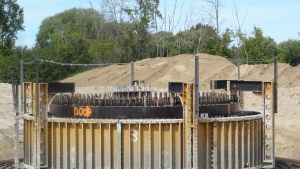
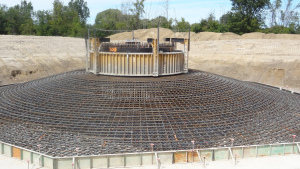
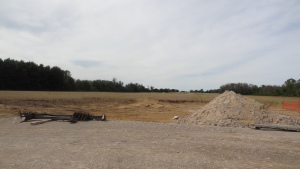
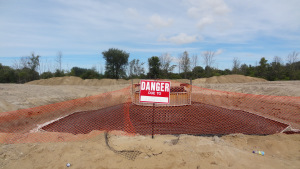
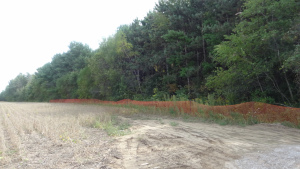
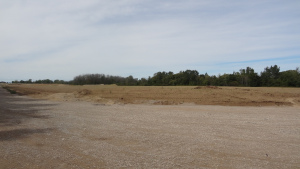
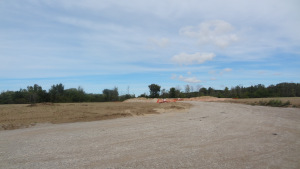
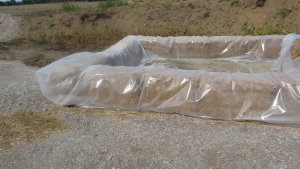
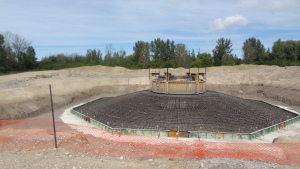
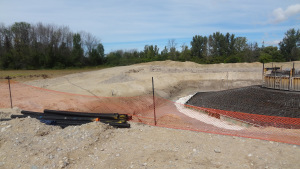
Ever Wonder What’s Holding up those 65 Storey High Industrial Wind Turbines?

An up-close view of what wind turbine base, construction sites look like… It’s NOT pretty!

pattikellar's avatarPatti Kellar

What's Holding up a Wind Turbine? DSC05597

Averaging 800 metric tonnes of concrete and rebar creating more emissions than will ever be saved by it, during it’s lifetime.   Blades are carbon fibre and non-recyclable, at least at this point.  With thousands being put in Ontario, Canada – they will fill up every landfill site and someone smarter than I would have to calculate how many would sites would have to be created.  Producing power we don’t need and can’t afford.  Ridiculous.  

DSC05598DSC05599DSC05602DSC05603DSC05604DSC05605DSC05606DSC05607DSC05608DSC05609DSC05610DSC05611DSC05612DSC05613DSC05614DSC05615DSC05616DSC05617DSC05618DSC05619DSC05620DSC05621DSC05622DSC05623

Do what you can to stop this madness.  

View original post

Thanks to STT for Almost 3 Years of Educating the Public About the Wind Scam!

Costly & Pointless Wind Power Subsidies Slammed by Australia’s National Party

turbine fire 6

****

When STT cranked into gear in December 2012, hammering the wind industry was a fairly lonely occupation: hardly fashionable; a bit like wearing yellow to a funeral, really.

Back then, openly questioning the “wonders” of wind power was a guaranteed dinner party showstopper. Nervous hosts – choking on their organic pinot gris – would seek to segue to another less contentious topic – the joys of dancing cat videos, say; tempers might flare, among raised voices one of the more passionate would shout something about: “the science is settled man”.

The protagonist asserting that dreaded CO2 gas was an obvious planet killing “problem”; to which the only “solution” was carpeting the world in an endless sea of bat-chomping, bird slicing, blade-chucking, pyrotechnic,sonic-torture devices – not that the wound-up wind power advocate would have ever presented, let alone dealt with, minor issues like those, as part of his “we’ve gotta save the planet” manifesto.

But that was then, this is now.

Now, people with a modicum of intelligence – anything like an inquisitive nature; and gifted with a shred of logic – are able to unpick the fraud in several easy steps. Indeed, in discourse among those with an adult’s mental capacity it’s no longer a mortal sin these days to express the bleeding obvious: THESE THINGS DON’T WORK.

On the contrary, calling the great wind power fraud for what it is has become fashionable: for want of a better phrase it’s “the new black”.

For another look at the latest fashion trend, we’ll cross to a report on a motion to support the greatest economic and environmental fraud of all time – foolishly pitched to members of Australia’s National Party (the minority Party that forms the Federal Coalition government).

Nats Reject Renewables
The Land
Colin Bettles
17 September 2015

THE Federal National party’s weekend conference rejected a controversial motion calling for support of the renewable energy sector and the federal government to back related projects based in regional centres.

The motion was moved and spoken for strongly mostly by delegates from Western Australia who raised concerns about excessive costs and access to power generation in regional areas.

The WA delegation also expressed concerns the party must be progressive through a statement of support for renewable energy projects and seeking to capture future economic opportunities.

But a rear-guard action – spearheaded by former long-serving Queensland Senator Ron Boswell and current Queensland Hinkler MP Keith Pitt – saw the motion eventually defeated by a 43-34 vote.

Opponents of the motion, including Queensland National Party Womens’ president Theresa Craig, argued that renewable energy projects like wind farms were heavily subsidised by taxpayer funds which they opposed.

Ms Craig said, as a scientist and a regional person “I’d love to support this but I can’t because the facts do not add up”.

“Unfortunately the Green propaganda has not given us the facts,” she said.

“Today, 5 per cent of clean energy adds an extra 15pc to our utility bill; reference Queensland University of Technology.”

Ms Craig said research by the Heartland Institute had also said that every job created by the renewable energy sector meant two to three jobs were lost.

“Renewable energies are the way of the future but right at the moment it’s being subsidised,” she said.

“What we need to do is put the support into getting renewable energies that can stand on their-own two feet.

“We as farmers, don’t we have to stand on our own two feet?

“We have to do it by ourselves, so this needs to be done the same way for the renewable energy people.”

Young WA Nationals president Lachlan Hunter said he majored in agricultural science studies at UWA and believed the conference should “get over the semantics” and consider the motion’s intent.

Mr Hunter said the motion wasn’t saying coal should be “cut out” or remove the way energy is traditionally produced in Australia.

He said it was “simply saying we support the renewable energy sector and to have those projects based in regional centres”.

“Don’t get hung up on the words ‘renewable energy’ just because it’s related to the Greens,” he said.

“I think we can be proactive in this space and actually support it if the science does prove that it’s out there and it’s a sustainable industry.”

Newly elected WA Nationals president James Hayward also spoke strongly for the motion saying its critics had strayed “well beyond what it’s about”.

He said the reality was, “sustainable energy is something that we need to embrace in some form”.

“Windmills that chop up birds are perhaps not the answer,” he said.

“This motion does not say (renewable energy) is the answer; it says this space needs to be part of who we are and what we do.

“We cannot allow the Greens or Labor to take responsibility for looking after our space, our environment.

“We’ve got a generation of younger people growing up and those people, for whatever reason, are simply more connected to the idea of looking after the environment and we need to grasp and get hold of that.

“This motion doesn’t talk about offering financial incentives.

“It just says it’s on the radar for us and we know that technology is out there and part of the future and we need to embrace it.”

But Mr Boswell returned fire with an impassioned plea saying he was “vehemently” against the motion.

“Whichever way you cut and dice this motion the motion goes out that says you support renewable energy,” he said.

Mr Boswell said his advice to Mr Hayward, gained by serving a number of years in federal parliament, was “don’t ever try and be a Green”.

“Don’t ever try and be one (a Green) because you are neither the Nationals or a Green and you just lose everyone so let’s be distinct about what we stand for,” he said.

Mr Boswell said subsidies on renewable energy were impacting energy prices and adding to agricultural production or processing costs in areas like beef, grains and dairy.

“You are paying through the nose for this renewable energy,” he said.

“Rural Australia is probably paying more than anyone else for it.

“It will only work if it’s subsidised and who’s going to pay for it, you are.”

WA Mining and Pastoral Region MLC Dave Grills said those in favour of the motion were asking the Nationals Australia to support renewable energy and were not asking for billions and billions of dollars in taxpayer dollars.

“We’re asking for your support to do it because economically, it suits regional WA,” he said.

Another speaker, representing Wide Bay in Queensland said, “I’m totally over it with my tax dollars paying for subsidies for renewable energy windmills”.

“I resent my birds in this nation being chopped sliced and diced by these devices.”

Mr Pitt said there was a place for renewables for remote power generation but that decision should be made by those who distribute it.

He said under the current agreed, Renewable Energy Target ET of 33,000 gigawatt hours, as much capacity as has been produced in last 15 years, will need to be built in five years.

Mr Pitt said renewable energy certificates on an average of $47 would, over the next 15 years, cost electricity users $24 billion – but could go as high as $93 costing $43 billion.

“Every single job in renewables is subsidised to the tune of $200,000,” he said.

Queensland LNP speaker Rohan McPhee said the purpose of the motion had been misconstrued.

“We’re not calling for the federal government to go out and start paying for wind farms in regional towns,” he said.

“This is just encouraging innovation and investment in renewable energy.

“Whether or not you believe in climate change – and we can debate that for days – but the fact of the matter is the world consensus is it’s here and whether we like it or not we have to get with the program.

“We’re going to be left behind.

“Australia has such a great landscape for innovation in this area we’ve got so much space – we’ve got sun and wind and we’ve got so much potential to develop new technologies in the renewable energy sector.

“It’s a global market and the renewable energy market is growing every day for new technology.

“The fear I have is that if we don’t support this motion we don’t send a message to potential businesses that can grow and innovate new technology and we get left behind.”
The Land

An obvious battle for common sense there, but, thankfully they got there in the end. STT always cringes when arguments are peppered with nineties-inanities like “proactive” and “sustainable”. It’s a sign that the protagonist hasn’t really got anything to say, but is keen to be heard, just the same.

Ron Boswell

****

The ‘meat and potatoes’, was helpfully dished up by long-time STT Champion, Ron Boswell and relative new-comer, Keith Pitt.

Ron targeting the cost of the wind power debacle to real, productive industries; and Keith Pitt ripping into the insane cost of the single largest corporate welfare scheme ever devised.

Keith Pitt – an electrical engineer – gets it. His speech to Parliament back in June is clearly worth a re-run. Here it is.

Mr PITT (Hinkler) (18:34): I will not be supporting the Renewable Energy (Electricity) Amendment Bill 2015 that is currently before the Australian parliament. In my view, the renewable energy target—the RET, the deal the coalition has been forced into with Labor—will achieve only three things. It will increase the cost of electricity for those who can least afford it, Australian taxpayers will have spent billions of dollars subsidising private enterprise, and, come 2020, environmentalists will have little more to show for it than a warm and fuzzy feeling.

Let me explain. When I entered parliament in 2013 I was still a registered professional electrical engineer in the state of Queensland, and I promised to be a common-sense voice for the people of Hinkler and regional Australia. Over the past 18 months the issue raised most often with my office has been the spiralling cost of electricity—and for good reason. The median personal income in Hinkler is just $411 a week—just $411. A substantial number of pensioners call Hinkler home, and we have one of the highest unemployment rates in the country. Unfortunately, many of Hinkler’s major employers are making workforce decisions based on the cost of energy—local foundries, farmers and manufacturers all say their overheads are rising at an unsustainable rate. Any relief businesses and households might have felt with the repeal of Labor’s carbon tax quickly turned to dismay when Queensland electricity retailers substantially increased their tariffs. The end result was a net price increase of about five per cent. It is no coincidence that in 2013-14 the number of households in regional Queensland disconnected for debt or non-payment rose 87 per cent to 12,454. The Fraser Coast Chronicle last week reported that the local Meals on Wheels electricity bill jumped from $5,700 to $12,200 in just one year. The not-for-profit organisation says it has only two choices if it is to remain viable: to either increase the price of the meals or find $85,000 to buy solar panels.

What is the solution? I have heard politicians on both sides tell people to shop around for the best rate. That might be possible in the capital cities, but there is generally only one retailer in most regional communities. The lack of market competition will only worsen if the Queensland Labor government proceeds with its plan to merge state-owned corporations Ergon, Energex and Powerlink. The merger, combined with already high electricity prices, falling energy consumption and the renewable energy target, will result in substantial job losses in the energy sector. We heard a lot from the Electrical Trades Union during the January 2015 state election, but why aren’t they out there actively fighting for their members’ jobs right now?

In his second reading speech to this bill, the Minister for the Environment, Greg Hunt, said the renewable energy target introduced by the Rudd government resulted in:

… new subsidised capacity … being forced into an oversupplied electricity market …

I appreciate the government is trying to put the RET on a sustainable footing, but, in my view, this current legislation will still result in an increase in power prices, paid for by the people who can least afford it. Australians are using less electricity now than they were 10 years ago. The AEMO Electricity statement of opportunities report in August 2014 stated:

More than 7,500 MW would need to be removed from the market to affect supply-adequacy in 2014-15.

There is potentially between 7,650 MW and 8,950 MW of surplus capacity across the NEM in 2014-15.

Under any risk scenario, no additional capacity is required for at least 10 years. It also states that approximately 90 per cent of this excess is in New South Wales, Queensland and Victoria. Furthermore: As operational consumption grows, the level of surplus capacity decreases. However, even with 10 years of consumption growth, by 2023-24 between 1,100 MW and 3,100 MW of capacity could still be withdrawn from each of New South Wales, Queensland, and Victoria without breaching the reliability standard.

The problem is that forecast consumption is expected to fall by 1.1 per cent per year at a minimum.

Current renewable technologies like wind and solar do not reliably generate power on a constant basis, and so the baseload coal or gas fired power stations still have to maintain capacity for peak use times when the sun is not shining and the wind is not blowing. Most of that peak occurs in the evening, after dark and, in many locations, when it is calm. Without some type of affordable storage system, there is no option but to maintain baseload power, and that will continue to force up the price of electricity. Put simply, if your running costs remain the same and you are selling less product, the next logical step is to increase the price of the product to be able to maintain your operations.

However, the Australian Energy Regulator, the AER, has advised of its plans to restrict Ergon Energy’s proposed revenue by 27 per cent over the next five years, well below the $8.24 billion that Ergon requested. The measure is expected to save Ergon customers between $16 and $44 in network charges on their bills each year. The savings would have been substantially higher if not for the exorbitant feed-in tariff offered to solar users by the former Queensland Labor government. In very simple terms, the AER makes its decisions based on how much the businesses need to spend delivering electricity prudently through the distribution network, putting an end to the so-called ‘gold-plating’ that occurred in the Beattie years. The AER says any costs above efficient levels are to be funded by the network owners and not the customers. On the one hand, federally we are trying to keep power prices down for consumers by reducing the operating expenses and revenue of electricity companies; but, on the other hand, our current environmental policies are inflating the price of electricity because, without baseload power, you have to start turning the lights off.

The public expects coal fired energy companies to maintain the same availability and readiness, but the renewable energy target encourages people to use more renewables in an already oversupplied market. To give you a simple example, I spoke with a pensioner in my electorate last week. He gets up in the middle of the night, each and every night, to turn off his refrigerator so he does not use as much electricity. He relies on his rooftop solar to power the fridge during the day, and he would rather risk food poisoning than run up an electricity bill that he cannot afford to pay.

I would support the move towards renewable energy if wind, solar and battery technology actually worked—meaning if it were capable of reliably supplying electricity during peak periods to replace traditional baseload power generators. Plus, the cost at this point in time is astronomical.

Under this bill, $15 billion will be spent over the next five years on infrastructure that will run concurrently with coal fired generators, supplying into a market that is excessively supplied. Broad estimates by the department indicate that renewable energy certificates from 2015 to 2030, at an average of $47 per certificate, will cost $24 billion. If the RECs are allowed to reach penalty at $93, the cost to users will be $43 billion. Can you imagine the response if we went to the Australian people and said they needed to contribute an additional $43 billion through their electricity pricing as a surcharge? To meet the target, Australia will need to build as many renewable generators in five years as we have built over the past 15—all of which will need to be replaced in the short to medium term, when the technology outdates and the equipment deteriorates. Putting aside the cost of building the infrastructure, renewable energy is extremely expensive to generate. Coal fired power costs about $36 per megawatt hour to produce, compared to $190 per megawatt hour for solar and up to $120 for wind. If renewable energy were a sound investment, governments would not need to subsidise private businesses with renewable energy certificates.

I find it absurd that we on the conservative side of politics have abandoned the stated belief in the free market to reach a deal with Labor. Labor’s recalcitrance will only hurt the very people they always purport to represent, and that is the poor. The Coalition’s Direct Action Plan costs around $14.50 per tonne of carbon abated at its first auction. That is compared to $25 under Labor’s carbon tax and a whopping $95 to $175 per tonne of carbon abated through the renewable energy target for the small systems scheme. Rather than subsidising jobs in private renewable energy businesses to the tune of almost $200,000 each over the period 2015 to 2030, we should be spending taxpayers’ funds on research to advance renewable technologies that have real promise—growing our fuel, finding cheap and effective storage sources and ensuring ongoing jobs in Australian manufacturing through competitive energy pricing. The enormous buckets of money thrown at renewable research by Labor was haphazard and predominantly unsuccessful in large-scale trials.

I have personally worked in hydro power stations that have been operational for more than 50 years and they will continue to work into the future. These plants provide a multiplying effect into the local economy, providing water storage, generating capacity and long-term infrastructure with real benefits. They are a true renewable, with their energy source replenished every time it rains. The greatest of these installations is, of course, the Snowy hydro scheme. Hydros can be used as peakers. They are flexible and can be run up quickly, and at night, when there is no wind or sun, they still work.

If you really want to do something about emissions, we need to be having a proper debate about zero-emission next-generation nuclear technology. If you want renewables, we should consider growing the fuel source. Spend money on research for natural fuel sources such as biomass, where every year 100 per cent of the fuel supply can be regrown, providing long-term jobs. There is a proposal floating around for loans for irrigators to install solar pumps. Unfortunately, they will only be able to irrigate when the sun is shining—and it is back to the bad old days of watering in the middle of the day, when evaporation is at its highest. All of those years of water-use efficiency and capital installation down the drain. Typically, irrigation only occurs during times of low rainfall and drought, when water is scarce, but it is either be killed by electricity bills or invest in capital.

The public perception is that we have not done enough with respect to renewable energy. In fact, there was a large amount of capacity before the target was even set. The price of installing rooftop PV solar has fallen substantially. In terms of installed capacity, that is, gigawatts, rather than generation, that is, gigawatt hours, coal is currently only providing around 50 per cent of the energy mix. To even come close to meeting the target set in this bill, around 1,500 to 2,000 wind turbines would need to be built. Wind turbines are intrusive, ineffectual and always best placed in your neighbour’s property, and out of view of your own. The remaining sites capable of having any chance of even 30 per cent utilisation for wind turbines are very limited, because you need a location where the wind blows consistently, of which there are not that many. And it should be close to where the energy is used.

Do I honestly think they can install the capacity needed to meet the reduced target? My answer is no. We will be back having this debate again in two or three years’ time, when it becomes apparent that even huge subsidies will not be enough to get sufficient facilities built. If you want to subsidise businesses, subsidise exporters that create long-term jobs. Do not subsidise businesses that devalue and destroy assets already predominantly owned by the taxpayer.

Every business owner in my electorate would like to have the upper hand against their competitors. They would love to receive a guaranteed price for the products they produce, regardless of need, subsidised by someone else. If—and I say if—Australia meets its 2020 renewable energy target, it will not be because we have created an economically self-sustaining, reliable source of renewable energy. People will be using less coal-fired electricity for one reason only: they simply cannot afford it.

Hansard, 2 June 2015

keith pitt

Climate Change Money Should be Spent on Adaptation, not Eradication….

Help vulnerable adapt to climate change

A tragedy is unfolding because of the overconfidence of groups like Dr. Claire Herrick’s Citizens’ Climate Lobby (‘Harmful to your health,’ Daily Sun, Sept. 17) that we know the future of climate change and that we can control it merely by regulating our carbon dioxide emissions. Across the world people suffer due to climate change. Yet aid agencies are unable to secure sufficient funds to help them because, of the $1 billion spent globally every day on climate finance, only 6 percent of it is goes to helping vulnerable people adapt to climate change today. The remaining 94 percent is poured into mitigation, trying to stop phenomena that might someday happen.

This is immoral, valuing the lives of people yet to be born more than those in need today. Reports such as those of the Nongovernmental International Panel on Climate Change illustrate that there is no known consensus among scientists about what caused the past century’s modest warming or even whether warming or cooling lie ahead. Experts do agree, however, that climate always changes and people need help now. Let’s help them to the degree we can afford and stop pretending we have a crystal ball to the future.

TOM HARRIS

Executive Director

International Climate Science Coalition

Global Warming Alarmists Reject Science, by Trying to Shut Down Dissenters!

Climate Science Turned Monster

Guest Opinion: Dr. Tim Ball

The public just doesn't seem to be afraid of the Global Warming scare tactics

Promoters of ‘official’ climate, which is defined as the works of the UN IPCC, are desperate. Twenty of them, including Intergovernmental Panel on Climate Change (IPCC) members like Kevin Trenberth, asked the Obama administration to file Racketeer Influenced and Corrupt Organizations Act (RICO) charges against climate deniers. All but two of the twenty are at Universities, and the two are career bureaucrats associated with the National Center for Atmospheric Research (NCAR). They all live off the public purse, but somehow in the weird world of climate science that is untainted money. The RICO charge is ad hominem, not about the science. If Virtually all the research funding for global warming comes from government and goes to those supporting the unproven hypothesis. There is no comparison between the amounts of government money going to the ‘official’ side of the science and that going to skeptics.

Their RICO charge is so ridiculous it hardly warrants a response, but it does require scientific perspective. It is important to note that none of the authors of the academic peer reviewed papers and books, they claim provide the evidence for their charge, signed the letter. It is likely that most, if not all of them or their institutes, receive funding from a government beyond their academic or government salaries.

The RICO charge is a particularly nasty form of ad hominem attack. By applying it in the global warming case, it tries to make criminals out of people doing their job properly. The real criminal part of their enterprise is that skeptics are doing what scientists are supposed to do, that is disproving the AGW hypothesis. They accuse these properly named scientific skeptics of performing the scientific method, either through ignorance of the method or to silence them. The twenty, like the IPCC and its supporters, directly or indirectly thwart the scientific method by accepting the hypothesis as proven. They then deflect or ignore overwhelming evidence that the hypothesis is wrong including failed predictions (projections). They consistently refuse to consider the null hypothesis.

The attack is not surprising because the IPCC created a monster and were driven to keep it alive. Once you create the monster it becomes uncontrollable and even if it becomes a threat to society, the creator will resist its destruction; worse, you have to keep feeding the monster and will take extreme measures if necessary. This inevitability is the moral message of Mary Shelley’s Frankenstein.

Establishment of the IPCC through the World Meteorological Organization (WMO) put national weather office bureaucrats in control of national climate policy and most of the research funding. They appointed the members of the IPCC and used their offices to promote and perpetuate the unproven hypothesis of anthropogenic global warming (AGW). Extreme measures taken to keep the monster alive included adjusting the record to eliminate previous warm periods and lowering the historic instrumental record to increase the slope of the curve to create or accentuate warming. More recently it was the adjustments designed to offset the pause they directly contradicted the hypothesis. They were on a treadmill for two main reasons. By accepting the IPCC AGW hypothesis as proved, required ignoring or diverting from evidence. It was the destructive effect T.H. Huxley identified when he wrote,

“The great tragedy of science – the slaying of a beautiful hypothesis by an ugly fact.”

By convincing politicians to establish policy based on their information, it became difficult to admit they were wrong.

The natural tendency of any bureaucracy is to perpetuate its existence. This includes expanding the scope and scale of the work, promoting speculative dangers and threats to society, emphasizing the urgency to resolve the problem, and involving as many other public and private agencies as possible. This list summarizes the claims of those making the RICO charge. The structure and involvement of people and agencies has become so large that reduction or elimination is virtually impossible. It parallels the idea of “too big to fail” but becomes, “too important to fail”.

Another challenge is that the numbers of people involved, directly or indirectly, becomes large enough to influence votes and keep the monster alive. For example, how many tax accountants, tax lawyers, IRS employees or anyone else in the taxation industry would vote for a flat tax? Other than those with a vested interest there are many others who Niccolo Machiavelli identified when he said,

One who deceives will always find those who allow themselves to be deceived.

It is also why Upton Sinclair said,

“It is difficult to get a man to understand something when his salary depends upon his not understanding it!”

There is also the problem of admitting error that many find difficult. Tolstoi summarized their plight.

“I know that most men, including those at ease with problems of the greatest complexity, can seldom accept even the simplest and most obvious truth if it be such as would oblige them to admit the falsity of conclusions which they delighted in explaining to colleagues, which they have proudly taught to others, and which they have woven, thread by thread, into the fabric of their lives.”

In The Deliberate Corruption of Climate Science, I identified some of the groups and agencies across the world involved in the promotion and opportunities that the global warming deception offered. They include

· Members of the cabal who chose climate and environment as vehicles for their political agenda.

· Academics attracted by the significant amounts of funding offered.

· Academics with political sympathies for the cabal’s objectives.

· Bureaucrats employed by the national weather offices that comprise the UN World Meteorological Organization (WMO) chosen as the vehicle for controlling the IPCC.

· Bureaucrats with political sympathies with the cabal objectives.

· Bureaucrats in other government agencies, such as Agriculture or Transport that are secondarily affected by weather and climate issues.

· Departments of Education who directed unbalanced teaching of only the ‘official’ science as Justice Burton UK court ruled.

· Politicians who saw an opportunity to “be green.”

· Politicians who saw an opportunity for more taxation.

· Businesses that saw an opportunity for a profitable business guaranteed by government policy and funding.

· Individuals who saw a career or business opportunity.

· Environmental groups who supported the political objectives of blaming humans for the world’s ills.

· Non-Government Organizations (NGOs). Maurice Strong reconstituted the term coined by the UN in 1945 for the Rio 1992 conference. It purportedly gave voice to organizations not part of a government or conventional for-profit businesses. At Conference of the Parties (COP) climate meetings, they constitute at least half of the attendees.

· Most of the media who actively supported the AGW hypothesis.

· National science academies persuaded by the British Royal Society to support the IPCC position.

There is one thing likely about most of these people, 97 percent of them know little or nothing about climate change.

The Climate Conference of the Parties (COP21) scheduled for Paris is clearly facing failure, which is pushing IPCC defenders, such as the twenty making the RICO request, to extremes. Their comparison of scientists trying to perform proper science to organized crime leaders is beyond outrageous. It is especially egregious because the people making the charges are guilty of scientific malfeasance. While not necessarily criminal, it is worse in the damage it has and will do to everyone. The monster they created using incorrect science became the justification for imposing destructive, expensive, and completely unnecessary policies on the world. These policies will do far more damage to the poor and the environment they claim to protect. As it was anonymously said,

If an honest man is wrong, after demonstrating that he is wrong, he either stops being wrong or he stops being honest.

Story of a Victim of the Corrupt Wind Industry, and it’s Complicit Gov’t Supporters…

Too Close – A Falmout Wind Turbine Victim’s Story

Bourne, Massachusetts citizens TOO CLOSE to the Plymouth gigantic wind turbines had best cue in on the present happenings. Once the machines are constructed it is an expensive multiyear battle to bring them down.

“Compliance” with the MASS DEP sound ordinance is A HUGE JOKE which is on YOU the neighbor of these STRESS GENERATING machines.

The ordinance in place utilizing the A weighted db scale is there solely to further wind renewables in this State.

NO ONE is looking out for the innocent abutter neighbors.

If you live within a full mile of these proposed Plymouth turbines chances are very good that your peace and tranquility and enjoyment of your home and property will plummet.

I would not have to say a thing. I could simply let fate bring the detrimental consequences of these too close mega turbines to your homes.

Forgive me, but I am only attempting to warn you of what happened to “we neighbors” now the “victims” of Falmouth’s wind project.

We have been fighting our Town at great expense for going on six years to regain the properties and homes that we rightfully own but can no longer enjoy because of Falmouth’s municipal wind turbines.

BE UP FRONT. Do not allow this project to take root. Those TOO CLOSE families will certainly suffer the consequences. Under a mile? Think NOW. Not after the machines are in place.

I KNOW from my first hand experience of living 1500-1600 feet from two 1.65MWatt wind turbines. I believe some of your residents will be closer to even bigger generators. Their lives will be compromised. The bigger the turbine the more noise it makes. Do not let them fool you. Your quality of life and that of your family is what you should focus on. Quality of life matters–for ALL of us.

Sincerely,
Barry Funfar

Falmouth Massachusetts

Good News for Ontario!!!

TSP shuts Ontario tower plant

TSP shuts Ontario tower plant image

Chinese wind tower manufacturer TSP Canada Towers has closed its doors in Ontario.

TSP invested C$25m in a 450,000-square-foot facility in Thorold in the Niagara Region, which opened in June 2012.

The plant employed about 120 people, Thorold chief administrative officer Frank Fabiano told reNEWS. “It’s a tremendous loss for the community,” he said.

The company was a joint venture between Shanghai Taisheng Wind Power Equipment and British Columbia-based Top Renergy however the partnership dissolved about six months ago, said Fabiano. The most recent production run ended at the turn of the year and the staff have now been let go.

TSP has established its own team to look at options for restructuring the business. It is not known if the factory will reopen.

“Management hasn’t closed any door nor have they committed to anything,” said Fabiano. TSP could not be reached for comment.

The company was attracted to Ontario by the province’s Green Energy Act and feed-in tariff program. Wind projects were required to meet up to 50% domestic content, prompting several international manufacturers to establish plants and build local supply chains.

However several countries challenged the buy-local requirements and the World Trade Organization ruled they violated global trade rules. Ontario scrapped the requirement in 2013.

The province has scaled back its clean energy ambitions and replaced the FiT with a competitive large renewable procurement program.

Frauds, Crooks and Criminals

Demonstrating daily that diversity is not strength!

Family Hype

All Things Related To The Family

DeFrock

defrock.org's principal concern is the environmental and human damage of industrial wind turbines on rural communities

Gerold's Blog

The truth shall set you free but first it will make you miserable

Politisite

Breaking Political News, Election Results, Commentary and Analysis

Canadian Common Sense

Canadian Common Sense - A Unique Perspective from Grassroots Canadians

Falmouth's Firetower Wind

a wind energy debacle

The Law is my Oyster

The Law and its Place in Society

Illinois Leaks

Edgar County Watchdogs

stubbornlyme.

My thoughts...my life...my own way.

Oppose! Swanton Wind

Proposed Wind Project on Rocky Ridge

Climate Audit

by Steve McIntyre

4TimesAYear's Blog

Trying to stop climate change is like trying to stop the seasons from changing. We don't control the climate; IT controls US.

Wolsten

Wandering Words

Patti Kellar

WIND WARRIOR

John Coleman's Blog

Global Warming/Climate Change is not a problem