No More Free Ride for Windweasels in the US!

Republican Mid-Term Victory Spells Doom for US Wind Industry

wind_turbine_fire

The US has just been through its mid-term elections, which saw sweeping gains by the Republican Party in the Senate, House, and in many gubernatorial elections, as well as state and local races.

The Republicans gained control of the Senate for the first time since 2006, and increased their majority in the House. The Republicans also gained several seats in governors’ races, defeating one incumbent Democrat and picking up three seats vacated by retiring Democrats. Counting continues with the Republicans set to pick up a number of seats in the House, and, possibly the Senate.

With Republicans firmly in control of Congress, the smooth subsidy-sailing enjoyed by the US wind industry (until now) is about to hit stormy waters.

John Boener, Mitch McConnell

Those US States that piled into wind power in a big way have seen power prices rocket, with some seeing increases of over 34% (Idaho). From 2008-2103, the top 10 wind power states saw their electricity prices rise an average of 20.7%, which is seven-fold higher than the national electricity price increase of merely 2.8% over the same period (see our post here). The cost of wind power is so uncompetitive that Nebraska has just knocked-back a long-term wind power deal because it was “just too expensive” (see our post here).

The adverse economic impacts of propping up the wind industry with exorbitant fixed priced State Feed-In-Tariffs and the Federal Production Tax Credit aren’t lost on Republicans. Here’s a wrap up on where America’s wind industry is headed.

It May be Lights Out for the Wind Industry Come the Midterms
FOXBusiness
Chris Versace
27 October 2014

The International Energy Agency recently cut its forecasts for oil demand growth for this year. Nevertheless, production in North America is exploding led by the shale oil boom. Already, the U.S. has become the world’s largest producer of oil and natural gas.

For energy products like oil and natural gas operating in the marketplace, this excess production means lower costs for consumers. Lower prices have their own consequences for the industry as well. Analysts at Sanford C. Bernstein & Co recently released a report revealing that current at prices as much as one-third of U.S. shale oil production will be “uneconomic” to harvest.

For government-backed industries such as wind energy, the relationship is directly the opposite – the more they produce, the more it costs ratepayers and taxpayers. Recent analysis shows that states with the largest use of wind power have the highest electricity bills. Such factors have caused private investors to largely bypass wind companies and leave them largely dependent upon the government for their survival.

Wind energy companies rely heavily upon a government construct known as the “Production Tax Credit” (PTC) to support their bottom lines. The PTC is a federal program that provides billions of dollars annually to subsidize renewable energy facilities such as wind farms. Generally speaking a clean technology facility receives a tax credit for 10 years after the date the facility is placed in service with the tax credit amount ranging from $0.23 per kilowatt-hour (kWh) for wind to $0.011 per kWh for qualified hydroelectric.

Looking at the International Journal of Sustainable Manufacturing, researchers concluded that “in terms of cumulative energy payback, or the time to produce the amount of energy required of production and installation, a wind turbine with a working life of 20 years will offer a net benefit within five to eight months of being brought online.” This raises the question as to why any tax credit for wind energy would span more than just a few years at most let alone 10 years after the facility is up and running.

Congressional support for the PTC is largely split along party lines. Fifty-five Members of the House led by Rep. Mike Pompeo, (R-Kan.), have written a letter to the tax writing committee demanding an end to the wind energy subsidies. The letter stated:

We offer our full support of the current process undertaken by the House Committee on Ways and Means that will allow the most anti-competitive and economically harmful tax provisions, specifically the wind energy production tax credit (PTC), to expire. Ensuring that our nation’s patchwork tax code undergoes significant reform is a noble goal and, as part of this process, we believe Congress should stop picking winners and losers and finally end the wind PTC.”

It is presumed that a GOP controlled Congress would see the PTC on the chopping block in 2015 and a Democrat-controlled Congress will fight for renewal.

It would be an understatement to say that the outcome of the 2014 elections is important for wind energy producers. In an effort to see PTC friendly Harry Reid as Majority Leader, the wind industry has essentially turned the League of Conservation Voters (LCV) into their own personal Trojan horse.

Much of the LCV leadership has deep ties to the wind energy:

  • Tom Kiernan, CEO of the American Wind Energy Association (AWEA) serves as the Treasure of the LCV.
  • Peter Mandelstam, former AWEA board member and founder of Green Sails wind energy company also serves on the LCV board.

Unsurprisingly, much of the LCV’s campaign activities have been aimed squarely at renewal of the PTC. The organization brags that it will spend over $25 million supporting pro PTC candidates and attacking their opponents before November elections.

Should LCV’s campaign fail, loss of the PTC could prove fatal to some wind companies. As Warren Buffet recently told his loyal investors, “I will do anything that is basically covered by the law to reduce Berkshire’s tax rate. For example, on wind energy, we get a tax credit if we build a lot of wind farms. That’s the only reason to build them. They don’t make sense without the tax credit.”

The outcome of the elections remain far from certain as does the fate of the PTC under any election outcome scenario and Washington D.C.’s capacity for cronyism should never be underestimated.

That said, it should leave investors holding off if not second-guessing the potential of First Trust ISE Global Wind Energy ETF (FAN) shares or its holdings that include Capstone Turbine Holdings (CPST), Otter Tail Corp. (OTTR), NextEra Energy (NEE) and others. Especially if the Republicans take control of Congress as expected, and run a full tally of their friends and enemies during this election cycle, it may well be lights out for the wind energy industry sooner than anyone expects.
FOXBusiness

storm tossed ship

Great Election! Republicans Are More Likely to Be Co-operative With Canada!

Lawrence Solomon: Democrats’ loss is Canada’s gain

(November 6, 2014) It’s too late now for Obama and the Democrats to impose policies harmful to Canada.

This article, by Lawrence Solomon, first appeared in the National Post on November 6, 2014

Democrats lost big in the U.S. mid-term elections this week. Republicans won big. And Canada also won big, as in big sigh of relief. Canada is a winner less because of what Republicans will now do than because of what a president in search of a legacy-with-the-left can’t do.

Number One on the Obama Can’t-Do list involves carbon taxes or other global warming measures that could set back Canada’s economy. In a far-sighted move the day after Obama won the presidency six years ago, a prescient Prime Minister Harper tied Canada’s global warming policies to those of the United States. This stratagem — justified by the need to harmonize policies with our largest trading partner — extricated Canada from economically harmful pledges to cut back on our own emissions, unburdening our economy and helping us storm past the 2008 financial crisis better than any other G8 country.

Harper — thought to be a closet climate skeptic — took a calculated risk that paid off in spades. The Obama administration failed to pass global warming legislation while it controlled Congress and by 2010, when the Democrats lost the House of Representatives, it was too late — climate skeptic Republicans wouldn’t saddle America, and by extension, Canada, with global warming legislation. Now it is also too late for Obama to otherwise bind Canada. Though Obama may follow through on threats to act on climate change through regulatory decrees, these would be temporary scattershots from a diminished lame duck that Canada could slough off. Canada has dodged the climate change bullet.

Number Two on the Obama Can’t-Do List is trade protectionism, a favourite among many Democrats including Obama, who first won election on a pledge to reopen NAFTA on environmental and labour grounds. Various “Buy American” trade bills recently introduced in Congress, such as the “Made in the U.S.A. Act” sponsored by Democratic Senator Mark Pryor of Arkansas, are now dead. Pryor is among the Democrats that voters just tossed out of Washington.

Number Three: Canada can also breathe a big sigh of relief that free spending Democrats are now reined in. Obama’s exploding of the national debt — by the time he’s done, it may have doubled to $20-trillion — has destabilized Western economies, making everyone fearful of inflation and curbing the private sector investment needed for economic growth. Republicans not only took the Senate, they so bolstered their majority in the House of Representatives, where spending bills originate, that Democrats have likely lost the ability to spend federal dollars for decades to come — gerrymandered House districts make it difficult for incumbents to lose.

More welcome sighs come in at the state level, where the mid-term elections toppled several governors in traditionally Democratic states. Restraint-minded Republican governors are now in charge in more than 30 states, good augers for pro-growth policies in our largest trading partner.

Canada could benefit from more than relief from Democratic harms. Republicans are likely to pursue policies that would positively help our economy, most notably by passing legislation that would force Obama to accept, or veto, the Keystone XL Pipeline, a project that has been under review longer than the Second World War.

Pundits are betting that Obama will finally approve Keystone, both to chalk up an accomplishment for what is now an almost non-existent legacy and to please the unions, the many Democrats and the general public that favour it. To give Obama a fig leaf, the pundits expect Harper to throw in a concession on climate change.

But the pundits could be wrong. Obama has betrayed most of his constituents through broken promises — unions for his failure to deliver jobs and, ironically, because Obamacare is destroying the 40-hour work week; youth for the NSA spying on them; Latinos on his failure to implement immigration reform; peaceniks for his drone attacks and America’s reentry into Iraq. Approving Keystone would add to this string the one cause he has served passably well — environmentalism, whose backers include the Hollywood crowd that mostly remains in his thrall. His legacy with those who count to him could only be kept by chucking Keystone.

But even chucking Keystone could now be too late for Obama. He has become such a liability to his party that few Democratic politicians have a strong allegiance to him and many would fear losing their seats in the next election if they were seen to side with him. If Obama vetoed a bill to proceed with Keystone, the two-thirds majority required to override his veto might materialize.

Lawrence Solomon is the executive director of Energy Probe.

Wonderful News! Powerful (Faux) Green Lobby defeated in US Mid-term Elections!

The day ‘climate change’ became irrelevant in politics – Powerful Green Lobby Defeated In US Midterm Elections

Republicans Win Control Of US Senate

For Tom Steyer and other environmentalists, $85 million wasn’t enough to help Democrats keep the Senate blue or win more than a single governor’s mansion in Tuesday’s toughest races. The billionaire’s super PAC and other green groups saw the vast majority of their favored candidates in the battleground states go down to defeat, despite spending an unprecedented amount of money to help climate-friendly Democrats in the midterm elections. The outcome brought gloating from Republicans and fossil-fuel supporters even before the results rolled in — and raised questions about whether greens can fulfill their pledge to make climate change a decisive campaign issue in 2016. –Andrew Restuccia, Politico, 5 November 2015

Climate Change: This was one of the dogs that didn’t bark in the 2014 election, even after liberal billionaire Tom Steyer spent an estimated $70 million to promote the issue and a new U.N. report Sunday warned of “severe, pervasive, and irreversible” global warming that will worsen without environmental policy changes. Robert Brulle, professor of sociology and environmental science at Drexel University, said a GOP-led Congress is more likely to try to stop Obama’s Environmental Protection Agency from imposing new regulations on power plants than endorsing any additional steps to reduce U.S. carbon pollution. Said Brulle: “I am not an optimist about us doing anything – I think it looks bad for political action on climate change in any way.” –Will Bunsch, Philadelphia Daily News, 5 November 2014

The $12 million that the United States Senate has allocated to UN climate agencies is expected to be among the first casualties [after] Republican take control of the chamber following Tuesday’s midterm elections. The current Senate bill on funding for state and foreign operations includes $11,700,000 for the Intergovernmental Panel on Climate Control (IPCC) and the UN Framework Convention on Climate Change (UNFCC). However, the House version of the bill passed by a Republican-controlled sub-committee, states that “none of the funds in this Act may be made available for the Intergovernmental Panel on Climate Change/United Nations Framework Convention on Climate Change.” –Denis Fitzgerald, UN Tribune, 4 November 2014

The Keystone XL pipeline won big Tuesday night. Following an election night that saw anti-Keystone Democrats replaced by pro-Keystone Republicans, the oil-sands pipeline project now appears to have at least 60 supporting votes. That means legislation forcing approval of the long-delayed project may be headed to President Obama. Before the election, at least 57 senators could be counted on to support pro-Keystone legislation, but that was never enough to beat a filibuster from the project’s opponents. Tuesday night’s results appear to change that. –Clare Foran, National Journal, 5 November 2014

The expected Republican majority in the U.S. Senate after Tuesday’s mid-term elections is likely to seek to roll back federal regulations on power-plant emissions, approve the Keystone XL pipeline, expand oil and gas development on federal lands and work toward ending the 40-year ban on U.S. crude oil exports, energy experts said. “The Republicans will go to Obama and say, look, ‘We’ve got to get this done; your own government is saying this is fine. The election is over so you don’t have to worry,’” Lynch said. –Jon Hurdle, The Street, 4 November 2014

President Obama will continue to take action on policies to fight climate change whether or not Republicans take control of the Senate, the White House said. White House press secretary Josh Earnest told reporters Tuesday that Obama plans to keep using his executive powers to mitigate greenhouse gas emissions that cause climate change. “The president will use his executive action to take some additional steps.” –Timothy Cama,The Hill, 4 November 2014

soon-politicians-wont-be-able-to-avoid-the-issue

Thanks to Dr. Benny Peiser and The GWPF for this summary

Shirley Wisconsin Wind Development Declared a “Hazard to Human Health”!

Duke Energy’s Shirley Wisconsin Wind Development a “Hazard to Human Health” Declares Brown County Board of Health

October 14, 2014.

The Brown County Board of Health voted tonight to declare the Shirley Wind Turbine Development a Human Health Hazard.

The decision was based on a report of a year-long study conducted by the Enz family with assistance from Mr Rick James to document acoustic emissions from the wind turbines including infrasound and low frequency noise, inside homes within a radius of 6 miles of the Shirley Wind turbines.

The wording of the motion was as follows:

“To declare the Industrial Wind Turbines in the Town of Glenmore, Brown County. WI. a Human Health Hazard for all people (residents, workers, visitors, and sensitive passersby) who are exposed to Infrasound/Low Frequency Noise and other emissions potentially harmful to human health.”

The context is in reference to Brown County Code 38.01 in the Brown County Ordinances, in Chapter 38, relating to Public Health Nuisance (section (b) Human Health Hazard).

“Human Health Hazard” means a substance, activity or condition that is known to have the potential to cause acute or chronic illness or death if exposure to the substance, activity or condition is not abated.

The vote to declare it a Human Health Hazard now puts Duke Energy’s Shirley Wind Development on the defensive to prove to the Board they are not the cause of the health complaints documented in the study, and could result in a shut down order.

Read the Brown County Ordinances – http://www.co.brown.wi.us/departments/page_c581ca2d560f/?department=e4cd9418781e&subdepartment=3810f83bcbd2

Additional Background Information

In January 2012, the Brown County Town Board of Health called for emergency state aid for families suffering near wind turbine developments.http://waubrafoundation.org.au/resources/emergency-aid-sought-for-families-suffering-around-wind-turbines/

The Duke Energy Shirley Wind Development was also the site of the December 2012 Cooperative Acoustic Survey by Acoustic consultants Schomer, Walker, Hessler, Hessler and Rand.http://waubrafoundation.org.au/resources/co-operative-measurement-survey-analysis-low-frequency-infrasound-at-shirley-wind-farm/

On 21st January, 2013, the Wisconsin Towns Association Board of Directors adopted a resolution that the Wisconsin State and the Wisconsin Public Service Commission should enact a moratorium to“stop the permitting and installation of industrial wind turbines until further studies are done, solutions are found, and the State’s wind siting rule (PSC 128) is modified to implement standards that address ultra-low-frequency sound and infrasound from wind turbines that will protect the health and safety of residents”. http://waubrafoundation.org.au/resources/wisconsin-towns-association-resolution-enact-moratorium-wind-farms/

As Dr Paul Schomer pointed out in his conference paper in August 2013, Duke Energy chose to refuse to cooperate with the request from the acoustic consultants conducting this groundbreaking cooperative acoustic survey to participate in “on off” testing.http://waubrafoundation.org.au/resources/schomer-et-al-wind-turbine-noise-conference-denver-august-2013/

Mr Rick James, Noise Engineer, gives some detail about some of the acoustic testing in Wisconsin which he has conducted in his opening statement of evidence to the Bull Creek appeal in Alberta Canada in November, 2013 http://waubrafoundation.org.au/resources/james-richard-r-opening-statement-nov-18–2013-bluearth-project-bull-creek-alberta/

Dr Jay Tibbetts is a local medical practitioner with first hand experience of treating wind turbine noise affected residents in Brown County, including from the Shirley Wind Development, and he shared his experiences in his letter to the Australian AMA in March 2014.http://waubrafoundation.org.au/resources/tibbetts-dr-jay-j-md-appalled-at-ama-statement/

Information from impacted residents

Wind turbine host Dick Koltz speaks candidly about what his experiences were as a wind turbine host in Brown County, Wisconsin and openly expresses his regrets to signing up with the wind developer. http://waubrafoundation.org.au/resources/video-brown-country-wisconsin-wind-turbine-host-speaks-out/

There is additional testimony about the experiences of numerous families in Brown county living near the Shirley Industrial Wind Development here:http://waubrafoundation.org.au/resources/video-shirley-wind-project-wisconsin-usa/

Obama’s Heavy-handed Regulatory Policies, Will Mean the Destruction of the American Economy!!

Paul Driessen on political developments and the highjacking of the American government

Well lets just be a little old fashioned and assume that the American Experiment in Government was designed by wise men who had studied the human reality and decided to form a union based on the best of principles of self government.

Then imagine that intrusive ideologies arose that would corrupt and then destroy those best of principles.

Paul Driessen speaks to some of those concerns.

President Obama and many Democrats have excoriated companies for utilizing “tax inversions” to repatriate stockpiles of cash from overseas bank accounts, thereby avoiding the 35% US corporate tax rate and providing new funds for plants and equipment, innovation, hiring and keeping workers, and tapping new markets. Calling this “unpatriotic” and “immoral” is just another false, distracting, divisive community agitator tactic.

What America really needs right now is regulatory patriotism – and Executive Branch morality, citizenship, and fealty to our Constitution and laws. What we’re stuck with is a destructive, unpatriotic regulatory onslaught. The bare tip of the iceberg is that confiscatory 35% corporate tax rate, which is embedded in a Tax Code that is 74,000 pages and 33 million words long – 42 times more words than in the King James Bible.

As President Obama said recently, “Make no mistake, [my] policies are on the ballot, every single one of them.” He’s absolutely right. Will American voters remember that when they head to the polls in November?

Thank you for posting my article, quoting from it, and forwarding it to your friends and colleagues.

Best regards,

Paul

We need some regulatory patriotism!

President Obama condemns tax inversions, but pillages America with his regulatory agenda

“My policies are on the ballot, every single one of them,” he reminded voters on October 2.

Paul Driessen

It’s no mystery why American companies have stockpiled over $2 trillion of overseas earnings in foreign bank accounts. If they bring it to the United States, the IRS would grab 35% of it. That’s the US corporate tax rate – the highest in the developed world, double the average in EU nations.

Medtronic found a creative way to repatriate its cash, allowing it to bring money to the USA subject to just a 12.5% tax. The company acquired Covidien, another, smaller medical device firm in Ireland and will establish its formal headquarters in Dublin, thereby slashing its tax rate by two-thirds, and leaving it with far more cash for plants and equipment, innovation, hiring and keeping workers, and tapping new markets.

Pharmaceutical, biotechnology, healthcare and other companies have concluded or are pursuing similar “tax inversion” strategies. The actions have outraged the White House, “progressive” activists and many Democrats in Congress – except when President Obama’s BFF Warren Buffett engineered Burger King’s acquisition of Canada’s Tim Horton café and bakery chain.

The President says the practice is “unpatriotic” and “immoral,” calls the companies “corporate deserters,” and says businesses must start acting like “good corporate citizens.” Congressional Democrats have issued similar denunciations and want inversions prohibited or punished. They’re barking up the wrong tree.

The proper solution is comprehensive tax reform. However, Republicans want to address both corporate and individual tax issues, Democrats insist that only corporate taxes on the table, and Mr. Obama is typically not inclined to do the hard work of forging bipartisan compromises. Instead, he wants his IRS and Treasury Department to review “a broad range of authorities for possible administrative actions” and ways to “meaningfully reduce the tax benefits after inversions take place,” as one Treasury official put it.

Companies, workers and investors are bracing for the coming executive fiats. The diktats epitomize a huge problem that neither Congress nor the courts have been willing to address, but which continues to drag our nation’s economy and employment into the abyss: an out-of-control federal bureaucracy that is determined to control virtually every aspect of our business and personal lives – at great cost, for few benefits, and with little or no accountability for mistakes or even deliberate harm.

Of course we need taxes, laws and regulations, to set norms and guidelines, safeguard society, punish miscreants and pay for essential government programs. No one contests that. The question is, How much?

What we need right now is regulatory patriotism – and Executive Branch morality, citizenship, and fealty to our Constitution and laws. The federal behemoth today is destructive, and unpatriotic.

* The confiscatory 35% corporate tax rate is embedded in a Tax Code that’s 74,000 pages long, counting important cases and interpretations. It totals some 33 million words (compared to 788,280 in the King James Bible) and is loaded with crony corporatist provisions and complex, indecipherable language.

* A 906-page, 418,779-word (un)Affordable Care Act that has already metastasized into more than 10,000 pages of complex, often contradictory regulations, with more interpretations and clarifications to come.

* The 2,300-page Dodd-Frank law has already spawned over 14,000 pages of banking and financial rules.

* Over 175,000 pages in the Code of Federal Regulations are coupled with more than 1.4 million pages of tiny-type Federal Register proposed and final rules published just since 1993, at the rate of over 71,000 pages per year. Doctors, patients, insurers, businesses large and small – much less average citizens – cannot possibly read, comprehend or follow this onslaught.

* At least 4,450 federal crimes are embedded in those laws and regulations (with some 500 new crimes added per decade) – often for minor infractions like failing to complete or file precisely correct paperwork for selling orchids or importing wood for guitars. Neither inability to understand complex edicts, lack of knowledge that they could possibly exist, nor absence of intent to violate them is a defense, and the “crime” can bring military swat teams through doors, and land “violators” in prison for months or years.

* Production Tax Credits and other sweetheart “green” energy subsidies and grants total some $40 billion a year – for ethanol producers and folks like Tesla CEO Elon Musk and Mr. Tom Kiernan, who is both CEO of the American Wind Energy Association and treasurer of the League of Conservation Voters, which gives millions to mostly Democratic candidates to perpetuate the arrangements.

* American businesses and families must pay $1.9 trillion per year to comply with these mountains of regulations. That’s one-eighth of the nation’s Gross Domestic Product; it’s almost all the corporate money now held overseas: $5,937 a year for every American citizen – and far more than the $1.6 trillion in direct economic losses that re-insurer Munich Re blames on weather-related disasters between 1980 and 2011.

* $353 billion of these regulatory costs are inflicted by the Environmental Protection Agency alone, say Competitive Enterprise Institute experts who prepared the $1.9 trillion regulatory costs analysis for 2013.

Even worse, these criminal complexities and costs are being imposed by increasingly ideological, left-of-center, anti-business “public servants” who target conservatives and are intent on advancing President Obama’s agenda of “fundamentally transforming” the United States. They are determined to redistribute wealth, pit economic and ethnic groups against each other, close down coal-fired power plants, ensure that electricity prices “necessarily skyrocketing,” and stop drilling, mining, ranching, fracking and pipelines.

Poll after poll finds Americans focused on jobs and the economy, and on ISIL, terrorism and Ebola. Not so our federal government. Secretary of State John Kerry says climate change is “the world’s most fearsome weapon of mass destruction,” posing “greater long-term consequences” than terrorism or Ebola. For EPA the biggest issues are global warming, “environmental justice” and “sustainable development.”

How is the US economy responding to these policies? Median household income is down $2,000 since Obama took office, while costs of living continue to rise. Despite the subsidies, electricity prices have soared 14-33% in states with the most wind power. Some 45 million Americans now live below the poverty line – a 50% increase over the 30 million in poverty on inauguration day 2009.

While the official unemployment rate is now under 6% for the first time in six years, University of Maryland economist Peter Morici puts the real jobless rate at closer to 20% – which includes the millions who have given up looking for work, those who want to work full-time but must settle for part-time, and students enrolled in graduate school because their employment prospects are so bleak.

The labor force participation rate now stands at 62.7 percent, the lowest level in 36 years, with over 92 million adults not working. Over the past six years, one million more Americans have dropped out of the labor force than have found a job.

Indeed, a hallmark of the Obama recovery is its unique ability to convert three full-time jobs with benefits into four part-time positions with no benefits – and then say unemployment is declining.

It’s hardly surprising that dozens of senators and congressmen who voted with Mr. Obama 90-99% of the time now want to be seen as “moderate independents” – and do not want to be seen with the President.

But as President Obama told Northwestern University students October 2, “Make no mistake, [my] policies are on the ballot, every single one of them.”

He’s absolutely right. So are his economic and employment records. Time will tell how many people remember that when they vote November 4.

_________

Paul Driessen is senior policy analyst for the Committee For A Constructive Tomorrow (CFACT) and Congress of Racial Equality (CORE), and author of Eco-Imperialism: Green power – Black death.

Wind Turbines Do NOT Get The Credit For Reducing CO2….It is Fracking!!!

Fracking Could Save the Planet

By Stephen Moore · Oct. 6, 2014

President Barack Obama raised a lot of eyebrows last week when he declared in his United Nations climate change speech: “Over the past eight years, the United States has reduced our total carbon pollution by more than any other nation on Earth.”

That’s absolutely true. And it’s remarkable because we as a nation didn’t ratify the Kyoto Treaty, pass a carbon tax, or enact Mr. Obama’s cap and trade agenda.

It’s all the more remarkable because Americans have been scolded nearly every day for being a major source of all these satanic gases that are allegedly burning up the planet. Instead, since 2005, our emissions are down by roughly 10 percent and almost twice that amount on a per capita basis. Not bad.

How did that happen? If you think the answer is that we’ve transitioned to green energy, you are completely wrong.

The game-changer for the U.S. has been the shale oil and gas revolution over the past six years brought about through new smart drilling technologies. The U.S. is now the largest natural gas producer in the world. And as America has produced more natural gas, we have shifted away from coal.

This, according to the Energy Information Administration, accounts for more than 60 percent of the carbon emission reductions in the United States. Mr. Obama never mentioned that.

Here’s the real stunner: if we want to reduce carbon emissions further, investing in natural gas is a far more efficient strategy than going all in for so-called “green renewable energy” sources.

Over the last seven years, the U.S. government has spent almost $70 billion in tax, regulatory, and spending subsidies to the renewable energy sector. But wind and solar energy after this avalanche of government support account for only about three percent of electricity production.

By contrast, the shale gas explosion has been almost entirely devoid of subsidies – yet its output has exploded.

That’s great news for the environment because natural gas emits only about half the carbon as coal, even though coal is much cleaner than it once was.

So one would think the climate change marchers who descended on Washington last week and all their green allies would be beating the drum for shale gas and hydraulic fracturing as an environmental godsend. No.

The one common theme of the green marchers these days is they hate fracking, even though it has done more to reduce greenhouse gases than all the government subsidies to wind and solar power combined.

The Sierra Club and other environmental groups which once saw natural gas as a valuable “bridge” fuel to the future, now denounce this wonder fuel. A new study making the rounds on the Internet says natural gas “won’t do much to reduce U.S. greenhouse gas emissions and might even raise them slightly.”

This is bad economic and environmental advice. Shale gas is a wonder fuel because it is clean-burning, abundant, domestically produced, and cheap. The price of natural gas has fallen by more than half over the last six years and we have at least 150 years of supply in the Marcellus Shale and elsewhere.

The Left’s unhinged objections to natural gas exposes their real aspirations. They aren’t fighting to stop global warming or the rise of the oceans; they’re fighting to stop growth itself.

Americans better wake up to that reality, before the greens actually succeed.


Republished from The Heritage Foundation.*

Governments No Longer Seem to Care About Risking the Health of Citizens.

The CDC & The UN Are Forced to Admit That Ebola is Airborne

The United Nations is preparing the world for an overt admission that Ebola is airborneAnthony Banbury, the United Nations’ Ebola response chief warned of the “nightmare scenario” that Ebola is possibly now, and probably soon will be an airborne pathogen. This is precisely what I reported when I cited several peer review studies which demonstrated that Ebola was already known, by many researchers in the scientific community, to be airborne.

isis ebola

In order to maintain any semblance of credibility, the CDC, through the process ofincrementalism, is moving towards the position that Ebola is indeed airborne. The clearly constitutes an about face reversal of the CDC on this issue and this about face is clearly on display in the following paragraphs in which the very words of the CDC are used to expose their lies and subsequent endangerment of the public health and welfare.

This Was Then

The Original CDC Position on How is Ebola Spread

The following was on the CDC website in early September and this is the mantra that the mainstream media is parroting as the “official and irrefutable doctrine of science”.

“The virus is spread through direct contact (through broken skin or mucous membranes) with blood and body fluids (urine, feces, saliva, vomit, and semen) of a person who is sick with Ebola, or with objects (like needles) that have been contaminated with the virus. Ebola is not spread through the air or by water or, in general, by food; however, in Africa, Ebola may be spread as a result of handling bushmeat (wild animals hunted for food) and contact with infected bats.”

This Is Now

The Present CDC Position on How Ebola Is Spread

The following represents the present position on how Ebola is spread by the CDC.

“Ebola is killed with hospital-grade disinfectants (such as household bleach). Ebola on dried on surfaces such as doorknobs and countertops can survive for several hours; however, virus in body fluids (such as blood) can survive up to several days at room temperature.

If a symptomatic patient with Ebola coughs or sneezes on someone, and saliva or mucus come into contact with that person’s eyes, nose or mouth, these fluids may transmit the disease.

Ebola on dried on surfaces such as doorknobs and countertops can survive for several hours; however, virus in body fluids (such as blood) can survive up to several days at room temperature.”

A CDC released a very hastily prepared advisory entitled Interim Guidance about Ebola Virus Infection for Airline Flight Crews, Cleaning Personnel, and Cargo Personnel. This smoking gun document reveals that the CDC is clearly concerned about likely airborne contamination of Ebola. The CDC urges airline staff to provide surgical masks to potential Ebola victims in order “to reduce the number of droplets expelled into the air by talking, sneezing, or coughing”. The phrase “expelled into the air” means that there is clearly the existence of the “airborne transmission of Ebola “.

Of course, the aforementioned facts do not constitute new revelations to the CDC and the NIH. On May 8, 2002, over 12 years ago, a National Institute of Health publication stated that airborne transmission of Ebola “cannot be ruled out”. And for 12 years, the CDC has been publishing lies to contrary.

Doctors Are Dramatically and Openly Questioning the Integrity of the CDC

Dr. Gil Mobley, a microbiologist and physician stated in The Atlanta Journal-Constitution:

“If they’re not lying, they are grossly incompetent,” said Mobley, a microbiologist and emergency trauma physician from Springfield, Mo.

Mobley said the CDC is “sugar-coating” the risk of the virus spreading in the United States.

“For them to say last week that the likelihood of importing an Ebola case was extremely small was a real bad call,” he said.

“Once this disease consumes every third world country, as surely it will, because they lack the same basic infrastructure as Sierra Leone and Liberia, at that point, we will be importing clusters of Ebola on a daily basis,” Mobley predicted. “That will overwhelm any advanced country’s ability to contain the clusters in isolation and quarantine. That spells bad news.”

To call attention to the fraud being perpetrated by the CDC, Dr. Mobley dressed himself up in a biohazard suit and paraded through the Atlanta airport to call attention the danger that the Center for Disease Creation (CDC) is posing to the general health and welfare of the American people.

Dr Lisa Brosseau and Dr Rachael Jones, in a research article published by CIDRAP, the Center for Infectious Disease Research and Policy, clearly state that Ebola currently has “unclear modes of transmission…We believe there is scientific and epidemiologic evidence that Ebola virus has the potential to be transmitted via infectious aerosol particles both nearand at a distance from infected patients, which means that healthcare workers should be wearing respirators, not facemasks…and the CDC’s contention that  Ebola is only communicable via direct contact is inaccurate.”

The Omnipresent Threat of Bioterrorism on American Soil

As recently as this week, ISIS has clearly, and unmistakably threatened, the United States and their allies with spreading the Ebola virus within those countries if they continue to wage war on the organization inside Syria and Iraq. It is now rumored that Jihadist suicide “disease spreaders” will deliberatively allow themselves to be infected with Ebola and expose the American public before their suicidally imposed demise. Don’t believe it? Well, did you believe 19 terrorists only armed with box cutters could bring down the four planes 9/11 narrative perpetrated by the Bush administration? Of course this rhetorical question is only for those who believe everything that is broadcasted on CNN and their controlled opposition, FOX News.

Gross Incompetence by Local Health Officials

Dallas health officials are a prime example that even local health officials cannot be trusted to ensure the safety of the public and even its own employees.

Dallas Paramedic Geoffrey Aklinski, has expressed his concern that the ambulance he was driving was the same ambulance used to transport the infamous Ebola patient, Thomas Duncan, a couple of days earlier.  in a discussion on Facebook stated that ““All the people in the back of the ambulance 48 hours later before they finally took the ambulance out of service… none of them have been contacted. None of the paramedics that were on that shift and went in the ambulance were contacted. I’ve been off three days now. No one contacted me and I was in and drove that ambulance after it was infected…This is definitely a concern and exposed workers have not been contacted or tested…I had to call into control in Dallas at 8 pm and complain to get evaluated… Three days after the fact… I had to demand exposure testing and they are reporting following up with all the people in the ambulance??? Bull crap!!! They haven’t even followed up with the ten firefighters that were on duty Sunday.”

Obama’s Two-Pronged Approach to His Overt Malfeasance of Office

treason obamaBy my count, there are over 50 peer reviewed studies which demonstrate that Ebola can be transmitted  through various airborne means. Further, it is an indisputable fact that Ebola cannot be contained in Africa. Subsequently, this current President needs to answer two very pressing questions:

1).Why isn’t air travel, both through direct and indirect flights from West Africa, being immediately banned under the name of national security?

2). Why haven’t you used your Executive authority to close the southern border given the threat of bioterrorism?

The CDC, a private corporation operating with a government charter, owns the patent on Ebola. This would only be possible if Ebola had already mutated from its original state. This means that it was more than likely weaponized. Maybe we should ask the boys at Ft. Dietrich how that could happen? Having the CDC oversee the diagnosis, institute mythical containment procedures and subsequent treatment is like having the fox watch the henhouse. Because the CDC owns the patent to Ebola and all strains within 70% of the original pathogen, they will make money on all treatment of Ebola through royalties because treatment would constitute a violation of their intellectual property rights under US patent law. The inescapable conclusion is that the CDC will make money on the spread of Ebola throughout the United States. If this is such an outrageous allegation, then I publicly call on the CDC to renounce all claims to intellectual property rights on Ebola and any resulting treatments. I make the same challenge to the NIH who owns the patent on the 8 year old vaccine for Ebola created by Crucell.

Until these public renouncements take place, I heretofore refer to the CDC as the Center for Disease Creation and the NIH as the National Institute of Harm. I am also calling on President Obama to revoke the charters that allows the CDC and the NIH to act with impunity as a monopoly with selfish purposes being perpetrated upon  the people of this nation.

Final Questions

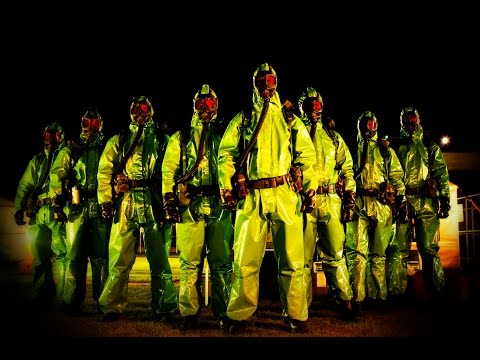
Why has the State Department ordered 160,000 HAZMAT suits? My immediate suspicion is that these suits will be needed for the Russian and Chinese troops, operating under the guise of the UN, to enforce medical martial law.

How many biocontainment, Ebola-ready Level-4 beds are there in America? Americans need to be aware of the fact that the United States only has 19 Ebola-ready Level-4 Biocontainment beds in the entire country.

Please spare me the emotional rhetoric in response to this article. I have provided documented links to the claims presented here. In response, I only want to see the same which may serve to refute my position that the people of this country are deliberately and purposefully being endangered for purposes of profit and political control. Until I see documentable proof that this position is wrong and the evidence presented in this article is in error, I stand by this position.

Dave Hodges is the Editor and Host of The Common Sense Show.

Steve Minick from Texas Association of Business on the EPA Clean Power Plan

This is a stunningly good letter that was presented to the Hearing of the Texas House on the latest EPA insanity–the Clean Power Plan. Wanna know what’s wrong with the EPA, read Minick’s letter for a place to start.

Minick takes the EPA big plan apart and shows it to be a empty portfolio of nonsense and bad policy making.

Minick is an important voice for Business in Texas–an eloquent and knowledgeable man.

I highlighted some of the important stuff.

September 29, 2014

The Honorable Patricia Harless, Chairman
Committee on Environmental Regulation
Texas House of Representatives
P.O. Box 2910
Austin, Texas 78768-2910

RE: Environmental Protection Agency’s proposed Clean Power Plan under Clean Air Act Section 111(d)

Chairman Harless:

The Texas Association of Business (TAB) appreciates the opportunity to discuss the Speaker’s charge to the committee to study the Environmental Protection Agency’s (EPA) proposed Clean Power Plan. TAB is a broad-based, bipartisan organization representing more than 4,000 Texas employers and over 200 local chambers of commerce. As Texas’ leading employer organization for more than 90 years, TAB represents some of the largest multi-national corporations as well as small businesses in almost every community in the state. Our business members and local chambers of commerce have a vital interest in the outcome of any decision by EPA to fundamentally alter the management and operation of the state’s electric power system and the effects such a proposal represents for the reliability and cost of critical electric supply in Texas.

EPA’s proposal to impose existing source performance standards for greenhouse gas (GHG) emissions under Clean Air Act §111(d) is yet another in a series of rulemakings from EPA that regrettably departs even further from the cooperative partnership between EPA and the states that Congress envisioned in the passage of the Clean Air Act. The Act states clearly that air pollution prevention at its source is the primary responsibility of States and local governments. In addition to being inconsistent with the fundamental principle of cooperative federalism, the proposed Clean Power Plan is equally inconsistent with other specific provisions of the Clean Air Act. Beyond its questionable legal basis, however, the Committee should also be made aware that this rule, if enacted, will impose significant costs on Texas businesses and consumers, severely test our electric grid and reliability of electric service and effectively relinquish control of our power system to the federal government. Incredibly, even EPA’s own analysis shows plainly that this rule, intended to address climate change by reducing emissions of GHGs, will have no measureable effect on climate change.

Background and Description of the Clean Power Plan
EPA’s proposal to impose existing source performance standards for GHGs follows directly the failure of the current administration to move cap and trade legislation through Congress and is a well-recognized step in EPA’s long range plan to remove coal as a source of fuel for power generation in this country. An earlier step in that plan is the imposition of GHG performance standards for new sources. That rule, which will ensure that no new coal-fired power plants are built, was proposed in September 2013.
This next step, proposed in June of 2014, will ensure the closure of many of the existing coal-fired plants. President Obama, in speaking to the San Francisco Chronicle in 2008 outlined without any confusion his plan for coal power:

“Under my plan of a cap and trade system, electricity rates would necessarily skyrocket. Coal-powered plants…would have to retrofit their operations. That will cost money. They will pass that money on to consumers.”

The Clean Power Plan bears a resemblance to another increasingly familiar aspect of rulemaking under the Clean Air Act – obscuring any technical justification or analysis of a proposed rule in more pages of background than can reasonably be read and understood by the average interested party, certainly any affected party with limited time and resources. In this case, the rule itself only occupies some 38 pages of text, but that is then followed by over 600 pages of preamble with references to some 350 footnotes. Then comes a lengthy regulatory impact analysis and multiple technical support documents and then references to some 620 supporting documents.

While those affected by the rule might hope to find at least clarity in the rule’s purpose and effect in this massive production, even many of those who are supportive of the rule have expressed concern and uncertainty as to what it means, how it will affect their jurisdictions and, perhaps most importantly, how it can possibly be implemented.

Basis of the Clean Power Plan Rule
Under the Clean Power Plan EPA proposes to impose performance standards for existing power plants for GHG emissions under Section 111(d) of the Clean Air Act. In the previous 40 years EPA has used this authority in approximately five cases, and arguably never for any major source of emissions. Section 111(d) allows EPA to establish performance standards for existing sources of emissions and requires that any standards imposed reflect emission limitations achievable through what is defined as a Best System of Emission Reductions (BSER). But in this proposed rule, EPA abandons any rational definition of both source and system in the context of what Section 111(d) actually authorizes. Under the Clean Power Plan, emission reductions would apply not to a source of emissions (a power plant) but conceivably to every element of the state’s entire electric power system.

Further stretching the authority of 111(d), EPA does not propose any system of emission reduction technology, but instead, argues that each state can reach emission reduction targets through a variety of measures, including:

1. Improving efficiency of coal-fired electric generators by 6%;
2. Increasing the operation of natural gas-fired electric generators to 70% of current capacity;
3. Increasing the contribution of renewable energy sources up to 25%; and
4. Increasing the reductions in power consumption through demand response by 9-12%
An obvious observation of these “suggested” paths to compliance with GHG emission limitations is that, while they may indirectly affect emissions, none of them is actually a “system” of emission reductions applied to a “source” of emissions. In other words, EPA proposes to limit GHG emissions by not requiring any direct control of the emission of GHGs at their source. Put another way, the agency is proposing a rule under Section 111(d) that imposes requirements in no way authorized under Section 111(d). Within very specific conditions, EPA has authority to limit emissions by determining an appropriate system of controls for those emissions at their source.EPA does not have the authority to re-design our entire system for the generation, transmission, use or conservation of electric power to indirectly impact the production of GHGs.

Target Emission Rates
The key to the Clean Power Plan is target emission rates that EPA has determined for each affected state. Again, these are not targets applicable to actual sources of emissions (electric power plants) but overall targets applicable on a state-wide basis. In fact, it is accurate to acknowledge that under a statutory provision that authorizes control of sources of pollution, EPA is proposing a target for emission rates that is simply applied to an entire state, and not to any one source of pollution.

Beyond the obvious concern with the underlying statutory authority being cited, a major concern with the states’ emission targets is that the massive submission and supporting documentation still do not reveal any apparent rationale for the emission rates that are proposed. The rates assigned to individual states vary substantially and for reasons that are very difficult to comprehend. Somehow, under a rule presumably intended to reduce the emissions of a pollutant that we are told has serious negative implications for public welfare, some states are allowed to actually increase emissions of GHGs. Some observations of EPA’s proposed emission reduction targets may help to illustrate the difficulty in understanding a valid technical basis:

1. GHG emission reduction targets for the states range from an 83% reduction (for Washington) to a 37% increase (for Rhode Island).
2. Washington must reduce GHG emissions by 83%, Oregon by 42% and California by 7%.
3. Texas must reduce emissions by 42% and Oklahoma 41%, while Kansas and Nebraska can increase emissions by 10%.
4. South Dakota must decrease emissions by 4% but North Dakota can increase emissions by 1%.
5. Idaho has a reduction target of 49%, Wyoming 31%; Montana can increase emissions 8%.
6. Mississippi faces a target reduction of 62%, but Alabama 32%.
7. 3%.Virginia must reduce GHG emissions by 35%, West Virginia 0%.
8. Tennessee must reduce GHG emissions by 20%; Kentucky can increase emissions by 3%.
These examples are only some of the observations that clearly raise far more questions than EPA’s proposal provides answers.
The rationale of EPA appears to be an acknowledgment that each state is different and faces different challenges and opportunities for reducing GHG emissions. But in no provision of the Clean Air Act is EPA authorized to invent a plan for reducing emissions from existing sources without actually imposing requirements on existing sources and then allocate obligations to each of the states based on what in some opinion of EPA each state is capable of accomplishing. Beyond EPA’s questionable authority to impose such emission targets, it must also be recognized that the states on which fall the obligations to comply may lack much of the statutory authority to do what EPA outlines in its suggested “system” of emission reductions.

It must also be recognized that Texas is singled out for special treatment under this proposed rule. While Texas’ required percentage reduction in GHG emissions is not as large as some states (42%), when applied to the actual magnitude of Texas’ electric generation capacity the figures become very revealing of the real impact of the rule. Texas is clearly the largest producer and consumer of power in the U.S, but that status is merely a reflection of Texas’ position as a producer of fuel, manufactured goods and other products that meet the needs of the other states and our global trading partners. Under the Clean Power Plan, Texas is far and away the most significantly affected state:

• By 2030, Texas must reduce coal-fired electric generation by over 72 million megawatt hours (MWH), Florida is a distant second at just over 40 million MWH.
• Texas’ required GHG reductions by 2030 are almost three times greater than those required of second place Florida and dwarf the requirements for any other state.
To comply, Texas must reduce its coal-fired electric generation by over 53%; Indiana and Kentucky, the two closest states to Texas in terms of coal-fired generation, must reduce their generation from coal by 4.8% and 1%, respectively.
Texas leads the nation in the production of renewable energy. But by 2030, Texas must increase its use of renewable energy almost five times as much as the state closest to Texas in renewable energy capacity, California.
The significant variation and seemingly random allocation of emission targets to the different states, and certainly the significantly greater impact of the rule on Texas, are clearly impacts that demand a far more detailed and reasoned explanation before this rule receives any further consideration by EPA.

Costs and Benefits of the Clean Air Plan
There is no question that implementation of the Clean Air Plan will significantly affect the electric generation industry and consumers of power, from the largest industrial user to individual residential customers. The U. S. Chamber of Commerce has estimated compliance costs at approximately $50 billion. Other estimates of industry compliance costs are as “low” as $28 billion. These compliance costs to the electric industry are distinct from the actual costs to consumers which has been estimated to be a loss in disposable income of over $585 billion through 2030. Cost to manufacturers and others who use natural gas for purposes other than electric generation will also increase significantly as natural gas prices are projected to increase up to $50 billion. In addition to dollar impacts, the rule will result in some 178,000 lost jobs per year. Less easily quantified, but equally important, is the potential impact of a rule that will significantly put at risk the reliability of Texas’ electric grid, the failure of which can have extremely dramatic financial impacts, as well as public health and safety impacts.

One would assume that such a rule, with the potential for significant, negative economic consequences, would have to clearly provide benefits to public health and welfare at least as great, or even greater than the costs to justify serious consideration and certainly formal proposal. Quite surprisingly, the dramatic economic costs and potential risks to our electric power system will provide virtually no benefit whatsoever. EPA’s own analysis shows that the proposed rule will affect no more than .18 percent of global GHG emissions and offset the huge costs of its implementation by reducing global temperatures by between .01-.02 degrees C. and preventing a projected sea level rise of .016 inches.

EPA attempts to make up for the almost absurd lack of simple economic justification for the rule by suggesting that reducing operations and emissions from coal-fired power plants will have ancillary public health benefits. Even if such an unsupported position were rational, it is beyond reason to suggest that sufficient public health benefits could accrue to offset the significant costs of this rule. But the reality is that for several years and throughout EPA’s pursuit of its current air quality and energy policy agenda, the agency has continued time and again to cite ancillary benefits from reductions in emissions (e.g., PM2.5) where no public health benefit from the direct effect of the rule in question can be cited. The Clean Air Plan is simply the latest in a long line of air quality rulemaking where no public health benefit can be directly attributed to the pollutant the rule is intended to address.

Perhaps even more significant as a critique of EPA’s cost analysis is the fact that the cost/benefit equation ignores (as it does for essentially all such rules) the negative public health impacts of reducing the disposable income of those who are affected by the rule.
This rule if implemented will significantly impact the costs of electricity. That cost, particularly when borne by lower income ratepayers, will reduce the ability of those ratepayers to afford other essential goods and services that directly affect their health and welfare, including medical care, medicine, adequate food and housing and the expenses required to be sufficiently educated and prepared to acquire and maintain employment. The strongly positive correlation between income and public welfare and longevity has been well established and any cost/benefit analysis that ignores it cannot be considered to be valid or credible.

Other Impacts on Texas
It has been suggested by many in support of this rule that Texas should share that support due to the positive impact the rule will have on demand for natural gas, particularly as the prices for natural gas have declined and the incentives for more production have weakened. There is also at least the implication that Texas can benefit from this rule by simply building more gas-fired electric generation and easily mitigate the loss of any coal-fired facilities, while simultaneously benefiting from the economic effects of increased gas production. Missing from this presumptive analysis is the proper recognition of the role Texas’ competitive deregulated retail electric market plays in any theoretical scenario of how this state would attempt to implement EPA’s suggested methods of compliance. In Texas the Public Utility Commission, perhaps unlike in most other states, cannot simply set a price for electricity that will provide an incentive to build new gas-fired power plants to replace coal-fired plants. It is entirely uncertain that Texas’ electric market structure will be able to react as EPA assumes it can under any requirement to replace coal-fired with gas-fired generation.

The assumption that Texas can increase natural gas electric generation while benefiting from increased natural gas production also ignores the potential impact of other air quality rules being promulgated by EPA. The proposed reduction in the ozone national ambient air quality standard (NAAQS) can potentially bring large areas of Texas, including the major oil and gas production areas, into nonattainment status for ozone. Without a clearer picture of what a revised ozone NAAQS will be, what areas will be determined to be nonattainment and how such designation and subsequent ozone control measures will affect natural gas exploration and production, availability and price, it is impossible at this time to make assumptions that can dispel the many legitimate concerns about the loss of coal-fired electric capacity in Texas.

Conclusions
EPA’s proposed Clean Power Plan is poorly supported by current law and suffers from a thorough lack of technical and financial justification. It truly is a rule that on its face will have enormous costs and virtually zero benefit. It fulfills the administration’s goals for a cap and trade program by making cap and trade the only viable option for some states who simply cannot reengineer their electric power systems. In fact, the proposal will conceivably reward those states that have some type of cap and trade program by enabling those states with marketable credits to sell to other states, essentially establishing a wealth transfer from coal states to non-coal states. The proposal further supports the anti-coal agenda by imposing de facto federal renewable energy standards and federal energy efficiency standards – all in one rule.

It is appropriate to question EPA’s motives in proposing a rule that has such significant questions as to its legal foundation and for which the cost/benefit analysis so clearly shows that there are no benefits. Even the EPA leadership appears somewhat uncertain as to exactly what this rule is intended to do. In testimony before the Senate Public Works Committee, EPA Administrator Gina McCarthy stated:

“The great thing about this [111(d)] proposal is that it really is an investment opportunity. This is not about pollution control. It’s about increased efficiency at our plants, no matter where you want to invest. It’s about investments in renewables and clean energy.”

However, Acting Assistant Administrator for Air and Radiation, Janet McCabe, before the House Energy and Power Subcommittee described the same rule quite differently:

“Chairman Upton, this is not an energy plan. This is a rule done within the four corners of 111(d) that looks to the best system of emission reduction to reduce emission… The rule is a pollution control rule, as EPA has traditionally done under section 111(d).”

If EPA admits that a rule to benefit climate change has no effect on climate and is yet still unclear as to what the rule is for, it would appear prudent to postpone any further consideration at this time.

Thank you for the opportunity to appear before the committee and share our thoughts on this subject. Please contact me at 512.637.7707 or sminick@txbiz.org if you have questions or need additional information.

Respectfully,

Stephen Minick
Vice President for Governmental Affairs
Texas Association of Business

STOP lying about the 97% Consensus! It’s FRAUD!

Press Release 08/09/14

New Paper: Fraud, Bias &

Public Relations

Claims of 97% Consensus are based

on research described as fraudulent

and biased 


London, 8 September: A new briefing note published today by the Global Warming Policy Foundation examines claims made by a great many commentators across the world, including President Obama and Ed Davey, of an overwhelming consensus on climate change. These depend on research that has been subject to public and entirely unrebutted allegations that it is fraudulent.

Although the authors of the research claim to have shown that most climate change papers accept that mankind is responsible for the majority of recent warming, in fact the underlying study shows no such thing.

One senior climatologist described the paper as ‘poorly conceived, poorly designed and poorly executed’. Another researcher called it ‘completely invalid and untrustworthy’, adding that there was evidence of scientific fraud.

Andrew Montford, the author of the paper, said: “It has now been shown beyond doubt that the claims of a 97% consensus on climate change are at best misleading, perhaps grossly so, and possibly deliberately so. It’s high time policymakers stopped citing this appalling study.”

Full paper (pdf) – Fraud, Bias And Public Relations: The 97% ‘Consensus’ And Its Critics

Contacts

Andrew Montford
e: awmontford@gmail.com 

Dr Benny Peiser
The Global Warming Policy Foundation
e: benny.peiser@thegwpf.org 

If I Wanted America to Fail…. A Bone-Chilling Classic, becoming reality!

If I Wanted America to Fail

A new group has recently released a video advocating free-market policies from a whole new perspective, and the result is very compelling.

The group is called Free Market America, and its stated mission is to defend economic freedom, particularly from environmental extremism.

The video puts the viewer in the perspective of someone who wants to dismantle the country, and walks them though what they would do to accomplish it. Throughout the video, the viewer becomes aware of how many of today’s ideas match the destructive actions learned through this perspective.

What makes this argument compelling is that this sort of connection cannot be built from anything other than concrete evidence. Leaving the viewer to digest the sobering truth once the video ends.

After watching the video, feel free to read the transcript below if you would like a closer look at the video’s points.

If I wanted America to fail …

To follow, not lead; to suffer, not prosper; to despair, not dream — I’d start with energy.

I’d cut off America’s supply of cheap, abundant energy.  Of course, I couldn’t take it by force.  So, I’d make Americans feel guilty for using the energy that heats their homes, fuels their cars, runs their businesses, and powers their economy.

I’d make cheap energy expensive, so that expensive energy would seem cheap.

I would empower unelected bureaucrats to all-but-outlaw America’s most abundant sources of energy.  And after banning its use in America, I’d make it illegal for American companies to ship it overseas.

If I wanted America to fail …

I’d use our schools to teach one generation of Americans that our factories and our cars will cause a new Ice Age, and I’d muster a straight face so I could teach the next generation that they’re causing Global Warming.

And when it’s cold out, I’d call it Climate Change instead.

I’d imply that America’s cities and factories could run on wind power and wishes.  I’d teach children how to ignore the hypocrisy of condemning logging, mining and farming — while having roofs over their heads, heat in their homes and food on their tables.

I would never teach children that the free market is the only force in human history to uplift the poor, establish the middle class and create lasting prosperity. Instead, I’d demonize prosperity itself, so that they will not miss what they will never have.

If I wanted America to fail …

I would create countless new regulations and seldom cancel old ones. They would be so complicated that only bureaucrats, lawyers and lobbyists could understand them.  That way small businesses with big ideas wouldn’t stand a chance — and I would never have to worry about another Thomas Edison, Henry Ford or Steve Jobs.

I would ridicule as “Flat Earthers” those who urge us to lower energy costs by increasing supply.  And when the evangelists of commonsense try to remind people about the law of supply and demand, I’d enlist a sympathetic media to drown them out.

If I wanted America to fail …

I would empower unaccountable bureaucracies seated in a distant capitol to bully Americans out of their dreams and their property rights.  I’d send federal agents to raid guitar factories for using the wrong kind of wood; I’d force homeowners to tear down the homes they built on their own land.

I’d make it almost impossible for farmers to farm, miners to mine, loggers to log, and builders to build.  And because I don’t believe in free markets, I’d invent false ones.  I’d devise fictitious products — like carbon credits — and trade them in imaginary markets.  I’d convince people that this would create jobs and be good for the economy.

If I wanted America to fail …

For every concern, I’d invent a crisis; and for every crisis, I’d invent the cause.

Like shutting down entire industries and killing tens of thousands of jobs in the name of saving spotted owls.  When everyone learned the stunning irony that the owls were victims of their larger cousins — and not people — it would already be decades too late.

If I wanted America to fail …

I’d make it easier to stop commerce than start it — easier to kill jobs than create them — more fashionable to resent success than to seek it.  When industries seek to create jobs, I’d file lawsuits to stop them.  And then I’d make taxpayers pay for my lawyers.

If I wanted America to fail …

I would transform the environmental agenda from a document of conservation to an economic suicide pact.  I would concede entire industries to our economic rivals by imposing regulations that cost trillions.

I would celebrate those who preach environmental austerity in public while indulging a lavish lifestyle in private.  I’d convince Americans that Europe has it right, and America has it wrong.

If I wanted America to fail …

I would prey on the goodness and decency of ordinary Americans.  I would only need to convince them … that all of this is for the greater good.

If I wanted America to fail, I suppose I wouldn’t change a thing.