Aussies Determined to Expose the Great Wind Power Fraud! Go Senator Leyonhjelm!

Alan Jones interviews David Leyonhjelm on the Senate’s Inquiry Into the Great Wind Power Fraud & Cross-Bench LRET Plan

263977-alan-jones

The wind industry in Australia is in full-scale panic because the Senate’s cross-benchers (who hold the balance of power in the Upper House) have won Coalition support for their Inquiry into the great wind power fraud: which will turn a (long-overdue) blowtorch on the biggest rort in Australian history (see our post here).

Adding to the wind industry’s mounting woes is the fact that the cross-benchers have also put together a plan that will put the wind industry out of its misery, by elevating the place of “old” hydro power and small-scale solar – especially “stand alone solar” in remote locations – under the Large-Scale Renewable Energy Target (LRET): both “old” hydro and small-scale solar are perversely excluded from the LRET  (the plan is available here).

The vast bulk of hydro capacity was built pre-1998 and is, therefore, ineligible to participate – a matter that has Tasmanian Senator, Jacqui Lambie seeing red (see our posts here and here). For a run down on the Inquiry and the cross-benchers’ plan see our post here.

STT hears that the cross-bench plan is with Tony Abbott’s office and has already won the PM’s tick of approval.

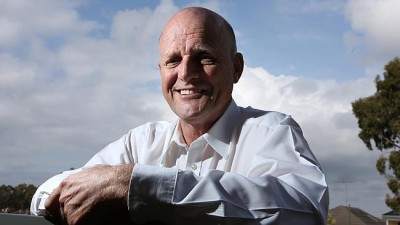
The Inquiry and the plan has been pushed along by cross-bench Senator, David Leyonhelm, who appears in this recent interview with Alan Jones on 2GB.

Alan has a little radio show that more than just a few Australians tune into each morning. Syndicated through over 77 Stations and with close to 2 million listeners Countrywide – AJ as he’s known – is one of those people that leads the political charge on many issues that really affect ordinary Australians and which the rest of the press ignore.

Alan Jones AO: A couple of weeks ago I interviewed Dr Jay Tibbetts – you might recall is an American. A medicical adviser to the Brown County Health Department in Wisconsin. He attacked the Australian Medical Association, who quite disgracefully, but not surprisingly given that the leadership of that mob now is hopelessly of the left. And the AMA virtually arguing that there was no problem with these sub-audibleinfra-sound emitted by wind turbines. And Doctor Tibbetts cited endless international evidence in relation to the health risks posed by the low-frequency noise that wind turbines generate.

Well that interview lead to an email that I received this week from eastern Europe.  Amazingly they had heard my interview, on the Internet with Doctor Tibbetts in relation to what I call the lunacy of wind farms and the sleep deprivation that they cause and my email correspondent said “I just wanted to tell you how much we appreciated your excellent interview and your courage to do it. I know how risky this is.  My emailer said he posted the interview on his website and it went ballistic. And I’m told, he says it’s spreading from Austria to Germany, and Finland and Ireland and Poland and many other countries. My emailer said ‘I can guarantee you that all people in Europe, especially in Germany were like crazy and spread your interview like crazy when they got it on my Facebook page.

Well people are waking up to the lies and deceit peddled by governments and renewable energy companies all over the world. There is a report this week by AGL energy of all outfits who found that non-solar households are paying hidden subsidies and more than $200 million a year, here in Australia to households who have solar roofing panels.  Now we know that this wind power-solar power are driving up the cost of what you pay for electricity and what business pays. And the AGL Chief economist Paul Simshauser, said the problem of wealth transfers to renewable energy sources was increasing. In other words to prop up renewable energy, you the taxpayer have money taken out of your pocket and that, in billions of dollars, goes to renewable energy companies. Most of them foreign companies.

Now people increasingly can’t hack this. We’re told 650 electricity customers are complaining to their retailer every day about electricity prices. The Australian Energy Regulator’s annual report found disconnections have surged and more than 237,000 New South Wales households, one in seven customers, has complained to their provider about pricing in the financial year ended 30 June this year.

Now we are spending billions of dollars on wind energy. It accounts for less than 2% of power generation in China, 3% in America. And this whole renewable energy thing is completely out of control. Wind power costs up to $214 per megawatt hour, coal $78 to $91. If the renewable energy mob want a set of rules that would be simple – then go ahead with your wind farm but don’t ask for taxpayers’ money. How can wind turbine companies buy off a farmer for $10,000 a turbine and then that same company be subsidised by the taxpayers? Who are you.

I have spoken to so many people, but one of them is Andrew Gardiner in Napthine’s electorate. He’s running for election this Saturday, the Premier of Victoria. Next to 140 turbines, 150 metres high, 56m blades – the biggest monsters in the southern hemisphere, some are 90 m from his property. Eight of them, 1.7 km from his home. And he’s been bullied and intimidated by AGL. I repeat – coal-fired power $78-91 a megawatt hour wind power, up to $214 per megawatt hour and solar power, over $400 a megawatt hour.

And here you’ve got this Gullen Range wind farm near Goulburn, which breaks nearly every rule that governed its application to operate. But don’t worry, it’s foreign owned. Would you believe Canberra, were meant to be spending 17,000 million dollars (17 billion), erecting between 7000 and 10,000 of these wind turbines. Yet Germany are pushing ahead with new coal-fired electricity plants because political and public concern there is increasing over the cost of energy. China is building a new coal fired power station every 10 days every year. And remember when I spoke to Angus Taylor, the new member for Hume, turbines in his electorate enjoys subsidies to $500,000,000 to a $billion a year.

Well David Leyonhjelm is a New South Wales Senator, representing the Liberal Democrats and along with Senators Madigan, Day, Xenophon and Back, David Leyonhjelm succeeded in establishing, has succeeded in establishing – and this will put a few noses out of joint – a Senate inquiry into wind turbines. This will blow the whole show open. It was a narrow vote. Because you see people like Mcfarlane, the Energy Minister, they’re in bed with wind companies. 33 to 32. The inquiry will be known as The Select Committee on Wind Turbines. It will investigate regulatory governance, or lack of it, over wind turbines, their economic impact, which can only be negative. It will examine on household power prices of wind power, we know that. The implementation of planning processes which as you can see with Gullen Range, are ignored. The integrity of national wind farm guidelines – they have none. The impact of wind turbines on firefighting – that’s another story altogether – and crop management. And the committee will have the power to send for and examine people and documents. And it will report its proceedings from time to time and make interim recommendations and it will report by June 24 next year. This is a very pioneering and important initiative and not before time.

Senator David Leyonhjelm is on the line. Senator, good morning.

Senator David Leyonhjelm: Good morning Alan.

Alan Jones AO:  Just before we go down to the guts of this, I note the notice paper and it tells us that the inquiry will look into ‘the role and capacity of the National Health & Medical Research Council in providing guidance to state and territory authorities’ and ‘the effect that wind towers have on fauna and aerial operations around wind turbines’. I couldn’t find any where in the terms of reference of the inquiry an investigation into the health impact of these wind turbines. Is that on your agenda?

Senator David Leyonhjelm:  It’s on our agenda and there is another item there that says ‘Any related matter’. So it certainly we’ll be taking that into account. The only thing is we – the emphasis of this inquiry is towards the other matters, more than health, because there have been two inquiries into health already. The problem with it is they’ve been ignored pretty much.

Alan Jones AO:   Absolutely.

Senator David Leyonhjelm:   We didn’t think – we will be going over that ground, we will be looking at that again – but there are a lot of additional complaints about wind farms. They are, I don’t know where they all are, all but certainly some of them are extremely noxious neighbours. And we are receiving just so many complaints about them.

Alan Jones AO:   Absolutely, I am to. I have a file that I couldn’t jump over here too. Incidentally, as you would be aware there is an election here on Saturday, this opposition leader, fellow, Andrews, the Labor leader, is promising to reduce the mandatory buffer zone between properties and wind farms if he wins the election. I mean it is currently 2 km the exclusion zone, which is not enough, he’s promised to reduce it to 1 km.

Senator David Leyonhjelm:   It’s amazing. And, you know that reflects the way we did this committee. We knew that there’s significant support for wind farms on both sides of the house. And what we did was a little bit sneaky to be quite frank. We’ve called it a ‘select committee’, so it’s not a reference to an existing standing committee, which are dominated by Labor and the government, so this is basically a cross-bench inquiry. There are seven official members of the committee, plus we can co-opt more, other participating members. It’s only two from the government one from Labor, one from the Greens, and three from the cross-bench. And plus, we can bring in other participating cross-bench members if if we wish to.

Alan Jones AO:  But see you’re raising a very valid point here because the public feel that they’ve got nowhere to turn because both Labor and the Coalition are in bed with this mob.

Senator David Leyonhjelm:   Yes, well that’s the point. That’s why we said this that it’s not going to be appropriate for it to go to an existing committee, because the cross-bench doesn’t have much say on those.

Alan Jones AO:   Absolutely. You see I have said many times – I am talking to Senator David Leyonhjelm from New South Wales – I’ve said many times David, that you can’t release a drug onto the market unless all the likely consequences from the drug are subjected to rigourous scrutiny. So how could you build wind farmers, or approve coal seam gas extraction, without providing the answers to the very legitimate questions about health and the impact on individuals that these things have.

Senator David Leyonhjelm:   Yes. You can never answer every single question and science is an endless pursuit, but there are some just glaring questions why, for example, does the Gullen Range wind farm, where they have put these things almost 200m away from where they’re supposed to be, and then said ‘well, we’re a renewable energy company we can do whatever we like’. And then the Clean Energy Regulator hands over money to them with no accounting.

Alan Jones AO:   Thank God for you. Thank God for you. They should be stopped in their tracks now. They are in breach of the consent application, they should be stopped, shouldn’t they?

Senator David Leyonhjelm:  We hear lots of stories, where because they are renewable energy, they think they’re above the law. They don’t think they have to comply with planning guidelines and directions and so forth.

Alan Jones AO:   This bloke’s a breath of fresh air.

Senator David Leyonhjelm:   We are not even satisfied those guidelines are particularly comprehensive and thorough anyway.

Alan Jones AO:   Or stringent, no. You have said, just for the benefit of my listeners, and I’ll just get you to comment on some of the quotes that you’re on the record as having uttered. “The dramatic surge in power bills has been major factor in the decline of our manufacturing sector and the loss of thousands of jobs. In little more than 10 years, the Renewable Energy Target has rocketed Australia from almost the cheapest to the most expensive electricity in the world”. They are your words.

Senator David Leyonhjelm:   Yes. Well in fact that brings me to another subject where also the cross-bench is also are trying to do something constructive with the government on this Renewable Energy Target. As you probably know, Labor and the government stopped negotiating a week or so back and now, it’s in our court. We are working on a plan – there’s been some media reports on it in the last couple of days. We are working on a plan in whcih we will address this issue of high prices of electricity, unachievable energy target, the penalty rates kicking in, all that sort of nonsense.

Alan Jones AO:  Well you said in August, ‘The latest figures from the Australian Bureau of Statistics show in the five years to June 2012, Australian retail electricity prices rose by 72%, with even higher increases in Melbourne and Sydney’. You said, ‘Senators and MPs, however, don’t need to worry about whether staying warm in chilly Canberra may send them broke. Perhaps if they had to pay for their own heating and air-conditioning in Parliament House it would concentrate their minds on the important discussion we need to have about the future of the Renewable Energy Target’. Good on you.

Senator David Leyonhjelm:   Well, it’s tragic. You know there are people who are suffering, genuinely suffering from energy poverty. They cannot turn on their heaters during the winter. They suffer in the cold just because they cannot afford their electricity bills. So they’re frightened of receiving a bill that they can’t afford to pay.

Alan Jones AO:  Absolutely. You … yes it is tragic. You quote a report from the accounting firm Deloittes, showing the Renewable Energy Target will “stifle the economy, cost jobs, and drive up prices and is a very inefficient means of reducing greenhouse gas emissions”. Now Terry McCrann years ago told me David, on this program, if you want to decarbonise the Australian economy, you’re writing a national suicide note. And I mean that you’re the only people focusing on this issue.

Senator David Leyonhjelm:   Yes, well somebody has to. I’m really encouraged, that the government acknowledges the problem, I just don’t like the solution, or the politics of the solution. The renewable energy industry has an awful lot of supporters. And it’s a nice warm thing motherhood type stuff to support renewable energy.

Alan Jones AO:  And have you ever noticed, when any of the MPs retires from Parliament they go and get jobs with them. Hey hey? Oh, Mr Mcfarlane will be lining one up right now. He won’t be standing at the next election don’t worry. I mean you said, and this is true, ‘the net effect of this subsidy, renewable energy subsidies, is to hand an additional 17 billion dollars of our money to these companies over 15 years for no measurable environmental benefit.

Senator David Leyonhjelm:   Yes that’s right. And it’s worse than that, I mean it’s having negative effects. In fact one of the aspects of the inquiry is to actually determine what is the energy and emission output – input and output from a whole of life. So, from the point when these turbines are made and they run, through to the other end when they are dismantled and thrown on the scrap heap – what’s the net energy and emission output.

Alan Jones AO:  Absolutely

Senator David Leyonhjelm:   I have a sneaky suspicion that a bit like the Prius car it’s not the right direction.

Alan Jones AO:  Absolutely. Finally – and we could go on forever on the things that you’ve said. And it’s very encouraging that someone at least is taking this cause up. But you’ve said, “It is undisputed that the wind generation industry is not viable anywhere in the world without government or customer subsidies”, you said “It’s just government-mandated corporate welfare”.

Senator David Leyonhjelm:   That’s exactly right – they’re just not viable without subsidies.

Alan Jones AO:  Keep at it – keep at it my friend. Keep at it. You’re the hope of the side.

Senator David Leyonhjelm:   Alright – thanks Alan.

Alan Jones AO:   Well done, there he is. Senator David Leyonhjelm. A major senate inquiry into this whole rubbish of renewable energy and wind power.
2GB
david leyonhjelm

Aussies Set to Hold an Inquiry Into the “Great Wind Power Fraud”!!!

Australian Wind Industry in a Tailspin as Senate Sets Up Inquiry Into the Great Wind Power Fraud & Cross-Benchers Lay Out Plans for the LRET

tailspin spiraling

STT recently covered a motion proposed by cross-bench Senators Leyonhjelm, Madigan, Day, Xenophon; with the support of the Coalition, through their Deputy Government Whip in the Senate, STT Champion, WA Senator, Chris Back to establish a wide-ranging inquiry into the wind industry in Australia (see our post here).

It gives us much pleasure to report that the Senate voted to establish the inquiry, as moved by David Leyonhjelm on Monday.

THE SENATE
PROOF
COMMITTEES
Wind Turbines Committee Appointment
SPEECH
Monday, 24 November 2014

SPEECH Speaker Leyonhjelm, Sen David

Senator LEYONHJELM (New South Wales) (16:46): I, and also on behalf of Senators Madigan, Day, Xenophon and Back, move:

(1) That a select committee, to be known as the Select Committee on Wind Turbines be established to inquire into and report on the application of regulatory governance and economic impact of wind turbines by 24 June 2015, with particular reference to:

(a) the effect on household power prices, particularly households which receive no benefit from rooftop solar panels, and the merits of consumer subsidies for operators;

(b) how effective the Clean Energy Regulator is in performing its legislative responsibilities and whether there is a need to broaden those responsibilities;

(c) the role and capacity of the National Health and Medical Research Council in providing guidance to state and territory authorities;

(d) the implementation of planning PROCESSES in relation to wind FARMS, including the level of information available to prospective wind farm hosts;

(e) the adequacy of monitoring and compliance governance of wind farms;

(f) the application and integrity of national wind farm guidelines;

(g) the effect that wind towers have on fauna and aerial operations around turbines, including firefighting and crop management;

(h) the energy and emission input and output EQUATIONS from whole-of-life operation of wind turbines; and

(i) any related matter.

(2) That the committee consist of 7 SENATORS, 2 to be nominated by the Leader of the Government in the SENATE, 1 to be nominated by the Leader of the Opposition in the Senate, 1 to be nominated by the Leader of the Australian Greens in the Senate, and 3 to be nominated by other parties and independent senators.

(3) That:

(a) participating members may be appointed to the committee on the nomination of the Leader of the Government in the Senate, the Leader of the Opposition in the Senate or any minority party or independent senator;

(b) participating members may PARTICIPATE in hearings of evidence and deliberations of the committee, and have all the rights of members of the committee, but may not vote on any questions before the committee ;and

(c) a participating member shall be taken to be a member of the committee for the purpose of forming a quorum of the committee if a majority of members of the committee is not present.

(4) That 4 members of the committee constitute a quorum of the committee.

(5) That the committee may proceed to the dispatch of business notwithstanding that all members have not been duly nominated and appointed and notwithstanding any vacancy.

(6) That the committee elect as chair and deputy chair a member nominated by the minority PARTIES and independent senators.

(7) That the deputy chair shall act as chair when the chair is absent from a MEETING of the committee or the position of chair is temporarily vacant.

(8) That the chair, or the deputy chair when acting as chair, may appoint another member of the committee to act as chair during the temporary absence of both the chair and deputy chair at a meeting of the committee.

(9) That, in the event of an equality of voting, the chair, or the deputy chair when acting as chair, has a casting vote.

(10) That the committee have power to appoint subcommittees consisting of 3 or more of its members, and to REFER to any such subcommittee any of the matters which the committee is empowered to examine.

(11) That the committee and any subcommittee have power to send for and examine persons and documents, to move from place to place, to sit in public or in private, notwithstanding any prorogation of the Parliament or dissolution of the House of Representatives, and have leave to report from TIME to time its proceedings, the evidence taken and such interim recommendations as it may deem fit.

(12) That the committee be provided with all necessary staff, facilities and resources and be empowered to appoint persons with specialist knowledge for the purposes of the committee with the approval of the President.

(13) That the committee be empowered to print from day to day such documents and evidence as may be ordered by it, and a daily Hansard be published of such proceedings as take place in PUBLIC.

I seek leave to make a SHORT statement.

The PRESIDENT: Leave is granted for one minute.

Senator LEYONHJELM: I understand that Senate resources are limited in relation to select committees. We acknowledge that. And I understand that at least one other select committee will need to be wound up in order for this to have the full amount of resources. We accept that that is the case. The worst case is that this will operate on limited resources until March, when the inquiry into the activities of the Queensland GOVERNMENT is concluded. Furthermore, if Senator Day is appointed chairman of the committee, he has suggested he may consider relinquishing his fees as chairman to contribute to the committee’s costs.

DIVISION
Ayes 33
Noes 32
MAJORITY 1

Here’s how the SENATORS voted:

AYES, 33

Back Fawcett Madigan Ronaldson
Bernardi Fierravanti-Wells McGrath Ruston
Birmingham Fifield McKenzie Ryan
Bushby (Teller) Heffernan Nash Seselja
Canavan Johnston O‘Sullivan Sinodinos
Cash Lambie Parry Smith
Colbeck Leyonhjelm Payne WILLIAMS
Day Macdonald Reynolds Xenophon
EDWARDS

NOES, 32

Bilyk Gallacher McLucas Siewert
BROWN Hanson-Young Milne Singh
Bullock Ketter Moore Urquhart (Teller)
CAMERON Lazarus O‘Neill Wang
Collins Lines Peris Waters
Dastyari Ludlam Polley Whish-Wilson
Di Natale Ludwig Rhiannon Wong
Faulkner McEwen Rice Wright

Hawthorn v Geelong 1989

Sure, it was a close-run thing, but many a grand final has been won by a single kick.

Predictably, the wind industry, its PARASITES and spruikers have gone into a tailspin – wailing about the dreaded malady of “uncertainty” – of the kind that everyone else gets to face on a daily basis in every aspect of life and business – but from which the wind industry must be protected at all times.

But the Senate INQUIRY is just the beginning of the wind INDUSTRY’s many woes.

Crossbench working on RET plan
Sky News
24 November 2014

A key Senate crossbencher is warning household ELECTRICITY PRICEScould skyrocket unless a political impasse over the renewable energy target is resolved.

Liberal Democrat David Leyonhjelm is in discussion with other crossbenchers about a plan to scale back the RET after talks between the government and LABOR failed.

He fears for households if parliament can’t reach a compromise.

“The record high energy bills that people have been experiencing will seem tame by comparison,” he told AAP.

The government wants to slash the target of 41,000 gigawatt hours to around 27,000, claiming that figure will represent 27 per cent of energy use by 2020 instead of bipartisan level of 20 per cent.

Labor quit negotiations over a new target which has led to further industry uncertainty.

While the Palmer United Party opposes any CHANGES to the RET, Senator Leyonhjelm believes PUP defector Jacqui Lambie may be open to a compromise.

“If the hydro industry was given the ability to generate RENEWABLE ENERGY CERTIFICATES, it would give a badly needed economic boost to Tasmania to the tune of around $120 million per year,” he said.

Senator Lambie has pledged to vote against all government legislation until a defence force pay deal is reconsidered.

However, she could SUPPORT a private bill initiated by one of her crossbench colleagues.

Fellow independents Nick Xenophon and John Madigan both have concerns about wind turbines and have joined forces with other senators to set up an inquiry into the industry.
AAP

STT hears that the cross-benchers are acutely aware that if radical changes aren’t made to the Large-Scale RET pronto, then Australian power consumers will be walloped with fines (the $65 per MWh “shortfall charge”) for every MWh that retailers fall short of the escalating annual LRET target – a figure that will reach more than $1 billion by 2020 and continue at that level until 2031 – simply because the LRET target will never be met (see our posts here and here).

STT also hears that the cross-benchers are currently thrashing out a plan that will avoid that politically disastrous PROSPECT (for a copy of the plan click here).

One aspect of the plan is to include “old” hydro (hydro generation built prior to 1998 that is excluded from the LRET and which is ineligible to receive RECs) and use that output to help SATISFY the shortfall (see our post here).

Another is to bring in rooftop solar output generated in excess of the 4,000 GWh annual “expectation” set by the Small Scale Renewable Scheme (SRES): small-scale SOLAR GENERATION is currently between 8,000-9,000 GWh annually and still growing fast. By 2020, rooftop solar is expected to GENERATE more than 14,000 GWh annually, blitzing the original 4,000 GWh annual expectation. The plan being thrashed out now would use all of that “excess” solar generation to satisfy the LRET.

Bear in mind that all rooftop SOLAR INSTALLED under the SRES gets a fat pile of subsidies by way of “small-scale technology certificates” (STCs), which are paid up front at a guaranteed price of $40. The cost of issuing STCs is paid for by the Federal government to solar installers and recouped from all taxpayers. So it only seems fair that solar does its bit to avoid power consumers being whacked with $billions in fines for failing to meet the LRET: thus avoiding a power and tax bill “double-whammy”.

STT hears Jacqui is working very closely with her fellow cross-benchers to ensure that Tasmania’s “old” hydro gets included in the LRET, with RECs GOING to Tasmanian hydro generators (for a taste of Jacqui’s fury, seeher press release here). In that event, Tasmania would SATISFY the target in a heartbeat.

STT hears that Jacqui’s PLAN to use “old” hydro – along with the plan to use rooftop solar – to satisfy the LRET gets is fast gaining traction amongst the cross-bench Senators.

Including “old” hydro and solar in excess of the SRES “expectation” in order to satisfy the LRET and avoid $billions in fines under the shortfall charge sounds like a common sense outcome to STT – and just the kind of thing one might EXPECT to come from members of a group now known as the Coalition of Common Sense.

muir, xenophon and lambie

John Madigan

Wind Turbines Don’t Make Sense…..Anywhere!

There’s NO place for Wind Farms: Even Where the Streets Have No Name

Australian Desert - A fragile ecosystem

Talk about “safe” setback distances for wind turbines is nonsense that only panders to the wind industry and its well-oiled and highly paid propaganda machine.

There is NO place for giant wind turbines ANYWHERE.

They are NOT fit for purpose ANYWHERE.

Because wind power can’t be delivered “on-demand” (can’t be stored) and is only “available” at crazy, random intervals (if at all) wind power will never be a substitute for conventional generation sources (see our post here). Accordingly, wind power is simply incapable of reducing CO2 emissions in the electricity sector (see our post here).

The wind industry has never produced a shred of evidence to show that wind power has reduced CO2 emissions in Australia’s electricity sector (or anywhere, for that matter). To the contrary of wind industry claims, the result of trying to incorporate wind power into a coal/gas fired grid is increased CO2 emissions (see this European paper here; this Irish paper here; this English paper here; this American article and this Dutch study here).

So far, so pointless.

Break down the terms on which wind power is “supplied”, and the “deal” reduces to this:

  • we (“the wind power generator”) will supply and you (“the hopeful punter at the end of the line”) will take every single watt we produce, whenever that might be;
  • except that this will occur less than 30% of the time; and, no, we can’t tell you when that might be – although it will probably be in the middle of the night when you don’t need it;
  • around 70% of the time – when the wind stops blowing altogether – we won’t be supplying anything at all;
  • in which event, it’s a case of “tough luck” sucker, you’re on your own, but you can try your luck with dreaded coal or gas-fired generators, they’re burning mountains of coal and gas anyway to cover our little daily output “hiccups” – so they’ll probably help you keep your home and business running; and
  • the price for the pleasure of our chaotic, unpredictable power “supply” will be fixed for 25 years at 4 times the price charged by those “evil” fossil fuel generators.

It’s little wonder that – in the absence of fines and penalties that force retailers to sign up to take wind power (see our post here) and/or massive subsidies (see our post here) – no retailer would ever bother to purchase wind power on the standard “irresistible” terms above.

ICU Respiratory_therapist

With those facts laid out, talk about “safe” setbacks brings with is an admission that wind farms are somehow okay if they’re in the “right” place.

Wind power is nothing more than an ideological fantasy, that feeds the vanities of the gullible and the ignorant for the benefit of a shrewd and cunning few (see our post here).

Because wind power will never provide a meaningful power supply – and can only increase CO2 emissions – there can be NO justification for the harm caused to neighbours, the slaughter of millions of birds and bats; and the destruction of the environment associated with the manufacture of turbines and in and surrounding wind farms.

As to the latter, here’s a take on how “green” hypocrites are hell-bent on destroying the fragile deserts of the American South-West written by an environmentalist, Jim Mattern, aka “Death Valley Jim.”

Jim has watched in horror as a “green” energy invasion of wind and solar power generators has turned the desert ecosystems he’s worked a life-time to preserve and protect into industrial wastelands.

Destroying our Desert in the name of “Green” Energy
Jim Mattern
Death Valley Jim
28 September 2014

I’m not passionate about a lot of things – but those things that I am, are closely related to the desert, whether it be historical or cultural elements, biological, or environmental. It hasn’t always been this way, as a teenager I was passionate about music; in a period of my twenties (after 9/11) it was politics. In my late twenties and now into my mid-thirties, I’ve grown into finding the love of my life – the deserts of the American Southwest.

I would have at one time called people like me “Tree hugger” or “Libtard” – today I wear the “Tree hugger” badge with pride, I’m not so sure on “Libtard” – I don’t find that I fall within the boundaries of any political agenda; I tend to sway in many different directions depending on the subject at hand. What I do know is that I will never vote for a political candidate with either an “R” or a “D” beside their names – both parties are essentially the same thing, they pull at people’s heartstrings for votes based on agendas that shouldn’t be political in the first place.

Enough on that – I honestly don’t have a political agenda, and besides the political lines are so blurred in the case of renewable energy, or “green” energy that the line is pretty much obsolete. When it comes down to it, we have two groups of people – people with a sincere love of the desert, as well as folks that see these solar facilities as the removal of public lands and access. Then there are those that don’t understand the desert, they see it is nothing more than open space – an opportunity for a quick money grab, or they have fallen into the spoon-fed agenda that this is the only way for renewable energy to be successful.

Bulldozers clear an intact desert ecosystem, including hundreds of old Joshua Trees to make way for the Alta Wind facility in the western Mojave Desert. Google is again an investor in this project.

To those that don’t live in the desert, or only drive through it in haste from one place to the next – it can be easy to see why they think so little of the desert. From a majority of the highways, the desert can look boring, dead, and uninteresting. A place of horror films, serial killers, and just in general bad people who are hiding from society. It is unfortunate, because the opportunity for these people to see it any differently is more than likely never going to happen.

This line of thinking doesn’t end with big city people, it also trickles into our desert communities. For instance, I have been spending more time in the vicinity of Palm Springs, and the Coachella Valley as a whole. A large percent of these people think that they are living in the desert, but in reality their communities are a manufactured oasis, made to look as little “desert like” as possible. For a majority – their only “real” experience with the desert is driving the 10, hiking the Bump and Grind, or a visit to The Living Desert. It is all manufactured bullshit, in order to give them the “desert experience”, it’s no wonder that they see undeveloped desert land as expendable.

In the meanwhile, small desert communities across the Mojave and beyond are experiencing real problems – it started several years ago with wind power farms, and it is now escalating at an enormous pace with the new “green” energy solar explosion. Just ask many of the residents of the rural community of Mojave, CA – they were one of the first desert communities to be effected by the wind power craze. Those that own property along the seldom driven Backus Road, thought that they were living the life, property backed up against pristine BLM desert lands, only to now have wind turbines within a few hundred feet of their backyards. Their scenic views of the Tehachapi Mountains forever gone, and their property values sinking up to 50%.

Backyard view in Mojave, CA.

These same people are now being attacked by the solar initiative – with a new facility recently opening at Silver Queen. It isn’t going to end there either, a look at the recently released “Desert Renewable Energy Conservation Plan,” shows that this entire corridor of the Mojave desert is designated as a renewable energy wasteland.

In the Eastern Mojave, there is the highly touted Ivanpah Solar Power Facility; owned by NRG Energy, Google, and BrightSource Energy. Ivanpah has literally whipped out 3,500 acres of previously untouched desert. This land was the home of the endangered desert tortoise as well as other reptiles, that have now been displaced. Since going online, there have been countless bird deaths – when birds fly over the facility, they are cooked mid-air due to the extreme temperatures caused by the mirrors that the plant utilizes.

What people are missing is that our desert is very fragile – is a thriving ecosystem, but it can easily and quickly be killed. The plants that grow in our desert have spent thousands of years perfecting desert living. I had the opportunity to discuss desert plant life with Jim André, biologist, and the director of the Sweeney Granite Mountain Desert Research Center, and was surprised to learn that every year, there are still new species of plants being found in the Mojave Desert.

Along the California and Arizona boarder in the Colorado Desert, there is the town of Blythe. In the desert outside of the town of 21,000 people, there are dozens of intaglios – these giant designs made by removing a layer of stones from the land are sacred to the Colorado River Indian Tribes. Much like petroglyphs, these designs were placed here hundreds if not thousands of years ago by their ancestors. Today they are under attack, with several already having been removed from the landscape during the construction of Blythe Solar.

“No Solar on Sacred Sites” – The fight to save the Blythe Intaglios.

What is very interesting is that these intaglios as well as other Native American sites are coming under attack by these projects, yet they are protected under the The Antiquities Act of 1906, and the Archaeological Resources Protection Act of 1979. The Bureau of Land Management (BLM), which is the same agency that is supposed to enforce these laws, are the ones green lighting projects that are in direct violation.

None of this destruction benefits the communities that are directly impacted. Much like the Owen’s Valley water and land grab of the early 1900’s, the land grab for renewable energy is only benefiting large cities like Los Angeles, who have plenty of open roof-tops that could be plastered with solar panels. This is not a new concept, it has been embraced by several countries.

There is also the ability to place solar panels over the aqueduct, it would utilize already disturbed ground, and help with the loss of water from evaporation. In India, this concept has already been successfully implemented. It is baffling that we are not taking a serious look at this option, considering the state-wide water crisis that we are in.

Solar Panels over the Narmada Canal in India.

What it all really comes down to is greed – it has nothing to do with being “green”, or saving us money on our electric bills. Has anyone’s electric bill actually decreased since wind and solar exploded onto our desert? Despite these promises of lower generating costs, SCE has increased rates over the past three years, with an 8% increase in 2014.

The only people reaping the benefit of the rape of our desert are the companies that are buildings them – our government is giving huge incentives and grants to build these plants, and build them fast.

Public comment is being ignored, undocumented, and undermined. Mass media is ignoring the outcry – only praising the “green” initiative, likely with one hand in the pocket of the initiative.

What is yet to be seen in the long-term effects of this mass rape – and yet we aren’t taking it slow to find out either. By 2040 – there are a planned 40 projects the size of Ivanpah in the works for the Mojave Desert.

When Interior Secretary Sally Jewell announced the road map of the Desert Renewable Conservation Plan, she told reporters that she went for a hike, “We went out into the Big Morongo Preserve … fifteen, 20 minutes from here, there are wetlands. Wetlands. And 254 different bird species. Who knew?”

Well Sally, a lot know – now pack your shit up and go back to your office in Washington DC, and stop planning a conservation plan for a land that you are unfamiliar with. What you have done, is the equivalent of me planning a road system in Washington DC, without having visited it, studying it, and having no concept of how Washington DC or a road system works.

For more information on the impact of these projects on the desert, I recommend reading and following these websites:

Jim Mattern

joshua trees

Victims of the Windweasels & Their Turbines, are Treated with Disdain!

Macarthur Wind Farm Disaster: Jim Doukas Slams Fellow Moyne Shire Councillors’ Utter Contempt for Victims

jim doukas

Moyne councillor Jim Doukas critical of Macarthur wind farm report
The Standard
Anthony Brady
30 October 2014

A DEFIANT Moyne Shire councillor angered his fellow councillors but delighted the wind farm critics during a heated exchange in the council chambers this week.

A large gallery of wind farm critics cheered on Jim Doukas when he criticised the council’s response to complaints about noise issues relating to the giant Macarthur wind farm.

Cr Doukas was the only councillor to oppose the passing of a report approving the council’s handling of the complaints.

Cr Doukas claimed the report was biased and weak and brought into question the council’s relationship with wind farm owner AGL.

“The report is so light on information and facts it seems like it is bias. Is AGL doing something for us we don’t know about, because it looks that way.”

This comment brought an indignant response from mayor James Purcell.

“I may have misheard your representation, it appeared you were insinuating that this council, the integrity of councillors, was at risk here,” Cr Purcell said.

“This council has the highest integrity of any council any where in the world,” the mayor said.

Cr Doukas denied he had questioned the integrity of his fellow councillors but remained strong in his attack of the report.

He said council should do the right thing by the community and revisit this issue by conducting another investigation to come up with an “unbiased” outcome.

“It is not treating the people being affected fairly and not treating the other residents of the Moyne Shire fairly, because it’s the rate money we are going to have to spend when it goes to court.

“It’s all very well for us to sit here and act tough because we have ratepayers’ money, but if we had to defend ourselves with our own money maybe we’d have a different outlook.”

Earlier in the meeting Macarthur resident Jan Hetherington addressed the councillors, warning them of dire consequences should they approve the report.

“It is the opinion of the residents you may put yourselves in a position where you may be held accountable under the Australian Criminal Code Act,” Ms Hetherington said.

“Of which you have been made fully aware and in which case you most probably will not be covered by Moyne Shire’s insurance policies.”

She labelled information from the council’s solicitors that noise from the wind farm is not substantial and unreasonable as “utter rubbish” and said council should be ashamed of itself if it accepts such a poorly presented report.

“Should you approve of this report and its totally wrong conclusion you, through your continual ignorance and seeming willingness to hide and ignore all the evidence of cruel, inhuman and degrading treatment, will be knowingly allowing ongoing torture in the form of sleep deprivation.”

Cr Ralph Leutton caused a stir in his address supporting the report when he put forward his own scenario to Cr Doukas’ suggestion that wind farms should be turned off at night time.

He asked Moyne CEO David Madden if he could turn off the waves crashing on the beach in Port Fairy at night if that noise was causing a lack of sleep for residents.

A member of the gallery injected loudly that she had not chosen to live next to wind farms and that councillors had no idea of what residents are going through.
The Standard

Ralph Leutton’s attitude towards the suffering of his constituents tends to undermine James Purcell’s wild claim about the Moyne Shire Council having the “highest integrity any where in the world”.

That would be a mighty big claim at the best of times, but with this council thumbing its nose at its statutory duty “to achieve the highest attainable standard of public health and wellbeing by protecting public health and promoting conditions in which persons can be healthy” (set by s4 of the Public Health and Wellbeing Act 2008) – Purcell’s claim that it has world beating “integrity” falls just a little flat.

When it comes to “noise or other emissions” the Council (under s60 of that Act) comes under an express “duty to remedy as far as is reasonably possible all nuisances existing in its municipal district”. That duty applies to “nuisances which are, or are liable to be, dangerous to health or offensive”.  Where “offensive” means noxious or injurious to personal comfort”.

The decision of the majority simply cocks a snook at the Council’s absolute duty under the Act, which is clearly designed to protect and promote the health of ALL Victorian citizens. ALL citizens, that is, except those with the misfortune of being stuck next to 140 giant 3MW, Vestas V112s – according to the Moyne Shire Council.

Jim Doukas’ comment that the Council’s report is “biased” in favour of the operator, AGL is mastery in understatement.

In dismissing the residents’ well-documented complaints out of hand, the Council’s whitewash asserts that: “The social utility of the Macarthur WEF is significant, in that it is a source of renewable energy that does not cause greenhouse gases or other pollutants”.

So, let’s get this straight: if the Macarthur Wind Energy Facility was being run on coal or gas instead, the residents’ complaints would have been treated seriously; the Council would have acted consistently with its duty under the Public Health and Wellbeing Act; and ordered that the Facility be shut down at night?

But because we’re talking about “wonderful” wind power, the Council gets to ignore their suffering; abdicate its statutory duty to its residents (and ratepayers); treat them as “road-kill” and leave them to rot in what have become sonic torture traps (see our post here).

As we said in this post: “When those that govern us become indifferent to the reasonable demands of those they’re paid handsomely to represent, the very integrity of the institution of government suffers. When that indifference turns to open contempt (as it has), it isn’t long before ordinary people become fed-up, grab their pitchforks and revolt.”

Using the tag “renewable energy” in a cynical effort to “justify” the suffering caused to the health and well-being of hard-working, tax-paying citizens by incessant turbine generated low-frequency noise and infrasound is nothing short of monstrous (see our post here).

The Council’s report concedes that the noise generated by AGL’s turbines causes “sleep disturbance” and yet says that suffering from “sleep deprivation” is not “dangerous to health”.

That “finding” will come as news to the World Health Organization which – in its Night-time Noise Guidelines for Europe – the Executive Summary at XI to XII covers the point – says:

NOISE, SLEEP AND HEALTH

There is plenty of evidence that sleep is a biological necessity, and disturbed sleep is associated with a number of health problems. Studies of sleep disturbance in children and in shift workers clearly show the adverse effects.

Noise disturbs sleep by a number of direct and indirect pathways. Even at very low levels physiological reactions (increase in heart rate, body movements and arousals) can be reliably measured. Also, it was shown that awakening reactions are relatively rare, occurring at a much higher level than the physiological reactions.

The review of available evidence leads to the following conclusions.

  • Sleep is a biological necessity and disturbed sleep is associated with a number of adverse impacts on health.
  • There is sufficient evidence for biological effects of noise during sleep: increase in heart rate, arousals, sleep stage changes and awakening.
  • There is sufficient evidence that night noise exposure causes self-reported sleep disturbance, increase in medicine use, increase in body movements and (environmental) insomnia.
  • While noise-induced sleep disturbance is viewed as a health problem in itself (environmental insomnia), it also leads to further consequences for health and well-being.
  • There is limited evidence that disturbed sleep causes fatigue, accidents and reduced performance.
  • There is limited evidence that noise at night causes hormone level changes and clinical conditions such as cardiovascular illness, depression and other mental illness. It should be stressed that a plausible biological model is available with sufficient evidence for the elements of the causal chain.

But what would the World Health Organization know about night-time noise, sleep and health, hey? Apparently, half-a-dozen country bumpkins wedded to defending the wind industry at all costs know better than the world’s top public health experts.

Maybe it’s that level of “expertise” that’s led to the Moyne Shire Council having the “highest integrity any where in the world”? This is one group of councillors who will never be accused of modesty.

STT loves Ralph Leutton’s specious comparison between noise from turbines and waves lapping on a moonlit beach –  a line that comes straight from the wind industry play book.

The wind industry wrote the noise standards that councils (see our post here), planning departments (see our post here) and EPAs (see our post here) use to cover up the noise problem (see our post here); invented lies about wind turbines sounding like a refrigerator 500m away; or like waves lapping on a moonlit beach (see our post here); and invented a nonsense theory that the only people suffering from turbine noise impacts are red-necked climate change DENIERS who refuse to fall in love with the “majestic” look of giant fans – a class of people that one advocate of the “nocebo” story calls “wind farm wing nuts” (see our post here).

For Ralph Leutton’s benefit here’s a video of what his beloved turbines really sound like – the first sequence is from Macarthur. STT finds it hard to believe that anyone in touch with their earthly senses could compare wind turbine noise to waves lapping on a beach:

****

 ****

Waves_on_Straddie_beach

Wind Turbines are “Novelty Energy”. They Will Never Be Feasible for Everyday Use!

Why Wind Power Will Never be a Serious Alternative to Conventional Power Generation

yacht

Study: Wind Turbines are ‘Expensive, Unreliable and Inefficient’
Breitbart.com
Donna Rachel Edmunds
27 October 2014

Wind power is too variable and too unpredictable to provide a serious alternative to fossil fuels, a new study by the Scientific Alliance and the Adam Smith Institute has confirmed. The researchers concluded that, although it is true that the wind is always blowing somewhere, the base line is only around 2 percent of capacity, assuming a network capacity of 10GW.

The majority of the time, wind will only deliver 8 percent of total capacity in the system, whilst the chances of the wind network running at full capacity is “vanishingly small”. As a consequence, fossil fuel plants capable of delivering the same amount of energy will always be required as backup.

The report was undertaken by the Scientific Alliance and the Adam Smith Institute. Using data on wind speed and direction gathered hourly from 22 sites around the UK over the last nine years, the researchers were able to build a comprehensive picture of how much the wind blows in the UK, where it blows, and how variable it is.

They found that, contrary to popular opinion, variability was a significant factor as “swings of around 10 percent are normal” across the whole system within 30 – 90 minute timeframes. “This observation contradicts the claim that a widespread wind fleet installation will smooth variability,” the authors write.

Likewise, and again contrary to popular assumptions, wind does not follow daily or even seasonal outputs. There were long periods in which the wind was not blowing even in winter, making it difficult to match generation of wind power to demand. The report concludes that covering these low periods would either need 15 storage plants the size of Dinorwig (a pumped storage hydroelectric power station in Wales with a 1.7GW capacity), or preserving and renewing our fossil plants as a reserve.

Most significantly, it found that the system would be only running at 90 percent of capacity or higher for 17 hours a year, and at 80 percent or higher for less than one week a year; conversely, total output was at less than 20 percent of capacity for 20 weeks of the year, and below 10 percent during nine weeks a year. “The most common power output of this 10GW model wind fleet is approximately 800MW. The probability that the wind fleet will produce full output is vanishingly small,” the authors note. The consequence is that many more wind turbines will have to be built than is often assumed, as the capacity of the fleet can’t be assumed to be synonymous with actual output.

The findings will deliver a body blow to governmental claims that their current target of generating 27 percent of energy from renewable sources – mostly wind and solar – by 2030 is credible.

“If there were no arbitrary renewable energy target, governments would be free to focus on what most voters expect: providing a framework in which a secure and affordable energy supply can be delivered,”commented Martin Livermore, director of the Scientific Alliance.

“If emissions are also to be reduced, the most effective measures currently would be a move from coal to gas and a programme of nuclear new build. In the meantime, the renewables industry continues to grow on a diet of subsidies, and we all pick up the tab. Getting out of this hole is not going to be easy, but it’s time the government started the process rather than continuing to dig deeper.”

According to the 2013 Renewable Energy Roadmap (the most recent to date), offshore wind capacity reached 3.5GW by June 2013, and onshore capacity reached 7GW in the same month. Governmental modelling suggests that offshore wind capacity will hit 16GW by 2020, and 39GW by 2030.

In the introduction to the Roadmap, the ministerial team headed by Ed Davey, secretary of state for energy and climate change wrote “The Government’s commitment to cost effective renewable energy as part of a diverse, low-carbon and secure energy mix, is as strong as ever. Alongside gas and low-carbon transport fuels, nuclear power and carbon capture and storage, renewable energy provides energy security, helps us meet our decarbonisation objectives and brings green growth to all parts of the UK.”
Breitbart.com

The report is available in pdf here.

The same conclusions apply to the “performance” of Australia’s installed wind power “capacity”.

Every wind farm in South Australia, Victoria, Tasmania and New South Wales is connected to the same Eastern Grid.

On the Eastern Grid, Australia’s wind farms are spread from: Jamestown in the Mid-North, west to Cathedral Rocks on lower Eyre Peninsula and south to Millicent in South Australia; down to Cape Portland (Musselroe) and Woolnorth (Cape Grim) in Tasmania; all over Victoria; and right up to Cullerin on the New South Wales Tablelands.

Eastern grid3

Despite being spread over a geographical expanse of 632,755 km² – an area which is 2.75 times the combined area of England (130,395 km²) Scotland (78,387 km²) and Wales (20,761 km²) of 229,543 km² – there are hundreds of occasions each year when – for substantial periods – the combined output of all of these interconnected wind farms is less than 10% of total capacity; around 100 or so when combined output is less than 5%; and dozens when combined output is less than 2%.

For a few examples of why wind power will never be a serious alternative to generation sources which are available on demand, see our posts here:

Intermittent & Unreliable Wind Power in Australia

Intermittent & Unreliable Wind Power: Texas, Germany & the UK

If this wasn’t costing us $billions in wasted subsidies and rocketing power bills, it would almost be funny.

circus_clowns-30541

King Island Wind Project Cancelled! We’ve got One Less Problem, Without You!

King Island Set Free from Turbine Tyranny: Hydro Tasmania Pulls Plug on Chinese Backed Wind Farm

King Island

In yet another sign that the Australian wind industry is on its last legs, Hydro Tasmania has pulled up stumps on its plans to spear 600 turbines into the heart of King Island – the jewel of Bass Strait.

In typical wind weasel fashion, Hydro Tasmania sought community “support” for 200 turbines – but that was just phase 1 – when in reality its end game was to lob 600 of the monsters over every last inch of the place.

The proposal had the full backing of the Peoples Republic of China – which saw King Island as a handy anchor for the 600 turbines it planned to supply to its partner (see our post here).

With Australia’s Large-Scale RET on the nose, Hydro Tasmania has announced that it has dropped the project altogether. Here’s an ABC report on Hydro Tasmania’s retreat.

Hydro Tasmania ditches $2b King Island wind farm project
ABC News
27 October 2014

Factors cited by Hydro Tasmania

  • Low $A pushing up costs of turbines and other components
  • Declining demand for power on national grid
  • Projected increase in on-island construction costs

State-owned power generator Hydro Tasmania has killed off a $2 billion wind farm planned for King Island because it says the project is not economically viable.

Hydro had planned to build a 600 megawatt wind farm on the island, with the power generated to be connected to the National Electricity Market via a high-voltage underwater cable across Bass Strait to Victoria.

The wind farm was expected to produce 2,400 gigawatt hours (GWh) of renewable energy for the national market, which is enough to supply around 240,000 homes.

Chief executive Steve Davy said changing economic conditions had seen the estimated capital costs for the wind farm alone increase by around $150 million.

“We have exhausted all avenues by which this concept could progress and now do not believe it appropriate to continue with the feasibility study,” he said.

“We will now focus our resources on further investigating the benefits and viability of a second inter-connector as outlined in the Tasmanian Government’s recent state budget.”

Tasmania’s Energy Minister Matthew Groom said Hydro had “done the right thing”.

“Hydro Tasmania has today made a commercial decision that they won’t be proceeding with the King Island Wind Farm proposal on the grounds that the proposal unfortunately has been found to be not economically viable,” he said.

Donald Graham from the No TasWind Farm Group said “Blind Freddy could see two years ago that the project would not be feasible”.

“Eighteen months ago they told us they needed to spend two years and many millions to do a feasibility study before they could determine if is was feasible,” he said.

“They have done virtually nothing for 12 months and have discovered the obvious answer.  And what did the island get out of it? Nothing other than a severely split community.”

RET uncertainty not a factor 

Hydro director Andrew Catchpole said it was disappointing that the project was abandoned.

“Of course it’s disappointing when a project or an idea doesn’t work out but this happens in business all the time you need to investigate the idea to a point to decide whether it’s viable,” he said.

Hydro Tasmania, Australia’s largest renewable energy company, had voiced concern about future projects because of uncertainty surrounding the country’s Renewable Energy Target (RET).

He said many renewable energy projects across the country would depend on the outcome of the RET negotiations at a federal level but insisted the board’s decision was driven by economics.

“Our investigations eventually found that TasWind was not viable even if the RET was maintained at the existing level,” Mr Davy said.

The company also cited factors such as the lower Australian dollar which was driving up the cost of building the turbines and a drop in demand from the National Electricity Market (NEM).

Federal MP for Braddon Brett Whiteley said the project “did not stack up”.

“It would certainly have boosted jobs on the island and given the local economy a shot in the arm during the construction phase,” he said.

“The Government is committed to supporting a sustainable renewable energy sector with an amended RET that will ensure long-term certainty for the renewables sector so it can continue to contribute to Australia’s diverse energy mix.”

Residents divided on wind farm proposal 

The project had divided residents of King Island, with many strongly opposed to its development.

The 200-turbine wind farm was facing a legal challenge by the No Tas Wind Farm group who argued it did not have enough community backing.

Hydro said the project would not proceed to a feasibility study if the island’s residents did not support it.

A survey taken in mid-2013 found almost 59 per cent of the community wanted the project to proceed.

The wind farm was expected to employ up to 60 workers on King Island if it went ahead.

Mr Davy thanked King Island residents for their input in the process and said Hydro Tasmania would continue to support the island.

“We recognise that the TasWind project has created significant community debate on the island over the past two years,” he said.

“We also recognise that today’s announcement will be received with mixed emotions.”

Mr Whiteley said he hoped the island could move on quickly.

“Although the proposed King Island wind project was not universally supported by the local community, I know some will be disappointed by this announcement,” he said.

“It is hugely disappointing that the process has caused so much division in what has always been a very close knit community.”
ABC News

STT followers will remember Hydro Tasmania as the bunch of liars and thugs that rode roughshod over the close-knit community of King Island in an effort to pepper giant fans all over the jewel of Bass Strait.

In the first round, Hydro Tasmania promised King Island locals that unless 60% supported their planned project, they would simply abandon it – by dropping their planned “feasibility study” (see our posts here andhere). Hydro Tasmania then set about buying the votes it needed to show 60% supporting its project (see our post here).

Those shovelling Hydro Tasmania’s cash out to bribe the locals must have flunked basic arithmetic, because they only managed to muster 58.7% of the vote. But, never mind, Hydro Tasmania simply decided to ignore its earlier promise and launched into its feasibility study, anyway (see our post here). So much for keeping promises.

But, as they say: “what goes around, comes around”.

While the ABC reports Hydro Tasmania citing 3 factors that led to retreat, STT thinks they might have overlooked the 10s of $millions that Hydro Tasmania has already lost (and the 100s of $millions it will lose) on their existing Tasmanian wind farm operations – placing risky bets on the price of Renewable Energy Certificates (see our post here).

And, in the irony of ironies, it’s blaming the Federal Government’s RET Review and the threat that the Government will breach its “promise” to retain the mandatory Renewable Energy Target for those losses.

All that self-inflicted financial grief couldn’t be happening to a nicer bunch of lads.

Now that the threat of turbine terror has finally passed, King Islanders can celebrate a fabulous victory.

research team

Wising Up to the Great Wind Power Fraud!

Jay Lehr: Sooner or Later the World will Wise-up to the Great Wind Power Fraud

Definition of fraud

The Rationale for Wind Power Won’t Fly
Heartland.org
Jay Lehr PhD
21 October 2014

To understand the folly that drives too much of the nation’s energy policies, consider these basic facts about wind energy.

After decades of federal subsidies – almost $24 billion according to a recent estimate by former U.S. Sen. Phil Gramm – nowhere in the United States, or anywhere else, has an array of wind turbines replaced a single conventional power plant. Nowhere.

But wind farms do take up space. The available data from wind-power companies, with which the Environmental Protection Agency agrees, show that the most effective of them can generate about five kilowatts per acre. This means 300 square miles of land – 192,000 acres – are necessary to generate the 1,000 megawatts (a billion watts) of electricity that a conventional power plant using coal, nuclear energy or natural gas can generate on a few hundred acres. A billion watts fulfills the average annual power demand of a city of 700,000.

Taxpayer support for wind energy will eventually come to an end, I optimistically predict. The only question is how soon. My pessimistic guess is it will take another decade – by which time the number of wind turbines, currently about 45,000 according to the American Wind Energy Association, could more than double.

It is unclear whether very many wind-energy firms have sufficient monetary reserves to cover dismantling these behemoth lawn sculptures once the tax credits wind down or disappear. If not, the result will be a scene from a science fiction movie – as though giant aliens descended onto our planet only to freeze in place.

tehachapi-wind-turbines-p1

The promise that wind and solar power could replace conventional electricity production never really made sense. It’s known to everybody in the industry that a wind turbine will generate electricity 30% of the time – but it’s impossible to predict when that time will be. A true believer might be willing to do without electricity when the wind is not blowing, but most people will not. And so, during the 30% of the time the blades are spinning, conventional power plants are also spinning on low, waiting to operate during the other 70% of the time.

JULY22

Importantly, the amount of electricity the wind can generate per acre of land is unrelated to the size of the turbines. Yes, by doubling the turbine’s blade length you quadruple the turbine’s power output. The problem? If the turbines are big and tall you need fewer of them, but they must be more widely separated. If they’re smaller you need more of them, closer together.

Another inescapable problem for electricity grids: The power generated by a wind turbine varies with the cube of the wind speed. When the wind speed doubles – say from 10 miles per hour to 20 miles per hour – the energy output increases eightfold (2 x 2 x 2). Someone, or some computer, has to balance these huge variations on the grid by calling on standby generators to produce more or less power to maintain the stability essential to the grid.

So, you might wonder, do high winds make turbines really hum? No. Turbines must be shut down in high winds because centrifugal force would begin to tear the blades apart. Also, the world has learned from experience in Europe – whose wind sculpture gardens may one day dwarf ours – that a one-millimeter buildup of bugs on the blades reduces their power output by as much as 25%.

There are other problems. Thousands of turbine breakdowns and accidents have been reported in recent years. The basic concrete foundations are suffering from strains, as reported by industry sources and on the wind-farm construction website windfarmbop.com.

turbine collapse devon

And there are environmental factors. Annoying, low-frequency noise produced by wind turbines, particularly large turbines, is driving some people away from their homes, according to numerous press reports. (Low-frequency noise regulations are already in place in Denmark while the phenomenon is the subject of continuing research.) The Audubon Society now estimates bird deaths from turbines exceed a million per year.

eagle 1

Wind is at best a niche player in energy. Grandiose claims made on behalf of wind-generated electricity are rubbish, whether or not renewable-energy advocates admit it. Wind-power developers will milk taxpayers across the world out of a few billion more dollars, euros or pounds in subsidies, tax credits and the like, but sooner or later the public will wise up.
Heartland.org

Lehr, Jay

Windweasels Attack Another Community….Residents in Fighting Mode….

Jupiter Wind Farm Proponents from Another Planet

rocket atlas-5-launches-tdrs-l-liftoff-1

Yet another wind farm disaster proposed for the Southern Tablelands, yet another community backlash. This time it’s the threatened Jupiter wind farm at Tarago that has sent locals into orbit: the community is nothing short of ropeable (see our posts here and here).

Here’s one of their number smashing the Spanish developer, the disgraceful NSW Planning Department and the hypocritical ACT government.

LETTER: They are on another planet
Greg Faulkner
Goulburn Post
15 October 2014

I AM writing regarding Jupiter wind farm, proposed for the area surrounding Tarago. The proposed development would consist of up to 110 wind turbines each 170 meters or 50 stories tall.

The developer is EPYC a company which I understand is over 80 per cent Spanish owned.

My partner and I are long term residents from within the project area.

Like most locals we live here for the peace and quiet. We now face the sickening possibility of our home being sandwiched between banks of these colossal turbines, situated on our neighbours land, and possibly as close as 600 meters from our house door.

After having contacted NSW Dept of Planning about the situation, and having received no helpful response, we find ourselves with no alternative but to speak out publicly against the frightening unfairness surrounding the current approach to wind farm development in The Southern Highlands.

The turbines proposed are mind boggling huge, this cannot be overstated.

They are taller than the Sydney Harbour Bridge and very nearly as tall as Canberra’s Black Mountain Tower.

247586460-14114959

They are bigger than the ones around Bungendore and, for close residents, will never be obscured by tree plantings or anything else. Giant turbines may be a novelty to marvel at for a few moments, as we drive past, but I don’t think many Australians would want to live in their midst 24/7. I have observed the use of the term NIMBY in the media, in relation to rural residents who express any doubt about wind farm development near their homes.

The most enthusiastic users of this brutal and provocative term seem to be “green” city residents, who may be comfortable in the knowledge that their communities will never be the target of wind farm development. It seems common sense that any person who learns that their beloved home may soon be surrounded by giant turbines will be understandably devastated, and should not be subjected to cheap name calling.

A little understanding would be more productive.

Like most working, middle aged Australians, our home represents virtually all of our capital and its sale was to be central to any type of retirement or health care in our old age (not so far away).

If Jupiter wind farm proceeds our house will be sandwiched between arrays of monstrous, spinning, noise emitting turbines.

I do not think I am being pessimistic when I predict that any sale will difficult, unless the price is very, very low indeed.

In this sense alone the development is an absolute disaster for us, and most of our neighbours are in the same boat.

Australia may want renewable power options but we cannot continue forward like this.

In its haste to establish the renewable power sector it seems the NSW Government is prepared to sacrifice the wellbeing of many rural residents in the Southern Highlands, so as to provide a financially appealing environment to tempt foreign investors. It has offered up the unregulated development of the Southern Highlands to foreign developers without bothering to provide any protection for existing residents.

Claims by developers that large turbine arrays don’t affect the value or amenity of a location are ludicrous and dishonest. It seems the ACT Government is also prepared to overlook the frightening unfairness of the various wind farm developments just outside its borders, in order to buy the power produced and achieve its renewable power ambitions.

The residents of Canberra may not be aware that these arrangements will come at a very high price for many families in neighbouring rural communities.

The ACT’s position is staggeringly hypocritical, given its long standing commitment to stringent height limits in its own planning law, which protect its own skyline from unsightly high rise development.

It is clear that the ACT government understands the importance of controlling development to ensure a healthy and unoffensive environment for its own residents.

It is also clear that this concern does not extend to nearby NSW neighbours who are being targeted for wind farm development that Canberra would never tolerate itself.
GREG FAULKNER, Boro Rd via Braidwood.
Goulburn Post

At a mere 600m from the nearest turbine, the Faulkner’s currently peaceful home will be turned into a sonic torture trap and will be totally uninhabitable.

That’s around the same distance that Pac Hydro lobbed its giant fans from long-suffering Sonia Trist’s Cape Bridgewater home. After years of suffering from incessant turbine generated low-frequency noise and infrasound, Sonia has decided enough is enough and is abandoning her beautiful and – once tranquil – home (see our post here).

But not to worry, the Spanish outfit aiming to destroy the Faulkner’s property and ability to enjoy it will employ a little of the $millions it’ll receive in REC subsidy to buy the house, stitch up the owners with a bullet-proof gag clause (see our posts here and here) and then quietly bulldoze it (see our post here).

bulldozer-home

Unreliable, Unaffordable Wind Turbines Sending Power Prices Skyward!

Wind Power Sending Power Prices Through the Roof

electricity-price-rise

The wind industry in Australia is still reeling at the RET Review Panel’s recommendation to prevent any more wind farms being built by closing off the ability of “new entrants” to participate in the Large-Scale Renewable Energy Target (LRET) (see our post here).

In response, the wind industry and its parasites have been frantically trying to salvage the RET – bombarding the Senate cross-benchers with propaganda and irritating members of the Coalition – especially Tony Abbott.

One falsehood being pedalled is their pitch that wind power is lowering retail power prices (see our post here).

The falling power price furphy must come straight from the same “play-book” used by the wind industry the World over – because it seems to pop up everywhere lately. Trouble is – it’s a complete fiction.

The places where giant fans have sprouted like mushrooms have all seen retail power prices skyrocket faster than those without.

Denmark, with more turbines per capita than anywhere in the world has seen power bills triple in the past 20 years. Germans – who have slung up thousands of giant fans in the last decade or so – have been belted with power bills that have increased by more than 80% since 2000. And Australia’s “wind power capital”, South Australia jockeys with Denmark and Germany for the “honour” of having the highest power prices in the World (see page 11 of this paper: FINAL-INTERNATIONAL-PRICE-COMPARISON-FOR-PUBLIC-RELEASE-19-MARCH-2012 – the figures are from 2011 and SA has seen prices jump substantially since then).

And it’s not just South Australians, the Danes and the Germans facing escalating power bills thanks to wind power. In the USA a number of States have been madly slinging up giant fans – with the inevitable consequence of spiralling electricity prices. Funny about that.

A little while back we covered a report by James Taylor on how those states in the US that have seen increases in wind power capacity are being belted by phenomenal power price increases – way above the National average (see our post here).

James is back with a piece that revisits the topic and brings the figures up to date – slamming wind industry claims about wind power reducing power prices; and creating millions of “green” jobs.

Electricity Prices Soaring In Top Wind Power States
James Taylor
Forbes
17 October 2014

Electricity prices are soaring in states generating the most wind power, U.S. Energy Information Administration data show. Although U.S. electricity prices rose less than 3 percent from 2008-2013, the 10 states with the highest percentage of wind power generation experienced average electricity price increases of more than 20 percent.

According to the U.S. Energy Information Administration (EIA), the 10 states in which wind power accounts for the highest percentage of the state’s electricity generation are:

Iowa – 27%
South Dakota – 26%
Kansas – 19%
Idaho – 16%
Minnesota – 16%
North Dakota – 16%
Oklahoma – 15%
Colorado – 14%
Oregon – 12%
Wyoming – 8%

The wind power industry claims switching from conventional power to wind power will save consumers money and spur the economy. However, data from the top 10 wind power states show just the opposite. From 2008-2013 electricity prices rose an average of 20.7 percent in the top 10 wind power states, which is seven-fold higher than the national electricity price increase of merely 2.8 percent.

The 2008-2013 price increases in the top 10 wind power states were:

Iowa – 16%
South Dakota – 25%
Kansas – 26%
Idaho – 34%
Minnesota – 22%
North Dakota – 23%
Oklahoma – -2%
Colorado – 14%
Oregon – 16%
Wyoming – 33%

With the sole exception of Oklahoma, every one of the top 10 wind power states saw its electricity prices rise at least 14 percent. For each of these states, electricity prices rose at least five times faster than the national average.

The electricity price increases in states producing the most wind power don’t tell the whole story. Federal and state taxpayer subsidies to wind power producers hide additional costs of wind power. The federal wind power Production Tax Credit (PTC), for example, gave wind power producers 2.3 cents for every kilowatt hour of wind power production last year. With U.S. retail electricity prices at 10.08 cents per kilowatt hour, the PTC allowed wind power producers to hide over 20 percent of wind power costs. This allowed the wind power industry to charge the American people still more money in backdoor tax bills, in addition to the higher retail electricity prices documented above.

Higher electricity prices in states producing the most wind power are taking a devastating toll on disposable incomes and the overall economy.

In Colorado, for example, electricity consumers spent $5.3 billion on electricity in 2013. Had Colorado electricity prices risen at merely the national average from 2008-2013, however, Colorado electricity consumers would have spent only $4.8 billion on electricity. That’s $500 million in excess electricity costs in 2013. If we divide that up among Colorado’s 2 million households, the extra electricity costs drained $250 from the average Colorado household in 2013.

In Minnesota, electricity consumers spent $6.4 billion on electricity in 2013. Had Minnesota electricity prices risen at merely the national average from 2008-2013, however, Minnesota electricity consumers would have spent only $5.4 billion on electricity. That’s $1 billion in excess electricity costs in 2013. If we divide that up among Minnesota’s 2.1 million households, the extra electricity costs drained $476 from the average Minnesota household in 2013.

In Kansas, electricity consumers spent $3.8 billion on electricity in 2013. Had Kansas electricity prices risen at merely the national average from 2008-2013, however, Kansas electricity consumers would have spent only $3.1 billion on electricity. That’s $700 million in excess electricity costs in 2013. If we divide that up among Kansas’ 1.1 million households, the extra electricity costs drained $636 from the average Kansas household in 2013.

The wind power industry’s fallback position is wind power benefits state economies, despite rapidly rising electricity costs, because the switch from conventional power to wind power generates jobs within the wind power industry. This argument, however, amounts to nothing more than a misleading head-fake. Shifting electricity production from conventional power to wind power does not create any net new jobs – it merely shifts jobs from one sector (conventional power) to another sector (wind power). Jobs created in the wind power industry come at the price of eliminating jobs in the conventional power industry.

Worse yet, the jobs shifted to the wind power industry fail to equal the number of jobs eliminated in other sectors of the economy for two important reasons.

First, wind power employs very few workers. After the tremendous start-up costs necessary to build wind turbines and place them in industrial wind farms, operational wind power facilities employ few workers. Nor does wind turbine manufacturing adds many jobs in top wind power states. Of the world’s top 10 wind turbine manufacturers, only one is located in the United States. Wind turbine manufacturing jobs are created in places like Germany, Denmark, and China more than in the United States.

Even among the top seven manufacturers of the wind turbines that are deployed in the United States, only one is located in the United States.

By contrast, conventional power plant operation requires far more workers than wind farms. More jobs are created in the conventional power industry even while electricity production costs go down. And unlike wind power jobs, nearly all U.S. conventional power plant manufacturing and operational jobs go to American workers – and especially to workers within the resident state of the conventional power plant.

Second, higher electricity prices caused by wind power kill jobs throughout the entire state and national economy. For example, when the average household in Kansas spends an extra $636 on electricity each year due to unnecessarily high electricity prices, that means the average Kansas household spends $636 less on other goods and services. The aggregate effect of such reduced spending in the Kansas economy (equaling $700 million in Kansas economy-wide reduced spending in 2013) eliminates thousands of jobs that would otherwise be created or sustained throughout all segments of the Kansas economy with higher consumer spending.

Any way you cut it, wind power is needlessly raising living costs, reducing living standards, and destroying American jobs. Fortunately, states can easily rectify the problem by repealing renewable power mandates and taxpayer subsidies that perpetuate higher electricity costs and widespread job destruction.
Forbes

Jame’s brilliant analysis applies with equal force in Australia. The LRET has cost Australian power consumers around $9 billion so far; and will cost a further $50 billion between now and 2031, when the scheme (or, rather scam) expires (see our post here).

STT hears that the Coalition – alive to this brewing political disaster – is muscling up in an effort to do a deal with Labor that would see the price of Renewable Energy Certificates – the life-blood of the wind industry – plummet.

The main ingredients of the deal being proposed are that the current LRET target of 41,000 GWh (set to run annually from 2020 to 2031) would become a “true” 20% target, relating to actual demand in 2020 – which will end up somewhere between 23,000 and 26,000 GWh.

Where, in 2010, the RET was split into the Small-Scale Renewable Scheme (SRES) and Large-Scale RET (LRET) the plan is to bring both under the same roof, so that the certificates issued under the SRES (STCs) would be used by retailers to satisfy the LRET.

The new (reduced) LRET target would bring into account behind the meter solar: meaning power generated by rooftop solar, heat pumps and solar hot water systems – power used up by households, not being fed into the grid and not currently included in the SRES target (behind the meter solar is currently producing around 1,000-2,000 GWh annually). More generally, rooftop solar fed to the grid (currently producing around 7,000 GWh annually) would be also included in the LRET. All of this would be included – taking domestic solar’s total contribution to the target to around 9,000 GWh annually – and go towards satisfying the reduced LRET target.

Then there’s “old” hydro: hydro generation capacity built before 1998, which is excluded from the LRET; meaning the operators do not receive RECs at all.

Clive and his  PUPettes, take note - there are cheaper ways of abating carbon and saving job.

This stands as a travesty for Tasmanians – like PUP Senator Jacqui Lambie, who rails at the fact that – despite almost 100% of its power coming from hydro – because 95% of it is “old” hydro – only 5% is eligible to receive RECs. As a result, Tasmanian retailers will have to purchase millions of RECs from wind power outfits on the mainland or, otherwise, be whacked with the $65 per MWh shortfall charge – both of which will be added to Tasmanian retail power bills. Seems unfair, but that’s the LRET.

STT hears Jacqui is pulling out all stops to see that Tasmania’s “old” hydro gets included in the LRET, with RECs going to Tasmanian hydro generators (for a taste of Jacqui’s fury, see her press release here). In that event, Tasmania would satisfy the target in an eye-blink.

Which leads to a bigger question as to why – so far – “old” hydro hasn’t been included in the LRET?

STT hears that hydro is back on the Coalition’s LRET radar – with the announcement that some 27 dams have been slated for construction, expansion or upgrading all over the Country. A number of these have hydro generation potential, including the Apsley dam in NSW – the Nullinga dam; and the Burdekin Falls dam expansion in QLD – and the Wellington dam in WA.

Any new hydro capacity would be entitled to participate in the LRET and receive RECs.

If the Coalition can’t get any changes to the LRET target through the Senate, the current target will stand and it will not be satisfied; which leads back to the treatment of “old” hydro under the LRET.

With Tony Abbott making no secret of his desire to scrap the RET outright, NO retailer is going to sign a Power Purchase Agreement with a wind power outfit; and, without a PPA, hopeful developers will never get the finance needed to construct any new wind farms.

This means that – in a few short years – as the annual target for the LRET starts to rocket towards its ultimate 41,000 GWh target – power prices will skyrocket under the weight of the shortfall charge – simply because there will be a shortfall in renewable energy production of around 18,000 GWh (see our post here).

Whichever side is in charge of the Federal government at the time the target starts to bite (around 2017), it will be pilloried for setting up the addition of some $15 billion to power consumers’ bills by way of the shortfall charge levied on retailers – but doing so with: NO additional renewable energy; NO “break-through” on-demand renewable energy technologies; and NO reduction in CO2 emissions.

With that political time-bomb already ticking, the need to avoid the LRET simply turning into a great big toxic tax on all power consumers is starting to sharpen the focus of Coalition MPs.

With political suicide looming on the not-too-distant horizon, the temptation to satisfy the escalating (current) annual target set by the LRET by including “old” hydro will become irresistible.

By bringing in “old” hydro now, the Coalition would avoid the imposition of the shortfall charge altogether; would “flood” the REC market, causing REC prices to crash; and with a REC price anything less than $40, would choke off any further investment in wind power.

And the Coalition would make a life-long friend in Jacqui Lambie, whose Senate vote is one that they need to pick up whenever the Greens-Labor Senators unite to block legislation passing the upper house.

STT thinks that if Tony Abbott doesn’t get his wish of scrapping the LRET outright, the Coalition will be left with no choice but to bring “old” hydro under the LRET. In that event, the current target will be satisfied in a heartbeat; the REC price would plummet; and the wind industry would grind to a halt.

In the longer term, the RECs issued under the SRES and LRET are lined up to be amalgamated with Carbon Credits Units issued under the Coalition’s Direct Action policy – with the price of credits likely to trade around $8-10 (see our post here) – or, if Clive Palmer has his way, the CCUs will be priced at exactly ZERO (see our post here).

STT thinks that, whichever way you slice it, the wind industry is in for an old fashioned Snowy Scheme soaking.

snowy hydro

Wind Poised to Be Blown Out of Australia? Let’s hope so!

Is this the death of Australia’s renewable energy industry?

d0196-_users_viv_appdata_local_temp_tmpf05_files_image002

The Australian government – and ministers Greg Hunt and Ian Macfarlane in particular, like to tell everyone how much they support renewable energy. But they seem to be doing their level best to trash the industry in Australia.

Key data released late last week underlines the disastrous state of the large-scale renewable sector: for all intents and purposes, it doesn’t exist.

Bloomberg New Energy Finance data shows that Australia is on track to record its lowest level of asset financing for large-scale renewables since 2002 – as just $193 million was committed in the third quarter of the year. From ranking No 11, in the world in 2013, Australia has fallen behind Algeria and even Myanmar.

bnef investment

Australia, which should be one of the world’s leaders in the industry, is seeing its industry collapse. The three biggest Australian investors in renewable energy are in deep trouble.

Industry Funds Management is being forced to write down the value of Pacific Hydro, the largest specialised investor in renewables in the country, by $685 million, according to the Australian Financial Review. This from a business that was to have been floated a year or so ago with a value of more than $2 billion.

Infigen Energy, the largest listed investor in renewables, has said it is facing massive writedowns, and potentially taking dramatic action to protect shareholder funds. It has brought Australian investments to a halt. So has Silex Systems, which has effectively abandoned the solar industry.

International investors have also made clear that their investment in Australia will end soon un less policy stability is restored. These include First Solar, Chinese wind turbine leader Goldwind, and numerous others. The US-based Recurrent Energy has already packed its bags, Spanish based FRV has said its $1.5 billion pipeline is at risk.

The reason for this? Despite the protestations of the Abbott government, it is the uncertainty they have created. Each of the private companies has cited uncertainty about the RET, a situation that Hunt and Macfarlane know only too well because they kept complaining about it in opposition when the RET legislation was delayed in 2009 and 2010.

IFM CEO Brett Hinbury said the two biggest factors affecting the company was the fall in energy demand – and the uncertainty around the current laws.

As BNEF explains:

“The severe downturn in investment – and total freeze in private investment – has been caused by the Abbott government’s review of the Renewable Energy Target,” it writes.

“Its controversial review panel recommended scrapping the target or radically diminishing it in August, but the government is yet to announce its position and faces blockage in the Senate to changes.

“Private investment is likely to remain frozen until the government’s position is clarified, which is expected in the coming months. However the hiatus in investment will continue for several years if the recommendations of the review panel are not rejected.”

Of course, it makes an absolute nonsense of the claims by Macfarlane and Hunt that the government supports the industry. They understand full well the impact of their decision to appoint a group of climate science deniers and fossil fuel lobbyists to “review” the RET under the tutelage of Dick Warburton, and of comments by Treasurer Joe Hockey that he finds wind turbines “absolutely offensive” and from Prime Minister Tony Abbott, who complains about cost impact.

This is despite the findings of  the Warburton review that the target could be met, and would deliver cost savings to consumers. Still, it recommended the RET be stopped in its tracks or halted, for fear of a “transfer of wealth” from fossil fuel generators to consumers.

The irony is that even the paltry $193 of new finance in the third quarter came from initiatives put in place by the previous Labor government, and by institutions that the Abbott government wants to shut down.

A total of 7 projects have been financed since the start of the calendar year – all are the subject of government funding through the Australian Renewable Energy Agency, Clean Energy Finance Corporation or state governments. None were backed by non-government lenders or investors.

In the first two quarters of the year, there was just $45 million of financing.

This contrasts with the continuing surge in rooftop solar – mostly for the purposes of self consumption – and the growing boom in renewables investment across the world.

Globally, clean energy investment in the first three quarters of this year was 16 per cent ahead of the same period of 2013, at $175.1billion.

The highlight of the third quarter was a leap in Chinese solar investment to a new record of $12.2 billion. China is building a large number of utility-scale photovoltaic projects linked to its main transmission grid.

In Japan, investment grew 17 per cen to $8.6 billion, with solar again the dominant renewable energy source. Other countries showing a bounce in investment in the latest quarter were Canada, France and India, while there were significant projects financed in a number of new markets, including Myanmar and Sri Lanka.

Michael Liebreich, chairman of the advisory board at BNEF said the figures were heartening, but still not enough to herald the “rapid transformation of the power systems” that is required. That would require investment of $200 billion and $300 billion a year.

The third quarter figures showed that global investment in wind farms, solar parks and geothermal plants reached $33.3 billion, a slight rise on year earlier figures, while investment in small-scale projects such as rooftop solar was $18.3 billion, up nearly a third from a year earlier.

Of course, there is a way that Hunt and Macfarlane can deliver on their claim that they really do want the best for the Australian renewable energy industry. That is to quickly reach a deal with the Labor Party and the industry on the way forward.

The Labor Party has indicated it may be prepared to defer the target to 2022, the Clean Energy Council has indicated it could accept an exemption for the aluminium industry. All the Coalition government has to do is to drop the ideological nonsense from the Warburton Review, and accept that Australia has to follow the rest of the world and put in place a rapid de-carbonisation of its electricity industry.