Why the Climate Change Hysteria is Being Pushed, In Spite of Evidence, That it is NOT As They Say!

Climate Crisis, Inc.

$1.5 trillion and Larry Bell book explain how profiteers of climate doom keep the money flowing

Paul Driessen

No warming in 18 years, no category 3-5 hurricane hitting the USA in ten years, seas rising at barely six inches a century: computer models and hysteria are consistently contradicted by Real World experiences.

So how do White House, EPA, UN, EU, Big Green, Big Wind, liberal media, and even Google, GE and Defense Department officials justify their fixation on climate change as the greatest crisis facing humanity? How do they excuse saying government must control our energy system, our economy and nearly every aspect of our lives – deciding which jobs will be protected and which ones destroyed, even who will live and who will die – in the name of saving the planet? What drives their intense ideology?

The answer is simple. The Climate Crisis & Renewable Energy Industry has become a $1.5-trillion-a-year business! That’s equal to the annual economic activity generated by the entire US nonprofit sector, or all savings over the past ten years from consumers switching to generic drugs. By comparison, annual revenues for much-vilified Koch Industries are about $115 billion, for ExxonMobil around $365 billion.

According to a 200-page analysis by the Climate Change Business Journal, this Climate Industrial Complex can be divided into nine segments: low carbon and renewable power; carbon capture and storage; energy storage, like batteries; energy efficiency; green buildings; transportation; carbon trading; climate change adaptation; and consulting and research. Consulting alone is a $27-billion-per-year industry that handles “reputation management” for companies and tries to link weather events, food shortages and other problems to climate change. Research includes engineering R&D and climate studies.

The $1.5-trillion price tag appears to exclude most of the Big Green environmentalism industry, a $13.4-billion-per-year business in the USA alone. The MacArthur Foundation just gave another $50 million to global warming alarmist groups. Ex-NY Mayor Michael Bloomberg and Chesapeake Energy gave the Sierra Club $105 million to wage war on coal (shortly before the Club began waging war on natural gas and Chesapeake Energy, in what some see as poetic justice). Warren Buffett, numerous “progressive” foundations, Vladimir Putin cronies and countless companies also give endless millions to Big Green.

Our hard-earned tax dollars are likewise only partially included in the CCBJ tally. As professor, author and columnist Larry Bell notes in his new book, Scared Witless: Prophets and profits of climate doom, the U.S. government spent over$185 billion between 2003 and 2010 on climate change items – and this wild spending spree has gotten even worse in the ensuing Obama years. We are paying for questionable to fraudulent global warming studies, climate-related technology research, loans and tax breaks for Solyndra and other companies that go bankrupt, and “climate adaptation” foreign aid to poor countries.

Also not included: the salaries and pensions of thousands of EPA, NOAA, Interior, Energy and other federal bureaucrats who devote endless hours to devising and imposing regulations for Clean Power Plans, drilling and mining bans, renewable energy installations, and countless Climate Crisis, Inc. handouts. A significant part of the $1.9 trillion per year that American businesses and families pay to comply with mountains of federal regulations is also based on climate chaos claims.

Add in the state and local equivalents of these federal programs, bureaucrats, regulations and restrictions, and we’re talking serious money. There are also consumer costs, including the far higher electricity prices families and businesses must pay, especially in states that want to prove their climate credentials.

The impacts on companies and jobs outside the Climate Crisis Industry are enormous, and growing. For every job created in the climate and renewable sectors, two to four jobs are eliminated in other parts of the economy, studies in Spain, Scotland and other countries have found. The effects on people’s health and welfare, and on overall environmental quality, are likewise huge and widespread.

But all these adverse effects are studiously ignored by Climate Crisis profiteers – and by the false prophets of planetary doom who manipulate data, exaggerate and fabricate looming catastrophes, and create the pseudo-scientific basis for regulating carbon-based energy and industries into oblivion. Meanwhile, the regulators blatantly ignore laws that might penalize their favored constituencies.

In one glaring example, a person who merely possesses a single bald eagle feather can be fined up to $100,000 and jailed for a year. But operators of the wind turbine that killed the eagle get off scot-free. Even worse, the US Fish & Wildlife Service actively helps Big Wind hide and minimize its slaughter of millions of raptors, other birds and bats every year. It has given industrial wind operators a five-year blanket exemption from the Bald and Golden Eagle Protection Act, Migratory Birds Treaty Act and Endangered Species Act. The FWS even proposed giving Big Wind a 30-year exemption.

Thankfully, the US District Court in San Jose, CA recently ruled that the FWS and Interior Department violated the National Environmental Policy Act and other laws, when they issued regulations granting these companies a 30-year license to kill bald and golden eagles. But the death tolls continue to climb.

Professor Bell’s perceptive, provocative, extensively researched book reviews the attempted power grab by Big Green, Big Government and Climate Crisis, Inc. In 19 short chapters, he examines the phony scientific consensus on global warming, the secretive and speculative science and computer models used to “prove” we face a cataclysm, ongoing collusion and deceit by regulators and activists, carbon tax mania, and many of the most prominent but phony climate crises: melting glaciers, rising sea levels, ocean acidification, disappearing species and declining biodiversity. His articles and essays do likewise.

Scared Witless also lays bare the real reasons for climate fanaticism, aside from lining pockets. As one prominent politician and UN or EPA bureaucrat after another has proudly and openly said, their “true ambition” is to institute “a new global order” … “ global governance” … “redistribution of the world’s resources” … an end to “hegemonic” capitalism … and “a profound transformation” of “attitudes and lifestyles,” energy systems and “the global economic development model.”

In other words, these unelected, unaccountable US, EU and UN bureaucrats want complete control over our industries; over everything we make, grow, ship, eat and do; and over every aspect of our lives, livelihoods, living standards and liberties. And they intend to “ride the global warming issue” all the way to this complete control, “even if the theory of global warming is wrong” … “even if there is no scientific evidence to back the greenhouse effect” … “even if the science of global warming is all phony.”

If millions of people lose their jobs in the process, if millions of retirees die from hypothermia because they cannot afford to heat their homes properly, if millions of Africans and Asians die because they are denied access to reliable, affordable carbon-based electricity – so be it. Climate Crisis, Inc. doesn’t care.

This global warming industry survives and thrives only because of secretive, fraudulent climate science; constant collusion between regulators and pressure groups; and a steady stream of government policies, regulations, preferences, subsidies and mandates – and taxes and penalties on its competitors. CCI gives lavishly to politicians who keep the gravy train on track, while its well-funded attack dogs respond quickly, aggressively and viciously to anyone who dares to challenge its orthodoxies or funding.

Climate change has been “real” throughout Earth and human history – periodically significant, sometimes sudden, sometimes destructive, driven by the sun and other powerful, complex, interacting natural forces that we still do not fully understand … and certainly cannot control. It has little or nothing to do with the carbon dioxide that makes plants grow faster and better, and is emitted as a result of using fossil fuels that have brought countless wondrous improvements to our environment and human condition.

Climate Crisis, Inc. is a wealthy, nasty behemoth. But it is a house of cards. Become informed. Get involved. Fight back. And elect representatives – and a president – who also have the backbone to do so.

// <![CDATA[
var adData = {google_width: 300,google_height: 250,google_click_url: 'http://www.googleadservices.com/pagead/aclk?sa\x3dL\x26ai\x3dCvws_2ebZVe2bDY-6pAO55YnQBcCar5cH0LSmg9sB4PWTia4CEAEg0e2gF2D9oJmB6AOgAaiWp_QDyAEJqQKhCSEiV3upPuACAKgDAaoE1wFP0LlN08IeJlqJVO3_vpoYQKBBcLB1ZLkDzHs0gIvIHTnccrOL09gxVuZ3czKdif2gAz1rSo_6iALBuzrQipPIfzUtzwtqbAWgNp3szsuv2DAbPHw8xg5qOaf5UfLlGkGCcIaKGB4SJpkkFWVHySxb8XRkQ6LHQMZwOQY4NkvcXC96eCx7kb-CKlaqt428K1tp6RDRW1QSu1RjD4AFg51slBbn4H_ZnWNLOLfHrK1GJyIFsHHBzPmlkfffTCddAMEOOXG2VYfqYFDZBjk_FVkO_04qLjKFG-AEAYgGAaAGLoAHwOnYC6gHpr4bqAe1wRvYBwA\x26num\x3d1\x26cid\x3d5GhbqrusyuIlf_n51eJkAuu3\x26sig\x3dAOD64_1uoOyzPXDR8PDzIO0gEjkGImq-Eg\x26client\x3dca-pub-3522377144365482\x26adurl\x3d',google_ait_url: 'https://googleads.g.doubleclick.net/pagead/conversion/?ai\x3dCvws_2ebZVe2bDY-6pAO55YnQBcCar5cH0LSmg9sB4PWTia4CEAEg0e2gF2D9oJmB6AOgAaiWp_QDyAEJqQKhCSEiV3upPuACAKgDAaoE1wFP0LlN08IeJlqJVO3_vpoYQKBBcLB1ZLkDzHs0gIvIHTnccrOL09gxVuZ3czKdif2gAz1rSo_6iALBuzrQipPIfzUtzwtqbAWgNp3szsuv2DAbPHw8xg5qOaf5UfLlGkGCcIaKGB4SJpkkFWVHySxb8XRkQ6LHQMZwOQY4NkvcXC96eCx7kb-CKlaqt428K1tp6RDRW1QSu1RjD4AFg51slBbn4H_ZnWNLOLfHrK1GJyIFsHHBzPmlkfffTCddAMEOOXG2VYfqYFDZBjk_FVkO_04qLjKFG-AEAYgGAaAGLoAHwOnYC6gHpr4bqAe1wRvYBwA\x26sigh\x3dA36alrXvjgs\x26label\x3d_AITNAME_\x26value\x3d_AITVALUE_',redirect_url: 'http://www.googleadservices.com/pagead/aclk?sa\x3dL\x26ai\x3dCvws_2ebZVe2bDY-6pAO55YnQBcCar5cH0LSmg9sB4PWTia4CEAEg0e2gF2D9oJmB6AOgAaiWp_QDyAEJqQKhCSEiV3upPuACAKgDAaoE1wFP0LlN08IeJlqJVO3_vpoYQKBBcLB1ZLkDzHs0gIvIHTnccrOL09gxVuZ3czKdif2gAz1rSo_6iALBuzrQipPIfzUtzwtqbAWgNp3szsuv2DAbPHw8xg5qOaf5UfLlGkGCcIaKGB4SJpkkFWVHySxb8XRkQ6LHQMZwOQY4NkvcXC96eCx7kb-CKlaqt428K1tp6RDRW1QSu1RjD4AFg51slBbn4H_ZnWNLOLfHrK1GJyIFsHHBzPmlkfffTCddAMEOOXG2VYfqYFDZBjk_FVkO_04qLjKFG-AEAYgGAaAGLoAHwOnYC6gHpr4bqAe1wRvYBwA\x26num\x3d1\x26cid\x3d5GhbqrusyuIlf_n51eJkAuu3\x26sig\x3dAOD64_1uoOyzPXDR8PDzIO0gEjkGImq-Eg\x26client\x3dca-pub-3522377144365482\x26adurl\x3dhttp://www.mint.ca%3Frcmeid%3DBWS-BAN_CAN-DYN-RMKT-2014-EN',destination_url: 'http://www.mint.ca?rcmeid\x3dBWS-BAN_CAN-DYN-RMKT-2014-EN',link_target: '_top',google_template_data: {'adData': [{'creationContext': 'WORKFLOW:MINI_FLOW,TEMPLATE_SOURCE:CLIENT_INPUT','Design_0_fontUrl': 'AGBookRoundedProMedium_basic.swf','Design_0_txtColorDisc': '0x666666','trackingUrlQueryParameters': 'rcmeid\x3dBWS-BAN_CAN-DYN-RMKT-2014-EN','Headline_0_productClickOnly': 'TRUE','Design_0_cornerStyle': 'round','Design_0_glowColor': '0x555555','Design_0_priceSize': '18','Design_0_txtColorPrice': '0xb00000','Headline_0_showPrice': 'TRUE','Design_0_nameSize': '11','Design_0_txtColorProduct': '0x006699','Design_0_bgAlpha': '0.2','Design_0_bgGradient': 'TRUE','Design_0_borderColor': '0x777777','Design_0_bgColorAlt': '0xffffff','Design_0_bgColor': '0x006699','Design_0_logoPadding': '1','Design_0_btnShad': 'TRUE','Design_0_btnBevel': 'FALSE','Design_0_btnStyle': 'round','Design_0_btnRollColor': '0x006699','Design_0_btnColor': '0xb00000','Design_0_txtColorCta': '0xffffff','Headline_0_cta': 'Shop now!','Design_0_headlineSize': '16','Design_0_txtColorTitle': '0x006699','Headline_0_txt': 'Coins from the Royal Canadian Mint','Design_0_enforceLogo': 'false','Design_0_logoImageUrl': 'https://tpc.googlesyndication.com/pagead/imgad?id\x3dCICAgKDj7em9HhDGAhiaATIIYvJYlvbybTs','layout': 'MinimalCarousel_1a-2_AutoLayout','Product_0_name': '1 oz. Fine Silver Coin – Canadian Dinosaurs: Albertosaurus – Mintage: 8500 (2015)','Product_0_description': 'Resembles a T-Rex perfect for someone you know who loves dinosaurs! Last coin in series!','Product_0_price': '$89.95','Product_0_regularPrice': '$89.95','Product_0_imageUrl': 'https://encrypted-tbn3.gstatic.com/shopping?q\x3dtbn:ANd9GcSlCKAf5BVc-yyBn10ht-X7cFc_C6FhWcuF4Y0LbMt4Xx3j8SM_\x26usqp\x3dCAI','Product_0_url': 'http://www.googleadservices.com/pagead/aclk?sa\x3dL\x26ai\x3dCuUV12ebZVe2bDY-6pAO55YnQBcCar5cH0LSmg9sB4PWTia4CEAEg0e2gF2D9oJmB6AOgAaiWp_QDyAEJqQKhCSEiV3upPuACAKgDAaoE1wFP0LlN08IeJlqJVO3_vpoYQKBBcLB1ZLkDzHs0gIvIHTnccrOL09gxVuZ3czKdif2gAz1rSo_6iALBuzrQipPIfzUtzwtqbAWgNp3szsuv2DAbPHw8xg5qOaf5UfLlGkGCcIaKGB4SJpkkFWVHySxb8XRkQ6LHQMZwOQY4NkvcXC96eCx7kb-CKlaqt428K1tp6RDRW1QSu1RjD4AFg51slBbn4H_ZnWNLOLfHrK1GJyIFsHHBzPmlkfffTCddAMEOOXG2VYfqYFDZBjk_FVkO_04qLjKFG-AEAfoFBgglEAEYAIgGAaAGLoAHwOnYC6gHpr4bqAe1wRvYBwA\x26num\x3d1\x26cid\x3d5GhbqrusyuIlf_n51eJkAuu3\x26sig\x3dAOD64_2P6YKH9BA4aVp6H42XmsUNby-2uA\x26adurl\x3dhttp://www.mint.ca/store/coins/1-oz.-fine-silver-coin-ndash-canadian-dinosaurs-emalbertosaurus-em-ndash-mintage-8500-2015-prod2210329%3Flang%3Den_CA%26rcmeid%3DBWS-BAN_CAN-DYN-RMKT-2014-EN\x26client\x3dca-pub-3522377144365482','Product_1_name': '$20 for $20 Fine Silver Coin – Superman','Product_1_description': 'IT\x27S PURE! IT\x27S SILVER! IT\x27S A $20 SUPERMAN™ COIN!','Product_1_price': '$20.00','Product_1_regularPrice': '$20.00','Product_1_imageUrl': 'https://encrypted-tbn2.gstatic.com/shopping?q\x3dtbn:ANd9GcS6FuxzfGTZnB_45gftur7E6ZaiWlToZziWT2KH_hI4j0ftU0bi\x26usqp\x3dCAI','Product_1_url': 'http://www.googleadservices.com/pagead/aclk?sa\x3dL\x26ai\x3dCla5Q2ebZVe2bDY-6pAO55YnQBcCar5cH0LSmg9sB4PWTia4CEAEg0e2gF2D9oJmB6AOgAaiWp_QDyAEJqQKhCSEiV3upPuACAKgDAaoE1wFP0LlN08IeJlqJVO3_vpoYQKBBcLB1ZLkDzHs0gIvIHTnccrOL09gxVuZ3czKdif2gAz1rSo_6iALBuzrQipPIfzUtzwtqbAWgNp3szsuv2DAbPHw8xg5qOaf5UfLlGkGCcIaKGB4SJpkkFWVHySxb8XRkQ6LHQMZwOQY4NkvcXC96eCx7kb-CKlaqt428K1tp6RDRW1QSu1RjD4AFg51slBbn4H_ZnWNLOLfHrK1GJyIFsHHBzPmlkfffTCddAMEOOXG2VYfqYFDZBjk_FVkO_04qLjKFG-AEAfoFBgglEAEYAYgGAaAGLoAHwOnYC6gHpr4bqAe1wRvYBwA\x26num\x3d1\x26cid\x3d5GhbqrusyuIlf_n51eJkAuu3\x26sig\x3dAOD64_2KGSp7vX9xjQECYfg9tWTER5pduw\x26adurl\x3dhttp://www.mint.ca/store/coins/20-for-20-fine-silver-coin-superman-prod2500015%3Flang%3Den_CA%26rcmeid%3DBWS-BAN_CAN-DYN-RMKT-2014-EN\x26client\x3dca-pub-3522377144365482','Product_2_name': '1 oz. Fine Silver Gold-Plated 6-Coin Subscription – Legacy of the Canadian Nickel (2015)','Product_2_description': 'Sure to be popular! Order your subscription before they are gone!','Product_2_price': '$109.95','Product_2_regularPrice': '$109.95','Product_2_imageUrl': 'https://encrypted-tbn2.gstatic.com/shopping?q\x3dtbn:ANd9GcTTWNkD2qhQnuc1A4W-vPJQSVs8alQNOTCfW0KjrpayJfScuuw\x26usqp\x3dCAI','Product_2_url': 'http://www.googleadservices.com/pagead/aclk?sa\x3dL\x26ai\x3dChASz2ebZVe2bDY-6pAO55YnQBcCar5cH0LSmg9sB4PWTia4CEAEg0e2gF2D9oJmB6AOgAaiWp_QDyAEJqQKhCSEiV3upPuACAKgDAaoE1wFP0LlN08IeJlqJVO3_vpoYQKBBcLB1ZLkDzHs0gIvIHTnccrOL09gxVuZ3czKdif2gAz1rSo_6iALBuzrQipPIfzUtzwtqbAWgNp3szsuv2DAbPHw8xg5qOaf5UfLlGkGCcIaKGB4SJpkkFWVHySxb8XRkQ6LHQMZwOQY4NkvcXC96eCx7kb-CKlaqt428K1tp6RDRW1QSu1RjD4AFg51slBbn4H_ZnWNLOLfHrK1GJyIFsHHBzPmlkfffTCddAMEOOXG2VYfqYFDZBjk_FVkO_04qLjKFG-AEAfoFBgglEAEYAogGAaAGLoAHwOnYC6gHpr4bqAe1wRvYBwA\x26num\x3d1\x26cid\x3d5GhbqrusyuIlf_n51eJkAuu3\x26sig\x3dAOD64_16waFJmQDUkp86ORjzoel640tDMQ\x26adurl\x3dhttp://www.mint.ca/store/coins/1-oz.-fine-silver-goldplated-6coin-subscription-legacy-of-the-canadian-nickel-2015-prod2290028%3Flang%3Den_CA%26rcmeid%3DBWS-BAN_CAN-DYN-RMKT-2014-EN\x26client\x3dca-pub-3522377144365482','Product_3_name': '1 oz. Fine Silver Coin – Disney Princess – Cinderella (2015)','Product_3_description': 'From the New Zealand Mint! Great present for any Disney princesses fan.','Product_3_price': '$114.95','Product_3_regularPrice': '$114.95','Product_3_imageUrl': 'https://encrypted-tbn2.gstatic.com/shopping?q\x3dtbn:ANd9GcSRHqKSiBj6f_hWEnlfk8aVxXmP-lYbskbE3Ujq8XZdRCn3-44\x26usqp\x3dCAI','Product_3_url': 'http://www.googleadservices.com/pagead/aclk?sa\x3dL\x26ai\x3dCmvyz2ebZVe2bDY-6pAO55YnQBcCar5cH0LSmg9sB4PWTia4CEAEg0e2gF2D9oJmB6AOgAaiWp_QDyAEJqQKhCSEiV3upPuACAKgDAaoE1wFP0LlN08IeJlqJVO3_vpoYQKBBcLB1ZLkDzHs0gIvIHTnccrOL09gxVuZ3czKdif2gAz1rSo_6iALBuzrQipPIfzUtzwtqbAWgNp3szsuv2DAbPHw8xg5qOaf5UfLlGkGCcIaKGB4SJpkkFWVHySxb8XRkQ6LHQMZwOQY4NkvcXC96eCx7kb-CKlaqt428K1tp6RDRW1QSu1RjD4AFg51slBbn4H_ZnWNLOLfHrK1GJyIFsHHBzPmlkfffTCddAMEOOXG2VYfqYFDZBjk_FVkO_04qLjKFG-AEAfoFBgglEAEYA4gGAaAGLoAHwOnYC6gHpr4bqAe1wRvYBwA\x26num\x3d1\x26cid\x3d5GhbqrusyuIlf_n51eJkAuu3\x26sig\x3dAOD64_0zkRTJkLRvVMwymaM_hnyK5Nxanw\x26adurl\x3dhttp://www.mint.ca/store/coins/1-oz.-fine-silver-coin-disney-princess-cinderella-2015-prod2400011%3Flang%3Den_CA%26rcmeid%3DBWS-BAN_CAN-DYN-RMKT-2014-EN\x26client\x3dca-pub-3522377144365482','Product_4_name': 'The Most Affordable Gold Coin Collection (2014)','Product_4_description': 'Save over $200 on this offer!','Product_4_price': '$89.95','Product_4_regularPrice': '$89.95','Product_4_imageUrl': 'https://encrypted-tbn2.gstatic.com/shopping?q\x3dtbn:ANd9GcQlMaWdbMf9pyQriHRIe3b66gNA5odgIMGgkyi-P442sJ5cKhU\x26usqp\x3dCAI','Product_4_url': 'http://www.googleadservices.com/pagead/aclk?sa\x3dL\x26ai\x3dCjcFj2ebZVe2bDY-6pAO55YnQBcCar5cH0LSmg9sB4PWTia4CEAEg0e2gF2D9oJmB6AOgAaiWp_QDyAEJqQKhCSEiV3upPuACAKgDAaoE1wFP0LlN08IeJlqJVO3_vpoYQKBBcLB1ZLkDzHs0gIvIHTnccrOL09gxVuZ3czKdif2gAz1rSo_6iALBuzrQipPIfzUtzwtqbAWgNp3szsuv2DAbPHw8xg5qOaf5UfLlGkGCcIaKGB4SJpkkFWVHySxb8XRkQ6LHQMZwOQY4NkvcXC96eCx7kb-CKlaqt428K1tp6RDRW1QSu1RjD4AFg51slBbn4H_ZnWNLOLfHrK1GJyIFsHHBzPmlkfffTCddAMEOOXG2VYfqYFDZBjk_FVkO_04qLjKFG-AEAfoFBgglEAEYBIgGAaAGLoAHwOnYC6gHpr4bqAe1wRvYBwA\x26num\x3d1\x26cid\x3d5GhbqrusyuIlf_n51eJkAuu3\x26sig\x3dAOD64_1fsD1Rh7FuSJLEuTVV29aNOAW1qA\x26adurl\x3dhttp://www.mint.ca/store/coin/the-most-affordable-gold-coin-collection-2014-prod2050058%3Flang%3Den_CA%26rcmeid%3DBWS-BAN_CAN-DYN-RMKT-2014-EN\x26client\x3dca-pub-3522377144365482','Product_5_name': '$20 for $20 Fine Silver Coin – Bugs Bunny','Product_5_description': 'CARTOON ICON FOR ONLY $20','Product_5_price': '$20.00','Product_5_regularPrice': '$20.00','Product_5_imageUrl': 'https://encrypted-tbn2.gstatic.com/shopping?q\x3dtbn:ANd9GcQzSlUbDELNNATdVKIj099IdqcIn7stF7mXZeCPNKCA-oMTYCE2\x26usqp\x3dCAI','Product_5_url': 'http://www.googleadservices.com/pagead/aclk?sa\x3dL\x26ai\x3dCMJ622ebZVe2bDY-6pAO55YnQBcCar5cH0LSmg9sB4PWTia4CEAEg0e2gF2D9oJmB6AOgAaiWp_QDyAEJqQKhCSEiV3upPuACAKgDAaoE1wFP0LlN08IeJlqJVO3_vpoYQKBBcLB1ZLkDzHs0gIvIHTnccrOL09gxVuZ3czKdif2gAz1rSo_6iALBuzrQipPIfzUtzwtqbAWgNp3szsuv2DAbPHw8xg5qOaf5UfLlGkGCcIaKGB4SJpkkFWVHySxb8XRkQ6LHQMZwOQY4NkvcXC96eCx7kb-CKlaqt428K1tp6RDRW1QSu1RjD4AFg51slBbn4H_ZnWNLOLfHrK1GJyIFsHHBzPmlkfffTCddAMEOOXG2VYfqYFDZBjk_FVkO_04qLjKFG-AEAfoFBgglEAEYBYgGAaAGLoAHwOnYC6gHpr4bqAe1wRvYBwA\x26num\x3d1\x26cid\x3d5GhbqrusyuIlf_n51eJkAuu3\x26sig\x3dAOD64_3yYXhgazaHVX7dqpWwNPWn4LBuRg\x26adurl\x3dhttp://www.mint.ca/store/coins/20-for-20-fine-silver-coin-8211-bugs-bunny-prod2400063%3Flang%3Den_CA%26rcmeid%3DBWS-BAN_CAN-DYN-RMKT-2014-EN\x26client\x3dca-pub-3522377144365482','displayUrl': 'www.mint.ca','destinationUrl': 'http://www.mint.ca?rcmeid\x3dBWS-BAN_CAN-DYN-RMKT-2014-EN'}]}};(function(){var g=this,h=function(a,c,b){a=a.split(".");b=b||g;a[0]in b||!b.execScript||b.execScript("var "+a[0]);for(var d;a.length&&(d=a.shift());)a.length||void 0===c?b=b[d]?b[d]:b[d]={}:b[d]=c},m=function(){var a=l,c=typeof a;if("object"==c)if(a){if(a instanceof Array)return"array";if(a instanceof Object)return c;var b=Object.prototype.toString.call(a);if("[object Window]"==b)return"object";if("[object Array]"==b||"number"==typeof a.length&&"undefined"!=typeof a.splice&&"undefined"!=typeof a.propertyIsEnumerable&&!a.propertyIsEnumerable("splice"))return"array";if("[object Function]"==b||"undefined"!=typeof a.call&&"undefined"!=typeof a.propertyIsEnumerable&&!a.propertyIsEnumerable("call"))return"function"}else return"null";else if("function"==c&&"undefined"==typeof a.call)return"object";return c},n=function(a,c,b){return a.call.apply(a.bind,arguments)},p=function(a,c,b){if(!a)throw Error();if(2<arguments.length){var d=Array.prototype.slice.call(arguments,2);return function(){var b=Array.prototype.slice.call(arguments);Array.prototype.unshift.apply(b,d);return a.apply(c,b)}}return function(){return a.apply(c,arguments)}},q=function(a,c,b){q=Function.prototype.bind&&-1!=Function.prototype.bind.toString().indexOf("native code")?n:p;return q.apply(null,arguments)},v=function(){var a=t,c=u;function b(){}b.prototype=c.prototype;a.I=c.prototype;a.prototype=new b;a.F=function(a,b,f){for(var r=Array(arguments.length-2),k=2;kb;this.b={};this.f=!1},y=function(a,c){var b=c.n;switch(c.t){case 1:var d=c.d,b=w(a,b);b.h(d);break;case 2:var d=a,e=w(d,b);e.j=!0;x(d,b)}},w=function(a,c){a.b[c]||(a.b[c]={j:!1,g:[],h:null});return a.b[c]},x=function(a,c){var b=w(a,c);if(b.j){for(var d=b.g.length,e=0;e<d;e++)a.sendMessage(c,b.g[e]);b.g=[]}},z=function(a,c){if(a.f){var b={t:2};b.s=a.l;b.n=c;a.send(b)}};u.prototype.registerApplicationHandler=function(a,c){var b=w(this,a);b.h=c;z(this,a)};u.prototype.sendMessage=function(a,c){var b=w(this,a);this.f&&b.j?(b={t:1},b.s=this.l,b.n=a,b.d=c,this.send(b)):b.g.push(c)};var A=function(a){var c,b;h(c||"secureChannel",a,b);a.registerApplicationHandler=a.registerApplicationHandler;a.sendMessage=a.sendMessage;a.isInitialized=a.q};u.prototype.q=function(){return this.f};var t=function(a,c){u.call(this,a,c);this.o=!!window.MessageChannel;this.k=this.a=null;window.addEventListener&&(this.v=q(this.A,this),window.addEventListener("message",this.v,!1))};v();t.prototype.send=function(a){this.o?this.a&&this.a.postMessage(a):(a=this.r?JSON.stringify(a):a,this.k.source.parent.postMessage(a,"*"))};t.prototype.A=function(a){var c;c=a.data;c=this.r?JSON.parse(c):c;if(c.s===this.l&&(this.o?a.source===this.u:a.source.parent===this.u))if(0===c.t){if(B(this,a)){this.f=!0;for(var b in this.b)this.b[b].h&&z(this,b),x(this,b)}}else this.k=a,y(this,c)};var B=function(a,c){if(a.o){a.a=c.ports&&c.ports[0];if(!a.a)return!1;a.a.addEventListener("message",q(function(a){y(this,a.data)},a),!1);a.a.start()}else a.k=c;return!0};var C=window;var D=function(a,c,b){var d;a.addEventListener?a.addEventListener(c,b,d||!1):a.attachEvent&&a.attachEvent("on"+c,b)},E=function(a,c,b){var d;a.removeEventListener?a.removeEventListener(c,b,d||!1):a.detachEvent&&a.detachEvent("on"+c,b)};var F=function(a,c,b){a.google_image_requests||(a.google_image_requests=[]);var d=a.document.createElement("img");if(b){var e=function(a){b(a);E(d,"load",e);E(d,"error",e)};D(d,"load",e);D(d,"error",e)}d.src=c;a.google_image_requests.push(d)};var G=function(a,c){for(var b in a)Object.prototype.hasOwnProperty.call(a,b)&&c.call(null,a[b],b,a)};var H=.01,I=function(a){var c="";G(a,function(a,d){if(0===a||a)c+="&"+d+"="+("function"==typeof encodeURIComponent?encodeURIComponent(a):escape(a))});return c};var J;n:{var K=g.navigator;if(K){var L=K.userAgent;if(L){J=L;break n}}J=""}var M=function(a){var c=J;return-1!=c.indexOf(a)};var N=function(){return M("Opera")||M("OPR")},O=function(){return M("Edge")||M("Trident")||M("MSIE")},P=N,Q=O;var R=P();Q();if(R&&g.opera){var l=g.opera.version;"function"==m()&&l()};var S=function(a){var c,b="html5-mon",d=1;try{if(d=d||H,Math.random()>>0),ca=0,da=function(a,b,c){return a.call.apply(a.bind,arguments)},ea=function(a,b,c){if(!a)throw Error();if(2<arguments.length){var d=Array.prototype.slice.call(arguments,2);return function(){var c=Array.prototype.slice.call(arguments);Array.prototype.unshift.apply(c,d);return a.apply(b,c)}}return function(){return a.apply(b,arguments)}},u=function(a,b,c){u=Function.prototype.bind&&-1!=Function.prototype.bind.toString().indexOf("native code")?da:ea;return u.apply(null,arguments)},fa=Date.now||function(){return+new Date},ga=function(a,b){function c(){}c.prototype=b.prototype;a.ab=b.prototype;a.prototype=new c;a.Ya=function(a,c,f){for(var g=Array(arguments.length-2),h=2;h<arguments.length;h++)g[h-2]=arguments[h];return b.prototype[c].apply(a,g)}};var ha=String.prototype.trim?function(a){return a.trim()}:function(a){return a.replace(/^[\s\xa0]+|[\s\xa0]+$/g,"")},ia=function(a){return Array.prototype.join.call(arguments,"")},ja=function(a,b){return ab?1:0};var v=window;var w=Array.prototype,ka=w.filter?function(a,b,c){return w.filter.call(a,b,c)}:function(a,b,c){for(var d=a.length,e=[],f=0,g=r(a)?a.split(""):a,h=0;h<d;h++)if(h in g){var n=g[h];b.call(c,n,h,a)&&(e[f++]=n)}return e},la=w.map?function(a,b,c){return w.map.call(a,b,c)}:function(a,b,c){for(var d=a.length,e=Array(d),f=r(a)?a.split(""):a,g=0;g<d;g++)g in f&&(e[g]=b.call(c,f[g],g,a));return e},ma=function(a){return w.concat.apply(w,arguments)},na=function(a){var b=a.length;if(0<b){for(var c=Array(b),d=0;dparseFloat(a))?String(b):a}(),wa={},D=function(a){var b;if(!(b=wa[a])){b=0;for(var c=ha(String(va)).split("."),d=ha(String(a)).split("."),e=Math.max(c.length,d.length),f=0;0==b&&f<e;f++){var g=c[f]||"",h=d[f]||"",n=RegExp("(\\d*)(\\D*)","g"),l=RegExp("(\\d*)(\\D*)","g");do{var q=n.exec(g)||["","",""],B=l.exec(h)||["","",""];if(0==q[0].length&&0==B[0].length)break;b=ja(0==q[1].length?0:parseInt(q[1],10),0==B[1].length?0:parseInt(B[1],10))||ja(0==q[2].length,0==B[2].length)||ja(q[2],B[2])}while(0==b)}b=wa[a]=0<=b}return b},xa=m.document,ya=xa&&A?ua()||("CSS1Compat"==xa.compatMode?parseInt(va,10):5):void 0;!C&&!A||A&&9<=ya||C&&D("1.9.1");A&&D("9");var za=function(a,b){for(var c in a)Object.prototype.hasOwnProperty.call(a,c)&&b.call(null,a[c],c,a)};var E=function(){this.D=new XMLHttpRequest};E.prototype.get=function(a,b){if(this.D&&(0==this.D.readyState||4==this.D.readyState))try{this.D.onreadystatechange=u(this.Fa,this,b),this.D.open("GET",a,!0),this.D.send(null)}catch(c){b()}};E.prototype.Fa=function(a){4==this.D.readyState&&a()};var Aa=function(a,b,c){var d=function(){window.top.location=b},e=new E;c?e.get(a,c):e.get(a,d)},F=function(a,b,c,d){this.la=a;this.Ja=b;this.ma=null;this.fa=c;this.qa=d;this.F=this.ba=this.J=this.G=this.I=!1;this.ca=void 0;this.v=this.N=this.S=null;this.na=this.ea=this.ya=this.La=this.Ba=this.W=this.U=this.ha=this.ta=this.ka=this.Ca=0};F.prototype.Ha=function(){this.U=fa();this.I=!1;Ba(this)};F.prototype.sa=function(){try{this.v&&4==this.v.readyState&&this.G&&(this.W=fa(),this.G=!1,this.v.responseText&&0<this.v.responseText.length&&(this.S="tel:"+this.v.responseText))}finally{Ba(this)}};F.prototype.Xa=function(){this.ha=fa();this.F=!1;Ba(this)};var Ba=function(a){a.J||(a.I||a.G?a.F||Ca(a):(a.F&&(a.F=!1,window.clearTimeout(a.ca),a.ca=void 0),Ca(a)))},Ca=function(a){if(!a.J){a.J=!0;a.ba=!0;var b=0==a.U?0:a.U-a.ka,c=0==a.W?0:a.W-a.ta,d=0==a.ha?0:a.ha-a.Ca,e=a.N&&a.N.D?a.N.D.status:"noreq",f=a.v?a.v.status:"noreq",g=/&ctype=\d+/.exec(a.la),g=g?g[0]:"";a.Ba++;var h=0;0!=a.ya&&0!=a.ea&&(h=a.ea-a.ya);a.ma=["//googleads.g.doubleclick.net/pagead/gen_204?id=ctc_metrics",g,"&dc="+a.na,"&ec="+a.La,"&rc="+a.Ba,"&ct="+h,"&ctc_num="+a.fa,"&ctc_gvn="+a.S,"&ctc_cs_time="+b,"&ctc_gv_time="+c,"&ctc_to_time="+d,"&ctc_cs_status="+e,"&ctc_gv_status="+f].join("");(new E).get(a.ma,u(a.Aa,a));window.setTimeout(u(a.Aa,a),2E3)}};F.prototype.Aa=function(){this.ba&&(this.F=this.G=this.I=this.ba=!1,null!=this.qa?this.qa(this.S||this.fa):window.top.location=this.S||this.fa)};var Da=function(a){var b=fa();a.I||a.G||a.F?a.na++:a.ea=b;var c=!1,d=!1,e=!1;a.I||(a.I=!0,a.J=!1,a.ka=b,a.U=b,d=!0);a.G||null!=a.S||(a.G=!0,a.J=!1,a.ta=b,a.W=b,e=!0);a.F||(a.F=!0,a.J=!1,a.Ca=b,c=!0);c&&(a.ca=window.setTimeout(u(a.Xa,a),2E3));d&&(a.N=new E,a.N.get(a.la,u(a.Ha,a)));if(e)try{a.v=new XMLHttpRequest,a.v.onreadystatechange=u(a.sa,a),a.v.open("GET",a.Ja,!0),a.v.send(null)}catch(f){a.sa()}};aa("ctc_bd",Aa);aa("init_gvc",function(a,b,c,d){return new F(a,b,c,d)});aa("ctc_bd_gv",function(a){Da(a)});var Ea=function(a){a=parseInt(a,10);return isNaN(a)?0:a};var Fa=function(){this.oa=this.oa;this.Sa=this.Sa};Fa.prototype.oa=!1;A&&D("9");!sa||D("528");C&&D("1.9b")||A&&D("8")||qa&&D("9.5")||sa&&D("528");C&&!D("8")||A&&D("9");var G=function(a,b,c){Fa.call(this);this.za=a;this.Oa=b||0;this.Ma=c;this.Ga=u(this.pa,this)};ga(G,Fa);G.prototype.L=0;G.prototype.start=function(a){this.stop();var b=this.Ga;a=void 0!==a?a:this.Oa;if("function"!=p(b))if(b&&"function"==typeof b.handleEvent)b=u(b.handleEvent,b);else throw Error("Invalid listener argument");this.L=2147483647<a?-1:m.setTimeout(b,a||0)};G.prototype.stop=function(){0!=this.L&&m.clearTimeout(this.L);this.L=0};G.prototype.pa=function(){this.L=0;this.za&&this.za.call(this.Ma)};var Ga="StopIteration"in m?m.StopIteration:{message:"StopIteration",stack:""},Ha=function(){};Ha.prototype.next=function(){throw Ga;};Ha.prototype.Da=function(){return this};var H=function(a,b){this.B={};this.j=[];this.$=this.h=0;var c=arguments.length;if(1<c){if(c%2)throw Error("Uneven number of arguments");for(var d=0;d<c;d+=2)this.set(arguments[d],arguments[d+1])}else a&&this.addAll(a)};k=H.prototype;k.ra=function(){return this.h};k.K=function(){I(this);for(var a=[],b=0;b2*this.h&&I(this),!0):!1};var I=function(a){if(a.h!=a.j.length){for(var b=0,c=0;b<a.j.length;){var d=a.j[b];J(a.B,d)&&(a.j[c++]=d);b++}a.j.length=c}if(a.h!=a.j.length){for(var e={},c=b=0;b<a.j.length;)d=a.j[b],J(e,d)||(a.j[c++]=d,e[d]=1),b++;a.j.length=c}};k=H.prototype;k.get=function(a,b){return J(this.B,a)?this.B[a]:b};k.set=function(a,b){J(this.B,a)||(this.h++,this.j.push(a),this.$++);this.B[a]=b};k.addAll=function(a){var b;if(a instanceof H)b=a.R(),a=a.K();else{b=[];var c=0,d;for(d in a)b[c++]=d;c=[];d=0;for(var e in a)c[d++]=a[e];a=c}for(e=0;e<b.length;e++)this.set(b[e],a[e])};k.forEach=function(a,b){for(var c=this.R(),d=0;d=d.j.length)throw Ga;var e=d.j[b++];return a?e:d.B[e]};return e};var J=function(a,b){return Object.prototype.hasOwnProperty.call(a,b)};var K=function(a,b){this.g=a|0;this.a=b|0},Ja,Ka,La,Ma,Na,Oa,Pa={},Qa=function(a){if(-128a){var b=Pa[a];if(b)return b}b=new K(a|0,0>a?-1:0);-128a&&(Pa[a]=b);return b},O=function(a){isNaN(a)||!isFinite(a)?a=L():a=Ra?(Ma||(Ma=new K(-1,2147483647)),a=Ma):a=0>a?N(O(-a)):new K(a%4294967296|0,a/4294967296|0);return a},Sa=function(a,b){if(0==a.length)throw Error("number format error: empty string");var c=b||10;if(2>c||36<c)throw Error("radix out of range: "+c);if("-"==a.charAt(0))return N(Sa(a.substring(1),c));if(0<=a.indexOf("-"))throw Error('number format error: interior "-" character: '+a);for(var d=O(Math.pow(c,8)),e=L(),f=0;fg?(g=O(Math.pow(c,g)),e=e.multiply(g).add(O(h))):(e=e.multiply(d),e=e.add(O(h)))}return e},Ra=4294967296*4294967296/2,L=function(){Ja||(Ja=Qa(0));return Ja},P=function(){Ka||(Ka=Qa(1));return Ka},Ta=function(){La||(La=Qa(-1));return La},M=function(){Na||(Na=new K(0,-2147483648));return Na};K.prototype.toString=function(a){a=a||10;if(2>a||36this.a){if(this.s(M())){var b=O(a),c=R(this,b),b=Ua(c.multiply(b),this);return c.toString(a)+b.g.toString(a)}return"-"+N(this).toString(a)}for(var c=O(Math.pow(a,6)),b=this,d="";;){var e=R(b,c),f=(Ua(b,e.multiply(c)).g>>>0).toString(a),b=e;if(Q(b))return f+d;for(;6>f.length;)f="0"+f;d=""+f+d}};var Va=function(a){return 0a.compare(Oa)};K.prototype.compare=function(a){if(this.s(a))return 0;var b=0>this.a,c=0>a.a;return b&&!c?-1:!b&&c?1:0>Ua(this,a).a?-1:1};var N=function(a){return a.s(M())?M():(new K(~a.g,~a.a)).add(P())};K.prototype.add=function(a){var b=this.a>>>16,c=this.a&65535,d=this.g>>>16,e=a.a>>>16,f=a.a&65535,g=a.g>>>16,h;h=0+((this.g&65535)+(a.g&65535));a=0+(h>>>16);a+=d+g;d=0+(a>>>16);d+=c+f;c=0+(d>>>16);c=c+(b+e)&65535;return new K((a&65535)<<16|h&65535,c<this.a)return 0>a.a?N(this).multiply(N(a)):N(N(this).multiply(a));if(0>a.a)return N(this.multiply(N(a)));if(Wa(this)&&Wa(a))return O((4294967296*this.a+Va(this))*(4294967296*a.a+Va(a)));var b=this.a>>>16,c=this.a&65535,d=this.g>>>16,e=this.g&65535,f=a.a>>>16,g=a.a&65535,h=a.g>>>16;a=a.g&65535;var n,l,q,B;B=0+e*a;q=0+(B>>>16);q+=d*a;l=0+(q>>>16);q=(q&65535)+e*h;l+=q>>>16;q&=65535;l+=c*a;n=0+(l>>>16);l=(l&65535)+d*h;n+=l>>>16;l&=65535;l+=e*g;n+=l>>>16;l&=65535;n=n+(b*a+c*h+d*g+e*f)&65535;return new K(q<<16|B&65535,n<c?new K(a.g>>>c|d<>c):new K(d>>c-32,0b.a?P():Ta();d=Ua(a,b.multiply(c));return c.add(R(d,b))}if(b.s(M()))return L();if(0>a.a)return 0>b.a?R(N(a),N(b)):N(R(N(a),b));if(0>b.a)return N(R(a,N(b)));for(var e=L(),d=a;0=f?1:Math.pow(2,f-48),g=O(c),h=g.multiply(b);0>h.a||0a?new K(b<<a,this.a<>>32-a):new K(0,b<<a-32)};var Xa=function(a,b){for(var c=[a],d=b.length-1;0<=d;–d)c.push(typeof b[d],b[d]);return c.join("\x0B")};var Ya=/^(?:([^:/?#.]+):)?(?:\/\/(?:([^/?#]*)@)?([^/#?]*?)(?::([0-9]+))?(?=[/#?]|$))?([^?#]+)?(?:\?([^#]*))?(?:#(.*))?$/,$a=function(a){if(Za){Za=!1;var b=m.location;if(b){var c=b.href;if(c&&(c=(c=$a(c)[3]||null)?decodeURI(c):c)&&c!=b.hostname)throw Za=!0,Error();}}return a.match(Ya)},Za=sa,ab=function(a,b){if(a)for(var c=a.split("&"),d=0;d<c.length;d++){var e=c[d].indexOf("="),f=null,g=null;0<=e?(f=c[d].substring(0,e),g=c[d].substring(e+1)):f=c[d];b(f,g?decodeURIComponent(g.replace(/\+/g," ")):"")}},bb=function(a){if(a[1]){var b=a[0],c=b.indexOf("#");0c?a[1]="?":c==b.length-1&&(a[1]=void 0)}return a.join("")},cb=function(a,b,c){if("array"==p(b))for(var d=0;d<b.length;d++)cb(a,String(b[d]),c);else null!=b&&c.push("&",a,""===b?"":"=",encodeURIComponent(String(b)))},db=function(a,b,c){for(c=c||0;cb)throw Error("Bad port number "+b);a.Y=b}else a.Y=null},ib=function(a,b,c){T(a);b instanceof U?(a.w=b,a.w.ga(a.u)):(c||(b=kb(b,pb)),a.w=new U(b,0,a.u))},V=function(a,b,c){T(a);a.w.set(b,c);return a},T=function(a){if(a.Pa)throw Error("Tried to modify a read-only Uri");};S.prototype.ga=function(a){this.u=a;this.w&&this.w.ga(a);return this};var qb=function(a){return a instanceof S?a.clone():new S(a,void 0)},jb=function(a,b){return a?b?decodeURI(a.replace(/%25/g,"%2525")):decodeURIComponent(a):""},kb=function(a,b,c){return r(a)?(a=encodeURI(a).replace(b,rb),c&&(a=a.replace(/%25([0-9a-fA-F]{2})/g,"%$1")),a):null},rb=function(a){a=a.charCodeAt(0);return"%"+(a>>4&15).toString(16)+(a&15).toString(16)},lb=/[#\/\?@]/g,nb=/[\#\?:]/g,mb=/[\#\?]/g,pb=/[\#\?@]/g,ob=/#/g,U=function(a,b,c){this.h=this.b=null;this.l=a||null;this.u=!!c},W=function(a){a.b||(a.b=new H,a.h=0,a.l&&ab(a.l,function(b,c){a.add(decodeURIComponent(b.replace(/\+/g," ")),c)}))};k=U.prototype;k.ra=function(){W(this);return this.h};k.add=function(a,b){W(this);this.l=null;a=X(this,a);var c=this.b.get(a);c||this.b.set(a,c=[]);c.push(b);this.h++;return this};k.remove=function(a){W(this);a=X(this,a);return this.b.O(a)?(this.l=null,this.h-=this.b.get(a).length,this.b.remove(a)):!1};k.O=function(a){W(this);a=X(this,a);return this.b.O(a)};k.R=function(){W(this);for(var a=this.b.K(),b=this.b.R(),c=[],d=0;d<b.length;d++)for(var e=a[d],f=0;f<e.length;f++)c.push(b[d]);return c};k.K=function(a){W(this);var b=[];if(r(a))this.O(a)&&(b=ma(b,this.b.get(X(this,a))));else{a=this.b.K();for(var c=0;c<a.length;c++)b=ma(b,a[c])}return b};k.set=function(a,b){W(this);this.l=null;a=X(this,a);this.O(a)&&(this.h-=this.b.get(a).length);this.b.set(a,[b]);this.h++;return this};k.get=function(a,b){var c=a?this.K(a):[];return 0<c.length?String(c[0]):b};k.toString=function(){if(this.l)return this.l;if(!this.b)return"";for(var a=[],b=this.b.R(),c=0;c<b.length;c++)for(var d=b[c],e=encodeURIComponent(String(d)),d=this.K(d),f=0;f<d.length;f++){var g=e;""!==d[f]&&(g+="="+encodeURIComponent(String(d[f])));a.push(g)}return this.l=a.join("&")};k.clone=function(){var a=new U;a.l=this.l;this.b&&(a.b=this.b.clone(),a.h=this.h);return a};var X=function(a,b){var c=String(b);a.u&&(c=c.toLowerCase());return c};U.prototype.ga=function(a){a&&!this.u&&(W(this),this.l=null,this.b.forEach(function(a,c){var d=c.toLowerCase();c!=d&&(this.remove(c),this.remove(d),0("jserror"==a?Math.random():sb)){var c="/pagead/gen_204?id="+a+tb(b),d="http"+("http:"==v.location.protocol?"":"s")+"://pagead2.googlesyndication.com"+c,d=d.substring(0,2E3);v.google_image_requests||(v.google_image_requests=[]);var e=v.document.createElement("img");e.src=d;v.google_image_requests.push(e)}}catch(f){}},tb=function(a){var b="";za(a,function(a,d){if(0===a||a){var e=String(a);b+="&"+d+"="+("function"==typeof encodeURIComponent?encodeURIComponent(e):escape(e))}});return b};var vb=function(a,b,c,d){d=d||{};d.i=a.Ia;d.t=a.Wa;d.c=b;d.m=c;d.lp=a.Qa;a.experimentId&&(d.e=a.experimentId);a.Ua(d)},wb=function(a){return function(b,c,d){var e={};d&&(e.jsl=d);c&&(e.jsf=c);vb(a,"j",b,e)}},xb=function(a){ub("html5-mon",a)};var yb=/^true$/.test("true")?!0:/^false$/.test("true")?!1:!0,Y=function(a,b,c,d,e,f,g){this.ja=a;this.A=b;(a=this.A.monitoring)&&c&&(this.C={Ia:a.creativeId||-1,Wa:a.templateId||-1,experimentId:a.experimentId,Za:a.reportErrors||!1,$a:a.reportPerf||!1,Ua:c,Qa:a.layoutPath});this.va=t(d)?d:0;this.wa=t(e)?e:0;this.Na=t(f)?f:0;this.da=r(g)?document.getElementById(g):null;this.ia=new G(this.Ta,1E4,this);this.H=[];this.T="";this.aa=null;this.ja.registerApplicationHandler("exit",u(this.ua,this));yb&&zb(this)};Y.prototype.ua=function(a,b){var c=a.d;"array"==p(c)&&(this.H.push(c[c.length-1]),Ab(this,c)?(c=this.ia,c.stop(),c.pa()):0!=this.ia.L||this.ia.start());if(a.o)this.Ra();else if(Ab(this,a.d))if(this.T=a.br||"",this.aa=a.be||null,c=u(this.Ka,this,a.f,a.c,a.r,b),this.C){var d=this.C;try{c()}catch(e){c=wb(d);d=e.toString();e.name&&-1==d.indexOf(e.name)&&(d+=": "+e.name);e.message&&-1==d.indexOf(e.message)&&(d+=": "+e.message);if(e.stack){var f=e.stack,g=d;try{-1==f.indexOf(g)&&(f=g+"\n"+f);for(var h;f!=h;)h=f,f=f.replace(/((https?:\/..*\/)[^\/:]*:\d+(?:.|\n)*)\2/,"$1");d=f.replace(/\n */g,"\n")}catch(n){d=g}}c(d,e.lineNumber,e.fileName)}}else c()};var zb=function(a){v.addEventListener("message",u(function(a){var c=a.data,d=typeof c;("object"==d&&null!=c||"function"==d)&&"-1533252820"==a.data.n&&a.data.er&&this.ua(a.data.er,(z("Chrome")||z("CriOS"))&&!(z("Opera")||z("OPR"))&&!z("Edge"))},a),!1);a.ja.sendMessage("exit-pmcfg","-1533252820")};Y.prototype.Ra=function(){};var Bb=function(a,b){var c;if(c=a.C)c=(new S(b)).w.get("adurl"),c=void 0==c||""==c||"undefined"==c;c&&vb(a.C,"be","1")},Cb=function(a,b){var c=a.A.redirect_url;return c?b?eb(c,"ctype",b):c:(a.C&&vb(a.C,"be","3"),"")},Z=function(a,b){var c=a.A.google_template_data;return c&&c.adData&&c.adData[0]&&c.adData[0][b]},Ab=function(a,b){var c;if(!(c="array"!=p(b))){c=b[b.length-1];var d=Db(a);c=!(a.xa(c)&&c.x<d.width&&c.y<d.height&&0<=c.x&&0c||c>=a.Na)&&d>=g&&d=h&&e=c.length)return c;c="9"}"8"!=c&&"9"!=c||a.Va(a.T);return fb(b,c)};Y.prototype.Va=function(a,b){var c=b||Xa;return function(){var b=this||m,b=b.closure_memoize_cache_||(b.closure_memoize_cache_={}),e=c(a[ba]||(a[ba]=++ca),arguments);return b.hasOwnProperty(e)?b[e]:b[e]=a.apply(this,arguments)}}(function(a){var b={};b.bg=a;ub("bg",b)});var Fb=function(a,b,c,d,e,f,g){Y.call(this,a,b,xb,c,d,e,f);this.Ea=!!g};ga(Fb,Y);Fb.prototype.Ka=function(a,b,c,d){if("t"==c)a:{if("callUrl"==a&&(d=Z(this,a))&&0==d.indexOf("tel:")){a=Cb(this);"http:"==v.location.protocol||0!=a.indexOf("http:")||(a="https"+a.slice(4));Aa(a,d,null);break a}d=this.A.ctc_formatted_phone_number;a=this.A.ctc_click_tracking_url;(b=this.A.ctc_google_voice_url)?Da(new F(a,b,d,null)):Aa(a,d,null)}else{if("l"==c){b=Z(this,a+"_destination");a=qb("https://maps.google.com/maps&quot;);if("directions"==b)b=Z(this,"Store_0_geoCode")||"",V(V(V(a,"daddr",Z(this,"Store_0_address")||""),"geocode",";"+b),"myl","source");else{c=Z(this,"Store_0_featureId")||"";var e=c.split(":"),e=(e=2==e.length?e[1]:"")?Sa(e,16).toString():"";V(V(a,"cid",e),"ftid",c);"store_info"==b&&V(a,"gmm","CgQKAggB")}V(a,"ait",this.A.google_ait_url||"");a=decodeURIComponent(a.toString().replace(/\+/g," "));b=qb(this.A.google_click_url);a?(T(b),b.w.remove("adurl"),""!==b.w.toString()?a=ia(b.toString(),"&","adurl","=",encodeURIComponent(String(a))):(V(b,"adurl",a),a=b.toString())):a=b.toString()}else a=a&&Z(this,a)||Cb(this,b);a=Eb(this,a);Bb(this,a);if(d||this.Ea){if(v.open(a,"_blank"))return;this.C&&vb(this.C,"be","4")}v.top.location.href=a}};new Fb(window.secureChannel,window.adData,Ea("0"),Ea("0"),Ea("0"),"google_ad_58804928808",!1);}).call(this);
// ]]>

https://tpc.googlesyndication.com/pagead/js/r20150818/r20110914/abg.js//

The Irony of Using Wind Turbines to Fight `Global Warming`….

Wind farms can cause climate change, finds new study

Wind farms can cause climate change, according to new research, that shows for the first time the new technology is already pushing up temperatures.

Wind farms can cause a rise in temperature, found a study in Nature.

Wind farms can cause a rise in temperature, found a study in Nature. Photo: Alamy

Usually at night the air closer to the ground becomes colder when the sun goes down and the earth cools.

But on huge wind farms the motion of the turbines mixes the air higher in the atmosphere that is warmer, pushing up the overall temperature.

Satellite data over a large area in Texas, that is now covered by four of the world’s largest wind farms, found that over a decade the local temperature went up by almost 1C as more turbines are built.

This could have long term effects on wildlife living in the immediate areas of larger wind farms.

It could also affect regional weather patterns as warmer areas affect the formation of cloud and even wind speeds.

It is reported China is now erecting 36 wind turbines every day and Texas is the largest producer of wind power in the US.

Liming Zhou, Research Associate Professor at the Department of Atmospheric and Environmental Sciences at the University of New York, who led the study, said further research is needed into the affect of the new technology on the wider environment.

“Wind energy is among the world’s fastest growing sources of energy. The US wind industry has experienced a remarkably rapid expansion of capacity in recent years,” he said. “While converting wind’s kinetic energy into electricity, wind turbines modify surface-atmosphere exchanges and transfer of energy, momentum, mass and moisture within the atmosphere. These changes, if spatially large enough, might have noticeable impacts on local to regional weather and climate.”

The study, published in Nature, found a “significant warming trend” of up to 0.72C (1.37F) per decade, particularly at night-time, over wind farms relative to near-by non-wind-farm regions.

The team studied satellite data showing land surface temperature in west-central Texas.

“The spatial pattern of the warming resembles the geographic distribution of wind turbines and the year-to-year land surface temperature over wind farms shows a persistent upward trend from 2003 to 2011, consistent with the increasing number of operational wind turbines with time,” said Prof Zhou.

However Prof Zhou pointed out the most extreme changes were just at night and the overall changes may be smaller.

Also, it is much smaller than the estimated change caused by other factors such as man made global warming.

“Overall, the warming effect reported in this study is local and is small compared to the strong background year-to-year land surface temperature changes,” he added.

The study read: “Despite debates regarding the possible impacts of wind farms on regional to global scale weather and climate, modelling studies agree that they can significantly affect local scale meteorology.”

Professor Steven Sherwood, co-Director of the Climate Change Research Centre at the University of New South Wales, said the research was ‘pretty solid’.

“This makes sense, since at night the ground becomes much cooler than the air just a few hundred meters above the surface, and the wind farms generate gentle turbulence near the ground that causes these to mix together, thus the ground doesn’t get quite as cool. This same strategy is commonly used by fruit growers (who fly helicopters over the orchards rather than windmills) to combat early morning frosts.

Global Warming is Socialism, Through the Back Door! Don’t Fall For It!

George Will: “Global Warming Is Socialism By The Back Door”

George Will sits down with The Daily Caller‘s Jamie Weinstein.

GEORGE WILL: Global warming is socialism by the back door. The whole point of global warming is that it’s a rationalization for progressives to do what progressives want to do, which is concentrate more and more power in Washington, more and more Washington power in the executive branch, more and more executive branch power in independent czars and agencies to micromanage the lives of the American people — our shower heads, our toilets, our bathtubs, our garden hoses. Everything becomes involved in the exigencies of rescuing the planet.

Second, global warming is a religion in the sense that it’s a series of propositions that can’t be refuted. It’s very ironic that the global warming alarmists say, “We are the real defenders of science,” and then they adopt the absolute reverse of the scientific attitude, which is openness to evidence. You cannot refute what they say.

I own a house in Kiawah Island, South Carolina, facing the Atlantic, where the hurricanes come from. After Katrina, the global warming people said, “This is just a sign of the violent weather that’s going to become more common because of global warming.” Well, that certainly interested me. Of course, since then, there’s been a collapse of hurricane activity.

I was a columnist in the 1970s when Newsweek, Time, all sorts of media outlets said the real problem is global cooling. I remember the Washington Post reporting that the armadillos were going south to escape the coming chill, the threat of glaciation over northern Europe. We’ve been through this before. You say, “What happened to global cooling?” They say, “Well, our models were wrong.” Now we’re supposed to risk several trillion dollars of global growth and spending on new models that might be wrong?

One other thing, the Intergovernmental Panel on Climate Change produced a report. The New Yorker, which is impeccably alarmed about global warming, the writer being their specialist began her story something like this: “In a report that should be but unfortunately will not be viewed as the final word in climate science.” Now, just think about that. The final word in microbiology, the final word in quantum mechanics. There are no final words in science. But there you have the deeply anti-scientific temper of the global warming advocacy groups: Final words.

Those Brilliant Aussies, Have Recommended Safeguards Against the Windscam!

Australian Senate’s Recommendations to Curb the Wind Industry – Driven by Common Sense & Compassion

senate review

****

After almost 6 months, 8 hearings in 4 States and the ACT, dozens of witnesses and almost 500 submissions, the Senate Inquiry into the great wind power fraud has delivered its ‘doorstop’ final report, which runs to some 350 pages – available here: Senate Report

The first 200 pages are filled with facts, clarity, common sense and compassion; the balance, labelled “Labor’s dissenting report”, was written by the wind industry’s parasites and spruikers – including the Clean Energy Council (these days a front for Infigen aka Babcock & Brown); theAustralian Wind Alliance; and Leigh Ewbank from the Enemies of the Earth.

Predictably, Labor’s dissenting report is filled with fantasy, fallacy and fiction – pumping up the ‘wonders’ of wind; completely ignoring the cost of the single greatest subsidy rort in the history of the Commonwealth; and treating the wind industry’s hundreds of unnecessary victims – of incessant turbine generated low-frequency noise and infrasound – with the kind of malice, usually reserved for sworn and bitter foreign enemies.

Labor receives $millions in operational and election funding from Union Super Funds – which its members (both past and present) run as political slush funds – funds which are handled with wanton disregard for the working class mum and dads – who unwittingly end up ‘investing’ their hard earned savings in disasters like Pacific Hydro – a wind power outfit that torched $700 million of mum and dad super savings in a single year:

Pacific Hydro’s Ponzi Scheme Implodes: Wind Power Outfit Loses $700 Million of Mum & Dad Retirement Savings

So, with their snouts wedged deep in the wind industry subsidy trough – and with everything to lose, it’s no surprise that Labor’s dissenting report is full of self-serving lies, omissions and half truths.

Fortunately, however, the majority of Senators on the Committee worked overtime to get the truth out – and made a suite of recommendations based on facts and evidence; and driven by those truly human attributes – common sense and compassion.

STT notes and thanks Coalition Members, Senators Chris Back and Matt Canavan – and Senators, John Madigan, David Leyonhjelm, Bob Day and SA’s Favourite Greek, Nick Xenophon for their tireless efforts throughout: efforts which have done more than any other Parliamentary Inquiry – anywhere on Earth – to expose the insane cost and utter pointlessness of the greatest economic and environmental fraud of all time.

Here’s a succinct little wrap-up on the Senate’s recommendations from Senator David Leyonhjelm.

Wind turbine report vindicates Senate scrutiny
Liberal Democratic Party
Monday August 3, 2015

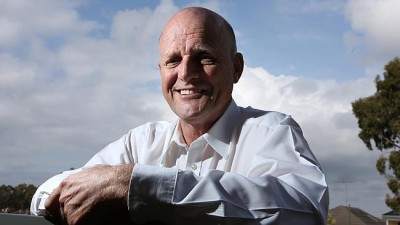
Liberal Democrat Senator for NSW, David Leyonhjelm has hailed the findings of the Select Committee Inquiry on Wind Turbines as vindication of his motion to establish the inquiry and confirmation that regulation of the wind industry needs to change.

“It is abundantly clear from the evidence of regulators, the community, local councils and wind farm operators that the status quo is untenable,” Senator Leyonhjelm said.

“Only the wind industry and its cheer squad disagree. There are glaring planning and compliance deficiencies plus growing evidence, domestic and international, that infrasound and low frequency sound from wind turbines is having an adverse health impact on some people who live in the vicinity of wind farms. This is not something a responsible government can ignore.”

The report is critical of the work previously undertaken by the National Health and Medical Research Council on wind farm noise emissions, which many have relied upon to declare wind farms have no adverse health effects.

The committee is also concerned about “the lack of rigour” behind the position statement of the Australian Medical Association on wind turbine operations. The inquiry report criticised the AMA for refusing to give evidence before the inquiry, describing their position statement as “irresponsible and harmful”.

The final report, tabled in the Senate today, retains the recommendations of the interim report (which the government has accepted) but expands on these and adds more.

Among them is a requirement for wind farms to comply with national noise standards in order to be eligible for consumer funded Renewable Energy Certificates (RECs), that eligibility for RECs cease after five years to lessen the financial burden on consumers, that state EPAs have jurisdiction over wind farms rather than local councils, that the Clean Energy Regulator be subject to a performance audit by the ANAO, and that the Productivity Commission be required to examine the impact of wind power generation on retail electricity prices.

“Senators involved in this inquiry have been attacked by the Big Wind lobby and those who see it is an assault on all renewable energy. The Labor representative on the Committee, Senator Anne Urquhart, joined this criticism following the interim report.

“However, the report shows there is a problem with the wind industry, not renewables such as solar, hydro, geothermal and biomass. There are potentially just as many jobs in these and nobody living close to them is getting sick. Labor’s enthusiasm for renewables needs to incorporate some compassion for those being hurt.”

Senator David Leyonhjelm

Senator David Leyonhelm

****

A fair call David – but, then again, common sense rarely needs an advocate.

Meanwhile, Committee Chair, Senator John Madigan went on the offensive in his home state of Victoria – where wind industry front man, Labor Premier, Daniel Andrews has adopted an approach to his constituents that would have made his pin-up boy, Generalissimo Stalin, glow with pride.

Senator Madigan warns Premier Andrews: ‘Don’t gamble with the health of Victorians’
Senator John Madigan
Independent Senator for Victoria
July 16, 2015

Independent Senator for Victoria John Madigan has warned Victorian Premier Daniel Andrews the Victorian Government’s unshakeable commitment to wind energy is putting the health of Victorians at risk, while potentially exposing the state to future legal liabilities.

“There is growing evidence living near wind turbines can be detrimental to health,” Senator Madigan said.

“While for a long time this evidence mainly came from the reports of affected individuals, more recently a number of studies have lent scientific weight to their concerns, such as the German and Japanese studies recently reported on,” Senator Madigan said.

“Yet, in the face of this, we have the Premier telling us his government is ‘unashamedly pro-wind power’ and indicating plans to boost investment in the sector.

“Beyond the detrimental health impacts, this could leave the state liable to future claims by those who suffer ill-health as a result. Where there is a reasonably foreseeable risk of harm the law requires us to act prudently to avoid that harm. If we fail to do so we are expected to compensate those impacted. The Andrew’s government is confronted with just this type of situation.”

Senator Madigan said the Premier had been aware of the potential health impacts of wind turbines since at least June 2010 when, as Health Minister, he attended a community cabinet meeting in Bendigo and was handed a file containing approximately twenty statutory declarations made by people living near Waubra wind farm. Each statutory declaration detailed negative health impacts residents attributed to noise from the wind turbines.

Senator Madigan said: “Given the Premier has known about this for some time, it is completely irresponsible for him to be promoting the construction of more wind farms around the state.

“With peoples’ health at risk, the state government should exercise the precautionary principle and delay the approval of any further wind farms until their health impacts are properly understood. This is the only responsible position under the circumstances.”

Senator Madigan said he would write to the Premier to request a moratorium on the development of further wind farms until their health impacts are properly understood.

Senator John Madigan

John Madigan

One Man’s Tale, About the “Renewables Scheme”, and the Ultimate Consequences…

A Simple Tale About Switching To Renewable Power: Requirements & Consequences.

A comparison of coal, nuclear, combined cycle gas turbines, and wind power for the morning of Friday August 7th. 2015 Source: http://www.gridwatch.templar.co.uk/


Don Bogard,

The tale below is fictional, but every one of its elements and issues has been or will be experienced somewhere in the process of switching electrical power production from fossil fuels to renewable wind and solar. Hopefully this tale will illustrate in a non-technical way some of these complications and potential issues that can and often will arise. My reference to “city” and “government” and “city fathers” are generic and could apply to different entities and scales.

Visualize a medium-size city with two very functional electrical power plants, each producing 500 Mega-watts of electricity, with one fueled by coal and one by natural gas. (About 2/3 of U.S. power is produced from these two sources.) The government decrees that this city must reduce its CO2 emissions. The city fathers decide to retire their coal-fired plant because it generates more CO2 and replace it with 350, General Electric (G.E.) 1.5 Mega-watt wind towers (total rated capacity 525 M-watt). The entire city celebrates over their good fortune in moving into a modern era of green energy. The mood is jovial.

The city planning begins. Each of these G.E. wind towers consists of 116-ft blades atop a 212-ft tower for a total height of 328 feet, and the blades sweep an area just under an acre. Each tower weighs 164 tons and is mounted on 1,000 tons of concrete and steel rebar and must be outfitted with flashing red lights.

City Problem #1. These 350 wind towers are expensive, about $2 million each. Luckily the government will subsidize most of the cost (paid by taxpayers elsewhere).

City Problem #2. Whereas the coal plant occupies fewer than 20 acres, each GE 1.5-megawatt turbine requires a minimum of 32 acres and needs 82 unobstructed acres in order to optimally utilize wind from any direction. This is a total of 28,700 acres, or about 45 square miles of land. That much space is way too expensive to purchase, so the city fathers convince the county and state to fund subsidizes to surrounding farms to host such towers, or decree eminent domain to force their location on unwilling farmers.

City problem #3. The coal plant was located close to town. To service these new wind towers new expensive access roads and power transmission lines must be funded and constructed.

Some grumbling begins, mainly among those whose farms were forced to accept the towers, among coal plant workers who are soon to be fired, and among those long range planners of future city budgets.
The wind towers are finally constructed and tied into the city power grid.

City Problem #4. Before the coal plant is retired, which operated 24/7/365, the city planners realize that the wind does not always blow. Further, even when it does blow, it often does not blow enough, and at these times the wind towers generate less than their rated electrical output. Often some towers will be out for maintenance.
The city fathers decide to keep the coal power plant in operation (after all, it was paid for) and only use it as back-up power for when the wind does not blow.

City Problem #5. It is discovered that when the coal plant must be fired up to replace wind power that has suddenly diminished, it cannot come to power quickly enough to prevent brown-outs (voltage drops), even an occasional black-out (no power). Further, these times of rapid cooling and heating of the boilers are degrading them much faster than when they operated continuously.
Citizen grumbling increases over the power issues they individually are experiencing.

The city fathers decide to build another gas-fired plant to replace the coal plant.
Grumbling increases among city dwellers over the increased taxes and electricity costs required to pay for the second gas plant. For the first time in many years, serious challengers arise in the upcoming city council election.

The second gas plant is constructed. One gas plant operates continuously, and the second plant operates in a near idle mode (but still burning some gas and producing CO2) so that it can be rapidly fired up when the wind dies. Keeping both gas plants operating, even at lower level for one, is more expensive than expected, but now they offer adequate back-up for when the wind-towers generate too little power.
Some city citizens forget that they are now paying sizably higher electricity bills and are happy that their CO2 production is now somewhat lower than originally. But many other citizens grumble and discuss recall elections.

Time passes. The city grows and needs more power. Further, the government gives a new decree to lower CO2 emissions even more. The city fathers decide to construct more wind towers. The reasoning is threefold: a) adequate power would still be available when the wind blew only lightly; b) extra power generated by wind could be sold to the surrounding cities; and c) the city’s gas plants would not have to operate as often, thus lowering CO2 generation. The plan sounded reasonable to city council.

City Problem #6. Large citizen protests erupt. The city mayor and two city council members are recalled. Yet under demands from the government, the new city government barely convinces the annoyed citizens to proceed. Active animosity develops between those who support this rapid move to renewable energy and those who do not.

City Problem #7. With the prospect of large flows of energy among various cities, extra and expensive long-distance transmission lines must be constructed.

The city goes even much more heavily into debt and several hundred extra wind towers are constructed. Counting total power capability from two gas plants and many hundreds of wind towers, the total potential power production is much more than twice what the original power capability was, although the city has only grown by 20%.

City Problem #8. The city is now sharply divided over this issue. The “green” citizens emphasize the good that wind power is doing in reducing CO2 emission and think that good justifies the many extra costs. Financially practical citizens complain that city electricity costs are now much higher than before, that much more open land is being compromised, and that the wind towers are noisy and unsightly, whereas CO2 emissions have only modestly been reduced.
The city fathers argue than the extra wind power produced by the new turbines can be sold to ally some of their costs.

City Problem #9. However, when the wind blows hard and extra wind power is produced, the city fathers discover that surrounding cities, which by now also have converted heavily to wind power, often also have too much wind power and are not in the market for any more. The city cannot sell its unused power, and having no way to store the extra power, must simply “dump” it unused. City fathers also realize that sometimes the wind quits blowing not just over a local region, but over a very widespread one. In these cases most or all of the local cities produce too little total power, and regional brown-outs develop.

The city fathers have a new idea — develop solar energy. Often the Sun shines when the wind does not blow and the wind often blows at night. But the city citizens would never permit a huge central solar power facility, and there is no suitable place to locate such a facility. But, the city fathers learn that the government heavily subsidizes PV-solar equipment for individual homes and businesses. The city fathers again decide to utilize government subsidizes paid for by others elsewhere. The city fathers appeal to the “green” citizens to use some of their funds along with the government subsidies to install PV-solar systems on their roofs. To give further enticements, the city fathers decree that the city electrical power company must purchase at full retail prices all excess solar power than these “green” citizens may produce. Many “green” citizens comply and a few hundred extra M-watts of solar power becomes available.

City Problem #10. However, the city fathers soon discover that when the Sun is brightly shinning, these PV-solar panels feed so much solar power into the grid that sometimes either the gas-fired plants or some wind towers must be curtailed in their power production. This produces further complications in keeping power fed into the local grid precisely in balance with the local and total power demand, as it must be if equipment damages are to be avoided. The city power company strongly complains about the new problems it has been handed.

City Problem #11. Further, the city power company discovers that on sunny days, it is buying so much solar power at retail prices, that it must raise power rates to those customers who do not have PV-solar grids.
Citizen complaints about power costs increase. Some prospective new industries with sizeable power demands decide to locate elsewhere.

Surrounding cities, which have also encouraged rooftop PV systems, find themselves with similar problems.
The city finds itself in a catch-22 situation. Both producing too much power and too little power, both at significantly increased prices, have negative and unintended consequences.

MORAL OF THE TALE. Conversion of electrical power generation from fossil fuels to renewable wind and solar is a process that can readily be both quite expensive and filled with unexpected negative consequences. For governments to rush into such a transfer too quickly or without a fully thought out a plan may be a recipe for higher electricity costs, customer dissatisfaction, social disruption, and ultimate political consequences.

The Insanity of Wind Energy…Just ask Southern Australians. It’s Killing their Economy!

South Australia’s Unbridled Wind Power Insanity: Wind Power Collapses see Spot Prices Rocket from $70 to $13,800 per MWh

jay weatherill

****

To call what South Australia’s Labor government has ‘gifted’ their constituents an energy ‘policy’, is to flatter it as involving some kind of genuine ‘design’. It’s an economic debacle, pure and simple.

The current mess started under former Premier, Mike Rann –  a former spin-doctor, whose relatives all lined up at the wind power subsidy trough from the get-go.

Under its current vapid leader, Jay Weatherill, SA’s Labor government has been talking up a wind powered future for months now – he’s presiding over the worst unemployment in the Nation, at 8.2% and rising fast – and seems to thinks the answer is out there somewhere – ‘blowin’ in the wind’. Its wind power debacle has led to South Australians paying the highest power costs in the Nation – if not (on a purchasing power parity basis) the highest in the world – and, yet, the dimwits that run it wonder why it’s an economic train wreck (see our posts here and here).

A few posts back – always ready to rain on the wind industry’s parade – as well as the gullible and corrupt that cheer it on – we spelt it out in pictures – that even the most intellectually interrupted should be able to grasp:

The Wind Power Fraud (in pictures): Part 1 – the South Australian Wind Farm Fiasco

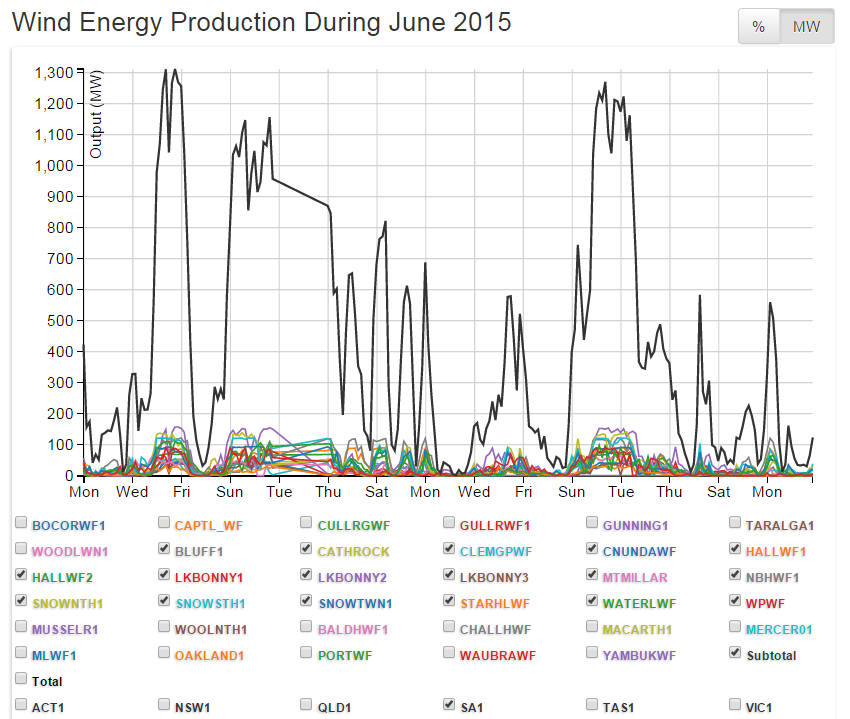
But that woeful missive merely drew focus on the pathetic performance of SA’s 17 wind farms; and their ‘notional’ installed capacity of 1,477MW – it has the greatest number of turbines per capita of all States – and the highest proportion of its generating capacity in wind power by a country mile.

June 2015 SA

Now, we’ll take a look at the effect on SA’s power market when wind-watts go completely AWOL, almost every other day. The chaos that wind power brings with it, has created the perfect opportunity for peaking power operators to make out like bandits at power consumers’ expense – simply because it can predictably ‘relied’ on to disappear without warning.

Wind power driven, market chaos clearly has the Australian Energy Market Operator worried; as its ‘Pricing Event Report’ for July shows.

To make clear just what was driving rocketing spot prices, we’ve added pictures, care of Aneroid Energy.

And when we say ‘rocketing’ we mean with all the thrust of Apollo 11. For the year to date, SA’s average spot price for power is $74 per MWh (compared to Victoria’s $35) – the reason for the price difference might just come from the fact that the Victorians have a relatively tiny proportion of their generating capacity in wind power; and the largest coal-fired generators in the country.

Now, with SA’s average of $74 per MWh in mind, consider the number of occasions in July when – as wind power output collapses – the spot price approaches or hits the Market Price Cap.  That cap – currently $13,800 per MWh – sets the upper limit of what peaking power generators can extort from the system: for a rundown on how the National Energy Market is designed to work, see this paper: AEMO Fact Sheet National Electricity Market

That’s the ‘design’; here’s the reality.

Pricing Event Reports – July 2015

28 July SA

Electricity Pricing Event Report – Tuesday 28 July 2015 (TI ending 1830 hrs)

Market Outcomes: South Australian spot price reached $1,967.51/MWh for trading interval (TI) ending 1830 hrs.

South Australian FCAS prices (Volume Weighted FCAS Prices) and energy and FCAS prices for the other NEM regions were not affected by this event.

South Australia had an actual Lack of Reserve 1 (LOR1) from 1800 hrs to 2030 hrs (Market Notices 49437 and 49438).

Detailed Analysis: 5-Minute dispatch price reached $10,759.20/MWh for dispatch interval (DI) ending 1820 hrs. The high price can be attributed to rebidding of generation capacity and limited interconnector flows during the evening peak demand period. Wind generation was low during this period in South Australia.

The South Australian demand was 2,233 MW for TI ending 1830 hrs. During the same TI, wind generation in South Australia was at 18 MW.

For DI ending 1820 hrs, a total of 38 MW of generation capacity was rebid from Hallett PS and Northern PS unit 2 from bands priced at or below $590.07/MWh to bands priced above $13,333/MWh. South Australian generation capacity was offered at less than $591/MWh or above $10,759/MWh resulting in a steep supply curve.

Cheaper priced generation were restricted by their ramp rates (Mintaro GT) and FCAS profiles (Torrens Island A units 3 and 4). Generation offers at $10,759.20/MWh had to be cleared from Dry Creek GT unit 3 to meet the demand for the DI.

During the affected DI, the target flow towards South Australia on the Heywood interconnector was constrained to 403 MW by an outage constraint equation V::S_XKHTB1+2_MAXG. This transient stability constraint equation manages the Victoria to South Australia flow for the loss of the largest generation block in South Australia during the outage of both parallel Keith – Tailem Bend 132 kV lines.

The target flow on the Murraylink interconnector was limited to 68 MW towards South Australia by the outage constraint equation, V>X_NWCB6022+6023_T1. This constraint equation limits flow from Victoria to South Australia on Murraylink during the planned outage of the Monash – North West Bend No. 2 132 kV line from 22 July 2015.

The 5-minute price reduced to $104.27/MWh in the subsequent DI to the high priced interval when 673 MW of generation capacity was rebid from higher priced bands to the market floor price of -$1,000/MWh.

The high 30-minute spot price for South Australia was forecast in pre-dispatch schedules prior to TI ending 1130 hrs. The pre-dispatch schedule for TI ending 1830 hrs forecast a spot price of $590.07/MWh. The difference in prices between Pre-dispatch and Dispatch was a result of rebidding of generation capacity within the affected trading interval. The wind generation forecast for pre-dispatch was also marginally higher, which also contributed to the difference in prices.

Electricity Pricing Event Report – Tuesday 28 July 2015

Market Outcomes: South Australian spot price reached $2,390.06/MWh for trading interval (TI) ending 0800 hrs.

South Australian FCAS prices and energy and FCAS prices for the other NEM regions were not affected by this event.

Detailed Analysis: 5-Minute dispatch price reached the Market Price Cap (MPC) of $13,800/MWh in South Australia for dispatch interval (DI) ending 0750 hrs. The high price can be attributed to rebidding of generation capacity resulting in a steep supply curve during the morning peak demand period. Wind generation was low during this period in South Australia.

The South Australian demand was 1,915 MW for TI ending 0800 hrs. During the high priced TI, wind generation in South Australia was at 19 MW.

For DI ending 0750 hrs, AGL shifted a generation capacity of 160 MW from Torrens Island B PS from bands priced at or below $124.99/MWh to bands priced at MPC of $13,800/MWh. South Australian generation capacity was offered at less than $591/MWh or above $12,195/MWh resulting in a steep supply curve.

Cheaper priced generation were restricted by their ramp rates (Hallett PS, Mintaro GT, Quarantine PS unit 4) and fast-start profiles (Dry Creek GT unit 3) which required time to synchronise.

Generation offers at Market Price Cap (MPC) of $13,800/MWh had to be cleared from Torrens Island B PS to meet the demand for the DI.

During the affected DI, the target flow towards South Australia on the Heywood interconnector was constrained to 460 MW by the Victoria to South Australia Heywood upper transfer limit thermal constraint equation, V>S_460. The target flow on the Murraylink interconnector was limited to 61 MW towards South Australia by the outage constraint equation, V>X_NWCB6022+6023_T1. This constraint equation limits flow from Victoria to South Australia on Murraylink during the planned outage of the Monash – North West Bend No. 2 132 kV line from 22 July 2015.

The 5-minute price reduced to $109.32/MWh in the subsequent DI to the high priced interval when South Australia demand reduced by 77 MW. Approximately 101 MW of non-scheduled generation came online. Generation capacity was also rebid from higher price bands to the market floor price of -$1000/MWh which also contributed to reducing the dispatch price.

The high 30-minute spot price for South Australia was not forecast in the pre-dispatch schedules, as it was a result of rebidding of generation capacity within the affected trading interval. The wind generation forecast for pre-dispatch was also marginally higher, which also contributed to the difference in prices between pre-dispatch and Dispatch.

27 July SA

Electricity Pricing Event Report – Monday 27 July 2015

Market Outcomes: South Australian spot price reached $4,449.17/MWh for trading interval (TI) ending 0800 hrs.

South Australian FCAS prices and energy and FCAS prices for the other NEM regions were not affected by this event.

Detailed Analysis: 5-Minute dispatch price reached the Market Price Cap (MPC) of $13,800/MWh and $12,195.07/MWh in South Australia for dispatch intervals (DIs) ending 0755 hrs and 0800 hrs respectively.

The high prices can be attributed to rebidding of generation capacity resulting in a steep supply curve during the morning peak demand period. Wind generation was moderately low during this period in South Australia.

The South Australian demand was 1,896 MW and the temperature in Adelaide was 4.9 °C for TI ending 0800 hrs. During the high priced TI, wind generation in South Australia was at 141 MW.

For DI ending 0755 hrs, AGL shifted a generation capacity of 200 MW from Torrens Island B PS from bands priced at or below $174.99/MWh to bands priced at MPC setting the high price. South Australian generation capacity was offered at less than $591/MWh or above $10,759/MWh resulting in a steep supply curve.

Cheaper priced generation were restricted by their ramp rates (Hallett PS), FCAS profiles (Northern PS unit 2) and fast-start profiles (Dry Creek GT units 2 and 3) which required time to synchronise.

For DI ending 0800 hrs, cheaper priced generation were restricted by fast-start profiles (Dry Creek GT units 2 and 3) which required time to synchronise. Generation offers at $12,195.07/MWh had to be cleared from Hallett PS to meet the demand for the DI.

During the high priced DIs, the target flow on the Heywood interconnector was limited up to 418 MW towards South Australia by the binding transient stability constraint equations, V::S_NIL_MAXG_SECP and V::S_NIL_MAXG_AUTO. The V::S_NIL_MAXG_SECP constraint equation prevents transient instability by limiting flow on the Heywood interconnector from Victoria to South Australia for the loss of the largest generator in South Australia for periods when the South East capacitor is unavailable for switching. The V::S_NIL_MAXG_AUTO constraint equation prevents transient instability by limiting flow on the Heywood interconnector from Victoria to South Australia for the loss of the largest generation block in South Australia.

The target flow on the Murraylink interconnector was limited to 58 MW towards South Australia by the outage constraint equation, V>X_NWCB6022+6023_T1. This constraint equation limits flow from Victoria to South Australia on Murraylink during the planned outage of the Monash – North West Bend No. 2 132 kV line from 22 July 2015.

The 5-minute price reduced to $174.99/MWh in the subsequent DI to the high priced interval when generation capacity from several South Australian generators were shifted to lower priced bands.

The high 30-minute spot price for South Australia was not forecast in the pre-dispatch schedules, as it was a result of rebidding of generation capacity within the affected trading interval. The wind generation forecast for pre-dispatch was also marginally higher, which also contributed to the difference in prices between pre-dispatch and Dispatch.

22 July SA

Electricity Pricing Event Report – Wednesday 22 July 2015

Market Outcomes: South Australian spot price reached $2,296.07/MWh for trading interval (TI) ending 1830 hrs.

South Australian FCAS prices and energy and FCAS prices for the other NEM regions were not affected by this event.

Detailed Analysis: 5-Minute dispatch price reached $13,481.81/MWh in South Australia for dispatch interval (DI) ending 1810 hrs. The high price can be attributed to a steep supply curve of generation capacity offered during evening peak demand period when wind generation was low in South Australia.

The South Australian demand was 2,100 MW for TI ending 1830 hrs. During the high priced TI, wind generation in South Australia was low at 39 MW.

For DI ending 1805 hrs, Energy Australia shifted a generation capacity of 34 MW from Hallett PS from bands priced at $360.81/MWh to bands priced at $13,481.81/MWh. For DI ending 1810 hrs, AGL rebid a generation capacity of 100 MW from Torrens Island B PS from bands priced at or less $64.99/MWh to bands priced at $13,500/MWh. South Australian generation capacity was offered at less than $591/MWh or above $10,750/MWh resulting in a steep supply curve. Cheaper priced generation was restricted by FCAS profiles (Northern PS unit 2 and Torrens Island PS unit A4) and fast-start units (Mintaro PS and Quarantine PS) which required time to synchronise.

Generation offers at $13,481.81/MWh had to be cleared from Hallett PS to meet the demand for the DI.

The target flow on the Heywood interconnector was limited to 447 MW towards South Australia by the binding transient stability constraint equation, V::S_NIL_MAXG_AUTO. This constraint equation prevents transient instability by limiting flow on the Heywood interconnector from Victoria to South Australia for the loss of the largest generation block in South Australia. The target flow on the Murraylink interconnector was limited to 64 MW towards South Australia by the outage constraint equation, V>X_NWCB6022+6023_T1.

This constraint equation limits flow from Victoria to South Australia on Murraylink during the planned outage of the Monash – North West Bend No. 2 132 kV line from 22 July 2015.

The 5-minute price reduced to $53.42/MWh in the subsequent DI to the high priced interval. South Australia demand reduced by 103 MW when 101 MW of non-scheduled generation came online. Generation capacity was also rebid from higher price bands to the market floor price of -$1000/MWh which also contributed to reducing the dispatch price.

The high 30-minute spot price for South Australia was not forecast in the pre-dispatch schedules, as it was a result of rebidding of generation capacity within the affected trading interval. The wind generation forecast for pre-dispatch was also marginally higher, which also contributed to the difference in prices between pre-dispatch and Dispatch.

19 July SA

Electricity Pricing Event Report – Sunday 19 July 2015

Market Outcomes: South Australian spot price reached $2,372.11/MWh for trading interval (TI) ending 1830 hrs.

South Australian FCAS prices and energy and FCAS prices for the other NEM regions were not affected by this event.

Detailed Analysis: 5-Minute dispatch price in South Australia reached $13,333.95/MWh for dispatch interval (DI) ending 1830 hrs. The high price can be attributed to a steep supply curve in generation capacity during the evening peak demand period when wind generation was low in South Australia.

The South Australian demand was 2,066 MW for TI ending 1830 hrs. The high evening peak demand was due to the cool weather in Adelaide, with a low temperature of 7.3°C at 1830 hrs. During the high priced TI, wind generation in South Australia was low at 3 MW for TI ending 1830 hrs.

For DI ending 1825 hrs, Alinta Energy rebid 95 MW of Northern PS generation capacity from bands priced at or less than $286.95/MWh to $13,333.95/MWh. South Australian generation capacity was offered at less than $591/MWh or above $10,750/MWh resulting in a steep supply curve for the high priced DI. Cheaper priced generation were restricted by ramp rates (Torrens Island Unit A4), FCAS profiles (Northern PS Unit 2) or required time to synchronise (Hallett PS).

Generation offers at $13,333.95/MWh had to be cleared from Northern PS units to meet the demand for the DI.

The target flow on the Heywood interconnector was limited to 448 MW towards South Australia by the thermal constraint equation, V>S_NIL_HYTX_HYTX. This system normal thermal constraint equation manages post contingent flow on the Heywood 500/275 kV transformers by reducing Heywood interconnector flow when the actual flow exceeds the pre-defined transformer rating. The target flow on the Murraylink interconnector was limited to 64 MW towards South Australia by the outage constraint equation, V>X_NWCB6225+6021_T1. This constraint equation limits flow from Victoria to South Australia on Murraylink during the planned outage of the North West Bend 132 kV circuit breakers from 13 July 2015.

The 5-minute price reduced to $115.77/MWh in the DI subsequent to the high priced interval when demand reduced by 111 MW and 101 MW of non-scheduled generation came online.

The high 30-minute spot price for South Australia was not forecast in the pre-dispatch schedules, as the forecast demand in pre-dispatch was lower.

17 July 2015 SA

Electricity Pricing Event Report – Friday 17 July 2015 (TI ending 0000 hrs on 18 July 2015): South Australia

Market Outcomes: South Australian spot price reached $2,256.25/MWh for trading interval (TI) ending 0000 hrs (on Saturday, 18 July 2015).

FCAS prices and energy prices for the other NEM regions were not affected by this event.

Detailed Analysis: 5-Minute dispatch price reached $13,333.95/MWh in South Australia for dispatch interval (DI) ending 2340 hrs on 17 July 2015 during high demand period due to hot water load management (ripple control). Between DIs ending 2325 hrs and 2340 hrs, the South Australian demand increased by 311 MW. This additional load represented an 18% increase in the South Australian demand.

Wind generation in South Australia was approximately 120 MW for TI ending 0000 hrs on 18 July 2015.

At DI ending 2335 hrs, a total of 150 MW of generation capacity from Northern PS was shifted from bands priced at or less than $286.95/MWh to $13,333.95/MWh. The high price for DI ending 2340 hrs was set by Northern PS at $13,333.95/MWh. Cheaper priced generation was available from fast-start units (Hallet and Dry Creek unit 3) which required time to synchronise.

The target flow on the Heywood interconnector was limited to 449 MW towards South Australia by a thermal constraint equation, V>S_NIL_HYTX_HYTX for DI ending 2340 hrs. This system normal constraint equation manages post contingent flow on the Heywood 275/500 kV transformers by reducing the Heywood interconnector flow when the actual flow exceeds the pre-defined transformer rating. The target flow on the Murraylink interconnector was limited to 66 MW towards South Australia by an outage constraint equation, V>X_NWCB6225+6021_T1. This constraint equation manages limits flow from Victoria to South Australia on Murraylink during the planned outage of the North West Bend 132 kV circuit breakers from 13 July 2015.

The 5-minute price reduced to $47.13/MWh for the next interval (DI ending 2345 hrs) when the demand reduced by approximately 122 MW and 102 MW of non-scheduled generation came online. A total of 349 MW of generation capacity was also rebid from higher priced bands to the market floor price of -$1,000/MWh.

The high 30-minute spot price for South Australia was not forecast in the pre-dispatch schedules, as it was a result of a 5-minute load increase that caused a price spike in the 5-minute dispatch prices.

7 July SA

Electricity Pricing Event Summary – Tuesday 7 July 2015*

Market Outcomes: South Australia spot price reached $1,221.54/MWh for trading interval (TI) ending 1900 hrs. South Australia FCAS prices and energy and FCAS prices in other regions were not affected.

Summary:

South Australia 5-Minute dispatch price reached $6,794.04/MWh for dispatch interval (DI) ending 1855 hrs due to a steep supply curve in generation capacity during a period of low wind generation. Planned outages affecting the interconnector flow into South Australia also contributed to the high price.

  • Low levels of wind generation in South Australia at approximately 60 MW at TI ending 1900 hrs
  • Rebidding of 20 MW of Hallett PS generation capacity from bands priced at or less than $360.81/MWh to bands priced at $13,481.81/MWh for DI ending 1840 hrs
  • For DI ending 1855 hrs, South Australian generation capacity was offered at less than $590/MWh or above $10,750/MWh resulting in a steep supply curve
  • Cheaper priced generation were restricted by a fast-start unit (Dry Creek GT unit 3) which required time to synchronise
  • The target flow on the Heywood interconnector was limited to 430 MW towards South Australia by a planned outage thermal constraint equation, V>S_APHY2_NIL_HYTX2. This constraint equation manages flow of the Heywood M2 transformer during the outage of APD-HYTS No. 2 500 kV line
  • The target flow on the Murraylink interconnector was limited to 181 MW towards South Australia by a planned outage constraint equation, S>>RBTX1_RBTX2_WEWT. This constraint equation manages post contingent flow of Waterloo East – Waterloo 132 kV line for the trip of Robertstown No. 2 132/275 kV transformer during the outage of Robertstown No. 1 132/275 kV transformer.

South Australia energy price reduced to $46.14/MWh for DI ending 1900 hrs when:

  • Demand reduced by 144 MW and 104 MW of non-scheduled generation came online
  • Generation capacity was rebid from higher price bands to the market floor price of -$1000/MWh which also contributed to reducing the dispatch price.

The high 30-minute spot price for South Australia was not forecast in the pre-dispatch schedules, as the forecast demand in pre-dispatch was lower.

* A summary was prepared as the maximum daily spot price was between $500/MWh and $2,000/MWh

3 July SA

Electricity Pricing Event Report – Friday 03 July 2015

Market Outcomes: South Australian spot price reached $2,296.32/MWh for trading interval (TI) ending 0830 hrs.

South Australian FCAS prices and energy and FCAS prices for the other NEM regions were not affected by this event.

Detailed Analysis: 5-Minute dispatch price reached $13,333.95/MWh in South Australia for dispatch interval (DI) ending 0810 hrs. The high price can be attributed to a steep supply curve of generation capacity offered during morning peak demand period when wind generation was low in South Australia.

The South Australian demand was 1,990 MW for TI ending 0830 hrs. The high morning peak demand was due to the cool weather in Adelaide, with a low temperature of 3.5 °C at 0800 hrs gradually rising to 6.5°C at 0900 hrs at Adelaide Airport. During the high priced TI, wind generation in South Australia was low at 45 MW for TI ending 0830 hrs.

For DI ending 0810 hrs, South Australian generation capacity was offered at less than $590/MWh or above $10,750/MWh resulting in a steep supply curve. Cheaper priced generation were restricted by a fast-start unit (Hallett PS) which required time to synchronise.

Generation offers at $13,333.95/MWh had to be cleared from Northern PS units to meet the demand for the DI.

The target flow on the Heywood interconnector was limited to 444 MW towards South Australia by the binding thermal constraint equation, V>S_NIL_HYTX_HYTX. This system normal thermal constraint equation manages post contingent flow on the Heywood 275/500 kV transformers by reducing Heywood interconnector flow when the actual flow exceeds the pre-defined transformer rating. The target flow on the Murraylink interconnector was limited to 179 MW towards South Australia by a voltage stability constraint equation, V^SML_NSWRB_2. This constraint equation avoids voltage collapse in Victoria for loss of the Darlington Point to Buronga (X5) 220 kV line.

The 5-minute price reduced to $103.93/MWh in the subsequent DI to the high priced interval. South Australia demand reduced by 96 MW when 105 MW of non-scheduled generation came online. Generation capacity was also rebid from higher price bands to the market floor price of -$1000/MWh which also contributed to reducing the dispatch price.

The high 30-minute spot price for South Australia was not forecast in the pre-dispatch schedules, as the forecast demand in pre-dispatch was lower. The wind generation forecast for pre-dispatch was also marginally higher, which also contributed to the difference in prices between pre-dispatch and Dispatch.
AEMO July 2015

yacht

****

Next time you’ve got some wind-worshipper or wind industry parasite claiming that wind power lowers power prices, flick them a link to this post and ask them to explain – if they can? – how a wholly weather dependent power generation source lowers power prices when the wind drops to a zephyr?

When wind power output completely disappears – as it does almost every day – spot prices head north at rates slicker than anything set by Australian Formula One Ace, Mark Webber.

A whole shadow industry has been developed around wind power ‘outages’.

Peaking power at Hallett

****

In the reports above, you’ll see references to the “fast-start unit (Hallett Power Station)”; “fast-start unit (Dry Creek GT)”; “Mintaro GT and “Quarantine PS”. Each of these “fast-start units” use Open Cycle Gas Turbines (OCGTs) – which are little more that jet engines, run on gas or fuel oil (diesel).

The initial capital outlay is low, but their operating costs are exorbitant – depending on the fuel input costs (the gas dispatch price varies with demand, for example) operators need to recoup upwards of $300-400 per MWh before they will even contemplate firing them into action. For a wrap up on “fast-start-peakers” see this paper: Peaker-Case-Histories

As to the insane cost of running them, see this article: OPEN GAS CYCLE TURBINES: Between a rock and a hard place

For peaking power operators, the inevitable and total collapses in wind power output is where the greatest rort of all time begins.

You see, it’s not really about the costs of running OCGTs (or diesel engined generators) is all about what the operator can get away with.

The pattern was set up by the energy market whizzkids from Enron – back in the days when it raped and pillaged the Californian power market, using much the same tactics. Wait for an “outage” – self-generated in Enron’s case – sit back and watch the grid manager panic about widespread blackouts; and then ‘offer’ to solve the problem by delivering power in the nick of time at rates 1000 times the average price: the Enron rort was detailed in the doco “The Smartest Guys in the Room”.

For the purchaser (grid manager), it’s not about how much the vendor ‘needs’ to cover its costs – it’s all about how much the grid manager has ‘got’: some might call it ‘chiselling’; others ‘naked theft’. Hence, the NEM rules that set the upper limit of what can be charged at $13,800 per MWh.

However, there is a serious move to increase the cap to …. be sure you’re seated for this … $80,000 per MWh. See this paper by Dr Jenny Riesz here: Energy-only markets with high renewables: Can they work?

For a ‘wishy-washy’ analysis on the debacle above, note the excuses from wind power fans, Watt-Clarity, here: Why large energy users are concerned about last week’s machinations in South Australia

The ‘alternative’ to increasing the mandatory price cap from its already whopping $13,800 per MWh to a phenomenal $80,000, is to pay baseload generators $millions upfront to hold additional spinning reserve – with plants permanently ready to come online to cover wind power collapses; and, therefore, burning coal and gas around the clock – with what are called “capacity payments”:

Power Punters to Pay Double for Wind Power “FAILS” – REAL Power Generators Paid to Cover Wind Power Fraud

All of this power market insanity is the direct consequence of inevitable but unpredictable wind power output collapses; the criminal scenarios detailed above will only get worse if young Gregory Hunt’s ultimate annual 33,000 LRET were ever met; and would become a complete social and economic disaster if Labor’s 50% renewable target fantasy were ever realised.

One way or another – whether it’s the daily spot price “bonanza” enjoyed by peaking-power-piranhas; or paying millions of dollars in capacity payments to baseload generators, just to keep the grid from collapsing when the wind stops blowing – it’s power punters that pay the ultimate price. And, for South Australians, the only way is up.

Once upon a time, South Australia enjoyed the cheapest power prices in the world; and, with it, an unparalleled burst of economic growth and prosperity:

ETSA: Sir Tom Playford’s Ghost

Today, however, thanks to the most ludicrous power ‘policy’ in the Nation, it’s an economic train wreck. And they wonder why?

runaway train lone ranger

Windweasels Need A Big Hearty Dose of Reality!!

The Wind Industry’s “Fossil-Fuel-Free” Fantasy Scotched

unicorn

***

At STT we love scotching wind power myths – and all the more so when it can be done with pictures:

The Wind Power Fraud (in pictures): Part 1 – the South Australian Wind Farm Fiasco

The Wind Power Fraud (in pictures): Part 2 – The Whole Eastern Grid Debacle

The ‘arguments’ pitched up by the greentard about these things ‘saving the planet’; and being the ‘answer’ to ‘cataclysmic’ global warming (or ‘climate change’, whichever is your poison) require the suspension of our good friends – ‘logic’ and ‘reason’.

To make it plain – wind power generation has NOTHING to do with the CLIMATE – one way or the other.

STT seeks to completely disconnect claims for and against man-made ‘global warming’, and wind power generation (see our post here).

As laid out in the posts linked above the simple FACT is that wind power can only ever be delivered (if at all) at crazy, random intervals.

It doesn’t matter how many turbines are planted – or how far apart they’re spread – wind power will NEVER amount to a meaningful power source.

It will always require 100% of its capacity to be backed up 100% of the time with fossil fuel generation sources; in Australia, principally coal-fired plant. As a result, wind power generation will never “displace”, let alone “replace” fossil fuel generation sources.

Contrary to the anti-fossil fuel squad’s ranting, there isn’t a ‘choice’ between wind power and fossil fuel power generation: there’s a ‘choice’ between wind power (with fossil fuel powered back-up equal to 100% of its capacity) and relying on wind power alone. If you’re ready to ‘pick’ the latter, expect to be sitting freezing (or boiling) in the dark more than 60% of the time.

June 2015 National

Wind power isn’t a ‘system’, it’s ‘chaos’ – the pictures we’ve thrown up time and time again, tell the story.

When Labor came out to announce its ludicrous 50% renewable energy target (even more ludicrous than the current $45 billion monster) a week or so back (see our post here) – we predicted that the attentions of journos and politicians would be drawn to the great wind power fraud, in much the same way multiple car pile ups draw a crowd.

Much to STT’s delight, what’s occurred is a flurry of mainstream-press-pieces, that are starting to sound a whole lot like the authors have been perusing these very pages: articles that start with facts, instead of fantasy – and which end with the obvious conclusion – that these things will NEVER WORK.

And so it is with the claims being run by the intellectually compromised, who steadfastly “believe” that wind power will ‘kill coal’ and ‘gas’; and everything else their puny little minds have taken a set against.

As we’ve pointed out, diggers and drillers simply love these things, as they provide no threat to their opportunity to sell their wares – on the contrary – coal miners and oil and gas producers would profit very handsomely if the wind power fraud was taken to its illogical ‘conclusion’:

Why Coal Miners, Oil and Gas Producers Simply Love Wind Power

Here’s former Labor man, Gary Johns picking precisely the same theme.

Wind farms use fossil fuels, too … lots
The Australian
Gary Johns
28 July 2015

Bill Shorten should have asked a couple of questions before committing Australia to a 50 per cent renewable target. Can you build a wind turbine, or start a wind turbine, without fossil fuels?

The answer is no and no, you cannot. So what is the point of saddling Australia with an increasing load of wind turbines? (Much is also true for solar.)

Whatever one’s beliefs on the veracity and level of threat from climate change, what is the point in spending hard-earned dollars on expensive and inadequate-for-purpose technology?

The energy density of wind power is a little over one watt a square metre. As Smaller, Faster, Lighter, Denser, Cheaper author Robert Bryce tells, if all the coal-fired generation capacity in the US were to be replaced by wind, it would need to set aside land the size of Italy. Hydrocarbons are denser energy sources than wind. There is nothing that can overcome that fact.

James Hansen, the former NASA climate scientist, wrote in 2011: “Suggesting that renewables will let us phase out rapidly fossil fuels is almost the equivalent of believing in the Easter bunny.”

The other thing about renewables is that they cannot produce the intensity of heat required to not only build turbines but just about anything else that makes the modern world modern.

The material requirements of a modern wind turbine have been reviewed by the US Geological Survey (Wind Energy in the United States and Materials Required for the Land-Based Turbine Industry From 2010 Through 2030). On average, 1 megawatt of wind capacity requires 103 tonnes of stainless steel, 402 tonnes of concrete, 6.8 tonnes of fibreglass, three tonnes of copper and 20 tonnes of cast iron. The blades are made of fibreglass, the tower of steel and the base of concrete.

Robert Wilson at Carbon Counter takes us through the ­science. Fibreglass is produced from petrochemicals, which means that a wind turbine cannot be made without the extraction of oil and natural gas. Steel is made from iron ore. To mine ore requires high energy density fuels, such as diesel. Transporting ore to steel mills requires diesel.

Converting iron ore into steel requires a blast furnace, which requires large amounts of coal or natural gas. The blast furnace is used for most steel production.

Coal is essential, not simply a result of the energy requirements of steel production but of the chemical requirements of iron ore smelting.

Cement is made in a kiln, using kiln fuel such as coal, natural gas or used tyres. About 50 per cent of emissions from cement production comes from chemical reactions in its production.

Then there is the problem of priming windmills. Large wind turbines require a large amount of energy to operate. Wind plants must use electricity from the grid, which is powered by coal, gas or nuclear power.

A host of the wind turbine functions use electricity that the turbine cannot be relied on to generate — functions such as blade-pitch control, lights, controllers, communication, sensors, metering, data collection, oil heater, pump, cooler, filtering system in gearboxes, and much more.

Wind turbines cannot be built and cannot operate on a large scale without fossil fuels.

As important, wind and solar do not have the energy densities to create an economy. Forget trains, planes and automobiles; your humble iPhones, laptops and other digital devices consume huge amounts of electricity and cannot be made with renewables. That most modern of new economy inventions, the computing cloud, requires massive amounts of electricity.

As Mark Mills wrote: ‘‘The cloud begins with coal.’’ The green­ies who got into the ears of Labor leaders to convince them that the era of fossil fuels is over should think again.

Reservoirs of methane hydrates — icy deposits in which methane molecules are trapped in a lattice of water — are thought to hold more energy than all other fossil fuels combined.

The Japanese, among others, hope that the reservoirs will become a crucial part of the country’s energy profile, as Nature reported in April 2013. A pilot project 80km off the country’s shores has produced tens of thousands of cubic metres of gas.

As with any new resources there are risks and much work is to be done for safe extraction, but the UN Environmental Program report in March, Frozen Heat: A Global Outlook on Methane Gas Hydrates, was very keen to ‘‘explore the potential impact of this untapped natural gas source on the future global energy mix’’.

Bill, you are suffering from Big Wind. You have let down the party and the nation.
The Australian

bill shorten

Corruption and Collusion in the Relationship, Between EPA and Faux-green Alarmist Groups.

Back to Square One: Unlawful Collusion with Green Pressure Groups Should Doom U.S. EPA’s Greenhouse Gas Regulation

EPA_collusion
Washington, D.C. — Today, the Energy & Environment Legal Institute (E&E Legal), a 501 (c) (3) watchdog group, released an investigatory report, Back to Square One: Unlawful Collusion with Green Pressure Groups Should Doom U.S. EPA’s Greenhouse Gas Regulation  and an appendix of source documents.  The report, which is based on e-mails and other documents obtained under numerous Freedom of Information (FOIA) requests and litigation, details illegal activities by EPA staff, colluding with certain environmental lobbyists to draft EPA’s greenhouse gas (GHG) rules behind the scenes, outside of public view, and to the exclusion of other parties.  More importantly, it clearly shows that EPA must start anew if it wishes to regulate GHGs. (A two-minute companion video is available for use.)
With EPA’s GHG rules going final any day, it is critical to inform the public of the emails detailed in this report for what they show about how EPA has developed these costly public policies with select, ideologically aligned outside interests, and its continuing efforts to obscure and even hide the content of discussions with those same lobbyists.
“E&E Legal has obtained proof that EPA’s GHG rules are the product of unlawful collusion and are themselves therefore unlawful,” said E&E Legal Senior Legal Fellow Chris Horner and author the report.  “Congress or the courts — or EPA, in a moment of rationality — should stop these rules from taking effect before the (intended) anticipatory harms of a sham rulemaking are imposed upon millions of Americans, without years of delay and devastation before the ultimately illegal agency rulemaking is overturned.”
EPA is a regulatory agency tasked with protecting the environment. EPA can regulate greenhouse gases thanks to the Supreme Court’s Massachusetts v. EPA decision. It is not compelled to do so, and it remains prohibited under the law from regulating with an “unalterably closed mind”, for the purposes of completing a “naked transfer of wealth”, or to do the bidding of ideologically aligned pressure groups.
“This pattern of conducting official business in secret and outside of the legal parameters is unfortunately a hallmark of this Administration,” said E&E Legal Executive Director Craig Richardson.  “In the case of the EPA, green groups led by the Sierra Club and NRDC set up shop at the EPA, even before Obama took office, with a plan to eliminate the U.S.’s most abundant source of electricity, coal-fired power plants.  Part of this was to shift the public’s wealth to renewable energy, where the large benefactors of these same green groups are now poised to make significant money.”
The report comes as President Obama prepares to announce these rules next week, and follows anE&E Legal interim report released last September which also showed that EPA was working with outside green lobby groups on a common regulatory agenda, often with deliberate secretiveness and unlawfully.   Since the 2014 report, E&E Legal has pried many hundreds of relevant emails out of EPA in several requests and lawsuits.  The record is not complete, of course, but reflects only those records responsive to E&E Legal’s search terms and that EPA, or its now-departed activist-staffers, decided to produce. EPA continues to improperly withhold certain obviously important information with no conceivable legal justification.

__________________________________________________________________________________

The Energy & Environment Legal Institute (E&E Legal) is a 501(c)(3) organization engaged in strategic litigation, policy research, and public education on important energy and environmental issues. Primarily through its petition litigation and transparency practice areas, E&E Legal seeks to correct onerous federal and state policies that hinder the economy, increase the cost of energy, eliminate jobs, and do little or nothing to improve the environment.

What Happens When “Novelty Energy”, is Used to Power a Nation!

UK’s Wind Power Debacle Deepens: Widespread Winter Blackouts Forecast

hell-freezing-over1

****

The lunatics that push wind power are being forced to face up to the fact that it is – and will always be – meaningless as a power generation source. Which to the sane and rational is no surprise: a ‘system’ that relies on the vagaries of the weather isn’t a ‘system’ – it’s ‘chaos’. Here’s a tale from Britain on just where that chaos is heading.

Britain could face blackouts if the wind doesn’t blow
Emily Gosden
17 July 2015
The Telegraph

National Grid proposes bringing in emergency measures to bolster electricity supplies as new analysis shows power crunch worsening

Britain could face blackouts if the wind doesn’t blow in winter 2016-17, unless emergency measures are brought in to bolster electricity supplies, official analysis suggests.

Output from Britain’s power plants would not be enough to meet peak demand if there was “low wind” meaning the thousands of wind turbines across the country would generate very little electricity, forecasts show.

Old mothballed power plants are now likely to be paid millions of pounds to fire back up or factories paid to switch off at peak times, under proposed emergency measures to ensure the lights stay on.

Normally, the UK’s electricity grid has a spare capacity “margin” meaning more power is available than is expected to be needed to meet peak demand.

The margin ensures that “consumers are not affected” if demand for electricity increases unexpectedly – such as in a cold snap – or power plants break down, Ofgem says.

But the margin has eroded in recent years as environmental regulations force the closure of old coal-fired power plants.

Emergency measures to keep the lights on were first introduced last winter, when the margin fell to 4.1 per cent, and are also in place for this winter, when the margin is expected to fall to 1.2 per cent.

The measures had not been expected to be needed in winter 2016-17, but officials now believe the situation could worsen significantly as more plants may be closed, meaning the margin could fall to zero .

With unusually low wind, the margin could fall to minus 1.1 per cent – meaning peak demand exceeds the amount of power typically available.

National Grid has now proposed extending the emergency measures for two more winters.

An Ofgem spokesman said: “In a small minority of scenarios there is the possibility of negative margins. But the likelihood of these sorts of circumstances is very low.

“Even if this were to occur, National Grid already has a range of tools at its disposal to balance supply and demand without having to resort to controlled disconnections.”

A National Grid spokesman said: “While we want an adequate safety cushion to manage unforeseen events on the network, negative margins do not mean blackouts.”

Peter Atherton, analyst at Jefferies, said the UK was heading into “uncharted territory, where the underlying situation on the system is becoming very unstable and therefore National Grid is having to deploy more and more emergency measures to compensate”.

“These emergency measures should work, but there is clearly a greater risk of a security of supply incident than we have been used to,” he said.

Telegraph analysis earlier this year showed that peak demand coincided with the lowest wind output of the winter just gone.

In its security of supply report, Ofgem said: “There is a widespread belief that the wind stops blowing when there is a severe cold spell, resulting in lower wind availability at times of high demand for electricity. We have considered the possibility that a relationship does exist, and have assessed its impact.”

Energy Minister Andrea Leadsom said: “Our number one priority is to ensure that hardworking families and businesses have access to secure, affordable energy supplies they can rely on.

“In the short term, we have put measures in place to meet sudden increases in demand. In the longer term, we are investing in infrastructure and sensible policies to improve energy security.”
The Telegraph

turbine-collapse-germany1

Wind Industry Shills want More Money Wasted on Useless Wind Energy…Aussies say NO!

Adam Creighton: Labor’s Ludicrous Wind Power Policy to Squander more than $100 Billion

Money Wasted

****

In Sunday’s post, we detailed Labor’s descent into wind power madness – with its impossible push for a 50% renewable energy target.

One of the immediate responses has come from the press-pack; who have now turned on the great wind power fraud with a vengeance.

Journalists with a modicum of common sense have woken up to the fact that they’ve been lied to and taken for fools by the wind industry, its parasites and spruikers for years now.

The backlash amongst journos to Labor’s lurch to the infantile left, has caused an ‘awakening’, which has been swift and scathing. The Australian’s Adam Creighton – a lad with a solid economics background – is among those who have caught on to the scale and scope of the fraud.

In this thumping little piece, Adam slams “rent-seeking global turbine manufacturers” – which we take to mean struggling Danish fan maker, Vestas – and otherwise clobbers the pointlessness and insane cost of trying to rely on a power generation source that means future power “supply would depend on the weather” – rather than on that silly old economic chestnut: power consumers’ actual ‘demand’. Over to Adam.

Labor’s renewable energy target policy would waste $100bn
The Australian
Adam Creighton
24 July 2015

To make sure we have enough electricity over the next 15 years we can either spend $100 billion on new generating capacity, or we can spend next to nothing.

Both strategies will meet our electricity needs. Labor has decided the former makes a lot more sense, given its new policy to require 50 per cent of electricity to be generated by renewable energy by 2030. In practice this would require tripling the Renewable Energy Target to about 100 terawatt hours by 2030.

This is bizarre policy, not least because Labor agreed with the government to lower the RET to 33 by 2020, only last month. It reflects an almost religious and increasingly pervasive devotion to wind and solar power, whatever the cost.

Hiking the RET so dramatically would divert massive resources into construction of unreliable and costly generating capacity with limited environmental benefits.

ACIL-Allen reckons the cost of new wind, geothermal and solar capacity would come to about $100bn. The extra 11,000 wind turbines alone — 10 times the present number — would cost $65bn.

This is money that could have been used for projects that don’t require government compulsion to make them viable. Or it could have used to research ways to curb carbon emissions rather than enrich rent-seeking global turbine manufacturers.

Australia doesn’t need to invest in any new electricity supply; spending billions to get zero extra output is economic vandalism. In fact, electricity demand has been steadily falling (from 198 TwH in 2009 to 184 in 2014) because of higher network prices, our dwindling industrial base and popular energy-efficiency initiatives.

Current estimates see modest increases to 2030, which could be accommodated by existing capacity. Gas and coal-fired power stations are already being mothballed or closed, Alinta’s Port Augusta plants being recent examples.

Yet an axis of ignorance and self-interest is trying to argue Labor’s 50 per cent mandate will ultimately lower prices for households and create jobs. They seized on initial modelling by Frontier Economics this week that showed typical electricity bills under Labor’s plan would fall by $30 a year from 2016 to 2022 and then rise by $4 a year will 2030.

This occurs because existing fossil-fuel generators are assumed to bear heavy losses. The policy-induced glut of new supply pushes wholesale electricity prices down (especially in a market where demand was falling anyway), in some cases by more than the cost of the renewable energy certificates that the RET compels retailers to buy. The RET, as the government’s 2014 review found, “transfers wealth from electricity consumers and other participants in the electricity market to renewable generators”.

Existing generators might put up with this for a while — shutting a coal power station can cost more than running it at a loss — but in the longer run Alfred Marshal’s basic principle that the prices we pay for goods and services must ultimately cover their costs will begin to kick in.

“We might see a serious backlash from consumers in the medium to long run as fossil fuel generators leave the market, and retail costs start to reflect the cost and fundamentals of renewable energy,” says Tony Wood, an impartial energy expert at the Grattan Institute.

Consider a 100 per cent RET. Without base-load, conventional power sources — be they nuclear, coal or gas — supply would depend on the weather, and prices would reflect the far greater actual costs of production.

Large-scale wind and solar-powered electricity is two to four times more expensive than coal-power electricity, a discrepancy that could grow if the sunniest and windiest sites have been used up already. Whenever in doubt, ask: if renewable energy were so much more efficient and cost-effective than fossil fuels, why do we need to force people to buy it, by law?

Of course, wind and sunshine are free, so the marginal costs of renewable energy can be lower than those for fossil fuels once the turbines and solar grids are built. But it is irrational to ignore their upfront costs and junk perfectly satisfactory power stations unless other benefits were truly massive.

But they aren’t. Yes, the RET will create jobs, but so would deliberately complicating the tax system and hiring 10,000 public servants to enforce it.

Furthermore, the RET, along with the government’s Emissions Reduction Fund, is a terribly inefficient way to reduce greenhouse emissions. Large-scale solar, for instance, does so at about $200 a tonne or 10 times the cost of a simple carbon tax or emissions trading scheme, which both Labor and Coalition now spurn. Wind is about $100 a tonne.

Surely $100bn could be better spent on developing Australia’s rich uranium reserves to create a base-load power industry that can replace fossil fuel generators when they naturally expire.

But when renewable energy is seen as a religion, the case is far stronger. Certain religious observances might appear irrational but if they make people happy they serve a valid purpose. This is the best argument for a $65bn wind turbine building program.
The Australian

adam-creighton

****

A very solid wrap-up from Adam – who, based on that effort, is likely to end up in STT’s Hall of Fame. However, Adam needs to drill a little deeper on the true costs of the greatest economic and environmental fraud of all time; and – given his apparent antipathy to the wind power rort – we fully expect him to.

As we detailed in Sunday’s post, contrary to Matt Harris’ musings, the impact of momentary spurts of wind power on power prices is limited to the dispatch price (when the wind is actually blowing).

When the wind is blowing – the impact on retail prices (the price that troubles households and businesses) has retailers paying up to $120 per MWh (AGL pays $112) for every MWh of wind power dispatched to the grid – irrespective of the dispatch or wholesale price – which at night time will often be close to – or less than – zero. The rates retailers pay are set by long-term Power Purchase Agreements.

Wind power outfits steadfastly refuse to disclose their PPAs, for obvious political reasons. Infigen and the like aren’t going to win many hearts and minds if they revealed the fact that – in order to remain profitable over the long-term – they need a guaranteed price of around 4 times the average wholesale price of $35 – which doesn’t quite gel with their PR spruiker’s endless nonsense about the ‘wind being free‘.

The other critical detail that Adam needs to expand on, is the actual operating costs of wind turbines – such as operating and maintenance costs (recurring and increasing over time as these things grind their way to a halt): costs that – at $25 per MWh for every MWh dispatched – compare, not so favourably, with the ability of Victorian coal fired power generators to profitably deliver power to the grid, at less than $25 per MWh.

The operation of PPAs and their effect on retail power prices is covered in detail here – as is the actual operating costs of turbines:

When will the Wind Industry Stop Lying?

Australia’s Most Notorious Wind Power Outfit – Infigen – says “Move Over Pinocchio, Here We Come”

Then there’s the way in which the REC Subsidy paid to wind power outfits operates as an additive tax on all Australian power consumers – under the current LRET – a figure that runs to more than $45 billion:

Out to Save their Wind Industry Mates, Macfarlane & Hunt Lock-in $46 billion LRET Retail Power Tax

The other misconception – arising from guff pitched up by Tony Wood from the Grattan Institute – is that increasing wind power capacity will see “fossil fuel generators leave the market”. In terms of the fossil fuel generating capacity required to meet total consumer demand – no it won’t.

Fossil fuel generators – with a capacity at least equal to 100% of any installed wind power capacity – will be required to be available and online as ‘spinning reserve’ – 100% of the time – to account for total (and totally) unpredictable collapses in wind power output.

It does not matter whether there are 2,000, 5,000 or 10,000 turbines spread out across the Eastern Grid, as a natural, meteorological phenomenon the wind will stop blowing across that entire area, such that wind power output will drop to a doughnut hundreds of times every year. And that’s a FACT:

The Wind Power Fraud (in pictures): Part 2 – The Whole Eastern Grid Debacle

June 2015 National

The cost of building and maintaining – what is now referred to as ‘redundant’ capacity – essential to provide back-up ‘cover’ for a further 11,000 3MW turbines – would be astronomical:

Lessons from Germany’s Wind Power Disaster

Not to mention the need to pay fossil fuel generators millions upon millions of dollars in ‘capacity payments’ to ensure sufficient ‘spinning reserve’ and/or fast start up peaking power plants such as Open Cycle Gas Turbines and diesel generators to cover wind power output collapses, almost every day:

Power Punters to Pay Double for Wind Power “FAILS” – REAL Power Generators Paid to Cover Wind Power Fraud

Labor’s latest move has simply magnified the costs of the current LRET debacle by a factor of two or more. However, with journalists like Adam Creighton on the trail it won’t be long before Australians work out just why their power bills are going through the roof, now. And when they do, it will be a matter of when, not if, the LRET policy meets its political doom.

CPI and electricity