Courageous Aussies Fighting The Windweasels….and Winning!

Real concerns about turbines left blowing in the wind

Credit:  By Graham Lloyd, Environment Editor | The Australian | June 27, 2015 | www.theaustralian.com.au ~~

Each morning fine-wool grower Ann Gardner broadcasts her wind farm woes to an unreceptive world.

Politicians, shock jocks, journalists and anyone Gardner hopes will listen are included as recipients of uncomfortable missives that outline the “torture” of living next door to Australia’s biggest wind farm at Macarthur, Victoria.

Gardner is used to being ignored, unlike her neighbours, Hamish and Anna Officer, who routinely are quoted as model wind farm devotees.

Last week, as the deadline counted down for the revised renewable energy target agreement to be finally approved in federal parliament, the Officers again were displayed prominently on the front page of Fairfax newspapers rebutting the comments of Tony Abbott that wind farms were noisy.

As the Officers’ immediate neighbour, Gardner thinks she, too, should have been asked by Fairfax papers about the noise.

If she had been, the Fairfax reports could have disclosed that the Officers receive an estimated $480,000 a year for 25 years for hosting 48 turbines.

And, a Senate inquiry has been told, after spending lavishly on renovating their Macarthur homestead the Officers will soon be moving on and leaving their wind turbines behind.

The Officers, no doubt, have good reasons for moving. And the facts can easily be construed to suggest Gardner is simply jealous about the good financial fortune of her neighbours thanks to big wind.

But other evidence to the Senate inquiry from wind turbine hosts Clive and Trina Gare, who say they bitterly regret their decision to host turbines because of noise, undermine the widespread claims that only jealous neighbours have a problem with wind farm noise and health.

Gardner contends the failure to report the plight of the Gares or the full picture for the Officers is typical of the one-sided treatment the wind turbine issue has received.

She says much of the media has shown itself willing to misconstrue findings from the National Health and Medical Research Council and suggest research had cleared wind turbines of ill effects.

In fact, the NHMRC said only limited, poor-quality research was available and the issue of wind farms and health remained an open scientific question.

The NHMRC has called for tenders for targeted research with a particular focus on low-frequency noise and infrasound.

After receiving evidence from more than 500 people, the Senate inquiry, chaired by John Madigan, this month released an interim report recommending urgent steps to improve scientific knowledge about the health effects of wind turbines. This includes the creation of an independent expert scientific committee on industrial sound to provide research and advice to the Environment Minister on the impact on human health of audible noise (including low frequency) and infrasound from wind turbines.

The Senate committee also calls for a national environment protection (wind turbine infrasound and low frequency noise) measure.

It says to get access to the billions of dollars’ worth of renewable energy certificates, wind farm projects would have to adhere not only to the national wind farm guidelines but also with the National Environment Protection Measures.

In its deal to secure passage of the revised RET through the Senate, the federal government agreed to some of the Senate committee’s key interim demands.

Federal Environment Minister Greg Hunt says the agreement with the crossbench senators includes the appointment of a wind farm commissioner to receive complaints, make inquiries and to make appropriate findings.

The Clean Energy Council says it is “disappointed about moves to introduce further red tape on the wind sector, given the stringent and robust regulatory framework already in place for wind energy in Australia”.

However, CEC chief executive Kane Thornton says the industry will “work closely with the gov¬ernment to ensure these measures genuinely improve the regulatory framework and are developed based on credible scientific research by independent expert bodies”.

The issue of wind farms and health is not confined to Australia. The executive board of the German Medical Association is considering a motion from this year’s national congress calling for research on infrasound and low-frequency noise-related health effects of wind farms.

Like the NHMRC, the German Medical Association congress motion says there are no reliable and independent studies.

“Consequently, there is no proof that these emissions are safe from a health perspective,” it says.

Japanese researchers who have measured the brain waves of people exposed to noise from wind turbines have found “the infrasound was considered to be an annoyance to the technicians who work in close proximity to a modern large-scale wind turbine”.

And a new study by researchers from Oxford University’s Centre for Evidence-Based Medicine have found “the odds of being annoyed appear significantly increased by wind turbine noise”.

The research, published in Environment International, has found wind turbine noise significantly increases the odds of experiencing sleep disturbance, and results in lower quality of life scores.

The evidence flies in the face of wind industry claims that complaints have been confined largely to Australia and English-speaking countries where vocal lobby groups have reinforced each other’s dissatisfaction.

In fact, as Australia prepares to ramp up construction of thousands of new wind turbines to satisfy the RET, governments elsewhere are cutting back because of concerns about the cost and social cohesion.

The Finnish Energy Industries Association says the incoming government there effectively has “shut the door” on new wind farms.

Britain’s conservative government has pulled the brake on the UK’s onshore wind industry by closing its subsidy scheme a year early.
The move reportedly will stop about 2500 proposed turbines in 250 projects from being built.

Family First senator Bob Day, deputy chairman of the Senate committee that is undertaking public hearings, says in at least 15 countries people from all walks of life have come forward complaining about the health effects of wind turbines.

The complaints include nausea, blurred vision, vertigo, tachycardia, high blood pressure, ear pressure, tinnitus, headache, exacerbated migraine disorders, sleep deprivation, motion sensitivity and inner ear damage.

Current thinking is that the low-frequency noise impact from wind turbines is felt most acutely by people who are susceptible to motion sickness.

Publicly, the wind industry has an army of supporters ever ready to rubbish claims that wind farms can have any effect on health. But there is evidence the wind industry has known about the impact of infra¬sound for more than two decades.

The first documented complaints were made in 1979 by residents living 3.5km from an old model wind turbine in the US.

The residents described a “feeling” or “presence” that was felt rather than heard, accompanied by sensations of uneasiness and personal disturbance. The “sounds” were louder and more annoying inside the affected homes, they said.

NASA researchers found the wind turbine operation created enormous sound pressure waves and the turbine was redesigned from downwind to upwind, swapping the blade location on the tower.

The author of the NASA research, Neil Kelley, tells Inquirer modern turbines could have the same issues under certain conditions.

In September 1982, the results of NASA research on human impacts was provided to the wind industry. In 1985 the hypothesis was developed for infrasound-induced motion sickness and major NASA research on community annoyance from wind turbines was released.

But over the following decade wind farm noise regulations were developed that specifically avoided measuring low frequency noise.

This is despite the NASA research and the fact the harmful effects of low-frequency noise from other industrial sources have been firmly established and are well understood.

A federal Department of Resources, Energy and Tourism report into airborne contaminants, noise and vibration, published in October 2009, says “sound in the frequency range below 20 hertz is normally defined as ‘infrasound’ and can be heard (or felt) as a pulsating sensation and/or pressure on the ears or chest”.

The common sources of low-frequency noise and infrasound are large pumps, motors or fans and crushing circuits and screens.

The report says low-frequency noise can be particularly annoying and result in complaints many kilometres away from the source.

And because low-frequency noises between 20Hz and 200Hz propagate with minimal attenuation across large distances and transmit easily through building fabric, “it can be quite prominent inside residences”.

The report does not refer to wind turbines but it accurately describes many of the complaints that are being made.

Hunt says the federal government will act in good faith on the Senate inquiry recommendations when the final report is made public in August.
Done properly, the Senate committee recommendations should go to the heart of complaints being made by wind farm neighbours such as Gardner.

They want real-time monitoring of noise, including low frequency and infrasound. And if limits are exceeded they want the turbines shut down, particularly at night.

One thing is certain: when the wind farm commissioner takes up the position there is a good chance they will be receiving plenty of correspondence from Gardner.

Wind Turbine Hosts Love the Money! but…..Hate the Wind Turbines!

Macarthur Turbine Hosts Destroy Local Community & Bolt, as Hammering the Wind Industry becomes the “New Black”

turbine fire 6

****

When STT cranked into gear in December 2012, hammering the wind industry was a fairly lonely occupation: hardly fashionable; a bit like wearing yellow to a funeral, really.

Back then, openly questioning the “wonders” of wind power was a guaranteed dinner party showstopper. Nervous hosts – choking on their organic pinot gris – would seek to segue to another less contentious topic – the joys of dancing cat videos, say; tempers might flare, among raised voices one of the more passionate would shout something about: “the science is settled man”. The protagonist asserting that dreaded CO2 gas was an obvious planet killing “problem”; to which the only “solution” was carpeting the world in an endless sea of bat-chomping, bird slicing,blade-chucking, pyrotechnic, sonic-torture devices – not that the wound-up wind power advocate would have ever presented, let alone dealt with, minor issues like those, as part of his “we’ve gotta save the planet” manifesto.

But that was then, this is now.

Now, people with a modicum of intelligence – anything like an inquisitive nature; and gifted with a shred of logic – are able to unpick the fraud in several easy steps. Indeed, in discourse among those with an adult’s mental capacity it’s no longer a mortal sin these days to express the bleeding obvious: THESE THINGS DON’T WORK.

On the contrary, calling the great wind power fraud for what it is has become fashionable: for want of a better phrase it’s “the new black”.

For a look at the latest fashion trend, we’ll start off with this cracking article from STT Champion, Graham Lloyd, which struts the catwalk with the self-assured style of Claudia Schiffer.

Real concerns about turbines left blowing in the wind
The Australian
Graham Lloyd
27 June 2015

Each morning fine-wool grower Ann Gardner broadcasts her wind farm woes to an unreceptive world.

Politicians, shock jocks, journalists and anyone Gardner hopes will listen are included as recipients of uncomfortable missives that outline the “torture” of living next door to Australia’s biggest wind farm at Macarthur, Victoria.

Gardner is used to being ignored, unlike her neighbours, Hamish and Anna Officer, who routinely are quoted as model wind farm devotees.

Last week, as the deadline counted down for the revised renewable energy target agreement to be finally approved in federal parliament, the Officers again were displayed prominently on the front page of Fairfax newspapers rebutting the comments of Tony Abbott that wind farms were noisy.

As the Officers’ immediate neighbour, Gardner thinks she, too, should have been asked by Fairfax papers about the noise.

If she had been, the Fairfax reports could have disclosed that the Officers receive an estimated $480,000 a year for 25 years for hosting 48 turbines.

And, a Senate inquiry has been told, after spending lavishly on renovating their Macarthur homestead the Officers will soon be moving on and leaving their wind turbines behind.

The Officers, no doubt, have good reasons for moving. And the facts can easily be construed to suggest Gardner is simply jealous about the good financial fortune of her neighbours thanks to big wind.

But other evidence to the Senate inquiry from wind turbine hosts Clive and Trina Gare, who say they bitterly regret their decision to host turbines because of noise, undermine the widespread claims that only jealous neighbours have a problem with wind farm noise and health.

Gardner contends the failure to report the plight of the Gares or the full picture for the Officers is typical of the one-sided treatment the wind turbine issue has received.

She says much of the media has shown itself willing to misconstrue findings from the National Health and Medical Research Council and suggest research had cleared wind turbines of ill effects.

In fact, the NHMRC said only limited, poor-quality research was available and the issue of wind farms and health remained an open scientific question.

The NHMRC has called for tenders for targeted research with a particular focus on low-frequency noise and infrasound.

After receiving evidence from more than 500 people, the Senate inquiry, chaired by John Madigan, this month released an interim report recommending urgent steps to improve scientific knowledge about the health effects of wind turbines. This includes the creation of an independent expert scientific committee on industrial sound to provide research and advice to the Environment Minister on the impact on human health of audible noise (including low frequency) and infrasound from wind turbines.

The Senate committee also calls for a national environment protection (wind turbine infrasound and low frequency noise) measure.

It says to get access to the billions of dollars’ worth of renewable energy certificates, wind farm projects would have to adhere not only to the national wind farm guidelines but also with the National Environment Protection Measures.

In its deal to secure passage of the revised RET through the Senate, the federal government agreed to some of the Senate committee’s key interim demands.

Federal Environment Minister Greg Hunt says the agreement with the crossbench senators includes the appointment of a wind farm commissioner to receive complaints, make inquiries and to make appropriate findings.

The Clean Energy Council says it is “disappointed about moves to introduce further red tape on the wind sector, given the stringent and robust regulatory framework already in place for wind energy in Australia”.

However, CEC chief executive Kane Thornton says the industry will “work closely with the government to ensure these measures genuinely improve the regulatory framework and are developed based on credible scientific research by independent expert bodies”.

The issue of wind farms and health is not confined to Australia. The executive board of the German Medical Association is considering a motion from this year’s national congress calling for research on infrasound and low-frequency noise-related health effects of wind farms.

Like the NHMRC, the German Medical Association congress motion says there are no reliable and independent studies.

“Consequently, there is no proof that these emissions are safe from a health perspective,” it says.

Japanese researchers who have measured the brain waves of people exposed to noise from wind turbines have found “the infrasound was considered to be an annoyance to the technicians who work in close proximity to a modern large-scale wind turbine”.

And a new study by researchers from Oxford University’s Centre for Evidence-Based Medicine have found “the odds of being annoyed appear significantly increased by wind turbine noise”.

The research, published in Environment International, has found wind turbine noise significantly increases the odds of experiencing sleep disturbance, and results in lower quality of life scores.

The evidence flies in the face of wind industry claims that complaints have been confined largely to Australia and English-speaking countries where vocal lobby groups have reinforced each other’s dissatisfaction.

In fact, as Australia prepares to ramp up construction of thousands of new wind turbines to satisfy the RET, governments elsewhere are cutting back because of concerns about the cost and social cohesion.

The Finnish Energy Industries Association says the incoming government there effectively has “shut the door” on new wind farms.

Britain’s conservative government has pulled the brake on the UK’s onshore wind industry by closing its subsidy scheme a year early.

The move reportedly will stop about 2500 proposed turbines in 250 projects from being built.

Family First senator Bob Day, deputy chairman of the Senate committee that is undertaking public hearings, says in at least 15 countries people from all walks of life have come forward complaining about the health effects of wind turbines.

The complaints include nausea, blurred vision, vertigo, tachycardia, high blood pressure, ear pressure, tinnitus, headache, exacerbated migraine disorders, sleep deprivation, motion sensitivity and inner ear damage.

Current thinking is that the low-frequency noise impact from wind turbines is felt most acutely by people who are susceptible to motion sickness.

Publicly, the wind industry has an army of supporters ever ready to rubbish claims that wind farms can have any effect on health. But there is evidence the wind industry has known about the impact of infra­sound for more than two decades.

The first documented complaints were made in 1979 by residents living 3.5km from an old model wind turbine in the US.

The residents described a “feeling” or “presence” that was felt rather than heard, accompanied by sensations of uneasiness and personal disturbance. The “sounds” were louder and more annoying inside the affected homes, they said.

NASA researchers found the wind turbine operation created enormous sound pressure waves and the turbine was redesigned from downwind to upwind, swapping the blade location on the tower.

The author of the NASA research, Neil Kelley, tells Inquirer modern turbines could have the same issues under certain conditions.

In September 1982, the results of NASA research on human impacts was provided to the wind industry. In 1985 the hypothesis was developed for infrasound-induced motion sickness and major NASA research on community annoyance from wind turbines was released.

But over the following decade wind farm noise regulations were developed that specifically avoided measuring low frequency noise.

This is despite the NASA research and the fact the harmful effects of low-frequency noise from other industrial sources have been firmly established and are well understood.

A federal Department of Resources, Energy and Tourism report into airborne contaminants, noise and vibration, published in October 2009, says “sound in the frequency range below 20 hertz is normally defined as ‘infrasound’ and can be heard (or felt) as a pulsating sensation and/or pressure on the ears or chest”.

The common sources of low-frequency noise and infrasound are large pumps, motors or fans and crushing circuits and screens.

The report says low-frequency noise can be particularly annoying and result in complaints many kilometres away from the source.

And because low-frequency noises between 20Hz and 200Hz propagate with minimal attenuation across large distances and transmit easily through building fabric, “it can be quite prominent inside residences”.

The report does not refer to wind turbines but it accurately describes many of the complaints that are being made.

Hunt says the federal government will act in good faith on the Senate inquiry recommendations when the final report is made public in August.

Done properly, the Senate committee recommendations should go to the heart of complaints being made by wind farm neighbours such as Gardner.

They want real-time monitoring of noise, including low frequency and infrasound. And if limits are exceeded they want the turbines shut down, particularly at night.

One thing is certain: when the wind farm commissioner takes up the position there is a good chance they will be receiving plenty of correspondence from Gardner.
The Australian

graham-lloyd

****

Nice work, Graham! Typically hard-hitting stuff, focusing on the sort of things that STT dishes up on a daily basis, like the damning evidence given by Clive and Trina Gare:

SA Farmers Paid $1 Million to Host 19 Turbines Tell Senate they “Would Never Do it Again” due to “Unbearable” Sleep-Destroying Noise

And the fact that the wind industry has known about – and sought to cover up – the devastating impacts of incessant turbine generated low-frequency noise and infrasound for over 30 years:

Three Decades of Wind Industry Deception: A Chronology of a Global Conspiracy of Silence and Subterfuge

That Graham Lloyd has the temerity to present those kind of facts – against the run of the drivel dished up by the struggling Fairfax stable and the ABC’s “Ministry of Truth” (see our post here) – might be seen by some as “controversial”; and, by the wind industry, its parasites and spruikers, as an “outrage”: STT, however, simply calls it journalism.

And it’s that kind of journalism that has started to educate the dinner party dimwits referred to above.

In the last couple of months there has been a monumental shift in the attitudes and responses among those commenting on newspaper websites, blog forums and the like.

No longer do eco-fascist fantasists get a free run. Instead, they’re rounded up with what they hate most: FACTS. Quite often the ‘debates’ on comments pages and web forums about the ‘merits’ of wind power get pulled to a conclusive halt with links from STT, used in a “put-that-in-your-pipe and smoke it” moment.

Call it an “awakening”; call it a “fashion trend” – or whatever takes your fancy – but it’s real, and irreversible. As we’ve pointed out before, in our travels we’ve met plenty of people that started out in favour of wind power and turned against it. But we’ve yet to meet anyone who started out opposed to wind power, who later became a supporter.

As STT was putting this post together there were only three comments on The Australian’s website and all of them directed at hammering the great wind power fraud:

Roger

$10,000 per turbine per year. Now that’s what I call easy money. Largely provided by the gullible taxpayer.

Bernie

The whole wind energy thing is a complete farce – that will eventually turn into a disaster.

The only way these monstrosities make money is because of government subsidies – on their own, they can never generate sufficient income to be profitable.

It is therefore blindingly obvious what will eventually and inevitably happen: one day the government subsidies will stop, because future governments will logically decide that this folly can no longer continue and that the pointless expenditure of public funds must cease.

That is when things will get interesting.

As soon as the government subsidies cease – all the companies that own the wind turbines will immediately go out of business. So what then happens to the thousands of wind turbines scattered across the country side? Well, the first thing to determine will be this: who owns them? The company that has gone out of business? The banks and other financiers? The farmer whose land the wind turbine is on? The State? That question in itself will keep legions of lawyers well fed for years.

But the next thing to determine is even more important: who is responsible for their maintenance? Because an unmaintained wind turbine is a disaster waiting to happen – eventually a strong wind will make it turn at the speed of an aircraft propeller – and if it hasn’t been maintained for a couple of years, it will suffer from terminal friction and burst into flames.

Which is not what you want on a scorching Victorian summer day with a temperature of 45C and with a 50 knot wind.

Just one of those wind turbines, on such a day and in such a condition, spewing flames, molten plastic and molten metal on to the long, dry grass below, could be responsible for the next Black Saturday. Who will be sued for hundreds of millions? The banks? The farmer? The state?

All of these questions and issues are just a-blowin’ in the wind.

Terence

Wind energy – “works” SEVEN hours a day with a capital cost of FOUR times base load power is now considered to be unsafe.

Reminds me of Victoria’s State Electricity Commission business model which was to provide Safe, Cheap and Reliable energy. Wind energy promoted by the Renewable Energy industry, politicians and the MSM is quite obviously Unsafe, Expensive and Unreliable.

Yep we got rid of those who understood the energy business like the SECV which planned 20 years into the future whereas today planning only extends to the next election creating industry uncertainty as politics discard our previous safe, cheap reliable power and for what? A few Green preferences.

Hmmmm…. Not a lot of support for “wonderful, free wind energy” being expressed there. And no apparent hesitance amongst the correspondents in hammering the greatest economic and environmental fraud of all time.

Now, back to Graham Lloyd’s article. Graham raises the story of Hamish and Anna Officer – who are pitched up by the wind industry as the happiest turbine hosts on earth. Well ….  not quite.

As Graham points out, the Officers have – with all the personal integrity of Judas Iscariot – pocketed their 30 pieces of silver; destroyed their community into the bargain; and are all set to leave their long-suffering neighbours for dead. Here’s some more detail on the Officer’s fine community spirit and moral integrity in this letter from Annie Gardner to 2GB’s Alan Jones.

2GB, Alan Jones Breakfast

Dear Alan,

Our neighbour, turbine host of around 40 turbines (this is an approximate number as we are not sure of exact figures) Mr Hamish Officer, who gave evidence at the Portland Senate Inquiry hearing on 30th March – omitted to inform the Senators in this hearing that he and his family will no doubt soon be moving off their property Brandon, where they host turbines to a new property which they purchased quite some time ago and on which they are building a new, very substantial home.

During the Planning Panel for the Macarthur wind farm in 2006, the Officer family denigrated the many neighbouring families objecting to their proposal, claiming they would be happy to build their new dream home and live amongst the turbines. We were described as “mad” by the locals for objecting and were told there would be “not as much noise from the turbines as an ordinary working farm”.

Several years ago, we heard that the Officers had purchased several hundred acres about 30 kilometres from the Macarthur wind farm where they host around 40 turbines. This is where they planned to build their new “dream home” …..

Officer house at Pierrepoint

****

Officer horse fence, house and shed in background

****

From the pictures above you will observe that this magnificent new home is not far from completion yet Mr. Officer, during his presentation to the panel on 30th March 2015, and in his submission where he extremely sarcastically told the story that he was disappointed he couldn’t open his bakery specialising in pavlovas, as his eggs, alas were not yolkless – FORGOT to tell the Senate Inquiry he and his family were intending to MOVE AWAY FROM THE WIND FARM ……

However, in recent years, the Officers have spent megabucks, renovating their homestead on the wind farm – this home is absolutely beautiful now – and also have, I’m informed, spent around $1 million on an equestrian horse complex.

The new property which I think is a few hundred acres – it’s five minutes out of Hamilton at least 30 km if not 35 km from the wind farm at “Brandon”.

I drove past the new property some weeks ago and the house is nearly finished. They’ve begun building a horse complex close to the road, and the new house which they’ll move into very soon I’m told, is quite close to the road, which surprised me. It’s relatively large, maybe 35 squares, but I had expected it to be more grand….   After all, we’d heard for years they were going to build their dream home, possibly $1-$2 million worth and whilst very nice and quite substantial, this didn’t quite fit the picture.

BUT, recently we were told this new house into which they’ll move soon, is only where they’ll live whilst their far grander “dream home” is being built further back into the property!!!!

In his evidence to the Senate Inquiry on 30th March in Portland, Mr. Officer claimed “There are not a lot of people who actually live and work in amongst turbines so that is why I am here today …. My experiences so far have been very positive”.

If that is the case, then why are the Officer family moving 30 kilometres away from the turbines?

People have heard that their two young daughters have admitted that the turbines are “terribly noisy”. We’ve also heard their move is to be closer to education, but the truth is that there are most convenient school bus services to Hamilton College, a very fine private school in Hamilton and after all, it is most likely that the Officer children will be sent away to boarding school in keeping with the tradition on both sides of the family for several generations.

In the opinion of the local people of this district Mr. Officer is guilty of misleading the Senators, by not divulging the information that he and his family will soon be moving away from their turbine host property.

With the inevitable relocation of the Officer family from the Macarthur wind farm, the absentee ownership of one other host (they live full-time in Hamilton 35 kms away) and the situation whereby the principal host, the Robertson family own properties in Port Fairy and Melbourne which they visit regularly, and to where they could easily relocate if necessary. It appears that in reality NOT ONE of the turbine hosts, once the Officers have moved into their new home near Hamilton, live permanently on their turbine host properties.

Ann Gardner

Annie Gardner

If you Host a Wind Turbine, You’re Part of the Problem! Stop the Wind Scam!

Wind Turbines: The Evil Seed

They came in like a soft silent breeze
Hushing the naïve
Speaking with forked tongues
Proclaiming black is green
Maiming thinkers with corrupt words
Casting a thick cloud of concern
Residing with hidden evils
Leaving a trail of trash
Forever scarred
The stench you see
Smells of decay

What appears above and below is a plea from Michigan. The author quite rightly sees the roll out of giant industrial wind turbines akin to an evil seed – that, like an errant tumour, takes root, multiplies and ends up totally consuming once productive, healthy and happy rural communities.

It all starts with a host – no host, no turbines.

That host may start with good intentions, hoping to be ‘green’, and accepting what they have been told. But the reality is so profoundly different. Many hosts are gagged by the slick and cunning lawyers and can not share their suffering – but some can and do:

SA Farmers Paid 1 Million to host 19 turbines tell Senate they would never do it again due to unbearable sleep destroying noise 

Turbine hosts lament: Hammered by wind power outfits, hated by former friends, relatives, and neighbours

David Mortimer, Turbine Host: An “Inconvenient” Wind Industry Fact

Once turbines are allowed in a community, it becomes easier for the system to bring in more – chasing the stream of subsidies that have caused this perversion in the first place.

This story comes from Tuscola County, in Michigan, in the US, where with no more than a week of notice, the first turbines were approved.

This area, called the Thumb (the shape of the State resembles a mitten protruding into the Great Lakes of North America) is considered the third most fertile agricultural land on earth – the naturally blackened dirt fields are ‘bars of gold’ for farming.

thumb

****

It intersects key bird migration pathways.

flyway

****

Now turbines are everywhere. The views of the Northern lights are replaced with an industrialised red light district.

Red lights

****

And the community is ruined. Community cohesion is gone. All those years of built community friendships are gone.

But the aggressive cancer of turbines progresses unabated. A further 2,700 turbines are planned for the area, with a new transmission line now completed. That number is more than twice the total number of wind turbines in Australia.

And it all starts with a host, who signs away so much, for a tiny sack of silver.

Don’t let the evil seed settle where you live. Please stop these things before they start.

tuscola2

When the Truth is Told, Wind Turbines Are a Wast of Time, Space & Money!

Larry Pickering: on the Quixotic Calamity of Wind

pickering

***

Larry Pickering is a four-time Walkley Award winning political commentator and Churchill Fellow, whose life’s work has been irritating the loopy-left. Here he is slaying the great wind power fraud.

It’s more than a Quixotic Calamity
Larry Pickering
The Pickering Post
20 June 2015

wind3.png

****

The European Renewable Energy Foundation, a Green body supportive of all forms of renewable energy, has carried out research at Edinburgh University involving a look at years of wind farm performance data from the UK and Denmark.

Their conclusion is this:

“Put bluntly, wind turbines onshore and offshore still cost too much and wear out far too quickly to offer the developing world a realistic alternative to coal.”

And these guys are Green renewable energy nuts!

The good news for Australia is that this highly subsidised and ineffective form of Green inspired visual pollution will be non-existent within ten years.

The report [available here] found that by 10 years of age, the output of an average wind turbine will have declined by a third … and by 12 years of age it will be uneconomic to recondition the moving parts.

The bad news for Australia, if they intend to persist with this windmill madness, is that they will all reach their maximum life span at the same time!

Bloody thousands and thousands of these hideous, noisy monstrosities will all need to be replaced at once, and guess what? Investors will have headed for the hills because all those delicious subsidies will have disappeared like Christine Milne and it will cost governments (again you and me) a motza to dismantle and dump the things in the ocean as fish reefs.

They will become worthless bits of metal and plastic no other industry can possibly use. The government of the day will no doubt keep one turbine in a museum somewhere as an artifact so schoolchildren can be shown just how stupid the Greens really are.

South Australia, which has the highest cost of electricity in the nation and the most wind turbines per capita, has saved 4% of their rated capacity in fossil fuels at a cost of $1,484 per ton. That’s roughly $1,474 per ton more expensive than Europe’s current carbon credit price.

The cost of these commercial white elephants, that must eventually be destroyed, is between a highly subsidised $350,000 and $1.3 million each…and the temperature of the globe hasn’t shifted one thousandth of a degree.

Stand underneath a wind turbine that is typically 120 metres tall and try to imagine how our beautiful countryside once looked.

But that’s a visual and noise pollution that will never disadvantage the Greens, oh no, they’ll be happily sipping their lattes in leafy green inner suburbs.

Only two forms of energy can replace the Greens’ hated coal, and neither is wind or solar.

The only freely available clean forms of energy are hydro and nuclear but the Greens refuse to allow dams to be built while frogs need protecting and uranium evokes Green paranoia. Funny eh?
The Pickering Post

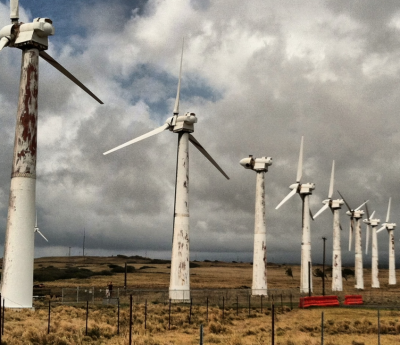
Hawaii rusting turbines

Government Wants Our Land. We Must Fight Back!!!

Why is US Senator Harry Reid so concerned with a local Nevada rancher?

I live in Las Vegas. I live and breath Nevada politics. Something is very wrong. Something smells rotten in the Nevada desert. And Senator Harry Reid’s fingerprints are all over it.

I am of course referring to the Bundy Ranch siege. This was a dispute between a Nevada ranching family with rights to the land in question for 140 years and the BLM (Bureayu of Land Management).

The government claims they haven’t paid grazing fees for 20 years. The result was a government assault on the ranch- including snipers with assault rifles, SUV’s, helicopters, airplanes and over 200 heavily armed troops. No matter whether you come down on the side of the government or the ranch family, I think all of us can agree this was excessive force.

[pullquote]

But forget all that. I believe the more important question is, why is this case so important to United States Senate Majority Leader Harry Reid? And what was his involvement in this controversial assault?

Let’s start with Harry Reid’s obsession with the case. Just on Monday evening heweighed in again, promising, “This isn’t over.”

Doesn’t it strike anyone as strange that the U.S. Senate Majority Leader is so obsessed with a small rancher who hasn’t paid grazing fees? Does New York Senator Chuck Schumer get involved publicly when a New York company is late paying rent to the U.S. government?

Doesn’t the Senate Majority Leader have anything more important to think about?

There are almost 100 million working-age Americans no longer working. More Americans are today on entitlements than working in the private sector. More Americans are on food stamps than the number of women working in America. Iran is building a nuclear bomb. Russian jet fighters are threatening American ships. Yet Harry Reid obsesses about a rancher late on his rent? Something smells fishy folks.

There are other questions raised about Reid’s involvement. Why did this assault become the #1 priority of government only days after a senior political advisor to Nevada Senator Harry Reid took over BLM? Coincidence?

Government appeared completely uninterested in backing down for days on end…and completely unconcerned with instigating a deadly confrontation like Waco or Ruby Ridge. Then suddenly Senator Reid’s involvement was brought up by conservative web sites across the Internet. INSTANTLY, out of the blue, within hours of Reid’s name being attached to the raid, the BLM decided to back down, pack up and walk away. Don’t you think that this timing was a tad too coincidental?

It has been pointed out by journalists intent on covering for Reid that a $5 billion Chinese solar project backed by Reid was recently shelved. But what they forgot to mention is Reid’s involvement in multiple solar and wind projects across the Nevada desert. Only days ago, Senator Reid was featured in a photo at a groundbreaking ceremony for a new solar project. Where is that project located?Just 35 miles from the Bundy ranch in Bunkerville, Nevada.

Senator Reid’s fingers are in virtually every solar and wind project in the Nevada desert. Green energy is his obsession. Green energy is his baby. His vision is turning the Nevada desert into the “Green Energy Capital of America.”

Who benefits from that vision? Democratic donors who run green energy companies. Who stands in the way of that vision- Nevada’s ranchers, farmers and property owners- almost all of whom are diehard Tea Party conservatives and patriots who despise Reid.

Reid and the BLM needed a “cover story” to take the land away from the ranchers. So they claim it’s about protecting the “endangered” desert tortoise.

But if the protection of the desert tortoise was so important to the BLM, why did the same BLM kill hundreds of desert tortoises last fall?

If protecting the tortoises was so important, why has the BLM constantly waived rules protecting the desert tortoise for multiple solar and wind projects? If cattle are a danger to tortoises, why are solar panels and wind turbines not a danger?

There’s much more to this story folks. My educated guess is that someone in the government already has big plans lined up for the Bundy Ranch. Someone is going to make a financial killing with this forceful land grab. Someone powerful in government wants the Bundy family off their land (after 140 years).

What’s good for the goose is good for the gander. It was U.S. Senator Harry Reid who famously made a guess about Mitt Romney’s taxes. He guessed wrong. No one seemed to mind. So now it’s time for all of us to ask questions about Senator Reid’s involvement in this scandal and government land grab. It’s time for the media to investigate.

I’m only guessing…but something smells very rotten in Nevada.

If Wind Projects Go Above Noise Levels Repeatedly, They Should Be SHUT DOWN!

Noise data new weapon in war on windfarms

Credit:  By Iain Ramage | The Press and Journal | 22 June 2015 | ~~

Protesters in the north are warning windfarm operators that some schemes could be shut down for breaching noise limits.

Highland activists are preparing to follow the lead of counterparts in England and Ireland who have collated extensive data they say proves that planning conditions have been flouted at a number of windfarms.

Campaigners in the north believe similar gauging of the industry in Scotland could open the floodgates for legal action against offending operators.

Sound estimates are usually carried out by developers as part of the groundwork for planning applications to give an indication of anticipated noise levels.

But there is currently no obligation to carry out monitoring once a scheme is built — at which stage councils merely respond to individual complaints about noise.

Residents living near a turbine development in Cambridgeshire have compiled what is thought to be the most comprehensive sound history of any UK windfarm.

Monitoring has taken place over two-and-a-half years, using industry-standard recording equipment to reveal what they claim have been regular breaches at the Cottonfarm scheme at Gravely.

Highland campaigners have seen the equipment operate and now plan to instal similar devices in the north. Bev Gray, 71, who worked in renewable energy before retiring, stopped holidaying in Scotland due to the spread of windfarms.

As an adviser to a residents’ group, he claims his local wind scheme – Cotton farm – is “one of the noisiest in the world”, based on data he gleaned by installing a £16,000 machine to measure the decibel output.

Residents there now want the equipment installed at every windfarm, at the owners’ expense, as part of planning conditions.

Mr Gray said: “Developer data is never tested because it’s always taken as being accurate.

“From a month’s worth of monitoring they take a minute’s worth of the lowest noise level to produce a figure.

“It’s part of the smoke and mirrors of an illusion that allows them to build windfarms close to homes.”

The Cotton farm scheme was taken over by a City of London investment group.

Spokesman Tom Rayner said: “Greencoat UK Wind has worked with the local environmental health officer to monitor noise levels and will continue to do so as required.”

Mr Gray said his data had been taken on board by the local authorities in south Cambridgeshire and would allow people to use “accurate information” as a basis for legal action.

“We’re gradually bringing the wind industry to account,” he said.

“At the moment they can do what the hell they like. Nobody can prove them wrong because the authorities aren’t monitoring things.”

Prominent Highland anti-windfarm campaigner Lyndsey Ward, from Beauly near Inverness, has visited Cambridge and Ireland to witness communities’ monitoring of various schemes. She said the move was prompted by plans tabled by ABO Wind for a turbine scheme at Allt Carach, south- west of Beauly.

She said: “The potential devastation on our lives from ABO Wind’s proposed 25-turbine development has forced us to research the noise issue in more depth.

“Our home would have the prevailing wind in direct line from the turbines. This is not just for us, but for others across Scotland.

“Sleep deprivation can lead to more serious illnesses. Why there’s no legislation to compel developers to constantly monitor their operations beggars belief.”

Tom Harrison, project manager with Inverness-based ABO Wind UK, said: “Allt Carach is still under investigation, therefore its planning submission is uncertain. We would always comply with any noise legislation or planning condition set by the relevant planning authority.

“Should a community have concerns over noise, after consultation with that relevant community, a decision as to whether noise monitoring equipment is required would be considered.”

On the plus side: Complaints ‘will be investigated’ and projects get ‘rigorous’ checks

Highland Council said last night it would investigate any complaints about noise levels at turbine developments.

An industry body insisted all projects were subjected to “rigorous” examination at the planning stage. A spokesman for the local authority said: “We seek to ensure that noise levels at a particular house nearby any turbine does not exceed minimum levels.

“Where there is a complaint this is investigated and, if necessary, a resolution sought to any breach of planning condition.”

Joss Blamire, of trade body Scottish Renewables, said: “All wind energy projects in Scotland go through a rigorous planning process that assesses the noise impacts of developments. Only those with acceptable impacts will be consented.”

Huntingdon District Council in Cambridgeshire plans to measure noise levels at Cottonfarm Windfarm after receiving a flood of complaints from residents in surrounding villages. The decision was prompted by evidence recorded by equipment installed by residents.

Locals argue the 413ft tall turbines were built too close to homes.

The sound of the turbines has been likened to that of an aircraft or helicopter in flight.

Wind Turbines Will Destroy the Economic Success of the Countries that have Them…

Germany’s Wind Power Debacle: Economic Destruction on an “Astronomical Scale”

turbine-collapse-germany1

****

STT keeps a close eye on Germany. It’s held up by eco-fascist nut jobs around the globe as the wind power “Super Model” – although, as we pointed out in this recent post, their “pin-up girl” is looking a little worse for wear:

Germany’s Wind Power ‘Dream’ Becomes a Living Nightmare

Last week – with the announcement that South Australians can look forward to skyrocketing power prices with the closure of its cheapest conventional generation source, the Port Augusta power station – we made it pretty clear that wind power is nothing but fantastic nonsense:

SA – Australia’s ‘Wind Power Capital’ – Pays the Highest Power Prices in the World and Wonders Why it’s an Economic Basket Case

South Australians are well down the track to an economic disaster – with its unemployment rate of 7.6% (and rising fast) it’s easily the worst performing State in the Nation, apparently keen as mustard to get whacked with the tag “rust-belt”. Rising power prices are punishing struggling families – 50,000 homes do without power altogether – and a raft of power hungry businesses and industries are shutting up shop for good (see this article).

STT usually wears its optimism on its sleeve, but holds grave fears, not only for South Australia, but for the Country as a whole.

For a taste of what we’re in for – in a cooking show “here’s one we’ve prepared earlier” moment – we’ll cut to Germany for another look at how its ludicrous efforts to rely upon wind power have sent power markets into chaos, and, with electricity prices skyrocketing, has left 800,000 German homes without power. Here’s Germany’s leading renewable energy expert and climate science critic Prof. Fritz Vahrenholt on the unfolding calamity.

Energy Expert Issues Warning On “Carbon-Free Society”: “Destruction On An Astronomical Scale” … “Cost Avalanche”
NoTricksZone
6 June 2015

Germany’s leading renewable energy expert and climate science critic Prof. Fritz Vahrenholt warns of an irrational and panicked rush into renewable energies.

In a penned opinion piece in Germany’s Manager Magazin titled: “Why a Phase Out of Coal Would Be Damaging”, the German professor believes the movement to divest from fossil fuels is seriously misguided and that the move to a completely carbon-free global society would lead to “destruction on an astronomical scale”. He writes:

“In order to produce the same amount of power with wind, we would see a surface area consumption and corresponding destruction of natural habitat on an astronomical scale.”

Fritz Vahrenholt was formerly responsible for the renewable energies arm of European power giant RWE, RWE Innogy GmbH. No one has overseen the installation of as much renewable energy in Europe as Vahrenholt has. In the field of wind energy he is a leading expert. He has since become a leading critic of renewable energy and climate science.

Vahrenholt, a professor of chemistry and former Environment Senator for the City of Hamburg in the SPD socialist party, asks:

“How realistic is it really to produce not only electricity but also heat and fuels for transportation worldwide from China to Brazil over the coming decades without fossil fuels? As before in China a coal power plant goes online every 14 days, and India is well on the way to do the same as its neighbor.”

“Cost avalanche of 1000 billion euros”

Vahrenholt sharply criticizes Germany’s transistion away from coal and nuclear power and over to renewables because of the enormous cost burdens that citzens will have to bear in the years ahead. He writes that German Economics Minister Sigmar Gabriel knows that “if the brakes on renewable are not applied, a cost avalanche of 1000 billion euros is headed our way”.

Uncontrollable supply

And as exorbitant quantities of wind and solar power are added to the power grid, Vahrenholt warns that during windy and sunny periods, large quantities of power will have to be “disposed of” on foreign markets.

“We will have to dispose of the power in foreign countries more often than we do today and even pay money to Austria, Holland, Poland and the Czech Republic to take the power.”

Excess power of course would be ruinous to foreign markets. Vahrenholt reminds that sun and wind energy are fraught with technical problems because they work a minimal part time. Storage technology remains nowhere in sight.

Will have near zero impact

And even if Germany were able to solve the unsolvable technical problems, the CO2 emissions savings that Germany would achieve through a shut-down of its coal power plants would be offset by growth in China in a matter of just 2 months. The result would be no “climate protection” at all and Germans would only be able to boast over a flickering mess of a power supply.

In Vahrenholt’s view, the German green energy model is so costly that “no country in the world is going to follow it”.

Exaggerated science, flawed models

He also calls the climate science “wildly exaggerated” and maintains the climate models have been false:

“There are more and more scientific findings showing that the climate effect by CO2 has been wildly exaggerated by the IPCC. There has not been any significant warming in 16 years even though one third of the historical CO2 emissions occurred in the same time period and the CO2 concentration in the atmosphere is rising year after year.”

Vahrenholt describes the climate models as a joke as they do not even take the long-known ocean and solar cycles into account.

Leaping before looking

He tells us that Germany is rushing unnecessarily into renewable energies and that the natural cycles mean we have lots of time and that we should take that time and do the transition in a sensible manner. He asks:

“Why the frenzied go-it-alone approach that is putting so much at risk? No nation on the planet is going to follow us when they see their own industrial base being destroyed and citizens financially overwhelmed.”

Vahrenholt adds:

“In addition to the destruction of capital, there is also a grand destruction of many thousands of jobs.”

But none of this seems to impress Germany’s green government authorities, who continue to overzealously pursue shutting down fossil fuels and pushing for large-scale installation of an piece-meal energy infrastructure that has been proven to be technically flawed.

Consequences “close to insurmountable”

The German energy folly is already taking its toll, Vahrenholt writes. He claims that the “insidious process of deindustrialization has already begun” in Germany because of skyrocketing energy prices and growing uncertainty.

Consequently Vahrenholt is calling for a “fundamental reform” of the country’s energy policy and a return to a more market-oriented approach. He calls Germany’s famous EEG renewable energy feed-in act an obsolete model that is “bringing no reduction in CO2 emissions” and one that is “eroding Germany as a place for industry” and whose “consequences will be close to insurmountable”.
NoTricksZone

fritz vahrenholt

Wind Turbines Bring Down Value of Surrounding Property~!

Aussies Have Windweasels in Panic Mode!

Wind Farm Senate Inquiry Fallout Continues

atomic-bomb-e1355417893840

****

When the Senate Inquiry into the great wind power fraud kicked off in Portland, Victoria on 30 March, STT predicted that the wind industry was headed for a world of pain, misery and woe (see our post here). Well, not to say we told you so, but things are going from disastrous to catastrophic. Oh dear, how sad, never mind.

To say the wind industry is in a state of panic-filled hysteria is to put it mildly: this week has its parasites and spruikers turning up the dial to apoplectic.

The Senate Inquiry has just issued its Interim Report (available here) – which hasn’t helped calm their thread-bare nerves.

And the shenanigans in Canberra over moves by the Cross-Bench Senators (which includes Senators Madigan, Leyonhjelm, Day and Xenophon who sit on the Inquiry) to extract concessions from the Coalition on a better deal for all Australians – especially those currently affected and/or threatened by the incessant turbine generated low-frequency noise and infrasound – has the usual bunch of Twitter jockeys working over-time, ranting about coal-fuelled conspiracies.

Added to which is fact that two South Australian turbine hosts – who – despite pocketing over $1 million for hosting 19 turbines – gave evidence to the Senate that the “unbearable” noise has ruined their ability to sleep in their own home; so much so that they would never do it again; and that they wouldn’t live within 20km of a wind farm.

That set of damning facts has completely up-ended the rubbish about “nocebo” effects; and all the other drivel pedaled by former tobacco advertising gurus and the like.

While STT had the scoop on that story, it didn’t take long for Australia’s National Daily to pick it up. Over to STT Champion, Graham Lloyd.

Tougher scrutiny on wind farming after crossbench talks
The Australian
Graham Lloyd
18 June 2015

mary-morris

****

Mary Morris, at the Waterloo windfarm north of Adelaide, conducted one of the only studies accepted by the National Health and Medical Research Council.

Wind farms could face greater federal government scrutiny after a last-minute intervention by Tony Abbott ahead of the Senate vote on the revised ­renewable energy target today.

Yesterday, the Prime Minister met four crossbench senators concerned about the cost and possible health impacts of the renewable energy technology.

After the meeting, Environment Minister Greg Hunt was asked to write to senators David Leyonhjelm, John Madigan, Bob Day and Jacqui Lambie setting out the new protections.

A spokesman for Mr Hunt confirmed last night that a letter was being prepared.

The government is hoping a written pledge will avoid amendments to the RET legislation, which is expected to be voted on in the Senate today.

The crossbench senators have raised concerns about a range of issues regarding wind-farm developments and the fact that the revised RET will strongly favour wind.

Mr Abbott has said the reduced RET was designed to limit the number of wind farms built.

A Senate inquiry into wind farms will today release an inte­rim report into its hearings, which have taken evidence from the wind industry, acoustics experts and residents who claim to have been affected.

The wind industry maintains claims that the technology is inefficient or poten­tially harmful to nearby residents have been thoroughly investigated and discounted. But one farm couple who has been paid $1 million to host 19 wind turbines over five years told the Senate inquiry that the noise had been unbearable.

South Australian cattle grazier Clive Gare told a hearing in Adelaide he was initially excited about hosting renewable energy, but now believed “towers should not be any closer than 5km to a dwelling”.

“If we had to buy another property it would not be within a 20km distance to a wind farm. I think that says it all,” Mr Gare said.

The wind industry has said complaints about noise impacts had not been made by people who received lucrative contracts to host them. Wind farm company AGL has paid thousands to insulate the Gare property from the noise of the wind turbines, which are as close as 800m from the house, but Mr Gare and his wife, Trina, told the inquiry they were still impacted.

Mary Morris, who conducted one of the only studies accepted by the National Health and Medical Research Council, said she would welcome any undertakings by the federal government to increase supervision.

Ms Morris became involved in the wind farms initially to support people who claimed to be affected by the Waterloo wind farm in South Australia.

In a speech to the Senate on the federal government’s compromise RET bill, Senator Leyonhjelm said the revised RET would be “no more than a wind industry support fund”.

Jacqui Lambie received support from Coalition senators for a speech in which she criticised reliance on renewable energy.

“Apart from hydro, the only way to de-carbonise energy is to move very quickly to nuclear,” she said. “And it’s about time we move to that option.”
The Australian

graham-lloyd

Frauds, Crooks and Criminals

Demonstrating daily that diversity is not strength!

Family Hype

All Things Related To The Family

DeFrock

defrock.org's principal concern is the environmental and human damage of industrial wind turbines on rural communities

Gerold's Blog

The truth shall set you free but first it will make you miserable

Politisite

Breaking Political News, Election Results, Commentary and Analysis

Canadian Common Sense

Canadian Common Sense - A Unique Perspective from Grassroots Canadians

Falmouth's Firetower Wind

a wind energy debacle

The Law is my Oyster

The Law and its Place in Society

Illinois Leaks

Edgar County Watchdogs

stubbornlyme.

My thoughts...my life...my own way.

Oppose! Swanton Wind

Proposed Wind Project on Rocky Ridge

Climate Audit

by Steve McIntyre

4TimesAYear's Blog

Trying to stop climate change is like trying to stop the seasons from changing. We don't control the climate; IT controls US.

Wolsten

Wandering Words

Patti Kellar

WIND WARRIOR

John Coleman's Blog

Global Warming/Climate Change is not a problem