Windscam….Just a matter of Time, Before it Implodes….Which Country Gets Smart First?

Greg Hunt Delivers Coalition’s Political Suicide Manifesto: Liberals Lock-In $46 Billion Power Tax as Wind Industry Rescue Package

hunt macfarlane

****

The wind industry in Australia is doomed.

Australia’s commercial lending institutions know it (calling in their loans and refusing to lend for any new wind farms). And the wind industry knows it – hence the big players’ frantic efforts to ditch their wind farms, cut and run – although these fire sales are as much a product of their bankers’ refusal to extend credit (see our post here).

The big power retailers know it (see our post here).

And, from the panic exhibited in Canberra, every Federal MP knows it too (see our post here).

However, in an effort to Keep Up Appearances, wind industry front man, young Gregory Hunt delivered a speech last week that not only defies reality, it almost defies measured description (we’ll do our best in a moment).

WARNING: The speech comes with a public health warning: readers gifted with a modicum of knowledge of Australia’s energy market and/or commonsense are likely to experience sensations such as skin crawling; skin rashes; high blood pressure; and nausea.

These sensations will not arise by reason of some “nocebo” effect: the greater the reader’s understanding of the debacle that is the Large-Scale Renewable Energy Target and the great wind power fraud, the more severe these effects will be. Accordingly, we suggest securing a suitably sized bucket, clean towels and some iced water before passing this point. You have been WARNED.

COMMONWEALTH OF AUSTRALIA
House of Representatives
Hansard
WEDNESDAY, 27 MAY 2015

Renewable Energy (Electricity) Amendment Bill 2015

First Reading

Bill—by leave—and explanatory memorandum presented by Mr Hunt.

Bill read a first time.

Second Reading

Mr HUNT (Flinders—Minister for the Environment) (09:12): I move:

That this bill be now read a second time.

The Renewable Energy (Electricity) Amendment Bill 2015 will implement changes to the Renewable Energy Target to better reflect market conditions and allow sustainable growth in both small- and large-scale renewable energy.

The bill will lead to more than 23½ per cent of Australia’s electricity being sourced from renewable energy by 2020—not 20 per cent but 23½ per cent.

It also addresses problems which emerged more than three years ago with the Renewable Energy Target. Despite the presence of the 41,000 gigawatt-hour target, it was unlikely that it would be met.

First, there was a significant drop in electricity demand which occurred following the global financial crisis and it coincided with the closure of energy-intensive manufacturing plants. Together, they played havoc with wholesale electricity prices.

This was compounded by rising retail electricity costs associated with the carbon tax, network charges and feed-in tariffs resulting in households and industry changing their consumption patterns.

Second, the changes to the Renewable Energy Target introduced by the Rudd government and the subsequent creation of the phantom credit bank of what is currently 23 million certificates is still being felt today. This overhang continues to suppress demand for renewable energy certificates and stymie the signing of power purchase agreements.

These combined to make it increasingly difficult for renewable energy projects to attract finance.

Added to this, the increasing realisation that new subsidised capacity was being forced into an oversupplied electricity market made it likely that financial institutions would be approaching the new investments in the renewable energy space with significant caution and reluctance.

It is in this context that we have sought to place the Renewable Energy Target on a sustainable footing and to overcome the legacy of the problems created by the phantom credit scandal.

So this then brings me to the fact that the Renewable Energy (Electricity) Amendment Bill 2015 amends the Renewable Energy (Electricity) Act 2000 to:

adjust the large-scale renewable energy target (LRET) to 33,000 gigawatt hours in 2020. This will reflect a commitment to achieve approximately 23½ per cent of electricity from all renewable sources by 2020;

increase the partial exemptions for all emissions-intensive trade-exposed activities to full exemptions. This will be of particular importance to trade-exposed industries throughout the country, as recognised by the opposition and as in particular has been championed by many members such as the members for Bass, Braddon, Lyons, Wannon and Corangamite;

reinstate biomass from native forest wood waste as an eligible source of renewable energy; and

remove the requirement for Labor’s legislated biennial reviews of the RET.

These changes will ensure that there is continued support for sustainable growth in the large scale renewable sector. And, the 33,000 target, I repeat, is higher in its ultimate effect than the originally conceived objective of 20 per cent, which was the purpose, the intended outcome and the stated objective of the original legislation.

There will be no changes to the Small-scale Renewable Energy Scheme. The scheme will continue in line with household and small business demand.

The removal of Labor’s phantom credit scheme federally and the rationalization of feed-in-tariffs at the state level have reduced many of the distortions outlined in this week’s Grattan Institute report. I am delighted that this bill is proceeding in a bipartisan fashion.

Key features of the revised Renewable Energy Target

The Large Scale Renewable Energy Target

This then leads me to the fact that the bill will adjust the large-scale renewable energy target, or LRET, to reflect the 23½ per cent target. We will therefore adjust the LRET from 41,000 gigawatt hours in 2020 to 33,000 gigawatt hours in 2020. It will adjust the profile of annual renewable generation targets from 2016 to 2030 so that the target reaches 33,000 gigawatts in 2020 and is maintained at 33,000 gigawatt hours per annum from 2021 to 2030. This target is separate to the 850 gigawatt hours that is to come from waste coalmine gas generation each year until 2020 under pre-existing transitional arrangements previously agreed between the parties.

As highlighted in our energy white paper released by the Minister for Industry, Australia has an over-supply of generation capacity and some of that is aged. From 2009-10 to 2013-14, electricity demand has fallen by approximately 1.7 per cent per year on average.

This is due to many factors: sadly, declining activity in the industrial sector; increasing energy efficiency, which is a positive for Australia; and strong growth in rooftop solar PV systems, which is also a benefit for Australia, which does, however, reduce demand for electricity sourced from the grid.

While the Government welcomes a diverse energy mix in Australia, it also recognises that circumstances have changed since the original target of 41,000 gigawatt hours was set in order to achieve what had been hoped would be a 20 per cent outcome.

This new target of 33,000 gigawatt hours directly addresses these issues and gives the industry an opportunity to grow. It represents a sound balance between the need to continue to diversify Australia’s portfolio of electricity generation assets, the need to encourage investment in renewables while also responding to market conditions, the need to reduce emissions in the electricity sector in a cost-effective way, and the need to keep electricity prices down for consumers.

Most importantly, this new target of 33,000 gigawatt hours by 2020 is achievable. It will require in the order of six gigawatts of new renewable electricity generation capacity to be installed between now and 2020.

Even at the adjusted level of 33,000 gigawatt hours, the renewable sector will have to build as much new capacity, on the advice that I have, in the next five years as it has built in the previous fifteen. This will not be an easy task, but, on all the advice we have, it is achievable and therefore real construction will occur.

This new target will therefore be good for jobs in the renewable energy sector and, as I have said, lift the proportion of Australia’s electricity generation to approximately 23½ per cent by 2020.

Assistance to emissions-intensive trade-exposed industries

When the RET scheme was expanded in 2010, partial exemptions were introduced for electricity used in emissions-intensive trade-exposed activities. These were hard-fought and negotiated by the coalition. The exemptions only apply to the additional RET costs that were incurred as a result of the expansion of the scheme.

The RET scheme regulations currently prescribe that electricity used in activities defined as highly emissions intensive and trade exposed is exempted at a 90 per cent rate, and electricity used in activities defined as moderately emissions intensive and trade exposed is exempted at a 60 per cent rate.

This bill will increase support for all emissions-intensive trade-exposed activities to full exemptions from all RET costs—that is, from the costs of the original target as well as the costs of the expanded target. A full exemption will protect jobs in these industries and ensure they remain competitive. This has been of particular concern, as I mentioned earlier, to the members for Bass, Braddon, Lyons, Wannon and Corangamite—each of whom has played an extremely important role in securing this agreement between the parties.

The reduction in the direct costs of the RET resulting from the lower large-scale renewable energy target will more than offset the impact on other electricity users of the increase in assistance for emissions-intensive trade-exposed activities.

Reinstating biomass from native forest wood waste as an eligible source of renewable energy Native forest wood waste was in place as an eligible source of renewable energy under Labor’s own legislation until November 2011.

The use of such native forest wood waste for the sole or primary purpose of generating renewable electricity has never been eligible to create certificates under the scheme. Eligibility was subject to several conditions, including that it must be harvested primarily for a purpose other than energy production. This is about the use of wood waste; it is not about cutting down biomass to burn.

Consistent with our election commitment, as was set out in our forestry policy on the first page and further within the policy, this bill reinstates native forest wood waste as an eligible source of renewable energy under the RET, basing eligibility on exactly the same conditions—precisely the same conditions—as were previously in place under the ALP when they were in government.

One of the objectives of the RET is to support additional renewable generation that is ecologically sustainable. We are reinstating, therefore, the provision allowing native forest wood waste as an eligible renewable energy source, because there is no evidence that its eligibility leads to unsustainable practices or has a negative impact on Australia’s biodiversity. This was the experience of the 10 years during which this provision was in place.

We believe that the safeguards that were in place previously were, and are still, sufficient assurance that native forest wood waste is harvested and used in a sustainable way. The regulations were underpinned by ecologically sustainable forest management principles which provide a means for balancing the economic, social and environmental outcomes from publicly owned forests.

In all cases, the supply of such wood waste is subject to the Commonwealth and state or territory planning and environmental approval processes, either within, or separate to, the regional forest agreement frameworks.

Using wood waste for generation is more beneficial to the environment than burning the waste alone on the forest floor or simply allowing it to decompose and to produce methane—a greenhouse gas with very high global warming potential. Its inclusion as an eligible energy source is another contribution to the target.

We understand that regular reviews of policy settings create uncertainty for investors, business and consumers. That is why this bill removes the requirement for two-yearly reviews of the RET. Providing policy certainty is crucial to attracting investment, protecting jobs, and encouraging economic growth.

Protecting electricity consumers, particularly households, from any extra costs related to the RET, has been a priority from the start and the government understands that the 33,000 gigawatt-hour target remains a challenge for industry.

For these reasons, instead of the reviews, the Clean Energy Regulator will prepare an annual statement on the progress of the RET scheme towards meeting the new targets and the impact it is having on household electricity bills.

Again, this bill is about appropriately balancing different priorities; replacing the biennial reviews with regular status updates better meets the needs of industry and the needs of consumers, and any concerns within the parliament. It is about increased transparency at the same time as increased certainty.

Importantly, both the government and the opposition have agreed to work cooperatively on a bipartisan basis to resolve any issues which may arise with the operation of the Renewable Energy Target through to 2020. Against that background I do wish to thank many people, beginning with the opposition. We have negotiated in good faith with Mark Butler, Gary Gray and Chris Bowen. I particularly thank my opposite, the shadow minister for the environment, Mark Butler, and his staff for their work. These negotiations can be difficult but I believe both sides conducted an honourable process, and this was an example of the parliament operating as a parliament for an outcome which will be, ultimately, beneficial to Australia. So I acknowledge and appreciate the work of my colleagues on the opposite side of the chamber.

I want to thank my colleagues, in particular: Ian Macfarlane, whose knowledge of the electricity is peerless, not just within the parliament but arguably almost anywhere within Australia; the Prime Minister who, himself, proposed the compromise and suggested the notion of the Clear Energy Regulator providing the annual outdates—it was an important breakthrough and step forward and he engaged deeply in this process and was always seeking a balanced outcome; as I have mentioned, my colleagues Dan Tehan, Sarah Henderson, Eric Hutchinson, Andrew Nikolic and Brett Whiteley; and Angus Taylor, whose knowledge of the electricity sector and whose concerns for his electors were absolutely vital in helping us to achieve this outcome. He is a very informed individual and the parliament benefits from having another Rhodes Scholar enter this chamber.

From within the Department of the Environment, David Parker and Brad Archer played a critical role throughout the review process. I thank Lyndall Hoitink and John Jende—whose knowledge of the Renewable Energy Act and the implications are extraordinary. Mark Scott, Candice El-Asmar, Kieran McCormack and Peter Nicholas all played critical roles.

From the Clean Energy Regulator I thank Chloe Monroe, who performed an extraordinary role in executing the first Emissions Reduction Fund auction and also provided invaluable advice. She and her team are outstanding policy professionals. Although appointed by a previous government, we have proudly and happily continued her role. As far as I am concerned, she is invited to stay in the job for as long as she wishes to do it. She is really one of the great public servants in Australia. Similarly, she is supported by people such as Mark Williamson and Amar Rathore, both of whom have done a great job.

At the Office of Parliamentary Counsel I thank Iain McMillan and his staff. From others who have contributed significantly there is Jessi Foran from Ian Macfarlane’s office. From within industry Miles George, as chair of the Clean Energy Council, and Kane Thornton, CEO of the Clean Energy Council, were indefatigable and fundamental in pressing the concerns and needs of their sector. This deal would not have been achieved without their work, and I honour and acknowledge it.

Similarly, Miles Prosser, from the Aluminium Council; Innes Willox, from the Australian Industry Group; and Kate Carnell and John Osborn, from the Australian Chamber of Commerce and Industry, all played critical roles in helping to bring us to this point.

Finally, I want to acknowledge two people from my office: my chief of staff, Wendy Black, whose counsel and guidance on every topic is really outstanding; and Patrick Gibbons, who is my senior adviser and whose knowledge of the electricity sector is surpassed only by that of Ian Macfarlane, who has spent hundreds and hundreds of hours helping to bridge the gaps between different parties. Again, this would not have been possible without him.

To all of those parties I say thank you. Let me conclude by saying this: this bill is consistent with the government’s conviction that policy decisions must be based on sound economic principles and real-world experience. It also represents the government’s commitment to maintain stable and predictable settings that encourage growth, encourage competitiveness, encourage efficiency and that produce better outcomes for electricity consumers.

The RET had to be reformed in response to changing circumstances. This bill achieves balanced reform. It will provide certainty to industry, encourage further investment in renewable energy and better reflect market conditions. It will also help Australia reach its emissions targets, and it will protect jobs and consumer interests.

As the energy white paper points out, Australia has world-class solar, wind and geothermal resources, and very good potential across a range of other renewable energy sources. In addition to the support for small- and large-scale renewables, which this bill provides, the government is providing over $1 billion towards the research, development and demonstration of renewable energy projects.

This bill recognises that renewable energy is an important part of Australia’s future, while also recognising that its deployment must be supported in a responsible way with minimal disruption to our energy markets. I thank all of those involved in reaching this point. I am delighted that we have achieved a sensible balance which will allow the industry to grow to 23½ per cent of Australia’s total energy production by 2020.

I commend the bill to the House.

Debate adjourned.

Hansard, 27 May 2015

Where to begin?

Before we do, please note, we cannot rule out the possibility that the speech was in fact written in its entirety by the lunatics from the Greens. It is so far to the hard-green-left that it is unrecognisable as a statement purportedly emanating from a so-called Conservative government.

Stomach churning content aside, perhaps we’ll start with a take on young Gregory’s “style” and “themes”.

miss world

****

The gushing delivery reminds STT of the gorgeous Venezuelan gal who bags the Miss World title and who, on cue, reacts with welled-upped eyes, and hands-to-face (faux) surprise.

Brushing away an alloy of tears and top-quality mascara, the winner hits us with her suitably ambitious manifesto. Starting with her wish list of an end to hunger; world peace; an end to disease and so on, the soon-to-be Hollywood starlet thanks all those that got her to the winner’s podium, from her personal trainer, her publicist, right down to her hairdresser.

Of course, young Greg’s speech didn’t go so far. However, as to plausible realisation, Greg’s manifesto is on precisely the same footing.

No-one in their right mind expects Miss World to follow through on her promise to save the world from hunger and disease etc.

Likewise, there is absolutely no way that Greg’s ultimate annual 33,000 GWh LRET will be satisfied by the “due date” of 2020, or at all.

Greg knows it; and so does everybody on his seemingly endless thank you list.

For those new to this site, STT is all about smacking people with the reality that wind power is meaningless as a power source, because it can only ever be delivered at crazy, random intervals. In the absence of mandated fines on retailers and/or whopping subsidies to wind power outfits, the wind industry simply would not exist. The claim that wind power is “clean” and “green” is nothing more than a cynical marketing ploy; and a cruel hoax played on the gullible and naïve.

The politicians who support wind power have simply devoured the lies and myths spouted by the wind industry and fall into 2 camps:

  1. those who are simply “pig” ignorant; or
  1. little piggies with their trotters in the wind scam trough

Most of the line up on Greg’s “thank you list” have been in the game long enough to know precisely what’s going on, which tends to rule out their inclusion in the first category above.

The inclusion of energy market lightweights, and economic illiterates, from the ranks of the Coalition – such as Disappointing Dan Tehan, Sarah Henderson, Eric Hutchison, Andrew Nikolic and Brett Whiteley is no surprise (none of them have the foggiest clue about the cost or operation of the LRET, the impact of Power Purchase Agreements on retail power prices, dispatch prices, grid stability etc, etc).

Dimwits in politics are a dime-a-dozen; and this won’t be the first time that elected representatives chimed in with support for a policy that they haven’t got the faintest understanding of.

And glad to see young Greg outing all those who STT readers have always placed in the second category above:

The wind industry’s plants and stooges within Hunt and Macfarlane’s offices, like Patrick Gibbons (who’s best mates with Vesta’s former front man, Ken McAlpine). As well as wind industry shills like Chloe Monroe (and her gang from the CER).

And the boys from the so-called Clean Energy Council, Miles George (who conveniently heads up Infigen – cutting down on lobbying time and costs) and head wind industry spin-master, Kane Thornton. Reports that Kane slept on a camp stretcher in Greg Hunt’s office during the weeks of negotiations cannot be confirmed.

What can be confirmed is that the Clean Energy Regulator (a statutory authority paid for entirely by taxpayers) has been shovelling tens of thousands of dollars into the coffers of the Clean Energy Council (a lobbying outfit set up – and meant to be fully paid for – by wind power outfits). During Senate estimates last week, Chloe Monroe conceded that the CER and the CEC are singing from precisely the same hymn sheet; and that the CER is stumping up taxpayers’ cash to help them do so:

Ms Munro: There was one question that we just took on notice which I think I can now answer. It was about the cost of our subscription to the Clean Energy Council and our membership there. For the current financial year it is $14,520. I might just mention that we regard that as an important membership to have because of the very significant role the Clean Energy Council plays in disseminating information to its membership which assists with the overall regulatory performance of the industry. Also, as a member, we do not exercise our right to vote, for example, so we do not play any part in the decision making of the Clean Energy Council, for example, in the recent elections for the chair of the council. We would not take any part in that. We are very much at arm’s length from that.

Hmmm … unfortunately for Chloe, her efforts to distance herself from the tens of $thousands thrown by the CER at the wind industry’s spin-masters, fell flat with her special mention in Greg Hunt’s thank you list, right next to Miles George and Kane Thornton.

While the shills from the CER, CEC, Infigen & Co were obvious among those Hunt was bound to thank (although, as their very existence depends on Hunt’s efforts to save the LRET, they should all be thanking him) the inclusion of the PM, Tony Abbott and Angus “the Enforcer” Taylor on Hunt’s little list is a bridge way too far.

Angus Taylor

****

STT hears that Angus Taylor is close to furious about the manner in which Hunt and Macfarlane double-crossed their party on the terms of the LRET deal with Labor – and he’s not alone – STT hears that the PM is less than amused, too.

Leading up to the deal, both Hunt and Macfarlane were under strict instructions to maintain the provision in the Renewable Energy (Electricity) Act 2000 (section 162) that provides that reviews of the mandatory RET must take place every two years; taking into account the cost and benefits of any recommendation made, as part of the review.

Their colleagues, from the PM down, understood that the retention of two yearly reviews was a ‘deal breaker’. However, as evidenced in Hunt’s political suicide manifesto above, Hunt and Macfarlane ‘caved in’ (under the slightest ‘pressure’ from their wind industry mates); much to the disgust and horror of the majority of their party colleagues.

The two yearly reviews were understood by all those in the Coalition giving licence to Hunt and Macfarlane to cut a deal with Labor, to be a critical mechanism available to pull a halt to the runaway costs of the LRET, in general; and the ludicrous costs of wind power, in particular.

The review process was set up to allow the government of the day to act on recommendations; such as scrapping the LRET in its entirety; or to deny RECs to wind power outfits, simply because the demonstrated and extraordinary costs of wind power (the key beneficiary of the LRET) completely outweighs any of its purported benefits.

STT fully expects Angus Taylor (among others) to set the cat amongst the pigeons this week, by challenging Hunt and Macfarlane on their backdoor deal to drop the two yearly reviews, at the wind industry’s behest, among other things.

Double-dealing aside, there’s also the small matter of substance. The Coalition (the combination of the Liberals and the Nationals) is purportedly made up of conservative, pro-business, small government types. Their core constituency will be less than impressed to learn that Hunt and those on his “thank you list” have set them up with a $46 billion electricity tax: half of which will be directed to wind power outfits – like near-bankrupt Infigen (aka Babcock and Brown); with the balance being recovered as a $65 per MWh fine (aka “the shortfall charge”) – and directed to general revenue (ie a ‘stealth tax’):

Out to Save their Wind Industry Mates, Macfarlane & Hunt Lock-in $46 billion LRET Retail Power Tax

Hunt, Macfarlane and the CER have given a “guarantee” to the PM that wind power outfits will easily build the capacity needed to generate the extra 17,000 GWh required to satisfy the ultimate annual 33,000 GWh target (thus avoiding the politically toxic penalty set under the LRET). However, that little “promise” is, again, more like Miss World’s promise to achieve world peace: something that everyone with a hint of common sense considers as pure nonsense.

The other furphy being pitched by Hunt, Macca and the CER is that – provided the shortfall charge is avoided – the LRET carries absolutely no cost to power consumers at all (see the post above). However, if that were the case, why was Greg so pleased to announce that Energy Intensive Industries will be exempt from “all RET costs”?

So which is it Greg? Is the LRET a family and small business ‘friendly’, that’s as cheap as chips and a guaranteed vote winner? Or is the effort to protect the Aluminium sector etc a dead-set giveaway, that – at $3 billion a year – the LRET is the largest, single electricity tax ever cooked up?

It’s going to Penalty

STT hears that the finance sector has absolutely no intention of providing any money to build new wind power capacity. The expectation is that RECs will, in the longer term, trade in the order of $30, at which price wind power outfits will not break even, placing lenders at enormous and perfectly avoidable RISK (see our post here).

STT hears that the major retailers are of the same view.

Greg Hunt talks about “the phantom credit bank of what is currently 23 million [REC] certificates” – what’s called the “overhang”.

Retailers, such as Origin, hold the bulk of those certificates and will be able to use them to avoid the shortfall charge, until they run out. That means that there is no need for them to enter long-term Power Purchase Agreements with wind power outfits to obtain RECs, for some time. One scenario involves those holding RECs simply hanging on to them until the penalty set by the LRET kicks in, such that they can cash them in at prices over $90 (many were purchased at $20 or less).

STT also hears that the major retailers have no interest in wind power at all: remember, that commercial retailers have not entered PPAs with wind power outfits since November 2012.

output vs demand

****

As we’ve pointed out (just once or twice) wind power can only ever be delivered at crazy, random intervals (if at all); and is usually generated late at night, or very early in the morning, when there is little demand for power. The only reason retailers sign up to purchase wind power, is to obtain the RECs that come with the deal – power that can never be delivered on demand, is of no commercial value, otherwise.

Solar power, on the other hand, is available almost every day during daylight hours and is, therefore, capable of satisfying demand, as it rises during the daytime.

STT hears that the big retailers are planning to wait until they look like exhausting the pile of RECs that they’re sitting on at present, at which point they’ll build some large-scale solar power facilities, in order to obtain the RECs needed to avoid the shortfall charge.

The retailers still believe that the politics of the LRET are inherently toxic; which will lead to its inevitable implosion (hence the belief that REC’s will end up at less than $30). By investing in a few solar panels, these boys will avoid the impact of the LRET penalty, in the short term. And, once the LRET implodes, they will be able to sell those panels for re-use by householders in domestic situations.

And the implosion of the LRET is as inevitable as death and taxes.

So, if you run into young Gregory, be the first to congratulate him on his speech.

It’ll be the one that comes back to bite him and his team as the LRET disaster unfolds; power prices go through the roof; and householders and businesses realise that a government that they elected on a promise to scrap the Labor/Green Alliance’s business and economy destroying – and family punishing – “carbon” tax, set them up to pay for the most ridiculously generous corporate welfare scheme in the history of the Commonwealth. And all because Hunt and Macfarlane’s wind industry mates wanted it that way.

dumb 3

Sanity returning to the UK! Are our politicians smart enough to follow their lead?

New curbs can block ‘health risk’ wind farms

Government grants new powers for critics to stop the building of turbines.

  • Critics of huge wind farms have been handed power to block developments
  • Energy Secretary Amber Rudd has promised to strip her department of its power to force through large wind-farm projects against local opposition
  • Move comes amid new health warnings for those living close to turbines

 Energy Secretary Amber Rudd promised to strip her department of its power to force through wind-farms against local opposition. The move comes amid new health warnings for those living near turbines.

By Glen Owen and Brendan Carlin for The Mail on Sunday

Critics of huge wind farms received a boost last night after the Government gave them new powers to block the developments.

The move, by Energy Secretary Amber Rudd, comes amid new health warnings for those living close to turbines.

Ms Rudd has promised to strip her department of its power to force through large wind-farm projects against local opposition.

She is also expected to crack down on Government subsidies for the onshore farms.

Under current rules, the Energy Secretary can have the final say on giant wind farms of 50 megawatts and over.

But Ms Rudd will today pledge to lay down that power. It means farms will in future be treated in the same way as a planning application for a home extension – a matter to be decided purely by the local council.

The action was backed by anti-wind-farm campaigner Tory MP Chris Heaton-Harris, who has presented Ministers with a report warning that sleep deprivation, migraines and hearing problems could be just some of the effects of living within a mile of a wind farm.

This Is A Good Start, But World-Wide Reforms Needed!

Robson: Good winds blowing

Credit:  By Frank Robson, Guest Columnist | The Journal Record | May 29, 2015 | journalrecord.com ~~

I applaud the Oklahoma Legislature and Gov. Mary Fallin for implementing much-needed reform of the wind industry, addressing both excessive subsidies and lack of regulation for protection of property owners. The progress made this year is important in establishing a regulatory framework. Yet there is still work to do.

Senate Bill 808 by state Sen. Brian Bingman, R-Sapulpa, and Rep. Earl Sears, R-Bartlesville, signed by Fallin on April 17, established a 1.5-nautical-mile setback of wind turbines from schools, airports and hospitals and provides a stronger decommissioning statute that protects landowners and taxpayers from being financially responsible for taking down turbines at the end of their life. The legislation also requires notification to landowners at least six months before construction begins.

The new law doesn’t take into consideration protection of wind turbines from homes, neighborhoods, public parks and other land where natural habitat may be disturbed. We hope the Legislature will consider the need for further requirements that address reasonable restrictions on the placement of wind turbines near other areas of public safety concern.

Senate Bill 498 by state Sen. Mike Mazzei, R-Tulsa, and Sears, signed May 20, repeals the ability of the wind industry to qualify for a five-year property tax exemption. This provides a good start in addressing the magnitude of industrial wind’s subsidies and negative impact on Oklahoma’s budget.

Senate Bill 502 by state Sen. Marty Quinn, R-Claremore, and Sears, signed May 20, repeals the ability of the wind industry to qualify for the new jobs investment tax credit effective Jan. 1, 2017. This eliminates an unnecessary and potentially costly subsidy for an industry that creates few jobs here.

Wind developers may still qualify for zero-emission tax credits, which amount to $5 per megawatt-hour for all electricity produced from industrial wind facilities for 10 years. The current law saddles Oklahoma taxpayers with this burden for all wind facilities built prior to Jan. 1, 2021. Payment of subsidies under this program may extend until Dec. 31, 2030.

We look forward to continued forthright discussions with state leadership regarding the need for further safety regulations, and the need to evaluate the legitimacy of the remaining subsidies available to industrial wind. Let’s continue to make progress for the betterment of Oklahoma.

Frank Robson is a member of the Oklahoma Property Rights Association.

More Reasons To Stop the Wind Turbines!

Wind Turbine Noise Causes Greater Prairie Chicken Run

chicken run

****

Ardman Animation’s Chicken Run is a rollicking remake of WWII POW breakout favourite, The Great Escape. The tale takes place in the ‘Stalag’ of Tweedy’s Farm – minus the machine gun towers and jackboots – and comes with a feathery twist; and from a feminist perspective.

Ginger, along with her band of intrepid inmates – and a little swashbuckling help from her beau, Rocky the Rhode Island Red, plots an early exit to avoid Mrs Tweedy’s dreaded pie-maker.

In their efforts to avoid a date with a dismal destiny (and gallons of gravy) the hens crack on and build an improbable flying contraption, designed to vault the barbed wire and spirit them to freedom.

All hopes are pinned on Fowler – an ageing rooster with military pretensions, who tuts, struts and sounds every bit the RAF officer he claims to be. But when the time comes to fly the coop, Fowler’s anticipated prowess as pilot is found wanting:

Ginger: But you’re supposed to be up there – you’re the pilot.

Fowler: Don’t be ridiculous. I can’t fly this contraption.

Ginger: Back in your day? The Royal Air Force?

Fowler: 644 Squadron, Poultry Division – we were the mascots.

Ginger: You mean you never actually *flew* the plane?

Fowler: Good heavens, no! I’m a chicken! The Royal Air Force doesn’t let chickens behind the controls of a complex aircraft.

Needless to say, the ladies’ pluck, dash and derring-do prevails on Fowler, who faster that you can say “tally-ho, chocks away”, has the clumsy-craft airborne, on its way to exodus, and all on-board flying like poultry in motion.

chicken run plane

****

Now, to another story of chickens out to escape their tormentors – not malevolent manufacturers with automated pie-machines – this time it’s Greater Prairie Chickens fleeing the sonic torture of giant fans speared into the hills of Kansas.

Vulnerable grassland birds abandon mating sites near wind turbines
environmentalresearchweb
May 7, 2015

Shifting to renewable energy sources has been widely touted as one of the best ways to fight climate change, but even renewable energy can have a downside, as in the case of wind turbines’ effects on bird populations.

In a new paper in The Condor: Ornithological Applications, a group of researchers demonstrate the impact that one wind energy development in Kansas has had on Greater Prairie-Chickens (Tympanuchus cupido) breeding in the area.

Virginia Winder of Benedictine College, Andrew Gregory of Bowling Green State University, Lance McNew of Montana State University, and Brett Sandercock of Kansas State University monitored prairie-chicken leks, or mating sites, before and after turbine construction and found that leks within eight kilometers of turbines were more likely to be abandoned.

Leks are sites at which male prairie-chickens gather each spring to perform mating displays and attract females. The researchers visited 23 leks during the five-year study to observe how many male birds were present and to record the body mass of trapped males.

After wind turbine construction, they found an increased rate of lek abandonment at sites within eight kilometers of the turbines as well as a slight decrease in male body mass. Lek abandonment was also more likely at sites where there were seven or fewer males and at sites located in agricultural fields instead of natural grasslands.

This paper is the latest in a series of studies on the effects of wind energy development on prairie-chickens. “To me, what is most interesting about our results is that we are now able to start putting different pieces of our larger project together to better understand the response of Greater Prairie-Chickens to wind energy development at our field site,” says study co-author Virginia Winder. “We have found that both male and female prairie-chickens have negative behavioral responses to wind energy development.

The data we collected to monitor this response have also allowed us new insights into the ecology of this species. For example, lek persistence at our study site depended not only on distance to turbine, but also male numbers and habitat.”

The findings of this study reinforce the U.S. Fish and Wildlife Service recommendation that no new wind energy development should be done within an eight-kilometer buffer around active lek sites. “It is critical to have rigorous evaluations of direct and indirect effects of wind energy facilities on species such as prairie-chickens,” according to grassland wildlife management expert Larkin Powell, who was not involved with the research. “The potential for trade-offs between renewable energy and wildlife populations on the landscape is one of the key questions of our day.”
environmentalresearchweb

The full paper is available here:http://www.aoucospubs.org/doi/full/10.1650/CONDOR-14-98.1

turbines giant

****

Sure, it’s possible that these plucky little Kansan ground dwellers aren’t happy with the impact on the aesthetics of their neighbourhood, from hundreds of whirling wonders towering over 160m in height.

However, the fact that these birds have voted with their feet – abandoning their nesting sites within 8 km of the turbines – and, after 5 years, still refuse to return to them – suggests that their distaste isn’t driven by disdain for the hideous look of these things.

That birds – unused to communicating in English – should take flight in order to avoid the daily torment thrown up by these things suggests forces at work way beyond the wind industry’s favoured “nocebo” defence.

The Prairie Chicken’s self-imposed 8 km turbine exclusion zone has an eerily familiar ring to it. It’s the same sort of distance from turbines that has humans – living within that range – troubled by incessant infrasound invading their homes, causing sleep disturbance and otherwise annoying the hell out of them (unless they too, like the Prairie Chickens of Kansas, haven’t already left their homes for good).

At Waterloo in South Australia, Professor Colin Hansen and his team from Adelaide University found turbine generated low-frequency noise and infrasound annoying families in homes out to 8.7 km from turbines:

“Unscheduled” Wind Farm Shut-Down Shows Low-Frequency Noise Impact at Waterloo, SA

While it could be that Greater Prairie Chickens have cut and run from wind turbines because they’re “climate denying, anti-wind, wing-nuts”; or that they’re part of a BIG COAL backed conspiracy, the more plausible explanation is that these feathered little fellas just can’t stand incessant turbine generated low-frequency noise and infrasound.

No doubt the wind industry, its parasites and spruikers will invent some tale in an effort to explain the great Prairie Chicken Run. In the meantime, wherever fans get speared, it’s every chicken for themselves.

Greater_Prairie-Chickens

The Greed Energy Scam is Crippling Germany!

German Government In Crisis Over Escalating Cost Of Climate Policy

European Power Plants Face Widespread Bankruptcies

An aerial view shows Vattenfall's Jaenschwalde brown coal power station near Cottbus, eastern Germany August 8, 2010. Photo: Reuters/Fabrizio Bensch

Germany’s economics minister Sigmar Gabriel (SPD) wants to levy penalty payments onto coal plants if they produce CO2 emissions above a certain threshold. Against this plan intense resistance is growing in Germany: Within the Christian Democrat, within industry and – for especially dangerous for Gabriel – within the trade unions. The Christian Democrats (CDU) in particular are taking on Gabriel’s climate levy. And Merkel is allowing her party colleagues to assail him. Armin Laschet, the vice chairman of the Federal CDU, is accusing Gabriel of breaking the coalition agreement.  –Jochen Gaugele , Martin Greive , Claudia Kade, Die Welt, 25 May 2015

The transition to renewable power generation is accelerating closures of coal and gas-fired power generation plants at a quicker rate than expected. According to UBS, policymakers may have to take measures to prevent widespread bankruptcies in the European electricity market. That’s the conclusions drawn by investment bank UBS, who have produced a report on the subject. According to their data, some 70 GW of coal and gas-fired power generation shut-downs have occurred in the last five years, and the pace is increasing, according to the analysis. –Diarmaid Williams, Power Engineering International, 11 May 2015

The world’s richest nations are unlikely to reach a deal to phase out subsidies for coal exports at talks in June, reducing the chances of a new global climate change agreement at a U.N. conference in Paris, officials and campaigners say. One European Union official, speaking on condition of anonymity, said the EU hoped to “nudge forwards” the debate, but that within the EU, Germany was an obstacle, while Japan was the main opponent in the OECD as a whole. –Barbara Lewis and Susanna Twidale, Reuters, 27 May 2015

To many western environmentalists, who are determined to see a binding global deal to reduce greenhouse gas emissions at the UN climate change conference in Paris later this year, India’s rising coal use is anathema. However, across a broad range of Delhi politicians and policymakers there is near unanimity. There is, they say, simply no possibility that at this stage in its development India will agree to any form of emissions cap, let alone a cut. — David Rose, The Guardian, 27 May 2015

The idea that India can set targets in Paris is completely ridiculous and unrealistic. It will not happen. This is a difficult concept for eco-fundamentalists, and I say this as a guy who is considered in India to be very green. Copenhagen failed because of climate evangelism. I was sitting for days with Gordon Brown, Ed Miliband, Angela Merkel, Barack Obama and Sarkozy. It was absolutely bizarre. It failed because of an excess of evangelical zeal, of which Brown was the chief proponent. Even with the most aggressive strategy on nuclear, wind, hydro and solar, coal will still provide 55% of electricity consumption by 2030, which means coal consumption will be 2.5 or three times higher than at present. –Jairam Ramesh, India’s former environment minister, The Guardian, 27 May 2015

Wind Turbines – Unaffordable, Unreliable, Novelty Energy!

The Obscene, Hidden Costs of Wind Power

Facts

****

True costs of wind electricity
Planning Engineer and Rud Istvan
12 May 2015
Climate Etc. 

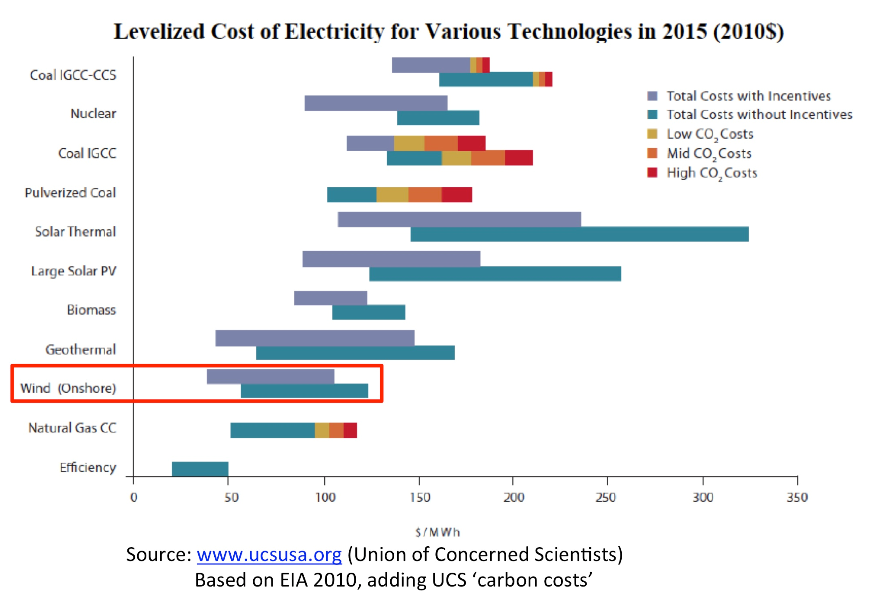
Wind turbines have become a familiar sight in many countries as a favorite CAGW mitigation means. Since at least 2010, the US Energy Information Agency (EIA) has been assuring NGOs and the public that wind would be cost competitive by now, all things considered. Many pro-wind organizations claim wind is cost competitive today. But is it? [if any of the graphs below look fuzzy, click on them and they’ll pop up clear as crystal in a new window]

Curry1-400

Yet incentives originally intended only to help start the wind industry continue to be provided everywhere. This fact suggests wind is not competitive with conventional fossil fuel generation. How big might the wind cost gap be? Will it ever close? We explore these questions in four sections: incentives, lifetime cost of electricity generation (LCOE), system costs, and market distortions. We examine onshore wind, since EIA says offshore is almost 3x more expensive. For simplicity, we examine EIA national averages, rather than regional ranges.

Incentives

The main US federal incentive is the wind Production Tax Credit (PTC), created by the Energy Policy Act of 1992. It is now $21.50/MWh for the first ten years of generation. It was intended to jumpstart the industry, so has expired via sunset provisions several times over the past 23 years. Each time, US wind investment promptly collapsed. Each time, Congress promptly renewed PTC at the same or higher incentive rates. Why? At Berkshire Hathaway’s (BH) 2014 annual meeting (BH’s Iowa based electric utility MidAmerican Energy has $5.6 billion invested in wind generation) Warren Buffet said:

“I will do anything that is basically covered by the law to reduce Berkshire’s tax rate. For example, on wind energy, we get a tax credit if we build a lot of wind farms. That’s the only reason to build them. They don’t make sense without the tax credit.” [1]

Curry2-400

U.S. Congressman Lamar Smith asked the Congressional Budget Office to estimate PTC’s 2013 cost (as part of that year’s reinstitution debate): the 2013 cost was $13 billion.

Iowa has enacted an additional state PTC of $10/MWh. Buffet gets a total PTC of $31.5/MWh from both federal and Iowa taxpayers. YE2014, BH’s MidAmerican Energy, had 2953MW of Iowa wind capacity. Warren Buffet wind farms are receiving $253 million of annual tax credit from Iowa wind generation on an investment of $5.6 billion (2953 MW * 0.31CF * 8766 hr/year *$31.5/MWh). BH’s effective tax rate last year was 31%. Those wind credits are equivalent to earning (253/0.31) $816 million on his $5.6 billion wind investment—a 15% return before any operating profit from selling electricity. That is a good deal for the Nebraska billionaire, but not for the rest of us.

The EIA estimates wind costs five years in the future. Since 2010, each cost estimate has had a separate entry for subsidies. Each estimate since 2012 (for 2017) has zero wind subsidies. EIA assumes the PTC expires (it has yet again YE2014). The Obama administration is proposing it be made permanent, with strong support from the AWEA (American Wind Energy Association). This suggests EIA’s estimated wind costs are too low, and partly political rather than mostly factual. How much is shown by closer examination of their other cost components.

LCOE

The most recent ‘official’ EIA estimates are available in Table 1 of EIA’s Annual Energy Outlook 2015, Electricity Generation Forecasts. The EIA explains:

Levelized cost of electricity (LCOE) is often cited as a convenient summary measure of the overall competiveness of different generating technologies. It represents the per-kilowatthour cost (in real dollars) of building and operating a generating plant over an assumed financial life and duty cycle. Key inputs to calculating LCOE include capital costs, fuel costs, fixed and variable operations and maintenance (O&M) costs, financing costs, and an assumed utilization rate for each plant type. The importance of the factors varies among the technologies. For technologies such as solar andwind generation that have no fuel costs and relatively small variable O&M costs, LCOE changes in rough proportion to the estimated capital cost of generation capacity.

EIA’s LCOE is the annualized net present value (aka annual annuity cost). The estimate is always 5 years into the future. That is why their 2010 estimate above was only verifiable in 2015.

EIA calculates LCOE as the sum of five components: Capital, Fixed O&M, Variable O&M (including fuel), Transmission (incremental), and Subsidies (none). Capital costs are spread over a 30-year life at an interest rate of 6.5%. This appears superficially reasonable, but as we show below, isn’t. Following are the basic LCOE generation comparisons in $/MWh and capacity factor (CF) %, from the EIA AEO 2012 and 2014.

CF% ($2017) ($2019)
CCGT 87 66.1 66.3
Conv. Coal 85 97.7 95.6
Wind 35 96.0 80.3
GT (peaker) 30 127.9 128.4

Three things stand out. Combined cycle gas turbine (CCGT) costs are cheaper than coal. That makes directional sense; in the US CCGT is gaining share at the expense of coal. CCGT cost advantages include: (a) better net thermal efficiency (61% versus 41% for USC coal), (b) abundant inexpensive natural gas thanks to fracked shale, and (c) cheaper capacity. It takes three years to build a CCGT for about $1000-1250/kw. USC coal takes 4 years to build for about $2850/kw.[2] Peak load gas turbine (GT) capacity only costs about $750/kw, but its LCOE is twice CCGT because its capital is under utilized–only operating 30% of the time. Finally, EIA says wind is competitive with coal and will become more so (about 20% more in just three years!).

‘True’ wind LCOE is understated since the PTC is missing. The annuity value of $21.5/MWH for 10 years at 6.5% interest, annuitized over 30 years is $7.2/MWh. A ‘truer’ comparison to coal is (96+7) ~$103/MWh from the general taxpayer perspective, rather than from Warren Buffet’s.

This unsurprising result just shows the PTC was intended to make wind ‘grid competitive’, and seems to do so—at taxpayer expense. That is why investment collapses toward zero in its absence. There are, however, two further ‘obvious’ plus two additional ‘hidden in the fine print’ issues with the EIA LCOE comparisons that are equally consequential, and similarly biased.

Wind capital cost

Wind capital declines 22% from 2017 to 2019; CCGT only declines 8%. This difference is not attributable to turbine production volume. According to GWEC, 51,473 MW was delivered globally in 2014, comprising at least 17000 units (at ~3MW each). Installation costs don’t scale. Past reductions in wind capital per megawatt came from developing larger turbines, not from increased volume.

Curry3-400.png

But actual installed cost/MW stopped declining, and started rising around 2005. There are few onshore turbines larger than 3 MW because of transportation (road/rail) constraints on blade length. The above 2012 NREL composite chart is deliberately misleading; it ended in 2005 although LBNL data was available to 2011.

Curry4-400

EIA’s projected 22% decline in wind capital LCOE is very dubious. We shall use $96/MWh total, the same as EIA’s 2010 LCOE midpoint charted above.

Capacity Factor

The record US annual wind capacity factor was 2014 at 33.9%. EIA itself says the median CF over the past decade is 31%. (Still better than the UK, where CF ranged from a low of 21.5% in 2010 to a record high 27.9% in 2013.) The assumed US 35% CF is unrealistically optimistic. [3]

Curry5-400

Using the historic median CF, a ‘truer’ wind LCOE is roughly (35/31*$96/MWh) $108/MWh.Using the historic median CF, a ‘truer’ wind LCOE is roughly (35/31*$96/MWh) $108/MWh.

Fine Print interest rate

The first fine print fudge is the annuity interest rate. The 2014 EIA text says 6.5% (same as 2012). Ah, but the fine print also says that for coal generation without carbon capture and sequestration (CCS), 9.5% is used. EIA’s fine print inside that fine print says this is the equivalent of a $15/ton CO2 emissions tax on coal (buried inside Capital rather than exposed in Variable O&M explicitly including fuel cost).

EIA says conventional coal produces about 2.15 pounds of CO2 per kWh (depending slightly on coal rank). That is ~2.15 tons of CO2 /MWh, a ‘hidden’ LCOE coal fuel penalty of (2.15*$15) $32.25. There is no US ‘carbon tax’; Congress refused to enact Obama’s proposal. A ‘truer’ comparison is wind at $108/MWh to coal at $65.45/MWh.

This also makes intuitive sense. The newest technology UltraSuperCritical (USC) coal must be similar in cost to CCGT in favorable locations (considering coal transport and quality). One was just completed for $1.8 billion (SWEPCO’s 600MW Turk plant in Arkansas) and 10 additional USC coal facilities are presently planned for the US. None of these will be built until the constitutionality of EPA’s proposed CO2 limit (which effectively prohibit them) is settled.

Fine Print lifetime

EIA comparisons are based on a 30-year lifetime; this introduces a large bias. The EIA itself says the average age of the US coal fleet is 42 years; effective coal lifetime is at least that. GE’s marketing materials say the expected life of its CCGT is at least 40 years. In other words, the capital annuity component of non-wind LCOE should be reduced by ~25% to reflect longer useful lives (40 rather than 30 year annuity, EIA capital only, 0.065 r). That is $8.35/MWh lower LCOE for coal after first subtracting the $32.25 fuel penalty hidden in capital, and $4.30/MWh lower for CCGT.

On the other hand, the design life for wind is 20 years; with maintenance they may last 25 years. EIA’s assumed wind lifetime is longer than the industry’s most cheery estimate, thereby understating LCOE. A ‘truer’ comparison would be wind at (capital component annuity 25 rather than 30 years, 0.065 r) $121/MWh compared to 40 year CCGT $57.5/MWh and Coal $57.1/MWh. ‘True’ wind LCOE is about twice the cost of conventional generation from either coal or natural gas.

Studies of UK and Denmark wind farms suggest their actual economic lives appear to be 12-15 years due to wear and tear.[4] One of the unanticipated problems that arose with larger turbines is premature cracking failure of the main axial bearing(s). These failures arise from two very difficult engineering conditions. First is uneven loading. Wind speeds increase with altitude so the three blades, which span great distances, are never evenly loaded. The bearing(s) wobble under the tremendous forces generated. Second, braking when wind speed exceeds 25mph suddenly loads reverse torque on the axial side where previously unloaded (and wobbling) individual bearings are in natural misalignment to their trace. If things go ‘well’, cracking can be caught before catastrophic failure. It is expensive to repair. The blades must be detached so the turbine can be dismounted and sent back to the factory. The following image shows a 3MW unit.

Curry6-400

Sometimes things do not go well.

Curry7-400

To summarize the second section on LCOE: EIA’s wind future capital, capacity factor, and lifetime all understate the ‘true’ cost of wind. Conventional coal generation is misleadingly overstated. Given other information provably at EIA’s disposal, its wind-biased US findings appear driven by political considerations.

System Costs

We have looked at wind from the perspective of wind farmers and electricity generators. But that is not the whole story, since wind is intermittent. Intermittency has two broad utility system consequences not captured in generation LCOE. First, the grid has to have some level of offsetting backup generation to maintain stability. Those costs are not borne by wind operators unless they also happen to own the regional grid. Most don’t. Second, transmission capacity has to be added. The full extent of those costs is not usually borne by windfarms, but rather (again) by grid owners.

Intermittent backup

Grids always have some spare capacity beyond average peak load. This safety margin handles unexpected peaks, unplanned outages, and other random fluctuations. How much depends on a grid’s many specific details, but 10 – 20% reserve margins are typical. A portion of this amount must be fast start gas turbines, or spinning reserves (older smaller depreciated plants operating at minimum capacity that can be ramped as needed), or flexible hydro, or (newly) flexible CCGT. For very small wind generation proportions, the ‘normal’ reserve suffices. As the percentage of wind in the generation mix grows, it increasingly does not. There are inefficiency costs and (depending on the grid) additional backup capacity costs incurred by the system as a whole.

Additional backup requirements depend on grid details beyond just wind generating penetration. For example, Ontario generation is about 58% nuclear, 24% hydro, and 4% wind (although wind is growing since Ontario subsidizes it with above market feed in tariffs). Nuclear is base loaded. Hydro is flexed for peak loads. The large proportion of hydro in Ontario means wind can grow to double-digit penetration without any significant additional backup capacity costs.

Backup has been studied for the UK National Grid and the Texas ERCOT grid, both of which have a more traditional generation mix than Ontario as well as higher wind penetration.

UK’s zero wind for three days 12/11-13/12 during its winter peak load season illustrates the National Grid’s need for wind backup. UK peak load is handled by flexing fossil fuel generation.

Curry8-400

Newer CCGT is specifically designed to flex as efficiently as possible. In recent years GE, Siemens, Alstom, and Mitsubishi have all introduced units. For example, GE’s FlexEfficiency 50 is a 510MWCCGT that can ramp 50MW/minute. At rated output, it operates 61% efficient. It is 60% efficient down to 87% load, and 58% efficient at 40% load (and not designed to operate below 40%). Cycling at less than rated output increases capital cost/MWh via under utilization, and increases fuel cost via reduced efficiency. Notionally, wind 30% CF means a supporting FlexEfficiency 50 running 70% of the time at rated capacity, and the remainder at 40% minimum load. Using GE’s numbers, that would add about $7.20/MWh LCOE of wind intermittency flex cost on a 30-year annuity basis.[5]

The Texas ERCOT grid is quite different. It has high summer peak load demand because of air conditioning. Texas backup capacity is therefore from high LCOE gas turbine peaker units which are unused except in summer.

Curry9-400

As the proportion of wind generation increases, grids less blessed than Ontario have to add additional standby capacity of some sort. How much of which sort depends on grid details like those illustrated above. The UK National Grid has published estimates. An analysis by the UKERC suggested 15-22% additional for 10% wind production. A different analysis by the IEA ranged from 6% at 2.5% wind generation, to 12% at 5%, to 18% at 15%.[6] UK wind is presently 9.3% of generation. For the UK National Grid using flexed CCGT, these estimates imply about ($66.1+$7.2/MWh *0.15) ~$11/MWh for additional backup, a ‘truer’ wind LCOE of ($121+$11) $132/MWh for UK’s National Grid

On the Texas ERCOT grid, wind in 2014 was 10.6% of generation. For ERCOT’s summer gas peakers, wind’s ‘true’ cost is about ($121+ 0.15*$128) $140/MWh. Little wonder the Austin, Texas utility finds its renewable generation portfolio loses $80 million, while its fossil fuel generation earns $180 million annually at grid wholesale electricity rates! [7]

Transmission constraints

ERCOT also illustrates clearly the wind impact on transmission planning. Much of the wind capacity is in northern Texas, whereas the demand is in Dallas and Houston. ERCOT’s ‘CREZ’ wind driven grid capacity expansion added/upgraded 3600 miles of transmission lines at a cost of $6.9 billion over 3 years. That compares to $26 billion of cumulative (YE2014) investment in Texas wind generation. Annualized over 30 years at 6.5% and spread over ERCOT’s 36.1 million MWh of 2014 wind generation, CREZ adds wind LCOE of $6.44/MWh. That is 6.7% of EIA’s wind LCOE. EIA’s own incremental transmission estimate is 4%–yet again biased substantially low. The ‘true’ system LCOE of ERCOT wind is ($140+$6) ~$146/MWh, not anywhere near the general EIA estimate of $96/MWh — it is off by half.

Curry10-400

In the UK, lack of transmission capacity between Scotland’s wind farms and England/Wales consumers has led to National Grid Balancing Mechanism ‘constraint payments’ netting about £165/MWh for wind NOT produced when it could have been. That comes out of British ratepayer pockets, even though they get no electricity in return.

Market Distortions

In 2011, MIT’s Paul Joskow circulated a Sloan School discussion paperpointing out that non-dispatchable generation (wind) not only has a different cost profile, it has a different value (price) profile.

“Wholesale electricity prices reach extremely high levels for a relatively small number of hours each year (see Figure 1) and generating units that are not able to supply electricity to balance supply and demand at those times are (or should be) at an economic disadvantage. These high-priced hours account for a large fraction of the quasi-rents that allow investors in generating capacity to recover their investment costs (Joskow 2008) and failing properly to account for output and prices during these critical hours will lead to incorrect economic evaluations of different generating technologies.”

Here’s a rough overview of studies that have looked at the impact of intermittent wind upon energy markets. This British study found that wind serves to change the capacity mix more so than the pattern of prices. The market shift to lower fixed cost higher variable cost stations results in relatively small price changes. This study from Ireland finds that increased wind penetration does not impact the pricing of electricity in Ireland (that is argued in the paper as a plus for encouraging more wind). This study found that wind in Denmark reduced costs to consumers. This study of ERCOT in Texas found that the spot market prices were reduced but price variance, volatility and risk increased. Thisstudy of the Pacific Northwest concluded that despite being more economical and easier to integrate in a hydro-rich area, “the direct economic benefits to end-users from greater investment in wind power may be negligible.” There are many factors to consider and the interactions between spot prices and long term cost savings are uncertain. Perhaps the situation is best summed up as this reportconcluded,

“the financial impacts of wind power generation are unclear due to the complex nature of wholesale power markets and the many variables that can impact wholesale electricity prices and generator revenues (i.e., location, natural gas prices, generation mix, and electricity demand).”

It is not clear in any case that subsidizing wind production will lower overall energy prices in any region, and we already showed that subsidized wind raises generation costs.

Wind generation is associated with challenges in scheduling resources and participation in energy markets. Operators serve load with a varied generation mix. Generation plants have limited flexibility including minimum and maximum output levels, ramp up limitations, minimum down times and startup costs. The unpredictability of wind complicates the resource scheduling process. For more background see these Climate Etc postings: Watch out for the Duck Curve and All Megawatts Are Not Equal.

There is a limit to how far conventional plants can be backed down and remain available for service when they may be needed in the upcoming scheduling period. Wind availability coupled with low load periods can present major problems for system operators. It may be the case of simply having mismatched loads and generation of conventional plants may be needed to maintain grid reliability. Under “constraint payments” generators are paid for not injecting power into the grid. Under “negative power pricing” generators are charged for injecting power into the grid. Overwhelmingly conventional resources are not giving favorable treatment relative to intermittent resources.

This study notes the additional harm caused by the US Production Cost Credit, which incents wind generators to make money by injecting power even during times of oversupply. Short term this impacts reliability and raises costs for others. Long term this serves to destabilize the market for conventional generation, which will defer investment and lead to further reliability concerns.

The ERCOT region was plagued by negative pricing concerns until the CREZ transmission improvements reduced such instances.

Curry11-400

Some have argued from this that increased transmission build up cansolve the problem of negative pricing and touted Texas as an example. However, what the transmission build out did was expose the wind resources to a larger market pool, thus reducing the effective penetration level of wind. The problem that wind at significant penetration levels will cause negative pricing remains. If you increase the penetration level in the larger pool, negative problems will remerge. Consistent with that, as Texas has continued to add wind resources, negative pricing problemsre-emerged in March of this year.

Conclusion

It is reasonable to ask why utilities still invest in wind, when even after PTC ‘true’ wind generation is very uncompetitive with Coal or CCGT, as well as distorting the entire wholesale electricity marketplace. EIA LCOE is not the whole story. EIA does not include other incentives such as state level above market feed in tariffs. Ontario wind gets 13.5¢/kwh versus the Province’s 2014 average wholesale generation price of 9.25¢/kwh–a 46% premium. Texas has a variety of state wind incentives (e.g. job credits and property tax breaks) estimated to cost $1 billion in 2014. Oklahoma has a complete income tax moratorium on wind farms. In 2011, California mandated 33% renewables by 2020 no matter the cost (up from 20% in 2006). The UK has the 2008 Climate Change Act. Germany has the Energiewende. Wind operators generally do not pay a price penalty for the market distortions they create. The most severe example of distorted consequences is Germany’s E.ON utility. Late in 2014 E.ON announced it was taking a $5.6 billion impairment charge on its conventional generating assets then spinning them off into a separate (unprofitable) company.[8] Conventional generation simply is no longer profitable in Germany given Energiewende’s renewables pricing distortions and forced flexing.

We can only approximate the ‘true’ cost of wind, and how much the reality differs from ‘official’ EIA (and industry) claims. Wind resources have often been presented in a far more favorable light than they deserve. Looking at the costs presented here they are far higher than can be justified. It has been hoped that subsidies would make wind self-sustaining in short order, but wind appears no closer to economic viability today than years ago.

The impacts of subsidized wind upon electricity markets are highly uncertain, and in many cases demonstrably harmful. Wind serves to raise costs, complicate scheduling, destabilize markets, and adversely impact reliability all in a hopeless effort to receive “free” energy that is actually quite costly.

The potential for wind is limited. Any sub area can have a high penetration of renewables if those resources are diluted into a larger area. Wind can provide adequate performance when correctly integrated with hydro and fossil resources. But the challenges are significant at this time to reach high penetration levels within most standalone resource mixes in most system grids.

[1] US News and World Report 5/12/2014

[2] Essay No Fracking Way in ebook Blowing Smoke.

[3] The aptly named National Renewable Energy Lab (NREL) has an even worse bias. Their 2013 “Transparent Cost Database” (a misnomer) has a selection biased sample of 109 onshore wind farms with a CF of 39% used for LCOE.

[4] Renewable Energy Foundation, Wear and Tear Hits Windfarm Output and Economic Life (2012). Available at www.ref.org.uk. See also Staffel and Green, How does wind farm performance decline with age?, Renewable Energy 66: 775-786 (2014).

[5] We decided not to put this calculation in the text due to its complexity. CCGT LCOE capital $14.3/MWh. 70% operating at rated capacity, and 30% operating at 40% (14.3/.4) costing $21.45. Fuel inefficiency at 40% rated output is (61/58) times LCOE $49.1, a difference of $2.54. Total rated output difference is $23.99/MWh, but only for 0.3 of the time, so Δ$7.20/MWh.

[6] Holttinen et. al., Design and operation of power systems with large amounts of wind power, Final Report IEA Wind Task 25, p.170 (2009)

[7] Texas Comptroller of Public Accounts, Texas Power Challenge (2014)

[8] BloombergBusiness 11/30/14
Climate Etc.

dirtyrottenscoundrelsoriginal

Windweasels Still Trying To Deny the Harm They are Causing!

Wind-farm workers suffer poor sleep, international studies find

Environment Editor
Sydney
Turbines ‘terrible for shut-eye’

Two studies have linked sleep disturbance of wind-farm workers to low-frequency noise and infra­sound from wind turbines. Source: Supplied

Two international studies have linked sleep disturbance and health effects of wind-farm workers to low-frequency noise and infra­sound from wind turbines.

A study of 45 people in three groups by Tehran University ­researchers said: “Despite all the good benefits of wind turbines … this technology has health risks for all those exposed to its sound.”

The study paper said it was the first to examine the effect of wind turbine noise on sleep disorders in workers who are closer to turbines and exposed to higher levels of noise. The Manjil wind farm was examined because it had more staff and turbines than other farms in Iran.

“The results showed that there was a positive and significant relationship between age, workers’ experience, equivalent sound level, and the level of sleep disorder,” the paper said.

The paper, published in next month’s Fluctuation and Noise Letters journal, said more research was needed to confirm the results.

In another study, researchers at Ibaraki University in Japan measured the brainwaves of 15 wind-farm workers listening to recordings of low-frequency and infrasound from wind turbines.

In a paper published in the International Journal of Environmental Science and Technology, the researchers said brain function measured by EEG tests showed the turbine sounds were “considered to be an annoyance to the technicians who work in close proximity to a modern large-scale wind turbine”.

Brain measurements showed test subjects could not stay relaxed after hearing the sound stimulus at the frequency band of 20 hertz. Brainwaves indicating a “strain state” were noted.

Possible health effects from low-frequency noise and infrasound is controversial worldwide.

Clean Energy Council policy director Russell Marsh said Australia’s leading health research body, the National Health and Medical Research Council, had held several reviews of the relationship between wind turbines and health and found “no consistent evidence” wind farms caused adverse health effects in humans.

“Leading national organisations such as the Australian Medical Association and the Australian Association of Acoustical Consultants have said there is not enough infrasound produced by wind farms to have a negative ­effect on humans living near wind farms,” he said.

Australia already had some of the strictest regulations for wind farms, and the council believed further research would reinforce that wind energy was one of the safest and cleanest forms of energy generation.

Windpushers Tell Many Lies, to Achieve Their Nasty Goals…

Hammering Wind Industry Myths: the ‘In-a-Nutshell’ Version

Facts

****

Here’s a sold little wrap-up on the great wind power fraud from Mary Kay Barton – it’s so clear and thumpingly sound for STT to add, would only detract. Hats off, Mary. Over to you.

Wind energy myths spun by lobbyists and salesmen
Principia Scientific
Mary Kay Barton
13 May 2015

Industrial wind energy is a net loser: economically, environmentally, technologically and civilly.

A recent letter in my local paper by American Wind Energy Association (AWEA) representative Tom Vinson is typical of wind industry sales propaganda. It deserves correction.

This is the reality:  Industrial wind energy is a NET LOSER – economically, environmentally, technically and civilly. Let’s examine how.

Economically:

New York State (NYS) has some of the highest electricity rates in the United States – a whopping 53% above the national average. This is due in large part to throwing hundreds of billions of our taxpayer and ratepayer dollars into the wind. High electricity costs drive people and businesses out of the state, and ultimately hurt poor families the most.

A NYS resident using 6,500 kWh of electricity annually will pay about $400 per year more for their electricity than if our electricity prices were at the national average. That’s over $3.2 BILLION dollars annually that will not be spent in the rest of the state economy.

Why destroy entire towns, when just one single 450-MW gas-fired combined-cycle generating unit located near New York City (NYC) – where the power is needed – operating at only 60% of its capacity, would provide more electricity than all of NYS’s wind factories combined.

Furthermore, that one 450 MW gas-fired unit would only require about one-fourth of the capital costs – and would not bring all the negative civil, economic, environmental, human health and property value impacts that are caused by the sprawling industrial wind factories. Nor would it require all the additional transmission lines to NYC.

The Institute for Energy Research tallied the numbers and found that each wind job costs $11.45 million and costs more than four jobs that are lost elsewhere in the economy, because of all the subsidies and the resulting “skyrocketing” cost of electricity. In fact, on a unit of production basis, wind is subsidized over 52 times more than conventional ‘fossil’ fuels.

In the United Kingdom, David Cameron has finally awakened to the folly of wasting billions on the failed technology of wind. He recently declared, “We will scrap funds for wind farms.”

Environmentally:

According to the AWEA, the USA has some 45,100 Industrial Wind Turbines (IWTs). Remotely sited IWTs are located far from urban centers where the power is needed. This requires a spider web of new transmission lines (at ratepayers’ expense), which exponentially adds to the needless bird and bat deaths caused by IWTs themselves.

Additionally, sprawling industrial wind factories cause massive habitat fragmentation, which is cited as one of the main reasons for species decline worldwide.

Studies show MILLIONS of birds and bats are being slaughtered annually by these giant “Cuisinarts of the sky,” as a Sierra official dubbed IWTs in a rare moment of candor.

Governor Cuomo’s environmental hypocrisy is also worth noting. Cuomo is supporting “dimming the lights” in New York City to help stop migrating birds from becoming disoriented and crashing into buildings. Yet simultaneously, Cuomo is pushing for many more giant bird-chopping wind turbines – with 600-foot-high blinking red lights, along the shores of Lake Ontario (a major migratory bird flyway), and across rural New York State.

Technically:

Because wind provides NO capacity value, or firm capacity (specified amounts of power on demand), wind requires constant “shadow capacity” from our reliable, dispatchable baseload generators to cover for wind’s inherent volatile, skittering flux on the grid.  Therefore, wind cannot replace those conventional generation sources.  Instead, wind locks us into dependence on fossil fuels – and represents a redundancy (two duplicate sources of electricity), which Big Wind CEO Patrick Jenevein admitted “turns ratepayers and taxpayers into double-payers for the same product.”

The list of accidentsblade failures (throwing debris over a half mile), fires (ten times more than the wind industry previously admitted) and other problems is updated quarterly at a website in the UK. This lengthy and growing list is evidence of why giant, moving machines do NOT belong anywhere near where people live.

Even the AWEA admits that the life of a typical wind turbine is only 10 to 13 years (January 2006: North American Wind Power). This is substantiated by studies on these short-lived lemons.

Adding insult to injury, the actual output of all of New York State’s wind factories combined has been averaging a pathetic 23 percent.  If IWTs were cars, they would have been correctly dubbed ‘lemons’ and relegated to the junkyard a long time ago.

Civilly:

The only thing that has ever been reliably generated by industrial wind is complete and utter civil discord. Neighbor is pitted against neighbor, and even family member against family member. Sprawling industrial wind factories have totally divided communities, which is already apparent in towns across NYS and the country.  It is the job of good government to foresee and prevent this kind of civil discord – not to promote it.

Regarding human health, NYS officials admitted at a 2009 NYSERDA meeting on wind that they knew “infrasound” from wind turbines was a problem worldwide. The growing list of problems globally highlights that these problems are only getting worse.

At the NYSERDA meeting, a former noise control engineer for the New York State Public Service Commission, Dr. Dan Driscoll, testified that ‘infrasound’ (sounds below 20 Hz) are sounds you can’t hear, but the body can feel.

Dr. Driscoll said that ‘infrasound’ is NOT blocked by walls, and it can very negatively affect the human body – especially after prolonged, continuous exposure.  He said symptoms include headache, nausea, sleeplessness, dizziness, ringing in the ears and other maladies.

NYS Department of Health official Dr. Jan Storm testified that, despite knowing the global nature of the “infrasound” problem, NYS still had not done any health studies (despite having federal money available to do so). Here we are sixyears later, and indefensibly, NYS officials still have not called for any independent studies to assure the protection of New York State citizens.

“The Golden Rule,” as espoused by Rotary International’s excellent ‘Four-Way Test’ of the things we think, say and do, should be the moral and ethical standard our public servants aspire to uphold.  The test asks:

1.      Is it the truth?

2.      Is it fair to all concerned?

3.      Will it build goodwill and better friendships?

4.      Will it be beneficial to all concerned?

When applied to the industrial wind issue, the answers are a resounding, “NO!”
Principia Scientific

turbine fire

Turkish Court has the Decency to Protect Residents from Wind Turbine Noise!

Turkish Court Shuts Down 50 Turbines: Yaylaköy Residents Delighted at 1st Chance to Sleep in Years

turk1

****

One of the myths pedalled by Australia’s self-appointed wind farm noise, sleep and health ‘expert’ (a former tobacco advertising guru) is that the known and obvious adverse health impacts from incessant turbine generated low-frequency noise and infrasound are a cooked-up “phenomenon”, exclusive to the English speaking world. Trouble with that little tale is that’s been scotched by the Danes:

Vestas’ Danish Victims Lay Out the FACTS

Denmark Calls Halt to More Wind Farm Harm

And the Germans:

German Medicos Demand Moratorium on New Wind Farms

And the Tawainese:

Winning Taiwanese Hearts and Minds?

And, now the Turks. As this article lays out – in terms so simple, that even tobacco advertising gurus should be capable of understanding them.

50 operating wind turbines stopped by the court!
BurGün
18 May 2015

turk2

****

The Administrative Court in Ankara has ruled that fifty operating wind turbines in Karaburun be stopped. The locals of Yaylaköy, Karaburun are delighted with the court decision. It is 20 days since the wind turbines stopped working.

From the beginning of the struggle to protect their village from the adverse affects from the Wind Power Plants that are spreading all over the peninsula, the local people have finally received good news.

The Administrative Court, ruled in April that even if fifty wind turbines are already operating, the activities have to be halted since the environmental damage is irreversible. First an EIA report will have to be issued. The wind turbine company’s request to continue to run their turbines meanwhile, was also denied by the court.

‘THE FIRST DECISION’

The lawyer Cem Altiparmak said the decision would be a first in the country. Mr. Altiparmak states that there are very few court cases related to renewable energy.

In this area the law is insufficient, there are no precedents, so we have to live it to get experience. “A number of license revocation proceedings have started in our country. Our court ruling is one of the first and will have an impact on up-coming cases.

What has happened?

İzmir Governorship Provincial Directorate of Environment and Urban Development, had issued a “EIA Not Required” to install 166 MW in the Karaburun Peninsula.

8 years later when EMRA issued a new license for another 50 turbines to the same company leaning on the same “EIA Not Required” document, the residents of Yaylaköy and the environmental movement Karaburun City Council sued EMRA – The Energy Market Regulatory Authority.

The court ruled that this is against the law and if allowed to operate the damages will irreversible therefore all operations have to be stopped until an EIA investigation has been performed.

The court decision has given hope to the local people as well as other people in Cesme, Bodrum, Datca and Urla where wind turbines projects are being planned without any public consultation. All these projects have been issued with an EIA Not Required”.

Hopefully this Wind turbine project will not be able to operate again and for the first time in years the people in Yaylaköy are able to sleep comfortably and we will continue to work for that, says one man from the village.
BurGün

turk3

Open Submission by Carmen Krogh, regarding the ERT for Niagara Region Wind Corp.

By Carmen Krogh, BScPharm
May 25, 2015
To Whom It May Concern
Re: ERT Case No. 14-096 ENVIRONMENTAL REVIEW TRIBUNAL IN THE
MATTER OF an appeal by Mothers Against Wind Turbines Inc and Renewable
Energy Approval No. 4353- 9HMP2R issued by the Director, Ministry of the
Environment, on November 6, 2014 to Niagara Region Wind Corporation.
This Commentary is public and may be shared.
I declare no potential conflicts of interest and have received no financial support with respect
to the research and authorship of this Commentary.
1. ERT Case No. 14-096 states the onus on the Appellant:
[8] Pursuant to s. 145.2.1 of the EPA, the onus is on the Appellant to establish that
engaging in the Project in accordance with the REA will cause serious harm to human
health and/or serious and irreversible harm to plant life, animal life or the natural
environment. (Page 4)
2. The ERT dismissed the Appeal:
[9] For the reasons that follow, the Tribunal finds that the Appellant has failed to meet
either the Health Test or the Environmental Test and has not established the necessary
elements of a s. 7 Charter violation and, therefore, the appeal is dismissed. (Page 4)
3. Ms. Shellie Correia, mother of Joey, testified during this ERT and provided a letter from
her son’s specialist, a Behavioral Pediatrician.
Joey has been under the specialist care for 8 years and is diagnosed with a “Sensory
Processing Disorder”.
Excessive, uncontrollable noise can lead to sensory overload and Joey’s specialist noted
that Joey “is exceptionally more vulnerable”.
With respect to his condition, the specialist states “Wind turbines concern me, given my
strong knowledge of neurobiology.”

4. Other members of the community testified regarding their concerns associated with
children being exposed to IWTs while at home, at school (or both), or while visiting.
5. Ms Correia provided additional citations such as Joey’s Individual Education Plan in
support of his risk factors and that of children in general. See the Appendix below.
6. Ms Correia has advised Premier Wynne, Energy Minister Chiarelli, the Approval Holder
and the project manager, and many others in an effort to protect her son and other
children from harm.
7. Several 3 MWatt IWTs will be in close proximity, with one of the turbines 550 metres
from the family home.
8. Joey and other children will have to travel past transmission lines while attending school
and for other purposes.
9. In its Decision, the ERT states:
[119] In response to Ms. Correia’s concerns about the impact of noise on her son who
has “developmental issues, including ADHD, anxiety and serious processing issues
(mainly, but not exclusively aural)”, Dr. McCunney said that he is unaware of any
scientific literature that suggests that wind turbine noise would adversely affect the
health of a child with these developmental disorders. (Page 28)
10. Dr. Robert McCunney testified on behalf of the Approval Holder. His qualification states:
[95] On agreement of the parties, Dr. McCunney was qualified by the Tribunal as a
medical doctor specializing in occupational and environmental medicine with
particular expertise in the health implications of noise exposure. He provided expert
opinion evidence on behalf of the Approval Holder. (Page 21)
11. Based on this qualification, indications are that Dr. McCunney was not appearing as a
Behavioral Pediatrician, specializing in assessment and care of children with
developmental and mental health problems.
12. Regarding noise in general, the World Health Organization has identified the fetus,
babies, children and youth including those with pre-existing medical conditions and
special needs as a vulnerable population group.
World Health Organization, Children and Noise, Children’s Health and the
Environment, WHO Training Package for the Health Sector, http://www.who.int/ceh

Commentary ERT Case No. 14-096
By Carmen Krogh, BScPharm, May 25, 2015
Any errors or omissions are unintended.
13.
Another WHO reference relating to children states:
Noise is an underestimated threat that can cause a number of short- and long-term
health problems, such as for example sleep disturbance, cardiovascular effects, poorer
work and school performance, hearing impairment, etc.
World Health Organization Noise Facts and Figures
health/noise/facts-and-figures
14.
Stansfeld and Matheson (2003) state:
It is likely that children represent a group which is particularly vulnerable to the non-
auditory health effects of noise. They have less cognitive capacity to understand and
anticipate stressors and lack well-developed coping strategies. Moreover, in view of
the fact that children are still developing both physically and cognitively, there is a
possible risk that exposure to an environmental stressor such as noise may have
irreversible negative consequences for this group…
Stephen A Stansfeld and Mark P Matheson (2003), Noise pollution: non-auditory
effects on health, British Medical Bulletin 2003; 68: 243–257 DOI:
10.1093/bmb/ldg033
Additional citations on children’s risk factors from exposure to noise in general are available.
Conclusion
Research indicates the fetus, babies, children and youth including those with pre-existing
medical conditions and special needs are a vulnerable population group to the effects of noise
exposure in general.
The specialist who has diagnosed and treats Joey states:
I, as a “normal brain” (or typical brain) individual would not want this risk to my
mental health (or my children’s) in my neighbourhood. The placement of these
devices must be thoughtful and, of course, “first, do no harm.”
And that:
In a developed society like Canada, we must advocate and protect the most vulnerable
members. Joey, and all our children deserve our thoughtful and ethical best.
Commentary ERT Case No. 14-096
By Carmen Krogh, BScPharm, May 25, 2015
Any errors or omissions are unintended
4
The World Health Organization comments it is not necessary to wait for full scientific proof
before taking action:
…where there is a reasonable possibility that public health will be damaged, action
should be taken to protect public health without awaiting full scientific proof.
World Health Organization, Guidelines for Community Noise, WHO (1999).
The Policy Interpretation Network on Children’s Health and Environment comments on the
precautionary principle:
Policies that may protect children’s health or may minimise irreversible health effects
should be implemented, and policies or measures should be applied based on the
precautionary principle, in accordance with the Declaration of the WHO Fourth
Ministerial Conference on Environment and Health in Budapest in 2004.
Report WP7 Summary PINCHE policy recommendations Policy Interpretation
Network on Children’s Health and Environment (PINCHE) Policy Interpretation
Network on Children’s Health and Environment QLK4-2002-02395
The Council of Canadian Academies Panel states in its assessment of IWT noise:
…that there is a paucity of research on sensitive populations, such as children and
infants and people affected by clinical conditions that may lead to an increased
sensitivity to sound.
Council of Canadian Academies (2015) Understanding the Evidence: Wind Turbine
Noise, The Expert Panel on Wind Turbine Noise and Human Health, Executive
Summary, Page xvii.
This raises the question whether Appellants and concerned families will be expected to wait
until children-based research demonstrates that “engaging in the Renewable Energy Project
in accordance with the Renewable Energy Approval “will cause serious harm to human
health” (“Health Test”).
If so, are there any potential legal-ethical concerns?
Respectfully,
Carmen Krogh, BScPharm
Ontario, Canada
Commentary ERT Case No. 14-096
By Carmen Krogh, BScPharm, May 25, 2015
Any errors or omissions are unintended
5
Appendix: documents provided to the ERT
1.Open Submission on Risk of Harm to Children May 15/2013
2 Open submission on Risk of Harm to Children Dec 27/2012
3 Letter from Carmen Krogh, requesting help from PM Harper and Peter Mckay Re: UN
Rights of the Child.
4 Arline L. Bronzaft, Noise from Wind Turbines: Potential health Effects on Children.
5 Welfare of Children at Risk, Due to Wind Turbines, Parents Reporting.
6 Joey Correia’s Individual Education Plan
7 Letter from Dr. Calvert, Joey’s Specialist, Regarding Sensory Processing Issues.
8 Information about Auditory Processing Disorder – From Website, KidsHealth from
Nemours
8a Letter from Retired Special Education teacher, Susan Smith, Re: Children & Wind turbines
8b Letter from School Superintendent, William C. Mulvaney
9 Brett Horner’s Open letter to health Canada, (Discontinue Ongoing Experiments)
10 Dr. Sarah Laurie’s Concerns Re: Health Canada Study
11 Ways to Improve Future Health Studies – Multi-Municipal Wind Turbine Working Group.
12 “Critique on Infrasound Study”, by Jerry Punch
13 Dr. Maria Alves-Pereira on Vibro-Acoustic Disease
14 Canadian Journal of Rural Medicine – Industrial Wind Turbines, and Health Effects.
15 Summary of 21 Peer-Reviewed Articles on Adverse Health Effects, on IWT’s.
16 Mothers Against Wind Turbines…Call for a Moratorium.
17 Open Letter/Press Release from N.A.P.A.W.
18 Victim’s Statement’s, from Wind Victims Ontario
19 Letter to PM Harper and Peter McKay, Minister of Justice
20 Letter to Dr. Murray, and Dr. Weiss.
21 Letter to Premier Kathleen Wynne, May 6
22 Letter to Premier Kathleen Wynne, Apr. 18
23 Letter to Steve Klose, M.O.E.
24 Letter to Ombudsman, Andre Marin
25 Attempts to Speak with NRWC.
26 Speeches Read at Local and Regional Councils, to Appeal for Help