Victims of Wind Turbines Fight for Their Right to a Peaceful Life!

Angry Wind Farm Victims Pull the Trigger: Turbines Shot-Up in Montana and Victoria

shotgun

****

One of the great lines spun by the wind industry, its parasites and spruikers is just how much country people can’t wait to snuggle up next to a cuddly bunch of Vestas V112s (see our post here).

Apparently, life for rural communities just isn’t complete without a fleet of blade-chucking, pyrotechnic, sonic-torture devices.

The wind industry’s story goes that country folks’ currently miserable, downtrodden lives can only improve with the addition of a few hundred whirling, bat-chomping, bird slicing wonders.

The problem is, as with most wind industry bunkum, the facts soon separate from the myth.

Despite the spin-masters’ well-oiled claims about everybody simply “loving wind turbines to bits”, the truth is that there are plenty of wind farm victims who are keen to see them end up in bits; lots of little bits.

Just how keen is shown by these two stories: the first from Montana; and the next from Waubra in Victoria.

Wind turbine shot, NaturEner offering reward of $2,500
The Valierian
3 June 2015

shot turbine

****

NaturEner, which owns and operates the Glacier Wind wind farms in Glacier and Toole counties, is offering a $2,500 reward for information on the gunshot vandalism of one of its turbines.

One of the turbines located in the Glacier County portion of the Glacier Wind 2 farm was shot sometime in mid-April. The bullet punched through the outer shell of the turbine and damaged a major cable leading to the generator, causing more than $100,000 in damage.

“Whoever is responsible for this senseless act of vandalism endangered our employees, whom actually work inside the part of the turbine that was shot, and our neighbors, as well as damaging a valuable piece of renewable energy infrastructure,” said Gabriel Vaca, vice president of NaturEner. “Anyone with information about this incident should contact NaturEner and the Glacier County Sheriff.”

The turbine stopped generating power on the afternoon of April 17, and the bullet damage was discovered on April 23 by repair technicians, who reported the incident to law enforcement officials.

The intense heat caused by the power surging through the cable melted the bullet, and sheriff’s deputies have found no witnesses who saw or heard the gunshot.
The Valierian

Meanwhile, the trigger-men are just as active Downunder ….

Shots fired at Waubra wind farm
The Courier
Kara Irving
18 April 2015

shooting turbine

****

Maintenance workers have been put at risk by people shooting at Waubra wind turbines.

Acciona Australia has asked police to investigate incidents of people taking aim at its Waubra Wind Farm turbines over the last two months.

A company spokesman said shooting at the turbines posed significant safety risks for its workers.

“Acciona takes employee and contractor health and safety, as well as safety in the local community, very seriously,” a spokesman said.

“Any person that has knowledge or information that could assist in the police investigation should contact Crime Stoppers or Ballarat Police.”

The company could not confirm how many of its 128 wind turbines had been shot.

No workers, contractors or members of the public had been injured as a result of the incident.

Australian Wind Alliance national coordinator Andrew Bray said it was the first shooting incident he had heard of at wind farms.

“I have heard of incidents where people had vandalised property around the wind farms, but this is a first for me,” he said.

There had been no significant damage to the 80-metre-tall turbines as a result of the shooting.

All Waubra Wind Farm turbines have one narrow elevator and stairs for workers.

Acciona Australia opened the wind farm near the Sunraysia Highway in 2009.

The wind farm is located 35 kilometres north-west of Ballarat.

A Victoria Police spokesman said comment would not be available until Monday.

Anyone with information regarding the incident should contact Crime Stoppers.
The Courier

Andrew Bray – not the sharpest tool in the shed – appears to have a hard time connecting the fact that it takes something pretty serious to get ordinary, law-abiding citizens angry enough to start pumping lead into someone else’s property.

Bray – a highly paid wind industry spruiker – true to his gormless type – fails to see the irony in his very own dismay. For years now, in every utterance and every press release, Bray bubbles over, telling us how everyone, everywhere just can’t get enough of “free”, lovable wind energy.

And yet, at Waubra and in Montana, that “love” manifests with well directed shots from high powered rifles?!?

While Bray suggests it’s the first time he’s heard of shots being fired at wind turbines, STT has heard a few reports of Australian farmers letting loose on turbines with shots fired in frustration and anger. One shootist apparently decided to stop firing at the blades, because the holes made caused them to emit a ‘whistling’ sound, only adding to the acoustic torture.

The fact of the matter is that rural communities cannot abide these things. When asked fairly and squarely, more than 90% of threatened and effected communities are bitterly opposed:

Wind Industry Keeps Losing ‘Hearts and Minds’: Community Opposition Rolls & Builds

While only a few have taken up arms in response (so far), there’s been plenty of self-directed action from threatened and/or harmed communities around the world, which STT is happy to describe as acts of community “self-defence”:

Community Defenders Down MET Mast in Donegal, Ireland

More MET Mast Mayhem: Community Defenders Drop Mast in Fight to Save Homes near Bangor, Maine

MET Mast Mayhem: Scots Use Guerrilla Tactics to Stop These Things

Wave of Destruction: Ontario Wind Farm Neighbours in Open Revolt

These acts of desperation and frustration are perfectly understandable. For a taste of what’s driving this anger turned to action, cop an earful of what these folks are being forced to tolerate:

****

****

Collectively these actions can be characterised as a response to entrenched institutional corruption; such as the Clean Energy Regulator happily doling out $billions in RECs to wind farms that have never shown compliance with the noise conditions of their planning consents:

Australia’s Clean Energy Regulator Doles Out $Billions in Subsidies to Non-Compliant Wind Farms

Citizens are bound to react against any industry quick to destroy their lawful rights to live in and enjoy their own homes. And they’re bound to react violently when that industry is devoid of any moral compass, let alone human empathy. An industry that openly displays a callous disregard for basic human rights – such as the ability to sleep comfortably in one’s own bed – using its shills to call them “wind farm wing-nuts” and otherwise dismissing or ridiculing their wholly unnecessary suffering – as Andrew Bray and his ilk do, on a daily basis:

Thai Turbine-Terrorist, RATCH Scores Monumental “Own Goal” during Senate’s Wind Farm Inquiry

Sleep matters – and incessant turbine generated low-frequency noise and infrasound at night-time destroys the ability to enjoy it:

Wind Turbine Noise Deprives Farmers and Truckers of Essential Sleep & Creates Unnecessary Danger for All

If anybody in government believes that the politics of “renewables” is all about blindly favouring them, then the events outlined in this post and the posts linked above should provide pause for thought.

The warm and fluffy tag “renewables” is used to garner political support for the wind industry – but there’s a distinction between giant industrial wind turbines grinding away in the next paddock at 2 in the morning and solar panels on the house next-door. STT’s yet to hear of a case of anyone unloading their grandpa’s .303 on their neighbour’s solar panels.

Tony Abbott’s Coalition have just struck a deal with Labor involving a $46 billion electricity tax aimed at salvaging what’s left of Australia’s wind industry (see our post here).

For thousands of people in rural communities spread out across the country that “deal” – which has been passed in the House of Reps – is seen as a betrayal, not only of their interests, but of the interests of the Nation as a whole (see our posts here and here).

What Tony Abbott & Co need to pick up on (real fast) is the fact that it’s ONLY the lunatics of the hard-‘green’-left that are ready to die in a ditch to ‘save’ the wind industry – pumped up by astroturfing outfits like GetUp! – people that will never, ever vote for the Coalition.

Meanwhile – thanks to wind industry front men, Ian “Macca” Macfarlane and his youthful ward, Greg Hunt – the Coalition is pandering to a crowd they can never hope to win; and forsaking those who have – till now – loyally thrown their votes at the Liberals and Nationals.

With rural community anger about to boil over, STT predicts that turbine target practice, and the destruction of turbines and MET masts has only just begun. Are you listening, Tony?

abbottcover

Tales of Wind Turbine Torture….NOT a Bedtime Story!

Curt Devlin: Details a Decade of Turbine Torture

Curt Devlin

****

Curt Devlin hales from Fairhaven, Massachusetts U.S.A. He was formerly a Teaching Fellow in the Philosophy Department at Tulane University.  He revved up against the great wind power fraud back in 2007, when a wind power outfit set out to spear a clutch of giant fans into the undisturbed and ecologically sensitive salt marshes surrounding a quite estuary in the Little Bay area of Fairhaven – an area bordered by densely populated neighborhoods. Although this project was defeated, construction began on the sly, starting on Veteran’s Day in November of 2011.

Since then, Devlin been an outspoken critic of the wind industry and its proponents. He’s written numerous articles and editorials on this and related topics. He has been a guest speaker at the Fairhaven Wind Forum in 2012, where he criticized the irresponsible siting of turbines in residential neighborhoods across Massachusetts and around the world.

In 2013, he spoke on the fundamental human right to be free of unwarranted experimentation at the Falmouth Human Rights Conference in Falmouth, Massachusetts. Professionally, Devlin works as a software architect focused on the development of health science solutions for the detection and treatment of cancer and the improvement of human health.

Here’s Curt detailing a decade-long, unnecessary nightmare.

June 1 Ten Years Massachusetts Wind Turbine Torture
Friends Against Wind
Curt Devlin
1 June 2015

“People are willing to tolerate, approve, and contribute to the torture of their neighbors with the ill effects of wind turbines simply because they have been told by public officials, the media, or green zealots that it is necessary to ‘save the planet’ from global climate change.”

It is easy to forget just how essential sleep is to health and happiness; until of course, you yourself have been deprived of it for a night or two. Firsthand experience of sleep deprivation, even for a few days, is a powerful reminder of how mentally and physically debilitating it is. Even the ongoing disruption or restriction of sleep for a relatively short period of time can have devastating health consequences. Medical research has clearly shown that sleep is essential to human health and wellbeing. Prolonged sleep deprivation has been linked to memory loss, hallucination, weakened resistance to pain, obesity, hypertension, diabetes, impaired immune response, extreme anxiety, stress, clinical depression, and suicide. In the most extreme cases, animal experimentation suggests that lack of sleep can kill you.

Sleep deprivation has long been recognized as torture by the Geneva Conventions of 1949, the United Nations Convention against Torture (CAT), and the United States War Crimes Act. Depriving someone of proper sleep is torture, regardless of whether it is perpetrated by the CIA against suspected terrorists, OR by reckless planning authorities who permit the wind industry to site industrial-scale wind turbines in residential neighborhoods, or by noise pollution regulatory authorities and health authorities who ignore consistent reports of sleep deprivation from neighboring residents. When authorities deem developments “compliant” with regulations, or wind developers effect specious mitigations; they are inflicting torture. They are violating fundamental human rights.

Recently, the U.S. Senate Intelligence Committee released what has come to be known as the Torture Report. It reveals that sleep deprivation was one of the frequently used CIA “enhanced interrogation” tactics. The use of prolonged sleep deprivation led Committee Chairman, Diane Feinstein to conclude “…that, under any common meaning of the term, CIA detainees were tortured.” She goes on to say “…that the conditions of confinement and the use of authorized and unauthorized interrogation and conditioning techniques were cruel, inhuman, and degrading.” The same can be said of the practice of siting industrial turbines too close to homes. Failure to take action to stop excessive noise pollution, or to enforce existing legal limits on “noise nuisance” whenever noise-induced sleep disturbance or deprivation is reported by wind turbine neighbors, hosts, or their families is full complicity with torture.

It is grimly ironic that the US Senate Committee condemns sleep deprivation as cruel and inhuman when used by the CIA interrogators on terror suspects, but blithely ignores it when imposed by wind developers and local authorities on ordinary, law-abiding citizens who pose no threat to anyone. The only threat they pose is to the income generated by taxpayer subsidies to unscrupulous wind developers.

Is it really fair to compare the torture of detainees to that of turbine neighbors? Consider that the detainees were forced to endure sleeplessness for a few days at a time on many occasions, but never more than a week. Wind turbine victims must endure this same deprivation for arbitrary periods of time whenever the wind is blowing, sometimes intermittently for decades. Often, their only hope of escape or reprieve from this torment is to flee their homes which no one will buy—despite the fact that they are not suspected of any crimes whatsoever. At least detainees were not forced to lie awake and watch their families suffer the same deprivation.

When the turbines were shut down during a winter storm with near hurricane-force winds, one young mother of infant twins living in Fairhaven, Massachusetts USA wrote “Isn’t it crazy that in a weird twist it takes a blizzard to give us peace. According to the power dash the beasts stopped at around 9PM.” Later on, she wrote, “I sleep ok in the basement but the babies still wake up randomly almost every night.” Most who are tortured by turbines will tell you that “the beast” can usually finds them even when they are hiding in the cellar. Not only are people kept awake by the turbines, but they must endure headaches, nausea, dizziness, breathing difficulties, and in some cases uncontrollable anxiety and severe acute depression.

In one incident described in the Torture Report, an Afghani named Arsala Khan “…suffered disturbing hallucinations after 56 hours of standing sleep deprivation….” Afterwards, the CIA determined that he actually was not involved in any plans or activities to harm the U.S! The innocent victims tortured by the wind industry are in a position to know just how it feels to be tortured indiscriminately.

Publicly, the Bush administration and the CIA chose to describe their treatment of detainees as “enhanced interrogation.” The wind industry chooses to call its noise impact mere “annoyance” and refer to residents’ “concerns”. These euphemisms are carefully selected to conceal the ugly reality that sleep deprivation is torture, plain and simple. Such terms attempt to hide what is known to be—by any standard of human decency—utterly wrong and depraved. The Senate Intelligence Committee and others have begun to shine a spotlight on the CIA torture program; but the wind industry program of cruelty continues to operate with impunity, largely beyond the glare of public scrutiny.

When the US Senate Committee report placed the issue of torture front and center in the media, it prompted outrage among some journalists, who have used terms like ‘depravity,’ ‘harrowing,’ and ‘gruesome’ to describe the techniques used by the CIA. Yet the media has no outrage when prolonged sleep deprivation and cruelties are routinely visited on local neighborhoods throughout America and across the world. When the subject turns to wind turbines, all talk of human rights violations immediately goes silent.

Remarkably, and despite the condemnation of the Intelligence Committee and the outraged media reaction to it, public opinion polls consistently show that a majority of Americans still consider the CIA’s use of torture justified. Even those who disagree with this view, may be able to understand it. The rationale for torture is that it was necessary to prevent another 911; but what, then, is the rationale for torturing ordinary men, women, and children in their own homes on a nightly basis? What accounts for the almost universal apathy of government officials, mainstream media, and the general public, toward the victims of wind energy? It seems America is one nation, with liberty, and justice for all—except for those unlucky few, who can be tortured without any good cause at all. Our silence gives consent to continue.

Perhaps this silence about turbine victims can be partially explained by a monumental form of social denial. Psychologists have noted that when confronted with tacit complicity with torture, most people tend to diminish in their own minds the actual harm being inflicted. Terms like ‘enhanced interrogation’ and ‘annoyance’ encourage such forms of self-deception. However, this pervasive complicity with torture cannot be fully explained by denial alone. There is a far more ominous and compelling explanation supplied long ago by the experiments of Stanley Milgram.

In 1962, Milgram, a Harvard-trained psychologist, devised a set of experiments designed to explain why people are willing to accept and even participate in torture. Initially, Milgram thought it was a lack of moral fiber. Prior to conducting his experiments, Milgram believed that most Americans were morally superior to those who were responsible for the torture and atrocities of the Holocaust. He predicted that most of his (American) subjects would reject the use of torture out of hand. Milgram also polled many of his fellow psychologists, who made similar predictions. Contrary to all expectations, however, Milgram’s experiment actually proved that about two thirds of Americans were willing to administer torture by electroshock to innocent victims, even to the point of possible lethality, simply because they were told by someone in a position of perceived authority that it was necessary to do so. Contrary to the much beloved American mythology of rugged individualism and personal independence, Milgram has shown that most Americans are just as blindly obedient to authority as everyone else.

Since that time, Milgram’s experiment has been repeated dozens of times by him and other scientists, with subjects from different counties and cultures, but the results are always the same. About 65% of all subjects are willing to administer torture—even to the point of lethality—as long as someone in authority tells them it is necessary. Even when controls are added to identify potentially confounding factors, this result is highly repeatable. This shows that obedience to authority, even to the point of partaking in torture of innocent victims, is so deeply ingrained in human nature that it transcends language, culture, and moral outlook—it is a truly global phenomenon. The evidence for this is sadly pervasive.

People are willing to ignore, condone, and even participate in torturing detainees simply because they are told that it was necessary to protect America from new terrorist attacks. Similarly, people are willing to tolerate, approve, and contribute to the torture of their neighbors with the ill effects of wind turbines simply because they have been told by public officials, the media, or green zealots that it is necessary to “save the planet” from global climate change. There is ample evidence to show that torture is not an effective means of interrogation and that industrial wind turbines cannot stem climate change. No matter. Like subjects in Milgram’s experiment, the public is being told by authority that “the experiment requires that you continue.”

In a position paper entitled Leave No Marks: Enhanced Interrogation Techniques and the Risk of Criminality, Physicians for Human Rights (PHR) and Human Rights First (HRF) have collaborated to publish a detailed condemnation of the CIA torture program, as well as the participation of physicians in these practices. Section 6 specifically details the physical harm and health consequences of forced sleep deprivation and interruption. It also delineates the criminal consequences for anyone who knowingly engages in it. Here it is pointed out that “the U.S. State Department has condemned Indonesia, Iran, Jordan, Libya, Saudi Arabia, and Turkey for using sleep deprivation as a form of torture or cruel, inhuman, or degrading treatment.”

In case anyone is inclined to minimize sleep deprivation as mere annoyance, as the wind industry and its advocates would have you believe; Leave No Marks goes on to note that:

Even sleep restriction of four hours per night for less than a week can result in physical harm, including hypertension, cardiovascular disease, altered glucose tolerance and insulin resistance. Sleep deprivation can impair immune function and result in increased risk of infectious diseases. Further, chronic pain syndromes are associated with alterations in sleep continuity and sleep patterns.

Many of those who are routinely awakened by nearby industrial turbines would consider themselves lucky to get even four consecutive hours of uninterrupted sleep on a regular basis. This paper notes that U.S. federal courts have found that sleep deprivation is also a violation of the Eight Amendment prohibition against cruel and unusual punishment.

Perhaps it is time for groups like Physicians for Human Rights and Human Rights First and indeed the medical profession generally, to turn their intention toward the ongoing torture and cruelty perpetrated by the wind industry. Surely, such acts are criminal whether they are committed by governments or private industry.

Dr. William Hallstein, treating psychiatrist from Falmouth USA, made it abundantly clear that the impacts of the turbines are indeed tantamount to torture in his letter to the Falmouth Town Board of Health. It is telling that Justice Muse from the Falmouth Superior Court issued an injunction in December 2013 to prevent “irreparable harm to physical and psychological health” by turning the turbines off at night. The turbines at Falmouth (USA) remain turned off, over a year later.

Perhaps it’s time to face our own complicity and involvement in these fundamental violations of both civil and human rights, as well.

The wind industry cannot hide behind a claim of ignorance about the devastating impact of wind turbine noise on human health. N.D. Kelley and other NASA scientists from the Solar Energy Research Institute (SERI) have published papers that ascribe the direct causation of human disturbance to wind turbine noise. This group published numerous papers on this subject between 1982 and 1985 based on sound research and clear evidence. Then, in 1987, this research was presented directly to the wind industry at the American Wind Energy Association (AWEA) Conference in San Francisco. In short, the wind industry has continued to site its industrial scale power and noise generators near residential neighborhoods for more than thirty years, knowing full well that it was inflicting cruelty and suffering on those living near them. The silence of public officials, the media, and the public indicates wind turbine torture may be allowed to continue for decades to come.

There can be no doubt that wind turbines cause chronic sleep deprivation, and no doubt that sleep deprivation is torture. The scientific evidence that turbines do cause sleeplessness is already prolific and continues to grow. Moreover, the most comprehensive literature reviews on this question reveal that there is virtually no independent evidence to controvert this conclusion. Perhaps the most damning evidence of all comes from the public record of heath complaints from people around the world. According to the noted epidemiologist Carl V. Phillips, “There is overwhelming evidence that large electricity-generating wind turbines (hereafter: turbines) cause serious health problems in a nontrivial fraction of residents living near them.” Among these public health reports from turbine neighbors, sleep deprivation and disruption are by far the most common.

Taken together, the science and the public record of adverse health reports offer clear and compelling evidence that wind turbines are instruments of torture. Therefore, anyone who advocates for, or participates in, the siting of wind turbines near people is inflicting torture on them. Anyone who contributes to, or endorses, unsafe government noise pollution regulations, or who allows them to continue unabated when turbines are clearly causing sleep deprivation and other forms of human misery, or who ignores community complaints, or obstructs the accurate measurement of infrasound and low frequency noise inside homes is complicit with torture. And, anyone who knowingly conducts spurious turbine noise mitigations, or who permits or helps to perpetuate levels of infrasound and low frequency noise emissions above the thresholds established by Dr. Neil Kelley, and confirmed most recently by Steven Cooper’s research at Cape Bridgewater in Australia, must be held accountable for inflicting, or helping to perpetuate torture by prolonged sleep deprivation. Those who do so are guilty of criminal violation of both civil and human rights on an industrial scale.

This is why the global wind industry has strategically and systematically sought to silence wind turbine hosts and neighbors with property buy-outs and non-disclosure agreements. Undoubtedly, this is also why they and those who support them have publicly targeted acoustic engineers, health practitioners, and public health experts who have attempted to expose this truth in accordance with their canons of professional ethics. This industry subjects legitimate science to ridicule, its authors to character assassination, and its sleepless victims to blame and aspersions of mental defect. All of this is done to cloak conscious criminal cruelty in the name of unbridled greed.

In its determination to hide the ugly reality of industrial wind turbines, this industry uses money and the false promise of cheap energy to exert undue influence over public officials. It substitutes pseudo-science for legitimate science, spends untold millions on PR campaigns to drown out honest journalism, and sponsors fear-mongering in place of reasoned public discourse on renewable energy.

There may be no better evidence for this campaign of pubic deception than the so-called “Wind Turbine Health Impact Study: Report of Independent Expert Panel” produced in January, 2012 by an unholy alliance between the wind industry and Massachusetts governor’s office. This document epitomizes the fraudulence, distortion, and misinformation that flourish when wind industry influence over government goes unchecked by public scrutiny and legal safeguards. The title notwithstanding, none of the authors of this so-called health study had any recognized expertise related to the health effects of wind turbines. None had ever given a physical examination to a turbine sufferer, and no turbine-related health complaints were investigated during the course of this study—despite the vocal and repeated pleas by effected residents to be examined as part of it. Although insufficient peer-review was one of the most salient criticism leveled against the legitimate studies reviewed; the Massachusetts study itself was not submitted to peer-review before its publication. For these and other reasons, it was deemed junk science by Dr. Raymond Hartmann, who is widely recognized for his expertise in analyzing scientific evidence, and exposing the junk science used by the Tobacco industry to defend its products.

The “Expert Panel” study was published by the Massachusetts Departments of Environmental Protection and Public Health. When such junk science such as this is published by the very agencies responsible for protecting the environment and public health, it gives them the ring of authority. It is as though the state has mandated to an unsuspecting public that the torture must continue. In Milgram’s experiment, when a subject refused to continue administering shocks, the authority figure would reassure them by saying something to the effect that no permanent tissue damage will be caused. In that context, the statement was quite true because no real shock was actually being given. But in the case of wind turbines, government sanctioned torture is very real and does real damage to health and safety—and that damage may indeed be permanent. As the epigraph from Leave No Marks reminds us, “The absence of physical evidence should not be construed to suggest that torture did not occur, since such acts of violence against persons frequently leave no marks or permanent scars.”

For those who are willing to face their own conscience, there may be a glimmer of hope in Stanley Milgram’s otherwise bleak findings. In some of his later experiments, Milgram tried to determine how conformity would affect the obedience of the experimental subjects. He found that when at least two others in the room refused to comply with authority, only about 10% of the experimental subjects were willing to continue torturing. For those who have the courage to defy authority, it seems that disobedience can be contagious, and raising your voice loudly, publicly, and repeatedly against indiscriminant torture and injustice can truly make a difference.
Friends against wind

Nightmare (1962) Jerry wakes up

Windweasels Never Have Any Qualms About Harming People….

Wind Power Outfit Ordered to Remove its Turbines from Stolen Land

highwayman lg

****

The goons that people the wind industry are low – to be sure. This is an industry devoid of any moral compass or human empathy, and always quick to ride roughshod over the living:

The Wind Industry’s Latest “Killing Fields”: Africans Just “Dying” to “Save the Planet”

Farmer’s Fiery Suicide Attempt Follows Land Theft by Wind Power Outfit

And the dead:

Wind Power Outfits – Thugs and Bullies the World Over

The Wind Industry Knows No Shame: Turbines to Desecrate the Unknown Graves of Thousands of Australian Soldiers in France

A few posts back, we ran a story in which these boys were shown to have outdone themselves, as a bunch of mean-spirited, violent, racist thugs – that would have given the Mississippi Klansmen of old, a solid run for their money. Instead of burning crosses or blowing up Baptist Churchesfull of African American worshippers, these wind industry red-necks deliberatey destroyed a black family’s desert holiday home, simply because their property stood in the way of their plans to wallow in thePTC subsidy cesspool.

Black American Family Sues Wind Power Outfit for Wantonly Bulldozing their Home

In Kenya and India, wind power outfits have simply helped themselves to land owned by local farmers. In the former case, the riot provoked by the wind power outfit’s blatant land theft ended with a young Kenyan farmer being shot to death; in the latter, the farmer made a statement of desperation by trying to incinerate himself on the steps of the local police station.

In only the latest wind industry outrage – once again in India – the thugs involved have been ordered to remove their fans from tribal land. Although, this time it seems that the authorities went after the miscreants not so much due to their willingness to help themselves to other peoples’ land, but because they were just a bit too shy about stumping up with their revenue commitments.

The story has been plodding along for a couple of years now, at the centre of which is none other than Indian fan maker, Suzlon – aka Senvion (of CERES fame), aka Suzlon REPower (responsible for the Cape Bridgewater disaster).

Suzlon is not only responsible for the worst designed and built turbine ever, the S88 (see our posts here and here), for years now, it’s been the meanness and muscle that stole tribal land and then bullied and bribed its way to cover up the theft:

Suzlon – sets new benchmark for managing “community outrage”

Now, here’s the latest on Suzlon’s skulduggery.

Windmill firms told to remove towers
The Hindu
K.A. Shaji
28 May 2015

The controversy over installing windmills by usurping tribal land at Attappady about a decade ago took a new turn on Tuesday with the Sholayur grama panchayat directing owners of 23 wind power units located in its jurisdiction to stop generating power and remove the towers with immediate effect.

The move is in response to the Accountant General (AG)’s query why no tax was collected from the controversial units, which continue to feed the generated power to the grid of the Kerala State Electricity Board (KSEB).

No tax paid

Panchayat secretary Nithin Kailas told The Hindu that all the windmill towers had been installed without permission from the local body. No tax was paid to the government since they were set up. As per rules, each wind power generating unit had to pay Rs.70,000 as annual tax. As each unit occupied 120 sq m, they would have to pay land tax too.

Tribal land encroachment by the wind power companies was one of the key campaign issues of the ruling United Democratic Front (UDF) in the last Assembly elections, but the dispute over the alienation of 85.21 acres of tribal land remains unresolved.

Though four years have elapsed since the then Palakkad District Collector K.V. Mohankumar discovered the role of some government officials in fabricating documents and a committee headed by the Chief Secretary recommended reclamation of the land and disciplinary action against the officials, the UDF government has not taken any steps to restore the land to the tribespeople.

The AG’s order has now prompted the local body to take action. According to official documents accessed by The Hindu , the 85.21 acres of land was part of the 374.48 acres that Sarjan Realities Ltd., a subsidiary of Suzlon, had acquired at Attappady where Suzlon Energy had installed 31 windmills.

The windmills were later sold to some film personalities and entrepreneurs. Among the 31 windmills, those coming under the Sholayur panchayat are now facing action.

Following protests by the UDF in the wake of the findings of the Chief Secretary, the then Electricity Minister A.K. Balan had admitted that the windmill companies had encroached on tribal and forestland at Kottathara, Sholayur, and Agali villages.

The Integrated Tribal Development Project Officer of Attappady also submitted reports confirming the encroachment. The Collector suggested a comprehensive inquiry.

No action by UDF

“Top UDF leaders reached Nallasinka in Attappady in July 2010 to lead an agitation demanding reclamation of the tribal land. They later led a delegation of tribesmen to Delhi and met Congress president Sonia Gandhi and vice president Rahul Gandhi for their intervention,” says M. Sukumaran, convener, Attappady Samrakshana Samithi. But nothing happened even after the UDF came to power.

Though the government had suspended four government officials and three officials of the Attappady Hill Area Development Society in connection with the case, all of them returned to service later, he said.
The Hindu

india wind farm

Windpushers in Panic Mode, as Subsidies are Being Slashed!

SNP will fight Tories over lifting wind farm subsidies, energy spokesman indicates

Fergus Ewing says scrapping subsidies would be ‘irrational’ in comments that could undermine Tory manifesto promise to ‘halt’ spread of onshore wind farms

The energy sector has launched the UK’s first wind turbine apprenticeship scheme. Photo: PA

Fergus Ewing MSP, who holds the brief in the Scottish Parliament, said removing such subsidies was “irrational” and could cost taxpayers up to £3 billion.

While subsidies remain a reserved matter with the UK Government, the SNP have demanded a veto over the policy in Scotland.

It emerged last week that UK ministers will consult with the Scottish Government over lifting the subsidy, raising the prospect of English consumers having to pay for new wind farms in Scotland.

The Conservatives pledged to “halt the spread of onshore wind farms” in their election manifesto, explaining they had failed to “win public support”.

However the majority of onshore wind farm projects awaiting planning permission – 1,642 out of 2,836 turbines – are in Scotland.

Nicola Sturgeon has demanded a veto on David Cameron’s plans

Mr Ewing, Scottish Minister for Business, Energy and Tourism, indicated that the SNP would oppose the proposals in a new consultation which was launched at the Queen’s Speech last week.

He warned on BBC Radio Four’s Today programme that there was a “headlong rush by the UK government to make apparent policy statements regarding scrapping new subsidies for onshore wind without a proper engagement either with ourselves or with the industry”.

“It’s our view that it is irrational to reduce or even scrap on shore wind subsidies when in fact … onshore wind is clearly still the most cost-effective large-scale way of deploying renewable technology in the UK. Economically, therefore, why would you want to bring that to a premature halt?”

Quoting figures from Scottish Power, Mr Ewing added: “If you prematurely bring onshore wind to a halt you will end up costing UK consumers an extra £2-3bn and you will end up having to deploy more expensive technologies.”

He said bodies like Scottish Renewables and UK Energy had said privately they are “very, very concerned” about the plans and the warned the move could prove “costly, irrational, and even expose the taxpayer to the risk of judicial review”.

While Mr Ewing fell short of pledging the SNP will block the proposals outright, his comments will disappoint Conservative voters.

The Tory manifesto read: “Onshore wind farms often fail to win public support, however, and are unable by themselves to provide the firm capacity that a stable energy system requires. As a result, we will end any new public subsidy for them and change the law so that local people have the final say on wind farm applications.”

Useless, Inefficient, Unreliable, Unaffordable Wind Turbines…..When Will They Learn?

Too Hot? Too Cold? Then Don’t Expect Wind Power to Help

Hot sun

****

What STT followers get in a heartbeat is the lunacy attached to reliance on a wholly weather dependent power ‘system’ – and we use that term in the wildest possible sense: power generation that only bursts into life with thumping breezes and disappears when things drop back to a zephyr can’t sensibly be called a ‘system’ – it’s chaos.

Power that’s available around the clock, whatever the weather is worth something – and, because the consumption of electricity is a here-and-now kind of thing – the rest is patent nonsense; and of no commercial value.

Neonatal_ICU

****

When the weather gets cold and frosty, the wind goes AWOL and so does wind power:

Wind Power Goes AWOL Right When Freezing Brits Need It Most

More Australian Wind Power “FAILS”

frosty morning

****

And, so too, when the mercury hits the high notes in summer:

Herald Sun’s Terry McCrann: “The Climate Spectator’s a joke!”

Wind Power: the “Joke” that just isn’t funny anymore

The tale in Texas when things heat up is just the same. Here’s Robert Bryce with one from the archive.

The Wind-Energy Myth
Robert Bryce
National Review Online
12 August 2011

The claims for this “green” source of energy wither in the Texas heat.

Hot? Don’t count on wind energy to cool you down. That’s the lesson emerging from the stifling heat wave that’s hammering Texas.

Over the past week or so, Texans have been consuming record-breaking quantities of electricity, and ERCOT, the state’s grid operator, has warned of rolling blackouts if customers don’t reduce their consumption.

Texas has 10,135 megawatts of installed wind-generation capacity. That’s nearly three times as much as any other state. But during three sweltering days last week, when the state set new records for electricity demand, the state’s vast herd of turbines proved incapable of producing any serious amount of power.

Consider the afternoon of August 2, when electricity demand hit 67,929 megawatts. Although electricity demand and prices were peaking, output from the state’s wind turbines was just 1,500 megawatts, or about 15 percent of their total nameplate capacity.

Put another way, wind energy was able to provide only about 2.2 percent of the total power demand even though the installed capacity of Texas’s wind turbines theoretically equals nearly 15 percent of peak demand.

This was no anomaly. On four days in August 2010, when electricity demand set records, wind energy was able to contribute just 1, 2, 1, and 1 percent, respectively, of total demand.

ercot

Over the past few years, about $17 billion has been spent installing wind turbines in Texas. Another $8 billion has been allocated for transmission lines to carry the electricity generated by the turbines to distant cities. And now, Texas ratepayers are on the hook for much of that $25 billion, even though they can’t count on the wind to keep their air conditioners running when temperatures soar.

That $25 billion could have been used to build about 5,000 megawatts of highly reliable nuclear generation capacity, or as much as 25,000 megawatts of natural-gas-fired capacity, all of which could have been reliably put to work during the hottest days of summer.

The wind-energy lobby has been masterly at garnering huge subsidies and mandates by claiming that its product is a “green” alternative to conventional electricity. But the hype has obscured a dirty little secret: When power demand is highest, wind energy’s output is generally low. The reverse is also true: Wind-energy production is usually highest during the middle of the night, when electricity use is lowest.

The incurable intermittency and extreme variability of wind energy requires utilities and grid operators to continue relying on conventional sources of generation like coal, natural gas, and nuclear fuel. Nevertheless, 29 states, plus the District of Columbia, now have renewable-energy mandates.

Those expensive mandates cannot be met with solar energy, which, despite enormous growth in recent years, still remains a tiny player in the renewable sector. If policymakers want to meet those mandates, landowners and citizens will have to learn to live with sprawling forests of noisy, 45-story-tall wind turbines.

The main motive for installing all those turbines is that they are supposed to help reduce carbon-dioxide emissions, which, in turn, is supposed to help prevent global temperature increases. But it’s already hot — really hot — in Texas and other parts of the southern United States.

And that leads to an obvious question: If the global-warming catastrophists are right, and it’s going to get even hotter, then why the heck are we putting up wind turbines that barely work when it’s hot?
National Review Online

turbine collapse 9

Inefficient, Unreliable, Wind Turbines, the Parasite of the Energy Grid.

Wind Power Subsidies: A Bottomless Money Pit

money pit

****

Way back in 1984, Christopher Flavin, the President emeritus of the Worldwatch Institute, ran a pitch that in a few years’ time wind energy would not need to be subsidised.

Over 30 years later, and the wind industry the world over still keeps talking itself into circles: one minute it’s ready to take on conventional generators head-to-head; the next it’s wailing about the need to keep the subsidy gravy train running just that little bit longer.

In Australia, the wind industry spin-cycle is just the same.

Here, the wind industry, its parasites and spruikers – like The Climate Speculator’s, Tristan Edis (see our post here) – keep telling us in one breath how cheap wind power is by comparison with conventional power sources – a story pitched up in order to counter the recent challenge to the Large-Scale Renewable Energy Target and its insane cost to power consumers. Some of the wind industry’s more deluded champions have tripped off to fantasy land, peddling the claim that wind power is (now) actually cheaper than coal-fired power – see this piece of twaddle from ruin-economy, for example.

The pitch is found to be tinged with internal inconsistency, because, in the very next breath, these clowns start wailing – like Tristan has – about it being “totally unacceptable that the Renewable Energy Target should be reduced”. Either wind power is economically viable, or it isn’t? If the former, then there’s no need for mandated subsidies and/or massive penalties, at all.

leeches1

****

In the US, the wind industry exhibits the same blood-sucking tendency of a long-starved jungle leech: once it’s latched on, it ain’t ever letting go. But, as any host grappling with a voracious parasite knows, there’s only so much life in the leech’s targeted victim.

Which begs the question: for all that’s stolen, does the parasite offer ANYTHING in return?

One effort to unscramble that little poser has been made by the Institute for Energy Research.

Oil and Gas Growth Outpaces Wind and Solar 9-Fold
Institute for Energy Research
14 May 2015

President Obama has bragged that during his time in office “wind and solar electricity production has doubled” and should play a major role in the future energy mix of the country.

So, let’s examine how much wind and solar have contributed to U.S. energy growth and how that growth compares to the growth in oil and natural gas production during the same time period.

Examining data on energy production from the Energy Information Administration (EIA), it turns out that oil and natural gas productionincreased more than 9 times faster than wind and solar production.

Since 2007, wind production grew by 452 percent and solar production grew by 462 percent.[1]

These percentage increases are impressive, but that’s because they produced a relatively small amount of energy in 2007 and still produce a small fraction of the energy that the U.S. economy needs.

When compared with the energy produced by oil and natural gas during the same time period, wind and solar energy production clearly have a long way to go to demonstrate their relevance in the energy industry as the chart below shows.

Increase-in-Energy-Production-Since-2007-Oil-and-Natural-Gas-vs.-Wind-and-Solar

****

According to EIA data, since 2007, wind and solar production increased by 1.74 quadrillion BTUs. Over the same time period, natural gas and oil production increased by 15.98 quadrillion BTUs—a factor of 9 difference.

Not only is the amount of energy produced by natural gas and oil increasing much faster than wind and solar energy, but the increase in solar and wind energy is due to massive government subsidies and state mandates.

According to EIA, in fiscal year 2013—just one year, wind and solar received $11.26 billion in federal subsidies compared with $2.35 billion for oil and gas—almost 5 times more.

In fiscal year 2010, EIA reports that wind and solar received $6.54 billion compared to $2.92 billion for oil and natural gas, which means that wind and solar received more than double the subsidies of the oil and gas industry.[2]

When compared on a unit of production basis to produce electricity, the federal subsidy for solar in fiscal year 2013 cost $231 per megawatt hour, while the federal wind subsidy cost $35 per megawatt hour.

These federal subsidies for wind and solar compare to federal oil and gas subsidies for electricity production of just $0.67 per megawatt hour. So, on a unit of production basis for electricity generation, solar subsidies are 345 times more than oil and gas subsidies and wind subsidies are 52 times more.[3]

Further, more than half the states have Renewable Portfolio Standards that require renewable power be used to generate electricity within the state by specific dates. Government compulsion to buy renewable generation sources obviously has also spurred the growth of solar and wind power.

The boom in oil and natural gas production in the United States has been mainly due to technology—hydraulic fracturing and horizontal drilling. The environmental lobby claims that this growth in natural gas and oil production was only possible because of large amounts of government backing. However, this is not true.

The Breakthrough Institute produced a report highlighting the government’s role in developing hydraulic fracturing and the expansion of the natural gas industry into shale formations.

Alex Trembath, a researcher who worked on that report, estimated that the U.S. Department of Energy invested only $137 million in research and development for the natural gas sector over a 30-year span.[4]

The purpose of the program was “to assess the resource base, in terms of volume, distribution, and character and to introduce more sophisticated logging and completion technology to an industry made up mostly of small, independent producers. The goal was to substantially increase production from these basins at a time when increased national supply was critically important.”[5]

Lately much of the focus in the energy discussion has been centered on the growth and development of renewables while less notice has been given to the truly impressive growth of the United States in oil production.

Between 2008 and 2014, the United States increased oil production by 3.7 million barrels per day, bringing total U.S. oil production to 8.7 million barrels per day.  The increase alone equates to more oil than the total production of Canada, Iraq, Iran, the United Arab Emirates, Kuwait, Venezuela, Mexico, Nigeria, or Brazil—to name just a few of the world’s oil producing countries.

Put another way, this increase in U.S. oil production is equivalent to the total production of six and a half Ecuador’s—an OPEC member country.[6]

In fact, the increase in U.S. oil production since 2008 is greater than the oil production of every OPEC country except Saudi Arabia.

U.S.-Increase-in-Oil-Production-2008-2014-vs.-Select-Country-Oil-Production-in-2014

****

As the President sets out to enact his energy plan, it is essential for policy makers, taxpayers, and industry leaders to recognize the limitations of the green revolution and to simultaneously acknowledge the magnitude of the oil and gas renaissance taking place in the country.

Understanding this relationship will lead to lower energy costs for consumers and greater economic growth nationwide. Recognizing the relative effect future policies will have on our energy security, economy and international relations is critical for America to realize fully its new found status as a world power in energy production.

References

[1] Energy Information Administration,http://www.eia.gov/totalenergy/data/monthly/pdf/sec1_5.pdf

[2] Energy Information Administration, Direct Federal Financial Interventions and Subsidies in Energy in Fiscal Year 2013, March 12, 2015, http://www.eia.gov/analysis/requests/subsidy/

[3] Institute for Energy Research, EIA Report: Subsidies Continue to Roll In For Wind and Solar, March 18, 2015,http://instituteforenergyresearch.org/analysis/eia-subsidy-report-solar-subsidies-increase-389-percent/

[4] Yahoo, Decades of federal dollars helped fuel gas boom, September 23, 2012, http://news.yahoo.com/decades-federal-dollars-helped-fuel-141648115.html

[5] Resources for the Future, A Retrospective Review of Shale Gas Development in the United States, April 2013,http://www.rff.org/RFF/documents/RFF-DP-13-12.pdf

[6] Energy Information Administration, International Energy Statistics, http://www.eia.gov/cfapps/ipdbproject/iedindex3.cfm?tid=5&pid=57&aid=1&cid=regions&syid=2010&eyid=2014&unit=TBPD

Institute for Energy Research 

turbine fintona 4jpg

Shut Off the Subsidy Tap….and the Windweasels Scurry!

Brits’ Wind Power Nightmare to End Soon: Tories Set to Take the Axe to Subsidies

chop-wood-axe-downgrade

****

Contrasting with the delusions that continue to grip Australian’s political betters in Canberra (see our post here), sensible governments are rapidly retreating from the brink of energy market madness.

The Americans are pulling the plug on Federal and State based subsidies for wind power outfits. Its ‘wind power’ states have cut their state based subsidies to wind power outfits (or are well on the path of doing so); and Republicans are out to prevent the extension of the Federal government’s PTC wind power subsidy:

Texans Move to Slam Wind Power Subsidies

2015: the Wind Industry’s ‘Annus Horribilis’; or Time to Sink the Boots In

US Republicans Line Up to Can Subsidies for Wind Power

And David Cameron’s Tories strode to power on the back of a manifesto pledge to slam the door on wind power outfits eager to carpet Britain in 10s of thousands of giant fans, in terms that couldn’t be clearer:

“I want to make it clear that if there is a Conservative Government in place we will remove all subsidy for on-shore wind and local people should have a greater say.  Frankly I think we have got enough on-shore wind and we have enough to be going on with, almost 10 per cent of our electricity needs, and I think we should give local people a say if they want to block these sorts of projects.  The only way to stop more on-shore wind is to vote Conservative there is no other party with this policy. We are saying very clearly we would remove the subsidy and give local people the power to say yes or no. This would end the growth of on-shore wind and if that’s what you care about you must vote Conservative.”

Now, Cameron’s Tories are sharpening their axes ready to bring the lunacy to an end even faster than Brits could have dreamed of, even a month ago.

Wind farm subsidies facing the axe
The Telegraph
Emily Godsen
31 May 2015

Generous taxpayer subsidies will be cut off earlier than expected, effectively preventing thousands of turbines from being built, under plans being considered by Amber Rudd, the energy secretary

amberrudd

****

Subsidies that have fuelled the spread of onshore wind farms are to be dramatically curtailed, under Government plans to be unveiled within days.

The Telegraph has learnt that a generous subsidy scheme will be shut down earlier than expected, effectively preventing thousands of turbines from getting built, under plans being considered by Amber Rudd, the new energy secretary.

The proposals, which could be announced as soon as this week, will set out for the first time how the Conservatives will implement their manifesto pledge to end any new public subsidy for onshore wind farms – amid concerns that turbines are unpopular with local communities.

Under current policy, any big onshore wind turbines built before the end of March 2017 would automatically be able to qualify for generous payments through a scheme called the Renewables Obligation (RO), which is funded through green levies on consumer energy bills.

The Department of Energy and Climate Change has now confirmed it plans to “reform” the RO scheme. It is understood to be looking at ending the free-for-all by shutting the scheme down early – effectively preventing thousands of turbines getting built. The action follows similar moves taken to curb subsidies for solar farms last year.

After the RO shuts, the only possible subsidies for wind farms will be through a new scheme that is less generous and also much more strictly rationed, with ministers deciding how many projects – if any – are awarded subsidy contracts, enabling them to block further onshore wind if desired.

As well as big wind farms, subsidies for small individual wind turbines such as those popular with farmers – funded through a separate scheme called the Feed in Tariff – are expected to be limited under the plans.

A spokesman for the DECC said: “We are driving forward plans to end new public subsidy for onshore wind farms.

“We will shortly be publishing our plans to reform the Renewables Obligation and Feed in Tariff scheme to implement this commitment. With the cost of supplying onshore wind falling, government subsidy is no longer appropriate.

“We have supported new technologies when they’ve been a good deal for the consumer – providing start-up funding and certainty about future payments to help them become competitive. However, those subsidies won’t continue when costs come down – that’s not value for money for billpayers in the long run.”

Ms Rudd said: “We promised people clean, affordable and secure energy supplies and that’s what I’m going to deliver. We’ll focus support on renewables when they’re starting up – getting a good deal for billpayers is the top priority.”

Government plans to tackle climate change and hit EU renewable energy targets envisage that between 11 and 13 gigawatts (GW) of onshore wind power is needed by 2020.

More than 9.5 GW of projects – about 5,500 turbines – have either already been built or are under construction in the UK. At least 5.2 GW more wind farms – almost 3,000 more turbines – have already been granted planning permission.

Even if not all of these are built there would still be enough to hit the top end of Government plans.

On top of that, there are close to 3,000 more big new turbines with a combined capacity of more than 7GW seeking planning permission.

The DECC spokesman said: “Looking at what has already had planning permission, there is enough onshore wind to contribute what’s needed to reach the ambition set out in the Coalition Government’s renewables roadmap that 30 per cent of our electricity should come from renewables by 2020.”

Many of the projects that already have planning permission would have been expecting to secure subsidies under the RO scheme and it is not clear whether they will still be able to if the scheme shuts early. Ministers may consider offering a ‘grace period’, enabling some of those that already have permission to still get built while blocking off subsidies for those that do not.

One of the biggest factors determining the impact of the proposed changes will be whether or not they apply in Scotland, where the majority of proposed turbines are due to be built.

The Government said last week that it would “consult with the devolved administrations on changes to subsidy regimes for onshore wind farms”.

Nicola Sturgeon, the SNP Scottish First Minister, wants more onshore wind farms and has already demanded a veto on the Tory plans – raising the prospect that subsidies could continue to be paid to new projects in Scotland.

However the Conservatives will be under pressure from their own backbenches to ensure the subsidies are scrapped across the UK.

The Government also announced in the Queen’s Speech last week that it would bring forward legislation to give local communities “the final say” by ensuring large wind farm projects are decided at local rather than national level.

Ms Rudd said: “We need to make decisions on energy more democratic and give our communities a direct say into new onshore wind farms where they live. In future, I want planning decisions on onshore wind farms to be made by local people – not by politicians in Westminster.”

However those in the green energy industry had been most concerned about the pledge to end subsidies, amid uncertainty over the detail of the plans.

Critics of the Conservative pledge, including Tim Yeo, the former Tory head of the energy committee, and Ed Davey, the former Lib Dem energy secretary, have argued that it will actually push up bills as ministers instead offer subsidies to more offshore wind farms that are even more expensive.
The Telegraph

What’s spelt out above is just the accelerated passage of the inevitable.

Britain’s insane wind power policy has been accompanied with all the usual stuff: an unstable grid, with increased risk of widespread blackouts; subsidy-soaked, institutional corruption; spiralling power costs;splattered birds and bats; and divided and angry rural communities.

In those circumstances, David Cameron had little choice but to promise to end the madness. By answering the brewing rage among rural constituents about the adverse impacts of thousands of giant fans on home, hearth and health, he headed off an attack from the UKIP – which had run a solid pro-community stance against the wind power fraud.

And, by decoupling from the Lib-Dem’s deluded love of giant fans (an outfit peopled with wind industry shills like Ed Davey), Cameron dragged in votes from those hundreds of thousands of households and businesses being belted by escalating power bills (see our post here).

And the Conservatives have also seized on a report into the health complaints of those subjected to incessant turbine generated low-frequency noise and infrasound; promising to add adverse health effects as a basis to refuse planning approval, with local communities to have the final say, in any event (see this article from the Daily Mail).

Any policy that is unsustainable will either fail under its own steam; or its creators will eventually be forced to scrap it. Endless streams of massive subsidies for a meaningless power source fits the “unsustainable” tag to a T.

The wind industry has been telling the world it’s almost ready to stand on its own two feet for over 30 years (see our post here). Now, in Britain, David Cameron, Amber Rudd & Co will give it the chance to do so. We wish it the best of luck.

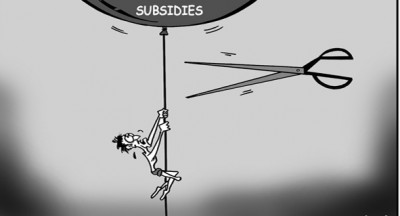
subsidies

Corrupt Ontario Liberals are Accused of Lying, Covering Up Evidence, and Erasing e-mails…..Again!

Trillium accuses Liberals of destroying wind farm lawsuit documents

An offshore wind farm developer that is in the midst of a lawsuit against the province of Ontario is now accusing the Liberal government of destroying documents related to its case.

In a notice of motion filed with the Ontario Superior Court, Trillium Power Wind Corp. says: “It has become apparent … that documents have been destroyed and records of communications have been wiped clean or deleted from computers, or assigned a code name to render their retrieval impossible.

Trillium spent years and millions of dollars developing plans for an offshore wind farm in Lake Ontario near Kingston, but it had the rug pulled out from under it in February, 2011, when the province said it would not consider any offshore development until more scientific studies were done. The decision came the same day Trillium was to sign a large financing deal.

Trillium sued the government – initially for $2.25-billion in damages – but most of the grounds for the suit were thrown out of court.

However, in 2013 the Ontario Court of Appeal said the company could go ahead with one specific allegation, that the government’s decision amounted to “malfeasance in public office.”

As the revised suit – which reduced the claim for damages to $500-million – wound through the discovery process, Trillium found that some government documents it expected to see were not handed over.

Now the company has filed a notice of motion asking that its claim be amended to include the allegation of “spoliation,” or the “deliberate destruction or elimination of incriminating evidence.” None of these allegations, or the claims in the broader suit, have been proven in court.

Ontario’s Liberal government has been hit with accusations that staff members under former premier Dalton McGuinty deleted documents related to the cancellation of two gas-fired power plants. Police are investigating the destruction of e-mails and other records.

The Trillium court filing alleges that the destruction and concealment of documents related to its case were done “concurrently with, and by the same persons” in the office of Mr. McGuinty and the cabinet office who deleted files in the gas plant case.

Jennifer Beaudry, a spokeswoman for Ontario Energy Minister Bob Chiarelli, said it is inappropriate for the minister to comment on the Trillium allegations because the case is before the courts.

However, she said, “we take our record-keeping obligations very seriously. We’re committed to being open, accountable and transparent.” The government has implemented “significant record-keeping reforms” including mandatory staff training and new legislation that implements recommendations of the Privacy Commissioner, she said.

Trillium’s lawyer Morris Cooper said his client’s claim is that “the energy brief was destroyed” pretty much in its entirety when the gas plant files were erased. “All of the communications from the cabinet office and the office of the premier are gone. And there are e-mails confirming an intention to purge, and e-mails confirming an instruction to alter the offshore file to a codeword,” he said.

Among Trillium’s evidence for the destruction of documents, its court filing says, is that some of the communications the company had with the government are “nowhere to be found in the [government’s] documentary productions.”

Trillium also said that the government has not produced any documents regarding internal discussions in the premier’s office or the cabinet about cancelling offshore wind projects, even though it has said that decision was a “core policy decision” of the government.

The provincial government has denied any wrongdoing. A trial in the case is not likely before late in the summer, at the earliest.

Wind Turbine Fires Much More Common Than Previously Thought.

Wind turbine fire risk: Number that catch alight each year is ten times higher than the industry admits

  • Nearly 120 turbines catch fire each year – the reported industry figure is 12
  • Fire is second-largest cause of accidents after blade failure, research shows
  • Figures compiled by Imperial College and University of Edinburgh engineers

Nearly 120 wind turbines catch fire each year, according to new research – ten times the number reported by the industry.

The figures, compiled by engineers at Imperial College London and the University of Edinburgh, make fire the second-largest cause of accidents after blade failure.

The researchers claim that out of 200,000 turbines around the world, 117 fires take place annually – far more than the 12 reported by wind farm companies.

Scroll down for video

Engineers at Imperial College London and the University of Edinburgh say 120 wind turbines catch fire each year. Here, a turbine in Ardrossan, North Ayrshire, catches fire during severe weather

Engineers at Imperial College London and the University of Edinburgh say 120 wind turbines catch fire each year. Here, a turbine in Ardrossan, North Ayrshire, catches fire during severe weather

Fire has a huge financial impact on the industry, the researchers report in the journal Fire Safety Science.

Each wind turbine costs more than £2 million and generates an estimated income of more than £500,000 per year.

Any loss or downtime of these valuable assets makes the industry less viable and productive.

Dr Guillermo Rein of Imperial’s department of mechanical engineering, said: ‘Fires are a problem for the industry, impacting on energy production, economic output and emitting toxic fumes.

‘This could cast a shadow over the industry’s green credentials.

‘Worryingly our report shows that fire may be a bigger problem than what is currently reported. Our research outlines a number of strategies that can be adopted by the industry to make these turbines safer and more fire resistant in the future.’

Wind turbines catch fire because highly flammable materials such as hydraulic oil and plastics are in close proximity to machinery and electrical wires.

These can ignite a fire if they overheat or are faulty. Lots of oxygen, in the form of high winds, can quickly fan a fire inside a turbine, the paper found.

Wind turbine explodes

It contradicts the findings of a report into the wind industry, commissioned by the Health and Safety Executive in 2013, which concluded that the safety risks associated with wind turbines are very low.

The wind industry last night questioned the validity of the new research.

Chris Streatfeild, of Renewable UK which represents wind firms, said: ‘The industry would challenge a number of the assumptions made in the report, including the questionable reliability of the data sources and a failure to understand the safety and integrity standards for fire safety that are standard practice in any large wind turbine.

‘Wind turbines are designed to international standards to meet mandatory health and safety standards including fire safety risks.

‘The industry remains committed to promoting a safe environment for its workers and the public, and no member of the public has ever been injured by a wind turbine in the UK.

Read more: http://www.dailymail.co.uk/news/article-2695266/Wind-turbine-fire-risk-Number-catch-alight-year-ten-times-higher-industry-admits.html#ixzz3boBgvPZu

Stop the Subsidies, and the Windweasels will Scurry Away!

Texans Move to Slam Wind Power Subsidies

texan flag 2

****

The great wind power fraud is in meltdown around the globe.

In the US, ‘wind power’ states have cut their state based subsidies to wind power outfits (or are well on the path of doing so); and Republicans are out to prevent the extension of the Federal government’s PTC wind power subsidy:

2015: the Wind Industry’s ‘Annus Horribilis’; or Time to Sink the Boots In

US Republicans Line Up to Can Subsidies for Wind Power

In Texas, the great wind power fraud launched off with a frenzy of construction, a decade ago. Thousands of giant fans were speared all over West Texas (mostly in the North).  However, with the demand for power centred to the South-East in Dallas and Houston, they spent nearly $7 billion on wind driven grid capacity expansion (see our post here).

But, as everywhere, the wind industry is long on its insatiable demand for an endless stream of massive subsidies, but short on delivery of anything more than empty promises. In Texas, that familiar tale brought the retort from its Comptroller, Susan Combs that it was time for wind power outfits to put up or shut up:

Texas Blames Wind Power Slump on (you guessed it) … the Wind

Now, the Lone Star State’s Legislators have cried “enough is enough”, with its Senate voting to scrap its State-based wind power subsidy, in a move that spells the beginning of the end for BIG WIND in Texas.

Texas Moves to Abolish Renewable Energy Mandates (but much damage has been done)
Master Resource
Josiah Neeley
29 April 2015

“With Texas wind power capacity at more than double the state’s RPS minimum, repeal is unlikely to do much to change the profile of renewable energy in Texas. But repeal is still important, because it sends a clear signal that markets, not politics, should decide what kinds of energy Texans use.”

Texas has always been big on energy. The state’s long history of oil and gas production is well known. And on the electric generation side, Texas ranks first in the nation for nuclear power and has the most installed wind capacity of any state.

While the willingness to develop our energy potential is unrivaled, the means has not always been the best. Like in other states, and the U.S. as a whole, Texas has periodically tried to prop up or hold back different forms of energy via special protections, subsidies, or mandates, rather than letting markets and the price system decide the best energy mix.

That’s why recent events at the state capitol are so interesting. Earlier this month, the Texas Senate voted to repeal the state’s Renewable Portfolio Standard, as well as some related subsidies to the wind industry. If passed by the House and signed into law, the move could signal a broader change in how lawmakers treat energy in the U.S.

How We Got Here

Texas first created its Renewable Portfolio Standard (RPS) as a sweetener to the 1999 legislation introduction of electrical competition. The initial mandate required the state’s competitive electric providers to cumulatively install 2,000 MW of new renewable energy capacity by 2009. Individual companies were responsible for a portion of the total proportionate to their overall share of the competitive electrical market, and could meet their requirement either directly (by building the capacity themselves) or indirectly (by purchasing credits from other producers).

Once in place, the RPS mandate inevitably grew (what Milton Friedman calls the tyranny of the status quo). In 2005, the Texas legislature expanded the RPS to require 10,000 MW of installed capacity from renewables by 2025.

The legislature also acted to deal with a geographical inconvenience: Most of Texas’ wind capacity was in the sparsely populated west, while our electrical demand is centered in urban areas hundreds of miles to the east. In response, the legislature created the Competitive Renewable Energy Zone (CREZ), to build a thousand miles of transmission line to link wind farms with urban demand (to solve the nowhere-to-somewhere problem).

These programs have been costly for Texas. Transmission lines under the CREZ program have cost nearly $7 billion, or $270 per Texan. The cost of transmission lines is socialized across all electrical consumers, and will start appearing on Texans’ utility bills in the near future. Costs of meeting the RPS have been lower, but still have been estimated at approximately$543 million since 2005. 

Blown Away

Yet upon close analysis, these programs appear to have achieved very little. Texas met the 10,000 MW target for installed renewable capacity in 2010, a full 15 years ahead of the deadline, suggesting that the RPS itself was not the major factor. And the CREZ lines are only now being completed.

If Texas’ RPS wasn’t responsible for the big increase in wind capacity, what was? Answer: federal subsidies.

The federal Production Tax Credit, which provided up to $22 per MWh for renewable energy generation, dwarfed any effect of Texas’ RPS. The PTC was so generous that wind generators would often bid electricity onto the grid at a negative price (i.e. they pay you to take it) just to be eligible for the subsidy.

Needless to say, this posed some serious challenges to the long-term reliability of the Texas electrical grid. It has also compromised the economics of conventional sources of power such as gas-fired power plants and even nuclear plants.

Texas’ RPS, more than realized, was an exercise in political symbolism. The costs were real, but the main benefit was that it allowed the state to take a share of credit for the expanding use of wind energy, as explained by Kenneth Anderson Jr. of the Texas Public Utility Commission in the appendix below.

A New Direction

The value of that symbolism appears to be changing. The federal government began phasing out the PTC at the end of 2013 and is currently looking at ways to reform the federal Renewable Fuel Standard.

And here in Texas, there is a growing sense that programs like the RPS and CREZ outlived their usefulness (if they were ever useful to begin with). Wind, in particular, has been the recipient of billions in subsidies over the course of several decades. If the technology can’t survive on its own by now, there’s no reason to think that a few more years of subsidies would change that.

Even if the CREZ program is repealed, Texans will still be paying the cost of these projects for years to come. With Texas wind at more than double the state’s RPS minimum, repeal is unlikely to do much to change the profile of renewable energy in Texas wither. But repeal is still important, because it sends a clear signal that markets, not politics, should decide what kinds of energy Texans use.

———————————

Appendix: Texas Public Utility Commissioner Kenneth Anderson [1]

EnergyWire: After a [Texas] PUC report to lawmakers, bills have been moving forward on possibly scrapping a renewable energy standard and specifying commission oversight of certain direct-current (DC) ties to ERCOT. Some people are pretty upset, particularly on the renewable one (EnergyWire, April 14).

Anderson: I think their concerns are way overstated. … To be clear, we’re still counting renewable energy credits. We wanted to make sure that that continues to happen because it is the way that load-serving entities distinguish products. …

We just felt that there was no real reason to continue to have a mandatory purchase program because … we blew past our target years ago.

EnergyWire: A wind coalition has said the value of some credits could be affected.

Anderson: Will the price be affected slightly? It is possible, but I’m not sure why we should be continuing to have a mandatory program.

EnergyWire: Some environmental groups say Texas would be sending a bad message.

Anderson: How long do you have to subsidize something before it’s finally grown up? … We spent $7 billion to build out a transmission system that doesn’t cost them anything so that it would facilitate their interconnection to the grid. That is an ongoing and continuing, basically, social subsidy. …

Wind does not have to meet a schedule. They’re just a price-taker. ERCOT schedules the wind effectively first, you know, absent constraints on the system. … But, all things being equal, wind gets a free pass from the obligation to meet a schedule. So that in itself is a huge incentive.

[1] Source: Edward Klump, “From renewables to the grid, regulator seeks to keep Texas on its own path,” EnergyWire (E&E News), April 28, 2015 (subscription required).
Master Resource

The Texan’s retreat contrasts with the ridiculous push by Tony Abbott’s (conservative?) Coalition to carpet Australia’s countryside with 2,500 more giant fans. A “plan” which is backed by his $46 billion electricity tax on all Australian power consumers – a punitive and regressive tax, the entire proceeds of which is designed to be funneled off to outfits likenear-bankrupt Infigen as a whopping $3 billion a year subsidy that runs over the horizon, until 2031 (see our post here).

Note though, that Australia is in about the same position as Texas was in 2005, when it had no grid capacity to take power from its planned fan-expansion program. The missing grid had to built for no other purpose than taking wind power from North to South, as noted above. In:

2005 the Texas Legislature approved a major transmission project, the Competitive Renewable Energy Zones (CREZ), to carry mostly wind energy generated in West Texas and the Panhandle to high-demand cities. The project was forecast to cost less than $5 billion but ballooned to more than $6.9 billion to build nearly 3,600 miles of transmission lines and dozens of substations.

As pointed out in the piece above, in part, it’s that whopping cost that has legislators in Texas pulling the plug on subsidies for wind power, in an effort to protect power consumers from ballooning power bills.

In Australia, as we’ve pointed out a few times (see our posts here andhere), there simply is no (or insufficient) capacity to absorb the 17,000 GWh of intermittent wind power (needed each year to satisfy the latest 33,000 GWh LRET annual target) that can – like Texas – only be built in areas altogether remote from major population centres and markets.

Here, however, grid operators have absolutely no incentive to throw $billions at building transmission lines, substations etc running to the back-of-beyond, to take power delivered at crazy, random intervals which – apart from the REC Subsidy that comes with it – has no commercial value at all. The REC Subsidy goes to wind power outfits, not grid operators – and wind power outfits pay nothing to use the grid – that’s a cost that’s extracted by retailers from their dwindling pool of retail customers (see our posts here and here).

And, grid operators in Australia have just been prevented by the Australian Energy Regulator from recovering hundreds of $millions in network infrastructure costs – making the chances of them throwing any more at transmission lines slimmer than a German Supermodel. Why invest a penny, when a regulator is going to prevent you from getting anything like the whole return on that investment back?

Australia’s ‘lack’ of grid infrastructure is just another insurmountable obstacle for an industry in its death throes; and a guarantee that the LRET will go to penalty – with the inevitable imposition of the $65 per MWh shortfall charge.

That charge – which (carpeting the) Environment (in giant fans) Minister Greg Hunt refers to as his “massive $93 per tonne carbon tax” – will see all Australian power consumers end up paying more than $20 billion in fines; on top of the $25 billion that will go as subsidies (in the form of RECs) to wind power outfits.

In their constant need for massive subsidies – that’ll have to outlast religion in order for them to survive – the behaviour of wind power outfits the world over is just like Disney’s doyen of eternal youth – Peter Pan: the boy who could never grow up.

Peter-Pan-disney-200177_490_430