| http://www.theaustralian.com.au/news/health-science/unseen-unheard-wind-farms-a-blow-to-health/story-e6frg8y6-1227219122344
Unseen, unheard wind farmsa blow to healthGraham LloydEnvironment Editor Sydney GROUNDBREAKING Australian research has established a “cause and effect” existed between wind farms and health impacts on some nearby residents, a peer review by one of the world’s leading acoustic experts says. The review of a study by Steven Cooper of residents living near Pacific Hydro’s Cape Bridgewater Wind Farm was undertaken by Paul Schomer, standards director of the Acoustical Society of America. Dr Schomer’s research has been used to define the dose response and acoustic criteria for road traffic, rail traffic, aircraft traffic and shooting. As a result of the Cooper research, Dr Schomer said wind farm developers should now say “We may affect some people”. He said regulators charged with protecting health and welfare “will not be able to say they know of no adverse effects”. Pacific Hydro has said previously it did accept the Cooper research had established a cause-and-effect link, a claim that was not made in the report. The National Health and Medical Research Council this week said there was no consistent evidence wind farms caused adverse health effects and further research was needed. The NHMRC did not review the Cooper research. Dr Schomer said the Cooper work had shown clearly there was “at least one non-visual, non-audible pathway for wind turbine emissions to reach, enter and affect some people”. The six people from three households involved in the study had recorded the timing and level of effects they were experiencing. Their notes had shown that impacts corresponded with wind turbine power changes. The subjects did not know what was happening with the wind turbines when they recorded their notes. “This study finds these six people sense the operation of the turbine(s) via other pathways than hearing or seeing, and that the adverse reactions to the operations of the wind turbine(s) correlates directly with the power output of the wind turbine(s),” he said. “The important point here is that something is coming from the wind turbines to affect these people and that something increases or decreases as the power output of the turbine increases or decreases. “It really does not matter what the pathway is, whether it is infra-sound or some new form of rays or electromagnetic field coming off the turbine blade. If the turbines are the cause, the wind farm is responsible and needs to fix it.” Dr Schomer said criticism that only a small number of people were involved in the study was not relevant. “One person affected is a lot more than none; the existence of one cause-and-effect pathway is a lot more than none.” The peer review was co-signed by George Hessler, the president and principal consultant for US acoustics specialist Hessler Associates.
|
Dysfunctional wind turbines!
Steven Cooper’s Study, has Windweasels in a Panic! The Truth is Not What they Wanted!
Steven Cooper’s Cape Bridgewater Bombshell Sends Wind Industry into Flat Panic
February 12, 2015 by 1 Comment

In the three weeks or so that have passed since Steven Cooper’s Cape Bridgewater wind farm noise study hit the press (see our post here) the wind industry, its parasites and spruikers have been in absolute panic mode.
Pacific Hydro – the operator of the Cape Bridgewater disaster, which paid for the study, but deliberately limited its terms of reference – has gone into absolute “damage control” (see our post here).
Having completely underestimated Cooper’s ability and, lulled into its own sense of delusional belief that its victims are simply “making it all up”, Pac Hydro has enlisted the “help” of the usual band of useful idiots, in an effort to manipulate and control the media and its reporting of Cooper’s groundbreaking research.
The wind industry’s shills – like the Clean Energy Council and the Australian/Victorian Wind Alliance (aka Andrew Bray) – clearly haven’t bothered to read the highly technical and detailed study, which, with its six appendices, runs to nearly 800 pages and, in the unlikely event that they have, are clearly incapable of understanding it.
Or, perhaps, the predictable response from the wind industry and its baggage train of parasites is best captured by Upton Sinclair’s pithy observation that:
“It is difficult to get a man to understand something, when his salarydepends on his not understanding it.”
Moreover, as we have pointed out before, it’s not Cooper’s study they need to worry so much about but the dozens of others that – following his insights – will involve matched control groups; will involve physicians, including sleep specialists, for example; and be scaled up to include dozens, if not hundreds, of victims at wind farms, both in Australia and around the world.
Properly qualified experts (ie those with acoustic and vibration engineering qualifications, with decades of experience in that field) have identified the significance of Cooper’s study; and rightly applauded it for its rigour and insights; despite Pac Hydro’s deliberate efforts to limit the scope and reach of the study (see our post here).
What those in the know have to say contrasts pretty sharply with the shrill press releases and media comments pouring out of the wind industry cheer squad; as you’d naturally expect from people equipped with little more than self-interest, and media and marketing degrees.
But this merry band of media manipulators has well and truly lost control of the media game.
As it is with the wind industry “case” more generally, what these spruikers pitch up rarely stacks up against the true facts; and is full of internal inconsistencies, fluff, guff and good old-fashioned lies.
One of the giveaways is the Clean Energy Council’s response to the study when it started ranting that it “would not support further research” into Cooper’s findings. What on earth are they so afraid of?
It’s a style that has all the persuasive power of Little Britain’s vacillatingQueen of Darkley Noone, Vicky Pollard, whenever she’s put on the spot.

None of which is lost on STT Champion, Annie Gardner who came out with this crystal clear Opinion piece, published in the Hamilton Spectator. Over to Annie.
Hamilton Spectator
Opinion
7 February 2015
Study is World First Research
Ann and Andrew Gardner, Penshurst
I write in response to the article ‘Study “suggests” health and wind farm noise link’ published recently in the Hamilton Spectator.
It would appear that many adverse comments are not related to the study, but opinions proffered from the media release. The study report is very comprehensive and could not be read, absorbed and understood in a few days, let alone a few hours. The same issue of concern would also apply to the Hamilton Spectator, where the facts have unfortunately been misrepresented in the above article.
World first
This study is world first research, where the brief was to work backwards and discover what wind or noise levels agreed with the complaints made by residents at Cape Bridgewater over six years.
The measurement results show what has been known since Dr. Neil Kelley and NASA’s work, funded by the US Dept. of Energy in the 1980’s which originally identified the direct causal relationship between symptoms and sensations and impulsive Infrasound/Low Frequency noise from various sound sources which included wind turbines, gas turbines and military aircraft.
The study has a number of world first claims that are simply ground breaking. This is the first time a wind farm operator has undertaken a “transparent” study where the wind farm worked with residents and provided all the wind farm data and unlimited access to the study team.
Identified problems
The study is the first that has considered sensation as an observation by residents.
This study has identified problems with instrumentation and measurement of infrasound, and has then provided answers and suggested standardisation for other researchers.
Whilst Pacific Hydro are being cautious with their comments, other wind farm proponents or members of the wind energy consortium are being extremely mischievous with their criticism, as reported in this article, of what has been detailed scientific research.
The limitations which the wind industry are busily highlighting are those which were placed on the acoustic engineer Steve Cooper, purely by Pacific hydro, the developer of the Cape Bridgewater wind farm.
The features cited as lacking were –
- Large sample size. The brief by Pacific Hydro to Steven Cooper was for ONLY THREE HOUSES to be studied.
- Peer review. Pacific Hydro refused to allow Steven Cooper’s study to be peer reviewed.
- No control group. There was no control group purely by design of Pacific Hydro.
- No assessment of “compliance” with the permit conditions under instructions of Pacific Hydro.
Contrary to the statement in the article (para 3) the observations from the diaries used in the study were not reporting “health complaints”.
Observations
Contrary to the statement in paragraph 10 of the article, the participants were not “made aware of what the wind farms” (there is only one) “were doing whilst their responses were being recorded”.
Contrary to comment in this article by the wind industry representatives, this study can EASILY be replicated at other wind farms, in particular the Macarthur wind farm, in this district.
The symptoms experienced at Macarthur wind farm are IDENTICAL to those which residents at Cape Bridgewater suffer from. Some families living around the Macarthur wind farm have been forced to move away, whilst others are forced to leave their homes repeatedly, in order to get a decent night’s sleep.
Hundreds of complaints
AGL and ALL levels of government and government bodies, in particular the Victorian Health Department, are in receipt of hundreds of complaints from residents at Macarthur, but are in total denial, and have done NOTHING to acknowledge, or rectify this truly unacceptable situation.
The wind farm proponent interviewed had a swipe at the residents making complaints, even when the turbines were turned off and, by not reading the report, failed to identify the qualification of some sensations (of a lower magnitude) and further investigations that showed pulsations in the turbine towers and the ground following wind gusts.
Around the Macarthur wind farm, residents suffer from infrasound emitted by the turbines, even when they’re not operating, similarly to Cape Bridgewater. Even when the turbines are turned off, we feel the same “sensation”, being headaches, ear pressure, nose pressure, heart palpitations, nausea, dizziness etc., and still cannot sleep at night.
Movement
Due to the mammoth scale of these towers, there is movement ALL the time, whether high or low winds, in addition to when they’re turned off. Due to the extreme size of the towers, they still continue to vibrate, thus emitting infrasound waves. The laws of physics show such structures exhibit natural frequencies that are associated with structural resonances in the infrasound region. Nobody with appropriate qualifications and experience can deny this. The residents at Macarthur have comprehensive evidence and noise testing, showing infrasound emitted whilst the turbines are not operating.
The truth is emerging, and will continue to be exposed as more evidence is brought to light, but for those receiving millions of taxpayer dollars, the truth is beginning to hurt, and it appears they are in damage control.
Hamilton Spectator

Derek Byrne and his Family, Forced to Endure the Torture From Wind Turbines.
“It’s a disaster”: Family affected by windfarm’s turbine flicker
The family say it makes day-to-day life difficult.
DEREK BYRNE AND his family live around 330 metres from wind turbines, and say that a ‘flicker’ from energy-generating machines is causing them major problems.
They live near the wind farm in Athea in Co Limerick, and the turbines can be seen from their front window.
The wind farm was erected in August 2013, and Byrne said that they’ve been experiencing the flicker since soon after the turbines appeared.
Why it happens
The flicker occurs because when the sun is low and shining from behind the turbine, the blades block some of the light briefly.
They experience the flicker in the whole house, said Byrne, who lives there with his wife and children.
“Even if you’re in a room with closed blinds. The whole house flickers black. It’s every two seconds for about 20 minutes.”
“When the sun is low at both stages during the day the flicker is at its most prominent.”
Byrne said he has been in touch with SSE Airtricity since December 2013, and that they have told him that there is usually a programme to stop the turbines when the flicker occurs.
“After numerous complaints there is still the flicker,” he said.
Like an “airport apron”
The family have also been experiencing noise due to the turbines, with Byrne saying it is akin to “an airport apron at night time”.
He said the noise is obvious “even with all the windows closed and the TV turned up”.
Every morning I arrive home at 7.30am and it’s like arriving into Shannon airport. It is very unpleasant.
Byrne said there are four houses in the area directly affected by the turbines. “Over the Christmas period it was at its worst,” he said. “It’s been a disaster, absolutely a disaster.”
It lasts longer in the winter months, and can happen up to three times a day.
Were they warned about it? “No we weren’t warned anything about the nearest turbine to us,” said Byrne.
“We were informed about six months before it went up,” he said of the wind farm, adding: “We’re not against wind energy or renewable energy.”
“I’m blessed I work night shifts,” he concluded. “It’s very unfair on the children.”
What does Airtricity have to say?
The electricity from the wind farm is generated by Airtricity, but SSE Renewables built the Athea project.
A spokesperson for SSE Renewables said:
We are aware that some residents living close to our Athea wind farm in Co Limerick are experiencing some intermittent issues with shadow flicker.We are investigating the cause of these issues and we’re working hard to resolve them as quickly as possible. We recognise the impact these issues are having on the residents concerned and while we work on putting in place a permanent solution to resolve these issues we continue to maintain regular contact with them.
Of the noise, it added:
“We are also working to implement a noise control system at the site. We will utilise this system to ensure that all turbines at the wind farm continue to operate at industry guideline limits.”
Windpushers Leaving Australia, Gov’t Smartening Up! Victims Getting Harder to Find….
Australian windfarms face $13 bln wipeout from political impasse

SYDNEY, Feb 8 (Reuters) – Australia faces a A$17 billion ($13.3 billion) exodus of investment from its windfarm industry because of a political deadlock, threatening to deal the country a major economic blow and kill hopes of meeting a self-imposed clean energy target.
Some 44 Australian windfarm projects, about half overseas-funded, have been shelved since a new conservative government said it wanted to cut state support for the industry a year ago, with investors and operators saying they are considering either downscaling or leaving the country altogether if it succeeds.
Even Australian windfarm companies such as Infigen and Pacific Hydro have effectively shelved their Australian operations, with Infigen saying it plans to pour all its financial muscle into the more amenable U.S. market.
“It’s a difficult time at the moment, and the policy uncertainty is the main cause of it,” said Shaq Mohajerani, an Australian spokesman for wind farm company Union Fenosa, owned by Spanish energy giant Gas Natural.
“We’re still considering all options on how to proceed. The parent company will provide us with the strategy.”
A Gas Natural spokesperson said the firm had an “attractive backlog” in Australia but “we are waiting for the whole development of the new framework for renewable energy and hope our presence … in the country can be maintained”.
Wind power in Australia is not the only renewable energy sector to be affected by uncertainty over government subsidies or actual cuts. In Europe, Germany has scaled back support for solar power over the past few years, leading to a flood of insolvency filings by solar firms and a shrunken market.
Italy’s plans to cut subsidies for solar power firms have prompted an investor exodus. Retroactive solar subsidy cuts have also happened in Spain, Greece, Bulgaria and the Czech Republic over the past couple of years, putting off new investors as governments try to rein in energy costs and cut debt.
Windfarms are Australia’s No. 2 renewable energy source, behind hydropower but ahead of solar, providing a quarter of the country’s clean energy and 4 percent of its total energy demand. But while households can collect rebates for installing their own rooftop solar panels, windfarms rely on “certificates”, or tradeable securities handed out by the government, to offset costs.
That support hit a roadblock a year ago when new conservative prime minister Tony Abbott ordered a review of the country’s target for clean energy use by 2020, which ultimately recommended slashing it by a third, in line with falling overall energy demand. A lower target would mean a lower certificate price.
The centre-left Labor opposition, whose support the government needs to lower the target, refused to budge on the higher target it set when in power in 2009, resulting in an impasse that has effectively seen the industry grind to a halt.
A spokeswoman for U.S.-owned GE Australia & New Zealand, which has stakes in several renewable energy projects, said further investment “will only occur once investor confidence in the policy environment is restored. For this to happen, bipartisan support regarding the future of the renewable energy target is essential.”
The Australian arm of Spanish infrastructure group Acciona , the world’s largest renewable energy firm, has frozen about A$750 million of windfarm projects because of the stalemate, said local managing director Andrew Thomson.
“When you’re a subsidiary (of a global business), you’re competing for capital, you’re competing for your budget allocation next year,” he said.
“If the parent company can’t see that there’s a stable environment it becomes really difficult to get traction. For us at the moment it’s a really difficult sell.”
If the renewable energy target is cut, “it’s the type of jolt to industry that basically would create such an upheaval that you would have a mass exodus”, said Alex Hewitt, managing director of Bulgarian-Polish-U.S.-backed windfarm operator CWP Renewables, which has A$1.5 billion of projects on ice.
“I can’t say whether we’d completely exit the country, but you would be looking at such a level of reduction in the level of investment into people in the company that it would be very significant,” Hewitt said. ($1 = 1.2793 Australian dollars) (Additional reporting by Jose Elías Rodríguez in Madrid and Nina Chestney in London; Editing by Will Waterman)
More Proof of the Harm Wind Turbines are Causing! Someone needs to be held accountable!!
Australian Research Yields Insights on Wind Turbine “Signature”
FEBRUARY 8, 2015
Acoustician Steven Cooper was commissioned by the Australian utility, Pacific Hydro, to investigate the complaints of families near the wind plant at Cape Bridgewater, Australia. The Cape Bridgewater Wind Farm Acoustic Study is a 235-page report, packed with data, including six appendices which amplify and detail the findings of the study.
According to the Waubra Foundation’s analysis (“Acoustic Engineering Investigation at Cape Bridgewater Wind Facility” 2/1/15),
The purpose of the investigation was simply to find out what was causing the symptoms and sensations, resulting in sleep disturbance and health damage, reported to Pacific Hydro between 2009 and 2014 by the residents of three homes sited between 600 – 1600 metres [from just over 1/3 mile to 1 mile] from wind turbines sited at the Cape Bridgewater Wind Project in Victoria, Australia. [see maps below]
In The Australian “Turbines may well blow an ill wind over locals, ‘first’ study shows” (1/21/15), Graham Lloyd reported :
Funded by wind farm operator Pacific Hydro, the study was conducted at Cape Bridgewater in southwest Victoria where residents have long complained about headaches, chest pains and sleep loss but have been told it was all in their minds.

Waubra’s image of Cape Bridgewater Wind plant ( part of Pacific Hydro’s Portland Wind Energy Project)
There were several “firsts” to this study.
- Cooper took a variety of measurements in and around the three homes during both times when the turbines were operating and when they were shut down–with the cooperation of Pacific Hydro.
- The measurements went beyond standard dB(A), to capture harmonics peculiar to wind turbines as the blades pass by the stationary mast. This yielded new readings, branded by Cooper “wind turbine signature” or WTS.* Infrasound below the audible range was captured, as well.
- The residents kept continuous diaries, recording their experience of noise (which can be heard), vibration (which can be felt), and sensations (which were considered to be reactions to infrasound). The diary entries were later correlated with recorded measurements.
Participants in the study, six individuals from three households, described their appreciation of the study findings in the Waubra Foundation’s pages devoted to the Cooper study.
Mr Cooper’s investigations also found correlation between the “high severity” sensations we experience as noted in our diaries and his measurements of wind turbine infrasound inside our homes. “High severity” describes the times when the symptoms or sensations are so severe that we feel we have to immediately leave our homes. These high severity impacts happen regularly for those of us who live, stay or visit our homes at Cape Bridgewater. Some of our health practitioners have advised us to permanently leave our homes in order to escape the symptoms and regain our health. Unfortunately some of us have developed permanent health problems known to result from continuing exposure to infrasound and low frequency noise so that even permanently moving away will not restore our health to its pre-wind turbine level.
Stephen Ambrose, an acoustician with a distinguished career devoted to protecting individuals from excess noise, congratulated Cooper on his effort. In his letter, Ambrose noted the advances made by the study, “Your correlation of human response journal entries with scientific waveform analysis clearly shows hearing is not limited to audible sounds. Research continues to reveal that the ear has multiple functions and capabilities.”
Another U. S. acoustician, Robert Rand wrote, “The correlation of sensation level to WTS tone level in the infrasonic and audible bands brings wind turbine acoustics right to the door of medical science. Medical tests in the homes, long overdue, can now be correlated directly to WTS. May the medical testing in homes begin without further delay.”
Canadian researcher Carmen Krogh, who has monitored findings from self-reporting projects as well as the recent Canadian government study, said
Through the study design, your exhaustive infrasound measurements, the detailed diaries kept by the families, and Pacific Hydro’s cooperation, this study has advanced the understanding of the role of infrasound and human responses associated withindustrial wind turbines. Such collaborative efforts have set a new standard for conducting future research.
Australian Bob Thorne, who had previously studied the Cape Bridgewater experience of residents, pointed out several unique contributions of Cooper’s study and said:
The obvious support from both PacificHydro and the residents is the stand-out feature of the study and it is clear from the text that the outcomes were not envisaged by yourself or the study participants at the commencement of the study. The approach taken is highly professional and supportive to both your client (PacificHydro) and sympathetic to the residents who provided you with their assistance.
The Cape Bridgewater Wind Project consists of 29 2-MW wind turbines located in Victoria Australia. The turbines are MM82 manufactured by Senvion (formerly licensed as REpower). A German company,Senvion is the fifth largest maker of wind turbines.
*The acronym WTS associated with this study should not be confused with the widely-used WindTurbine Syndrome, coined by Dr. Nina Pierpont, the Johns Hopkins-trained doctor, to signify the cluster of symptoms she identified in investigating the health complaints of individuals who lived near wind turbines.

Cape Bridgewater, Victoria, Australia

No comments yet
Leave a Reply

Wind Turbines are a Huge Disaster….the Whole World Over!
More on Germany’s Wind Power Fiasco
February 8, 2015 by 1 Comment

The Germans went into wind power harder and faster than anyone else – and the cost of doing so is catching up with a vengeance. The subsidies have been colossal, the impacts on the electricity market chaotic and – contrary to the environmental purpose of the policy – CO2 emissions are rising fast: if “saving” the planet is – as we are repeatedly told – all about reducing man-made emissions of an odourless, colourless, naturally occurring trace gas, essential for all life on earth – then German energy/environmental policy has manifestly failed (see our post here).
Some 800,000 German homes have been disconnected from the grid – victims of what is euphemistically called “fuel poverty”. In response, Germans have picked up their axes and have headed to their forests in order to improve their sense of energy security – although foresters apparently take the view that this self-help measure is nothing more than blatant timber theft (see our post here).
German manufacturers – and other energy intensive industries – faced with escalating power bills are packing up and heading to the USA – where power prices are 1/3 of Germany’s (see our posts here and hereand here). And the “green” dream of creating thousands of jobs in the wind industry has to turned out to be just that: a dream (see our post here).
Now, Germans are fast waking up the unassailable fact that wind power is not only insanely expensive, it’s utterly meaningless as a power source.
Here’s a couple of no-nonsense pieces from NoTricksZone spelling it out in pictures, of the kind that the wind industry bends over backwards to ensure that you’ll never see.
THE CHART Wind Energy Proponents Fear You’ll See … Offshore Wind Turbines Stay In Bed 4 Of Every 5 Workdays!
NoTricksZone
P Gosselin
5 February 2015
Yesterday I published a piece by Fred F. Mueller on Germany’s out-of-control renewable energy transition and how it is in fact transitioning over to a disaster.
What follows below is a graphic that proponents of the offshore wind energy industry don’t want anyone to see. It tells the whole story about how (in)efficient and (un)reliable German offshore wind energy really is (Hat-tip: www.achgut.com) (for a clear look at the graph, click on it and it will open in a new window):

Chart shows the installed nameplate offshore wind capacity (shaded green) and the actual output (blue shaded area) since 2009. Wind’s poor performance and unreliable, wildly fluctuating supply disappoint and risk sinking Germany’s “Energiewende”. Chart source: R. Schuster.
The above chart was prepared by Rolf Schuster, an industrial engineering designer, who during his free time has started a wind power databank in order to check the rosy claims being made by the wind power lobby. The results are not something any fast-talking salesman would want any potential buyer to see. The power that was input (blue) is a mere fraction of the rated capacity (green).
Schuster writes:
“If you divide the power fed in (blue) by the rated capacity (green) you get the percent of the rated capacity that actually gets fed into the grid. The linear trend shows a negative tendency – towards 20 percent of the rated capacity. That means: Despite the massively increased capacity in 2014, hardly more power has ended up getting delivered compared to the start of the year. Only one fifth of the rated capacity actually gets fed in.”
Many proponents used to argue that the wind is always blowing at the North Sea, and so a steady supply was a sure thing. Now we have real results coming in. That “steady” wind is only delivering 20% of the installed rated capacity. A fiasco.
Schuster also says that offshore turbines have serious technical problems as well. Foundations are being washed out from underneath; there’s corrosion, and overloads that lead to turbine shutdowns. The harsh conditions of the North Sea a proving much tougher to handle.
There are also major problems with the high-voltage direct currentsystems that have yet to be solved, Schuster writes. One entire North Sea wind park has been disconnected from the grid as a result. This, Schuster says, “makes one ask if the installation of a major power transmission line from North Germany to South Germany would be a high risk gamble for the German energy supply”.
Green power goes AWOL again!
Also a look at online energy portal Agora here also tracks renewable energy that gets fed into the German power grid. A look at today’s graphic for the last 31 days tells us that once again wind and solar have gone AWOL, and so conventional fuels such as gas, nuclear and coal have to jump in to bail out.

The above chart shows German energy supply and consumption for the last 31 days. Solar power that was fed into the grid is shown in yellow. Wind power is shown in blue. Cropped from Agora. (for a clear look at the graph, click on it and it will open in a new window)
Yesterday, February 4, we saw very little wind power getting fed into the grid, less than a gigawatt from a nameplate capacity of some 55 gigawatts of installed capacity – less than 2%! On February 4 wind and solar together virtually fed in almost nothing into the grid. If it had not been for coal, gas and nuclear, the country would have gone dark.
NoTricksZone

Germany’s “Energiewende” Leading To Suicide By Cannibalism. Huge Oversupply Risks Destabilization
NoTricksZone
P Gosselin
4 February 2015
The coming age of power cannibalism…Germany on the verge of committing energy suicide
By Fred F. Mueller
German politicians see themselves as the saviors of our climate. In the early 1990s German politicians started the policies that ultimately culminated in the “Energiewende”, which aims to eliminate nuclear power generation and some 76% of the fossil fuel power generation. By 2050 some 80% of power generation should come from “renewable” green sources such as wind, solar, biomass, waste incineration and hydro. Since the volatile sources of wind and solar power will have to contribute the lion’s share, politicians reluctantly concede 20% of the energy coming from reliable fossil power sources.
Germany’s endeavor is indeed breathtaking. A look at Figure 1 shows in detail how massively Germany had once relied upon fossil and nuclear power sources to secure a highly reliable power supply. These sources were controllable and highly reliable. And because Germany’s topology offers only limited possibilities for hydropower, that renewable source is minimal.

Figure 1: In 1990 the German grid was able to count on conventional power sources which were controllable and highly reliable. Renewable hydropower accounted for only 3.6 %.
Today, after some two decades of massive green energy policy, the situation has changed dramatically. Wind, solar, biomass and waste incineration plants have been promoted to such an extent that together with hydropower, the share of “green energy” today has reached 25.8 % of the country’s total electric power production. This resulted from Germany’s EEG renewable energy feed-in act which guarantees producers fixed rates for 20 years and forces power companies to buy up all the renewable power produced, regardless of the market conditions. The result has been a massive oversupply which has led to steep price drops on power trading floors, which in turn have pushed fossil fuel utilities to and beyond their profitability limits. Surplus production has been repeatedly dumped onto neighboring markets and resulted in massive disturbances for the respective national power grids. Readers interested in a more detailed description of the policy might have a look at the article of Marita Noon [NOON].
Capacity without control
The problem with the “renewable” power sources of wind and solar is their intrinsic volatility coupled with their poor capacity utilization rates of only 17.4% for wind and 8.3% for solar (average values for Germany).
That poor utilization rate means one has to build up huge overcapacities in order to achieve a certain amount of power production. Worse, the power source fluctuates wildly according to weather conditions. As a consequence, Germany has to maintain a dual power generation infrastructure that comprises a grossly overinflated capacity of “renewable” wind and solar power plants shadowed by a full scale backup set of conventional plants. These conventional power sources must always be on standby, ready to take over when weather conditions aren’t favorable. The production-fluctuation range of the “renewables” wind and solar is incredibly wide and volatile. For example in Germany there is an installed nameplate capacity of nearly 73,000 MW. Yet the minimum power output in Germany in 2014 from both sources was a meager 29 MW (only 0.04% of installed capacity) while the maximum value was 38,000 MW (48%).
The massive buildup in wind and solar power has already resulted in a considerable nominal overcapacity of “renewable” power sources.
The combined rated capacity of all “renewable” power sources already reaches about 87,000 MW, which is the maximum power consumption the grid has been designed to secure. Additionally, a minimum conventional power station capacity of some 28,000 MW has to be constantly connected to the grid in order to secure supply stability. As a result the risk of the grid reaching an oversupply situation if weather conditions are favorable for both wind and solar power plants is growing with every additional “renewable” plant that comes online. Currently 5,000 – 6,000 MW are getting added each year. That situation is aggravated by the fact that there exists no technology to absorb and store any noticeable quantities of oversupply. Neighboring countries are already taking measures to fend off surplus-power-dumping that could destabilize their grids.
Power cannibalism has already started
The result is a grid which at times is so oversupplied with power that something will have to give. Fossil fuel power plants have been throttled to the point where they are no longer profitable and many power companies have started mothballing them, so quickly in fact that Germany had to pass legislation forcing producers to keep their fossil plants on stand-by, and to do so even if they lost money. Even the reliable “classic” renewable power sources – e.g. hydropower – are starting to suffer because most are not supported by government schemes.
As the build-up in renewable capacity continues, even the subsidized “renewable” power sources will sooner rather than later be forced into fierce competition for access to the grid whenever the weather conditions turn favorable. One can speculate that within just a couple of years, the first “renewable” energy sources will slowly be driven out of the market because of oversupply. Eventually the renewable power producers will be forced to cannibalize each other in an increasingly fierce competition for privileged access to the power grid as the unwanted events of over-supply become increasingly more frequent.
Things are set to get much worse
Normally, one would think that a government confronted with such a situation would stop at this point and wait for a technically and commercially viable solution for storing the increasing amounts of produced surplus electric energy – for use during times when weather conditions are less favorable. Unfortunately no such storage solution is currently available at the required scale, and anything being proposed so far is either much too expensive or has efficiency factors that are not worth discussing.
Yet Germany has a unique peculiarity: its leaders sometimes exhibit a stunning inability to recognize when the time has come to abandon a lost cause. So far €500 billion has already been invested in the “Energiewende”, which is clearly emerging as a failure. Yet all political parties continue to throw their full weight behind the policy rather than admitting it is a failure (which would be tantamount to political suicide). Instead, the current government coalition has even decided to shift into an even higher gear on the path to achieving its objective of generating 80% of German electric power from “renewable” sources by 2050. If the situation is practically unmanageable now with 25% renewable energy, it’ll be an uncontrollable disaster when (if) it reaches 80%.
If the government sticks to its targets, the share of the different power sources will probably appear as in Figure 2. Currently just 26% has been achieved so far, and the existing biomass share of some 7% is more or less doomed and thus will also have to be replaced by wind and solar. One can easily see how daunting the task that still lies ahead really is.

Figure 2. The official goal of achieving 80% power supply from “renewable” sources by 2050 requires further massive investments in wind and solar power technologies. Imagine the huge power supply fluctuations one can expect to see from wind and sun.
Waiting for the grand finale
The real risks that lie ahead for the German power generating infrastructure become more recognizable if one looks at the nameplate capacity buildup that has taken place, e.g. just over the past five years, and compares it to what will additionally be needed by 2050, see Figure 2. Keeping in mind that €500 billion have already been contracted and will have to be paid by the consumer, one gets an idea of the proportions of the task still to be tackled in the coming years.

Figure 3. The installed nameplate power production capacities for wind, solar and biomass as of 2014 has already severely burdened the German consumer with costs of about €500 billion. That will dwarfed by what lies ahead, if politicians don’t change course. Note how 376,000 MW of wind and sun capacity may be installed to ensure meeting the country’s roughly 70,000 MW of demand.
Apart from the sheer dimensions of the costs that lie ahead, the additional cannibalism aspect will grow to enormous proportions. Since an installed wind and solar capacity of some 73,000 MW in 2014 yielded a combined maximum power output of 38,000 MW, the 376,000 MW that are to be installed by 2050 will generate a peak output of 196,000 MW to a grid that might just be able to take up between 40,000 and 90,000 MW. That means, depending on the weather, between 106,000 and 156,000 MW will have to be dumped somewhere else.
In the fight to get power into an often times severely overloaded grid, that’s when cannibalism amongst “renewable” power sources will really become intense. Will wind farmers sabotage solar plantations? Will solar owners sabotage wind turbines? Time will tell, maybe much sooner than we think.
Fred F. Mueller
Sources: [NOON] Marita Noon: Germany’s “energy transformation:” unsustainable subsidies and an unstable systemwww.cfact.org/2014/12/16/germanys-unsustainable-subsidies-and-an-unstable-system/
NoTricksZone

Wind pushers Ignore the Damage They’re Causing!
Low-Frequency Wind Turbine Noise: a Recipe for Unhappy Mothers and Unhealthy Babies
February 7, 2015 by

Noise is always and everywhere a public health issue.
Last year, in a piece looking at the importance of silence to healthy, happy communities, The Economist, quoting Poppy Elliot from the Noise Abatement Society, wrote that:
[A] quiet environment is necessary to enable people to fulfil their intellectual and creative potential. She points to a report on the health effects of noise published by the World Health Organisation in 2011, which found that in western Europe, excessive noise was second only to air pollution as a cause of environmental ill-health.
STT agrees. But common sense rarely needs an advocate; if you’re still not convinced, see our post here.
As the World Health Organisation puts it:
There is plenty of evidence that sleep is a biological necessity, anddisturbed sleep is associated with a number of health problems. Studies of sleep disturbance in children and in shift workers clearly show the adverse effects.
That little chestnut comes from the WHO’s Night-time Noise Guidelines for Europe – for more of the same, see the Executive Summary at XI to XII.
Sleep deprivation is, by far and away, the most common adverse health effect caused by turbine generated low-frequency noise and infrasound (see our post here).
That unassailable fact has been well-known to the wind industry since the 1980s – thanks to the work done by Neil Kelley and Co (see our postshere and here and here): conclusive scientific research establishing low-frequency turbine noise as the cause of sleep disturbance and other adverse health effects, which the wind industry buried, the NHMRC ignored, but which STT found without too much trouble (see our postshere and here).
And so much has recently been confirmed (again) in Steven Cooper’s groundbreaking study at Cape Bridgewater (see our posts here and hereand here).
While the occasional poor night’s sleep is used to excuse substandard work performance, grumpy attitudes at the breakfast table and the burning need for a third cup of coffee, the absence of a decent night’s kip takes on special significance for the parents of newborns, especially mums.
The focal point for these parents is sleep; or, rather, the somewhat cruel lack of it.
Discussions rarely stray far from how well bubs slept?; how well dad might have slept? (the importance of which, is often downplayed or dismissed by mum); or whether mum managed to get any sleep at all? (although, few are so bold to downplay or dismiss the importance of thatcomplaint!).
Anyone who has been part of the process knows the joys of being woken, night after night, at three in the morning with a poke (and failing that, a kick) in the ribs from the other half, and a grumbled “it’s your turn”.
While, in the morning, dad, bleary eyed, might trundle off to work a little worse for wear, it’s mum that usually fronts up to the full responsibility of looking after the wriggling bundle of joy that kept everybody up for most of the night.
Faced with a wildly erratic and surging sea of postnatal hormones, little or no sleep and the anxiety that only an inconsolable infant can bring, it’s little wonder that young mums can end up feeling a little down in the dumps.

For first time mums, those pressures can quickly mount; and only get worse if there’s any outside agent interfering with her ability to snatch a little sleep, from time to time.
But, for all of the nocturnal dramas, the upside for mum is looking down on the face of her well-fed young precious, as he or she drifts off to the land of nod.

For mums, breastfeeding is not only a time to provide their pride and joy with life-giving nourishment, it’s a moment when the maternal bond is built; and becomes eternal.
Getting as much sleep as baby’s demands permit, naturally leads to happier mums and healthy, well-fed babies.
So, you’d think that nursing mothers would know and appreciate just how important sleep is to both mothers and infants?
But not, apparently, if they’ve been recruited as spruikers for the wind industry.
In Australia, the needs and rights of nursing mothers are taken seriously (as well they should be). And, so much so, an advocacy group called the Australian Breastfeeding Association has been going into bat for breastfeeding mums for over 50 years.
Now, one of the ABA’s numbers, Angela McFeeters, from Portland has decided to tip a bucket on both common sense and maternal instinct, with this little effort, attempting to explain away and excuse the misery dished up to residents by Pacific Hydro’s Cape Bridgewater wind farm disaster.

McFeeters is a paid up member and spokesperson for Andrew Bray’s Victorian/Australian Wind Alliance – a merry band of eco-fascists happy to spruik on behalf of their wind industry clients, and to profit from the misery of others.
McFeeters has been caught out as being little more than a wind industry Patsy, by none other than Melissa Ware – one of Pac Hydro’s long-suffering victims at Cape Bridgewater; and one of the subjects of Steven Cooper’s study.
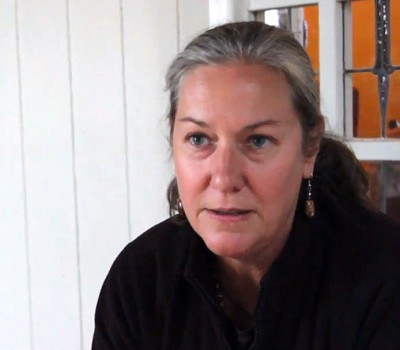
Here’s an open letter from Melissa that puts McFeeters well and truly back in her box, as only a mother who has been there and done that could do.
Australian Breastfeeding Association head office
1818-1822 Malvern Road
MALVERN EAST VIC 3145
Email: info@breastfeeding.asn.au
OPEN LETTER
The article above has recently been published in the Portland Observer by Bill Meldrum “Wind Alliance rejects health claims”; I object to the incorrect statements made within it by Ms Angela McFeeters, an ABA representative at Portland and spokesperson for the Victorian/Australian Wind Alliance. I draw it to your attention for discussion, review and management of.
As one of the six resident participants in the Steven Cooper Acoustic Testing Program at Cape Bridgewater of Nov 2014, I have firsthand knowledge of impacts and conditions living in proximity to the industrial wind energy plant of 29, 2MW turbines at Cape Bridgewater causing health impacts and disturbance to us and to many others exposed to infrasound and other disturbing industrial ‘noise’ emissions around Australia.
I suggest the ABA has a duty to become more fully informed of these public health impacts to assist new mothers and babies; to become informed of the issues by reading the links below and further extensive information compiled and available at; wind.watch.org, the Waubra foundation or Stop These Things websites.
Ms McFeeters would not have the medical expertise to publically declare any conclusions on the status of my health, only my GP or Specialist have the comprehensive understanding of and authority to make any statements regarding health or impacts to it. Ms McFeeters has over the past 12 months anonymously attended community consultation meetings related to the acoustic study being conducted by the owners of the wind farm, Pacific Hydro and has heard the impacting conditions we have reported to the company and the Government Authorities over the past six years.
This is not the first biased public statement or comment Ms McFeeters has aired whilst representing the Wind Alliance and the wind industry.
Her assumptions and implied accusations in this article are based without visiting my house, nor noting medical conditions first hand, as my GP’s, Specialists or the Acoustic Engineers that have conducted studies inside my home. The study undertaken by Mr Cooper is groundbreaking and assists with the resolve of problems of noise, vibration and sensation through greater understanding and knowledge gleaned by cooperatively working together. Cooperation was undertaken for the first time ever by residents, a wind farm and an independent acoustician working with the goal of getting to the bottom of the problems. I doubt Ms McFeeters has read or understands the importance of the research or the publically released conclusions.
The most damaging impact of wind farms to public health, including my own is the serious issue of sleep deprivation. As a representative of the ABA, dismissal of the very real health impact of sleep deprivation caused by wind farm disturbance is unfeeling and callous in its disregard. Dismissing disturbances documented within the Acoustic study could damage mothers and infants living near and impacted by wind farms, not only in the Portland region but around the nation.
Sleep disturbance and post natal depression go hand in hand; her biased public opinions and her obligation to abide by the code of ethics of the ABA do not. I ask which qualifications, expertise and knowledge allows her to refute health impacts that have been well documented and confirmed as far back as 1985 in the US Kelley report and do you endorse the opinions of this Alliance?
Disturbed fertility and menstrual cycles in women living near wind turbines in Denmark, Canada and Australia are being reported from both residents and by health professionals.
Health professionals, medical practitioners, acoustic experts and researchers who have firsthand knowledge of the severity of reported health problems call for urgent multidisciplinary research in this area and include:
Professor Bob McMurtry, Dr Roy Jeffery, Associate Professor Jeff Aramini, Carmen Krogh and Mr William Palmer from Canada; Dr Alan Watts, Dr Wayne Spring, Dr David Iser, Dr Gary Hopkins, Dr Andja Mitric Andjic, Dr Sarah Laurie, Mr Les Huson, Mr Steven Cooper, Emeritus Professor Colin Hansen and Dr Bob Thorne from Australia; and Associate Professor Rick James, Mr Rob Rand, Mr Stephen Ambrose, Emeritus Professor Jerry Punch, Dr Jay Tibbetts, Dr Sandy Reider, Dr Nina Pierpont, Dr David Lawrence, Dr Paul Schomer, Mr George Hessler, and Dr Bruce Walker from the USA with others from Europe. Wind turbines are increasing in size and are being placed closer to larger human populations and justifiably, there is growing concern all over the world.
For any breastfeeding counsellor or representative within the ABA to be ignoring the serious issue of sleep deprivation is a very real concern. Evidence about sleep deprivation and its role in post natal depression is well accepted. Is this evidence being ignored by the ABA counsellors in the Portland region? Does the ABA disagree with the concerns of the Health and Acoustic Professionals and Researchers listed above?
As a concerned mother and advocate of breastfeeding I ask you to investigate. Impacts of infrasound on breastfeeding cannot be dismissed out of hand by someone without the authority or proper and independent knowledge to do so.
http://www.pacifichydro.com.au/files/2015/01/Cape-Bridgewater-Acoustic-Report.pdf
https://www.wind-watch.org/documents/letter-to-the-ama-re-its-recent-paper-concerning-wind-turbines/
Read the above, acknowledge the depths of this issue and release a public apology. Proper and independent health studies are going to be conducted in the homes of impacted people near these energy plants and until this further study is undertaken and released by the Australian Government then no-one should conclude there are no impacts on residents’ health and quality of life.
Melissa Ware
Cape Bridgewater

An Engineer from Energy Industry, in Scotland Tells Truth About Renewable Energy!
We recalled the name D B Watson. He has written several excellent letters and, as this letter reproduced below states, he is a chartered engineer with experience in the energy industry. As we’ve said many times before, all the engineers state the same thing in the same way; there is little if any variation. So why are the politicians not listening? As Helen McDade asked at a meeting a couple of years ago – why is there no engineering-based study? – GL |

Wind-weasels Run, when the Truth Begins to Surface!
US Wind Farm Operator Settles to Shut Down Neighbours’ Dynamite Damages Case
February 6, 2015 by
****
A telling-scene there, from the film A Civil Action; which is pretty much how things panned out for a US wind farm operator in Michigan recently.
STT has been following a monumental piece of litigation that blew up over the Lake Winds wind farm in Mason County, for a while now (see our posts here and here and here).
Now, finally, and as predicted by STT, the wind power outfit concerned has been forced to open its cheque book, in order to cut a settlement with the long-suffering neighbours.
Back in 2013, 17 plaintiffs sued the operator, seeking substantial damages for the health impacts, property value losses and the loss of the enjoyment and use of their properties, caused by wind turbine generated noise and vibration.
With the jury panel taking their seats – and clearly acting under the adage about discretion being the better part of valour – the wind power outfit involved, Consumers Energy threw in the towel, just as the first of their (numerous) victims, Cary Shineldecker was about to go into the witness box.
Nothing like a credible witness, heading off to tell a sympathetic jury of his peers (ie, law-abiding American citizens) about his years’ of suffering, to focus the minds of lawyers representing a wind power outfit that has shamelessly visited a sea of sonic of misery upon him (and his young family); and which has otherwise destroyed the lives of a dozen or moreinnocent young families.
The wind industry operates under a pact that its members must never, ever allow one of these cases to go to a final decision and judgment.
The usual course is to cut a deal behind closed doors; well away from the glare of the media.
Faced with mounting damages claims in Denmark (see our post here), the Danish wind industry has taken to buying up its actual and potential victims’ homes – and even whole villages – calling in the bulldozers, and flattening the lot (see our post here).
The wind industry in Australia – which is also a signatory to the “never let‘em get to judgment pact” – quietly buys out its victims’ properties, bulldozes them (see our post here) and makes damn sure they stitch up the unfortunate (soon to be homeless) family with bullet proof gag clauses (see our posts here and here) – that their lawyers enforce with the zeal and vigour of the Old GDR’s Stasi (see our post here).

STT hears that – as you might expect in a situation where the operator’s lawyers would have been working in a pool of cold sweat – the settlement in the Lake Wind’s case was very favourable to the plaintiffs.
The wind power outfit didn’t have a legal leg to stand on: along the way, it had lost every step in, and associated with, the plaintiffs’ primary action, with a judge twice declaring that the wind farm was in clear breach of its noise criteria.
It was – as they in betting circles – “on a hiding to nothing”.
So, in reality, it had no other option than to throw money at the problem and attempt to bury it. However, in full credit to the victims, they at least managed to avoid the full extent of the standard gag clause, that prevents victims from ever talking about the health impacts caused by the defendant’s operations.
Here’s Michigan Capitol Confidential with a round-up on what happened.
One Lawsuit Settled, But No Truce in Wind Energy Debate
Michigan Capitol Confidential
Jack Spencer
31 January 2015
A lawsuit in which residents living near the Lake Winds wind plant south of Ludington claimed the facility was making people sick has been settled out of court. Cary Shineldecker, one of the plaintiffs in the case, isn’t allowed to discuss details of the settlement, but is still allowed to talk about the alleged negative health effects that can be suffered by those who live near such facilities.
“What I think is different about this settlement is that, although the details of the settlement are confidential, I’m not gagged from speaking out about the problems with wind energy,” Shineldecker said. “I think everything we’ve done here has helped the community and residents. For too long, supporters of wind energy have been able to silence and discredit those who have to live with the effects of it.
“We saw how they silenced Jerry Punch and his group,” Shineldecker continued. “When his group was working on a study that refuted what wind energy supporters wanted to be reported about the health impacts of wind turbines, they (the wind energy supporters) shut them up.”
On April 1, 2013, a group of 17 residents who lived near the Lake Winds wind plant – others joined the group later – filed a lawsuit against Consumers Energy in Mason County Circuit Court.
The lawsuit alleged that people were experiencing dizziness, sleeplessness, headaches and other physical symptoms primarily due to noise generated by the wind plant’s 56 giant wind turbines, which the plaintiffs claimed had been erected too close to homes.
“We filed the lawsuit based on health impact, property value loss and loss of enjoyment and use of our property,” Shineldecker said.
Lake Winds is the first wind plant developed by Consumers Energy. The $250 million facility was constructed as part of the utility’s efforts to meet the state’s renewable energy (wind) mandate.
The lawsuit brought by Shineldecker and his co-plaintiffs was only the first one involving the Lake Winds plant. Before the end of 2013, Mason County had declared that the wind plant was not in compliance with its noise ordinance. Consumers Energy took the county to court over that determination. It lost at the Circuit Court, and that case is currently under appeal.
According to Shineldecker, the residents’ lawsuit was resolved during the late summer and autumn of 2014.
“It was just about to go to trial; in fact I was in court waiting to be the first to testify, when we were told a settlement had been reached,” Shineldecker said. “It took about two months to work out the wording; then ours was actually finalized the week of Dec. 17.
“To me, we were helping others by being willing to take a stand,” Shineldecker added. “One of these days the facts are going to come out. Twenty years from now the health impacts of living with these industrial wind turbines will be common knowledge. It will be like the way it happened with cigarettes. But right now those who know the truth are a minority.
The talking points used by AWEA (American Wind Energy Association) haven’t changed from what they were saying five years ago. I believe that in our democracy, right will win in the end, but only after a lot of sacrifices have been made.”
Shineldecker also said that his family’s property, which he is selling off in portions, is now going for 78 percent of its appraised value.
David Wand, deputy director of strategic communications for AWEA, did not respond when offered the opportunity to comment. Consumers Energy declined to comment as well.
Michigan Capitol Confidential
Just when the going was about to get a little tougher than usual for America’s highly paid wind industry spruikers, the AWEA, it’s good to see David Wand waving his namesake and disappearing into the ether; very “Harry Potter”!

Perhaps these boys should give Harry Potter a call, so they can have an invisibility cloak on stand-by, from here on in?
With a pack of jubilant plaintiffs ready to crow long and loud about just what Consumers Energy (one of the AWEA’s clients) has done to their lives, their health, their well-being and the value of their homes – no wonder Consumers Energy and the AWEA went AWOL. Funny about that.
STT predicts that the wind industry’s “run and hide” tactic (for a taste of it in action – see our post here) will fast become de rigueur for the wind industry and its parasites, as the tide finally turns on an industry that – when it comes to moral turpitude, and a general callous disregard for its victims – only has the tobacco and asbestos industries to beat.
Fine company, indeed.

When the Wind Don’t Blow, the Turbine Don’t Go….(Or if it Blows Too Much) LOL!
Wind Turbines Totally Suck, When the Wind Really Blows & When It Doesn’t
February 5, 2015 by
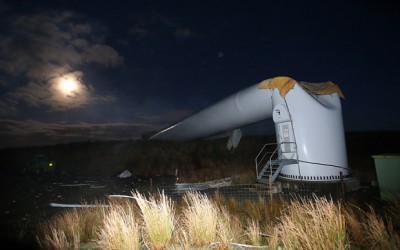
When the wind is “the thing”, that’s supposed to be your business – when it’s what makes the revenue (or, rather a massive pile of taxpayer and power consumer subsidies) flow – it seems a bit rich for wind power outfits to start whining about there being too much or too little.

But, in shades of Goldilocks’ nitpicking about stolen porridge having to be “just right”, so it is amongst wind weasels.
Wind turbines don’t generate a single spark until the wind hits at least 5 m/s (18km/h); don’t hit ‘rated power’ (ie, maximum output) until wind speeds reach 11 m/s (40km/h); and get shut down automatically to protect blades and bearings when wind speeds hit 25 m/s (90km/h).
Despite wind being very much their ‘business’, around the globe windpower outfits have taken to blaming the ‘absence’ of it – as if it were one of Newton’s constants, you know, like gravity – for their financial, and other troubles, as detailed in these posts:
- Texas Blames Wind Power Slump on (you guessed it) … the Wind
- Germans Blame “Missing Wind” for their Wind Power Debacle
- Brits Rumble Frightening Energy Fact: Wind Power Depends on the (ur, ahem) Wind …
Here in Australia, near-bankrupt wind cowboys, Infigen (see our post here) have just pointed the finger at – you guessed it – THE WIND, for a massive drop in revenues (see this lament from the eco-facists over at ruin-economy). Oh dear, how sad, never mind.
For their myriad sins, it appears that wind power outfits have somehow drawn the opprobrium of the wind gods at both ends of the meteorological spectrum – with that great Greek huffer and puffer of old – Aeolus – really turning it on, and flattening fleets of fans with withering effect.
This time, the story’s about the Wind Gods going crazy in Brazil.
Eight Impsa turbines blown down in Brazil
Wind Power Monthly
Michael McGovern
26 January 2015

BRAZIL: Investigations are ongoing at utility Eletrobras’s 46MW Cerro Chato IV-VI wind complex in the Brazilian state of Rio Grande do Sul following the collapse of eight Impsa turbines.
The incident was caused by a freak storm hitting Santana do Livramento district on the afternoon of 22 December, with gusts reaching 250 kilometres per hour, according to an Eletrosul press statement, which appears to be its only public comment on the incident.
Neither Impsa nor Electrobras would respond to questions from Windpower Monthly while investigations are ongoing. The machines were Impsa 2MW machines with a 100-metre rotor.
Before the storm, Rio Grande do Sul’s meteorological office, MetSul, had issued an alert for winds of up to just 120km/h. Reported maximum gusts for the neighbouring town of Rivera in Uruguay, which shares the border with Santana do Livramento, were at just 130km/h.
Impsa, Argentina’s beleaguered turbine manufacturer currently tackling solvency problems, has made no public comment.
No damage was reported to Wobben turbines operating in the same district.
Local press sources state that Eletrosul’s insurers have concluded onsite investigations, although conclusions are yet to be delivered to its client.
Wind Power Monthly


