Wind Turbines – “Novelty Energy”, Requires 100% back-up, for times with “no”, or “too much wind.

Reliance on Wind Power: Playing a Lethal Game

swiss winter2

A power generation system that can’t produce power on demand is no system at all. Wind power – entirely dependent on the weather – has consistently proven itself incapable of supplying meaningful power – requiring 100% of its capacity to be backed up by fossil fuel generation sources 100% of the time, both here (see our posts here and here andhere and here and here and here and here and here) and in Europe (seeour post here).

While the greentard shrugs and mumbles something about “battery technology improving” when presented with the fact that wind power can only ever be delivered at crazy, random intervals (see our post here) – those in touch with reality point to the social and economic catastrophe just waiting for the next occasion when wind power output plummets.

Here’s a great little piece from the Independent outlining the lunacy of our reliance on wind power and the potentially fatal consequences of placing faith in pure fantasy.

Energy policy based on renewables will win hearts but won’t protect their owners from frostbite and death due to exposure
Kevin Myers
Independent.ie
7 February 2012

Russia’s main gas-company, Gazprom, was unable to meet demand last weekend as blizzards swept across Europe, and over three hundred people died. Did anyone even think of deploying our wind turbines to make good the energy shortfall from Russia?

Of course not. We all know that windmills are a self-indulgent and sanctimonious luxury whose purpose is to make us feel good. Had Europe genuinely depended on green energy on Friday, by Sunday thousands would be dead from frostbite and exposure, and the EU would have suffered an economic body blow to match that of Japan’s tsunami a year ago. No electricity means no water, no trams, no trains, no airports, no traffic lights, no phone systems, no sewerage, no factories, no service stations, no office lifts, no central heating and even no hospitals, once their generators run out of fuel.

Modern cities are incredibly fragile organisms, which tremble on the edge of disaster the entire time. During a severe blizzard, it is electricity alone that prevents a midwinter urban holocaust. We saw what adverse weather can do, when 15,000 people died in the heatwave that hit France in August 2003. But those deaths were spread over a month. Last weekend’s weather, without energy, could have caused many tens of thousands of deaths over a couple of days.

Why does the entire green spectrum, which now incorporates most conventional parties across Europe, deny the most obvious of truths? To play lethal games with our energy systems in order to honour the whimsical god of climate change is as intelligent and scientific as the Aztec sacrifice of their young. Actually, it is far more frivolous, because at least the Aztecs knew how many people they were sacrificing: no one has the least idea of the loss of life that might result from the EU embracing “green” energy policies.

Frau Merkel has announced that Germany is going to phase out nuclear power, simply because of the Japanese tsunami. Well, that is like basing water-collection policies in Rhineland-Westphalia on the monsoon cycle of Borneo.

As I was saying last week, the Germans have a powerfully emotional attachment to everything that is “green”, and an energy policy based on renewables will usually win German hearts. But it will not protect the owners of those hearts from frostbite and death due to exposure, for wind can often be not so much a Renewable as an Unusable, and also an Unpredictable, an Unstorable, and – normally when it’s very cold – an Unmovable.

The seriousness of this is hard to exaggerate. The temperature in the Baltic countries last weekend was -33 degrees Celsius. The Eurasian landmass from Calais to Naples to Siberia was an icefield in which hundreds of millions of people were trapped. Without coal, oil and nuclear energy, mass deaths of the old and the young would have occurred on the first night. Three nights of such conditions, and even the physically fit would have been dying of exposure, as the temperature inside dwellings fell and began to match that of the outside, an inverse image of what happened during the French heatwave 10 years ago, when there was no escape from the heat.

Yet you will see nowhere in Dail Eireann, or Brussels, or the Palace of Westminster, a serious discussion about energy policies based on these realities, or which acknowledges that wind usually doesn’t blow when it is very cold, or that even when you have strong and steady winds blowing, you will still have to have created a parallel and duplicate energy supply to provide cover for when the wind stops. And merely to create that standby energy system will generate a zillion tons of carbon dioxide.

Wind power in Ireland actually produces only 22pc of its capacity: would you spend €100,000 on a car if it meant that €78,000 of the purchase price was wasted? It gets worse. On a really cold day, we actually need about 5,000 megawatts, but yesterday wind was producing under 50 megawatts: a grand total of 1pc of requirements.

Yet despite such appalling figures, we legally prohibit civil servants from even looking at the nuclear option. They won’t even take a phone-call on the subject. Instead, the fiction has taken hold amongst our media classes that we are close to being an exporter of renewable energy through the much-vaunted interconnector with Britain. But this is grotesquely untrue. We shall actually be exporting through the connector only 3pc of the time, and importing 86pc, with the system otherwise idle.

Mad, isn’t it? And madder still that RTE or the BBC will continue to trot out their pet wind-enthusiasts to bluster balderdash and poppycock about global warming and how renewables are the solution – and without the contrary point of view ever being given an airing.

This is dogma, as created, promulgated and enforced by the John Charles McQuaids of our time – and if sceptics are not actually anathematised from the pulpit, they are ruthlessly and systematically ignored. These dishonest, hypocritical and deceitful energy policies are now widely accepted by our political and teaching classes as being the very embodiment of environmentalist virtue. Such imbecilic virtue, if implemented as energy policy across Europe, could have brought about a human catastrophe last weekend.
Independent.ie

ICU Respiratory_therapist

Economic Storage of Wind Power will Never be Feasible!

The Economic Storage of Wind Power is a Pipe-Dream

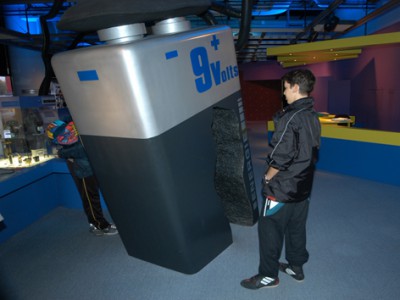
giant battery 2

The wind industry is the perpetual infant of power generation: always looking for the subsidies to last that little bit longer; always promising to improve its performance; always claiming it will outdo hydro, coal and gas – provided, of course, that the subsidies keep flowing. STT for one thinks the wind industry has had ample time to grow up and stand on its own two feet.

Like the brat that it is, the wind industry can’t be told what to do and, especially, won’t ever respond to demands from power users about when its product should be delivered.

output vs demand

It’s quite happy to produce plenty of power when it’s not needed at night time; and much less during the day, when it is (as seen in the graph above); and often, none at all during periods of peak demand: as seen in the graph below, showing the entire fleet of wind farms connected to the Eastern Grid (based in SA, NSW, Tasmania and Victoria, which in July had a notional capacity of 2,952 MW) producing 20 MW or 0.67% of total capacity, just as demand starts to peak – and see our posts here and hereand here and here and here and here and here and here.

JULY20

In it’s “quick, look over there” response to any inconvenient facts, the wind industry never concedes that wind power is “intermittent” – it prefers the term “variable” – which we showed to be a monstrous abuse of both the facts and the English language (see our post here).

When challenged about its consistent failures to match output with demand, the wind industry and its parasites respond by mumbling about “battery technology improving”.

The pitch is that – one day “soon” – there will batteries big enough and cheap enough to allow huge volumes of wind power produced when it’s not needed, to be stored for the occasions when it is. That way, the “variable” output from wind farms could be delivered when there might just be a market for it.

Of course, the pitch is made so the subsidies keep flowing to allow an endless sea of giant fans to be erected now – in order to take advantage of the (so far, elusive) storage technology that’s just over the “horizon”. Except that the “soon” is more like light-years and the “horizon” is a mirage.

Even if a technology was invented (STT likens it to the chances of finding a perpetual motion machine or alchemy turning lead into gold) to store large volumes of the electricity output (in bulk) from all of the wind farms connected to the Eastern Grid, say (which now have a notional capacity of 3,342 MW) – the economic cost would be astronomical – and readily eclipse the value of the power produced. Not that the wind industry has ever made any economic sense.

One way of analysing the economics (ie costs versus benefits) of storing, in bulk quantities, the electricity generated from wind farms is to quantify what’s called the “energy returned on energy invested” (EROEI). Put simply, that’s the amount of energy required as an input in order to return a given energy output. To be economically viable, a generation source has to produce a surplus of energy well over and above what was required to establish it.

In this article, Dr John Morgan – an Adjunct Professor at RMIT – comes up with the (not so surprising) conclusion that energy storage cannot (and will never) provide an economic solution to the intermittency of wind power.

The Catch 22 of Energy Storage
Brave New Climate
22 August 2014

Pick up a research paper on battery technology, fuel cells, energy storage technologies or any of the advanced materials science used in these fields, and you will likely find somewhere in the introductory paragraphs a throwaway line about its application to the storage of renewable energy. Energy storage makes sense for enabling a transition away from fossil fuels to more intermittent sources like wind and solar, and the storage problem presents a meaningful challenge for chemists and materials scientists… Or does it?

Guest Post by John Morgan.

Several recent analyses of the inputs to our energy systems indicate that, against expectations, energy storage cannot solve the problem of intermittency of wind or solar power. Not for reasons of technical performance, cost, or storage capacity, but for something more intractable: there is not enough surplus energy left over after construction of the generators and the storage system to power our present civilization.

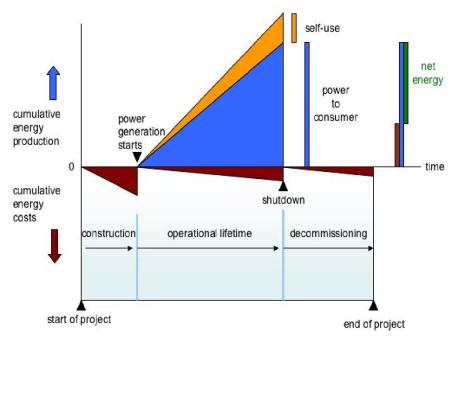
The problem is analysed in an important paper by Weißbach et al. (1) in terms of energy returned on energy invested, or EROEI – the ratio of the energy produced over the life of a power plant to the energy that was required to build it. It takes energy to make a power plant – to manufacture its components, mine the fuel, and so on. The power plant needs to make at least this much energy to break even. A break-even powerplant has an EROEI of 1. But such a plant would pointless, as there is no energy surplus to do the useful things we use energy for.

There is a minimum EROEI, greater than 1, that is required for an energy source to be able to run society. An energy system must produce a surplus large enough to sustain things like food production, hospitals, and universities to train the engineers to build the plant, transport, construction, and all the elements of the civilization in which it is embedded.

morganesbox

For countries like the US and Germany, Weißbach et al. (1) estimate this minimum viable EROEI to be about 7. An energy source with lower EROEI cannot sustain a society at those levels of complexity, structured along similar lines. If we are to transform our energy system, in particular to one without climate impacts, we need to pay close attention to the EROEI of the end result.

The EROEI values for various electrical power plants are summarized in the figure. The fossil fuel power sources we’re most accustomed to have a high EROEI of about 30, well above the minimum requirement. Wind power at 16, and concentrating solar power (CSP, or solar thermal power) at 19, are lower, but the energy surplus is still sufficient, in principle, to sustain a developed industrial society. Biomass, and solar photovoltaic (at least in Germany), however, cannot. With an EROEI of only 3.9 and 3.5 respectively, these power sources cannot support with their energy alone both their own fabrication and the societal services we use energy for in a first world country.

morganesfig1

Energy Returned on Invested, from Weißbach et al.,(1) with and without energy storage (buffering). CCGT is closed-cycle gas turbine. PWR is a Pressurized Water (conventional nuclear) Reactor. Energy sources must exceed the “economic threshold”, of about 7, to yield the surplus energy required to support an OECD level society.

These EROEI values are for energy directly delivered (the “unbuffered” values in the figure). But things change if we need to store energy. If we were to store energy in, say, batteries, we must invest energy in mining the materials and manufacturing those batteries. So a larger energy investment is required, and the EROEI consequently drops.

Weißbach et al. calculated the EROEIs assuming pumped hydroelectric energy storage. This is the least energy intensive storage technology. The energy input is mostly earthmoving and construction. It’s a conservative basis for the calculation; chemical storage systems requiring large quantities of refined specialty materials would be much more energy intensive. Carbajales-Dale et al. (2) cite data asserting batteries are about ten times more energy intensive than pumped hydro storage.

Adding storage greatly reduces the EROEI (the “buffered” values in the figure). Wind “firmed” with storage, with an EROEI of 3.9, joins solar PV and biomass as an unviable energy source. CSP becomes marginal (EROEI ~9) with pumped storage, so is probably not viable with molten salt thermal storage. The EROEI of solar PV with pumped hydro storage drops to 1.6, barely above breakeven, and with battery storage is likely in energy deficit.

This is a rather unsettling conclusion if we are looking to renewable energy for a transition to a low carbon energy system: we cannot use energy storage to overcome the variability of solar and wind power.

In particular, we can’t use batteries or chemical energy storage systems, as they would lead to much worse figures than those presented by Weißbach et al (1). Hydroelectricity is the only renewable power source that is unambiguously viable. However, hydroelectric capacity is not readily scaled up as it is restricted by suitable geography, a constraint that also applies to pumped hydro storage.

This particular study does not stand alone. Closer to home, Springer have just published a monograph, Energy in Australia, (3) which contains an extended discussion of energy systems with a particular focus on EROEI analysis, and draws similar conclusions to Weißbach. Another study by a group at Stanford (2) is more optimistic, ruling out storage for most forms of solar, but suggesting it is viable for wind. However, this viability is judged only on achieving an energy surplus (EROEI>1), not sustaining society (EROEI~7), and excludes the round trip energy losses in storage, finite cycle life, and the energetic cost of replacement of storage. Were these included, wind would certainly fall below the sustainability threshold.
energy-outputs-and-energy-costs

It’s important to understand the nature of this EROEI limit. This is not a question of inadequate storage capacity – we can’t just buy or make more storage to make it work. It’s not a question of energy losses during charge and discharge, or the number of cycles a battery can deliver. We can’t look to new materials or technological advances, because the limits at the leading edge are those of earthmoving and civil engineering. The problem can’t be addressed through market support mechanisms, carbon pricing, or cost reductions. This is a fundamental energetic limit that will likely only shift if we find less materially intensive methods for dam construction.

This is not to say wind and solar have no role to play. They can expand within a fossil fuel system, reducing overall emissions. But without storage the amount we can integrate in the grid is greatly limited by the stochastically variable output. We could, perhaps, build out a generation of solar and wind and storage at high penetration. But we would be doing so on an endowment of fossil fuel net energy, which is not sustainable. Without storage, we could smooth out variability by building redundant generator capacity over large distances. But the additional infrastructure also forces the EROEI down to unviable levels. The best way to think about wind and solar is that they can reduce the emissions of fossil fuels, but they cannot eliminate them. They offer mitigation, but not replacement.

Nor is this to say there is no value in energy storage. Battery systems in electric vehicles clearly offer potential to reduce dependency on, and emissions from, oil (provided the energy is sourced from clean power). Rooftop solar power combined with four hours of battery storage can usefully timeshift peak electricity demand, (3) reducing the need for peaking power plants and grid expansion. And battery technology advances make possible many of our recently indispensable consumer electronics. But what storage can’t do is enable significant replacement of fossil fuels by renewable energy.

If we want to cut emissions and replace fossil fuels, it can be done, and the solution is to be found in the upper right of the figure. France and Ontario, two modern, advanced societies, have all but eliminated fossil fuels from their electricity grids, which they have built from the high EROEI sources of hydroelectricity and nuclear power. Ontario in particular recently burnt its last tonne of coal, and each jurisdiction uses just a few percent of gas fired power. This is a proven path to a decarbonized electricity grid.

But the idea that advances in energy storage will enable renewable energy is a chimera – the Catch-22 is that in overcoming intermittency by adding storage, the net energy is reduced below the level required to sustain our present civilization.
John Morgan
22 August 2014

John is Chief Scientist at a Sydney startup developing smart grid and grid scale energy storage technologies. He is Adjunct Professor in the School of Electrical and Computer Engineering at RMIT, holds a PhD in Physical Chemistry, and is an experienced industrial R&D leader. You can follow John on twitter at @JohnDPMorgan. First published in Chemistry in Australia.

Brave New Climate Postscript

When this article was published in CiA some readers had difficulty with the idea of a minimum societal EROI. Why can’t we make do with any positive energy surplus, if we just build more plant? Hall (4) breaks it down with the example of oil:

Think of a society dependent upon one resource: its domestic oil. If the EROI for this oil was 1.1:1 then one could pump the oil out of the ground and look at it. If it were 1.2:1 you could also refine it and look at it, 1.3:1 also distribute it to where you want to use it but all you could do is look at it. Hall et al. 2008 examined the EROI required to actually run a truck and found that if the energy included was enough to build and maintain the truck and the roads and bridges required to use it, one would need at least a 3:1 EROI at the wellhead.

Now if you wanted to put something in the truck, say some grain, and deliver it, that would require an EROI of, say, 5:1 to grow the grain. If you wanted to include depreciation on the oil field worker, the refinery worker, the truck driver and the farmer you would need an EROI of say 7 or 8:1 to support their families. If the children were to be educated you would need perhaps 9 or 10:1, have health care 12:1, have arts in their life maybe 14:1, and so on. Obviously to have a modern civilization one needs not simply surplus energy but lots of it, and that requires either a high EROI or a massive source of moderate EROI fuels.

The point is illustrated in the EROI pyramid.(4) (The blue values are published values: the yellow values are increasingly speculative.)

morganesfig2

Finally, if you are interested in pumped hydro storage, a previous Brave New Climate article by Peter Lang covers the topic in detail, and the comment stream is an amazing resource on the operational characteristics and limits of this means of energy storage.

References

(1). Weißbach et al., Energy 52 (2013) 210. Preprint available here.

(2). Carbajales-Dale et al., Energy Environ. Sci. DOI: 10.1039/c3ee42125b

(3). Graham Palmer, Energy in Australia: Peak Oil, Solar Power, and Asia’s Economic Growth; Springer 2014.

(4). Pedro Prieto and Charles Hall, Spain’s Photovoltaic Revolution, Springer 2013.

light-in-darkness

High Court in Denmark Awards Damages to Victims, for Noise, and Property Devaluation!

Environment & Climate Change – Denmark

High Court rules on compensation for noise from wind turbines

September 01 2014

Background

Depending on their location, wind turbines can cause noise, visual interference and light reflections.

These issues are governed by public and private law, including neighbour law. The main rules regarding noise from wind turbines can be found in Executive Order 1284 of December 15 2011 on wind turbine noise, issued pursuant to the Environmental Protection Act. To some extent, the order safeguards neighbours from noise inconvenience by establishing maximum noise levels from wind turbines in outdoor areas. The noise limit varies depending on the surroundings.

Wind turbines may also cause visual interference which may negatively affect the value of surrounding properties. Thus, the location of wind turbines on land has proved a difficult political issue for years. Every municipality supports the idea of more wind turbines – just not within its own borders.

In order to promote local support for wind energy projects, the Parliament passed the Promoting Renewable Energy Act, which establishes a compensation scheme for neighbours of wind turbines. Under the scheme, those who build one or more wind turbines are obliged to compensate their neighbours for any reduction in property value that the wind turbines may cause, regardless of whether the wind turbines accord with the necessary permits.

The compensation scheme departs from the court-based neighbour law in that it does not operate with a tolerance limit which the neighbour must prove has been exceeded.

The starting point is that the issue of compensation must be settled before the wind turbines are built. However, the Promoting Renewable Energy Act does allow neighbours to claim compensation in certain circumstances thereafter. The competent authority to deal with claims for compensation is the assessment authority set up by the act.

Compensation granted to neighbours under the act has been relatively low so far.

Facts

In a recent case before the High Court for Western Denmark the plaintiffs had been awarded Dkr250,000 in compensation for the erection of eight wind turbines by the assessment authority. They brought the matter before the courts seeking higher compensation.

Before the erection of the wind turbines, an environmental study had concluded that the noise level at their property would amount to 38.8 decibels at wind speeds of 12 knots and 40.9 decibels at wind speeds of 16 knots.

Before the city court, a court-appointed expert stated that the reduction in the value of the property amounted to between Dkr600,000 and Dkr800,000. The city court also arranged a visit to the property.

Where the assessment authority found that the plaintiffs’ property would be subject to limited noise pollution, the city court found the level to be more significant. The court further ruled that the plaintiffs had documented their loss of value at Dkr600,000 and thus awarded them an additional Dkr350,000.

Finally, the court held that the plaintiffs had suffered no other economic loss covered by the Promoting Renewable Energy Act. In particular, the court held that the fact that the wind turbines had been erected with all necessary permits prevented the plaintiffs from claiming compensation under neighbour rules.

The High Court for Western Denmark upheld the city court’s judgment, but fixed the compensation at Dkr500,000 because, among other things, there were certain deficiencies in the masonry of the house. However, the court also considered the findings of the court-appointed expert witness who had seen the plaintiffs’ house after the erection of the wind turbines – which the assessment authority had not done – as well as the city court’s own observation of the property. Finally, the court ruled that the Promoting Renewable Energy Act does not restrict the courts’ competence to review decisions from the assessment authority.

Comment

The judgment is significant as it granted compensation after the erection of the wind turbines. This is contrary to the main rule in the Promoting Renewable Energy Act; however,both the city court and the high court found sufficient legal authority under the act to admit the claim after the erection of the wind turbines.

Moreover, both courts paid considerable attention to the evaluation of the court-appointed expert. While this is quite normal in Danish case law, it is unusual in cases where an authority such as the assessment authority has previously dealt with the matter.

Finally, the high court paid attention to the city court’s own observations of the property. It is quite unusual to see such a reference to the observations of a lower court in a higher court’s grounds of judgment.

The judgment gives cause for optimism to those who intend to challenge decisions of the assessment authority under the Promoting Renewable Energy Act. From a procedural point of view, it seems to be important for the court to see the property at issue to form its own opinion of the level of noise pollution caused by wind turbines.

For further information on this topic please contact Søren Stenderup Jensen at Plesner by telephone (+45 33 12 11 33), fax (+45 33 12 00 14) or email (ssj@plesner.com). The Plesner website can be accessed at www.plesner.com.


Comment or question for author

ILO provides online commentaries as specialist Legal Newsletters. Written in collaboration with over 500 of the world’s leading experts and covering more than 100 jurisdictions, it delivers individually requested information via email to an influential global audience of law firm partners and international corporate counsel. Please click here to register for the service.

The materials contained on this website are for general information purposes only and are subject to the disclaimer.

ILO is a premium online legal update service for major companies and law firms worldwide. In-house corporate counsel and other users of legal services, as well as law firm partners, qualify for a free subscription. Register at www.iloinfo.com.

Renewable Energy Targets Force Consumers to Use Inefficient, Unreliable, Overpriced Products!

The crazy world of Renewable Energy Targets

Nothing makes sense about Renewable Energy Targets, except at a “Bumper-Sticker” level. Today the AFR front page suggests* the federal government is shifting to remove the scheme (by closing it to new entrants) rather than just scaling it back. It can’t come a day too soon. Right now, the Greens who care about CO2 emissions should be cheering too. The scheme was designed to promote an  industry, not to cut CO2.

UPDATE: Mathias Cormann later says “that the government’s position was to “keep the renewable energy target in place” SMH.  Mixed messages indeed.

We’ve been sold the idea that if we subsidize “renewable” energy (which produces less CO2) we’d get a world with lower CO2 emissions. But it ain’t so. The fake “free” market in renewables does not remotely achieve what it was advertised to do — the perverse incentives make the RET good for increasing “renewables” but bad for reducing CO2, and, worse, the more wind power you have, the less CO2 you save. Coal fired electricity is so cheap that doing anything other than making it more efficient is a wildly expensive and inefficient way to reduce CO2. But the Greens hate coal more than they want to reduce carbon dioxide. The dilemma!

The RET scheme in Australian pays a subsidy to wind farms and solar installations. Below, Tom Quirk shows that this is effectively a carbon tax (but a lousy one), and it shifts supply — perversely taxing brown coal at $27/ton, black coal at $40/ton and gas at up to $100/ton. Because it’s applied to renewables rather than CO2 directly, it’s effectively a higher tax rate for the non-renewable but lower CO2 emitters.

Calculating the true cost of electricity is fiendishly difficult. “Levelized costs” is the simple idea that we can add up the entire lifecycle cost of each energy type, but it’s almost impossible to calculate meaningful numbers. Because wind power is fickle, yet electricity demand is most definitely not, the real cost of wind power is not just the construction, maintenance and final disposal, but also the cost of having a gas back-up or expensive battery (give-us-your-gold) storage. It’s just inefficient every which way. Coal and nuclear stations are cheaper when run constantly rather than in a stop-start fashion (just like your car is). So the cost of renewables also includes the cost of shifting these “base load” suppliers from efficient to inefficient use — and in the case of coal it means producing more CO2 for the same megawatts. South Australia is the most renewable-dependent state in mainland Australia, and it’s a basketcase (look at the cost stack below). Real costs only come with modeling, and we all know how difficult that is.

If the aim is really the research and development of renewables (and not “low CO2″) then I’ve long said that we should pay for the research and development directly, not pay companies to put up inefficient and fairly useless versions in the hope that companies might earn enough to pay for the research out of the profits. Tom Quirk points out that it’s all frightfully perverse again, because most innovations come from industry, not government funded research, but in Australia we hardly have any industry making parts used in power generation — we don’t have the teams of electrical engineers working on the problem anymore. I suppose the theory is that Chinese companies will profit from solar panels and do the R&D for us (keeping “our” patents too)? It would be cheaper just to gift them the money direct wouldn’t it — rather than pay an industry to produce and install a product that no one would buy, which doesn’t work, and hope that the “profits” translate into discoveries that will produce royalties and jobs for people overseas. I’m sure Chinese workers and entrepreneurs will be grateful. Yay.

Meanwhile, Green fans have suddenly discovered the idea of sovereign risk (where were they while the Rudd-Gillard team blitzed Australia’s reputation for stable, predictable policy?). According to the AFR, the government is scornful (and rightly so):

The government source said the market was oversupplied with energy and there was no longer any cause for a mandated use of any specific type of power. The source said while there would be investment losses if the RET was abolished, or even scaled back, investors “would have to have been blind to know this wasn’t coming’’.

On Catalaxy files, Judith Sloan mocks the Fin for pushing a press release from a rent-seeking firm, and guesses the Abbott government will be too “gutless” to ditch this economic and environmental dog of a policy.

—   Jo


Renewable Energy Targets Force Consumers to Use Inefficient, Unreliable, Overpriced Products!

The crazy world of Renewable Energy Targets

Nothing makes sense about Renewable Energy Targets, except at a “Bumper-Sticker” level. Today the AFR front page suggests* the federal government is shifting to remove the scheme (by closing it to new entrants) rather than just scaling it back. It can’t come a day too soon. Right now, the Greens who care about CO2 emissions should be cheering too. The scheme was designed to promote an  industry, not to cut CO2.

UPDATE: Mathias Cormann later says “that the government’s position was to “keep the renewable energy target in place” SMH.  Mixed messages indeed.

We’ve been sold the idea that if we subsidize “renewable” energy (which produces less CO2) we’d get a world with lower CO2 emissions. But it ain’t so. The fake “free” market in renewables does not remotely achieve what it was advertised to do — the perverse incentives make the RET good for increasing “renewables” but bad for reducing CO2, and, worse, the more wind power you have, the less CO2 you save. Coal fired electricity is so cheap that doing anything other than making it more efficient is a wildly expensive and inefficient way to reduce CO2. But the Greens hate coal more than they want to reduce carbon dioxide. The dilemma!

The RET scheme in Australian pays a subsidy to wind farms and solar installations. Below, Tom Quirk shows that this is effectively a carbon tax (but a lousy one), and it shifts supply — perversely taxing brown coal at $27/ton, black coal at $40/ton and gas at up to $100/ton. Because it’s applied to renewables rather than CO2 directly, it’s effectively a higher tax rate for the non-renewable but lower CO2 emitters.

Calculating the true cost of electricity is fiendishly difficult. “Levelized costs” is the simple idea that we can add up the entire lifecycle cost of each energy type, but it’s almost impossible to calculate meaningful numbers. Because wind power is fickle, yet electricity demand is most definitely not, the real cost of wind power is not just the construction, maintenance and final disposal, but also the cost of having a gas back-up or expensive battery (give-us-your-gold) storage. It’s just inefficient every which way. Coal and nuclear stations are cheaper when run constantly rather than in a stop-start fashion (just like your car is). So the cost of renewables also includes the cost of shifting these “base load” suppliers from efficient to inefficient use — and in the case of coal it means producing more CO2 for the same megawatts. South Australia is the most renewable-dependent state in mainland Australia, and it’s a basketcase (look at the cost stack below). Real costs only come with modeling, and we all know how difficult that is.

If the aim is really the research and development of renewables (and not “low CO2″) then I’ve long said that we should pay for the research and development directly, not pay companies to put up inefficient and fairly useless versions in the hope that companies might earn enough to pay for the research out of the profits. Tom Quirk points out that it’s all frightfully perverse again, because most innovations come from industry, not government funded research, but in Australia we hardly have any industry making parts used in power generation — we don’t have the teams of electrical engineers working on the problem anymore. I suppose the theory is that Chinese companies will profit from solar panels and do the R&D for us (keeping “our” patents too)? It would be cheaper just to gift them the money direct wouldn’t it — rather than pay an industry to produce and install a product that no one would buy, which doesn’t work, and hope that the “profits” translate into discoveries that will produce royalties and jobs for people overseas. I’m sure Chinese workers and entrepreneurs will be grateful. Yay.

Meanwhile, Green fans have suddenly discovered the idea of sovereign risk (where were they while the Rudd-Gillard team blitzed Australia’s reputation for stable, predictable policy?). According to the AFR, the government is scornful (and rightly so):

The government source said the market was oversupplied with energy and there was no longer any cause for a mandated use of any specific type of power. The source said while there would be investment losses if the RET was abolished, or even scaled back, investors “would have to have been blind to know this wasn’t coming’’.

On Catalaxy files, Judith Sloan mocks the Fin for pushing a press release from a rent-seeking firm, and guesses the Abbott government will be too “gutless” to ditch this economic and environmental dog of a policy.

—   Jo


Investing in the Wind Turbine Scam, is a Risky Business!

Australia’s wind turbines may stop spinning as banks foreclose


Australian analysts have warned that some of the country’s wind farms could be forced to close down under proposals made by the Abbott government’s RET Review panel.

Insiders are aghast at the assumptions made by the panel about the possibility of closing the scheme to new entrants and providing “grandfathering” arrangements for existing assets.

They say the proposals – and the assumption that LGCs, the certificates that are the currency of the scheme – will hold value are flawed, and the panel has not considered the basic refinancing risks of all projects under any scenario.

“I’m amazed at how flawed this document is,” said one close observer. “It is internally inconsistent, it is intellectually flawed … and it doesn’t even try to cover up its bias. It is 160 pages of self-serving logic.”

Another noted that almost every wind farm in the country will be up for refinancing for next 3 years. “They will be in major financial distress, and they are all at risk of falling over.”

While wind farms in Australia can have long term power purchase agreements out to 2030, the financing arrangements are much shorter, usually around 5 years.

This means that most, if not all, wind farms, will be up for refinancing in the next few years. When that happens, the major banks will review the state of the market, and are either likely to raise the price of debt, or do an “equity sweep” – calling on project owners to invest more cash.

None are likely to do so.

And in some cases – because the value of the LGCs will be effectively zero – as Bloomberg New Energy Finance has pointed out – and the price of wholesale electricity has fallen due to the removal of the carbon price and over-capacity brought about by the construction of thousands of megawatts of gas-fired generation – many wind farms will struggle to make debt obligations under current terms.

In its report, BNEF warned that a “whole host of Australian and foreign companies and lenders could be exposed to asset impairments, and almost all will suffer significant write-downs in the mark-to-market value of their investments.”

This dire situation was confirmed last week by Infigen Energy, which warned of potential bankruptcieslast week (an extraordinary enough statement for a listed company). Infigen Energy head Miles George – who doubles as the chair of the Clean Energy Council – warned that many other companies are in a similar situation.

Those wind farms on merchant contracts are most at risk, but even those with PPAs have clauses which allow bankers to review the financing arrangements.

Analysts suggest that Australian banks will be mortified when they understand the full implications of the review panel’s recommendations.

“Every time there is a refinancing, banks redo the base case model for the project. As the situation gets worse – with a lower LGC price – they will have to squeeze all of their parameters to make sure they get repaid,” one said.

“When they pull all those levers – a shorter amortisation period, a higher debt-equity ratio, then the equity holders are going to have to tip in additional capital to keep the projects going. The project owners are not in position to do that.

“And if the equity holders start falling over, banks might be left with wind farms to run and operate. But there will be no real market left, and no real market value in those projects. It may be that they have to turn them (the wind turbines) off.”

Even the other scenario recommended by the RET Review panel – that of downgrading the target from its current level of 41,000GWh to a “real” 20 per cent target of around 25,000GWh with targets set annually, would not be practical.

Analysts warn that there would unlikely be any new entrants because of the price uncertainty with rolling targets and – as a result – the higher cost of capital.  It is highly unlikely that any Australian bank would provide debt finance in these circumstances.

All of Australia’s big four banks are at risk, but particularly NAB and ANZ, who have project financed most wind farms in Australia.

bnef debt

“Professional” Windweasel, Mike Barnard, Tries to Defend Harm Caused by Wind Turbines

Bullying
Bullying a windfarm victim


In an article of August 22, 2014 by Lindsay Abrams, trying to discredit the claims of wind farm victims, we read: “Since 1998, 49 lawsuits in five countries have alleged that the clean energy source [wind farms] is making people sick. But according to new research published by the Energy and Policy Institute, the courts have shut those claims down in all cases but one.” http://www.suntimes.com/news/otherviews/29416340-452/wind-turbines-dont-make-people-sick.html

– I say: we could find similarly meaningless statistics if we went back in time, when the courts were absolving the Tobacco Industry.

– Most courts, like governments, have swallowed the windfarm scam hook, line and sinker. This recent judgment, evidencing a strong pro-wind bias, says it all:http://www.epaw.org/media.php?lang=en&article=pr48

– Court decisions can’t be held as the gold standard of truth and fairness. All the more in a society obsessed with political correctness, where certain ideas are arbitrarily declared “consensual”, and turned into dogmas which become ipso facto more important than the facts. Don’t we know that progress in science is almost always achieved by rejecting the “consensus”? And so it is with infrasound emitted by wind turbines: the dogma saying these emissions are benign is about to be blown apart, and this is what sparks desperate attempts at bullying and discrediting windfarm victims and the health professionals who support them.


The article proceeds to say: “The name “wind turbine syndrome” was coined by Nina Pierpont, a pediatrician who also happens to be an anti-wind activist”.

– This is the pot calling the kettle black. Mike Barnard, cited as a reference, is one of the world’s best known activists of the windfarm scam. He is in fact a professional activist, making a living from it, and receiving all kinds of help from the industry.

Mike Barnard
Mike Barnard

– Barnard, as quoted by the author of the article, criticizes people who “have declared themselves as experts”, forgetting that this includes himself. Indeed, he has no qualifications for doing what he does, yet he calls himself the “lead researcher” in the “new study” that is calling thousands of windfarm victims “liers”. The man does not know the meaning of the words “consistency” and “intellectual honesty”. He is the typical odious bully, and so appears to be Lindsay Abrams, who quotes him while adding a layer of smear of his own brew.

– Dr Nina Pierpont, on the other hand, is a courageous pediatrician who conducted field research years ago, paid with her own money, in which she found that wind farm neighbors who were complaining of sleep disruption, headaches, nauseas etc. had very consistent symptoms, which prompted her to coin a new ailment: the Wind Turbime Syndrome. She published a book on her findings, and is giving evidence in court around the world: does that make her an activist?

Dr Nina Pierpont
Dr Nina Pierpont


The propaganda piece continues: “But a review of 60 peer-reviewed articles published earlier this summer in the journal Frontiers of Public Health found only that audible noise from turbines can be annoying to some people — electromagnetic fields, low-frequency noise, infrasound and “shadow flicker” all were deemed unlikely to be affecting human health.”

– How could all these articles pretend that infrasound is “unlikely” to affect people, when we know that the military and the police have developed weapons using infrasound for debilitating enemy troops or unruly crowds? The technology is not mature yet, as a way must be found to spare friendly troops. But more devices are being patented all the time:http://www.schizophonia.com/archives/index.htm (click article: “Deadly Silence”)

– And what about the Vibro Acoustic Disease, a long-known ailment which affects people exposed to machines that produce infrasound? http://wcfn.org/2014/07/15/open-letter-to-the-danish-government/

– Then ask yourselves: if infrasound were harmless, would the wind industry and governments that promote it systematically refuse to conduct research into infrasound emitted by wind turbines? And this at the risk of being sued one day for gross negligence?
I can smell a rat, can’t you?


Finally, the author of the article resorts to personal attack: “When Dr. Pierpont attempts to appear in court as an expert witness, she is rejected outright along with her 294-page vanity press book, as happened in a tribunal related to the Adelaide wind farm in Ontario.”

– She did not “attempt to appear in Court”. Her testimony was called by windfarm victims but, abusively, the judge refused to hear their expert witness. What does that tell you about the independence of justice in Ontario, a Canadian Province thoroughly corrupted by the windfarm scam?
In other countries, she was allowed to testify, and her interventions have been very helpful, whatever the outcome.

– “rejected outright along with her 294-page vanity press book” says Lindsay Abrams.
– I say: while pro-wind litterature flourishes thanks to billions of dollars of public money spent to inundate the world with it, independent researchers must finance their own publications. Does that make these less valuable?
But Abrams could not resist bullying Dr Pierpont on this score, thereby bringing discredit upon himself.

People of Oklahoma to Fight the Wind Industry….In Courts of Law!!!

Oklahomans Launch Pre-Emptive Legal Action to Prevent Wind Farm Construction

For most non-Okies, their appreciation of the glories of life on the great prairies of Oklahoma comes from Gordon Macrae (as Curly) – bathed in “a bright golden haze on the meadow” and crooning from a fine looking mount about what was clearly a very “beautiful morning”.

While Curly waxed lyrically about seeing stratospheric corn, his profound sensory enjoyment included being able to hear nature at its untrammelled best, in a place where “all the sounds of the earth are like music”.

Well, they used to be.

Oklahoma hasn’t escaped America’s great wind power fraud: turbines have sprung up like mushrooms all over the, once tranquil, State. And, like everywhere else, the locals are fighting back.

Not content to let wind power outfits turn their beautiful mornings into sonic torture events, a group of Oklahomans have just launched court action, seeking an injunction to prevent 300 giant fans from being speared into their peaceful patch of prairie paradise.

The action, filed by 6 plaintiffs, is being pursued in “nuisance”: the common law right attached to property to be able to enjoy it free from any unreasonable interference from the activities of neighbours, which includes unreasonable interference from noise – particularly where the noise in question interferes with sleep (see our post here).

The plaintiffs’ claim (available here) sets out the nature of their action as:

This action seeks to enjoin Defendants from creating a nuisance that will cause unreasonable inconvenience, interference, annoyance, adverse health effects, and loss of use and value of each Plaintiff and class member’s property.

Where the plaintiffs say they are seeking to “enjoin Defendants” they mean that they are asking the court for an injunction preventing the developers from constructing the turbines proposed.

The plaintiffs face the prospect of being left with properties that are worth a fraction of what they would be without turbines as neighbours – and ending up with homes that are uninhabitable due to incessant turbine generated low-frequency noise and infrasound (see our post here). So, their planning authorities having failed them, it’s off to court.

Here’s a run down on the plaintiffs’ action from the Oklahoma Wind Action Association.

Oklahoma citizens file class action lawsuit against wind energy companies
Oklahoma Wind Action Association
27 August 2014

Seeking reasonable placement of wind farms to protect health of nearby residents.

Citizens of Canadian and Kingfisher counties filed a class action lawsuit in United States District Court for the Western District of Oklahoma today to prohibit the placement of wind turbines that will harm residents.

After exhausting all local and state legislative and government resources, members of the lawsuit are seeking protection from adverse health effects, and loss of use and value of their property, by requiring wind turbines be placed a safe distance from their homes.

There are multiple wind farms planned for Kingfisher and Canadian counties consisting of more than 300 industrial wind turbines. From plaintiff Julie Harris’ land, there are 47 turbines targeted near her home with the closest planned less than one-half mile from her property. The turbines are almost 500 feet tall, equivalent to approximately five-eighths (5/8) the size of Devon Tower in downtown Oklahoma City, Okla.

“Despite working tirelessly with local officials and the wind company to request a reasonable setback of wind turbines from our property, our only recourse now is litigation,” said Terra Walker, a plaintiff and property owner in Okarche, Okla. “There are real health concerns when turbines are placed too close to homes. This is about requiring safe setbacks to protect the health and safety of our families.”

The plaintiffs are concerned about health impacts and interference in the use and enjoyment of their land. In the complaint, the plaintiffs note that wind turbines emit infra and low frequency sounds that are inaudible to the human ear, but have a long history of causing adverse effects to the human body and mind, including sleep loss, increased stress and cardiac issues. The plaintiffs are also concerned about how noise and shadow flicker emitted from rotating blades deteriorates the ability — in both children and adults — to properly think, remember, or concentrate.

“The wind farms located next to our house have ruined our health and property,” said Tammy and Rick Huffstutlar, living outside of Calumet, Okla. and in the middle of the Canadian Hills Wind Farm.

The Huffstutlars live adjacent to wind turbines and experience significant shadow flicker, noise and disruptions in air pressure, resulting in a worsening heart condition, severe headaches, and lack of sleep.

“Industrial wind energy in Oklahoma is unregulated, allowing companies to build wind farms wherever they can make deals with landowners without any required notice to those impacted,” said Brent Robinson, Oklahoma Wind Action Association (OWAA) president. “Research shows a negative impact to health for people within three miles of a turbine. Therefore, we believe a three-mile setback from property lines is necessary to protect our families.”

OWAA, along with other Oklahoma organizations such as Oklahoma Property Rights Association and Wind Waste, are combining forces to advocate for sensible laws to protect people and oversee future development in Oklahoma. The non-profit associations are concerned about the long-term impact this unregulated industry will have on property owners, and are fighting for oversight to ensure turbines are appropriately placed, operated safely, well-maintained and there is adequate funding to remove abandoned wind farms.

The plaintiffs in the lawsuit are Terra Walker, Cheyenne Ward, Julie Harris, Janelle Grellner, Elise Kochenower, Karri Parson, Cindy Shelley, and Oklahoma Wind Action Association. The defendants are APEX Wind Construction, LLC, APEX Clean Energy, Inc., APEX Clean Energy Holdings, LLC, Kingfisher Wind, LLC, Kingfisher Wind Land Holdings, LLC, Campbell Creek Wind, LLC, and Campbell Creek Wind Transmission, LLC.

Oklahoma Wind Action Association was founded in February 2014 to protect its members from negative affects of industrial wind turbines. The organization serves more than 150 citizens in Canadian and Kingfisher counties.
Oklahoma Wind Action Association
27 August 2014

Curly & Laurey

People of Oklahoma to Fight the Wind Industry….In Courts of Law!!!

Oklahomans Launch Pre-Emptive Legal Action to Prevent Wind Farm Construction

For most non-Okies, their appreciation of the glories of life on the great prairies of Oklahoma comes from Gordon Macrae (as Curly) – bathed in “a bright golden haze on the meadow” and crooning from a fine looking mount about what was clearly a very “beautiful morning”.

While Curly waxed lyrically about seeing stratospheric corn, his profound sensory enjoyment included being able to hear nature at its untrammelled best, in a place where “all the sounds of the earth are like music”.

Well, they used to be.

Oklahoma hasn’t escaped America’s great wind power fraud: turbines have sprung up like mushrooms all over the, once tranquil, State. And, like everywhere else, the locals are fighting back.

Not content to let wind power outfits turn their beautiful mornings into sonic torture events, a group of Oklahomans have just launched court action, seeking an injunction to prevent 300 giant fans from being speared into their peaceful patch of prairie paradise.

The action, filed by 6 plaintiffs, is being pursued in “nuisance”: the common law right attached to property to be able to enjoy it free from any unreasonable interference from the activities of neighbours, which includes unreasonable interference from noise – particularly where the noise in question interferes with sleep (see our post here).

The plaintiffs’ claim (available here) sets out the nature of their action as:

This action seeks to enjoin Defendants from creating a nuisance that will cause unreasonable inconvenience, interference, annoyance, adverse health effects, and loss of use and value of each Plaintiff and class member’s property.

Where the plaintiffs say they are seeking to “enjoin Defendants” they mean that they are asking the court for an injunction preventing the developers from constructing the turbines proposed.

The plaintiffs face the prospect of being left with properties that are worth a fraction of what they would be without turbines as neighbours – and ending up with homes that are uninhabitable due to incessant turbine generated low-frequency noise and infrasound (see our post here). So, their planning authorities having failed them, it’s off to court.

Here’s a run down on the plaintiffs’ action from the Oklahoma Wind Action Association.

Oklahoma citizens file class action lawsuit against wind energy companies
Oklahoma Wind Action Association
27 August 2014

Seeking reasonable placement of wind farms to protect health of nearby residents.

Citizens of Canadian and Kingfisher counties filed a class action lawsuit in United States District Court for the Western District of Oklahoma today to prohibit the placement of wind turbines that will harm residents.

After exhausting all local and state legislative and government resources, members of the lawsuit are seeking protection from adverse health effects, and loss of use and value of their property, by requiring wind turbines be placed a safe distance from their homes.

There are multiple wind farms planned for Kingfisher and Canadian counties consisting of more than 300 industrial wind turbines. From plaintiff Julie Harris’ land, there are 47 turbines targeted near her home with the closest planned less than one-half mile from her property. The turbines are almost 500 feet tall, equivalent to approximately five-eighths (5/8) the size of Devon Tower in downtown Oklahoma City, Okla.

“Despite working tirelessly with local officials and the wind company to request a reasonable setback of wind turbines from our property, our only recourse now is litigation,” said Terra Walker, a plaintiff and property owner in Okarche, Okla. “There are real health concerns when turbines are placed too close to homes. This is about requiring safe setbacks to protect the health and safety of our families.”

The plaintiffs are concerned about health impacts and interference in the use and enjoyment of their land. In the complaint, the plaintiffs note that wind turbines emit infra and low frequency sounds that are inaudible to the human ear, but have a long history of causing adverse effects to the human body and mind, including sleep loss, increased stress and cardiac issues. The plaintiffs are also concerned about how noise and shadow flicker emitted from rotating blades deteriorates the ability — in both children and adults — to properly think, remember, or concentrate.

“The wind farms located next to our house have ruined our health and property,” said Tammy and Rick Huffstutlar, living outside of Calumet, Okla. and in the middle of the Canadian Hills Wind Farm.

The Huffstutlars live adjacent to wind turbines and experience significant shadow flicker, noise and disruptions in air pressure, resulting in a worsening heart condition, severe headaches, and lack of sleep.

“Industrial wind energy in Oklahoma is unregulated, allowing companies to build wind farms wherever they can make deals with landowners without any required notice to those impacted,” said Brent Robinson, Oklahoma Wind Action Association (OWAA) president. “Research shows a negative impact to health for people within three miles of a turbine. Therefore, we believe a three-mile setback from property lines is necessary to protect our families.”

OWAA, along with other Oklahoma organizations such as Oklahoma Property Rights Association and Wind Waste, are combining forces to advocate for sensible laws to protect people and oversee future development in Oklahoma. The non-profit associations are concerned about the long-term impact this unregulated industry will have on property owners, and are fighting for oversight to ensure turbines are appropriately placed, operated safely, well-maintained and there is adequate funding to remove abandoned wind farms.

The plaintiffs in the lawsuit are Terra Walker, Cheyenne Ward, Julie Harris, Janelle Grellner, Elise Kochenower, Karri Parson, Cindy Shelley, and Oklahoma Wind Action Association. The defendants are APEX Wind Construction, LLC, APEX Clean Energy, Inc., APEX Clean Energy Holdings, LLC, Kingfisher Wind, LLC, Kingfisher Wind Land Holdings, LLC, Campbell Creek Wind, LLC, and Campbell Creek Wind Transmission, LLC.

Oklahoma Wind Action Association was founded in February 2014 to protect its members from negative affects of industrial wind turbines. The organization serves more than 150 citizens in Canadian and Kingfisher counties.
Oklahoma Wind Action Association
27 August 2014

Curly & Laurey

Faux-green Energy…..No more than an Over-priced Novelty!

Obama’s Green Unicorn


The true cost of renewable energy is being masked by government subsidies and bailouts.

Wind turbines are silhouetted by the setting sun Friday, Aug. 23, 2013, near Beaumont, Kan. The turbines are part of the 100-unit Elk River Wind Farm in south central Kansas.

Propped up by the government.

By    Aug. 25, 2014 
America is about as likely to become reliant on green energy to meet its baseload power requirements as a unicorn is to stroll down the middle of Washington’s Pennsylvania Avenue during rush hour followed by a pink elephant.

It’s just not happening – but that’s hasn’t deterred the modern day snake oil salesmen and their allies inside the Obama administration from continuing to make a push for wind and solar power as an eventual replacement for energy generated from traditional sources like coal, oil and natural gas. Renewable technology has improved, no doubt, but it’s a long way away from being ready to make a substantial contribution to the heating of our homes and the powering of our businesses unless the generous tax subsidies that create the illusion of cost competitiveness continue.

There’s nothing wrong per se with the pursuit of renewable energy; it’s just that what it actually costs is being masked by taxpayer subsidies, federal loan guarantees and renewable fuels mandates at the state level that force power companies to put wind and solar into the energy mix, sometimes at two to three times what traditional power costs. Ultimately, one way or another, the taxpayers and energy consumers are footing the bill even if they don’t know it

Congress has taken a few positive steps in the right direction. The federal Wind Production Tax Credit was allowed to expire at the end of the year, meaning new wind projects are going to have to be competitive at market rates to attract funding. Remember it was none other than billionaire Warren Buffett, the “Oracle of Omaha,” who explained recently to a group of investors that the tax credit was the only reason that any sensible person invested in wind projects in the first place.

Unfortunately, some federal agencies are trying to keep the program alive through the backdoor.

The worst offender in this regard may be the IRS, which recently issued new “guidelines” that make it even easier for wind projects currently in development to qualify for the tax credit on the basis of work already contemplated or completed. According to Politico, “The IRS says completed or in-progress facilities can be sold and the costs incurred by the seller will still count toward qualifying for the [credit], except in cases where tangible property (think equipment like wind turbines) bought for one project is sold and used at another site.”

To translate this into English, it’s a move to help keep the whole shell game alive until such time as wind power supporters can get the tax credit reauthorized. “There is a large pipeline of projects that were under development at some stage that by virtue of this guidance will be able to go forward. In that regard it is going to permit a lot of projects to be developed,” said one wind energy expert cited by Politico.

Outside groups are also weighing in, including the Sierra Club, which has targeted nine members of Congress in a pressure campaign over the August recess to push for reauthorization of the Wind Production Tax Credit. That is in addition to the online ad buys in 16 other districts that started in June.

[MORE: Cartoons on Gas Prices]

The Democrats who run the Senate want to keep the now-expired credit alive and have, in the Senate Finance Committee, already approved a package of so-called “extenders” that would breathe new life into it. The House has thus far refused to go along – and kudos to Texas Republican Rep. Randy Weber, who deserves credit for successfully introducing an amendment to shut the whole business down permanently. But he’s not just fighting the lobbyists and green groups in favor of the credit, but the entire federal bureaucracy which, once a program has been established, is loath to let it die.

Major government investment in speculative green projects may have at one time made sense. But even if that were once the case, it is so no longer. The Obama green energy push has enriched more than a few politically well-connected liberals who used tax credits and government bailouts to enlarge their portfolios, but it has done little to make energy more abundant or lower costs to consumers, which is the justification in the first place to get the taxpayers involved. If people want to build wind farms – on land or offshore – and they want to reap the benefits of their investments, then they should be willing to take the same risks as everyone else. The way the bureaucrats have it structured now, the taxpayers are making payments on both ends through subsidies for construction and higher rates on consumption. It’s a system only a bureaucrat could love.