European Union Finally “Gets It”….The Faux-Green Scam, is Nothing But a Money-Grab!

When can we expect the same sanity from the Liberals, in Canada, especially Ontario?  They are ruining our manufacturing sector, with their outrageous energy prices!  Families can no longer afford their electricity bills.  It has to STOP!

EU Dismantles Its Climate Commission Amid Economic Struggles

European Union leaders announced they will be consolidating energy and environmental goals under a new commissioner, effectively axing the intergovernmental groups’ climate arm as green policies are making it harder for citizens to pay their power bills.

Former Spanish agriculture and environment minister Miguel Arias Canete was tapped by the EU Commission to take over a consolidated energy and climate office. Canete will be replacing Climate Commissioner Connie Hedegaard and Energy Commissioner Guenther Oettinger in what is seen as a huge blow to Europe’s global warming efforts.

“The EU is signalling a historical shift away from its green priority towards a new focus on economic recovery, competitiveness and energy cost,” Dr. Benny Peiser, director of the Global Warming Policy Forum, told The Daily Caller News Foundation.

“This policy shift has been in the making for the last two years, but only now has Europe new leaders who are no longer obsessed with climate change,” said Peiser, who is based in the UK.

The change in EU energy and climate leadership was partly spurred by Russia’s aggression in Ukraine, which has put Europe’s natural gas supplies at risk. The Ukraine crisis also sparked calls for Europe to drill for its oil and gas using hydraulic fracturing and begin importing more energy from allies, like the U.S.

Europeans are also being burdened by rising energy bills from domestic green policies and EU rules that effectively mandate higher cost electricity generation from renewables, like wind and solar power. The UK, in particular has seen numerous power plants close down and is even considering WWII-style energy rationing to keep the lights and heat on this winter.

Canete preside over the drafting of new energy rules after the EU hashes out cap-and-trade reform and green energy targets in October. The former Spanish official will also have to balance Europe’s energy needs against pressures from interest groups and the United Nations to enter into a legally binding global climate treaty.

Environmentalists have expressed concerns that the EU Commission is abandoning too many of its environmental goals, especially by getting rid of its independent climate arm. Activists have even accused Canete of being too cozy with fossil fuels companies.

Do THIS Before Eating Carbs (Every Time)
Fix Your Blood Sugar
The #1 Exercise That Accelerates AGING (Stop Doing It!)
Lifegooroo
NYC Mayor’s Daughter Reveals Her Addictions
Cliffside Malibu
9 Unique Dog Breeds You May Never Come Across
Amerikanki
by TaboolaSponsored Links
“The choice of a Climate and Energy Commissioner with well-known links to the fossil fuel industry raises issues of conflict of interest,” reads a letter to the EU Commission from Green10 — a coalition of environmental groups.

“The fact that sustainable development, resource efficiency and the green economy are not covered at all at Vice-President level implies a Commission that will be operating on the basis of an outdated paradigm of economic growth, one that benefits the industries and jobs of the past over those of the future, and detached from real world constraints and limits,” the coalition said in its letter.

“Canete is a surprising choice, given his connections to the oil industry,” Greenpeace’s managing director in the EU, Mahi Sideridou, told Bloomberg in an emailed statement. “To prove he is the right man for the job, he’ll have to resolve conflicts of interests and improve on his environmental record as a minister.”

Canete is a lawyer by training and worked for Spanish Prime Minister Mariano Rajoy’s government from 2011 to 2014, reports Bloomberg. Canete was elected to EU Parliament in May 2014.

He has been described as “an acute politician” by analysts and could help make the EU’s fragmented energy and environmental goals more coherent and workable.

“His number one challenge will be to bring coherence into very fragmented policies, reflecting the commission’s recent proposal to put the [emissions trading system] back in the center of EU energy and climate policy,” Laurent Donceel, director at the consulting firm G+Europe, told Bloomberg.

Read more: http://dailycaller.com/2014/09/12/eu-dismantles-its-climate-commission-amid-economic-struggles/#ixzz3DPWpd0Z1

Windweasels Deny Health Problems Caused By Wind Turbines….They’re Not Telling the Truth!

How Do Wind Turbines Affect Human Health?

“Health is a state of complete physical, mental and social well-being and not merely the absence of disease or infirmity.”

~ World Health Organization

Vintage Healthy Cigarette AdsDuring the1930’s the public began expressing concerns about smoking referencing a persistent smoker’s cough or smoker’s hack. When the tobacco companies caught wind of the grumblings they concocted a pre-emptive marketing campaign. Who was more trusted than doctors on the matter of health? Tobacco companies like Lucky Strike and Camels enlisted the reassuring image of doctors, though most were actors, to endorse the ‘throat soothing’ qualities and preferred smooth taste of a particular brand.

In the 1940’s and 1950’s tobacco companies applied a different spin to their advertising. While some pitched that their cigarettes weren’t harmful, other brands claimed to be less harmful. Around this time physicians were aware of the addictive quality of cigarettes but weren’t convinced that there was a direct causal factor between smoking and disease.

It was in 1964 when the United States Surgeon General issued the first report of the Surgeon General’s Advisory Committee on Smoking and Health. Their findings concluded- over thirty years after the public first began ringing alarm bells, that there was certainly a direct link between smoking and lung cancer and bronchitis.

As noted by Alec N. Salt and Jeffery T. Lichtenhan in their paper, How Does Wind Turbine Noise Affect People? (April 2014), “Whether it is a chemical industry blamed for contaminating groundwater with cancer-causing dioxin, the tobacco industry accused of contributing to lung cancer, or athletes of the National Football League putatively being susceptible to brain damage, it can be extremely difficult to establish the truth when some have an agenda to protect the status quo. It is only when sufficient scientific evidence is compiled by those not working for the industry that the issue is considered seriously.”

As the spread of industrial wind turbine farms have increased across the Canadian landscape so have concerns related to the impact on human health prompted by the installations of these 21st century machines in rural and small populated areas of the nation.

In his peer reviewed paper, Adverse Health Effects of Industrial Wind Turbines, Dr. R. Jeffery states that, “People who live or work in close proximity to industrial wind turbines have experienced symptoms that include decreased quality of life, annoyance, stress, sleep disturbance, headache, anxiety, depression, and cognitive dysfunction. Some have also felt anger, grief, or a sense of injustice.” Jeffery surmises that causes of such symptoms include a combination of industrial wind turbine noise and infrasound in addition to other relatable grounds.

Responding to public health concerns in 2010, the Chief Medical Officer of Health released a report The Potential Health Impact of Wind Turbines and concluded that ‘the scientific evidence available to date does not demonstrate a direct causal link between industrial wind turbine noise and adverse health effects.

The report clarifies that the “normal human ear perceives sounds at frequencies ranging from 20 Hz to 20, 000 Hz” where Hz represents the frequency or pitch of sound. “Frequencies below 200 Hz are commonly referred to as ‘low frequency sound’ and those below 20 Hz as ‘infrasound’. A decibel (dB) is “characterized by its sound pressure level” or loudness. Adverse health effects can occur at 50 to 70 dB.

As noted in the national report, sound from industrial wind turbines is produced ‘through mechanical and aerodynamic routes’ and the ‘dominant sound source from modern wind turbines is aerodynamic. The aerodynamic noise is present at all frequencies, from infrasound to low frequency to the normal audible range.’

In their paper Salt and Lichtenhan emphasize, “The million-dollar question is whether the effects of wind turbine infrasound stimulation stay confined to the ear and have no other influence on the person or animal. At present, the stance of wind industry and its acoustician advisors is that there are no consequences to long-term low-frequency and infrasonic stimulation. This is not based on studies showing that long-term stimulation to low-level infrasound has no influence on humans or animals. No such studies have ever been performed. Their narrow perspective shows a remarkable lack of understanding of the sophistication of biological systems and is almost certainly incorrect.”

Ménière’s disease is a disorder of the inner ear that causes spontaneous episodes of vertigo -a sensation of a spinning motion along with fluctuating hearing loss, tinnitus, and sometimes a feeling of fullness or pressure in your ear. Salt and Lichtenhan draw comparison to Ménière’s disease and the symptoms that are described by many people who live near wind turbines.

“A condition called “endolymphatic hydrops,” which is found in humans with Ménière’s disease, can displace the sensory organ as the space containing the fluid called endolymph swells.” Their extensive research suggests that infrasound and low-frequency “could affect the ear and give rise to the symptoms that some people living near wind turbines report.”

Jeffrey acknowledges that noise is the most frequent complaint from people living near industrial wind turbines. He states, “The noise is describedMoquito at Ear as piercing, preoccupying, and continually surprising, as it is irregular in intensity. The noise includes grating and incongruous sounds that distract the attention or disturb rest.”

It is interesting to note that in the Chief Medical Officer’s 2010 report it is stated that, “Little information is available on actual measurements of sound levels generated from wind turbines and other environmental sources. Since there is no widely accepted protocol for the measurement of noise from wind turbines, current regulatory requirements are based on modelling.”

Pursuant to requirements in Ontario, industrial wind turbine setbacks of 550 meters from a dwelling are said to limit the degree of perceived noise created by wind turbines to 40 dB which is a ‘sound level comparable to indoor background sound’ or a mosquito buzzing next to your ear.

In Jeffrey’s report he states, “Reports of industrial wind turbines –induced adverse health effects have been dismissed by some commentators including government authorities and other organizations. Physicians have been exposed to efforts to convince the public of the benefits of industrial wind turbine’s while minimizing the health risks.”

Dr. David Kolby, Chief Medical Officer of Health for the Chatam-Kent region was interviewed on behalf of the Canadian Wind Energy Association. In his interview he states, “The benefits of renewable is that they’re clean. Once you get through the impacts associated with equipment manufacturing the operating factor is zero pollution. As more and more of these come online and displace more damaging forms of energy it’s going to be a significant improvement over what we have now. Coal is a dirty inefficient way to generate energy. The health problems associated with emissions is well documented and costing society a lot of money.”

He goes on to conclude, “There is a large body of literature on sound and health and they do not emit enough acoustical energy to have a pathological effect on human tissues. I’ve been accepted by the Ontario Environmental Review Tribunal as a legally designated expert in wind turbines sound and health and would put my expertise up against any medical doctor in that capacity. The noise studies indicate that there should be no problem with current wind design at anything more than 300 meters. So I think the 550 meter as a minimum setback is safe and acceptable. People for the common good have to adapt to a certain amount of annoying stimuli- that’s called society.”

Commenting on many reports that claim that industrial wind turbines bear no impact on human health Jeffrey states, “These industrial wind turbine health effects are often discounted because ‘direct pathological effects’ or a ‘direct causal link’ have not been established.”

However Jeffrey counters the position stating, “Owing to the lack of adequately protective siting guidelines, people exposed to industrial wind turbines can be expected to present to their family physicians in increasing numbers. The documented symptoms are usually stress disorder-type diseases acting via indirect pathways and can represent serious harm to human health.”

Salt and Lichtenhan caution that research to date is limited and that the professional community possess only a ‘primitive’ understanding regarding the consequences of long-term exposure to infrasound.

“If, in time, the symptoms of those living near the turbines are demonstrated to have a physiological basis, it will become apparent that the years of assertions from the wind industry’s acousticians that “what you can’t hear can’t affect you” or that symptoms are psychosomatic or a nocebo effect was a great injustice. The current highly-polarized situation has arisen because our understanding of the consequences of long-term infrasound stimulation remains at a very primitive level. Based on well-established principles of the physiology of the ear and how it responds to very low-frequency sounds, there is ample justification to take this problem more seriously than it has been to date.”

feather for site

Wind Power….Nothing More Than “Novelty” Energy!

Terry McCrann: The Answer to Our Energy Future Ain’t Wind Power

terry_mcrann

Answer ain’t blowing in the wind
Terry McCrann
The Australian
13 September 2014

IT’S doubtful that those who have attacked Dick Warburton’s review of the Renewable Energy Target have actually read even the executive summary, other than through a misty film of increasingly foam-flecked rage or rising horror at the prospect of the cookie jar being snatched from their grasp.

His review has been falsely and very deliberately mischaracterised as a work of climate scepticism. In short, he doesn’t believe in climate change and so he wants to ditch or fundamentally undermine the last substantive policy standing between us and climate catastrophe, to say nothing of ­impoverishing the climate main-chancers.

As the review noted, about $9.4 billion — of NPV (net present value) subsidies had already flowed to those renewable energy main-chancers — to stress: my word, not his. But more than double that, about $22bn, was up for grabs over the rest of the scheme.

Again, that was in NPV terms; the actual dollars-of-the-day out to 2030 would be much, much greater. Any wonder a primeval scream of pain burst from those renewable main-chancers.

It’s much easier to slime the ­author to avoid engaging with the substance of the review’s analysis even more particularly than its ­argument and recommendations.

Perhaps even more importantly, it was critical to head off any risk of the mainstream media engaging with the report other than to similarly, instinctively and with both ignorance and malice aforethought, slime it.

In fact, and in simple terms, the Warburton Report is a meticulous forensic assessment of the RET on its own terms. It accepts the policy desire to promote (so-called, my word again) renewable energy and merely analyses the effectiveness, cost and alternatives.

It also does so in the context of the investments that have been made or are committed. Someone driven solely by climate scepticism would not have made the recommendations that Warburton did. He very deliberately carved a path between wasting more money and the obligation to investors who acted on legislated policy of both the Howard and Rudd-Gillard governments.

This produced his two alternatives. The first was to let the RET continue to 2030, to honour all existing and, importantly, committed investment, but to close it to new entrants. This would, as he noted, “provide investors in existing renewable generation with continued access to certificates so as to avoid substantial asset value loss and retain the CO2-emissions reductions that have been achieved so far.”

The second was to move the RET in line with growth in ­demand for electricity, allocating to renewables 50 per cent of that growth.

Again, as Warburton said: “This would protect investors in existing renewable generators and would support additional ­renewable generation when ­demand is growing.”

The core problem is that the supposedly 20 per cent (of power generation) RET has grown to somewhere between a 26-30 per cent RET.

When the Rudd government set a specific number of 41,000 GWh that had to be supplied by renewable energy in 2020, it was expected to equate to 20 per cent of total electricity output (and ­demand) in that year.

In fact, it’s going to be closer to 30 per cent because power demand has been falling — essentially because of soaring power prices. The falling demand has ­included the deliberate closure of big consumers like aluminium smelters, as a consequence of a mix of factors including power price.

Now the pro-RET advocates have seen this as a wonderful win-win, ahem, windfall. We get more clean (sic) power and so less “dirty” power, and more dollars to boot. What’s to complain about?

They’ve also been able to seize on the argument that as more and more of our power comes from mandatory renewables this will arguably cut prices to consumers.

But as Warburton points out — to further enrage the believers and main-chancers — this is a shell game. It’s only because it creates excess supply and mainstream — I would use the word, real — power generators have to compete for their declining share of the market.

Those lower prices would be simply unsustainable. If you produce 30 per cent of your power from very high-cost wind, ultimately the price to the consumer would have to be higher. Along the way generators would close, investors — in coal and gas — plants would lose money (yet another “windfall” gain!) and then the survivors would raise their ­prices to necessary levels.

That points to a simple question: if reducing uneconomic wind would be unfair to investors in that sector — essentially accepted by Warburton; surely force-feeding future renewable investment and so forcing the closure of other existing power generation would be unfair to their investors?

The other element is the sheer impossibility of installing enough wind capacity to meet the 41,000GWh. In their usual dishonesty with key numbers, renewable advocates roll hydro into renewable capacity, to suggest the target isn’t that onerous.

There is about 12GW of installed “renewable” capacity in Australia. But less than one-third of that is wind, most of the rest is hydro.

As Energy Australia explained in a submission to Warburton, we would need to install 10GW of new capacity to be able to produce. 41,000GWh. A little short of doubling installed “renewable” capacity and doing so in just six years would be daunting enough.

But as most of it would have to be wind — it’s hard to know which is worse to a Green: coal or hydro power? — this means we would have to install something like 250 per cent of the existing entire wind capacity that we have today, and do so in six years!

This is simply impossible. It would also be sheer and utter madness. And if we needed any reassurance on that, in a heaven-sent coincidence, last week Robert Bryce of the Manhattan Institute graced our shores.

In a presentation to the Institute of Public Affairs in Melbourne midweek, Bryce utterly shredded wind as a realistic source of power, far more effectively than those wind turbines shred birds on the odd occasions when they turn.

Former journalist Tony Thomas provides an excellent detailed exposition of what Bryce had to say at the Quadrant website.

One reference from Bryce was especially telling: the way our nearest and most important neighbour Indonesia has increased its use of coal-fired power generation.

We all know — or should know — about China and its voracious appetite for our coal. But since 1985, according to Bryce, Indonesia has increased its coal usage by 5000 per cent. “Between 1990 and 2010, about 100 million Indonesians gained access to electricity — coal provided more than half of that growth.

As a consequence, Indonesia’s per-capita GDP rose by 442 per cent. Life expectancy increased by eight years. Infant mortality fell by 45 per cent. Child malnutrition fell by 65 per cent. Illiteracy declined by 77 per cent

“Countries with cheap, abundant, reliable supplies of electricity can grow their economies and educate their citizens. They can build their manufacturing bases and export goods.

“The countries that lack electricity can’t. Period. Full stop,” Bryce noted.

The rest of his analysis was ­majestic in its substance and powerful in its ineluctable conclusion. The energy of today is coal; but so also is the future.

Wind is both a fantasy and a wasteful indulgence. With apologies to Bob Dylan, the answer is not blowing …
The Australian

STT covered Robert Bryce’s brilliant lecture in this post. We think it should be compulsory viewing for anything that walks upright, has opposable thumbs and doesn’t swing from trees. But don’t take our word for it, why not hear it from Terry McCrann, who gave the vote of thanks to Robert for his remarkable speech:

****

Withdrawal of Wind Turbine Bid, Brings Joy and Relief, to Residents!

Withdrawal of turbines bid delights residents

Urban Wind Ltd had put forward an application to install two Northern Power Systems (NPS) structures, 35metres to blade tip, on land south-west of Watch Hill farm in the parish of Whalton.

Although smaller than other bids for turbines on the edge of Morpeth, the choice of site caused great concern among many people in the community. They were among the hundreds that had spent 18 months fighting a proposal by Wind Ventures for a windfarm at the former Tranwell Airfield, which was turned down by the county council’s planning and environment committee in December.

There were more than 25 objections to the Watch Hill bid.

Those against the plans said that the wind turbines would be visually intrusive from the road and part of the main street in Whalton, they would have a detrimental impact on tourism and the site is in one of the county council’s proposed green-belt extension areas.

Whalton Parish Council chair Penny Norton said: “We were all cock-a-hoop when we heard that the application had been withdrawn.

“We haven’t been told why but we hope that whatever the reason, it won’t be re-submitted.

“The turbines would have been on a ridge, so they would have been seen for miles and miles and this meant that there were people in nearby villages who were also concerned.

“We’re also relieved because it was completely gutting when the bid was lodged.

“We had 18 months of stress with the Tranwell windfarm plans and we were just a month away from the appeal deadline.

“We have worked well with Mitford and Stannington Parish Councils to fight these bids.

“There is a definite feeling of how we want our neighbourhoods to look.”

In its application, Urban Wind said that NPS turbines are capable of generating a significant amount of electricity despite their size.

It also said: “There are only a very small number of natural and cultural heritage assets in proximity to the proposal site and no significant negative impacts to these are predicted.

“An unobstructed view of the turbines is not anticipated from any part of the Whalton Conservation Area, owing to the mature trees that stand to the east of the village and along the village’s main street.”

As well as individuals and parish councils, the Tranwell Windfarm Action Group (set up to oppose the windfarm application for the former Tranwell Airfield site) also objected.

Its submission included the following: “Whilst the proposed turbines are lower in size than some recent applications, they would be placed on a highly prominent position along a well-used recreational route from Morpeth to Belsay through the conservation village of Whalton and they will be in a direct line to the main street of Whalton.

“The turbines will also be visually intrusive to residents within the parishes of Belsay, Stannington and Mitford.

“The cumulative impact of the proposed development on the landscape is a relevant planning consideration.

“It must include windfarms in Wingates, Cramlington, Widdrington and Lynemouth and other major development in the locality, including opencast mining at Shotton and Well Hill, flood defences at the Mitford Estate and major development taking place at St Mary’s Hospital.

“We also object to the application on the potential impact on tourism.

“Tourism in Northumberland is one of the main employers and also one of the most significant in terms of income.”

Big Wind’s Energy Has Trickled to a Light Breeze!

Big Wind’s Last Gasp?

Wind energy development in the United States has slumped.

Despite record installations in 2012, and eking out a 1-year, $12 billion extension of the wind production tax credit (PTC), new wind capacity last year fell to just 1,087 megawatts, a level not seen in more than a decade. Development in 2014 is showing signs of improvement but the year may not fare much better.

The industry blames Congress and the uncertainty surrounding the PTC for the slowdown, but such thinking is overly simplistic and ignores the fundamental challenges facing big wind. This slump, like others that plagued wind development in prior years, can be traced directly to generous government assistance, current energy prices, and the inherent limitations of wind power.


Reasons for the slowdown

The Section 1603 cash grants enacted under ARRA fueled a wind bubble as developers raced to build and qualify their sites. By the end of 2012, the industry’s project pipeline was exhausted with just 43 MW of wind under development in two states. The surge in new capacity created a glut in RPS-qualified generation and eroded demand for wind as states met and/or exceeded their renewable mandates. The shale gas boom further hampered growth by driving down energy prices and harming wind’s economic competitiveness against cheaper, more reliable fuels.

Proponents insist wind energy is a few short years away from thriving without government assistance, but the trends do not support the claim.

For wind to go it alone, average wind capacity factors need to increase dramatically and/or project construction costs must drop dramatically. But that’s not happening according to the U.S. Department of Energy’s (DOE) Wind Technologies Market Report 2013, just released.

The authors, Ryan Wiser and Mark Bolinger from the Lawrence Berkeley National Laboratory (LBNL), report that average capacity factors for projects built after 2005 have been stagnant despite advances in turbine technology. The interior region of the country covering Texas and the plains states continues to show the best capacity factors (36-38%) and lowest project costs ($/kw) but it’s also the most remote. A smaller population means miles of expensive new transmission is needed to transport the energy to higher demand centers east and west.

Turbine prices and project costs may have declined somewhat from 2012, but with only 11 projects in LBNL’s 2013 sample, drawing a firm conclusion about construction costs is premature. The same applies for average wind pricing. According to the report, the national average price for wind dropped to a surprising $25/MWh in 2013, but again, the small sample of power purchase agreements examined was skewed by projects sited in the lowest-priced interior region of the country.

We agree that wind PPAs from 2012-13 have seen some decline in prices but nowhere near $25/MWh in most areas of the country and not for the reasons cited. Wind power is not more competitive. Rather, its pricing in the U.S. is under severe pressure because of the shale gas boom and the accumulation of new wind capacityconcentrated in just twelve states, which has lowered demand.

Also, by constructing tens of thousands of megawatts of generation that produces largely off peak, wind developers actually hurt their own energy sales by driving down wholesale prices, which makes the PTC even more critical.


Subsidizing Big Wind

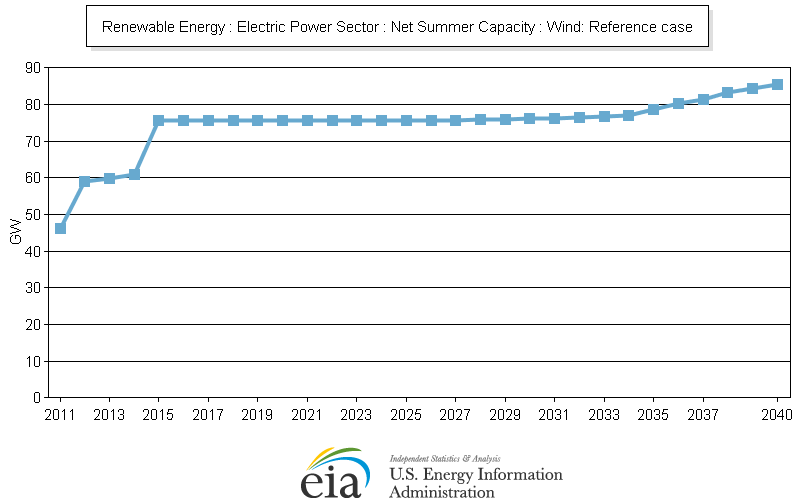
The PTC offsets the high price of wind energy, giving the false impression that wind is competitive with other resources, but at 2.3¢/kWh, the subsidy’s pre-tax value (3.5¢/kWh) equals, or exceeds the wholesale price of power in much of the country! The tax credit provides a significant out-of-market revenue source for developers by shifting costs to taxpayers at large. At current energy prices, we’re not convinced wind power can demonstrate sustained growth without the PTC, and this is confirmed in EIA’s latest Annual Energy Outlook 2014.

According to EIA, if the expired PTC is allowed to stay expired, their models show an expected stair-step increase in wind capacity by 2015 that flattens out for the next decade until gas prices rise and technology improvements make wind more competitive (see chart). If the PTC and the 30% ITC were made permanent EIA shows it would drive more renewables, particularly wind and solar, but at a significant cost: $4.5 billion/year from 2014 to 2040.


So what’s next

Big wind grew up on the tax credit, developed market plans and forecasts that relied on it, and now the wind PTC appears to be a required component of the industry’s economics. That was never the intent of Congress when this temporary tax credit was enacted 24 years ago. The PTC and ITC are now expired and we can expect roughly 15,000 MW of new wind to be built in response to the 1-year extension passed in 2013. After that, it’s over. It’s now time for taxpayers to consider better ways to spend their money.


Wind Turbines – “Novelty Energy”, Requires 100% back-up, for times with “no”, or “too much wind.

Reliance on Wind Power: Playing a Lethal Game

swiss winter2

A power generation system that can’t produce power on demand is no system at all. Wind power – entirely dependent on the weather – has consistently proven itself incapable of supplying meaningful power – requiring 100% of its capacity to be backed up by fossil fuel generation sources 100% of the time, both here (see our posts here and here andhere and here and here and here and here and here) and in Europe (seeour post here).

While the greentard shrugs and mumbles something about “battery technology improving” when presented with the fact that wind power can only ever be delivered at crazy, random intervals (see our post here) – those in touch with reality point to the social and economic catastrophe just waiting for the next occasion when wind power output plummets.

Here’s a great little piece from the Independent outlining the lunacy of our reliance on wind power and the potentially fatal consequences of placing faith in pure fantasy.

Energy policy based on renewables will win hearts but won’t protect their owners from frostbite and death due to exposure
Kevin Myers
Independent.ie
7 February 2012

Russia’s main gas-company, Gazprom, was unable to meet demand last weekend as blizzards swept across Europe, and over three hundred people died. Did anyone even think of deploying our wind turbines to make good the energy shortfall from Russia?

Of course not. We all know that windmills are a self-indulgent and sanctimonious luxury whose purpose is to make us feel good. Had Europe genuinely depended on green energy on Friday, by Sunday thousands would be dead from frostbite and exposure, and the EU would have suffered an economic body blow to match that of Japan’s tsunami a year ago. No electricity means no water, no trams, no trains, no airports, no traffic lights, no phone systems, no sewerage, no factories, no service stations, no office lifts, no central heating and even no hospitals, once their generators run out of fuel.

Modern cities are incredibly fragile organisms, which tremble on the edge of disaster the entire time. During a severe blizzard, it is electricity alone that prevents a midwinter urban holocaust. We saw what adverse weather can do, when 15,000 people died in the heatwave that hit France in August 2003. But those deaths were spread over a month. Last weekend’s weather, without energy, could have caused many tens of thousands of deaths over a couple of days.

Why does the entire green spectrum, which now incorporates most conventional parties across Europe, deny the most obvious of truths? To play lethal games with our energy systems in order to honour the whimsical god of climate change is as intelligent and scientific as the Aztec sacrifice of their young. Actually, it is far more frivolous, because at least the Aztecs knew how many people they were sacrificing: no one has the least idea of the loss of life that might result from the EU embracing “green” energy policies.

Frau Merkel has announced that Germany is going to phase out nuclear power, simply because of the Japanese tsunami. Well, that is like basing water-collection policies in Rhineland-Westphalia on the monsoon cycle of Borneo.

As I was saying last week, the Germans have a powerfully emotional attachment to everything that is “green”, and an energy policy based on renewables will usually win German hearts. But it will not protect the owners of those hearts from frostbite and death due to exposure, for wind can often be not so much a Renewable as an Unusable, and also an Unpredictable, an Unstorable, and – normally when it’s very cold – an Unmovable.

The seriousness of this is hard to exaggerate. The temperature in the Baltic countries last weekend was -33 degrees Celsius. The Eurasian landmass from Calais to Naples to Siberia was an icefield in which hundreds of millions of people were trapped. Without coal, oil and nuclear energy, mass deaths of the old and the young would have occurred on the first night. Three nights of such conditions, and even the physically fit would have been dying of exposure, as the temperature inside dwellings fell and began to match that of the outside, an inverse image of what happened during the French heatwave 10 years ago, when there was no escape from the heat.

Yet you will see nowhere in Dail Eireann, or Brussels, or the Palace of Westminster, a serious discussion about energy policies based on these realities, or which acknowledges that wind usually doesn’t blow when it is very cold, or that even when you have strong and steady winds blowing, you will still have to have created a parallel and duplicate energy supply to provide cover for when the wind stops. And merely to create that standby energy system will generate a zillion tons of carbon dioxide.

Wind power in Ireland actually produces only 22pc of its capacity: would you spend €100,000 on a car if it meant that €78,000 of the purchase price was wasted? It gets worse. On a really cold day, we actually need about 5,000 megawatts, but yesterday wind was producing under 50 megawatts: a grand total of 1pc of requirements.

Yet despite such appalling figures, we legally prohibit civil servants from even looking at the nuclear option. They won’t even take a phone-call on the subject. Instead, the fiction has taken hold amongst our media classes that we are close to being an exporter of renewable energy through the much-vaunted interconnector with Britain. But this is grotesquely untrue. We shall actually be exporting through the connector only 3pc of the time, and importing 86pc, with the system otherwise idle.

Mad, isn’t it? And madder still that RTE or the BBC will continue to trot out their pet wind-enthusiasts to bluster balderdash and poppycock about global warming and how renewables are the solution – and without the contrary point of view ever being given an airing.

This is dogma, as created, promulgated and enforced by the John Charles McQuaids of our time – and if sceptics are not actually anathematised from the pulpit, they are ruthlessly and systematically ignored. These dishonest, hypocritical and deceitful energy policies are now widely accepted by our political and teaching classes as being the very embodiment of environmentalist virtue. Such imbecilic virtue, if implemented as energy policy across Europe, could have brought about a human catastrophe last weekend.
Independent.ie

ICU Respiratory_therapist

Wind Turbines – “Novelty Energy”, Requires 100% back-up, for times with “no”, or “too much wind.

Reliance on Wind Power: Playing a Lethal Game

swiss winter2

A power generation system that can’t produce power on demand is no system at all. Wind power – entirely dependent on the weather – has consistently proven itself incapable of supplying meaningful power – requiring 100% of its capacity to be backed up by fossil fuel generation sources 100% of the time, both here (see our posts here and here andhere and here and here and here and here and here) and in Europe (seeour post here).

While the greentard shrugs and mumbles something about “battery technology improving” when presented with the fact that wind power can only ever be delivered at crazy, random intervals (see our post here) – those in touch with reality point to the social and economic catastrophe just waiting for the next occasion when wind power output plummets.

Here’s a great little piece from the Independent outlining the lunacy of our reliance on wind power and the potentially fatal consequences of placing faith in pure fantasy.

Energy policy based on renewables will win hearts but won’t protect their owners from frostbite and death due to exposure
Kevin Myers
Independent.ie
7 February 2012

Russia’s main gas-company, Gazprom, was unable to meet demand last weekend as blizzards swept across Europe, and over three hundred people died. Did anyone even think of deploying our wind turbines to make good the energy shortfall from Russia?

Of course not. We all know that windmills are a self-indulgent and sanctimonious luxury whose purpose is to make us feel good. Had Europe genuinely depended on green energy on Friday, by Sunday thousands would be dead from frostbite and exposure, and the EU would have suffered an economic body blow to match that of Japan’s tsunami a year ago. No electricity means no water, no trams, no trains, no airports, no traffic lights, no phone systems, no sewerage, no factories, no service stations, no office lifts, no central heating and even no hospitals, once their generators run out of fuel.

Modern cities are incredibly fragile organisms, which tremble on the edge of disaster the entire time. During a severe blizzard, it is electricity alone that prevents a midwinter urban holocaust. We saw what adverse weather can do, when 15,000 people died in the heatwave that hit France in August 2003. But those deaths were spread over a month. Last weekend’s weather, without energy, could have caused many tens of thousands of deaths over a couple of days.

Why does the entire green spectrum, which now incorporates most conventional parties across Europe, deny the most obvious of truths? To play lethal games with our energy systems in order to honour the whimsical god of climate change is as intelligent and scientific as the Aztec sacrifice of their young. Actually, it is far more frivolous, because at least the Aztecs knew how many people they were sacrificing: no one has the least idea of the loss of life that might result from the EU embracing “green” energy policies.

Frau Merkel has announced that Germany is going to phase out nuclear power, simply because of the Japanese tsunami. Well, that is like basing water-collection policies in Rhineland-Westphalia on the monsoon cycle of Borneo.

As I was saying last week, the Germans have a powerfully emotional attachment to everything that is “green”, and an energy policy based on renewables will usually win German hearts. But it will not protect the owners of those hearts from frostbite and death due to exposure, for wind can often be not so much a Renewable as an Unusable, and also an Unpredictable, an Unstorable, and – normally when it’s very cold – an Unmovable.

The seriousness of this is hard to exaggerate. The temperature in the Baltic countries last weekend was -33 degrees Celsius. The Eurasian landmass from Calais to Naples to Siberia was an icefield in which hundreds of millions of people were trapped. Without coal, oil and nuclear energy, mass deaths of the old and the young would have occurred on the first night. Three nights of such conditions, and even the physically fit would have been dying of exposure, as the temperature inside dwellings fell and began to match that of the outside, an inverse image of what happened during the French heatwave 10 years ago, when there was no escape from the heat.

Yet you will see nowhere in Dail Eireann, or Brussels, or the Palace of Westminster, a serious discussion about energy policies based on these realities, or which acknowledges that wind usually doesn’t blow when it is very cold, or that even when you have strong and steady winds blowing, you will still have to have created a parallel and duplicate energy supply to provide cover for when the wind stops. And merely to create that standby energy system will generate a zillion tons of carbon dioxide.

Wind power in Ireland actually produces only 22pc of its capacity: would you spend €100,000 on a car if it meant that €78,000 of the purchase price was wasted? It gets worse. On a really cold day, we actually need about 5,000 megawatts, but yesterday wind was producing under 50 megawatts: a grand total of 1pc of requirements.

Yet despite such appalling figures, we legally prohibit civil servants from even looking at the nuclear option. They won’t even take a phone-call on the subject. Instead, the fiction has taken hold amongst our media classes that we are close to being an exporter of renewable energy through the much-vaunted interconnector with Britain. But this is grotesquely untrue. We shall actually be exporting through the connector only 3pc of the time, and importing 86pc, with the system otherwise idle.

Mad, isn’t it? And madder still that RTE or the BBC will continue to trot out their pet wind-enthusiasts to bluster balderdash and poppycock about global warming and how renewables are the solution – and without the contrary point of view ever being given an airing.

This is dogma, as created, promulgated and enforced by the John Charles McQuaids of our time – and if sceptics are not actually anathematised from the pulpit, they are ruthlessly and systematically ignored. These dishonest, hypocritical and deceitful energy policies are now widely accepted by our political and teaching classes as being the very embodiment of environmentalist virtue. Such imbecilic virtue, if implemented as energy policy across Europe, could have brought about a human catastrophe last weekend.
Independent.ie

ICU Respiratory_therapist

Economic Storage of Wind Power will Never be Feasible!

The Economic Storage of Wind Power is a Pipe-Dream

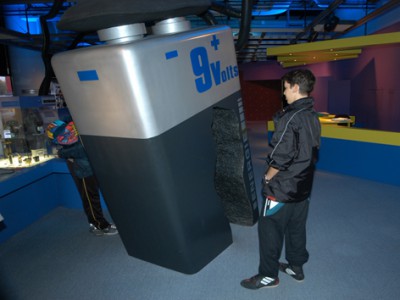
giant battery 2

The wind industry is the perpetual infant of power generation: always looking for the subsidies to last that little bit longer; always promising to improve its performance; always claiming it will outdo hydro, coal and gas – provided, of course, that the subsidies keep flowing. STT for one thinks the wind industry has had ample time to grow up and stand on its own two feet.

Like the brat that it is, the wind industry can’t be told what to do and, especially, won’t ever respond to demands from power users about when its product should be delivered.

output vs demand

It’s quite happy to produce plenty of power when it’s not needed at night time; and much less during the day, when it is (as seen in the graph above); and often, none at all during periods of peak demand: as seen in the graph below, showing the entire fleet of wind farms connected to the Eastern Grid (based in SA, NSW, Tasmania and Victoria, which in July had a notional capacity of 2,952 MW) producing 20 MW or 0.67% of total capacity, just as demand starts to peak – and see our posts here and hereand here and here and here and here and here and here.

JULY20

In it’s “quick, look over there” response to any inconvenient facts, the wind industry never concedes that wind power is “intermittent” – it prefers the term “variable” – which we showed to be a monstrous abuse of both the facts and the English language (see our post here).

When challenged about its consistent failures to match output with demand, the wind industry and its parasites respond by mumbling about “battery technology improving”.

The pitch is that – one day “soon” – there will batteries big enough and cheap enough to allow huge volumes of wind power produced when it’s not needed, to be stored for the occasions when it is. That way, the “variable” output from wind farms could be delivered when there might just be a market for it.

Of course, the pitch is made so the subsidies keep flowing to allow an endless sea of giant fans to be erected now – in order to take advantage of the (so far, elusive) storage technology that’s just over the “horizon”. Except that the “soon” is more like light-years and the “horizon” is a mirage.

Even if a technology was invented (STT likens it to the chances of finding a perpetual motion machine or alchemy turning lead into gold) to store large volumes of the electricity output (in bulk) from all of the wind farms connected to the Eastern Grid, say (which now have a notional capacity of 3,342 MW) – the economic cost would be astronomical – and readily eclipse the value of the power produced. Not that the wind industry has ever made any economic sense.

One way of analysing the economics (ie costs versus benefits) of storing, in bulk quantities, the electricity generated from wind farms is to quantify what’s called the “energy returned on energy invested” (EROEI). Put simply, that’s the amount of energy required as an input in order to return a given energy output. To be economically viable, a generation source has to produce a surplus of energy well over and above what was required to establish it.

In this article, Dr John Morgan – an Adjunct Professor at RMIT – comes up with the (not so surprising) conclusion that energy storage cannot (and will never) provide an economic solution to the intermittency of wind power.

The Catch 22 of Energy Storage
Brave New Climate
22 August 2014

Pick up a research paper on battery technology, fuel cells, energy storage technologies or any of the advanced materials science used in these fields, and you will likely find somewhere in the introductory paragraphs a throwaway line about its application to the storage of renewable energy. Energy storage makes sense for enabling a transition away from fossil fuels to more intermittent sources like wind and solar, and the storage problem presents a meaningful challenge for chemists and materials scientists… Or does it?

Guest Post by John Morgan.

Several recent analyses of the inputs to our energy systems indicate that, against expectations, energy storage cannot solve the problem of intermittency of wind or solar power. Not for reasons of technical performance, cost, or storage capacity, but for something more intractable: there is not enough surplus energy left over after construction of the generators and the storage system to power our present civilization.

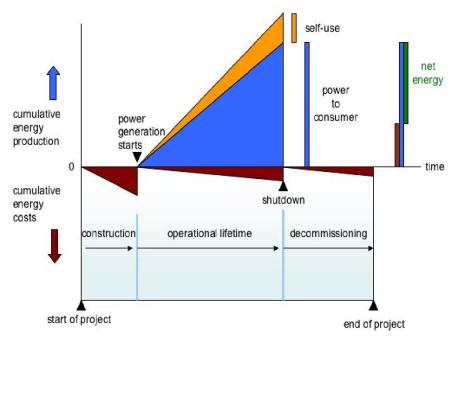
The problem is analysed in an important paper by Weißbach et al. (1) in terms of energy returned on energy invested, or EROEI – the ratio of the energy produced over the life of a power plant to the energy that was required to build it. It takes energy to make a power plant – to manufacture its components, mine the fuel, and so on. The power plant needs to make at least this much energy to break even. A break-even powerplant has an EROEI of 1. But such a plant would pointless, as there is no energy surplus to do the useful things we use energy for.

There is a minimum EROEI, greater than 1, that is required for an energy source to be able to run society. An energy system must produce a surplus large enough to sustain things like food production, hospitals, and universities to train the engineers to build the plant, transport, construction, and all the elements of the civilization in which it is embedded.

morganesbox

For countries like the US and Germany, Weißbach et al. (1) estimate this minimum viable EROEI to be about 7. An energy source with lower EROEI cannot sustain a society at those levels of complexity, structured along similar lines. If we are to transform our energy system, in particular to one without climate impacts, we need to pay close attention to the EROEI of the end result.

The EROEI values for various electrical power plants are summarized in the figure. The fossil fuel power sources we’re most accustomed to have a high EROEI of about 30, well above the minimum requirement. Wind power at 16, and concentrating solar power (CSP, or solar thermal power) at 19, are lower, but the energy surplus is still sufficient, in principle, to sustain a developed industrial society. Biomass, and solar photovoltaic (at least in Germany), however, cannot. With an EROEI of only 3.9 and 3.5 respectively, these power sources cannot support with their energy alone both their own fabrication and the societal services we use energy for in a first world country.

morganesfig1

Energy Returned on Invested, from Weißbach et al.,(1) with and without energy storage (buffering). CCGT is closed-cycle gas turbine. PWR is a Pressurized Water (conventional nuclear) Reactor. Energy sources must exceed the “economic threshold”, of about 7, to yield the surplus energy required to support an OECD level society.

These EROEI values are for energy directly delivered (the “unbuffered” values in the figure). But things change if we need to store energy. If we were to store energy in, say, batteries, we must invest energy in mining the materials and manufacturing those batteries. So a larger energy investment is required, and the EROEI consequently drops.

Weißbach et al. calculated the EROEIs assuming pumped hydroelectric energy storage. This is the least energy intensive storage technology. The energy input is mostly earthmoving and construction. It’s a conservative basis for the calculation; chemical storage systems requiring large quantities of refined specialty materials would be much more energy intensive. Carbajales-Dale et al. (2) cite data asserting batteries are about ten times more energy intensive than pumped hydro storage.

Adding storage greatly reduces the EROEI (the “buffered” values in the figure). Wind “firmed” with storage, with an EROEI of 3.9, joins solar PV and biomass as an unviable energy source. CSP becomes marginal (EROEI ~9) with pumped storage, so is probably not viable with molten salt thermal storage. The EROEI of solar PV with pumped hydro storage drops to 1.6, barely above breakeven, and with battery storage is likely in energy deficit.

This is a rather unsettling conclusion if we are looking to renewable energy for a transition to a low carbon energy system: we cannot use energy storage to overcome the variability of solar and wind power.

In particular, we can’t use batteries or chemical energy storage systems, as they would lead to much worse figures than those presented by Weißbach et al (1). Hydroelectricity is the only renewable power source that is unambiguously viable. However, hydroelectric capacity is not readily scaled up as it is restricted by suitable geography, a constraint that also applies to pumped hydro storage.

This particular study does not stand alone. Closer to home, Springer have just published a monograph, Energy in Australia, (3) which contains an extended discussion of energy systems with a particular focus on EROEI analysis, and draws similar conclusions to Weißbach. Another study by a group at Stanford (2) is more optimistic, ruling out storage for most forms of solar, but suggesting it is viable for wind. However, this viability is judged only on achieving an energy surplus (EROEI>1), not sustaining society (EROEI~7), and excludes the round trip energy losses in storage, finite cycle life, and the energetic cost of replacement of storage. Were these included, wind would certainly fall below the sustainability threshold.
energy-outputs-and-energy-costs

It’s important to understand the nature of this EROEI limit. This is not a question of inadequate storage capacity – we can’t just buy or make more storage to make it work. It’s not a question of energy losses during charge and discharge, or the number of cycles a battery can deliver. We can’t look to new materials or technological advances, because the limits at the leading edge are those of earthmoving and civil engineering. The problem can’t be addressed through market support mechanisms, carbon pricing, or cost reductions. This is a fundamental energetic limit that will likely only shift if we find less materially intensive methods for dam construction.

This is not to say wind and solar have no role to play. They can expand within a fossil fuel system, reducing overall emissions. But without storage the amount we can integrate in the grid is greatly limited by the stochastically variable output. We could, perhaps, build out a generation of solar and wind and storage at high penetration. But we would be doing so on an endowment of fossil fuel net energy, which is not sustainable. Without storage, we could smooth out variability by building redundant generator capacity over large distances. But the additional infrastructure also forces the EROEI down to unviable levels. The best way to think about wind and solar is that they can reduce the emissions of fossil fuels, but they cannot eliminate them. They offer mitigation, but not replacement.

Nor is this to say there is no value in energy storage. Battery systems in electric vehicles clearly offer potential to reduce dependency on, and emissions from, oil (provided the energy is sourced from clean power). Rooftop solar power combined with four hours of battery storage can usefully timeshift peak electricity demand, (3) reducing the need for peaking power plants and grid expansion. And battery technology advances make possible many of our recently indispensable consumer electronics. But what storage can’t do is enable significant replacement of fossil fuels by renewable energy.

If we want to cut emissions and replace fossil fuels, it can be done, and the solution is to be found in the upper right of the figure. France and Ontario, two modern, advanced societies, have all but eliminated fossil fuels from their electricity grids, which they have built from the high EROEI sources of hydroelectricity and nuclear power. Ontario in particular recently burnt its last tonne of coal, and each jurisdiction uses just a few percent of gas fired power. This is a proven path to a decarbonized electricity grid.

But the idea that advances in energy storage will enable renewable energy is a chimera – the Catch-22 is that in overcoming intermittency by adding storage, the net energy is reduced below the level required to sustain our present civilization.
John Morgan
22 August 2014

John is Chief Scientist at a Sydney startup developing smart grid and grid scale energy storage technologies. He is Adjunct Professor in the School of Electrical and Computer Engineering at RMIT, holds a PhD in Physical Chemistry, and is an experienced industrial R&D leader. You can follow John on twitter at @JohnDPMorgan. First published in Chemistry in Australia.

Brave New Climate Postscript

When this article was published in CiA some readers had difficulty with the idea of a minimum societal EROI. Why can’t we make do with any positive energy surplus, if we just build more plant? Hall (4) breaks it down with the example of oil:

Think of a society dependent upon one resource: its domestic oil. If the EROI for this oil was 1.1:1 then one could pump the oil out of the ground and look at it. If it were 1.2:1 you could also refine it and look at it, 1.3:1 also distribute it to where you want to use it but all you could do is look at it. Hall et al. 2008 examined the EROI required to actually run a truck and found that if the energy included was enough to build and maintain the truck and the roads and bridges required to use it, one would need at least a 3:1 EROI at the wellhead.

Now if you wanted to put something in the truck, say some grain, and deliver it, that would require an EROI of, say, 5:1 to grow the grain. If you wanted to include depreciation on the oil field worker, the refinery worker, the truck driver and the farmer you would need an EROI of say 7 or 8:1 to support their families. If the children were to be educated you would need perhaps 9 or 10:1, have health care 12:1, have arts in their life maybe 14:1, and so on. Obviously to have a modern civilization one needs not simply surplus energy but lots of it, and that requires either a high EROI or a massive source of moderate EROI fuels.

The point is illustrated in the EROI pyramid.(4) (The blue values are published values: the yellow values are increasingly speculative.)

morganesfig2

Finally, if you are interested in pumped hydro storage, a previous Brave New Climate article by Peter Lang covers the topic in detail, and the comment stream is an amazing resource on the operational characteristics and limits of this means of energy storage.

References

(1). Weißbach et al., Energy 52 (2013) 210. Preprint available here.

(2). Carbajales-Dale et al., Energy Environ. Sci. DOI: 10.1039/c3ee42125b

(3). Graham Palmer, Energy in Australia: Peak Oil, Solar Power, and Asia’s Economic Growth; Springer 2014.

(4). Pedro Prieto and Charles Hall, Spain’s Photovoltaic Revolution, Springer 2013.

light-in-darkness

Would you Mind Waiting Till the Wind blows, if you want Electricity? (but not too much)

Of Unicorns & Pink Elephants: “Reliance” on Wind Power is Pure “Green” Fantasy

Unicorn Drinking from a River

When it comes to their demand for electricity, the power consumer has a couple of basic needs: when they hit the light switch they assume illumination will shortly follow and that when the kettle is kicked into gear it’ll be boiling soon thereafter. And the power consumer assumes that these – and similar actions in a household or business – will be open to them at any time of the night or day, every day of the year.

For conventional generators, delivering power on the basic terms outlined above is a doddle: delivering base-load power around the clock, rain, hail or shine is just good business. It’s what the customer wants and is prepared to pay for, so it makes good sense to deliver on-demand.

But for wind power generators it’s never about how much the customer wants or when they want it, it’s always and everywhere about the vagaries of the wind. When the wind speed increases to 25 m/s, turbines are automatically shut-off to protect the blades and bearings; and below 6-7 m/s turbines are incapable of producing any power at all.

Even with the most geographically widespread grid-connected set of wind farms in the world (the 3,342 MW of wind power capacity connected to Australia’s Eastern grid across SA, Victoria, Tasmania and NSW) there are dozens of occasions each year when total wind power output struggles to top 2% of installed capacity – and hundreds when it fails to muster even 5% (see our posts here and here and here).

Now, if the power consumer was given advance warning of when these total output failures were going to occur, they might simply reconsider their selfish demands of having illumination after dark or that hot cuppa in the morning. That way, they might still consider wind power a “perfect substitute” for conventional power; and plump for the (purportedly cheaper) former over the latter every time?

But, so far, power consumers remain stubbornly selfish; wedded to the idea that when they hit the switch, their power needs will be satisfied that very instant (the cheek, hey?). And that’s where claims that wind power is a “substitute” for conventional generation fall in a heap.

Power delivered at crazy, random intervals (which in practical terms means no power at all, hundreds of times each year) is NO substitute for power delivered on-demand; anytime of the day or night; every single day of the year – and in volumes sufficient to satisfy all consumers connected to the same network, at the same time.

Wind power cannot, therefore, be considered a “substitute” for power which is available on-demand. With every MW of wind power capacity matched with a MW of conventional generation capacity at all times – needed to keep the grid stable by balancing the wild fluctuations in wind power output (see our post here) and to meet demand when output collapses to nothing (see our post here) – wind power is nothing but childish nonsense.

The only reason turbines have been slung up anywhere is in order for wind power outfits and their backers to reap a fat pile of taxpayer and power consumer subsidies. Here’s a take on the greatest rort of all time from the US.

Obama’s Green Unicorn
US News
Peter Roff
25 August 2014

The true cost of renewable energy is being masked by government subsidies and bailouts.

America is about as likely to become reliant on green energy to meet its baseload power requirements as a unicorn is to stroll down the middle of Washington’s Pennsylvania Avenue during rush hour followed by a pink elephant.

It’s just not happening – but that’s hasn’t deterred the modern day snake oil salesmen and their allies inside the Obama administration from continuing to make a push for wind and solar power as an eventual replacement for energy generated from traditional sources like coal, oil and natural gas. Renewable technology has improved, no doubt, but it’s a long way away from being ready to make a substantial contribution to the heating of our homes and the powering of our businesses unless the generous tax subsidies that create the illusion of cost competitiveness continue.

There’s nothing wrong per se with the pursuit of renewable energy; it’s just that what it actually costs is being masked by taxpayer subsidies, federal loan guarantees and renewable fuels mandates at the state level that force power companies to put wind and solar into the energy mix, sometimes at two to three times what traditional power costs. Ultimately, one way or another, the taxpayers and energy consumers are footing the bill even if they don’t know it.

Congress has taken a few positive steps in the right direction. The federal Wind Production Tax Credit was allowed to expire at the end of the year, meaning new wind projects are going to have to be competitive at market rates to attract funding. Remember it was none other than billionaire Warren Buffett, the “Oracle of Omaha,” who explained recently to a group of investors that the tax credit was the only reason that any sensible person invested in wind projects in the first place.

Unfortunately, some federal agencies are trying to keep the program alive through the backdoor.

The worst offender in this regard may be the IRS, which recently issued new “guidelines” that make it even easier for wind projects currently in development to qualify for the tax credit on the basis of work already contemplated or completed. According to Politico, “The IRS says completed or in-progress facilities can be sold and the costs incurred by the seller will still count toward qualifying for the [credit], except in cases where tangible property (think equipment like wind turbines) bought for one project is sold and used at another site.”

To translate this into English, it’s a move to help keep the whole shell game alive until such time as wind power supporters can get the tax credit reauthorized. “There is a large pipeline of projects that were under development at some stage that by virtue of this guidance will be able to go forward. In that regard it is going to permit a lot of projects to be developed,” said one wind energy expert cited by Politico.

Outside groups are also weighing in, including the Sierra Club, which has targeted nine members of Congress in a pressure campaign over the August recess to push for re-authorization of the Wind Production Tax Credit. That is in addition to the online ad buys in 16 other districts that started in June.

The Democrats who run the Senate want to keep the now-expired credit alive and have, in the Senate Finance Committee, already approved a package of so-called “extenders” that would breathe new life into it. The House has thus far refused to go along – and kudos to Texas Republican Rep. Randy Weber, who deserves credit for successfully introducing an amendment to shut the whole business down permanently. But he’s not just fighting the lobbyists and green groups in favor of the credit, but the entire federal bureaucracy which, once a program has been established, is loath to let it die.

Major government investment in speculative green projects may have at one time made sense. But even if that were once the case, it is so no longer. The Obama green energy push has enriched more than a few politically well-connected liberals who used tax credits and government bailouts to enlarge their portfolios, but it has done little to make energy more abundant or lower costs to consumers, which is the justification in the first place to get the taxpayers involved.

If people want to build wind farms – on land or offshore – and they want to reap the benefits of their investments, then they should be willing to take the same risks as everyone else. The way the bureaucrats have it structured now, the taxpayers are making payments on both ends through subsidies for construction and higher rates on consumption. It’s a system only a bureaucrat could love.
US News

yacht

Renewable Energy Targets Force Consumers to Use Inefficient, Unreliable, Overpriced Products!

The crazy world of Renewable Energy Targets

Nothing makes sense about Renewable Energy Targets, except at a “Bumper-Sticker” level. Today the AFR front page suggests* the federal government is shifting to remove the scheme (by closing it to new entrants) rather than just scaling it back. It can’t come a day too soon. Right now, the Greens who care about CO2 emissions should be cheering too. The scheme was designed to promote an  industry, not to cut CO2.

UPDATE: Mathias Cormann later says “that the government’s position was to “keep the renewable energy target in place” SMH.  Mixed messages indeed.

We’ve been sold the idea that if we subsidize “renewable” energy (which produces less CO2) we’d get a world with lower CO2 emissions. But it ain’t so. The fake “free” market in renewables does not remotely achieve what it was advertised to do — the perverse incentives make the RET good for increasing “renewables” but bad for reducing CO2, and, worse, the more wind power you have, the less CO2 you save. Coal fired electricity is so cheap that doing anything other than making it more efficient is a wildly expensive and inefficient way to reduce CO2. But the Greens hate coal more than they want to reduce carbon dioxide. The dilemma!

The RET scheme in Australian pays a subsidy to wind farms and solar installations. Below, Tom Quirk shows that this is effectively a carbon tax (but a lousy one), and it shifts supply — perversely taxing brown coal at $27/ton, black coal at $40/ton and gas at up to $100/ton. Because it’s applied to renewables rather than CO2 directly, it’s effectively a higher tax rate for the non-renewable but lower CO2 emitters.

Calculating the true cost of electricity is fiendishly difficult. “Levelized costs” is the simple idea that we can add up the entire lifecycle cost of each energy type, but it’s almost impossible to calculate meaningful numbers. Because wind power is fickle, yet electricity demand is most definitely not, the real cost of wind power is not just the construction, maintenance and final disposal, but also the cost of having a gas back-up or expensive battery (give-us-your-gold) storage. It’s just inefficient every which way. Coal and nuclear stations are cheaper when run constantly rather than in a stop-start fashion (just like your car is). So the cost of renewables also includes the cost of shifting these “base load” suppliers from efficient to inefficient use — and in the case of coal it means producing more CO2 for the same megawatts. South Australia is the most renewable-dependent state in mainland Australia, and it’s a basketcase (look at the cost stack below). Real costs only come with modeling, and we all know how difficult that is.

If the aim is really the research and development of renewables (and not “low CO2″) then I’ve long said that we should pay for the research and development directly, not pay companies to put up inefficient and fairly useless versions in the hope that companies might earn enough to pay for the research out of the profits. Tom Quirk points out that it’s all frightfully perverse again, because most innovations come from industry, not government funded research, but in Australia we hardly have any industry making parts used in power generation — we don’t have the teams of electrical engineers working on the problem anymore. I suppose the theory is that Chinese companies will profit from solar panels and do the R&D for us (keeping “our” patents too)? It would be cheaper just to gift them the money direct wouldn’t it — rather than pay an industry to produce and install a product that no one would buy, which doesn’t work, and hope that the “profits” translate into discoveries that will produce royalties and jobs for people overseas. I’m sure Chinese workers and entrepreneurs will be grateful. Yay.

Meanwhile, Green fans have suddenly discovered the idea of sovereign risk (where were they while the Rudd-Gillard team blitzed Australia’s reputation for stable, predictable policy?). According to the AFR, the government is scornful (and rightly so):

The government source said the market was oversupplied with energy and there was no longer any cause for a mandated use of any specific type of power. The source said while there would be investment losses if the RET was abolished, or even scaled back, investors “would have to have been blind to know this wasn’t coming’’.

On Catalaxy files, Judith Sloan mocks the Fin for pushing a press release from a rent-seeking firm, and guesses the Abbott government will be too “gutless” to ditch this economic and environmental dog of a policy.

—   Jo


Frauds, Crooks and Criminals

Demonstrating daily that diversity is not strength!

Family Hype

All Things Related To The Family

DeFrock

defrock.org's principal concern is the environmental and human damage of industrial wind turbines on rural communities

Gerold's Blog

The truth shall set you free but first it will make you miserable

Politisite

Breaking Political News, Election Results, Commentary and Analysis

Canadian Common Sense

Canadian Common Sense - A Unique Perspective from Grassroots Canadians

Falmouth's Firetower Wind

a wind energy debacle

The Law is my Oyster

The Law and its Place in Society

Illinois Leaks

Edgar County Watchdogs

stubbornlyme.

My thoughts...my life...my own way.

Oppose! Swanton Wind

Proposed Wind Project on Rocky Ridge

Climate Audit

by Steve McIntyre

4TimesAYear's Blog

Trying to stop climate change is like trying to stop the seasons from changing. We don't control the climate; IT controls US.

Wolsten

Wandering Words

Patti Kellar

WIND WARRIOR

John Coleman's Blog

Global Warming/Climate Change is not a problem