Around the world, rural communities are fighting back hard against the great wind power fraud.
Wherever wind farms have appeared – or have been threatened – big numbers of locals take a set against the monsters being speared into their previously peaceful – and often idyllic – rural communities.
Their anger extends to the goons that lied their way to development approval – and the bent officials that rubber-stamped their applications and who, thereafter, help the operators ride roughshod over locals’ rights to live in and enjoy the peace and comfort of their own homes and properties (see our post here).
Australians are in there fighting hard – with the numbers solidly against wind power outfits that cause nothing more than community division and open hostility wherever they go (see our posts here and here and hereand here). In Australia, the wind industry, its parasites and spruikers have completely lost their grip on the ‘game’ (see our post here).
The Irish have already hit the streets to bring an end to the fraud: some 10,000 stormed Dublin back in April last year. The sense of anger in Ireland – as elsewhere – is palpable (see our post here).
Rural Ontario is seething, with locals taking the law into their own hands – sabotaging turbines and construction equipment in order to defend their (once) peaceful and prosperous communities (see our post here).
And the Scots have joined in – tearing down MET masts in order to prevent wind power outfits from gaining a foothold and, thereafter, violating their right to live free from turbine terror (see our post here).
The back-lash against wind power outfits has been mirrored in the US – with communities rallying to shut down projects before they begin; and a raft of litigation launched by neighbours (see our post here) – as well as 23 Texan turbine hosts suing the wind farm outfit they contracted with for turbine noise impacts and loss of property value, etc (see our post here).
As community and political opposition to the great wind power fraud rolls and builds across the world, the charge that opponents are red-necked climate change deniers, infected with a dose of Not In My Backyard syndrome, starts to ring hollow.
Back to the mounting fury in Ontario. Community opposition there continues to mount and, with the vast majority of those set upon by the great wind power fraud opposed, has reached boiling point, as this Bay Today story details.
Mattawa wind farm opposition gaining momentum
Bay Today
6 March 2015
Liam Berti
Nipissing MPP Vic Fedeli was one of 12 representatives opposing the proposed Mattawa-area wind farm who spoke to a standing-room only audience at Mike Rodden Arena on Friday night.
Some used humour, others were brought to tears.
But the message from three First Nation Chiefs, various Mayors and federal and provincial leaders was the same: the proposed wind farm for the Mattawa region will be fought to the end.
Area residents packed the second floor of Mattawa’s Mike Rodden Arena on Friday night to listen to the opposition leaders rally against Innergex Renewable Energy Inc.’s tentative plans for a 150-megawatt wind farm in the area.
Their respective arguments ranged from the Algonquin Land Claim agreement, the environmental toll, and the true economic impact, among many others.
The Nodinosi Project, as Innergex and the partnering Algonquins of Pikwàkanagàn First Nation have named it, calls for anywhere between 50-60 wind turbines on crown land just north of the Mattawa River in the Olrig and Mattawan Townships.
Some of the turbines in the project are expected to tower at 80-120 metres in height, which would be some of the largest of their kind.
The Mattawa/North Bay Algonquin First Nation, Antoine First Nation and Shabot Obaadjiwan leaders took precedence on the evening, defending their land that they feel the government is destroying and exploiting.
“If you want to develop our lands, our consent is required,” said Dave Joanisse, Chief for the Antoine First Nation. “Going to court and fighting for title is one way the that the Algonquin Communities have to settle long outstanding Claims.
“The other way is for the government to conduct negotiation in good faith with Aboriginal Communities,” he continued.
Innergex has promoted the project in partnership with the Algonquins of Pikwàkanagàn First Nation, who are situated over 200 kilometres from the proposed project site, near Pembroke, Ont.
But Joanisse continued to send his strong message to the fellow First Nation, whose integrity he questioned for entering the agreement and potentially jeopardizing the Algonquin Land Claim agreement-in-principle in the first public consultation.
“I am truly disappointed in the leadership from Pikwàkanagàn,” he said on Friday. “This unilateral decision made by them truly undermines the process we have all supported for the last 20 years.”
Nipissing Member of Provincial Parliament Vic Fedeli encapsulated the crowd with his arguments against the province’s wind power plans and, more specifically, the Mattawa proposal.
Fedeli, who was Ontario’s energy critic for two years, argued that the province’s Green Energy Act has been ideologically driven and lacks substance, which he said the new Innergex proposal is a prime example of.
He said the provincial government has spent $50 billion on green energy and paid $2.6 billion to Quebec and the United States between 2006 and 2013 to take the surplus energy made exclusively from wind.
“We got into this thing in Ontario by a mistake, forced into it by ideology, it caused your hydro rates to triple and cost 300,000 manufacturing jobs in Ontario so far,” Fedeli said.
But François Morin, senior advisor of public affairs for the Quebec-based company, said that isn’t the whole story.
“In the energy sector, you have to plan 20-25 years ahead,” he added. “Maybe you have a surplus of energy now, but in a few years it could be very different. In Ontario, the projection calls for a deficit of energy in the next 3-4 years.”
The intermittent power source, Fedeli argued, is being forced on Ontario after the province stripped municipalities the ability to object to the farms and that they continue to unfairly incentivize their development to the private companies.
The crowd also heard from North Bay Mayor Al McDonald, Nipissing-Timiskaming MP Jay Aspin, John Kelsall of the Lake Talon Conservation Authority, and other area mayors.
Many in attendance said the standing room-only session was the biggest turnout they have ever seen for an event like that in Mattawa.
Mattawa Mayor Dean Backer brought the evening to a climax, rallying the crowd to their feet in his brief but powerful statements.
“Innergex, we mean no ill will, but you’re coming into our back yard and it’s not going to happen in our back yard, I can promise you that,” he said to a standing ovation. “Our municipality is 100 per cent against this stupid proposal.”
And it appears that, for now, those strong messages have gotten through to Innergex.
Morin said the responsibility is now on Innergex to redevelop the proposal around the concerns they have heard.
“Social acceptability is a cornerstone of our development and a vital part of any project, so for now, I can tell you, no we don’t have a project because we don’t have that social acceptability,” he said after the meeting.
“For now, the responsibility is with us to find a way to make a better project,” he concluded.
Morin said the company will now go back to the drawing board and redevelop new ideas for the Nodinosi Project. Bay Today
Lobbying from the wind industry could be likened to lobbying from the tobacco industry in the 1950s. We are now fully aware of the hazards of smoking tobacco but how long before our government stop accepting lobbying from the industry and wake up to the hazards of living near wind turbines?
“When a mistake is repeated, it is not a mistake anymore…it is a decision”- Paolo Coelho.
In the 1950’s, the tobacco lobby used medical professionals to insist that there was no medical evidence of harm from tobacco products. Indeed one advertisement, supported by research conducted by physicians, declared that “Phillip Morris” brand tobacco eased irritated throats and “every case of irritation cleared completely or definitely improved.” Phillip Morris soon became a major brand.
The tobacco lobby in the 1950’s could be compared to the powerful wind industry lobby today. Despite the growing body of peer-reviewed research demonstrating that wind turbines can cause serious adverse health effects in susceptible nearby residents, the wind lobby and Governments continue to dismiss this evidence.
However, in a recent groundbreaking study at Pacific Hydro’s Cape Bridgewater wind farm in the state of Victoria, Australia’s leading acoustical engineer Steven Cooper found that a unique infrasound pattern, which he had labelled “Wind Turbine Signature” in previous studies, correlates (through a “trend line”) with the occurrence and severity of symptoms of residents who had complained of often-unbearable “sensations”. These include sleep disturbance, headaches, heart racing, pressure in the head, ears or chest, etc. as described by the residents (symptoms generally known as Wind Turbine Syndrome (WTS), or the euphemism “noise annoyance”).
The acoustician also identified “discrete low frequency amplitude modulated signals” emitted by wind turbines and found the wind farm victims were also reacting to those. The Wind Turbine Signature cannot be detected using traditional measuring indexes such as dB(A) or dB(C) and 1/3 Octave bands, concludes his study. Narrowband analysis must be used instead, with results expressed in dB(WTS). He suggests medical studies be conducted using infrasound measurements in dB(WTS) in order to determine the threshold of what is unacceptable in terms of sound pressure level.
The findings are consistent with the official Kelley studies published in the US more than 30 years ago, which showed that infrasound emitted by early, downwind turbines caused sleep disturbance and other WTS symptoms. These studies were shelved, upwind turbines were designed and the regulatory authorities simply trusted the wind industry’s assertion that the new models did not emit dangerous infrasound. The Cooper study now proves they were wrong.
Another conclusion of his study is that the Danish method used for measuring low-frequency “noise annoyance” near wind farms is inadequate. So are the wind turbine noise standards applied to wind farms in Victoria, Australia and New Zealand, known as “New Zealand Standard 6808”. Just as inadequate are all other standards regulating “annoyance” near wind farms around the world including Ireland. They simply don’t take infrasound into account. Scores of medical practitioners and researchers from around the world are vindicated by this benchmark study, as are the residents reporting WTS symptoms themselves, many of whom have had to regularly or permanently abandon their homes.
Nevertheless, Governments in many countries around the world continue to assert that wind energy is viewed as a viable and environmentally friendly alternative to fossil fuels, although as Sherri Lange of NA-PAW points out “wind does nothing at all to abate climate change or reduce CO2 levels. It is possibly the largest scale environmental and economic fraud ever perpetuated.”
The Brown County Town Health Board in Wisconsin recently declared Duke Energy’s Shirley Industrial Wind Turbine Development to be a Human Health Hazard. The precise wording of the declaration was: “To declare the Industrial Wind Turbines in the Town of Glenmore, Brown County. WI. a Human Health Hazard for all people (residents, workers, visitors, and sensitive passersby) who are exposed to Infrasound/Low Frequency Noise and other emissions potentially harmful to human health.” Link
Meanwhile, a Canadian lawyer said recently that Ontario’s Green Energy Act violates the constitutional right of turbine neighbours to live in a place free from the “reasonable prospect of serious harm.” In the first constitutional challenge of the turbine approval process to hit the Ontario Court of Appeal, lawyer Julian Falconer argued that the whole approvals process “doesn’t allow people to protect their own health.” That, he said, violates their rights to live free from harm.
Health, according to the World Health Organisation, is a fundamental human right:
“Health is a state of complete physical, mental and social wellbeing and not merely the absence of disease or infirmity. The enjoyment of the highest attainable standard of health is one of the fundamental rights of every human being”. (WHO, 1948).
So, here in Ireland, where does our own Department of Health stand on all of this? In their response to a query from Deputy Helen McEntee on 30th Oct 2014, the Department stated as follows; “A range of symptoms have been described by people living close to wind turbines mainly related to environmental noise exposure. These symptoms include headaches, irritability, difficulty concentrating, fatigue, dizziness, anxiety and sleep disturbance and are often described in relation to annoyance. Anyone who experiences such symptoms should seek medical advice from their family doctor who may be able to prescribe suitable medication.”
So the Irish Department of Health is aware of the effects of WTN on human health and instead of urging that the precautionary principle should apply, they are advocating medication for sufferers!
Having presided over thalidomide and symphysiotomy scandals as well as the notorious vaccine trials, one would imagine that our Department of Health would be treading with caution here. Clearly, this does not seem to be the case. It has taken decades for Governments to realise that the powerful tobacco lobby were peddling untruths in the 1950’s when they proclaimed the health benefits of smoking. Will it take Governments as long to realise that living in proximity to industrial wind turbines causes deleterious adverse health effects in susceptible neighbours? They can’t say that they weren’t warned!
In even the best of studies, it will be impossible to separate out ‘nocebo’ effects from direct effects. reynermedia/Flickr, CC BY
The out-going head of the National Health and Medical Research Council (NHMRC) Warwick Anderson confirmed in Senate Estimates recently that calls for research proposals for up to a total of A$2.5 million over five years will soon be made to investigate questions about wind farms and health.
Under questioning from Greens Senator Richard Di Natale, Anderson told the committee A$2.5m was a paltry fraction of the agency’s total research budget, which in 2014 stood at A$802.42m. So A$2.5m is the equivalent of less than 0.06% of a projected five-year research budget on today’s allocations.
But researchers’ success obtaining grants has never been lower in Australia, with many strong grants falling below the cut-off score, which is ultimately budget determined. In 2014, researchers submitted 3,700 applications for project grants, with only one in 6.7 of these (14.9%) being funded. In the health services research field, 91.8% if applications were not funded.
Anderson has been emphatic that research standards will not be compromised in all this, and that only high-quality applications from suitably experienced researchers will be funded. It is not clear yet whether only one or more applications will be funded, if indeed any are.
The main debate in this area is between those who are adamant that wind turbines emit sounds and vibrations that upset and harm some of those exposed, and those who argue that the available evidence points strongly to health problems and complaints being psychogenic.
Nocebo phenomena – the idea that fear about wind turbines will cause some people to get symptoms – seem to be at the heart of both complaints and claims of illness.
I have documented an Old Testament-length list of 244 different symptoms and diseases alleged by wind farm opponents to be caused by the pestilence of wind farm exposure. The most bizarre of these include herpes, haemorrhoids, lung skin cancer and disoriented echidnas.
Study limitations
In even the best of studies, it will be impossible to separate out nocebo effects from putative direct effects. Here’s why. Ideally, researchers could select a location where a wind farm was being planned and conduct symptom- and illness-prevalence studies well before the wind farm was constructed and operational.
They would then repeat those measures at different times after the turbines began, analysing the influence of variables such as noise levels, economic benefit, pre-existing levels of antipathy to wind farms and “negatively oriented personality”. They could also request the production of medical records to see whether reported health problems long preceded the commencement of the turbines.
But this sort of research design will always be corrupted by wind farm opponents who, at the first hint of any wind farm development, move into a local area with the express purpose of alarming and frightening as many local residents as possible about what’s down the track.
No wind farm developer could ever commence construction without a long and open period of community consultation. These trigger the alarmists to turn on their best efforts to worry residents sick. This nocebo-priming case study I published recently describes in detail how they operate.
Residents fully sworn against wind farms are highly biased and can game such studies where self-reports of symptoms are central.
Lessons from Canada
Canada has already conducted the sort of study that might be proposed in Australia. In response to agitation from anti-wind groups, starting in 2012, it undertook the largest study of wind turbines and health ever attempted.
The study involved 1,235 houses in Ontario and Prince Edward Island, where randomly selected residents of all houses within 600m of 399 turbines on 18 wind farms were compared with those living 600m to 10km away.
In October 2014, Health Canada published the top-line results from the $CAN2.2 million study of the very sort that the NHMRC might well be asked to replicate.
It found the following were not associated with wind turbine noise:
self-reported sleep (such as general disturbance, use of sleep medication, diagnosed sleep disorders)
self-reported illnesses (such as dizziness, tinnitus, prevalence of frequent migraines and headaches) and chronic health conditions (such as heart disease, high blood pressure and diabetes)
self-reported perceived stress and quality of life.
It did find that “annoyance” was related to wind turbine noise, with 16.5% of houses in Ontario and 6.3% on Prince Edward Island being annoyed.
Ontario is the epicentre of Canadian anti-wind farm activism, while Price Edward Island has seen little of this. So this major difference in the prevalence of annoyance lends support to the idea that wind farm annoyance is a “communicated disease” spread by anti-wind farm agitators.
The Canadian study also found that:
annoyance was significantly lower among the 110 participants who received personal benefit, which could include rent, payments or other indirect benefits of having wind turbines in the area e.g., community improvements. However, there were other factors that were found to be more strongly associated with annoyance, such as the visual appearance, concern for physical safety due to the presence of wind turbines and reporting to be sensitive to noise in general.
These findings are consistent with conclusions reached in what is now 24 reviews of the evidence.
Predictably, anti-wind farm groups in Canada rejected the Canadian study’s conclusions. It seems obvious that the only reports that such groups will ever accept are those which confirm their agenda. This is not a debate which will ever be resolved by research.
Political interests
Disturbingly, the NHMRC has allowed itself to be influenced by what reported internal email described as “the macro policy environment” – bureaucratic code for sensitivity to political interests.
Instead, Warwick Anderson and the Council should have stated clearly and emphatically to the parliament and the public that any researcher wanting to investigate wind farms and health was at perfect liberty to submit such a proposal to compete with all those being submitted by researchers considering any other topic. Such proposals would stand or fall on their competitiveness as determined by peer review.
There is no dedicated research funding being set aside by the NHMRC to further investigate the known massive risks to human health from fossil fuel extraction and burning. And it would be unimaginable for the NHMRC to quarantine money for any other non-disease like wifi sensitivity, smart electricity meter dangers or “fan death”. But this is what it has done here.
The money allocated is not much. But the real damage will be that in having this issue thus elevated to privileged research status, its political apostles will be greatly encouraged.
Australia’s National Health and Medical Research Council has long since disqualified itself as a body fit, willing, or even able to investigate and report on the known and obvious consequences to human health and well-being caused by incessant turbine generated low-frequency noise and infrasound.
From the get go, it’s been infiltrated by wind industry consultants, such as Norm Broner and wind industry advocates like Liz Hanna, who continue to direct traffic at, what is supposed to be, an independent medical research body, designed to protect public health at enormous taxpayer expense (see our post here).
A few weeks back, the NHMRC pumped out another politically inspired piece of propaganda, asserting that there was “no consistent evidence” of wind farms causing adverse health effects.
The inclusion of the weasel word “consistent” in the NHMRC’s puffy press piece is telling; and it’s a theme we’ll return to a moment, when we revisit the concept of basic science, in the general, and hypothesis testing, in the particular.
But first to a recent performance by the NHMRC’s chair, Warwick Anderson before the Senate Estimates Committee.
Community Affairs Legislation Committee – 25/02/2015 – Estimates – HEALTH PORTFOLIO – National Health and Medical Research Council
****
****
Senator MADIGAN: Thank you, gentlemen. I note that the NHMRC was aware of Steven Cooper’s research at Cape Bridgewater commissioned by Pacific Hydro. Given the endorsement of Mr Cooper’s acoustic investigation by senior acousticians internationally, such as Dr Paul Schomer and Dr George Hessler, both of whom worked for the wind industry, I would like to know what your acoustic expert Dr Norm Broner thought of Mr Cooper’s report.
Prof. Anderson: Thank you to the chair and Senator McLucas for those very kind words. It is actually a great privilege to be able to serve the people of Australia in this job and, I hope, use the taxpayers’ money as effectively as possible, so thank you.
Senator Madigan, thank you for your question. Specifically on Dr Broner’s membership of the reference group, the reference group has finished its work now, so I am not sure whether I can specifically answer your question. I could ask Dr Broner, I suppose. We are of course aware of that particular study. We are not aware that it has been published in peer review papers at this moment.
I suppose the general point is that, when we do rigorous scientific analysis of the literature, we try and take all the literature into account. Of course, any individual piece of research will have its own place and its own finding, but I am sure you will understand that one piece does not wipe out previous pieces of research. Of course, we are pleased to see that more research is being done in this topic as time goes by, but, with us and our expert reference committee and so on, we always have to have a line at some stage and make the conclusions at that time.
Senator MADIGAN: I am aware that the NHMRC insist on strict confidentiality clauses in their contracts with some parties involved in this process, such as Emeritus Professor Colin Hansen, who refused to sign such an agreement. How does this requirement help ensure transparency and accountability to the Australian people and robust and open scientific debate in such a difficult area?
Prof. Anderson: We have many committees on many topics from ethics through to science, health advice and public health advice. We always ask people to sign confidentiality so that other members of the committee can engage in robust conversation with confidence that their views will not be represented or perhaps misrepresented externally. So there would be nothing unique about that particular matter, and certainly we are aware of Professor Hansen’s work.
Senator MADIGAN: I have been advised that the NHMRC is refusing to make the independent expert peer reviewers’ reports public, despite indicating to some of the peer reviewers that it would do so. Could the NHMRC make all expert peer review reports public immediately? If you will not do so, could you please explain to the committee why you are refusing to do so and how that is open and transparent?
Prof. Anderson: To make a person’s opinion available, we have to ask them whether they consent to that. We are in the process of doing that. I believe – although I am subject to correction – that the reports are already in the public domain, and there have been some questions around the individual ownership of those. That is a matter of privacy for those people, but we are, right at the moment – in fact, I gather, quite close to – getting permission, with those who do consent, to make it available. I think things are moving along there.
Senator MADIGAN: Why were the public comments made by key spokespeople for the NHMRC – you and Professor Armstrong – prioritising research for residents in homes within 1.5 kilometres of wind turbines, when Mr Cooper’s acoustic survey included one home which is unliveable at 1.6 kilometres because of the infrasound from Pacific Hydro’s wind turbines, and also when Professor Colin Hansen has measured excessive levels of low-frequency noise out to 8.7 kilometres, in the case of Waterloo, which would cause sleep disturbance at that distance?
Prof. Anderson: Quite a lot of research was accessed that has been done on noise and distance as part of the report. You have mentioned a couple of studies, but there are quite a lot of others documented in our report as so-called parallel evidence. The overwhelming bulk of the evidence shows that, up to 500 metres, there are indeed effects on health of noise at the level that wind turbines do. From 500 to 1,500, the evidence is that there probably are, although they are probably modest. And the bulk of evidence shows that, after 1,500 metres, although some people may indeed individually attribute their sleep to the wind turbine noise, the likelihood is low. I want to assure you that the research we are going to call for is not going to restrict people from any of those conclusions. We will be looking for the very best research we can.
Senator MADIGAN: Miss Mary Morris’s research at Waterloo demonstrated that rural residents were reporting impacts on their sleep out to 10 kilometres at Waterloo, which is consistent with Professor Hansen’s acoustic data. Miss Morris’s research was one of the very few studies included by the NHMRC in its very selective literature review. Why is this acoustic and population survey information out to 10 kilometres being ignored by the NHMRC, which has a responsibility to adopt a precautionary approach in order to protect the health of the public?
Prof. Anderson: With respect, Senator, we did not ignore it. If you look at our documentation, it has been taken into account. What it did not do was fulfil the criteria we set up at the beginning. This is the way you properly do systematic reviews. You set the criteria at the beginning, and then you look at the evidence. What the group found was really only seven studies, 13 publications, that fell within the criteria of adequate scientific validity and relevance to health, because not all the studies were relevant to health. But, having said that, nothing else was ignored. The committee went over thousands of submissions from all sorts of bodies. There were two calls in the public for submissions, and the committee looked at all of that. So I would not accept your suggestion that those studies were ignored.
****
****
Senator DI NATALE: Let me also go to the statements made earlier by colleagues. I want to thank you for your many years of great service. It is with a bit of a heavy heart that I have to finish on this note, and I think we both know where this is going to go.
Prof. Anderson: You flagged it in the press.
Senator DI NATALE: I wanted you to be prepared! I am going to ask about the statement made by the NHMRC which says:
After careful consideration and deliberation of the body of evidence, NHMRC concludes that there is currently no consistent evidence that wind farms cause adverse health effects …
However, the statement then also says:
Given the poor quality of current direct evidence and the concern expressed by some members of the community, high quality research into possible health effects of wind farms, particularly within 1500 metres, is warranted.
Let me go firstly to some concerns expressed by some of the people who were involved in helping to formulate those findings. Did the NHMRC receive correspondence from any of the New South Wales Director of Health Protection, Jeremy McAnulty; Wayne Smith, the director of the Environmental Health Branch at New South Wales Health; or Rosemary Lester, the Chief Health Officer of Victoria? If so, can you tell me what the content of those emails was?
Prof. Anderson: I am not aware of the first names, so I would have to take that on notice. Wayne Smith of course was a member of the reference group, not a member of council. The reference group delivered a signed off version to the NHMRC – our information paper – which was released at the time. I am assuming that Professor Smith had agreed to that document. I am aware that, since then, he has had some disagreement with the wording, but it is not the reference group that agrees to the wording; it is the CEO of the NHMRC on the advice of the council. I have been around academics a long time. Hardly any of them ever agree about anything. I respect different views that people might have had, but we did get formal advice, agreed in the information paper, from a committee that included Professor Smith. That is that issue.
As you would be aware, the chief medical officers of all the states and territories and of the Commonwealth are members of council. In the usual way, when members of council are sent something to discuss, they often discuss it inside their department. I do not know if those conversations went in, but of course the Department of Health have a different view to us, because they might be involved in state regulations. We are not involved in that at all. We just try to make comments on the basis of the evidence and the conversation that occurs at council. There certainly were some comments back from a couple of the chief medical officers when we were finalising this, including from Dr Lester. But, at the end of the day, Dr Lester and the other CHOs and CMOs signed off and agreed with the statement.
Senator DI NATALE: What was the basis of their concerns?
Prof. Anderson: You had better ask them. My understanding of it was that, for some reason, they disagreed with us mentioning that there was community concern. I do not understand that. You are about to have a third Senate committee on windfarms. I would have thought that the Senate would not go to three committees unless it – the Senate—recognised this community concern around it. I have been terribly aware, because we have been involved in all three of these Senate committees, of the many comments that have been made about this area. So I do not resile at all from the position that, when you are a body that advises in public health, you base it on two things – the science primarily and then the second thing is the community concern. On the science, the expert committee said, ‘The science is not good; there is not much of it and it is all poor quality’. If you get that from a scientific body, what are you going to do, dismiss it? Then, as I said, the second thing is the community concern, particularly as exemplified by the Senate itself.
Senator DI NATALE: There are so many things that I would like to go to there, but we will go to a couple of them. The basis of their concern, as far as I understand it, was that any recommendation from you to suggest that there may be a link has the potential to cause harm.
Prof. Anderson: Yes, and –
Senator DI NATALE: Do you accept that?
Prof. Anderson: I think there is harm both ways.
Senator DI NATALE: No, specifically about a recommendation to suggest there may be a link when there is no evidence to suggest there is one – that such a recommendation has the potential to cause harm.
Prof. Anderson: I am sorry; I do not agree with your comment that there is no evidence there is a link. That is what I am saying. The evidence is not strong enough to say that, especially on the annoyance side, the social-cultural side and the implications of that. So I do not accept the premise on which you are asking me the question, with respect.
Senator DI NATALE: Okay, so annoyance. On the basis of annoyance, are we going to recommend having studies done into people who live next to busy motorways because they are annoying, or tall buildings?
Prof. Anderson: Many such studies have been done.
Senator DI NATALE: Are you suggesting that we do that on the basis of annoyance?
Prof. Anderson: We are going to call for research. If the research community, which I guess is where you are coming from, feel that this is not worth studying then we will not get applications that are worth doing.
Senator DI NATALE: You are offering money to do research, in a pretty fiscally constrained environment.
Prof. Anderson: We are also going to peer-review it at our usual high quality, and we are not going to spend that money, let me tell you, unless there is high-quality research. But can I come back. Put yourself – sorry, I should not say that. If you were in my place –
Senator DI NATALE: I know exactly what I would do if I were in your place, and it would not have been to make those recommendations. It would have been consistent with the advice from Rosemary Lester and the other chief health officers.
Prof. Anderson: It was not the other chief health officers, with respect again.
Senator DI NATALE: With one of the chief health officers
Prof. Anderson: There are two that expressed some concern and then eventually agreed with the statement.
Senator DI NATALE: I have the email, and the email was very clear about their concerns.
Prof. Anderson: If you like, we can share with you the final comments by both those chief medical officers.
Senator DI NATALE: How much are we talking about in terms of the amount that is going to come from the NHMRC budget? Is it half a million?
Prof. Anderson: We will, hopefully, release it soon; we are just going through the last bureaucratic processes. May I interpolate that you are talking about the statement. The council signed off 100 per cent on the targeted call for research, and that happened before.
Senator DI NATALE: Surprise, surprise!
Prof. Anderson: The council members are not going to get any benefit out of that. So the call will be up to $2.5 million over five years.
Senator DI NATALE: Is that additional money? Is that new money?
Prof. Anderson: No, that is part of our –
Senator DI NATALE: From the existing money?
Prof. Anderson: That is part of the Medical Research Endowment Account.
Senator DI NATALE: So that is money that would have gone to cancer research or diabetes research or ischemic heart disease research or research for eye disease or research for –
Prof. Anderson: Or a fellowship or a partnership project. But that will be $5 million over five years when our total expenditure –
Senator DI NATALE: Sorry, $2½ million?
Prof. Anderson: Sorry, $2.5 million – $500,000 a year – while, according to our forward estimates, we will spend about $4¼ billion on cancer and diabetes in those –
Senator DI NATALE: Yes, but it is still $2½ million not going into any of those areas and being diverted into an area that is highly questionable.
Prof. Anderson: Yes. It is out of a small group that we keep for targeted calls for research which are driven by the council and the principal committees of the NHMRC.
Senator DI NATALE: I suppose getting to this –
CHAIR: This will have to be the last question.
Senator DI NATALE: I actually have a few questions here, and I made it really clear. You said we would have half an hour for this. We convened at quarter past –
CHAIR: Sorry, Senator Di Natale. I did not say. I said we would have about 20 minutes and we would have about 25 minutes left. Senator McLucas says she will come if there is time. So, if she is going to yield her time, we have till 25 to, if we are still cooperating. If you want to keep going, we will not get to –
Senator DI NATALE: Till when, sorry?
CHAIR: Till 25 to. We were initially going to go till half past, but we are going to –
Senator DI NATALE: I have been waiting all day for these.
CHAIR: Senator Di Natale, you have had no shortage of opportunities to ask questions. I said I would split the time roughly evenly. You have had more time than Senator Madigan had, so I am not sure what part of that is not fair.
Mr Bowles: I have my sports people, who have been waiting all night.
Senator DI NATALE: There is $2½ million going towards questionable research.
CHAIR: There is a lot of money in sport as well.
Senator DI NATALE: What is the macro policy environment that dictated this decision? What is the macro policy environment? Samantha Robertson, who is the executive director of evidence, advice and governance, said that, when making this decision, they took into consideration ‘the macro policy environment’.
Prof. Anderson: I do not think I should be held responsible for what some of my staff said. It is what I said previously: we have spent a lot of time at the NHMRC working with Senate select committees over that period of time. I may be wrong, but I thought it was disrespectful to the Senate to think that that amount of focus on this issue – and I know there are different views around the Senate – but the fact that there have been three or will be three Senate select committees meant that as a responsible –
Senator DI NATALE: But aren’t you a scientific body? Don’t you make your decision on the basis of science, and not on the basis of some whim of parliamentarians, who might have an axe to grind. I thought that was the whole point of the NHMRC: you are at arm’s length from government.
CHAIR: So a decision of the Senate is now a whim when the Greens don’t agree with it?
Senator DI NATALE: This is the whole point of the NHMRC.
Prof. Anderson: It was available –
Senator DI NATALE: That is right. It is a Senate committee. You are a scientific body –
CHAIR: It was a majority of the Senate; it was not a whim of some. It was not a couple of Greens getting together –
Mr Bowles: We have heard different views tonight. I think that is a little unfair on Professor Anderson.
Senator DI NATALE: You either think science is a thing that exists or it does not. You are a scientific organisation and you are saying you are making a decision on the basis of what the Senate has decided. That is a disconnect.
Prof. Anderson: With respect, I do not think I said that. What I said was that as a scientific body an expert group gave us a report that said, ‘We are going to make conclusions on this but there is not much research and it is poor.’ The scientific committee also said, ‘Here is what needs to be done in research.’ It is in the reports in the public domain and I could read it out. Think about the situation where an expert group you have set up gives you a report and says, ‘There is not the evidence here and it needs a lot more work, and here is the research that needs to be done.’ That is the main thing –
Senator DI NATALE: Based on the macro policy environment.
Prof. Anderson: Please, I have not said that. I made the decision –
Senator DI NATALE: Your staff members said it. The executive director for evidence, advice and government has said that we are making this decision on the basis of the macro policy environment. The report says that ‘we are going to make the decision on the basis of community concern’. You are a scientific body. I do not understand how –
Prof. Anderson: You seem to be implying that we have made all the decisions on community concerns. I am saying that we made almost the majority of the decisions on the scientific feedback we got – that evidence is not very good. I think there is another issue here that I will put to the committee. With a lot of new technology – and I assume this is the sort of new technology that is supported by some people here – health issues often arise, and health issues can sometimes be used to try to stop a new technology. So, surely if you are a supporter of the new technology you want the best evidence there is so that if such ideas come up they can be brushed aside. We commission the best research in Australia. That is an issue. It is not the issue that we decided, but it is an issue others have put to us.
Senator DI NATALE: It is an argument to persist indefinitely with this sort of research, because you can continue to maintain this argument that we do not have strong evidence in this area, so we are going to continue researching the area.
Hansard 25/02/2015
Before we get to Warwick Anderson’s efforts to deflect, downplay and otherwise diminish the seriousness of the harm caused to wind farm victims in Australia and, indeed, around the world, we can’t help but notice the shrill and rampant hypocrisy dished up by so-called “Green”, Richard “Die Nasty”.
When he sneers about neighbours’ health complaints being the result of “annoyance”, he’s engaged in a deliberately misleading use of that term.
In acoustics, and in the context of industrial noise sources, the term “annoyance” does not involve emotional responses – ie “antipathy” to the “look” of wind turbines – a fallacious argument on which the nonsense “nocebo” theory is based. And it’s most certainly got nothing to do with whether people like the look of “tall buildings”, as he squeals.
In the NASA research done during the 1980s into health effects caused by wind turbine noise, the “annoyance” being reported by neighbours was defined to include numerous physiological responses, which were described as “sensations”. These “sensations”, which they felt rather than heard, were sensations of “pressure”, “a sense of uneasiness”, “booming or thumping pulsations”. These sensations were at their worst in the bedrooms where they were trying to sleep (see our post here).
Sleep deprivation – defined by the WHO as in itself an adverse health effect – is the most common of the adverse health effects caused by turbine generated low-frequency noise and infrasound (see our post here): it too is included in the term “annoyance”.
But, quite apart from misusing, abusing and otherwise giving our mother tongue a desperate flogging, there is Die Nasty’s hysterical hypocrisy, as he attempts to assert that the Greens are (suddenly) paragons of fiscal rectitude.
As part of their political pact with Labor, the Greens demanded that the previous government set up the Clean Energy Finance Corporation, to dole out $10 billion to “renewable” scams; including hundreds of $millions in high-risk loans to wind power outfits. Loans – using money borrowed at taxpayers’ expense, and taxpayers’ risk – to outfits like Pacific Hydro, that runs non-compliant wind farms, and which is losing money hand over fist – a situation that arose because commercial lenders rightly consider wind power outfits to be toxic lending bets (seeour post here).
The unrecoverable costs (ie losses) that the CEFC has and will incur, at taxpayers’ expense, will run into hundreds of $millions, which makes the piddling $2½ million earmarked by the NHMRC for wind turbine health research look like chump change.
Throwing other people’s money around has never really troubled the Greens – indeed, when it comes to chipping into the Commonwealth’s pot, a few of them have trouble stumping up with their share of the tax burden at all, and are happy to leave the revenue side of the government’s coffers to everybody else.
South Australian Green, Tammy Franks couldn’t be bothered with paying her tax for over a decade, and eventually got whacked with $14,000 in fines and court costs for failing to play the game the Greens expect of everyone else (see this article).
No, Die Nasty’s sneering little rant is just an extension of his wind industry paymasters’ instructions (see our post here): to prevent any further study being carried out by the NHMRC, or anybody else for that matter, into the harm known to be caused by giant fans to human health and well-being.
The shills that front the Greens, and the wind industry that pays them, work in lockstep when it comes to preventing multidisciplinary, independent health studies.
When faced with the prospect of further studies along the lines of Steven Cooper’s ground breaking Cape Bridgewater study being carried out in Australia, wind industry spruikers, the Clean Energy Council ranted that it “would not support further research” into Cooper’s findings; findings which linked the “sensations” felt by residents to low-frequency noise below the threshold of hearing (ie infrasound); and at levels well below those considered to be a problem for humans (see our posts here andhere).
Die Nasty’s disingenuous wailing is simply “set-piece” stuff drawn from the same hypocrite’s handbook.
You see, his “argument” – and that of his wind industry paymasters – is fairly easily tested: if wind turbine noise and vibration doesn’t cause health effects (like sleep deprivation, say) then the industry should welcome a full-blown study, along the lines of what Steven Cooper did at Cape Bridgewater (with medicos involved to look at the physiological effects in detail; and matched controls to support the findings).
That way it could clear its name as the cause of untold human misery; and, having been found innocent of that charge, could then simply focus on defrauding power consumers and taxpayers of $billions in subsidies; leaving tens of thousands of households no longer able to afford power at all, as the inevitable result (see our posts here and here).
But, actions belie words, most every time.
Big tobacco did it, the asbestos industry did it and the wind industry has taken to it like a duck to water: lie, cover up the facts and when the facts get out – run and hide (see our post here).
Now, to the NHMRC, and its pitched battle with the fundamentals of science.
STT has already covered the manner in which the NHMRC rejected high quality, peer-reviewed and published work done by Prof Colin Hansen and his team from the University of Adelaide at Waterloo because it was “too late”. While Prof Anderson says the NHMRC “is aware” of that work, and the work done by Steven Cooper, it has steadfastly chosen to ignore it. Precisely as it continues to ignore a decade’s worth of top level research performed by NASA in the 1980s, the substance of which has been confirmed by the work done by Prof Hansen and Steven Cooper, as well as America’s top acoustic experts at Shirley, Wisconsin (see our post here).
But it’s this little statement, in response to Senator Madigan’s reference to Steven Cooper’s study, that’s attracted STT’s attention:
Prof Anderson: I simply suppose the general point is that, when we do rigorous scientific analysis of the literature, we try and take all the literature into account. Of course, any individual piece of research will have its own place and its own finding, but I am sure you will understand that one piece does not wipe out previous pieces of research. Of course, we are pleased to see that more research is being done in this topic as time goes by, but, with us and our expert reference committee and so on, we always have to have a line at some stage and make the conclusions at that time.
Any true scientist worth his salt will recognise the highlighted statement for what it is: utter scientific bunkum.
In science, ONE piece of research, ONE piece of evidence, indeed, ONE sliver of data, will most certainly, absolutely and forever wipe out EVERY piece of research that ever existed up to that point in time.
That’s precisely how (real) science has worked since we began the organised and disciplined investigation into human and natural affairs, that we call “science”, around 300 years ago.
Which brings us to “falsifiability” and hypothesis testing; the central tool in dealing with scientific theory.
In our earlier post on the results from Cape Bridgewater we set out the basics as follows.
In science, some hypothesis directed at a particular relationship is put forward; evidence is gathered in relation to that hypothesis; and then that evidence is thrown firmly against the hypothesis, in an effort to disprove it. What Karl Popper called “falsifiability”, which he defined as the essential feature of science; summed up by Wikipedia as:
Falsifiability or refutability of a statement, hypothesis, or theory is an inherent possibility to prove it to be false. A statement is called falsifiable if it is possible to conceive an observation or an argument which proves the statement in question to be false. In this sense, falsify is synonymous with nullify, meaning not “to commit fraud” but “show to be false”. Some philosophers argue that science must be falsifiable.
For example, by the problem of induction, no number of confirming observations can verify a universal generalization, such as “all swans are white”, yet it is logically possible to falsify it by observing a single black swan. Thus, the term falsifiability is sometimes synonymous to testability.
The black swan example is routinely used to help explain “hypothesis testing”; as to which, the stats boys tell us that:
A statistical hypothesis is an assumption about a population parameter. This assumption may or may not be true. Hypothesis testing refers to the formal procedures used by statisticians to accept or reject statistical hypotheses.
Statistical Hypotheses
The best way to determine whether a statistical hypothesis is true would be to examine the entire population. Since that is often impractical, researchers typically examine a random sample from the population. If sample data are not consistent with the statistical hypothesis, the hypothesis is rejected.
There are two types of statistical hypotheses.
Null hypothesis. The null hypothesis, denoted by H0, is usually the hypothesis that sample observations result purely from chance.
Alternative hypothesis. The alternative hypothesis, denoted by H1 or Ha, is the hypothesis that sample observations are influenced by some non-random cause.
Can We Accept the Null Hypothesis?
Some researchers say that a hypothesis test can have one of two outcomes: you accept the null hypothesis or you reject the null hypothesis. Many statisticians, however, take issue with the notion of “accepting the null hypothesis.” Instead, they say: you reject the null hypothesis or you fail to reject the null hypothesis.
Why the distinction between “acceptance” and “failure to reject?” Acceptance implies that the null hypothesis is true. Failure to reject implies that the data are not sufficiently persuasive for us to prefer the alternative hypothesis over the null hypothesis.
The process of hypothesis testing, starts with stating the hypotheses:
This involves stating the null and alternative hypotheses. The hypotheses are stated in such a way that they are mutually exclusive. That is, if one is true, the other must be false. (for more detail and examples, see the link here)
The white swan example is picked up in this analysis of the same point:
Although the null hypothesis cannot be proven true, it can be proven false. This is because science and hypothesis testing are based on the logic of falsification. If someone claims that all swans are white, confirmatory evidence (in the form of lots of white swans) cannot prove the assertion to be true. However, contradictory evidence (in the form of a single black swan) makes it clear that the claim is invalid.
The observation of one black swan is sufficient to falsify the claim that all swans are white. That single black swan proves that the claim is wrong. (for more detail and examples, see the link here)
From its press releases, public statements and the guff pitched up before the Senate, the NHMRC’s null hypothesis reduces to this:
All humans are safe from wind turbine generated noise and vibration.
The alternative hypothesis, is the mutually exclusive statement that:
Not all humans are safe from wind turbine generated noise and vibration.
That set of statements is, in scientific terms, precisely the same as the white swan/black swan example, used to describe and illustrate hypothesis testing above.
And it’s precisely what occurred at Cape Bridgewater, with Steven Cooper’s study, and the very point that America’s top acoustic experts, Dr Paul Schomer and George Hessler were making with their observation, in relation to the data gathered by Cooper, that:
This study proves that there are other pathways that affect some people,at least 6. The windfarm operator simply cannot say there are no known effects and no known people affected. One person affected is a lot more than none; the existence of just one cause-and-effect pathway is a lot more than none. It only takes one example to prove that a broad assertion is not true, and that is the case here.
In science, all it takes is a single observation and the null hypothesis (here, the NHMRC’s continued public assertion that “all humans are safe from wind turbine generated noise and vibration”) must simply be rejected: it is no longer valid.
Moreover, the alternative hypothesis – being the mutually exclusive statement that: “not all humans are safe from wind turbine generated noise and vibration” cannot be rejected: the null hypothesis, having been rightly rejected, leaves the alternative hypothesis standing.
With half-a-dozen “black swans” popping up in Cooper’s Cape Bridgewater study, the NHMRC, and its mates in the wind industry, as Schomer and Hessler put it: “cannot say there are no known effects and no known people affected”.
So, with a few basic scientific principles in mind, quite to the contrary of Prof Anderson’s line “that one piece [of research] does not wipe out previous pieces of research“, that’s precisely what scientific endeavour does; indeed, anything less is not science at all. It’s simply advocacy for a cause.
And that is exactly what the NHMRC’s well-rehearsed mantra on the adverse health effects caused by wind farms is all about, a position that jumps out of this rather curious statement:
Prof Anderson: … With a lot of new technology – and I assume this is the sort of new technology that is supported by some people here – health issues often arise, and health issues can sometimes be used to try to stop a new technology. So, surely if you are a supporter of the new technology you want the best evidence there is so that if such ideas come up they can be brushed aside.
Hmmm.
STT’s not sure that a “scientific” research organisation – paid for by taxpayers, and charged with looking after the health and well-being of Australian citizens – is meant to be looking at the evidence of “health issues” caused by wind turbines, simply because that evidence might be used to “stop a new technology”.
But we’re pretty confident that the NHMRC isn’t paid for by us to generate the “best evidence” it can muster, in order that adverse health effects related to that “new technology” can simply be “brushed aside”.
The NHMRC has shown itself, time and time again, to be nothing more than a group of wind industry apologists and advocates – that defers to the “expertise” of a tobacco advertising guru, who calls wind farm victims “wind farm wing nuts” (see our post here). It’s been infiltrated, co-opted and corrupted by an industry which exhibits a callous disregard for human health and well-being (see our post here); and which does everything in its power to prevent any proper investigation into the harm known to be caused by its uncontrolled operations (see our post here).
Those unfortunates forced to live with turbine generated low-frequency noise and infrasound can only look on in disgust and dismay.
Those of our political betters in Canberra who fail to take on the cronyism and institutional corruption within the NHMRC, should hang their heads in shame.
The impact of low-frequency noise and infrasound from wind turbines on neighbours has been known by the wind industry since NASA turned a massive, multidisciplinary microscope on the problem back in the 1980s (see our posts here and here and here).
Mind you, that highly relevant research has been steadfastly ignored by Australia’s peak public health body, the NHMRC for very political reasons (see our posts here and here).
Trying to explain turbine generated infrasound (large changes in air pressure that, by definition, can’t be heard, but are sensed via the inner ear; or other parts of the nervous system) to those who have never experienced its effects is like trying to explain a migraine to someone who has never had a headache.
Top Neuro-Physiologist, Professor Alec Salt gives a pretty clear wrap-up for the uninitiated in this video:
****
****
One of the impacts is nausea (ie motion sickness), which other research has put down to infrasound too (see our post here).
When the brain receives mixed messages from its sensory receptors, including the inner ear, for example, it can trigger an ancient evolutionary response – motion sickness – but can also manifest as symptoms of ear pressure, vertigo, heart palpitations and other symptoms.
Of course, in its efforts to lie, cover up and otherwise avoid the facts, the wind industry and its pet acoustic consultants continue to maintain that “modern” wind turbines don’t produce infrasound at all; this statement appears in the South Australian EPA “Wind farms environmental noise guidelines”:
Infrasound was a characteristic of some wind turbine models that has been attributed to early designs in which turbine blades were downwind of the main tower. The effect was generated as the blades cut through the turbulence generated around the downwind side of the tower.
Modern designs generally have the blades upwind of the tower. Wind conditions around the blades and improved blade design minimise the generation of the effect. The EPA has consulted the working group and completed an extensive literature search but is not aware of infrasound being present at any modern wind farm site.
The “working group” that “helped” the EPA reach its “conclusions” on infrasound from “modern wind farms” was made up of the wind industry’s pet acoustic consultants – Marshall Day, Vipac, AECOM and Sonus – and Sonus – which used to brag on its website that it wrote the guidelines – was formed by blokes who worked for the EPA. Now how cosy is that!
Trouble is that infrasound is produced at levels which can be sensed and can be measured, but it requires the proper kit and to use it inside peoples’ homes, which the wind industry refuses to do and its guidelines deliberately avoid.
Steven Cooper’s groundbreaking study at Cape Bridgewater has removed all doubt that wind turbine generated infrasound is the agent responsible for the adverse sensations experienced by wind farm victims (including sleep deprivation) (see our post here).
Another top-notch researcher, Kevin Dooley has turned his attention to the impact of wind turbine infrasound on wind farm victims, and like Steven Cooper has actually gone inside homes with his kit to do so. Here’s a screen grab from a video produced by Kevin (see below) showing infrasound detected inside wind farm victim, Norma Schmidt’s home in Ontario:
The oscilloscope image shows how the infrasonic pressure waves from wind turbines penetrate the walls of the home, free to to their worst on people like Norma (see our post here).
Kevin goes on to give a very detailed explanation of turbine infrasound impacts in this video, including the manner in which infrasound causes nausea:
by Harvey Wrightman
In the 6 years and 6 Environmental Review Tribunal appeals we have been appellants to, there has been a bagful of issues connected with wind projects and how they are “imposed” upon ordinary working communities without theexpress consent of the communities – in newspeak, that would be “social license.” Yet the one issue that drew us to actively oppose wind projects (health effect), remains at the top of the list and all other issues really come as a result of the harm to health that occurs, picking its victims at random, that one cannot say, “It won’t affect me.”
So the recent study done by acoustician Steven Cooper for Pacific Hydro has set a bomb off amongst the….umm, the wind wankers – an all inclusive category for the acousticians, $800/hour lawyers, PR people, the smirking engineers and administrators of the MOECC and the ERT, the clueless politicians, the sleepy investment bankers.
But success leads to outrageous behaviour. Pac Hydro was assured by its “experts” that nothing would be found; so, acting the bit of the good, green corporate citizen it agreed to have Cooper do the study, and agreed to provide the operational co-operation that is essential to producing accurate data. Curiously they refused to have the study submitted to a professional journal for peer review – perhaps an afterthought – what if he does find something??? No matter, peer review can be done by, well, peers in the field. And so two of the most respected names in the American acoustical community, Paul Schomer and George Hessler, have published their review of Cooper’s study. Hessler has done numerous noise assessments for wind companies. Schomer is Standards Director Acoustical Society of America.
None of what is published will come as a surprise to the many individuals I encountered who experienced the same sensations resulting in the same symptomatic responses and the entirely rational response of fleeing the scene. Now your observations have been validated by two of the most prominent acousticians in the US. With an ethical obligation to protect the public, one awaits the stampede of engineers to the exits. Some have already done so.
Paul D. Schomer, Ph.D., P.E.; Schomer and Associates, Inc.; Standards Director, Acoustical Society of America
George Hessler, Hessler Associates, Inc.
10 February 2015
Recently Cooper has completed a first of its kind test regarding the acoustical emissions of wind turbines. His is the first study of effects on people that includes a cooperating windfarm operator in conjunction with a researcher that does not work exclusively for windfarms. This study makes three very simple points:
There is at least one non-visual, non-audible pathway for wind turbine emissions to reach, enter, and affect some people
This is a longitudinal study wherein the subjects record in a diary regularly as a function of time the level of the effects they are experiencing at that time
This periodic recording allows for responses as the wind-turbine power changes up and down, changes not known by the subject
The results are presented in a 218 page report augmented by 22 appendices spread over 6 volumes so that every single detail in the study has been documented for all to see and examine. The methods and results are totally transparent. The 22 appendices and the main text exhaustively document everything involved with this study.
Six subjects, 3 couples from different homes are the participants in this study. They do not represent the average resident in the vicinity of a wind farm. Rather, they are self-selected as being particularly sensitive and susceptible to wind farm acoustic emissions, so much so that one couple has abandoned their house. Cooper finds that these six subjects are able to sense attributes of the wind turbine emissions without there being an audible or visual stimulus present. More specifically, he finds that the subject responses correlate with the wind turbine power being generated but not with either the sound or vibration.
Although the very nature of a longitudinal study provides for a finding of cause and effect, some will undoubtedly argue that a correlation does not show cause and effect. In this case they must postulate some other thing like an unknown “force” that simultaneously causes the wind turbine power being generated and symptoms such as nausea, vertigo, and headaches to change up and down together. But that is the kind of “creative” logic it takes to say that this correlation does not represent cause-and-effect. So, rather than making such groundless arguments, perhaps something like an “expert statistical analysis” can be expected “proving” this is not a “valid sample” of the public at large, or proving the study does not do something else it was neverintended to do.
So it is important to sort out what, by design, this study was intended to do and does do, and what, by design, it was not intended to do and does not do. This study is not in any way a sample of the general population nor is it in any way a sample of the general population in the vicinity of windfarms. According to Cooper’s report, this study was intended to address the issue of complaints from residents in the vicinity of Pacific Hydro’s Cape Bridgewater Wind Farm. Pacific Hydro requested the conduct of an acoustic study at 3 residential properties to ascertain any identifiable noise impacts of the wind farm operations or certain wind conditions that could relate to the complaints that had been received. The study was to incorporate three houses that are located between 650 m and 1600 m from the nearest turbine. This research represents a case study at 3 houses, each with one couple, 6 people. This is one sample, and only one sample, of a small group of people who are all self-selected as being very or extremely sensitive to wind turbine acoustic emissions. A similar group could be assembled elsewhere such as in Shirley Wisconsin, USA or Ontario Canada.
This study finds that these 6 people sense the operation of the turbine(s) via other pathways than hearing or seeing, and that the adverse reactions to the operations of the wind turbine(s) correlates directly with the power output of the wind turbine{s} and fairly large changes in power output.
Attempts may be made to obviscate (sic) these simple points with such arguments as it cannot be proved that infra-sound is the cause of the discomfort. But that again is a specious argument. The important point here is that something is coming from the wind turbines to affect these people and that something increases or decreases as the power output of the turbine increases or decreases. Denying infra-sound as the agent accomplishes nothing. It really does not matter what the pathway is, whether it is infra-sound or some new form of rays or electro-magnetic field coming off the turbine blades. If the turbines are the cause, then the windfarm is responsible and needs to fix it. Anyone who truly doubts the results should want to replicate this study using independent[1] acoustical consultants at some other wind farm, such as Shirley Wisconsin, USA, where there are residents who are self-selected as being very or extremely sensitive to wind turbine acoustic emissions.[2]
Some may ask, this is only 6 people, why is it so important? The answer is that up until now windfarm operators have said there are no known cause and effect relations between windfarm emissions and the response of people living in the vicinity of the windfarm other than those related to visual and/or audible stimuli, and these lead to some flicker which is treated, and “some annoyance with noise.” This study proves that there are other pathways that affect some people, at least 6. The windfarm operator simply cannot say there are no known effects and no known people affected. One person affected is a lot more than none; the existence of just one cause-and-effect pathway is a lot more than none. It only takes one example to prove that a broad assertion is not true, and that is the case here. Windfarms will be in the position where they must say: “We may affect some people.” And regulators charged with protecting the health and welfare of the citizenry will not be able to say they know of no adverse effects. Rather, if they choose to support the windfarm, they will do so knowing that they may not be protecting the health and welfare of all the citizenry.
[1] Independent Consultants are those who have worked for both industry and communities, and or have espoused the need for research to sort out the issues of people reacting to non-audible non-visual stimuli.
[2] Cooper’s test shows cause and effect for at least one non-visual, no-audible pathway to affect people. If one only wanted to test for the ability to sense the turning on of wind turbines, and not replicate the cause and effect portion of Cooper’s study, this reduced test could be accomplished in one to two months with a cooperative windfarm where there are residents who are self-selected as being very or extremely sensitive to wind turbine acoustic emissions and who also assert that they have this sensing ability. This study, a subset of the full Cooper tests, would only prove, again, that non-visual, non-auditory pathways exist by which wind turbine emissions may affect the body and “signal” the brain.
“It’s a disaster”: Family affected by windfarm’s turbine flicker
The family say it makes day-to-day life difficult.
DEREK BYRNE AND his family live around 330 metres from wind turbines, and say that a ‘flicker’ from energy-generating machines is causing them major problems.
They live near the wind farm in Athea in Co Limerick, and the turbines can be seen from their front window.
The wind farm was erected in August 2013, and Byrne said that they’ve been experiencing the flicker since soon after the turbines appeared.
Why it happens
The flicker occurs because when the sun is low and shining from behind the turbine, the blades block some of the light briefly.
They experience the flicker in the whole house, said Byrne, who lives there with his wife and children.
“Even if you’re in a room with closed blinds. The whole house flickers black. It’s every two seconds for about 20 minutes.”
“When the sun is low at both stages during the day the flicker is at its most prominent.”
Byrne said he has been in touch with SSE Airtricity since December 2013, and that they have told him that there is usually a programme to stop the turbines when the flicker occurs.
“After numerous complaints there is still the flicker,” he said.
Like an “airport apron”
The family have also been experiencing noise due to the turbines, with Byrne saying it is akin to “an airport apron at night time”.
He said the noise is obvious “even with all the windows closed and the TV turned up”.
Every morning I arrive home at 7.30am and it’s like arriving into Shannon airport. It is very unpleasant.
Byrne said there are four houses in the area directly affected by the turbines. “Over the Christmas period it was at its worst,” he said. “It’s been a disaster, absolutely a disaster.”
It lasts longer in the winter months, and can happen up to three times a day.
Were they warned about it? “No we weren’t warned anything about the nearest turbine to us,” said Byrne.
“We were informed about six months before it went up,” he said of the wind farm, adding: “We’re not against wind energy or renewable energy.”
“I’m blessed I work night shifts,” he concluded. “It’s very unfair on the children.”
What does Airtricity have to say?
The electricity from the wind farm is generated by Airtricity, but SSE Renewables built the Athea project.
A spokesperson for SSE Renewables said:
We are aware that some residents living close to our Athea wind farm in Co Limerick are experiencing some intermittent issues with shadow flicker.We are investigating the cause of these issues and we’re working hard to resolve them as quickly as possible. We recognise the impact these issues are having on the residents concerned and while we work on putting in place a permanent solution to resolve these issues we continue to maintain regular contact with them.
Of the noise, it added:
“We are also working to implement a noise control system at the site. We will utilise this system to ensure that all turbines at the wind farm continue to operate at industry guideline limits.”
Acoustician Steven Cooper was commissioned by the Australian utility, Pacific Hydro, to investigate the complaints of families near the wind plant at Cape Bridgewater, Australia. The Cape Bridgewater Wind Farm Acoustic Study is a 235-page report, packed with data, including six appendices which amplify and detail the findings of the study.
The purpose of the investigation was simply to find out what was causing the symptoms and sensations, resulting in sleep disturbance and health damage, reported to Pacific Hydro between 2009 and 2014 by the residents of three homes sited between 600 – 1600 metres [from just over 1/3 mile to 1 mile] from wind turbines sited at the Cape Bridgewater Wind Project in Victoria, Australia. [see maps below]
Funded by wind farm operator Pacific Hydro, the study was conducted at Cape Bridgewater in southwest Victoria where residents have long complained about headaches, chest pains and sleep loss but have been told it was all in their minds.
Waubra’s image of Cape Bridgewater Wind plant ( part of Pacific Hydro’s Portland Wind Energy Project)
There were several “firsts” to this study.
Cooper took a variety of measurements in and around the three homes during both times when the turbines were operating and when they were shut down–with the cooperation of Pacific Hydro.
The measurements went beyond standard dB(A), to capture harmonics peculiar to wind turbines as the blades pass by the stationary mast. This yielded new readings, branded by Cooper “wind turbine signature” or WTS.* Infrasound below the audible range was captured, as well.
The residents kept continuous diaries, recording their experience of noise (which can be heard), vibration (which can be felt), and sensations (which were considered to be reactions to infrasound). The diary entries were later correlated with recorded measurements.
Participants in the study, six individuals from three households, described their appreciation of the study findings in the Waubra Foundation’s pages devoted to the Cooper study.
Mr Cooper’s investigations also found correlation between the “high severity” sensations we experience as noted in our diaries and his measurements of wind turbine infrasound inside our homes. “High severity” describes the times when the symptoms or sensations are so severe that we feel we have to immediately leave our homes. These high severity impacts happen regularly for those of us who live, stay or visit our homes at Cape Bridgewater. Some of our health practitioners have advised us to permanently leave our homes in order to escape the symptoms and regain our health. Unfortunately some of us have developed permanent health problems known to result from continuing exposure to infrasound and low frequency noise so that even permanently moving away will not restore our health to its pre-wind turbine level.
Stephen Ambrose, an acoustician with a distinguished career devoted to protecting individuals from excess noise, congratulated Cooper on his effort. In his letter, Ambrose noted the advances made by the study, “Your correlation of human response journal entries with scientific waveform analysis clearly shows hearing is not limited to audible sounds. Research continues to reveal that the ear has multiple functions and capabilities.”
Another U. S. acoustician, Robert Rand wrote, “The correlation of sensation level to WTS tone level in the infrasonic and audible bands brings wind turbine acoustics right to the door of medical science. Medical tests in the homes, long overdue, can now be correlated directly to WTS. May the medical testing in homes begin without further delay.”
Canadian researcher Carmen Krogh, who has monitored findings from self-reporting projects as well as the recent Canadian government study, said
Through the study design, your exhaustive infrasound measurements, the detailed diaries kept by the families, and Pacific Hydro’s cooperation, this study has advanced the understanding of the role of infrasound and human responses associated withindustrial wind turbines. Such collaborative efforts have set a new standard for conducting future research.
Australian Bob Thorne, who had previously studied the Cape Bridgewater experience of residents, pointed out several unique contributions of Cooper’s study and said:
The obvious support from both PacificHydro and the residents is the stand-out feature of the study and it is clear from the text that the outcomes were not envisaged by yourself or the study participants at the commencement of the study. The approach taken is highly professional and supportive to both your client (PacificHydro) and sympathetic to the residents who provided you with their assistance.
The Cape Bridgewater Wind Project consists of 29 2-MW wind turbines located in Victoria Australia. The turbines are MM82 manufactured by Senvion (formerly licensed as REpower). A German company,Senvion is the fifth largest maker of wind turbines.
*The acronym WTS associated with this study should not be confused with the widely-used WindTurbine Syndrome, coined by Dr. Nina Pierpont, the Johns Hopkins-trained doctor, to signify the cluster of symptoms she identified in investigating the health complaints of individuals who lived near wind turbines.
Select Month
February 2015
January 2015
December 2014
November 2014
October 2014
August 2014
July 2014
June 2014
April 2014
March 2014
February 2014
January 2014
December 2013
November 2013
October 2013
September 2013
August 2013
July 2013
June 2013
May 2013
April 2013
March 2013
February 2013
January 2013
December 2012
November 2012
October 2012
September 2012
August 2012
July 2012
June 2012
May 2012
April 2012
March 2012
February 2012
January 2012
December 2011
November 2011
October 2011
September 2011
August 2011
July 2011
June 2011
Noise is always and everywhere a public health issue.
Last year, in a piece looking at the importance of silence to healthy, happy communities, The Economist, quoting Poppy Elliot from the Noise Abatement Society, wrote that:
[A] quiet environment is necessary to enable people to fulfil their intellectual and creative potential. She points to a report on the health effects of noise published by the World Health Organisation in 2011, which found that in western Europe, excessive noise was second only to air pollution as a cause of environmental ill-health.
STT agrees. But common sense rarely needs an advocate; if you’re still not convinced, see our post here.
As the World Health Organisation puts it:
There is plenty of evidence that sleep is a biological necessity, anddisturbed sleep is associated with a number of health problems. Studies of sleep disturbance in children and in shift workers clearly show the adverse effects.
Sleep deprivation is, by far and away, the most common adverse health effect caused by turbine generated low-frequency noise and infrasound (see our post here).
That unassailable fact has been well-known to the wind industry since the 1980s – thanks to the work done by Neil Kelley and Co (see our postshere and here and here): conclusive scientific research establishing low-frequency turbine noise as the cause of sleep disturbance and other adverse health effects, which the wind industry buried, the NHMRC ignored, but which STT found without too much trouble (see our postshere and here).
And so much has recently been confirmed (again) in Steven Cooper’s groundbreaking study at Cape Bridgewater (see our posts here and hereand here).
While the occasional poor night’s sleep is used to excuse substandard work performance, grumpy attitudes at the breakfast table and the burning need for a third cup of coffee, the absence of a decent night’s kip takes on special significance for the parents of newborns, especially mums.
The focal point for these parents is sleep; or, rather, the somewhat cruel lack of it.
Discussions rarely stray far from how well bubs slept?; how well dad might have slept? (the importance of which, is often downplayed or dismissed by mum); or whether mum managed to get any sleep at all? (although, few are so bold to downplay or dismiss the importance of thatcomplaint!).
Anyone who has been part of the process knows the joys of being woken, night after night, at three in the morning with a poke (and failing that, a kick) in the ribs from the other half, and a grumbled “it’s your turn”.
While, in the morning, dad, bleary eyed, might trundle off to work a little worse for wear, it’s mum that usually fronts up to the full responsibility of looking after the wriggling bundle of joy that kept everybody up for most of the night.
Faced with a wildly erratic and surging sea of postnatal hormones, little or no sleep and the anxiety that only an inconsolable infant can bring, it’s little wonder that young mums can end up feeling a little down in the dumps.
For first time mums, those pressures can quickly mount; and only get worse if there’s any outside agent interfering with her ability to snatch a little sleep, from time to time.
But, for all of the nocturnal dramas, the upside for mum is looking down on the face of her well-fed young precious, as he or she drifts off to the land of nod.
For mums, breastfeeding is not only a time to provide their pride and joy with life-giving nourishment, it’s a moment when the maternal bond is built; and becomes eternal.
Getting as much sleep as baby’s demands permit, naturally leads to happier mums and healthy, well-fed babies.
So, you’d think that nursing mothers would know and appreciate just how important sleep is to both mothers and infants?
But not, apparently, if they’ve been recruited as spruikers for the wind industry.
In Australia, the needs and rights of nursing mothers are taken seriously (as well they should be). And, so much so, an advocacy group called the Australian Breastfeeding Association has been going into bat for breastfeeding mums for over 50 years.
Now, one of the ABA’s numbers, Angela McFeeters, from Portland has decided to tip a bucket on both common sense and maternal instinct, with this little effort, attempting to explain away and excuse the misery dished up to residents by Pacific Hydro’s Cape Bridgewater wind farm disaster.
McFeeters is a paid up member and spokesperson for Andrew Bray’s Victorian/Australian Wind Alliance – a merry band of eco-fascists happy to spruik on behalf of their wind industry clients, and to profit from the misery of others.
McFeeters has been caught out as being little more than a wind industry Patsy, by none other than Melissa Ware – one of Pac Hydro’s long-suffering victims at Cape Bridgewater; and one of the subjects of Steven Cooper’s study.
Here’s an open letter from Melissa that puts McFeeters well and truly back in her box, as only a mother who has been there and done that could do.
The article above has recently been published in the Portland Observer by Bill Meldrum “Wind Alliance rejects health claims”; I object to the incorrect statements made within it by Ms Angela McFeeters, an ABA representative at Portland and spokesperson for the Victorian/Australian Wind Alliance. I draw it to your attention for discussion, review and management of.
As one of the six resident participants in the Steven Cooper Acoustic Testing Program at Cape Bridgewater of Nov 2014, I have firsthand knowledge of impacts and conditions living in proximity to the industrial wind energy plant of 29, 2MW turbines at Cape Bridgewater causing health impacts and disturbance to us and to many others exposed to infrasound and other disturbing industrial ‘noise’ emissions around Australia.
I suggest the ABA has a duty to become more fully informed of these public health impacts to assist new mothers and babies; to become informed of the issues by reading the links below and further extensive information compiled and available at; wind.watch.org, the Waubra foundation or Stop These Things websites.
Ms McFeeters would not have the medical expertise to publically declare any conclusions on the status of my health, only my GP or Specialist have the comprehensive understanding of and authority to make any statements regarding health or impacts to it. Ms McFeeters has over the past 12 months anonymously attended community consultation meetings related to the acoustic study being conducted by the owners of the wind farm, Pacific Hydro and has heard the impacting conditions we have reported to the company and the Government Authorities over the past six years.
This is not the first biased public statement or comment Ms McFeeters has aired whilst representing the Wind Alliance and the wind industry.
Her assumptions and implied accusations in this article are based without visiting my house, nor noting medical conditions first hand, as my GP’s, Specialists or the Acoustic Engineers that have conducted studies inside my home. The study undertaken by Mr Cooper is groundbreaking and assists with the resolve of problems of noise, vibration and sensation through greater understanding and knowledge gleaned by cooperatively working together. Cooperation was undertaken for the first time ever by residents, a wind farm and an independent acoustician working with the goal of getting to the bottom of the problems. I doubt Ms McFeeters has read or understands the importance of the research or the publically released conclusions.
The most damaging impact of wind farms to public health, including my own is the serious issue of sleep deprivation. As a representative of the ABA, dismissal of the very real health impact of sleep deprivation caused by wind farm disturbance is unfeeling and callous in its disregard. Dismissing disturbances documented within the Acoustic study could damage mothers and infants living near and impacted by wind farms, not only in the Portland region but around the nation.
Sleep disturbance and post natal depression go hand in hand; her biased public opinions and her obligation to abide by the code of ethics of the ABA do not. I ask which qualifications, expertise and knowledge allows her to refute health impacts that have been well documented and confirmed as far back as 1985 in the US Kelley report and do you endorse the opinions of this Alliance?
Disturbed fertility and menstrual cycles in women living near wind turbines in Denmark, Canada and Australia are being reported from both residents and by health professionals.
Health professionals, medical practitioners, acoustic experts and researchers who have firsthand knowledge of the severity of reported health problems call for urgent multidisciplinary research in this area and include:
Professor Bob McMurtry, Dr Roy Jeffery, Associate Professor Jeff Aramini, Carmen Krogh and Mr William Palmer from Canada; Dr Alan Watts, Dr Wayne Spring, Dr David Iser, Dr Gary Hopkins, Dr Andja Mitric Andjic, Dr Sarah Laurie, Mr Les Huson, Mr Steven Cooper, Emeritus Professor Colin Hansen and Dr Bob Thorne from Australia; and Associate Professor Rick James, Mr Rob Rand, Mr Stephen Ambrose, Emeritus Professor Jerry Punch, Dr Jay Tibbetts, Dr Sandy Reider, Dr Nina Pierpont, Dr David Lawrence, Dr Paul Schomer, Mr George Hessler, and Dr Bruce Walker from the USA with others from Europe. Wind turbines are increasing in size and are being placed closer to larger human populations and justifiably, there is growing concern all over the world.
For any breastfeeding counsellor or representative within the ABA to be ignoring the serious issue of sleep deprivation is a very real concern. Evidence about sleep deprivation and its role in post natal depression is well accepted. Is this evidence being ignored by the ABA counsellors in the Portland region? Does the ABA disagree with the concerns of the Health and Acoustic Professionals and Researchers listed above?
As a concerned mother and advocate of breastfeeding I ask you to investigate. Impacts of infrasound on breastfeeding cannot be dismissed out of hand by someone without the authority or proper and independent knowledge to do so.
Read the above, acknowledge the depths of this issue and release a public apology. Proper and independent health studies are going to be conducted in the homes of impacted people near these energy plants and until this further study is undertaken and released by the Australian Government then no-one should conclude there are no impacts on residents’ health and quality of life.
A telling-scene there, from the film A Civil Action; which is pretty much how things panned out for a US wind farm operator in Michigan recently.
STT has been following a monumental piece of litigation that blew up over the Lake Winds wind farm in Mason County, for a while now (see our posts here and here and here).
Now, finally, and as predicted by STT, the wind power outfit concerned has been forced to open its cheque book, in order to cut a settlement with the long-suffering neighbours.
Back in 2013, 17 plaintiffs sued the operator, seeking substantial damages for the health impacts, property value losses and the loss of the enjoyment and use of their properties, caused by wind turbine generated noise and vibration.
With the jury panel taking their seats – and clearly acting under the adage about discretion being the better part of valour – the wind power outfit involved, Consumers Energy threw in the towel, just as the first of their (numerous) victims, Cary Shineldecker was about to go into the witness box.
Nothing like a credible witness, heading off to tell a sympathetic jury of his peers (ie, law-abiding American citizens) about his years’ of suffering, to focus the minds of lawyers representing a wind power outfit that has shamelessly visited a sea of sonic of misery upon him (and his young family); and which has otherwise destroyed the lives of a dozen or moreinnocent young families.
The wind industry operates under a pact that its members must never, ever allow one of these cases to go to a final decision and judgment.
The usual course is to cut a deal behind closed doors; well away from the glare of the media.
Faced with mounting damages claims in Denmark (see our post here), the Danish wind industry has taken to buying up its actual and potential victims’ homes – and even whole villages – calling in the bulldozers, and flattening the lot (see our post here).
The wind industry in Australia – which is also a signatory to the “never let‘em get to judgment pact” – quietly buys out its victims’ properties, bulldozes them (see our post here) and makes damn sure they stitch up the unfortunate (soon to be homeless) family with bullet proof gag clauses (see our posts here and here) – that their lawyers enforce with the zeal and vigour of the Old GDR’s Stasi (see our post here).
STT hears that – as you might expect in a situation where the operator’s lawyers would have been working in a pool of cold sweat – the settlement in the Lake Wind’s case was very favourable to the plaintiffs.
The wind power outfit didn’t have a legal leg to stand on: along the way, it had lost every step in, and associated with, the plaintiffs’ primary action, with a judge twice declaring that the wind farm was in clear breach of its noise criteria.
It was – as they in betting circles – “on a hiding to nothing”.
So, in reality, it had no other option than to throw money at the problem and attempt to bury it. However, in full credit to the victims, they at least managed to avoid the full extent of the standard gag clause, that prevents victims from ever talking about the health impacts caused by the defendant’s operations.
Here’s Michigan Capitol Confidential with a round-up on what happened.
One Lawsuit Settled, But No Truce in Wind Energy Debate
Michigan Capitol Confidential
Jack Spencer
31 January 2015
A lawsuit in which residents living near the Lake Winds wind plant south of Ludington claimed the facility was making people sick has been settled out of court. Cary Shineldecker, one of the plaintiffs in the case, isn’t allowed to discuss details of the settlement, but is still allowed to talk about the alleged negative health effects that can be suffered by those who live near such facilities.
“What I think is different about this settlement is that, although the details of the settlement are confidential, I’m not gagged from speaking out about the problems with wind energy,” Shineldecker said. “I think everything we’ve done here has helped the community and residents. For too long, supporters of wind energy have been able to silence and discredit those who have to live with the effects of it.
“We saw how they silenced Jerry Punch and his group,” Shineldecker continued. “When his group was working on a study that refuted what wind energy supporters wanted to be reported about the health impacts of wind turbines, they (the wind energy supporters) shut them up.”
On April 1, 2013, a group of 17 residents who lived near the Lake Winds wind plant – others joined the group later – filed a lawsuit against Consumers Energy in Mason County Circuit Court.
The lawsuit alleged that people were experiencing dizziness, sleeplessness, headaches and other physical symptoms primarily due to noise generated by the wind plant’s 56 giant wind turbines, which the plaintiffs claimed had been erected too close to homes.
“We filed the lawsuit based on health impact, property value loss and loss of enjoyment and use of our property,” Shineldecker said.
Lake Winds is the first wind plant developed by Consumers Energy. The $250 million facility was constructed as part of the utility’s efforts to meet the state’s renewable energy (wind) mandate.
The lawsuit brought by Shineldecker and his co-plaintiffs was only the first one involving the Lake Winds plant. Before the end of 2013, Mason County had declared that the wind plant was not in compliance with its noise ordinance. Consumers Energy took the county to court over that determination. It lost at the Circuit Court, and that case is currently under appeal.
According to Shineldecker, the residents’ lawsuit was resolved during the late summer and autumn of 2014.
“It was just about to go to trial; in fact I was in court waiting to be the first to testify, when we were told a settlement had been reached,” Shineldecker said. “It took about two months to work out the wording; then ours was actually finalized the week of Dec. 17.
“To me, we were helping others by being willing to take a stand,” Shineldecker added. “One of these days the facts are going to come out. Twenty years from now the health impacts of living with these industrial wind turbines will be common knowledge. It will be like the way it happened with cigarettes. But right now those who know the truth are a minority.
The talking points used by AWEA (American Wind Energy Association) haven’t changed from what they were saying five years ago. I believe that in our democracy, right will win in the end, but only after a lot of sacrifices have been made.”
Shineldecker also said that his family’s property, which he is selling off in portions, is now going for 78 percent of its appraised value.
David Wand, deputy director of strategic communications for AWEA, did not respond when offered the opportunity to comment. Consumers Energy declined to comment as well. Michigan Capitol Confidential
Just when the going was about to get a little tougher than usual for America’s highly paid wind industry spruikers, the AWEA, it’s good to see David Wand waving his namesake and disappearing into the ether; very “Harry Potter”!
Perhaps these boys should give Harry Potter a call, so they can have an invisibility cloak on stand-by, from here on in?
With a pack of jubilant plaintiffs ready to crow long and loud about just what Consumers Energy (one of the AWEA’s clients) has done to their lives, their health, their well-being and the value of their homes – no wonder Consumers Energy and the AWEA went AWOL. Funny about that.
STT predicts that the wind industry’s “run and hide” tactic (for a taste of it in action – see our post here) will fast become de rigueur for the wind industry and its parasites, as the tide finally turns on an industry that – when it comes to moral turpitude, and a general callous disregard for its victims – only has the tobacco and asbestos industries to beat.


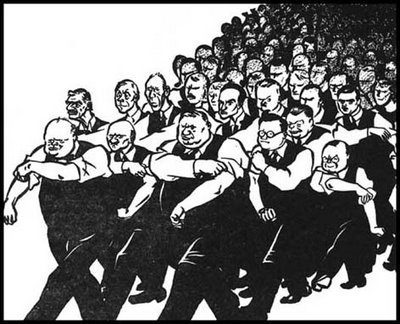











 "Mothers Against Wind Turbines™" Phoenix Rising...