MP from Scotland, John Lamont, Calls for Compensation for Wind Victims!

Scots MP – John Lamont – Calls for Just Compensation for Wind Farm Victims

brave_shield3

There is something about an industry that believes it can deprive people of the use and benefit of their homes with complete impunity. The idea that wind power outfits can run their operations around the clock, depriving people of their right to sleep so as to drive them mad if they are forced (by reason of their financial situation) to remain there suffering; or to retreat and become refugees from their own homes has always struck a nerve with STT.

Call us old fashioned, but we tend to follow the old line about a man’shome being his (and, indeed, her) castle. In that respect, STT is happy to rely on the maxim carved out, nearly 400 years ago, by lawyer and politician Sir Edward Coke (pronounced Cook), in The Institutes of the Laws of England, 1628:

“For a man’s house is his castle, et domus sua cuique est tutissimum refugium [and each man’s home is his safest refuge].”

And so it is that a few decent, fair-minded Scots politicians are looking to bring wind power outfits to book for their contumelious disregard for those very rights.

Rural action plan calls for windfarm compensation for homeowners
scottishconservatives.com
John Lamont MSP
15 Feb 2015

Homeowners who think the price of their house would be hit by a nearby windfarm development should be able to claim compensation, the Scottish Conservatives have said.

The party will launch a comprehensive rural action plan on Monday at a major rural showcase in Stirling.

The strategy will cover a range of issues confronting rural Scotland, and was devised after the Scottish Government made clear its only focus was on land reform.

As part of the proposals, the Scottish Conservatives have called for a valuation system to be set up allowing people to recover the lost market value on homes affected by new windfarms.

Many communities across the country have complained that large turbines looming over their towns and villages have made the area less appealing to live, therefore reducing the price of their properties.

The party is asking the Scottish Government to look at a similar model in Denmark, where a valuation authority can decide if a person’s home has been impacted, and how much the windfarm developers should pay in compensation.

The SNP’s extreme pro-windfarm approach has sparked a rise in windfarms being built across rural Scotland, despite concerns among residents and local councils.

Scotland, despite having less than 10 per cent of the UK’s population, now hosts more than half of the UK’s windfarms.

Thousands of objections are submitted by the public every year, while local authorities receive scores of applications for developments each month.

Scottish Conservative chief whip John Lamont said:

“When communities are saddled with a major windfarm development on their doorstep, that has a series of immediate impacts.

“Often treasured views are spoiled, the local tourism industry threatened, and the very appearance of their towns and villages altered significantly.

“All of these aspects can affect house prices, so it is essential we take steps to ensure no-one is left out-of-pocket in future as a result of a windfarm project they probably didn’t want.

“That’s why a valuation authority system, which people who think they’ve lost value on their home could appeal to, would go some way to balancing this.

“There’s currently no vehicle for doing this, and that is blatantly unfair.

“The SNP has made it perfectly clear the only rural issue it cares about is land reform.

“While that is important – and our rural action plan will include policy and recommendations on this – there are several other matters which are causing widespread concerns in communities the length and breadth of Scotland.”
scottishconservatives.com

ampJohnLamontMSP1.jpg

Nuclear Proponents Look Foolish, When They Support Useless Wind Turbines!

Renewable Energy Appeasement

I was mildly shocked yesterday because one of my nuclear friends started “supporting” renewables.*
His intention was to “appease” renewable backers so they may eventually agree not to oppose nuclear.
Well, in my opinion that is the wrong approach. Scientists pinpoint the problems but it is us engineers that need to solve those problems.
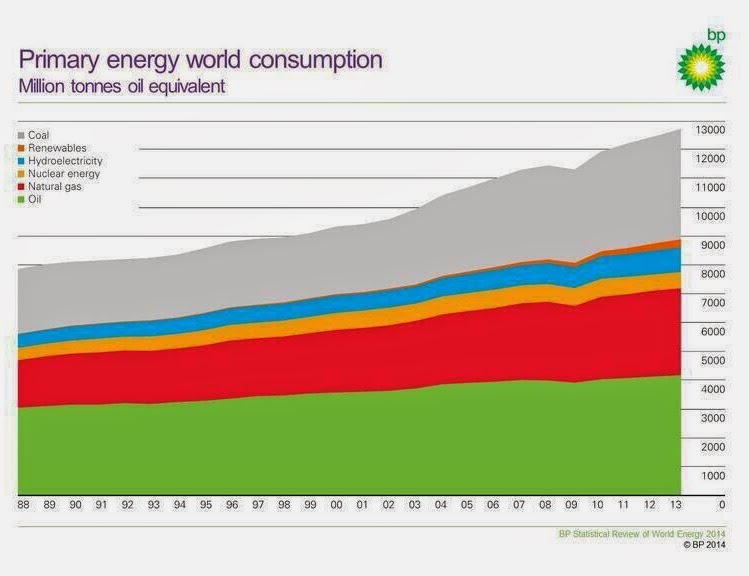
Renewables, in general, make no sense.
Why?
Because they are intermittent, unreliable, diffuse (in other words, they require loads of material and area to produce significant amounts of power), expensive (particularly when the “system” is considered), short lived (compared to other options) and do not particularly reduce carbon emissions (again, once the system is considered).
Yes, they have and will continue to have a niche in the global energy market, but it makes no sense to subsidize them to push them above and beyond their “natural” market penetration.
Solar, for example, makes a lot of sense in off-grid remote localities but eventually inhabitants in those locations will demand “real” electricity.**
Governments are creating a monster that will damage the economy (see what has happened in Germany with the Energiewende) if they don’t curtail, and fast, all overt / covert subsidies for renewables.
Yes, if somebody wants to spend money from their own pocket in renewables, that is OK. What is not OK is for society to pay for their hobby.
Yes, yes, yes, fossil fuels also have subsidies, but when you measure them per unit of energy actually produced they are lower than the renewable ones. Sure, we have nobusiness subsidizing fossil fuels either, but two wrongs don’t make a right.
Renewables, for the most part, are already mature technologies. That is one of the reasons why China is the #1 producer of solar panels and wind turbines.
As mentioned, renewables (since they capture diffuse power) require loads of “material” to produce meaningful amounts of energy. Some of the elements being consumed in the renewable trade are quite scarce and are badly needed in other sectors. Should we even be sinking them into renewables? This is a question we should definitely ask. ***
Finally, we have to understand that our financial / material resources are not infinite and thus we must use them wisely. Are we going to waste them in renewables, or invest them in better options such as nuclear, natural gas (replacing coal with it), and efficiency?
Appeasement won’t work. We have to stand firm and defend our convictions on what works better for a) reducing our carbon emissions and b) begin to gradually reduce the market share of fossil fuels in the global energy diet.
Thank you.
Feel free to add to the conversation on Twitter.
* By renewables I mean mainly solar PV and wind turbines. There is nothing wrong with supporting hydro which is, was, and will continue to be the premier renewable source.
**http://indiatoday.intoday.in/story/bihar-village-dharnai-nitish-kumar-clamours-for-real-electricity/1/375733.html
*** http://www.rsc.org/chemistryworld/Issues/2011/January/CriticalThinking.asp

Ontarians paying for Power We Do Not Need & Can’t Afford. Wynne wants MORE!

New York, Michigan and Quebec Thanks You

[ 0 ] February 21, 2015 |

screwed ontarioSo while we’re in one of the coldest winter cold snaps that Ontario has seen in a long time, we exported a whole bunch of power to neighboring jurisdictions last month.

I won’t go into yet another rant about the incompetence and absolute idiocy of the Green Energy Act,… suffice to say that what the month of January had in store for the Ontario taxpayer, is something more akin to an April Fools Day joke.

Parker Gallant is on top of this subject and has the smarts needed to figure out how much the Ontario citizens are getting hosed.

Yes, now in February, with temperatures falling into the -30s and beyond and when people are turning their heat down in order to afford their hydro bill – it’s nice to know that the citizens of New York, Quebec, Michigan and probably Manitoba got a nice big gratuity of electricity on our backs.

We exported over $164 million worth of electricity in January.  Problem is we only got paid $58.5 million for it.  Yep, we the Ontario tax payers and rate payers will be picking up the tab for the other $106.5 million. Rather nice of us, don’t you think?

Grandma and Grandpa can hardly afford to stay in their homes because they can’t afford their utility bills anymore, but hey, we have windmills.  Lots and lots of completely useless and expensive windmills.

The nice people with the big bloated windfarm contacts are happy too.  They’re getting paid big bucks for their investment.   We’re such nice people in Ontario.  Suckers, but nice.

Windweasels Scurry to Circle the Wagons, as Steven Cooper’s Study “Makes Waves”!

Pacific Hydro Orders ABC’s “Ministry of Truth” to hound Steven Cooper, Graham Lloyd and Channel 7 Over Wind Farm Study

1984-george-orwell-adaptation-slice

Media Watch ‘just skimmed my report’: researcher
The Australian
Sonia Kohlbacher
16 February 2015

A SCIENTIFIC researcher whose groundbreaking study into the impact of wind turbines on nearby residents has criticised the ABC’s Media Watch program, saying its journalist hounded his company about alleged media misrepresentations without reading or understanding his report.

The study by acoustics expert Steven Cooper measured the sensations felt by a group of residents who had complained of health concerns, and matched their diary records with the wind farm operations. The study found a correlation between severe sensations experienced by the small group of residents studied and the power output of the turbines at Cape Bridgewater in Victoria.

The Cooper report has been hailed internationally as representing a breakthrough in the study of wind turbines and possible impacts.

The Australian’s environment editor Graham Lloyd has extensively reported on the findings of the study after they were released last month and has been the subject of inquiries by Media Watch journalist Flint Duxfield.

Media Watch has asked The Australian to justify the prominent coverage it gave to the study.

Mr Cooper was critical of Duxfield when contacted by The Australian yesterday, and said the journalist had failed to properly read his report before making inquiries into its fair and accurate representation in the media.

Mr Cooper said he was appalled by the ABC’s attempts to contact his office, which he said was “hounded” by hourly calls over a four-day period.

“In the end I spoke to them to answer questions and I wasn’t overly impressed,” he said.

“They were after Channel Seven and Graham Lloyd, and in the end his inquiries were about people not reading and reporting incorrect information.

“It got to a point where he was asking questions and I said, ‘You haven’t read the report’, to which he replied, ‘Oh, I’ve skimmed the report’, and I said, ‘Well that’s a problem, you’re here about talking about people misrepresenting but you haven’t read the report’.

“He just tried to talk about people misrepresenting. I did tell him that what Graham Lloyd had presented was correct.”

Media Watch host Paul Barry, responding on behalf of Duxfield, said he was not party to the conversation, “but I can tell you that he is always unfailingly courteous and never hounds anyone — and yes, Flint has read the report”.

Barry claimed that “some eminent Australian scientists” had concerns about The Australian’s coverage of the Cooper report.

Lloyd said the issue was about making sure minority rights were properly respected. “This is not about ideology,” he said. “The absence of high-quality research, as evidenced by the National Health and Medical Research Council’s latest statement, is astonishing.”
The Australian

In Australia, the ABC’s “Media Watch” represents the front line for the Green-blob’s Orwellian “Ministry of Truth” (see our post here); which, on a weekly basis, attacks any journalist with the temerity to question hard green-left shibboleths; such as imminent global incineration; or its other favourite, the wind industry (see our posts here and here).

STT has already covered the rampant institutional bias of Australia’s so-called “National broadcaster” (see our posts here and here).

The latter story involved cutie-pie political commentator, Annabel Crabb, referring to Pac Hydro’s (now well and truly vindicated) victims at Cape Bridgewater as “dick brains”, during a 45 minute diatribe on the ABC’s radio science show.

The audio and transcript of Annabel’s “dick brain” outburst can be found on the ABC’s website here. However, to avoid the need to listen to (or trawl through reams of transcript of) almost an hour of tedious and nauseating ‘green’ group-think, we’ve extracted the relevant parts of the transcript, which is available here.

Most of that broadcast was devoted to the “wonders” of wind power; and denigrating anybody with the hide to raise the issue of the harm caused to wind farm neighbours, or with the sense to question the merits of backing a technology which was abandoned in the 19th century, for obvious reasons (see our post here).

Crabb went on to say that she was in the market for a home right next to a wind farm. Well Annabel, there are several up for grabs at Cape Bridgewater (which their owners have had to abandon), so why not put in a bid?

Given Crabb’s long-winded, nausea inducing rant (on what is supposed to be a serious scientific radio programme); and the continual stream of wind industry goons, parasites and spruikers trotted out on the ABC’s green-left love-in, The Drum, it seems more than just a little rich for Media Watch to challenge The Australian about “the prominent coverage it gave to” Steven Cooper’s groundbreaking study.

But the ABC’s Ministry of Truth, is not so much concerned about “the prominent coverage” given to Steven Cooper’s study, Graham Lloyd’s ‘crime’ against the Party was to have published anything about the study at all.

So too, Channel Seven, when it went to air with its piece on Cooper’s study on its current affairs show, Today Tonight: – available here.

The Media Watch attack dogs were released in response to a direction from Pac Hydro – which is (as a consequence of Cooper’s work) now squarely in the gun, facing $millions in damages claims from its victims at Cape Bridgewater.

Now, with that in mind, it’s no surprise to see Pac Hydro’s goons attacking Steven Cooper directly through the media, as well as attacking two of the most respected and qualified acoustic experts from the US, Dr PaulSchomer and George Hessler. For a taste of their highly relevant qualifications and experience why not check out their thumping CVs here:Schomer and Hessler; and both of them were involved in another proper piece of investigation into the adverse impacts of turbine generated low-frequency noise and infrasound on neighbours at Shirley, Wisconsin back in 2012 (see this article and our post here).

Dr Schomer and Mr Hessler in their peer review of Cooper’s study, not only endorsed it, but found that the data itself proves a causal relationship between the operation of the wind turbines and the adverse health effects recorded by all of those people who took part in the study (see our post here).

When Graham Lloyd fronted Pac Hydro about the peer review produced by Dr Schomer and Mr Hessler, its spin doctors simply went to ground and refused to comment; a move entirely consistent with stock standard wind industry strategy: lie, cover up the facts and, when all else fails, run and hide (see our post here).

And, further, it’s no surprise at all to see Pac Hydro directing traffic at the ABC and Media Watch, in particular.

While always pitching from the “holier than thou” journalistic moral high ground, Media Watch ain’t afraid to pull its punches, when it’s out to ensure that the wind industry’s narrative is never threatened.

And so it was, getting its “researcher”, Flint Duxfield to repeatedly hound Steven Cooper about media misrepresentation of the study, in circumstances where he clearly hadn’t even bothered to read it. Hmmm. Oh, the irony.

Where Media Watch’s Paul Barry – clearly in damage control – asserts that “Flint [Duxfield] has read the report”, he simply raises two questions: when did he read it? And, if he read it, was he capable of understanding it?

STT’s betting that Duxfield’s efforts went no further than a cursory perusal (the whole thing runs to over 800 pages – the report is available in our post here), but even if we fail to collect on that wager, there is absolutely no chance that he understood it.

No, instead, as with all of the media parrots used by the wind industry, it’s an odds-on bet that Duxfield was simply relying upon the press releases issued by Pac Hydro, in which it’s sought to downplay the significance of the work (which it paid for, and set the limitations on, by the way) and is using in its efforts at serious corporate “damage control”.

STT notes Barry’s claim that “some eminent Australian scientists” had “concerns” with the coverage. No doubt the shills in the employ of the wind industry are deeply troubled by the facts that have emerged at Cape Bridgewater. They’ll have to work overtime from here on to bury them, lie, and otherwise distort and misrepresent them.

And who were these “eminent Australian scientists”?

Why, none other than a former tobacco advertising guru; a “scientist” who has no acoustic training or qualifications; who is not a legally qualified medical practitioner; who was used to front up struggling Danish fan maker, Vesta’s laughable Act on Facts campaign (see our post here); and who has received scathing criticism in Australia’s Federal Parliament on more than one occasion (see our posts here and here). And it must only add to his sense of moral superiority to find himself as the front man for an outfit run by crooks and fraudsters (see our post here).

No, this is all about media manipulation, using the same band of pseudo-scientists, spin doctors and the tactics of ridicule, denigration and personal attack to advance an ideological position in keeping with the Party line.

Not one of the people who they trot out as “eminent scientists” or “experts” have ever bothered to go out in the field; gather any real data; or even speak, in person (ie in the same room at the same time) to the people suffering the known and obvious adverse health effects caused by incessant low-frequency noise and infrasound.

That, of course, would cause them to confront the “problems” face-to-face and eye-to-eye. Much easier to sit in the coward’s castles of sandstone universities and ABC studios, where they will never have to face the wind industry’s victims; or the facts.

And, even where these so-called “researchers” pretend to investigate the issue, they hold no relevant qualifications; such as the wind industry’s latest mouthpiece, Jacqui Hoepner (who’s been flat out running the “nocebo” nonsense on the ABC and elsewhere this week). Jacqui is, surprise, surprise, equipped with nothing more than a degree in journalism and politics (check out her bio here). Hmmmm, how very “Ministry of Truth” …

STT hears, however, that the Ministry of Truth’s attack on Graham Lloyd, The Australian and Channel 7 is about to backfire in spectacular fashion. What’s that saying about keeping your mouth shut when you’re in it up to your neck?

Expect to hear a whole lot more about Steven Cooper’s study, and Pac Hydro’s victims at Cape Bridgewater, over the coming weeks and months.

graham-lloyd

Brilliant Discussion on the Issue of “Global Warming”….

The Sensible Believer

I consider myself a “sensible believer” in Global Warming.
In my definition, what does “sensible believer” mean?
I believe that CO2 is a greenhouse gas and thus that increased concentrations of it in the atmosphere would tend to increase the amount of heat trapped by that same atmosphere.
Also, I believe there is enough relatively unbiased evidence to state that over the past 50 years, the average temperature of the planet has increased by ~0.64°C.
So far, so good, but then come some “inconvenient” questions, like, for example:
  • Of the ~0.64°C, how much is man made?
  • Is all this temperature increase due to increased CO2 concentrations in the atmosphere?
  • Are there other mechanisms that would provide positive / negative feedback to the effect of the CO2?
  • Would all the effects of an eventual warming of the planet be negative? Or, could there be positive consequences also?
  • If there could also be positive consequences, would they compensate, at least in part, the negative consequences?
Now, as a “sensible believer,” let me state what I don´t believe in:
  • That we know for sure how much the average temperature of the Earth will increase vs the CO2 concentration in the atmosphere.
  • That there is a “carbon budget” we shouldn’t exceed.
  • That Global Warming is the most serious problem for humanity.
  • That any cost / suffering is justified to fight Global Warming.
  • That renewables (in particular Solar and Wind) are the best solution to reduce our CO2 emissions.
  • That the IPCC is perfect and that it’s intentions are purely the presentation of science.
  • That the believer side is “pure” and thus that no paid lobbyists are pursuing interests that have nothing to do with Global Warming.
  • Carbon taxes. When you boil them down to their essentials, carbon taxes are just another tax. So thanks, but no thanks.
  • “Freak” energy such as wave, tide, etc. They are “interesting” but will continue to be almost irrelevant in our total primary energy supply.
  • That we have all the questions and all the answers: in other words, we are too arrogant. If the persons in 1915 would have tried to prevent our problems today, they would have failed miserably.
So, as a “sensible believer” these are my inputs to the energy / climate discourse:
  • Intensely pursue improvements in efficiency. We have barely scratched the surface here and it is, for the most part, a win-win situation because efficiency does not reduce our standards of living.
  • Aggressively replace coal with natural gas. Aside from efficiency, probably nothing can reduce CO2 emissions faster.
  • In general, increase as much as possible the production of natural gas to not only replace coal with it, but minimize the usage of coal in the first place in developing economies.
  • Do not go all out for renewables (Solar & Wind), this might end up being counter-productive. Thus, remove all overt / covert subsidies for renewables. They are valuable under some circumstances but let them stand on their own feet. While at it, let’s remove subsidies for FF also, however, let’s consider that per unit of energy produced renewables are today more subsidized than FF.
  • Let current nuclear continue to flourish, but more important, invest in R&D for future generations of nuclear (fission and fusion). Eventually (say in 100 to 150 years, nuclear may be our #1 energy source).
  • Support innovation in general.
  • Help reduce population growth in countries that cannot afford it.
  • Carefully evaluate other “controversial” partial solutions: CCS, geo-engineering, etc.
  • Our global energy use is of such gigantic proportions that whatever we do, will take decades to show results. “It takes time to bring an elephant to term.” Hysteria and doing something (anything) for the sake of doing it might prove counter-productive.
  • Essentially, the Global Warming issue is not primarily scientific. It is a political, economic, engineering, psychological, (plus many other things) issue.
Both Robert Bryce and Richard Muller consider natural gas the best energy source we have, and the former states that our plan, long term, should be N2N, in other words: natural gas to nuclear.
From the energy point of view of our civilization, this plan seems to me perfectly reasonable.
Thank you.
Feel free to add to the conversation in Twitter: @luisbaram

Lambton Municipal Gov’t Steps Up to Help Wind Turbine Victims with Their Court Challenge!

Lambton will join wind turbine appeal

BUSINESS | FRONT PAGE | NEWS.

n-not-a-willing-host
 

Lambton County is anteing up more cash in the constitutional fight against wind turbine development.

County councilors set aside up to $60,000 to become part of a wider court battle which questions the constitutionality of the way Ontario allows the development of industrial wind turbines. “You became involved because of injustices and the lack of control” in the process WAIT- Plympton-Wyoming Spokesman Santo Giorno recently told county councilors.

Giorno says the first hearing in the fight at Divisional Court was “unsuccessful” and the lawyer, Julian Falconer, has filed a motion for the right to appeal for the three families. Lambton County was an intervener in the first case, and Giorno asked them to be involved in the appeal.

“The presence of an upper tier municipality at an appeal can’t be understated,” says Giorno. “It goes from four families who don’t like turbines to a government worried about the health of the community…it opens up the overall question of what is happening across the province.”

Giorno asked for money left over from the first court case – about $21,000 – be used in a possible appeal.

Councilors agreed and decided to set aside an additional $20,000 if necessary.


Shut off the Subsidy Tap, and the WindWeasels Scurry! Well Done Aussies!

Wind Industry Howls & Predicts Mass Exodus from Australia as Subsidy Trough Dries Up

Piglets-Snout-2270058

Australian windfarms face $13 bln wipeout from political impasse
Reuters
Byron Kaye
9 February 2015

* PM Abbott wants to cut state support for industry

* Labor opposition won’t back cutting clean energy target

* Uncertain support regime is causing a freeze in investment

* Some predict an exodus of investment

SYDNEY, Feb 8 (Reuters) – Australia faces a A$17 billion ($13.3 billion) exodus of investment from its windfarm industry because of a political deadlock, threatening to deal the country a major economic blow and killhopes of meeting a self-imposed clean energy target.

Some 44 Australian windfarm projects, about half overseas-funded, have been shelved since a new conservative government said it wanted to cut state support for the industry a year ago, with investors and operators saying they are considering either downscaling or leaving the country altogether if it succeeds.

Even Australian windfarm companies such as Infigen and Pacific Hydro have effectively shelved their Australian operations, with Infigen saying it plans to pour all its financial muscle into the more amenable U.S. market.

“It’s a difficult time at the moment, and the policy uncertainty is the main cause of it,” said Shaq Mohajerani, an Australian spokesman for wind farm company Union Fenosa, owned by Spanish energy giant Gas Natural.

“We’re still considering all options on how to proceed. The parent company will provide us with the strategy.”

An Acciona spokesperson said the firm had an “attractive backlog” in Australia but “we are waiting for the whole development of the new framework for renewable energy and hope our presence … in the country can be maintained”.

Wind power in Australia is not the only renewable energy sector to be affected by uncertainty over government subsidies or actual cuts. In Europe, Germany has scaled back support for solar power over the past few years, leading to a flood of insolvency filings by solar firms and a shrunken market.

Italy’s plans to cut subsidies for solar power firms have prompted an investor exodus. Retroactive solar subsidy cuts have also happened in Spain, Greece, Bulgaria and the Czech Republic over the past couple of years, putting off new investors as governments try to rein in energy costs and cut debt.

Windfarms are Australia’s No. 2 renewable energy source, behind hydropower but ahead of solar, providing a quarter of the country’s clean energy and 4 percent of its total energy demand. But while households can collect rebates for installing their own rooftop solar panels, windfarms rely on “certificates”, or tradeable securities handed out by the government, to offset costs.

That support hit a roadblock a year ago when new conservative prime minister Tony Abbott ordered a review of the country’s target for clean energy use by 2020, which ultimately recommended slashing it by a third, in line with falling overall energy demand. A lower target would mean a lower certificate price.

The centre-left Labor opposition, whose support the government needs to lower the target, refused to budge on the higher target it set when in power in 2009, resulting in an impasse that has effectively seen the industry grind to a halt.

A spokeswoman for U.S. owned GE Australia & New Zealand, which has stakes in several renewable energy projects, said further investment “will only occur once investor confidence in the policy environment is restored. For this to happen, bipartisan support regarding the future of the renewable energy target is essential.”

The Australian arm of Spanish infrastructure group Acciona , the world’s largest renewable energy firm, has frozen about A$750 million of windfarm projects because of the stalemate, said local managing director Andrew Thomson.

“When you’re a subsidiary (of a global business), you’re competing for capital, you’re competing for your budget allocation next year,” he said.

“If the parent company can’t see that there’s a stable environment it becomes really difficult to get traction. For us at the moment it’s a really difficult sell.”

If the renewable energy target is cut, “it’s the type of jolt to industry that basically would create such an upheaval that you would have a mass exodus”, said Alex Hewitt, managing director of Bulgarian-Polish-U.S.-backed windfarm operator CWP Renewables, which has A$1.5 billion of projects on ice.

“I can’t say whether we’d completely exit the country, but you would be looking at such a level of reduction in the level of investment into people in the company that it would be very significant,” Hewitt said.

($1 = 1.2793 Australian dollars) (Additional reporting by Jose Elías Rodríguez in Madrid and Nina Chestney in London; Editing by Will Waterman and David Evans)
Reuters

So, all this promised (or, rather threatened) “investment” really is just about the massive stream of subsidies, after all?

Whatever happened to that piffle pitched by the wind industry, its parasites and spruikers about being competitive with conventional power generation sources?

You know, the delusional stuff where they tell us – ad nauseam – that the cost of wind power is now so low it can compete on the open market with the cheapest of them all: coal-fired power (see this trip to Disneyland and back by the shills from ruin-economy).

If there were a scintilla of substance to the eco-fascists’ fantasy about wind power being competitive (and, therefore, profitable without the need for wind power outfits to perpetually slurp from the subsidy trough), then these ‘investors’ wouldn’t be wailing about ‘uncertainty’; indeed, the story above wouldn’t be a ‘story’ at all: outfits like Acciona would be spearing giant fans all over Australia at a cracking pace.

But, when the investors’ rubber hits the investment road, cheap talk melts like snow in the Australian outback.

Or, rather, as only the Americans could put it: “money talks, and bullshit walks.”

In Australia, the “money” that the subsidy suckers are seeking is in the order of another $50 billion under the current Large-Scale Renewable Energy Target (see our post here). And want they might get it. But ‘want’, on its own, is rarely enough.

The LRET is a policy which is simply unsustainable: any policy which is unsustainable will eventually fail under its own unfathomable weight; or its creators will be forced to scrap it, in circumstances of shame and ignominy.

The massive cuts to renewable subsidies in Europe – detailed above make the point well enough. The Germans have cut wind power subsidies; the Spaniards have slashed them – retroactively (see our postshere and this story here).

In upcoming posts, STT will detail just why this whole scam is on the very brink of total collapse, which will leave many a politician red-faced; and many a wind power investor shirtless.

empty-wallet1

Agenda 21 in Action….Landowners Forced to Defend Their Properties From Gov’t Interference!

From David Honey
2131 King Street
St. Catharines, ON
L2R 6P7
Tel: (905) 380-3803

Letter to the editor:

On October 2, 2014, a group of landowners from the Niagara area approached the Regional Council expressing their concerns about how the Niagara Peninsula Conservation Authority (NPCA) has been overstepping their mandate and abusing their powers.
When the NPCA was first formed, their mandate was to control flooding and erosion on publicly-owned property. They were well-respected by the communities and they were doing a good job. In 1990, the Conservation Act was revised, and since then, the NPCA has been placing more and more focus on controlling what people do on private property. We have now reached a point where the NPCA’s abuse of power has resulted in many good, law-abiding citizens being dragged through court, losing their life savings and sometimes even their property, defending themselves against Conservation Authority fines and lawsuits.
In January of this year, more Niagara residents stood in front of the Regional Council’s Conservation Authority budget hearing, asking them to investigate and report on how many taxpayers’ dollars are being spent on litigation and appeals, and to have the NPCA’s $12 million budget slashed.
Last week, two dozen citizens who have been charged under the new Conservation Authority Act-often for simple offenses such as adding clean topsoil to their property-went to Regional Council hoping for assistance. When Council was asked what had been accomplished since the last meeting, with regards to helping these people, everything went quiet. Does this mean council has no intention of doing anything?
Regional Council has the right, and the authority, to control (and even dissolve) the NPCA. Surely, they can find the intestinal fortitude to reign them in and insist that this organization respect the rights of private property owners.
We need your help. Please contact your regional councillor and ask them to bring about change-to make the NPCA more transparent and more accountable for their actions. They need to stop abusing their power, stop bullying landowners, and stop spending millions of taxpayers’ dollars to drag citizens through court. Thank you.

David Honey, president
Niagara Landowners Association

Windpushers Leaving Australia, Gov’t Smartening Up! Victims Getting Harder to Find….

Australian windfarms face $13 bln wipeout from political impasse

Reuters

 By Byron Kaye

SYDNEY, Feb 8 (Reuters) – Australia faces a A$17 billion ($13.3 billion) exodus of investment from its windfarm industry because of a political deadlock, threatening to deal the country a major economic blow and kill hopes of meeting a self-imposed clean energy target.

Some 44 Australian windfarm projects, about half overseas-funded, have been shelved since a new conservative government said it wanted to cut state support for the industry a year ago, with investors and operators saying they are considering either downscaling or leaving the country altogether if it succeeds.

Even Australian windfarm companies such as Infigen and Pacific Hydro have effectively shelved their Australian operations, with Infigen saying it plans to pour all its financial muscle into the more amenable U.S. market.

“It’s a difficult time at the moment, and the policy uncertainty is the main cause of it,” said Shaq Mohajerani, an Australian spokesman for wind farm company Union Fenosa, owned by Spanish energy giant Gas Natural.

“We’re still considering all options on how to proceed. The parent company will provide us with the strategy.”

A Gas Natural spokesperson said the firm had an “attractive backlog” in Australia but “we are waiting for the whole development of the new framework for renewable energy and hope our presence … in the country can be maintained”.

Wind power in Australia is not the only renewable energy sector to be affected by uncertainty over government subsidies or actual cuts. In Europe, Germany has scaled back support for solar power over the past few years, leading to a flood of insolvency filings by solar firms and a shrunken market.

Italy’s plans to cut subsidies for solar power firms have prompted an investor exodus. Retroactive solar subsidy cuts have also happened in Spain, Greece, Bulgaria and the Czech Republic over the past couple of years, putting off new investors as governments try to rein in energy costs and cut debt.

Windfarms are Australia’s No. 2 renewable energy source, behind hydropower but ahead of solar, providing a quarter of the country’s clean energy and 4 percent of its total energy demand. But while households can collect rebates for installing their own rooftop solar panels, windfarms rely on “certificates”, or tradeable securities handed out by the government, to offset costs.

That support hit a roadblock a year ago when new conservative prime minister Tony Abbott ordered a review of the country’s target for clean energy use by 2020, which ultimately recommended slashing it by a third, in line with falling overall energy demand. A lower target would mean a lower certificate price.

The centre-left Labor opposition, whose support the government needs to lower the target, refused to budge on the higher target it set when in power in 2009, resulting in an impasse that has effectively seen the industry grind to a halt.

A spokeswoman for U.S.-owned GE Australia & New Zealand, which has stakes in several renewable energy projects, said further investment “will only occur once investor confidence in the policy environment is restored. For this to happen, bipartisan support regarding the future of the renewable energy target is essential.”

The Australian arm of Spanish infrastructure group Acciona , the world’s largest renewable energy firm, has frozen about A$750 million of windfarm projects because of the stalemate, said local managing director Andrew Thomson.

“When you’re a subsidiary (of a global business), you’re competing for capital, you’re competing for your budget allocation next year,” he said.

“If the parent company can’t see that there’s a stable environment it becomes really difficult to get traction. For us at the moment it’s a really difficult sell.”

If the renewable energy target is cut, “it’s the type of jolt to industry that basically would create such an upheaval that you would have a mass exodus”, said Alex Hewitt, managing director of Bulgarian-Polish-U.S.-backed windfarm operator CWP Renewables, which has A$1.5 billion of projects on ice.

“I can’t say whether we’d completely exit the country, but you would be looking at such a level of reduction in the level of investment into people in the company that it would be very significant,” Hewitt said. ($1 = 1.2793 Australian dollars) (Additional reporting by Jose Elías Rodríguez in Madrid and Nina Chestney in London; Editing by Will Waterman)

Wind Turbines are a Huge Disaster….the Whole World Over!

More on Germany’s Wind Power Fiasco

turbine-collapse-germany1

The Germans went into wind power harder and faster than anyone else – and the cost of doing so is catching up with a vengeance. The subsidies have been colossal, the impacts on the electricity market chaotic and – contrary to the environmental purpose of the policy – CO2 emissions are rising fast: if “saving” the planet is – as we are repeatedly told – all about reducing man-made emissions of an odourless, colourless, naturally occurring trace gas, essential for all life on earth – then German energy/environmental policy has manifestly failed (see our post here).

Some 800,000 German homes have been disconnected from the grid – victims of what is euphemistically called “fuel poverty”. In response, Germans have picked up their axes and have headed to their forests in order to improve their sense of energy security – although foresters apparently take the view that this self-help measure is nothing more than blatant timber theft (see our post here).

German manufacturers – and other energy intensive industries – faced with escalating power bills are packing up and heading to the USA – where power prices are 1/3 of Germany’s (see our posts here and hereand here). And the “green” dream of creating thousands of jobs in the wind industry has to turned out to be just that: a dream (see our post here).

Now, Germans are fast waking up the unassailable fact that wind power is not only insanely expensive, it’s utterly meaningless as a power source.

Here’s a couple of no-nonsense pieces from NoTricksZone spelling it out in pictures, of the kind that the wind industry bends over backwards to ensure that you’ll never see.

THE CHART Wind Energy Proponents Fear You’ll See … Offshore Wind Turbines Stay In Bed 4 Of Every 5 Workdays!
NoTricksZone
P Gosselin
5 February 2015

Yesterday I published a piece by Fred F. Mueller on Germany’s out-of-control renewable energy transition and how it is in fact transitioning over to a disaster.

What follows below is a graphic that proponents of the offshore wind energy industry don’t want anyone to see. It tells the whole story about how (in)efficient and (un)reliable German offshore wind energy really is (Hat-tip: www.achgut.com) (for a clear look at the graph, click on it and it will open in a new window):

Wind-Energy-AWOL_R-Schuster

Chart shows the installed nameplate offshore wind capacity (shaded green) and the actual output (blue shaded area) since 2009. Wind’s poor performance and unreliable, wildly fluctuating supply disappoint and risk sinking Germany’s “Energiewende”. Chart source: R. Schuster.

The above chart was prepared by Rolf Schuster, an industrial engineering designer, who during his free time has started a wind power databank in order to check the rosy claims being made by the wind power lobby. The results are not something any fast-talking salesman would want any potential buyer to see. The power that was input (blue) is a mere fraction of the rated capacity (green).

Schuster writes:

“If you divide the power fed in (blue) by the rated capacity (green) you get the percent of the rated capacity that actually gets fed into the grid. The linear trend shows a negative tendency – towards 20 percent of the rated capacity. That means: Despite the massively increased capacity in 2014, hardly more power has ended up getting delivered compared to the start of the year. Only one fifth of the rated capacity actually gets fed in.”

Many proponents used to argue that the wind is always blowing at the North Sea, and so a steady supply was a sure thing. Now we have real results coming in. That “steady” wind is only delivering 20% of the installed rated capacity. A fiasco.

Schuster also says that offshore turbines have serious technical problems as well. Foundations are being washed out from underneath; there’s corrosion, and overloads that lead to turbine shutdowns. The harsh conditions of the North Sea a proving much tougher to handle.

There are also major problems with the high-voltage direct currentsystems that have yet to be solved, Schuster writes. One entire North Sea wind park has been disconnected from the grid as a result. This, Schuster says, “makes one ask if the installation of a major power transmission line from North Germany to South Germany would be a high risk gamble for the German energy supply”.

Green power goes AWOL again!

Also a look at online energy portal Agora here also tracks renewable energy that gets fed into the German power grid. A look at today’s graphic for the last 31 days tells us that once again wind and solar have gone AWOL, and so conventional fuels such as gas, nuclear and coal have to jump in to bail out.

Agora-5-Feb-14_25h

The above chart shows German energy supply and consumption for the last 31 days. Solar power that was fed into the grid is shown in yellow. Wind power is shown in blue. Cropped from Agora. (for a clear look at the graph, click on it and it will open in a new window)

Yesterday, February 4, we saw very little wind power getting fed into the grid, less than a gigawatt from a nameplate capacity of some 55 gigawatts of installed capacity – less than 2%! On February 4 wind and solar together virtually fed in almost nothing into the grid. If it had not been for coal, gas and nuclear, the country would have gone dark.
NoTricksZone

studying candle

Germany’s “Energiewende” Leading To Suicide By Cannibalism. Huge Oversupply Risks Destabilization
NoTricksZone
P Gosselin
4 February 2015

The coming age of power cannibalism…Germany on the verge of committing energy suicide
By Fred F. Mueller

German politicians see themselves as the saviors of our climate. In the early 1990s German politicians started the policies that ultimately culminated in the “Energiewende”, which aims to eliminate nuclear power generation and some 76% of the fossil fuel power generation. By 2050 some 80% of power generation should come from “renewable” green sources such as wind, solar, biomass, waste incineration and hydro. Since the volatile sources of wind and solar power will have to contribute the lion’s share, politicians reluctantly concede 20% of the energy coming from reliable fossil power sources.

Germany’s endeavor is indeed breathtaking. A look at Figure 1 shows in detail how massively Germany had once relied upon fossil and nuclear power sources to secure a highly reliable power supply. These sources were controllable and highly reliable. And because Germany’s topology offers only limited possibilities for hydropower, that renewable source is minimal.

Mueller_1

Figure 1: In 1990 the German grid was able to count on conventional power sources which were controllable and highly reliable. Renewable hydropower accounted for only 3.6 %.

Today, after some two decades of massive green energy policy, the situation has changed dramatically. Wind, solar, biomass and waste incineration plants have been promoted to such an extent that together with hydropower, the share of “green energy” today has reached 25.8 % of the country’s total electric power production. This resulted from Germany’s EEG renewable energy feed-in act which guarantees producers fixed rates for 20 years and forces power companies to buy up all the renewable power produced, regardless of the market conditions. The result has been a massive oversupply which has led to steep price drops on power trading floors, which in turn have pushed fossil fuel utilities to and beyond their profitability limits. Surplus production has been repeatedly dumped onto neighboring markets and resulted in massive disturbances for the respective national power grids. Readers interested in a more detailed description of the policy might have a look at the article of Marita Noon [NOON].

Capacity without control

The problem with the “renewable” power sources of wind and solar is their intrinsic volatility coupled with their poor capacity utilization rates of only 17.4% for wind and 8.3% for solar (average values for Germany).

That poor utilization rate means one has to build up huge overcapacities in order to achieve a certain amount of power production. Worse, the power source fluctuates wildly according to weather conditions. As a consequence, Germany has to maintain a dual power generation infrastructure that comprises a grossly overinflated capacity of “renewable” wind and solar power plants shadowed by a full scale backup set of conventional plants. These conventional power sources must always be on standby, ready to take over when weather conditions aren’t favorable. The production-fluctuation range of the “renewables” wind and solar is incredibly wide and volatile. For example in Germany there is an installed nameplate capacity of nearly 73,000 MW. Yet the minimum power output in Germany in 2014 from both sources was a meager 29 MW (only 0.04% of installed capacity) while the maximum value was 38,000 MW (48%).

The massive buildup in wind and solar power has already resulted in a considerable nominal overcapacity of “renewable” power sources.

The combined rated capacity of all “renewable” power sources already reaches about 87,000 MW, which is the maximum power consumption the grid has been designed to secure. Additionally, a minimum conventional power station capacity of some 28,000 MW has to be constantly connected to the grid in order to secure supply stability. As a result the risk of the grid reaching an oversupply situation if weather conditions are favorable for both wind and solar power plants is growing with every additional “renewable” plant that comes online. Currently 5,000 – 6,000 MW are getting added each year. That situation is aggravated by the fact that there exists no technology to absorb and store any noticeable quantities of oversupply. Neighboring countries are already taking measures to fend off surplus-power-dumping that could destabilize their grids.

Power cannibalism has already started

The result is a grid which at times is so oversupplied with power that something will have to give. Fossil fuel power plants have been throttled to the point where they are no longer profitable and many power companies have started mothballing them, so quickly in fact that Germany had to pass legislation forcing producers to keep their fossil plants on stand-by, and to do so even if they lost money. Even the reliable “classic” renewable power sources – e.g. hydropower – are starting to suffer because most are not supported by government schemes.

As the build-up in renewable capacity continues, even the subsidized “renewable” power sources will sooner rather than later be forced into fierce competition for access to the grid whenever the weather conditions turn favorable. One can speculate that within just a couple of years, the first “renewable” energy sources will slowly be driven out of the market because of oversupply. Eventually the renewable power producers will be forced to cannibalize each other in an increasingly fierce competition for privileged access to the power grid as the unwanted events of over-supply become increasingly more frequent.

Things are set to get much worse

Normally, one would think that a government confronted with such a situation would stop at this point and wait for a technically and commercially viable solution for storing the increasing amounts of produced surplus electric energy – for use during times when weather conditions are less favorable. Unfortunately no such storage solution is currently available at the required scale, and anything being proposed so far is either much too expensive or has efficiency factors that are not worth discussing.

Yet Germany has a unique peculiarity: its leaders sometimes exhibit a stunning inability to recognize when the time has come to abandon a lost cause. So far €500 billion has already been invested in the “Energiewende”, which is clearly emerging as a failure. Yet all political parties continue to throw their full weight behind the policy rather than admitting it is a failure (which would be tantamount to political suicide). Instead, the current government coalition has even decided to shift into an even higher gear on the path to achieving its objective of generating 80% of German electric power from “renewable” sources by 2050. If the situation is practically unmanageable now with 25% renewable energy, it’ll be an uncontrollable disaster when (if) it reaches 80%.

If the government sticks to its targets, the share of the different power sources will probably appear as in Figure 2. Currently just 26% has been achieved so far, and the existing biomass share of some 7% is more or less doomed and thus will also have to be replaced by wind and solar. One can easily see how daunting the task that still lies ahead really is.

Mueller_2

Figure 2. The official goal of achieving 80% power supply from “renewable” sources by 2050 requires further massive investments in wind and solar power technologies. Imagine the huge power supply fluctuations one can expect to see from wind and sun.

Waiting for the grand finale

The real risks that lie ahead for the German power generating infrastructure become more recognizable if one looks at the nameplate capacity buildup that has taken place, e.g. just over the past five years, and compares it to what will additionally be needed by 2050, see Figure 2. Keeping in mind that €500 billion have already been contracted and will have to be paid by the consumer, one gets an idea of the proportions of the task still to be tackled in the coming years.

Mueller_3

Figure 3. The installed nameplate power production capacities for wind, solar and biomass as of 2014 has already severely burdened the German consumer with costs of about €500 billion. That will dwarfed by what lies ahead, if politicians don’t change course. Note how 376,000 MW of wind and sun capacity may be installed to ensure meeting the country’s roughly 70,000 MW of demand.

Apart from the sheer dimensions of the costs that lie ahead, the additional cannibalism aspect will grow to enormous proportions. Since an installed wind and solar capacity of some 73,000 MW in 2014 yielded a combined maximum power output of 38,000 MW, the 376,000 MW that are to be installed by 2050 will generate a peak output of 196,000 MW to a grid that might just be able to take up between 40,000 and 90,000 MW. That means, depending on the weather, between 106,000 and 156,000 MW will have to be dumped somewhere else.

In the fight to get power into an often times severely overloaded grid, that’s when cannibalism amongst “renewable” power sources will really become intense. Will wind farmers sabotage solar plantations? Will solar owners sabotage wind turbines? Time will tell, maybe much sooner than we think.
Fred F. Mueller

Sources: [NOON] Marita Noon: Germany’s “energy transformation:” unsustainable subsidies and an unstable systemwww.cfact.org/2014/12/16/germanys-unsustainable-subsidies-and-an-unstable-system/

NoTricksZone

angry german kid