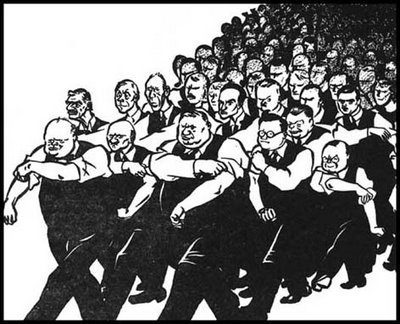
Feisty Aussies Fight Back Against the Corrupt Wind Pushers!

NSW Minister – Pru Goward – Joins Forces with Community Defenders to Kill Plans for Trustpower’s Rye Park Wind Farm Disaster

pru-goward

****

A week or so back we covered the antics of another foreign owned wind power outfit struggling to come to grips with the fact that Australian rural communities have had – as they say – ‘a gutful’ of the wind industry’s lies, treachery and deceit. And they’ve especially had enough of the bully-boy, stand-over tactics adopted by the thugs employed by the likes of Trustpower and Epuron:

Wind Industry Belting its ‘Message’ Home: Trustpower’s Thugs Assault 79-Year-Old Pensioner & Disabled Farmer

Since Trustpower’s thugs set upon highly respected local elder, Jim Field, the Yass and Rye Park communities have galvanised in their furious reaction to the manner in which he was treated. And rightly so.

Jim Field

****

The Yass and Rye Park communities’ brewing anger bubbled to the surface at a packed house meeting held in the Yass Memorial Hall on Friday, October 9.

And standing shoulder to shoulder with them was local State member and Minister for Mental Health and Assistant Minister for Health, Pru Goward. Here’s a little report on proceedings from the local rag.

Wind Turbines continue to create noise
Yass Tribune
Jessica Cole
16 October 2015

yass memorial hall

****

It was a full house at the Yass Memorial Hall on Friday to talk about the future of wind energy projects around the Hume electorate. Of the approximate 150 people who attended, the majority were against the establishment of wind farms.

Federal Member for Hume Angus Taylor and Member for Goulburn Pru Goward both attended the meeting that was hosted by a Rye Park group, attracting people from as far as Crookwell.

The development at the centre of discussion was the Rye Park Wind Farm project. Trustpower is proposing to erect 109 wind turbines, each 157 metres tall, with an approximate capacity of 327MW within the Rye Park area.

Ken Bell opened the meeting reminding people that these proposed turbines will be erected on Ngunnawal land and called for the crowd to respect each other’s views on the sensitive subject.

Angus Taylor

****

Mr Taylor was asked to speak and although he mentioned no particular preference to support nor decline the wind farm proposal he reminded residents that ongoing development was up to them.

“Unfortunately with these topics you will never get a 100 per cent agreement,” he said, “but you have to figure out what you want and come together to have your voice heard.”

Ms Goward took a harder line opposing the developments, supporting the complaints about health, noise and land depreciation. She spoke about the developments being a result of the federal government and assured those present that they can’t legislate wind farms.

“Increasingly, I am on the view that there is some validity on the health effects,” she said.

“There are a number of people with health problems … it is clearly not psychosomatic.”

She argued that securing and protecting residents from the turbines’ noise pollution was important.

“They impact upon the landscape and have an immediate effect upon land value,” Ms Goward continued.

“I am with this community and plan on putting pressure on the state government.

“I want to look after the health, prosperity and look of this beautiful area. We have to make sure not to let these wind farms divide us.”

Ms Goward also called for further land value and environmental reports to be done.
Yass Tribune

Angus Taylor may have simply been keeping his powder dry at Yass. Angus has been an STT pinup boy even before he stepped into the late STT Champion, Alby Schultz’s boots, as member for Hume – going back to his appearance at the Great Wind Power Fraud Rally in June 2013:

Rally – Angus Taylor

And Angus has seen plenty of action on the front foot, since then:

The Wind Industry’s Worst Nightmare – Angus Taylor – says: time to kill the LRET

Angus Taylor Joins the Wind Farm Rumble to Save Rugby & Rye Park

Taylor’s relatively neutral position at Yass, is part and parcel of just where the wind industry sits in Australia at the present time.

The major commercial power retailers have signalled that they will not enter long-term Power Purchase Agreements with wind farm outfits planning wind farms in communities, wherever there is significant and vocal opposition.

Without a PPA, wind power outfits will never obtain the finance necessary to build any new wind farms.

hunt

****

Hence the efforts by wind industry front man, Environment Minister young Gregory Hunt over the last couple of weeks to exhort retailers to hurry up and enter PPAs.

Hunt’s desperate and silly pleas are somewhat amusing. You see, Hunt and his mates at Infigen, Vestas & Co have, hitherto, never made any mention of the PPAs entered into between wind power outfits and retailers.

Those agreements have set guaranteed prices for wind power at between $100-120 per MWh – for power that has no commercial value (apart from the REC Subsidy it attracts): try selling a good on terms where you can never guarantee to supply it when a customer actually wants it; and where you’ll often be supplying it when a customer has absolutely no need for it. Basic commerce, to be sure; but try telling the Wind Gods that:

June 2015 National

Hunt’s wind industry benefactors have been at great pains to keep the terms of their PPAs under wraps (even flatly refusing to provide them to the Senate Inquiry into wind farms), simply because they would completely destroy the wind industry’s ludicrous claims about supplying power at prices cheaper than coal fired power; and equally ludicrous claims that the Large-Scale Renewable Energy Target lowers retail power prices. Notwithstanding that, from hereon, the LRET will add more than$45 billion to retail power bills on account of the REC Tax/Subsidy paid to wind power outfits, alone.

So, when Taylor told residents that ongoing development “was up to them”, it should be taken by community defenders as a ‘call to arms’. As STT has pointed out, just once or twice: fight them; and they will flee.

More pleasing still, was Pru Goward’s front foot approach; seizing on the concepts of community “health and prosperity”; and the fact that those fairly reasonable societal objectives are simply incompatible with fleets of bat-chomping, bird slicing, blade-chucking, pyrotechnic, sonic-torturedevices.

As to her call for “further land value” reports to be done, Pru need only tap into the work put together by highly experienced property valuer, Peter Reardon.

Reardon compiled a 30-page dossier on the impacts of wind farms on adjoining or nearby rural farms; and found that having these things as neighbours led to discounts of between “33 per cent and 60 per cent in the market place”. Reardon’s report and associated press releases are available to download below:

Southern Tablelands – Impact of Wind Farm Development on Surrounding Rural Land Values 2013

MEDIA Release Property devaluation

BDLG – Press Release

What Reardon found is little more than stating the bleeding obvious:

Potential Wind Farm Neighbour Finds Idyllic Property is Now ‘Unsaleable’ at Any Price

Wind Farms: Crushing Property Rights & Values Everywhere

Thankfully, for community defenders in NSW out to protect their hard-won common law property rights (you know, that seemingly forgotten right to own, live in and otherwise enjoy a home free from interference from incessant turbine generated low-frequency noise and infrasound), they have an ally in Pru Goward. But, as Angus Taylor suggests, winning the battle to maintain and preserve those rights is down to each and every community defender. United, you cannot fail.

angry-mob

Wind Turbine Emissions Can Make You Sick….Here’s More Proof!

Irish Wind Farm Study Proves Turbine Noise Causes Disease

Professor Alun Evans

****

WIND FARMS DO MAKE YOU SICK
Irish Daily Mail
Leah McDonald
16 October 2015

Irish scientists link them to cancer, stroke and heart attacks – wind turbines ‘too near family homes’

WIND farms can contribute to people getting diseases such as cancer and heart attacks, two leading Irish health experts have warned.

They say that noises emitting from turbines lead to sleep deprivation that can cause cancer and heart disease, along with a number of other illnesses.

Professor Graham Roberts, head of the Department of Endocrinology at University Hospital, Waterford, and Professor Alun Evans, an expert in public health at Queen’s University, Belfast, met Alan Kelly yesterday to warn the Environment Minister that the current guidelines in Ireland are a cause for alarm.

The rules allow turbines and power lines as close as 500 metres to a family home, while international standards demand they should be at least 2km away.

Prof Evans, recently wrote a report pointing to ‘serious adverse health effects associated with noise pollution generated by wind turbines’. The risks were due to sleep disturbance and deprivation with loud noise being one of the main causes.

He pointed out that sleep deprivation is associated with memory impairment in children and disturbed cognitive function in adults.

He told the Irish Daily Mail yesterday that distances between homes and turbines should be increased.

He said: ‘The bad effects of low frequency noise has been known for at least 40 years, the thing is 500 metres does not protect people. It is insufficient.’ He warned that there is evidence that the ‘infrasonic signatures’ that cause the damage can be picked up from 50 miles way, adding: ‘It is a serious problem. It doesn’t affect everyone the same way. Something like a quarter of people are more susceptible.’

Prof Evans explained: ‘It is a problem, the big thing being noise and sleep deprivation. Once you deprive people of sleep you make them more liable to become overweight and you delay their learning because while we sleep we reinforce memory.

‘Depriving people of sleep is not a good idea, overweight children become obese adults and obese adults are far more likely to [develop] a whole range of diseases particularly cardiovascular disease, cancer and type 2 diabetes.’ He added that the noise doesn’t have to have a direct effect to cause a problem. ‘It can be indirect but it is still very important,’ he said. ‘And you can prevent diseases by preventing the more distant causes.’

And in his recent report, Dr Evans said that there had been no proper cost-benefit analysis in Ireland before the widespread introduction of wind power.

Both he and Dr Roberts believe there are fundamental technical errors in reports on current wind farm and power-line projects here.

They are concerned over the consultation process with the public. Some parents of autistic children have particular fears about the effects turbines and high-voltage pylons have on their quality of life.

John Callaghan has objected to wind farms in Co. Meath, which he fears will affect the environment and health of his autistic son.

The engineer, who has studied renewable energy at postgraduate level, said his seven-year-old son is autistic and very sensitive to noise and says he has ‘grave concerns’ about the impact of the proposed wind farm on his son, himself, his family and the local area, including wildlife, heritage and the cultural landscape.

The meeting between the professors and the minister was organised by community campaigner David Reid of the Westmeath Alliance. Mr Reid said there are significant concerns about noise pollution for people living close to wind turbines. He said the World Health Organisation refers to this as ‘environmental insomnia’, if the noise is above a certain threshold.
Irish Daily Mail

Alun Evans made a brilliant submission to Australia’s Senate Inquiry into the great wind power fraud – available here.

David Reid is right on the money when he points out that “the World Health Organisation refers to noise pollution for people living close to wind turbines as ‘environmental insomnia’”. The WHO has defined noise induced ‘environmental insomnia’ as an adverse health effect, in and of itself, for something like 60 years. Its Night-time Noise Guidelines for Europe – the Executive Summary at XI to XII which covers the point – says:

NOISE, SLEEP AND HEALTH

There is plenty of evidence that sleep is a biological necessity, and disturbed sleep is associated with a number of health problems. Studies of sleep disturbance in children and in shift workers clearly show the adverse effects.

Noise disturbs sleep by a number of direct and indirect pathways. Even at very low levels physiological reactions (increase in heart rate, body movements and arousals) can be reliably measured. Also, it was shown that awakening reactions are relatively rare, occurring at a much higher level than the physiological reactions.

The review of available evidence leads to the following conclusions.

  • Sleep is a biological necessity and disturbed sleep is associated with a number of adverse impacts on health.
  • There is sufficient evidence for biological effects of noise during sleep: increase in heart rate, arousals, sleep stage changes and awakening.
  • There is sufficient evidence that night noise exposure causes self-reported sleep disturbance, increase in medicine use, increase in body movements and (environmental) insomnia.
  • While noise-induced sleep disturbance is viewed as a health problem in itself (environmental insomnia), it also leads to further consequences for health and well-being.
  • There is limited evidence that disturbed sleep causes fatigue, accidents and reduced performance.
  • There is limited evidence that noise at night causes hormone level changes and clinical conditions such as cardiovascular illness, depression and other mental illness. It should be stressed that a plausible biological model is available with sufficient evidence for the elements of the causal chain.

STT tends to think the World Health Organization – after more than 60 years of studying the problem – might just know a thing or two about night-time noise, sleep and health. And, after more than 5 years of suffering, so do Clive and Trina Gare.

Notwithstanding a $200,000 annual pay-cheque, and thousands spent on noise ‘mitigation’, the Gares still can’t sleep properly; or otherwise enjoy their own home – their suffering continues:

SA Farmers Paid $1 Million to Host 19 Turbines Tell Senate they “Would Never Do it Again” due to “Unbearable” Sleep-Destroying Noise

What Alun Evans and his team have done is simply confirm what is simply obvious to any human being gifted with our good friends ‘logic’ and ‘reason’: deprive someone of sleep over an extended period and their health will suffer.

Even after one ‘rough night’, you don’t ever hear the sufferer bubbling about how much better they felt in the morning. No, the usual response is about telling those around them to keep out of their way for the day, or there’ll be trouble (often in terms too ‘blue’ to print). However, that ‘trouble’ manifests as a danger not just to the sufferer and his nearest and dearest, but to a range of others who might end up tangling with the insomniac, as their sleep-deprived day draws on:

Wind Turbine Noise Deprives Farmers and Truckers of Essential Sleep & Creates Unnecessary Danger for All

Alive to the critical importance of regular, quality sleep to health, the common law has recognised a person’s right to a decent night’s sleep in their own home for over two centuries.

STT’s Nuisance “In-a-Nutshell”

Nuisance is a long recognised tort (civil wrong) at common law based on the wrongful interference with a landowner’s rights to the reasonable use and enjoyment of their land.

Negligence is not an element of nuisance, although aspects of the former may overlap with the latter.  Where, as here, the conduct is intentional (ie the operation of the wind turbines is a deliberate act) liability is strict and will not be avoided by the defendant showing that it has taken all reasonable steps to avoid the nuisance created.  Indeed, the conduct of the defendant is largely irrelevant (unless malice is alleged); the emphasis is on the defendant’s invasion of the neighbouring landowner’s interests.

A defendant will have committed the tort of nuisance when they are held to be responsible for an act indirectly causing physical injury to land or substantially interfering with the use or enjoyment of land or of an interest in land, where, in the light of all the surrounding circumstances, this injury or interference is held to be unreasonable.

The usual remedy for nuisance is an injunction restraining the defendant from the further creation or continuance of the nuisance.  Injunctions are discretionary, in all cases, and will not be granted unless the nuisance caused is significant.

Where interference with the enjoyment of land is alleged, the interference must be “substantial” and not trivial.

Interference from noise will be substantial, even if only temporary in duration, if it causes any interference with the plaintiff’s sleep.

The loss of even one night’s sleep through excessive noise has been repeatedly held to be substantial and not trivial in this sense (seeAndreae v Selfridge & Co [1937] 3 All ER 255 at 261, quoted with approval in Munro v Dairies Ltd [1955] VLR 332 at 335; Kidman v Page [1959] St R Qd 53 at 59; see also Halsey v Esso Petroleum Co Ltd [1961] 1 WLR 683 at 701: “a man is entitled to sleep during the night in his own house”).

It is not a defence for the party creating the nuisance to claim that he is merely making a reasonable use of his property.  The defendant’s conduct may well be otherwise lawful, but still constitute actionable nuisance.  The activity engaged in by the defendant may be of great social utility or benefit, but that has been repeatedly held as being “insufficient to justify what otherwise would be a nuisance” (see For example, Munro v Dairies Ltd [1955] VLR 332 at 335; see also Halsey v Esso Petroleum Co Ltd [1961] 1 WLR 683)

Halsey’s case is well worth a read – a real “David and Goliath” battle, as described by the trial Judge: “This is a case, if ever there was one, of the little man asking for the protection of the law against the activities of a large and powerful neighbour.”  And just like David’s epic battle with a thuggish giant, the little bloke won!

Here’s a link to the case: Halsey v Esso Petroleum [1961] 1 WLR 683

Precisely the same principles were at work in the case pursued by Julian and Jane Davis, who successfully obtained a £2 million out of court settlement from a wind farm operator, for noise nuisance; and the resultant loss of property value (the home became uninhabitable due to low-frequency noise, infrasound and vibration).

The Particulars of Julian and Jane Davis’ Claim are available here: Davis Complaint Particulars of Claim

And Jane Davis’ Statement (detailing their unsettling experiences and entirely unnecessary suffering) is available here: davis-noise-statement

What the likes of Alun Evans have done, is to add to the growing body of irrefutable evidence, that is now well-and-truly sufficient to take on wind power outfits in Civil Proceedings; to win back everything that you worked so hard to obtain; and that they were prepared to simply steal from under you, with knowing assistance from your very own governments.

judges-gavel

Wind Power Shares Plummeting… “Green” Jobs Axed!

US Wind Power Outfits’ Shares Plummet – Hundreds of ‘Green’ Jobs Axed

share traders

****

Remember all those stories about the wind industry providing millions of groovy, well-paid ‘green’ jobs – as secure as Fort Knox?

No?

Sure, you’ll hear mention of loads of promised wind industry jobs – in fictional retellings from wind industry spruikers – as they wail about dreaded ‘uncertainty’ – causing bankers to baulk and investors to flee; and as they demand (with menaces) that governments maintain essential, massive and endless subsidies until the end of time.

But, as is almost always the case with wind industry drivel, dreams and reality fast become an ugly amalgam, of what passes for wind industry ‘truth’.

When economists scroll through the books, however, claims about wind industry employment evaporate like snowflakes in summer – and, instead, the hard numbers show that the places where these things proliferate, are suffering from declining employment in real industries, particularly those with the tendency to use more than just a little power in the processes of production:

Wind Power Subsidies Crushing Families & Killing Thousands of Real Jobs

The Wind Industry’s Jobs Bonanza Myth Smashed, Again

It’s a confusing paradox, to be sure.

You see, on the one hand we’re told that the wind industry delivers a product, that customers can’t get enough of (at prices starting somewhere near “free” – and getting cheaper all the time), but, strangely, the merest mention or even hint that wind power subsidies might be trimmed or, heaven forbid, chopped, has wind industry parasites descending into a fixed state of apoplexy.

During their descent, wind industry spinners shout even louder about millions of new jobs, that are always just beyond the horizon; attainable – but if, and only if, the massive subsidies presently in place are set in stone. Here are a couple of pieces peppered with precisely that type of self-serving and deluded ranting.

Panel seeks to extend freeze on Ohio green energy targets
Associated Press
Julie Carr Smyth
1 October 2015

Government requirements for the use of solar, wind and other forms of renewable energy by Ohio power companies would be suspended indefinitely under recommendations released Wednesday by a legislative panel. The Energy Mandates Study Committee’s report cites legal uncertainty and a need for “greater clarity” surrounding proposed federal clean power rules among reasons for the recommendation.

COLUMBUS, Ohio — Government requirements for the use of solar, wind and other forms of renewable energy by Ohio power companies would be suspended indefinitely under recommendations released Wednesday by a legislative panel.

The Energy Mandates Study Committee’s report cites legal uncertainty and a need for “greater clarity” surrounding proposed federal clean power rules among reasons for the recommendation. The suggestion drew swift criticism from environmental groups, alternative energy businesses, Democrats and Gov. John Kasich.

Committee chairman Troy Balderson, a Zanesville Republican, said the report represents a starting point for debate as legislation proposing changes to Ohio’s mandates is drafted.

“Look, I know what the headline on the report’s going to be. There’s more to it than that,” he said. “And there will continue to be more to it than that. Now we have to go through the legislative process.”

The panel’s additional recommendations include ultimately switching from mandates to an incentive system to encourage use of renewables and efforts toward energy efficiency; expediting the regulatory process for approving utilities’ energy-efficiency plans; and ensuring advanced-energy projects receive maximum credit.

The panel was charged with reviewing an Ohio law requiring utilities to generate 25 percent of electricity from alternative and advanced sources by 2025 and to meet certain energy efficiency targets.

The committee was created as part of a compromise brokered by Kasich amid efforts to repeal the targets outright. The deal placed a two-year freeze on phasing in existing mandates while the issue was studied. If legislators fail to act, the law would resume as planned in 2017.

The administration signaled dissatisfaction with extending the freeze any further.

“A continued freeze of Ohio’s energy standards is unacceptable and we stand willing to work with the Ohio General Assembly to craft a bill that supports a diverse mix of reliable, low-cost energy sources while preserving the gains we have made in the state’s economy,” Kasich spokesman Joe Andrews said.

Ohio is among states that have sued over the Environmental Protection Agency’s Clean Power Plan, which sets targets for carbon dioxide emissions for existing power plants as a means of reducing emissions from 2005 levels by 32 percent by 2030. Kasich has written to President Barack Obama asking him to hold off on implementing the plan until questions are resolved by the courts.

“The US EPA, by promulgation of the proposed CPP, seeks to change the energy landscape significantly across the United States,” the report states.

Senate President Keith Faber said lawmakers and the governor — who was represented in deliberations over the report — may have to “agree to disagree.”

“I know their EPA director has gone and urged everybody to be cautious until we see the implementation of what the president’s new proposals are,” he said. “And so at this point, I’d like to hear their proposal if they think what we’re putting forward is unacceptable.”

Proponents argue that Ohio’s targets were creating jobs and benefiting the environment before they were frozen, and that the state would continue to do so if allowed to proceed.

State Rep. Michael Stinziano, a Columbus Democrat who sat on the Republican-dominated study committee, said the report’s recommendations ignore expert testimony by a number of witnesses “who attested to the positive impacts these standards had on the state until frozen.”

Senate Democrats called on Kasich to fight for restoration of the mandates.

“Allowing the clean energy industry to prosper could result in better products, a healthier population, cheaper prices, and more jobs over time,” they wrote.

Samantha Williams, attorney and energy policy advocate at the Natural Resources Defense Council, said Ohio’s momentum as “a clean energy trailblazer” has stalled.

“Any policies that block progress to regain Ohio’s leadership will only grow the mountain of missed opportunities and keep the state lagging behind its neighbors that are moving forward with clean energy to create jobs, boost their economy and protect public health,” she said in a statement.
Associated Press

The usual grab bag of nonsense is predictably pitched up by Samantha Williams – about wind power being a “clean energy” source; and a serious source of lasting jobs. Although, when the term “lasting” is used, we tend to think of jobs that don’t disappear with the merest hint of reining in a pointless subsidy.

Then there’s the claims about these things generating a “healthier population”!?!. Here’s a few from our archive that tend to suggest the opposite:

SA Farmers Paid $1 Million to Host 19 Turbines Tell Senate they “Would Never Do it Again” due to “Unbearable” Sleep-Destroying Noise

Labor’s Bill Shorten Publicly Ridicules Joanne Kermond – a Victim of Pacific Hydro’s Non-Compliant Cape Bridgewater Wind Farm

Wind Turbine Infrasound: What Drives Wind Farm Neighbours to Despair

Dr Bruce Rapley Slams Australian Medical Association as Totally Unqualified Wind Industry Propagandists

Audacity is the very essence of propaganda; taking patent nonsense, wrapping it in myth and pitching it up with a straight face, has been the core competence of the wind industry from the get go – it’s a skill that will follow it to its already dug and waiting grave.

Here’s another view of a panicked industry on the run, from Oklahoma.

Bill introduced to end wind tax credit
Washington Examiner
Kyle Feldscher
7 October 2015

A senator from the windswept state of Oklahoma wants to remove a tax credit for wind energy from the tax code.

Republican Sen. James Lankford introduced a bill Wednesday, titled the PTC Elimination Act, that would remove the Production Tax Credit from the tax code entirely. The credit expired at the end of 2014, but a renewal is attached to a tax extenders package making its way through Congress.

Lankford, echoing oil industry groups who spoke against the credit last month, said wind energy has become self-sustaining and no longer needs to be subsidized federally.

“I am a fan of an all-of-the-above energy strategy, and I certainly support wind as a large part of that goal,” he said.

“There is no need for the taxpayer to continue to subsidize a wind start-up tax credit.”

In addition to wind, the Production Tax Credit is tied to 11 other sources of renewable energy.

For wind, the tax credit is 2.3 cents per kilowatt-hour for the first 10 years of a facility’s existence. Lankford estimates the tax credit would cost taxpayers $10.5 billion during the next 10 years.

Right now, projects that began before Jan. 1 still qualify for the tax credit. Under Lankford’s bill, the last day any company could receive funds from the credit would be Dec. 31, 2026.

Lankford has campaigned in the past on relying more on fossil fuels, such as natural gas, instead of renewable sources.

Observers say it’s unlikely the bill will make much progress.

Oklahoma is a major player in wind energy. In 2014, the state was ranked fourth for installed wind capacity, according to the American Wind Energy Association.

There are 2,614 wind turbines in Oklahoma that produced about 17 percent of all electricity produced there in 2014, according to the association.

Lankford contends the tax credit has outlived its usefulness and is a redundancy since 37 states already provide incentives for wind energy production. He said wind generation has grown 5,000 percent since the tax credit was instituted in 1992.

Some business groups disagree.

On Monday, 580 companies working in clean energy from around the country signed a letter urging Congress to extend the credit. Meanwhile, 2,000 businessmen and women signed a letter that also called on Congress to extend the tax credit, according to the wind trade group.

The Senate Finance Committee passed the extension of the credit 23-3. That included yes votes from senators on both sides of the aisle.

Rob Gramlich, senior vice president of government and public affairs at the American Wind Energy Association, said he’s hopeful that, contrary to Lankford’s bill, the wind tax credit will be renewed by the end of 2015.

“Hundreds of American businesses employing American workers have also made it clear extending these incentives is critical to plan their business and keep their doors open,” he said. “We will continue to educate all members of Congress about all of wind energy’s benefits to our economy.”
Washington Examiner

Good to see that the same rubbish pitched up by Samantha Williams in Ohio, being recycled by the AWEA’s Rob Gramlich – eerily familiar stuff; as you’d expect from people chanting the same mantra, from the same playbook.

Now, why would wind industry parasites like Samantha Williams and Rob Gramlich be fighting tooth-and-nail to ensure that the wind power subsidy trough is replenished from now until Armageddon?

Here’s a little clue.

After buying binge, SunEdison to cut 15% of workforce
Energy Wire
David Ferris
6 October 2015

SunEdison Inc., the world’s largest renewable energy developer, plans to cut 15 percent of its personnel after a yearlong spending spree and a precipitous drop in its stock price.

The cuts among the company’s 7,300 staff are even deeper than what was originally reported yesterday by Greentech Media. The board of the company decided a week ago to carry out the layoffs in the face of a slowing market and to eliminate redundancies among its many new arms, according to a document filed yesterday with the Securities and Exchange Commission.

SunEdison plans a phone call with investors tomorrow to provide more details.

In the past month, nervous investors have pushed two of the most ambitious and acquisitive clean-energy companies — SunEdison and NRG Energy Inc. — to trim their plans. Both companies have plowed their moneymaking assets into yieldcos, a new investment vehicle that Wall Street loved a few months ago but has now soured on.

The core business of U.S.-based SunEdison is putting together large, complex solar- and wind-energy projects around the world, with operations as far-flung as India, Brazil, England and Massachusetts. In the past year, those operations became more complicated as the company entered new markets and bought up competitors around the globe.

Last November, the company expanded from solar into wind energy with a $2.4 billion purchase of First Wind. In June it bought Continuum Wind Energy, a wind developer in India, for about $620 million, according to Livemint. That same month, SunEdison snapped up a leading wind and solar developer in Central America. In July, it acquired Vivint Solar, a major U.S rooftop solar developer, for $2.2 billion.

Also this year, SunEdison created two yieldcos, which are essentially holding companies for the company’s completed projects. Since those projects are contracted to last decades, yieldcos were meant to provide investors with a long-term, dependable payback in the unpredictable renewable energy business, while giving their parent companies a cheap supply of capital.

Since 2013, at least 10 yieldcos have been created in the renewable energy sphere and received enthusiastic investment until midsummer, when confidence ebbed.

“The business model for many yieldcos is to issue equity, acquire projects and pay out cash flow. When the equity prices go down, that raises their finance cost, which jeopardizes the business model,” said Travis Miller, director of utilities equity research at Morningstar, a research firm.

This week’s news echoes that of NRG Energy, a company with a portfolio that is both different from and similar to SunEdison’s.

NRG’s principal business is operating one of the country’s largest fleets of traditional power plants running on coal and natural gas. In the past several years, the firm has bought its way into a diverse portfolio of clean energy projects, including large wind and solar farms, a rooftop solar installation business and a network of electric vehicle chargers (EnergyWire, Sept. 9, 2014).

NRG has seen its stock drop from a 52-week high of $32 to $18 per share a few weeks ago and a corresponding slide in its yieldco, called NRG Yield.

Three weeks ago, CEO David Crane announced that the company’s clean energy holdings would be reshuffled into a “GreenCo” that stands apart from the company’s traditional businesses (EnergyWire, Sept. 21). NRG hoped its intentions would increase confidence, but the stock has dropped further, to $14.

Growth, abated

At the time of the Vivint acquisition, SunEdison’s CEO, Ahmad Chatila, told Bloomberg that adding a major rooftop solar installer to the portfolio would give the company “unabated growth for 20 years.”

The firm continued to express confidence in its strategy, even as it took on heavy debt from its new purchases and its stock prices sank.SunEdison stock plunged from a high of $31 in mid-July to $9 at market close yesterday. Its two yieldcos, TerraForm Power and TerraForm Global, have experienced similar declines.

One analyst suggested the company’s bold, deal-making approach to energy projects may have not prepared it for the level of financial restraint it needed when participating in financial markets with its yieldcos.

John Hempton of Bronte Capital wrote in a blog post last week that Chatila ought to step down in favor of “someone whose job it is to ensure — and be seen to ensure — that bad projects are not funded.”

“Mr Chatila has built an institution for which he is profoundly unsuitable to run,” Hempton wrote.

Also yesterday, the man at SunEdison who will presumably carry out the layoffs — head of human resources Stephen Cerrone — acquired stock options worth $360,000, according to an SEC document.
Energy Wire

panic-disorder-971

NRG the outfit that has seen “its stock drop from a 52-week high of $32 to $14” in a few weeks, is among a number of wind power outfits blaming its precarious finances on, of all things, the weather:

US Wind Power Outfits Curse ‘El Niño’ for Massive & Mounting Losses

Wind Power Ponzi Scheme Running Out of Puff

SunEdison – also suffering a “precipitous drop” in its share price, from $31 to $9 – is all set to lay off 15% of its 7,300 employees, which, on STT’s maths, translates to almost 1,100 people.

Now, what was all that talk from Samantha Williams and Rob Gramlich about the wind industry creating millions of well-paid, stable jobs that will outlast religion?

And what ever happened to the spruikers’ claims that, investing in wind power was not only groovy and ‘green’, but a solid, one-way bet?

There’s one thing for sure, and that’s that the wind industry, its parasites and spruikers will never be accused of consistency. But, internal inconsistency and blatant hypocrisy is precisely the stuff that wind industry propaganda is made of.

At its base level, this is all about separating fools from their money. As PT Barnum said: “every crowd has a silver lining”. Make sure you’re not part of this crowd.

dirtyrottenscoundrelsoriginal

Public Mislead on Climate Impacts….

Public Misled on Climate Impacts
Global warming causes reduced extreme weather
By Tom Harris, International Climate Science Coalition and Dr. Tim Ball | October 18, 2015Last Updated: October 18, 2015 6:35 pm
Former U.S. Vice President Al Gore attends a session of the World Economic Forum (WEF) annual meeting in Davos, Switzerland, on Jan. 21, 2015. (Fabrice Coffrini/AFP/Getty Images)
The public is being told by politicians, bureaucrats, and activists that global warming will cause more extreme weather. Yet both the United Nations Intergovernmental Panel on Climate Change (IPCC) and the Nongovernmental International Panel on Climate Change (NIPCC) have said the exact opposite.

ADVERTISING
In 2012 the IPCC said that a relationship between global warming and wildfires, rainfall, storms, hurricanes, and other extreme weather events has not been demonstrated. In its latest assessment report (2013), IPCC scientists concluded that they had only “low confidence” that “damaging increases will occur in either drought or tropical cyclone activity” as a result of global warming.

Hoesung Lee (R), the new president of the Intergovernmental Panel on Climate Change (IPCC), speaks to French environmentalist Nicolas Hulot as he leaves the Elysee Presidential Palace in Paris on Oct. 15, 2015, after a meeting with French President François Hollande. (Eric Feferberg/AFP/Getty Images)
Hoesung Lee (R), the new president of the Intergovernmental Panel on Climate Change (IPCC), with French environmentalist Nicolas Hulot at Elysée Presidential Palace in Paris on Oct. 15, 2015, after a meeting with French President François Hollande. (Eric Feferberg/AFP/Getty Images)

The 2013 NIPCC report concluded the same, asserting, “In no case has a convincing relationship been established between warming over the past 100 years and increases in any of these extreme events.”

The NIPCC report “Summary for Policymakers” addressed drought as follows, “Observations from across the planet demonstrate droughts have not become more extreme or erratic in response to global warming. In most cases, the worst droughts in recorded meteorological history were much milder than droughts that occurred periodically during much colder times.”

That there is no trend toward increasing extreme weather is clearly evident in the data. The National Climate Data Center (NCDC) tracks state records for maximum and minimum temperature, precipitation, snowfall, and snow depth, and sometimes hail characteristics, for each of the 50 states, a total of 346 state records since the 1890s. The NCDC records reveal that no extreme weather state records have been set in 2015. Only one was set in 2014, one in 2013, one in 2012, four in 2011. By far the majority of state records were set well before late 20th century warming. For example, New York state’s extreme weather records are spread over the past century, with no recent increase. Here are New York’s records:

Maximum Temperature: 108 degrees F, 1926
Minimum Temperature: -52 degrees F, 1979
Maximum 24-Hour Precipitation: 13.57 inches, 2014
Maximum 24-Hour Snowfall: 49 inches, 1900
Maximum Snow Depth: 119 inches, 1943

Scientists understand that global warming leads to less, not more, extreme weather. The boundary between cold polar air and warmer tropical air marks the position of the polar front. Extreme storms with winter blizzards and heavy rain in spring and fall, including tornadoes and hailstorms, form along the front. The number and intensity of extreme weather events varies with the temperature difference across the front, a parameter referred to as the zonal index.

NOAA-US-State-Climate-Records

According to the climate models the IPCC holds dear, global warming will occur fastest in polar regions, thus reducing the zonal index and so also reducing extreme weather.

As documented in climate records—proxy indicators, written records, and the brief instrumental record—extreme weather events have always been with us. For example, British surveyor and explorer Peter Fidler’s “Red River District Report 1819″ notes, “The spring months have sometimes storms of wind and thunder even so early as March within these last years the Climate seems to be greatly changed the summer so backward with very little rain and even snow in winter much less than usual and the ground parched that all summer have entirely dried up …”

The Department of Water and Power (DWP) San Fernando Valley Generating Station in Sun Valley, Calif., on Dec. 11, 2008. In August, President Obama announced a major climate change plan aimed to reduce greenhouse gas emissions from the nation’s coal-burning power plants. (David McNew/Getty Images)
The Department of Water and Power (DWP) San Fernando Valley Generating Station in Sun Valley, Calif., on Dec. 11, 2008. In August, President Obama announced a major climate change plan aimed at reducing greenhouse gas emissions from the nation’s coal-burning power plants. (David McNew/Getty Images)

If governments truly want to help farmers and others “who live off the land,” they should be preparing for the far more dangerous threat to North American agriculture—cooling.

Contrary to official records, observational evidence from around the world indicates that we are in a period of cooling almost certainly caused by solar changes. This is expected to continue posing a serious threat to prairie agriculture. Canada, the breadbasket of much of the world, is especially at risk. Fifty percent of Manitoba’s crops cannot be grown with a 0.9 degree F overall temperature drop and much of Canadian agriculture is eliminated entirely by a 1.8 degrees of Fahrenheit cooling. It’s a trend made more threatening because governments, misled by decades of corrupted, predetermined science, plan only for warming.

Based on the false premise that there has been an increase in extreme weather caused by global warming, President Barack Obama wants to replace coal, America’s cheapest and most plentiful power source, with other more expensive fuels. It is of concern to all democratic nations when the world’s primary defender of freedom is bent on crippling itself in this way.

MORE:
The Climate Scare’s ‘Useful Idiots’
Pope, UN Sabotaging Development Goals With Climate Mitigation Focus
Instead of wasting money vainly trying to stop extreme weather from happening, governments should work to harden their societies to these inevitable events by burying electrical cables underground, and reinforcing buildings and other infrastructure. After all, Manhattan businesses that did not lose communications and power during Hurricane Sandy had their cables buried underground.

Yet, according to Climate Policy Initiative, of the almost $1 billion spent globally every day on climate finance, only about 7 percent of it goes to helping people adapt to climate change. This is the real climate crisis that should concern our leaders.

Dr. Tim Ball is an environmental consultant and former climatology professor at the University of Winnipeg, Manitoba. Tom Harris is executive director of the Ottawa, Canada-based International Climate Science Coalition. ICSC is not right wing (our participants come from across the political spectrum), is not funded by “big oil,” and there are no lobbyists or “shills” for industry of any sort. Tom Harris has never worked as a lobbyist or PR rep for any company or sector.

Views expressed in this article are the opinions of the author(s) and do not necessarily reflect the views of Epoch Times.

Insightful Letter From a Victim of the “Wind Travesty” in Ontario

 To the Loyalist Township

As a resident and farmer in Essex County living with 24 Industrial wind turbines surrounding my home and farm, I can attest to the incessant presence and ruination of my environment as a result of so called “environmentally friendly wind energy”.

Simply put, it’s not pretty!! Nor is it nice to live with!!

View from my backdoor (first turbine is 600 from back door,  furthest turbine is 1.5 km from back door)  All  three turbines are 200 metres from my property line)

And for the last 5 years, a day doesn’t go by without the feeling of loss and depression all because my  gov’t officials were too short sighted to assess fairly and critically the value of wind energy.

If you believe that health issues are not the concern that many residents are being vilified and denigrated over, despite the many reports being conveyed  www.illwind.org worldwide,  then you should at least understand the mounting evidence that shows the true cost of wind is continually being under estimated.

Note this independent study from the University of  Utah. Despite being an American study, similarities to the Ontario FIT program and GEA policies can easily be made.

“The true cost of wind power, however, is what consumers and society as a whole pay both to purchase wind-generated electricity and also to subsidize the wind energy industry through taxes and government debt. The true cost includes both traditional cost accounting and the seen and unseen costs of policies that seek to artificially bolster renewable energy development and production. When examined more closely, many claims about wind energy are found to be indefensible.”

http://www.strata.org/wp-content/uploads/2015/07/Full-Report-True-Cost-of-Wind1.pdf

I always find it very alarming that claims by the wind industry seem to always go unchallenged such as those surrounding the idea that wind energy will address  the issues we face in dealing with Global warming or Climate Change;   yet  ignore the FACT that wind development exists entirely due to the very lucrative artificial subsidies wind energy is receiving.  Forget the fact that the cost benefit of wind has never been investigated or shown to:

1)         Reduce our use of fossil fuels

2)         Reduce GHG emissions

3)         Provide reliable generation for a modern grid

4)         reduce costs because back-up (fossil fuel) generation is always needed to counter when the wind does not blow or sun does not shine

5)         provide new “green” jobs without atrophying jobs in other sectors because electricity prices must increase to support wind energy’s business case

6)         provide a safe, and  healthy environment for people or wildlife

You can read a good synopsis of wind energy problems here:

http://wind-power-problems.org/

In closing I can only hope and pray that Loyalist Council will not be swayed by the so-called “Community Benefit Funds” wind developers so  effortlessly like to vaunt to small communities, since this amounts to nothing more than a “bribe” that  can never replace the loss of property rights, property values, health, well-being, and wildlife that makes our communities precious & vibrant.

Colette McLean

Essex County area resident

519 738-3356

Note  that Essex Council agreed to a paltry $1500 per turbine/yr for ten years as their Community Fund and were given the choice of either accepting this money with a favourable vote or not receive this fund if they decided to vote against the project. Either way, the developer assured them that the GEA allowed them to go ahead with their project since they had already received their Ministry approval.  Needless to say council voted to receive the funds.

Aussie Senator, Chris Back, Demands Moratorium on New Wind Farms….

Liberal Senator – Chris Back – Demands Moratorium on New Wind Farms

no wind turbines

****

Over bitter opposition from Labor and the Greens, and following almost 6 months of solid graft, 8 hearings in 4 States and the ACT, dozens of witnesses and almost 500 submissions, the Senate Inquiry into the great wind power fraud delivered its ‘doorstop’ final report, which runs to some 350 pages – available here: Senate Report

The first 200 pages are filled with facts, clarity, common sense and compassion; the balance, labelled “Labor’s dissenting report”, was written by the wind industry’s parasites and spruikers – including the Clean Energy Council (these days a front for Infigen aka Babcock & Brown); theAustralian Wind Alliance; and Leigh Ewbank from the Enemies of the Earth.

One of the hard-working Senators on the Inquiry was Chris Back – a Liberal from WA – the ‘Liberals’ are meant to be Australia’s free-market Conservatives. True to his colours, Chris is still in there fighting for a ‘fair go’ for rural communities and Australian power consumers, everywhere.

But it’s not just the lunatic left that Chris is up against. He faces dogged efforts to kill off the Senate’s recommendations by Patrick Gibbons – the wind industry’s ‘Mr Fix It’; who ‘controls’ traffic in order to protect his wind industry mates, from within the (notionally) ‘Liberal’ Environment Minister, young Gregory Hunt’s office.

Notwithstanding rats in his own ranks, Chris Back is determined to see the benefits of 6 months of hard work get delivered. Here’s a taste of what Chris is all about.

Senate Select Committee on Wind Turbines

In November 2014, I sponsored the motion in the Senate to establish the Senate Select Committee on Wind Turbines. The Committee concluded its Inquiry and reported to the Senate on 3 August 2015, making a number of important recommendations. The government has committed to responding actively and in good faith to the findings.

The Committee has recommended that:

The government sets up an Independent Expert Scientific Committee on Industrial Sound (IESC). This is in response to the large number of reports of ill-health from witnesses living near turbines.

A pilot acoustic study of the low frequency sound and infrasound produced by large industrial turbines has indicated that there is a link between sound and sensations damaging to human health. This recommendation has been accepted by the Minister for the Environment, Greg Hunt. I have made recommendations to the Minister regarding membership of the Committee.

The IESC develop a single national acoustic standard for the operation of wind turbines and reports to the relevant Health, Environment and Planning Ministers.

The IESC forms National Wind Farm Guidelines.

The government establish a National Wind Farm Ombudsman in response to community complaints. Minister Hunt has recently begun the process of establishing a Wind Farm Commissioner. I have recommended Terms of Reference to the Minister.

Eligibility to receive Renewable Energy Certificates (RECs) will be made subject to compliance with the national acoustic standard and the wind farm guidelines.

The Australian National Audit Office (ANAO) conduct a performance audit of the Clean Energy Regulator’s (CER) compliance with its role under the legislation.

The Government directs the Productivity Commission to conduct research into the impact of electricity generated by wind turbines on retail electricity prices.

All State Governments consider shifting responsibility for monitoring wind farms away from local councils to the State Environmental Protection Authority and failing that, a national regulatory body be established.

That all new wind farms will be eligible to receive RECs for a period of no more than five years (under current legislation they would be receiving subsidy until 2030).

These recommendations are required because:

In the absence of a known safe distance between wind turbines and occupied residences, the government must adopt a precautionary approach to protect people. The best precautionary approach is a moratorium on new wind farms.

In an industry that has operated with little regulation to date, strict regulation of noise compliance is necessary to protect people living in proximity to wind turbines.

Wind turbines are not reducing emissions in the electricity sector by the same amount that the industry is claiming and being subsidised.

The federally issued subsidy to wind farms (RECs) are paid for in the retail price of electricity which is paid by families, schools and hospitals. The retail price is set by power purchase agreements (PPAs) and amounts to billions every year. The subsidy issued to wind farms amounts to half a million dollars per turbine per year.

The new Renewable Energy Target (RET) of 33,000 GWh will require upwards of 2,500 new wind turbines to be built in rural areas across Australia.

Rural communities are caught unaware when they are canvassed to sign ‘Landholder Agreements’ and ‘Neighbour Benefit Schemes’ which sign away their personal and property rights.

Labor is vehemently in denial of the current issues, taking a completely unaffordable 50% RET to the next election. Furthermore, in their dissenting report, Labor refused to accept the evidence pointing to adverse health effects of industrial wind turbines.

The Greens refused to participate in the Inquiry at all.

I appreciate the support and interest by many State Councillors, especially Robyn Nolan, on this long term challenge.

Kind regards
Dr Chris Back
Liberal Senator for Western Australia

Chris Back

Wind Turbines Rely More On Subsidies, Than They Do On Wind…

Who Needs Wind When Massive Subsidies Will Do the Trick?

dirtyrottenscoundrelsoriginal

****

WHO NEEDS WIND WHEN YOU’VE GOT SUBSIDIES
Pickering Post
Larry Pickering
25 September 2015

A unique set of circumstances gave Turnbull the keys to Kirribilli House, but he didn’t want them, he decided to stay in his far nicer house at Point Piper while he does his filthy global warming deals with the Greens in exchange for economic reform.

The first of his deals will be what he takes to the Paris Conference on Climate Change with the support of the diminutive Green global warmist, Greg Hunt and the UN besotted, NWO convert, Julie Bishop.

Tony Abbott may not have been able to change his spots after a near death experience in February of this year and you can rest assured Malcolm Turnbull has no intention to change his.

It is now clear that Turnbull’s grab for leadership was always planned prior to the IPCC Paris Conference but a Canning by-election suddenly emerged and looked certain to favour the Libs so it became imperative that he move early.

Turnbull was left in the luxurious position of having more than 30 terrified Lib backbenchers in marginal electorates who were prepared to do anything to save their seats and they looked to Malcolm Turnbull as their saviour.

Despite this unique political windfall Turnbull won the leadership by a mere ten votes (only five were needed to switch back to Abbott and Turnbull was gone to Gowings). But the urgent gamble paid off and he is now able to bury Abbott’s objection to inefficient windmills and the global warming myth and present Australia as a willing participant in the IPCC’s warming hoax.

Mr Turnbull has no problem finding the money for his electricity bills and the Greens care only for their ideology and they all must have sore hands from either high-fiving each other or masturbating over Turnbull’s exciting intentions.

Abbott said warming was crap and windmills were an eyesore, he was right, but now it’s too late, there were enough Judas backbenchers with nothing to lose to save the day.

Greg Hunt’s thousands of magic windmills, that can add nothing to the essential base load, are costing between one and two million bucks each with between $200,000 and $400,000 paid for by the taxpayer and a mere $10,000 going to the landholder, many of whom now wish they had never seen the bloody things.

We can now see why our electricity bills have gone through the roof and the Turnbull Government intends to ensure they keep climbing?

The UK Tory Government under Cameron has signalled it will end subsidies to onshore wind farms from April 1 next year.

The onshore wind industry executives have attacked the move as “political intervention”, while the trade body “RenewableUK” called for an urgent meeting with the new energy secretary, Amber Rudd (gord there’s another one) to discuss the implications of the announcement.

Scottish energy minister Fergus Ewing claimed that British consumers could end up paying between £2bn and £3bn more in bills because Scotland would now be home to 70 per cent of all future wind farms. (I can only presume he really meant to say bn.)

Conservative governments and windmills make poor bedfellows except when an erstwhile conservative government is led by Turnbull and a few UN sycophants.

These outrageous subsidies must soon stop but windmills will not survive without them. These inefficient, million dollar monstrosities only have an average life of 11 years before they need replacing. (No, industry advice is not reconditioning but replacing… they say replacement would be cheaper.)

The urgency with which Greg Hunt threw taxpayer funds at windmill construction companies meant that they will need replacing in a very short time… and all at the same time!

But who in their right mind would replace them without up to a half million dollar subsidy on each one? And if the subsidies continue under the Turnbull Government that half million subsidy becomes one million when it’s for the same replaced windmill.

The fact is no-one will ever construct a windmill without being heavily subsidised! What we are doing is replacing power that costs 3 to 5 cents per kilowatt hour to generate with windmill power that costs at least 13 1/2 cents per kilowatt hour.

“And these bastards know exactly what the sums are!”

So, even a Lefty Government led by Turnbull and a windmill addicted Greg Hunt cannot continue forever with subsidies that support inefficient power! So what must be the end result?

Thousands and thousands of these noisy, visually polluting bird killers will become land fill. And who will be forking out the brass to dismantle these eyesores? Yep, again it will be we the poor taxpayers.

Only the limited brain of a Green gopher could conceive that a windmill could be an efficient producer of power. And only a Green will argue that it actually is.

So if the Green gopher is right, why the bloody subsidies?
Pickering Post

Nice work, Larry!

But the subsidy figure he notes of a mere $400,000 per turbine, per year  – paid in renewable energy certificates (RECs) – is a tad light on.

Pickering’s target, young Gregory Hunt has locked-in a $45 billion electricity tax, that’s designed to funnel every last cent of that sum to wind power outfits:

Greg Hunt Delivers Coalition’s Political Suicide Manifesto: Liberals Lock-In $46 Billion Power Tax in Futile Effort to Save the Wind Industry

At $3 billion per year until 2031, Greg’s efforts to look after his mates, Vesta’s, Ken McAlpine and Infigen’s Miles George, amounts to the single, greatest industry subsidy scheme in the history of the Commonwealth.

As to what a single turbine can reap from the rort, under the ludicrously generous the REC Subsidy, consider a single 3 MW turbine.

If it operated 24 hours a day, 365 days a year – its owner would receive 26,280 RECs (24 x 365 x 3). Assuming, generously, a capacity factor of 35% (the cowboys from wind power outfits often wildly claim more than that) that single turbine will receive 9,198 RECs annually. At $93 per REC (the value at which they are designed to trade), that single turbine will, in 12 months, rake in $855,414 in REC Subsidy.

But wait, there’s more: that subsidy doesn’t last for a single year. Oh no. A turbine operating now will continue to receive the REC subsidy for 16 years, until 2031 – such that a single 3 MW turbine spinning today can pocket a total of $13,686,624 over the remaining life of the LRET. Not a bad little rort – considering the machine and its installation costs less than $3 million; and that being able to spear it into some dimwit’s back paddock under a landholder agreement costs a piddling $10-15,000 per year. State-sponsored theft never looked easier or more lucrative!

The REC Tax/Subsidy, including that associated with domestic solar under the original RET scheme, has already added more than $9 billion to Australian power bills, so far.

But, apart from that minor quibble, Larry is otherwise on the money.

It’s a subsidy rort, pure and simple.

Money Wasted

Why Wynne Pushes Wind…..Follow the Money Trail!

Wind Industry Welfare: How Crony Capitalism Drives the Great Wind Power Fraud

 crony-capitalism

‘Wind PTC Action Hub’: Time to End Energy Cronyism
Master Resource
Robert Bradley Jr.
9 October 2015

“Without the PTC, any mandated wind generation would be an even bigger political problem because its cost inflation would be exposed. The wind-is-competitive-with-fossil-fuels hyperbole would be refuted in real time.”

Congress enacted the Wind Production Tax Credit (PTC) in 1992 as a temporary measure for an “infant” industry.

Decades and nine extensions later, it is time to eliminate the PTC.

Subsidized wind power inflates electricity costs, compromises taxpayers, and destabilizes the electric grid (wind-generated electricity is intermittent).

The huge tax credit allows pricing that ruins the economics of steady, conventional generation sources. Wind power, indeed, is the perfect imperfect energy.

The PTC It is most beneficial to wealthy wind developers who are able to reduce their tax rate at the expense of the rest of us. It is past time to end corporate welfare for this mature, and in their own words,competitive, wind industry.

Obama Needs the PTC

President Obama and the EPA’s aggressive regulation of existing power plants amounts to a federal takeover of the electricity system. One of the goals of this regulation is to shift electricity from affordable and dependable sources like coal toward expensive and unreliable sources like wind. (On-grid solar does the same thing.)

Without the PTC, any mandated wind generation would be an even bigger political problem because its cost inflation would be exposed. The wind-is-competitive-with-fossil-fuels hyperbole would be refuted in real time.

Extending the Wind PTC helps Obama/EPA get away with this phase of their forced energy transformation. It is past time to let wind producers stand on their own merit.

In short, a vote for the PTC is a vote for the President’s federal energy takeover.

To this end, the American Energy Alliance has launched a Wind PTC Action Hub. Yesterday’s press release follows:

WASHINGTON — Today, the American Energy Alliance launchedwww.EndWindWelfare.org—a resource and activist hub aimed at eliminating the wind Production Tax Credit (PTC).

With this new tool, which includes a legislative tracker and an action center, AEA will encourage lawmakers to support efforts to end this taxpayer-funded handout. One feature of the hub is a video illustrating how the PTC is tied to President Obama’s new carbon dioxide regulation.

The goal of this regulation is to shift electricity generation from affordable and dependable sources like coal toward expensive and unreliable sources like wind. Obama’s plan will unavoidably raise electricity rates – hurting poor and middle class families the most. But without the PTC, mandating industrial wind power is a much more difficult task, as wind power needs handouts to survive.

Thus, Congress can take meaningful action against the Obama’s administration’s anti-energy agenda by eliminating the PTC. Watch the video below:

****

****

The hub’s legislative tracker shows which representatives have publicly taken a stand against the PTC, allowing Americans to thank their elected leaders for opposing this handout, or hold them accountable for supporting wind welfare.

Our action center will also serve as a resource for policymakers and activists by providing recent reports, blog posts and ongoing advocacy efforts on the PTC.
Master Resource

In Australia, exactly the same forces are at work, driven by wind industry plants inside Environment Minister, Greg Hunt’s office, like Patrick Gibbons – who just happens to be very best mates with Vesta’s little darling, Ken McAlpine.

One of STT’s operatives recently stumbled across a cache of documents – recording a mass of work done by Gibbons, McAlpine and Miles George – of near-bankrupt wind power outfit, Infigen – back then known as Babcock and Brown. This mountain of documents – including internal memos, emails, press releases and presentations given to their political targets, like then Labor leader, Mark Latham – detail efforts by the trio to downplay any likely obstacles to their plans; and to blow the claimed ‘benefits’ of Babcock and Brown’s wind farms – and a planned Vesta’s blade manufacturing plant – out of all proportion with the truth.

Babcock and Brown’s investors, shareholders and creditors all ended up more than just a little worse for wear (to the tune of about $10 billion) as a result of precisely that kind of spin-doctoring shenanigans (see our post here).

In recent times, Gibbons is still working overtime to protect the wind industry by, among other skulduggery, rigging the terms of reference for the new wind farm commissioner in his benefactors’ favour; and appointing one of their own – a former renewable industry crony – as the commissioner.

Gibbons was also in there stacking the expert panel on wind farm noise emissions with hand-picked wind industry pets, like Kym Burgermeister – a noise ‘expert’ who has been defending his wind industry clients in the usual way for years.

Gibbon’s efforts to ‘fix’ it for his wind industry mates, by derailing the work done by the Senators on the Inquiry into the great wind power fraud, has left the Senate Cross-benchers – including STT Champion, David Leyonhjelm – furious.

Wind farm watchdog’s powers ‘not enough’ for crossbench senators
The Australian
Graham Lloyd
10 October 2015

The federal government has been accused of “reneging” on its commitment to crossbench senators regarding the powers of a scientific panel established to monitor wind turbine noise and health.

Australia’s renewable energy industry has promised to co-operate with a new wind farm commissioner and independent scientific committee appointed yesterday to handle complaints, and provide advice on health concerns and low frequency noise monitoring.

Environment Minister Greg Hunt said the appointments honoured a deal between the government and crossbench senators after a long Senate committee investigation earlier this year.

But senator David Leyonhjelm, who was on the committee, said the government had fallen short of its promise made to ensure passage of its renewable energy target legislation.

“I welcome the appointments of both the wind commissioner and the members of the expert scientific panel,” Senator Leyonhjelm said. “However, Minister Hunt has substantially strayed from the commitment he gave to crossbench senators on 23 June in the terms of reference for the expert scientific panel released today.

“Mr Hunt has reneged on his commitment, and it is difficult to see how the crossbench will be able to believe any of his undertakings in future.”

Crossbench senators had expected the panel to have greater investigatory powers.

But under the terms of reference the committee’s role will be to “improve science and monitoring of the potential impacts of sound from wind turbines (including low frequency and infrasound) on health and the environment’’. It will provide advice on the development of Australian methodologies and frameworks in sound measure­ment and standards for wind farms, including in the field of infra­sound and low frequency sound.

Mr Hunt appointed Andrew Dyer as National Wind Farm Commissioner for three years. Mr Dyer is a former chairman of the Telecommunications Industry Ombudsman Council and has worked in the renewable energy industry.

The independent scientific panel will be chaired by RMIT adjunct professor Jon Davy.
The Australian

Patrick Gibbons has been the captain of crony wind industry capitalism inside the (purportedly) Conservative Coalition; and has fought tooth-and-nail to ensure that the most colossal industry subsidy scheme in the history of the Commonwealth – that will cost all Australian power consumers $3 billion a year in higher power prices – all of which will be directed to Gibbon’s wind industry mates – is maintained:

Out to Save their Wind Industry Mates, Macfarlane & Hunt Lock-in $46 billion LRET Retail Power Tax

Thankfully, Australian banks and power retailers aren’t having a bar of it:

Let the Sun Shine In: Australia’s BIGGEST Power Retailer Determined to Kill Wind Power

Wind Industry Still Wailing About ‘Uncertainty’ as Australian Retailers Continue to Reject Wind Power ‘Deals’

Which means that Gibbons’ plans to destroy Australia’s economic future, on behalf of his mates at Infigen & Co, will eventually come to a shuddering halt:

Australia’s Most Notorious Wind Power Outfit – Infigen – Blames $304 Million Loss on the WIND

Wind Power ‘Investors’ Cut & Run from Australia as Ponzi Scheme Implodes

Any policy that is unsustainable – as America’s PTC and Australia’s LRET most clearly are – will inevitably collapse under its own weight; or be ignominiously scrapped by those that created it. And that is a fact of economic and political life.

turbine fintona 4jpg

Ontario has a Reputation…..for having a Messed Up Electricity System.

Canada’s Wind Power Debacle: $Billions Wasted with CO2 Emissions to Double

Ontario energy mix 2013

Ontario is the place where the most bizarre energy policy in the world has seen thousands of these things speared into the backyards of homes – in the most agriculturally productive part of Canada. When we say “bizarre” we mean completely bonkers.

Canada has one of the “cleanest” power generation mixes on the planet, with the vast bulk of its electricity coming from zero emissions sources such as nuclear and hydro.

Adding to the lunacy is the fact that wind power outfits are guaranteed to reap fat profits despite market conditions.

Where the wholesale market price for power in Ontario is between $30-50 per MWh, wind power generators pocket a fixed price of $135 MWh – even if there is absolutely no market for it and the Province literally has to pay neighbouring US States to take it.

Then there’s the guff about wind farms ‘saving’ the environment.

The central, endlessly repeated lie (upon which the great wind power fraud rests) is that increasing wind power generation results in decreases in CO2 emissions.

The ONLY claimed justification for wind power – that has no commercial value – apart from the subsidies that it has attracted – is that these things will ‘save’ the planet by ‘killing’ coal and gas – allowing us to go ‘fossil free’ and slash CO2 emissions to a zephyr. Well, that’s what were told ….

Now, to add insult to massive economic injury, the fact that wind power cannot – and will never – reduce CO2 emissions in the electricity sector has been rumbled in Ontario, too.

Wind energy claim that it’s clean not true in Ontario context
The Observer
Santo Giorno
25 September 2015

The wind energy lobby, the provincial government and the mainstream environmental groups continue to claim that wind-generated electricity is “clean” and therefore “good for the environment” (Sarnia Observer, Sept. 23, Turbines rising in Lambton).

This claim is simply not true in the context of Ontario’s electricity sector.

With every megawatt-hour of wind-produced electricity accepted into the Ontario grid, the province is in fact substituting electricity that produces an average of 40 kg CO2 per megawatt-hour (from gas turbines operating ONLY during peak demand) with electricity that produces an average of 200 kg CO2 per megawatt-hour (from gas turbines that MUST operate whenever the wind stops blowing).

If the provincial government continues to promote wind energy, as outlined in their 2013 Long Term Energy Plan, the increasing amounts of wind-generated electricity will cause CO2 emissions from Ontario’s electricity sector to double between 2016 and 2032.

These are the findings in an annual report titled “Ontario’s Electricity Dilemma” by the two Ontario engineering societies – the Ontario Society of Professional Engineers (OSPE) and the Professional Engineers of Ontario (PEO). Available here: Ontario’s Electricity Dilemma – Achieving Low Emissions at Reasonable Electricity Rates

The latest edition, published in April 2015, can be found here:http://www.ospe.on.ca/?page=pres_lib#peo

The CO2 emission numbers were calculated using published data from the grid’s system operator, the Independent Electricity System Operator (IESO).

These two engineering societies are not against renewables like wind energy. Their report contains a number of suggestions on how the province can better integrate renewable energy sources into the grid.

The increase in CO2 emission results directly from the government’s decision to give wind-generated electricity first access to our grid regardless of demand, regardless of the fact that our current generating capacity is 30 per cent above base load demand, regardless of the fact that because wind electricity is intermittent, only gas-powered generating plants ramp up fast enough to maintain grid stability, regardless of the fact that clean energy with zero CO2 emission – hydro and nuclear – is being dumped.

Let’s look at what this means locally. Suncor’s 100 MW Cedar Point project has an annual real capacity of about 30 MW because the wind doesn’t always blow; so it will produce about 262,800 megawatt-hours of electricity in one year.

This amount of electricity from our other sources – nuclear/hydro/gas – would result in the yearly emission of 10,500 metric tons of CO2.

The same output from Suncor’s Cedar Point project will result in yearly emissions of 52,560 metric tons of CO2 emission because additional gas-generated electricity is required. This is an INCREASE of 42,000 metric tons of CO2 each year for the next 20 years. Had this project not been built, the environment would be cleaner by that amount.

Our two engineering societies should be commended for producing this report. It reminds us that the provincial government has never undertaken a financial cost/benefit analysis, or an environmental cost/benefit analysis of its Green Energy Act; and so it continues with a program that has enormous financial and social costs; a program that will actually increase CO2 emissions and worsen the effects of climate change.
The Observer

We note The Observer’s concerns about ‘climate change’.

Of course, the climate “changes” – change is endogenous to the model. Whether that change is significant or “dangerous”, as the most strident hysterics would have us believe, is yet to be seen. Humans have tolerated severe ice ages and, somehow, miraculously managed to survive. If the planet warms, as we’ve been lately warned, STT is pretty confident we will survive that too: it’s called “adaptation” – a feature of humanity, oft referred to as “ingenuity”.

However, in the main, we leave the topic of global warming or climate change (whichever is your poison) to others.

STT takes the position that man-made emissions of CO2 may increase atmospheric temperatures. But we don’t concede that wind power has made – or is even capable of making – one jot of difference to CO2 emissions in the electricity sector; principally because it is NOT – and will never be – an ‘alternative’ to conventional generation systems, which are always and everywhere available on demand:

The Wind Power Fraud (in pictures): Part 2 – The Whole Eastern Grid Debacle

STT seeks to completely disconnect claims for and against global warming, and wind power generation.

As wind power can only ever be delivered (if at all) at crazy, random intervals it will never amount to a meaningful power source and will always require 100% of its capacity to be backed up 100% of the time with fossil fuel generation sources; in Australia, principally coal-fired plant. As a result, wind power generation will never “displace”, let alone “replace” fossil fuel generation sources.

Contrary to the anti-fossil fuel squad’s ranting, there isn’t a ‘choice’ between wind power and fossil fuel power generation: there’s a ‘choice’ between wind power (with fossil fuel powered back-up equal to 100% of its capacity) and relying on wind power alone. If you’re ready to ‘pick’ the latter, expect to be sitting freezing (or boiling) in the dark more than 60% of the time.

Wind power isn’t a ‘system’, it’s ‘chaos’ – the pictures tell the story: this is the ‘output’ from every wind farm connected to the Eastern Grid (based in NSW, VIC, TAS & SA – and with a combined installed capacity of 3,669MW) during May.

May 2015 National

From The Observer’s observations, the wind has about the same level of reliability in Ontario, as elsewhere. With the cost running into the hundreds of $billions; and nothing to show for it, power punters in Ontario could be forgiven for feeling like they’ve been fleeced.

half shorn sheep

Rural Dweller Want to Run the Windpushers out of Town!!

Democracy in Action: Vermonters Vent Fury at Planned Wind Power Project

hay-wagon-team

****

Remember all those glowing stories about wind power outfits being welcomed into rural communities with open arms? You know, tales about how farmers are dying to have turbines lined up all over their properties? How locals can’t wait to pick up some of the thousands of permanent,high paying jobs on offer? How developers are viewed with the kind of reverence reserved for Royalty?

No?

We’ve forgotten them too.

It’s ‘outrage’ that’s become the order of the day. With the wind industry facing growing and increasingly hostile hordes, their teams of community ‘liaison’ officers have taken to literally thumping their message home, setting the muscle on to old-age pensioners and disabled farmers:

Wind Industry Belting its ‘Message’ Home: Trustpower’s Thugs Assault 79-Year-Old Pensioner & Disabled Farmer

It’s a sure sign that the wind industry’s ‘game’ is lost.

Pro-(real)farming, pro-family, pro-community and pro-(real)power groups have an air of ascendancy now; they’re angry, they’re organised, and they aren’t about to be taken for fools any longer. Here’s another example of people fighting back against the greatest economic and environmental fraud of all time.

Vermont town set for protest vote against wind turbines
Vermont Watchdog
Bruce Parker
1 October 2015

IRASBURG, Vt. — The ongoing clash between Vermonters and Big Wind is set for a slugfest Thursday night as Irasburg residents will attempt a protest vote against two 500-foot wind turbines to be sited atop the ridgeline of nearby Kidder Hill.

In a special Selectboard meeting at 6:30 p.m. at Irasburg’s Town Hall, voters will cast ballots to answer the following question: “Shall Kidder Hill, or any other ridgelines of the town of Irasburg, Vermont, be used for development by industrial wind turbine projects?”

A no vote would be a setback for David Blittersdorf, whose Kidder Hill Community Wind company plans to construct the 5-megawatt electricity-generating towers to provide power for approximately 2,100 homes in the area.

“We have 421 signatures opposing this project,” said Ron Holland, a local resident, and member of the Irasburg Ridgeline Alliance, which led a petition drive against the turbines.

Holland, who helped expose broad opposition to the project, said a no vote would launch a sustained revolt by residents who are determined to protect local ridgelines.

“It will send a very clear message to the administration of the state of Vermont, and to Mr. Blittersdorf, that he can expect total noncooperation from the citizens of Irasburg.”

While Blittersdorf has yet to present his plan to regulators at the Public Service Board, the green energy mogul told a meeting of Addison County Democrats in June that Vermonters can expect wind turbines on one-third of Vermont’s ridgelines as part of the state’s goal to become 90 percent renewable-powered by 2050. A YouTube video of the meeting went viral across Vermont.

Residents who oppose the project say unsightly turbines would negatively affect property values and generate unhealthy amounts of noise in the community. Holland said he’s equally concerned by the sale of Vermont’s ridgelines to developers whose biggest supporters are well-funded politicians.

“This is an alliance between state interests and business interests that excludes towns in the decision-making process. This is being foisted on us and we have no say,” Holland said, referring to the town’s lack of authority to block energy projects.

“The policies that have been developed are a textbook example of crony capitalism. There are far less expensive, far less polluting, far less destructive options available that don’t make money for the people that control Vermont utilities. But they haven’t been considered.”

Asked for evidence of a state-business alliance, Holland said Blittersdorf is a major donor to Gov. Peter Shumlin, House Speaker Shap Smith and Joint Energy Committee Chair Rep. Tony Klein.

Blittersdorf did not return Watchdog’s request for comment. However, the green energy CEO is scheduled to give a speech defending Kidder Hill Community Wind prior to the vote.

Wind turbine opponents also have politicians in the fight.

State Sen. John Rodgers, D-Essex/Orleans, who represents Irasburg and other towns in the Northeast Kingdom, is a vocal critic of unregulated siting of renewable energy projects.

“The Northeast Kingdom has become the dumping ground for every ill-conceived, poorly sited renewable energy project the developers can dream up,” Rodgers said in a news release. “Environmental and energy issues are real, but we know that there are far more effective ways to address them without ruining the quality of life that defines us as Vermonters.”

Rodgers is a rare Democrat. Given that the state’s Democratic legislative majority overwhelmingly supports industrial scale renewables, blocking controversial wind turbines rests with local citizens.

For Irasburg residents like Rebecca Boulanger, it’s the feeling of powerlessness that has stoked the flames of anger in the small town.

“Here in Vermont, where we’re known worldwide for our town-meeting democracy, it is inconceivable that a decision with so many irreversible consequences for our citizens would be made without regard for the democratic process,” she said.

But for Holland, who said he expects a win Thursday night, protecting Vermont’s pristine ridgelines is simply about being a good neighbor.

“If your neighbor’s house is on fire, you go and help put it out. These people’s homes are going to be destroyed in terms of what happens in the environment around there, and so the neighbors are coming to the rescue.”
Vermont Watchdog

turbine fire 6

What was forecast by the community defenders themselves was realised at the meeting that took place a few nights later; where 96% of voters made plain their outright hostility to the great wind power fraud. No surprises there!

What was surprising is how the Editor of the local rag reported on the community’s clear expression of outrage.

Over the last few years, the media’s attitude and approach to the wind industry has ranged from fawning acquiescence to foaming eco-fascism.

In the former guise, journos would simply parrot the propaganda handed to them by wind power outfits, their parasites and spruikers: recounting complete fictions such as this project “will power 200,000 homes, save gazillions of tonnes of CO2 and all for free”. The resultant gushing drivel, arising from the combination of the scribes’ inherent laziness and infantile gullibility.

At the extreme end of the spectrum were journalists that attacked anyone with the temerity to challenge the Wind Gods; and the infallibility of the high priests that faithfully serve them.

Now, however, journalists too, have worked out the fickle nature of the Wind Gods; and that the wind industry’s high priests have all the credibility and moral fibre you’d expect from deranged cult leaders – of the same class as Jim Jones and David Koresh:

Vesta’s Ken McAlpine Forced to Apoligise to Dr Sarah Laurie for …. well, just being ‘Ken’

Wind Industry’s Propaganda King – Simon Chapman Forced to Apologise to Dr Sarah Laurie for False & Malicious Taunts

In the early days, newspaper editors took the deluded and warm and fuzzy view that everyone simply loves wind power to bits.

Now that community defenders – in places like Vermont and Rye Park in New South Wales – have joined forces and shown that the great majority would, rather than hugging them, simply love to blow these things to bits, newspapers have, for obvious commercial reasons, sided with the great majority. It’s pretty hard to sell newspapers thumping wind industry propaganda to a population, where 90% have worked out that the wind power pitch is utter bunkum.

Instead, newspapers are calling the wind industry for what it is: the greatest economic and environmental fraud of all time.

Here’s an example from The Caledonian Record, as it recounts the backlash against wind power and Vermont and slaughters the developer’s high-handed arrogance, lies, treachery and deceit.

Editorial: Blowing Blittersdorff Away
The Caledonian Record
3 October 2015

On Thursday night hundreds of people packed into the Irasburg Town Hall to tell renewable energy developer David Blittersdorf they don’t want his industrial wind towers in their town. Out of 285 voters, 274 said “NO” to wind development in town.

Dr. Ron Holland, the town’s moderator, also presented a folder of petitions to the select board, signed by 481 voters, asking the select board to take a formal stand against wind development. Dr. Holland also spoke about a formal organization formed to challenge Blittersdorf’s plan — the Irasburg Ridgeline Alliance — and reasons for their opposition. Among them: the health effects of living near towers, the effect on property values, aesthetics, and their utter failure to reduce carbon emissions.

Blittersdorf didn’t attend the meeting but sent a strongly worded email that we translated to say — “I believe in renewable energy, I know what my property rights are, and I don’t care what Irasburg thinks.”

Blittersdorf has gotten filthy rich on renewable energy subsidies and mandates. In fact, he’s had a hand in writing many of the rules and laws that benefit his companies directly. Nobody in Vermont, that we know of, has gotten richer from gaming the rigged system than Blittersdorf. He knows how to cash in both as a developer and as a manufacturer of renewable energy systems.

He says he’s on a crusade to save the world. But anyone as involved in green energy as Blittersdorf is knows that the small benefit of wind energy can’t ever justify their overall inefficiency or heavily subsidized expense.

He knows wind projects are a bad fit for Vermont’s climate, make no sense economically, and yield zero impact on net carbon footprint.

He knows, because of well-known and understood transmission and infrastructure limitations, the New England grid operator has to limit the amount of power it can absorb from Vermont’s boutique projects.

He knows that taxpayers and ratepayers are getting fleeced at every turn of the turbine.

He knows that there aren’t “green jobs” associated with power generation.

He knows that after a quarter decade, and billions of tax subsidies through the wind Production Tax Credit, that wind farms aren’t competitive anywhere in the United States.

He knows that his developments are irreconcilable with the spirit, and the letter, of Act 250 land protections.

He knows wind tax credits (as one critic explained) “are nothing more than a cost imposed on all taxpayers in order to accommodate development of a politically well-connected, high-priced, low-value resource that cannot meet our electric capacity needs.”

He knows most of the state’s carbon footprint derives from vehicles and heating our homes in winter. As such, expensive and inefficient wind projects yield no meaningful effect on aggregate carbon emissions.

He knows wind energy is notoriously intermittent and unreliable, requiring fossil-fuel powered backup plants when the wind doesn’t blow.

He knows Shumlin’s grand plan that calls for Vermont’s energy use to come from 90 percent renewable sources by 2050 is not only unachievable, but the tax subsidies that it will require in the intervening failed effort to reach it will cost Vermont taxpayers an unforgivable and unsustainable fortune.

He knows wind is only a winner for developers – earning tax credits, naked subsidies, and guaranteed (fixed) consumption by ratepayers.

He knows wind projects distort energy markets and require such intensive energy to develop that nobody believes them to actually be “green.”

He knows, despite his invocation of property rights, that wind development is the ultimate zoning issue and has enormous impact on surrounding communities.

He knows that those communities are being torn apart by bad public policy, big government subsidies and a misguided pursuit of “green energy.”

Of course Blittersdorf knows all of this. What he might not know is that Northeast Kingdom residents won’t suffer fools. And they’ve gotten better over the years, and from hard experience, at protecting themselves from predatory developers.

Everyone now understands that this isn’t about the environment or global warming. It’s a naked money grab.

And we all stand with Irasburg in saying bureaucrats, investors and hotshot energy lobbyists shouldn’t have more say about what happens in our communities than the people actually living here.
The Caledonian Record

winston-churchill-quotes

Winning this war involves winning skirmishes and battles: house by house, village by village and town by town.

Education is the key; facts the key weapon.

The endless lies tossed up by the wind industry and its parasites just don’t wash anymore: these days, people are switched on to the fraud; and angry for having been taken for gullible country bumpkins.

Once reasonable people are introduced to the facts about the insane costs of intermittent and unreliable wind power they cease to support it.

When they learn of the senseless slaughter of millions of birds and bats, and the tragic suffering caused to hard working rural people by giant fans, reasonable people start to bristle.

But when they learn that – contrary to the ONLY “justification” for the $billions filched from power consumer and taxpayers and directed as perpetual subsidies to wind power outfits – wind power INCREASES CO2 emissions in the electricity sector – rather than decreasing them, as claimed – their attitude stiffens to the point of hostility to those behind the fraud and those hell-bent on sustaining it.

In our travels we’ve met plenty of people that started out in favour of wind power and turned against it. But we’ve yet to meet anyone who started out opposed to wind power, who later became a supporter. Funny about that.

turbines giant

Present the facts to reasonable people – and they’ll want to know how the scam got started in the first place and why it hasn’t been stopped in its tracks already?

Once communities and their newspapers turn against the great wind power fraud, they’ll never turn back.

Get angry, get organised and make some noise. These are your homes, your families and your communities. Fight them; and they will flee.

storming_the_bastille1-e1318690559144