Australian Wind Industry in a Tailspin as Senate Sets Up Inquiry Into the Great Wind Power Fraud & Cross-Benchers Lay Out Plans for the LRET

STT recently covered a motion proposed by cross-bench Senators Leyonhjelm, Madigan, Day, Xenophon; with the support of the Coalition, through their Deputy Government Whip in the Senate, STT Champion, WA Senator, Chris Back to establish a wide-ranging inquiry into the wind industry in Australia (see our post here).
It gives us much pleasure to report that the Senate voted to establish the inquiry, as moved by David Leyonhjelm on Monday.
THE SENATE
PROOF
COMMITTEES
Wind Turbines Committee Appointment
SPEECH
Monday, 24 November 2014
SPEECH Speaker Leyonhjelm, Sen David
Senator LEYONHJELM (New South Wales) (16:46): I, and also on behalf of Senators Madigan, Day, Xenophon and Back, move:
(1) That a select committee, to be known as the Select Committee on Wind Turbines be established to inquire into and report on the application of regulatory governance and economic impact of wind turbines by 24 June 2015, with particular reference to:
(a) the effect on household power prices, particularly households which receive no benefit from rooftop solar panels, and the merits of consumer subsidies for operators;
(b) how effective the Clean Energy Regulator is in performing its legislative responsibilities and whether there is a need to broaden those responsibilities;
(c) the role and capacity of the National Health and Medical Research Council in providing guidance to state and territory authorities;
(d) the implementation of planning PROCESSES in relation to wind FARMS, including the level of information available to prospective wind farm hosts;
(e) the adequacy of monitoring and compliance governance of wind farms;
(f) the application and integrity of national wind farm guidelines;
(g) the effect that wind towers have on fauna and aerial operations around turbines, including firefighting and crop management;
(h) the energy and emission input and output EQUATIONS from whole-of-life operation of wind turbines; and
(i) any related matter.
(2) That the committee consist of 7 SENATORS, 2 to be nominated by the Leader of the Government in the SENATE, 1 to be nominated by the Leader of the Opposition in the Senate, 1 to be nominated by the Leader of the Australian Greens in the Senate, and 3 to be nominated by other parties and independent senators.
(3) That:
(a) participating members may be appointed to the committee on the nomination of the Leader of the Government in the Senate, the Leader of the Opposition in the Senate or any minority party or independent senator;
(b) participating members may PARTICIPATE in hearings of evidence and deliberations of the committee, and have all the rights of members of the committee, but may not vote on any questions before the committee ;and
(c) a participating member shall be taken to be a member of the committee for the purpose of forming a quorum of the committee if a majority of members of the committee is not present.
(4) That 4 members of the committee constitute a quorum of the committee.
(5) That the committee may proceed to the dispatch of business notwithstanding that all members have not been duly nominated and appointed and notwithstanding any vacancy.
(6) That the committee elect as chair and deputy chair a member nominated by the minority PARTIES and independent senators.
(7) That the deputy chair shall act as chair when the chair is absent from a MEETING of the committee or the position of chair is temporarily vacant.
(8) That the chair, or the deputy chair when acting as chair, may appoint another member of the committee to act as chair during the temporary absence of both the chair and deputy chair at a meeting of the committee.
(9) That, in the event of an equality of voting, the chair, or the deputy chair when acting as chair, has a casting vote.
(10) That the committee have power to appoint subcommittees consisting of 3 or more of its members, and to REFER to any such subcommittee any of the matters which the committee is empowered to examine.
(11) That the committee and any subcommittee have power to send for and examine persons and documents, to move from place to place, to sit in public or in private, notwithstanding any prorogation of the Parliament or dissolution of the House of Representatives, and have leave to report from TIME to time its proceedings, the evidence taken and such interim recommendations as it may deem fit.
(12) That the committee be provided with all necessary staff, facilities and resources and be empowered to appoint persons with specialist knowledge for the purposes of the committee with the approval of the President.
(13) That the committee be empowered to print from day to day such documents and evidence as may be ordered by it, and a daily Hansard be published of such proceedings as take place in PUBLIC.
I seek leave to make a SHORT statement.
The PRESIDENT: Leave is granted for one minute.
Senator LEYONHJELM: I understand that Senate resources are limited in relation to select committees. We acknowledge that. And I understand that at least one other select committee will need to be wound up in order for this to have the full amount of resources. We accept that that is the case. The worst case is that this will operate on limited resources until March, when the inquiry into the activities of the Queensland GOVERNMENT is concluded. Furthermore, if Senator Day is appointed chairman of the committee, he has suggested he may consider relinquishing his fees as chairman to contribute to the committee’s costs.
DIVISION
Ayes 33
Noes 32
MAJORITY 1
Here’s how the SENATORS voted:
AYES, 33
| Back | Fawcett | Madigan | Ronaldson |
| Bernardi | Fierravanti-Wells | McGrath | Ruston |
| Birmingham | Fifield | McKenzie | Ryan |
| Bushby (Teller) | Heffernan | Nash | Seselja |
| Canavan | Johnston | O‘Sullivan | Sinodinos |
| Cash | Lambie | Parry | Smith |
| Colbeck | Leyonhjelm | Payne | WILLIAMS |
| Day | Macdonald | Reynolds | Xenophon |
| EDWARDS |
|||
NOES, 32
| Bilyk | Gallacher | McLucas | Siewert |
| BROWN |
Hanson-Young | Milne | Singh |
| Bullock | Ketter | Moore | Urquhart (Teller) |
| CAMERON |
Lazarus | O‘Neill | Wang |
| Collins | Lines | Peris | Waters |
| Dastyari | Ludlam | Polley | Whish-Wilson |
| Di Natale | Ludwig | Rhiannon | Wong |
| Faulkner | McEwen | Rice | Wright |
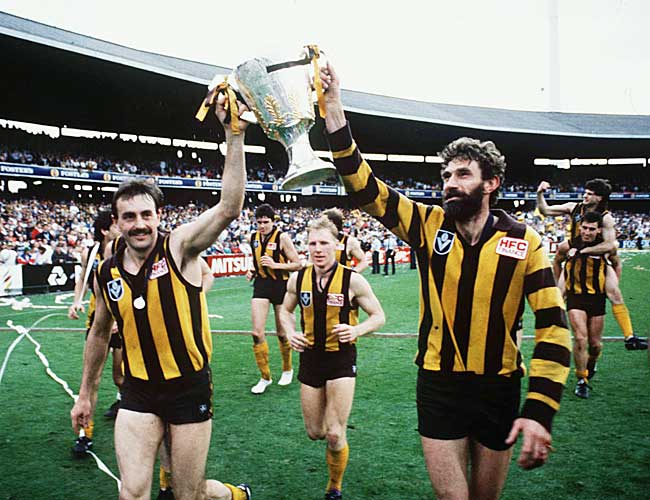
Sure, it was a close-run thing, but many a grand final has been won by a single kick.
Predictably, the wind industry, its PARASITES and spruikers have gone into a tailspin – wailing about the dreaded malady of “uncertainty” – of the kind that everyone else gets to face on a daily basis in every aspect of life and business – but from which the wind industry must be protected at all times.
But the Senate INQUIRY is just the beginning of the wind INDUSTRY’s many woes.
Crossbench working on RET plan
Sky News
24 November 2014
A key Senate crossbencher is warning household ELECTRICITY PRICEScould skyrocket unless a political impasse over the renewable energy target is resolved.
Liberal Democrat David Leyonhjelm is in discussion with other crossbenchers about a plan to scale back the RET after talks between the government and LABOR failed.
He fears for households if parliament can’t reach a compromise.
“The record high energy bills that people have been experiencing will seem tame by comparison,” he told AAP.
The government wants to slash the target of 41,000 gigawatt hours to around 27,000, claiming that figure will represent 27 per cent of energy use by 2020 instead of bipartisan level of 20 per cent.
Labor quit negotiations over a new target which has led to further industry uncertainty.
While the Palmer United Party opposes any CHANGES to the RET, Senator Leyonhjelm believes PUP defector Jacqui Lambie may be open to a compromise.
“If the hydro industry was given the ability to generate RENEWABLE ENERGY CERTIFICATES, it would give a badly needed economic boost to Tasmania to the tune of around $120 million per year,” he said.
Senator Lambie has pledged to vote against all government legislation until a defence force pay deal is reconsidered.
However, she could SUPPORT a private bill initiated by one of her crossbench colleagues.
Fellow independents Nick Xenophon and John Madigan both have concerns about wind turbines and have joined forces with other senators to set up an inquiry into the industry.
AAP
STT hears that the cross-benchers are acutely aware that if radical changes aren’t made to the Large-Scale RET pronto, then Australian power consumers will be walloped with fines (the $65 per MWh “shortfall charge”) for every MWh that retailers fall short of the escalating annual LRET target – a figure that will reach more than $1 billion by 2020 and continue at that level until 2031 – simply because the LRET target will never be met (see our posts here and here).
STT also hears that the cross-benchers are currently thrashing out a plan that will avoid that politically disastrous PROSPECT (for a copy of the plan click here).
One aspect of the plan is to include “old” hydro (hydro generation built prior to 1998 that is excluded from the LRET and which is ineligible to receive RECs) and use that output to help SATISFY the shortfall (see our post here).
Another is to bring in rooftop solar output generated in excess of the 4,000 GWh annual “expectation” set by the Small Scale Renewable Scheme (SRES): small-scale SOLAR GENERATION is currently between 8,000-9,000 GWh annually and still growing fast. By 2020, rooftop solar is expected to GENERATE more than 14,000 GWh annually, blitzing the original 4,000 GWh annual expectation. The plan being thrashed out now would use all of that “excess” solar generation to satisfy the LRET.
Bear in mind that all rooftop SOLAR INSTALLED under the SRES gets a fat pile of subsidies by way of “small-scale technology certificates” (STCs), which are paid up front at a guaranteed price of $40. The cost of issuing STCs is paid for by the Federal government to solar installers and recouped from all taxpayers. So it only seems fair that solar does its bit to avoid power consumers being whacked with $billions in fines for failing to meet the LRET: thus avoiding a power and tax bill “double-whammy”.
STT hears Jacqui is working very closely with her fellow cross-benchers to ensure that Tasmania’s “old” hydro gets included in the LRET, with RECs GOING to Tasmanian hydro generators (for a taste of Jacqui’s fury, seeher press release here). In that event, Tasmania would SATISFY the target in a heartbeat.
STT hears that Jacqui’s PLAN to use “old” hydro – along with the plan to use rooftop solar – to satisfy the LRET gets is fast gaining traction amongst the cross-bench Senators.
Including “old” hydro and solar in excess of the SRES “expectation” in order to satisfy the LRET and avoid $billions in fines under the shortfall charge sounds like a common sense outcome to STT – and just the kind of thing one might EXPECT to come from members of a group now known as the Coalition of Common Sense.





 "Mothers Against Wind Turbines™" Phoenix Rising...