Wind Turbines are Novelty Energy, and Do NOT Replace Fossil Fuels!

Why Coal Miners, Oil and Gas Producers Simply Love Wind Power

coalminevn

****

The wind industry parades as an “alternative” energy source. Which begs the question: “alternative” to what?

The lunatics from the hard-green left (like “Greens” head-muppet, Christine Milne) continually whine that “coal is DEATH“; and wax lyrical about the fantasy of going “100% renewable” – all the while pocketing $millions in campaign funding from the party’s wind industry backers (see our post here).

muppets-miss-piggy

****

Economic lunatics, like Milne are wedded to the delusion that there really is a choice between powering nations with hundreds of thousands of giant fans (carpeting every last square mile of other peoples’ back yards) and coal or gas fired plant, that comfortably fit on the back of a figurative “envelope”; and, as they’re usually placed in industrial zones, rarely trouble anyone.

The “green” myth is that fossil fuels can be relegated to history; as every last watt of electricity we need could be generated using ‘wonderful, free wind energy’; and would be, if only “climate deniers”, like Tony Abbott would sod off and die.

The narrative brings with it the claim that we would already be enjoying a wind powered way of life, except that EVIL fossil fuel producers – dead-scared for their futures because of the ‘threat’ posed by “free-wind” – have conspired with blokes like Tony Abbott to protect the ‘dirty’ little businesses they own.

Not bad, as far as ‘green’ yarns go. But, contrary to the Green’s straw-man argument, coal miners, gas producers and diesel suppliers simply love wind power to bits.

hepburn

****

While greentards and ecofascists are wedded to the belief that their beloved giant fans emerge magically from Gaia, like new-born mushrooms after autumn rains, their delusions cause them to miss the several heavy industrial processes needed to create a 100 tonne whirling juggernaut, sitting atop 400-500m3 of concrete, threaded with 45 tonnes of steel reinforcing.

Steel, concrete, aluminium, plastics, rare earths etc – all necessary ingredients for those blade-chucking, pyrotechnic, sonic torture devices – require (wait for it …) OIL, GAS and, heaven forbid, most evil of all, COAL.

Cement is a product that uses mountains of gas or oil to turn limestone etc into the stuff that, with a little water and aggregate mixed in, welds turbines to terra firma (most of the time). Steel is a combination of coal and iron ore; the amalgamation of which uses more coal, gas or electricity to create a molten alloy that, in turn, becomes a product of endless structural wonder. And aluminium is congealed electricity – which, in Australia, is odds-on to be produced by, yep, you guessed it – coal-fired power plants. For a breakdown on the CO2 emissions of all of the above see:

How Much CO2 Gets Emitted to Build a Wind Turbine?

So, with eco-fascist plans to carpet the world with millions of these things, coal miners, oil and gas producers can just sit back and get ready to count their loot. But that’s just to notice the oil, gas and coal that’ll be chewed up in the manufacture of endless seas of eco-crucifixes, which would ignore what the diggers and drillers stand to make from wind-power-perverted power markets.

Power consumers have a couple of basic needs: when they hit the light switch they assume illumination will shortly follow and that when the kettle is kicked into gear it’ll be boiling soon thereafter. And the power consumer assumes that these – and similar actions in a household or business – will be open to them at any time of the night or day, every day of the year.

For conventional generators, delivering power on the basic terms outlined above is a doddle: delivering base-load power around the clock, rain, hail or shine is just good business. It’s what the customer wants and is prepared to pay for, so it makes good sense to deliver on-demand.

But for wind power generators it’s never about how much the customer wants or when they want it, it’s always and everywhere about the vagaries of the wind. When the wind speed increases to 25 m/s, turbines are automatically shut-off to protect the blades and bearings; and below 6-7 m/s turbines are incapable of producing any power at all.

The basic terms of the wind power “deal” break-down like this:

  • we (“the wind power generator”) will supply and you (“the hopeful punter at the end of the line”) will take every single watt we produce, whenever that might be;
  • except that this will occur less than 30% of the time; and, no, we can’t tell you when that might be – although it will probably be in the middle of the night when you don’t need it;
  • around 70% of the time – when the wind stops blowing altogether – we won’t be supplying anything at all;
  • in which event, it’s a case of “tough luck” sucker, you’re on your own, but you can try your luck with dreaded coal or gas-fired generators, they’re burning mountains of coal and gas anyway to cover our little daily output “hiccups” – so they’ll probably help you keep your home and business running; and
  • the price for the pleasure of our chaotic, unpredictable power “supply” will be fixed for 25 years at 4 times the price charged by those “evil” fossil fuel generators.

It’s little wonder that – in the absence of fines and penalties that force retailers to sign up to take wind power (see our post here) and/or massive subsidies (see our post here) – no retailer would ever bother to purchase wind power on the standard “irresistible” terms above.

If you think we’re joking – or you’re struggling with the kind of intellectual difficulties which seem to trouble Christine Milne and her acolytes – here’s a post where we spell it out in pictures:

Wind Power Myths BUSTED

Grid managers and base-load generators are driven mad trying to cope with the hundreds of occasions when wind power output collapses on a routine, but utterly unpredictable basis (see our posts here and here).
coal-seam-gas

****

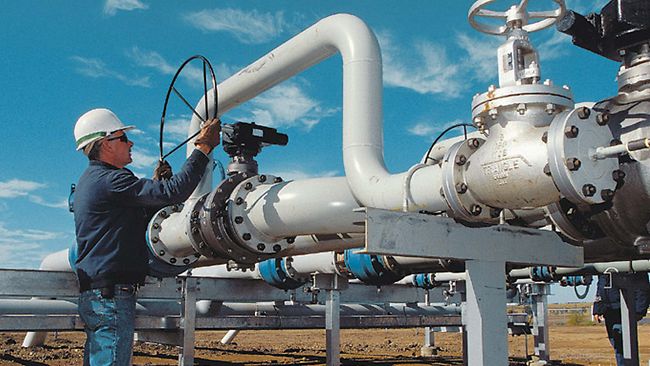
However, those that supply the extra coal that gets burnt to provide additional spinning reserve (see our post here), or the gas that’s used by the pipeline full to run fast-start-up Open Cycle Gas Turbines, or shiploads of diesel for banks of generators – all of which are used to back-up wind power around the clock – have never had it so good.

In fact, the chaos attached to an increased ‘reliance’ on wind power has guaranteed a bright future for coal miners in Germany (see our post here) and for oil and gas producers (as detailed below).

diesel generators UK

****

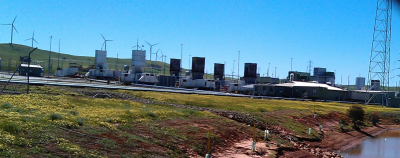
In Britain, its wind power debacle has seen the roll-out of banks of thousands of diesel generators (see our posts here and here) and Australia’s wind power capital, South Australia has a number of large-scale diesel generation back up plants, including a 65MW diesel plant at Adelaide’s Desal Plant used to back up routine wind power output collapses there (see our post here).
Peaking power at Hallett

****

Far from being threatened by Big Wind, fossil fuel producers are all set to reap a stream of fat profits, thanks to the great wind power fraud, as spelt out in the following reports.

‘Big Oil’ and ‘Big Wind’ Keep Public in the Dark About Wind Dependence on Fossil Fuels – And ‘big media’ is missing the story
Jack Spencer
21 April 2015
Capcon

The news media is at its best when risking the wrath of powerful interests by telling an underdog’s side of a story. When those rare instances arise, the news media stand tall. What seems to increasingly be occurring, however, features the news media misidentifying some entities as underdogs and failing to realize that a charade is being acted out.

Examples of this circumstance are too numerous to list, but one of the most intriguing involves so-called alternative energy (which is almost exclusively wind energy) and the fossil fuel (or petroleum) industry. It seems evident that most of what is commonly termed the “regular” news media sees wind energy as the underdog to what many would call “Big Oil.”

The casting of what we will call “Big Wind,” in an underdog role to “Big Oil,” is the product of simplistic, uninformed thinking. Big Wind is backed by billions of dollars in taxpayer-provided subsidies and rich political exploiters who funnel dollars to politicians so they can keep making even more money off of the subsidies. It enjoys support from thousands of sincere voters who harbor the erroneous belief that once the wind turbines are in place, whatever energy is produced is free and clean.

But this is only part of what the regular news media keep missing. Big Oil also spends tens of millions of dollars in the political money game to protect its interests, which include bolstering both traditional uses of fossil fuels and (here’s where the news media are 180 degrees off) cashing in on wind energy as well.

The secret that neither Big Oil nor Big Wind wants the public to know is that wind energy is roughly two-thirds fossil fuels – mostly natural gas. Both of these entities have a stake in keeping this fact a secret as long as possible. If that were not the case, the public would have been told the truth about the link between Big Wind and Big Oil by now.

Big Oil, in particular, has the ability to make virtually everyone aware of the degree to which wind energy is dependent on fossil fuels. Obviously, it prefers to let the public remain misinformed.

The reason Big Oil prefers that the secret not be revealed is that there’s a lot of money to be made from wind energy subsidies, and many advantages derive from playing two political sides against the middle. The reason Big Wind doesn’t want the fact that it is joined at the hip with fossil fuels to be known, is that its very existence might be jeopardized if the truth were to become common knowledge. The reason the news media have not caught on is because they are comfortable with the preconceptions that allow them to be duped by both Big Oil and Big Wind.

What’s really going on is virtually the opposite of the regular news media’s tragically comical template that Big Wind and Big Oil share an adversarial relationship. As a result, the regular news media assume that Big Oil is behind any effort to point out wind energy’s inefficiency, possible adverse health effects and other flaws. This represents more than ignorance of the facts. Instead, it’s a blind spot that endures due to unjustified trust in superficial assumptions.

But something might be coming soon that could potentially change the dynamics. A group called Ban Fracking in Michigan has submitted language to the Secretary of State for a proposal to prohibit fracking in Michigan. The group wants to put the proposal on the 2016 statewide ballot. Fracking, short for hydraulic fracturing, is the technology that has increased our supplies of natural gas exponentially and revolutionized the world’s energy picture. Some claim, however, that it poses a threat to the environment. This supposition appears unsubstantiated and based on misrepresentation but in the world of politics that might not matter much.

The first thing to remember is that ballot proposals are not always what they appear to be on the surface. A proposal could be put on the ballot for an ulterior motive. For instance, in 2016 the anti-fracking proposal could help boost turnout of liberal-leaning voters. Sometimes a prospective proposal is just a device to blackmail the legislature and governor into doing something they wouldn’t do otherwise – which is how the threat of the minimum wage hike proposal was used in 2014.

However, if the fracking ban were to get on the 2016 ballot and polling showed it had a realistic chance of passing, things could get pretty interesting. In the heat of any election battle there is a tendency to pull out all of the stops. That tendency could conceivably lead to Big Oil letting the cat out of the bag about wind energy’s heavy reliance on natural gas. Such a revelation might possibly alter the perceptions of a lot of voters – and a lot of folks in the regular news media as well.

*Readers note – in some past columns the qualifying word “alleged” was used regarding the degree to which wind energy depends on fossil fuels. Since no one, it seems, disputes the claim, and hardcore believers in man-made climate change have actually lamented the wind energy-fossil fuel link, the word “alleged” no longer appears to be necessary.
Capcon

Here’s a slightly more “starry-eyed” view from a few years ago that – while pulling more than one or two punches, as it tries to pump up the ‘merits’ of wind power – makes it plain enough that the more wind power there is, the better off gas producers will be.

GE’s Gas-Fired Plants Could Enable More Wind and Solar Power
Eric Wesoff
GreenTech Media
25 May 2011

The variability of solar power and wind power can play havoc with the grid.

In a political era where California and other states are mandating 20 percent or 33 percent or even 40 percent Renewable Portfolio Standards,the current system is not designed to deal with that level of variability, according to Jim Detmers, former COO of the California Independent Systems Operator (CAISO). “The system is not designed to accept that proportion of renewables.”

Increasing penetration of renewables like wind and solar actually require an increase in the amount of natural gas-fired backup. And natural gas plants are at their least efficient when they are are ramped up and down. Natural gas, despite its recent good press for being cleaner than coal and of domestic origin, is still a fossil fuel that pollutes the air when combusted and the water when extracted via fracking. Estimates from the Energy Information Administration suggest that shale gas could make up 45 percent of all natural gas production in the U.S. by 2035 — up from the current 14 percent.

Any improvement in the efficiency of natural gas-fired plants is going to help the transition to a more renewable-fueled future — and reduce the amount of natural gas we might use.

General Electric just introduced their new 510-megawatt combined-cycle power plant that offers fuel efficiency greater than 61 percent — the result of an investment of more than $500 million in R&D by GE.

GE drew from the company’s jet engine expertise to engineer a plant that will ramp up at a rate of more than 50 megawatts per minute.

Detmers’ figures differ from that claim. “We can currently ramp generators at 63 megawatts per minute,” but “early studies show that we need over 400 megawatts per minute to cope with a 33 percent RPS,” according to Detmers. “We need new technology,” he concludes.

The GE plant is engineered for flexible operation by integrating a next-generation 9FB Gas Turbine that operates at 50 Hz, a power frequency that is most used in countries around the world; a 109D-14 Steam Turbine, which runs on the waste heat produced by the gas turbine; GE’s W28 Generator; an integrated control system that links all of the technologies; and a heat recovery steam generator.

The International Energy Agency concluded in a report issued yesterday that large shares of variable renewable energy are feasible as long as power systems and markets are properly configured so they can get the best use of their flexible resources. More efficient and flexible natural gas plants are one of the requirements to get more renewables on the grid.

Detmers said that “Germany has some very serious conditions” with its 15,000 megawatts of wind and 17,000 megawatts of distributed solar. “We have a lot to understand about when we transform to a varying supply.
GreenTechMedia

The author’s choice of “variable”, to describe complete daily collapses in wind power output, is a dead give away about his belief in the ‘wonders’ of wind power; and the fact that he’s quoting from the wind industry ‘play-book’.

Flopping to ZERO, every other day, isn’t “variable” – it’s “chaos” – we hammered that kind of language abuse a while back:

The “Great Oz” has spoken: the wind will no longer be “intermittent”

And the Germans – Europe’s wind power “kings” – experience precisely the same type of wind power delivery mayhem on a regular basis:

German Wind Power Goes Completely AWOL 11 Times in the Last 80 Days

No, truth be told, thanks to the great wind power fraud, the fossil fuel boys have never had it so good.

dirtyrottenscoundrelsoriginal

Windweasels Live Up to Their Reputation as….. Gangsters!

Noose Tightens on Spain’s Wind Farm Fraudsters: Tax Inspectors Uncover €110 million Paid as Bribes & Backhanders

clint863

The wind industry seems to attract a particular class of bloke, in much the same way that the Prohibition era drew lots of heavy-set Italians to the Mob.

Maybe that seemingly endless stream of massive subsidies filched from taxpayers and power consumers generates the same allure as festering dung does for swarms of flies?

Whatever it is, the whiff that surrounds the wind industry has attracted (and continues to attract) a class that has no hesitation lying, cheating, stealing and even bonking their way to the easy loot on offer.

The Italian Mob were in on the wind power fraud from the get-go: applying their considerable (and perfectly applicable) skills – leading the European wind power fraud, with what economists call “first-mover-advantage” (see our post here).

We’ve reported on just how rotten the wind industry is – from top to bottom – and whether it’s bribery and fraud; vote rigging scandals; tax fraud; investor fraud or REC fraud – wind weasels set a uniform standard that would make most businessmen blush.

The crooks involved – and the corruption, lies thuggery and deceit that follow them – are uniform across the globe.

Wind power outfits in Taiwan – faced with a pesky community backlash – sent the muscle in and beat the protesters to a bloody pulp (see our posts here and here).

The Thais aren’t much better.

In Australia, Thai outfit RATCH has been lying to, bullying and threatening communities far and wide for years (see our posts here and here andhere).

In previous posts we’ve looked at how the goons that work for RATCH didn’t hesitate to invent a character – Frank Bestic – in a half-cunning attempt to infiltrate their opponents at Collector and elsewhere – see our posts here and here and here.

RATCH also teamed up with one of Queensland’s property developer, “white-shoe-brigade“, John Morris – in a joint plan to destroy the Atherton Tablelands, by spearing 60 odd turbines into a patch of pristine, tropical wilderness on top of Mt Emerald – a move, quite rightly, opposed by 92% of locals (see our post here).

Morris is a five-star resort owner, who generously wined, dined and otherwise accommodated his mate, LNP pollie, David Kempton. Kempton got rolled at the last election, but while in power, held a rabid interest in getting the project approved, despite the fact that his own electorate was miles away, and pulled out all stops to ‘smooth’ the way to development approval (see our post here).

RATCH and Morris have shown all the care and restraint we’ve come to expect from the wind industry and its parasites: an “industry” that has absolutely no interest in producing meaningful power or “saving” the planet. Take away the promise of $50 billion in subsidies from the REC Tax on power consumers (see our post here) and this lot will disappear in a heartbeat (see our post here).

RATCH shares its Thai roots with another Thai wind power outfit that owes its existence to the Thai Military Junta – “Wind Energy Holdings”.

Wind Energy Holdings hit the news a while back when its hitherto-hot-shot head, Nopporn Suppipat was caught with his fingers in the till. Having been caught – he acted with all the honour we’ve come to expect from wind weasels, wherever they ply their trade: he bolted! (see our post here)

Now, it’s the turn of Spanish Wind Conquistadors to feel the heat.

That the wind industry is the product of institutional corruption – fuelled by back-slaps, and $millions in back-handers to planning officers, local councils and others in charge of the rubber stamps needed to start and keep the wind power fraud rolling – is no secret.

However, as these boys have bought the sanction of governments, rooting out the recipients of that crooked cash – when it’s sprinkled all the way to the top – presents investigators with more than the usual forensic challenges. Here’s Spain’s El País on España’s errant wind fraudsters’ trail.

Regional officials and businessmen may have received €110 million, say auditors
El País
F.Garea; R. Méndez
20 April 2015

Private renewable energy firms may have paid more than €110 million in commissions to government officials and local businessmen in Castilla y León to help them obtain licenses and push through paperwork to install wind farms across the region between 2004 and 2007, tax inspectors said.

In a December 30 report obtained by EL PAÍS, seven transactions detail how energy firms paid local businessmen and people connected to the regional Popular Party (PP) government either directly or through stocks in companies created to build and operate wind farms.

The Spanish AEAT tax agency has turned over the 94-page report to anti-corruption prosecutors to investigate if money laundering or other crimes may have been committed.

Those suspected of taking part in the commission deals are public officials in Castilla y León; go-betweens who negotiated on behalf of the energy firms and were able to obtain administrative approvals; and companies belonging to local businessmen who, “without any valid economic motives, received the transfer of funds and stock for an amount superior to €110 million,” inspectors said.

In some cases, the firms transferred stock in the businesses set up in such a way so as to multiply the initial capital invested by hundreds, even thousands, of times.

Among those who may have benefited from this alleged scheme were officials from Castilla y León’s economy department, which authorized the wind farms.

EL PAÍS was unable to reach Rafael Delgado Núñez, who was the deputy chief of the economy department at the time and the official responsible for signing the administrative permits.

In some cases, the firms multiplied the initial capital invested by hundreds, even thousands, of times

Along with other officials, Delgado Núñez was called in to give a statement before tax inspectors. According to his testimony, which was included in the audit, he said the procedure in the region was “very efficient” because there was hardly any legal framework supporting these operations at the time and the government wanted to ensure that “the companies that applied had regional interests.”

One of the main figures in the report is Alberto Esgueva, who until 2006 was CEO of Excal – a public entity formed by the Castilla y León government to promote regional exports. His own firm, according to inspectors, received the most commissions from the operations. Since September Esgueva has been living in Poland, where he runs a real estate business.

He declined to be interviewed for this article despite various attempts to contact him through his secretary.

A spokesman for the region’s economy department said he had no knowledge about the report but added that all the transactions were legally carried out and there was no evidence that commissions were paid.

Tomás Villanueva, who has headed up Castilla y León’s economy department since 2003 and is considered a close aide to PP regional premier Juan Vicente Herrera, on Monday stated that, after carrying out a “first check,” the paperwork authorizing the wind farms under question by the Tax Agency “was correct and in line with the law.”

Villanueva’s name surfaces in one part of the audit where tax inspectors mentioned that Delgado Núñez “played an important role” in both the economic and education departments.

In their report, inspectors alleged that numerous payments helped pave the way for the regional government to make quick decisions about the installation of wind farms. In one case, the money helped overcome the bureaucracy that had been blocking the project for six years.

Utility companies that wanted to install wind farms allegedly set up joint venture vehicles with local businesses and officials who had government ties to the region, the report said.

The association with the local businessman or government official would allegedly help push through the paperwork and, once the electric companies had received authorization to build the wind farm, they would pay back the investors more than what they had initially put into the joint venture.

One of the renewable energy companies that paid out a large amount to install a wind farm was Preneal, owned by Eduardo Merigó, the former president of Visa in Spain and an ex-secretary of state in former Spanish Prime Minister Adolfo Suarez’s Union of the Democratic Centre (UCD) administration (1977-1982). He told tax inspectors that he “felt like a victim of the system.”

Merigó also declined to speak to EL PAÍS for this article.

Preneal paid €6 million to San Cayetano Wind, which belonged to Esgueva, without “any obligation or compensation,” the report states.

Another €7 million was paid to Cronos Global, which was half owned by Esgueva. Last December, a Preneal representative told tax inspectors that Cronos had nothing to do with obtaining permits or building wind farms.

The projects have still not been approved, but Cronos Global received €7 million after putting down a €1.5 million initial investment.

Tax inspectors have also discovered suspicious bank transfers by Cronos Global at the beginning of the recession of up to €100 million to Poland and the United States while around €38 million was transferred to Spain.

The other partners in Cronos Global was Luis María García Clerigó and his family.

Clerigó is the president of the now-defunct Parqueolid, a construction firm in Valladolid. When contacted by EL PAÍS, Clerigó said he had difficulty remembering anything because he suffered a stroke seven years ago.

Parqueolid is under investigation in another case for allegedly receiving €50 million from the Castilla y León regional government to build new offices for the economic department. A judge investigating this case has targeted Delgado Núñez, who served as deputy chief of the regional economy department for eight years, and is also sifting through his bank accounts.
El País

good, bad ugly

WindWeasels Cannot Continue Denying the harm they are Causing!

Denmark Calls Halt to More Wind Farm Harm

Wind energy in Denmark : wind turbines in Holstebro , Westjutland

*****

Denmark is the home of struggling Danish fan maker, Vestas – an outfit that – after our Wind Power Fraud Rally in June 2013 – paid $millions to a crack team of Australian propaganda parrots to invent a campaign aimed at winning back the “moral” high ground.

It called its new public relations model “Act on Facts” – we covered some of their “facts” in this post.

Well, as is often the case, the facts eventually surface; and, when they do, the ‘unhelpful’ ones have a nasty habit of working against those that, like Vestas, have worked hardest to suppress them:

Three Decades of Wind Industry Deception: A Chronology of a Global Conspiracy of Silence and Subterfuge

Danes complain about precisely the same effects from the incessant turbine generated low-frequency noise and infrasound that Vestas’ victims at Macarthur in Victoria do (see our posts here and here).

And the Danes’ complaints have seen victims awarded substantial compensation for the sonic torture being inflicted unnecessarily and endlessly by Vestas & Co:

Danish High Court Orders Compensation for Wind Turbine Noise Victims

Danish wind power outfits have had to concede that human beings and giant fans simply don’t mix, and have taken to buying up huge numbers of homes, and even whole villages; bulldozing them in order to carpet the entire country in their blade-chucking, pyrotechnic, sonic torture devices:

This Town is ‘coming like a Ghost Town: Wind Industry Buys Up & Bulldozes Whole Danish Villages

Now, the Danish government has gone into legal liability damage control by refusing to issue any further permits for wind farms. Here’s NoTrickZone on the Danes’ latest lament.

Under Fire Due To Health Impacts From Infrasound … Danish Permitting Halts!
NoTricksZone
P Gosselin
21 April 2015

Beleaguered Industry: Wind Parks Coming Under Fire Due To Health Impacts From Infrasound … Danish Permitting Halts!

The debate on the effects of infrasound on the health of people and animals living near wind parks has been raging on with more intensity than ever – especially since Denmark unexpectedly halted the permitting of new wind parks due to “health concerns” from infrasound.

Infrasound is defined as low frequency sound under 16 Hz – below the threshold of human hearing. Wind farms are notorious for generating these potentially harmful sub-audible frequencies. It is said that infrasound can be sensed as pressure to the ears or to the stomach, or as a slight vibration.

There’s a Swedish report available on the hazard, click here. It calls for the legal framework for the creation of wind parks to be revised.

German NTV public television reports recently that in Denmark mink farm operator Kaj Bank Olesen from Herning is a neighbor to four large-scale wind turbines only 330 meters away. Olesen and other neighbors had protested the planning of the wind turbines, fearing negative consequences from their noise and shadows.

However the community rejected their claims, basing it on a lack of credibility. The turbines were installed. Now it seems that Olesen’s earlier fears may have had merit as he claims that the infrasound generated by the turbines are making the mink animals on the farm aggressive and is leading them to die. After one night he found 200 dead minks the next morning. The incident has since sparked the Danish government to take action. Permitting of wind parks in Denmark is now on hold.

The alleged health impacts from wind turbines have been making the news (0:55) in Germany as well.

In Schleswig Holstein, Germany, the Hogeveens have been forced to sleep and eat in their basement in a desperate attempt to find refuge from the maddening infrasound emitted by recently installed turbines near their home.

The wind industry and many government authorities deny there’s a connection between infrasound from wind turbines and health impacts on humans. Hermann Albers of a wind lobby group says there’s no connection between the turbines and the irritation sensed by those living close by, claiming that it is a “subjective” perception or that it’s “politically motivated”. In other words, people living close to wind turbines are just making it all up and they should instead just shut up and live with it.

The German government says it will study the matter further and consider if infrasound should be taken into consideration during the wind park permitting process.

In Australia a link has also been found between wind turbines and health in the so-called Cape Bridgewater report. Steven Cooper investigated the possible link, saying that availbale data so far is very small, but adds:

“There’s definitely a trend. There’s definitely a connection between the operation of a wind farm and what the residents were identifying as disturbances, and so it’s definitely open to debate as to what the cause or link is in terms of that data.”

Data from comprehensive studies are difficult to come by. Wind farms are reluctant to share their data with researchers, fearing unfavorable results and consequences.

The impacts from infrasound on human health will continue to be debated in the future. But other things are already sure and beyond debate: Wind farms are rapidly losing their attractiveness and support from the public due to their poor performance, hazard to birdlife, ruining of property values, and their blighting of the natural landscape.

An adverse connection to human health would be yet another large nail in the coffin of the now increasingly controversial wind industry.

Hat-tip: Wolfgang Neumann at Facebook.
NoTricksZone

In the piece above it’s said that “Permitting of wind parks in Denmark is now on hold“.

STT’s Danish operatives have confirmed that that is, indeed, the case. Not that you’ll read about in the Australian press; or see or hear it on your ABC.

Governments – Federal, State and Local – around the world are getting jumpy about their legal liability to their citizens, for having set up planning laws so lax as to be risible and/or for manifestly failing to enforce even those derisory rules. Moreover, the very existence of the wind industry is the direct result of massive subsidies and/or mandated government targets, fines and penalties, so governments are in it up to their necks; and can’t possibly hope to get out of trouble by pulling the Sergeant Schultz defence:

sgt schultz

In liability terms, governments that continue to allow turbines to be speared into peoples’ backyards, or which fail to shut them down wherever neighbours can’t sleep, are sitting ducks as defendants in negligence actions. The evidence of harm and personal injury is clear enough; and those in power can no longer claim to be unaware of it (seeour post here).

Having set themselves up for compensation claims that will run into the hundreds of $millions, governments (and their insurers) are keen to limit their exposure by pointing to others: for example, wind power outfits and their pet acoustic consultants who claimed the noise standards they wrote were the gold-standard in protecting public health (see our post here). Or, in the case of Brown County, Wisconsin making it clear that it’s not game to rely on the lies pitched up the wind industry’s mercenary acoustics acolytes by coming out publicly:

“To declare the Industrial Wind Turbines in the Town of Glenmore, Brown County. WI. a Human Health Hazard for all people (residents, workers, visitors, and sensitive passersby) who are exposed to Infrasound/Low Frequency Noise and other emissions potentially harmful to human health.” (see our post here)

Now, it seems that the Danish government is also out to draw a line between it and the wind industry; if only in an attempt to quarantine its liability to thousands of its victims.

It was due to Vesta’s corporate malfeasance and insidious institutional sway that Denmark became the birthplace for the great wind power fraud in the first place; and, thereafter, became the Mecca for the wind industry’s cult-like followers.

STT thinks that it’s fitting, in its way, that this despicable industry and its worshippers have their “Doomsday” in Denmark.

anti win demo Denmark

Father of Green Communities Act, Convicted Under the RICO Act! Who’s Next?

Falmouth Wind Turbines – RICO Act

Prior to Wind Turbine Installations Falmouth had the Octave Band Data / Sound performance for the V82 turbine

Falmouth Wind Turbines & RICO Act

Did the Town of Falmouth violate the RICO Act ? They all knew the turbines would break state noise laws !

The Commonwealth of Massachusetts
Department of Environmental Protection (DEP)
Noise Control Regulation  310 CMR 7.10

310 CMR 7.10 Noise
(1) No person owning, leasing, or controlling a source of sound shall willfully, negligently, or through failure to provide necessary equipment, service, or maintenance or to take necessary precautions cause, suffer, allow, or permit unnecessary emissions from said source of sound that may cause noise.

Prior to the installations of the Falmouth wind turbines it appears Vestas Wind Company forewarned the Town of Falmouth, Town of Falmouth contract engineers and construction contractors. The manufacturer ( Vestas )also needs confirmation that the Town of

Falmouth understands they are fully responsible for the site selection of the turbine and bear all responsibilities to address any mitigation needs of the neighbors.

The turbines operated full time until May of 2012. State officials shut down the wind turbine in Falmouth after measurements showed the machine generating more than 10 decibels above ordinary background noise.

The turbines operate 12 hours a day during daylight now and are shut off on Sunday

Passed in 1970, the Racketeer Influenced and Corrupt Organizations Act (RICO) is a federal law designed to combat organized crime in the United States. It allows prosecution and civil penalties for racketeering activity performed as part of an ongoing criminal enterprise.

To convict a defendant under RICO, the government must prove that the defendant engaged in two or more instances of racketeering activity and that the defendant directly invested in, maintained an interest in, or participated in a criminal enterprise affecting interstate or foreign commerce.

Political Corruption

Politicians :
. UNITED STATES V. CIANCI
Providence Rhode Island
For twenty-one years, from 1975-1984 and from 1991-2002, Vincent A. “Buddy” Cianci was the mayor of Providence, Rhode Island.

Ultimately, Cianci was only convicted of one RICO conspiracy count.
The First Circuit notes—for a RICO conspiracy conviction, a defendant simply “must intend to further an endeavor which, if completed, would satisfy all of the elements of a substantive criminal offense, but it suffices that he adopted the goal of furthering or facilitating the criminal endeavor.”

Buddy Cianci was therefore found guilty of a §1962(d) RICO conspiracy violation and sentenced to five years and four months in prison.

Falmouth noise letter recently released through a Freedom of Information Request

August 3, 2010
Mr. Gerald Potamis
WasteWater Superintendent
Town of Falmouth Public Works
59 Town Hall Square
Falmouth, MA 02540

RE: Falmouth WWTF Wind Energy Facility II “Wind II”, Falmouth, MA
Contract No. #3297

Dear Mr. Potamis,

Due to the sound concerns regarding the first wind turbine installed at the wastewater treatment facility, the manufacturer of the turbines, Vestas, is keen for the Town of Falmouth to understand the possible noise and other risks associated with the installation of the second wind turbine.

The Town has previously been provided with the Octave Band Data / Sound performance for the V82 turbine. This shows that the turbine normally operates at 103.2dB but the manufacturer has also stated that it may produce up to 110dB under certain circumstances. These measurements are based on IEC standards for sound measurement which is calculated at a height of 10m above of the base of the turbine.

We understand that a sound study is being performed to determine what, if any, Impacts the second turbine will have to the nearest residences. Please be advised that should noise concerns arise with this turbine, the only option to mitigate normal operating sound from the V82 is to shut down the machine at certain wind speeds and directions. Naturally this would detrimentally affect power production.

The manufacturer also needs confirmation that the Town of Falmouth understands they are fully responsible for the site selection of the turbine and bear all responsibilities to address any mitigation needs of the neighbors.

Finally, the manufacturer has raised the possibility of ice throw concerns. Since Route 28 is relatively close to the turbine, precautions should be taken in weather that may cause icing.

To date on this project we have been unable to move forward with signing the contract with Vestas. The inability to release the turbine for shipment to the project site has caused significant [SIC] delays in our project schedule. In order to move forward the manufacturer requires your understanding and acknowledgement of these risks. We kindly request for this acknowledgement to be sent to us by August 4, 2010, as we have scheduled a coordination meeting with Vestas to discuss the project schedule and steps forward for completion of the project.

Please sign in the space provided below to indicate your understanding and acknowledgement of this letter. If you have any questions, please do not hesitate to call me.

Sincerely,

(Bruce Mabbott’s signature)
_____________________
Bruce Mabbott Gerald Potamis
Project Manager Town of Falmouth

CC: Sumul Shah, Lumus Construction, Inc.
(Town of Falmouth’s Wind-1 and Wind-2 Construction contractor)

Stephen Wiehe, Weston & Sampson
(Town of Falmouth’s contract engineers)

Brian Hopkins, Vestas
(Wind-1, Wind-2’s turbine manufacturer, and also Webb/NOTUS turbine)

Aussies Fight Back, Against Corruption in the Wind Industry!

Australian Senators – Day, Leyonhjelm & Canavan – Line Up to Can Big Wind

senate review

STT likes to go in hard, call it early and keep on backing it up. Sure we descend to colourful language, and polish it off with a healthy smear of good old-fashioned sarcasm. But the idiom and imagery we use sits atop a pile of festering wind industry generated lies, deception and common garden variety fraud.

Back in January this year, we likened Steven Cooper’s groundbreaking acoustic study into the harm caused by Pac Hydro’s Cape Bridgewater wind farm disaster, to the detonation of a small, but effective, nuclear device:

Steven Cooper’s Cape Bridgewater Wind Farm Study the Beginning of the End for the Wind Industry

We wrote that:

Earlier this week, a small, but very effective, nuclear device was detonated at Cape Bridewater, which – before Union Super Funds backed Pacific Hydro destroyed it – was a pristine, coastal idyll in South-Western Victoria.

The bomb that went off was a study carried out by one of Australia’s crack acoustic specialists, Steven Cooper – and some typically solid journalism from The Australian’s Graham Lloyd – that put the Pac Hydro initiated pyrotechnics in the International spotlight.

Over the next few posts, STT will analyse just what the detonation, its aftermath and fallout means for an industry which, in Australia, is already on the ropes.

And we’ll look at what it means to the thousands of wind farm victims here – and around the world.

Three months on, and we don’t shy away from any of that. Oh no. If anything likening events at Cape Bridgewater to the wind industry’s very own Hiroshima, was mastery in understatement.

You see, Cooper’s work became the central focus of day one of the Senate Inquiry into the great wind power fraud – which kicked off on 30 March, at Portland, Victoria; right next to Cape Bridgewater.

Steven Cooper giving evidence to the Senate Committee on wind farms

Not only did Cooper impress the Senators (save Anne Urquhaut – a wind industry apologist and mouthpiece for Friends of the Earth’s propaganda parrot, Leigh Ewbank), the subjects of Cooper’s study gave evidence to the Committee in camera (privately); and a number of the Senators (save Urquhaut, of course) visited them in their homes the night before the hearing. A number of other wind farm victims laid out the suffering they’ve been forced to endure by wind farm operators, like AGL at Glenthompson and Macarthur, as well.

senators visiting

From what STT hears, to say that the Senators were “moved” is to put it mildly.

The gut-wrenching evidence of the symptoms and sensations experienced by these people and caused by incessant turbine generated low-frequency noise, infrasound and vibration, left a group of seasoned political performers and parliamentary knuckle men, including libertarian tough-nut, David Leyonhjelm, with watery eyes and lumpy throats.

Senator David Leyonhelm

And rightly so: Pac Hydro’s continued mistreatment of its wind farm’s neighbours is nothing short of a disgrace – it is unnecessary, unjustifiedand, in STT’s view, criminal.

And, so it was, that South Australian Senator, Bob Day came to describe their evidence as “harrowing”: thankfully, not a word that gets much of a run these days; but, given the gravity of the harm being caused, and the genuineness and obvious sincerity of the victims, one that’s right on the money.

Senator Bob Day

The real significance of the day was not only what Day had to say, but that he, and the other Senators on the Committee, including David Leyonhjelm from NSW and Matt Canavan from Queensland have had their eyes opened to the scale of the wind power fraud; and the entirely unnecessary suffering it continues to cause.

These boys have uniformly stiffened their opposition to the wind industry; and have joined forces to call for a halt to the greatest rort of all time.

‘Wait for wind inquiry before changing RET’: Bob Day
The Australian
Rosie Lewis
22 April 2015

Family First senator Bob Day has asked Tony Abbott and Industry Minister Ian Macfarlane to delay a vote to change the Renewable Energy Target for six months, until the conclusion of a Senate inquiry into wind turbines.

Any lengthy delay to the scheme is likely to frustrate the renewables sector and energy ­intensive businesses, which have urged the Prime Minister to end the RET stalemate.

Senator Day said he had heard “harrowing” evidence about the impact of wind turbines on humans and animals during the inquiry’s first hearing last month and wanted to know all the “facts and figures” before a RET deal was reached. “I think it’s not unreasonable to ask that we don’t come to any agreement on the Renewable Energy Target until such time that we get to the bottom of this,” he said.

“I’m not talking about ending the RET, I’m just talking about ‘let’s defer the decision on it’. Nothing’s going to happen in the next six months anyway. It’s more important to do this right than do this quick.”

Labor has backed a compromise from the Clean Energy Council, which would cut the large-scale RET from 41,000-GWh by 2020 to 33,500GWh, but the government’s final offer remains at 32,000GWh.

Without support from Labor or the Greens the government needs six crossbench votes to see legislation pass the Senate.

Liberal Democrat senator David Leyonhjelm, who is also on the wind turbine committee, said he had given the government’s RET offer conditional support.

Senator Leyonhjelm said he was much more likely to support the government’s target if there was less of a “big leg up” to the wind power industry.

“Ian Macfarlane is doing the rounds in an effort to get six votes,” he said. “I think he probably will get six votes. (The government) will have my vote, with conditions. I’m not a fan of wind turbines, they are killing birds and they are also making some people sick.

“My support for 32,000GWh relates to not giving a particularly big leg up to wind and giving more scope for other sources.”
The Australian

Bob Day followed up with this letter to The Australian on 27 April 2015.

No rush on RET

Because I have asked Industry Minister Ian Mcfarlane and the Prime Minister to defer a vote on the Renewable Energy Target until a Senate inquiry into wind turbines has handed down its report, Kane Thornton of the Clean Energy Council tells me I have little regard for the many thousands of people whose jobs are at risk every day this review remains unresolved.

This inquiry held its first hearing on March 30 and heard evidence about the adverse effects of wind turbines on humans and animals. The evidence was compelling. There was also evidence on the efficacy of wind turbines to reduce carbon dioxide given the amount of the gas required to manufacture and install them.

Since that hearing, information has been provided regarding reports from the 1980s about the adverse effects of wind turbines. The enquiry is keen to understand what wind turbine owners know, and how long they have known it.

The inquiry hands down its report in August. Given the seriousness of the evidence so far, I do not think it unreasonable to request deferring a vote on the RET until then.
Bob Day, Senator for South Australia

The claim by the CEC’s head spruiker, Kane Thornton that “thousands of jobs are at risk” is utter bunkum.

It’s the installation of domestic rooftop solar that’s created the thousands of jobs he’s referring to; and none of them are under threat. No-one is out to scrap the Small-Scale Renewable Scheme (SRES) – which provides the subsidies for rooftop solar – it’s got plenty of backers and – unlike the wind industry – no sworn enemies.

Contrary to the CEC’s wailing, there are no wind industry jobs under threat. Construction activity has ground to a standstill, simply because retailers stopped entering Power Purchase Agreements over 2½ years ago, in November 2012, long before the RET Review kicked off in April 2014 (see our post here).

In the absence of PPAs, wind power outfits have been unable to obtain finance to sling up any new fans. And it’s that fact that means that there are no construction jobs under threat – jobs which are fleeting, in any event. And the handful of wind industry jobs that have any permanence – such as changing oil, replacing generators and blades etc – are under no threat at all from the RET Review. No the CEC’s “case” is all about conflating domestic solar and industrial wind power, when they have absolutely nothing in common – in its efforts to ensure the LRET remains untouched, the wind industry has been using the domestic solar business as a kind of political “human shield”:

Angus Taylor: Coalition set to kill the wind industry, while supporting rooftop solar

As to the claims about the LRET creating thousands of “groovy green” jobs, to debunk that myth you need look no further than Germany, where its insane rush into wind power has seen major energy intensive industries head to the USA to avoid rocketing power prices, while at the same time the millions of so-called “green” jobs, promised by the wind industry there, simply failed to materialise:

German industry set to flee renewable power price punishment

Germany’s Unsustainable “Green” Jobs “Miracle” Collapses

So, Bob Day needn’t worry too much about the CEC’s last ditch attempts to save the LRET; and to avoid the unavoidable: the wind industry is on its last legs, and the CEC knows it.

matt canavan

Matt Canavan – who hails from Rockhampton in Queensland, and was another on the Senate Inquiry Committee whose eyes and ears were opened at Portland – has now taken a keen interest in the disaster planned by one of Queensland’s cheesy “white-shoe brigade” for the pristine, tropical wilderness of Mt Emerald, on the Atherton Tablelands:

The Battle for Mt Emerald FNQ: What’s the Price for the Sound of Your Silence?

STT’s covered the politically stinky relationships and wheel greasing that’s gone on behind closed 5 Star Resort doors in the developer’s efforts to side-step the obstacle to his plans to wallow in the REC Subsidy trough, created by a thousand or so dedicated pro-farming and pro-community advocates:

Mt Emerald: Tablelands Regional Council Puts People & Environment Before Proposed Wind Farm Disaster

It’s an economic nonsense and environmental disaster in the making that has locals seething – over 90% of locals are dead set against it:

1,000 Sign Petition Against Mt Emerald Wind Farm: Survey says 92% Opposed

Now Matt Canavan has entered the fray.

SENATOR REQUESTS DELAY TO DECISION ON MT EMERALD WIND FARM
Media Release
23 April 2015

Senator Matt Canavan has requested the Queensland Government to delay making a final decision on the Mt Emerald wind farm proposal west of Cairns.

This follows a decision by a Senate committee inquiring into wind turbines to hold a public hearing in Cairns on May 18.

Senator Canavan is a member of the Committee and has written to Deputy Premier Jackie Trad requesting a decision on the Mt Emerald proposal be deferred until after the Cairns hearing.

“One of the purposes of the Committee’s hearing in Cairns will be to hear from the local community, and the proponent, about the proposed wind farm at Mt Emerald,” Senator Canavan said. “My understanding is that the Queensland Government is currently considering whether to approve this project.”

“In the interests of wide stakeholder consultation and best-practice policy-making principles, I have requested that the Queensland Government delay making a final decision on the Mt Emerald proposal until it has the opportunity to hear the evidence presented to the Senate Committee.”

“Previous hearings have heard compelling evidence from residents living close to wind turbines about their impact on residents’ health and wellbeing. Unlike other States, Queensland has no specific regulatory guidelines on the minimum distance turbines can be from a place of residence.

“Parliamentary committees provide witnesses with a range of protections. As a result, the evidence provided at this public hearing may add to the statements made at other public consultations that the Queensland Government has already conducted in regards to the Mt Emerald wind turbines proposal.”

Senator Canavan said the Senate Select Committee on Wind Turbines confirmed on Wednesday that it will conduct a public hearing in Cairns on May 18. The Committee is tasked with inquiring into and reporting on the application of regulatory governance and economic impact of wind turbines.
Senator Matt Canavan

Despite Matt’s more than reasonable call for a little public health prudence, Labor wind industry shill, Jackie Trad went ahead and gave planning approval, in accordance with the Labor Party/Union Super Fund business model.

Were Trad to have canned the project, it would have cut across Labor’s cash cow, by further threatening the Ponzi scheme in which Labor/Union heavy owned and (badly) run outfits, like Pac Hydro are well ensconced. In a cunning move, Trad’s press release giving the disaster the nod, was slipped out on Anzac Day, so that there would be no way the media would give it any oxygen at all.

STT thinks that it’s no surprise that the Senators on the wind farm Inquiry Committee have turned sharply against the great wind power fraud. And, with Jackie Trad’s sly little move at Mt Emerald, we expect Matt Canavan will come back swinging just that little bit harder.

Human beings, possessed of a modicum of empathy and decency, generally don’t like to sit back and watch the common law rights of hard-working people to live in, use and enjoy their homes get steam-rolled. And much less so, when there’s no justification at all for the harm and suffering being endured by the wind industry’s victims – which it regards as “road-kill” – and which the mock-medicos that spruik for it sneeringly call “wind farm wing-nuts“.

However, as we’ve pointed out before, the endless lies tossed up by the wind industry and its parasites just don’t wash anymore. These days, people are becoming switched on to the fraud; and angry for having been taken for gullible dupes.

Once reasonable people are introduced to the facts about the insane costs of intermittent and unreliable wind power they cease to support it.

When they learn of the senseless slaughter of millions of birds and bats, and the tragic suffering caused to hard working rural people by giant fans, reasonable people start to bristle.

But when they learn that – contrary to the ONLY “justification” for the$billions filched from power consumer and taxpayers and directed as perpetual subsidies to wind power outfits – wind power INCREASES CO2 emissions in the electricity sector – rather than decreasing them, as claimed – their attitude stiffens to the point of hostility to those behind the fraud and those hell-bent on sustaining it.

In our travels we’ve met plenty of people that started out in favour of wind power and turned against it.  But we’ve yet to meet anyone who started out opposed to wind power, who later became a supporter.  Funny about that.

Present the facts to reasonable people – and they’ll want to know how the scam got started in the first place, and why it hasn’t been stopped in its tracks already?

Watching the Senators on the Inquiry arriving at that point, provides STT with more than just a little encouragement: from here-on, the wind industry hasn’t got a hope in hell of convincing them as to any part of its pitch.

As seminal mod-rockers, The Who, wailed in 1971, STT thinks it’s a case of we Won’t Get Fooled Again:

****

The Truth About Wealth Redistribution, & the Unaffordable, Renewables Scam!

Want to Help the Poorest? Then It’s Time to Ditch Wind Power

The only reason that Western economies have entertained the infantile nonsense of wind power, is that the rich world can afford (at least in the short term) to throw $billions in subsidies at a wholly weather dependent “system”, that will never stump up as an “alternative”, unless your starting point is sitting freezing (or boiling) in the dark; and you’re happy with that as your status quo (see our post here).

Some, however, might call backing wind power a form of wanton waste, aimed at satisfying the political vanity of the naive and gullible.

Then there’s the moral bankruptcy of a policy that’s aimed at wind power producers to (notionally) add more electricity to the system, notwithstanding that, in Australia, there is NO shortage of power – what there is a shortage of, however, is affordable power; and wind power will never provide that (see our post here).

Australia’s wind industry depends entirely on the Large-Scale Renewable Energy Target – which has already transferred $9 billion, and is set up to transfer $50 billion more, from power consumers (in the form of the REC Tax on retail power bills) to subsidise wind power outfits, at the expense of the poorest and most vulnerable who, as the policy bites in the next 2 years and beyond, will simply be denied access to power (see our post here).

When the concept of directing $50 billion worth of Australian taxes springs to mind, it doesn’t take long to think of groups within Australia that could easily be considered more worthy recipients, than foreign owned wind power outfits, backed by Union Super Funds.

aborigines-001

STT’s first picks would be Aboriginal health and education; where standards in many regional and remote communities are positively third world. A fraction of what the wind industry is clamouring to pocket by keeping the LRET alive would, if well-managed, go a long way to giving a lot of under-privileged Australians an opportunity to improve their lot; and the lives of their children. Healthy kids have a better chance of learning; and educated kids have a better chance, all round.

aboriginal school kids

But Aboriginal health and education hardly rates a mention from inner city “greens” – instead, their present obsession is “wonderful wind power” and ‘saving’ the RET.

Their worship of wind turbines, as some kind of Divine gift from the wind Gods, is a form of mania, akin to a deluded, religious fanaticism.

hepburn

****

The mania extends to pumping up the fiction that the world can obtain 100% of its electricity needs from wind and solar power.

If left unchallenged, the end result of the ‘Greens’ ludicrous push for 100% ‘renewables’, will be to prevent the poorest and most vulnerable in developed economies from ever affording power again; and to simply deny power to under-developed economies and the poorest on the planet, altogether.

Steadily, though, the fiction that developing Nations can pull themselves out of poverty using insanely expensive and utterly unreliable wind power is being challenged. Here’s The New York times, throwing down the gauntlet.

Then there is the fridge in your kitchen. A typical 20-cubic-foot refrigerator — Energy Star-certified, to fit our environmentally conscious times — runs through 300 to 600 kilowatt-hours a year.

American diplomats are upset that dozens of countries — including Nepal, Cambodia and Bangladesh — have flocked to join China’s newinfrastructure investment bank, a potential rival to the World Bank and other financial institutions backed by the United States.

The reason for the defiance is not hard to find: The West’s environmental priorities are blocking their access to energy.

A typical American consumes, on average, about 13,000 kilowatt-hours of electricity a year. The citizens of poor countries — including Nepalis, Cambodians and Bangladeshis — may not aspire to that level of use, which includes a great deal of waste. But they would appreciate assistance from developed nations, and the financial institutions they control, to build up the kind of energy infrastructure that could deliver the comfort and abundance that Americans and Europeans enjoy.

Too often, the United States and its allies have said no.

The United States relies on coal, natural gas, hydroelectric and nuclear power for about 95 percent of its electricity, said Todd Moss, from the Center for Global Development. “Yet we place major restrictions on financing all four of these sources of power overseas.”

This conflict is not merely playing out in the strategic maneuvering of the United States and China as they engage in a struggle for influence on the global stage.

Of far greater consequence is the way the West’s environmental agenda undermines the very goals it professes to achieve and threatens to advance devastating climate change rather than retard it.

“It is about pragmatism, about trade-offs,” said Barry Brook, professor of environmental sustainability at the University of Tasmania in Australia. “Most societies will not follow low-energy, low-development paths, regardless of whether they work or not to protect the environment.”

If billions of impoverished humans are not offered a shot at genuine development, the environment will not be saved. And that requires not just help in financing low-carbon energy sources, but also a lot of new energy, period. Offering a solar panel for every thatched roof is not going to cut it.

“We shouldn’t be talking about 10 villages that got power for a light bulb,” said Joyashree Roy, a professor of economics at Jadavpur University in India who was among the leaders of the Intergovernmental Panel on Climate Change that won the 2007 Nobel Peace Prize.

“What we should be talking about,” she said, “is how the village got a power connection for a cold storage facility or an industrial park.”

Changing the conversation will not be easy. Our world of seven billion people — expected to reach 11 billion by the end of the century — will require an entirely different environmental paradigm.

On Tuesday, a group of scholars involved in the environmental debate, including Professor Roy and Professor Brook, Ruth DeFries of Columbia University, and Michael Shellenberger and Ted Nordhaus of the Breakthrough Institute in Oakland, Calif., issued what they are calling the “Eco-modernist Manifesto.”

The “eco-modernists” propose economic development as an indispensable precondition to preserving the environment. Achieving it requires dropping the goal of “sustainable development,” supposedly in harmonious interaction with nature, and replacing it with a strategy to shrink humanity’s footprint by using nature more intensively.

“Natural systems will not, as a general rule, be protected or enhanced by the expansion of humankind’s dependence upon them for sustenance and well-being,” they wrote.

To mitigate climate change, spare nature and address global poverty requires nothing less, they argue, than “intensifying many human activities — particularly farming, energy extraction, forestry and settlement — so that they use less land and interfere less with the natural world.”

As Mr. Shellenberger put it, the world would have a better shot at saving nature “by decoupling from nature rather than coupling with it.”

This new framework favors a very different set of policies than those now in vogue. Eating the bounty of small-scale, local farming, for example, may be fine for denizens of Berkeley and Brooklyn. But using it to feed a world of nine billion people would consume every acre of the world’s surface. Big Agriculture, using synthetic fertilizers and modern production techniques, could feed many more people using much lessland and water.

As the manifesto notes, as much as three-quarters of all deforestation globally occurred before the Industrial Revolution, when humanity wassupposedly in harmony with Mother Nature. Over the last half century, the amount of land required for growing crops and animal feed per average person declined by half.

“If we want the developing world to reach even half our level of development we can’t do it without strategies to intensify production,” said Harvard’s David Keith, a signer of the new manifesto.

The eminent Australian conservationist William Laurance, who is not involved with the eco-modernists, put it this way, “We need to intensify agriculture in places that we have already developed rather than develop new places,” he said. “What is happening today is much more chaotic.”

Development would allow people in the world’s poorest countries to move into cities — as they did decades ago in rich nations — and get better educations and jobs. Urban living would accelerate demographic transitions, lowering infant mortality rates and allowing fertility rates to decline, taking further pressure off the planet.

“By understanding and promoting these emergent processes, humans have the opportunity to re-wild and re-green the Earth — even as developing countries achieve modern living standards, and material poverty ends,” the manifesto argues.

This, whether we like it or not, would require lots of energy. Windmills or biofuels would put large swaths of the earth’s surface in the service of energy production, so they have only limited usefulness. Solar panels andnuclear plants, by contrast, could eventually provide carbon-free energy on a very large scale.

The new strategy, of course, presents big challenges. Notably, it requires improving the safety of nuclear reactors and bringing down their price. Solar energy at scale requires new energy storage technologies.

“Decoupling of human welfare from environmental impacts will require a sustained commitment to technological progress and the continuing evolution of social, economic, and political institutions alongside those changes,” says the manifesto.

Until they are developed, poor countries will require access to other forms of energy — including hydroelectric power from dams, natural gas, perhaps even coal.

“There are enormous energy demands,” Professor DeFries noted. “It will be some time before we can fulfill them with wind and solar energy. It is only realistic that there will be a lot of coal and gas along the way.”

For all the environment-related objections one could pose to these paths, the alternative seems indefensible: Let the poor of the world burn dung and wood, further degrading the world’s forests. Or put solar panels on their huts so they can recharge their cellphones.

“Sustainable development” has been around for over a quarter century, since the United Nations’ Bruntland Commission proposed it in 1987.

Even then, it acknowledged its energy problem. “A safe and sustainable energy pathway is crucial to sustainable development,” it stated. “We have not yet found it.”

A quarter of a century on, the discourse has changed little. Today, the International Energy Agency states that it is within our grasp to provide modern energy access to everyone. What does it mean? Five hundred kilowatt-hours per year to urban households and 250 for rural ones.

Maybe enough to power a fridge.
The New York Times

fridgemh

Educating the Pope on Climate Alarmism, and How to Avoid It!

Scientists’ Message to Pope: Be Skeptical of Climate Change Alarm

Written by 

Scientists' Message to Pope: Be Skeptical of Climate Change Alarm

A team of independent climate scientists and public policy experts is traveling to Rome to enlighten Pope Francis about climate science in advance of the Vatican’s April 28environmental conference. They plan to host two public workshops to explain that there is no global warming crisis and to discourage the pontiff from relying on faulty information from climate alarmists within the United Nations’ Intergovernmental Panel on Climate Change.

“Sadly, the pope is aligning himself with a U.N. agenda that will limit development for billions of the world’s desperately poor residents,” says Marc Morano, former communications director for the Senate Environment and Public Works Committee and founder of the watchdog website Climate Depot. Morano is one of the policy experts slated to speak at the workshops scheduled on Monday, April 27 and Tuesday, April 28 in Rome. He explains, “The pope has been misled on climate science, and his promotion of the U.N. agenda will only mean the poor will be the biggest victims of climate change policies.”

Scientists with The Heartland Institute, a think tank promoting scientific skepticism about man-made global warming, will join Morano to promote the same message. “Humans are not causing a climate crisis on God’s Green Earth — in fact, they are fulfilling their Biblical duty to protect and use it for the benefit of humanity,” said Heartland Institute President Joseph Bast. “The world’s poor will suffer horribly if reliable energy — the engine of prosperity and a better life — is made more expensive and less reliable by the decree of global planners.

Among other climate experts scheduled to address the skeptic conferences are:

• Dr. Thomas Sheahen, director of the Institute for Theological Encounter with Science and Technology, which is headquartered at the Catholic Archdiocese of St. Louis and funded largely by the Catholic publishing company, Our Sunday Visitor;

• Dr. Richard Keen of the Department of Atmospheric and Oceanic Sciences at the University of Colorado;

• Lord Christopher Monckton, chief policy advisor to the Science and Public Policy Institute and former special advisor to Margaret Thatcher when she served as U.K. prime minister from 1982 to 1986;

• Retired physicist/engineer and current NASA consultant Harold Doiron;

• Jim Lakely, director of communications at the Heartland Institute and former White House correspondent for The Washington Times; and

• Dr. E. Calvin Beisner, founder and national spokesman for the Cornwall Alliance, a Biblically-based public policy network of inter-faith religious leaders and scholars dedicated to free-market solutions to economic, social, and environmental challenges.

Beisner issued a press release about the upcoming events in Rome. “Adding carbon dioxide to the atmosphere isn’t going to cause dangerous global warming,” he noted. “But it sure will enhance all life on earth — including human life, especially among the poor.”

Both media and public are invited to attend the conferences. For those who cannot be there, the Heartland Institute provides an action plan here and encourages everyone to contact the pope by postal mail (His Holiness, Pope Francis PP., 00120 Via del Pellegrino, Citta del Vaticano) or email: cdf@cfaith.va. The Heartland website also includes links to valuable research and commentary about the pressing importance of the climate change debate.

“If Pope Francis embraces the Climate Change agenda, he will be aligning himself with the biggest enemies of the Church and of Catholic moral principles,” warns Morano. “These activists are pro-population control and have bought into ‘population bomb’ hype.”

Photo of Pope Francis: AP Images