Thanks to STT for Almost 3 Years of Educating the Public About the Wind Scam!

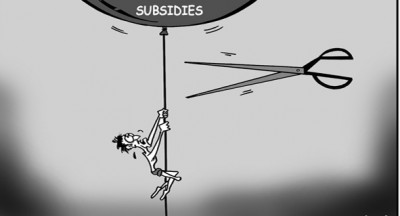
Costly & Pointless Wind Power Subsidies Slammed by Australia’s National Party

turbine fire 6

****

When STT cranked into gear in December 2012, hammering the wind industry was a fairly lonely occupation: hardly fashionable; a bit like wearing yellow to a funeral, really.

Back then, openly questioning the “wonders” of wind power was a guaranteed dinner party showstopper. Nervous hosts – choking on their organic pinot gris – would seek to segue to another less contentious topic – the joys of dancing cat videos, say; tempers might flare, among raised voices one of the more passionate would shout something about: “the science is settled man”.

The protagonist asserting that dreaded CO2 gas was an obvious planet killing “problem”; to which the only “solution” was carpeting the world in an endless sea of bat-chomping, bird slicing, blade-chucking, pyrotechnic,sonic-torture devices – not that the wound-up wind power advocate would have ever presented, let alone dealt with, minor issues like those, as part of his “we’ve gotta save the planet” manifesto.

But that was then, this is now.

Now, people with a modicum of intelligence – anything like an inquisitive nature; and gifted with a shred of logic – are able to unpick the fraud in several easy steps. Indeed, in discourse among those with an adult’s mental capacity it’s no longer a mortal sin these days to express the bleeding obvious: THESE THINGS DON’T WORK.

On the contrary, calling the great wind power fraud for what it is has become fashionable: for want of a better phrase it’s “the new black”.

For another look at the latest fashion trend, we’ll cross to a report on a motion to support the greatest economic and environmental fraud of all time – foolishly pitched to members of Australia’s National Party (the minority Party that forms the Federal Coalition government).

Nats Reject Renewables
The Land
Colin Bettles
17 September 2015

THE Federal National party’s weekend conference rejected a controversial motion calling for support of the renewable energy sector and the federal government to back related projects based in regional centres.

The motion was moved and spoken for strongly mostly by delegates from Western Australia who raised concerns about excessive costs and access to power generation in regional areas.

The WA delegation also expressed concerns the party must be progressive through a statement of support for renewable energy projects and seeking to capture future economic opportunities.

But a rear-guard action – spearheaded by former long-serving Queensland Senator Ron Boswell and current Queensland Hinkler MP Keith Pitt – saw the motion eventually defeated by a 43-34 vote.

Opponents of the motion, including Queensland National Party Womens’ president Theresa Craig, argued that renewable energy projects like wind farms were heavily subsidised by taxpayer funds which they opposed.

Ms Craig said, as a scientist and a regional person “I’d love to support this but I can’t because the facts do not add up”.

“Unfortunately the Green propaganda has not given us the facts,” she said.

“Today, 5 per cent of clean energy adds an extra 15pc to our utility bill; reference Queensland University of Technology.”

Ms Craig said research by the Heartland Institute had also said that every job created by the renewable energy sector meant two to three jobs were lost.

“Renewable energies are the way of the future but right at the moment it’s being subsidised,” she said.

“What we need to do is put the support into getting renewable energies that can stand on their-own two feet.

“We as farmers, don’t we have to stand on our own two feet?

“We have to do it by ourselves, so this needs to be done the same way for the renewable energy people.”

Young WA Nationals president Lachlan Hunter said he majored in agricultural science studies at UWA and believed the conference should “get over the semantics” and consider the motion’s intent.

Mr Hunter said the motion wasn’t saying coal should be “cut out” or remove the way energy is traditionally produced in Australia.

He said it was “simply saying we support the renewable energy sector and to have those projects based in regional centres”.

“Don’t get hung up on the words ‘renewable energy’ just because it’s related to the Greens,” he said.

“I think we can be proactive in this space and actually support it if the science does prove that it’s out there and it’s a sustainable industry.”

Newly elected WA Nationals president James Hayward also spoke strongly for the motion saying its critics had strayed “well beyond what it’s about”.

He said the reality was, “sustainable energy is something that we need to embrace in some form”.

“Windmills that chop up birds are perhaps not the answer,” he said.

“This motion does not say (renewable energy) is the answer; it says this space needs to be part of who we are and what we do.

“We cannot allow the Greens or Labor to take responsibility for looking after our space, our environment.

“We’ve got a generation of younger people growing up and those people, for whatever reason, are simply more connected to the idea of looking after the environment and we need to grasp and get hold of that.

“This motion doesn’t talk about offering financial incentives.

“It just says it’s on the radar for us and we know that technology is out there and part of the future and we need to embrace it.”

But Mr Boswell returned fire with an impassioned plea saying he was “vehemently” against the motion.

“Whichever way you cut and dice this motion the motion goes out that says you support renewable energy,” he said.

Mr Boswell said his advice to Mr Hayward, gained by serving a number of years in federal parliament, was “don’t ever try and be a Green”.

“Don’t ever try and be one (a Green) because you are neither the Nationals or a Green and you just lose everyone so let’s be distinct about what we stand for,” he said.

Mr Boswell said subsidies on renewable energy were impacting energy prices and adding to agricultural production or processing costs in areas like beef, grains and dairy.

“You are paying through the nose for this renewable energy,” he said.

“Rural Australia is probably paying more than anyone else for it.

“It will only work if it’s subsidised and who’s going to pay for it, you are.”

WA Mining and Pastoral Region MLC Dave Grills said those in favour of the motion were asking the Nationals Australia to support renewable energy and were not asking for billions and billions of dollars in taxpayer dollars.

“We’re asking for your support to do it because economically, it suits regional WA,” he said.

Another speaker, representing Wide Bay in Queensland said, “I’m totally over it with my tax dollars paying for subsidies for renewable energy windmills”.

“I resent my birds in this nation being chopped sliced and diced by these devices.”

Mr Pitt said there was a place for renewables for remote power generation but that decision should be made by those who distribute it.

He said under the current agreed, Renewable Energy Target ET of 33,000 gigawatt hours, as much capacity as has been produced in last 15 years, will need to be built in five years.

Mr Pitt said renewable energy certificates on an average of $47 would, over the next 15 years, cost electricity users $24 billion – but could go as high as $93 costing $43 billion.

“Every single job in renewables is subsidised to the tune of $200,000,” he said.

Queensland LNP speaker Rohan McPhee said the purpose of the motion had been misconstrued.

“We’re not calling for the federal government to go out and start paying for wind farms in regional towns,” he said.

“This is just encouraging innovation and investment in renewable energy.

“Whether or not you believe in climate change – and we can debate that for days – but the fact of the matter is the world consensus is it’s here and whether we like it or not we have to get with the program.

“We’re going to be left behind.

“Australia has such a great landscape for innovation in this area we’ve got so much space – we’ve got sun and wind and we’ve got so much potential to develop new technologies in the renewable energy sector.

“It’s a global market and the renewable energy market is growing every day for new technology.

“The fear I have is that if we don’t support this motion we don’t send a message to potential businesses that can grow and innovate new technology and we get left behind.”
The Land

An obvious battle for common sense there, but, thankfully they got there in the end. STT always cringes when arguments are peppered with nineties-inanities like “proactive” and “sustainable”. It’s a sign that the protagonist hasn’t really got anything to say, but is keen to be heard, just the same.

Ron Boswell

****

The ‘meat and potatoes’, was helpfully dished up by long-time STT Champion, Ron Boswell and relative new-comer, Keith Pitt.

Ron targeting the cost of the wind power debacle to real, productive industries; and Keith Pitt ripping into the insane cost of the single largest corporate welfare scheme ever devised.

Keith Pitt – an electrical engineer – gets it. His speech to Parliament back in June is clearly worth a re-run. Here it is.

Mr PITT (Hinkler) (18:34): I will not be supporting the Renewable Energy (Electricity) Amendment Bill 2015 that is currently before the Australian parliament. In my view, the renewable energy target—the RET, the deal the coalition has been forced into with Labor—will achieve only three things. It will increase the cost of electricity for those who can least afford it, Australian taxpayers will have spent billions of dollars subsidising private enterprise, and, come 2020, environmentalists will have little more to show for it than a warm and fuzzy feeling.

Let me explain. When I entered parliament in 2013 I was still a registered professional electrical engineer in the state of Queensland, and I promised to be a common-sense voice for the people of Hinkler and regional Australia. Over the past 18 months the issue raised most often with my office has been the spiralling cost of electricity—and for good reason. The median personal income in Hinkler is just $411 a week—just $411. A substantial number of pensioners call Hinkler home, and we have one of the highest unemployment rates in the country. Unfortunately, many of Hinkler’s major employers are making workforce decisions based on the cost of energy—local foundries, farmers and manufacturers all say their overheads are rising at an unsustainable rate. Any relief businesses and households might have felt with the repeal of Labor’s carbon tax quickly turned to dismay when Queensland electricity retailers substantially increased their tariffs. The end result was a net price increase of about five per cent. It is no coincidence that in 2013-14 the number of households in regional Queensland disconnected for debt or non-payment rose 87 per cent to 12,454. The Fraser Coast Chronicle last week reported that the local Meals on Wheels electricity bill jumped from $5,700 to $12,200 in just one year. The not-for-profit organisation says it has only two choices if it is to remain viable: to either increase the price of the meals or find $85,000 to buy solar panels.

What is the solution? I have heard politicians on both sides tell people to shop around for the best rate. That might be possible in the capital cities, but there is generally only one retailer in most regional communities. The lack of market competition will only worsen if the Queensland Labor government proceeds with its plan to merge state-owned corporations Ergon, Energex and Powerlink. The merger, combined with already high electricity prices, falling energy consumption and the renewable energy target, will result in substantial job losses in the energy sector. We heard a lot from the Electrical Trades Union during the January 2015 state election, but why aren’t they out there actively fighting for their members’ jobs right now?

In his second reading speech to this bill, the Minister for the Environment, Greg Hunt, said the renewable energy target introduced by the Rudd government resulted in:

… new subsidised capacity … being forced into an oversupplied electricity market …

I appreciate the government is trying to put the RET on a sustainable footing, but, in my view, this current legislation will still result in an increase in power prices, paid for by the people who can least afford it. Australians are using less electricity now than they were 10 years ago. The AEMO Electricity statement of opportunities report in August 2014 stated:

More than 7,500 MW would need to be removed from the market to affect supply-adequacy in 2014-15.

There is potentially between 7,650 MW and 8,950 MW of surplus capacity across the NEM in 2014-15.

Under any risk scenario, no additional capacity is required for at least 10 years. It also states that approximately 90 per cent of this excess is in New South Wales, Queensland and Victoria. Furthermore: As operational consumption grows, the level of surplus capacity decreases. However, even with 10 years of consumption growth, by 2023-24 between 1,100 MW and 3,100 MW of capacity could still be withdrawn from each of New South Wales, Queensland, and Victoria without breaching the reliability standard.

The problem is that forecast consumption is expected to fall by 1.1 per cent per year at a minimum.

Current renewable technologies like wind and solar do not reliably generate power on a constant basis, and so the baseload coal or gas fired power stations still have to maintain capacity for peak use times when the sun is not shining and the wind is not blowing. Most of that peak occurs in the evening, after dark and, in many locations, when it is calm. Without some type of affordable storage system, there is no option but to maintain baseload power, and that will continue to force up the price of electricity. Put simply, if your running costs remain the same and you are selling less product, the next logical step is to increase the price of the product to be able to maintain your operations.

However, the Australian Energy Regulator, the AER, has advised of its plans to restrict Ergon Energy’s proposed revenue by 27 per cent over the next five years, well below the $8.24 billion that Ergon requested. The measure is expected to save Ergon customers between $16 and $44 in network charges on their bills each year. The savings would have been substantially higher if not for the exorbitant feed-in tariff offered to solar users by the former Queensland Labor government. In very simple terms, the AER makes its decisions based on how much the businesses need to spend delivering electricity prudently through the distribution network, putting an end to the so-called ‘gold-plating’ that occurred in the Beattie years. The AER says any costs above efficient levels are to be funded by the network owners and not the customers. On the one hand, federally we are trying to keep power prices down for consumers by reducing the operating expenses and revenue of electricity companies; but, on the other hand, our current environmental policies are inflating the price of electricity because, without baseload power, you have to start turning the lights off.

The public expects coal fired energy companies to maintain the same availability and readiness, but the renewable energy target encourages people to use more renewables in an already oversupplied market. To give you a simple example, I spoke with a pensioner in my electorate last week. He gets up in the middle of the night, each and every night, to turn off his refrigerator so he does not use as much electricity. He relies on his rooftop solar to power the fridge during the day, and he would rather risk food poisoning than run up an electricity bill that he cannot afford to pay.

I would support the move towards renewable energy if wind, solar and battery technology actually worked—meaning if it were capable of reliably supplying electricity during peak periods to replace traditional baseload power generators. Plus, the cost at this point in time is astronomical.

Under this bill, $15 billion will be spent over the next five years on infrastructure that will run concurrently with coal fired generators, supplying into a market that is excessively supplied. Broad estimates by the department indicate that renewable energy certificates from 2015 to 2030, at an average of $47 per certificate, will cost $24 billion. If the RECs are allowed to reach penalty at $93, the cost to users will be $43 billion. Can you imagine the response if we went to the Australian people and said they needed to contribute an additional $43 billion through their electricity pricing as a surcharge? To meet the target, Australia will need to build as many renewable generators in five years as we have built over the past 15—all of which will need to be replaced in the short to medium term, when the technology outdates and the equipment deteriorates. Putting aside the cost of building the infrastructure, renewable energy is extremely expensive to generate. Coal fired power costs about $36 per megawatt hour to produce, compared to $190 per megawatt hour for solar and up to $120 for wind. If renewable energy were a sound investment, governments would not need to subsidise private businesses with renewable energy certificates.

I find it absurd that we on the conservative side of politics have abandoned the stated belief in the free market to reach a deal with Labor. Labor’s recalcitrance will only hurt the very people they always purport to represent, and that is the poor. The Coalition’s Direct Action Plan costs around $14.50 per tonne of carbon abated at its first auction. That is compared to $25 under Labor’s carbon tax and a whopping $95 to $175 per tonne of carbon abated through the renewable energy target for the small systems scheme. Rather than subsidising jobs in private renewable energy businesses to the tune of almost $200,000 each over the period 2015 to 2030, we should be spending taxpayers’ funds on research to advance renewable technologies that have real promise—growing our fuel, finding cheap and effective storage sources and ensuring ongoing jobs in Australian manufacturing through competitive energy pricing. The enormous buckets of money thrown at renewable research by Labor was haphazard and predominantly unsuccessful in large-scale trials.

I have personally worked in hydro power stations that have been operational for more than 50 years and they will continue to work into the future. These plants provide a multiplying effect into the local economy, providing water storage, generating capacity and long-term infrastructure with real benefits. They are a true renewable, with their energy source replenished every time it rains. The greatest of these installations is, of course, the Snowy hydro scheme. Hydros can be used as peakers. They are flexible and can be run up quickly, and at night, when there is no wind or sun, they still work.

If you really want to do something about emissions, we need to be having a proper debate about zero-emission next-generation nuclear technology. If you want renewables, we should consider growing the fuel source. Spend money on research for natural fuel sources such as biomass, where every year 100 per cent of the fuel supply can be regrown, providing long-term jobs. There is a proposal floating around for loans for irrigators to install solar pumps. Unfortunately, they will only be able to irrigate when the sun is shining—and it is back to the bad old days of watering in the middle of the day, when evaporation is at its highest. All of those years of water-use efficiency and capital installation down the drain. Typically, irrigation only occurs during times of low rainfall and drought, when water is scarce, but it is either be killed by electricity bills or invest in capital.

The public perception is that we have not done enough with respect to renewable energy. In fact, there was a large amount of capacity before the target was even set. The price of installing rooftop PV solar has fallen substantially. In terms of installed capacity, that is, gigawatts, rather than generation, that is, gigawatt hours, coal is currently only providing around 50 per cent of the energy mix. To even come close to meeting the target set in this bill, around 1,500 to 2,000 wind turbines would need to be built. Wind turbines are intrusive, ineffectual and always best placed in your neighbour’s property, and out of view of your own. The remaining sites capable of having any chance of even 30 per cent utilisation for wind turbines are very limited, because you need a location where the wind blows consistently, of which there are not that many. And it should be close to where the energy is used.

Do I honestly think they can install the capacity needed to meet the reduced target? My answer is no. We will be back having this debate again in two or three years’ time, when it becomes apparent that even huge subsidies will not be enough to get sufficient facilities built. If you want to subsidise businesses, subsidise exporters that create long-term jobs. Do not subsidise businesses that devalue and destroy assets already predominantly owned by the taxpayer.

Every business owner in my electorate would like to have the upper hand against their competitors. They would love to receive a guaranteed price for the products they produce, regardless of need, subsidised by someone else. If—and I say if—Australia meets its 2020 renewable energy target, it will not be because we have created an economically self-sustaining, reliable source of renewable energy. People will be using less coal-fired electricity for one reason only: they simply cannot afford it.

Hansard, 2 June 2015

keith pitt

Climate Change Money Should be Spent on Adaptation, not Eradication….

Help vulnerable adapt to climate change

A tragedy is unfolding because of the overconfidence of groups like Dr. Claire Herrick’s Citizens’ Climate Lobby (‘Harmful to your health,’ Daily Sun, Sept. 17) that we know the future of climate change and that we can control it merely by regulating our carbon dioxide emissions. Across the world people suffer due to climate change. Yet aid agencies are unable to secure sufficient funds to help them because, of the $1 billion spent globally every day on climate finance, only 6 percent of it is goes to helping vulnerable people adapt to climate change today. The remaining 94 percent is poured into mitigation, trying to stop phenomena that might someday happen.

This is immoral, valuing the lives of people yet to be born more than those in need today. Reports such as those of the Nongovernmental International Panel on Climate Change illustrate that there is no known consensus among scientists about what caused the past century’s modest warming or even whether warming or cooling lie ahead. Experts do agree, however, that climate always changes and people need help now. Let’s help them to the degree we can afford and stop pretending we have a crystal ball to the future.

TOM HARRIS

Executive Director

International Climate Science Coalition

Global Warming Alarmists Reject Science, by Trying to Shut Down Dissenters!

Climate Science Turned Monster

Guest Opinion: Dr. Tim Ball

The public just doesn't seem to be afraid of the Global Warming scare tactics

Promoters of ‘official’ climate, which is defined as the works of the UN IPCC, are desperate. Twenty of them, including Intergovernmental Panel on Climate Change (IPCC) members like Kevin Trenberth, asked the Obama administration to file Racketeer Influenced and Corrupt Organizations Act (RICO) charges against climate deniers. All but two of the twenty are at Universities, and the two are career bureaucrats associated with the National Center for Atmospheric Research (NCAR). They all live off the public purse, but somehow in the weird world of climate science that is untainted money. The RICO charge is ad hominem, not about the science. If Virtually all the research funding for global warming comes from government and goes to those supporting the unproven hypothesis. There is no comparison between the amounts of government money going to the ‘official’ side of the science and that going to skeptics.

Their RICO charge is so ridiculous it hardly warrants a response, but it does require scientific perspective. It is important to note that none of the authors of the academic peer reviewed papers and books, they claim provide the evidence for their charge, signed the letter. It is likely that most, if not all of them or their institutes, receive funding from a government beyond their academic or government salaries.

The RICO charge is a particularly nasty form of ad hominem attack. By applying it in the global warming case, it tries to make criminals out of people doing their job properly. The real criminal part of their enterprise is that skeptics are doing what scientists are supposed to do, that is disproving the AGW hypothesis. They accuse these properly named scientific skeptics of performing the scientific method, either through ignorance of the method or to silence them. The twenty, like the IPCC and its supporters, directly or indirectly thwart the scientific method by accepting the hypothesis as proven. They then deflect or ignore overwhelming evidence that the hypothesis is wrong including failed predictions (projections). They consistently refuse to consider the null hypothesis.

The attack is not surprising because the IPCC created a monster and were driven to keep it alive. Once you create the monster it becomes uncontrollable and even if it becomes a threat to society, the creator will resist its destruction; worse, you have to keep feeding the monster and will take extreme measures if necessary. This inevitability is the moral message of Mary Shelley’s Frankenstein.

Establishment of the IPCC through the World Meteorological Organization (WMO) put national weather office bureaucrats in control of national climate policy and most of the research funding. They appointed the members of the IPCC and used their offices to promote and perpetuate the unproven hypothesis of anthropogenic global warming (AGW). Extreme measures taken to keep the monster alive included adjusting the record to eliminate previous warm periods and lowering the historic instrumental record to increase the slope of the curve to create or accentuate warming. More recently it was the adjustments designed to offset the pause they directly contradicted the hypothesis. They were on a treadmill for two main reasons. By accepting the IPCC AGW hypothesis as proved, required ignoring or diverting from evidence. It was the destructive effect T.H. Huxley identified when he wrote,

“The great tragedy of science – the slaying of a beautiful hypothesis by an ugly fact.”

By convincing politicians to establish policy based on their information, it became difficult to admit they were wrong.

The natural tendency of any bureaucracy is to perpetuate its existence. This includes expanding the scope and scale of the work, promoting speculative dangers and threats to society, emphasizing the urgency to resolve the problem, and involving as many other public and private agencies as possible. This list summarizes the claims of those making the RICO charge. The structure and involvement of people and agencies has become so large that reduction or elimination is virtually impossible. It parallels the idea of “too big to fail” but becomes, “too important to fail”.

Another challenge is that the numbers of people involved, directly or indirectly, becomes large enough to influence votes and keep the monster alive. For example, how many tax accountants, tax lawyers, IRS employees or anyone else in the taxation industry would vote for a flat tax? Other than those with a vested interest there are many others who Niccolo Machiavelli identified when he said,

One who deceives will always find those who allow themselves to be deceived.

It is also why Upton Sinclair said,

“It is difficult to get a man to understand something when his salary depends upon his not understanding it!”

There is also the problem of admitting error that many find difficult. Tolstoi summarized their plight.

“I know that most men, including those at ease with problems of the greatest complexity, can seldom accept even the simplest and most obvious truth if it be such as would oblige them to admit the falsity of conclusions which they delighted in explaining to colleagues, which they have proudly taught to others, and which they have woven, thread by thread, into the fabric of their lives.”

In The Deliberate Corruption of Climate Science, I identified some of the groups and agencies across the world involved in the promotion and opportunities that the global warming deception offered. They include

· Members of the cabal who chose climate and environment as vehicles for their political agenda.

· Academics attracted by the significant amounts of funding offered.

· Academics with political sympathies for the cabal’s objectives.

· Bureaucrats employed by the national weather offices that comprise the UN World Meteorological Organization (WMO) chosen as the vehicle for controlling the IPCC.

· Bureaucrats with political sympathies with the cabal objectives.

· Bureaucrats in other government agencies, such as Agriculture or Transport that are secondarily affected by weather and climate issues.

· Departments of Education who directed unbalanced teaching of only the ‘official’ science as Justice Burton UK court ruled.

· Politicians who saw an opportunity to “be green.”

· Politicians who saw an opportunity for more taxation.

· Businesses that saw an opportunity for a profitable business guaranteed by government policy and funding.

· Individuals who saw a career or business opportunity.

· Environmental groups who supported the political objectives of blaming humans for the world’s ills.

· Non-Government Organizations (NGOs). Maurice Strong reconstituted the term coined by the UN in 1945 for the Rio 1992 conference. It purportedly gave voice to organizations not part of a government or conventional for-profit businesses. At Conference of the Parties (COP) climate meetings, they constitute at least half of the attendees.

· Most of the media who actively supported the AGW hypothesis.

· National science academies persuaded by the British Royal Society to support the IPCC position.

There is one thing likely about most of these people, 97 percent of them know little or nothing about climate change.

The Climate Conference of the Parties (COP21) scheduled for Paris is clearly facing failure, which is pushing IPCC defenders, such as the twenty making the RICO request, to extremes. Their comparison of scientists trying to perform proper science to organized crime leaders is beyond outrageous. It is especially egregious because the people making the charges are guilty of scientific malfeasance. While not necessarily criminal, it is worse in the damage it has and will do to everyone. The monster they created using incorrect science became the justification for imposing destructive, expensive, and completely unnecessary policies on the world. These policies will do far more damage to the poor and the environment they claim to protect. As it was anonymously said,

If an honest man is wrong, after demonstrating that he is wrong, he either stops being wrong or he stops being honest.

Renewable Energy Claims are Unsustainable

Renewables also hurt the poor through higher prices

Renewable energy claims are unsustainable

  • dung

groWhereas “renewable energy” conjures up visions of wind, solar, and tidal power, “clean” energy sources that will last forever to power the world into a “green,” sustainable future, it won’t happen without an Orwellian restructuring of the world’s social and economic fabric as envisioned by the UN’s Commission on Environment and Development more commonly known as the Bruntland Commission.

Chaired in the late 1980s by Gro Harlem Brundtland, a former prime minister of Norway, the commission set about to advance what appeared to be a noble and desirable cause.

Its foundational report, titled Our Common Future, stated: “Humanity has the ability to make development sustainable in order to ensure that it meets the needs of the present without compromising the needs of future generations.” So far, it seems pretty hard to argue with a goal like that.

Unfortunately, while it would be great if wind and solar power could accomplish this, their potential capacities and reliabilities just aren’t there.

As for tidal power, applications for utility scale power generation are both unproven and doubtful. Ditto for geothermal, which is another geographically and capacity-limited source.

In other words, none of these “renewables” offer anything remotely close to a sustainability panacea . . . either now or likely ever. Nuclear power, breeder reactors in particular, come much nearer to making a real difference, yet never seem to get the same credit.

As Roger Andrews observes in his August 26 Energy Matters: Environment and Policy blog, the Brundtland Commission went on to link sustainable development objectives to eradicating world poverty . . . again something that sounds really good. Its report stated: “Poverty is not only an evil in itself, but sustainable development requires meeting basic needs of all and extending to all the opportunity to fulfill their aspirations for a better life. A world in which poverty is endemic will always be prone to ecological and other catastrophes.”

Sure, let’s all agree that poverty is a truly tragic condition.

The big rub here is that eradicating poverty won’t be accomplished by depriving desperate world populations of access to affordable and buildingthegridreliable energy — those who now depend upon animal dung fuel for heating, cooking, and water purification — people who lack electricity essential for refrigeration to keep perishable food safe or provide periodic lighting.

And that’s exactly what is happening through international lending programs that emphasize costly and anemic “renewables” while denying vital funds needed to develop abundant local fossil fuel resources.

So the Bruntland Commission offered another condition. In order to raise underdeveloped countries out of poverty, “Sustainable global development requires that those who are more affluent adopt lifestyles within the planet’s ecological means — in their use of energy, for example.” In other words, the solution is for rich countries to send money and become subordinate to a U.N.-run world government which will ensure equal distribution of financial and natural resources.

Needless to say, that world government would also decide what common lifestyle levels and ecological means are acceptable.
Such decisions must include social engineering to control optimum population size. As Our Common Future admonishes: “Sustainable development can only be pursued if population size and growth are in harmony with the changing productive potential of the ecosystem.”

genocideIf any of this sounds familiar, you might understand that the Brightland Commission’s sustainable development mantra provided the foundation for the UN’s Agenda 21 program, which calls for reorienting lifestyles away from consumption, encouraging citizens to pursue free time over wealth, resource-sharing through co-ownership, and global wealth redistribution — beginning with ours.

A 1993 UN report, titled Agenda 21: The Earth Summit Strategy to Save Our Planet, proposes “a profound reorientation of all human society, unlike anything the world has ever experienced — a major shift in the priorities of both governments and individuals and an unprecedented redeployment of human and financial resources.”

The report emphasizes that “this shift will demand a concern for the environmental consequences of every human action be integrated into individual and collective decision-making at every level.”

Last year President Obama’s Council on Sustainable Development was organized to develop recommendations for incorporating sustainability into the U.S. federal government. Predictably, grant programs issued through HUD, the EPA, and nearly every other alphabet agency will spread their Kool-Aid policies throughout the nation.

As Tom DeWeese forewarns in a “Reality News Media” blog, while such grants will be represented as voluntary, expect ongoing restrictions on energy use, development, building material, plumbing and electric codes, land use and water controls, public transportation, and light rail subsidies, and pressures for communities to impose politically correct and economically disastrous and socially unsustainable Agenda 21 development plans.

Welcome to life in the ant colony they have in mind.

A version of this article also appears at: http://www.newsmax.com/LarryBell/Climate-Change-United-Nations-Barack-Obama-Global-Warming/2015/09/08/id/678545/#ixzz3lHNUoowU

– See more at: http://www.cfact.org/2015/09/09/renewable-energy-claims-are-unsustainable/?utm_source=CFACT+Updates&utm_campaign=60afca75a3-Lights_out_9_16_2015&utm_medium=email&utm_term=0_a28eaedb56-60afca75a3-270346293#sthash.WELUHMdk.dpuf

Wind Weasels Whine, When Wind Welfare Threatened!

US Wind Industry Wilts as Wind Welfare Gets Slashed

subsidies

The wind industry exists – and ONLY exists – for one single purpose: to wallow in a massive subsidy stream that – in order to keep this monstrous Ponzi scheme alive – will need to outlast religion.

In Australia, the – already overflowing – wind power subsidy trough is designed to be refilled with $3 billion annually from 2019; and to continue being filled at that colossal rate, until 2031.

From hereon, the cost of the greatest subsidy rort in the history of the Commonwealth will exceed $45 billion – every last cent of which will be recovered from Australian power consumers through retail power bills.

But, with commercial retailers boycotting wind power – flatly refusing to sign up to long-term power purchase agreements – wind power outfits here are screaming ‘blue murder’. It’s still all about dreadful ‘uncertainty’ – or so we’re told:

Wind Industry Still Wailing About ‘Uncertainty’ as Australian Retailers Continue to Reject Wind Power ‘Deals’

Faced with a recommendation, made a month or so back, from the Senate Inquiry into the great wind power fraud, that the mandated subsidy – in the form of renewable energy certificates (RECs) – should be limited to a period of 5 years – rather than running from 2001 to 2031 – the wind industry, its parasites and spruikers started  howling like Banshees about their imminent “doom”.

The response has left STT just a little perplexed.

You see, the impression given by the wind industry and its worshippers is that wind power outfits are driven by a kind of ‘divine altruism’, under which their only objective is to power the world for free, while saving the planet from the ‘dreaded’ CO2 gas; and otherwise spreading health, wealth and happiness all over the planet.

But, truth be told, ‘altruism’ is running a poor second to the ‘main wind industry game’ – pocketing massive and endless subsidies:

The Wind Industry: Always and Everywhere the Result of Massive & Endless Subsidies (Part 1)

The Wind Industry: Always and Everywhere the Result of Massive & Endless Subsidies (Part 2)

It shouldn’t be so. You see, on the wind-worshippers’ ‘case’, wind power is the ‘perfect product’: it’s already “free” and, it’s getting cheaper by the day (see this piece of fantasy from ruin-economy).

Back in the real world, however, the ‘perfect product’ is having more than just a little trouble selling itself on its own merits.

Here’s a pair of pieces from the US, that simply confirm the bleeding obvious: THESE THINGS DON’T WORK – on any level.

Wind power growth faces sharp decline without federal aid, report says
Jordan Blum
Fuel Fix
9 September 2015

The growth of wind power projects could come screeching to a halt if Congress fails to extend the renewable energy Production Tax Credit by the end of the year, according to a new American Wind Energy Association report being released later this week.

While critics oppose the continuation of what they call “wind welfare,” Texas leads the nation in wind power, which makes up about 14 percent of the Texas grid’s generation capacity. Failing to extend the renewable energy tax credit could lead to a dramatic 70 percent to 90 percent drop off in new wind power installation projects, said Rob Gramlich, AWEA senior vice president.

“Wind is the unfortunate poster child for unstable government policy,” Gramlich said, adding that the tax credit’s past and current stops and starts “lead to disruption and layoffs.”

For instance, Dokka Fasteners recently said it is closing its Michigan wind power manufacturing plant largely because of uncertainty on U.S. energy policy and the tax credit, as well as congressional gridlock.

The argument for the tax credit is that wind power is becoming increasingly competitive with traditional coal and natural gas-fired power plants, but that cheap natural gas from U.S. shale and other factors are preventing an equal playing field for now. So the AWAE contends the competitive tax credit is needed until wind is truly equally competitive in the next decade as wind turbine costs keep coming down.

“America has been lulled into complacency during downturns in energy prices before, believing cheap energy would last forever, only to be hit harder each successive time when energy prices inevitably increased,” the report states. “Smart energy policy can help us avoid falling into this trap as we have before by ensuring that America maintains a diverse portfolio of energy options.”

Businesses and investors need “long-term clarity” on credits and public policy in order to make decisions on major wind projects that take years to complete, the report added. The AWEA said wind energy supports 73,000 direct jobs nationwide and enough energy to power 18 million homes. The association also argues the growth of wind power saves lives because of the decreased reliance on fossil fuel  power and its carbon emissions.

The Production Tax Credit is competitive and gives a 2.3 cents credit for every kilowatt-hour of electricity sold for the first 10 years of a project’s life. The tax break renewal was estimated to cost $6.4 billion over 10 years. Gramlich added that there are some federal incentives for every type of power generation and that wind is not being singled out. The tax credit still supports wind projects that were already in progress before the end of 2014, but the AWEA report stated that the policy uncertainty will slow the rate of cost reductions in wind power projects.

Still, opponents like the American Energy Alliance argue the AWEA and other groups are guilty of doublespeak for touting the vibrancy of wind power while begging for more government subsidies. The wind industry keeps pushing back the timeline on when it will become truly cost competitive, the alliance adds, so it is time for wind power to stand on its own two feet. Critics also contend wind power is unreliable because wind is intermittent.

Houston-based Calpine, which owns natural gas-fired power plants, opposes the tax credit under the argument that it limits a competitive market.

“Government should not pick winners and losers by subsidizing certain market participants,” Calpine spokesman Brett Kerr said in an email response. “The (tax credit) should not be renewed and market participants should all compete on the same level playing field. Additionally, if the policy goal is carbon reduction, the best approach is to put a price on it and let market sort out most efficient reductions, not having subsidies and set-asides.”

The tax credit is a partisan hot potato that is largely supported by Democrats but has limited GOP backing. The Senate Finance Committee recently approved a bundle of two-year, business tax credit extensions, including the Production Tax Credit, but the full Senate has not yet taken up the legislation. After an August recess, Congress is primarily focusing now on the Iran nuclear deal and government funding legislation.

Gramlich said Congress typically addresses tax credit extensions nearer to the end of the year.

In Texas, the state government requires utility companies to buy a certain amount of their electricity from renewable sources such as wind and solar. An effort to dismantle the state program, called the Renewable Portfolio Standard, failed in the Legislature last spring.
Fuel fix

brat

****

Domestic market for distributed wind turbines faces several challenges
Owen Comstock
Today in Energy
27 August 2015

1

***

The domestic market for distributed wind turbines has weakened since the record capacity additions in 2012. Last year’s installations of mid-size and small wind turbines were the lowest in a decade. Relatively low electricity prices, competition from other distributed energy sources, and relatively high permitting and other nonmaterial costs have presented challenges to the distributed wind market in the United States.

Most distributed wind turbines installed in 2014 were connected directly to distribution lines to serve local loads. Distributed wind turbines can also be installed either off-grid or grid-connected at local sites to offset all or a portion of a site’s electricity consumption. Compared with electric utility wind facilities, distributed wind turbine installations are often smaller units, below 1 megawatt (MW), and thus may not appear on EIA’s survey of utility-scale electric generators, which has a 1-MW threshold at the project level. Although some large-scale turbines (1 MW or greater) are used in distributed generation applications, large-scale turbines are more often used at wind farms for wholesale power generation, which is sent through transmission lines to more distant customers.

Based on information in the U.S. Department of Energy’s Distributed Wind Market Report, most of the 2014 distributed wind capacity was installed on institutional sites, such as schools, universities, and electric cooperatives. Government installations on city, municipal, or military facilities made up more than one quarter of 2014 installed capacity. Other sectors (industrial, commercial, agricultural, and residential) were relatively small in terms of capacity, but larger in terms of number of installations, as the average turbine size on these sites is relatively small compared with institutional and government sites.

2

***

Some customers who install these turbines are eligible for federal tax credits, in particular the investment tax credit (ITC), which provides a 30% cost incentive for turbines with capacities of 100 kilowatts or less. The investment tax credit was one of the largest factors in both the increase in installations from 2010 to 2012 and the decline after 2012. In 2009, as part of the American Recovery and Reinvestment Act, the U.S. Treasury allowed projects to receive cash payments instead of tax credits. To qualify, projects had to be under construction or in service by the end of 2011 and must have applied for a grant by October 1, 2012.

Even though these tax credits are still available, the expiration of the cash payment option drastically reduced the installation of small and mid-size wind turbines. Further affecting the outlook for distributed wind is theU.S. Internal Revenue Service requirement, added this year, that small wind turbines meet performance and safety standards in order to qualify for the ITC.

Other factors cited in the recent decline in distributed wind installations are the relatively low price of grid electricity and lower cost of solar photovoltaic systems, which also receive the 30% ITC. Nonhardware costs associated with distributed wind, such as permitting, financing, installation, and supply chain costs, have not fallen as much as they have for solar photovoltaics. U.S.-based manufacturers and supply-chain vendors in the distributed wind market have been vulnerable to market downturns, preventing the market from growing at a faster rate. For these reasons, U.S.-based manufacturers may look to international opportunities, particularly in Japan and South Korea, to find more favorable markets.
Today in Energy

Money Wasted

Government-Induced Climaphobia….There’s a Reason for it, but it’s NOT the Climate!

CLIMATE CHANGE DENIERS ARE AS BAD AS HITLER’. YALE HISTORY PROFESSOR GOES FULL GODWIN

If you don’t believe in climate change you’re as bad as Hitler.

There. I’ve just precised a long article which appeared in the New York Times over the weekend with the title The Next Genocide.

Rather worryingly it was the work not of some fruitcake environmental activist but of someone who really ought to know better – a professor of history, at Yale no less, called Timothy Snyder.

It starts dramatically with an Einsatzgruppe commander lifting a Jewish child in the air and saying: “You must die so that we can live.”

This is a classic move from the liberal-left playbook. Sock ‘em with an emotive image which lays out the terms of your argument, viz: every time you say you don’t believe in climate change another baby dies. And, oh, by the way, did I also mention it makes you a Nazi?

Well, I suppose Professor Snyder has got to find some way of selling his books. Really, though, if he’d tried to write a bestseller called Little Red Cook: How To Diet The Mao Great Famine Way or Back To The Land: Rediscover Your Inner Peasant With Pol Pot orDying for Success: 10 No Nonsense Boardroom Tips from Joseph Stalin he could scarcely have misrepresented history to more dubious ends.

Yes, the Nazis were very green. Snyder got that bit right. They passed the first national environmental laws: the Reich Nature Protection Law of 1935. They were big on organic food (Himmler wanted his SS to eat nothing but). They were into animal rights. (In 1933 Goering said that anyone found guilty of animal cruelty or experimentation should be sent to concentration camps. No really). And of course Hitler himself was mostly vegetarian and fiercely anti-smoking.

But where Snyder goes completely wrong is with paragraphs like this:

Hitler spread ecological panic by claiming that only land would bring Germany security and by denying the science that promised alternatives to war. By polluting the atmosphere with greenhouse gases, the United States has done more than any other nation to bring about the next ecological panic, yet it is the only country where climate science is still resisted by certain political and business elites. These deniers tend to present the empirical findings of scientists as a conspiracy and question the validity of science — an intellectual stance that is uncomfortably close to Hitler’s.

His argument is so weird, incoherent and far-off here that you half expect him to go on to explain how it was the Jews who were responsible for the Holocaust and how Churchill provoked World War II.

Certainly, the way he chooses to put  “deniers” in the same category as Hitler could scarcely be further off-beam.

As I put it in Watermelons:

There’s only one side of this debate which believes its cause is so just and urgent that it relieves them of the need to observe any standards of decency. There’s only one side which thinks it’s OK to: rig public enquiries, hound blameless people out of their jobs, breach Freedom of Information laws, abuse the scientific method, lie, threaten, bribe, cheat, adopt nakedly political positions in taxpayer-funded academic and advisory posts that ought to be strictly neutral, trample on property rights, destroy rainforests, drive up food prices (causing unrest in the Middle East and starvation in the Third World), raise taxes, remove personal freedoms, artificially raise energy prices, featherbed rent-seekers, blight landscapes, deceive voters, twist evidence, force everyone to use expensive, dim light bulbs, frighten schoolchildren, bully adults, increase unemployment, destroy democratic accountability, take control of global governance and impose a New World Order.

In other words Professor Snyder, it’s your friends the greens who are the true heirs to Nazism. They’re the ones fomenting the crisis of hysteria which has led to so much bad policy, environmental destruction and human misery.

And the good guys – the heirs to the people who stood up to the Nazis – are all those deniers you so casually malign.

They’re the ones who’ve checked their facts, rejected Malthusianism and pessimism, who recognise that the best hope for the planet is by harnessing human ingenuity and energy, not by trying to constrain and curtail it.

But obviously, you’d need to be a serious historian to be aware of these subtleties.

Europeans Regret….Wind Energy is a Bad Deal, No Matter Where You Go!

Europeans Lament their Wind Power Fiasco

German wind farm

The colossal, hugely expensive windfarms that are spread across huge areas of Europe’s land and sea, which are projected to drive up household energy bills by more than 50 per cent in coming years, have achieved … almost nothing in terms of reducing EU carbon emissions.

We here on the Reg energy desk only noticed this particularly this week because of a chirpy press release that flitted past us just the other day, claiming that “wind energy provides 8 per cent of Europe’s electricity.”

Hey, we thought, that sounds almost like it’s getting somewhere! So we looked into it. The eight per cent figure comes from the latest Wind Status Report (pdf) from the EU Joint Research Centre, and sure enough, it’s claimed therein that all those massive wind farms produced no less than 238 terawatt-hours of the 2,942 TWh of ‘leccy used in the EU nations last year.

That’s eight per cent, right enough – and that’d be a noticeable bite out of EU carbon emissions, maybe even one worth tying an energy-prices ball and chain round the ankles of the European economies.

Except it isn’t, of course. Like most developed economies, the EU nations use the great bulk of their energy in non-electric forms: we burn fuels to run transport, to provide heating and cooking and hot water, to power most of our industry. And this accounts for most of our energy use and carbon emissions.

By the most recent figures available, in fact, the EU is using around 1,666 million-tonnes-of-oil-equivalent of energy from all sources every year:that’s 20,710 TWh. Wind electricity makes up just over one measly percentage point of that. Solar? About half that again, for a total renewable-‘leccy contribution of around 1.5 per cent and a roughly corresponding CO2 reduction.

The large majority of the “renewable energy” figure claimed by the EU is produced by optimistic accounting on biomass and renewable-waste, much of which is dubiously renewable at best. Even the proper renewable electricity figures are not to be relied on, particularly in southern Italy where the Mafia is well known to be heavily involved in the industry.

Actual renewables, despite their horrific expense, are not even scratching the surface of real-world modern civilisation’s energy requirements.

Comment

It really is getting clearer and clearer. Bill Gates is right: top Google engineers are right: global-warming high priest James Hansen is right: theUN IPCC is wrong. The renewable energy technologies of today simply cannot provide the power needed to keep the lights on, not at any cost.

Anybody who thinks that carbon emissions are a big threat to humanity – or alternatively, anybody who thinks that becoming ever more dependent on Russian gas and Middle Eastern oil is a bad idea, for instance – needs to get their head around this and move on. The current, cripplingly expensive schemes which crank up the price of energy and channel the resulting cash to windfarms and solar panels need to be scrapped – they will never achieve anything useful.

Perhaps the money saved could be spent on R&D instead, to find some new source of low-carbon energy. But in fact, such a source already exists; the problem is really one of public understanding, rather than a lack of low-carbon energy in the world.
The Register

turbine collapse 9

Tom Harris, Exec. Director of Int. Climate Science Coalition, Talks to John Counsell, of CFRA, in Ottawa.

Tom Harris speaks on Radio, to John Counsell, of CFRA Radio Stn., in Ottawa

I believe this is one of the all time biggest frauds perpetrated on people world-wide. Wealth transference, from rate payers, to governments and rich investors. We are not improving our environment, in any way. There is no net benefit to wind or solar, over traditional energy sources, burned cleanly, especially hydro and nuclear, which are rejected in favour of this “novelty energy”! The corruption inherent in this incestuous relationship between governments and the renewables industry, has to be investigated. It is a scam! We are being robbed blind. Energy poverty is a reality for many people.  Shellie Correia

Eric Jelinski – A Canadian Energy Engineer, Tells the Truth About Wind Turbines….

Top Canadian Energy Engineer – Eric Jelinski – Slams the Great Wind Power Fraud

engineering-image-4

Provided they haven’t got their trotters in the wind industry subsidy trough, engineers are quicker than most, when it comes to rumbling the great wind power fraud.

Practically minded, and with heads for real numbers, engineers are able to pick apart the complete pointlessness of trying to rely on an energy source that will NEVER be available on demand (can’t be stored) – is entirely dependent upon the weather – and is, therefore, not a generation “system” at all: “chaos” and “system” are words that come from completely different paddocks; and which mean completely different things (see our post here).

And engineers, who build “systems”, don’t like “chaos”.

Google’s top engineers – Stanford PhDs, Ross Koningstein and David Fork – came out and recently tipped a bucket on the nonsense of attempting to run 21st Century economies using a ‘technology’ that was dumped way back in the 19th Century (see our post here).

Now, one of Canada’s leading energy engineers, Eric Jelinski has come out swinging too.

An Engineer Speaks
Windfarm Action
27 January 2015

The following was written by Eric Jelinski, P. Eng., a Canadian engineer who specializes in energy production. Gas plants. Nuclear plants. Wind & solar energy. He explains to his township (Clearview Township, Ontario) why wind energy is folly.

Jelinski

I am writing to express my objections to the installation of Industrial Wind Turbines in Clearview Township, Ontario, Canada.

My wife and I moved here to retire on 50 acres, building a house, market garden, as well as taking many other initiatives to become part of the vital social fabric.

It is bad enough that under Ontario Premier McGuinty, the social fabric in big cities like Toronto is in need of repair, as it happens, in part because those “50,000 jobs” in renewable energy have not materialized, and there is little productive activity for many of the youth in the cities. Guns and drugs are very much part of the social fabric in some neighbourhoods.

What gives McGuinty, with his Toronto constituent Members of the Provincial Parliament (MPP’s), the moral right to tell us in Clearview that we must accept wind turbines “or else”?

One way to stop the wasted energy and environmental impact of urban sprawl is for big city MPP’s to clean up their own yard and make cities safer and more habitable. While they listen to those who object to new gas plants, and cook up a new “plan of the month” for public transport, why do they ignore the issues with wind turbines?

My background is nuclear and chemical engineering, with over 30 years combined working at each of the nuclear plants in Ontario. I teach nuclear engineering at University of Toronto and Georgian College (Power Engineering) in Owen Sound for the purpose of training the next generation of staff who will design plants and work them safely.

I know nuclear reactors and how e=mc2 gets us the energy. I know chemical reactors, e.g. to make gasoline from crude oil, and refining metals. I know solar and wind energy going back to the 1970’s, as energy and exergy are my major fields of study.

The application of Ontario’s “Green Energy Act” is in violation of principles in engineering, where we teach engineers to anticipate unintended consequences and not proceed with implementation until consequences and risks are taken into account.

The Green Energy Act is an abomination that is creating a living hell for almost everybody in rural Ontario, and the provincial government is ignoring the data of emerging health issues, property value issues, setbacks and zoning, impacts on fowl, fauna, and fish, impacts on local weather such as the dew point and foliar uptake by plants that is important in particular to alleviate heat stress on biota.

I have seen firsthand one of my neighbours from the 1980’s near Ripley forced out of his farm home due to wind turbines in Huron Township. Others are putting up with the impacts.

The energy available from wind in Ontario is borderline minimal compared to other countries and areas of the world. 25% to 30% is the capacity factor.

The wind is not available when we need energy the most, i.e. summer air-conditioning and winter heating. The shoulder seasons have the most wind here, yet this is when air-conditioning and heating demands are minimal.

The power equation for wind results in 8 times the energy for a doubling of wind speed, and the excess energy has to be “dumped.” Storage systems are available, but prohibitively expensive. Hythanation is possible, but wind turbines are not economic for hydrogen production given the added infrastructure relative to the cost of natural gas.

Wind turbines use 5 to 7 times the amount of concrete and steel vs. say a nuclear plant on a per Megawatt basis. It will require some 10,000 wind turbines to replace the ~ 6000 MW of coal generation at 25% CF (capacity factor). Back-up gas fired plants have to be added like plug-ins everywhere because the wind is not reliable.

The pastoral scene of a field of wind turbines slowly turning in almost still air has environmentalists dreaming in technicolour.

The truth is that these wind turbines need about 8 km/hour of wind before they will start generating electricity. Any rotation of the blades at wind speeds below 8 km/hour is accomplished by taking power from the grid to get the wind turbine started in anticipation that the wind may pick up.

The economy of scale that has historically brought competitive energy prices in Ontario is not available, given the thousands of wind turbines, and that will also become a maintenance nightmare as machines and contracts approach end of life. Why do we not refuel Nanticoke, Lakeview, Lambton, Lennox and complete Wesleyville to run on natural gas?

What makes McGuinty et al. think they can impose industrial wind turbines on Clearview and all of rural Ontario? Is Clearview thinking of becoming part of this scheme of waste?

This scheme of waste is happening not just by government order, but it is happening because of the salacious relationship between government and the developers.

The most telling example is the head of the Federal Liberal Party is a wind developer. The activity surrounding the recent cancelled “gas plant” in order to preserve seats, and thus preserve the Green Energy Act, is also telling.

We also have the government using engineers from wind developers making recommendations on health impacts. As a P. Eng. I can say that engineers are not the authority on health. The conflict of interest between the engineer being paid for engineering work, vs. the same engineer as proponent and key advisor to the government is quite apparent.

The set-back of 550 meters has no scientific basis. Noise from wind turbines has been measured up to 10 kilometers away in some locations. Medical doctors have noted the health impacts, yet they are being ignored by the Ontario government.

The Feed-in Tariff takes billions of dollars out of communities, out of the province, and out of the country. This is money that is very much needed for healthcare, for schools and teachers, and to replace aging infrastructure and to build much needed new infrastructure such as public transit.

For the first time in decades (I don’t think it ever took place), Ontario is taking equalization payments from the Federal Government, and this points to not only the unsustainability of Ontario as an economy, it is dragging down the rest of the country. It would be different if we owned everything, did local planning, and used a process that garnered respect.

The Ontario government is following the advice of foreign countries and foreign companies to give our money away to them irrespective of the advice of many MP’s. It is most interesting to note that one of the political parties with a labour platform appears in complete agreement with giving away the work and the money and the surplus electricity.

Japan is restarting its nuclear fleet. Russia, China, India, Britain, the US, and even the United Arab Emirates are building or planning to nuclear reactors for electric generation. What is the purpose and value of Ontario energy policy? Every product we buy in Ontario that is made someplace else (most items, can you name one thing that is made here?) has a nuclear energy component in that product.

It is time to stop being altruistic or hypocritical about our energy. There is no rational reason for the 50% cap on nuclear in Ontario. Are we on some unwitting “race to the bottom” being orchestrated by some competitor countries wanting to control us? Having ample low cost energy is crucial to sovereignty, internal peace, and security.

As such, there is no respecting McGuinty, Bentley et al. for this indictment. There is also no need to respect any wind developers as they have already indicated their respect for us. I commented last year on WPD, and sent comments to their consultant as requested, and they have not replied, and their silence speaks volumes. I have sent many an e-mail to the government recommending a moratorium and have not been given the courtesy of any reply.

The purpose of the developer is to make money, i.e. take our money as allowed for by the government, and with minimum effort on their part. This speaks to the quality of the public meetings and their answers to our concerns. The public meetings are a sham.

There are quite a number of lawsuits already taking place and others pending. I thank the Federal government for the recent announcement on the health study. It is also pivotal to learn today that the Ministry of Health is being forced to testify.

My recommendation is for Clearview to take the high road and avoid complicity in matters that are before the courts, and who knows, but it is quite possible (I hope) that the renewed call for a moratorium may take hold for good reasons posted here.

A moratorium in Clearview is very appropriate.

While the WPD wind turbines west of Stayner are quite a few km from our place, they are likely the thin edge of the wedge planned for coming into Clearview. Let me remind you, we came here because this is a good place to live with good opportunities for business. All of that changes if wind turbines are allowed to disrupt the neighbourhood. And 10,000 wind turbines and solar farms are not the answer to Ontario’s energy needs.

As I said before, a province-wide moratorium is needed, and I believe this will come as a matter of time because the inconvenient truth about wind turbines is too big for McGuinty’s carpet. The track record for dictatorial governments throughout history is that all dictatorships eventually capitulate. A moratorium in Clearview would be a “made in Clearview” solution to stop the waste sooner than later.

Eric Jelinski, P. Eng.

What is interesting is that this is not only a UK or European problem and the US and Canada predates much of our wind fleet. But the problems are endemic in the industry and the political myopia of the issues and problems of wind a mystery to the other 97% of the population!
Windfarmaction

wind turbine Screggah-wind-turbine-Padraig-McNulty-2-460x345

WINDWEASELS….and How They Intend to Steal Your Home & Your Property Rights….

How Wind Farm Subsidies are Used to Steal People’s Homes

money pit

***

In two well-drawn pieces, Jamin Hübner throws light on the greatest economic and environmental fraud of all time. His insight and clarity of expression are notable; and so is his particular focus on the fact that the massive and endless subsidies being thrown at wind power outfits (to make ‘possible’, the otherwise impossible) has the insidious and unjustified result of destroying the value of neighbours’ properties; or as Jamin puts it – “wind energy is one of the most efficient ways of depreciating land“.

Some might call it ‘appropriation by stealth’, we call it ‘state-sponsored theft’.

Wind farms the worst idea since Cash for Clunkers
The Daily Republic
Jamin Hübner
29 April 2015

Remember Cash for Clunkers? That 2009 government program that spent $6 billion to save $1 billion? Imagine walking up to a person and saying, “I want to save some money; I’ll give you six dollars if you give me one dollar back.” Genius. Leave it to Congress to devise (and enact) such brilliance.

There are dozens of government programs like these — all failures. The reason why is easy to understand: the government has no money of its own. It can only take from others and “give” some of it back. A full return is impossible, since this process of organized theft costs money itself. The end result is a net loss — regardless of how many jobs were temporarily created.

Wind farms is another such program. I didn’t realize this at first when witnessing their construction near Tripp (and soon to be Bon Homme County, where I was raised).

I used to think wind farms were about electricity … until I realized:

  1. Few, if any, wind farms bring electricity to an area that does not already have it. It’s too much work and money to build an entire electrical grid from the ground up. Wind energy is “supplemental,” not essential.
  2. Wind farms are subsidized by the government precisely because they generate a loss. Wind farms have to be paid to operate. People, uncoerced and unbribed, do not want wind farms because if they did, they would build them on their own like any other product in the free market.
  3. Wind farms function as a tax deduction for the wealthy — which is why they are built in the first place. Warren Buffett says it best: “I will do anything that is basically covered by the law to reduce Berkshire’s tax rate … on wind energy, we get a tax credit if we build a lot of wind farms. That’s the only reason to build them. They don’t make sense without the tax credit.” Exactly. Wind energy is a siphoning mechanism that offsets taxes and puts federal money into political and corporate pockets. Electricity and lease-agreement royalties are only a byproduct (and a great public cover). Proof of this is that wind farm production nearly stops every time the production credit gets suspended or canceled by Congress.

I use to think wind farms were “green energy” … until I realized:

  1. Hundreds of thousands of birds (and even more bats) die each year from wind turbines.
  2. At 450 to 500 feet tall, wind farms are a pilot’s nightmare (recall the death of four air passengers near Highmore last year). Crop dusting has now become a risky and complicated agricultural venture.
  3. Wind turbines are made of heavy gauge metal and concrete — transported across the nation with the heaviest gas-guzzlers of machinery. While not as bad as Al Gore’s private jet, the carbon footprint is anything but green.
  4. Local soils are depleted because of underground vibrations, audible and inaudible low-frequency noise (“infrasound”) and electromagnetic radiation from power cables that drive away earthworms and other local organisms, the same way loud marine motors drive away fish.
  5. Wind energy cannot be stored (e.g., batteries) and can only harness wind speeds within a tight range.
  6. Chances are, there will be no incentive to remove the turbines once the temporary government funds disappear. Massive steel towers rusting over decades in agricultural fields are not very “green.”

I used to think wind farms supported local energy … until I realized:

  1. A substantial percentage of wind farms are owned by overseas investors/corporations. This is not evident until the initial developers literally “sell the farm” after having built it.
  2. Wind turbines are typically not built by local construction workers and materials.
  3. Because of noise, adverse health effects (e.g., loss of sleep), visual pollution (bright red lights at night and shadow-flicker during mornings/evenings) and all other related liabilities (e.g., shoddy 30- and 65-year wind right contracts), wind energy is one of the most efficient ways of depreciating land.
  4. Small communities are divided, not united, over wind farm projects. One only has to read the Avon Clarion editorials for March and April to witness such intensity and strife. This isn’t to mention the deceptive methods of obtaining wind rights (wind developers put snake-oil salesmen to shame).

At the end of the day, it is not politics or science that determine how wind farms should develop. It is the right to private property. If some people don’t care about the noise, shadows and flashing lights, no problem. But for those who do, they should be justly compensated to the extent that their rights are violated. As Supreme Court Justice Andrew Napolitano observed in “It’s Dangerous to Be Right When the Government is Wrong,” “If you lived in a very crowded area, would the government be justified in preventing you from blaring extraordinarily loud music at midnight, or at least requiring you to pay “damages” to your neighbors for doing so?

“Certainly, by playing obnoxious music, you are diminishing your neighbors’ natural right to the use and enjoyment of their property. And over time, if you were habitually noisy, then most likely would decrease the market value of their property. Thus, although the government could not criminalize this kind of expression, it would be more than justified in making it actionable, or in other words, the basis for lawsuit.”
The Daily Republic

Dr Jamin Hubner

***

Let’s talk about money and wind farms
The Daily Republic
Jamin Hübner
14 August 2015

On April 29, The Daily Republic published my column, “Wind Farms: The Worst Idea Since Cash for Clunkers.” Since then, there have been several local responses to both my article and to criticism of wind energy in general. Allow me to briefly focus on two items.

I reminded readers that (all things considered) government programs cost greater than what such programs “produce.” Subsidies equal (inherently inefficient) income redistribution. The government cannot “pull a rabbit out of a hat.” In a May 14 column for The Daily Republic, Anthony Rezac essentially reached into a hat and proclaimed, “oh yes it can.” I will leave him to that imaginary world.

By June 8, the CEO of American Wind Association finished crafting a remarkably misleading piece of political prose for the Sioux Falls Argus Leader. Like Rezac and others, the majority of anti-wind concerns were casually dismissed while strings of dollar bills were lowered into readers’ faces and swung repeatedly (perhaps this would silence the critics). But, no—no fires were put out, and I might suggest that waving a dismissive hand at South Dakotans as if they were too gullible to care is not a particularly good strategy.

So, since all that pro-wind advocates seem capable of consistently conversing about is money, let’s talk about money and wind farms.

First, to repeat, wind farms have to be subsidized because they generate such a huge financial loss, and no one in the free market is silly enough to build them from their own resources. In Buffett’s words, “they don’t make sense without the tax credit.” It is precisely because of this monetary loss that pro-wind advocates have to resign to exaggerated estimates, numerical figures, and macro-level statistics (absent of micro-level realities) in the first place. They are on the defensive for good reasons.

Second, by comparison, wind energy is the most financially wasteful government-sponsored energy program in existence. This was ably demonstrated in a 2010 study conducted by Simmons et. al. for Utah State University. One key finding was, “In 2010 the wind energy sector received 42 percent of total federal subsidies while producing only 2 percent of the nation’s total electricity. By comparison, coal receives 10 percent of all subsidies and generates 45 percent and nuclear is about even at about 20 percent.”

These figures have not significantly improved today. And yet we are supposed to believe Tom Kiernan’s claim that wind energy will soon “compete” with other sources of energy? Like a tricycle in Nascar.

Third, claiming American wind energy helps the American economy by being distinctively “local” is absurd. Between 75-90 percent of wind farms are owned by foreign corporations/investors, and more than 60 percent of wind turbines are manufactured by foreign companies, according to Choma. American wind energy is as American as a pair of shoes labeled “Made in China.”

Fourth, property owners who have sold their wind rights may never earn their royalties fast enough to cover the loss in property values from owning them. In other words, those who are supposed to be making millions, don’t. (You can find this out yourself simply by asking around.) None of the financial figures produced by the AWA or — to my knowledge, by any pro-wind advocate — takes into full account this central negative factor: depreciation of land. This is significant not only because of the amount of depreciation for land near and under wind farms (which is high), but because of the ever-increasing value of land (amplifying the losses).

More than a half-dozen independent studies conducted by appraisers and university-sponsored groups in the last decade found a 15-59 percent decrease in property values on or near wind farms (see McCann Appraisal LLC, summaries). (Predictably, pro-wind studies creatively generate data with lower estimates).

Combined with 30-40 percent income tax on earnings from wind royalties, shoddy contracts often not inflation-adjusted and dependent on Washington’s empty wallet (and irrational politics), certain land-owners with wind farms ultimately earn pennies instead of millions over the long haul. (This is what you won’t hear when signing a 30- or 60-year contract.) Even for the lucky few in better situations, the profits still don’t add up to the glorious estimates because of these losses.

Fifth, because of this liability, investors will go elsewhere to invest their money (as will families in local communities). Few want to live on or near a wind farm, and no investor wants to invest in land that has any potential for significant depreciation. (And this is true whether land actually depreciates or not; ambiguity is enough to stop investors).

Sixth, as mentioned above, wind-farm developers’ numbers (whether royalty estimates, long term sales, “bringing money to the community,” etc.) are so out of touch with reality that it’s hard to even keep a straight face. Speaking of, Kiernan in his article even claims wind energy will contribute to the prevention of “a total of 22,000 premature deaths by mid-century” via cleaner air. What’s next? The vibration from turbines will cure constipation? Happy day, Farmer Joe.

Space does not allow for seventh, eighth, etc. But, wind energy advocates should at least pause before mindlessly regurgitating monetary figures in public and proclaiming everyone a financial winner with wind farms. Nothing is free, and the monstrous costs of wind energy are coming to the light year after year.
The Daily Republic

thief