Another One Bites the Dust!

Germany: 60-Tonne Wind Turbine Rotor Crashes To Earth

turbine rotor germany

****

60-Tonne Wind Turbine Rotor Crashes To Earth
NoTricksZone
Pierre Gosselin
1 March 2016

The online SVZ here reported yesterday on a wind-turbine construction accident occurring in Southern Germany.

Workers of the Hamburg-based Nordex company were operating a large hoisting crane by remote control as it lifted the 60-tonne wind turbine rotor assembly for mounting onto the 200-meter tall tower.

At 60 meters height the entire assembly came crashing down onto the earth below.

According to an eyewitness, a gust of wind may have caused the rotor to strike the tower before falling.

The SVZ reports that the impact likely caused irreparable damage to the structure’s foundation, and so the entire turbine unit will have to be rebuilt complete from scratch.

Damage is estimated to be in the hundreds of thousands of euros. No one was injured.

The accident is now under investigation and a construction strop has been ordered until the cause of the accident is determined. The SVZ writes that the estimated cost of a new wind turbine is near 5 million euros.
NoTricksZone

turbine fintona 4jpg

British TV Has an Expose on the Wind Industry, and the Corruption within it!

TELEVISION

How does anyone keep up with all the good stuff out there on TV?

James Delingpole

 March 2016

‘We have a problem. Yes. At the wind farm.’ Any conspiracy thriller with lines like that has definitely got my vote. Possibly most of you are unaware of this, because it’s not something I talk about often, but I happen to be not too fond of the things I call bat-chomping, bird-slicing eco-crucifixes — nor of the charlatans, crooks, liars and parasites who make their living out of them.

Indeed, whenever I try to think of an industry that’s worse than wind farms I keep coming unstuck. At least landmines serve a useful purpose for force protection; at least Albanian prostitutes make a few men very happy. Wind, on the other hand, is a business entirely dependent on junk science, compulsory government levies and crony capitalist favouritism which produces nothing of real value. It is intrinsically corrupt and therefore prone to exactly the kind of greed and skulduggery we see in the latest Scandi crime series, Follow the Money (BBC4, Saturday).

One of the vows I made after my recent brush with death was to spend more time playing video games and watching TV. But what I’m finding is that even when you treble your screen time, it’s still not enough to keep pace with all the good stuff that’s out there. I haven’t seen Happy Valley yet, which I know I must. Nor, despite a heroic effort, have I got further than the middle of season four of The Walking Dead. And of course as soon as the new season of Thronesstarts we’re going to be really stuffed. It is quite clear what is to blame for all this: globalisation.

When all the foreign TV you had to catch up with was American, it was just about manageable. But now that the French have started making good stuff (Spiral; Les Revenants — the first series, anyway) — and the Germans (Deutschland 83); and the Swedes and the Danes (Borgen; The Killing; The Bridge; Wallander); and even the Icelanders (Trapped) — there just aren’t enough hours in the evening to keep abreast of everything.


This means you have to be quite ruthless. For example, after two episodes, I am thinking of ditching Occupied, the Norwegian series with which I’ve been catching up on Sky Arts. It has an interesting premise: Norway has a keen green prime minister who — to combat climate change — decides to go all out for thorium and close down his country’s oil fields. Unfortunately, this doesn’t go down well with the Russkies who, in alliance with the European Union, occupy Norway and force it to bring its oil production back on stream. Cue much nationalistic resentment, tension and brinkmanship.

What I’m finding, though, so far, is the implausible but potentially thrilling geopolitical backdrop is being somewhat wasted on what’s too often a cosy domestic drama (Will she/won’t she keep her restaurant open? How often will he volunteer to do the dishes?) combined with the sort of anally retentive political intrigue that explains why I never watched Borgen or the West Wing. Tell me if I’m wrong, though: if there’s some heavy Spetsnaz action to come and if all kicks off militarily in future episodes, then I’m in.

Windweasels in Ireland, Slammed for Not Obeying the Rules!

Irish High Court Slams Cork Wind Farm

irish flag15n-1-web

High Court overturns permission for Cork wind farm
The Irish Times
Mary Carolan
25 February 2016

Judge says process used by An Bord Pleanála did not comply with Irish law

The High Court has overturned a grant of planning permission for a wind farm near Inchigeelagh, Co Cork.

Mr Justice Bernard Barton ruled the permission must be quashed after finding that the process under which An Bord Pleanála had decided relevant issues concerning compliance with two European Directives – the Habitats Directive and the Environmental Impact Assessment Directive – did not comply with Irish law.

The judge, whose written judgment will be formally published later, adjourned making formal orders in the case to March 10th.

The legal challenge was brought by Klaus Balz and Hanna Heubach, Bearr na Gaoithe, Inchigeelagh, over An Bord Pleanála’s grant of permission toCleanrath Windfarm Ltd to construct 11 turbines up to a height of 126m, and other structures including a 85m meteorological mast, at Cleanrath, Co Cork.

The couple operate a shrubbery business located some 650m from the nearest turbine on the proposed development.

Cork County Council had refused permission for the project in June 2011 because it considered that would result in destruction of a a habitat of high ecological value and have a major impact on an area of high local biodiversity value, the court heard.

Because of this, the council held the proposed development would materially contravene the stated objectives of its current development plan.

The council’s refusal was successfully appealed to An Bord Pleanála which in April 2013 granted permission.

The couple, represented by Eamon Galligan SC, instructed by solicitor Joe Noonan,  then initiated their judicial review proceedings against the Board with the council and Cleanrath Windfarm Ltd as notice parties.

The couple argued the board’s decision was flawed on grounds including failure to carry out an Environmental Impact Assessment (EIA) concerning the project.

The board, it was claimed, failed to carry out an appropriate assessment, as required under the Habitats Directive,  on nearby sites such as the Gearagh Special Area of Conservation and the Mullaghanish to Musheramore Special Protection Areas.
The Irish Times

1397574371-dublin-thousands-gather-to-protest-against-pylons-and-wind-turbines_4479876

Wind & Solar….Not More than “Novelty Energy”!

Wind & Solar Power can NEVER Replace Conventional Power Generation

turbine collapse michigan3

****

The death of the wind industry didn’t come about because BIG Coal felt ‘threatened‘ and set out in some kind of John Grisham conspiracy to wreck it by fair means or foul. No. What kills it is the fact that a growing band of ‘eco-travellers’ – of the kind who once placed their faith in the Wind Gods – have woken up to the scale and scope of the great wind power fraud.

For the climate change Chicken Littles, their quest to rid the planet of dreaded CO2 gas (query how plants and every other living thing survive without it?) has seen the more sensible of their number turn their backs on the wind; and to nuzzle up to nukes, instead.

Dr. Alan Carlin has, despite his background with America’s top environmental lobby, the Sierra Club, not only reached the obvious conclusion (viz, that wind power will never replace conventional generation sources), but has repeatedly determined to put pen to paper, to make sure his peers know all about it.

Alan received an undergraduate degree in physics from the California Institute of Technology in Pasadena. He then entered the PhD program in economics at MIT, with two summers spent at the RAND Corporation in Santa Monica, CA. His MIT major was in economic development; his thesis research was carried out in India under a Ford Foundation Foreign Area Fellowship. He then took a position as an economist at RAND, where he pursued primarily economic development and transportation economics.

In the mid-1960s he became active in the environmental movement as a result of his outdoor interests, and co-authored economic analyses of proposed dams proposed for the Grand Canyon in Arizona. The dams were turned down by the Federal Government in 1968 after a nationwide campaign by the Sierra Club and other environmental groups. In 1970 he was elected Chairman of the Angeles Chapter of the Sierra Club, then the Club’s second largest Chapter.

Soon after Richard Nixon created the US Environmental Protection Agency in late 1970, he followed his increasing environmental interest by taking a position as a manager in their new Office of Research and Development in Washington, DC, for multidisciplinary research on implementation of environmental pollution control. In the late 1970s he worked for about 7 years primarily as a physical scientist managing the development of criteria documents assessing pollutants for possible regulation by EPA. After Reagan institutionalized the economic analysis of Federal regulations in 1981, he transferred to the EPA Policy Office, where he was a senior analyst and economic research manager.

In the mid-2000s he realized that climate would become the major environmental issue of the decade, and undertook a voyage of personal discovery to understand the issue, including both its economic and scientific aspects. With the advent of the strongly environmentalist Obama Administration in 2009 he found himself at odds with EPA’s misguided attempts to reduce emissions of carbon dioxide, which led to considerable media attention and his retirement in early 2010.

He has authored or co-authored over 35 professional publications in his career to date, mostly in economics and energy/climate. Seventeen of these have been published in journals and 8 as part of books.

Now, here’s Alan’s message to the dwindling band of wind-cultists.

The Total Unreality of Substituting Wind and Solar for Fossil Fuel Electricity
Carlin Economics and Science
Alan Carlin
26 February 2016

One of the crucial unrealistic assumptions of the climate alarmist narrative is the belief that non-hydro renewable sources of energy can be easily substituted for fossil fuels for the generation of electricity.

Proponents pretend that this substitution is simple and mainly involves political will for governments to impose the changes, and occasionally that subsidies must also be provided to encourage it. But the technical problems are actually very daunting for extensive substitution as well as expensive.

As substitution increases, the technical problems become increasingly difficult and with attempted full substitution they become impossible except under special circumstances. This has not prevented advocates from pursuing their campaigns against the use of fossil fuel, nuclear, and hydro power at all levels of American government.

Electric Grids Must Balance Supply and Demand

Electricity grids collapse if supply does not exactly balance demand at all times. Using intermittent and largely unpredictable sources of supply such as wind and solar to meet demand is very difficult, particularly at a modest cost that users can afford.

Grid collapse can be monumentally expensive, as can arbitrary reductions in demand known as load shedding which force users to halt all electricity use, usually on an arbitrary rolling basis between various regional areas. Traffic lights, hospitals, and manufacturing cannot do their jobs without reliable, continuous electric power.

Solar and Wind Cannot Provide Power During Some Periods

There are periods when both solar and wind provide little or no useful electric power because the wind is not blowing and the sun is not shining. These periods can and have lasted for as much as a week in Germany.

Without other sources of supply the grid will collapse during these periods unless demand is arbitrarily reduced–even if the periods are only for a few minutes. Rapid response fossil fuel or hydro backup is required in order to meet demand during these periods.

Many regions have little hydroelectric capacity and the abundant water required to make it productive. In the US only the Pacific Northwest has abundant hydroelectric resources.

Attempts to build enough wind/solar capacity to meet demand during these periods is not practicable and would be extremely expensive if it were practical. During these periods of little sunlight and low wind, solar and wind will produce little power no matter how large or how numerous these facilities may be.

Meeting demand during such periods without huge load shedding would require building huge wind/solar capacity which would almost never be used in order to slightly reduce the chances of grid collapse. And even then full assurance would never actually be achieved because of the high probability that there will be periods when there will be very little or no wind and solar generation.

Alternatives Require Rapid Response Fossil Fuel or Abundant Hydro Capabilities

The alternative is to build and maintain enough fossil fuel capacity which must be in “spinning reserve” in order to respond instantly to fluctuations in demand and wind/solar supplies.

This effectively doubles the cost of supplying electricity since two generating and even transmission fleets must be built and maintained rather than only one–fossil fuel and nuclear generation–except where abundant hydro capacity is available.

In areas where abundant hydro capacity and water to power it are not available, the only way to solve this problem is to build very extensive pumped storage facilities to generate “artificial” hydro power. This is very expensive since power must be used to pump water uphill during off peak periods and the construction of artificial lakes that is often required at two different elevations is quite expensive and is usually opposed by environmental groups.

Adding unreliable, unpredictable electricity sources such as wind and solar will inevitably decrease system reliability–which means increased risks of system collapse with its monumental costs even if every practical safeguard is used.

These problems are not just theoretical. Germany and Great Britain have experienced them in recent years as their percentage of wind/solar has increased, and they have responded by increasing their investment in fossil fueled plants, just the opposite of what they have tried to do.

Like Germany and Great Britain, Denmark also has increasing electricity costs but has solved the wind/solar substitution problem by entering into very high cost arrangements with their Nordic neighbors to supply hydro power when needed.

Despite all these very real problems, the Climate-Industrial Complex (as explained in my book Environmentalism Gone Mad) continues to promote wind and solar, sometimes with the active support of some prominent politicians.
Carlin Economics and Science

Alan Carlin

Wind Energy will always be “Novelty Energy”.

The Fantasy of Storing Wind Power: No Commercial System Exists & None is Likely

unicorn

****

The wind industry is the perpetual infant of power generation: always looking for the subsidies to last that little bit longer; always promising to improve its performance; always claiming it will outdo hydro, coal and gas – provided, of course, that the subsidies keep flowing.

STT for one thinks the wind industry has had ample time to grow up and stand on its own two feet.

Like the brat that it is, the wind industry can’t be told what to do and, especially, won’t ever respond to demands from power users about when its product should be delivered.

output vs demand

It’s quite happy to produce plenty of power when it’s not needed at night time; and much less during the day, when it is (as seen in the graph above); and, often, none at all during periods of peak demand: as set out in dozens of our posts, including these:

The Wind Power Fraud (in pictures): Part 1 – the South Australian Wind Farm Fiasco

The Wind Power Fraud (in pictures): Part 2 – The Whole Eastern Grid Debacle

When challenged about its consistent failures to match output with demand, the wind industry and its parasites respond by mumbling about “battery technology improving”.

The pitch is that – one day “soon” – there will batteries big enough and cheap enough to allow huge volumes of wind power produced when it’s not needed, to be stored for the occasions when it is. That way, the “variable” output (as their spruikers put it) from wind farms could be delivered when there might just be a market for it.

As covered in yesterday’s post, Australia’s ‘wind power capital’, South Australia is being crippled by rocketing power prices – a 90% rise in power prices for businesses within 12 months, leaving prices in SA double those of Victoria, is fairly called ‘astronomic’ – rolling wind power blackouts and a grid on the brink of collapse.

Notwithstanding the urgency of the calamity, the limp, pipe-dream responses to its unfolding power supply crisis and market chaos are limited to “an unfunded proposal by [renewable power generator and retailer] AGL to build grid-scale battery storage, and a smart grid proposal from [wind and gas turbine maker] Siemens of Germany to store surplus renewable energy in hydrogen fuel cells”: thought bubbles like massive batteries and hydrogen production, storage and use have never been shown to technically feasible, let alone economic.

The wind industry’s pitch is, of course, made so the subsidies keep flowing to allow an endless sea of these things to be erected now – in order to take advantage of the (so far, elusive) storage technology that’s just over the “horizon”. Except that the “soon” is more like light-years and the “horizon” is a mirage.

Even if a technology was invented (STT likens it to the chances of finding a perpetual motion machine or alchemy turning lead into gold) to store large volumes of the electricity output (in bulk) from all of the wind farms connected to Australia’s Eastern Grid, say (with a notional capacity of 3,669 MW) – the economic cost would be astronomical – and readily eclipse the value of the power produced. Not that the wind industry has ever made any economic sense. We visited the topic a while ago:

The Economic Storage of Wind Power is a Pipe-Dream

And, with the wind industry’s PR spinners becoming more desperate and silly by the day – in a ‘we love kicking a mangy dog when it’s down’ kind of way, we thought it high time to revisit – and launch a final assault on – the wind-cults’ last redoubt.

Their pitch is that cost effective, ‘grid scale’ electricity storage will overcome the chaotic and occasional delivery of wind power, to have it stand shoulder-to-shoulder with the ‘big boys’ – coal, gas, hydro and nuclear.

Here’s a neat little wrap up by Engineer, John Curtis that puts the “we’ll fix it with batteries” line to bed once and for all.

An Engineer Speaks
Wind Farm Action
John Curtis
7 February 2016

A brief consideration of renewable energy production and storage.

As anybody who looks at current wind output figures will know, we are presently blessed with less than 0.2 Gigglewatts of wind power from the total UK wind fleet, the rated capacity of which is close to 8 Gigawatts. For the last 10 days, output has been under 1 Gigglewatt and this means that the actual wind power is probably negative because each machine requires around 200 kilowatts of power just for its life support systems.

It is often claimed that wind and solar will be valuable if only they can have effective storage systems. This set me thinking and I append below a summary of my current thoughts. I would be very pleased to have any comments that can make this case stronger.

Japan has decided to triple the amount of wind-generated power that it will install in future. Traditionally, Japan has relied mainly on nuclear and gas power for its electricity supplies but, post Fukushima, it is shutting down almost all of its nuclear facilities.

Whilst one may criticise the construction of nuclear power stations in a country that is famous for its earthquakes and tsunamis, the fact is that, unlike UK, that small country has very little natural energy reserves and was thus forced into their construction. However, even with this increase, the wind power generation will be under 0.3% of total power requirements.

With such a low penetration it is not to be expected that Japan will encounter the problems in other countries, such as UK and Europe, where high penetrations from wind and solar are causing very significant problems for distribution and in increasing costs.

The report by the Adam Smith Institute – “The Limits of Wind Power”, shows that any amount of wind penetration beyond 20% is prohibitively expensive and that the ‘sweet spot’ is between 10% and 15%. Beyond that point, the cost of having to have standby facilities on line and ready to carry full load becomes very high.

The problem with wind power and many other renewables is that they are inherently unstable and largely unpredictable and are thus quite unsuitable for any form of base load energy supply. Wind, in particular, is very variable and can change from high output to almost zero output and back again on a very short time scale, often on a basis of minutes.

If we are to avoid the very serious consequences of such variability then we must have either a constantly available back up from conventional power sources, or some form of energy storage that would provide a constant and smooth output from the original wind power generation.

In order to overcome the inherent generation instability of wind and some other renewables (such as solar) it is necessary to have the capacity to store energy on large scale for protracted supply times. This, so far, has proved to be either very difficult or very expensive.

There are many possible methods of energy storage, all of which require a change of state from, say, wind to electrical to another form of energy and then a return to electrical energy. Each change of state involves an unavoidable loss of efficiency in that it is impossible to get out all the energy that was originally developed. This is a basic fact of physics that we cannot overcome. All that we can do is to try to minimise losses, often at considerable expense for meagre gains.

In one sense, we all rely totally on energy storage. All our food is actually solar energy that is converted into chemical states in plants, which are then converted again by chemical changes into the energy that keeps us alive. Fossil fuels, biomass and wood are simply ancient solar energy that has been stored as coal and oil and from which the energy is again released chemically into other forms of energy.

However, the immediate problem is to find ways in which we can store electrical energy from renewables in such a way that it can later be released in a controlled manner that is convenient to us. Thereby hangs the problem, for which there are currently few solutions that are operable economically on the large scale that we need.

There are many types of energy storage available to us, of which the main ones are as follows: –

a. Pumped hydro.
b. Pumped air.
c. Chemical conversion.
d. Mechanical.
e. Thermal.

Pumped Hydro

Pumped Hydro is in practical use in many countries. It involves the use of cheap electrical power during off peak times to pump water from a low to a high level. The water can then be released as required to meet sudden peak demands and can respond very quickly. The higher you can raise the water, the less water you will need for a given power output. Therefore, countries such as Norway, which are very mountainous, can install such a system fairly easily.

In UK, we have limited ability to do this and have used most of the readily available sites already. Low lying countries have very little opportunity to do so because the system would require huge land areas to accommodate all the water.

The biggest pumped hydro installation in UK is Dinorwig, in Wales. However, the total installed pumped capacity is equal, to only 1.2 GigaWatt hours of electricity and can deliver approximately 500 Megawatts for 13 to 15 hours until it is exhausted. The total installed capacity of pumped hydro in UK would produce at this level for not more than 22 hours. This means that it is just not capable of covering the capacity shortfall when our UK wind fleet can be producing almost zero power for several days at a time.

We can also look at this system from the point of view of energy losses. Let us ignore any inefficiency from production of power from wind factories and just assume that our electricity is from conventional sources.

When we pump up water for energy storage we have electrical losses to drive the pumps, then there are pumping losses and to this we must add the pipeline energy losses. The end result is that the stored energy loss costs us about 20% to 25% of the input electricity.

When we release the water to generate power we have pipeline losses, water turbine losses and further electrical losses. These may easily be as much as 20% to 25% in total and possibly more at peak powers due to pipeline losses.

Overall, therefore, we would be fortunate to get back as much as 60% of the input power, and would probably not see more than 50%. This is OK as long as we use very cheap, off peak electrical power, but if it is to be supplied by wind turbines we would not have cheap power because of the various incentives that are applied to wind power generation.

One can conclude, therefore, that the use of pumped hydro is only useful in very specific instances for peak power coverage and that it is not suitable for the longer term smoothing that is needed for wind power. Furthermore, any significant extension of pumped hydro installations can only be done at the expense of damming and flooding high level mountain valleys. This may be a problem because people tend to live in valleys rather than mountaintops and there are few available unoccupied mountainous valleys.

Pumped air

This is a very common method of power storage and is widely used for driving pneumatic tools. It simply involves the use of a motor to drive a compressor that supplies compressed air to a reservoir. The compressed air can then be released to drive a suitable machine that may be used to drive a generator to produce electricity.

It is all known technology for which most of the sums have been done and experience gained. The problem is that it has many efficiency losses and is currently used only on small-scale applications where the advantages outweigh the disadvantages. There are very few larger scale systems in operation and these are only experimental at present. In order to operate in the huge scale needed to support renewable energy variability, we need to go very big indeed.

The basic problem of compressing the air is relatively easily solved and could well involve such means as serial axial flow compressors such as are used for pumping on gas pipelines. However, we need to have very big facilities to store the compressed air and to deal with the heat exchange problems when compressing the air and when expending it for power generation. Of these, the storage is the most demanding.

One solution that has been proposed is the use of what are basically very big inflatable balloons that would be moored offshore in very deep water. The compressed air would be supplied to them and then sent back as power is required. There are many problems here, not least of which is the idea of having very large numbers of these devices moored in deep water, together with connecting pipe work and subjected to tidal flows etc. Condensation would be a problem also. For the GigaWatt scales that are needed, this just does not seem to be a sensible solution.

In order to obtain the huge volumes that are needed for air storage we need to think of underground storage in old mine workings, disused salt mines, oil wells etc. This requires that there are sufficient huge underground storage facilities that are easily accessible and reasonably close to the point of use of the power.

Even if we can find suitable storage, we still have the problems of inefficiency in the process. Compressing air is far less efficient than increasing water pressure and the same applies to its expansion to produce power. Even if we ignore possible losses of air due to leakage, it is very doubtful if we could expect more than a 40% overall efficiency.

Chemical conversion

As has been previously said, we rely on chemical conversion for almost all of our energy. However, in this context, we are looking at using renewably generated electricity to cause a chemical change of state to store energy so that it can later be released.

First off are storage batteries, as used in cars, for example. There is a whole range of batteries now available, including some exotics such as LI-on types. All of them rely on a chemical change caused by the incoming electricity so that a reversal of the change will produce electricity.

The amount of storage capacity is a function of its construction and size and construction influences the discharge rate and hence the output capacity. Batteries use all sorts of special and possibly toxic materials and many of these materials cause great environmental problems during extraction. Battery malfunctions are not unknown (such as those currently affecting the LI-on batteries in the Boeing Dreamliner aircraft) and can cause serious fire and chemical risks. There is also the problem of limited life, as we all know from our cars.

There is, as yet, no battery system that can cope with long-term charge and discharge rates that are needed for the huge electrical loads that are required for back up to renewable generation. In any case, there are still the inefficiencies involved in taking a high voltage supply from the grid, reducing it to a lower DC voltage for the batteries and then reversing the process to give a mains output. Whilst this is common on small scales, it has yet to be shown to be viable on very large scales.

Another scheme that is being considered is to use surplus electricity to produce hydrogen by electrolysis. Quite easy, actually, and was a common experiment in my school days. Take water and a pair of electrical contacts in the water and, hey Presto, you get hydrogen and oxygen emitted. Collect the hydrogen and you have a good clean fuel ready to be stored for future use, either in cars or as a fuel for generators to resupply electricity. If the hydrogen is combined with CO2 we can get synthetic methane, another good fuel gas.

The big problems are of storage and efficiency. To be useful, hydrogen storage must be very large capacity, sufficient to run a generator for several days during lack of wind and/or solar power. That is a very big ask when we are dealing in Gigawatts and it has not been achieved so far. As for efficiency, we have to face the age-old problem that, whenever you do something, there is an energy loss. Each stage of producing hydrogen, compressing it, storing it and then releasing it for combustion will involve an energy loss so the end output will be considerably less than the energy input. The system would only be economical if the original input electricity is very cheap and even then, the output power will only be as clean as the source of the energy input.

There are several other possible chemical energy storage systems, but they all suffer from the same problem of storage capacity and process losses.

Mechanical storage

This simply means using various mechanisms to store energy for later release. It is actually quite common and in every day use.

For example, we can use a spring to store energy, as in a clock. Or we can use a weight, as in pendulum clocks. Very easy to use and understand, but quite incapable of storing large amounts of energy.

Another method could be to use a flywheel, which can absorb energy for later release. However, it is very unlikely that we can see any form of flywheel that can absorb the energy needed for compensation of power outages over days. Anybody who has seen an old internal combustion or steam engine running will have noted the huge flywheels that they need to keep a constant speed during power fluctuations for each stroke. These machines, big as they are physically, run only at kilowatt power levels. It us easy to see that a flywheel system to operate at GigaWatt levels for hours or days would have to be absolutely enormous. It is simply not feasible.

Thermal storage

This is a system that uses heat from a power source or direct from solar energy to heat a material so that the heat can be stored. The heat is then used to heat water to provide steam, which will then drive turbines to produce electricity.

The most famous of these systems is the Gemsolar Array in Andalucia, in Spain. This has an enormous array of steerable mirrors that focus solar energy on to a tower. The tower contains molten salts, which are heated and circulated to insulated storage vessels. The hot salts are used, via a heat exchanger, to produce steam, which then drives turbines that produce electrical power. The system has been operational and can produce up to 19.9 megawatts of electrical power. Because there is a large storage capacity of thermal salts, the system can continue operation even during the night, thus overcoming the most difficult problem of using solar energy.

It is theoretically possible to use wind-powered electricity to heat a salt in a similar manner and is not a huge technical problem (think of immersion heaters in hot water cylinders and kettles). However, the actual problems are very big indeed. The Gemsolar array can carry sufficient heat capacity to provide about 18 hours of electrical power before it literally runs out of steam. For any gigawatts scale system the heat storage would have to be enormous and would almost certainly involve substantial underground storage facilities.

Even if such storage were available, we would still have the ever-present losses to accommodate. Just consider this sequence of using a wind turbine to power a system using thermal storage.

Turbine > electricity > electrical converter > heat exchanger > thermal storage > pipelines > heat exchanger > steam generator > steam turbine > electrical generator > electrical grid.

Each (>) represents a stage at which energy will be lost through inefficiencies. If we assume no other losses and that each stage operates at something like 90% to 95% efficiency, which is high, it is easy to see that overall losses will be around 50% at best. This is hardly the basis for an efficient energy storage system and it could only be viable if the initial energy were to be very cheap, which is not the case with wind turbines in the present economic environment.

CONCLUSIONS

From the above it can be seen that there is currently no viable energy storage system that can allow us to use variable renewable energy sources to simulate base load electricity systems with controllable, economic, deliverable power over long periods of time.

The only possible exception is pumped power storage, as at Dinorwig, but this is limited in availability and would require huge extensions of land usage in order for it to be useful. It also requires that the initial supply of energy should be at a low, economic cost.

Absent any new developments of efficient and cheap energy storage, it seems to be impossible for us to have renewable and variable power sources as part of our energy grid at levels beyond, at maximum, 20% penetration. The idea, therefore, of having any country with 100% of its energy supplied from renewable sources, is not tenable.
Wind Farm Action
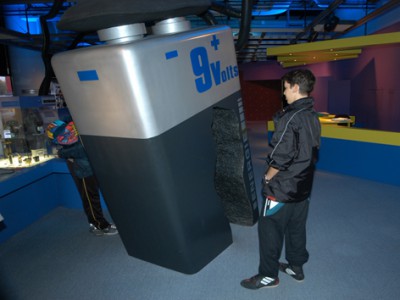
giant battery 2

The Wind Scam is NOT Sustainable!!

Wind Power Costs Crushing South Australian Businesses: Firms Hit with 90% Price Hike

koutsantonis

****

South Australia embarked upon its wind power ‘experiment’ more than 15 years ago, when its Labor government climbed into bed with the boys from Babcock & Brown (aka Infigen) and a disgraced American lawyer and convicted con-man, Tim Flato (who robbed his clients of close to US$400,000, got struck-off, and scuttled off to set up the wind industry in SA and elsewhere). Clearly untroubled by Tim’s ‘colourful’ past his compatriots happily appointed him as a director of several of Babcock and Brown’s subsidiaries and, later, as a director of Infigen.

Tim, and his Babcock and Brown buddies, were all aided in their endeavour by Patrick Gibbons and his best mate, Vesta’s Ken McAlpine(back when they both worked as advisers to a Labor Minister in Victoria, Theo Theophanous) (see our post here). Patrick now runs the wind industry’s lobbying efforts as Federal Environment Minister, Greg Hunt’s staffer. It’s a stinky cologne, for sure.

But, ensuring the political wheels get properly greased to the wind industry’s advantage has other costs.

And those costs are laid bare for all to see, as the disastrous results of SA’s wind power ‘experiment’ unfold.

THE GRIDis a spark away from collapse (more, and more widespread, blackouts and power ‘interruptions’ are inevitable when Alinta’s Port Augusta plant closes in a couple of months); and power prices – already the highest in the Country (if not the world on a purchasing power parity basis) are set to double, again.

It’s vapid Premier, Jay Weatherill and his Energy Minister, Tom Koutstantonis seem oblivious to the scale of the economic calamity, that’s befallen a State that already suffers from the worst unemployment in the Nation – worse even than perpetual basket case, Tasmania.

Here’s the AFR detailing the disaster in the eyes of energy hungry businesses, that have just been hit with a 90% increase in their power bills; with far worse to come; and no end to their misery, anywhere in sight.

SA business fears years of high costs
Australian Financial Review
Ben Potter and Simon Evans
2 March 2016

Power prices in South Australia have jumped 90 per cent

Steven Mouzakis got a shock last year when he negotiated a new electricity supply deal for Brickwork’s Austral brick factory at Golden Grove, South Australia for 2016.

“The energy price increased by 90 per cent,” Mr Mouzakis, the company’s Sydney-based national energy and sustainability manager, said. “How can we operate a business with energy costs increasing at 90 per cent?”

BHP Billiton, which owns the giant copper-gold mine at Olympic Dam 572 kilometres north of Adelaide, is also suffering from South Australia’s volatile electricity market.

“Security and reliability of power, as well as price increases for electricity in the forward market, are areas of concern for Olympic Dam,” a BHP Billiton spokesman said.

The mining giant, which has cut 500 jobs at Olympic Dam in the past year, was one of several large electricity customers to attend a meeting on electricity prices hosted by the Weatherill government last Wednesday.

Prices for electricity in 2017 and 2018 are $80 to $90 per megawatt hour, which is twice the price in Victoria. SA business groups fear they will be stuck with high prices for years after the meeting heard there were no short-term fixes for the squeeze.

Austral bricks

***

An electricity price jump of 90 per cent translates into the total electricity bill for the Golden Grove brick plant – which is run by general manager David Robertson – jumping about 40 per cent with distribution and supplier margins. Mr Mouzakis doesn’t hesitate to finger the culprit: the Weatherill government’s obsession with leading the nation in renewable energy. “We have seen a massive uptake of renewable energy in South Australia, and a reduction in baseload,” he said. “That’s really impacted on the forward prices.”

There was little to lift the gloom at the government’s meeting.

“It’s unlikely there are going to be any short-term fixes, particularly for the large users. They are going to have to be more pro-active and more sophisticated in how they manage their price risk,” said Business SA senior policy adviser Andrew McKenna.

“How long do we accept that South Australia has got a forward wholesale price essentially double that of Victoria, and how long can the wider SA economy sustain that?”

The electricity squeeze is a problem for other large customers like Belgian metals group Nyrstar, which wants to buy electricity at a predictable price when it fires up the Port Pirie base metals smelter rather than take its chances in a volatileSPOT MARKET.

Supply of conventional baseload power in South Australia is tightening as wind power subsidised under the Renewable Energy Target policy is offered to the local market for very low – sometimes negative – prices.

This is driving some coal and gas generators out, leaving the state heavily dependent when the wind drops on a couple of gas turbines and a high voltage link to Victoria’s brown power stations – and vulnerable toSPOT MARKET spikes.

“We have been the state that has taken on more of the Renewable Energy Target burden than any other state and that’s coming back to bite us,” Mr McKenna said.

The meeting hosted by the government heard from consultants CQ Partners that the loss of the Northern coal-fired power station in May on top of earlier baseload power plant closures will leave the market illiquid and retailers and customers heavily dependent on AGL Energy and Origin Energy, the dominant generators still in the market. With gas prices two to three times their past prices, new gas power plants are unlikely to be built and would have a generating cost of $70 to $75 a megawatt hour.

Mr McKenna said solutions proffered at the meeting were long term – an unfunded proposal by AGL to build grid-scale battery storage, and a smart grid proposal from Siemens of Germany to store surplus renewable energy in hydrogen fuel cells.

The high voltage transmission line to Victoria’s brown coal power stations is being upgraded to 650 megawatts in two stages by March 2017.

Mr Mouzakis said the expanded capacity was unlikely to be enough since if it was “we’d have seen a reduction in forward prices and we are not seeing that”.

“We need some kind of mechanism either to rationalise capacity or to support capacity when we continue to need it and we have got to stop pretending that this is a market and it’ll just sort itself out when we have got this other massive intervention in the market.”

Mr Hyslop, whose clients have included the Energy Supply Association of Australia, the federal government’s RET review and the Queensland Competition Authority, said it would be even more important to deal with NEM design issues if Labor won government and implemented a 50 per cent renewable energy target Australia wide. The current RET target is equal to about 24 per cent of NEM capacity by 2030.
Australian Financial Review

nyrstar port pirie

****

Nice work, Ben! The lad goes from journalistic strength to strength.

At present, the AFR is the only paper that appears even vaguely interested in what a debacle SA’s power supply and market is, thanks to its attempt to rely on a wholly weather dependent power source, with NO commercial value.

The producer of a good or service for commercial sale doesn’t tend to give it away, or pay ‘buyers’ to take it: but that’s precisely what wind power outfits are doing in SA (and elsewhere), as noted above.

We dealt with the manner in which the LRET allows wind power outfits to flood the market, and to literally payTHE GRID operator to take it, when the wind is blowing – here:

SA’s Wind Farm Fiasco: $Millions in Subsidies Thrown at GDF Suez to Reopen Mothballed Gas-Fired Power Plant

In short, the penalties under the LRET for failing to purchase RECs, forced retailers to enter Power Purchase Agreements with wind power outfits at fixed rates (up to $112 per MWh), which they collect from retailers irrespective of the spot or wholesale price.

Then, when the wind stops blowing, peaking power plant operators sit back, wait untilTHE GRID is on the very brink of collapse, and then ‘offer’ to supply the shortfall at rates of more than $2,000 per MWh and up to the market cap of $13,800 (instead of the average of $70):

South Australia’s Unbridled Wind Power Insanity: Wind Power Collapses see Spot Prices Rocket from $70 to $13,800 per MWh

Cutting out the cheapest base-load plant, when Port Augusta closes, will only increase the opportunities for rampant market rorting like that. And it’s businesses and households that are left with the burgeoning bill.

As to the ‘helpful’ suggestions for “an unfunded proposal by AGL to build grid-scale battery storage, and a smart grid proposal from Siemens of Germany to store surplus renewable energy in hydrogen fuel cells”, South Australia’s few remaining manufacturers and mineral processors, like Port Pirie’s Nyrstar will be dead and buried long before those pipe dreams ever turned to commercial reality.

And, even if thought bubbles like massive batteries and hydrogen production, storage and use were technically possible (neither has been achieved on any significant scale), the cost of the electricity eventually delivered to homes and businesses would be so astronomical as to be prohibitively expensive.

No, South Australia has dug itself into an energy hole and its gormless government has no hope of digging its way out. For South Australians, it’s an economic nightmare that will last for a generation, or more.

jay weatherill

Paying Millions of Taxpayers Dollars, and Getting Nothing in Return!

Britain’s Wind Power Debacle: Wind Power Outfits Paid £200 Million a Year for Producing NO Power at All

Vestas_V112-Collapse-1_preview

****

Pinning its hopes to a wholly weather dependent power source – that requires 100% of its capacity to beBACKED UP 100% of the time by conventional generation sources – Britain’s energy ‘policy’ was never going to end well.

Already faced with an unstable grid and rocketing power prices thanks to itsGAMBLE on wind power, the scale of the folly is only beginning to reveal itself. In order to prevent total grid collapses, wind power outfits are being paid hundreds of £millions to produce nothing at all.

£4m a week not to use windfarms
Daily Express
Matthew Davis
21 February 2016

ENERGY giants have been paid a record £4million a week in subsidy this winter to turn off wind turbines.

While people struggled to pay energy bills compensation was handed to wind farm owners because the power they generate could not be used.

In November, December and January a total of £51.5million was paid to mainly Scottish-based producers.

Under a complex compensation scheme the wind farm owners are given “constraint payments” for electricity they could have generated and sold if there was a demand for it or there had not been a grid blockage.

One of the major problems with the system is that the grid link between England and Scotland has limited capacity and when all the wind turbines north of the border areSPINNING not all the power generated can be sent south.

This means that gas or coal-fired plants often have to be brought online to fill the gap.

As more wind farms sprout up in Scotland an increasing amount of subsidy is being paid.

The £51.5million subsidy paid to wind farms is more than double the £22.7million paid over the same three months last year and more than five times the £10million they received in the winter of 2013/14.

Green activists say wind farms need subsidies to tempt suppliers to take up the renewable energy technology. Critics say the system just puts consumers’ cash into the pockets of energy giants.

Dr Lee Moroney, of the Renewable Energy Foundation thinkTANK, said: “What is often overlooked is that fossil fuel plants are required to generate the shortfall when wind farms are constrained off.

“This means consumers are paying Scottish wind farms not to generate and English gas plants at the same time to provide the necessary electricity.”

Lawrence Slade, chief executive of Energy UK, said: “We support the practice of constraint payments as a method of maintaining a secure electricity system provided it remains the most cost-efficient option.”
Daily Express

studying candle

Poor Planning, on the Part of Britain’s Energy “Experts”…

Britain’s Wind Power ‘Leap of Faith’

leap of faith

The dimwits from DECCs, that coupled Britain’s energy future to wind power, are calling on Britons to trust them in an almighty ‘Leap of Faith’.

With aging, beyond their use by date, coal-fired power plants being closed this year, British power punters are being promised, by the very idiots that created the mess, that everything will be alright; that the wind will blow on cue; and that candles need only be kept for moments of pure romance.

For ‘believers’ it’s all a matter of digging deeper and matching their ‘faith’ with fat piles of cash: in other circumstances it might be called ‘tithe’, but for those in touch with reality and their wallets, it’s state-sponsored theft.

UK energy supply forecasts ‘into the red’ for first time next winter
The Telegraph
Emily Gosden
26 February 2016

Britain will be forced to rely on imports and costly emergency measures to prevent blackouts, official data suggests.

Britain’s energy supply forecasts have plunged “into the red” next winter for the first time on record, suggesting the country will be forced to rely on imports and costly emergency interventions to prevent blackouts.

Figures from National Grid show that on current plans there will not be enough power plants operating in the UK market to keep the lights on for most of December, January and February.

A separate, “last resort” reserve of back-up power plants is highly likely to be called upon to bolster supplies through much of the winter, adding tens of millions of pounds to consumer energy bills, experts have warned.

National Grid data displaying the surplus - or shortfall - in the UK energy market in megawatts for each week of the year, as of 26/02/2016.

National Grid confirmed that next winter is the first time since the published data system began in 2001 that it has not forecast a surplus margin of spare power plants in the UK market, and has instead forecast “negative margins”.

In mid-December and early January the figures show a shortfall of more than two gigawatts (GW) – roughly equivalent to the electricity needs of two million homes.

For those still inclined to ‘believe’ – no time like the present to stock up on candles, and not the holy sort.

Dr. Sarah Laurie’s Speech to Citizens in Falmouth, Fighting Back, Against the Windpushers!

Thank you for the opportunity to contribute to your rally. I first wish to pay tribute to the long suffering residents of Falmouth USA, who lived or are still living near the wind turbines owned by the town. These people have made an incredible contribution to our knowledge of wind turbine acoustics, wind turbine adverse health impacts, and have shown true human courage and compassion for others in a similar situation – both in their own country and further afield.

We owe them, their acoustics and health professionals, and their supporters, a great debt of gratitude. Their lived experiences, which are now very much in the public domain, in part because of their determination to fight for their legal and human rights, are a window on the incredible suffering which excessive intrusive wind turbine noise can cause. These people are just like you and me but have had to suffer intolerably and disgracefully because of gross government regulatory failure and corporate bastardry, deceit and greed. They are simply trying to live their lives, free from the devastating adverse health effects resulting from what can only be described as an invasion of their home, resulting in acoustic trespass and noise nuisance, from pulsing infrasound and low frequency noise.

These frequencies have been known to be harmful for over thirty years since the seminal research work by Dr Neil Kelley and his team from NASA and other research organisations. Wind turbines are of course not the only source of this damaging sound energy, their body and brain don’t care what the source of the pulsing sound is – it is going to react anyway, at ever decreasing doses, until or unless they can remove themselves from that exposure. The only two options are turn off the noise OR move away. It is not humanly possible to go for long without good quality sleep and remain unharmed and as you all probably know, sleep deprivation from repeated sleep disturbance is the commonest problem reported by most residents living near industrial wind power facilities. This inevitably results in exhaustion, and consequently serious and predictable adverse physical and mental health effects. The Centre for Disease Control in America has recently stated the obvious – that insufficient sleep is a public health problem. Their website states the following: “Sleep is increasingly recognized as important to public health, with sleep insufficiency linked to motor vehicle crashes, industrial disasters, and medical and other occupational errors.1 Unintentionally falling asleep, nodding off while driving, and having difficulty performing daily tasks because of sleepiness all may contribute to these hazardous outcomes. Persons experiencing sleep insufficiency are also more likely to suffer from chronic diseases such as hypertension, diabetes, depression, and obesity, as well as from cancer, increased mortality, and reduced quality of life and productivity.”

So why are the most commonly reported symptoms of wind turbine neighbours, ignored by the American Health Authorities? Where are the public health physicians? Why has there not yet been even one detailed case study of one person, anywhere in the world, examining the full spectrum of acoustic exposures overnight, together with concurrent sleep study EEG and continuous heart rate monitoring? The Waubra Foundation has been calling for this precise research for the last five years. As you all no doubt know, US Acousticians Rob Rand and Steve Ambrose conducted the wonderful initial acoustic investigation in Falmouth, USA funded by the generosity of Bruce McPherson, which provided vitally important clues about the causes of the symptoms. This study is still of global importance, and is something which Falmouth residents should be very proud of.

Other acoustic investigators have followed, and made other significant contributions. But where are the medical and public health investigators? They seem to be in hiding; either ignoring important research evidence in the case of Australia’s National Health and Medical Research Council “expert panel” with members who had documented conflicts of interest, or in the case of Health Canada, deliberately choosing study designs which do not directly investigate the problems in the best possible way. For example any doctor knows that you do not make clinical judgements about someone’s blood pressure with a single once off measurement, yet that is what this Health Canada team did – with no concurrent measurement of the acoustic exposure at the time. You must repeat the measurement. This is junk science, and Health Canada know it, and are trying to hide it by dribbling the study results out slowly and in small “bites”, restricting access to the raw data and other results, making it very difficult for others to critically evaluate their results. I applaud Falmouth Psychiatrist Dr William Hallstein for his professional integrity, courage, and honesty – advocating so strongly for his patients, to whom he owes a professional and ethical duty of care, which he clearly takes seriously. Others need to follow his example. I also applaud Dr Nina Pierpont for her research, and her courage and integrity, and her work with Falmouth residents, helping them expose their stories to the public. But where are their colleagues? Why the silence? 1 http://www.cdc.gov/features/dssleep/ The silence of too many professionals, or indeed even active collusion with noise polluters to hide or ignore the evidence of serious harm, has allowed this serious abuse of the legal and human rights of residents in Falmouth, and indeed all over the world, to occur, and to continue.

But why are the public servants responsible for environmental health, planning and noise pollution regulation, seemingly so complicit with the harmful abuse of the rights of citizens? Is it ignorance or incompetence? Is it pure corruption? Is it regulatory capture? Is it ideological zealotry – an attitude that leads to the concept that people who are noise impacted from wind turbine noise are somehow acceptable “collateral damage”. Is it fear of being ridiculed or ostracized by colleagues?

I am very glad that you are showing such open and public support for the impacted Falmouth residents today, and I join with you in demanding immediate change before any more damage is done to vulnerable citizens. There must be full spectrum acoustic measurements inside and outside people’s homes, with the complete cooperation of the wind turbine operators so that on off testing can be performed to determine the true contribution of the wind turbines to the soundscape, and so the symptom triggers can be properly identified. If the turbines are disturbing sleep, they must be turned off at night. If health is being adversely impacted, there needs to be a resolution – two alternatives being property buy outs with compensation for nuisance, or wind turbines being deconstructed and removed. There are precedents for both. Planning regulations and siting decisions must in future taken notice of empirical acoustic and health data and ensure there is sufficient buffer zone in order to protect people. It’s time people’s health, and their human rights are properly protected – in particular the right to attain the best possible physical and mental health. That fundamental human right to the best possible health specified in most United Nations Human Rights instruments, is not possible if people cannot sleep.

Sarah Laurie, CEO Waubra Foundation

Wind Industry Cannot Compete With Reliable Economical Energy Sources!

Killing the Wind Industry: It’s a ‘Gas’

coal-seam-gas

****

With subsidies for wind power being slashed around the Globe (or with that outcome inevitable where they remain) the wind industry is being given a chance to finally experience the opportunity to back up its endless (but empty) claims about being cheaper than gas and coal-fired power.

Until now, wind power outfits have wallowed in the massive subsidies and ideologically driven market perversion that sees them ‘earning’ guaranteed prices 3-4 times the price of conventional power, for a chaotic, weather-driven power source that – but for the subsidies it attracts – has NO commercial value.

Now, adding to their wows – and much to the horror of their parasites and spruikers – market forces are crushing what little hope they held of surviving in a world where subsidies have either disappeared or are about to. In short, it seems the wind industry is now suffering from a terminal case of ‘gas’.

Greens terrified cheap energy will kill wind and solar
Daily Caller
Andrew Follett
23 February 2016

Cheap coal, oil and natural gas are outcompeting wind and solar power despite massive government support, and environmentalists are really upset about it.

“I believe low energy prices may complicate the transformation, to be very frank, and this is a very important issue for countries to note; all the strong renewables and energy efficiency policies therefore may be undermined with the low fossil fuel prices,” Fatih Birol, the executive director of the International Energy Agency (IEA), told reporters in Brussels.

Americans are spending less on energy than they have at virtually any other point in recent history. Energy prices dropped by 41 percent in 2015 due to innovative new techniques to extract hydrocarbons, like hydraulic fracturing and horizontal drilling.

Environmentalists are also terrified that the rise of cheap conventional energy will hurt wind and solar.

“Increasing reliance on natural gas displaces the market for clean energy,” reads The Sierra Club’s website. This concern notably did not impact The Sierra Club when it took $26 million from natural gas interests to oppose coal power.

Natural gas electricity, in particular, is so cheap that it’s already passing coal power as the most used source of electricity.

Projections from the IEA estimate that developing wind and solar power to substantially impact global warming could cost up to $16.5 trillion between now and 2030. To put such numbers in perspective, the U.S. government is just under $19 trillion in debt and only produced $17.4 trillion in gross domestic product in 2014.

American taxpayers spend an average of $39 billion a year financially supporting solar energy, according to a 2015 report by the Taxpayer Protection Alliance.

The same report shows President Barack Obama’s 2009 stimulus package contained $51 billion in spending for green energy projects, including funding for failed solar energy companies such as Solyndra and Abound Solar.
Daily Caller

Here’s another take on the wind industry’s demise from Alan Moran.

Carbon abatement’s snake venom: diluted but still poisonous
Catallaxy Files
Alan Moran
25 February 2016

Motley events offer hope of a fraying of the policies stemming from climate change hysteria.

While the UN is trying to organise a reaffirmation meeting in April by national leaders of the sacred emission reduction pledges they made in Paris last December, reality is moving against it.  The UN climate change agreement was engineered and negotiated by the Obama administration which pressured the (mainly willing) OECD nations to accept 26 per cent emission reductions and allowed developing countries to emit want they want as long as they paid lip service to them levelling out at some distant time.

The Supreme Court’s stay of execution on Obama’s attempt to by-pass Congress by using regulations on electricity generators to kill coal was a blow for sanity.  The death of Antonin Scalia may still clear the way for the US to kill its coal by these means.  But the Obama administration is taking no chances.  Chief climate negotiator, Todd Stern, is touring the world proclaiming that even if that ruse by Obama fails he has other economy-crippling shots in his locker.

In this the US is faithfully supported by international appendages like the International Energy Agency (IEA).  But the collapse of energy prices is undermining the policy and shifting still further into the future the mirage of competitive renewable energy.  The disappointment of this to green advocates is a position shared by IEA chief Fatih Birol,  who regrettedly said, “all the strong renewables and energy efficiency policies therefore may be undermined with the low fossil fuel prices.”  Birol was recently in Australia promoting his economic poison to Ministers.  Why do we finance such harmful bodies?

In the UK, success of fracking is also counteracting the cost impositionsof the government’s renewable energy requirements  leading to disappointment on the part of those who prefer economic distress and their backers in the renewable energy field.

The unproductive expenditure on renewables in Australia and elsewhere is one of the reasons why we have such persistent low growth.  To combat this the IMF is calling for yet another antidote of increased pump-priming.  That would prove as counterproductive as all the previous ones – one appropriate solution of dismantling costly energy policy impositions on business and households would be plain sacrilege to the international bureaucrats.

While the American Interest view, that the Paris agreement is dead in the water, is a tad over-optimistic, boredom is setting in.  There are far fewer media mentions and an absence of mass rallies.  Moreover, aside from the innovation-driven cost reductions in fossil fuels, Japan has quietly moved to avert a self-enforced energy starvation by approving new coal fired power stations – 50 of them.  These developments make it most unlikely that Japan can meet the obligations it made in December – as it did with Kyoto, Japan will readily welch on an agreement once it realises that its costs are too great.

Unfortunately accords, like the UN Climate Change Convention in Paris last December, develop their own momentum in Australia, where governments will engage in hidden economy-sapping expropriations to please rent-seekers and the international diplomatic community.  The last time around the Howard Government cooperated with ALP state governments in a policy of regulating land use and curtailing irrigation in the Murray basin.  These measures stopped the expansion of farming.  Sadly, even the much vaunted new priority on agriculture to supply Chindia will likely prove unable to unravel the myriad environmental bulwarks that we have put in place to raise costs and limit the expansion of agriculture.
Catallaxy Files

turbine collapse fenner NY

Frauds, Crooks and Criminals

Demonstrating daily that diversity is not strength!

Family Hype

All Things Related To The Family

DeFrock

defrock.org's principal concern is the environmental and human damage of industrial wind turbines on rural communities

Gerold's Blog

The truth shall set you free but first it will make you miserable

Politisite

Breaking Political News, Election Results, Commentary and Analysis

Canadian Common Sense

Canadian Common Sense - A Unique Perspective from Grassroots Canadians

Falmouth's Firetower Wind

a wind energy debacle

The Law is my Oyster

The Law and its Place in Society

Illinois Leaks

Edgar County Watchdogs

stubbornlyme.

My thoughts...my life...my own way.

Oppose! Swanton Wind

Proposed Wind Project on Rocky Ridge

Climate Audit

by Steve McIntyre

4TimesAYear's Blog

Trying to stop climate change is like trying to stop the seasons from changing. We don't control the climate; IT controls US.

Wolsten

Wandering Words

Patti Kellar

WIND WARRIOR

John Coleman's Blog

Global Warming/Climate Change is not a problem