Tom Harris talks about my fight for justice for my son, Joey, and the travesty of the Green Energy Act. Starts @ 47.00 minutes…
Tom Harris talks about my fight for justice for my son, Joey, and the travesty of the Green Energy Act. Starts @ 47.00 minutes…
Wind turbines do NOT decrease the CO2 in our atmosphere….
 A truly ‘wizard’ use of a ‘cloak of deception’ –
there are other more nefarious uses …
****
Vermont Renewable Energy Program Increases State’s Carbon Footprint
Littleton Record
Dr. Ron Holland
17 September 2015
In 2005 the Vermont Legislature passed renewable energy legislation establishing the SPEED program. SPEED was repealed in 2015 with legislation initially called RESET. The name RESET has been dropped as leaders thought that the name implied that SPEED had been a mistake that required correcting. SPEED was a mistake and Vermont will be living with its legacy for at least 20 years.
While other states established renewable energy programs that decreased their carbon footprints, SPEED increased Vermont’s — by about 236,000 metric tons of CO2 per year. A similar annual burden will continue until SPEED projects like the Lowell, Sheffield and Georgia wind projects are decommissioned.
Since such a profound mistake was made and nobody has…
View original post 978 more words
True words….from Patti Kellar!
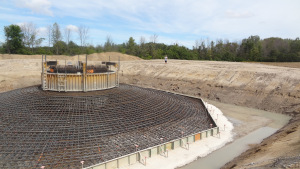
I thought it time to provide an open update to the people who put the last nail in our coffin. That would be all of the Environmental Review Tribunal Panel consisting of the Ministry of the Attorney General’s lawyers who were deemed to be independent and hence, capable of deciding our fate.
You likely won’t remember me. I was a member of the community of Bluewater who testified in NextEra’s Goshen Project and Northland Power’s Grand Bend Wind Project regarding the serious health concerns associated with Industrial Wind Turbines. I recall being asked very little by either the Director or the proponent’s lawyers, other than to point out my past efforts in objecting to turbines and questioning something I said regarding the…
View original post 1,237 more words

****
At an economic level, subsidising the production of a good or the provision of a service makes sense where there is complete market failure, such that the good or service will never be supplied (or only at a price which is practically un-affordable to the majority of consumers); and where the total benefit to the welfare of consumers equals the cost of the subsidy.
As to the supply of electricity, there is NO market failure; affordable power is available around-the-clock in all developed economies; and has been so for half-a-century or more. So that point of ‘justification’ for endless wind-welfare goes nowhere.
Short of true ‘market failure’, another potential justification for subsidies paid to producers is where an ‘infant industry’ needs a ‘kickstart’ to get going. The argument is that the ‘new’ industry will ‘create’ new jobs; and, therefore, justify the subsidy, which can be withdrawn after a period sufficient to allow the industry to develop to a point where the subsidy is no longer needed, at all.
That’s where wind power scores two strikes: the wind industry has been telling us it can ween itself off subsidies (but just not now) for over 30 years.
The third – and final – strike is that wind power (despite being able to slosh in a massive subsidy trough) simply cannot provide meaningful power (ie, power available on-demand) – as they’re learning to their horror in Britain:
Another Wind Power Collapse has Britain Scrambling to Keep its Lights On (Again)
And in South Australia:
Never to be accused of consistency, the wind industry in the US is – under that old adage about ‘being careful about what you wish for’ – about to face up to its own internal inconsistency.
You see, on the one hand its parasites and spruikers keep trumpeting about how their marvellous product is ‘free’ – and getting cheaper all the time; but the minute there’s the merest hint that the subsidy gravy-train might be derailed, they start wailing like demonic banshees.
Americans can prepare from some panicked, high-pitched screaming, as its Congress gets set to finally remove the longest-serving set of ‘training wheels’ that ever rolled into action.
Maine Voices: It’s time for Congress to end the wind production tax credit (again)
Press Herald
Rand Stowell
11 November 2015
SOUTH FREEPORT — As winter approaches, Congress is being overrun by wind industry lobbyists (again). Their annual year-end money dance has become routine as we have seen the 1992 energy production tax credit die more deaths than the proverbial nine-lived cat.
Just as routinely, we have become accustomed to picking up the newspaper on New Year’s Day to read that in the cold, dark holiday night, Congress has revived the production tax credit (again).
Over time, most of Maine’s congressional delegation has supported throwing additional taxpayer money at the expired or expiring production tax credit, often at the eleventh hour. It stands to reason that aggressive wind developers in Maine have influenced the Maine delegation’s decision to support the production tax credit.
“Subsidy” is a lightning rod word. But subsidies can be justified when they contribute to the public good. In the general public, wind energy’s positive benefits are regularly overstated, while conversely, wind’s negative impacts are understated. Because of this flawed value equation, wind energy has enjoyed the public’s favor and gratuitous federal subsidy dollars (in addition to state mandates).
For the sake of Maine’s environment and economy, it is time for Congress to finally let the production tax credit subsidy die. The Maine delegation can help make this happen by ending its historic support.
Maine’s wind energy buildup in the last decade has been dominated by one developer: First Wind (now SunEdison). In a 2012 Recharge News article, “First Wind chief executive says life without PTC is possible,” First Wind CEO Paul Gaynor discussed the production tax credit:
“I know the industry has needed it. I think the question for all of us is, ‘Do we need it any more or forever?’ I believe the answer is no.”
In a Bloomberg News article, “U.S. tax breaks that clean power doesn’t seem to mind losing,” Ahmad Chatila, CEO of SunEdison (which is now in financial difficulty), discussed the production tax credit just a few weeks ago:
“If the (production tax credit) expires we will be fine, we can get by.”
The wind production tax credit expired (again) in December 2014. Because the wind lobby inserted a “begin construction/safe harbor” provision into the law, and thanks to loose Internal Revenue Service rules that allow it, wind projects we don’t even know about yet can still sneak in as production tax credit-eligible even if they have not turned a shovelful of dirt.
The wind industry is losing its window for starting projects, so the wind lobby is back in holiday mode, applying pressure in Congress (again).
Last summer, the Senate Finance Committee voted out a $95 billion tax extender bill that included a two-year extension of the wind production tax credit (2015-2016). The production tax credit was the third most expensive provision in the bill at $10.5 billion.
In October, U.S. Sen. James Lankford, R-Okla., submitted a bill to end the wind production tax credit. In the House, the Production Tax Credit Elimination Act offered by U.S. Reps. Kenny Marchant, R-Texas, and Mike Pompeo, R-Kan., is still pending, and new co-sponsors have signed on every month since the bill was introduced.
We might see action on the production tax credit by year’s end, and it won’t be a surprise if votes finally occur while the rest of the country is sipping eggnog at holiday parties (again).
The wasteful production tax credit has become politically toxic, gaining the nickname “wind welfare.” We cannot afford more billions to spur the growth of a mature industry that does little good.
With the Department of Energy and the American Wind Energy Association regularly crowing that wind is cost-competitive with (or more competitive than) conventional generation sources, there is no justification for further subsidies. The wind training wheels have been on the bike since 1992. They have done their job and it is now time to remove them.
The production tax credit has rarely been considered in the House or Senate as a stand-alone vote. The last time was 2012, in New Jersey Democratic Sen. Bob Menendez’s amendment to the transportation bill. It failed.
If the Senate and House consider the wind production tax credit in the eleventh hour (again) this year, it must be as a stand-alone vote in each chamber. That way, the wind lobby cannot gain a free ride by attaching to the more beneficial tax credits seen as “must pass.”
If Maine’s wind development leaders are telling us they don’t need all that production tax credit money, then why would the Maine delegation throw it at them (again)?
The Maine delegation should not endorse spending billions more to spur the growth of a mature industry that does little good for the U.S.
Press Herald

All the fancy people are about to hop on jets and fly to the Paris Climate Conference so they can express how much they don’t like things like, uh, jet fuel.
And one of the things we’re going to hear is how we need to be more like Europeans when it comes to green energy.
Here’s one headline:
“Spain Got 47 Percent Of Its Electricity From Renewables In March”
There’s more:
“People visit the Santa Coloma cemetery, outside Barcelona, Spain, The city council has installed 462 solar panels on top of the grave niches.”
Gross, right?
But they’re all getting rich off it! Abengoa, one of Spain’s wealthiest companies, has solar plants all around the world.
Yeah, why can’t we be more like them?
Except today, this is the number one news item in Spain: Abengoa is bankrupt.
Nine billion Euros in debt — that’s about $14 billion. 27,000 employees.
The largest bankruptcy in Spanish history.
And because Spain has amongst the highest power prices in Europe — about triple what we pay here in Canada — driven out a lot of manufacturing.
Do you know what the unemployment rate is in Spain now? 22%. And that’s the lowest it’s been in years.
So, yeah, Spain. That’s you’re role model.
Especially for Ontario’s Kathleen Wynne — and now Alberta’s Rachel Notley…
Californication….via Wind Turbines!
 No, that wasn’t a ‘dream’ – it’s an unvarnished nightmare.
****
The hidden costs of wind, solar power
The Sun
Neil Derry
13 November 2015
The state of California has embarked on a 25-year green power odyssey in an effort to reduce the amount of CO2 we place into the atmosphere, all aimed at leading the world in an anti-climate change crusade for humanity.
Beginning in 2030, 50 percent of all electrical power produced for our regulated utilities will be mandated “renewable” energy. This definition under the current law includes energy from solar, wind and small hydroelectric facilities built, or to be built, over that time frame. It excludes residential solar installations and existing large hydroelectric projects such as energy produced from Hoover Dam.
While some of this new power will be “infill” development (smaller solar projects that may be placed in vacant or brown-field urban areas), most of it…
View original post 541 more words
People in Scotland Happy to see Wind Turbine Projects Rejected!
 Time for a wee Victory dance!
****
Sallachy and Glencassley wind farms refused consent
BBC News
17 November 2015
Scottish ministers have refused consent for two major wind farm schemes in Sutherland in the Highlands.
Sallachy and Duchally Estates in Sutherland had proposed constructing 22 turbines.
Energy giant SSE sought permission for 23 turbines at Glencassley Estate, near Lairg.
Scottish ministers said the projects would have had an “unacceptable impact” on wild land. SSE said it was “very disappointed” by the decision.
Energy Minster Fergus Ewing said the Scottish government had to “carefully balance” the benefits to be drawn from renewable energy projects and their impact on scenic landscape and wild land.
Visual impact
He said: “We have been clear that wind farms can only be built in the right places and Scottish planning policy sets out rigorous steps to ensure wind farms are sited appropriately and sensitively.
“I have…
View original post 433 more words

The central, endlessly repeated lie upon which the wind industry seeks to ‘justify’ the colossal and endless subsidies upon which it critically depends; the destruction of wind farm neighbours’ health, wealth and happiness; and the slaughter of millions of birds and bats, is that wind power causes substantial reductions of CO2 emissions in the electricity sector.
STT has been slamming that myth since we cranked into gear nearly 3 years ago. It’s a topic that attracts plenty of interest.
Our post – How Much CO2 Gets Emitted to Build a Wind Turbine? – has clocked over 11,000 hits; and still attracts plenty of attention. But that story is limited to a back of the envelope calculation of the CO2 emissions that this so-called ‘fossil free’ power source clocks up before these things start spinning.
In this post we hand over to a pair of switched on energy experts, Alex Henney and Frank Udo, as they tackle the wind power CO2 abatement myth – in terms of its failure to reduce CO2 emissions to the degree claimed by the wind industry; or at all.
How Much CO2 Do Windmills Really Save?
Not a lot of people know that
Alex Henney
6 November 2015
WINDMILLS DO NOT MITIGATE CO2 AS CLAIMED ON THE TIN1
“When the facts change, I change my mind. What do you do sir?”
J.M. Keynes
INTRODUCTION
Peter Lang posted a blog “Wind turbines’ CO2 and abatement cost” on 27 April 2015 based on his submission to the Australian Select Committee on Wind Turbines dated 23 March 2015. He advanced similar analyses to those which provided to the then Minister for Energy of the British government in September 2011. We drew on empirical experience from Ireland and the US.
IRELAND
In 2011 gas produced 66% of Irish electricity; coal 11%; peat 8%; wind 12%; hydro and pumped hydro 2.5%; other 1%. Most of the balancing or load following to respond to variations in wind and output is provided byCCGTs and OCGT’s and 3 hydro facilities including a pumped storage plant.
Eirgrid, the system operator, calculates the emissions of CO2 from the system as a whole using “static” heat rates for thermal plants (i.e. assuming they operate at a constant output). This approach overstates their efficiency and understates their CO2 emissions because when gas plant ramp-up and –down (i.e. “cycle”) their thermal efficiency reduces – hence their CO2 emissions/MWh increase (i).
The estimated average emissions using static heat rates for the period November 2010 to August 2011 was 451g/kWh while the average CO2emissions calculated from the carbon input from gas and coal was 528g/kWh, which is 17% higher. Part or all of this difference can be attributed to the static approach used in the CO2 calculation of Eirgrid.
The CO2 savings for the period November 2010 to August 2011 were analysed and the “efficiency” of wind in reducing CO2 emissions defined as (ii):-
The ratio of the measured reduction in CO2emissions, to the reduction inCO2emissions calculated as if every MWh of wind energy produced replaces a MWh of conventional electricity production without change in efficiency of the conventional plants.
The efficiency varies month by month, see exhibit 1.

Exhibit 1 The efficiency of wind in reducing CO2 in Ireland
Why the difference from month to month? In particular what happened in April 2011? The answer might be the availability of hydro, see exhibit 2.

Exhibit 2 The influence of hydro power on CO2 saving efficiency
In 2011 the pumped storage facility at Turlough Hill was being renovated; in consequence gas plants had to cycle more and thus produced more CO2. The result was that a 12% wind contribution saved only 4% CO2emissions4. A subsequent analysis found that when wind production averaged about 15% the thermal efficiency of the fleet of CCGTs was 40% compared with their nameplate efficiency of 55% (iii).
Another constraint on wind is the amount of must-run capacity, which is 1300MW. Thus when the demand is low and the wind is high, wind energy has to be spilled. This is demonstrated with the aid of a load duration curve constructed from all the daily load curves with the points sorted in order of decreasing demand. Exhibit 3 shows the load duration curve (iv) for November 2010 with the associated level of wind; once demand reduces below about 2500MW the wind is increasingly curtailed – in this case about 3% is lost.

Exhibit 3 Wind is uncorrelated with demand so when demand is low it would have to be spilled
The Irish government has a target of three times the current level of wind by 2020, which would result in spilling 30% of the wind energy production, see exhibit 4.

Exhibit 4 If the government target for wind in 2020 were met, 30% of the wind energy would have to be spilled
COLORADO AND ERCOT
Energy Consultant Bentek (v) undertook a study of the effect of wind on emissions of SOx, NOx and CO2 for two systems:-
Both systems are predominantly thermal with significant wind relative to their size, and little hydro.
The studies used publicly available hourly data for boiler specific emissions and production which are provided to the Continuous Emissions Monitoring System of the Environmental Protection Agency and data provided to the Federal Energy Regulatory Commission.
ERCOT also publishes wind, coal, nuclear, natural gas and hydro generation data on a 15-minute basis. The PSCO part of the report first examines in detail the impact of cycling for CO2 coal plants over a number of days when there are “wind events”.
The avoided generation from coal plants was calculated; the monthly and quarterly “stable day” emission rate was calculated; finally the difference between the actual emissions and the emissions that would have been generated if the avoided generation had been produced with the “stable day” emission rates was calculated.
The effect of cycling coal plant is shown by the operation of Cherokee Unit 4 located in Denver. Between 7:00 pm and 9:00 am on March 17 and 18, 2008, see exhibit 5. “Total generation from the plant is shown in blue; the heat rate – defined as the MMBtu of fuel per unit of generation – is shown in red.
Between 9:00 pm and 1:00 am, generation from the Cherokee 4 fell from 370 to 260 MW. It then increased to 373 MW by 4:00 am. During the period in which generation fell by 30%, heat rate rose by 38%. Heat rates are directly linked to cycling: as the generation from coal plants falls, the heat rate begins to climb. Initially, the heat rate climbs because generation of the plant is choked back and fewer MW are produced by the same amount of coal.
Later in the cycle, the heat rate climbs further because more coal is burned in order to bring the combustion temperature back up to the designed, steady-state rate. Additionally, for many hours after cycling, the heat rate is slightly higher than it was at the same generation level before cycling the plant.”

Exhibit 5 Impact of generation decline on heat rate
In addition to the micro study of wind events on particular plants, the study also looked at the coal cycling impacts on PSCO’s territory emissions. The conclusion of the study was that:-
“…cycling of coal-fired facilities has increased significantly since 2007 as wind energy generation increased to its current levels … the increased incidence of cycling has led to emission of greater volumes of SO2, NOx and CO2. In 2008, depending on the method of calculation, cycling coal plants caused between 1.1 and 10.5 million pounds of SO2 to be produced that would not have been produced had the plants not been cycled…Cycling’s impact on CO2is more ambiguous as the range is between creating a saving of 164,000 tons and a penalty of 151,000 tons. In 2009, generation from PSCO’s coal-fired plants fell off by about 20%, but their emissions did not diminish proportionately. Again, cycling appears to be a central factor … between 94,000 and 147,000 pounds of CO2[was produced] more than would have been generated had the plants been run stably.”
The conclusion of the study of ERCOT, which was undertaken in a similar manner to their PSCO analysis, is:-
“Not only does wind generation not allow ERCOT utilities to save SO2, NOx and CO2 emissions, it is directly responsible for creating more SO2 and NOx emissions and CO2 emission savings are minimal at best.”
THE RESPONSE OF THE BRITISH GOVERNMENT TO THESE FINDINGS
Like the Irish system, the British system is predominantly thermal and balancing will largely depend on oldish frame CCGTs. The Irish system is the “canary in the mine”.
We recommended that before spending £ tens of billions more on windmills, the British government should commission an objective and empirical scientific study (vi) of how efficient windmills are at mitigating CO2 emissions.
We put these findings to the Minister of Energy and received a 3 page reply which was largely irrelevant or inaccurate. The letter incorrectly intimated that the Irish system was balanced by “old, relatively inefficient plant” – in fact the gas plants were relatively new.
The government did, however, agree:
“The Irish system is a better comparator to Britain as it is an island with wind being backed up predominantly by gas fired generation. Unfortunately we feel your otherwise very informative analysis falls into a trap of looking at a specific time period and trying to extrapolate from it. By looking at a period of time when pumped storage (which is a low carbon technology for balancing wind) was out of service you demonstrate a significant divergence between anticipated and actual emissions. It may be that the average intensity is significantly better than this, which is the danger inherent in taking short time periods in this way and using them to make a general point.”
Comment: This entirely misses our point. We looked at the time when the pumped storage was out of commission in order to see how the system performed when the wind was balanced by thermal plant, which is how the British system is balanced, and will increasingly be balanced if the government’s wind ambitions are achieved.
“Colorado and ERCOT: In both these examples, unabated coal plant is being used to back up wind.
This is a helpful case study of why it is important for the British government to pursue the development of carbon capture storage (CCS) if we want coal to play a long term role in our energy mix, and also a helpful example of why the design of the Electric Market Reform (EMR) needs to incentivise the building and operation of the right kinds of balancing generation. This is the subject of ongoing work, also of ongoing dialogue with relevant industry players.”
COMMENTS
“We can agree with you on the need for objective and scientific study of the issues. The government is engaging with the range of relevant industry players who have the data to inform this discussion, and will use this to inform our market design decisions as we finalise the operational details of EMR.”
Comment: Our concept of an “objective and scientific study” does not envisage either the government or industry having a lead role because neither have a record of either rigour or objectivity.
The British government has no interest in evidence based policy, only in policy based evidence. It has no interest in the cost of decarbonisation, because it is attempting to save the planet?
Never mind that the Chinese, Indians and Indonesians are not joining in and are increasing coal burn for generation at a great rate. Even the Germans and Dutch have just completed ten large new supercritical coal plants. The British government (like some others) does not live on planet earth when it comes to “climate change” and the policies flowing there from.
1 This blog is based on an article titled “Wind – Whitehall’s pointless profligacy” that was published in New Power, Issue 45, October, 2012.
2 Director EEE Ltd; once a director of London Electricity; the first person to propose in 1987 a competitive restructuring of the electric industry in England & Wales; advisor on electric systems from Norway to New Zealand; author of “The British Electric Industry 1990-2010: the rise and demise of competition”.
3 Retired Dutch physicist who worked at CERN Geneva, latterly on the Large Hadron Collider.
4 A detailed simulation by Joseph Wheatley, Quantifying CO2 Savings from Wind Power, 2012 (for the version submitted before peer review) concluded the effectiveness was only 53% during normal operations.
END NOTES
i) The topic of the significant loss of thermal efficiency of gas and coal plants cycling is dealt with in detail by Willem Post in “Wind Power and CO2 Emissions”,
www.coalitionforenergysolutions.org/research_and_reports.
ii) Wind energy and CO2 emissions – 2, F. Udo, 21 October 2011,www.clepair.net/udo_okt-e.html.
iii) http://euanmearns.com/the-balancing-capacity-issue-a-ticking-time-bomb-under-the-uks-energiewende/
iv) Wind turbines as a source of electricity. F. Udo, K de Groot and C. le Pair: http://www.clepair.net/windstroom e.html
v) How less became more: wind, power and unintended consequences in the Colorado Energy Market, Bentek Energy LLC, 16 April 2010,http://docs.wind-watch.org/BENTEK-How-Less-Became-More.pdf.
vi) While National Grid should be involved in the study, it should not lead it because it has a vested interest in claiming that windmills mitigate CO2because it wants as many windmills on the system as possible in order to justify bulking up its grids. An example of the reaction of vested interests is given by the response of Mr. Nick Winser to Mr. Udo’s analysis of Ireland was “Thanks. Interesting. I doubt that your point about part loaded fossil negating the carbon benefits of wind is well founded particularly with our huge advances in wind forecasting accuracy.” There is a basic flaw in his response, namely although the forecasts may be more accurate that per se will not alter the outturn variability – hence cycling of plant.

Wind Pushers….The Lunatics are Running the Asylum!
 An inevitable result of tying your future to the weather …
****
In a ‘don’t say we didn’t warn you’ piece, Matt Ridley nails down precisley why THESE THINGS DON’T WORK – on any level. Over to Matt.
Wind power makes electricity expensive and unreliable without cutting emissions
Rational Optimist
Matt Ridley
13 November 2015
By preventing investment in gas, the dash for wind has done real harm
My Times article on wind power is below. An astonishingly poor attack on the article was made in The Guardian by Mark Lynas.
He failed to address all the main points I made: he failed to challenge the argument that wind power has not cut emissions, failed to challenge the argument that wind power has raised the cost of electricity, he failed to challenge my argument that wind speeds are correlated across Europe. And he made a hash of attempting to criticise…
View original post 1,279 more words
****
Bourne health board seeks injunction against Plymouth wind farm
Cape Cod Wicked Local
Paul Gately
19 November 2015
BOURNE
The Future Generation wind turbine project at cranberry grower Keith Mann’s Head of the Bay tract in South Plymouth may be hauled into superior court, likely in Barnstable.
The Bourne Board of Health is asking selectmen to authorize Town Counsel Robert S. Troy to request a court injunction — expressly to halt wind-farm construction.
The request comes from neighboring Morning Mist Lane residents in Buzzards Bay. They say they will be “directly impacted” by at least one of four turbines now going up.
The residents cite concerns related to flicker, noise, harmonics and low-frequency impacts and the health board has listened, even as Future Generation attorney Jon Fitch of Sandwich argues the Bourne board cannot apply its turbine review bylaw to a Plymouth project.
If there is an enemy for the group, it is time. One turbine can already be seen from the Route 25 connector and Head of the Bay Road.
Bourne Health Board Chairman Kathy Peterson said members are “following the best option left open to us,” notably a court injunction ordering turbine construction to cease and desist while possible impacts are sorted out.
Peterson said Future Generation has sidestepped all board requests to file for Bourne variance review under the town’s turbine bylaw. “We’ve asked repeatedly for sound data to review about what’s being put up but we haven’t received it,” she said Nov. 18.
Peterson told the Buzzards Bay residents that, even if Troy is directed to seek injunctive relief against Future Generation, it would still take time to prepare a case and “get before a judge.” Meanwhile, construction continues.
“They have an attorney guiding everything they do,” Peterson said. “We don’t have that.”
Fitch attended the Nov. 18 discussion with the health board but he did not comment on unfolding developments.
It was unclear when selectmen might meet again to discuss the health board request. An injunction to the extremely spending-conscious board may not seem so modest an objective. The health panel will continue its wind farm discussions Dec. 9.
The Mann-tract wind farm plan has caused a stir in Bourne to an extent that the selectmen’s vote to permit nightly turbine-equipment transport through Buzzards Bay Village via trucks was 3-2, with board members Peter Meier and Michael Blanton opposed to what was a detailed and straightforward – if not routine – special permit application.
In another respect, an injunction — should it be granted — might serve to shift some Cape Cod anti-turbine sentiment from Falmouth to Bourne. Indeed, a Falmouth resident urged the Bourne health board on Nov. 18 not to let the Head of the Bay wind farm happen.
Cape Cod Wicked Local
Good to see Future Generation playing the role of responsible corporate citizen there! Obviously falling over itself to cooperate with the body charged with looking after the health of citizens.
Deliberately withholding evidence that unequivocally demonstrates their guilt, is only one part of the wind industry’s arsenal, when it comes to destroying neighbour’s rights to live in, use, sleep in and otherwise enjoy the comfort of their very own homes. Although, when the evidence is about to sink them, they’re usually pretty quick to get their pet acoustic consultants to rewrite their (unhelpful) reports; and to ‘replace’ them with completely fabricated versions – in order to avoid pesky planning controls and having their subsidy entitlements revoked:
The wind industry, its parasites and spruikers have known all about the problem of incessant turbine generated low-frequency noise and infrasound over 30 years and have been lying about it and covering it up ever since:
The ‘standards’ written by the wind industry hold all the integrity of VW’s diesel emissions control ‘technology’ – and will end with the same raft of litigation against those responsible:
VW Mk II: Wind Industry’s Acoustic Consultants Caught In Noise ‘Standard’ Scandal
What the wind industry fears most are actions like those being taken by the Bourne Board of Health and individuals out to protect their common law rights to live free of interference from turbine noise and vibration.
What is fairly obvious to any human being gifted with our good friends ‘logic’ and ‘reason’ is that if you deprive someone of sleep over an extended period, their health will suffer.
Even after one ‘rough night’, you don’t ever hear the sufferer bubbling about how much better they felt in the morning. No, the usual response is about telling those around them to keep out of their way for the day, or there’ll be trouble (often in terms too ‘blue’ to print). However, that ‘trouble’ manifests as a danger not just to the sufferer and his nearest and dearest, but to a range of others who might end up tangling with the insomniac, as their sleep-deprived day draws on:
Alive to the critical importance of regular, quality sleep to health, the common law has recognised a person’s right to a decent night’s sleep in their own home for over two centuries.
STT’s Nuisance “In-a-Nutshell”
Nuisance is a long recognised tort (civil wrong) at common law based on the wrongful interference with a landowner’s rights to the reasonable use and enjoyment of their land.
Negligence is not an element of nuisance, although aspects of the former may overlap with the latter. Where, as here, the conduct is intentional (ie the operation of the wind turbines is a deliberate act) liability is strict and will not be avoided by the defendant showing that it has taken all reasonable steps to avoid the nuisance created. Indeed, the conduct of the defendant is largely irrelevant (unless malice is alleged); the emphasis is on the defendant’s invasion of the neighbouring landowner’s interests.
A defendant will have committed the tort of nuisance when they are held to be responsible for an act indirectly causing physical injury to land or substantially interfering with the use or enjoyment of land or of an interest in land, where, in the light of all the surrounding circumstances, this injury or interference is held to be unreasonable.
The usual remedy for nuisance is an injunction restraining the defendant from the further creation or continuance of the nuisance. Injunctions are discretionary, in all cases, and will not be granted unless the nuisance caused is significant.
Where interference with the enjoyment of land is alleged, the interference must be “substantial” and not trivial.
Interference from noise will be substantial, even if only temporary in duration, if it causes any interference with the plaintiff’s sleep.
The loss of even one night’s sleep through excessive noise has been repeatedly held to be substantial and not trivial in this sense (seeAndreae v Selfridge & Co [1937] 3 All ER 255 at 261, quoted with approval in Munro v Dairies Ltd [1955] VLR 332 at 335; Kidman v Page [1959] St R Qd 53 at 59; see also Halsey v Esso Petroleum Co Ltd [1961] 1 WLR 683 at 701: “a man is entitled to sleep during the night in his own house”).
It is not a defence for the party creating the nuisance to claim that he is merely making a reasonable use of his property. The defendant’s conduct may well be otherwise lawful, but still constitute actionable nuisance. The activity engaged in by the defendant may be of great social utility or benefit, but that has been repeatedly held as being “insufficient to justify what otherwise would be a nuisance” (see For example, Munro v Dairies Ltd [1955] VLR 332 at 335; see also Halsey v Esso Petroleum Co Ltd [1961] 1 WLR 683)
Halsey’s case is well worth a read – a real “David and Goliath” battle, as described by the trial Judge: “This is a case, if ever there was one, of the little man asking for the protection of the law against the activities of a large and powerful neighbour.” And just like David’s epic battle with a thuggish giant, the little bloke won!
Here’s a link to the case: Halsey v Esso Petroleum [1961] 1 WLR 683
Precisely the same principles were at work in the case pursued by Julian and Jane Davis, who successfully obtained a £2 million out of court settlement from a wind farm operator, for noise nuisance; and the resultant loss of property value (the home became uninhabitable due to low-frequency noise, infrasound and vibration).
The Particulars of Julian and Jane Davis’ Claim are available here: Davis Complaint Particulars of Claim
And Jane Davis’ Statement (detailing their unsettling experiences and entirely unnecessary suffering) is available here: davis-noise-statement
The common law also recognises the ability to prevent a neighbour from building a noise generation source that will inevitably cause nuisance (with what is called a quia timet injunction). The rule is based on the common sense principle that it’s easier and fairer to keep wild horses corralled, than it is to round them up once they’ve bolted.
One pertinent example is Grasso v Love [1980] VR 163 (available here).
The Full Court of the Supreme Court of Victoria upheld the trial judge’s decision to grant a quia timet injunction to prevent the construction of a Drive-in Theatre which a developer was planning to build right next to the plaintiffs’ home. The injunction was granted on the basis that the noise created by the Drive-in at night-time (noise from the speakers, loud voices, banging car doors, engines starting and tooting horns) would be heard within the plaintiffs’ home and, therefore, cause a very substantial degree of interference with the use and enjoyment of their home. On the basis of the noise likely to be created, the threat of nuisance to the plaintiffs was substantial and, accordingly, they were entitled to an injunction stopping the developer from building his Drive-in, as proposed.
What the growing band of individuals – like Julian and Jane Davis – are relying upon to protect their health, wealth and happiness are the rights that citizens of civilised societies have fought over centuries to establish and maintain (think Magna Carta and all that).
STT is heartened that outfits like the Bourne Board of Health are in there fighting to protect those very same rights. As an observer of the manner in which governments and those within its organs who are paid handsomely to do just that have, instead, sided with the wind industry in wantonly destroying those rights and, worse still, derided its victims, STT says about jolly time.
But don’t expect the venal who supp from the same subsidy trough to take up the cudgels on your behalf any time soon. Oh no, the only guaranteed defender of your own rights is you.
Freedom from noise nuisance (and the ability to sleep in your own home) isn’t a “concern”; it’s a hard-won legal “right” – that’s been upheld against the mighty, rich and powerful for close to 200 hundred years.
The wind industry is – with knowing assistance from your very own governments – more than prepared to simply trample on those rights and, in doing so, to literally steal what’s yours from under you. Don’t let them take what’s rightfully yours without a fight; and don’t sit back and leave it to someone else. These are your homes, your families and your rights – fight for them. There’s a judge just waiting to hear from you.

Demonstrating daily that diversity is not strength!
All Things Related To The Family
defrock.org's principal concern is the environmental and human damage of industrial wind turbines on rural communities
The truth shall set you free but first it will make you miserable
Breaking Political News, Election Results, Commentary and Analysis
Canadian Common Sense - A Unique Perspective from Grassroots Canadians
a wind energy debacle
The Law and its Place in Society
Edgar County Watchdogs
My thoughts...my life...my own way.
Proposed Wind Project on Rocky Ridge
by Steve McIntyre
Trying to stop climate change is like trying to stop the seasons from changing. We don't control the climate; IT controls US.
Wandering Words
WIND WARRIOR
Global Warming/Climate Change is not a problem


