Video post.
More Proof that Wind Energy is a SCAM! It’s NOT About the Environment!!!
UK’s Wind ‘Powered’ Disaster: Britain to Roll Out Thousands of Diesel Generators for 1.5GW of Wind Farm ‘Back-Up’
November 16, 2015 by

It’s either spending £billions on 1.5GW worth of these, or …..
****
Thanks to its ludicrous wind rush, Britain is reeling with a combination of skyrocketing power prices and a grid on the brink of total collapse:
Another Wind Power Collapse has Britain Scrambling to Keep its Lights On (Again)
Now, in the mother of all ironies, Brits are turning to the most inefficient and costly to run source of commercial power generation there is: diesel generators. Not, as it turns out, that they have much choice in the matter.
UK turns to diesel to meet power supply crunch
Financial Times
Kiran Stacey
3 November 2015
Britain is set to grant hundreds of millions of pounds in subsidies to highly polluting diesel generators as a way to help solve the energy supply crunch facing the country over the next 15 years.
Analysis of publicly available figures shows that companies have registered to build a total of about 1.5 gigawatts of diesel power under a government scheme to encourage back-up energy for the grid. The figures have been analysed by the Financial Times and experts at both the Institute of Public Policy Research and Sandbag, an environmental think-tank.
If all of those registered are successful in their bids — which analysts believe is likely — it could cost the taxpayer £436m, provide enough energy to power more than 1m homes and emit several million tonnes of carbon a year.
The subsidies on offer are so appealing that even solar-power developers, which have recently had their own subsidies cut, are building diesel generation on their sites as a way of maximising their returns. Lark Energy, a solar-power developer, is bidding for subsidies to build 18MW of diesel generation on its Ellough project in Suffolk, for example.
The UK is facing serious energy-supply difficulties over the next few years as old coal plants are taken offline without new power plants being built to replace them. National Grid, which runs the country’s power network, has predicted that the gap between electricity supply and demand this winter could get as close as 5 per cent — the tightest in a decade.
As part of the solution to that problem, ministers last year decided to start paying electricity providers extra money to make additional capacity available at short notice should the need arise.
They did so by holding an auction where companies bid for those subsidies, which they hoped would encourage gas plants to be built. Instead, it was more successful in giving incentives to other forms of generation such as nuclear power.
This year diesel looks to be one of the main beneficiaries of the process, with 1.5GW of generation having successfully registered for the bidding process.
The collapse in the oil price over the past year has driven down the price of electricity supply, making it uneconomic for companies to build capacity with high capital costs, such as new gas plant.
Dave Jones, power sector expert at Sandbag, said: “All diesel operators have to do is buy in diesel units in shipping containers from China and plug them into a grid connection.
“The low capital cost means that they can undercut things like gas.”
If all of those schemes secure government funding at the same level as last year, it would cost the taxpayer £436m.
According to the International Energy Agency, diesel electricity production emits only slightly less carbon than burning coal, and if the power plants were to run full-time for a year, they would emit 10m tonnes of carbon. They will avoid having to pay for their carbon pollution under the European emissions trading scheme, however, because they are too small to do so.
They would also emit a significant amount of nitrous oxide, though the exact figure is unknown. As a comparison, 1.5GW of power is equivalent to that used by 24,000 Volkswagen Golfs.
Ed Davey, the former energy secretary who set up the scheme, known as the “capacity market auction”, said the problem arose because of EU rules that forbid discriminating against any one type of generation.
Mr Davey told the FT: “At no time when I was secretary of state did people say we were going to get flexible diesel, but I have now heard about large amounts of diesel being preregistered for the auction.
“The government has got to take measures to stop it, because it is extraordinarily counterproductive and absolutely was not what was intended by the capacity auction. We don’t want diesel plants being built anywhere.”
Until last week, many diesel operators expected to be eligible for two types of subsidy: through the capacity auction and via tax breaks granted through a separate enterprise investment scheme.
But ministers have recently decided to close this loophole, writing a clause into the finance bill passing through parliament to ban companies participating in the capacity auction from also claiming these tax advantages.
A wider boom in diesel is also being driven by measures taken by National Grid to encourage industry to cut its power usage. In an attempt to widen the gap between supply and demand this winter, the company has agreed to pay large energy users, such as factories and hospitals, to switch over to back-up generation — much of which is diesel-powered — when necessary.
Doug Parr, chief scientist at Greenpeace, said: “Ministers claim to be helping consumers by cutting support for the cleanest energy sources but are about to force them to pay millions to one of the dirtiest.”
Tim Emrich, chief executive of UK Power Reserve, which owns existing diesel-power generation but now concentrates on gas, called on ministers to halt the auction altogether.
He said: “The only way to avoid this happening is to delay or cancel the 2015 capacity market auction. The government needs to ensure that we as taxpayers are buying the right kind of generation for the future . . . not wasting Treasury incentives on the diesel generation of the past.”
A spokesperson for the energy department said: “Small-scale flexible generation, such as diesel, has a small but important role to play in securing our electricity system. It responds quickly, doesn’t have to warm up and is run for short periods, so emission impacts are limited.”
Financial Times

Ed Davey: about as bright as an energy saving 5 watt globe …
****
There’s only one reason that Britain is about to spend 100s of £millions on diesel generation; and that’s to cover routine, total and totally unpredictable wind power output collapses.

On that score, STT notes a particularly valiant effort from former wind industry front man, Ed Davey – with his suggestion that “At no time when I was secretary of state did people say we were going to get flexible diesel” and that diesel generation “was not what was intended by the capacity auction. We don’t want diesel plants being built anywhere”.
You see, Ed is well and truly on the hook for the debacle that is Britain’s energy ‘policy’; and the claim that he didn’t see the need for diesel coming is utter bunkum.
James Delingpole was all over it more than 2 years ago, at a time when Davey was top banana at the DECC, and fully aware of the diesel roll-out that was on in earnest, way back then:
Delingpole On Fire: Exposes $Billions Spent on Diesel Generators for Wind Power Backup
No, Ed’s political legacy has left Britain facing the choice between millions of highly inefficient diesel generators, costing taxpayers and power consumers £billions to subsidise, set up and run; or a whole lot more candlelit, cold baked bean dinners.

or … tucking into cold baked beans every other night, with
the enforced ‘romance’ of a few flickering candles.
Wind Energy…..Much Less Power, for MUCH MORE money!!!
Rocketing Prices AND Blackouts: South Australians Lament Their Dark & Dismal Wind ‘Powered’ Future
November 15, 2015 by

SA’s media digs into its wind power debacle: spiralling
power prices AND mass blackouts, who would have thought?
****
A week back we covered the unfolding calamity in South Australia – where a sudden wind power output collapse plunged 110,000 homes into darkness, across most of the State, without warning:
What’s become painfully clear to the general populace (although probably at times when they’re without the aid of electric light) is that attempting to ‘rely’ on a wholly weather dependent generation ‘system’ is a seriously dangerous fantasy.
In the aftermath of one of the worst blackouts in recent history, politicians of all persuasions copped a grilling on radio stations; from people like ABC’s Matt and Dave; and 5AA’s, Leon Byner.
Byner is to South Australian airwaves what Alan Jones is to national radio broadcasting; sharp and to the point – and with a “take no prisoners” attitude. As the interview below attests.
First, a little background on the protagonists. Christopher Pyne is a Liberal member of Federal Parliament, steeped in South Australian Liberal politics.
Tom Koutsantonis, Industry Minister in the State Labor government, has been top head kicker and part of Labor’s squad; going back to Premier Mike Rann – the principal offender in South Australia’s unfolding wind power disaster.
Danny Price, energy market expert with Frontier Economics, hates wind power with a burning passion; and has been pointing out the ludicrous costs of subsidising wind power, as well as the insanity of trying to rely upon a wholly weather dependent generation source, for years now.
What follows is a very telling exchange amongst them.
SA’s State power outage and Renewable Energy
Leon Byner with Tom Koutsantonis
5AA
2 November 2015
LEON BYNER: The Industry Minister joining us, Christopher what do you say?
CHRISTOPHER PYNE: Good morning Leon, well the point that I wanted to make was that South Australians pay the highest energy prices in Australia.
We have one of the most unreliable supplies of energy. We’ve been obsessed for some years with renewable energy, which in itself is not a bad thing. But I think the public, it always surprises me how they don’t understand that they are subsidising wind and solar power to such an enormous extent.
They seem to think when I talk to people in the supermarkets in my electorate for example, that this is all coming without a cost. But the truth is the only reason wind power is viable in South Australia is because of the massive subsidies being paid by the taxpayer and the same goes for solar power.
And even more concerning to me, to have solar power in years gone by you needed to stump up the several thousands of dollars to get the solar energy and then you got the subsidy. Which means the poorest South Australians were subsidising some of the most well off South Australians, who have got much lower energy costs as a result of solar power.
So, I just think that in the debate the public need to know the facts, which are that these things don’t come without a cost.
LEON BYNER: What would you be suggesting the Government do, Chris?
CHRISTOPHER PYNE: Well obviously the Government has made some bad decisions and bad choices over the years because of an ideological obsession with renewable energy and I wouldn’t discourage renewable energy. But they also made it harder for Alinta to stay in business.
When Alinta said that they were closing Leigh Creek and Port Augusta, one of the factors they stated was because of the subsidies for wind and solar power. Now how they produce those subsidies is something that the State Government needs to look at, because it’s a question whether they are sustainable at the level that they are into the future, especially if they are not delivering, as we saw last night, reliable power to South Australia. Or maybe the South Australian Government needs to invest in another way of connecting with interstate energy rather than the one we have through Hayward at the moment.
LEON BYNER: Ok what do you say Tom?
TOM KOUTSANTONIS: Well I think a lot of what Christopher says is right. There is only one problem, it’s not the State Government that’s subsidising Leon, it’s the Commonwealth Government. They are the ones that give the subsidies to the wind generators, but the reality is, is that we needs to be a national solution to this problem because coal is not sustainable. The world is not going to keep burning coal to generate electricity; the world is going to look to other sources…
LEON BYNER: Yes but we have an immediate need and I don’t think you were…
TOM KOUTSANTONIS: Yes I understand that. We have an abundant transitional energy source here in South Australia, which is gas. Now we should be doing as much as we can to incentivise gas. We are in this perverse position where the Commonwealth Government are incentivising renewables as has the state in the past with the solar feeding tariffs off peoples rooves and then coal is given preferential treatment and the transitional fuel in the middle, gas and which is probably the solution to our energy needs gets almost nothing.
Now the reality is we need to be looking at what our natural abundant resources are, especially in this state and we have two of them: uranium and gas. So we should be doing as much as we can to support and incentivise the export of uranium out of the state for the world’s power needs and doing as much as we possibly can to incentivise the extraction of gas for generations to come in South Australia.
LEON BYNER: Yes but you see you can do all the extraction you like, it’s still got to be viable. Chris, what do you say to that?
CHRISTOPHER PYNE: Well I think it’s hard for Tom Koutsantonis to claim that the Rann-Weatherill Government didn’t do a great deal to encourage wind generators to be set up in South Australia.
I mean they provided a great deal of support for wind power and Mike Rann trumpeted South Australia’s growing reliance on wind power as has Jay Weatherill.
Now I agree however with Tom that what we do need to do is get our uranium moving out of Australia and that’s why the current Federal Government is trying to settle a deal with India to sell them uranium and I’d encourage him to encourage his federal colleagues to make that easier rather than harder, because that well help us get the revenue he needs and the Commonwealth needs and particularly the South Australian Government needs to invest in energy.
This is something that needs to have a bipartisan approach between Labor and Liberal and he can help us with his federal colleagues to make that treaty with India around uranium sales sail smoothly through the Parliament.
LEON BYNER: Now Tom so let me get this right, you’re going to make an announcement sooner rather than later on incentivising some kind of, either other interconnection or indeed base load power, because as Danny Price pointed out with the upgrade of the interconnector, lightening or other problems aren’t going to be much use to us.
TOM KOUTSANTONIS: Yes that’s right; we need to incentivise the existing base load energy that we already have…
LEON BYNER: And you’ll be making an announcement about that when?
TOM KOUTSANTONIS: I will very, very soon and I’ll come on your programme and I can talk to your listeners, I’m quite happy to do that with you Leon. But I’ll just point out this, the Howard Government, the Rudd-Gillard-Rudd-Abbott-Turnbull Governments all subsidise wind.
The support we give them is planning approval and the actual subsidy for the power generated comes from the Commonwealth Government. So I don’t want to get into a he-said, she-said with Christopher other than to say this is a national problem and we need national solutions and this State Labor Government, especially me as Energy Minister and Treasurer, I am very keen to work with Christopher to come up with a solution that benefits South Australia and the nation.
LEON BYNER: Alright just quickly, Danny Price is what you’re hearing today is that ‘hey they get it’ yet or what?
DANNY PRICE: Nothing else has this ability to concentrate with this level of political interest and I’m kind of pleased to see this, because this has been a long time coming. I think what the Minister’s saying about wind farms is exactly right. I think it’s disingenuous to say that this is just a Commonwealth problem. But I also agree with the Treasurer that it has to be a national solution. South Australia is just part of what we call the national electricity market. It has to be a national…
LEON BYNER: One question, we got nothing up the connector and there are those who say why didn’t the other states that have got electricity feel any pain? Or was it just because of our reliance on wind that failed?
DANNY PRICE: Well the market is basically designed to as much as possible cut the cost consequences of local problems to that local region and that’s precisely why the market is set up that way.
Now in South Australia people are now looking for solutions for supply in South Australia, that’s what the market is designed to do.
My only concern with what the Treasurer seems to be hinting at is that it may be that he’s thinking about contracting directly with the Pelican Point power station, but the problem with that of course is that you have to think about the consequences down the line and so if these primary generators suddenly think that they’ve got the Government over the barrel and the Government is prepared to directly contract with these generators, you might find them offering less on the market than they would otherwise which forces the Government’s hand. So you’ve got to be careful about starting that game.
LEON BYNER: Danny Price thank you. Well know you’ve got the full story about what happened last night and the fact that it won’t be the end.
5AA

Of Byner’s line up, only Danny Price really gets it.
****
Despite Koutsantonis being an entrenched member of the team that created the wind power debacle in South Australia, he was remarkably quick off the mark to throw responsibility back at the Federal Government when he (rightly) says: “the actual subsidy for the power generated comes from the Commonwealth Government”.
Indeed it does; soon to be a figure in the order of $3 billion a year – all added on top of already rocketing Australian retail power bills:
Out to Save their Wind Industry Mates, Macfarlane & Hunt Lock-in $46 billion LRET Retail Power Tax
But Koutsantonis’ line that his State Government merely facilitated the rollout of 1,477MW of wind power capacity with SA’s 17 wind farms is kind of glib – reminiscent of war criminals who, when thrown in the dock by the victors, claimed they were “only following orders”.
All too cute, for STT’s liking. His former boss, Mike Rann saw to it that SA went harder and faster into the wind power fraud, than any other State; for his (and his relatives) own selfish, pecuniary interests; and did so without ever even considering the costs or putative benefits of a subsidy-scam loaded with the former; and bereft of the latter.
But, precisely the same can be said of the successive Federal governments that set up and have maintained the Large-Scale RET – the largest, single industry subsidy scheme in the history of the Commonwealth by a country mile (see the link above).
Although, as things are turning out, the accusatory finger-pointing between State and Federal governments, over just who’s responsible for South Australia’s calamitous energy mess, is of no real concern to South Australians.
Among the 110,000 homes and businesses that were plunged into darkness, two weeks ago, when wind power disappeared in the blink of an eye, there isn’t a whole lot of interest in whether it’s State or Federal policy to blame. These people are already sick and tired of paying the highest power prices in the Nation (if not, on a purchasing power parity basis, the highest in the world).
Plunging them into darkness without warning (placing them and their families at unnecessary mortal risk – think people at home on life support systems; and unlit intersections without functioning traffic lights) simply because wind power output collapsed is, for most, a bridge way too far.
Despite the best efforts of the wind industry’s top propaganda merchants, South Australians are a wake up to the fact that it wasn’t the fault of the interconnectors – that are designed to merely transport power (when available) from Victoria and New South Wales – but, rather, the fact that the 40% of SA’s generating capacity (said to always come from wind power) collapsed, because the wind stopped blowing that fateful Sunday night. Funny about that.

It’s a little hard for the wind industry and its spruikers to blame something else; when, for more than six years, they’ve been ramming the ‘wonders’ of wind power down South Australian throats, with maniacal zeal.
If you’re continually talking up SA’s brilliant “wind resource”; and bragging out loud via every media outlet about those (few) occasions when wind power output registers a half-decent proportion of its actual capacity, you’re going to have trouble explaining away those occasions when total (and totally unpredictable) collapses in wind power output coincide with mass blackouts. As this one, most certainly did.
No, this time around the cat is well and truly out of the bag.
In the hierarchy of media, when an issue becomes the top story on Channel 7’s Today Tonight, you can guarantee you’ve reached not only a substantial audience by number; but that you’ve also hit political dead-centre – in terms of reaching voters capable of deciding elections; and policies on the way to them.
The Today Tonight viewer mightn’t be a Twitter jockey, but he or she is a first-class talker; whether it’s at work or backyard barbecues, whatever they’ve seen soon becomes the topic of the day (or the week). When the topic is their spiralling power bills and, despite paying through the nose for the stuff, suffering statewide blackouts to boot, you can guarantee plenty of fist-waving fury being added to tea room and backyard debates on just who, or what’s to blame.
Just how dire things are for the wind industry, is laid out in just such a barbecue-stopper of a Today Tonight broadcast; one that has snapped South Australians out of their complacency about energy policy, in general; and their wind power debacle, in particular.
The only trick that Today Tonight missed, was the fact that the blackout wasn’t the interconnectors’ fault. As detailed in last week’s post (and the graph above), the interconnectors ‘failed’ because they became overloaded, as wind power output plummeted that night. The ‘load’ being drawn by SA over the interconnectors rose exponentially (and inversely with the wind power output collapse) until they hit the limit of their capacity and ‘tripped’, plunging SA into pre-historic gloom for hours.
STT hears that Today Tonight has been directed to our blackout post; and is keen to follow up with a story that sets the record straight, laying the blame – where it belongs – fair-and-square on SA’s ludicrous ‘reliance’ on the vagaries of the wind.
(Click on the image below to reach Today Tonight’s video of the broadcast – transcript appears below)
****

Transcript:
Rosanna Mangiarelli (Presenter): Good evening and welcome to the program. First tonight the price we’re all likely to pay for South Australia’s renewable energy experiment. Now as power stations close and we rely more and more on wind and solar power, the outlook, according to some experts is dim. Job losses, skyrocketing prices, and ongoing blackouts and as Hendrik Gout reports, they’re just some of the risks the state’s taking as we enter the untested and the unknown.
Hendrik Gout (Reporter): We South Australians are living in an experiment, a world first. We’re the white mice in this state-sized laboratory.
Mathew Warren (CEO, Energy Supply Association of Australia): South Australia is an accidental experiment in the deploy of renewables at scale in a large grid around the world.
Danny Price (Managing Director, Frontier Economics Australia): South Australia is the canary down the mine as it were. It’s more likely that there’s going to be blackouts because of the combination of your reliance on the interconnector, but particularly because of the large reliance on wind.
Mathew Warren: When we look around the world the problem is no one is doing it as aggressively as South Australia.
Hendrik Gout: Sometimes this experiment goes catastrophically wrong. On the night of Sunday the 1st of November 2015, Adelaide went black. It was lights out at 10 PM. 100,000 homes, businesses, service stations, all the streetlights, all dead, because of this – the interconnector. Think of it as a heavy-duty extension cord, taking electricity from Victoria’s Latrobe Valley power stations to energy dependant South Australia. And when it fails…
Danny Price: Unless those interconnectors are running it’s extremely difficult to reliably meet supply in South Australia.
Hendrik Gout: Danny Price from Frontier economics has shocking news for South Australia.
Danny Price: South Australia is an experimentation in systems control, power systems control and I think people are struggling to work out how it’s going work.
Hendrik Gout: Thomas Playford, Premier from the 30s to the 60s, decided South Australia should be electrically self-sufficient. His government developed the Leigh Creek coal fields to fuel this, South Australia’s huge Port Augusta plant. 800 million watts, for thoroughly modern living.
Narrator: You will envy this little lady, and say to yourselves, I would like an electric range myself.
Hendrik Gout: Here on Torrens Island, locally produced thermal electricity. And then ten years ago we cast our fate to the wind.
Mike Rann (Former SA Premier): Bit by bits we’ve started the process of making South Australia the leader in wind energy in Australia.
Pat Conlon (Former Labor Minster for Energy in SA Government): The truth is, green energy isn’t any cheaper in terms of dollar price than conventional energy but it is much, much cheaper for the environment.
Hendrik Gout: But from Starfish Hill to Snowtown, Waterloo to Wattle Point, Waymouth to Woakwine, it was new dawn for some and the end of an era for others. Fuelled by easy State Government approval, often overriding local objections, wind farms grew exponentially. Yet they produce power only intermittently. They’re unreliable, and sometimes they have their share of itty-bitty problems.
How many windfarms do we have, installed, planned, approved, or under construction? This many – 39.
Mathew Warren: Certainly the numbers that we are at now, around 40% of generation coming from solar and wind is incredibly high by global standards. And the world’s watching. The world is interested in how South Australia manages this.
Hendrik Gout: Australia’s Energy Supply Association is the industry’s peak national body. Its boss is Mathew Warren.
Mathew Warren: Clearly we need to pay very close attention to South Australia. It’s really at the cutting edge of integrating renewables in the world and that brings with it both, you know challenges but also risks.
Hendrik Gout: And those risks, well somebody accidentally unplugging this extension cord.
Mathew Warren: Sunday night was an event that no one planned when there was a fault, and the interconnector was out, and the consequences were an outage.
Hendrik Gout: The potential problems, says Danny Price, will get worse when the Northern Power station at Port Augusta closes early next year.
Danny Price: That’s the largest, single largest power station in the state and one that provides large quantities of reliable cheap energy.
Hendrik Gout: And South Australia has the most expensive electricity in the country. You probably pay more than $2,500 a year for electricity. People who live in the ACT pay not even $1500. In 2010 an 18% hike, 17% the next year, nearly 13% in 2012. Down by 1.8% (somebody probably got sacked for that) and then up again in 2014.
Hendrik Gout: So how much are your electricity bills a quarter?
Robert Bell: They’re up to around 3 grand.
Hendrik Gout: And what were they when you started?
Robert Bell: They were about $800-$900.
Hendrik Gout: Robert Bell sells fish from his Glynde aquarium. His tanks have heaters, pumps, bubblers.
Robert Bell: It’s now the second biggest bill that we have here, behind rent. It’s tripled in the last 6 years. It’s got a double edge sword effect for us. The customers are closing down their tanks and all the while, our overheads are going up here, with electricity.
Hendrik Gout: So fewer people are buying and your own costs are going up.
Robert Bell: Exactly.
Hendrik Gout: Compounding the problem –these -Solar PV systems.
Mathew Warren: South Australia has around 25% of its housing stocked now with solar panels on their roofs. This is the highest rate of roof-top solar PV penetration in the world.
Hendrik Gout: And that’s also pushing up prices through generous State government subsidies.
Mathew Warren: The renewable technologies, once they displace conventional generators are more expensive. If they were cheaper it would be a lot easier to manage this challenge.
Hendrik Gout: The closure of the Port Augusta power station also comes at a cost. A human cost – hundreds of South Australian jobs disappear as we switch to Victorian power, made by Victorian labour. According to Danny Price, wind power isn’t filling the vacuum.
Danny Price: We don’t actually develop any wind technology here, we buy it all. We just simply assemble and that technology and it doesn’t take much labour to run it.
Hendrik Gout: An increased risk of blackouts, crippling power prices and the country’s highest unemployment.
Robert Bell: The economy is in a bad state and Adelaide, itself, is in a really bad state.
Hendrik Gout: The perfect storm.
Robert Bell: It really is for business owners in South Australia at the moment.
Danny Price: Some of the largest employers are those who use quite a lot of electricity. I am extremely doubtful that any new business would set up in South Australia. I think that they would be mad to, simply because of the high cost of electricity, which is set to get higher and unfortunately, more unreliable.
Today Tonight

That Today Tonight story hit the nail on the head.
Now, has anyone got any matches and candles?
‘Deer Wind Developer, We Hate You, With a Burning Passion. Yours, the Deerhunter’ ..
No Sympathy for The Callous, Greedy Wind Pushers….

 Wild game camera captures community defender out to
en’deer’ himself with local wind developer, David Blittersdorf.
****
Linguistic pedants might wish to take issue with the apparent misspelling, appearing in the title above. However, the choice of “deer” rather than “dear” was a deliberate little wordplay on the subject matter of today’s post.
STT has reported on a variety of steps taken by community defenders around the globe:
Angry Wind Farm Victims Pull the Trigger: Turbines Shot-Up in Montana and Victoria
Communities Fight Back & Set the Wind Industry on Fire
Community Defenders Down MET Mast in Donegal, Ireland
Whether it’s spanners, bolt cutters, matches, or high powered rifles, these fits of perfectly understandable anger are all directed at an industry equipped with the moral fibre of Judas Iscariot; and the same ‘respect’ for property rights held by infamous Mongol marauder, Genghis Khan.
And it seems that the range of…
View original post 1,484 more words
Not Often CNBC Allows an Article Like This….”How Mother Nature Helps prevent Climate Change!”

Martin Bureau | AFP | Getty Images
Large floating contraptions, used by scientists to predict the acidity in the oceans, sit offshore the scientific outpost of Ny-Alesund. The cold water at the poles is able to absorb more carbon dioxide than tropical waters and therefore increases acidity quicker. Though it is a relatively small amount, the effects on the ocean’s chemistry can be dramatic.
Humans worried about climate change are getting some help from Earth — for now.
Earth’s land and ocean currently absorb about half of all carbon dioxide emissions from the burning of fossil fuels and other sources. But the amount of carbon entering the atmosphere may be changing nature in ways that leave scientists uncertain whether the planet can keep absorbing even that amount of carbon in the future.
He added that scientists know, from ice cores and other information, that carbon levels in the atmosphere hovered between 180 and 280 parts per million until about the 1800s.
Freilich and his colleagues at NASA and other institutions discussed the need for more research into how the planet absorbs greenhouse gases, such as carbon dioxide. They also discussed new evidence taken from Orbiting Carbon Observatory-2 — NASA’s first satellite designed to measure carbon dioxide “from the top of Earth’s atmosphere to its surface,” according to a NASA press release.
The data from space gives a significant advantage in getting an idea of the total carbon cycle around the entire planet, said Annmarie Eldering, OCO-2 deputy project scientist at NASA‘s jet propulsion laboratory in Pasadena, California.
On average about half of all of the carbon that enters the atmosphere is absorbed by the ocean or by forests — though that can vary, and some evidence suggests the increased levels of carbon in the ocean may be creating conditions — such as raised acidity levels in seawater — that are making it more difficult to absorb carbon, said Scott Doney, chair of the Marine Chemistry and Geochemistry Department of the Woods Hole Oceanographic Institute.
“The land and the ocean are really doing us a big favor,” said Lesley Ott, an atmospheric scientist in the Global Modeling and Assimilation Office at NASA‘s Goddard Space Flight Center in Greenbelt, Maryland, in a press release. “Otherwise you would have carbon building up in the atmosphere twice as fast as it does now.”
Forests on land — increasingly prone to wildfires — may be emitting more carbon than they take in, as well. Wildfires were rampant across much of the western United States in 2015. Research released this year said wildfire seasons are lasting longer almost everywhere on the planet. Even Alaska saw an unusually high number of wildfires this year.
Warming is also causing permafrost on the world’s tundras to thaw, which is releasing greenhouse gases into the atmosphere as well, according to research.
Even natural gas harvesting is leaking small amounts of methane into the air, and there are questions about whether that could be making any contribution to the total amounts of gases in the air, Doney said.
And natural processes — including weather patterns and periodic climate phenomena such as El Niño — have been seen to have some kind of effect on atmospheric carbon levels, but scientists need to study this further.
Added together, these factors may have considerable effects on the natural processes that absorb carbon, and on the effects of higher carbon levels in the atmosphere.
NASA has been working on several projects that are attempting to get an accurate assessment of the carbon cycle around the globe. They hope they will be able to provide policymakers with more accurate data in the future. Atmospheric carbon levels will be a major topic of discussion at the United Nations climate conference scheduled for Paris in a few weeks.

Unreliable, Impractical Wind Turbines – When the Wind Don’t Blow, the Lights Don’t Glow!
Another Wind Power Collapse has Britain Scrambling to Keep its Lights On (Again)
November 12, 2015 by

Nowhere near as ‘useful’ as they look …
****
There’s an old adage about ‘bad luck’ coming in threes. For the wind industry its rotten ‘luck’ seems to run in endless crashing waves. Here’s another board-snapping set from the UK.
National Grid uses ‘last resort’ measures to keep UK lights on
The Telegraph
Emily Gosden
4 November 2015
Coal plant breakdowns and low wind power output force National Grid to pay dozens of businesses to reduce their energy usage
Britain was forced to rely on new “last resort” measures to keep the lights on for the first time on Wednesday after coal power plants broke down and wind farms produced less than one per cent of required electricity.
National Grid used a new emergency scheme to pay large businesses to cut their electricity usage, resulting in dozens of large office buildings powering down their air conditioning and ventilation systems between 5pm and 6pm.
The scheme, which is paid for through levies on consumer energy bills, was introduced last year but had never been called upon before.
National Grid blamed the power crunch on “multiple plant break downs”. Several ageing coal-fired power plants had unexpected maintenance issues and temporarily shut down, experts said, reducing available supplies.
The problem was compounded by low wind speeds meaning most of Britain’s 6,500 onshore and offshore wind turbines were barely generating any power just as demand hit its highest.
UK wind farms have a theoretical maximum capacity of more than 13,000 megawatts, but produced less than 400 megawatts of power for much of the peak demand period – meeting less than one per cent of the UK’s electricity needs, published data suggests.

Britain’s 8,000 megawatts of solar panel capacity would also have produced no power during the peak, because it was dark at the time.
National Grid first intervened in the market yesterday lunchtime, issuing an alert to power plants that more generation would needed between 4.30pm and 6.30pm.

The alert, called a Notification of Inadequate System Margin, (NISM), was the first to have been issued since 2012.
Short-term electricity prices spiked as a result, with analysts reporting that one power plant was paid £2,500 per megawatt-hour – about 50 times average power prices.

National Grid later announced that it had also had to use a scheme called “demand side balancing reserve” (DSBR) to reduce demand on the Grid by about 40 MW.
The scheme was one of two emergency schemes first introduced last year to help cope with Britain’s tightening power margins, as old coal plants are closed down and not replaced.

The second emergency measure, which has so far not been used, would see a reserve of old power plants fired up.
Businesses that volunteer to take part in the DSBR scheme are paid a retainer, in return for agreeing that they will receive additional payments to cut their demand if needed. National Grid has estimated the scheme will cost consumers about 50p a year.
National Grid had previously said that the schemes would only be used “as a last resort in the event that there is insufficient supply available in the market to meet demand”. Until Wednesday it had never actually asked businesses taking part to cut their usage.
Flexitricity, one of the companies coordinating businesses to take part in the scheme, said commercial energy users had reduced power at 46 sites, mostly by “turning down building ventilation”. This was primarily air conditioning at offices, it said.
A spokesman for National Grid insisted that the measures taken on Wednesday did “not mean we were at risk of blackouts”, only that “we needed the safety cushion of power in reserve to be higher”.
Lisa Nandy, Labour’s shadow energy secretary, blamed Government policy for “creating an energy security crisis” while the GMB Union said Britain was in the “bonkers position… where National Grid is using consumer’s money to pay firms to stop work in order to avoid blackouts”.
The Department of Energy and Climate Change declined to comment.

The Telegraph
Good to see the DECC – willing accomplices in implementing Britain’s energy disaster – quick to front up with reassuring words for British power punters! Maybe they were just busy rounding up truckloads of candles and blankets to secure Britons’ winter energy needs?
Earlier in the week we covered the unfolding calamity in South Australia – where a sudden wind power output collapse plunged 110,000 homes into darkness, across most of the State, without warning:
What’s become painfully clear to the general populace (although probably at times when they’re without the aid of electric light) is that attempting to ‘rely’ on a wholly weather dependent generation ‘system’ is not only fantasy, it brings with it a host of unnecessary risks to life and limb.
STT can’t wait to hear the cynical efforts from wind worshippers to explain and spin away the hundreds of avoidable deaths, that will inevitably occur, during Britain’s fast looming, dark and bitter winter – when wind power output collapses; the grid along with it; and little old ladies freeze to death in their unlit homes.
What started out as sell-able idea about ‘harnessing’ the power of the wind, has turned into an unmitigated disaster. Welcome to your wind ‘powered’ future.
Has anyone seen or heard anything from the
boys from the DECC or the Wind Energy Association?
Angry Neighbours Shoot-Up Wind Turbines; as Hosts Hit With $Millions in Developers’ Debts
Wind Scam Hurts Everyone!!!
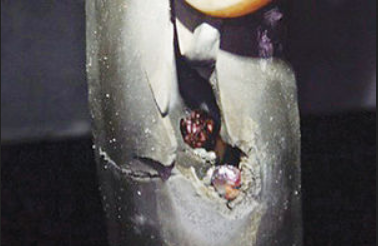 Turbine plugged by angry neighbour in Montana
****
On the back foot around the globe, the wind industry, its parasites and spruikers keep trying to convince the chattering classes that country people just can’t wait to snuggle up next to a cuddly bunch of Vestas V112s (see our post here).
The pitch is that life for rural communities just isn’t complete without a fleet of blade-chucking, pyrotechnic, sonic-torture devices. And that country folks’ currently miserable, downtrodden lives can only improve with the addition of a few hundred whirling, bat-chomping, bird slicing wonders.
The problem is, as with most wind industry bunkum, the facts soon separate from the myth. Notwithstanding their spin-masters’ wild claims about everybody simply “loving wind turbines to bits”, the truth is that there are plenty of wind farm victims who are keen to see them end up in bits; lots of little bits.
View original post 884 more words
Windpusher’s Noise Studies Have Fatal Flaws…..Not Surprising!

Major Flaw Massachusetts : Wind Turbine Health Impact Study 2012
Falmouth turbines110 decibels not 103.5 decibels
The Massachusetts expert panel reviewed literature and public media sources and met three times.
During 2012 the time of the Massachusetts wind health impact study it was assumed the Vestas V-82 commercial wind turbine in Falmouth had a manufacturers specification of a maximum output of 103.5 decibels.
The expert panel was unaware that in 2004 NEG Micon was a former Danish wind turbine manufacturer of the V-82 turbine and had merged with Vestas wind company. The V 82 generates up to 110 decibels before the cut out speed.
A University of Massachusetts overview of the ” 2012 Wind Turbine Health Impact Study” highlights chest pounding at 110 decibels.
The Massachusetts expert panel had no knowledge in 2012 the Vestas V 82 wind turbine generated 110 decibels.
Recently the Town of Falmouth released a warning letter from Vestas Wind Company in 2010 that stated the Vestas V 82 does in fact produce 110 decibels of noise. See letter bottom of page.
………………………………………………………………………………………………………………………………..
The Study :
Massachusetts : Wind Turbine Health Impact Study: Report of Independent Expert Panel January 2012 Prepared for: Massachusetts Department of Environmental Protection Massachusetts Department of Public Health ;http://www.mass.gov/eea/docs/dep/energy/wind/turbine-impact-study.pdf
—————————————————————————————————————————————————
The Overview
Overview: Wind Turbine Health Impact Study. MA, 2012. Overview of. Wind Turbine Health Impact Study: Report of Independent Expert Panel. James Manwell. Department of Mechanical and Industrial Engineering. UMass
Slide 1
webcache.googleusercontent.com
See this section under scroll down the page to infrasound and see section about 110 decibels
MA, 2012
Noise and Vibration –
Infrasound (less than 20 Hz)
can be heard if at very high level (> 110 dB)
can be felt (chest pound) if at very high level (> 110 dB)
Windpushers are so Corrupt, it Will Turn Your Stomach! Liars & Thieves!

Massachusetts Epicenter Of US Wind Turbine Corruption
Falmouth, Massachusetts Ground Zero For Poorly Placed Wind Turbines Using Vestas Wind Turbine Company.
The Massachusetts Technology Collaborative, MTC, today known as the Massachusetts Clean Energy Center, MassCEC, bought two massive commercial Vestas V-82 commercial wind turbines to place in residential communities.
The trail of corruption starts in 2004 with the Massachusetts state legislature and former Governor Deval Patrick also known as “Sally Reynolds” to wind turbine contractors.
The former author of the “Green Communities Act” Massachusetts Speaker of the House Sal DiMasi sits in an undisclosed federal prison serving an eight year sentence for corruption.
Vestas wind company had to OK site plans to install any of its wind turbines in the United States. They gave the OK to install two town owned Vestas V-82 commercial 1.65 megawatt wind turbines in Falmouth, Massachusetts.
Vestas wind company had merged with a company called NEG Micon and was well aware the V-82 megawatt turbine installed in Falmouth produced 109 decibels of noise over twice the manufacturers written specifications. Vestas admitted the noise level in an August 3, 2010 letter to the Town of Falmouth, Massachusetts. The Town of Falmouth hid the letter from the public until recently.
The MassCEC also dropped the warning of two distinct types of noise found in all boiler plate noise studies prior to the Falmouth wind turbine installations. The two types of noise were “regulatory” measured in decibels and “human annoyance” measured in low frequency. The noise tests were corrupt because they omitted warnings that would have alerted residents as they did in other towns prior to Falmouth. If this wasn’t corrupt was is corrupt ?
The Massachusetts Clean Energy Center unable to place the wind turbines in other communities extrapolated acoustic noise test results in Falmouth to come in under Massachusetts Department of Environmental Protection laws. As soon as the first turbine started in 2010 in Falmouth the noise complaints started. The corruption started to take the health and property rights of the residents. The MassDEP notified the Town of Falmouth the turbines are out of state noise compliance. The corrupt politicians always knew it would be.
Everyone involved in the installations of the Falmouth turbines knew the turbines were too loud. They needed a hook to fish in the local officials. The MassCEC unable to sell the loud turbines anywhere including an auction had to bribe local officials with one million dollars in renewable energy funds. They took the bait and went forward illegally permitting the turbines knowing the special permit requirements would require additional tests and notifications. How do you spell c-o-r-r-u-p-t-i-o-n?
Massachusetts officials embarrassed over the corruption over the poor placement of commercial wind turbines in Massachusetts are now going all in on the gamble they took with the health and property rights of its own citizens. More taxpayer money to cover up the corruption !
The MassCEC has provided the Town of Falmouth with another 1.8 million more in renewable energy funds to hire a Boston law firm to outspend the Falmouth victims who lost their health and property rights.
The plan now is to take the victims property through Article 2 at Falmouth Special Town Meeting November 10, 2015. The town wants to take up to 200 residential homes or purchase easements from the homes within 3000 feet of the turbines. The article creates the possibility of a 70 million dollar class action litigation of the homes based on an average cost of 350 thousand per home. The Falmouth Select Board has endorsed this article. The Boston attorneys may as well move to Falmouth for the foreseeable future. Another ten years of litigation.
The Massachusetts courts have ruled the wind turbines were illegally installed. The town now wants to go back in time and ask Town Meeting Members to change the laws in Article 3 at Falmouth Special Town Meeting November 10, 2015. This article creates a group of second class citizens living around the wind turbines. The Massachusetts constitution does not allow second class citizens.
There are many other communities in Massachusetts facing the same issues. Massachusetts has created a special class of second class citizens in Massachusetts who have had their health and property rights taken with no compensation.
It should be noted the news media in Massachusetts has to share the guilt as well. Over the years the main stream media has reproduced state press releases about commercial wind as real stories or what I call “puff” stories. It’s no secret editors of local news papers have retired and gone on the work for the Massachusetts Wind Energy Center. You be good to us and we will be good to you in the old boy network.
When Falmouth Wind 1, the first town owned wind turbine began to spin residents around the turbines immediatly began to complain about noise. During the first year the Falmouth Board of Health issued a special wind turbine noise complaint form. Today the Falmouth Board of Heath is in posession of thousands of certified hand or electronically written noise complaints, documents, studies and memos.
The certified noise complaints are the number one proof that the turbines were built far too close to residential homes. The written certified noise complaints are documents that show the main complaint of a lack of sleep.
Sleep deprivation causes impaired memory and cognitive functioning, decreased short term memory, speech impairment, hallucinations, psychosis, lowered immunity, headaches, high blood pressure, cardiovascular disease, stress, anxiety and depression.
Sleep deprivation is the major complaint from the wind turbine victims in Falmouth and other communities with megawatt turbines placed in residential communities.
The Falmouth Board of Health recently ignored all the thousands of complaints, documents and studies and only produced one document out of thousands for the Special Permitting process going on today. The omission of all the other documents is corruption. What else do you call the constant omission and deleting of the truth ?
Town Meeting Member David Moriarty discusses the upcoming Special Town Meeting concerning Wind 1 on youtube :https://www.youtube.com/watch?v=Vs8SwaR4KjE&feature=youtu.be
Bjørn Lomborg Counts the ‘Enormous’ Cost of the Wind Power ‘Mirage’
Bjorn Lomborg Slams the Enormous Cost, of the Wind Power “Mirage”!

When it comes to assessing the costs, risks and benefits of environmental policy, Bjørn Lomborg is one of the very few that provide balanced, detailed analysis; properly supported by facts and evidence.
The economic choices we make – about allocating scarce resources to unlimited wants – should – as Lomborg consistently points out – be made taking into account all of the costs weighed against properly measured benefits (see our post here).
Bjørn Lomborg has become one of the most high profile critics of insanely expensive and utterly pointless renewable energy policies across the globe (see our posts here and here and here).
In recent times, he’s courted controversy in Australia (well, more like ‘confected outrage’) over the Coalition government’s plans to fund a research wing of an Australian University, where Lomborg and his fellow research travellers could pitch up and undertake proper (rational) investigation in how…
View original post 1,309 more words
 "Mothers Against Wind Turbines™" Phoenix Rising...