Windweasels Take a Much-Deserved Beating, At The Hands of the Wonderful Aussies!!

ARREA Spears Wind Industry’s Parasites During Thumping Senate Appearance

senate review

****

The mandatory RET has seen the cost of around $9 billion worth of Renewable Energy Certificates added to retail power prices and recovered from all Australian power consumers.

Under the Large-Scale Renewable Energy Target, a further $45 billion is designed to be transferred from power consumers to wind power outfits via the REC Tax/Subsidy over the next 17 years:

Wind Power Fraud Finally Exposed: Senator John Madigan Details LRET’s Astronomical 45 Billion Dollar Cost to Power Consumers

The latest LRET deal was struck by the Coalition’s wind industry front men, Ian “Macca” Macfarlane and his youthful ward, Gregory Hunt for no other purpose than saving their mates at Infigen, Vestas & Co – and is doomed to fail, in any event (see our posts here and here).

With that phenomenal cost being added to already spiralling power bills – there will be many more households who will be unable to afford power; adding to the tens of thousands of homes already deprived of what was once a basic necessity of (a decent) life. And thousands more destined to suffer “energy poverty” as they find themselves forced to choose between heating (or cooling) and eating:

Victoria’s Wind Rush sees 34,000 Households Chopped from the Power Grid

Casualties of South Australia’s Wind Power Debacle Mount: Thousands Can’t Afford Power

If our political betters in Canberra don’t get a grip and line up to kill the LRET very soon – in less than a decade – Australia will have created an entrenched energy underclass, dividing Australian society into energy “haves” and “have-nots”.

For a taste of an escalating social welfare disaster, here are articles from Queensland (click here); Victoria (click here); South Australia (click here); and New South Wales (click here).

There’s something deeply troubling about thousands of Australian households descending into gloom after dark – unable to afford the power needed for electric lighting; or troubling, at least, for those with a social conscience.

The ONLY justification for the massive stream of subsidies filched from power consumers and directed to wind power outfits is the claim that wind power reduces CO2 emissions in the electricity sector and, therefore, provides a solution to climate change (or what used to be called “global warming”). The former proposition is a proven fallacy (seeour post here). And, because the planet hasn’t reached boiling point (in bitter defiance of the IPCC’s models), the once concrete relationship between CO2 emissions and increasing global temperature now seems murky, at best.

Claiming the “global warming” moral high ground, wind power proponents continue to blindly chant the mantra that wind power reduces CO2 emissions – although they rarely, if ever, talk about the actual cost of the claimed reductions.  Probably because there are, in fact, no reductions.

STT has focused on the fact that industrial scale wind power does not – and will never – reduce CO2 emissions simply because it is intermittent; being delivered at crazy, random intervals, such that 100% of its capacity must be backed up 100% of the time by fossil fuel generation sources (see our post here).  Accordingly, we call it an environmental fraud.

Because wind power fails to deliver on its primary claim (and the wind industry’s only reason for existence) the $billions in subsidies purloined from taxpayers and power consumers have been received on an utterly false premise. Accordingly, we call it an economic fraud. Wind power, whichever way you slice it, is not, and will never be, a meaningful power generation source.

May 2015 National

With that in mind, power consumers and taxpayers are clearly entitled to ask whether the subsidies received by wind power generators represent a cost-effective means of reducing CO2 emissions; if, indeed, there is any such reduction at all.

One such group is the Association for Research of Renewable Energy in Australia (ARREA): a band of hard-hitting, pro-farming and pro-community advocates, with a mission to ensure Australia gets the sensible energy policy it needs. Rather than the present policy fiasco, foisted on power consumers and rural communities by eco-fascist nutjobs – that wouldn’t know the first thing about markets and/or power generation – and the rent-seekers from the wind industry and its parasites that profit from the useful idiots they pay handsomely to run cover on their behalf: like yes2-ruining-us, GetUp!, the Climate Speculator and ruin-economy.

On that score, ARREA went hell-for-leather in an effort to put some of the real facts before the Senate Inquiry into the great wind power fraud.

ARREA lobbed a cracking submission before the Committee – available here: sub372_ARREA

In its submission ARREA has a very solid crack at the most colossal industry subsidy scheme in the history of the Commonwealth; and the fact that, despite the ridiculous cost of the LRET (originally set up as a $3.8 billion a year subsidy for wind power – but – under the latest 33,000 GWh target – a mere ‘snip’ at $3 billion annually), there has never been any cost/benefit analysis of the policy in its 15 years of operation.

ARREA also takes a well-aimed swipe at the ludicrous claims by the wind industry that each and every MWh of wind power dispatched to the grid results in the abatement (or reduction) of 1 tonne of CO2 gas in the electricity generation sector.

It’s that relationship that is said to justify – what Greg Hunt calls – the “massive $93 per tonne carbon tax” imposed on all Australian power consumers under the LRET (see our post here).

Under the LRET, a REC is issued for each MWh of wind power dispatched to the grid, on the assumption that it in fact reduces or abates 1 tonne of CO2, that would otherwise be emitted by a conventional generator. The figure of $93 talked about by Hunt as a 1 “tonne carbon tax” is the full cost of a REC, that will be reached when the shortfall penalty starts to apply: the full cost of the REC is added to retail power bills.

STT hears that young Greg has taken to arguing that there is no such assumption: his argument appears to be that a REC is issued for a MWh of wind power, irrespective of whether any CO2 is abated elsewhere in the electricity sector; which simply begs the question as to what Australians are getting for their $93 per MWh electricity tax? Hmmm …

ARREA’s submission also picks up on the work done by Dr Joseph Wheatley, a graduate of Trinity College Dublin with a PhD in condensed matter physics from Princeton University:

Wind Industry’s CO2 Abatement Claims Smashed by Top Physics Professor – Dr Joseph Wheatley

ARREA’s top operatives, Doug Bucknell, Mark Glover and Sam McGuiness fronted up to the Inquiry to continue their attack on the greatest economic and environmental fraud of all time.

Senate Select Committee on Wind Turbines – 29 May 2015

BUCKNELL, Mr Lionel Douglas Wentworth (Douglas), Member, Association for Research of Renewable Energy in Australia Ltd

GLOVER, Mr Mark Berry, Member, Association for Research of Renewable Energy in Australia Ltd

McGUINESS, Mr Sam, Member, Association for Research of Renewable Energy in Australia Ltd

CHAIR: Welcome. Could you please confirm that the information on parliamentary privilege and the protection of witnesses and evidence has been provided to you?

Mr Bucknell: Yes.

Mr Glover: Yes.

Mr McGuiness: Yes.

CHAIR: The committee has your submission. I invite you to make a brief opening statement. At the conclusion of your remarks, I will invite members of the committee to put questions to you.

Mr Bucknell: Thank you. First I congratulate you on the conduct of this inquiry. We have been engaged observers at public hearings and have intently followed your progress, including the interim report and the wind turbine commissioner proposal. Your work here will last on the public record and be proven over time to have added a great deal to the public understanding around wind turbines and their relative value or otherwise. In our view, you have covered the detail and the terms of reference items with one major exception, and that is why we are here today.

The ARREA submission directly addresses that missing point, which is the economic impact of wind turbines, including the associated matters on how effective the Clean Energy Regulator has been, the adequacy of monitoring, the energy and emission input and output equations and related matters. This issue is fundamental. It goes to the very heart of what the Renewable Energy (Electricity) Act 2000, the act, is supposed to be doing. Specifically, if the second object of the act, reducing greenhouse gas emissions, and the third object being ecologically sustainable are to be met, the encouragement of additional generation, which is the first object, must be achieved by displacing thermal production. In order to assess the economic impact, historical performance data is crucial and a fundamental benchmark. Under the current regime adopted by the CER, it appears that no real effort has been made to verify the claims by the wind industry as to the actual performance of wind turbines as they relate to the fundamental task of reducing greenhouse gases in the electricity sector.

This is why we, ARREA, commissioned the Wheatley study to independently investigate the effectiveness of wind power in reducing greenhouse gas emissions from electricity generation in Australia during 2014, using actual empirical five-minute data from each of the grid-connected generators. We were at the Joe Wheatley teleconference you held in Canberra. We are not here to revisit the technical detail. That is why we and you got the expert in. However, we are here to focus on the outcome, to connect the dots, to explain why this is important to the terms of reference and your final report recommendations.

As a headline reminder, analysis of the actual data in the NEM in 2014 shows that wind power production has overstated the emission reductions by 22 per cent—that is, 100 per cent minus 78. It is 22 per cent overstated. This percentage will continue to increase as the percentage of wind power entering the NEM increases. The current lack of performance measurement is just not acceptable. It would not be tolerated in any other industry, let alone one reliant on mandated subsidies. It should not be up to entities like ARREA to commission this independent research. Performance measurement should be a fundamental and first step in any oversight regime, particularly where taxpayers’ funds and electricity consumers are involved. The CER should have independently commissioned this research, or the Senate, or perhaps in the future the wind turbine commissioner. The CER should be admonished for this failure to properly monitor the true impact of an industry which comes at a high cost to the nation’s economy and electricity consumers in particular.

Many are asking: is this regulator asleep at the wheel? Do we have another HIH royal commission occurring here? Or do they already have the information but are not releasing it? Senators should be concerned about the impact that this lack of measurement has on the CER fulfilling its responsibilities under the act and regulation. There are financial flow-on impacts to electricity consumers and in respect of public moneys received by inappropriately issued RECs. The issue of CER’s effectiveness exists regardless of your political views, regardless of whether you like or dislike wind turbines and regardless of the environmental and social impact issues. This is a public accountability issue. We are urging all to make a joint recommendation on this matter, and that involves an audit of the CER.

In 2014 electricity consumers effectively paid wind farms $100 for emissions reduction and they got only $78 worth of value. The dollar value of these certificates that did not lead to a reduction in emissions was estimated at $70 million in 2014 alone. What is more, it will get worse year by year as more turbines are installed. This 22 per cent or $70 million in ineffective wind production is not ecologically sustainable as defined by the act. The act’s definition of ‘ecologically sustainable’ includes ‘promoting improved valuation, pricing and incentive mechanisms’. That is the act’s definition. Including the 22 per cent ineffective wind production is clearly not consistent with this principle. In particular, it clearly distorts valuation and pricing and creates unjustified incentives. Under regulation 15A(a) electricity omitted from this calculation includes ‘electricity that was generated by using an eligible renewable energy source that is not ecologically sustainable’. Let me restate that: electricity produced by a wind turbine that is not ecologically sustainable cannot be counted. They cannot issue RECs for it.

The approach taken above is what parliament intended for regulation 15A(a). The issue was also the core of the amending act—the Renewable Energy (Electricity) Amendment Act 2006—with the explanatory statement saying that it would:

… enhance market transparency and improve business certainty, provide increased opportunities for solar and bioenergy technologies, and improve the operational effectiveness and efficiency of the Act.

The Wheatley research has now clearly established using the actual empirical 2014 data that 22 per cent of the electricity generated by wind as the eligible renewable energy source in 2014 was not ecologically sustainable and should not have received RECs.

No-one likes being ripped off, but what is worse is when the gatekeeper, the regulator, the CER, is complicit or is turning a blind eye. Please do not add insult to injury to your electors by ignoring this problem, which is only set to get worse. Senator Back has repeatedly asked the CER for details on regulation 15A(a). The CER has responded to those questions, including on notice, with answers relating to other regulations, including regulation 15A and 15A(b). They have tried to answer using ineligible energy sources, which is regulation 15 and not relevant to the question asked. It appears as though the CER is avoiding answering the question or making up its own legislative rules.

ARREA believes renewable energy is very important for the sustainability of Australia’s future. However, the current policy settings in regard to wind turbines are flawed. Their implementation has led to systemic failure. The simple production of electricity from wind, subsidised or otherwise, to the extent that it does not effectively offset thermal production does not serve any material economic purpose. It duplicates electricity production, distorts market signals, especially compared to other renewable energy sources such as solar, and leads to inappropriate public perceptions about the value of wind power, to the detriment of the long-term sustainability of our nation.

Our recommendations as per our report stand, and those recommendations are that this committee:

  1. Receive the full Phase 1 report—CO2 Emissions Savings from Wind Power in the National Electricity Market (NEM), by Dr Joseph Wheatley, Biospherica Risk Ltd, Ireland.
  2. Obtain an assurance from the CER that nominated persons—the wind energy companies—will be advised of the need to apply, consistent with the Act and its regulations, a 0.78:1 relationship when issuing certificates.
  3. Confirm that the Regulator will use its powers under the Act, including Part 15A Civil Penalty Orders and/or Enforceable Undertaking under S15B, to uphold the purposes of the Act.
  4. Seek that the Australian National Audit Office (ANAO), conduct a performance audit on the CER’s compliance with its role under the legislation. In particular:
    1. What information did the CER hold on wind effectiveness in offsetting CO2 emissions at both 30 June 2014 (end of financial year) and 3 May 2015?
    2. What Risk Management and Fraud Mitigation practices and processes are in place, have they been appropriate? If not, who should be held responsible and what rectification actions is required.
    3. If all public monies collected in respect of the Act are appropriate.
    4. If there are financial or other incentives, including but not limited to, the collection of public monies under the Act that are distorting the CER’s role in achieving the Objects of the Act.
    5. If the expenditure of public monies by the CER has been appropriately focused on achieving the Acts objects.

CHAIR: Thank you, Mr Bucknell.

Senator LEYONHJELM: I read your report yesterday, at the end of 550 other pages.

Mr Bucknell: Thank you, Senator.

Senator LEYONHJELM: If my questions were answered in your submission, that is the reason: it has gone in one eye and out the other. I assume the 0.78 ratio which I think you mentioned is attributable to spinning reserve. Is it?

Mr Glover: Can I just answer that one. The Wheatley report basically showed that wind power supplied 4½ per cent of system demand in 2014 but only reduced CO2 emissions by 3½ per cent. Wind power generation is intermittent; in fact, in Australia it fails completely over 100 times a year. The grid must supply sufficient power at all times, and therefore, when the wind is blowing, backup power must be available at all times. In practice, a significant fraction of South Australia’s wind power displaces low-emissions gas generation within South Australia, and in fact in New South Wales we are importing power from South Australia and it is displacing black coal. The dirtiest power of all is brown coal. That is not being displaced at all by wind power generation.

Senator LEYONHJELM: Yes, but the explanation for the 0.78 is this backup that you are referring to?

Mr Glover: He did not measure spinning reserves or cycling. That is not even included in that. In fact, if we go forward, if we can get more data—in the back of Wheatley’s report he lists his requirements—I think that 22 per cent inefficiency will actually become greater, because that was not measured.

Mr Bucknell: If your direct question is in relation to 0.78, 0.45 production by wind only offsets 0.35 in emissions. If you divide one by the other, you get 0.78.

Senator LEYONHJELM: Have you compared that to solar, geothermal and hydro?

Mr Glover: We have not done the studies there. To an extent, what solar is actually doing is reducing demand on the grid. Households that are running on solar reduce the total demand on the grid, so it is a lot harder to measure, because we do not know how much solar is being produced at any one point in time.

Senator LEYONHJELM: I was talking about large-scale solar.

Mr Glover: No, we have not scoped that.

Senator LEYONHJELM: Are you confident that the ANAO is the appropriate organisation to investigate the performance of the Clean Energy Regulator? My impression is that it is primarily concerned with accuracy of financial accounts.

Mr Bucknell: That is correct. There are two types of audits: there are financial accounts audits and there are performance audits. The audit that we are asking for is an audit of the correspondence that is held within the CER, particularly in relation to regulation 15A(a). Why have we got to the point we have got to? Why is this 22 per cent currently being counted? Why is it currently a one to one relationship? When RECs are issued, there are public moneys that are received by the CER, so it is a financial and a performance issue. We think the ANAO is set up to do those types of audits. This is not an unusual request; it is simply a request for an audit.

Senator URQUHART: Thanks very much, Mr Bucknell. How many members does ARREA have?

Mr Bucknell: Seven.

Senator URQUHART: How do you go about becoming a member? I have looked for you on the internet. I cannot find a street address, a website or a Facebook page, so how do you—

Mr Bucknell: We are a public company that has been registered for a number of years. In fact, I can give you some details on that. You are offered membership by the organisation, and we are on the public record.

Senator URQUHART: Okay, but you do not have a website, a street address or a Facebook page? I have not been able to find any.

Mr Bucknell: No.

Senator URQUHART: Can you describe the structure of your organisation. Who are the key personnel?

Mr Bucknell: The three directors are on the public record. We have seven members, as we have described. We are an organisation who are most concerned about ensuring that renewable energy in Australia and the decarbonisation of the Australian economy are done in the most efficient and effective way. That is why we have raised funds to have the Wheatley research done.

Senator URQUHART: I understand that spokespeople for your organisation are Tony Hodgson and Rod Pahl—is that correct? And they were also spokespeople for an opponent wind group called Friends of Collector—is that right?

Mr Bucknell: I understand that to be correct.

Senator URQUHART: You said that you have not received any research grants and that you raised that money yourselves through your organisation.

Mr Bucknell: That is correct. These are privately raised funds. As I said in my opening statement, we think this is research that should have been done independently by the CER or by the Senate. Public moneys should have been used and, in our view, they should be admonished for the fact that they have not done that research, because it is required in order for them to be able to know how many certificates should be issued underneath the act.

Senator URQUHART: Do any of the key office holders within your association have any research qualifications?

Mr Glover: No, I do not think so. We have a number of people in the organisation with a number of different skills. I am actually a qualified geologist, so I have a scientific background. Mr Bucknell used to work for APRA, so he knows how the regulators work. I was also the Australian country treasurer for the Bank of America Merrill Lynch for over 10 years, so I have a strong background in banking. We have backgrounds in PR, economists and stuff like that who are all members. It is a broad background.

Mr McGuiness: I have been a farmer for 29 years and I have dealt with parasites most of that time, so I am pretty well qualified in this area too.

Senator URQUHART: I presume you mean parasites on the backs of sheep or cattle.

Mr McGuiness: Just all parasites. There are an awful lot.

Senator URQUHART: Aside from the work that you commissioned Joseph Wheatley to do, what other research have ARREA undertaken? Have you undertaken any other research or is it just the work that you commissioned Joe Wheatley to do?

Mr McGuiness: That is the only commissioned work that we have done so far. There are other works to do with waste to energy. Part of our group is looking into stand-alone solar as well, especially in regional areas.

Senator URQUHART: You are looking at doing some research into that?

Mr McGuiness: Absolutely.

Mr Bucknell: And we made a submission in relation to the review of the renewable energy target.

Senator URQUHART: Thank you very much.

CHAIR: Gentlemen, in order to accurately measure CO2 abatement going forward and the concerns that you have raised, what additional data and resources are required, do you believe?

Mr Glover: The Wheatley report, as I said earlier, omitted start-up and power plant cycling. CO2 emissions were not calculated for power stations not despatching electricity to the grid. Most coal fired power stations are at their most efficient when running at 100 per cent capacity. As this capacity is reduced, CO2 emissions per megawatt hour rise. If this reduction in capacity is due to wind power generation entering the grid, this increase in CO2 inefficiency needs to be measured. The input data needs to be improved with actual fuel use data by individual generators at short time intervals, preferably five-minute time intervals. An emissions parameter for individual generators is required to include zero load energy consumption data, that is when they are not producing, incremental heat rate slopes—this is starting to get into the engineering side—start-up energy costs and thermal relaxation times. Obviously, if you shut a power station down because wind power comes on, the coal is still burning, the heat has to dissipate out of that power station and CO2 is still being produced.

This data will help measure efficiency of generators at different capacity points, as well as measure CO2 emissions when these generators are not supplying electricity. In many cases these coal fired power stations are on standby, where they are burning coal but not supplying electricity—in essence, waiting for the wind to drop. As we have stated, there have been other reports done that I think show the whole wind power fleet in Australia switches off 130 times a year. The other thing required is: both ‘sent out’ data and ‘as generated’ data are needed for each generator. ‘As generated’ data basically includes the power used in the generation process, whereas ‘sent out’ is the actual power delivered to the grid. Obviously, there is a certain amount of electricity used within the plant; that needs to be picked up as well.

We are proposing that a detailed multi-year CO2 abatement study is needed to reduce the statistical uncertainty and provide clear information about the variability of wind power effectiveness. I suppose really what we are suggesting is that the Clean Energy Regulator would probably need to create a full-time position to properly calculate these CO2 emissions. The computing power is there to do it on a five-minute basis, if we can get the real fuel feed in data and all the other engineering data for each generator. I think it is probably a full-time job for one person.

Mr McGuiness: What happens is: to start a coal fired power station, they might use up to 35,000 or 40,000 litres of diesel to get it up to an operating temperature. This is a small one—say, a 150 megawatt one. When you get it up to temperature—and I will use an example of one that I know a little bit about in the Hunter—that consumes 80 tonnes per hour of coal to keep it ticking along. It might not be generating any electricity, but you cannot stop feeding it coal. They have to have a thermal efficiency where they do not crack and heat and cool down; otherwise they break. Then it gets a bit complicated. You have thermal reserve, where it is hot and generating a small amount of steam. It uses a thermal generator. Then you have spinning reserve, where it is spinning, and then you have spinning reserve that is synchronised to the grid. Basically you just dump the clutch and she is jamming sparks into the grid. All of those have to stay warm the whole time. You only shut a big thermal generator down if you have a breakdown or a maintenance schedule. These people are scheduled generators. They schedule into the grid to supply electricity 12 to 18 months ahead of when they actually generate. When wind comes into the system, they pull down—but only for a very short period of time. They have to be sitting there so, if something happens, that spinning reserve is ready to drop into the grid.

So there are thermal reserves and spinning reserves. The emissions on those, because they are not generating into the grid at the time, are not necessarily calculated. If we got the correct data and the government did the correct job and got their legislation so it worked, rather than nice and fluffy at the moment, you would get some real evidence of what is going on—and then you would be fair dinkum about getting results.

Mr Glover: Interestingly, under the last carbon tax regime, you only paid a carbon tax when you were supplying electricity to the grid. There was no carbon tax charged if you just happened to be burning coal and not supplying electricity.

Senator DAY: Could you just elaborate further, Mr Bucknell, on the difference between ecologically sustainable wind turbines and non-ecologically sustainable ones?

Mr Bucknell: Absolutely. I think this does go to the heart of a number of questions asked in relation to regulation 15 and regulation 15A. Regulation 15, which is how the CER answered the question on 15AA, relates to eligible and not eligible energy sources. For the record, wind farms do only use eligible renewable energy sources under the act, by definition, but it is not relevant to the question. They do not use any ineligible energy sources, but it is not relevant to the question of reg 15AA. Reg 15AA excludes electricity produced by a wind farm that is not ecologically sustainable. That is why the 22 per cent in 2014, and an increasing percentage in future years to probably 30-plus per cent, is not ecologically sustainable.

Perhaps I could just run through that a bit more clearly for you, if I can. ‘Ecologically sustainable’ is defined in the act. It means an action that is consistent with the following principles of ecologically sustainable development:

Decision-making processes should effectively integrate both long-term and short-term economic, environmental, social and equitable considerations.

That is point a). And then it goes on to b), which is irreversible environmental damage—not relevant. It goes on to intergenerational equity, which is not particularly relevant, and the conservation of biological diversity, which is not particularly relevant. But point e) is:

improved valuation, pricing and incentive mechanisms should be promoted.

Actions that improve valuation, pricing and incentive mechanisms are ecologically sustainable. Excluding the 22 per cent is ecologically sustainable. It is defined in the act. We just want them to do it.

CHAIR: There being no further questions, we thank you for your appearance here today before the committee.

Hansard, 29 May June 2015

Mr Bucknell’s, Mr Glover’s and Mr McGuiness’ evidence is available from the Parliament’s website here.

mosquito-7192_lores

Silly German Windpushing Politicians….They can’t Say We Didn’t Warn Them!

Germany’s Wind Power Debacle Escalates: Nation’s Grid on the Brink of Collapse

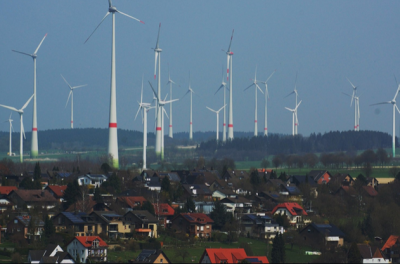
German wind farm

Calamitous Planning: German Wind Parks Overload Power Grid … “At Its Limits” … Record 50,000 Grid Interventions In May!
NoTricksZone
Pierre Gosselin
1 July 2015

Online German NDR public radio here wrote last week how northern Germany’s power grid had suffered a major bottleneck that led to the overload of the Flensburg-Niebüll power transmission line in Schleswig Holstein last week.

Transformer

North German transformer stations constantly overloaded by wind power. Photo image cropped here (not a German station, for illustration only).

The overload resulted from a power surge from North Sea wind parks when winds picked up a bit. What is unusual in this case, however, is that there was no storm present and the overload was caused by normal wind fluctuations. Thus the incident illustrates the increasing volatility of wind as a power supply, even under regular weather conditions.

At its limits

It turns out that intervening in power grids to avert a widespread power supply breakdown is nothing new in Germany. NDR writes that nowadays power engineer Stefan Hackbusch at the grid’s control center in Northern German increasingly has to intervene even when there are even moderate breezes. The north German public radio media outlet writes: “Because of the strong growth in wind park installations, the power grid up north is at its limits.”

Intervened 50,000 times in May

As winds pick up with little warning, engineers at control centers constantly have to keep a close eye out and be ready to act at a minute’s notice and intervene if the power surges (or drops) to dangerous limits. To prevent overloading of the grid, control centers often have to shut down wind parks until the power supply moves into a safe range. These unplanned wind park shutdowns are occurring more and more often, NDR writes. “Switching off has become much more frequent the workers at the control center confirm. Transformer stations in Schleswig-Holstein had to have their output reduced 50,000 times in May – a record.

“Waste electricity” skyrocketing

Not only is grid stability a problem, but “waste power” is also growing astronomically, NDR writes, citing the Bundesnetzagentur (German Network Agency), that 555 gigawatt-hrs of renewable power went unused in 2013 because of overloading and the surplus had to be discarded. The trend of “waste electricity” is skyrocketing, NDR writes.

According to the provisions of Germany’s EEG renewable energy feed-in act, waste electricity still needs to be paid for, which means that consumers foot a bill for something that is never delivered. Consumers are also required to pay for the electricity that doesn’t get produced when a wind park gets shut down. Wind park operators get paid whether they feed in or not.

Grid bottleneck dampens new installations

One solution for the German grid overloading from the uncontrollable wind and sun sources would be to vastly expand the German national power grid so that wind power produced near the North and Baltic seas power could get transmitted to the industrial south, where demand is big.

But here too the costs of building the such transmission power lines are astronomical and permitting entails a bureaucratic mess.

Moreover political opposition against these lines is mounting rapidly. Experts say that the earliest, most optimistic completion date for a major power transmission expansion is 2022. This however is now looking totally unrealistic, as pie in the sky.

With the German grid often becoming hopelessly overloaded and with no real expansion in sight, the future looks bleak for wind and solar power systems suppliers.

With no place to send the power, there’s no need for new installations. Orders and contracts for new projects have been drying up and wind and solar companies are now being hit hard.
NoTricksZone

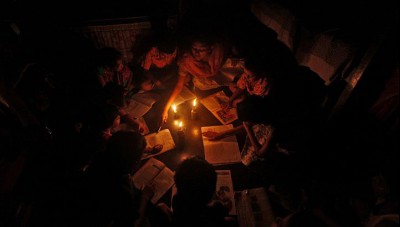
studying candle

What appears above isn’t exclusive to Germany, it’s part and parcel of trying to integrate an entirely weather dependent generation “system” into electricity grids designed to operate in a steady, stable state; and that includes Australia.

In the video that follows, an electrical engineer, Andrew Dodson explains – in somewhat technical terms – the lunacy of trying to distribute wind power via a grid deliberately designed around on-demand generation sources. STT recommends it to anyone with even the vaguest interest in how our electrical grid works.

At the simplest level, think of our distribution grid as akin to a mains water distribution system. In order to function, the pipes in such a system need to be filled at all times with a volume of water equal to their capacity and, in order to flow in the direction of a user, the water within the pipes needs to be maintained at a constant pressure.

Where a household turns on a tap, water flows out of the tap (in electrical terms “the load”); at the other end an equal volume of water is fed into the system and pumps fire up to maintain the pressure within it (although gravity often does the work).

In a similar fashion, an electricity grid can only function with the required volume of electricity within it; maintained at a constant pressure (voltage) and frequency (hertz) – all of which fluctuate, depending on the load and the input.

What Andrew Dodson makes crystal clear is that these essential certainties (essential, that is, to maintaining a stable and functioning electricity grid) have been tipped on their head by the chaos that is wind power.

What Andrew has to say about wind power, in general, has special pertinence to Australians; given the fact that our Coalition government has just locked in a $45 billion electricity tax – which is to be directed at wind power outfits; and for no other purpose than to help them spear another 2,500 of these things all over the country.

****

It’s Happening All Over the World. Electricity is Becoming a “Luxury Item”! Energy poverty!

EPA’s war on the poor

Friend,

What happens when government regulations cause more harm than they prevent?

In an important new research article at CFACT.org, senior policy advisor Paul Driessen joins with energy analyst Roger Bezdek to consider EPA’s “Clean Power Plan” and ask, “what effect will the regulation itself have on poor and minority communities?”

The answer is shocking.

“The plan will result in higher electricity costs for businesses and families, lost jobs, lower incomes, higher poverty rates, reduced living standards, and diminished health and welfare, our exhaustive recent study found. This damage will be inflicted at the national level and in all 50 states. The CPP will impact all low-income groups, but hit America’s 128 million Blacks and Hispanics especially hard.”

Obama Administration bureaucrats want to dramatically increase the cost of electricity, despite the fact that these painfully expensive rules will provide little or no meaningful benefit to the climate or the environment.

“The EPA regulations will significantly increase the minority family ‘energy burden’ – the percentage of annual household incomes they must pay for residential energy bills – and thus the number of families driven into energy poverty. Inability to pay energy bills is second only to inability to pay rent as the leading cause of homelessness, so increasing numbers of poor and minority families will become homeless.”

Over the weekend we shared a Hoover Institution piece on Facebook, “When Bureaucrats Get Way With Murder,” which calculates that every $7 to $10 million in regulatory costs induces one fatality through what is called the “income effect.”  The author concludes that excessive regulation is tantamount to “statistical murder.”
When bureaucratic ideologues over-regulate, the law of unintended consequences will take its toll.

Unfortunately, the poorest and most vulnerable among us will find that toll hardest to pay.

For nature and people too,

Craig Rucker
Executive Director

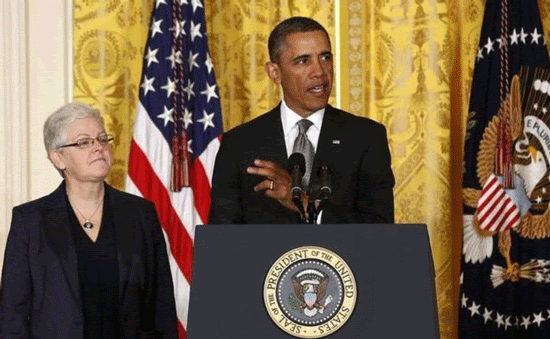
Obama and EPA imperil minority welfare

By Paul Driessen

& Roger Bezdek

Nobel Prize-Winner Speaks Out Against “Gov’t-Induced Climaphobia”!

Climate Depot Exclusive

Dr. Ivar Giaever, a Nobel Prize-Winner for physics in 1973, declared his dissent on man-made global warming claims at a Nobel forum on July 1, 2015.

“I would say that basically global warming is a non-problem,” Dr. Giaever announced during his speech titled “Global Warming Revisited.

Image result for ivar giaever

Giaever, a former professor at the School of Engineering and School of Science Rensselaer Polytechnic Institute, received the 1973 physics Nobel for his work on quantum tunneling. Giaever delivered his remarks at the 65th Nobel Laureate Conference in Lindau, Germany, which drew 65 recipients of the prize. Giaever is also featured in the new documentary “Climate Hustle”, set for release in Fall 2015.

Giaever was one of President Obama’s key scientific supporters in 2008 when he joined over 70 Nobel Science Laureates in endorsing Obama in an October 29, 2008 open letter. Giaever signed his name to the letter which read in part: “The country urgently needs a visionary leader…We are convinced that Senator Barack Obama is such a leader, and we urge you to join us in supporting him.”

But seven years after signing the letter, Giaever now mocks President Obama for warning that “no challenge poses a greater threat to future generations than climate change”. Giaever called it a “ridiculous statement.”

“That is what he said. That is a ridiculous statement,” Giaever explained.

“I say this to Obama: Excuse me, Mr. President, but you’re wrong. Dead wrong,” Giaever said. (Watch Giaever’s full 30-minute July 1 speech here.)

“How can he say that? I think Obama is a clever person, but he gets bad advice. Global warming is all wet,” he added.

“Obama said last year that 2014 is hottest year ever. But it’s not true. It’s not the hottest,” Giaever noted. [Note: Other scientists have reversed themselves on climate change. See: Politically Left Scientist Dissents – Calls President Obama ‘delusional’ on global warming]

The Nobel physicist questioned the basis for rising carbon dioxide fears.

“When you have a theory and the theory does not agree with the experiment then you have to cut out the theory. You were wrong with the theory,” Giaever explained.

Global Warming ‘a new religion’

Giaever said his climate research was eye opening. “I was horrified by what I found” after researching the issue in 2012, he noted.

“Global warming really has become a new religion. Because you cannot discuss it. It’s not proper. It is like the Catholic Church.”

Concern Over ‘Successful’ UN Climate Treaty

“I am worried very much about the [UN] conference in Paris in November. I really worry about that. Because the [2009 UN] conference was in Copenhagen and that almost became a disaster but nothing got decided. But now I think that the people who are alarmist are in a very strong position,” Giaever said.

“The facts are that in the last 100 years we have measured the temperatures it has gone up .8 degrees and everything in the world has gotten better. So how can they say it’s going to get worse when we have the evidence? We live longer, better health, and better everything. But if it goes up another .8 degrees we are going to die I guess,” he noted.

“I would say that the global warming is basically a non-problem. Just leave it alone and it will take care of itself. It is almost very hard for me to understand why almost every government in Europe — except for Polish government — is worried about global warming. It must be politics.”

“So far we have left the world in better shape than when we arrived, and this will continue with one exception — we have to stop wasting huge, I mean huge amounts of money on global warming. We have to do that or that may take us backwards. People think that is sustainable but it is not sustainable.

On Global Temperatures & CO2

Giaever noted that global temperatures have halted for the past 18 plus years. [Editor’s Note: Climate Depot is honored that Giaever used an exclusive Climate Depot graph showing the RSS satellite data of an 18 year plus standstill in temperatures at 8:48 min. into video.]

The Great Pause lengthens again: Global temperature update: The Pause is now 18 years 3 months (219 months)

Giaever accused NASA and federal scientists of “fiddling” with temperatures.

“They can fiddle with the data. That is what NASA does.”

“You cannot believe the people — the alarmists — who say CO2 is a terrible thing. Its not true, its absolutely not true,” Giaever continued while showing a slide asking: ‘Do you believe CO2 is a major climate gas?’

“I think the temperature has been amazingly stable. What is the optimum temperature of the earth? Is that the temperature we have right now? That would be a miracle. No one has told me what the optimal temperature of the earth should be,” he said.

“How can you possibly measure the average temperature for the whole earth and come up with a fraction of a degree. I think the average temperature of earth is equal to the emperor’s new clothes. How can you think it can measure this to a fraction of a degree? It’s ridiculous,” he added.

Silencing Debate

Giaever accused Nature Magazine of “wanting to cash in on the [climate] fad.”

“My friends said I should not make fun of Nature because then they won’t publish my papers,” he explained.

“No one mentions how important CO2 is for plant growth. It’s a wonderful thing. Plants are really starving. They don’t talk about how good it is for agriculture that CO2 is increasing,” he added.

Extreme Weather claims

“The other thing that amazes me is that when you talk about climate change it is always going to be the worst. It’s got to be better someplace for heaven’s sake. It can’t always be to the worse,” he said.

“Then comes the clincher. If climate change does not scare people we can scare people talking about the extreme weather,” Giaever said.

“For the last hundred years, the ocean has risen 20 cm — but for the previous hundred years the ocean also has risen 20 cm and for the last 300 years, the ocean has also risen 20 cm per 100 years. So there is no unusual rise in sea level. And to be sure you understand that I will repeat it. There is no unusual rise in sea level,” Giaever said.

“If anything we have entered period of low hurricanes. These are the facts,” he continued.

“You don’t’ have to even be a scientist to look at these figures and you understand what it says,” he added.

“Same thing is for tornadoes. We are in a low period on in U.S.” (See: Extreme weather failing to follow ‘global warming’ predictions: Hurricanes, Tornadoes, Droughts, Floods, Wildfires, all see no trend or declining trends)

“What people say is not true. I spoke to a journalist with [German newspaper Die Welt yesterday…and I asked how many articles he published that says global warming is a good thing. He said I probably don’t publish them at all. Its always a negative. Always,” Giever said.

Energy Poverty

“They say refugees are trying to cross the Mediterranean. These people are not fleeing global warming, they are fleeing poverty,” he noted.

“If you want to help Africa, help them out of poverty, do not try to build solar cells and windmills,” he added.

“Are you wasting money on solar cells and windmills rather than helping people? These people have been misled. It costs money in the end to that. Windmills cost money.”

“Cheap energy is what made us so rich and now suddenly people don’t want it anymore.”

“People say oil companies are the big bad people. I don’t understand why they are worse than the windmill companies. General Electric makes windmills. They don’t tell you that they are not economical because they make money on it. But nobody protests GE, but they protest Exxon who makes oil,” he noted.

#

Dr. Ivar Giaever resigned as a Fellow from the American Physical Society (APS) on September 13, 2011 in disgust over the group’s promotion of man-made global warming fears.

In addition to Giaever, other prominent scientists have resigned from APS over its stance on man-made global warming. See: Prominent Physicist Hal Lewis Resigns from APS: ‘Climategate was a fraud on a scale I have never seen…Effect on APS position: None. None at all. This is not science’

Other prominent scientists are speaking up skeptically about man-made global warming claims. See: Prominent Scientist Dissents: Renowned glaciologist declares global warming is ‘going to be a big plus’ – Fears ‘Frightening’ Cooling – Warns scientists are ‘prostituting their science’

Giaever was also one of more than 100 co-signers in a March 30, 2009 letter to President Obama that was critical of his stance on global warming. See: More than 100 scientists rebuke Obama as ‘simply incorrect’ on global warming: ‘We, the undersigned scientists, maintain that the case for alarm regarding climate change is grossly overstated’

Giaever is featured on page 89 of the 321 page of Climate Depot’s more than 1000 dissenting scientist report (updated from U.S. Senate Report). Dr. Giaever was quoted declaring himself a man-made global warming dissenter. “I am a skeptic…Global warming has become a new religion,” Giaever declared.I am Norwegian, should I really worry about a little bit of warming? I am unfortunately becoming an old man. We have heard many similar warnings about the acid rain 30 years ago and the ozone hole 10 years ago or deforestation but the humanity is still around,” Giaever explained. “Global warming has become a new religion. We frequently hear about the number of scientists who support it. But the number is not important: only whether they are correct is important. We don’t really know what the actual effect on the global temperature is. There are better ways to spend the money,” he concluded.

Giaever also told the New York Times in 2010 that global warming “can’t be discussed — just like religion…there is NO unusual rise in the ocean level, so what where and what is the big problem?”

Related Links:

Exclusive: Nobel Prize-Winning Physicist Who Endorsed Obama Dissents! Resigns from American Physical Society Over Group’s Promotion of Man-Made Global Warming – Nobel Laureate Dr. Ivar Giaever: ‘The temperature (of the Earth) has been amazingly stable, and both human health and happiness have definitely improved in this ‘warming’ period.’

Nobel Prize Winning Physicist Ivar Giaever: ‘Is climate change pseudoscience?…the answer is: absolutely’ — Derides global warming as a ‘religion’

2012: Nobel Prize Winning Physicist Ivar Giaever: ‘Is climate change pseudoscience?…the answer is: absolutely’ — Derides global warming as a ‘religion’ – ‘He derided the Nobel committees for awarding Al Gore and R.K. Pachauri a peace prize, and called agreement with the evidence of climate change a ‘religion’… the measurement of the global average temperature rise of 0.8 degrees over 150 years remarkably unlikely to be accurate, because of the difficulties with precision for such measurements—and small enough not to matter in any case: “What does it mean that the temperature has gone up 0.8 degrees? Probably nothing.”

When Science IS Fiction: Nobel Physics laureate Ivar Giaever has called global warming (aka. climate change) a ‘new religion’ -When scientists emulate spiritual prophets, they overstep all ethical bounds. In doing so, they forfeit our confidence’

American Physical Society Statement on Climate Change: No Longer ‘Incontrovertible,’ But Still Unacceptable

Read more: http://www.climatedepot.com/2015/07/06/nobel-prize-winning-scientist-who-endorsed-obama-now-says-prez-is-ridiculous-dead-wrong-on-global-warming/#ixzz3fDoFYSSF

The Windfighters in Scotland, are not Easily Duped. Windweasel lies do not pass the muster!

Scots Fight-back as Wind Power Outfit Aims to Thump its ‘Community Message’ Home

bond-jaws-moonraker

****

Remember all those glowing stories about wind power outfits being welcomed into rural communities with open arms? You know, tales about how farmers are dying to have turbines lined up all over their properties? How locals can’t wait to pick up some of the thousands of permanent,high paying jobs on offer? How developers are viewed with the kind of reverence reserved for Royalty?

No?

We’ve forgotten them too.

If such a place ever existed? – it was probably just a case of one too many Single Malts, causing the usual senses to take an unscheduled break.

After years of being lied to, bullied, berated and treated like fools (at best) and “road-kill” (at worst), for most, the ‘gloss’ comprising wind industry PR efforts to ‘win hearts and minds’ has well and truly worn off.

These days, the communities aren’t so gullible; they aren’t so welcoming; and they aren’t willing to take it lying down. Despite having the skills of the best spin doctors in the business at its disposal, it’s “outrage” that’s become the word synonymous with the wind industry, wherever it goes. In short, rural communities have had enough – and they’re fighting back, by fair means and foul:

Angry Wind Farm Victims Pull the Trigger: Turbines Shot-Up in Montana and Victoria

Having lost the battle to ‘shape the debate’ – with soothing words about listening to ‘community concerns’ – wind power outfits are sending in the muscle, instead. Here’s a story from the Highlands on how one wind power outfit’s “Fight Club” inspired PR effort ended.

Drama at Highland windfarm event as man is allegedly assaulted by security staff
The Press and Journal
Jamie McKenzie
24 June 2015

Scots Windfarm

Police were called to a north windfarm exhibition yesterday after a member of the public claimed he was assaulted by security staff brought in to prevent trouble.

The drama unfolded outside Kiltarlity Village Hall, where plans for a 10-turbine scheme went on display for the first time.

Druim Ba Sustainable Energy Ltd (DBSE Ltd) wants to build the devices on the nearby Blairmore Estate.

It is the company’s second attempt to build a windfarm in the area after previous plans were rejected by the Scottish Government in 2013.

People attending the exhibition were shocked to find four employees from a local firm, Castle Security, had been drafted in for one-day event.

And just a few minutes after the display opened, one visitor complained that he had been involved in an altercation with a member of the team.

Cosmo MacKenzie, of Fanblair, Kiltarlity, said the man was “not pleased” and tried to stop him going into the hall.

He claimed he was then shoved as he tried to enter a second and third time.

“I called the police,” he said.

“It’s a distressing way to start the event. I am going in the door and the first thing I come to are security guards preventing people from coming into public property.”

Mr MacKenzie was allowed inside to view the plans after speaking to a security supervisor.

Two police officers arrived a short time later and spent 45 minutes taking statements from him and the staff at the centre of the allegations.

The security workers said they were there to provide “a bit of reassurance and to make people feel more comfortable” after problems at a consultation event for the previous application.

DSBE representatives at the event refused to comment on the windfarm plans or the security presence.

The company’s previous proposals – for 23 turbines – sparked outrage locally and prompted a huge campaign against the development.

Some of those protesters attended the exhibition yesterday.

The new plans involve reducing the size of the windfarm and cutting the height of turbines from 490ft to 415ft.

After viewing the designs, opponents sat at a table and chairs outside the hall and asked others to sign a petition against the development.

Denise Davis, who is leading the local campaign against the scheme, said: “We have been to dozens of exhibitions and have never seen security before.

“The proposal was refused locally by Highland Council and the Scottish Government. How much more of a message do they (DSBE) need? This new proposal is not really an improvement and they are continuing to use old noise monitoring data.”

Fellow campaigner Lyndsey Ward said: “There are more security guards here than there are members of staff inside.

“This is a ridiculous proposal and the community is fully against it.”
The Press and Journal

brave_shield3

“Ellesworth American” Editorial – Speaks the Truth About the Wind Scam!

Another reason to just say “No”


Several good reasons exist to oppose the ongoing proliferation of giant windmills on Maine’s ridges and mountains. Recently, the Maine Department of Inland Fisheries and Wildlife (DIF&W) added yet another one in its recommendation that the Weaver Wind farm proposed by SunEdison in the towns of Eastbrook and Osborn be rejected. The department cited what it considers unacceptable risks to birds and bats migrating through the Hancock County region where one wind farm already is operating and another has been permitted but not yet constructed.

The Bull Hill Wind farm includes 19 turbines, each 476 feet tall, in Township 16. SunEdison’s Hancock Wind farm in Townships 16 and 22, already permitted, will add 18 more of the three-bladed monsters. Those two projects were enough to cause staff at the Department of Environmental Protection (DEP) to voice concerns, in a June 15 analysis, about their cumulative effect on the bird and vulnerable bat populations in the area. The Weaver Wind farm would introduce 23 more turbines, each nearly 600 feet tall, into the mix. The DEP analysis made reference to DIF&W concerns “with the risks to migrating birds and bats” posed by the proposed Weaver Wind project. “Avian passage rate, which is an index to mortality risk, was the highest record for any project in northern New England and fatality estimates of birds at the nearby Bull Hill Wind Project also were the highest recorded in the region,” said the fish and wildlife department.

Some may regard the mortality risk to birds and bats posed by the windmill blades as inconsequential. Taken by itself, that risk may seem a small price to pay for wind farm development. But there are other compelling arguments against wind energy projects and the state policy that encourages them.

Much of the scenic beauty for which Maine is so widely known will be despoiled. The stated 2,700-Megawatt goal of Maine’s Wind Energy Act would require as many as 1,500 wind turbines, each hundreds of feet tall, with accompanying access roads and new transmission lines, on up to 300 miles of Maine’s hills and mountains. Those transmission lines, to carry the electricity that could be provided by a single, high-quality conventional generator, will add billions of dollars to New England electric bills.

Maine already is one of the cleanest states in the nation for CO2 emissions and the massive buildup of wind farms will not improve that, since almost 90 percent of our CO2 emissions are from sources other than electricity generation. The myth that wind will “get us off oil” is just that. Oil accounts for just two percent of Maine’s electricity generation.

But there is a major wind generation flaw — one that goes unaddressed by wind power advocates: it is both intermittent and unpredictable. It will not — indeed, it cannot — replace constant capacity generators that meet peak load and base load demands. A 2010 New England Wind Integration Study stated, “Wind’s intermittent nature would require increased reserves, ensuring that there are other generation options when the wind isn’t blowing.”

It’s unfortunate that such concerns fall largely on deaf ears in the small communities where wind farms are proposed. Former Governor John Baldacci and the Legislature did much to assure a warm welcome for such projects by requiring that developers provide thousands of dollars in ongoing community benefit funds for public purposes in such communities. Added sweeteners are the resulting temporary construction jobs, payments to property owners where the turbines are based and the very few permanent jobs that are created  — all of which benefit a handful of local residents while undermining Maine’s quality of place and imposing unnecessary extra statewide costs on taxpayers and ratepayers.

Notwithstanding the rosy and patently false picture painted by wind farm developers and their supporters, the costs and impacts of hundreds of land-based industrial wind turbines vastly exceed the minimal benefits. And despite all the hype, it remains likely that wind never will be more than a marginal supplier of electricity.

The Wind Industry Lies, and Then Pays Their Useful Idiots to Back Them Up!

Fairfax & the ABC: the Wind Industry’s Useful Idiots; or How “Mantras” Killed Journalism

1984-george-orwell-adaptation-slice

****

Ron and Chris Jelbart, and their son, Peter have come to prominence on these pages once or twice; for all the wrong reasons.

Ron and Peter have given evidence about the debilitating impacts of incessant turbine generated low-frequency noise and infrasound on their ability to sleep and function as a farmer and heavy-vehicle driver:

Tide Turns as Senate Inquiry hears from the Wind Industry’s “Road-Kill”

Peter went on to detail how incessant night-time noise from AGL’s non-compliant Macarthur disaster impacts on his ability to operate safely behind the wheel:

Wind Turbine Noise Deprives Farmers and Truckers of Essential Sleep & Creates Unnecessary Danger for All

Now, Peter has penned a simple but cutting riposte to the useful idiots at Fairfax and the ABC (aka the ‘Ministry of Truth’) that parrot wind industry lies and myths in blind deference to their Overlords. The letter got a run in the local rag, but STT thinks it worthy of much wider distribution.

TO THE EDITOR
Dear Sir,

I am writing in response to the latest media bombardment from the Clean Energy Council, formerly known as the Australian Wind Energy Alliance. This was in response to Tony Abbott’s interview where he said in no uncertain terms that he finds wind turbines visually awful and very noisy.

My radio station of choice is triple j. I listen to this daily at work and on weekends, and enjoy the musical content and lack of commercialisation.

Whilst listening to Dr Karl with Zan Rowe last week a person rang in with a question concerning health impacts from living in the vicinity of wind turbines. The answer that followed by the somewhat funny, often likeable doctor raised questions in my mind. There wasn’t a mutter or stumble, a tangent or a hesitation, no tweets from the audience and no need to refer to google scholar, just a torrent of denial of any sort of health impacts from wind turbines, all in all a very unscientific answer.

The definite nature of the response, although not surprised by his slant, aroused my suspicion. It all clicked after talking to my father on Friday night. This was a posed question with an already written answer, as was “Ian” from Macarthur who spoke to Neil Mitchell Friday morning. “Dennis” from Woodhouse who spoke to 774 ABC was also a suspect caller, again on Friday morning.

The ABC 7:30 report Thursday evening spoke to Mark Butler, the Federal Shadow Minister for Environment, obviously pro Wind Farm. Hamish and Anna Officer appeared in the Sydney Morning Herald, The Age and the Standard, over the course of a couple of days.

What we have seen is the full force of the wind energy sectors Media and HR departments trying to turn the tide after Tony Abbott’s interview, well helped by the heavily Left leaning and gutless Media. The ABC is well known for its allegiance to the Labour side of politics and the Fairfax run Standard is obviously nailing its colours to the mast in no uncertain terms, after the last few days’ stories and editorials.

Whilst the Fairfax Warrnambool Standard does a great job on covering local news, such as school fetes and country football and netball, their coverage on the issue of wind farms has been pathetic. No journalist has sought deeper answers or asked proper questions. It seems they get all they need to cover a story straight from the huge Media departments of the wind farm operators, the same rhetoric always. Any complainant is just a jealous neighbour suffering from Nocebo.

There is a reason that there is a senate inquiry happening at the moment. I spoke briefly at the Portland hearing about the effects of sleep disturbance and deprivation that I suffer as a neighbour of Industrial Wind Turbines, a consequence of being stimulated by low frequency noise and infrasound. Steven Cooper’s research at Cape Bridgewater along with NASA’s research done years ago by Neil Kelley, confirm that infrasound has been known, and hidden by wind farm companies for a very long time.

The noise testing done at home pre and post windfarm is farcical, designed and financed by the wind farm companies to give them the answers they seek, lost data, flat batteries and setting up testing equipment under trees etc to distort and manipulate the truth all part of the game. Low frequency noise and infrasound is not part of the testing.

No one who has not had to live beside a windfarm for an extended period, and who isn’t subject to strict “gag” clauses, such as hosts and other neighbours who receive money for tree screening etc. is qualified to speak on the subject of windfarm noise. The sheer stupidity of the comments from people who pull up under them and say “I can hardly hear them” shows a complete lack of understanding of the infrasound problem and can only be put down to absolute ignorance or complete arrogance.

These visually awful, or “somewhat graceful and beautiful towers of man’s going to save mankind from himself” windmills, depending on your persuasion, apparently blend in a little too well to the landscape for our avian friends. As reported in 2014 “conservative estimates of bird deaths are at 10 per tower per year” and during official searches at AGL’s Macarthur wind farm 64 carcasses were found including falcons, kestrels, shrouded kites and a spotted harrier, as well as 6 Wedge Tailed Eagles. For an individual this bird kill would be disastrous, resulting in prison, fines and (rightly deserved) bad publicity but for a wind farm it’s all in a “day’s work”.

The people who are writing in weekly to papers such as the Standard are not political activists. They are farmers, teachers, secretaries, retirees, Salt of the Earth people. People with far better things to do, but impacted to such a degree that they will fight, they will tell their story and they will pursue the truth. The only thing that keeps them motivated is the fact that they know they have a problem and it’s not just “in their heads”.

They are not the liars, the villains, the cheats, the greedy, or the soft of heart or will.

Peter Jelbart
Hawkesdale

Nice work, Peter.

Although we think him too fair on the wind industry shills that people the struggling Fairfax stable and the ABC.

Pig ignorance, among children and the uninitiated, can be excused for a while, but in the face of insurmountable facts, not forever.

STT has repeatedly clobbered the myth perpetuated by the lunatics of the hard-‘green’-left that wind power is capable of not only displacing, but wholly replacing, conventional generation sources, such as coal, gas and hydro:

Wind Power Myths BUSTED

SA – Australia’s ‘Wind Power Capital’ – Pays the World’s Highest Power Prices and Wonders Why it’s an Economic Basket Case

Why Coal Miners, Oil and Gas Producers Simply Love Wind Power

May 2015 SA

Either our current crop of journos can’t interpret simple graphs or understand basic economics? Or their eyes simply glaze over while they mutter “no, it can’t be true?”

eagle 1

And the same horror and disbelief must grip them when faced with buckets of splattered bats and ute-loads of slaughtered birds:

Bird Carcass Count proves AGL’s Macarthur Wind Farm is an Avian Slaughterhouse

Faced with a few pics of Eagles sliced in two, shaken, they’re reduced to stuttering something about its “all okay because their cat once killed a bird too”.

Then there’s the classic wind industry spin – highlighted by Peter – that: “Any complainant is just a jealous neighbour suffering from Nocebo”.

It’s a wind industry line that was always specious and self-serving, but – in the light of the evidence given by Clive and Trina Gare to the Senate Inquiry – it’s downright dishonest.

Clive and Trina have hosted 19 2.1 MW Suzlon s88 turbines for five years, pocketing over $1 million along the way; and, yet, gave solemn evidence that the incessant low-frequency noise that’s generated at night-time has ruined their ability to sleep in their own home; and that they wouldn’t live within 20 km of a wind farm if they had their choice over again:

SA Farmers Paid $1 Million to Host 19 Turbines Tell Senate they “Would Never Do it Again” due to “Unbearable” Sleep-Killing Noise

While Graham Lloyd from The Australian gave that story a run, don’t expect the ABC or Fairfax to do likewise.

And a little journalistic nouse would have uncovered what the wind industry has known, and worked like demons to cover up, for around 30 years:

Three Decades of Wind Industry Deception: A Chronology of a Global Conspiracy of Silence and Subterfuge

But, no, those kind of facts would never do.

You see, as with any cult, even so much as questioning the mantra is tantamount to heresy – which leads to exclusion, if not expulsion, from the warmth and safety of the compound.

Instead, the chants from acolytes have grown louder, and more shrill, in an effort to maintain their own confidence in their increasingly shaky beliefs.

And so it was, in the last week, that hitherto hard-core heathens started quoting that world renowned long-range weather forecaster, the Pope – as the answer to their apocalyptic prayers and need for self-validation.

Now, with all due respect to His Holiness, directing his congregation in prayer for the poor and needy is a far more sensible use of his time, than prophesying about the temperature in 50 years time.

As that great philosopher, Yogi Berra warned: “It’s tough to make predictions, especially about the future.”

Notwithstanding that sage advice, STT is happy to predict that the Pope will end up with the same level of credibility as Australia’s own long-range weather forecaster, and ABC favourite, Tim Flannery (for a rundown on Tim’s prodigious prognostic skills see our post here).

flummery

****

Not only is the current crop, claiming to call themselves journalists, gullible, they’re nasty too. The ABC’s political cutie pie, Annabel Crabb scooped the gold medal when she called long-suffering wind farm victims “Dick Brains” on ABC radio:

Pacific Hydro Orders ABC’s “Ministry of Truth” to hound Steven Cooper, Graham Lloyd and Channel 7 Over Wind Farm Study

And the same outlets cite, with veneration, a former tobacco advertising guru as their “high priest” on the question of adverse health effects. Notwithstanding that his qualifications are limited to the effect ofadvertising on rates of smoking. The fact that he ridicules and demeans people he’s never met as “wind farm wing-nuts” doesn’t seem to trouble the ABC at all. What’s that stuff in its Charter about “balance” and “objectivity”?

No, what’s dished up from Fairfax and the National Broadcaster can’t be explained by simple, seasoned ignorance. As Ben Franklin put it:

“We are all born ignorant, but one must work hard to remain stupid”.

At Fairfax and the ABC they’re clearly working very hard.

dumb 3

Pope’s New Position: “Shill for Government-induced Climaphobia!”

A pile of filth?

The Pope’s encyclical makes that comment.  The Scottish Skeptic has the best response I’ve read.  From the Scottish Skeptic, We live in luxury that even kings a few centuries ago could only dream of.

June 18, 2015

As a result of the industrial revolution – to which I’m proud to say a lot of Scots contributed. The world is now living in luxury, we are healthier, better educated and safer than at any time in history. Our rivers and clean, the clean air acts have cleaned up the air. You only have to look at the filth and squalor in which previous generations lived to know that most people in the past would have given anything to be born now.

OK, there’s still a lot of people living in squalor, but there’s been a noticeable improvement so that whereas the images of the “third world” used to be filled with people without clothes or any other modern convenience, now they all seem to carry mobile phones.

Only in a sick delusional mind, could anyone describe the present time as a “pile of filth” – but that is what the headlines are now reporting the Pope as saying. That flies in the face of history, reason and more or less redefines the best of all possible times as some stinking hell-hole.

And that is the fundamental tactic of the eco-fascist. To take something good like the essential plant food CO2 without which there would be no life on earth and try to make people believe it is poison. To take a world of abundant clean healthy food produced by fossil fuel powered farm equipment, fossil fuel derived fertilisers, sent around the world in fossil fuel powered transport and then to make people believe that fossil fuel – the one thing that created the fantastic modern world we live in – is some how evil.

That is the tactics of ISIS. To make people believe that the best of times, is the worst of times, to make people hate the society, technology and culture that has given us so much much good, and make people want the utter filth depravity and backwardness of those like ISIS.

In short we should all be proud of the modern world and thank our forefathers (and mothers) for giving us this fantastic world that does give most of us our daily bread.

h/t Paul Homewood

Government’s Energy Insanity Has People Looking For Better Solutions….

Power move: ‘It’s going to change the world, and some parts of the world aren’t going to like it,’ King says of energy independence bill

AUTHOR:David Carkhuff

Strange bedfellows, indeed, but when it comes to power policy, politicians sometimes cross traditional party lines.

And sometimes they even take issue with traditional power lines.

Here’s a timely example: U.S. Sen. Angus King, I-Maine, who came under political fire from Republicans for his involvement with wind energy prior to his election, now counts Tea Party activists among his supporters when it comes to a piece of legislation that King is championing that would allow “individual power generation.”

The senator says the bill promotes individual sovereignty, and it doesn’t get a lot more Tea Party than that.

King contends that his Free Market Energy Act of 2015, introduced just last month, “would help foster the movement toward personal energy independence by protecting the right of consumers to connect their distributed resources to the larger electric grid without having to pay an exorbitant fee to the utilities.”

During a May 26 tour, King promoted the bill against the backdrop of the new Cumberland-based campus for the Friends School of Portland, a Quaker day school. The 15,000-square-foot building, when completed this fall, will attain “passive house” certification, the highest international standard for energy efficiency.

The new school will not rely on traditional fuels – such as oil, gas, coal or wood – but instead use distributed energy technologies, like solar electric panels from Portland’s ReVision Energy, to help produce as much energy as it uses, King noted.

The tour also pointed out more mundane but highly efficient construction methods.

Naomi Beal, chair of the building committee, explained that the school features air tightness and ventilation, with 6 inches of cellulose and exterior rigid insulation.

“It’s not super, super high tech. … Actually, the simpler system worked well for us,” she said.

Crews painstakingly taped every crease around doors.

“It’s very important that we seal every draft for passive house standards,” said Dave Merrill, Warren Construction project manager.

“We’ve got ERVs, energy recovery ventilators, throughout the building which take in exhaust air, extract the heat out of that, extract the cold air out and bring the heat in, so it’s actually transferring energy that’s already in the building and reusing that,” Merrill said.

“The ‘passive house’ standard is .6 ACH (air changes per hour), and we in our first try did it at .34, so we were almost half the value we needed to be and with only the skin of the building at that point in time,” he added.

King used the Friends School tour to underscore his argument that anyone should be allowed to create their own power plant.

“Right here in Maine, Friends School of Portland is deploying innovative technologies that will help it operate almost entirely independent of the electric grid. My legislation would ensure that people can do what FSP has done: take their energy future into their own hands,” he said in a statement.

King pivoted from the tour to a question-and-answer session with some of the nearly 100 pre-K through eighth grade students who attend the day school.

“We’re trying to make energy more democratic, with a small D, for people who make their own energy not only at their schools but at their houses. More and more people are doing that,” King told the students.

But King acknowledged resistance to his legislation. Oil, gas and coal producers will push back, he predicted.

“It’s going to change the world, and some parts of the world aren’t going to like it,” he said.

“Where there’s going to be a comprehensive energy bill this summer, I’m working really hard to see that this is part of it, but we have some very powerful opponents,” King said.

“What we’re proposing to do is leave the details to the state of how it would be implemented, but it would establish a right to self-generate, and for the fees that the utilities charge to be reasonable,” he explained.

“It’s stirred up quite a hornet’s nest,” King said.

Disruptions such as cyber attacks or ice storms would no longer threaten widespread outages under a decentralized power system, King said. The model flies in the face of American electrification.

“You have a big central place that makes electricity and sends it through the wires to the house, and you just take it. That’s the way energy has worked forever,” King said. “Now what we’re talking about, the big change is, you’re going to make your own energy at your own house, and maybe when you don’t need it, you’ll send it back, to everybody else. It’s like instead of one central plant, you’ll have a million plants.”