Renewables Revolt: Australians Refuse to Pay One Cent More for Wind & Solar

Novelty Energy Hits the Financial “Brick Wall”!

stopthesethings's avatarSTOP THESE THINGS

power-bill

Among the mantras that feature in wind industry propaganda is the line about Australians being all in favour of renewable energy.

That may well be.

However, the wind cult are having a hard time convincing the thousands of South Australians who are often left sitting freezing or boiling in the dark – whenever wind power output collapses on a routine, total and totally unpredictable basis – that its fleet of whirling wonders represents any kind of future, at all.

And now it seems that, despite the ‘love’ they are purported to have professed to pollsters, the vast majority of Australians are not prepared to pay one red cent more for that warm fuzzy feeling that is said to come from knowing that your fridge, air-conditioner and giant flatscreen TV is being run on either sunshine or breezes.

Newspoll: 45 per cent won’t pay more for energy renewables
The Australian
David…

View original post 1,677 more words

The Wind Scam is Obvious to Intelligent People…

Wind turbines a government-backed Ponzi scheme

Sunday, March 5, 2017

To the editor:

All you people out there complaining about your hydro prices need to realize some important facts about the Kathleen Wynne government.

  1. The global adjustment charge on your hydro bill is to pay for the giant industrial wind turbines Wynne  has placed all  over rural Ontario.
  2. Wind turbines a useless technology that destroys our rural environment, ruins people’s health and poisons our drinking water aquifers.
  3. The only reason these turbines were erected was so Liberal insiders and their friends could get filthy rich.
  4. Wynne will not cancel the turbine projects or reduce the subsidies because the turbine lobbyists know where the political bodies are buried.
  5. Wynne has taken away the democratic rights of the people for her own financial and political gain.
  6. Wynne has sacrificed the health of rural citizens just so her friends can get rich.
  7. In a few year’s time, when it inevitably collapses, this wind turbine scam will be revealed for what it is: An enormous government-backed Ponzi scheme, founded on greed, corruption and stupidity.

Leonard Vandenbosch

West Grey, Ont

 What’s on your mind?

Stopping the Oil Sands Will NOT Help the Environment

This 2014 file photo shows a construction site at the Suncor Fort Hills oil sands mining operations near Fort McMurray, Alberta.

TODD KOROL / REUTERS

The world needs to take serious action to reduce global greenhouse-gas emissions and keep global temperature increases below 2C above pre-industrial levels. We agree on that.

But here’s the thing.

Keeping oil sands in the ground and stopping new pipelines will actually increase global GHG emissions. It sounds counter-intuitive, but bear with us.

The story starts with global energy forecasts. Even if there is very aggressive adoption of electric vehicles and renewable energy technologies – which we wholeheartedly support – the world will use more oil each year through at least 2040. According to the International Energy Agency (IEA), if the world goes beyond the aggressive commitments made in Paris and achieves the 2C global goal, then oil demand would fall by 2040. Yet, oil demand will remain high for years after that.

And, since there is no shortage of oil reserves in the world, oil won’t disappear on its own any time soon. The world will use more oil even if pipelines are stopped and oil sands remain in the ground.

But, you say, oil sands need to stay in the ground because they are dirtier than other crudes. That used to be true.

In 2014 – on a well-to-wheel basis – the average oil sands barrel emitted between 6 per cent to 9 per cent more GHGs than the average barrel consumed (refined) in the United States. This number has come down over the past two years in existing facilities primarily because oil-sands projects are using less energy to produce the same amount of oil.

In fact, newer projects are proving that oil sands can compete on a low-carbon basis. The Paraffinic Froth Treatment (PFT), for example, brings oil sands GHG emissions close to the average crude; it has a low boiling point (so it requires less heat and steam) and it eliminates the need to build upgraders.

According to a 2014 IHS Markit report, the GHG intensity of oil sands crudes are the same as that of 45 per cent of crude oils supplied to U.S. refineries in 2012. Two-thirds of the crudes in this range came from Latin America, Africa, the Middle East and some U.S. domestic production. Each new oil-sands facility produces less GHG-intensive product and, ironically, it is this newer oil that would use the pipelines being protested.

If U.S. refineries – which consume heavy oil – were to take more production from the oil sands, it would most likely displace a similar crude oil with a GHG intensity in the same range. It would not replace the average U.S. barrel. If, for example, an oil-sands barrel replaced a Venezuelan Petrozuata barrel, there would be a net GHG benefit as the Venezuelan barrel has a GHG intensity that is higher than the average oil-sands barrel – and significantly higher than oil from newer oil-sands projects.

Alberta’s climate policies – which are very stringent compared with other oil producing regions – create additional incentive to drive down oil-sands emissions. Alberta now has a 100MT cap on oil-sands emissions and a $30/tonne carbon price that pushes all oil-sands facilities to perform at a level already achieved by high-performing facilities. There should be little doubt that these twin policies will decrease the carbon intensity of oil-sands facilities.

While in the past it might have made sense to protest pipelines and oil-sands projects for climate reasons, it doesn’t make sense any more.

Demand for oil and gas will remain strong for years to come; we are nowhere near peak oil supply; not all barrels of oil are created equal; new oil-sands production is cleaner than both existing oil-sands production and competing crudes; Canada is one of the only oil producing jurisdictions in the world to truly focus on reducing the GHG intensity of its barrels.

Efforts to keep the oil sands in the ground by stopping pipelines will actually increase global GHG emissions. At a minimum, oil sands will be replaced by heavy crudes with near the same carbon intensity and, since Canada has an emissions cap and incentives that other heavy oil suppliers do not, over time Canada is going to be lower carbon than the alternatives.

It is time to end the charade. Pipelines and oil-sands opposition are not a good proxy for climate action.

If we actually want to keep global temperatures below 2C above pre-industrial levels, we need to get beyond entrenched positions and focus on tackling climate change together.

As long as there is demand for oil, oil will be produced. And Canada’s oil sands oil is increasingly a better choice for climate. By far the biggest change we can all make to reduce GHG emissions is to focus on consumption and demand.

Martha Hall Findlay is the CEO of the Canada West Foundation; Trevor McLeod is the director of the Natural Resources Centre at the Canada West Foundation.

Chaotic & Costly: Subsidised Wind Power Killing South Australian Business

stopthesethings's avatarSTOP THESE THINGS

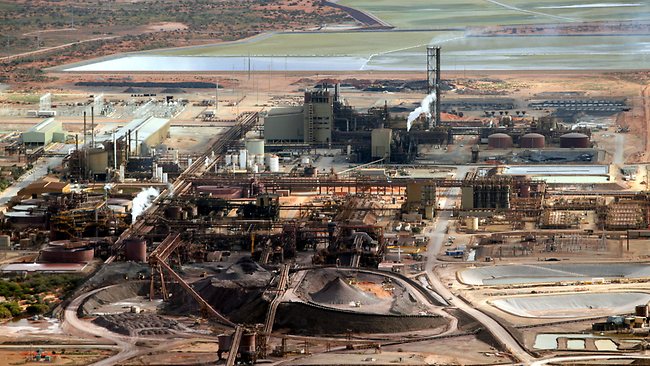
olympic dam

BHP being battered by SA’s wind power obsession.

***

As an economy, South Australia is so far under water it’s drowning, not waving.

Battered by an erratic power supply and prices which have doubled in the last 12 months, South Australia’s few remaining industrial businesses are besides themselves.

Power policies a threat to nation: business chiefs
The Australian
Matt Chambers and Andrew White
23 February 2017

The heads of some of the nation’s biggest companies have blasted the chaotic state of the power grid, saying renewables targets need to be curbed and baseload power ­developed to prevent job losses.

BHP Billiton chief executive Andrew Mackenzie, who took a $US105 million ($137m) cost hit at the Olympic Dam copper and uranium mine in South Australia after recent blackouts, says ­renewable energy schemes could raise costs and reduce power ­security while having no impact on emissions.

The head of the world’s biggest…

View original post 1,192 more words

Reality Bites: ‘Green’ Dreamers Struggling to Spin Away South Australia’s Failed Wind Power Experiment

stopthesethings's avatarSTOP THESE THINGS

alice_in_wonderland17 Fantastic in theory, but reality is another place.

***

It’s been barely 5 months since South Australia experienced a state wide blackout on 28 September, when a typically vigorous spring storm delivered wind speeds in excess of 90km/h, causing the majority of turbines operating at its 18 wind farms to automatically shutdown to avoid self-destruction. The ensuing collapse in wind power output overloaded the interconnectors with Victoria, which tripped automatically; and thereafter South Australia suffered what is now known as a ‘system black’ (see our post here).

With a string of blackouts during December (see our post here) and mass load shedding during a heat wave when, yet again, wind power output plummeted (see our post here), humour among South Australians is now a rare and treasured commodity.

Inversely related to South Australians’ fury at their power pricing and supply calamity, is the battle that the wind…

View original post 1,421 more words

Windfarms affect children

Wind Turbines Affect Children…

WCFN's avatarWorld Council for Nature


NOISE: a startling case of two schools in proximity to wind turbines


Dear Mme Héroux, I should be grateful if you would ensure that this report reaches the ladies and gentlemen of the panel reviewing the WHO’s noise guidelines for Europe.


In an effort to assist a society in danger, I feel obligated to make this case public. I am employed in schools within a rural area. The projects I am involved in run throughout the school year. I hope it will be understood why I cannot reveal names and locations. Sadly, I must protect myself against the professional consequences which could result from a fully detailed testimony.


During the past two years, I have worked in a school located 5 km to the east of a small wind farm, whose elevation is about 300 feet above that of the establishment. Most of the time, the school is downwind from…

View original post 1,627 more words

‘System Black’: South Australia’s Wind Power Experiment a Costly, Abject Failure

stopthesethings's avatarSTOP THESE THINGS

sa-blackout-adelaide Living with another ‘system black’: Adelaide 28.9.16

***

No other two word combination strikes more fear into the hearts of the wind industry and its political backers than ‘South Australia’.

Rocketing power prices, routine load shedding and mass blackouts are the inevitable results of South Australia’s wind power experiment.

Tom Quirk trained as a nuclear physicist at the University of Melbourne. He has been a Fellow of three Oxford Colleges. In this article, Tom sets out the hypothesis, methods and conclusions of that experiment, the abstract of which simply reads ‘FAIL’.

Behold SA and Be Scared, Very Scared
Quadrant Online
Tom Quirk
11 February 2017

The latest Australian Energy Market Operator report on the state’s electricity market illustrates much more than the inevitable problems associated with integrating intermittent renewables, it also highlights the assault on logic that is part and parcel of the great green dream

The Renewable Energy Target…

View original post 1,871 more words

SA’s Deluded Labor Government Determined to Kill Jobs with 50% Renewable Energy Target

stopthesethings's avatarSTOP THESE THINGS

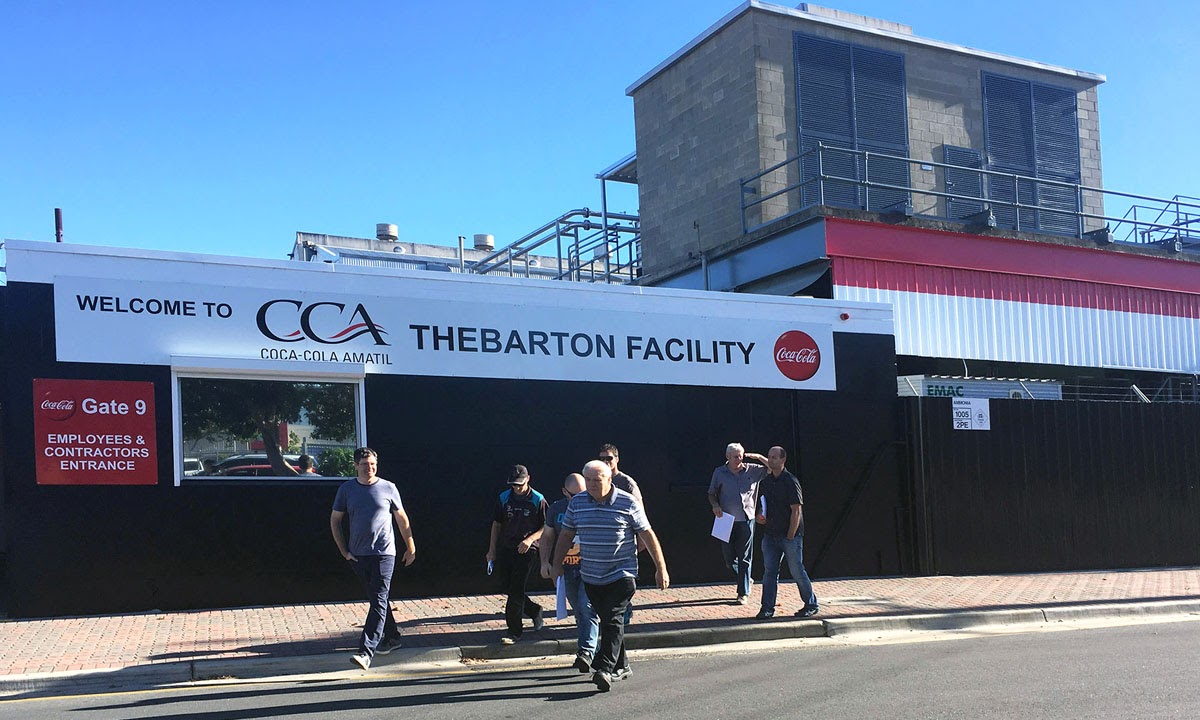
Workers outside the Coca Cola Amatil plant at Thebarton this morning Getting harder for Weatherill & Co to politick away mounting job losses.

***

In a week when Coca-Cola Amatil announced that it would close its Adelaide bottling plant with the loss of 200 jobs, one might have reasonably expected South Australia’s hapless Labor government to have taken the opportunity to retreat from its disastrous energy policy.

To the contrary, Jay Weatherill & Co sought to double down on their economic suicide pact by loudly professing their love for renewables, in the same way Christians starring as the main feature at the Colosseum would vociferously assert their faith, even while Romans fed them to the lions. In each case, the observer could only marvel at their courage.

For South Australians not keen on watching their economic futures destroyed, it must have felt like being a passenger in a jet airliner when the Captain announces that he would not be flying over…

View original post 1,987 more words

Frauds, Crooks and Criminals

Demonstrating daily that diversity is not strength!

Family Hype

All Things Related To The Family

DeFrock

defrock.org's principal concern is the environmental and human damage of industrial wind turbines on rural communities

Gerold's Blog

The truth shall set you free but first it will make you miserable

Politisite

Breaking Political News, Election Results, Commentary and Analysis

Canadian Common Sense

Canadian Common Sense - A Unique Perspective from Grassroots Canadians

Falmouth's Firetower Wind

a wind energy debacle

The Law is my Oyster

The Law and its Place in Society

Illinois Leaks

Edgar County Watchdogs

stubbornlyme.

My thoughts...my life...my own way.

Oppose! Swanton Wind

Proposed Wind Project on Rocky Ridge

Climate Audit

by Steve McIntyre

4TimesAYear's Blog

Trying to stop climate change is like trying to stop the seasons from changing. We don't control the climate; IT controls US.

Wolsten

Wandering Words

Patti Kellar

WIND WARRIOR

John Coleman's Blog

Global Warming/Climate Change is not a problem