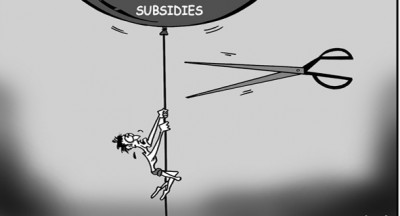
US Threat to Wind Power Subsidies Reveals Last Great Ponzi Scheme

Turn off the “Subsidy Tap”, and the Windweasels Scurry!

stopthesethings's avatarSTOP THESE THINGS

subsidies

STT has likened it to the great corporate Ponzi schemes, pointing out, just once or twice, that the wind industry is little more than the most recent and elaborate effort to fleece gullible investors, in a list that dates back to “corporate investment classics”, like the South-Sea Bubble and Dutch tulip mania.

In the wind industry, the scam is all about pitching bogus projected returns (based on overblown wind “forecasts”) (see our posts here and here and here and here); claiming that wind turbines will run for 25 years, without the need for so much as an oil change (see our posts here and here and here); and telling investors that massive government mandated subsidy schemes will outlast religion (see our posts here and here and here).

The story is the same, the world over: wind power doesn’t run on wind, it runs on subsidies…

View original post 874 more words

Wind Turbines Near Great Lakes….Hazardous to Birds!

Study calls for 18-km turbine setback

By John Miner, The London Free Press

It’s a standard that would eliminate almost all of Ontario’s current wind farms and the ones recently approved.

In the wake of the release of a U.S. Fish and Wildlife Service migratory bird study, the American Bird Conservancy is calling for an 18-kilometre buffer around the Great Lakes for wind farms.

“It is highly problematic to build anywhere near the Great Lakes,” Michael Hutchins, director of the American Bird Conservancy’s bird-smart wind energy program, said Monday. “These losses are just not sustainable.”

Using radar designed to detect birds and bats, the Fish and Wildlife Service monitored four sites along the south shore of Lake Ontario in 2013. The results were released last month.

Hutchins called the findings of a high level of bird and bat activity in the zone swept by wind turbine blades “a smoking gun” that proves the turbines should not be located close to the lakeshore.

The results from the U.S. study would apply to the Canadian side of the Great Lakes as well, Hutchins said.

“There is no reason to assume it wouldn’t be as bad on the (other) side as well because these birds are making their way up to the boreal forest in Canada to breed.”

The U.S. Fish and Wildlife Service has a standard that wind farms not be located within five kilometres of the shoreline. The Nature Conservancy recommends eight kilometres. The new evidence points to an 18-kilometre zone as appropriate, Hutchins said.

“These birds don’t just belong to Canada and the United States, they are a shared resource and they are worth billions of dollars,” Hutchins said, pointing to their role in controlling pests, pollinating crops and dispersing seed. “We can’t afford to lose these animals,” he said.

Ontario doesn’t restrict the proximity of wind turbines in relation to the Great Lakes, but does require wind farm developers to monitor bird and bat deaths for three years. For bats the acceptable mortality level is 10 per wind turbine each year, while the limit for birds is 14 birds annually per turbine.

Beyond those levels, the wind farm company may be required to take mitigating action.

Data released last month indicated wind turbines in Ontario in 2015 killed 14,140 birds, mainly songbirds, and 42,656 bats, including several species on Ontario’s endangered species list.

The U.S. Fish and Wildlife radar study found that migrating birds concentrate along the shorelines to refuel and rest before crossing the lakes. The researchers also found the birds make broad-scale flights along the shorelines to explore wind conditions and orient themselves for migration.

Brandy Giannetta, Ontario regional director for the Canadian Wind Energy Association, said wind farm developers are attracted to the areas close to the Great Lakes because they provide the most consistent winds.

The industry recognizes bird mortalities from wind farms can be a problem and is committed to the proper siting of turbines, she said. But Giannetta said the issue has to be looked at in context.

Wind energy is designed to respond to global warming, the biggest threat to birds and other wildlife. Far more birds are killed by cats and collisions with buildings and cars, she said.

Hutchins agreed cats are bigger bird killers than wind turbines, along with pesticides and building and vehicle collisions. But that isn’t a reason not to deal with the turbine issue.

“They all need to be addressed,” he said.

Despite that, the Ontario government just approved another project a few kilometres away on Amherst Island.

jminer@postmedia.com

twitter.com/JohnatLFPress 

Government Agenda Won’t Stop at Wind Turbines! Next…Private Property!

Gilmor vs. Goliath: Conservation groups seek to overturn precedent-setting court decision allowing family to build home

Buttrey Ditch

Graeme Frisque — The Banner

Buttrey drain, a drainage ditch located on the Gilmor’s property is the reason the lot was deemed part of a floodplain in the first place. It is also the source of safety concerns alleged by the Nottawasaga Conservation Authority.

Orangeville Banner

By Graeme Frisque

A precedent-setting court decision that could affect anyone in the province owning property in environmentally protected areas is currently making its way through the Ontario Court of Appeals.

It all started in 2009 when Alex and Tania Gilmor began the permit process to build a home on their property in Amaranth, a small community of roughly 4,000 residents about 15 minutes northwest of Orangeville.

The Nottawasaga Valley Conservation Authority denied that application and a proceeding appeal, and for the last seven years the Gilmors have been fighting for permission to build on their land.

After another appeal to the Ontario Ministry of Natural Resources and Forestry (MNRF) was denied via tribunal in July 2013, the Gilmors appealed that decision in Ontario Superior Court, finally winning the right to build their home in September 2015.

But the story doesn’t end there. The respondents — NVCA and the Township of Amaranth — have decided to appeal the court’s decision through an intervener.

Conservation Ontario, a not-for-profit lobby group that represents all 36 of Ontario’s conservation authorities, was approved as intervener by the court and a leave for appeal from the NVCA and Conservation Ontario was granted in February 2016, sending the matter back to the courts.

A portion of the Gilmor’s lot, located at 555106 Mono-Amaranth Townline Road, is part of a designated floodplain and therefore falls under the jurisdiction of the NVCA.

According to court records, the area was designated an environmentally protected area many years after it was originally subdivided into 10-acre lots in the 1960s, and very few lots in the area remain vacant. There are existing houses on either side of the Gilmor’s property and across the road.

The area was deemed an environmentally protected area due to a small drainage ditch called “Buttrey Drain”, which crosses the Gilmor’s lot behind the proposed build site.

The drainage ditch also passes through a neighbour’s property — where a house already exists — and then proceeds to a culvert under the public road, eventually connecting to a creek, part of the Nottawasaga River system.

When they first purchased the land there was an existing driveway, shed and garden on the property and neighbours had been allowed to build houses prior to their application to do so.

Despite the proposed house being in an area on the property where flooding poses no risk, the Gilmor’s application to build was denied on the basis of flooding and safety concerns.

“Unfortunately, we cannot provide any detail about the NVCA’s position as this matter is before the courts, other than we are confident the NVCA has upheld its responsibilities as required by the Conservation Authorities Act,” said Doug Lougheed, NVCA Chair and Innisfil town councillor.

Justice Sean F. Dunphy disagreed after hearing the Gilmor’s appeal, overturning the NVCA and tribunal decisions on the matter to refuse the appropriate permits.

In his decision, Justice Dunphy pointed out an expert analysis undertaken as part of the permit process showed little-to-no flood or safety risk, even in the event of a “hypothetical extreme event” such as the “Timmins Storm” — a standard comparable used by the NVCA when assessing risk in the event of a worst-case scenario regional storm.

“(The Gilmors) provided extensive expert evidence establishing the lack of any adverse effects impact (on) their proposed building on flood control,” said Justice Dunphy.

“The methodology and quality of their expert evidence has not been challenged. Indeed, the NVCA utilized the data produced by the Gilmors’ experts in preparing their own studies,” he added.

Furthermore, the judge ruled the tribunal who originally upheld the NVCA’s decision erred by judging the case on the basis of a general ban on development in environmentally protected areas, which is not the case.

Conservation authorities routinely allow construction and development in floodplains and other environmentally sensitive areas they oversee, as long as additional mandated steps are taken to address any environmental concerns.

However, the concerns the NVCA had with Gilmor’s application is not of an environmental nature, but of public safety — namely, flood safety — and the judge found those concerns to be baseless.

The NVCA appears to have no problem with construction on the site, as their proposed resolution was to have the Gilmors build a 600-metre driveway to the back of the property outside of the flood plain. Something Justice Dunphy called “ironic”.

“The proposed driveway would be approximately 600 metres long and proceed over the existing drainage ditch and across wetlands to the rear of the Gilmor’s property to higher land,” he said.

“Further, the fill necessary to build up the required road that distance would have a much more significant impact on the ability of the land to handle a flood and thus create still more regulatory approval challenges,” added Justice Dunphy.

Justice Dunphy concluded the NVCA acted outside of its legislated powers by denying the Gilmor’s permit application and interpreted its own internal standards as matters of law.

“A general prohibition on developments without consideration of the impact, if any, of such developments on flood control in the particular circumstances of each case, would have been beyond the jurisdiction of the NVCA to enact … and it cannot acquire such jurisdiction by misinterpreting its own regulation,” he said.

And it appears it is on this basis — and not the Gilmor’s safety or right to build on their land — that the NVCA and the now intervening Conservation Ontario have chosen to so vigorously oppose the court’s decision.

“As this matter deals with a provincial priority for flood protection, NVCA has vigorously pursued leave to appeal before the Ontario Court of Appeal,” said NCVA Chair Lougheed.

“Conservation Ontario has sought intervener status as this appeal to the Ontario Court of Appeal has implications for all of Ontario’s 36 Conservation Authorities, as it may affect how certain provisions of the Conservation Authorities Act are interpreted,” added Lougheed.

As for the Gilmors, according to Elizabeth Marshall of the Ontario Landowners Association (OLA), after seven years of wrangling and legal fees, the family is giving up the fight.

“They aren’t speaking to anyone anymore. They have chosen not to get a lawyer for the appeal. They are at the point where they are ready to throw themselves at the mercy of the court,” she said.

As a result, OLA president Tom Black said the group sought intervener status on the Gilmors’ behalf in order to keep up the fight — which was denied.

“The win was rather historic and we thought it should be defended,” said Black, who added the group continues to seek an intervener they would support willing to pick up the mantle.

In the meantime — at least in the opinion of one Ontario Superior Court Justice — the Gilmors continue to have their rights trampled.

Wind Power Debacle: South Australia an International Joke

When will the idiots get it through their heads? Wind energy is NOVELTY energy. NOT fit for “Prime Time”!

stopthesethings's avatarSTOP THESE THINGS

tom koutsantonis2 Tom Koutsantonis: the ‘Joker’ in the pack, but SA isn’t laughing.

***

South Australia is, thanks to its ludicrous attempt to run on sunshine and breezes, now on the World stage: for all the wrong reasons.

With total and totally unpredictable collapses in its wind power output, SA is now accustomed to routine load-shedding (dropping suburbs and whole regions off the grid to keep the rest running) and the odd state-wide blackout. Then there’s the small matter of retail power prices which, for businesses have doubled in 12 months and which are all set to double again.

A suite of consequences which have energy experts around the globe quietly giggling and saying ‘we told you so’. One of them is London based Senior Research Analyst with the World Nuclear Association, Ian Hore-Lacy.

Here’s the yarn being spun from London about South Australia’s perfectly avoidable energy calamity.

South Australia’s green dream…

View original post 1,057 more words

Robert Bryce: New York’s Wind Power-Play Smacks Into Reality

Reality is no friend of Wind Turbine Scams!

stopthesethings's avatarSTOP THESE THINGS

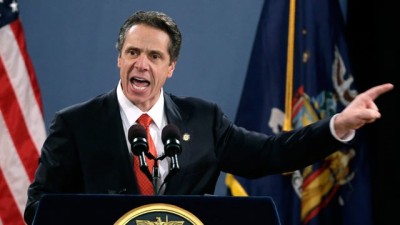
andrew cuomo

New York State’s Governor is grappling with a confirmed case of ‘Wind Turbine Syndrome’, the obvious signs of which are that he’s hell-bent on following the path set by the Germans and South Australians on the road to economic and social disaster.

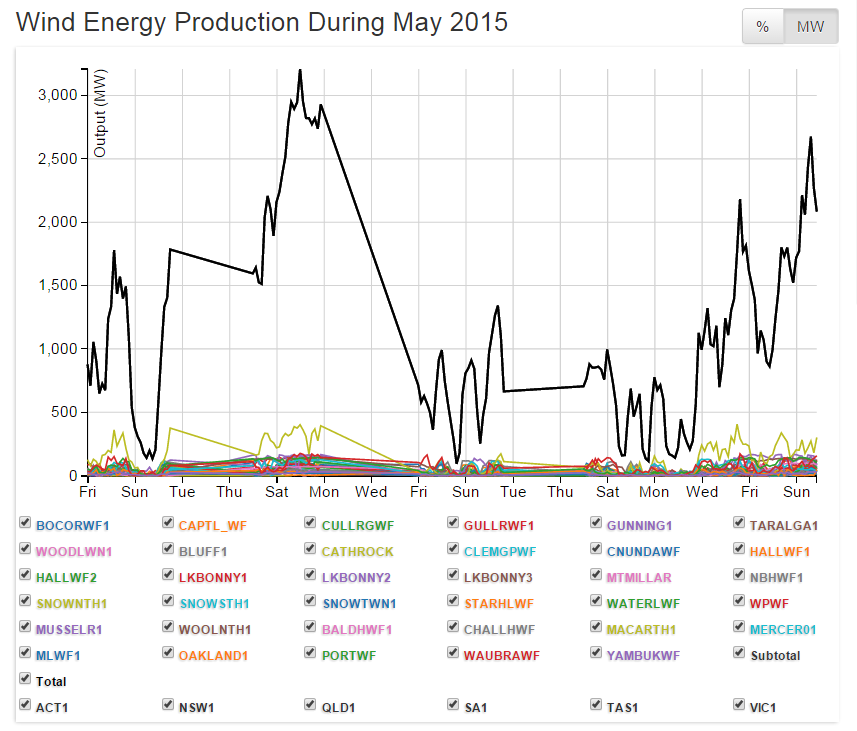
However, unlike the lunatics in charge of those energy calamities, before he has even got started, Cuomo has been smacked in the face with the reality of what comes with an unreliable and intermittent power source, that was abandoned centuries ago, for pretty obvious reasons:

May 2015 National

Andrew Cuomo’s plans to carpet the upper reaches of his state with these things, has been called out by the New York Independent System Operator, the agency charged with managing the state’s grid, pointing out the bleeding obvious: these things don’t work.

Here’s Robert Bryce detailing the stoush between Cuomo and his ‘moonbeam and pixie dust’ crowd, and the ‘spoilsports’ who actually know how…

View original post 1,047 more words

West Lincoln Resident Asks for Help from Prov. to Correct Wind Turbine Transmission Pole Dangers

Honourable Steven Del Duca :
We are residents of West Niagara. Over the past few years, despite a constant battle against the project, we have been inundated with 77 industrial wind turbines.
They are so massive that they loom on the once pastoral horizon….taller than the Skylon Tower in Niagara Falls.
To date the turbines have not started running because the infrastructure necessary for the transmission of power in still in progress.
The infrastructure is what concerns me. Perhaps you can assure me that the system has been checked for safety under the MTO guidelines.
Our community is predominantly rural. Our roads are narrow and must allow for the passage of cars, trucks, school buses and immense farm equipment.
The roads are now lined with huge transmission poles, very close to the road.  Along the roads, guardrails have been installed between the poles and the roads.
Now there is virtually no soft shoulder to cushion the traffic. Farm equipment will block the roads, with no opportunity for vehicles to pass.
In winter there will be no place for snow to be piled at the side of the roads.
Hence the roads will be virtually impassable in the summer due to farm traffic and in the winter with piles of snow. (And we get a lot of snow!!!)
Snowplows will find it impossible to clear the roads safely. There will be no room.
If a driver has a mishap and hits the guardrails or transmission poles…there will be no mercy…there will be a fatality.
The structures are so close to the roads.
My entire family lives in this rural community. My grandchildren ride the school buses who use these roads.
My children use these roads daily to access Highway 20.
I know driving will be unsafe to the point of critically dangerous.
I believe this is your area of expertise.
Can you please come out and inspect this project in West Lincoln???  I know the provincial government is responsible for the welfare and safety of residents.
These roads will be a nightmare with the potential for death.
We await your response,
Susan and Ross Smith
RR 2 Smithville, Ontario
L0R2A0

Heartbreaking Facts that Wind Turbine Neighbours Live With…

MELODIE MCLANE: YOU KNOW YOU LIVE TOO CLOSE TO A WIND PROJECT IN VERMONT WHEN …

Editor’s note: This commentary is by Melodie McLane, who is a neighbor of the Georgia Mountain Community Wind project.

• You dread checking the mail because you probably have another filing from the Department of Public Service that supports the wind developer in every way possible, even though they supposedly work for you.

• You do a slow burn because someone has written that you will participate in the Public Service Board’s noise investigation only because you lost. Lost what? The right to sleep at night?

• You spend every Sunday afternoon meeting with the neighbors that are still speaking to you to write discovery questions, answers, briefs, comments and to do research.

• You have stupid looking equipment set up near your house to monitor sound from the turbines.

• You laugh at the look of shock on people’s faces when you tell them to be aware that everything they say is being recorded outside when that stupid looking equipment is there.

• You have to sign a release saying that you give yourself permission to listen to your own conversations before the wind company will release the raw data from the monitoring to you.

• You plan your barbecues and neighborhood parties around whether that stupid looking equipment is there.

• You go ahead and have that barbecue or party regardless and get perverse pleasure out of blasting loud music all night at that stupid looking equipment in order to drown out all conversations.

• You realize the noise from the turbines gets louder when they take that stupid looking equipment away.

• You think you are going to stroke out if one more person says “I drove over to New York and listened to the ones there and couldn’t hear anything.” Were they running at full capacity?

• You understand why your father used to sit and swear at the television when a politician was talking.

• You know the true meaning of “campaign donations” and “follow the money.”

• You have “wind friends” who you can talk freely with about the stupidity of wind and then you have “regular friends” with whom you never discuss wind.

• You go to work ticked off and exhausted because you could hear the turbines rumbling all night, even with your windows shut.

• You are dreading summer, even after one of the most miserable winters on record, because the noise is worse when you open your windows.

• You used to love a good snowstorm but now it just means more noise with all the moisture in the air and southwesterly winds.

• You used to love going to bed at night in the summer with your windows wide open, listening to the rain. Now you shut your windows and turn the fans on to drown out the turbine noise, because it’s always louder when it rains.

•You look out at your garden and remember how peaceful it used to be to work in it. Now it’s just an annoying place to be.

• You used to love having your morning coffee on your south porch, but now you are driven away from it by noise.
You try sitting on your back porch, but the noise is worse back there because the noise bounces off from the ledges behind your house.

• You open your door in the morning and think you hear a jet flying over really low, but then realize it’s just the turbines.

You have pet names for noises that come from the mountain. There is the airplane noise, train rumbling noise, whale noise and semi-truck noise.


• You open your door in the morning and think the turbines are really loud, but it’s just a jet flying over really low.

• You have pet names for noises that come from the mountain. There is the airplane noise, train rumbling noise, whale noise and semi-truck noise.

• You are angry because the turbines are running and you can’t sleep.

• You are angry because the turbines aren’t running and someone ruined a perfectly good mountain for no reason.

• You want to stroke out every time you hear a wind developer say that you only complain about the noise because you didn’t want the project there in the first place. You didn’t want the wind project so close to your house because you knew it would be noisy.

• You want to stroke out every time you hear a wind developer say that only “two or three” neighbors complain about the noise. Those neighbors are the only ones who are ridiculously close to the project.

• You are shocked when the project owner starts using the Facebook group, Victims of Industrial Wind, to tout the merits of wind when most of the people in this group are suffering from sleep loss every day from wind.

• You are shocked when that owner says on his Facebook page that he has a Trunk Monkey by each turbine on Georgia Mountain to keep the anti-wind people away. Trunk Monkeys shoot people with guns and beat people up with tire irons.

• You are up checking the victims group at 4 a.m. on a regular basis to see if someone else is being kept awake by the noise.

• You are in constant disbelief at how loud 45 dBA is.

• You know that some people will make nasty NIMBY comments about this when they read it, but you have been bullied and called names so much that it doesn’t even hurt anymore.

Fry-day Funnies: Wind Turbines ‘Explode’ onto the World Energy Stage

Wind Turbine catastrophes… A sight for sore eyes!

stopthesethings's avatarSTOP THESE THINGS

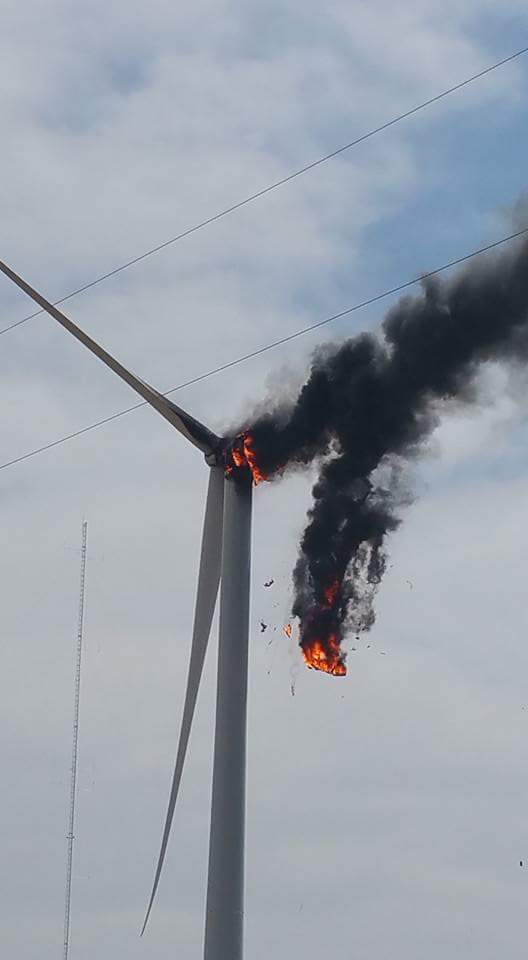
Texas turbine fire 01

Only the Germans could come up with a single word to capture the churlish sentiment of feeling a sense of malicious glee at another’s downfall.

It’s a sentiment pouring from this recent Tweet from STT Champion, James Delingpole.

Which led us to these glee-giving videos.

While their capacity for self-immolation is well-known; as with their ability to give in to gravity and let their 290 tonne hulks splatter back to earth; likewise their habit of unshackling and throwing their 10 tonne blades a country mile (‘component liberation’ for those in the trade), it’s a rare and wondrous thing to watch these things doing all three: incinerating, hurling blades to the four winds and splattering their burning carcasses all over terra firma.

WARNING: for those with…

View original post 33 more words

POWERFUL ARGUMENTS

Talking Sense Regarding Ontario’s Energy Fiasco!

lsarc's avatarlsarc

Powerful Arguments

STRONG SOCIALISM CoIZRhDVUAEITJD

Two recent articles highlight the fact that if you want to depopulate rural areas, de-industrialize urban ones and generally crash the economy per UN Agenda 21 also known by the risible misnomer “Sustainable Development“… you have a proven tool in “green” energy.
UN MULTI GOV CONTEXT Ck04fY8WYAACfnDThe first sad piece is by our ally and numbers hero Dr. Ross McKitrick to whom we are enormously grateful for his help and encouragement (see review of the Greenwich Wind Farm economic analysis.
Here, he points out economic follies, as he has done since the inception of Ontario’s insane greed energy scheme:

“Despite the hype, all this tinkering produced no special environmental benefits. The province said it needed to close its coal-fired power plants to reduce air pollution. But prior to 2005, these plants were responsible for less than two per cent of annual fine particulate emissions in Ontario, about the…

View original post 481 more words

Donald Trump….Too Smart to Fall for the Wind/Climate Scam!

Donald Trump Would Unleash Energy Sector

Say what you want about Donald Trump, but he has said two things recently that more profoundly diagnose America’s true problems than anything Hillary Clinton has even come close to thinking about in her entire lifetime.

Donald Trump Would Unleash Energy Sector
By Steve Milloy
Breitbart.com, August 9, 2016

Say what you want about Donald Trump, but he has said two things recently that more profoundly diagnose America’s true problems than anything Hillary Clinton has even come close to thinking about in her entire lifetime
The first thing he said — that political correctness “cripples our ability to talk and think and act clearly” — is not the subject of this column. The second — that “It is time to remove the anchor that is dragging us down” — is.

The “anchor” he was talking about is the government and, especially the Obama administration and any extension thereof through Hillary Clinton.

We have a government that is choking us to death with regulations and economy killing policies. As Trump pointed out:

The Federal Register is now over 80,000 pages long. As the Wall Street Journal noted, President Obama has issued close to four hundred new major regulations since taking office, each with a cost to the American economy of $100 million or more.

In 2015 alone, the Obama Administration unilaterally issued more than 2,000 new regulations – each a hidden tax on American consumers, and a massive lead weight on the American economy.

Nowhere is this truer than in the energy sector Trump spotlighted in his speech in Detroit. But to appreciate Trump’s prescription for the energy sector and the rest of the economy, it’s first necessary to understand how the Obama administration has sabotaged both.

Probably the least talked about effect of Obama’s anti-economic policies has been the destruction of the economic model for the electric power industry. Electric utilities used to make money the old fashioned way — by selling more electricity. For a variety of reasons, that has not been possible in the moribund Obama economy.

Instead utilities have been forced to engage in various government-mandated energy efficiency and green power schemes where utilities can only make more money by selling less electricity at higher prices. Flattened electricity production by utilities has then had downstream effects on fuel production industries.

Lower fuel needs has forced down coal prices and caused overproduction in a coal industry that has become increasingly efficient over the years at producing coal.

The Obama administration then compounded this problem for the coal industry by commencing its infamous war on coal. This has had the effect of forcing utilities to choose either to endure high regulatory compliance costs and political disfavor by sticking with coal or to switch to alternatives like natural gas, wind and solar. While the Obama administration favored the later two energy sources, the markets tossed a monkey wrench in these plans.

A glut of cheap natural gas produced by hydrofracturing technology (fracking) eased the coal-switching problem for utilities. Making progressive lemonade out of lemons, at this point the Obama administration then decided to finish off the coal industry by making the permanent the glut of cheap natural gas. It did this by slow-walking if not just simply preventing natural gas from being exported to a global market hungry for it.

The effect was two-fold. First, it forced most of the coal industry into bankruptcy. Second, it kept gas prices depressed. If an oil and gas firm is not struggling today, it’s probably only because it has gone into bankruptcy, too. And it you’re thinking that cheap fuel prices must have been good for electric utilities, think again. Midwestern utilities were hoping that the cheap fuel glut would lead to a renaissance of manufacturing in the Rust Belt, facilities to which they could sell more electricity. But regulatory uncertainty brought about overzealous and arbitrary Obama administration agencies and actions has prevented any such renaissance.

A President Trump would remove the government boot from the energy industry. Natural gas could be exported to a gas-hungry world. This would relieve pressure on what’s left of the coal industry. Then, unburdening utilities of regulatory and political pressure to use politically correct fuels and allowing utilities to sell more electricity to a growing economy would restore health to the ailing energy sector and help create millions of good-paying, wealth producing jobs.

All this is complex and difficult to explain in a brief column, let alone a policy speech by a candidate who is more of a business-doer than a political-talker. But Trump gets the big picture. Overregulation is killing our economy. The energy sector is living (on life support) proof.

Steve Milloy publishes JunkScience.com and is a former coal executive.