Fry-day Funnies: Wind Turbines ‘Explode’ onto the World Energy Stage

Wind Turbine catastrophes… A sight for sore eyes!

stopthesethings's avatarSTOP THESE THINGS

Texas turbine fire 01

Only the Germans could come up with a single word to capture the churlish sentiment of feeling a sense of malicious glee at another’s downfall.

It’s a sentiment pouring from this recent Tweet from STT Champion, James Delingpole.

Which led us to these glee-giving videos.

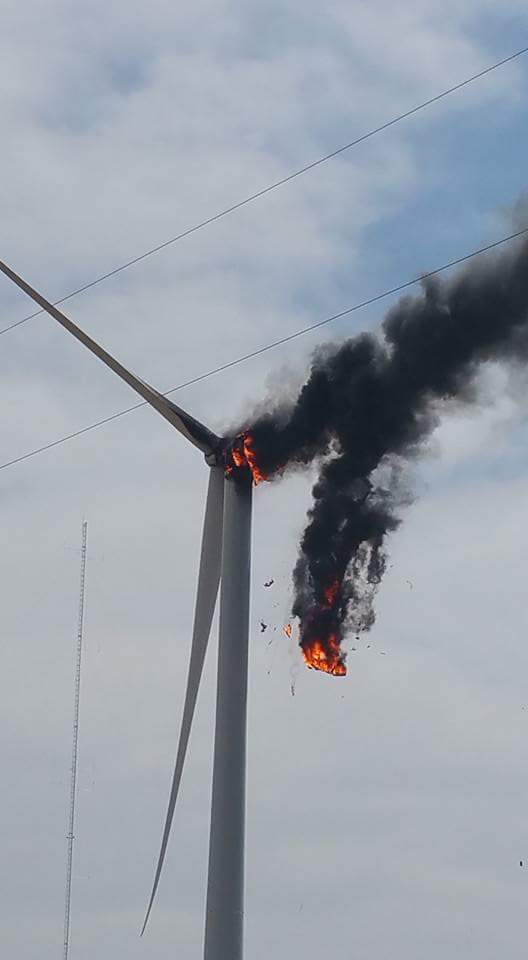
While their capacity for self-immolation is well-known; as with their ability to give in to gravity and let their 290 tonne hulks splatter back to earth; likewise their habit of unshackling and throwing their 10 tonne blades a country mile (‘component liberation’ for those in the trade), it’s a rare and wondrous thing to watch these things doing all three: incinerating, hurling blades to the four winds and splattering their burning carcasses all over terra firma.

WARNING: for those with…

View original post 33 more words

POWERFUL ARGUMENTS

Talking Sense Regarding Ontario’s Energy Fiasco!

lsarc's avatarlsarc

Powerful Arguments

STRONG SOCIALISM CoIZRhDVUAEITJD

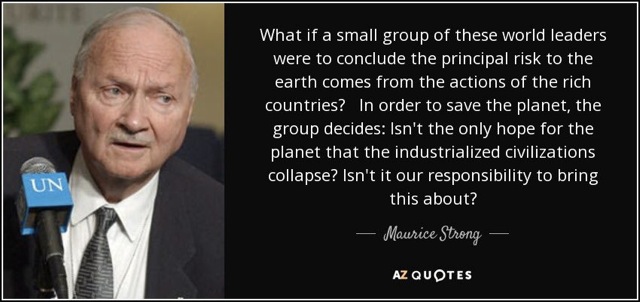
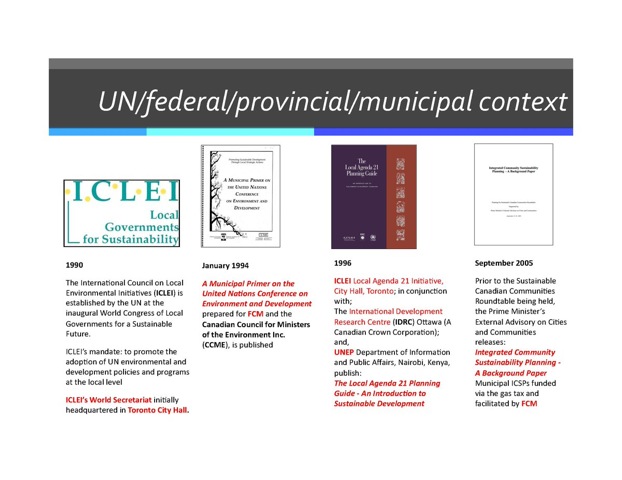
Two recent articles highlight the fact that if you want to depopulate rural areas, de-industrialize urban ones and generally crash the economy per UN Agenda 21 also known by the risible misnomer “Sustainable Development“… you have a proven tool in “green” energy.
UN MULTI GOV CONTEXT Ck04fY8WYAACfnDThe first sad piece is by our ally and numbers hero Dr. Ross McKitrick to whom we are enormously grateful for his help and encouragement (see review of the Greenwich Wind Farm economic analysis.
Here, he points out economic follies, as he has done since the inception of Ontario’s insane greed energy scheme:

“Despite the hype, all this tinkering produced no special environmental benefits. The province said it needed to close its coal-fired power plants to reduce air pollution. But prior to 2005, these plants were responsible for less than two per cent of annual fine particulate emissions in Ontario, about the…

View original post 481 more words

Donald Trump….Too Smart to Fall for the Wind/Climate Scam!

Donald Trump Would Unleash Energy Sector

Say what you want about Donald Trump, but he has said two things recently that more profoundly diagnose America’s true problems than anything Hillary Clinton has even come close to thinking about in her entire lifetime.

Donald Trump Would Unleash Energy Sector
By Steve Milloy
Breitbart.com, August 9, 2016

Say what you want about Donald Trump, but he has said two things recently that more profoundly diagnose America’s true problems than anything Hillary Clinton has even come close to thinking about in her entire lifetime
The first thing he said — that political correctness “cripples our ability to talk and think and act clearly” — is not the subject of this column. The second — that “It is time to remove the anchor that is dragging us down” — is.

The “anchor” he was talking about is the government and, especially the Obama administration and any extension thereof through Hillary Clinton.

We have a government that is choking us to death with regulations and economy killing policies. As Trump pointed out:

The Federal Register is now over 80,000 pages long. As the Wall Street Journal noted, President Obama has issued close to four hundred new major regulations since taking office, each with a cost to the American economy of $100 million or more.

In 2015 alone, the Obama Administration unilaterally issued more than 2,000 new regulations – each a hidden tax on American consumers, and a massive lead weight on the American economy.

Nowhere is this truer than in the energy sector Trump spotlighted in his speech in Detroit. But to appreciate Trump’s prescription for the energy sector and the rest of the economy, it’s first necessary to understand how the Obama administration has sabotaged both.

Probably the least talked about effect of Obama’s anti-economic policies has been the destruction of the economic model for the electric power industry. Electric utilities used to make money the old fashioned way — by selling more electricity. For a variety of reasons, that has not been possible in the moribund Obama economy.

Instead utilities have been forced to engage in various government-mandated energy efficiency and green power schemes where utilities can only make more money by selling less electricity at higher prices. Flattened electricity production by utilities has then had downstream effects on fuel production industries.

Lower fuel needs has forced down coal prices and caused overproduction in a coal industry that has become increasingly efficient over the years at producing coal.

The Obama administration then compounded this problem for the coal industry by commencing its infamous war on coal. This has had the effect of forcing utilities to choose either to endure high regulatory compliance costs and political disfavor by sticking with coal or to switch to alternatives like natural gas, wind and solar. While the Obama administration favored the later two energy sources, the markets tossed a monkey wrench in these plans.

A glut of cheap natural gas produced by hydrofracturing technology (fracking) eased the coal-switching problem for utilities. Making progressive lemonade out of lemons, at this point the Obama administration then decided to finish off the coal industry by making the permanent the glut of cheap natural gas. It did this by slow-walking if not just simply preventing natural gas from being exported to a global market hungry for it.

The effect was two-fold. First, it forced most of the coal industry into bankruptcy. Second, it kept gas prices depressed. If an oil and gas firm is not struggling today, it’s probably only because it has gone into bankruptcy, too. And it you’re thinking that cheap fuel prices must have been good for electric utilities, think again. Midwestern utilities were hoping that the cheap fuel glut would lead to a renaissance of manufacturing in the Rust Belt, facilities to which they could sell more electricity. But regulatory uncertainty brought about overzealous and arbitrary Obama administration agencies and actions has prevented any such renaissance.

A President Trump would remove the government boot from the energy industry. Natural gas could be exported to a gas-hungry world. This would relieve pressure on what’s left of the coal industry. Then, unburdening utilities of regulatory and political pressure to use politically correct fuels and allowing utilities to sell more electricity to a growing economy would restore health to the ailing energy sector and help create millions of good-paying, wealth producing jobs.

All this is complex and difficult to explain in a brief column, let alone a policy speech by a candidate who is more of a business-doer than a political-talker. But Trump gets the big picture. Overregulation is killing our economy. The energy sector is living (on life support) proof.

Steve Milloy publishes JunkScience.com and is a former coal executive.

SA’s Wind Power Debacle: Opportunity Knocks for More Subsidy-Sucking Rent Seekers

Windweasels still Pushing Their Novelty Energy, as the “Real Thing”!

stopthesethings's avatarSTOP THESE THINGS

judith sloan2

Investment is not always good
Catallaxy files
Judith Sloan
29 July 2016

Since the return of the Labor-lite Turnbull government – or should that just be Labor – the rent-seekers in the renewable energy space have been out and about.

No doubt, the South Australian debacle has thrown a spanner in the works, but the latest propaganda from the renewable energy is that the price spike and the high forward electricity prices in SA are not the fault of over-investment in renewables – blame gas and the lack of interconnection with other states.

If only the interconnectors with the other states were there and/or bigger, then the problem would never have arisen.  The fact that the rent-seekers don’t see the hypocrisy of this statement is staggering: after all, what the interconnectors do is to deliver reliable, low cost electricity sourced from coal.

And by the way, these interconnectors don’t come…

View original post 1,304 more words

A Breakdown on How Badly the Wind Fiasco is Hurting us…Financially.

Ontario electricity has never been cheaper, but bills have never been higher

The province signed long-term contracts with a handful of lucky firms, guaranteeing them 13.5 cents per kWh for electricity produced from wind, and even more from solar.

Tyler Brownbridge / Postmedia News files
 
The province signed long-term contracts with a handful of lucky firms, guaranteeing them 13.5 cents per kWh for electricity produced from wind, and even more from solar.  The more the wind blows, the bigger the losses and the higher the hit to consumers.

You may be surprised to learn that electricity is now cheaper to generate in Ontario than it has been for decades. The wholesale price, called the Hourly Ontario Electricity Price or HOEP, used to bounce around between five and eight cents per kilowatt hour (kWh), but over the last decade, thanks in large part to the shale gas revolution, it has trended down to below three cents, and on a typical day is now as low as two cents per kWh. Good news, right?

It would be, except that this is Ontario. A hidden tax on Ontario’s electricity has pushed the actual purchase price in the opposite direction, to the highest it’s ever been. The tax, called the Global Adjustment (GA), is levied on electricity purchases to cover a massive provincial slush fund for green energy, conservation programs, nuclear plant repairs and other central planning boondoggles. As these spending commitments soar, so does the GA.

In the latter part of the last decade when the HOEP was around five cents per kWh and the government had not yet begun tinkering, the GA was negligible, so it hardly affected the price. In 2009, when the Green Energy Act kicked in with massive revenue guarantees for wind and solar generators, the GA jumped to about 3.5 cents per kWh, and has been trending up since — now it is regularly above 9.5 cents. In April it even topped 11 cents, triple the average HOEP.

So while the marginal production cost for generation is the lowest in decades, electricity bills have never been higher. And the way the system is structured, costs will keep rising.

The province signed long-term contracts with a handful of lucky firms, guaranteeing them 13.5 cents per kWh for electricity produced from wind, and even more from solar. Obviously, if the wholesale price is around 2.5 cents, and the wind turbines are guaranteed 13.5 cents, someone has to kick in 11 cents to make up the difference. That’s where the GA comes in. The more the wind blows, and the more turbines get built, the bigger the losses and the higher the GA.

Just to make the story more exquisitely painful, if the HOEP goes down further, for instance through technological innovation, power rates won’t go down. A drop in the HOEP widens the gap between the market price and the wind farm’s guaranteed price, which means the GA has to go up to cover the losses.

Ontario’s policy disaster goes many layers further. If people conserve power and demand drops, the GA per kWh goes up, so if everyone tries to save money by cutting usage, the price will just increase, defeating the effort. Nor do Ontarians benefit through exports. Because the renewables sector is guaranteed the sale, Ontario often ends up exporting surplus power at a loss.

The story only gets worse if you try to find any benefits from all this spending. Ontario doesn’t get more electricity than before, it gets less.

Despite the hype, all this tinkering produced no special environmental benefits. The province said it needed to close its coal-fired power plants to reduce air pollution. But prior to 2005, these plants were responsible for less than two per cent of annual fine particulate emissions in Ontario, about the same as meat packing plants, and far less than construction or agriculture. Moreover, engineering studies showed that improvements in air quality equivalent to shutting the plants down could be obtained by simply completing the pollution control retrofit then underway, and at a fraction of the cost. Greenhouse gas emissions could have been netted to zero by purchasing carbon credits on the open market, again at a fraction of the cost. The environmental benefits exist only in provincial propaganda.

And on the subject of environmental protection, mention must be made of the ruin of so many scenic vistas in the province, especially long stretches of the Great Lakes shores, the once-pristine recreational areas of the central highlands, and the formerly pastoral landscapes of the southwestern farmlands; and we have not even mentioned yet the well-documented ordeal for people living with the noise and disturbance of wind turbines in their backyards. We will look in vain for benefits in Ontario even remotely commensurate to the damage that has been done.

The province likes to defend its disastrous electricity policy by saying it did it for the children. These are the same children who are now watching their parents struggle with unaffordable utility bills. And who in a few years will enter the workforce and discover how hard it has become to get full time jobs amid a shrinking industrial job market.

Electricity is cheaper to make than it’s been for a generation, yet Ontarians are paying more than ever. About the only upside is that nine other provinces now have a handbook on what not to do with their electricity sector.

Ross McKitrick, Professor of Economics at University of Guelph, is Research Chair, Frontier Centre for Public Policy.

South Australia’s Wind Power Obsession an Economic Suicide Pact

A Trump win will bring Sanity to the Energy Debaucle!

stopthesethings's avatarSTOP THESE THINGS

alan moran

Alan Moran gets it. Setting a cult-like feel-good power policy, obsessed with wind power isn’t just fanciful nonsense, it’s nothing short of an economic suicide pact. Here’s how things are playing out in Australia’s “wind power capital”, South Australia.

Renewable energy demanding a high price for unreliability
The Australian Financial Review
Alan Moran
29 July 2016

The recent energy crisis in South Australia demonstrates how costly and imprudent it is to rely on renewables.

Exotic renewable energy from wind and solar costs three times as much as electricity from coal and gas generation plants. Renewables are subsidised by households and firms being required to include growing proportions of renewable energy in their electricity supply.

The Renewable Energy Target (RET) in place requires 23 per cent of electricity to come from wind and solar by 2020. The renewable lobby estimates this is costing $40 billion for wind and large-scale solar installations…

View original post 1,205 more words

South Africa Slams the Door on Wind Power: Nuclear Powered Future Beckons

Leaders in South Africa did their Homework. Saying NO to Wind Turbines!

stopthesethings's avatarSTOP THESE THINGS

Brian Molefe Brian Molefe: South Africa needs atoms not breezes.

***

STT followers might have tumbled to the fact that we’ve been pretty heavily focused on SA over the last month.

However, in this post, we head a few thousand clicks, west across the Indian Ocean to another ‘SA’; this time South Africa, which appears entirely sensible enough to be able to avoid the power supply and pricing calamity unfolding in South Australia.

With a solid grip on power generation essentials, the CEO of South Africa’s biggest power provider Eskom, Brian Molefe, is hip to fact that wind power is a proven failure, and is all set to plug South Africa into a nuclear powered future.

Renewable power ‘just raises Eskom’s costs’
Sunday Times
Brendon Peacock
24 July 2016

Public opinion may back an increasing proportion of renewable energy being plugged into South Africa’s power grid, but Eskom CEO Brian Molefe says further…

View original post 1,305 more words

Bulk Battery Storage of Wind Power a Myth: With No Storage California Dumps Mountains of Wind & Solar Power

More lies about “Battery Storage”, proven to be a Fantasy!

stopthesethings's avatarSTOP THESE THINGS

giant battery 2

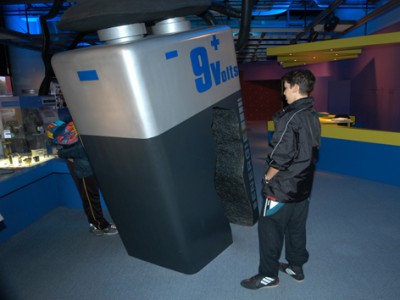
As the wind power debacle unfolds in South Australia – leaving it with an erratic power supply and rocketing power prices – one of the mythical solutions being peddled is that South Australia need only pop out to the shops and pick up a few terawatt/hours worth of battery storage.

The way it is being pitched – by the likes of Federal Energy and Environment Minister, Josh Frydenberg and SA’s hapless Labor government – it’s as if some forgetful nincompoop failed to order grid-scale electricity storage at the same time Australia was rolling out its 3,771MW of wind power capacity.

There is no example of grid-scale bulk electricity storage operating anywhere in the world.

Where geography and water resources permit (which rules out billiard table flat and desert dry South Australia) pumped hydro can operate as a viable, but expensive store of energy (not electricity) and is the one option…

View original post 513 more words