Rural Ontarians Hurt the Most in Wynne’s Energy Fiasco!


WATCH ABOVE: If you live in Ontario and you think our hydro bill is a bit high, you’re not alone. The province has some of the highest electricity rates in the country and rural areas are the hardest hit by the rising costs. As Jacques Bourbeau, it means some customers have to choose between paying for power and food for the family.

So-called “energy poverty” is getting worse in rural Ontario, a Global News investigation has found, with even small households paying hundreds of dollars a month to keep the lights on.

Officials, residents and experts are all sounding the alarm after electricity rates in the province rose 100 per cent in the past decade.

A range of factors are fueling the increases, including subsidies for clean energy, dealing with aging nuclear plants and maintaining and modernizing the province’s vast transmission and distribution system. But the problem is especially acute in rural Ontario, where steep delivery charges are the norm.

“The worst affected are customers in rural Ontario,” said energy analyst Tom Adams. “Compared to the ordinary urban household, the delivery charge alone is usually two to three times higher.”

FROM THE ARCHIVES: Ontario’s rising electricity costs putting squeeze on big business


Fay Knox knows what it’s like to live off the grid. Unable to cope with rising power rates, she has been disconnected twice because she couldn’t pay her hydro bills.

She lives by herself in a small house in the Eastern Ontario town of Lancaster, but her electricity bills run into the hundreds of dollars.

For the month of March 2016, it was $299.67. Knox, who receives a disability pension, says she simply can’t afford to keep her lights on.

“I could pay my hydro bill (20 years ago),” she said. “I was a single mother making $4 an hour raising two boys. Paying a mortgage. And you could pay your hydro. You can’t pay your hydro anymore.”

Ontario Progressive Conservative energy critic John Yakabuski said he was recently speaking to a volunteer at a food bank in the Ottawa Valley town of Eganville, who told him that most of the food bank’s new clients were people who had to make a choice between paying their hydro bill and avoiding a disconnection fee, or buying groceries.

“So they chose to maintain their hydro, but were now becoming clients of the food bank.”

WATCH: The roadmap to renewable energy in Canada

Jennifer Shaver is in a similar situation to Knox. She lives in Oxford Station, just outside of Ottawa, and she is on a constant crusade to cut her power consumption.

She shuts off her water heater during the day, hangs out all her laundry and her air conditioner is never turned on. The dishwasher only runs at night.

Despite her strict conservation measures, her monthly bills have been creeping up to more than $300 a month.

“With what’s been happening with Hydro we could be paying $500 a month easy here,” Shaver told Global News. “And that’s not going to work for us. And I don’t know what to do.”

She said she regularly falls behind on paying the bills, and a hydro crew recently disconnected power to her house. Her parents lent her the money to pay the $600 bill, and her power was eventually restored.

Government ‘taking significant steps’

Ontario’s new Energy Minister, Glenn Thibeault, said he’s still learning the ropes in his new job, so the man who used to hold the position, Bob Chiarelli, addressed the issue instead.

He expressed some sympathy to the plight of rural hydro customers.

“Yes there are pressures on rural customers,” Chiarelli acknowledged. “We are taking some significant steps to ameliorate those and we’ve made some significant progress.”

READ MORE: Ontario electricity rates set to surge again on May 1

That help includes the Ontario Electricity Support Program that offers low-income Ontarians a monthly credit on their bill of up to $50. There is also the Low-Income Energy Assistance Program (LEAP), that will provide up to $600 in emergency assistance to people who are struggling to pay their hydro bill.

But energy analyst Adams says despite this help, a crisis is brewing.

“Electricity costs are becoming a housing problem. Some people are saying now they can’t afford to stay in their home because of their power bills. I find that … shocking.”

How many people are living in the dark?

Hydro One is the utility that delivers electricity to much of rural Ontario. The company refused to provide the number of people who have been disconnected each year for the past 10 years because of non-payment of their bills.

A similar request for the number of notices sent out to customers warning them their power could be disconnected because of arrears was also denied. Laura Cooke, Hydro One’s Senior Vice-President of Customer and Corporate Relations, did tell Global News she has reviewed the data and she did not see an “appreciable difference” in the year-over-year numbers.

But Cooke refused to provide data to back up that assertion.

“I am shocked that they would not divulge that information,” PC energy critic Yakabuski told Global News. “That is now being cloaked in a veil of secrecy when it comes to how they do business.”

However, there is some publicly available data that indicate the problem may be getting worse. In a two-year period (2013-2014) the number of people who applied to the LEAP program for financial help to pay their electricity bill shot up by 20 per cent. The amount of money paid out by the fund also jumped by the same amount.

Officials in a number of rural townships said the number of people seeking help through the Community Homelessness Prevention Initiative is on the rise. Renfrew County, west of Ottawa, doubled the amount of assistance it handed out last year.

Meanwhile, Fay Knox is once again hundreds of dollars behind on her hydro bill. The stress of not knowing when she will be living in the dark is taking its toll.

“My nerves are shot. Blood pressure is through the roof. I don’t think in Ontario that we should have to live like this. And it’s getting worse.”

© 2016 Global News, a division of Corus Entertainment Inc.

New World Disorder

Globalization….the bane of today’s society.

lsarc's avatarlsarc

William Pitt the Younger after the defeat of Napoleon,

“England has saved herself by her exertions, and will, as I trust, save Europe by her example.”

ENDENHOFER UN Cfugyk2W4AQruLz

The Old World has been committing suicide, but our fellow subjects of the British Monarchy decided to stop; they opted for the Brexit.  Britain’s nick-of-time vote to depart from the European Union was, of course, resisted by globalists and their “useful idiots” who profit from that technocratic trap.  Project fear was launched to convince everyone that Brits are incapable of prospering independent from a bloated, blundering bureaucracy which has aspirations beyond its competence, to establish a new world order.

The eurocrats forgot that their job of dumbing down the public is not quite complete.  There are still some who remember that the British Commonwealth has an impressive mercantile history and there are many who honour the veterans and the slain of the war in Europe…

View original post 5,858 more words

Windpushers Cover Up the Truth About Wind Turbines!

Why Wind Turbine Noise is Just So Incredibly Annoying to Wind Farm Victims

insomnia

‘Annoyance’ is a term much used, and frequently abused, in relation to the acoustic torture caused by incessant turbine generated low-frequency noise and infrasound.

Those that abuse the term, including a former tobacco advertising guru, claim that the known and obvious effects of being immersed in thumping waves of pulsating air pressure (ie noise and vibration), night after merciless night (such as sleep deprivation) are all the product of fertile imaginations and/or scaremongering.

Unfortunately for the guru and his shameful ilk, cases such as Clive and Trina Gare put paid to that lie. The Gares are cattle graziers with their home property situated between Hallett and Jamestown and, since October 2010, have played host to 19, 2.1MW Suzlon s88 turbines, which sit on a range of hills to the West of their stately homestead. Under their contract with AGL they receive around $200,000 a year; and have pocketed over $1 million since the deal began.

On 10 June 2015, the Gares gave evidence to the Senate Inquiry into the great wind power fraud during its Adelaide hearing: [Hansard from the hearing is available here as HTML and here as a PDF (the Gare’s evidence commencing at p55)].

Their evidence destroys the wind industry lie that turbine hosts never, ever complain; and the propaganda that it’s only “jealous” wind farm neighbours who complain about wind turbine noise, “jealous” because they’re not getting paid, apparently. The Gares pocket $200,000 a year for the ‘pleasure’ of hosting 19 of these things; and, yet, make it very clear that it was the worst decision of their lives.

In their evidence they describe the noise from turbines as “unbearable”; requiring earplugs and the noise from the radio to help them get to sleep at night; and the situation when the turbines first started operating in October 2010 as “Crap, to put it honestly” – evidence which is entirely consistent with the types of complaints made routinely by wind farm neighbours who don’t get paid, in Australia and around the world. Despite AGL spending tens of thousands on noise “mitigation” measures – double glazing, sound deadening insulation and the like, the noise from turbines continues to ruin their ability to sleep in their own home, as Trina Gare put it:

No, they were waking me up on the weekend. You wake up to the thumping. This is with all the soundproofing in the house. As I said, I sleep with the radio on every night. If they are really cranked up I have to turn the volume up, so I will probably just go slowly deaf.

In her evidence Trina Gare stated, in the same terms as her husband Clive, that:

In my opinion, towers should not be any closer than five kilometres to a dwelling. If we had to buy another property, it would not be within a 20-kilometre distance to a wind farm. I think that says it all.

For more on the Gare’s experience, see our post here.

As to the real meaning of the term ‘annoyance’ – in the realm of acoustics (which is what matters here) it has nothing to do with whether wind farm neighbours detest the look these things; and is all to do with hard-wired and involuntary neurological responses to a man-made stimuli received and processed in the brain.

Waking up to a clap of thunder or the screaming siren of a smoke alarm is an integral part of a biological system designed to respond to unseen, nocturnal threats and to, thereby, keep itself alive.  So far, so obvious.

For a properly qualified expert’s view on annoyance, here’s what Dr Bob McMurtry told the Senate Inquiry last year:

First, adverse health effects have been reported globally in the environs of wind turbines for more than 30 years with the old design and the new.

Second, the wind energy industry has denied adverse health effects, preferring to call it ‘annoyance’ even though annoyance, however, is an adverse health effect. Certainly it is a non-trivial effect when sustained because it results in ‘sleep disruption’, ‘stress’ and ‘psychological distress’— those are direct quotes from others’ research.

Third, annoyance is recognised and was treated by the World Health Organization as an adverse health effect, which is a risk factor for serious chronic disease including cardiovascular and cancer.

Fourth, experts retained by the wind energy industry have preferred the diagnosis of nocebo effect to explain the adverse health effects, but the claim does not withstand critical scrutiny as there is a dose-response effect and nocebo does not have a dose-response effect. And there is a clear correlation between exposure and adverse health effects. Researchers have talked about dose-response. I should also comment that making that diagnosis without a comprehensive evaluation of a person or patient would qualify as non-practice, and I know that has been said in this committee before.

One question though is what it is about wind turbine noise emissions, that makes them just so incredibly annoying?

That question was taken up by a team of American researchers and the answer was published last month in the Journal of the Acoustic Society of America.  This time, the work was done in the lab, with volunteers exposed for half-a-minute; rather than on unwilling victims subjected to a life-time of relentless sonic torture.

We have picked out the thrust of the study below and the whole paper is available in PDF here: Short-term annoyance reactions to stationary and time-varying wind turbine and road traffic noise

To the wind industry’s countless victims, the results will come as no surprise.

Short-term annoyance reactions to stationary and time-varying wind turbine and road traffic noise
Journal of the Acoustic Society of America  139, 2949 (2016)
Beat Schäffer, Sabine J. Schlittmeier, Reto Pieren, Kurt Heutschi, Mark Brink, Ralf Graf and Jürgen Hellbrück
24 May 2016

Abstract
Current literature suggests that wind turbine noise is more annoying than transportation noise. To date, however, it is not known which acoustic characteristics of wind turbines alone, i.e., without effect modifiers such as visibility, are associated with annoyance.

The objective of this study was therefore to investigate and compare the short-term noise annoyance reactions to wind turbines and road traffic in controlled laboratory listening tests. A set of acoustic scenarios was created which, combined with the factorial design of the listening tests, allowed separating the individual associations of three acoustic characteristics with annoyance, namely, source type (wind turbine, road traffic), A-weighted sound pressure level, and amplitude modulation (without, periodic, random).

Sixty participants rated their annoyance to the sounds. At the same A-weighted sound pressure level, wind turbine noise was found to be associated with higher annoyance than road traffic noise, particularly with amplitude modulation.

The increased annoyance to amplitude modulation of wind turbines is not related to its periodicity, but seems to depend on the modulation frequency range. The study discloses a direct link of different acoustic characteristics to annoyance, yet the generalizability to long-term exposure in the field still needs to be verified.

What they did

In this study the researchers recruited 60 participants (ages 18-60; median age 35 years; self reporting that they had normal hearing and felt well at the time of the experiment) and asked them to listen to 30 sounds (each 25 second long recordings) in a semi-sound proof room.

participant

While listening to each of the individual sounds, separated only by a second, they were asked to respond (using a computer) to this question:

When you imagine that this is the sound situation in your garden, what number from 0 to 10 represents best how much you would be bothered, disturbed or annoyed by it?”

The sounds had been synthesized to represent wind turbine noise or road traffic noise of equivalent A weighted sound pressure levels. Comparisons were made over a range of sound pressure levels and with different types of amplitude modulation.

source

‘Without amplitude modulation’ corresponds to a stationary noise. Wind turbine noise with periodic amplitude modulation represent situations with high-frequency swishing (normal amplitude modulation) as well as low-frequency thumping sounds (other amplitude modulation). Random amplitude modulation is more typical of road traffic noise on streets with low or intermediate traffic density. The authors acknowledged that because that some of these noises (such as periodic traffic noise) would not necessarily occur in nature but were included for completeness in the study.

sound amplitude modulation

At all sound pressure levels tested, the participants found that wind turbine noise was more annoying that its road traffic noise equivalent.

They even looked at how long it took for the participants to record their annoyance – and in all tests wind turbine noise was found to be more annoying and at a much earlier time, when compared to road traffic noise. In fact, as participants listened to more samples of wind turbine noise they became increasingly more annoyed and formed their opinion quicker as they became accustomed to just how annoying wind turbine sounds could be.

box plots

As part of their study they tried to prove that the characteristics of the participants were not playing a role in how annoying they were finding wind turbine noise. They were able to eliminate gender, age, how sensitive the person was annoyance in general, as well as their attitude towards the sources (wind turbine noise or road traffic noise). Wind turbine noise was just more annoying to everyone.

They pooled the results and compared annoyance to the A weighted equivalent continuous sound pressure level with and without the different types of amplitude modulation. Periodic and random modulation of wind turbine noise increased the annoyance, but the same pattern could not be seen in road traffic noise. They concluded that the increased annoyance reaction to amplitude modulation of wind turbine noise was not related so much to the period, but more on the modulation frequency range.

pooled results

While the study has plenty of obvious limitations – subjects were only exposed to a short sound grab of 25 seconds – by way of comparison with road traffic noise, it vindicates wind farm victims and provides yet more objective proof to reject the wind industry’s nocebo nonsense, if any more was needed.

Oh, and if the factor of human fallibility in this experiment troubles scientific types, why not check out the ‘experiment’ being conducted with Britain’s Badgers Wind in the Gallows: Study Shows Badgers Suffer Merciless Stress & Torment from Wind Turbine Noise & Vibration

Pretty hard to suggest that badgers suffering immune system destroying stress for the very same reasons – exposure to incessant wind turbine noise and vibration – are, somehow, victims of ‘suggestibility’ or their aesthetic take on these things.

Slowly, but surely, the evidence supplants the lies and the myths.

Proof

Former Labor Treasurer – Keith De Lacy: ‘Wind Power Simply Don’t Work – Not Here, Not Anywhere’

Time to vote out the windpushers!

stopthesethings's avatarSTOP THESE THINGS

Bill

Electricity Bill Shorten: Existential Threat to Workers & the Poor.

****

As Australians contemplate which box to tick in this coming Saturday’s Federal election, STT thinks it’s time to pause and consider the potential consequences of those actions.

Once upon a time, the Australian Labor Party could rightly call itself “the workers’ party”.

The ALP had its beginnings during a shearers’ strike in the 1890s and – as myth and legend has it – was born in the shade of a ghost gum at Barcaldine in western Queensland in 1891.  The Labor Party was, thereafter, seen as the champion of the worker; and its shady birthplace earned the tagline of the “Tree of Knowledge”.

For nearly a century the ALP stuck close to its political and botanical roots.  The party attracted shearers – like Clyde Cameron and Mick Young – and one of its most revered sons, Ben…

View original post 1,980 more words

Wind Farms: A Guarantee of Hatred & Community Division

Windweasels Destroy Communities!

stopthesethings's avatarSTOP THESE THINGS

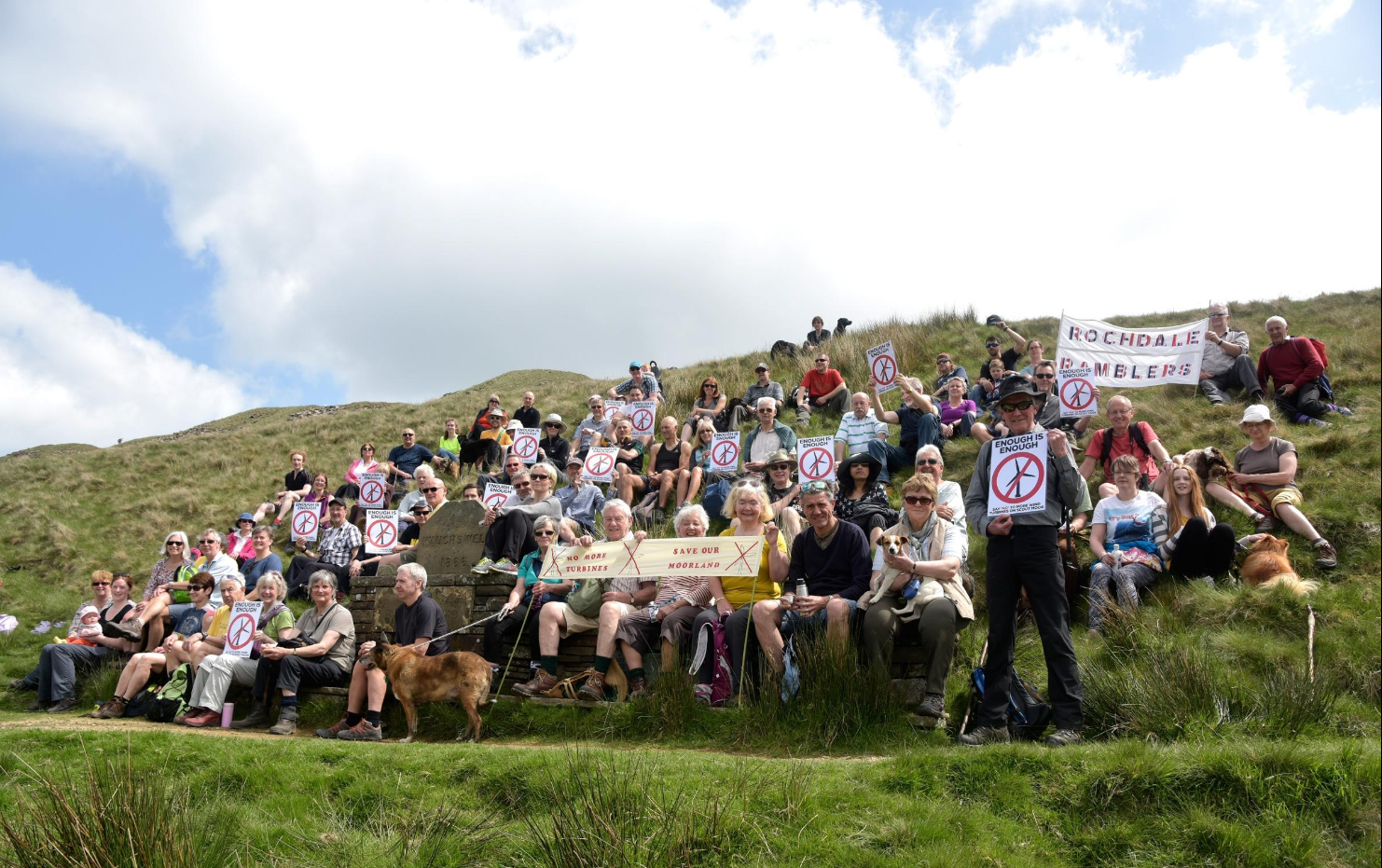
Scoutmoor protest Don’t be fooled by their smiles: these people are furious.

***

The following pieces – the first from Lancashire, England, the second from Charlotte, upstate New York – are permeated with a sense of seething rage.

While the wind industry, its parasites and spruikers still attempt the line that rural communities are falling over themselves to get in on some wind farm action, as usual, the spin and the reality are paddocks apart.

Here’s what really happens when these things are threatened upon peaceful and prosperous rural communities.

Protest walk over wind farm attracts over 100 people
Bury Times
4 June 2016

A PROTEST walk over controversial plans to build an extra 16 wind turbines at a Rossendale wind farm attracted over 100 people.

Adults, children, babies and dogs came together for the walk from Cowpe Road in Waterfoot along the Pennine Bridleway to Waugh’s Well.

The walkers had protest…

View original post 1,166 more words

Poles Apart: New Turbine Setback Rules Threaten Doom for Polish Wind Industry

The Polish Government has the Right Idea!

stopthesethings's avatarSTOP THESE THINGS

polish wind farm

Over-run by these things, faced with thousand of furious neighbours demanding an end to the onslaught, and spiralling power costs, Poland has mounted an enormous about face: where the wind industry was the flavour of the month for a year or two, it’s just been hit with the first salvo in an effort to give Poles back a little peace and quiet.

Like the Bavarians, the Poles have determined to put some distance between these things and houses: 10 times the height, which, with turbine tips topping 160m, means a gap of 1.6km or more.

That, of course, is nowhere near enough to protect humans; or anything else that lives and breathes, for that matter (see our post here).

However, in closely populated territory, like Poland and Bavaria, a setback of 1.6-2km has the practical effect of scuttling plenty of proposed developments.

To make them anything like…

View original post 543 more words

Lessons from Denmark: Danes Slash Wind Power Subsidies to Salvage Economy

When the wind doesn’t blow, wind energy sucks, (which is most of the time)!

stopthesethings's avatarSTOP THESE THINGS

Electricity-prices-europe

The wind industry is mounted on myth and fuelled by fantasy.

In Australia, its parasites and spruikers must believe that we are still cut off from the known world (suffering from what was referred to as the “tyranny of distance”) when they peddle stories about Europeans still being wedded to wind power.

On that score, one of the Australian wind cult’s “pinup girls” has always been Denmark. No doubt aided by struggling Danish turbine maker, Vestas (the High Church for wind worshippers) the gullible and naïve still believe that Denmark has achieved a wind powered Nirvana. (The hard-hitting Danish docu-drama, Follow the Money – screening on SBS – with Vestas played by ‘Energreen’ – has knocked some of the varnish off, though.)

In the cultists’ eyes wind power can, of course, do no wrong.  Moments when the wind blows, and these things produce more than their usual piddling fraction of…

View original post 1,395 more words

South Australians Locked in Wind Power Price Disaster: Retail Prices Jump Another 12%

Unaffordable Renewables!

stopthesethings's avatarSTOP THESE THINGS

koutsantonis SA’s Treasurer, Tom Koutsantonis: plays deaf to economic reality.

***

South Australia is an economic basket case, thanks, in no small part, to its obsession with wind power.

Power prices are spiralling out of control. Back in March SA’s businesses were belted with a 90% hike in their bills, that left manufacturers, miners and other power hungry businesses reeling: Wind Power Costs Crushing South Australian Businesses: Firms Hit with 90% Price Hike

Now residential customers have just been whacked by AGL, with a 12% power price hike (with a whole lot worse to come).  What passes for journalism in SA pitched up the following half-baked ‘analysis’ on the causes of what portends to be a social and economic disaster (STT fills in the gaps a little later).

State’s largest energy retailer, AGL, set to hike electricity bill prices
The Advertiser
David Nankervis
15 June 2016

AGL customers will be hit…

View original post 6,594 more words