
****
South Australia embarked upon its wind power ‘experiment’ more than 15 years ago, when its Labor government climbed into bed with the boys from Babcock & Brown (aka Infigen) and a disgraced American lawyer and convicted con-man, Tim Flato (who robbed his clients of close to US$400,000, got struck-off, and scuttled off to set up the wind industry in SA and elsewhere). Clearly untroubled by Tim’s ‘colourful’ past his compatriots happily appointed him as a director of several of Babcock and Brown’s subsidiaries and, later, as a director of Infigen.
Tim, and his Babcock and Brown buddies, were all aided in their endeavour by Patrick Gibbons and his best mate, Vesta’s Ken McAlpine(back when they both worked as advisers to a Labor Minister in Victoria, Theo Theophanous) (see our post here). Patrick now runs the wind industry’s lobbying efforts as Federal Environment Minister, Greg Hunt’s staffer. It’s a stinky cologne, for sure.
But, ensuring the political wheels get properly greased to the wind industry’s advantage has other costs.
And those costs are laid bare for all to see, as the disastrous results of SA’s wind power ‘experiment’ unfold.
THE GRID is a spark away from collapse (more, and more widespread, blackouts and power ‘interruptions’ are inevitable when Alinta’s Port Augusta plant closes in a couple of months); and power prices – already the highest in the Country (if not the world on a purchasing power parity basis) are set to double, again.
It’s vapid Premier, Jay Weatherill and his Energy Minister, Tom Koutstantonis seem oblivious to the scale of the economic calamity, that’s befallen a State that already suffers from the worst unemployment in the Nation – worse even than perpetual basket case, Tasmania.
Here’s the AFR detailing the disaster in the eyes of energy hungry businesses, that have just been hit with a 90% increase in their power bills; with far worse to come; and no end to their misery, anywhere in sight.
SA business fears years of high costs
Australian Financial Review
Ben Potter and Simon Evans
2 March 2016
Power prices in South Australia have jumped 90 per cent
Steven Mouzakis got a shock last year when he negotiated a new electricity supply deal for Brickwork’s Austral brick factory at Golden Grove, South Australia for 2016.
“The energy price increased by 90 per cent,” Mr Mouzakis, the company’s Sydney-based national energy and sustainability manager, said. “How can we operate a business with energy costs increasing at 90 per cent?”
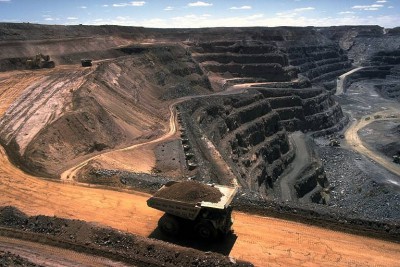
BHP Billiton, which owns the giant copper-gold mine at Olympic Dam 572 kilometres north of Adelaide, is also suffering from South Australia’s volatile electricity market.
“Security and reliability of power, as well as price increases for electricity in the forward market, are areas of concern for Olympic Dam,” a BHP Billiton spokesman said.
The mining giant, which has cut 500 jobs at Olympic Dam in the past year, was one of several large electricity customers to attend a meeting on electricity prices hosted by the Weatherill government last Wednesday.
Prices for electricity in 2017 and 2018 are $80 to $90 per megawatt hour, which is twice the price in Victoria. SA business groups fear they will be stuck with high prices for years after the meeting heard there were no short-term fixes for the squeeze.

***
An electricity price jump of 90 per cent translates into the total electricity bill for the Golden Grove brick plant – which is run by general manager David Robertson – jumping about 40 per cent with distribution and supplier margins. Mr Mouzakis doesn’t hesitate to finger the culprit: the Weatherill government’s obsession with leading the nation in renewable energy. “We have seen a massive uptake of renewable energy in South Australia, and a reduction in baseload,” he said. “That’s really impacted on the forward prices.”
There was little to lift the gloom at the government’s meeting.
“It’s unlikely there are going to be any short-term fixes, particularly for the large users. They are going to have to be more pro-active and more sophisticated in how they manage their price risk,” said Business SA senior policy adviser Andrew McKenna.
“How long do we accept that South Australia has got a forward wholesale price essentially double that of Victoria, and how long can the wider SA economy sustain that?”
The electricity squeeze is a problem for other large customers like Belgian metals group Nyrstar, which wants to buy electricity at a predictable price when it fires up the Port Pirie base metals smelter rather than take its chances in a volatileSPOT MARKET.
Supply of conventional baseload power in South Australia is tightening as wind power subsidised under the Renewable Energy Target policy is offered to the local market for very low – sometimes negative – prices.
This is driving some coal and gas generators out, leaving the state heavily dependent when the wind drops on a couple of gas turbines and a high voltage link to Victoria’s brown power stations – and vulnerable toSPOT MARKET spikes.
“We have been the state that has taken on more of the Renewable Energy Target burden than any other state and that’s coming back to bite us,” Mr McKenna said.
The meeting hosted by the government heard from consultants CQ Partners that the loss of the Northern coal-fired power station in May on top of earlier baseload power plant closures will leave the market illiquid and retailers and customers heavily dependent on AGL Energy and Origin Energy, the dominant generators still in the market. With gas prices two to three times their past prices, new gas power plants are unlikely to be built and would have a generating cost of $70 to $75 a megawatt hour.
Mr McKenna said solutions proffered at the meeting were long term – an unfunded proposal by AGL to build grid-scale battery storage, and a smart grid proposal from Siemens of Germany to store surplus renewable energy in hydrogen fuel cells.
The high voltage transmission line to Victoria’s brown coal power stations is being upgraded to 650 megawatts in two stages by March 2017.
Mr Mouzakis said the expanded capacity was unlikely to be enough since if it was “we’d have seen a reduction in forward prices and we are not seeing that”.
“We need some kind of mechanism either to rationalise capacity or to support capacity when we continue to need it and we have got to stop pretending that this is a market and it’ll just sort itself out when we have got this other massive intervention in the market.”
Mr Hyslop, whose clients have included the Energy Supply Association of Australia, the federal government’s RET review and the Queensland Competition Authority, said it would be even more important to deal with NEM design issues if Labor won government and implemented a 50 per cent renewable energy target Australia wide. The current RET target is equal to about 24 per cent of NEM capacity by 2030.
Australian Financial Review

****
Nice work, Ben! The lad goes from journalistic strength to strength.
At present, the AFR is the only paper that appears even vaguely interested in what a debacle SA’s power supply and market is, thanks to its attempt to rely on a wholly weather dependent power source, with NO commercial value.
The producer of a good or service for commercial sale doesn’t tend to give it away, or pay ‘buyers’ to take it: but that’s precisely what wind power outfits are doing in SA (and elsewhere), as noted above.
We dealt with the manner in which the LRET allows wind power outfits to flood the market, and to literally payTHE GRID operator to take it, when the wind is blowing – here:
SA’s Wind Farm Fiasco: $Millions in Subsidies Thrown at GDF Suez to Reopen Mothballed Gas-Fired Power Plant
In short, the penalties under the LRET for failing to purchase RECs, forced retailers to enter Power Purchase Agreements with wind power outfits at fixed rates (up to $112 per MWh), which they collect from retailers irrespective of the spot or wholesale price.
Then, when the wind stops blowing, peaking power plant operators sit back, wait untilTHE GRID is on the very brink of collapse, and then ‘offer’ to supply the shortfall at rates of more than $2,000 per MWh and up to the market cap of $13,800 (instead of the average of $70):
South Australia’s Unbridled Wind Power Insanity: Wind Power Collapses see Spot Prices Rocket from $70 to $13,800 per MWh
Cutting out the cheapest base-load plant, when Port Augusta closes, will only increase the opportunities for rampant market rorting like that. And it’s businesses and households that are left with the burgeoning bill.
As to the ‘helpful’ suggestions for “an unfunded proposal by AGL to build grid-scale battery storage, and a smart grid proposal from Siemens of Germany to store surplus renewable energy in hydrogen fuel cells”, South Australia’s few remaining manufacturers and mineral processors, like Port Pirie’s Nyrstar will be dead and buried long before those pipe dreams ever turned to commercial reality.
And, even if thought bubbles like massive batteries and hydrogen production, storage and use were technically possible (neither has been achieved on any significant scale), the cost of the electricity eventually delivered to homes and businesses would be so astronomical as to be prohibitively expensive.
No, South Australia has dug itself into an energy hole and its gormless government has no hope of digging its way out. For South Australians, it’s an economic nightmare that will last for a generation, or more.






 "Mothers Against Wind Turbines™" Phoenix Rising...